Private Historic Bazaars & Ottoman Edirne Tour
Ask us about a tailor-made walking route combining Selimiye, the Arasta, Bedesten, Ali Paşa Çarşısı, local specialties and the monumental center of Edirne.
Request a Custom Tour





The historic center of Edirne contains one of the most rewarding groups of surviving Ottoman commercial buildings in Türkiye. Within a compact walking area stand three major covered markets: the Edirne Bedesten, Ali Paşa Çarşısı and the Selimiye Arastası.
Together they span almost two centuries of Ottoman urban development. The Bedesten belongs to the early 15th century, when Edirne was one of the principal capitals of the expanding Ottoman state. Ali Paşa Bazaar reflects the monumental age of Mimar Sinan, while the Selimiye Arasta forms part of the commercial and charitable world surrounding Selimiye Mosque.
These were never simply places to shop. Ottoman bazaars were connected with vakıf foundations, mosques, public institutions, craft guilds, security, transport routes and the daily economic life of the city. Revenue from shops could help maintain major religious and charitable complexes.
The most remarkable part of visiting them today is that they remain living commercial spaces. You can still walk beneath domes and vaults, enter through centuries-old gates and browse shops in buildings that have been part of Edirne's commercial identity for generations.
Enter a 14-domed market built in 1417–1418 as a foundation for the Old Mosque.
Walk through one of Mimar Sinan's great commercial buildings, commissioned by Semiz Ali Paşa.
Explore the covered market beneath the Selimiye complex, with its famous Dua Kubbesi.
Discover Ottoman architecture that still functions as part of everyday trade in central Edirne.
Essential information for exploring Edirne's three principal Ottoman covered markets.
Historic center of Edirne, around Selimiye Mosque, the Old Mosque and Saraçlar.
Open on Google MapsEdirne Bedesten, Ali Paşa Çarşısı and Selimiye Arastası.
From the early 15th century to the late 16th century.
Architecture, local shopping, souvenirs, sweets, crafts and everyday Edirne city life.
There is normally no entrance ticket simply to walk through the operating bazaars.
Allow approximately 1.5–3 hours for all three bazaars and the surrounding historic center.
The bazaars reveal how architecture, religion, charity and trade worked together in the Ottoman city.
Edirne is famous for monumental mosques, bridges and royal architecture, but the city's historic bazaars show another essential side of Ottoman life: how an imperial city actually functioned every day.
Markets provided places for merchants and craftsmen, but they could also form part of a larger charitable foundation. Rents from shops helped support mosques, religious schools, public services and other institutions established through the Ottoman vakıf system.
This relationship is especially clear in Edirne. The Bedesten was created as a revenue-producing foundation for the Old Mosque, while the Selimiye Arasta generated income for the Selimiye Mosque complex. The commercial building was therefore directly connected with the survival of monumental architecture and public institutions.
Ali Paşa Bazaar demonstrates another aspect of Ottoman trade: the desire to gather merchants dealing in valuable merchandise within a secure, organized covered market. Its long vaulted corridor became one of the city's most important commercial spaces.
For travelers exploring our complete guide to places to visit in Edirne, the bazaars provide an ideal bridge between famous monuments. Instead of moving from museum to mosque by vehicle, you can walk through the commercial streets that still connect the historic city center.
Ottoman cities were often organized through a close relationship between religious complexes and commercial buildings. A mosque might be accompanied by schools, a bath, a public kitchen, a caravanserai and rows of shops whose rent helped finance the institution.
Covered markets were especially valuable because they created protected commercial space. Merchants could trade under a permanent roof, shops could be secured at night and buyers could move through the market in almost any weather.
Different kinds of markets served different purposes. A bedesten traditionally functioned as a secure commercial building associated with valuable goods, while an arasta generally consisted of rows of shops, often occupied by merchants practicing related trades. Long covered bazaars such as Ali Paşa Çarşısı could combine circulation, retail, storage and security within one monumental structure.
Because Edirne served as an Ottoman capital before Constantinople and remained an important imperial city afterward, its commercial architecture developed on an exceptional scale. The surviving bazaars allow visitors to experience this history not as an archaeological reconstruction, but as part of the modern city.
Shop rents could provide long-term income for mosques and charitable foundations.
Covered and gated markets helped protect valuable merchandise and regulate access.
Trades could cluster together, making it easier for customers to compare goods and for craftsmen to organize.
Bazaars linked mosques, caravan routes, public squares and residential quarters.
Markets were places for conversation, news, food, negotiation and everyday encounters.
Edirne's principal covered bazaars still preserve active retail functions today.
Edirne Municipality identifies three principal historic bazaars in the city center: Bedesten Çarşısı, Ali Paşa Çarşısı and Arasta Çarşısı. Each has a different architectural character and historical role.
1417–1418. A 14-domed early Ottoman covered market built by Çelebi Sultan Mehmed for the Old Mosque foundation.
16th century. A long covered bazaar commissioned by Semiz Ali Paşa and designed by Mimar Sinan.
Late 16th century. A covered market developed for the Selimiye Mosque foundation and completed under Mimar Davut Ağa.
The Edirne Bedesten is the oldest of the city's three great surviving covered bazaars. It was built in 1417–1418 by Çelebi Sultan Mehmed as a foundation associated with the nearby Old Mosque.
The building belongs to the period when Edirne was developing as one of the leading political and commercial centers of the early Ottoman state. Its architecture is immediately recognizable: a long rectangular masonry structure covered by 14 lead-clad domes.
The exterior is enlivened by alternating stone and brickwork, while doors on all four sides connect the market with the surrounding commercial streets. Windows beneath the domes bring natural light into the interior.
The Bedesten was historically associated with valuable merchandise. The 17th-century traveler Evliya Çelebi celebrated the wealth stored here, describing precious jewels and valuable goods protected by numerous night guards.
That history helps explain the meaning of the word bedesten. Unlike a simple open street market, a bedesten was a secure, substantial covered commercial building particularly suited to goods requiring protection and controlled storage.
The building remains in commercial use today. Its shops have changed with the city, but the essential experience remains extraordinary: visitors still enter a working market beneath a roof structure created more than six centuries ago.
Built during the reign of Çelebi Sultan Mehmed.
The market was established as a vakıf property generating income for the nearby mosque.
A continuous row of domes creates the bazaar's distinctive roofline.
Doors on each side connect the Bedesten directly with the surrounding city.
The secure structure was historically associated with jewelry and other precious merchandise.
The building continues to function as a commercial space rather than a static museum.
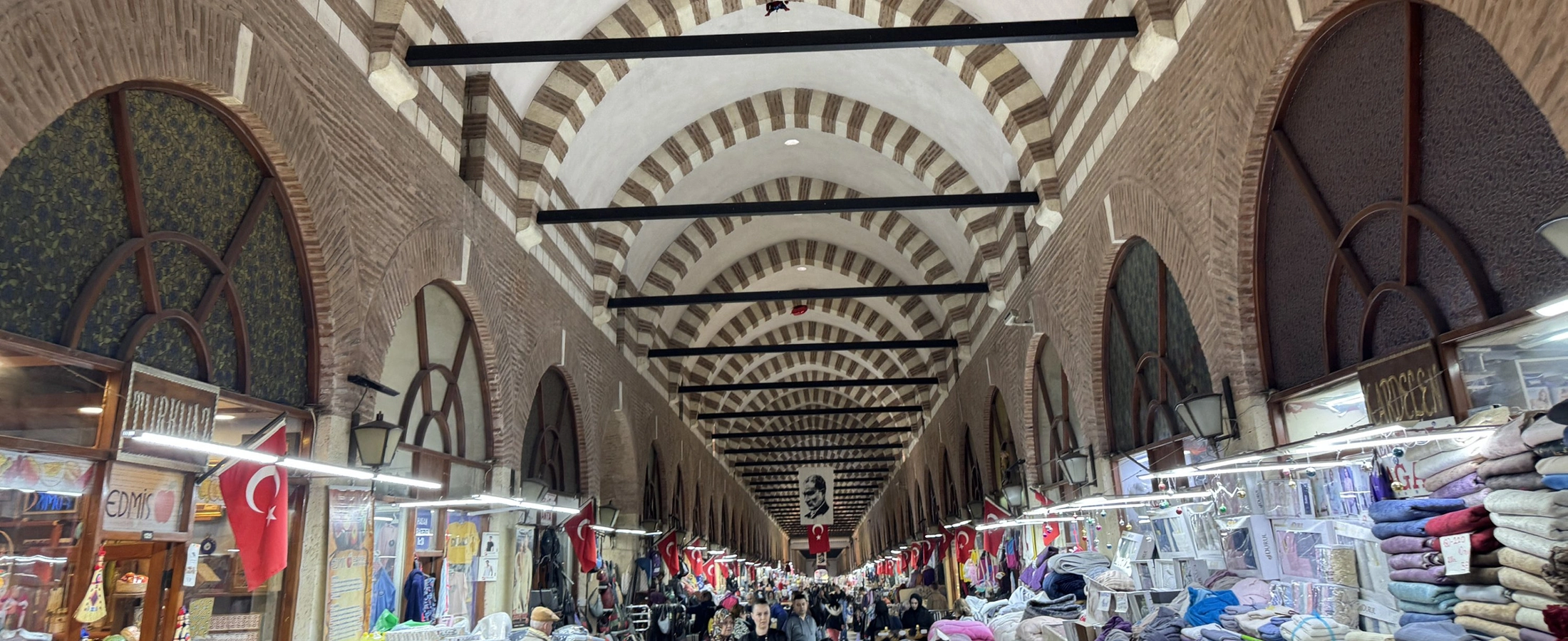
The long Ali Paşa Çarşısı is one of Edirne's most impressive examples of Ottoman commercial architecture. It was commissioned by Semiz Ali Paşa, a grand vizier of the Ottoman Empire, and designed by the great imperial architect Mimar Sinan. The bazaar is traditionally dated to 1569.
Edirne residents often refer to it simply as the Kapalı Çarşı, or Covered Bazaar. The building extends for roughly 300 meters and contains a long vaulted passage lined with shops. Historic municipal information records approximately 130 shops and six gates.
One reason traditionally given for the bazaar's construction was to bring merchants dealing in valuable goods, including gold and silver, into a more secure organized environment. Historical accounts describing large numbers of night guards reinforce the importance of protecting the merchandise stored here.
Architecturally, the rhythmic succession of brick arches, stone walls, vaulted roofing and long perspective through the central passage creates one of the most memorable interiors in Edirne. The building demonstrates how Mimar Sinan's architectural work extended far beyond mosques and monumental religious complexes.
Ali Paşa Bazaar has also survived serious modern damage. A major electrical fire on 29 September 1992 devastated the bazaar. After an extensive restoration lasting several years, it reopened on 25 November 1997.
Today the shops sell a wide range of merchandise. The original concentration on high-value goods has largely changed, but the commercial function continues, keeping the building connected with the purpose for which it was created.
The bazaar was commissioned through the foundation of the powerful 16th-century Ottoman statesman.
The building is one of Sinan's important surviving commercial works in Edirne.
The long covered corridor creates an almost processional journey through the market.
Municipal records describe a substantial retail complex with approximately 130 shops.
Multiple entrances connected the market with surrounding commercial streets.
A devastating fire was followed by a major restoration before the bazaar reopened.
The Selimiye Arastası lies directly beside and beneath the elevated terrace of Selimiye Mosque. It was developed to generate income for the mosque foundation, illustrating the financial organization that allowed great Ottoman religious complexes to support themselves.
The earliest row of shops formed part of the design associated with Mimar Sinan. During the reign of Sultan Murad III, Mimar Davut Ağa expanded and roofed the commercial space, creating the two-sided covered bazaar recognizable today.
Official descriptions record 73 arches, 124 shops and four entrances. The exact length varies slightly between modern official descriptions, but the arasta stretches for well over 200 meters along the Selimiye complex.
Evliya Çelebi described the market as the Kavaflar Çarşısı, indicating an association with shoemakers and footwear sellers. This is a valuable reminder that Ottoman markets frequently developed around particular trades.
At the center of the bazaar is its best-known feature: the Dua Kubbesi, or Prayer Dome. Tradition records that shopkeepers gathered beneath it in the morning, praying and pledging to conduct their trade honestly.
The Selimiye Arasta is especially significant because it is not merely adjacent to a world-famous monument. The covered bazaar forms part of the Selimiye Mosque and its Social Complex, which was inscribed on the UNESCO World Heritage List in 2011. UNESCO specifically identifies the covered market as one of the elements of the complex.
Today many shops focus on souvenirs, local products and goods purchased by visitors to Selimiye. Its continued commercial use preserves an important aspect of the historic function of the complex.
The bazaar generated revenue connected with the maintenance of the mosque complex.
The arasta reached its mature covered form during the reign of Sultan Murad III.
Repeated arches create the long rhythmic interior of the market.
Rows of small commercial units line both sides of the covered passage.
The central Prayer Dome is linked with the tradition of merchants pledging honest trade.
The covered bazaar is part of the Selimiye Mosque and Social Complex World Heritage property.
Bedesten. Its 1417–1418 foundation belongs to the period when Edirne was an early Ottoman capital.
Ali Paşa. The long Mimar Sinan-designed corridor creates the most dramatic covered-market experience.
Selimiye Arasta. Visit it together with Selimiye Mosque and the surrounding social complex.
Bedesten. Fourteen domes form one of the city's most recognizable historic rooflines.
Ali Paşa. Repeating arches and a long central passage create excellent architectural perspectives.
Selimiye Arasta. The Dua Kubbesi preserves the memory of prayer and pledges for honest trade.
The three markets demonstrate different solutions to the same basic challenge: how to create secure, permanent and attractive commercial space inside a dense Ottoman city.
The Bedesten uses a monumental rectangular form covered by fourteen domes. Its architecture feels compact, solid and defensive, appropriate for a building historically associated with valuable goods.
Ali Paşa Bazaar is different. Its most powerful architectural feature is length. A continuous vaulted passage lined with shops creates a strong directional movement through the building. Repeated arches make the interior appear almost endless when viewed from one end.
Selimiye Arasta uses a similar linear arrangement but is inseparable from the topography and architecture of the Selimiye complex. The bazaar does more than provide shops: it also helps support the elevated platform of the monumental mosque above.
All three buildings demonstrate the practical intelligence of Ottoman commercial architecture. Roofs protect merchants from sun, rain and winter weather; entrances control movement; small shop units create flexible retail space; and masonry construction provides durability in the busy city center.
Especially important at the Bedesten, where fourteen domes define the entire roof.
Long vaulted passages create weather-protected movement through Ali Paşa and the Arasta.
Brick and masonry arches create structural rhythm and visual continuity.
Controlled entrances could be closed after trading hours, improving security.
Windows and openings illuminate interiors that would otherwise be dark beneath heavy masonry roofs.
Small repeated retail units allowed many merchants to operate within one organized structure.
To understand the historic bazaars properly, it helps to understand the Ottoman vakıf, or charitable foundation. A ruler, statesman or wealthy patron could endow property whose income supported a mosque, school, hospital, public kitchen, fountain or other institution.
Commercial property was particularly useful because shops generated regular rent. Instead of relying only on occasional donations, a foundation could receive continuing revenue from merchants occupying bazaar units.
This explains why major mosques and markets so often appear together. The Bedesten supported the Old Mosque foundation, while the Arasta helped finance the Selimiye complex. Commerce and charity were therefore structurally linked.
The arrangement also gave monumental architecture a strong economic foundation. A mosque was not simply constructed and then left to survive on its own. Its endowment could include productive assets designed to generate income for maintenance and staff.
One of the most memorable traditions associated with Edirne's bazaars centers on the Dua Kubbesi in the Selimiye Arasta.
According to local historical tradition, shopkeepers gathered beneath the dome in the morning before beginning business. They prayed and pledged to conduct their trade honestly.
The custom expresses an important idea in Ottoman commercial culture: trade was not understood only as an economic transaction. Merchants were also expected to follow moral rules concerning fairness, trust and responsibility toward customers and fellow craftsmen.
Even if a modern visitor spends only a few minutes inside the bazaar, finding the Dua Kubbesi adds meaning to the architecture. It transforms an ordinary point along the corridor into a place connected with the social rituals of the historic market community.
The merchandise sold in Edirne's markets changed over the centuries, but historical descriptions preserve clues about earlier commercial specialization.
The Bedesten was associated with valuable goods and jewelry. Its strong masonry walls and secure form suited merchandise that required protection. Evliya Çelebi's famous description of its riches suggests the prestige the market enjoyed during the Ottoman period.
Ali Paşa Bazaar was also connected with merchants dealing in precious goods, including gold and silver. The desire to gather such traders within a protected covered structure is one of the traditional explanations for its foundation.
The Selimiye Arasta developed a different identity. Evliya Çelebi associated it with kavaf or footwear-related trades, which is why the market was also remembered as Kavaflar Çarşısı or Haffaflar Çarşısı.
These specializations were not necessarily permanent. Shops changed hands, trades moved and urban demand evolved. The modern mix of souvenirs, clothing, food products and general retail reflects the same ability of the bazaars to adapt while preserving their architectural shells.
The exact mix of shops changes over time, and not every traditional Edirne product is sold in every bazaar. Even so, the historic center is a convenient place to look for regional souvenirs, local sweets and gifts connected with the city.
Look for Edirne's famous badem ezmesi, a simple almond-based sweet associated with the city's confectionery tradition.
A historic Edirne sweet traditionally prepared with aromatic ingredients and closely associated with Ottoman confectionery culture.
Colorful decorative soaps are among Edirne's most recognizable traditional souvenirs.
Look for decorative objects inspired by the city's historic painted-wood tradition.
Covered-bazaar shops commonly offer clothing, scarves and textile products in many price ranges.
The Arasta is especially convenient for gifts connected with Selimiye Mosque and Edirne.
Packaged sweets, nuts, spices and regional foods can be found in and around the historic commercial district.
For fresh local cheese, use specialist food shops in central Edirne and ask about refrigerated transport if traveling onward.
The bazaars are valuable because they have not been separated completely from everyday life. They remain places where people work, shop, meet friends and pass through the city center.
That continuity changes the visitor experience. You are not entering a reconstructed merchant quarter where every shop is part of an exhibition. Instead, modern signs, packaging, shop lights and contemporary merchandise exist inside centuries-old architecture.
This contrast can initially seem less picturesque than a carefully staged heritage attraction, but it is precisely what makes the bazaars meaningful. Their historic purpose was commerce, and commerce continues.
Take time to look above the displays. The architectural details are often easiest to miss when shops are busy. Domes, arches, vaults, windows and masonry reveal the original structure behind the modern retail environment.
The historic covered bazaars form part of a much larger commercial center. Nearby Saraçlar Caddesi is one of Edirne's busiest pedestrian shopping streets and a natural continuation of a bazaar walk.
The atmosphere is very different from the Ottoman covered markets. Saraçlar is open, modern and crowded with everyday retail, cafés and pedestrians, yet it occupies the same central urban landscape that has served commercial life for centuries.
Walking from the historic bazaars toward Saraçlar helps visitors understand that Edirne's shopping district was never confined to one building. Covered markets, open streets, small shops, inns and market squares together formed a wider commercial network.
This area is also useful for a break between monuments. Instead of treating the bazaars as isolated sightseeing stops, spend time in the surrounding streets, stop for tea or coffee and watch the rhythm of the modern city.
The most satisfying route begins at Selimiye Mosque, where the monumental religious complex and its commercial foundation can be understood together. After visiting Selimiye, enter the Selimiye Arasta and walk through the covered market, looking for the Dua Kubbesi.
Continue downhill toward the Old Mosque and the nearby Edirne Bedesten. The close relationship between the mosque and market makes the vakıf system immediately visible in the cityscape.
From the Bedesten, continue toward Ali Paşa Çarşısı. Walk through the full length of the bazaar rather than entering and leaving through the same doorway. This is the best way to appreciate its scale and long vaulted perspective.
Finish in the wider commercial district around Saraçlar Caddesi. From here you can continue toward other central Edirne monuments, return to Selimiye, or stop for local food and coffee.
The bazaars are working commercial spaces, so the best atmosphere is during normal daytime shopping hours.
Individual businesses may open or close at different times, especially on holidays or quiet seasonal days.
Cards are common in many shops, but cash remains useful for small purchases and traditional businesses.
Similar souvenirs may be sold in several shops, so browse first if price or workmanship matters to you.
Architectural photography is easy, but obtain permission before taking close photographs of shopkeepers or customers.
Signs and merchandise can distract from the domes, arches, vaults and historic masonry overhead.
The Arasta and Bedesten make much more sense when visited together with Selimiye and the Old Mosque.
The bazaars are close together, but a full historic-center route involves plenty of walking.
The three principal historic bazaars are located within the compact center of Edirne and can be explored on foot. They remain functioning commercial buildings rather than ticketed museum attractions.
Because individual businesses set their own schedules, there is no single reliable opening time that applies to every shop. For the fullest experience, visit during ordinary daytime shopping hours rather than very early in the morning or late in the evening.
Public holidays, religious holidays and local events can affect opening patterns. If your visit depends on a specific shop, contact that business directly rather than relying on general bazaar hours.
A good balance between active shops and manageable visitor numbers.
Most businesses are active and there is enough daylight to appreciate both interiors and exterior façades.
Mild weather makes it pleasant to combine covered bazaars with long walks around central Edirne.
Comfortable temperatures are excellent for a full-day historic-center itinerary.
The covered markets offer welcome shade, though surrounding streets can become hot at midday.
Covered interiors are especially appealing in cold or wet weather, although exterior walking can be chilly.
Enough for one bazaar, ideally Selimiye Arasta or the Bedesten if already visiting a nearby mosque.
Visit two bazaars and walk through part of the central historic district.
The best choice for all three bazaars, architecture, shopping and a relaxed walk between them.
Combine the bazaars with Selimiye Mosque, the Old Mosque, Üç Şerefeli Mosque and central Edirne.
The three markets offer very different photographic possibilities. The strongest images often combine historic architecture with the continuing commercial life of the bazaars.
Photograph the sequence of domes from outside to show the building's unusual monumental form.
Stand near one end and use the repeated arches to create strong depth through the long corridor.
Look for compositions that connect the bazaar with the monumental mosque complex above.
Use the central dome as an architectural focal point rather than photographing only shop displays.
Colorful sweets, textiles and traditional souvenirs can add human scale to architectural photographs.
Always request permission before taking close portraits of shopkeepers or customers.
The historic bazaars are located in the central city and are generally easier to approach than remote archaeological sites, but accessibility can vary because these are centuries-old buildings within a historic street network.
Long sections of the covered markets are relatively level once inside.
Entrances may include raised stone thresholds or changes in paving level.
Busy periods can make movement harder for wheelchair users or travelers needing more space.
The markets are surrounded by cafés, shops and urban services, making breaks easier to plan.
The three bazaars are close enough to combine on foot, but the complete route may be tiring for travelers with limited mobility.
A taxi can reduce walking by dropping visitors close to Selimiye or another central starting point.
The bazaars are located in the historic center of Edirne and are easiest to explore as part of a walking route. Selimiye Mosque makes an excellent starting point because it is one of the city's clearest landmarks and the Arasta lies directly beside it.
The best option once you reach central Edirne. The principal bazaars are all within a compact historic district.
Ask to be dropped near Selimiye Mosque, the Old Mosque or Ali Paşa Çarşısı and continue on foot.
Useful for reaching central Edirne, but walking is normally easier than driving between the individual bazaars.
Begin directly with the Arasta, then continue downhill toward the Bedesten and Ali Paşa Bazaar.
Walk toward Ali Paşa Bazaar and continue through the Old Mosque area toward Selimiye.
Ask to include all three bazaars as one connected walking section rather than separate vehicle stops.
The bazaars stand inside one of the richest historic areas of Edirne. Use our complete Edirne visitor guide to connect the markets with mosques, fortifications, palace landscapes and river monuments.
Visit Mimar Sinan's masterpiece immediately above the Selimiye Arasta.
Explore one of Edirne's great early Ottoman mosques directly beside the Bedesten.
See the innovative 15th-century mosque that helped shape the development of later Ottoman architecture.
Discover surviving Roman and Byzantine fortifications beneath the later Ottoman city.
Continue to an elegant early Ottoman mosque famous for its extraordinary historic tile decoration.
Explore the former imperial palace landscape of Saray-ı Cedid-i Amire beside the Tunca River.
Finish the day beside one of Edirne's most beautiful Ottoman river crossings.
Cross the river landscape to Edirne's historic railway district and Lausanne Monument.
The three principal surviving historic covered markets are Edirne Bedesten, Ali Paşa Çarşısı and Selimiye Arastası.
The Edirne Bedesten is the oldest of the three major surviving covered bazaars. It was built in 1417–1418 during the reign of Çelebi Sultan Mehmed.
It was established as a vakıf property connected with the Old Mosque, providing commercial income for the mosque foundation.
The historic building is covered by fourteen domes, one of its most distinctive architectural features.
Ali Paşa Çarşısı was commissioned by Semiz Ali Paşa and designed by the great Ottoman architect Mimar Sinan. It is traditionally dated to 1569.
Municipal information describes the covered market as approximately 300 meters long, with around 130 shops and six gates.
Yes. A major fire in September 1992 severely damaged the bazaar. After extensive restoration, it reopened in November 1997.
The Arasta lies directly beside and beneath the western side of the elevated Selimiye Mosque complex in central Edirne.
The market was created to provide commercial income for the Selimiye Mosque foundation and became an integral part of the wider complex.
The Dua Kubbesi is the Prayer Dome in the Selimiye Arasta. Tradition records that shopkeepers gathered there in the morning to pray and pledge honest trade.
Yes. UNESCO's Selimiye Mosque and its Social Complex property includes the covered bazaar as one of the elements of the complex.
Normally no. The bazaars are operating commercial spaces rather than conventional ticketed museums.
There is no single schedule applying to every shop. For the best experience, visit during normal daytime shopping hours and expect individual businesses to vary.
Yes. The Bedesten, Ali Paşa Bazaar and Selimiye Arasta are all located within central Edirne and can easily be combined in one walking route.
Around one and a half to three hours is ideal for all three markets, although a half day is better if you also visit Selimiye Mosque, the Old Mosque and other nearby monuments.
Modern shops sell a mixture of souvenirs, textiles, sweets, packaged foods, religious gifts and general merchandise. The exact selection varies from shop to shop.
Popular choices include almond paste, Deva-i Misk, fruit-shaped decorative soaps, Edirnekâri-inspired objects and gifts connected with Selimiye and Edirne.
Ali Paşa Bazaar is excellent for long interior perspectives, the Bedesten for its domed exterior, and Selimiye Arasta for compositions combining the market with the Selimiye complex.
Absolutely. They are among the best places in the city to understand how Ottoman architecture, commerce, charitable foundations and modern urban life continue to overlap.
Remember that the bazaars are workplaces as well as visitor attractions.
Do not photograph individual shopkeepers at close range without permission.
When possible, ask about locally made products and the story behind traditional objects.
Avoid leaning heavy items against historic walls or touching fragile architectural surfaces unnecessarily.
Busy market corridors are narrow, so avoid blocking shop entrances or circulation while taking photographs.
Reuse bags where practical and dispose of food packaging responsibly while exploring the city center.
Connect Selimiye, the historic bazaars, early Ottoman mosques, river bridges and Edirne's imperial history through a private route designed around your interests.
Follow the commercial heart of the former Ottoman capital, walking through Bedesten, Ali Paşa Bazaar and Selimiye Arasta while discovering the monuments that their trade helped support.
Ask us about a tailor-made walking route combining Selimiye, the Arasta, Bedesten, Ali Paşa Çarşısı, local specialties and the monumental center of Edirne.
Request a Custom Tour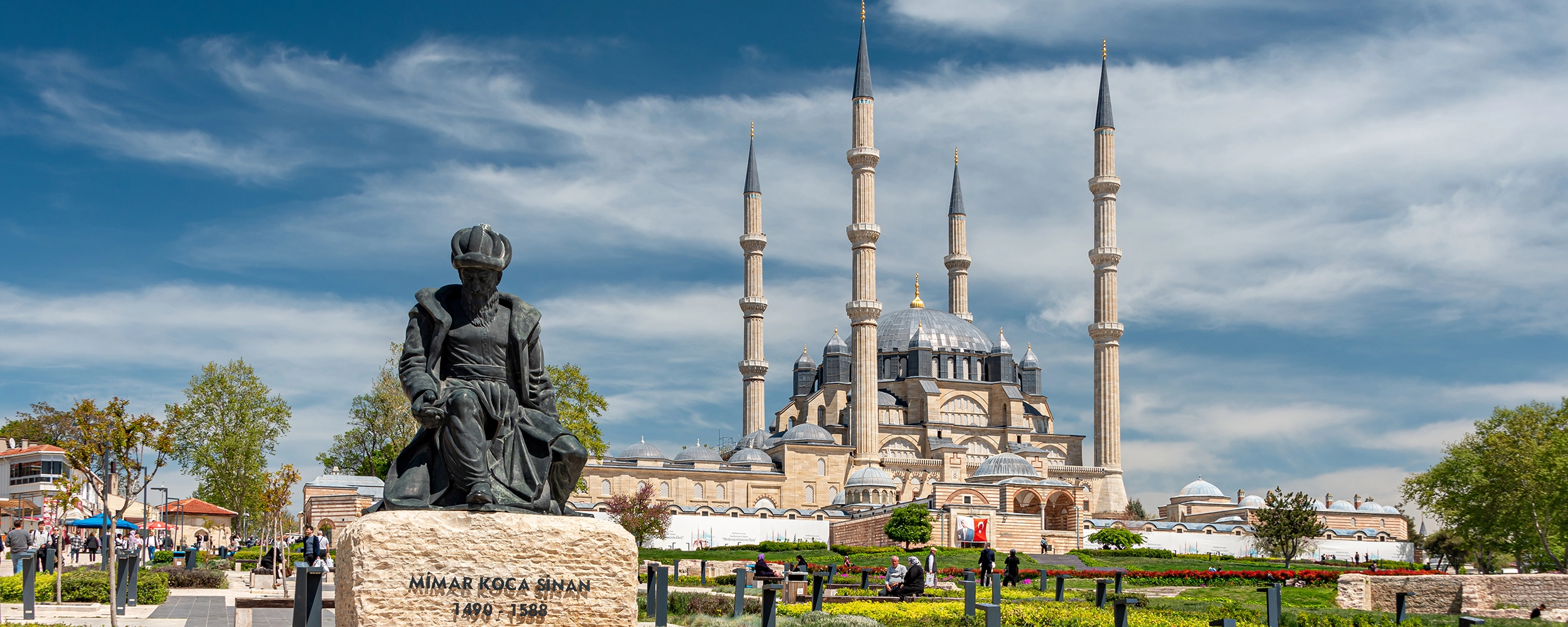
Discover Selimiye Mosque, historic bazaars, Ottoman bridges, palace remains, museums and one of Türkiye's richest imperial cities.
View Edirne GuideCombine the historic markets with palaces, mosques, bridges and neighborhoods that reveal the extraordinary diversity of the former Ottoman capital.
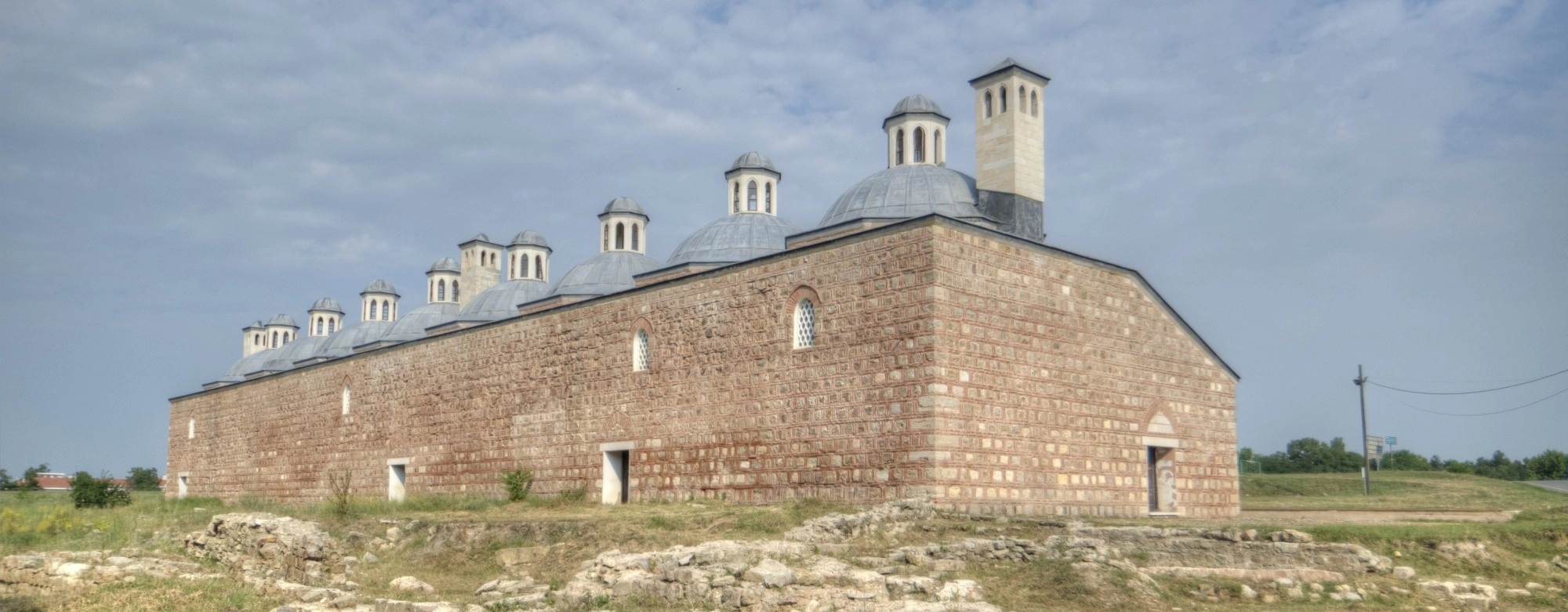
Explore Saray-ı Cedid-i Amire, the enormous imperial residence that made Edirne one of the Ottoman dynasty's great royal centers.
Explore Edirne Palace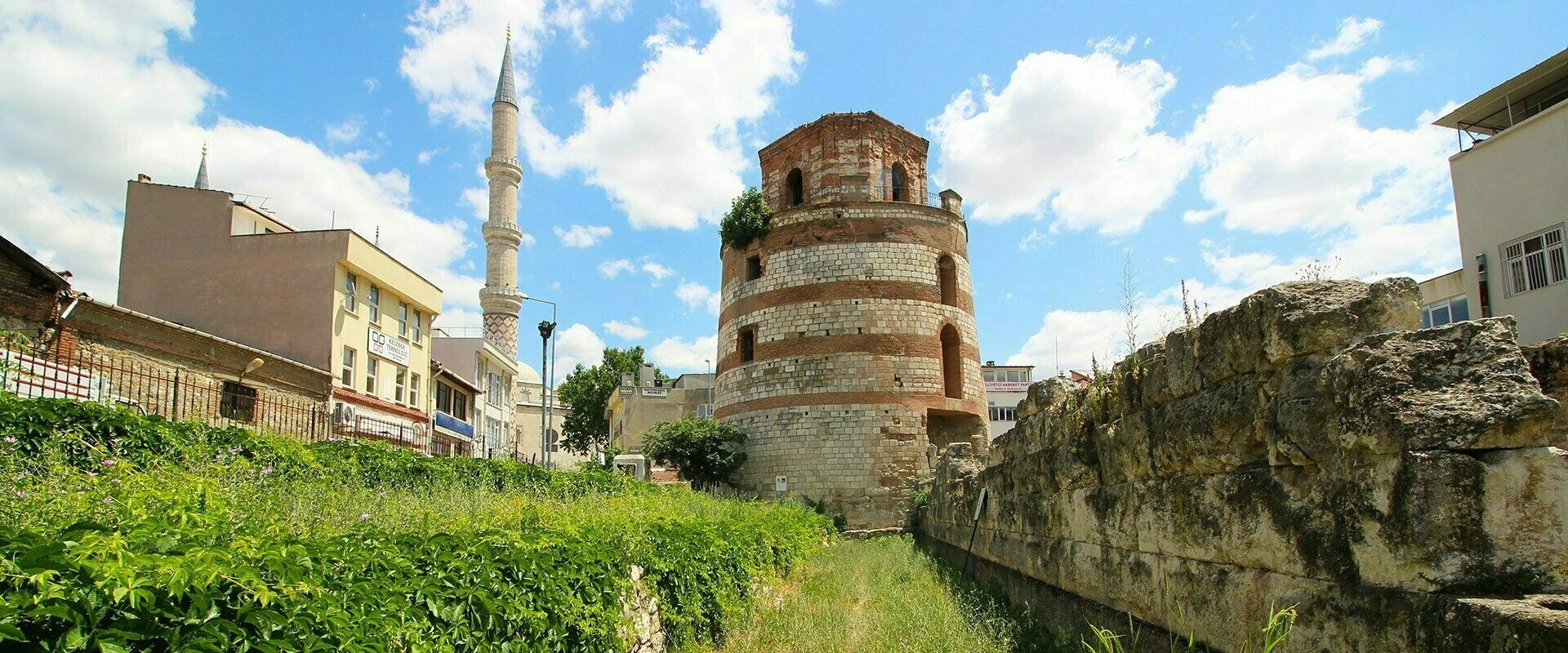
Discover the surviving fortification tower and archaeological layers of Roman Hadrianopolis beneath Ottoman Edirne.
Explore Macedonia Tower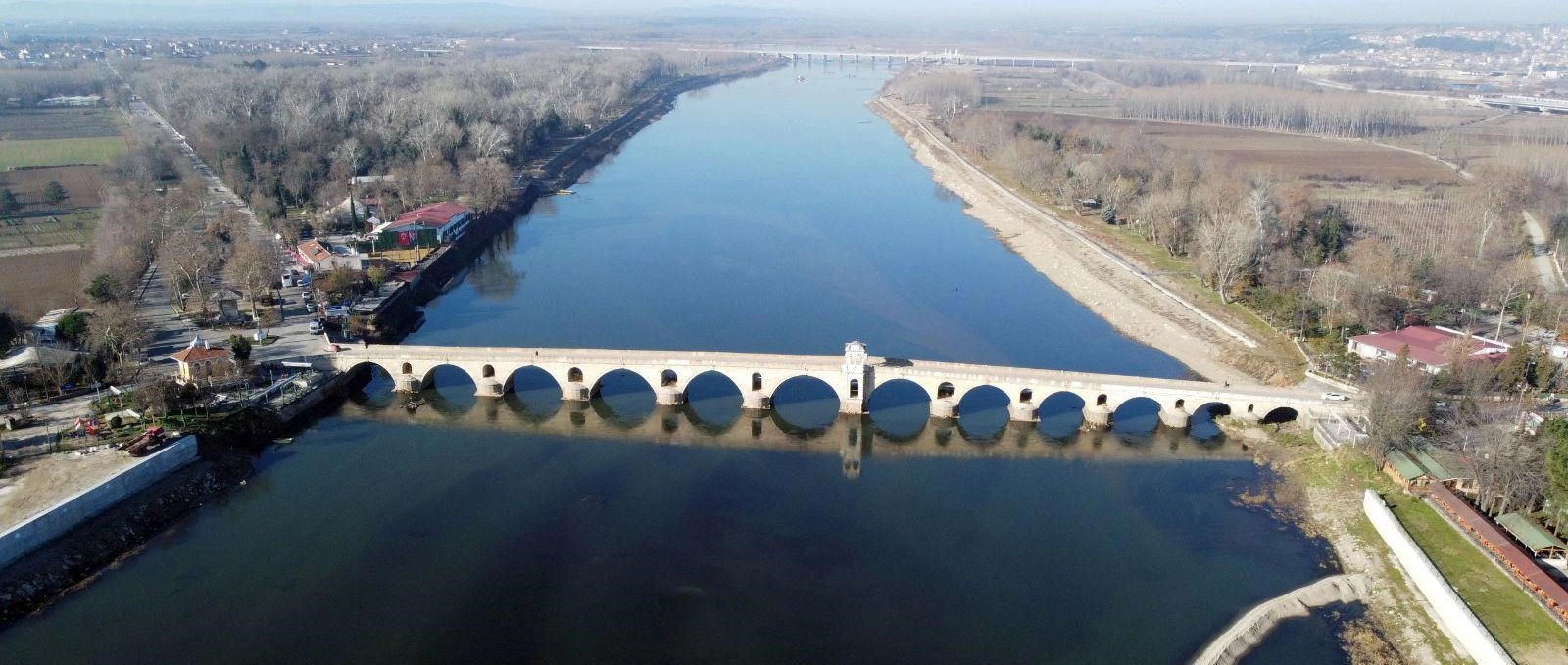
Continue from Edirne's commercial center toward the river landscape and one of the city's most beautiful Ottoman bridges.
Explore Meriç Bridge