Fresh Okra
Tender pods are used as a vegetable base rather than dried okra.






Balıklı Bamya literally means okra with fish. The name sounds surprising at first, but the dish makes perfect sense in the coastal food culture of Balıkesir's Edremit Gulf, where vegetables, olive oil and fresh seafood have long shared the same kitchen.
Regional culinary inventories list Balıklı Bamya among the characteristic foods of Balıkesir's Gulf districts. Academic research into the area's disappearing food traditions also records it in Burhaniye, noting that it was once much better known among older generations than it is today.
A documented preparation combines cleaned okra with chopped tomato, white-fleshed fish, lemon and olive oil. The fish is lightly cooked in olive oil, arranged in a baking dish, surrounded with the prepared okra and tomato, and finished in the oven. The result brings together the delicate flavour of fish, the freshness of summer okra and the acidity that keeps the dish bright rather than heavy.
Balıklı Bamya is recorded among the regional dishes of Balıkesir's coastal Gulf cuisine.
The dish replaces the meat found in many okra recipes with white-fleshed fish.
These three ingredients create the light, aromatic cooking base around the fish and okra.
Research in Burhaniye describes Balıklı Bamya as a dish remembered especially by older residents.
Essential information about one of Balıkesir's most distinctive combinations of seafood, vegetables and olive oil.
A traditional dish that cooks white-fleshed fish together with fresh okra, tomato, lemon and olive oil.
It is especially associated with Balıkesir's Edremit Gulf and appears in records of Burhaniye and wider Gulf cuisine.
The dish belongs naturally to the olive-oil-rich coastal cooking tradition of western Balıkesir.
One documented method lightly fries the fish first, then bakes it with okra, tomato, lemon and olive oil.
Balıklı Bamya reflects the agricultural, maritime and multicultural character of the Edremit Gulf.
Balıkesir is one of Türkiye's most geographically varied provinces. Its interior is strongly associated with grains, livestock and dairy, while the western districts around Ayvalık, Gömeç, Burhaniye and Edremit open toward the Aegean and the Gulf, where olive groves, vegetable gardens and seafood shape a very different culinary landscape.
Official descriptions of Balıkesir cuisine list Balıklı Bamya among dishes prepared especially in the Körfez Bölgesi, or Gulf Region, together with foods such as mussel soup, stuffed calamari and stuffed zucchini flowers.
The dish is particularly valuable because it survives only faintly in modern food memory. A field study of disappearing Edremit Gulf culinary traditions records Balıklı Bamya among the foods of Burhaniye and its villages and reports that the dish was much better remembered by older residents than by younger people living in the area.
That makes Balıklı Bamya more than an unusual recipe. It is also an example of the fragile knowledge carried by regional home cooking: techniques and combinations that can disappear quickly when they are no longer prepared regularly or passed from one generation to the next.
Its identity comes from the meeting of fresh summer okra, mild fish, tomato acidity and the richness of olive oil.
Tender pods are used as a vegetable base rather than dried okra.
Published descriptions specify white-fleshed fish rather than one compulsory species.
Tomato creates moisture, acidity and the characteristic red cooking base around the okra.
Lemon brightens the fish and also helps keep the okra tasting fresh and clean.
Olive oil connects the recipe directly with the cooking traditions of the Edremit Gulf and Ayvalık.
One documented regional method brings the fish and vegetables together in the oven.
The dish is substantial enough for a main course without relying on heavy sauces.
Its relative obscurity is part of what makes it important for travellers interested in regional food heritage.
Balıklı Bamya is a traditional Aegean-style preparation in which okra and fish are cooked together. In Balıkesir, the dish is associated especially with the western coastal districts around the Edremit Gulf.
The combination is unusual only if okra is imagined exclusively as a meat or vegetable stew ingredient. In coastal cooking, fish often takes the place of meat and is paired with vegetables that can absorb its juices without overwhelming its flavour.
The most useful documented description of the dish calls for fresh okra, seedless chopped tomato, white-fleshed fish, lemon juice and olive oil. The fish is lightly fried, then arranged with the okra and tomato and baked until the ingredients come together.
Balıklı Bamya literally means “okra with fish.”
Fresh okra provides the body and distinctive texture of the dish.
White-fleshed fish supplies a delicate savoury character without making the dish heavy.
The dish belongs to the culinary landscape of Balıkesir's Edremit Gulf.
The logic becomes clear when the dish is placed in the context of western Balıkesir. The Gulf provides fish, the surrounding agricultural land provides vegetables, and the olive groves provide one of the region's defining cooking fats.
Okra works especially well because its mild vegetal flavour does not compete strongly with fish. Tomato adds moisture and sweetness, lemon provides acidity and olive oil carries the flavours through the dish.
In many Anatolian recipes, okra is cooked with lamb or another meat. Balıklı Bamya follows the same broad idea of pairing okra with a savoury protein, but gives it a distinctly coastal character by using fish instead.
The recipe combines two resources that define the Gulf landscape: seafood and summer vegetables.
Neither okra nor white fish needs aggressive seasoning to be expressive.
Tomato and lemon lift both ingredients and keep the dish balanced.
Olive oil ties the fish and vegetables together in a recognizably Aegean cooking style.
Balıklı Bamya is best understood as a Körfez Bölgesi dish rather than a recipe associated equally with every part of Balıkesir Province.
Official regional food descriptions place it among foods made especially in the Gulf area. Academic fieldwork also identifies it in Burhaniye, where researchers classified it among local dishes that were becoming less familiar to younger generations.
The wider culinary setting includes Ayvalık, Gömeç, Burhaniye and Edremit, districts where olive oil, wild greens, seafood and seasonal vegetables appear repeatedly in traditional cooking.
Field research records Balıklı Bamya among the district's disappearing traditional foods.
The nearby cuisine shares the same strong relationship with seafood, olive oil and vegetable cooking.
Local research notes the importance of okra cultivation in the district's agricultural life.
The Gulf provides the broader cultural and geographical setting in which the dish makes sense.
Balıklı Bamya is made with fresh okra. Tender, relatively small pods are generally easier to cook evenly and produce a more delicate texture than large, fibrous ones.
An Edremit Gulf culinary study notes that okra cultivation has been particularly important around Gömeç, which helps explain why the vegetable has a strong place in the food culture of this coastal area.
Careful trimming matters. The cap should be cleaned without cutting deeply into the pod, because opening the seed chambers too much can encourage the mucilaginous texture for which okra is known.
Use firm, bright okra with no major bruising or soft patches.
More tender pods are easier to cook alongside fish without becoming fibrous.
Clean the stem end while keeping the body of the pod as intact as possible.
Fresh okra connects Balıklı Bamya strongly with warm-season cooking.
A documented Edremit Gulf preparation specifies white-fleshed fish, but it does not require one single species. This is useful because the dish can follow the day's catch rather than depend on a fixed fish.
The ideal choice is a fish with flesh firm enough to withstand light frying and a second stage of cooking with the vegetables. Very delicate fillets can break apart too easily during baking.
Modern cooks may choose locally available white-fleshed fish according to season and market supply. The important point is not to turn one modern choice into a false “official” recipe: the traditional description is broader and simply asks for white fish.
This is the clearest characteristic specified in documented regional preparation.
A fish that holds together during frying and baking is easier to work with.
For a simple dish with few ingredients, the quality of the fish is especially important.
The regional sources available do not establish one fish as the only authentic option.
One published description of Balıklı Bamya gives a particularly interesting step: after the okra is washed and cleaned, it is combined with small pieces of deseeded tomato and left to rest in the refrigerator for approximately half a day.
This detail is valuable because it shows that the recipe is not simply “fish added to an ordinary okra stew.” The vegetables are prepared as their own component before meeting the fish in the baking dish.
Resting also allows tomato juices to begin coating the okra. When the mixture later goes into the oven with lemon and olive oil, it already has moisture around it, helping protect the pods from drying during baking.
Wash and trim the pods before they are combined with tomato.
The documented method uses chopped tomato with the seeds removed.
The vegetable mixture is left in the refrigerator before the final cooking stage.
The tomato helps create the juicy environment needed for oven cooking.
The regional preparation begins with fresh okra. The pods are washed and trimmed, then combined with finely chopped, deseeded tomato and allowed to rest chilled.
The white-fleshed fish is prepared separately and lightly fried in olive oil. It is not cooked aggressively; the goal is to give it structure before the oven stage.
The fish is arranged in a baking tray or dish. The okra-and-tomato mixture is placed around and between the fish pieces, then lemon juice and olive oil are added before the dish goes into the oven.
The finished meal should preserve the identity of both major ingredients. The fish remains recognizable, while the okra becomes tender in the tomato-rich cooking juices.
Wash the pods and trim the caps carefully.
Combine with chopped, deseeded ripe tomato.
Allow the vegetable mixture time to sit chilled before cooking.
Use olive oil and cook only enough to give the fish some structure.
Place fish in the baking dish and distribute the okra and tomato around it.
Add lemon and olive oil, then cook until the fish and okra are done.
Olive oil is not an incidental ingredient in Balıklı Bamya. It places the dish squarely inside the culinary world of western Balıkesir, one of Türkiye's major olive-growing landscapes.
Ayvalık, Edremit, Gömeç, Burhaniye and neighbouring districts are deeply associated with olive cultivation and olive-oil cooking. In local cuisine, oil is used not only for cold vegetable dishes but also for fish, greens, legumes and oven preparations.
In Balıklı Bamya, olive oil has several functions: it is used for the initial fish cooking, it protects the ingredients in the oven and it softens the combined acidity of tomato and lemon.
Olive oil is one of the strongest culinary markers of the Edremit Gulf.
The documented recipe lightly cooks the fish in olive oil before baking.
Oil helps prevent the lean fish and okra from drying during baking.
The richness of the oil rounds the sharpness of the acidic ingredients.
The first impression is lighter than many visitors expect from an okra main course. White fish provides gentle savouriness, while the okra contributes a fresh green flavour and soft but distinct texture.
Tomato gives sweetness and acidity, lemon sharpens the whole dish and olive oil adds body. Because the seasoning is relatively restrained, the quality of the ingredients remains easy to taste.
A well-made version should not taste strongly fishy or oily. The appeal comes from balance: clean seafood, tender vegetables, ripe tomato, citrus brightness and enough olive oil to bring everything together.
White-fleshed fish keeps the savoury flavour mild rather than overpowering.
Okra and tomato give the dish a clear summer-vegetable character.
Lemon prevents the fish-and-olive-oil combination from feeling heavy.
Tomato and olive oil create a moist cooking base around the okra and fish.
Okra naturally contains mucilage, and its texture depends heavily on how it is handled. That does not mean a properly cooked Balıklı Bamya should become a thick or gluey stew.
Keeping the pods relatively intact, avoiding excessive stirring and using acidic ingredients such as tomato and lemon all help the dish maintain a cleaner texture.
The oven method also differs from long, heavily stirred stovetop cooking. The okra can soften in place around the fish without being repeatedly broken apart.
Trim the cap carefully instead of opening the pod unnecessarily.
Tomato and lemon are both natural parts of the traditional flavour profile.
Gentle handling helps the pods remain intact.
The goal is tender okra, not vegetables cooked until they collapse.
Balıklı Bamya is most naturally connected with the fresh okra season, which makes it especially suited to summer and early-autumn cooking depending on local harvest conditions.
This seasonality matters because fresh, tender pods are central to the dish. Older okra can become fibrous, while frozen or preserved alternatives change the texture and character of the traditional preparation.
The fish element can also vary with the catch. A genuinely local version therefore reflects two calendars at once: what is coming from the vegetable fields and what is available from the sea.
Warm weather offers the best chance of finding tender local pods.
Summer tomatoes naturally suit the juicy sauce around the okra.
The specific fish can follow what is fresh and suitable at the market.
The dish reflects a kitchen tradition built around available ingredients rather than rigid standardization.
Balıklı Bamya works best as a main dish. The fish already provides the protein, while the okra and tomato function almost as both vegetable and sauce.
It is naturally suited to serving warm from the oven, although like many olive-oil dishes it can remain pleasant as it settles slightly and the flavours become more integrated.
The plate does not need complicated accompaniments. Bread, a simple seasonal salad or a few additional vegetable dishes are enough to turn it into a complete coastal meal.
The combination of fish and vegetables makes the dish complete enough to stand alone.
Warm service highlights the aromas of fish, tomato, lemon and olive oil.
Good bread is ideal for the tomato-and-olive-oil juices left on the plate.
Fresh salads and other light vegetables complement rather than compete with the dish.
Across Türkiye, okra is often cooked with meat, especially in dishes where tomato and acidity balance the vegetable's texture. Balıklı Bamya keeps the same broad structure but changes the protein completely.
Fish cooks more quickly than red meat and gives the dish a lighter flavour. That means the vegetable preparation and timing become especially important: the okra must be tender without forcing the fish to stay in the oven too long.
The result feels distinctly coastal. Rather than an inland stew built around meat and long simmering, Balıklı Bamya reflects the Edremit Gulf habit of bringing sea products directly into vegetable-based cooking.
Fish requires much less cooking time than lamb or beef.
White fish lets tomato, lemon and okra remain clearly recognizable.
Using fish instead of meat reflects the Gulf's maritime food culture.
The final bake allows the ingredients to cook together without turning into a long-simmered stew.
Balıkesir cuisine is remarkable because a single province contains several very different food landscapes. Balıklı Bamya represents the western coastal side of that story particularly well.
The dish links okra cultivation, olive oil and fishing in one recipe. Those ingredients are not abstract symbols; they are products that have long shaped the everyday economy and cooking of districts around the Edremit Gulf.
Its rarity today also gives it cultural importance. Research describing Balıklı Bamya as a fading Burhaniye dish shows how quickly regional knowledge can narrow when a recipe stops appearing regularly in homes and restaurants.
Okra connects the dish with the vegetable-growing traditions of the Gulf.
Fish expresses Balıkesir's long coastline and access to Aegean seafood.
Olive oil provides the culinary link that holds the entire preparation together.
Its fading visibility makes documentation and continued cooking especially valuable.
Fish cooked with okra is not exclusive to Balıkesir. Similar combinations are found elsewhere around the Aegean, including Greek and Cretan cooking traditions.
What makes the Balıkesir version important is its documented place inside the Edremit Gulf culinary landscape, particularly the way it brings together local olive oil, okra and coastal fish.
It is better to understand the dish as part of a shared Aegean food world than to force a single, unsupported claim of invention. The region has experienced centuries of travel, migration and cultural exchange, and its food naturally reflects that complexity.
Regional records clearly establish the dish as part of local culinary heritage.
Okra, tomato, fish, lemon and olive oil appear widely around the Aegean basin.
Migration and long-term contact helped shape the broader food culture of Ayvalık and neighbouring districts.
Available sources support regional association more strongly than a single point of invention.
Yes. A basic Balıklı Bamya made with fish, okra, tomato, lemon and olive oil is suitable for people who eat fish but avoid red meat and poultry.
It is not vegetarian or vegan because fish is a defining ingredient rather than an optional garnish.
Restaurant versions can vary, so anyone following a strict diet should still confirm whether additional ingredients such as meat stock, butter or other animal products have been used.
Fish is central to the recipe and gives the dish its name.
The traditional concept replaces meat with seafood.
The documented preparation uses olive oil rather than depending on butter.
Individual restaurants may adapt old recipes in ways that differ from the basic version.
The core combination of fresh fish, okra, tomato, lemon and olive oil is naturally gluten-free.
The traditional cooking method does not require flour, bread crumbs or wheat-based thickening. However, restaurant kitchens may handle breaded seafood or other gluten-containing foods in the same preparation area.
Travellers with coeliac disease or a medically strict gluten-free diet should therefore confirm cross-contact and ask whether the fish has been dusted with flour before frying.
The documented regional recipe does not rely on flour to thicken the dish.
Ask whether any flour was added before the initial frying stage.
Cross-contact can matter in restaurant kitchens that also cook breaded seafood.
Always ask directly when gluten avoidance is medically important.
Because Balıklı Bamya already combines fish, vegetables, tomato and olive oil, the best accompaniments are simple and fresh.
Village bread is useful for the juices, while a tomato-cucumber salad, boiled wild greens, seasonal herbs or a small plate of local cheese can round out the meal without making it too rich.
For a broader Balıkesir tasting table, the dish also sits naturally beside other coastal foods such as stuffed zucchini flowers, olive-oil vegetables and local meze.
Use it to collect the tomato, lemon and olive-oil juices.
Fresh tomato, cucumber and herbs continue the light summer character.
Simple Aegean-style greens pair naturally with the seafood and olive oil.
A small portion of Balıkesir cheese adds a salty contrast to the main dish.
Another delicate Gulf-region vegetable dish for a seasonal table.
Local olives reinforce the coastal identity without requiring another heavy course.
Begin with fresh, tender okra. Wash it, dry it and trim the caps carefully. Combine the okra with chopped ripe tomato from which the watery seed mass has been removed. For a version close to the published regional description, let this mixture rest chilled for several hours.
Prepare a firm white-fleshed fish in portions. Heat olive oil and cook the fish briefly on each side, just enough to give the exterior some structure. Do not cook it completely at this stage.
Arrange the fish in an oven dish and distribute the okra-and-tomato mixture around it. Add lemon juice, olive oil and salt. A little black pepper can be used if desired, but heavy spice is unnecessary.
Bake until the okra is tender and the fish is cooked through. The exact time depends on the thickness of both fish and okra, so visual and textural checks are more useful than one rigid number.
Prepare the okra without cutting deeply into the pods.
Combine with chopped, deseeded ripe tomato and chill.
Portion a firm white-fleshed fish suitable for oven cooking.
Give the fish a short initial cook in olive oil.
Use acidity and olive oil to create the characteristic cooking juices.
Finish gently until both fish and okra are properly cooked.
Balıklı Bamya uses few ingredients, so small technical mistakes are easy to notice.
Old or oversized okra can stay fibrous even after the fish is cooked. Cutting too deeply into the pods can increase mucilage, while excessive stirring can break the okra apart.
The fish presents the opposite problem: if it is fully cooked during the initial frying stage, it may become dry by the time the okra finishes in the oven. The first cooking should therefore be brief.
Choose tender pods so the vegetable can cook on the same schedule as the fish.
Trim carefully to avoid unnecessary release of mucilage.
Remember that the fish will continue cooking in the oven.
Enough tomato and olive oil are needed to stop the okra from drying.
Acidity should brighten the dish rather than dominate the fish.
Strong spice can hide the delicate relationship between seafood and vegetables.
Balıklı Bamya is a particularly useful dish for understanding the Edremit Gulf because it combines three major parts of the regional landscape on one plate: the sea, vegetable agriculture and olive groves.
It also demonstrates the flexibility of Aegean home cooking. Fish does not have to appear only grilled or fried; it can become part of a vegetable dish in which olive oil and acidity are just as important as the seafood itself.
The wider Gulf is culturally diverse, shaped over time by local communities, migration and exchange. Research on Ayvalık and neighbouring districts repeatedly emphasizes the richness created by this mixture of agricultural and cultural influences.
Balıklı Bamya therefore feels both specific and connected: specific to the food heritage of Balıkesir's coast, yet recognizably part of the larger Aegean world of fish, vegetables and olive oil.
Fish and shellfish have a strong place in the coastal districts of Balıkesir.
Fresh produce gives the cuisine a seasonal and highly local rhythm.
Olive oil provides the dominant cooking language of the western coast.
Rare dishes preserve combinations that may disappear when home cooking changes.
It would be more accurate to call Balıklı Bamya a fading or disappearing regional dish rather than completely forgotten.
A study based on interviews in the Edremit Gulf recorded Balıklı Bamya among the traditional foods of Burhaniye and reported that, apart from older people, many local residents no longer knew the dish.
That finding helps explain why travellers may struggle to see Balıklı Bamya on ordinary restaurant menus even though it appears in official and academic inventories of Balıkesir food culture.
For culinary heritage, this gap is important. A dish can still be historically local while being difficult to order today. Preservation depends not only on writing recipes down, but also on continuing to cook and teach them.
The dish remains visible in Balıkesir culinary records and regional research.
Fieldwork suggests knowledge of the dish has weakened across generations.
Do not expect every restaurant in Balıkesir to have it on the menu.
Its unusual combination makes it especially valuable as part of Gulf culinary identity.
The most important thing for travellers to understand is that Balıklı Bamya is a regional heritage dish, not a guaranteed menu item.
Your best chances are in the Edremit Gulf, especially in places that take local food seriously: traditional restaurants, family-run kitchens, culinary events and establishments that prepare seasonal dishes rather than relying entirely on a fixed menu.
If tasting it is a priority, ask ahead. Use the exact name Balıklı Bamya and be prepared for the answer that it is not available that day. That scarcity is part of the reality of searching for a dish that research already describes as fading from local memory.
Burhaniye, Ayvalık, Gömeç and Edremit provide the most relevant culinary context.
Calling ahead is more reliable than assuming the dish will appear on a permanent menu.
Fresh summer produce makes the dish easier to prepare traditionally.
Home-style and regionally focused kitchens may be more promising.
Old household dishes rarely exist in one perfectly standardized restaurant version.
The species can change according to what is available and suitable that day.
There is no reason to expect Balıklı Bamya to be widely available across the entire province. The strongest geographical lead is the Edremit Gulf.
Burhaniye is particularly important because academic fieldwork explicitly records the dish there. Ayvalık, Gömeç and Edremit are also logical places to ask because they share the Gulf's seafood, olive-oil and vegetable traditions.
Availability may depend on season, the day's fish and whether the kitchen still knows the recipe. For that reason, Balıklı Bamya is better approached as a dish to seek out than as one that can be casually ordered anywhere in Balıkesir.
The strongest documented local connection for the disappearing traditional dish.
A natural place to ask about rare seafood-and-vegetable combinations in local cuisine.
Its strong okra-growing tradition makes it relevant to the ingredient side of the dish.
Part of the same coastal culinary world of olive oil, vegetables and seafood.
For travellers interested in regional food history, Balıklı Bamya is one of the most intriguing dishes in Balıkesir because it reveals a side of the province that famous foods such as höşmerim or Ayvalık toast cannot show.
The combination itself is memorable: delicate fish with tender okra, tomato, lemon and olive oil. But the deeper reason to seek it out is cultural. This is a dish that appears in local records precisely at a moment when knowledge of it is becoming less common.
Finding Balıklı Bamya therefore offers more than another meal. It is an opportunity to taste a surviving fragment of the Edremit Gulf's older home-cooking repertoire.
Fish and okra together remain unusual even for many Turkish diners.
The dish captures the meeting of sea, olive groves and vegetable agriculture.
It belongs to a group of local recipes that risk disappearing from everyday memory.
Fresh okra and good tomatoes show the recipe at its most convincing.
Continue through Balıkesir's extraordinary food geography with other coastal vegetables, cheeses, seafood traditions and inland classics.
Discover another delicate Gulf-region vegetable dish built around olive oil and seasonal produce.
Continue with one of Ayvalık's most characteristic small fish and explore the seafood side of the region.
Explore another seasonal vegetable tradition shaped by olive oil and bright acidity.
See how Balıkesir combines summer vegetables with its remarkable cheese culture.
Discover the coastal dairy traditions that add another dimension to the Gulf table.
Move inland to one of the province's great communal wheat-and-meat traditions.
Finish with a fragrant ceremonial rice sweet associated with celebrations and special occasions.
Continue through one of Türkiye's most diverse provinces for food, archaeology, coastline and rural culture.
Balıklı Bamya is a traditional dish combining fresh okra with white-fleshed fish, tomato, lemon and olive oil.
The literal translation is “okra with fish” or “fish with okra.”
It is documented as part of Balıkesir's Edremit Gulf culinary tradition and appears in regional inventories and academic research.
It is especially associated with the Edremit Gulf, including a documented connection with Burhaniye.
It belongs to the wider Gulf culinary world in which Ayvalık is important, but the strongest field-study record specifically identifies it in Burhaniye.
It is better described as a fading traditional dish. Research in Burhaniye found that it was remembered especially by older residents.
A documented regional recipe specifies white-fleshed fish rather than one mandatory species.
A firm white fish such as sea bass can work in a modern home version, although regional sources do not identify one single required species.
In one documented method, the fish is lightly fried in olive oil before being arranged with the okra and baked.
Yes. A well-documented Edremit Gulf preparation finishes the assembled fish, okra and tomato in the oven.
Fresh okra and ripe tomato are the key vegetables in the documented recipe.
Lemon adds acidity, brightens the fish and complements the tomato-and-olive-oil cooking base.
Yes. Olive oil is central both to the initial fish cooking and to the final baked dish.
The most detailed academic description available emphasizes okra, tomato, fish, lemon and olive oil rather than presenting garlic as essential.
Yes, one documented method specifically describes using chopped tomatoes with the seeds removed.
In the documented recipe, the cleaned okra and chopped tomato are rested in the refrigerator for roughly half a day before assembly.
Proper trimming, gentle handling and the use of tomato and lemon help keep the okra texture controlled rather than excessively mucilaginous.
Tender small-to-medium pods are generally easier to cook evenly and are less likely to be fibrous.
No. The basic flavour profile is based more on fish, tomato, lemon and olive oil than on hot spices.
No. Fish is a defining ingredient.
Yes, the basic recipe is suitable for a pescatarian diet.
The core recipe is naturally gluten-free, but restaurant diners should confirm that the fish was not floured and that cross-contact is controlled.
The dish is most naturally associated with the fresh okra and ripe tomato season in the warmer months.
No. It is much less common than meat-and-okra dishes, which is one reason Balıklı Bamya stands out.
Similar fish-and-okra combinations exist elsewhere in the Aegean, but Balıklı Bamya is clearly documented within Balıkesir's Gulf cuisine.
Ask in regionally focused restaurants and traditional kitchens around Burhaniye, Ayvalık, Gömeç and Edremit, but expect seasonal and limited availability.
No. It is a relatively rare heritage dish rather than a standard restaurant item across the province.
Village bread, simple seasonal salads, boiled greens, olives and other light Aegean dishes are natural companions.
Fresh fish, tender okra, ripe tomato, balanced lemon, good olive oil and careful timing are the most important elements.
It preserves a distinctive part of Edremit Gulf food heritage that research suggests is becoming less familiar across generations.
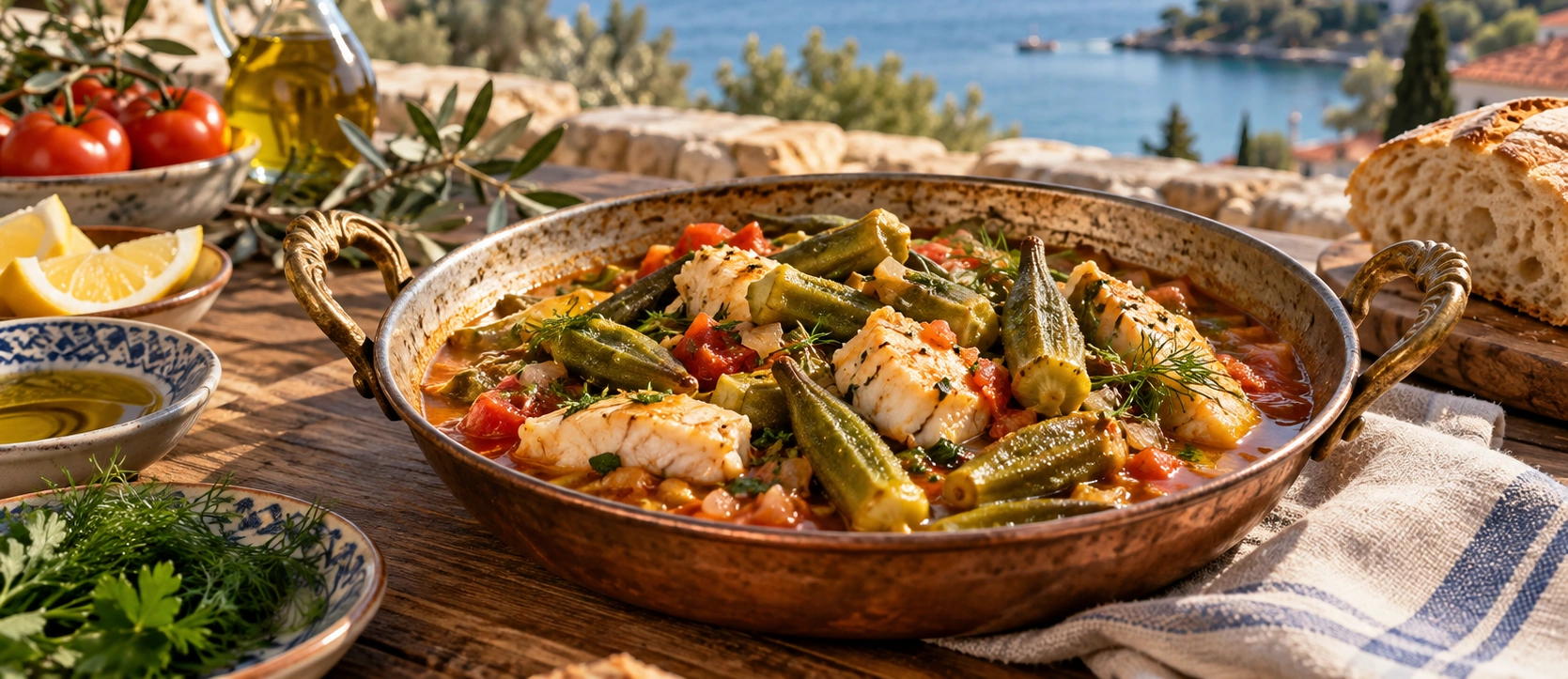
The strongest photography should immediately communicate the unusual pairing: recognizable pieces of white fish surrounded by glossy green okra, softened tomato and a light olive-oil sheen.
Show fish portions and okra together in a rustic oven dish with visible tomato and lemon.
Capture tender okra beside flaky white fish so the two main ingredients are unmistakable.
Include raw okra pods to connect the finished dish with seasonal Gulf agriculture.
Show the fish before cooking to make the seafood element visually clear.
A small bottle of local olive oil and cut lemon can explain the flavour profile without text.
Use rustic ceramics, bread, olives and a softly blurred coastal or olive-grove setting to connect the dish with place.
Explore the Edremit Gulf through olive oil, seafood, seasonal vegetables, village traditions and rare regional dishes such as Balıklı Bamya.
Custom-designed private programs can combine markets, coastal towns, olive-oil producers, local cheeses, seafood and seasonal Balıkesir dishes according to your dates and interests.
Explore Balıkesir's Gulf through seasonal vegetables, olive oil, seafood and rare local dishes connected with Burhaniye, Ayvalık, Gömeç and Edremit.
Request This Experience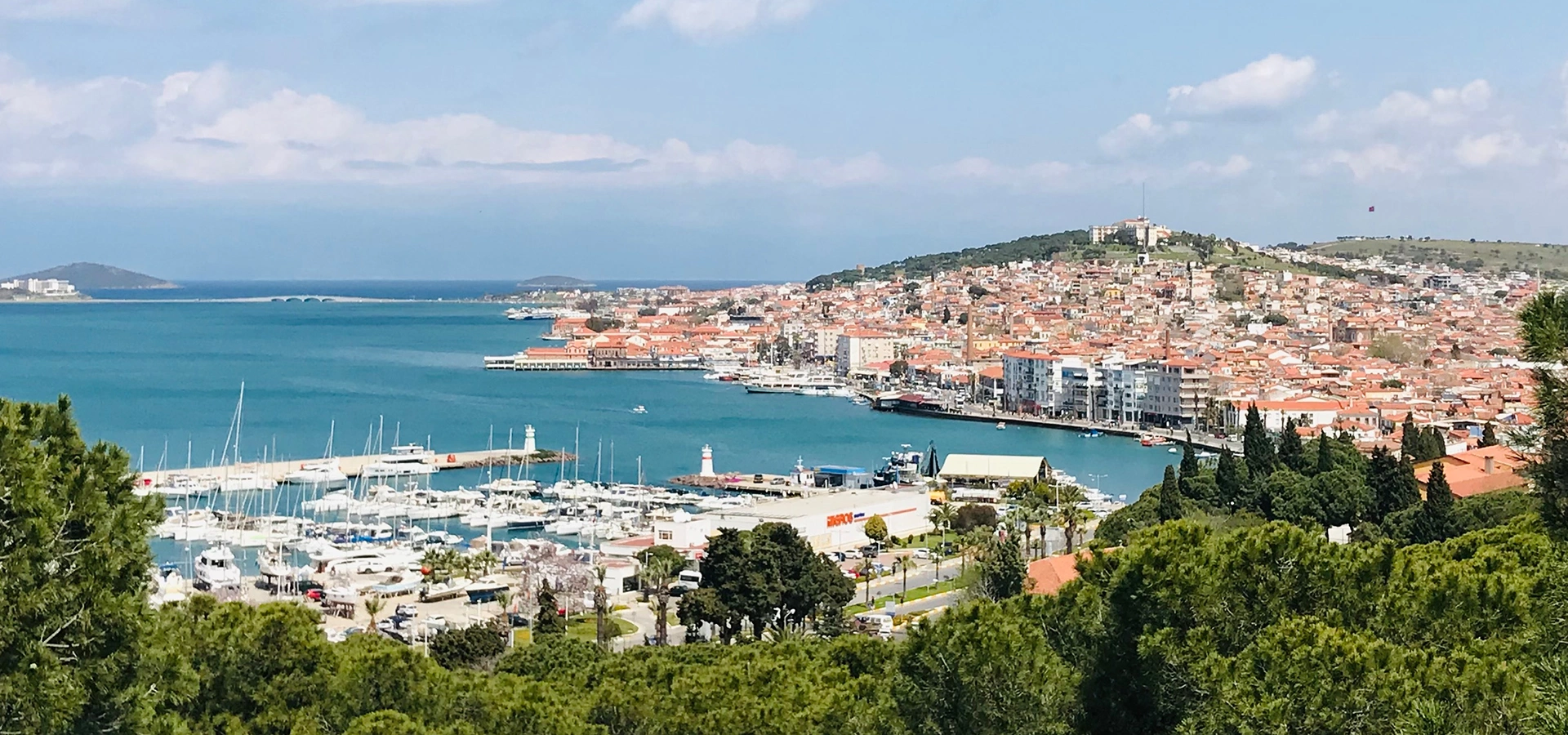
Combine Ayvalık's olive-oil culture with Gulf seafood, regional cheeses, local markets, seasonal vegetables and the culinary heritage of western Balıkesir.
Request This Tour