Very Small Size
Papalina is considerably smaller than the larger fish normally ordered as individual main courses.






Papalina is one of the small fish most closely associated with the seafood culture of Ayvalık and Cunda Island on Türkiye's northern Aegean coast. Traditionally served fried whole, it is prized less for large flakes of fish than for its delicate size, crisp texture and unmistakable connection with the local seaside table.
Visitors encounter papalina in the same culinary world as olive-oil dishes, Aegean herbs, calamari, octopus, shellfish and other freshly caught seafood. The Balıkesir Provincial Directorate of Culture and Tourism specifically names papalina among the seafood traditionally associated with Ayvalık.
One detail deserves particular care. The name papalina is not used consistently in every published source. Some older descriptions call it a small or juvenile sardine, while a number of contemporary Ayvalık sources identify the fish served under the name papalina with çaça or European sprat, Sprattus sprattus. For travellers, the most useful approach is to understand papalina first as a strong local culinary name rather than assuming every historical reference uses modern biological terminology in exactly the same way.
Papalina has become strongly associated with the fish restaurants and seaside food culture of Ayvalık and Cunda.
Its tiny size is central to both its cooking method and the experience of eating it.
Papalina is traditionally prepared simply so the exterior becomes crisp while the fish remains delicate inside.
Availability depends on the season, local catch and what fish restaurants can obtain fresh.
Essential information about one of the northern Aegean coast's most distinctive small-fish traditions.
Strongly associated with Ayvalık and Cunda Island on the northern Aegean coast of Balıkesir Province.
A very small schooling fish traditionally cooked and served whole. Modern local sources frequently identify papalina with çaça or European sprat.
The fish is commonly lightly floured and fried quickly until the exterior becomes crisp.
Papalina is especially famous on Cunda, where seafood restaurants form an important part of the island's culinary identity.
Ayvalık's relationship with papalina grew from a much wider culture of fishing, island life and eating according to the sea.
Ayvalık faces a remarkable marine landscape of islands, channels and sheltered coastal waters. For generations, fishing has formed part of everyday life in the district alongside olive growing, olive-oil production and the preparation of Aegean vegetables and herbs.
Within this environment, papalina became one of the small fish most strongly associated with the local table. Its reputation is particularly connected with Cunda, also known as Alibey Island, where waterfront fish restaurants are famous for serving seafood together with meze and olive-oil dishes.
Official Balıkesir tourism material specifically highlights papalina among the foods visitors encounter on Cunda. Older tourism publications also describe the fish as one of Ayvalık's distinctive local flavours.
The attraction is partly its simplicity. A handful of tiny fish, fresh from the sea and cooked quickly, becomes an immediately recognizable local dish requiring very little elaboration.
Papalina stands out through its very small size, delicate bones, crisp frying style and close connection with Cunda's seafood culture.
Papalina is considerably smaller than the larger fish normally ordered as individual main courses.
Fresh fish have the bright silvery appearance typical of small schooling fish.
The small body and fine bones make whole-fish preparation practical when the fish are appropriately sized and prepared.
Because the fish are tiny, prolonged cooking would dry them rapidly. Traditional frying is therefore brief.
One of the pleasures of papalina is the contrast between a lightly crisp surface and the delicate fish beneath it.
Papalina is commonly presented as many small whole fish rather than as fillets.
The preparation is usually restrained so the flavour of fresh fish remains central.
Its strongest culinary meaning comes from its long association with Ayvalık and Cunda.
Papalina is the regional name used in Ayvalık for a very small fish traditionally served fried, particularly in and around Cunda Island.
Modern Turkish fisheries terminology identifies çaça as Sprattus sprattus, the European sprat, and several contemporary Ayvalık food references use this identification for papalina.
However, older tourism and culinary descriptions sometimes call papalina a small sardine or even the young form of a sardine. This inconsistency is important because local culinary names do not always correspond neatly with scientific taxonomy.
For that reason, travellers researching papalina should distinguish between the culinary name used on Ayvalık menus and the precise biological identification of any particular catch.
Papalina is first and foremost a name deeply embedded in Ayvalık food culture.
Contemporary sources frequently identify papalina with the European sprat.
Some older sources describe it as a small sardine, creating long-running terminology confusion.
If exact species identification matters to you, ask what fish is currently being sold under the name papalina.
This is one of the most confusing questions surrounding papalina.
Some long-established Ayvalık tourism descriptions refer to it as a small sardine. That description has consequently been repeated in travel writing and restaurant discussions for many years.
At the same time, modern local guides increasingly describe Ayvalık papalina as çaça. Turkish fisheries sources identify çaça scientifically as Sprattus sprattus, known in English as European sprat.
The safest conclusion is therefore not to pretend that every historical use of the word papalina has been taxonomically identical. The culinary name has developed its own life in Ayvalık, while biological terminology has sometimes been used loosely.
A regional culinary name familiar throughout Ayvalık and Cunda.
The Turkish common name officially associated with Sprattus sprattus.
A separate common name that appears frequently in older descriptions of papalina.
Tiny silvery schooling fish can appear similar, and culinary names often predate modern scientific classification.
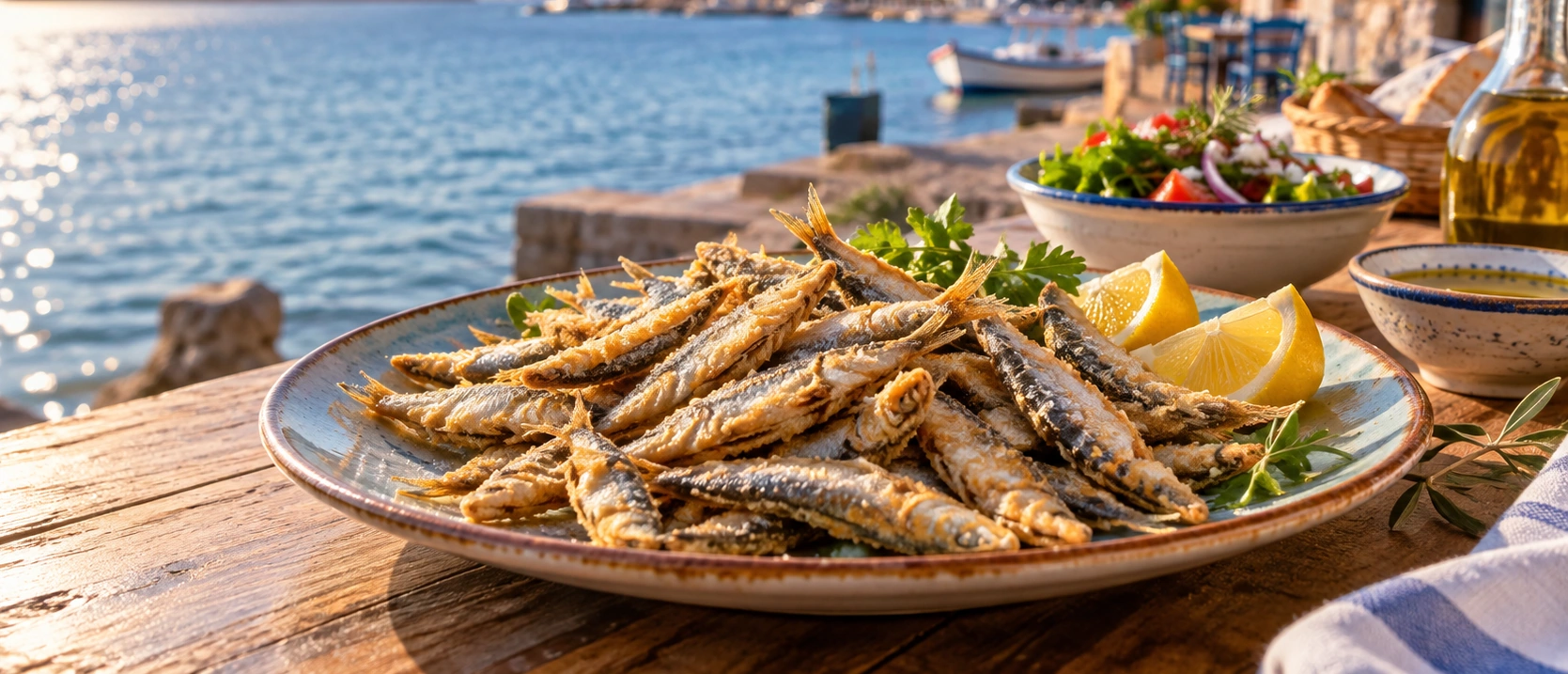
Papalina is immediately recognizable on the plate by its small scale. Instead of one large fish occupying the plate, a serving usually consists of numerous little fish arranged together.
Before cooking, the fish have a slim body and silvery skin typical of small pelagic species. Their compact dimensions are one reason whole-fish frying became such a natural preparation.
After frying, the surface becomes lightly golden while much of the shape of the individual fish remains visible.
The compact size is one of papalina's defining visual characteristics.
Fresh fish should retain the bright appearance expected from small sea fish.
The fish normally remain recognizable after frying.
A light flour coating and hot oil create the characteristic crisp fried appearance.
Papalina offers a relatively delicate marine flavour rather than the dense richness of a large oily fish steak or fillet.
Much of the pleasure comes from texture. Proper frying creates a crisp exterior, while the tiny fish remain tender underneath.
Because papalina is traditionally eaten in several small bites, the experience can feel closer to sharing a hot seafood snack or meze than eating a conventional plated fish fillet.
Freshness and frying technique make a major difference. Papalina that is cooked too slowly or kept waiting after frying quickly loses the light crispness that gives the dish much of its appeal.
The flavour is lighter than many larger and more strongly flavoured fish.
A clean sea flavour should remain noticeable beneath the fried surface.
Texture is central to a well-prepared serving.
The small size makes papalina naturally suited to informal shared eating.
Papalina should be understood as a seasonal seafood rather than something guaranteed throughout the year.
Local Ayvalık sources particularly associate papalina with late summer and the beginning of autumn, with August and September frequently mentioned as an important period.
However, seafood does not follow a restaurant calendar with absolute precision. Weather, water conditions, fishing regulations, yearly abundance and the daily catch can all affect availability.
Travellers specifically hoping to try papalina should therefore ask restaurants what has actually arrived fresh rather than assuming that the printed menu proves the fish is available.
Papalina is particularly associated with the latter part of the summer season.
September is also commonly associated with local papalina availability.
A fishing town's real menu ultimately depends on what comes from the sea.
If papalina is important to your visit, confirm availability before ordering your entire meal.
The classic preparation is refreshingly simple: small whole fish are cleaned or prepared as necessary, lightly coated with flour and cooked quickly in hot oil.
The aim is not to bury the fish beneath a heavy batter. Papalina should remain identifiable as fish, with just enough coating to promote an even crisp surface.
Frying must also be fast. The fish are so small that overcooking can transform delicate flesh into something dry and brittle.
When brought straight from the pan to the table, the result is crisp, hot and particularly well suited to the relaxed meze-and-seafood style of dining for which Cunda is famous.
Use fresh, very small fish and handle them gently.
Excess surface moisture makes crisp frying more difficult.
A thin coating is preferable to a thick batter.
Properly heated oil allows the fish to cook quickly.
Remove excess oil immediately after frying.
Papalina is at its best while the surface is still crisp.
Papalina is traditionally associated with whole-fish preparation because of its exceptionally small size.
Depending on the individual fish and how a kitchen prepares its catch, diners may encounter the fish with much of its original form intact. The fine skeletal structure is very different from the substantial bones found in larger fish.
This whole-fish style is one reason papalina develops its distinctive crisp texture. There is far more surface area in relation to the tiny amount of flesh than there would be in a large fillet.
Anyone who does not enjoy whole small fish should simply ask the restaurant about preparation before ordering.
The traditional serving style is possible because individual papalina are so small.
The skeletal structure is much more delicate than that of larger fish.
Whole frying creates numerous crisp edges.
Restaurants can explain how their current batch has been prepared.
A light flour coating performs several useful functions. It dries the exterior further, encourages browning and creates the thin crisp shell associated with freshly fried papalina.
The key word is light. A thick coating would overwhelm fish of this size.
Different kitchens may use different flour choices or combinations, so visitors with allergies or strict dietary requirements should always ask rather than assuming a particular recipe.
Flour helps develop the lightly crunchy exterior.
The thin coating encourages an even golden finish.
The fish should remain the principal ingredient rather than disappearing under batter.
Do not assume that every restaurant uses the same flour.
Few foods could have a more naturally Ayvalık setting than fried fish beside olive-oil dishes.
Ayvalık is one of Türkiye's historic olive-growing centres, and olive oil is fundamental to the district's food identity. Traditional descriptions of papalina frequently mention frying the fish in oil, including olive oil.
That does not mean every restaurant necessarily uses exactly the same frying oil today. Commercial kitchens make different choices according to recipe, cost and frying technique.
What remains constant is the cultural relationship between papalina and a regional cuisine in which olive oil, seafood and wild or cultivated Aegean greens regularly share the same table.
Ayvalık's identity is inseparable from its olive groves and olive-oil tradition.
Fish and olive-oil dishes naturally meet on the Cunda table.
Frying oils may differ between establishments.
If frying oil matters to you, confirm the restaurant's preparation directly.
Although papalina is associated with Ayvalık as a whole, Cunda Island occupies a particularly important place in its reputation.
The island's harbour-side restaurants have long combined fresh fish with colourful displays of meze, olive-oil vegetables, seafood starters and seasonal Aegean produce.
Official tourism descriptions of Cunda specifically mention papalina among the seafood visitors can enjoy there, demonstrating how closely the dish has become connected with the island's culinary image.
For many travellers, eating papalina outdoors near Cunda's waterfront is therefore as much an experience of place as it is an individual dish.
Cunda's waterfront is one of the classic environments in which visitors encounter papalina.
Small plates and seafood create a natural setting for sharing fried papalina.
The fish has become part of the gastronomic image visitors associate with Cunda.
A Cunda seafood meal makes most sense as a sequence of local flavours rather than a single plate.
Papalina can occupy either role depending on portion size and the style of the restaurant.
Its small size makes it particularly natural as something shared in the middle of the table alongside meze and other seafood dishes.
In a longer Cunda meal, papalina may arrive after cold meze or beside other hot seafood plates rather than functioning as a large individually portioned fish course.
That communal style suits Ayvalık dining extremely well: several dishes arrive gradually, guests share them, and the meal unfolds over time.
Many small fish make papalina easy to place in the centre of the table.
It can work naturally among other warm seafood dishes.
A larger portion may also function as the main fish element of a meal.
The restaurant and the diners determine how papalina fits into the meal.
The best accompaniments are generally those that respect the fish's delicate size and crisp texture.
Fresh salad, onion, lemon and seasonal greens provide acidity and freshness. Olive-oil meze bring the wider Ayvalık culinary landscape onto the same table.
Seafood restaurants may also serve papalina as part of a much broader meal containing dishes such as fava, Aegean herbs, octopus, calamari or local shellfish.
A little acidity brightens fried fish, although it is best added immediately before eating.
Tomato, onion and greens provide contrast to the hot fried fish.
Olive-oil greens place papalina firmly within the wider coastal cuisine.
Several small dishes transform papalina into part of a leisurely Cunda meal.
Small fish deteriorate quickly, making freshness especially important.
A good seafood restaurant should treat papalina as a seasonal catch rather than something that must appear regardless of what the sea has provided.
The best indication is often straightforward conversation. Ask whether the fish arrived fresh, whether papalina is genuinely available that day and how the kitchen plans to cook it.
A restaurant that tells you papalina is unavailable because there was no suitable catch may actually be giving you more useful information than one that promises every fish every day of the year.
Fresh small fish should look lively and clean rather than dull.
Fresh seafood should smell of the sea rather than strongly unpleasant or stale.
A real fish menu naturally changes according to supply.
Not finding papalina can simply mean the restaurant is respecting the day's catch.
Papalina and sardine are often discussed together because both are small silvery fish and because some older sources explicitly describe papalina as a small sardine.
Contemporary Ayvalık references, however, increasingly distinguish papalina or çaça from sardine.
On the plate the most obvious distinction is usually size: papalina is prized specifically as a tiny whole fried fish, whereas mature sardines are considerably larger and may be cleaned, split, grilled or prepared in many other ways.
Rather than relying purely on a translated menu name, ask what species and size the restaurant is serving if this distinction matters to you.
Typically extremely small and closely associated with whole-fish frying.
Generally encountered at a larger size and prepared in many different ways.
Older descriptions have contributed to the continued use of both terms around papalina.
Local food terminology does not always map perfectly onto scientific taxonomy.
Visitors seeing a plate of tiny fried papalina for the first time may immediately think of hamsi, Türkiye's famous anchovy.
The visual comparison is understandable because both can be served as small whole fried fish.
They are nevertheless different culinary traditions. Hamsi is overwhelmingly associated with the Black Sea and occupies an enormous role in Black Sea cooking, while papalina belongs particularly to the Ayvalık and northern Aegean food story.
For travellers exploring Türkiye through regional cuisine, trying both demonstrates how similar cooking techniques can produce very different cultural identities.
Closely associated with Ayvalık, Cunda and the northern Aegean coast.
One of the defining fish traditions of Türkiye's Black Sea region.
Both may be served in generous portions of small fried fish.
The cultural geography surrounding the two dishes is very different.
Ayvalık cuisine is shaped by the meeting of the sea and the olive grove.
Fish and shellfish arrive from the northern Aegean, while olive oil forms the foundation of countless vegetable, herb and meze preparations.
Papalina belongs perfectly within this landscape. It is simple seafood that does not require elaborate sauces or complicated technique to make sense.
A complete Ayvalık meal might therefore move from olive-oil vegetables and local meze to fried papalina or another seasonal fish before ending with one of the district's traditional sweets.
Fishing provides one of the most visible foundations of coastal Ayvalık cuisine.
The region's celebrated olive culture shapes everything from cooking to meze.
Seasonal greens introduce another essential dimension of the local table.
Ayvalık cuisine is particularly rewarding when several regional dishes are tasted together.
Papalina is one of those foods for which flexibility improves the experience.
Do not build an entire visit around the assumption that every restaurant will have it every day. Instead, treat its presence as part of the seasonality of a genuine fishing destination.
When you do find it, order the fish freshly fried and eat it promptly. Waiting too long allows steam to soften the crisp exterior.
Papalina also makes considerably more sense when eaten as part of an Ayvalık table rather than in isolation. Add local meze, olive-oil vegetables, salad and other seafood according to the season.
Begin with the day's catch rather than only the printed menu.
The contrast between crisp exterior and delicate fish is best immediately after frying.
Papalina is naturally suited to communal eating.
The surrounding dishes are an important part of understanding Ayvalık cuisine.
Late summer and early autumn are particularly associated with papalina.
A seasonal fish should not be expected every day of the year.
The most natural places to look are seafood restaurants in Ayvalık centre and Cunda Island.
Cunda is particularly famous for its fish restaurants, and official tourism material directly associates the island's dining culture with papalina, seafood, meze and olive-oil dishes.
Because papalina is seasonal, however, choosing a restaurant should not be based only on whether an old online menu lists it.
Ask what came from the boats recently and whether the papalina being served is fresh. In a fishing destination, today's catch is more meaningful than last year's menu.
One of the most famous settings for an Ayvalık seafood meal.
Fish restaurants around the town provide another opportunity to ask for seasonal papalina.
Phone ahead if trying papalina is a major priority.
Restaurants working closely with fishermen may change their offerings regularly.
The traditional idea behind papalina is simplicity rather than a complicated recipe.
Begin with very fresh small fish. Prepare them appropriately, rinse only if necessary and dry the exterior thoroughly.
Coat them very lightly with flour, shaking away the excess. Heat frying oil properly before adding the fish so that they begin cooking immediately rather than absorbing oil while the temperature slowly rises.
Fry only until crisp and cooked through, then drain and serve at once. Salt, lemon and accompanying salad can be adjusted according to preference.
Freshness matters enormously with fish this small.
Surface water works against crisp frying and can cause dangerous splattering.
Shake away excess rather than creating a thick coating.
The oil should be properly hot before the fish are added.
Large batches can reduce the oil temperature and make the fish less crisp.
Freshly fried papalina quickly loses its best texture as it sits.
Because papalina cooks so quickly, small mistakes become noticeable almost immediately.
The most common problem is frying at too low a temperature. Instead of becoming crisp, the coating absorbs oil and the fish become heavy.
Overcooking creates the opposite problem: tiny fish rapidly lose moisture and become excessively dry.
Another mistake is using a heavy batter. Papalina's appeal comes precisely from its small size, so the coating should never dominate the fish itself.
Moisture prevents even crisping and causes oil to spit.
A heavy layer hides the delicate character of the fish.
The fish absorb excessive oil instead of frying rapidly.
Adding too many fish simultaneously drops the temperature of the oil.
Very small fish can become dry surprisingly quickly.
Papalina should move from pan to table while still crisp.
Papalina demonstrates how a regional food can become important without requiring expensive ingredients or complicated preparation.
Its identity comes from place: small fishing boats, the northern Aegean Sea, Cunda restaurants and the habit of gathering around a table filled with many dishes rather than one enormous plate.
It also demonstrates the importance of seasonality. Traditional coastal cuisines developed around what the sea actually supplied, not around the expectation that every ingredient should remain permanently available.
Finally, the debate over whether papalina should be described biologically as sprat, sardine or something else reminds us that culinary vocabulary is part of cultural history. Local names sometimes survive even when scientific terminology becomes more precise.
Papalina makes most sense when understood within Ayvalık's maritime environment.
Traditional seafood culture changes with the sea and the fishing calendar.
Fresh fish requires very little intervention when handled well.
Regional food terminology can carry cultural meaning beyond strict taxonomy.
For anyone interested in regional Turkish food, papalina is absolutely one of the dishes worth looking for while travelling around Ayvalık.
Its attraction is not that it is an elaborate restaurant creation. Quite the opposite: papalina is memorable because it is so closely connected to the place where it is eaten.
A hot plate of tiny crisp fish beside meze and olive-oil dishes on Cunda communicates something about Ayvalık that would be difficult to reproduce through a generic seafood dinner elsewhere.
It is therefore particularly rewarding for travellers who enjoy foods that reveal local fishing traditions and seasonal habits rather than internationally standardized dishes.
Few dishes are as closely linked with the island's popular seafood image.
Freshly fried papalina offers a distinctive delicate crunch.
It is a reminder that the most interesting local foods are not necessarily available year-round.
Even the fish's name reveals the complicated relationship between local food language and biological classification.
Papalina is only one part of Ayvalık's extraordinary combination of seafood, olive oil, dairy products, sweets and street food.
Discover Ayvalık's distinctive edible sea urchin tradition and one of the coast's most unusual seafood experiences.
Explore the protected local cheese tradition produced around Ayvalık.
Meet the town's famous toasted sandwich and one of Türkiye's best-known regional street foods.
Discover the fragrant mastic-flavoured cookie associated with Ayvalık's bakery tradition.
Explore the historic streets, islands, beaches, olive landscapes and cultural attractions of Ayvalık.
Continue through one of Türkiye's most diverse provinces for regional food, coastlines, mountains and historic towns.
Papalina's reputation should not encourage travellers to demand the fish regardless of season, availability or fishing conditions.
Fish populations and fisheries regulations can change, and responsible restaurants may sometimes choose not to serve a particular species or size of fish.
The most sensible approach is therefore simple: ask what is legitimately in season and freshly available, and accept another local fish when papalina is not.
That attitude is much closer to the traditional logic of coastal cuisine than insisting on one specific seafood item throughout the year.
Choose fish according to genuine availability rather than expectation.
Fishing rules exist to protect stocks and should always take priority over culinary demand.
Another fresh regional fish can be a better choice when papalina is unavailable.
Real seasonal seafood naturally changes through the year.
Papalina is the local name for a very small fish strongly associated with Ayvalık and Cunda's seafood culture and traditionally served fried whole.
It is particularly famous in Ayvalık and on Cunda Island in Balıkesir Province on Türkiye's northern Aegean coast.
Many contemporary Ayvalık sources identify papalina with çaça, which Turkish fisheries terminology identifies as Sprattus sprattus, the European sprat.
Some older tourism and culinary sources describe papalina as a small or young sardine, while contemporary sources often identify it as sprat. The regional culinary terminology has therefore been used inconsistently.
Where papalina is identified with Turkish çaça, the scientific name is Sprattus sprattus. Because older sources use the word papalina differently, exact species identification should not be assumed solely from the local culinary name.
No. Hamsi is anchovy and is particularly important in Black Sea cuisine, while papalina is associated with Ayvalık and the northern Aegean.
The classic preparation is to lightly flour the tiny fish and fry them quickly until crisp.
It is commonly prepared and served largely whole because the fish are extremely small and their bones are correspondingly fine.
Expect a delicate sea flavour with a crisp fried exterior. Texture is one of the dish's most characteristic pleasures.
It is generally valued for a relatively delicate marine flavour rather than an intensely strong fish taste.
Local sources particularly associate papalina with late summer and early autumn, especially around August and September, although actual availability varies with the catch and fishing conditions.
You should not assume so. Papalina is best treated as seasonal seafood and restaurant availability can change considerably.
Ayvalık and especially Cunda Island are the places most strongly associated with the dish.
Yes. Official tourism descriptions specifically mention papalina among the seafood associated with Cunda's restaurants.
It can be served as a shareable hot seafood dish among meze or as the principal fish component of a meal depending on portion size.
A light flour coating is common because it helps create the characteristic crisp exterior.
Traditional preparations are generally much lighter than a thick batter. The fish itself should remain clearly visible.
Traditional descriptions may mention olive oil, which fits naturally with Ayvalık's olive-growing culture, but individual restaurants may use different frying oils.
The fish itself is naturally gluten-free, but traditional fried versions are often coated in flour. Anyone avoiding gluten should ask exactly how the restaurant prepares it.
No. Papalina is fish.
Yes, but because the fish are extremely small, the bones are much finer than those of large fish.
Papalina is commonly eaten as a very small whole fried fish, although diners who are uncomfortable eating fine bones should ask the restaurant about preparation.
Preparation practices can vary according to fish size and the kitchen, so the restaurant is the best source for how its current catch is handled.
The fish's tiny size, light flour coating and rapid frying create a high proportion of crisp surface.
The fish are so small that moisture disappears rapidly, making overcooked papalina dry rather than delicately crisp.
Fresh salad, lemon, Aegean herbs and olive-oil meze all fit naturally with a traditional Ayvalık seafood meal.
Small fish sold under the name may appear elsewhere, but papalina's strongest culinary association in Türkiye is with Ayvalık and Cunda.
It reflects the district's fishing heritage, seasonal seafood culture and tradition of eating small shared dishes beside the northern Aegean Sea.
Papalina's reputation comes primarily from its strong local culinary association with Ayvalık and Cunda rather than from treating the name itself as a standardized recipe.
Ask whether it is fresh and in season, order it freshly fried and eat it while still hot and crisp.
Choose another fresh local fish. Seasonal availability is part of the experience of eating seafood in a genuine fishing destination.
The strongest papalina photography should communicate both the tiny scale of the fish and the atmosphere of an Ayvalık or Cunda seafood table.
Show a generous plate filled with freshly fried golden papalina so the tiny individual fish remain clearly visible.
Capture the delicate flour coating, silvery skin and crisp fried edges.
A plate of papalina with the harbour softly visible behind it immediately communicates place.
Surround the fish with restrained portions of Aegean herbs, salad and olive-oil meze.
Photograph uncooked papalina on a fish market or preparation surface to show their remarkably small size.
A cooking image showing the fish being lifted from hot oil captures the importance of immediate serving.
Discover papalina together with Cunda, local seafood, olive oil, regional cheeses, Aegean herbs and Ayvalık's remarkable culinary heritage.
Custom-designed private programs can combine Ayvalık's historic neighbourhoods, Cunda Island, olive-oil culture, local producers, seafood and regional dishes according to your dates and interests.
Discover Ayvalık through seasonal seafood, papalina, meze, olive-oil dishes, local cheeses and traditional northern Aegean flavours.
Request This Experience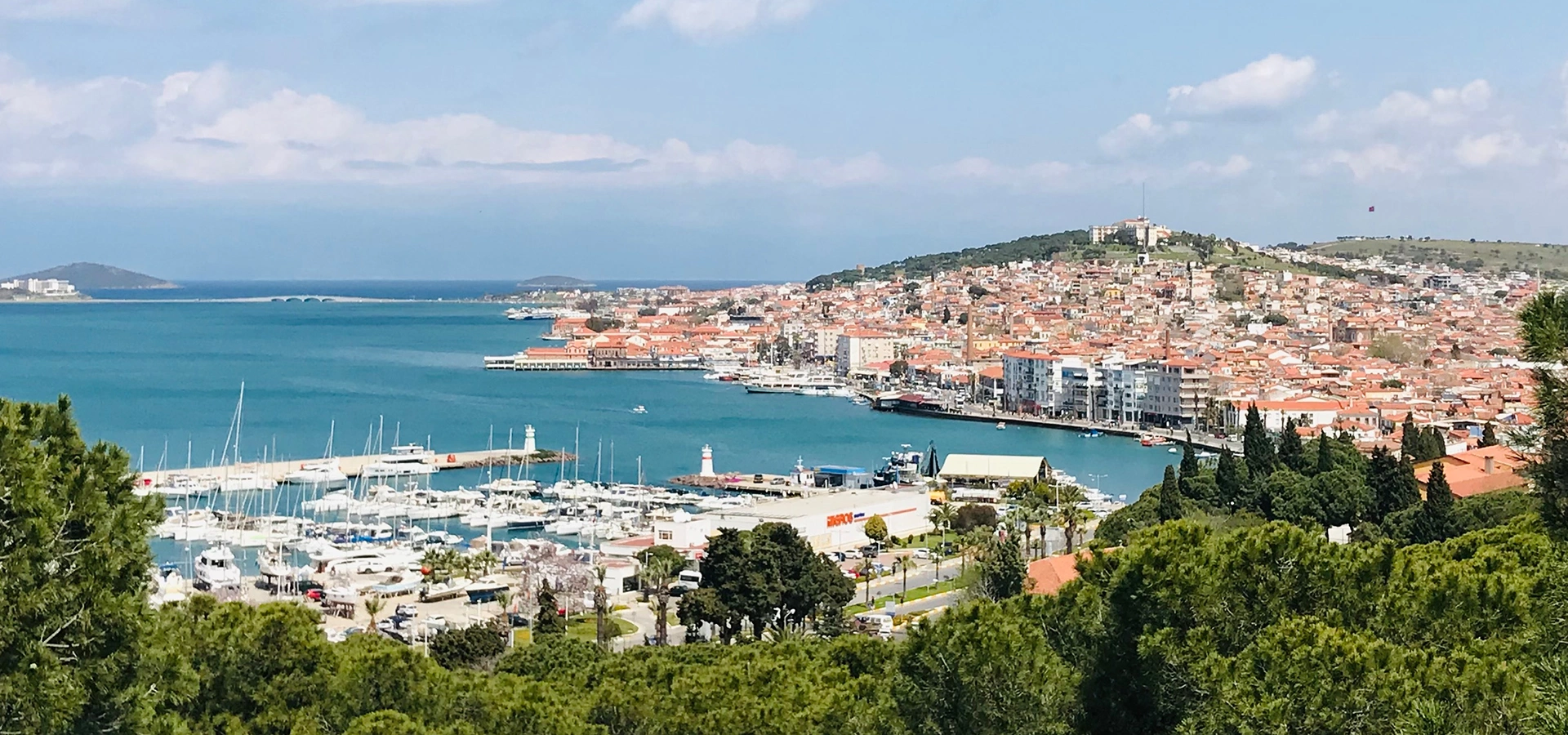
Combine Cunda's seafood culture with Ayvalık olive oil, traditional cheeses, local sweets, historic neighbourhoods and northern Aegean scenery.
Request This Tour