Rice Foundation
The dessert begins with rice cooked directly in water until tender.






Balıkesir Zerde is a traditional rice-based dessert recorded as part of the province's regional cuisine. Rice is simmered in water, sweetened with sugar and perfumed with rose water, while cloves, cinnamon and the distinctive red confection known as kızamık şekeri or red loğusa sugar complete the traditional ingredient list.
One of the most interesting characteristics of the documented Balıkesir recipe is what it does not contain. Although zerde in many parts of Türkiye is associated with saffron, safflower or turmeric and a vivid yellow colour, the Balıkesir Provincial Directorate of Culture and Tourism's recipe does not list any of them.
Instead, Balıkesir's version has its own aromatic identity. Rose water contributes its floral fragrance, cloves bring warm spice, cinnamon finishes the serving, and red loğusa sugar introduces a colourful regional accent.
Rice is simmered in water until tender and forms the foundation of the dessert.
Rose water gives Balıkesir zerde one of its most recognizable aromatic notes.
The traditional recipe calls for kızamık şekeri, also described as red loğusa sugar, when the dessert is served.
Unlike many better-known yellow versions of zerde, saffron is not included in the official Balıkesir ingredient list.
Essential information about one of Balıkesir's traditional rice-based sweets.
Balıkesir Province in north-western Türkiye, where zerde is recorded among the region's traditional dishes and desserts.
Rice is simmered in water until soft before the dessert is sweetened.
Rose water gives the dessert a delicate floral fragrance.
Kızamık şekeri, or red loğusa sugar, appears in the documented local recipe instead of the saffron associated with many other zerde traditions.
Rice, sugar and fragrant spices become a dessert closely connected with Balıkesir's traditional food culture.
Balıkesir's cuisine contains dishes shaped by village agriculture, livestock farming, dairy production, olive cultivation and the province's long tradition of preparing food for large communal tables.
The Balıkesir Provincial Directorate of Culture and Tourism includes zerde among the dishes associated with the province's traditional cuisine and notes that many regional foods are prepared for gatherings with a ceremonial character, including weddings and hayır meals.
That context helps explain why a dessert such as zerde has survived. Its ingredients can be prepared in quantity, it can be portioned easily into individual bowls, and its rose water and spices give an otherwise simple rice-and-sugar mixture a festive character.
Balıkesir's documented recipe is particularly interesting because it differs from the saffron-coloured zerde familiar elsewhere in Türkiye. Rather than defining the dessert through yellow colouring, the local formula combines rose water, cloves, cinnamon and kızamık or loğusa sugar.
The local version combines soft rice, sweetness, floral fragrance and warm spice with a distinctive Balıkesir serving tradition.
The dessert begins with rice cooked directly in water until tender.
The documented Balıkesir recipe is water-based rather than a milk pudding such as sütlaç.
Rose water introduces the floral perfume historically associated with many traditional Turkish sweets and drinks.
The official ingredient list includes several cloves, adding a warm aromatic dimension.
Cinnamon is used when the dessert is presented for serving.
Kızamık şekeri or red loğusa sugar is one of the most distinctive ingredients recorded for Balıkesir's version.
The provincial ingredient list does not contain saffron, safflower or turmeric.
The dessert depends more on careful rice cooking and balanced aromatics than on complicated pastry technique.
Balıkesir Zerde is a sweet rice dessert prepared by simmering rice in water and adding sugar and rose water. The traditional provincial ingredient list also includes cloves, cinnamon and kızamık şekeri, also known as red loğusa sugar.
It belongs to the wider family of Turkish zerde desserts, but regional recipes differ considerably. Elsewhere, zerde may be coloured yellow with saffron, safflower or turmeric and thickened with starch.
The published Balıkesir formula is notably simpler. Rice itself supplies the body, and the dessert's personality comes from floral and spice aromas rather than from saffron.
Cooked rice provides both substance and natural thickness.
There is no milk in the documented traditional recipe.
Sugar and rose water create the central flavour profile.
Balıkesir's formula stands apart from the familiar saffron-yellow image of zerde.
The recipe recorded by the Balıkesir Provincial Directorate of Culture and Tourism calls for 1 cup of rice, 2.5 cups of sugar, 50 grams of kızamık şekeri, 2 tablespoons of rose water, 3–5 cloves and half a teaspoon of cinnamon.
The rice is first boiled with water. Once it has cooked, sugar and rose water are added and the mixture continues cooking.
When the dessert is ready to be served, the provincial instructions specify finishing it with kızamık şekeri — or red loğusa sugar — and cinnamon.
The original instructions are concise and do not provide a precise quantity of cooking water, cooking time or serving temperature. Those details therefore should not be presented as fixed requirements of the official recipe.
Begin by boiling the rice in water until it becomes tender.
Sweeten the cooked rice according to the documented proportions.
Rose water perfumes the dessert as it finishes cooking.
Transfer the cooked zerde into serving dishes or bowls.
Use kızamık or red loğusa sugar according to the traditional Balıkesir presentation.
A light cinnamon finish completes the provincial recipe.
The beauty of Balıkesir zerde lies in a remarkably compact ingredient list. Rice gives structure, sugar provides sweetness and rose water adds fragrance.
Cloves and cinnamon introduce warm spice notes, while kızamık or loğusa sugar gives the Balıkesir recipe an ingredient that visitors may not expect to encounter in zerde.
There is no milk, butter, egg or flour in the documented formula. It is therefore very different in structure from dairy puddings, baked desserts and syrup-soaked pastries.
The principal solid ingredient and the source of the dessert's soft grain texture.
Provides the dessert's characteristic sweetness.
Contributes the distinctive floral aroma.
Add warmth and aromatic spice to the traditional ingredient profile.
Used as part of the final presentation.
The traditional red confection also known as loğusa sugar provides one of the local recipe's most unusual details.
Rice is much more than a decorative addition to zerde. As the grains simmer, they soften and release starch into the surrounding water, helping the liquid become more substantial.
The goal is to cook the rice thoroughly while still allowing individual grains to remain visible. Zerde should clearly look like a rice dessert rather than a completely puréed pudding.
Because the Balıkesir provincial recipe does not list additional starch, the natural contribution of the cooked rice is especially important to the final texture.
Hard rice would interrupt the soft texture expected from the finished dessert.
Zerde should still reveal its rice foundation when served.
Rice releases starch naturally during simmering.
A controlled simmer helps soften the grains without excessive sticking.
Rose water is one of the ingredients that immediately changes zerde from simple sweetened rice into an aromatic dessert.
The official Balıkesir formula specifies two tablespoons. Its role is fragrance rather than volume, so the rose character should complement rather than overwhelm the rice and spices.
Rose water also links the dessert to a much wider tradition of using floral aromas in Turkish and Ottoman-influenced confectionery, puddings and sherbets.
Rose water gives the dessert a perfume that plain sugar cannot provide.
Only a modest amount is needed because rose water is highly aromatic.
Its floral character contrasts gently with cloves and cinnamon.
Without rose water, the flavour profile moves away from the documented Balıkesir formula.
The Balıkesir recipe names kızamık şekeri and explains that red loğusa sugar can be used. This is a traditional red confection better known to many people from loğusa sherbet.
Its appearance in zerde is particularly interesting because it moves Balıkesir's presentation away from the bright saffron-yellow colour commonly associated with the dessert in other regions.
For travellers discovering Balıkesir cuisine, this ingredient is therefore more than decoration. It is one of the clearest clues that regional versions of familiar Turkish foods can be substantially different from one another.
The provincial recipe explicitly gives red loğusa sugar as the alternative description.
The confection is associated with a distinctive red appearance.
The official Balıkesir instructions mention it at the presentation stage.
Its use helps separate the Balıkesir version from saffron-centred zerde recipes.
Balıkesir's ingredient list includes both cloves and cinnamon. Together they create a warm aromatic contrast to the dessert's floral rose water.
The provincial method specifically mentions cinnamon when the dessert is served, while the ingredient list records three to five cloves.
These spices should remain supporting flavours. Zerde is still fundamentally a rice-and-sugar dessert, and excessive spice would hide the softer rose-water character.
Strong and fragrant, so only a few pieces are required.
Provides warmth and an attractive final dusting.
Introduces a softer floral contrast to the spices.
The best result allows rice, sweetness, flowers and spice to remain individually recognizable.
Not according to the traditional recipe published by the Balıkesir Provincial Directorate of Culture and Tourism.
This deserves emphasis because zerde is so frequently described elsewhere as a saffron-coloured rice dessert that travellers may assume saffron is essential to every version.
The Balıkesir ingredient list instead names rice, sugar, kızamık sugar, rose water, cloves and cinnamon. Neither saffron nor turmeric appears in the published formula.
That does not mean saffron-based zerde is incorrect. It simply represents a different regional tradition. Turkish cuisine contains multiple versions of zerde, and the Balıkesir interpretation should be understood on its own terms.
The official formula does not list saffron.
Many Turkish zerde recipes use saffron, safflower or another ingredient to create a yellow colour.
There is no single ingredient list that accurately represents every regional zerde.
For a Balıkesir-focused page, the provincial formula is the clearest reference point.
Balıkesir zerde combines straightforward sugar sweetness with the mild flavour of cooked rice and the fragrance of rose water.
Clove and cinnamon add warmer aromatic notes, while the rice gives the dessert a soft grain texture rather than the perfectly smooth consistency of a starch pudding.
Because there is no dairy in the traditional recipe, it tastes lighter and less creamy than sütlaç. Its character comes primarily from sweetness, floral aroma and spice.
Sugar is prominent but supported by several aromatic ingredients.
Rose water creates the most distinctive perfume.
Clove and cinnamon provide depth without turning it into a heavily spiced pudding.
Visible tender grains distinguish it from completely smooth desserts.
Zerde is naturally suited to individual bowls, cups or small dessert dishes. The rice remains visible through the sweet liquid while the surface provides space for the traditional finishing ingredients.
The Balıkesir provincial recipe specifically says that kızamık or red loğusa sugar and cinnamon are added when the dessert is offered to guests.
Modern presentations may introduce additional garnishes, but those should not be confused with the concise official Balıkesir formula.
Individual portions make the soft rice dessert easy to present.
A clear view of the grains communicates what the dessert actually is.
Cinnamon forms part of the documented Balıkesir serving method.
Avoid automatically covering it with pistachios or other garnishes when explaining the traditional recipe.
Traditional Balıkesir cuisine has a strong connection with communal gatherings. The province's culture authority describes numerous local dishes as foods prepared particularly for events such as weddings and charitable communal meals.
Zerde appears within that culinary world alongside dishes such as tirit, keşkek, düğün çorbası and other foods designed for shared tables.
Secondary accounts of Balıkesir food culture also associate zerde particularly with weddings and special occasions. It is therefore useful to understand the dessert not only as something sweet after a meal, but also as part of a culture of hospitality.
Zerde has a long association with celebratory communal meals.
The dessert can be prepared and portioned conveniently for many guests.
Fragrant ingredients transform a simple rice dessert into something suitable for guests.
Serving traditional dishes helps maintain culinary knowledge across generations.
Both zerde and sütlaç contain rice, but the similarity largely ends there.
Sütlaç is fundamentally a milk pudding. Its flavour is creamy and dairy-based, and many recipes use starch or rice flour to control the consistency.
Balıkesir zerde is prepared with water rather than milk and relies on sugar, rose water and spices for its identity. The result is more aromatic and less creamy.
Water, rice, sugar, rose water, cloves, cinnamon and kızamık sugar.
A milk-based rice pudding with a creamy dairy character.
Floral and spiced.
Mild, creamy and milk-forward.
Travellers searching for zerde across Türkiye should expect variation rather than one universal formula.
Many well-known versions are golden or yellow and obtain their colour from saffron, safflower or turmeric. Some also include starch, pine nuts or currants.
The documented Balıkesir version does not follow that pattern. Its principal flavourings are rose water, cloves and cinnamon, with kızamık or red loğusa sugar appearing in the traditional presentation.
That regional variation is exactly what makes zerde interesting from a culinary-travel perspective. The same name can reveal different ingredient histories and local preferences from one province to another.
Rose water, clove, cinnamon and red loğusa sugar.
Other regions may use saffron, safflower or turmeric for colour.
Pine nuts, currants, pomegranate or nuts occur in other regional and modern versions.
Despite the differences, cooked rice and sweetness remain recurring elements across many zerde traditions.
Balıkesir has one of Türkiye's most varied regional food landscapes. Its cuisine reflects dairy farming, sheep and cattle raising, grain agriculture, vegetable production, olive cultivation and access to both Marmara and Aegean coastal traditions.
Within that larger picture, zerde represents the province's tradition of simple but aromatic desserts prepared from familiar staples.
It contrasts especially well with höşmerim. Höşmerim demonstrates Balıkesir's famous dairy culture, while zerde uses no milk or cheese at all and instead builds its identity from rice, rose water and spice.
Zerde shows that grains have an important place in Balıkesir desserts as well as savoury dishes.
Rose water and warm spices provide character without dairy or pastry.
The dessert belongs naturally beside other foods associated with shared regional tables.
Tasting zerde beside höşmerim reveals two completely different sides of Balıkesir's dessert culture.
To remain close to the documented Balıkesir recipe, begin with rice and water rather than milk. Cook the rice gently until completely tender.
Add sugar and continue cooking so the sweetness becomes integrated with the rice. Add the rose water toward the later part of cooking so its fragrance remains noticeable.
The official ingredient list includes cloves but does not specify exactly when they enter the pot. They can therefore be treated carefully as an aromatic element rather than inventing one supposedly mandatory timing.
Portion the finished dessert into bowls and complete the presentation with kızamık or red loğusa sugar and cinnamon in keeping with the provincial instructions.
The grains should be completely tender before serving.
This follows the sequence described in the traditional Balıkesir method.
Enough should be present to smell, but it should not become perfume-like.
The official source does not prescribe an exact water quantity, so texture must be judged during cooking.
Individual dishes make the rice texture and finishing spices clearly visible.
Use cinnamon and the distinctive red sugar associated with the Balıkesir formula.
Because the ingredient list is short, small errors are particularly noticeable. Undercooked rice leaves an unpleasant firm centre, while aggressive boiling can cause the rice to stick to the bottom of the pan.
Rose water also needs restraint. Too little disappears completely, while too much can overwhelm the rice and make the dessert taste excessively perfumed.
Another common mistake when researching Balıkesir zerde is automatically adding saffron simply because it appears in recipes from other provinces. That changes the documented local formula.
The grains should be soft rather than firm in the centre.
Stir periodically as the mixture becomes sweeter and slightly thicker.
A heavy hand can overpower all the other aromas.
Clove and cinnamon help distinguish the documented flavour profile.
Saffron does not appear in the official Balıkesir ingredient list.
Zerde should remain a soft spoon dessert rather than becoming a dense rice paste.
If you encounter zerde while travelling through Balıkesir, do not automatically expect the intense yellow dessert photographed in many generic Turkish recipes.
Ask how the kitchen prepares its version. A recipe featuring rose water, cinnamon, cloves and red loğusa sugar is much closer to the formula documented by the province's culture authority.
Zerde is also particularly interesting when tasted as part of a broader Balıkesir meal alongside dishes such as keşkek, tirit, düğün çorbası and one of the province's cheese or yoghurt traditions.
Regional and restaurant versions may differ considerably.
The official Balıkesir formula is not based on saffron.
Rose water, cinnamon and clove are more informative than colour alone.
Zerde makes more sense when experienced within Balıkesir's broader food culture.
The two desserts demonstrate dramatically different regional techniques.
Traditional dishes connected with communal meals are not necessarily available on restaurant menus every day.
Although zerde is documented as part of Balıkesir's traditional cuisine, visitors should not assume that every restaurant keeps it permanently on the dessert menu.
Foods with connections to communal gatherings and home cooking can be more difficult to find than commercially established sweets such as höşmerim.
Traditional restaurants, local-food events and establishments specialising in Balıkesir cuisine are sensible places to ask. Availability may change, so checking directly is often more useful than relying on an old online menu.
Look for kitchens specifically promoting Balıkesir cuisine.
Food festivals and communal events can reveal dishes rarely encountered on everyday menus.
Residents and local cooks may know where traditional batches are currently being prepared.
Fresh availability may be more important than permanent menu listings.
Balıkesir zerde is a good example of how regional cuisine cannot always be understood by looking only at the most famous national version of a dish.
A visitor may already know zerde as a yellow saffron dessert, yet Balıkesir preserves a recipe built around a different collection of flavours and colours.
That difference demonstrates why provincial culinary documentation matters. Small details such as rose water, red loğusa sugar or the absence of saffron can preserve a regional identity that would otherwise disappear beneath generalized descriptions of Turkish food.
A national dish name can contain many different local formulas.
Culinary identity does not require expensive or complicated ingredients.
Rose water and spices make the Balıkesir version immediately distinctive.
Traditional recipes help record the habits of family and communal tables.
For travellers interested in regional Turkish cuisine, Balıkesir zerde is especially worthwhile because it challenges expectations.
Someone familiar with saffron-yellow zerde may discover a noticeably different dessert: soft rice, clear sweetness, rose fragrance, clove, cinnamon and the unusual presence of red loğusa sugar.
It is also a valuable companion to Balıkesir's better-known desserts. Tasting both zerde and höşmerim reveals just how diverse the sweet traditions of a single province can be.
Balıkesir's formula differs from many standard descriptions of zerde.
Rose water, cinnamon and clove create an elegant fragrance.
The dessert belongs to a wider culture of traditional and communal foods.
Together they reveal two very different directions in Balıkesir dessert making.
Zerde opens the door to a much wider world of Balıkesir desserts, ceremonial dishes, grain traditions and dairy products.
Discover a completely different sweet tradition built around bow-shaped fried pastry and syrup.
Explore one of the province's most important slow-cooked grain dishes and its communal-table traditions.
Discover the traditional combination of bread, broth and meat associated with shared meals.
Continue exploring the foods connected with weddings and celebratory tables.
Meet one of Balıkesir's best-known dairy drinks and its famously foamy presentation.
Explore Balıkesir's extraordinary dairy heritage through one of its distinctive regional cheeses.
Rice desserts benefit from patience. Use moderate heat and stir when necessary, particularly after the sugar enters the pot, so the mixture does not catch on the base.
Because the official Balıkesir source does not state an exact water quantity, avoid pretending that one modern measurement is compulsory. Add enough water for the rice to cook fully while preserving the soft spoonable character of the dessert.
Finally, treat rose water as an aroma rather than a main liquid ingredient. Its strength differs between products, so restraint gives a better result than trying to make the dessert intensely floral.
Rapid boiling increases the risk of sticking and uneven rice cooking.
Pay particular attention once sugar has been added.
The finished grains should be soft throughout.
The aroma should be clear but balanced.
Do not add saffron automatically when the goal is a Balıkesir-style version.
Cinnamon and red loğusa sugar connect the presentation with the documented local recipe.
It is a traditional rice-based dessert from Balıkesir made with rice, sugar, rose water and aromatic ingredients including cloves and cinnamon.
The provincial recipe lists rice, sugar, kızamık sugar, rose water, cloves and cinnamon.
Saffron is not included in the traditional recipe published by the Balıkesir Provincial Directorate of Culture and Tourism.
Turmeric is also absent from the published provincial ingredient list.
The documented Balıkesir recipe does not rely on saffron or turmeric for colour and instead includes red kızamık or loğusa sugar in its presentation.
It is a traditional red confection also widely known as loğusa sugar and is especially associated with loğusa sherbet.
Yes. The provincial source specifies kızamık sugar and gives red loğusa sugar as an alternative description.
Yes. Rose water is one of the principal aromatic ingredients in the documented recipe.
Yes. The traditional ingredient list specifies three to five cloves.
Yes. Cinnamon is listed in the official recipe and is mentioned as part of the dessert's final presentation.
No milk is listed in the traditional provincial recipe. The rice is cooked with water.
No. Sütlaç is a milk-based rice pudding, while Balıkesir zerde is water-based and flavoured with sugar, rose water and spices.
The documented traditional ingredients do not include dairy, eggs or other obvious animal-derived ingredients, although packaged products such as loğusa sugar should always be checked individually when strict dietary requirements apply.
The traditional provincial ingredient list contains no meat or fish.
Rice itself is naturally gluten-free and the published recipe contains no wheat flour, but anyone with coeliac disease should still verify packaged ingredients and kitchen cross-contamination.
No additional starch appears in the provincial ingredient list, although other regional zerde recipes may use it.
No. Pine nuts are common in some zerde traditions but are not listed in the documented Balıkesir recipe.
No. Currants may appear in other regional versions but are not included in the published Balıkesir formula.
The published Balıkesir recipe specifies one cup of rice.
The provincial formula lists two and a half cups of sugar for one cup of rice.
The documented recipe specifies two tablespoons of rose water.
The traditional Balıkesir source says to boil the rice with water but does not provide a fixed water quantity.
It should remain a spoonable rice dessert rather than becoming a dense solid mass.
Zerde forms part of a regional cuisine strongly associated with ceremonial and communal meals, and local accounts particularly connect it with wedding tables.
Look for traditional Balıkesir restaurants, regional food events and kitchens specialising in local cuisine, but check availability because it may not be prepared every day.
Expect sweet tender rice with floral rose-water aroma and warm notes of clove and cinnamon.
Its combination of rose water, cloves, cinnamon and red loğusa sugar — together with the absence of saffron from the provincial recipe — gives it a distinctive regional identity.
The strongest images should immediately communicate that this is a rice dessert while also highlighting the floral and spiced character of the traditional Balıkesir presentation.
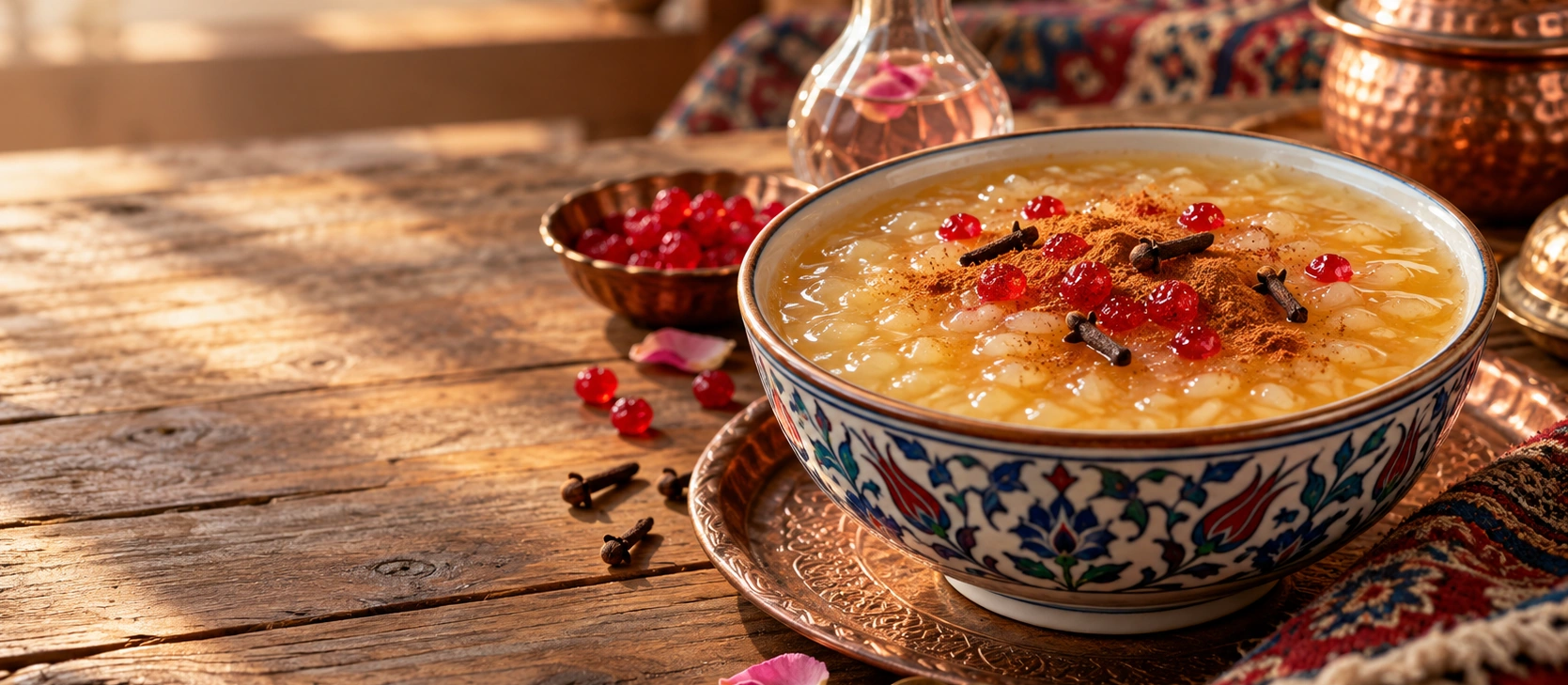
Show a generous traditional bowl of zerde with clearly visible soft rice grains and an elegant cinnamon finish.
Capture the individual rice grains suspended in the glossy sweet mixture.
A small traditional rose-water bottle or subtle rose petals can communicate the floral ingredient without overwhelming the food.
Include cloves and cinnamon nearby to tell the flavour story visually.
Show the distinctive loğusa or kızamık sugar as part of the Balıkesir presentation.
A warm Turkish table setting with several small bowls suggests zerde's connection with hospitality and shared meals.
Discover traditional zerde together with regional cheeses, ceremonial dishes, markets, olive country and the diverse culinary traditions of Balıkesir.
Custom-designed private programs can combine Balıkesir's traditional desserts, local producers, markets, dairy culture, olive oil and northern Aegean landscapes according to your dates and interests.
Explore Balıkesir through traditional desserts, ceremonial dishes, regional dairy products, markets, olive oil and classic local flavours.
Request This Experience
Combine zerde with höşmerim, mafiş, regional cheeses, keşkek, tirit, olive oil, village foods and northern Aegean landscapes.
Request This Tour