Fresh Green Pods
The classic ekşileme style is closely associated with tender fresh cowpea pods.






Börülce is the Turkish name commonly used for cowpea, the plant known botanically as Vigna unguiculata. In Balıkesir, it has an especially memorable place in local vegetable cooking through Börülce Ekşilemesi, a simple boiled salad dressed with olive oil, garlic and sour grape juice known as koruk suyu.
Balıkesir's provincial culinary tradition includes börülce among its characteristic vegetable and herb dishes. The best-known local preparation is also described by the names sallama and sıyırma, reflecting a style of everyday cooking in which fresh produce is boiled, seasoned and transformed with only a few strong local ingredients.
The dish is uncomplicated, but its balance is distinctive. Tender green cowpea pods provide the vegetable base, good olive oil adds richness, garlic gives depth and koruk contributes a clean, fruity sourness. The result is refreshing rather than heavy and fits naturally beside the province's other zeytinyağlı dishes.
Börülce Ekşilemesi is recorded among Balıkesir's characteristic regional foods.
The local salad-style preparation is typically associated with fresh green börülce rather than only the dried beans.
Unripe grape juice and crushed garlic create the sharp, aromatic dressing that defines the dish.
Olive oil connects the dish naturally with Balıkesir's Aegean and Gulf-region food culture.
Essential information about börülce, Börülce Ekşilemesi and the role of this humble legume in Balıkesir cuisine.
Börülce is cowpea, a legume eaten in Türkiye as fresh pods, fresh beans and dried beans.
Börülce Ekşilemesi is a boiled cowpea salad associated with Balıkesir and also known locally as sallama or sıyırma.
Koruk suyu, the juice of unripe grapes, gives the traditional dressing its bright acidity.
Olive oil, garlic and seasonal vegetables place the dish firmly within western Balıkesir's zeytinyağlı tradition.
Balıkesir's börülce tradition brings together agriculture, olive oil, summer produce and the old habit of preserving the clear flavour of vegetables.
Börülce has long been grown and eaten in western and southern Türkiye. Agricultural research identifies cowpea as an important traditional legume particularly in the Aegean, Mediterranean and South Marmara regions, where local populations have been maintained by farmers and used in both fresh and dried forms.
That wider geography helps explain why börülce feels so natural in Balıkesir. The province sits between the Marmara and Aegean worlds and combines grain and legume agriculture with major olive-growing districts along the Gulf of Edremit and the Aegean coast.
Balıkesir's official culinary descriptions place börülce among the province's notable vegetable dishes and single out Börülce Ekşilemesi as a recognizable local preparation. Rather than burying the vegetable beneath a complex sauce, the dish relies on boiling and a sharp dressing of olive oil, koruk and garlic.
It is a good example of how regional cooking can turn an inexpensive garden or field crop into something memorable through timing, acidity and the quality of the oil.
Balıkesir-style börülce is best understood through freshness, gentle cooking and the contrast between olive oil, garlic and sour grape juice.
The classic ekşileme style is closely associated with tender fresh cowpea pods.
The vegetable is usually cooked in water until tender enough to eat while still holding its shape.
Unripe grape juice gives the dressing a fresh, fruity acidity rather than a heavy vinegar character.
Crushed garlic adds the unmistakable savoury aroma that balances the sour dressing.
Good olive oil rounds the acidity and connects the dish with Balıkesir's coastal culinary identity.
The traditional idea is restrained: the flavour of the vegetable should remain clearly recognizable.
Like many boiled vegetable salads, it is particularly refreshing after it has had time to absorb the dressing.
Its strength lies in home-style simplicity rather than elaborate restaurant presentation.
Börülce is the Turkish name for cowpea, botanically Vigna unguiculata. It belongs to the legume family and can be eaten at several stages of maturity.
When harvested young, the long green pods can be cooked much like other tender beans. As the seeds develop, they can be eaten fresh, and when fully mature and dried they become the familiar dried cowpeas often recognized in English as black-eyed peas.
Turkish regional vocabulary is varied. Cowpea may also be known by names such as karnıkara, acebek, lolaz, loğlaz or lübye in different parts of the country. This diversity reflects the crop's long presence in local farming and cooking.
Börülce is the standard name most travellers will encounter on menus and in markets.
Vigna unguiculata is the species name used for cowpea.
Young green pods can be boiled, braised or dressed as a salad.
Mature dried seeds are used in stews, olive-oil dishes and salads.
Yes, but the English term can be slightly misleading because it usually makes people think only of the dried seed.
In Türkiye, börülce can refer more broadly to the cowpea plant and its edible forms. A market stall may sell long fresh green pods in summer, while a grocery shop may sell the mature dried beans used in winter dishes.
For the Balıkesir preparation known as Börülce Ekşilemesi, the fresh pod form is especially important because the finished dish is a vegetable salad rather than a dried-bean stew.
Usually refers to the mature seed with the characteristic dark eye.
Young green pods are cooked whole or cut into shorter lengths.
Both terms refer to forms of cowpea rather than unrelated ingredients.
A Turkish menu may use börülce for either a fresh-pod dish or a dried-bean preparation.
No. Börülce and deniz börülcesi are completely different foods despite sharing part of the same Turkish name.
Börülce is cowpea, a legume. Deniz börülcesi is a salty coastal plant commonly translated as sea beans, glasswort or samphire. It grows in saline environments and has a naturally briny taste.
For this Balıkesir page, the subject is ordinary börülce: the cowpea used in dishes such as Börülce Ekşilemesi.
A legume with edible green pods and edible fresh or dried seeds.
A succulent coastal plant with a naturally salty flavour.
Cowpea pods soften like beans; sea beans remain more succulent and briny.
They require different preparation even though both can appear on Aegean meze tables.
One reason börülce is so versatile is that it can be eaten at different stages of maturity.
Fresh green börülce is treated primarily as a vegetable. The pods are trimmed, sometimes stringed, cut and boiled or braised. This is the form most closely associated with Balıkesir's ekşileme preparation.
Dried börülce is treated more like a pulse. It is soaked or boiled and used in salads, soups, stews and zeytinyağlı dishes. The flavour becomes nuttier and the texture more substantial.
Green, tender and vegetable-like, with a light grassy flavour.
More developed beans can be removed from mature pods and cooked separately.
Firm pantry pulses that require longer cooking and work well in hearty dishes.
The refreshing salad-style preparation is best understood as a fresh-pod dish.
Börülce Ekşilemesi is one of the clearest expressions of börülce in Balıkesir cuisine. It is essentially a boiled cowpea salad dressed with a sharp mixture of olive oil, koruk juice and crushed garlic.
Traditional descriptions also use the names sallama and sıyırma. The exact vocabulary may vary from household to household, but the central idea is consistent: cook the börülce until tender and finish it with a bright, garlicky olive-oil dressing.
The name ekşileme comes from the Turkish idea of making something sour or tangy. In this dish, that sourness traditionally comes from koruk, unripe grapes pressed for their tart juice.
The vegetable forms the entire body of the salad.
Unripe grape juice gives the dressing its characteristic sourness.
Garlic adds fragrance and savoury intensity.
The oil softens the acidity and gives the salad a smooth finish.
Koruk means unripe grape. Before grapes develop their full sweetness, they are intensely tart. Pressing them produces koruk suyu, a traditional souring ingredient used in several regional Turkish kitchens.
In Börülce Ekşilemesi, koruk works especially well because its acidity is fresh and fruity. It sharpens the mild green flavour of the cowpea without dominating it.
When koruk is unavailable, modern home recipes may use lemon juice or another mild acid. That can produce a delicious salad, but the use of real koruk is what most strongly connects the dish with the traditional Balıkesir description.
Koruk is harvested before the grapes become sweet and fully mature.
The juice is sour, bright and less one-dimensional than plain vinegar.
Koruk and fresh börülce naturally belong to the warm growing season.
Lemon juice can provide acidity when fresh or bottled koruk juice is unavailable.
Preparation starts with fresh cowpea pods. The ends are trimmed and any tough strings are removed. Long pods can be broken or cut into shorter pieces for easier eating.
The börülce is then boiled in water until tender. The ideal texture is fully cooked but not collapsing; the pieces should still look like distinct green pods on the plate.
Meanwhile, crushed garlic is combined with koruk juice and olive oil. The dressing is poured over the drained börülce and allowed to coat the vegetables thoroughly.
The salad can be rested before serving so the sour, garlicky dressing penetrates the warm or cooled pods.
Remove the stem ends and any fibrous strings from the fresh pods.
Break long pods into practical bite-size lengths.
Cook until tender but still intact.
Prepare the garlic finely so it blends evenly into the dressing.
Combine the sour grape juice with olive oil and season to taste.
Give the dressed beans time to absorb the flavours before eating.
Olive oil is one of the strongest culinary links between Börülce Ekşilemesi and western Balıkesir.
The Gulf of Edremit and Ayvalık are among Türkiye's best-known olive landscapes, and this abundance has shaped a cuisine rich in vegetable dishes, greens, beans and meze served with olive oil.
In börülce, olive oil performs more than one job. It carries the aroma of garlic, softens the sharp edge of the koruk and gives the boiled vegetable a rounder, more satisfying texture.
Olive oil is central to the cuisine of Balıkesir's Aegean-facing districts.
The oil smooths the tartness of koruk without removing its freshness.
Fat distributes the aroma of crushed garlic across the dish.
The finished salad sits naturally beside other olive-oil vegetable dishes.
Fresh börülce has a mild green flavour somewhere between a tender bean and a fresh legume. The vegetable itself is gentle, which is why the dressing plays such an important role.
Koruk brings the first clear impression: tart, fresh and slightly fruity. Garlic follows with savoury intensity, while olive oil rounds the flavour and lengthens the finish.
A well-made version should taste lively rather than harsh. The beans should be tender, the sourness noticeable and the garlic present without overwhelming the vegetable.
The green pods provide a mild vegetal foundation.
Koruk gives the dish the acidity implied by the name ekşileme.
Crushed garlic is a defining aromatic note.
Olive oil coats the vegetables and creates a smooth finish.
Fresh börülce is strongly associated with the warm growing season. The exact harvest period varies according to variety, planting date, climate and local conditions.
For travellers, summer is the most promising time to encounter fresh-pod preparations in markets, home-style restaurants and meze displays. Later in the year, dried börülce becomes easier to find than fresh green pods.
Koruk is also a seasonal ingredient because it depends on grapes being harvested while still green and sour. This makes traditional Börülce Ekşilemesi a dish particularly connected with the rhythm of summer produce.
Cowpea thrives in hot conditions and fresh pods are most associated with summer.
Availability changes from week to week depending on local harvests.
Unripe grapes add another seasonal element to the traditional preparation.
Dried börülce extends the ingredient's usefulness well beyond the fresh-pod season.
Börülce Ekşilemesi is most naturally enjoyed cool or at room temperature, although it can also be dressed while the vegetables are still warm.
Adding the dressing while the beans retain some warmth can help them absorb the garlic, oil and acidity. After resting, the flavours become more integrated and the salad develops the refreshing character expected from a zeytinyağlı vegetable dish.
It does not need a heavy garnish. A little extra olive oil, a few drops of koruk or lemon and good bread are often enough.
Slightly warm beans can absorb the dressing efficiently.
A natural serving temperature for a shared olive-oil table.
Particularly refreshing in summer.
A short rest allows the acidity, garlic and oil to come together.
It can be all three.
On a shared table, a small portion works beautifully as a meze. Alongside grilled fish or meat, it can function as a sharp vegetable side dish. With bread, cheese and another salad, a generous serving can also become the centre of a light summer lunch.
Its versatility is one reason the dish fits so comfortably into Balıkesir's coastal food culture, where meals often consist of several dishes placed together rather than one dominant plate.
Serve a small portion among other olive-oil dishes and seasonal vegetables.
The boiled vegetable and sour dressing make it naturally salad-like.
Its acidity works particularly well beside grilled foods.
Pair it with bread, cheese and yoghurt for a simple summer lunch.
Balıkesir has unusually varied food geography. Inland districts are associated with grains, livestock and dairy, while the western side of the province opens toward olive groves, vineyards, coastal vegetables, seafood and Aegean meze culture.
Börülce sits comfortably between these worlds. It is an agricultural crop, a practical home ingredient and a vegetable that responds beautifully to olive oil.
The official provincial food tradition specifically includes börülce among notable local vegetable dishes and records Börülce Ekşilemesi as one of the characteristic preparations. That makes it more than a generic Turkish side dish: it is part of the way Balıkesir tells its own culinary story.
Börülce reflects the province's productive agricultural character.
Western Balıkesir provides a natural home for olive-oil vegetable dishes.
Fresh pods and koruk connect the dish strongly with summer.
Börülce Ekşilemesi is explicitly included in descriptions of Balıkesir's regional cuisine.
No. Cowpea is grown and eaten across several parts of Türkiye, especially in the Aegean, Mediterranean and South Marmara regions.
What is distinctive in Balıkesir is not ownership of the ingredient but the strong local association with Börülce Ekşilemesi and the way this preparation fits the province's olive-oil and sour-flavour traditions.
This distinction matters. Regional food is often strongest when it acknowledges shared ingredients while preserving the particular methods, names and flavour combinations that make one locality recognizable.
Known for the ekşileme preparation with olive oil, koruk and garlic.
Cowpea is widely familiar in fresh and dried forms.
Warm conditions suit cowpea cultivation and traditional use.
The crop is also part of the broader agricultural and culinary landscape around Balıkesir.
The traditional Börülce Ekşilemesi described with fresh cowpea, olive oil, koruk and garlic is naturally vegetarian and vegan.
There is no need for meat, butter or dairy in the basic preparation. That makes the dish one of the easiest regional Balıkesir foods for plant-based travellers to enjoy.
Restaurant recipes can still vary, so anyone following a strict diet should confirm how the specific dish was prepared and whether any animal-based stock or garnish has been added.
Cowpea, garlic, grape juice and olive oil are all plant ingredients.
The traditional dressing does not depend on yoghurt or butter.
The local salad-style preparation is naturally meat-free.
Restaurant variations may introduce ingredients not found in the basic recipe.
A basic Börülce Ekşilemesi made from fresh cowpea, olive oil, garlic, koruk juice and salt is naturally gluten-free.
The dish contains no wheat or other gluten-containing grain by design. However, travellers with coeliac disease should still ask about cross-contact, shared utensils and any bottled sauces or seasonings used by a particular kitchen.
The traditional ingredient list does not require flour, bulgur or bread.
Olive oil, garlic and koruk are naturally gluten-free ingredients.
Shared restaurant preparation areas can matter for medically strict diets.
Ask the kitchen when gluten avoidance is medically necessary.
The dish pairs best with foods that respect its bright acidity and fresh vegetable character.
Grilled fish is an especially natural companion on the coast. Local cheeses, tomatoes, cucumbers, village bread, yoghurt and other zeytinyağlı vegetables also work beautifully.
Because the dish already contains garlic and acidity, pairings do not need aggressive sauces. A good Balıkesir spread can simply let each ingredient remain distinct.
The sour dressing cuts through the richness of oily fish.
Salty Balıkesir cheeses provide a savoury contrast.
Summer tomatoes continue the fresh seasonal theme.
Useful for soaking up the olive-oil and koruk dressing.
A cool creamy side balances garlic and acidity.
Serve it among stuffed vegetables, greens and beans for a shared Aegean table.
Begin with fresh green cowpea pods. Trim the ends, remove any tough strings and cut or break the pods into shorter lengths.
Bring a generous pot of water to the boil and cook the börülce until tender. Cooking time depends on the age and thickness of the pods, so test rather than relying only on a fixed number of minutes.
Drain the cooked börülce. Crush garlic with a little salt, then mix it with koruk suyu and good olive oil. Pour the dressing over the beans while they are warm or at room temperature and toss gently.
Let the dish rest before serving. Taste again at the end: the finished salad should be tangy, garlicky and well lubricated with olive oil, but the green flavour of the börülce should remain clear.
Trim the pods and remove any fibrous strings.
Cook in water until tender without turning the pods mushy.
Work garlic and salt into a smooth aromatic base.
Use sour grape juice to create the characteristic ekşileme flavour.
Use enough to coat the vegetables without making the salad greasy.
Allow the dressing time to penetrate before final seasoning and service.
The recipe is simple, so texture and balance matter more than complicated technique.
Very old pods can be fibrous even after cooking. Under-boiling leaves the beans tough, while over-boiling causes them to collapse and lose their fresh vegetable character.
The dressing can also become unbalanced. Too much garlic may dominate everything, while excessive koruk can make the dish sharply sour. Too little olive oil leaves the acidity thin and aggressive.
Choose fresh, flexible beans whenever possible.
Fibrous edges can make otherwise tender beans unpleasant to eat.
The pods should be tender but still recognizable.
Koruk should brighten the dish rather than overwhelm it.
Garlic should be clear but not erase the flavour of the vegetable.
A brief rest helps the beans absorb the dressing more evenly.
Börülce shows how much Balıkesir cuisine values ingredients that are ordinary in the field but distinctive on the table.
The dish does not depend on expensive products or elaborate technique. Its character comes from three things the region understands extremely well: seasonal produce, olive oil and sharp natural flavourings.
The use of koruk is especially revealing. Instead of importing acidity from a bottle of industrial vinegar, traditional cooking makes use of grapes at an earlier stage of the agricultural cycle.
Börülce Ekşilemesi therefore belongs to the same culinary mindset as many regional vegetable dishes: cook simply, waste little and let the quality of the harvest determine the result.
Fresh pods and green grapes tie the dish to the agricultural calendar.
Everyday ingredients become memorable through careful preparation.
Good oil provides richness without hiding the vegetable.
Koruk demonstrates an old regional way of creating acidity from local fruit.
Travellers should look for börülce in places that cook according to the day's produce rather than relying entirely on a fixed tourist menu.
In summer, inspect meze counters and home-style vegetable displays. Ask specifically for börülce ekşilemesi and, if the kitchen knows the traditional version, whether it is prepared with koruk suyu.
Remember that fresh-pod börülce is seasonal. A restaurant may serve dried cowpea salad at another time of year, which is still börülce but not quite the same experience as the Balıkesir ekşileme described here.
Your chances of finding fresh green pods are highest in the warm season.
Fresh vegetable preparations may be displayed rather than printed on the menu.
The specific dish name is more useful than asking only for börülce.
Traditional sour grape juice is one of the most interesting details to look for.
Garlic, acidity and serving temperature vary from kitchen to kitchen.
The dish makes most sense as part of a broader seasonal Balıkesir table.
The most promising places are home-style restaurants, lokantas, meze restaurants and kitchens specializing in zeytinyağlı dishes.
Ayvalık, Edremit, Burhaniye and other western districts are natural places to look because olive-oil vegetables and meze already occupy an important part of the local table. Fresh börülce may also appear in inland Balıkesir when the crop is in season.
Daily availability matters more than the restaurant's permanent menu. If tasting Börülce Ekşilemesi is important to you, ask ahead or check the day's cold dishes when you arrive.
Look among meze and olive-oil vegetable dishes in local restaurants.
The strong olive culture makes the region a natural setting for the dish.
Daily vegetable dishes may offer a more authentic opportunity than fixed menus.
Fresh pods in summer can also be a clue that home kitchens and restaurants are preparing börülce.
For travellers interested in regional food, Börülce Ekşilemesi is especially worthwhile because it demonstrates how a very simple dish can reveal local agriculture and taste preferences.
The ingredient is humble, but the combination of fresh beans, olive oil, garlic and koruk is highly specific in character. It offers a different side of Balıkesir after richer dishes based on meat, pastry, dairy or grains.
It is also a useful introduction to the logic of western Turkish vegetable cooking: the goal is not to disguise the produce but to sharpen it with oil, acidity and aromatics.
Unripe grape juice gives the dish a flavour many visitors have never experienced.
Fresh börülce captures the character of the summer harvest.
The dish is a clear example of Balıkesir's zeytinyağlı tradition.
A handful of ingredients produce a surprisingly distinctive regional flavour.
Balıkesir's cuisine moves easily from light olive-oil vegetables to hearty grain dishes, soups, cheeses, meat dishes and ceremonial sweets.
Continue with another delicate summer vegetable dish filled with rice, herbs and olive oil.
Discover a Balıkesir aubergine dish that connects vegetables with the province's strong dairy traditions.
Move from fresh vegetables to a comforting regional bread-and-broth tradition.
Explore the slow-cooked wheat and meat dish associated with communal meals and celebrations.
Learn about another side of Balıkesir's practical home cooking and food-preservation traditions.
Discover the rich soup associated with weddings, communal meals and special occasions.
Finish with a fragrant ceremonial rice sweet from the province's festive food culture.
Continue through one of Türkiye's most geographically and gastronomically varied provinces.
Börülce is the Turkish name for cowpea, Vigna unguiculata, a legume eaten as fresh pods, fresh beans or dried beans.
The most accurate general translation is cowpea. The dried seed is commonly called a black-eyed pea.
It is a Balıkesir-style boiled cowpea salad traditionally dressed with olive oil, koruk juice and crushed garlic.
It refers to making or dressing something with a sour flavour. In this dish, the acidity traditionally comes from koruk.
Koruk is an unripe grape. Its tart juice is used as a traditional souring ingredient.
It can be. Lemon gives a similar acidic function, but koruk is the more distinctive traditional ingredient in the Balıkesir description.
No. They are different plants, although young cowpea pods can be cooked and served in a similar way to green beans.
Black-eyed peas are the mature seeds of cowpea, while the Turkish word börülce can also refer to the fresh pods and plant more generally.
No. Deniz börülcesi is a salty coastal plant, while ordinary börülce is cowpea, a legume.
These names are used in descriptions of the Balıkesir boiled börülce salad known as Börülce Ekşilemesi.
It is specifically recorded as a characteristic dish in Balıkesir's regional culinary tradition, although cowpea itself is eaten widely across western and southern Türkiye.
No. Cowpea is also important in other Aegean, Mediterranean and South Marmara food traditions.
Yes. Fresh green pods are primarily associated with the warm growing season.
Dried cowpeas are excellent for other dishes, but they produce a different texture from the fresh-pod ekşileme style.
The pods are trimmed, any tough strings are removed, and the beans are boiled until tender before dressing.
Yes. Crushed garlic is one of the defining ingredients in the traditional dressing.
Yes. Olive oil balances the koruk acidity and is central to the character of the dish.
The basic preparation of cowpea, olive oil, koruk and garlic is naturally vegan.
Yes, the traditional vegetable preparation is vegetarian.
The basic recipe is naturally gluten-free, although medically strict diners should still confirm restaurant cross-contact.
It can be dressed while warm, but the salad is especially suited to cool or room-temperature service.
Fresh pods have a mild green, bean-like flavour. In ekşileme, koruk, garlic and olive oil create the strongest aromatic notes.
The pods should be fully tender but not boiled until they collapse.
It gives the dish its distinctive fruity sourness and connects the recipe with traditional summer produce.
It can provide acidity, but the flavour will be different from the traditional koruk-based version.
Grilled fish, local cheese, tomato salad, village bread, yoghurt and other olive-oil dishes all pair naturally with it.
Yes. It can be served as a meze, salad or vegetable side dish.
Look in home-style restaurants, lokantas and meze restaurants, especially in western districts and during the fresh-pod season.
It may appear among seasonal olive-oil dishes and meze, although daily availability varies.
Not reliably. Fresh pods are seasonal, while dried börülce is much easier to store and use throughout the year.
Fresh pods, proper tenderness, balanced koruk acidity, aromatic garlic and good olive oil are the key elements.
The strongest photography should make the dish look fresh, simple and unmistakably tied to the olive-oil and summer-produce culture of Balıkesir.
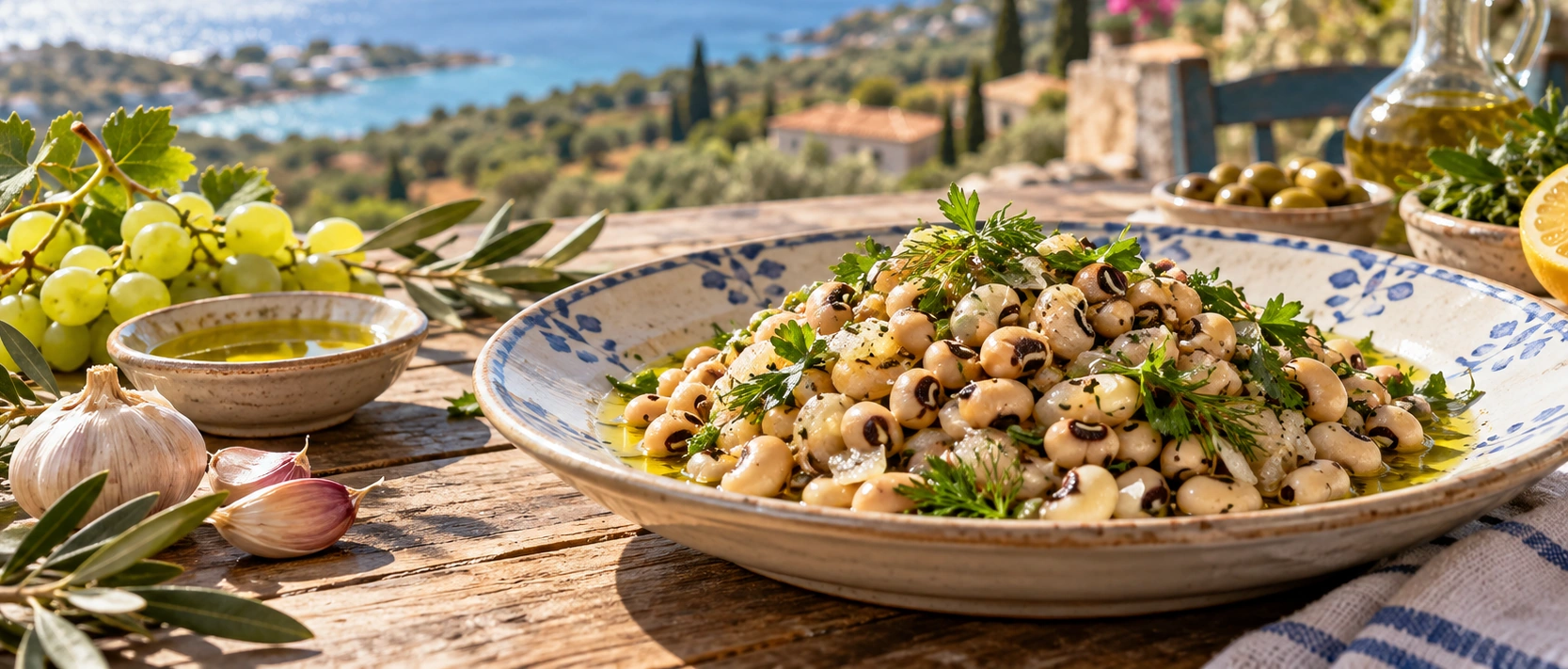
Show glossy green börülce arranged naturally on a ceramic plate with visible garlic and a light olive-oil sheen.
Include a small cluster of green unripe grapes beside the dish to explain the source of the acidity visually.
Photograph raw green cowpea pods before cooking to show the ingredient clearly.
A restrained gloss of oil should make the vegetables look fresh rather than greasy.
Show crushed garlic and koruk juice being spooned over the warm beans for an action image.
Use rustic ceramics, local bread, tomatoes, olives or a softly blurred olive-grove setting to connect food with place.
Discover börülce together with olive oil, regional cheeses, seasonal vegetables, village dishes, coastal flavours and the remarkable culinary diversity of Balıkesir.
Custom-designed private programs can combine local markets, olive-oil culture, regional producers, village cooking, coastal towns and seasonal Balıkesir dishes according to your dates and interests.
Explore Balıkesir through fresh produce, börülce ekşilemesi, olive-oil dishes, regional cheeses and traditional local flavours.
Request This Experience
Combine Ayvalık's olive-oil culture and meze with Balıkesir's cheeses, village dishes, seasonal vegetables and historic towns.
Request This Tour