Seasonal Ingredient
The dish depends on fresh squash blossoms and naturally belongs to the growing season rather than the entire year.






Kabak çiçeği dolması, literally stuffed zucchini or squash blossoms, is one of the most delicate dishes found on summer tables in western Türkiye. Fresh blossoms are carefully opened, filled with a seasoned rice mixture, folded closed and gently cooked with olive oil until tender.
The dish belongs to the wider culinary world of the Aegean coast rather than to Balıkesir alone. Yet it fits Balıkesir especially well, particularly in coastal districts such as Ayvalık, where olive oil, seasonal vegetables, garden herbs and light meze-style dishes form an important part of local food culture.
Its beauty lies in timing and restraint. Squash blossoms are fragile and short-lived, so they are traditionally gathered while fresh, often early in the morning before the heat of the day. The filling is usually based on rice, onion and herbs, although family and restaurant recipes may add tomato, pine nuts, currants or different spices.
Stuffed squash blossoms are closely associated with warm-weather cooking across western Türkiye and the Aegean.
The flowers are traditionally collected while fresh and open enough to handle without tearing.
A fragrant filling of rice, onion and fresh herbs is the most familiar zeytinyağlı style.
Gentle cooking in olive oil gives the finished dolma its soft texture and unmistakable Aegean character.
Essential information about this elegant seasonal dish and its place in Balıkesir's Aegean-influenced cuisine.
Fresh zucchini or squash blossoms filled with a seasoned rice mixture and gently cooked until tender.
Rice, onion, olive oil and herbs such as dill, mint or parsley form the heart of many traditional versions.
A summer dish prepared when fresh squash blossoms are available, with timing depending on local growing conditions.
Especially at home in the olive-oil-rich cooking of Balıkesir's Aegean coast, including Ayvalık and nearby areas.
This seasonal dolma reflects an older way of cooking in which the garden, the weather and the daily harvest determined what appeared on the table.
Kabak çiçeği dolması is part of a broad culinary tradition found across the Aegean world. Versions are prepared in different parts of western and southwestern Türkiye, on the Aegean islands and in other eastern Mediterranean kitchens.
In Balıkesir, the dish makes particular sense along the province's western coast. The food culture of places such as Ayvalık and Edremit is deeply shaped by olive oil, herbs, seasonal vegetables, garden produce and dishes that can be served cool or at room temperature during hot weather.
Squash blossoms are extremely perishable. Unlike vegetables that can sit for days after harvest, the flowers quickly soften and close. Traditional preparation therefore begins with fresh blossoms, careful handling and a filling that is ready before the flowers lose their ideal texture.
The result is a dish that feels both humble and refined: an ingredient that lasts only briefly becomes a beautifully shaped dolma whose flavour depends more on freshness, olive oil and balance than on richness.
A good stuffed squash blossom should be tender, fragrant and delicately filled rather than heavy or tightly packed.
The dish depends on fresh squash blossoms and naturally belongs to the growing season rather than the entire year.
The petals tear easily, so cleaning, opening and stuffing require a light hand.
Most zeytinyağlı versions use rice as the main filling ingredient.
Dill, mint and parsley are common choices that give the filling a fresh summer aroma.
Olive oil is central to the flavour and texture of the coastal western-Turkish style.
The flowers are usually packed closely and simmered carefully so they soften without breaking apart.
The finished dolma should remain soft and moist without becoming dense or greasy.
The folded petals give each stuffed blossom a naturally elegant shape on the plate.
Kabak çiçeği dolması is a dolma made by filling edible blossoms from zucchini or other squash plants. In the classic olive-oil style, the flowers are stuffed with seasoned rice and herbs, then cooked slowly with a modest amount of liquid and olive oil.
The word kabak means squash or zucchini, çiçeği means flower, and dolması refers to something that has been stuffed. An English menu may therefore translate the dish as stuffed zucchini flowers, stuffed squash blossoms or stuffed courgette flowers.
Unlike stuffed peppers or aubergines, the wrapper itself is exceptionally delicate. This changes everything from the amount of filling used to the cooking time and the way the dolma must be arranged in the pot.
The Turkish word used for squash and zucchini.
The edible blossom forms the delicate outer wrapper.
A broad family of Turkish dishes made by filling vegetables, leaves, fruits or other edible wrappers.
The olive-oil version is especially suited to summer dining and can be served cool or at room temperature.
One of the most repeated traditions surrounding kabak çiçeği dolması is the early-morning harvest.
Fresh squash blossoms are at their most practical for stuffing when they are still firm, fresh and naturally open. As the day becomes warmer, the petals can soften, wilt or close, making them more difficult to clean and fill without damage.
For home cooks growing their own squash, this creates a very direct relationship between garden and kitchen. The flowers may be picked in the morning and prepared the same day rather than stored for long periods.
That short window of freshness is one reason the dish carries such a strong feeling of season and place.
Morning blossoms are generally firmer and easier to handle.
Flowers that are naturally open are less likely to tear during stuffing.
The shorter the journey from garden to kitchen, the better the blossoms usually handle.
The dish follows the growing cycle rather than an all-year restaurant schedule.
The edible flowers of zucchini and other squash varieties can be used for stuffing, provided they are fresh, clean and suitable for culinary use.
Gardeners often distinguish between male and female blossoms. Male flowers grow on slender stems, while female blossoms develop at the end of the small immature fruit. In home gardens, male blossoms are often convenient for cooking because harvesting some of them does not require picking a developing zucchini.
For diners, the more important issue is freshness. The blossoms should look lively rather than badly wilted, bruised or slimy.
Choose flowers that still feel supple and intact.
Torn petals are harder to close around the filling.
Use blossoms grown for food rather than ornamental plants treated with unsuitable chemicals.
Even perfect flowers can split quickly if pressed or overfilled.
The filling varies from household to household, but a familiar Balıkesir and Aegean-style version begins with rice, onion, olive oil and fresh herbs.
Dill, mint and parsley are common. Some cooks add finely chopped tomato or tomato paste, while others keep the filling pale and herb-forward. Pine nuts, currants, allspice, cinnamon or a small amount of sugar may appear in more elaborate zeytinyağlı dolma traditions, but they are not mandatory in every recipe.
The most important principle is proportion. The filling should remain light enough to complement the flower rather than overwhelm it.
The principal ingredient in the classic meat-free filling.
Adds sweetness and savoury depth as the filling cooks.
Dill, mint and parsley bring the fragrance associated with summer Aegean cooking.
Used both in the filling and during cooking.
Some recipes include fresh tomato or a small amount of tomato paste.
Pine nuts, currants and warm spices appear in some versions but are not universal.
Preparation begins by gently cleaning the blossoms and removing any unwanted central parts without tearing the petals.
The rice filling is prepared separately. Depending on the recipe, the rice may be lightly sautéed with onion and olive oil before herbs and seasonings are added. It should not be completely cooked before going into the flowers because the grains continue to soften in the pot.
Each blossom receives only a modest spoonful of filling. The petals are then folded inward to close the top, and the dolma are arranged closely together so they support one another during cooking.
A little water and olive oil are added before gentle simmering. The goal is tender rice and soft blossoms that remain recognizably intact.
Open the petals carefully and remove unwanted interior parts without damaging the flower.
Combine rice, onion, herbs, olive oil and preferred seasonings.
Leave room for the rice to expand while cooking.
Bring the petals over the filling to create a natural closure.
Arrange the flowers snugly in the pot so they remain stable.
Simmer over low heat until the rice is tender and the blossoms are soft.
Olive oil is one of the strongest links between kabak çiçeği dolması and the food culture of western Balıkesir.
Ayvalık and the Edremit Gulf are among Türkiye's best-known olive-growing landscapes. In this part of the province, olive oil is not simply a cooking fat but a defining ingredient used in vegetables, herbs, beans, meze and countless dishes grouped under the term zeytinyağlı.
Stuffed squash blossoms fit naturally into this culinary language. Olive oil softens the rice, perfumes the herbs and contributes to the silky texture expected when the dolma is served cool or at room temperature.
Olive oil is central to the cuisine of Balıkesir's Aegean coast.
It helps the rice filling remain moist and supple.
Olive oil carries the aroma of dill, mint, parsley and other greens beautifully.
The dish belongs naturally beside other vegetable-based olive-oil dishes on a summer table.
The flavour is delicate rather than intense. The blossom itself is mild, slightly vegetal and tender, allowing the rice, herbs and olive oil to provide most of the aromatic character.
A well-made filling should taste fresh and balanced. Dill and mint can give a bright herbal note, onion adds sweetness, and olive oil creates a rounded finish.
Texture is equally important. The petals become soft and silky while the rice remains separate and tender rather than compacted into a heavy mass.
The flower has a mild taste and should not be overwhelmed by strong seasoning.
Fresh greens often provide the most noticeable aromatic notes.
Proper cooking gives the petals a soft, almost satin-like texture.
Lemon and herbs can make the finished dish feel especially refreshing in warm weather.
Kabak çiçeği dolması is fundamentally a summer dish because it depends on the flowering period of zucchini and other squash plants.
Exact timing changes according to climate, altitude, planting date and yearly weather. In western Türkiye, fresh blossoms are most strongly associated with the warm growing months, and July is often mentioned as an important period.
The season can begin earlier or continue later in individual gardens. For travellers, the useful rule is simple: look for kabak çiçeği dolması when local markets and restaurants are working with fresh summer produce.
Warm months bring the fresh flowers needed for the dish.
Mid-summer is frequently associated with abundant squash blossoms.
Growing conditions can move the season earlier or later.
The best time is when fresh blossoms are appearing in gardens and markets.
The classic zeytinyağlı version is very flexible. It may be served cool, at room temperature or slightly warm, depending on the household and the meal.
Serving it cool allows the olive oil and herbs to settle into the rice and makes the dish particularly refreshing on a hot day. A slightly warm serving emphasizes the tenderness of the petals and the fragrance of the filling.
Some people serve stuffed blossoms with lemon, while others pair them with yoghurt or garlic yoghurt. There is no need to cover the dish with heavy sauce; its attraction comes from subtle flavours.
A classic way to serve zeytinyağlı dolma during summer.
Allows the aroma of olive oil and herbs to remain clear.
Especially pleasant when served soon after cooking.
Acidic or creamy accompaniments can be added according to local and personal preference.
Kabak çiçeği dolması can comfortably play several roles on the table.
In restaurants and meze displays, it may appear as one of several cold or room-temperature olive-oil dishes. At home, a generous portion can become a light lunch or summer supper, especially when paired with yoghurt, salad and bread.
Its delicate character makes it particularly effective as part of a larger Balıkesir or Ayvalık spread containing Aegean herbs, beans, olive-oil vegetables, local cheeses and seasonal seafood.
A few blossoms can form part of a varied shared table.
The dish works well before grilled fish or another light main course.
A larger portion with yoghurt and salad can be satisfying on its own.
Its strongest context is often alongside several seasonal dishes rather than in isolation.
Ayvalık is one of the most natural places in Balıkesir to encounter stuffed squash blossoms because the dish fits the town's broader culinary identity.
Ayvalık cooking is famous for olive oil, wild and cultivated greens, seafood, vegetables, meze and dishes that emphasize fresh ingredients rather than heavy sauces. During summer, kabak çiçeği dolması can appear naturally within this style of eating.
It is important, however, not to describe the dish as exclusive to Ayvalık. Its cultural geography is much broader. What Ayvalık contributes is a particularly convincing local setting: good olive oil, strong meze traditions and a cuisine that values seasonal produce.
One of the foundations of Ayvalık's culinary identity.
Fresh vegetables and herbs shape warm-weather menus.
Stuffed blossoms sit naturally among shared small plates.
Ayvalık is an excellent place to taste the dish, but the tradition extends far beyond the district.
No. Kabak çiçeği dolması should be understood as a shared regional dish rather than something created only in Balıkesir.
Stuffed squash blossoms are found in several parts of western and southwestern Türkiye and are strongly associated with Aegean cooking more generally. Related preparations are also known elsewhere in the eastern Mediterranean.
Balıkesir's importance comes from how naturally the dish fits the province's western coastal cuisine. The combination of fresh vegetables, herbs and olive oil makes it feel completely at home on a Balıkesir summer table even though its culinary family is much wider.
A well-established place to encounter the dish, particularly in Aegean-influenced coastal cooking.
Other western Turkish provinces have their own familiar versions.
Ingredients and technique vary from household to household.
Its strength lies in regional continuity rather than a single exclusive origin claim.
The classic olive-oil version made with rice, onion, herbs and vegetables is naturally suitable for many vegetarian and vegan diets.
However, not every recipe is identical. Some kitchens may use meat, meat stock, butter, yoghurt or other animal products either in the filling or as an accompaniment.
Travellers with strict dietary requirements should therefore ask whether the specific serving is zeytinyağlı and meat-free rather than relying only on the name of the dish.
Rice, herbs, onion and olive oil contain no animal products.
Some versions may include meat or animal-based stock.
Yoghurt may be served separately even when the dolma itself is vegan.
Confirm ingredients if your diet requires strict avoidance of animal products.
A basic rice-filled version can be naturally gluten-free because squash blossoms, rice, vegetables, herbs and olive oil do not contain gluten.
That does not guarantee that every restaurant version is suitable for someone with coeliac disease or severe gluten intolerance. Stock cubes, seasonings, shared utensils or cross-contact in the kitchen can change the situation.
If gluten avoidance is medically important, explain this clearly to the restaurant rather than assuming all dolma recipes are identical.
The traditional filling usually relies on rice rather than wheat.
Commercial seasonings and stock products can vary.
Shared kitchen equipment may matter for medically strict diets.
The restaurant is the best source for the exact ingredients in its current preparation.
The best pairings are fresh, simple and seasonal.
A spoonful of yoghurt or garlic yoghurt can provide creamy contrast. Lemon brightens the rice and herbs. Tomato salad, cucumber, fresh greens and other zeytinyağlı dishes maintain the light character of the meal.
On the Balıkesir coast, stuffed blossoms can also sit beside local cheeses, Aegean herbs, beans, seafood and village bread as part of a generous shared table.
A cool creamy accompaniment that contrasts with the olive-oil filling.
Add just before eating for freshness and acidity.
Summer tomatoes and herbs naturally complement the dish.
Olive-oil herbs and vegetables continue the seasonal theme.
A modest amount of regional cheese adds savoury contrast.
Useful for completing a simple meze-style lunch.
There is no single compulsory recipe, but the following method captures the light olive-oil style associated with the Aegean table.
Begin with very fresh blossoms. Clean them gently and set them aside. Soften finely chopped onion in olive oil, add rinsed rice and briefly cook the grains. Add chopped herbs, salt, black pepper and, if desired, finely chopped tomato or a few traditional dolma spices.
Allow the filling to cool enough to handle. Spoon a small amount into each flower, leaving room for the rice to expand. Fold the petals inward and place the flowers closely in a shallow pot.
Add a little water and olive oil, cover and cook gently until the rice is tender. Let the dolma rest before serving so the filling settles and the flavours come together.
Use blossoms that are intact, clean and recently harvested.
Rinse the rice and combine it with softened onion, herbs and olive oil.
Warm filling is easier on the delicate flowers than piping-hot rice.
Rice expands and needs space inside the folded petals.
Low heat protects the flowers and cooks the rice evenly.
A short resting period improves both shape and flavour.
The main challenge is not complicated seasoning but careful handling.
Old or badly wilted blossoms are difficult to open and can tear before they reach the pot. Overfilling creates another problem because the rice expands as it cooks and can force the petals apart.
Cooking too aggressively can damage the flowers and cause the filling to escape. Too much liquid can make the rice heavy, while too little can leave it undercooked.
Fresh blossoms are much easier to clean, fill and fold.
Pulling the petals apart quickly can tear them before stuffing.
Leave space for rice to expand during cooking.
Packing the flowers too loosely allows them to move and open in the pot.
A rapid boil can break the delicate flowers apart.
Allowing the dolma to rest helps the filling and petals settle.
Kabak çiçeği dolması reveals a style of cooking built around seasonality, thrift and respect for ingredients.
A blossom that exists only briefly is transformed into a complete dish using pantry staples such as rice and onion, garden herbs and olive oil. Nothing about the recipe requires elaborate equipment or expensive ingredients, yet successful preparation demands attention and experience.
The dish also reflects the relationship between Balıkesir's inland agricultural character and its Aegean coastal identity. The province is large and culinarily diverse, but vegetables, grains, herbs, dairy products and olive oil repeatedly connect its regional food traditions.
Most importantly, kabak çiçeği dolması reminds visitors that some of the most meaningful foods cannot be separated from the season in which they are prepared.
The dish exists because fresh flowers are available for only part of the year.
Its ingredients feel closely connected to home gardens and local markets.
Western Balıkesir's olive landscapes give the dish a particularly natural home.
Balıkesir participates in a broader Aegean culinary tradition rather than standing apart from it.
Travellers looking for kabak çiçeği dolması should treat it as a seasonal discovery rather than a guaranteed menu item.
Look for restaurants serving daily zeytinyağlı dishes, local meze or home-style cooking, particularly during the summer. In Ayvalık and other coastal areas, displays of olive-oil dishes are often a better clue than a permanent printed menu.
Ask whether the blossoms are fresh and whether the filling is meat-free if that matters to you. If the dish is unavailable, choose another seasonal vegetable dish rather than assuming the restaurant is missing an essential item.
Your chances are highest when squash plants are actively flowering.
Fresh daily dishes may not always appear on printed menus.
Recipes can differ in herbs, spices and whether meat is used.
The dish is most meaningful when made from blossoms harvested close to cooking time.
Lemon, yoghurt and seasonal salads complement rather than dominate the flowers.
A genuine local kitchen may simply not have blossoms available every day.
The most promising places are restaurants specializing in home-style food, zeytinyağlı dishes, regional meze and seasonal Aegean cooking.
Ayvalık and the wider northern Aegean coast are especially suitable because local menus already emphasize olive oil, herbs and summer vegetables. You may also encounter the dish elsewhere in Balıkesir when fresh blossoms are available.
Because production is seasonal and the flowers are fragile, an old menu or online photograph is not proof that the dish will be available on a particular day. Calling ahead is sensible if tasting it is important to your visit.
Look among restaurants known for olive-oil dishes, local meze and seasonal produce.
Aegean-influenced menus provide a natural setting for stuffed blossoms.
Daily-cooked vegetable dishes are often more promising than fixed tourist menus.
Availability depends on the day's supply of usable fresh flowers.
For travellers interested in regional Turkish cuisine, kabak çiçeği dolması is particularly rewarding because it represents something that standardized restaurant food often loses: seasonality.
The ingredient is beautiful, fragile and short-lived. The cooking is simple in concept but requires patience. The flavours are subtle enough to reveal the quality of the olive oil and herbs rather than hiding them.
It is therefore an excellent dish for understanding the lighter side of Balıkesir's food culture, especially after tasting richer meat dishes, cheeses or pastries from other parts of the province.
Few dishes express the timing of the garden so clearly.
The soft petals create a completely different experience from ordinary vegetable dolma.
It is an ideal vehicle for understanding western Balıkesir's zeytinyağlı cooking.
The dish makes most sense as part of a broader spread of regional foods.
Balıkesir's cuisine moves from delicate olive-oil dishes to hearty meat dishes, grain traditions, dairy products and celebratory sweets.
Discover the rich wedding soup traditionally associated with communal meals and special occasions.
Explore Balıkesir's comforting bread-and-broth tradition and its place in regional home cooking.
Learn about the slow-cooked wheat and meat dish served at weddings, celebrations and communal gatherings.
Discover a distinctive Balıkesir tarhana tradition and its connection with local food preservation.
Explore another vegetable-based Balıkesir dish combining aubergine with the province's dairy traditions.
Finish with a fragrant rice-based ceremonial sweet coloured and perfumed in the traditional style.
Explore the historic streets, olive landscapes, Cunda Island and culinary culture of Balıkesir's Aegean coast.
Continue through one of Türkiye's most geographically and gastronomically varied provinces.
It is a traditional dish made by stuffing fresh zucchini or squash blossoms with a seasoned filling, most commonly rice, onion, herbs and olive oil.
It can be translated as stuffed zucchini flowers, stuffed squash blossoms or stuffed courgette flowers.
It is strongly represented in Balıkesir's Aegean-influenced cuisine, but it is not unique to the province. It belongs to a wider western Turkish and Aegean culinary tradition.
It fits particularly well with the olive-oil and meze traditions of the province's western and coastal districts, including Ayvalık.
Fresh morning blossoms are generally firmer and easier to open and stuff before heat causes the petals to soften or close.
It is mainly a summer dish, with exact timing depending on planting dates, local climate and weather.
July is frequently associated with abundant blossoms in western Türkiye, although the season can begin earlier or continue later.
The classic zeytinyağlı filling usually contains rice, onion, olive oil and fresh herbs, with tomato and spices added according to the recipe.
Dill, mint and parsley are among the most common herbs, but household recipes vary.
Many Aegean-style versions are meat-free, but meat-filled versions can exist. Ask the restaurant if this distinction matters to you.
The rice-and-olive-oil version can be vegan, provided no meat, butter, yoghurt or animal-based stock is used.
Most classic olive-oil versions are vegetarian, but recipes should still be checked individually.
A basic rice-filled recipe can be naturally gluten-free, although diners with coeliac disease should confirm seasonings and cross-contact with the kitchen.
It can be served slightly warm, but the zeytinyağlı version is also commonly enjoyed cool or at room temperature.
Yes. Cool service is especially suitable for olive-oil versions during summer.
Yes. The petals form the edible wrapper around the rice filling.
They have a mild vegetal flavour. In dolma, the rice, herbs and olive oil usually provide the stronger aromatic character.
Rice expands as it cooks, so excessive filling can split the petals and cause the dolma to open.
The petals are usually folded inward over the filling so the blossom closes naturally without needing string or wrapping.
A close arrangement supports the fragile blossoms and helps prevent them from moving and opening during cooking.
Olive oil is fundamental to the classic zeytinyağlı style and particularly meaningful in Balıkesir's western coastal cuisine.
Yes. Some recipes use them in the broader tradition of aromatic olive-oil dolma, although many simpler versions do not.
Yes. Fresh tomato or a small amount of tomato paste appears in many household recipes.
Yoghurt, lemon, tomato salad, fresh greens, Aegean herbs and other olive-oil dishes all pair naturally with it.
It can be served as a meze or starter, but a larger portion can also work as a light meal.
Yes, especially in summer at restaurants serving local meze, olive-oil dishes and home-style Aegean food, although daily availability varies.
You should not assume so. Fresh blossoms are seasonal, and restaurants that cook according to the market may only serve the dish during the appropriate months.
They are highly perishable and are best used as soon as possible after harvest.
Yes. Male blossoms are often convenient for cooking because they grow on stems rather than on a developing squash fruit.
The filling is straightforward, but cleaning and stuffing the fragile flowers requires patience and careful handling.
Fresh flowers, restrained filling, fragrant herbs, good olive oil, properly cooked rice and petals that remain intact are the main signs of careful preparation.
The strongest photography should show both the delicacy of the flowers and the sunny, olive-oil-rich character of the western Turkish table.
Arrange several stuffed blossoms so their folded petals and soft golden-green colour remain clearly visible.
Photograph uncooked yellow-orange squash flowers in morning light to emphasize seasonality.
Show a blossom being gently filled with rice and herbs without overcrowding the frame.
A restrained gloss of olive oil makes the finished dish look fresh rather than heavy.
Include lemon, herbs, tomatoes or small meze dishes to communicate the wider culinary setting.
Olive branches, rustic ceramics or a softly blurred coastal setting can connect the food with place.
Discover stuffed squash blossoms together with olive oil, regional cheeses, village dishes, Aegean herbs, seafood and the remarkable culinary diversity of Balıkesir.
Custom-designed private programs can combine markets, local producers, olive-oil culture, village cooking, coastal towns and seasonal regional dishes according to your dates and interests.
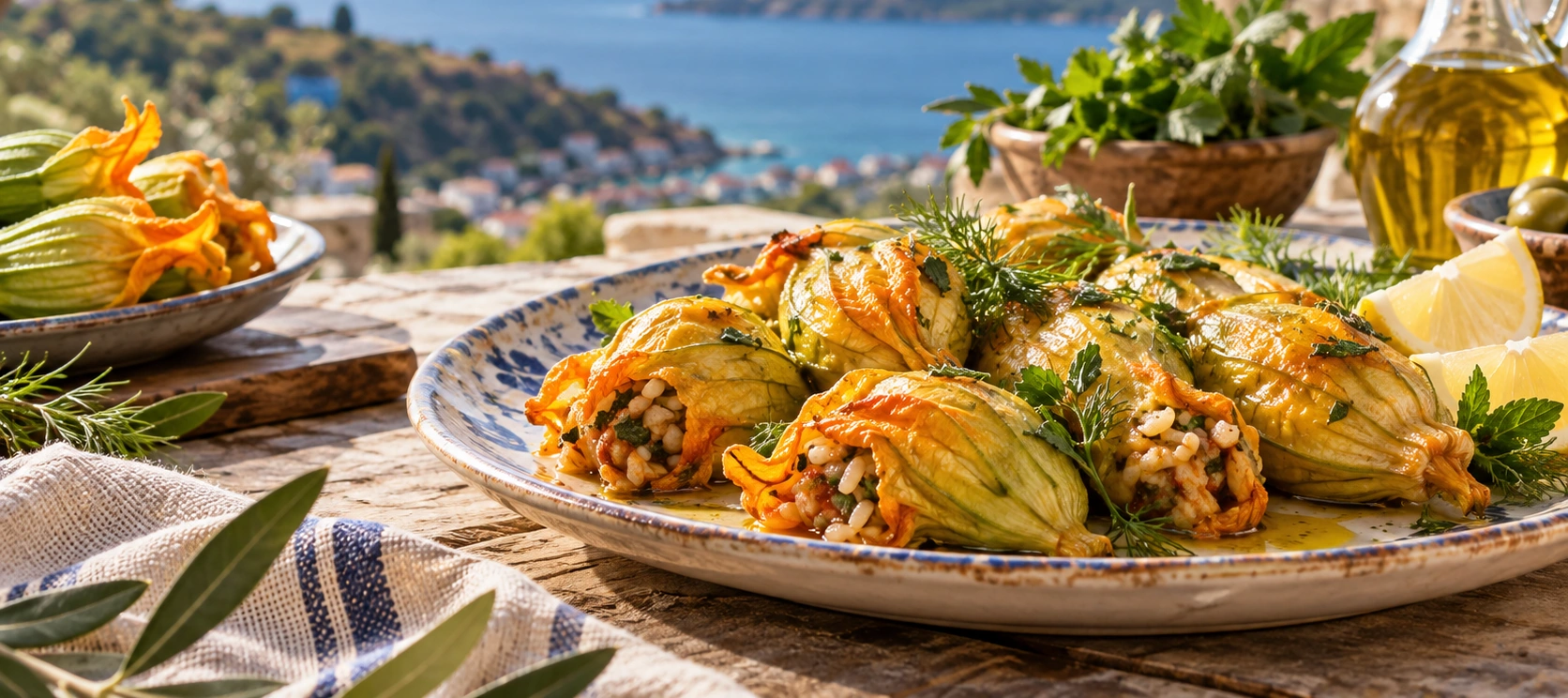
Explore Balıkesir through seasonal vegetables, stuffed squash blossoms, olive-oil dishes, regional cheeses and traditional local flavours.
Request This Experience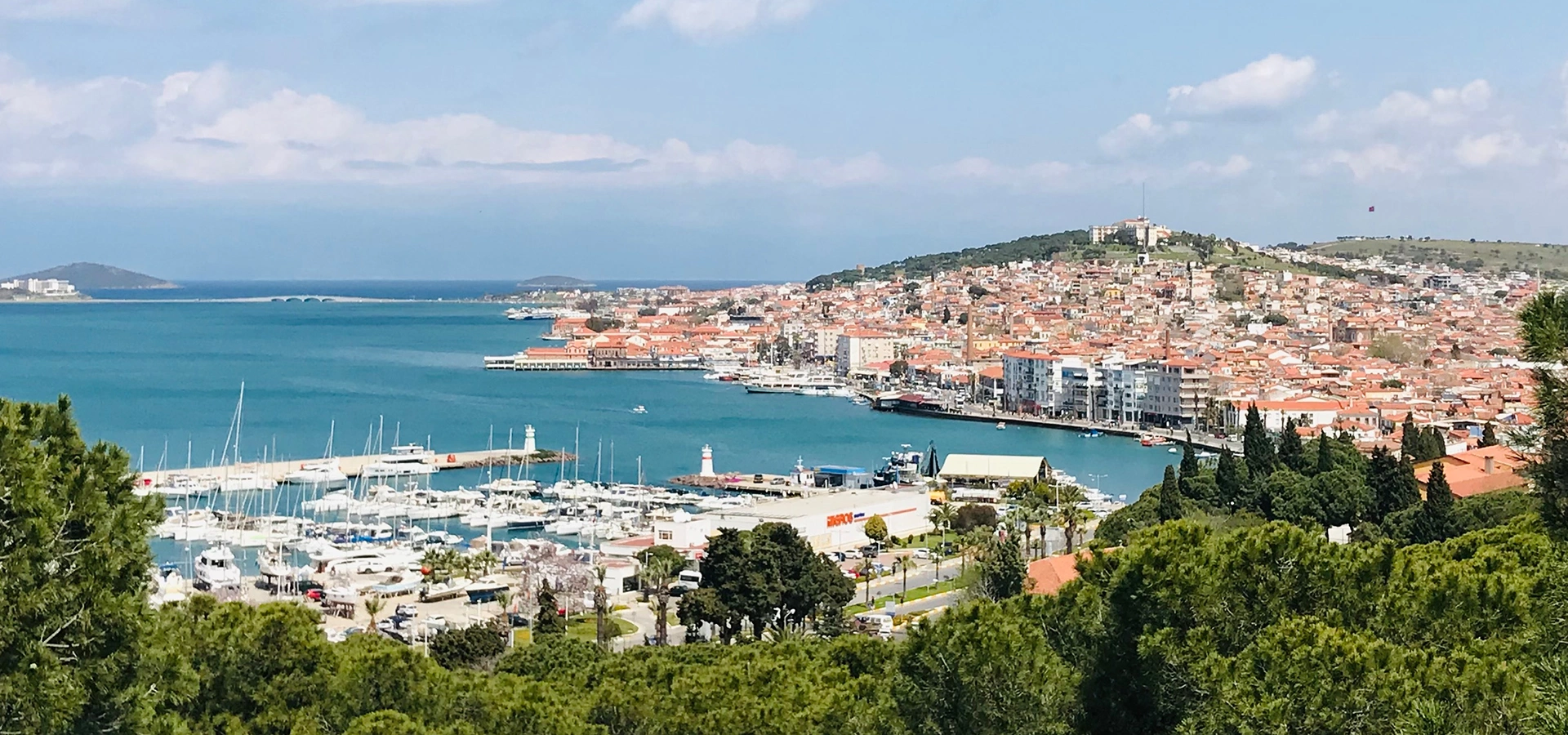
Combine Ayvalık's olive-oil culture and meze with Balıkesir's cheeses, village dishes, seasonal produce and historic towns.
Request This Tour