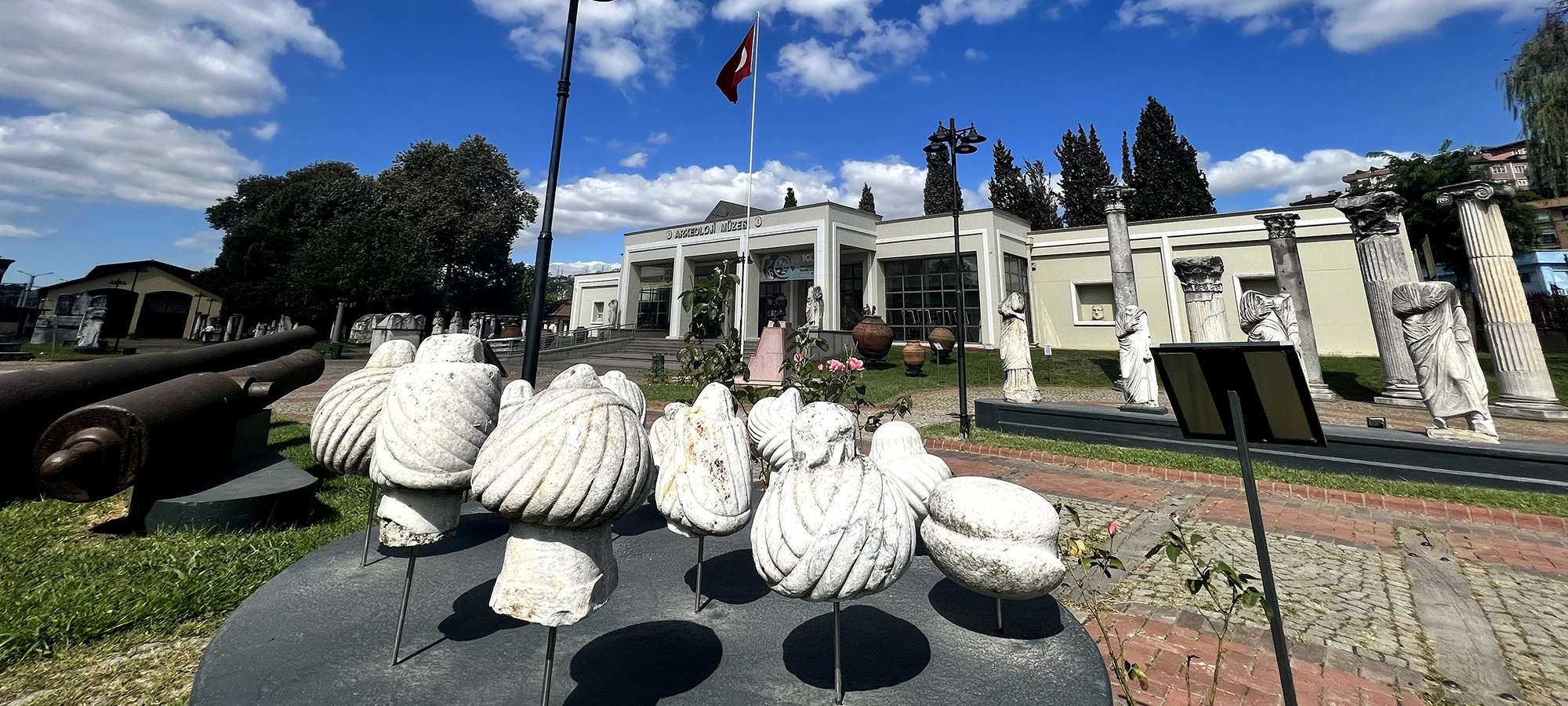
Kocaeli Archaeology Museum
Step from twentieth-century naval history into the Roman and Byzantine world of ancient Nicomedia.
Explore Nicomedia





Moored on the İzmit waterfront, the TCG Gayret Museum Ship is one of Kocaeli's most distinctive museums. Instead of viewing naval history through display cases alone, visitors step directly aboard a preserved warship and move through the spaces where sailors once worked, stood watch, ate, slept and operated the ship.
The vessel began its career in the United States Navy as USS Eversole (DD-789), a Gearing-class destroyer commissioned in 1946. It served in the Pacific, took part in Korean War operations, later operated during the Vietnam War era and was modernized during the Cold War.
On 11 July 1973, the ship was transferred to Türkiye and entered Turkish naval service as TCG Gayret (D-352). For the next 22 years, Gayret served with the Turkish Navy, participating in national and NATO exercises and becoming part of the modern operational history of the fleet.
After leaving active service in 1995, the destroyer was preserved rather than scrapped. It opened to visitors in İzmit on 20 August 1997 as a museum ship, giving the public an unusually direct way to experience naval technology, shipboard life and twentieth-century maritime history.
Explore a preserved Gearing-class warship rather than a conventional museum building.
The ship served first as USS Eversole in the United States Navy and later as TCG Gayret in the Turkish Navy.
See command spaces, radar equipment, weapons systems, machinery and the compact organization of a fighting ship.
Combine Gayret with TCG Hızırreis submarine and TCG Pelikan patrol craft in the same museum-ship complex.
Essential information for visiting one of Türkiye's most important preserved naval vessels.
İzmit waterfront,
Kocaeli.
Gearing-class destroyer
Hull number D-352 in Turkish service.
USS Eversole
DD-789.
1973–1995
22 years in the Turkish Navy.
20 August 1997
Preserved on the İzmit waterfront.
Guided ship visit
Advance appointment is advised.
TCG Gayret matters because it preserves not simply naval objects, but an entire operational environment where technology, discipline and everyday life once functioned together.
The first reason is authenticity. A destroyer is an extremely complex machine: command stations, engines, electrical systems, radar, communications, weapons, storage, sleeping quarters and countless passageways all had to work as one system. On Gayret, many of these spaces can still be understood in their original relationship to one another.
The second reason is the ship's international history. Built for the United States Navy at the end of the Second World War, USS Eversole served through the early Cold War, the Korean War and later operations connected with the Vietnam War period. Its transfer to Türkiye in 1973 gave the same vessel a second naval career in a different fleet.
The third reason is Turkish naval heritage. As TCG Gayret, the destroyer spent more than two decades in Turkish service and participated in national and NATO exercises. Official museum information also records two notable firsts: Gayret carried out the Turkish Navy's first ASROC firing and the first underway fuel replenishment from TCG Akar.
Finally, Gayret became an important example of museum-ship preservation in Türkiye. Rather than disappearing after decommissioning, the vessel entered a new public role on İzmit's shoreline, where generations of visitors can physically experience the scale and organization of a twentieth-century destroyer.
The vessel preserved in İzmit was originally built as USS Eversole (DD-789). Construction began in 1945 at Todd Pacific Shipyards, and the destroyer was launched on 8 January 1946.
USS Eversole was commissioned into the United States Navy on 10 May 1946. Although completed too late to fight in the Second World War, the ship entered service at the beginning of a rapidly changing post-war naval era.
In the following decades, Eversole served with the Pacific Fleet, operated in East Asian waters, participated in the Korean War, was later modernized under the United States Navy's destroyer modernization programmes and served during the Vietnam War era.
The American phase of the ship's career ended on 11 July 1973, when Eversole was decommissioned and transferred to Türkiye. The destroyer entered its second life as TCG Gayret (D-352).
Gayret remained in Turkish service until 1995. Following retirement, a joint museum-ship project involving naval and local authorities preserved the vessel for public display in İzmit. The museum opened on 20 August 1997.
Construction of USS Eversole begins in the United States.
The destroyer is launched and commissioned into the United States Navy.
Eversole serves in the Pacific and takes part in Korean War operations.
The ship continues Cold War service after modernization and operates during the Vietnam War period.
The vessel transfers to Türkiye and becomes TCG Gayret D-352.
TCG Gayret leaves active Turkish naval service after 22 years.
The preserved destroyer opens to the public as a museum ship in İzmit.
Gayret forms part of the İzmit Museum Ships complex on the Gulf of İzmit waterfront.
The Gearing class was developed by the United States Navy during the final phase of the Second World War. Destroyers of this type were designed as fast, multi-purpose surface combatants capable of screening larger warships, fighting aircraft and surface targets, launching torpedoes and carrying out anti-submarine duties.
USS Eversole was approximately 119 metres long and, in its original configuration, could reach speeds of roughly 35 knots. Its narrow hull, powerful machinery and long superstructure reflect a design built for speed, range and combat flexibility rather than comfort.
The ship originally carried 5-inch naval guns, torpedo tubes, anti-aircraft weapons and depth-charge equipment. Like many surviving American destroyers of its generation, Eversole was later modernized as naval warfare shifted toward radar, guided anti-submarine weapons and more sophisticated electronic systems.
For museum visitors, the class matters because it explains the layout of the ship. Gayret is not a spacious passenger vessel. Every corridor, ladder, bulkhead, hatch and machinery space was shaped by the need to operate a combat ship efficiently at sea.
Approximately 119 metres overall.
Designed for roughly 35 knots in original service configuration.
Fleet screening, surface warfare, anti-aircraft defence and anti-submarine operations.
Narrow passageways and densely packed systems reflect the priorities of a combat vessel.
The destroyer was named USS Eversole in honour of Lieutenant (junior grade) John Thomas Eversole, a United States naval aviator who was killed during the Battle of Midway in 1942.
The second USS Eversole was launched in January 1946 and commissioned in May of the same year. Its home-port and deployment history placed the ship firmly within the post-war Pacific Fleet.
Before the Korean War, Eversole already made Far East deployments and operated around Japan and China. When war began on the Korean Peninsula, the destroyer became part of the naval forces supporting operations in the region.
The ship later continued through the Cold War period, when destroyers increasingly depended on radar, sonar, communications and anti-submarine technology rather than only the gun-and-torpedo armament associated with the Second World War.
By the late 1960s and early 1970s, Eversole also served in waters connected with the Vietnam War, including naval gunfire support and carrier-related duties. This long American service explains why the ship visitors see in İzmit represents several different generations of naval technology rather than a single frozen moment.
USS Eversole's operational history places the ship within two of the most significant conflicts of the Cold War. That history should be understood as part of the broader story of twentieth-century naval warfare rather than simply as a list of battles.
During the Korean War, American destroyers carried out tasks including shore bombardment, carrier screening, patrol and support for naval operations around the peninsula. Eversole received seven battle stars for Korean War service.
Decades later, the ship also operated during the Vietnam War. United States Navy records document Eversole in the theatre during the late 1960s and early 1970s, when destroyers performed roles such as naval gunfire support, plane-guard duty and carrier screening.
This history adds another layer to the museum experience. The bridge, weapons systems, communications spaces and radar installations were not decorative technology: they were part of a vessel that spent years operating in demanding military environments.
Destroyers designed during the Second World War had to adapt quickly after 1945. Aircraft, submarines, missiles, radar and electronic warfare developed at remarkable speed, and older ships were modernized to remain useful.
USS Eversole underwent a major FRAM modernization in the early 1960s. FRAM — Fleet Rehabilitation and Modernization — extended the operational lives of older destroyers and updated them for Cold War missions, especially anti-submarine warfare.
One important system associated with this modernization was ASROC, the Anti-Submarine Rocket. It allowed a surface ship to deliver an anti-submarine weapon to a target at a much greater distance than traditional depth charges.
The system later became particularly important in Gayret's Turkish career. Official museum information identifies TCG Gayret as the ship that carried out the Turkish Navy's first ASROC firing.
For visitors, this is a useful reminder that Gayret should not be read only as a 1946 vessel. Its preserved form reflects decades of modification and changing naval doctrine.
On 11 July 1973, USS Eversole was transferred to Türkiye and became TCG Gayret with hull number D-352.
The transfer brought the destroyer into a navy operating at the strategic meeting point of the Black Sea, Aegean and Eastern Mediterranean. During its Turkish career, Gayret took part in numerous national and NATO exercises and served as part of the fleet for more than two decades.
The ship's official museum history records two milestones in Turkish naval operations. Gayret carried out the first ASROC firing in the Turkish Navy and also completed the fleet's first underway fuel replenishment from the tanker TCG Akar.
Underway replenishment is an important naval capability because it allows warships to receive fuel while remaining at sea, extending operational endurance and reducing the need to return to port.
By 1995, Gayret's active career had ended. Instead of being lost to dismantling, the vessel was selected for preservation, creating a direct physical link between modern visitors and several generations of Turkish sailors who had served aboard.
D-352 during Turkish Navy service.
1973–1995, a total of 22 years.
Participated in national and NATO naval exercises during its Turkish career.
Official museum information credits Gayret with the Turkish Navy's first ASROC firing.
Gayret carried out the first underway fuel replenishment from TCG Akar recorded by the museum.
Active service ended in 1995.
After decommissioning, Gayret was preserved through a museum-ship project involving naval authorities, Kocaeli local administration and the governorship. The aim was to keep the ship's naval history visible and make military-maritime culture accessible to the public.
The vessel was prepared for museum use and brought to its İzmit waterfront location in 1997. On 20 August 1997, TCG Gayret began its new role as a museum ship.
The İzmit Museum Ships institution was established with a wider educational mission: to introduce visitors to Turkish naval history, the duties of warships, the working conditions of sailors and the technologies used aboard naval vessels.
The collection later expanded. TCG Hızırreis, a former submarine, joined the museum complex in 2004, while TCG Pelikan, a former fast attack craft, began exhibition in 2020.
Together, the three vessels let visitors compare very different naval environments: the larger surface-combatant world of a destroyer, the extremely confined interior of a submarine and the compact speed-focused design of a patrol or attack craft.
The most memorable part of the Gayret visit is the ship itself. Displays gain meaning because they remain inside a real destroyer rather than being separated from their original setting.
Depending on the current guided route and any maintenance restrictions, visitors may encounter areas associated with navigation, command, communications, radar, combat systems, weapons, engineering and crew life.
Original equipment, naval objects, figures and interpretive displays help explain how different departments worked together. The result is part technology museum, part military-history museum and part preserved working environment.
See where the ship was navigated, commanded and controlled during operations at sea.
Understand how a Cold War destroyer detected, tracked and communicated beyond visual range.
Observe the relationship between deck armament, anti-submarine systems and the ship's combat role.
Engineering spaces reveal the enormous mechanical systems required to move a destroyer at high speed.
Compact sleeping and living areas show how little personal space existed aboard an operational warship.
The physical movement through the vessel is itself one of the best lessons in shipboard design.
The bridge is one of the most important spaces on any naval vessel. From here, officers and watch teams controlled the ship's course, speed and manoeuvres while maintaining constant awareness of surrounding vessels, weather and operational orders.
On a destroyer, the bridge had to function in very different conditions: quiet cruising, formation manoeuvres, high-speed operations, poor visibility and periods of combat readiness.
Look closely at the relationship between windows, controls, compasses, communications equipment and access to the exterior decks. The layout was designed to keep command information moving quickly between the bridge and other departments.
The view from the upper parts of the ship also changes the visitor's understanding of Gayret's scale. From the quay, the destroyer can appear compact. From the bridge and deck, its long narrow hull and layered superstructure become much more apparent.
A destroyer's effectiveness depended on far more than visible deck guns. By the Cold War, ships like Gayret operated as integrated combat systems linking detection, communication, decision-making and weapons.
Radar enabled ships to detect aircraft and surface contacts beyond normal visual range, while sonar and anti-submarine systems were used to search for threats beneath the water. Communication equipment connected the destroyer with other ships, aircraft and command networks.
Visible weapons help visitors understand the ship's original roles, but the more interesting lesson is how all of these systems worked together. A gun, torpedo or anti-submarine weapon was only one final element in a much larger chain of detection, tracking and command.
Because Gayret served for nearly half a century across two navies, equipment and configurations changed over time. The ship should therefore be understood as a layered Cold War vessel rather than a perfect recreation of one single year.
The engineering spaces reveal a side of naval history that is easy to overlook from the deck. A fast destroyer required enormous mechanical power and highly disciplined engineering teams.
In its original design, the Gearing class used geared steam turbines driving two shafts. The propulsion system generated tens of thousands of shaft horsepower, allowing ships of the class to operate at high speed.
The machinery spaces were hot, noisy and crowded when the ship was active. Engineers, technicians and watchkeepers worked around boilers, turbines, pumps, pipes, electrical equipment and control systems.
For technically minded visitors, this is one of the most revealing parts of the ship. The machinery makes clear that a naval vessel is not simply a platform carrying guns; it is a floating industrial plant that must continuously generate power, propulsion, water, ventilation and electrical services.
For many visitors, the most surprising part of the museum is not the weapons but the lack of space. Warships prioritize function, stability and combat capability, so personal comfort is limited.
Sailors lived among closely packed bunks, lockers, mess areas, work stations, machinery and narrow passageways. Privacy was minimal, and daily routines were shaped by watches, maintenance, training and operational readiness.
The ship could carry a crew numbering in the hundreds, depending on period and configuration. That means every sleeping space, meal service, shower, storage area and movement route had to be carefully organized.
Walking through Gayret helps visitors appreciate the human discipline behind naval operations. A sophisticated ship can function only if people, procedures and equipment work together continuously.
Bunks were compact and closely arranged to use limited interior volume efficiently.
Food service had to support a large crew within a confined environment at sea.
The ship operated continuously, so crews worked rotating watches rather than a normal day schedule.
Much of naval life involved inspection, cleaning, repair and constant care of complex equipment.
The museum's visitor information indicates that visits are guided and that guests should make an appointment before arriving. This is especially important because a warship is not laid out like a conventional gallery.
Routes can involve narrow corridors, steep naval ladders, raised thresholds and confined compartments. A guided sequence helps manage visitor movement and allows the museum to explain what each part of the ship originally did.
Listen for details that are easy to miss: why certain doors are heavy, why passages turn sharply, how different departments communicated, where ammunition or equipment was stored and how sailors moved through the ship during an emergency.
The exact route may change because ships require continuous maintenance and some compartments can be restricted temporarily. Allow the museum staff to set the pace and follow all safety instructions.
TCG Gayret is part of the wider İzmit Museum Ships collection. The site currently includes three preserved Turkish naval vessels.
The largest surface combatant is TCG Gayret (D-352), the former Gearing-class destroyer that opened as a museum ship in 1997.
The second major vessel is TCG Hızırreis (S-342), a former submarine that entered Turkish service in the 1980s and joined the İzmit museum collection in 2004.
The third is TCG Pelikan (P-326), a fast attack craft whose long Turkish naval career ended in 2016. It began public exhibition at the İzmit Museum Ships complex in 2020.
Seeing the vessels together is far more informative than visiting only one. A destroyer, submarine and fast attack craft solve completely different naval problems, and their shapes, interiors, crew conditions and operational roles reflect those differences.
Destroyer – large surface warship, multi-role systems and long-range fleet operations.
Submarine – an especially confined underwater environment built around stealth and endurance.
Fast attack craft – a smaller vessel built around speed and concentrated combat capability.
TCG Gayret can be a memorable museum for children who are interested in ships, machines, naval history or engineering. The experience is highly physical: visitors move through a real vessel rather than only reading information panels.
Older children often find the bridge, guns, radar, narrow corridors and crew spaces especially engaging. The ship also provides an excellent opportunity to explain how many different professions are required to operate one complex machine.
However, parents should remember that this is a former warship. There may be steep ladders, low clearances, metal surfaces, tight spaces and raised thresholds. Children should remain close to adults and follow the guide's instructions carefully.
For a broader family day, combine the museum ships with SEKAPARK and the Kocaeli Science Center. That combination balances a structured museum experience with interactive learning and open waterfront space.
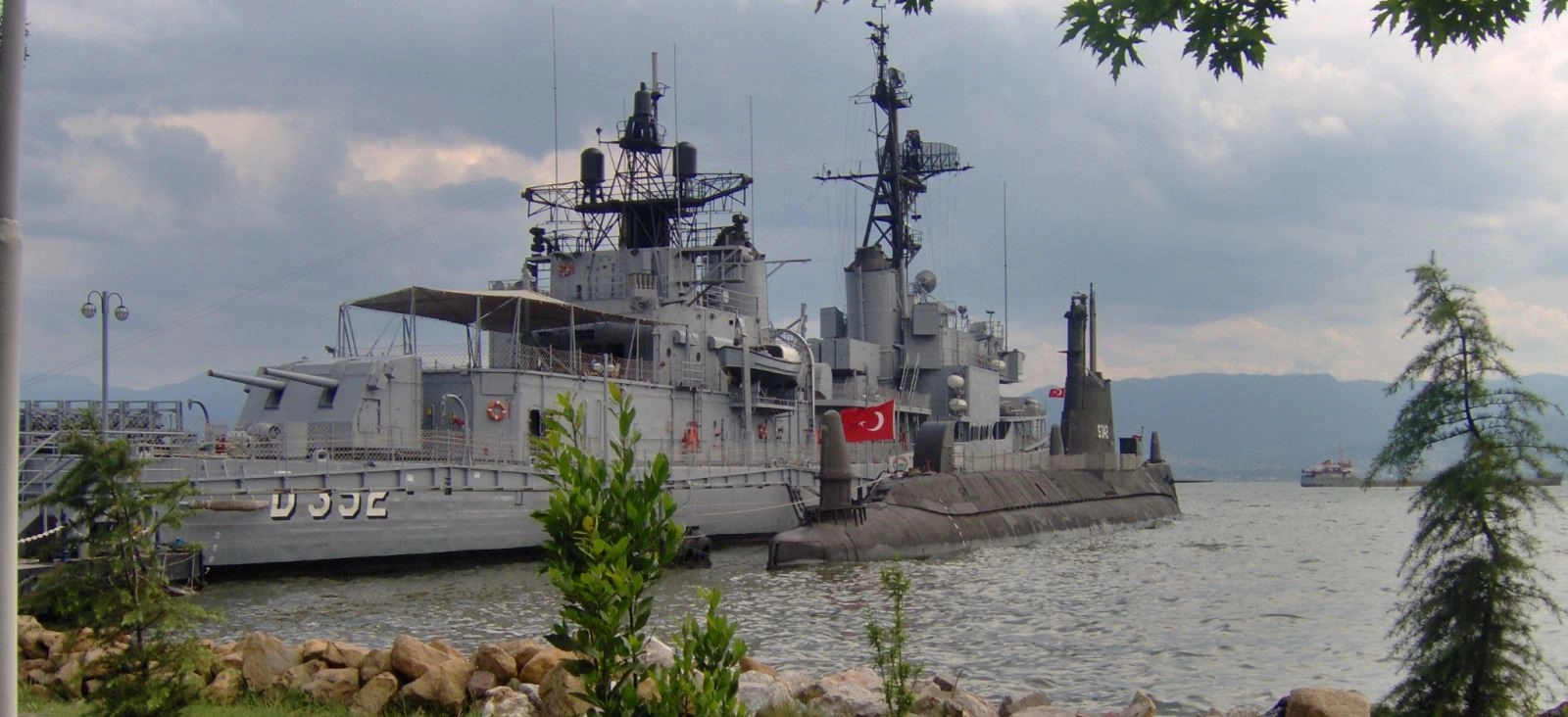
Gayret is one of the most visually distinctive landmarks on the İzmit shoreline. Its long grey hull, D-352 markings, gun mounts, radar mast and layered superstructure create strong industrial compositions against the water.
Exterior photography is especially effective from angles that show the ship in relation to the Gulf of İzmit and the city rising behind the waterfront. A wide view tells the story of a preserved naval vessel now embedded in everyday urban life.
Details can be equally rewarding: anchors, deck fittings, turrets, radar equipment, lifelines, hatches, warning markings and weathered metal surfaces all reveal the functional design of the ship.
Inside, space and lighting can be limited. Respect any photography restrictions, avoid blocking narrow passageways and do not use equipment that interferes with the guided route.
Capture D-352 against the Gulf to show both the destroyer and its present İzmit setting.
Use upward angles to emphasize radar equipment and the layered naval superstructure.
Guns, hatches, ropes, fittings and markings create strong close-up compositions.
Late-afternoon light can soften the grey hull and create attractive reflections on the Gulf.
The official museum listing includes accessibility services, but visitors should distinguish between access to the museum site and access to every compartment of a historic destroyer.
Naval vessels were not designed for modern public accessibility. Interior routes can include steep ladders, narrow doorways, raised watertight thresholds, tight turns and confined spaces.
Visitors with limited mobility, balance concerns, wheelchairs or difficulty climbing steep stairs should contact the museum before travelling and ask which areas can currently be visited safely and step-free.
The waterfront outside the ship is much easier terrain than the vessel itself, so even when full interior access is not practical, the broader museum-ship setting can still provide an interesting exterior experience.
The official museum listing asks visitors to make an appointment before arriving.
Choose comfortable footwear with good grip for metal decks, ladders and thresholds.
Visits are guided; stay with the group and respect the route through confined spaces.
Historic naval interiors can have low clearances, pipes and projecting fittings.
A small bag is easier than bulky luggage when climbing ladders or moving through narrow passages.
Official visitor guidance states that food and drink are not permitted inside the museum route.
Do not schedule your next stop too tightly; guided entry and group organization can affect timing.
If available during your visit, see Gayret together with Hızırreis and Pelikan for a much richer naval-history experience.
TCG Gayret is managed as part of the İzmit Museum Ships complex. The official Turkish Museums portal currently lists Monday as the weekly closing day and asks visitors to arrange an appointment before their visit.
For the summer season from 1 April to 30 September, the official portal currently displays 11:00–19:00 opening hours, with Sunday shown until 19:30 and the ticket office closing at 18:30.
For the winter season from 1 October to 31 March, the portal currently displays 09:00–17:30, with the ticket office closing at 16:30.
The same official listing currently shows an adult admission price of 90 TL, while certain age groups and eligible visitors may enter free or at a reduced rate. Because admission prices can be revised, treat any published amount as a planning guide rather than a permanent price.
Kozluk Mahallesi, Oramiral Salim Dervişoğlu Caddesi, İzmit, Kocaeli
Monday
1 Apr–30 Sep
Official portal currently lists 11:00–19:00.
1 Oct–31 Mar
Official portal currently lists 09:00–17:30.
Recommended / requested before visiting
Guided museum-ship route
90 TL
As listed by the official portal when checked in 2026.
+90 262 323 33 83
The museum ships are located on the İzmit waterfront in Kozluk, close to the historic railway-station area and within easy reach of the city centre.
Official museum information describes the site as being opposite İzmit railway station, making it particularly convenient for visitors arriving by train.
From central İzmit, the museum can be reached by taxi, local public transport or on foot, depending on your starting point. The waterfront setting also makes it easy to combine the ships with nearby museums and historic landmarks.
If arriving by car, use the current navigation pin for Kocaeli Müze Gemiler / TCG Gayret and follow local parking signs. Waterfront traffic and parking conditions can change during events or busy weekends.
The museum complex is opposite the İzmit railway-station area, making rail arrival especially convenient.
A simple option from hotels, SEKAPARK or other parts of central İzmit.
Easy to combine with the Clock Tower, archaeology museum and central waterfront if you enjoy city walking.
Navigate to Kocaeli Müze Gemiler and follow current waterfront parking directions.
Begin at TCG Gayret Museum Ship and, if the current visitor programme allows, see the other vessels of the İzmit Museum Ships complex. The contrast between destroyer, submarine and fast attack craft provides an excellent introduction to modern naval history.
Continue to the nearby Kocaeli Archaeology Museum to move dramatically backward in time, from twentieth-century naval technology to the ancient history of Nicomedia.
Then walk toward İzmit Clock Tower and the historic hillside. From here, continue into Kapanca Street for traditional houses, fountains and old neighbourhood atmosphere.
If you still have time, visit Pertev Mehmet Pasha Mosque for classical Ottoman architecture or head west to SEKAPARK for a relaxed waterfront walk and sunset.
TCG Gayret – explore the preserved Gearing-class destroyer.
TCG Hızırreis & TCG Pelikan – compare submarine and fast-attack-craft design.
Kocaeli Archaeology Museum – discover Roman and Byzantine Nicomedia.
İzmit Clock Tower – one of the city's best-known late-Ottoman landmarks.
Kapanca Street – explore traditional architecture and old hillside lanes.
SEKAPARK – end with an easy walk and views across the Gulf of İzmit.
Because access is guided and museum-ship routing can vary, visit times are less predictable than at a simple open-air monument. Allow enough flexibility for entry, orientation and movement through confined spaces.
A practical minimum for a focused guided visit to Gayret when the route is operating normally.
Better if you want to examine details carefully and include more of the museum-ship complex.
Combine the museum ships with Kocaeli Archaeology Museum, İzmit Clock Tower and the waterfront.
Add Kapanca Street, Pertev Pasha Mosque, SEKA Paper Museum and SEKAPARK.
TCG Gayret can be visited throughout the year when the museum is open, but the waterfront setting makes weather relevant.
Mild temperatures make it comfortable to combine the interior visit with a longer walk around central İzmit.
Good for combining the ships with the waterfront, but metal decks and exposed areas can feel hot in strong sun.
Often excellent for city walking, photography and pairing the museum with nearby historic districts.
The museum remains interesting in cold weather, but İzmit Bay can be windy and damp, so dress warmly.
Late afternoon gives the exterior hull and İzmit waterfront softer light.
Appointment availability matters more than season; confirm your visit before travelling.
The museum ship stands in one of the most useful areas of İzmit for combining modern naval history, Roman archaeology, Ottoman architecture and waterfront recreation within a single day.
Use our complete Kocaeli travel guide to continue exploring the province.
Explore finds from Nicomedia and the wider region only a short distance from the waterfront.
A landmark of the late Ottoman city standing above the railway and waterfront district.
Traditional houses, fountains and steep lanes reveal the historic residential side of İzmit.
Discover a major classical Ottoman complex designed by Mimar Sinan.
Relax beside the Gulf in İzmit's major waterfront park and former SEKA industrial district.
Continue the twentieth-century story through one of Türkiye's most important preserved industrial sites.
Travel back to the early Ottoman period on the historic slopes above central İzmit.
An interactive family-friendly addition within the wider SEKA cultural district.
TCG Gayret is moored on the İzmit waterfront in Kocaeli, close to and opposite the historic İzmit railway-station area.
Gayret is a preserved Gearing-class destroyer that served first in the United States Navy and later in the Turkish Navy.
The ship was originally USS Eversole (DD-789) of the United States Navy.
USS Eversole was commissioned on 10 May 1946.
Yes. Eversole took part in Korean War operations and received seven battle stars for that service.
Yes. The destroyer operated in the Vietnam theatre during the later part of its United States Navy career.
The vessel was transferred to Türkiye on 11 July 1973 and entered Turkish service as TCG Gayret D-352.
Gayret served for approximately 22 years, from 1973 until 1995.
Official museum information records Gayret as the vessel that carried out the Turkish Navy's first ASROC firing and its first underway fuel replenishment from TCG Akar.
The preserved destroyer opened as a museum ship in İzmit on 20 August 1997.
Official Turkish Museums information describes Gayret as Türkiye's first museum ship.
Yes. The museum experience includes interior areas of the preserved destroyer, subject to the current guided route, safety conditions and maintenance restrictions.
The official museum portal asks visitors to make an appointment before visiting, so it is wise to contact the museum in advance.
Yes. The official museum listing currently shows Monday as the weekly closing day.
The official portal listed an adult ticket of 90 TL when checked in 2026, with free or reduced admission for some eligible visitors. Prices can change, so confirm before travelling.
Allow roughly 45–60 minutes for a focused visit, and longer if you are seeing the other museum ships as well.
Yes, especially for children interested in ships and engineering. However, adults should supervise them closely around steep ladders, narrow passages and metal thresholds.
The museum lists accessibility services, but a historic destroyer contains narrow passages and steep ladders. Contact the museum in advance to ask which areas are currently accessible for your specific needs.
Photography rules can vary by area and current museum policy. Follow staff instructions and any signs restricting photography.
Official visitor guidance states that food and drink are not permitted during the museum visit.
The İzmit Museum Ships complex also includes TCG Hızırreis submarine and TCG Pelikan fast attack craft.
Good nearby additions include the Kocaeli Archaeology Museum, İzmit Clock Tower, Kapanca Street, Pertev Pasha Mosque, SEKA Paper Museum and SEKAPARK.
Yes. It is one of İzmit's most unusual museums and one of the best places in Türkiye to experience modern naval history inside a preserved operational warship.
From the waterfront, TCG Gayret is impressive as an object: a long grey destroyer, its number D-352 still visible against the Gulf of İzmit. But the real experience begins after you step aboard.
Inside, the ship becomes a world of compartments, ladders, pipes, controls, radar, weapons and tightly organized living spaces. Everything is close together because every metre of the hull had to serve a purpose.
That physical reality changes the way naval history feels. A destroyer is no longer simply a photograph or a technical specification. It becomes a place where hundreds of people worked in shifts, maintained machinery, watched instruments, prepared meals, navigated, communicated and responded to orders while moving across open sea.
Gayret also carries two national stories. It began as USS Eversole in the United States Navy, passed through major Cold War conflicts and then served another 22 years under the Turkish flag. Its final transformation into a museum preserved both chapters.
For visitors exploring İzmit, the ship adds a completely different layer to the city. Roman Nicomedia, Ottoman mosques, late-Ottoman civic monuments, Republican industry and modern naval heritage all meet within a remarkably compact urban landscape.
TCG Gayret opens a window into modern naval history. Continue through İzmit to discover ancient Nicomedia, Ottoman architecture, industrial heritage and the Gulf of İzmit waterfront.
Move from naval heritage into archaeology, industrial history and the modern shoreline.
Step from twentieth-century naval history into the Roman and Byzantine world of ancient Nicomedia.
Explore Nicomedia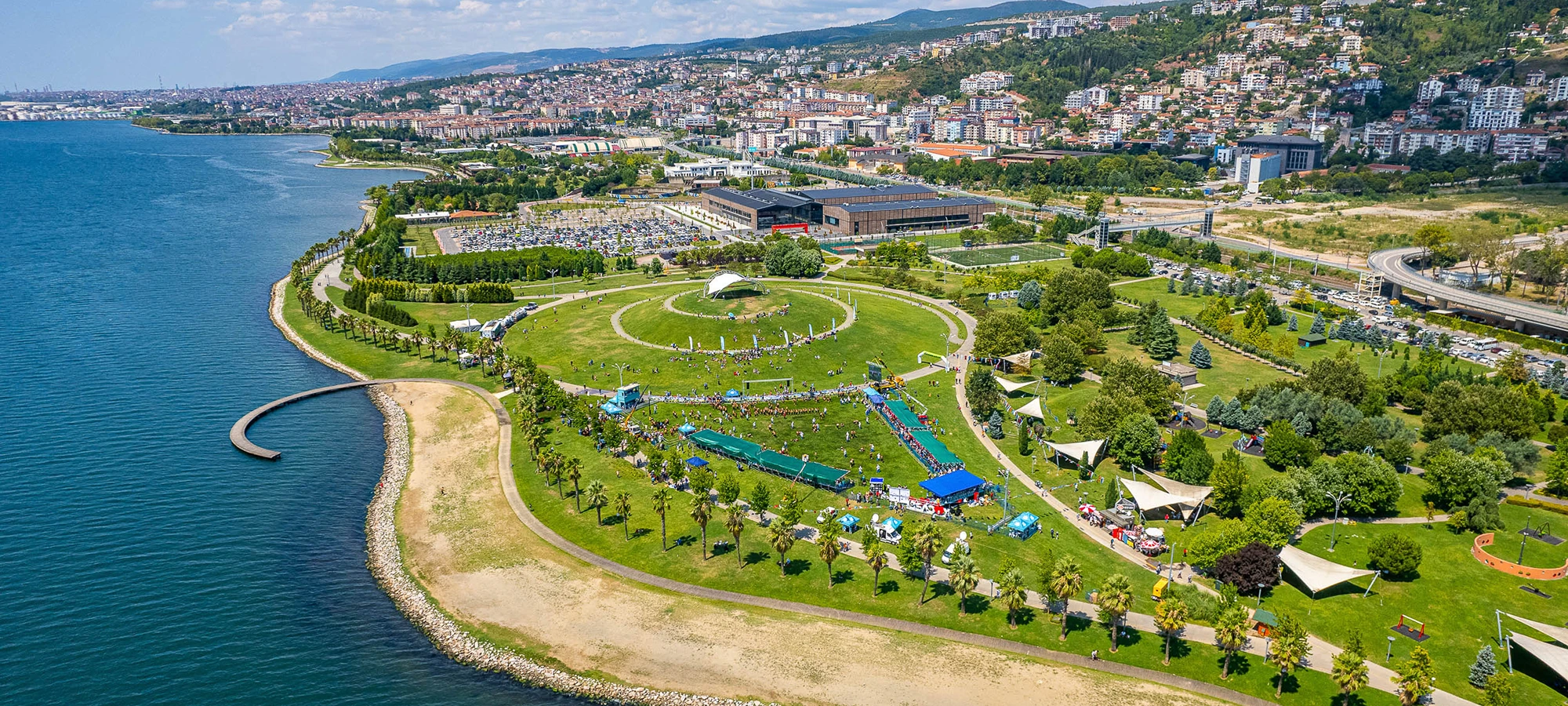
Continue west along the Gulf for green space, waterfront views and the transformed former SEKA industrial district.
Explore SEKAPARK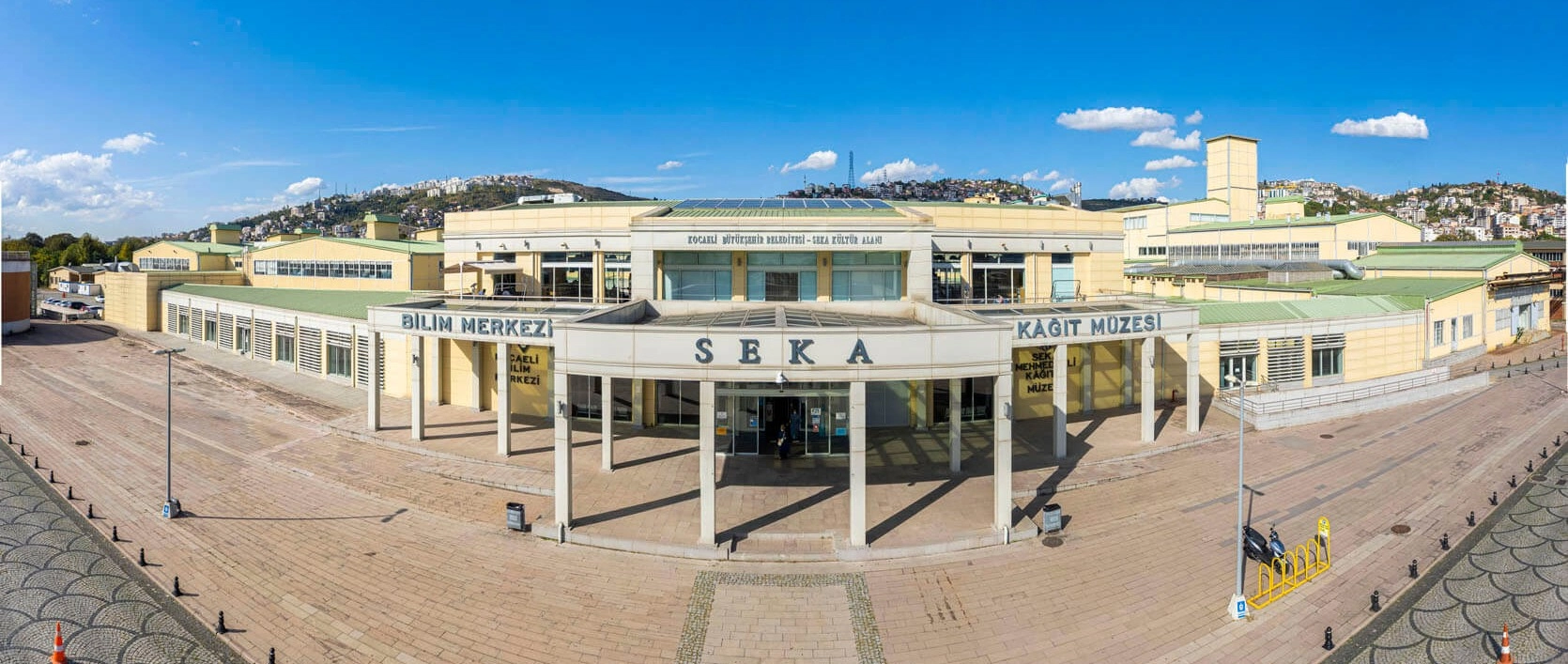
Explore another major chapter of twentieth-century İzmit inside the preserved paper-factory complex.
Explore the Paper MuseumContinue uphill into late-Ottoman landmarks, classical architecture and traditional neighbourhoods.
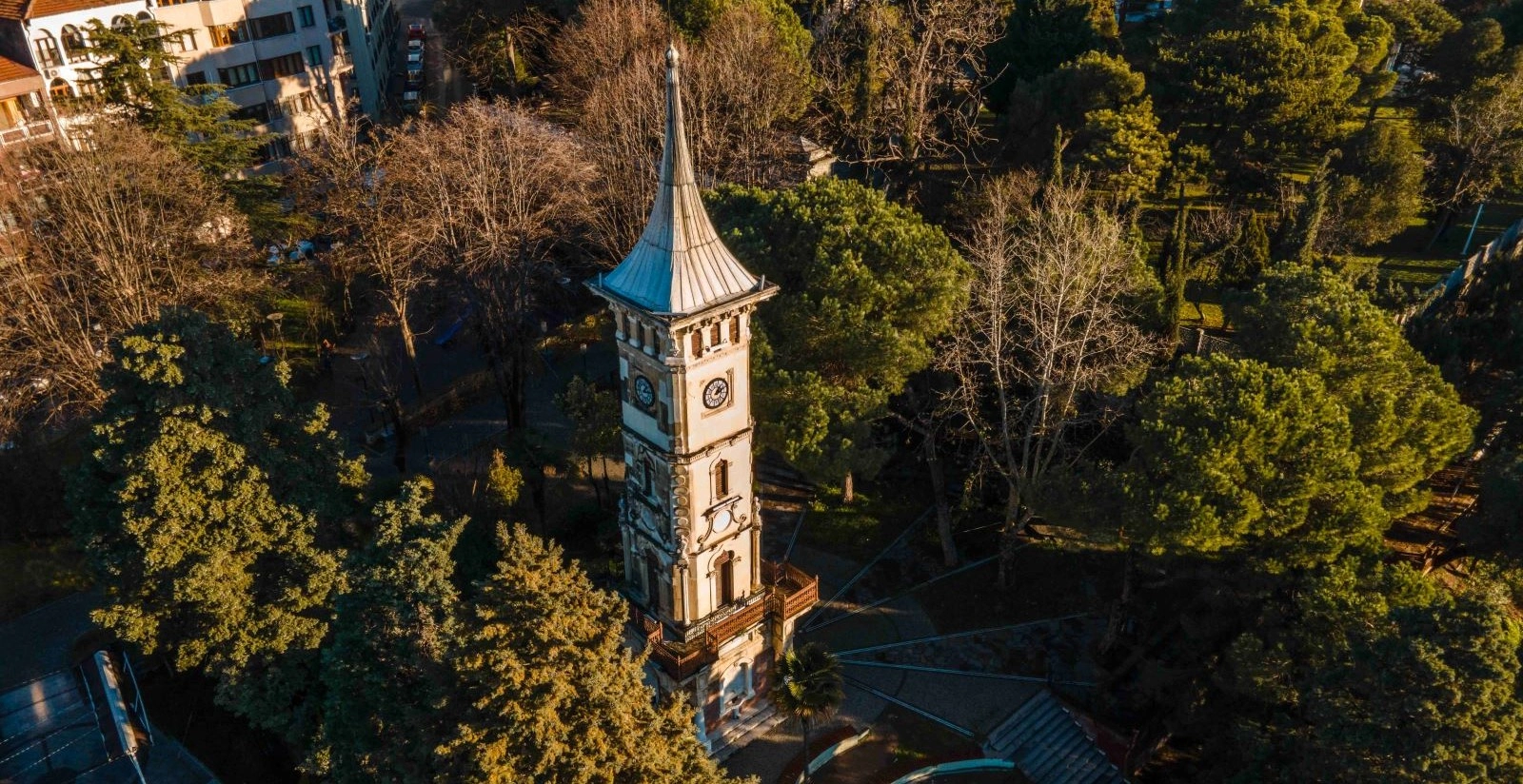
Walk from the museum ships toward one of İzmit's most recognizable late-Ottoman landmarks.
Explore the Clock Tower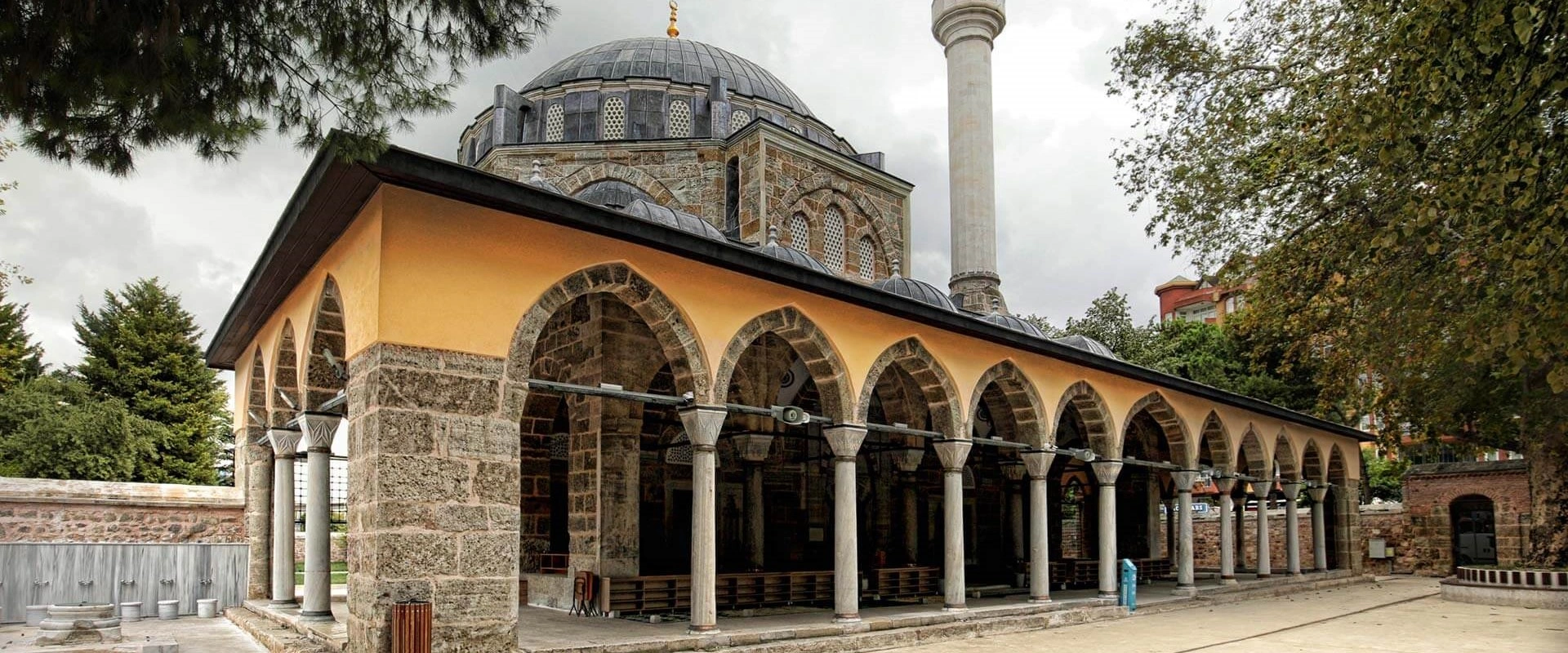
Discover Mimar Sinan's classical Ottoman architecture in the historic centre of İzmit.
Explore Pertev Pasha Mosque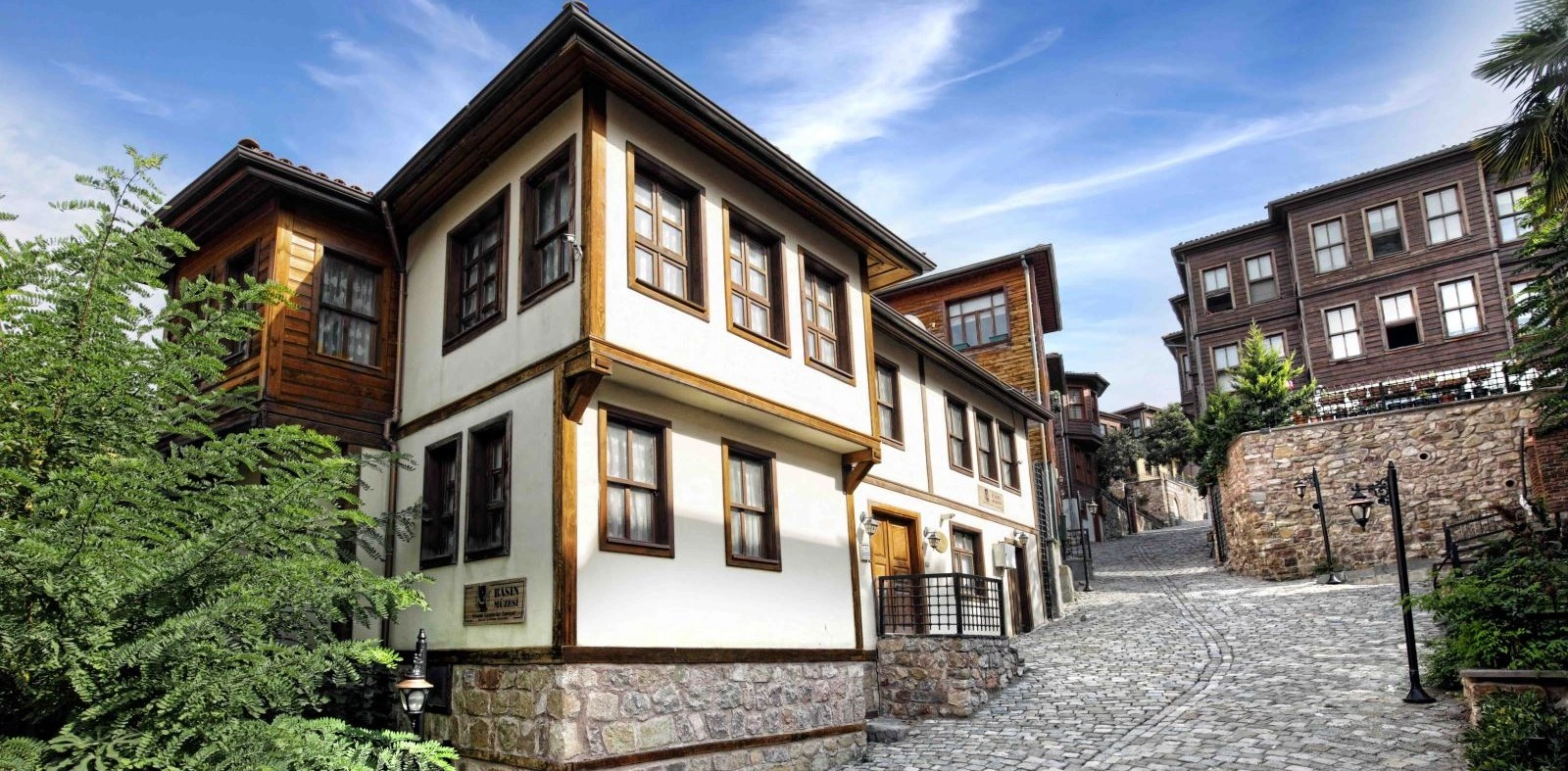
Leave the waterfront behind and enter old İzmit among traditional houses, fountains and steep historic lanes.
Explore Kapanca StreetWe can connect Istanbul, Kocaeli, Cappadocia and destinations throughout Türkiye in a private cultural itinerary.
Build a private day around naval history, Roman Nicomedia, Ottoman architecture and the Gulf of İzmit waterfront.
Plan Your Journey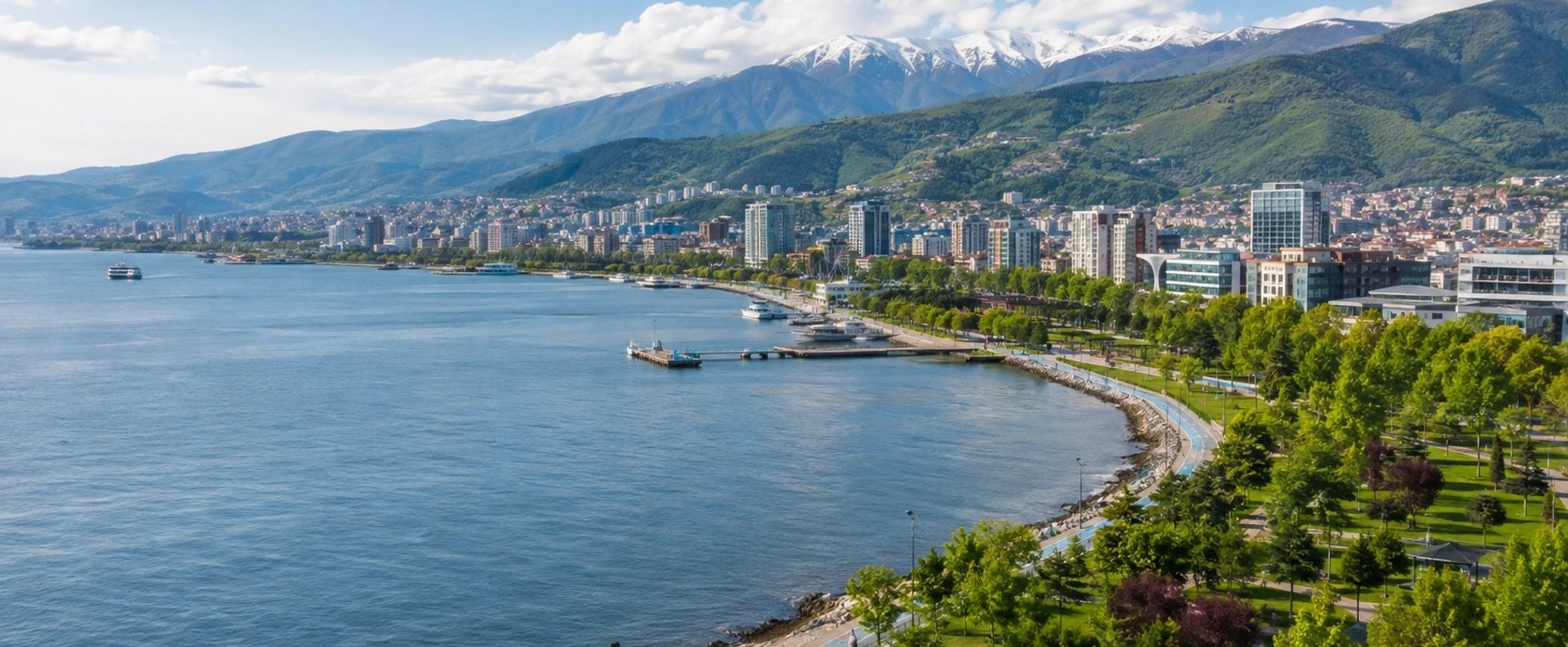
Continue around the Gulf with archaeology, Ottoman heritage, industrial history, forests, coastlines and regional culture.
Discover Kocaeli
Continue throughout Türkiye with historic cities, museums, landscapes, archaeological sites and regional culture.
Explore Türkiye