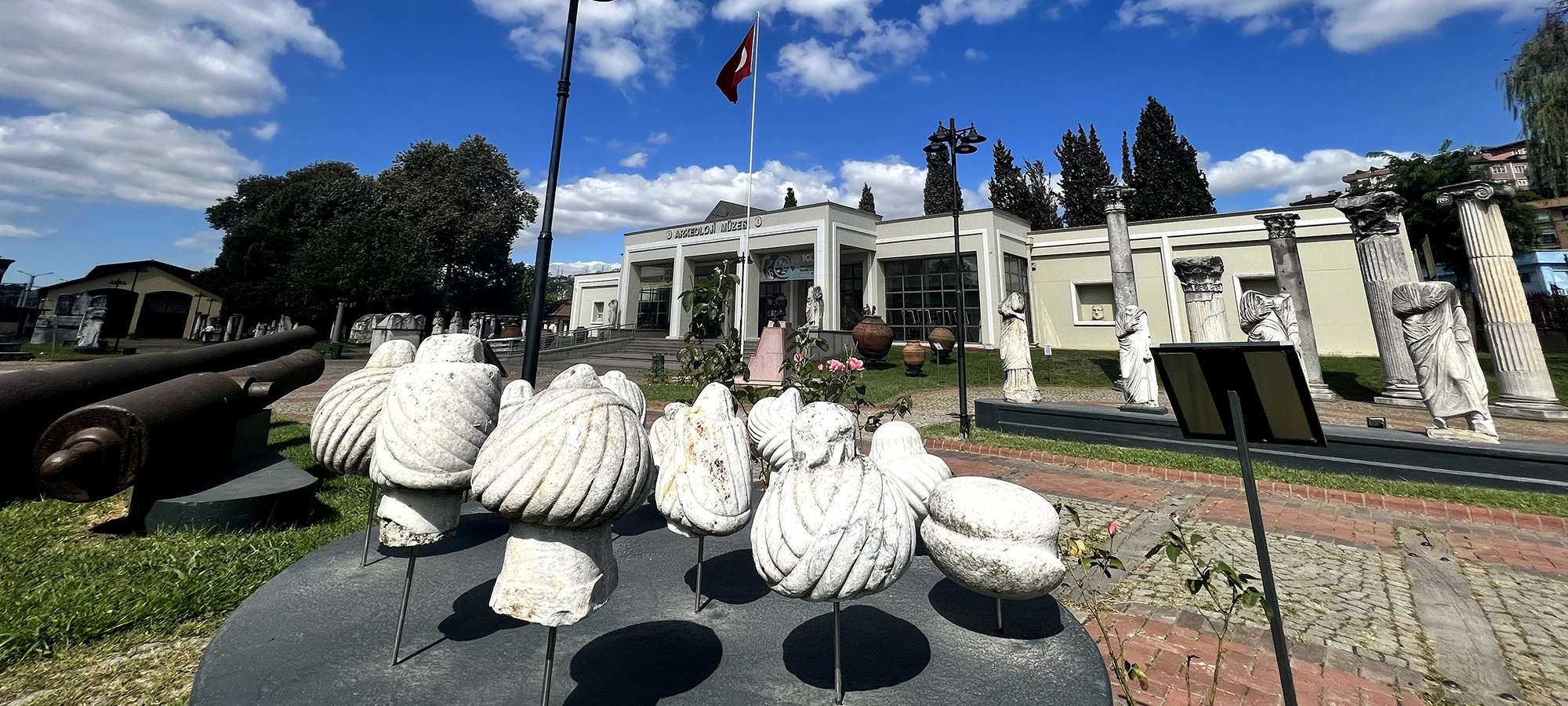
Kocaeli Archaeology Museum & Nicomedia
Continue from Ottoman İzmit into the much older story of Nicomedia, Roman imperial art, regional archaeology and the historic railway complex.
Explore the Museum





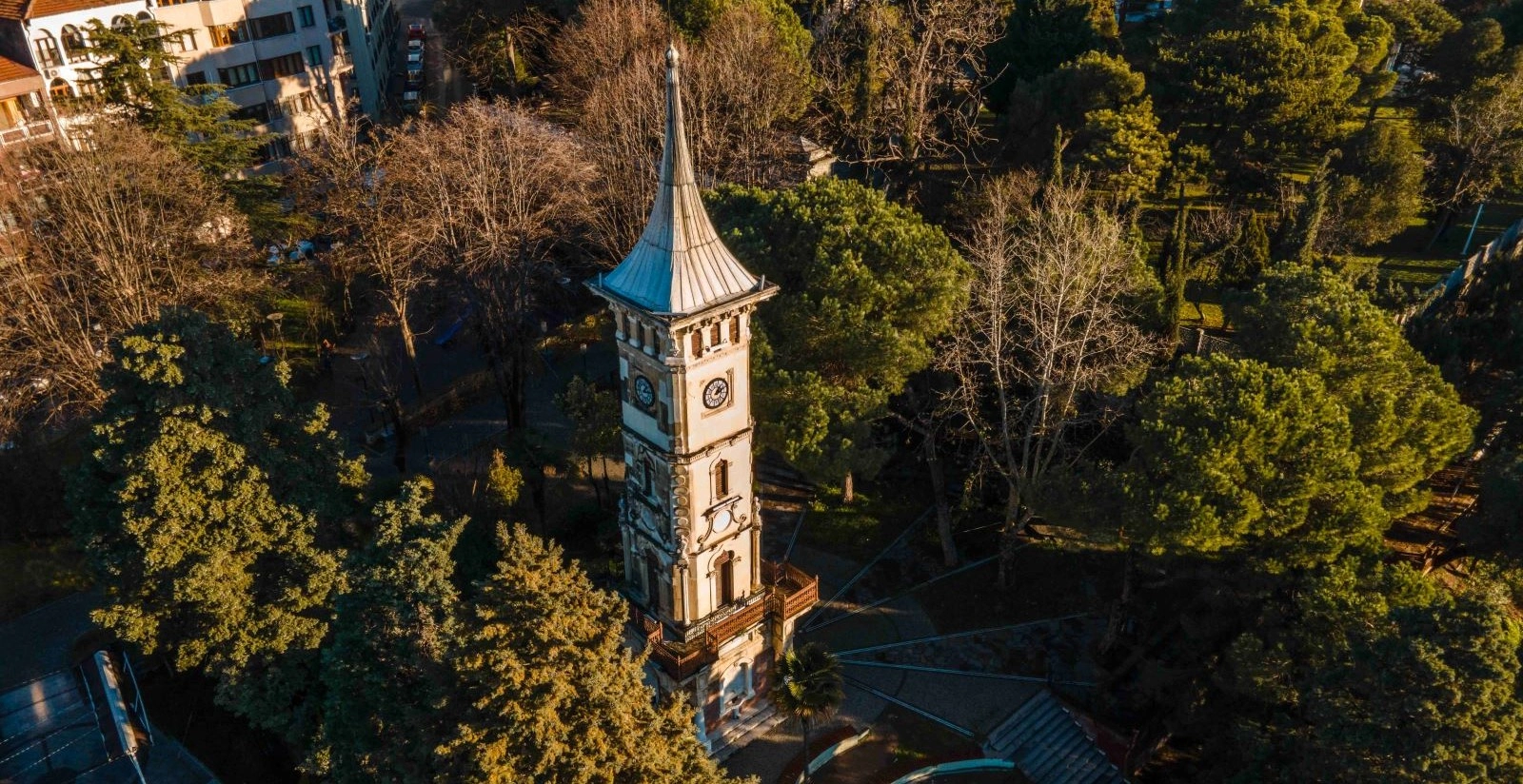
İzmit Clock Tower, or İzmit Saat Kulesi, rises on the historic slope of central İzmit near Kasr-ı Hümayun, overlooking the urban landscape and the Gulf of İzmit. Although modest in height compared with modern towers, its elegant stonework, fountains, balconies and four clock faces make it one of the city's most recognizable monuments.
The tower belongs to the wave of clock-tower construction associated with the 25th anniversary of Sultan Abdülhamid II's accession to the Ottoman throne. It was commissioned during the administration of İzmit Mutasarrıfı Musa Kazım Bey and is closely associated with architect Vedat Tek, one of the important names of late Ottoman and early Turkish architecture.
Official sources differ slightly over whether the monument should be dated to 1901 or 1902. The Ministry of Culture inventory records 1901, while Kocaeli municipal publications generally describe the tower as built or completed in 1902. For travellers, the most useful way to understand the chronology is that the project belongs to the 1901–1902 jubilee period and was completed around the beginning of the twentieth century.
The clock tower is especially rewarding because it can be combined easily with Ottoman monuments, historic neighbourhoods, the archaeology of ancient Nicomedia and the Gulf waterfront. A major restoration was completed by Kocaeli Metropolitan Municipality in March 2026, and the repaired clock mechanism once again works above the city.
Built during the empire-wide commemorations marking the 25th anniversary of Sultan Abdülhamid II's accession.
The design is associated with one of the leading architects of the transition from late Ottoman architecture toward the First National Architectural style.
Three fountain façades, marble details, local stone and ornamental inscriptions make the base as interesting as the clock chamber above.
A major conservation campaign repaired the structure, roof, woodwork, façades and clock mechanism before new night lighting was added.
Essential facts for understanding one of central İzmit's most photogenic Ottoman monuments.
Kemalpaşa Mahallesi, central İzmit / Kocaeli, near Kasr-ı Hümayun.
Open on Google MapsBuilt during the 1901–1902 period; municipal sources usually give 1902.
The 25th anniversary of Sultan Abdülhamid II's accession to the throne.
Associated with architect Vedat Tek; Neo-Classical Ottoman character.
Three fountain façades at the base, plus four clock faces near the top.
Major restoration completed; clock mechanism repaired and night lighting renewed.
The tower brings together Ottoman modernization, civic architecture, public fountains and one of the best-known silhouettes in Kocaeli.
The first reason the tower matters is its connection with Sultan Abdülhamid II's jubilee. Clock towers became powerful symbols of modern public time in the late Ottoman world, especially around the silver-jubilee celebrations of the sultan's reign. İzmit's tower belongs to this wider movement but has a strongly local identity created by its hillside position and regional building materials.
The second reason is architectural. The monument is linked with Vedat Tek, who would become one of the most important architects of the First National Architectural movement. The İzmit tower is often discussed among his early works, combining classical ordering, Ottoman motifs, stone carving, metalwork and a strong vertical silhouette.
The third reason is urban. The tower stands beside the historic imperial lodge zone above the Gulf of İzmit. Its position makes it more than a freestanding monument: it acts as a visual marker between the waterfront, railway corridor, Ottoman administrative landscape and old residential slopes of İzmit.
Finally, the monument remains part of living city memory. Repeated restorations in the twentieth and twenty-first centuries show how strongly İzmit identifies with the tower. The latest major conservation project was completed in 2026, returning the clock mechanism to working order and renewing the tower's presence after dark. Visitors following our guide to places to visit in Kocaeli can use it as an ideal starting point for a central İzmit history walk.
İzmit Clock Tower was created in the political and cultural atmosphere of Sultan Abdülhamid II's reign. The 25th anniversary of the sultan's accession inspired commemorative projects across the Ottoman Empire, and clock towers became some of the most visible expressions of that moment.
Public clocks were practical, but they were also symbolic. They made standardized time visible to people moving through government districts, markets, stations and public squares. In an age of expanding railways, telegraph networks and modern administration, a clock tower could represent both punctuality and state presence.
In İzmit, the project was promoted by Musa Kazım Bey, the local mutasarrıf, or district governor. The tower was deliberately placed in a prestigious part of the city near the imperial lodge and administrative landscape, where it could be seen from surrounding streets and from lower parts of the city.
The resulting monument is therefore not simply a decorative tower. It belongs to the story of how late Ottoman cities were reshaped by new transport systems, civic improvements, public architecture and changing ideas about urban time.
The tower commemorates a major jubilee in the reign of Sultan Abdülhamid II.
Clock towers made standardized time visible in rapidly modernizing Ottoman cities.
The İzmit mutasarrıf played the central administrative role in commissioning the monument.
The tower was placed close to the imperial lodge on a prominent slope above the Gulf.
The monument belongs to the same era in which railway and administrative infrastructure transformed the city.
Its purpose was both practical and ceremonial, linking public utility with imperial commemoration.
Visitors researching the tower quickly encounter two dates. The official Türkiye Culture Portal inventory records 1901, while Kocaeli Metropolitan Municipality publications generally describe the tower as built in 1902. Recent historical research also places construction and completion across the opening years of the twentieth century.
The difference is understandable because a large public monument can have several meaningful dates: the beginning of construction, the commemorative year, completion of the main structure, installation of the clocks and the formal opening may not all occur at the same moment.
For a visitor guide, the safest summary is that İzmit Clock Tower was constructed during the 1901–1902 jubilee period and completed around 1902. This preserves the official inventory tradition without ignoring the dating used by the municipality and other historical sources.
The date recorded in the national cultural inventory.
The date most often given in current Kocaeli municipal tourism material.
The project developed across the beginning of the twentieth century rather than in a single ceremonial day.
“Built during the 1901–1902 period” avoids presenting a debated detail as falsely precise.
The tower is traditionally attributed to Mehmet Vedat Tek, usually known simply as Vedat Tek. Official cultural inventories identify him as the architect, and the monument is widely regarded as one of his early works.
Recent Kocaeli historical publications add an important layer to the story. They state that Vedat Tek prepared the project, while the practical execution was carried out with alterations by other local architects and builders. Mihran Azaryan, an İzmit-born architect educated at the Sanayi-i Nefise school, is associated with the construction, while archival evidence also records Hacı Ohannes Azaryan as having worked on the project.
This does not diminish Vedat Tek's role. Instead, it shows how major public buildings were often collaborative projects in which a design could pass through administrative, engineering and construction hands before reaching its final form.
The monument is also connected to Vedat Tek personally through Musa Kazım Bey, whom local historical research identifies as his father-in-law. That relationship adds another human dimension to the commission.
Credited with the architectural project and strongly associated with the tower in official inventories.
Recent historical research identifies him with the execution of the project and changes made during construction.
Archival research records his involvement and later official recognition for service connected with the construction.
The tower is a useful reminder that design authorship and on-site execution were not always the same role.
İzmit Clock Tower is generally described as a Neo-Classical Ottoman monument with a carefully articulated multi-level composition. A broad lower section supports the narrower vertical tower, while projecting cornices, balconies and window openings break the façade into clearly readable stages.
Official Kocaeli tourism material emphasizes the use of marble and regional stone, including travertine associated with the Hereke and Tavşancıl areas. The different textures of the pale stone, darker wall surfaces and iron balcony railings give the tower much of its visual character.
The upper clock chamber carries four clock faces, one toward each side, making the time visible from several directions. Above them rises a projecting roof and a distinctive slender pointed finial that gives the monument a much taller appearance than its actual height.
The tower is commonly given a height of around 16.4 metres. Its success does not come from size alone, however. The monument feels taller because of its narrow proportions, raised setting and the way the architectural levels become progressively lighter toward the roof.
The monument rises through a broad base and progressively narrower upper stages.
Each side of the upper clock chamber carries a visible dial.
Regional travertine and other dressed stone connect the monument physically with Kocaeli.
Columns, fountain elements and decorative surfaces create contrast at the lower level.
Decorative metal railings emphasize the transition between the broad base and the vertical shaft.
The projecting roof and tall finial give the clock tower its instantly recognizable silhouette.
One of the most unusual features of İzmit Clock Tower is the group of three fountains integrated into the lower level. The entrance occupies one side, while the other principal faces contain fountain arrangements framed by columns and carved stonework.
The fountains transform the monument from a purely visual landmark into a structure connected with everyday urban life. In Ottoman cities, fountains were practical public amenities but also acts of civic generosity and highly visible forms of architectural patronage.
The façades include decorative motifs such as crescent-and-star forms, wreaths and inscription bands. Historical descriptions also record an Ottoman inscription connecting the construction of the tower and its fountains with the municipality.
Because stone surfaces have weathered, been repaired and restored over more than a century, look closely at differences in texture and carving rather than expecting every original inscription to appear equally sharp.
The lower level combines civic timekeeping with public water architecture.
Fountain panels and columns create a richer base beneath the narrower clock tower.
Ottoman decorative symbolism appears within the fountain compositions.
Stone inscriptions preserve the commemorative and municipal story of the monument.
Historical descriptions of İzmit Clock Tower record several inscribed and emblematic details. The fountain zone carries Ottoman-script inscriptions, while a circular cartouche on the tower has been associated with the tughra of Sultan Abdülhamid II.
A tughra was the formal calligraphic emblem of an Ottoman sultan. On public monuments it functioned almost like an imperial signature, identifying patronage and political authority through a highly recognizable visual symbol.
Later repair campaigns created their own documentary layer. A Latin-alphabet inscription near the entrance has been described as recording restoration connected with SEKA, the major İzmit paper enterprise that played an important role in the city's twentieth-century identity.
These details make the clock tower a small architectural archive. The original Ottoman monument, later Republican-era repairs and twenty-first-century conservation campaigns can all be read within the same structure.
Historic inscription bands belong to the commemorative language of the original monument.
Historical descriptions associate the circular cartouche with Sultan Abdülhamid II.
Later repair history links the tower with one of modern İzmit's defining industrial institutions.
The monument preserves evidence from more than one period rather than presenting a single frozen historical moment.
A clock tower becomes meaningful only when its timekeeping mechanism works. Historical studies indicate that clocks for the original tower were ordered from Europe and that the mechanism was later renewed. In 1929, a replacement clock associated with Mustafa Şem'i Pek is recorded in modern scholarship and local historical publications.
Over the following decades the clock required repeated maintenance. As with any mechanical system exposed to weather, vibration and structural movement, keeping the dials synchronized and the mechanism functional became an important part of conserving the tower.
The most recent major intervention came during the 2025–2026 restoration. Kocaeli Metropolitan Municipality reported that the long-inactive clock mechanism was repaired and returned to operation, while the original bell was conserved and the clock dials renewed.
For visitors in 2026, this is one of the most satisfying parts of the restoration story: the tower is not only cleaned and strengthened but has recovered its original function as a working public clock.
Historical research records clocks ordered from Europe for the early monument.
A later clock mechanism is associated with master clockmaker Mustafa Şem'i Pek.
The 2025–2026 restoration retained the bell while renewing other timekeeping elements.
The restored mechanism returned to operation in 2026 after a long period of inactivity.
Historic towers are especially vulnerable to rain, wind, vibration, metal corrosion and movement in masonry. İzmit Clock Tower has therefore undergone several important conservation campaigns during its long life.
The national cultural inventory records a 1971 SEKA restoration and a later intervention by Kocaeli Metropolitan Municipality in 2006. The tower also survived the destructive 1999 Marmara earthquake, after which damage and long-term maintenance needs remained part of its conservation story.
By the mid-2020s, a new comprehensive project was required. Work addressed masonry, plaster, stone and marble surfaces, timber elements, the lead-covered roof, electrical systems, railings and the mechanical clock itself.
The municipality announced completion of the latest restoration on 8 March 2026. A further lighting project was completed by April, making architectural details easier to read after dark and returning the tower to a prominent place in İzmit's night-time cityscape.
A major repair campaign was carried out with SEKA involvement.
Kocaeli Metropolitan Municipality undertook another substantial restoration.
A comprehensive conservation campaign addressed both structural and decorative elements.
The municipality announced that the newest restoration had been completed.
New architectural and surrounding-area lighting strengthened the monument's night-time presence.
The project restored the timekeeping mechanism rather than treating the tower as a static shell.
The 2025–2026 project was much more than a cosmetic cleaning. Municipal reports describe extensive work to stabilize the relationship between the outer stone facing and the inner masonry, repair damaged surfaces and return the roof and woodwork to sound condition.
The interior wall coatings were renewed with horasan-style plaster, while damaged stone and decorative elements were cleaned, repaired or carefully reproduced where necessary. Metal railings were removed, cleaned and repainted before being reinstalled.
The roof structure received major attention. The lead covering and timber components were renewed, while windows, the entrance door, electrical systems and lightning protection were also addressed.
Most visibly for the public, the clock mechanism was repaired and the dials renewed. After completion, new lighting was installed to illuminate both the upper architecture and the previously darker lower sections.
Injection work filled voids and helped reconnect layers within the tower walls.
Weathering, dirt and biological growth were treated carefully rather than aggressively removed.
The lead-covered roof and supporting timber elements received major conservation attention.
Windows, stairs and other timber elements were repaired as part of the project.
The long-inactive mechanism was returned to working condition.
Architectural illumination now makes the tower particularly attractive after sunset.
The position of İzmit Clock Tower is one of the reasons it feels so memorable. It stands in Kemalpaşa Mahallesi near the historic Kasr-ı Hümayun, also known as the Imperial Hunting Lodge or İzmit Palace Museum area.
Below the historic slope lies the transport corridor and the Gulf of İzmit. Above and around it are streets connected with the older administrative and residential city. This layered geography helps visitors understand how İzmit developed on a steep hillside facing a natural harbour.
The tower now forms part of a landscaped cultural zone often associated with Kültür Tepesi. Trees, terraces and nearby monuments create a calmer setting than the busy streets lower down in the centre.
For travellers interested in history, this is an excellent place to stop before continuing either downhill toward the waterfront and archaeology museum or uphill into older neighbourhoods and traditional streets.
The nearby imperial lodge creates one of central İzmit's strongest Ottoman heritage combinations.
The hillside position helps explain why this urban setting has remained strategically important for centuries.
Older neighbourhoods rise above the monument and preserve a different scale of İzmit.
The Gulf and transport corridor lie close enough to combine with the tower in one compact itinerary.
The tower works especially well in photographs because its silhouette changes dramatically with viewpoint. From close range, the camera emphasizes vertical stonework, balcony rails and clock faces. From farther away, trees and the Gulf-side cityscape help explain the monument's setting.
Morning and late-afternoon light can reveal the carved surfaces more clearly than strong midday sun. After the 2026 restoration, the tower is also particularly effective at night because the new lighting emphasizes the lower fountain level as well as the upper clock chamber.
A wide-angle photograph from near the base can be dramatic, but do not forget medium-distance compositions. Including trees, steps, the surrounding park or nearby historic buildings gives the image a stronger sense of place.
Use the vertical lines of the tower to emphasize height and the projecting roof.
Move closer for inscriptions, marble panels, crescent-star motifs and carving.
A longer focal length can isolate the restored upper dials and roofline.
The new architectural lighting works particularly well just after sunset while the sky still holds colour.
Trees and nearby Ottoman architecture help communicate that the tower belongs to a larger historic landscape.
Do not climb railings or architectural elements to create a photograph.
İzmit Clock Tower is an easy family stop because visitors do not need to commit to a long museum visit. Children can understand the basic story quickly: a governor commissioned a tower, clocks showed public time, fountains served the city and the monument became a symbol of İzmit.
The best family activity is simply to count details. Look for the four clock faces, identify the three fountain sides, find crescent-and-star motifs and compare the broad lower level with the much narrower upper tower.
The landscaped surroundings can also provide a useful pause between more structured museum visits. If you are combining the tower with Kocaeli Archaeology Museum or Kasr-ı Hümayun, use the outdoor stop to break the day into shorter sections.
Ask children to find a dial on each side of the upper tower.
Look around the base and identify how the entrance replaces a fountain on one side.
Search for crescents, stars, wreaths and decorative stone patterns.
If the clock is sounding, connect the monument's appearance with its original practical function.
The clock tower stands on the sloping historic side of central İzmit. Even where the immediate landscaped area is comfortable, approaching from lower streets can involve gradients, steps or uneven historic surfaces depending on the route chosen.
Visitors using wheelchairs, walkers or other mobility aids should use current navigation and local access information to identify the easiest approach rather than assuming the most direct pedestrian route is also the smoothest.
The monument is primarily appreciated from the exterior. Do not assume that the internal staircase or upper levels are open for normal public access; if interior access is important to your visit, confirm any current special-opening arrangements in advance.
Central İzmit's topography can make short map distances feel steeper than expected.
A slightly longer vehicle or pedestrian route may avoid stairs.
Most visitors come to enjoy the tower from the surrounding public space rather than climb inside.
Interior entry should be treated as limited unless current official information states otherwise.
The fountain façades, entrance and clock faces are not identical from every direction.
Daylight is best for reading stone carving, inscriptions and material differences.
The 2026 lighting creates a completely different atmosphere after dark.
Read the monument from fountains to balcony, windows, clocks, roof and finial.
The tower is too central to treat as an isolated excursion; connect it with other İzmit heritage.
Comfortable shoes help if you continue into the historic neighbourhoods.
Traffic, one-way streets and parking arrangements in central İzmit can change.
Plan primarily for an exterior visit unless a current announcement confirms otherwise.
Begin at İzmit Clock Tower while the light is good. Spend around 20–30 minutes walking around the monument, examining the three fountains, inscriptions, balcony and restored clock faces.
Continue immediately to the nearby Kasr-ı Hümayun / Imperial Hunting Lodge area. Together, the clock tower and imperial lodge create one of the strongest introductions to Ottoman İzmit.
From there, descend toward the Kocaeli Archaeology Museum to move backward in time from the Ottoman city to ancient Nicomedia. The museum is especially useful because so much of the Roman metropolis survives beneath modern İzmit rather than as an open archaeological park.
Finish beside the Gulf of İzmit waterfront or continue into the historic hillside neighbourhoods. Seeing the harbour after the archaeology museum and clock tower makes the city's long strategic importance much easier to understand.
İzmit Clock Tower – Ottoman modernization, fountains and restored public clock.
Kasr-ı Hümayun – nineteenth-century imperial architecture and palace history.
Kocaeli Archaeology Museum – Nicomedia, Roman sculpture and regional archaeology.
Historic İzmit streets – traditional neighbourhood scale and hillside views.
Gulf waterfront – the natural harbour that shaped the city's strategic importance.
Return to the tower after dark to see the 2026 architectural lighting.
Enough for a quick photograph and a look at the clock faces.
A comfortable minimum for walking around the base and seeing the fountains.
Ideal if you enjoy architecture, inscriptions and detailed photography.
Allows time to include the landscaped surroundings and nearby viewpoints.
Combine the tower with Kasr-ı Hümayun and selected historic-centre streets.
Add Kocaeli Archaeology Museum and the Gulf waterfront for a fuller İzmit history route.
İzmit Clock Tower is an outdoor historic landmark in central İzmit rather than a conventional ticketed museum. The main visitor experience is viewing the exterior architecture, fountains, inscriptions and clock faces from the surrounding cultural area.
A major municipal restoration was completed in March 2026, and new architectural lighting followed in April. The clock mechanism has been repaired and returned to operation, making 2026 an especially good time to see the monument after its conservation campaign.
Because interior access, events, landscaping works or temporary restrictions can change, travellers who specifically want to enter the tower should confirm current arrangements with local authorities before visiting. Do not build a schedule around climbing the tower unless an official announcement confirms access.
İzmit Saat Kulesi / İzmit Clock Tower.
Kemalpaşa Mahallesi, İzmit / Kocaeli.
Late Ottoman; constructed during the 1901–1902 jubilee period.
Neo-Classical Ottoman architecture with rich decorative details.
Latest major conservation campaign completed in March 2026.
Renewed illumination was introduced after the restoration in April 2026.
Architecture, Ottoman history, city photography and short heritage walks.
20–30 minutes for the monument itself.
The tower is in Kemalpaşa Mahallesi in central İzmit, close to Kasr-ı Hümayun and above the Gulf-side transport corridor. Its central location makes it easy to include in a day focused on İzmit's museums and historic streets.
If arriving by car, use live navigation for the final approach because one-way streets, traffic restrictions and parking conditions can change. The last part of the route may be easier on foot depending on where you find parking.
İzmit is connected with Istanbul and other Marmara cities by road and rail. Travellers arriving without a car can continue from central transport points by local transit, taxi or a combination of walking and short local journeys.
Navigate directly to İzmit Saat Kulesi rather than relying on a general city-centre destination.
İzmit rail connections make the monument possible to include in a car-free city visit.
Intercity services reach İzmit, followed by local transport or taxi toward Kemalpaşa.
The tower works naturally within a central history walk, but expect some uphill sections.
İzmit can be visited as a day trip, although journey time varies significantly with traffic and service choice.
Current traffic and one-way systems are more useful than an old printed route.
Parking around the historic centre can be more complicated than the short map distance suggests. The tower sits within an urban heritage area rather than beside a large dedicated visitor car park.
Allow time to find a legal parking place and walk the final section. This is often preferable to circling narrow central streets trying to stop immediately beside the monument.
If you are visiting several central sites, consider parking once and continuing on foot or by short local transport links. The clock tower, Kasr-ı Hümayun, archaeology museum and waterfront can be treated as one connected urban itinerary.
Do not schedule the visit too tightly if you are driving.
Historic streets and access routes should never be blocked for a quick photograph.
Parking rules and temporary restrictions can change.
One parking stop can serve several nearby heritage attractions.
The clock tower stands in one of the best parts of Kocaeli for linking several historical periods in a compact route. Ottoman architecture lies immediately nearby, while the archaeology museum introduces the much older city of Nicomedia beneath modern İzmit.
Use our complete Kocaeli travel guide to build a longer itinerary through İzmit and the wider province.
The nineteenth-century imperial lodge is the most natural companion to the clock tower.
Discover ancient Nicomedia, Roman sculpture, coins and the archaeology of the wider province.
Traditional hillside neighbourhoods reveal the older scale and topography of the city.
One of the best-known areas for experiencing İzmit's surviving traditional house architecture.
The harbour landscape helps explain the strategic importance of both Nicomedia and later İzmit.
Industrial heritage adds a twentieth-century chapter to a day dominated by ancient and Ottoman history.
Historic military architecture and ethnographic collections add another layer to the city story.
Cafés, shopping streets and local restaurants make it easy to break the heritage route for lunch.
It is in Kemalpaşa Mahallesi in central İzmit, close to Kasr-ı Hümayun and the historic hillside above the Gulf of İzmit.
Official sources vary slightly. The national cultural inventory records 1901, while Kocaeli municipal sources generally give 1902. The safest summary is that it was constructed during the 1901–1902 period.
It commemorated the 25th anniversary of Sultan Abdülhamid II's accession to the Ottoman throne.
The project was promoted by Musa Kazım Bey, the İzmit mutasarrıf of the period.
The architectural project is associated with Vedat Tek. Recent local historical research also identifies Mihran Azaryan and Hacı Ohannes Azaryan with the execution of the construction.
It is generally described as a Neo-Classical Ottoman clock tower and is also discussed in relation to the development of the First National Architectural movement.
The tower is commonly recorded as approximately 16.4 metres high.
There are four clock faces, one on each side of the upper clock level.
Yes. The broad lower level includes three fountain façades, while the remaining side contains the entrance.
Official Kocaeli sources describe the use of marble and regional stone, including travertine associated with the Hereke and Tavşancıl areas.
Historical descriptions record the sultan's tughra within a circular cartouche on the monument.
Yes. Kocaeli Metropolitan Municipality reported that the mechanism was repaired and returned to operation during the restoration completed in 2026.
No. Historical research records a later clock associated with master clockmaker Mustafa Şem'i Pek in 1929.
Kocaeli Metropolitan Municipality announced completion of the major restoration on 8 March 2026.
Yes. After the restoration, architectural and surrounding-area lighting was introduced in April 2026.
Do not assume regular interior access. The primary visitor experience is the exterior; confirm current official arrangements if entering the tower is important to you.
The clock tower is primarily an outdoor city monument rather than a conventional ticketed museum. Special interior access, if offered, may follow separate arrangements.
Around 20–30 minutes is ideal for most visitors, longer if you enjoy architecture or photography.
Yes. The 2026 lighting makes the tower particularly attractive after sunset and highlights details that are easy to miss during the day.
Yes. It is a short, visual stop with clocks, fountains, symbols and a clear story that is easy to explain.
The main issue is the historic hillside and the route used to approach the monument. Visitors requiring step-free access should check the easiest current route in advance.
Late afternoon is excellent for stone detail, while blue hour and evening are best for photographing the restored architectural lighting.
Kasr-ı Hümayun, Kocaeli Archaeology Museum, historic İzmit streets, Kapanca Street and the Gulf waterfront all combine naturally with the tower.
Yes. İzmit is well connected with Istanbul by the Marmara transport corridor and can work very well as a history-focused day trip.
Yes. It is one of Kocaeli's strongest city symbols and an easy way to connect Ottoman architecture, urban history and the wider heritage of central İzmit.
Fountain ledges, railings and architectural projections are historic fabric, not platforms.
Repeated contact accelerates wear on stone, marble and restored decorative surfaces.
Do not place bags, food or personal objects on historic fountain elements.
Temporary barriers may protect newly restored areas or maintenance work.
The tower is part of a shared public heritage landscape.
Enjoy the lighting without blocking paths or creating hazards with tripods.
Access arrangements can change during events or maintenance.
Photograph the monument without moving, leaning on or attaching anything to historic elements.
Use the clock tower as the starting point for discovering Ottoman İzmit, ancient Nicomedia, the Gulf of İzmit and Kocaeli's wider cultural landscapes.
Turn a short clock-tower visit into a complete history day with archaeology, Ottoman architecture, historic neighbourhoods and the Gulf waterfront.
Continue from Ottoman İzmit into the much older story of Nicomedia, Roman imperial art, regional archaeology and the historic railway complex.
Explore the Museum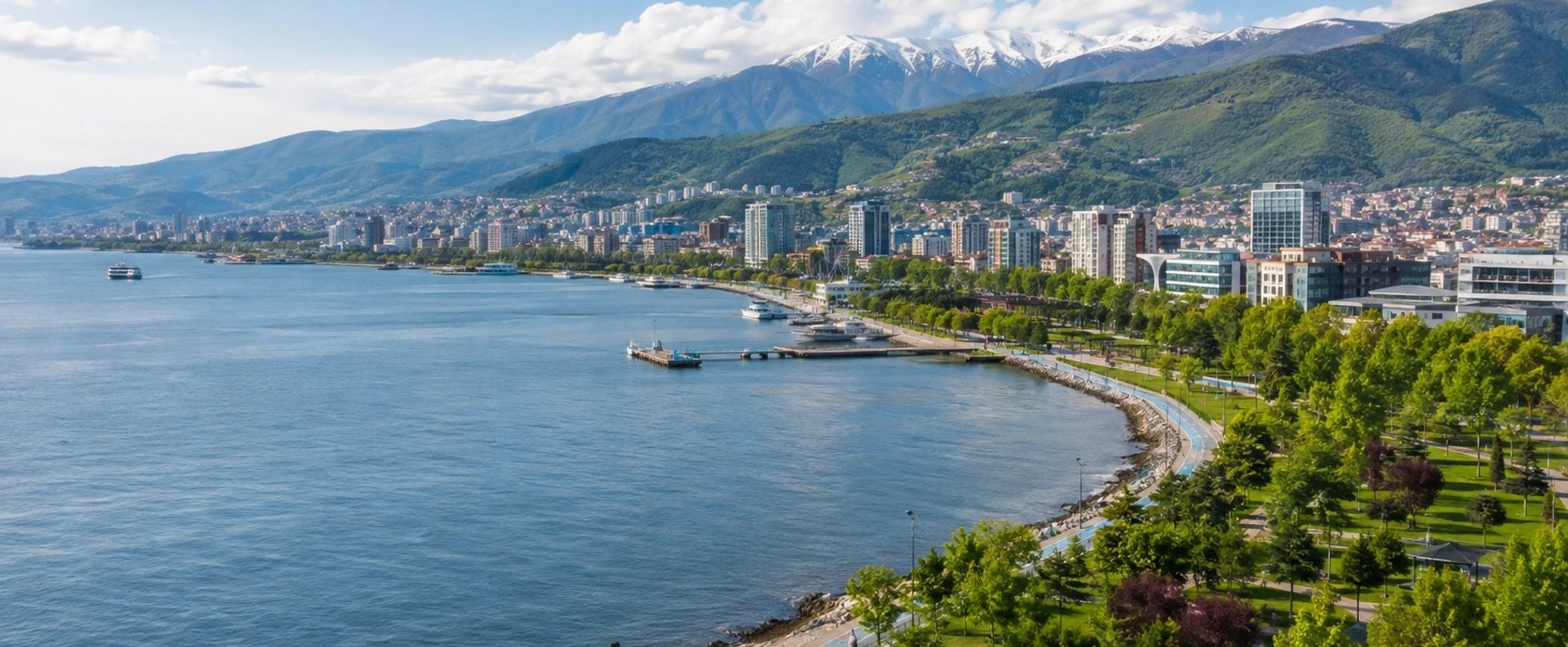
Continue beyond İzmit to discover the Gulf coast, Kartepe, Kandıra, Gebze, nature parks, archaeological sites and Kocaeli's local food traditions.
Explore KocaeliWe can combine Kocaeli with Istanbul, Cappadocia and destinations throughout Türkiye.
Build a private day around İzmit Clock Tower, Kasr-ı Hümayun, Roman Nicomedia, Kocaeli Archaeology Museum and the Gulf waterfront.
Plan Your Journey
Discover the Gulf of İzmit, Kandıra coast, Kartepe, historic sites, nature parks and regional food traditions.
Explore Kocaeli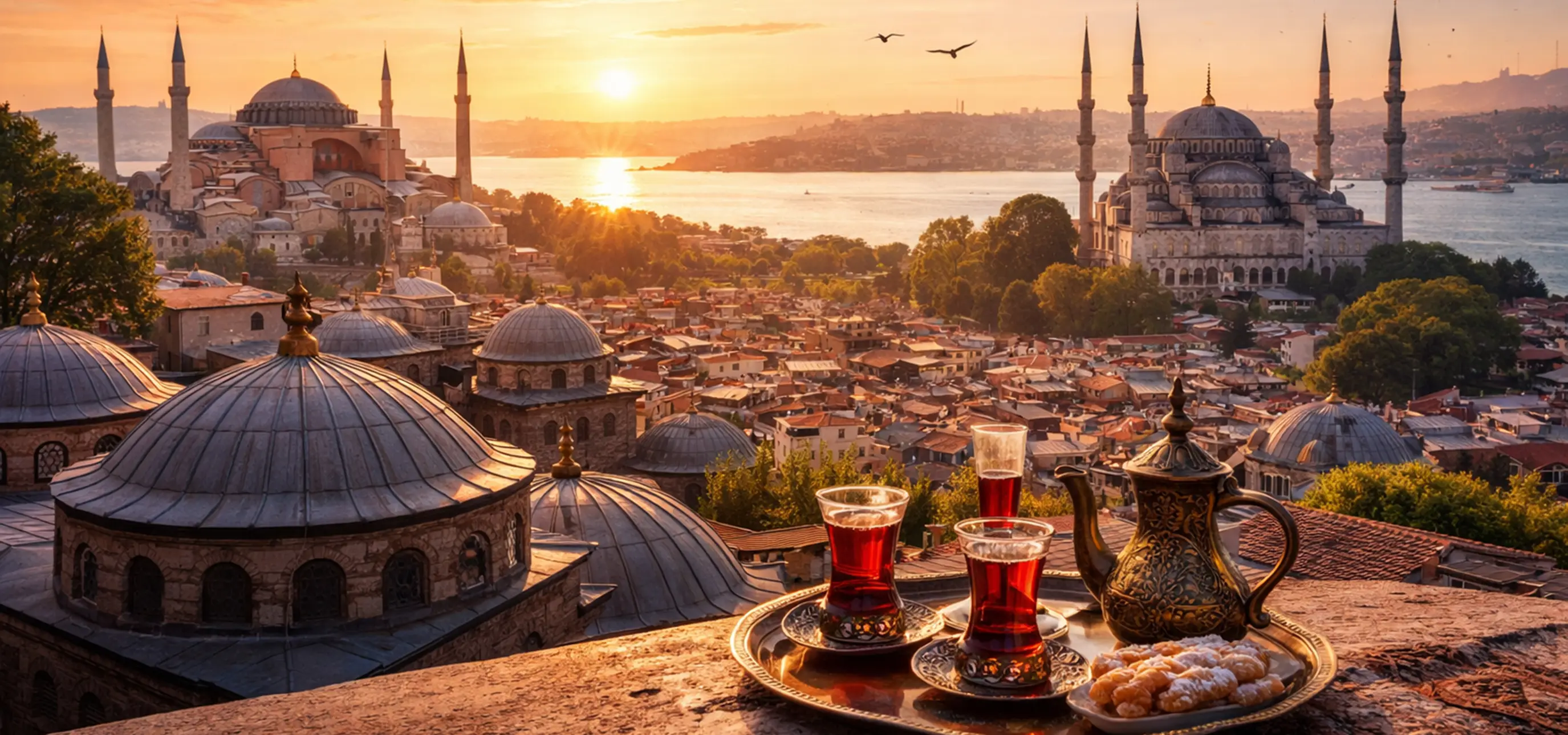
Continue throughout Türkiye with archaeological sites, historic cities, mountains, coastal landscapes, food traditions and cultural heritage.
Explore Türkiye