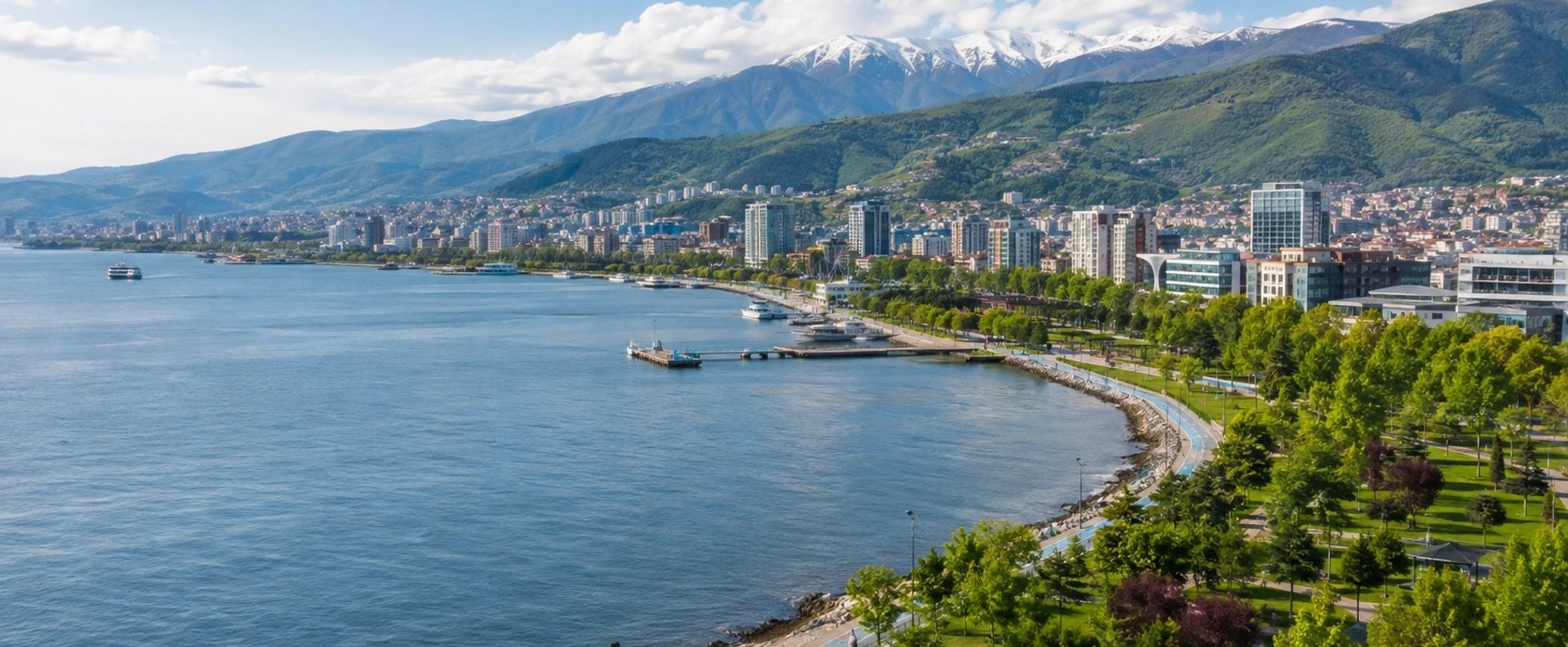
Kocaeli Travel Guide
Continue beyond the museum to discover historic İzmit, the Gulf of İzmit, Gebze, Kartepe, the Kandıra coast, nature parks and Kocaeli's local food traditions.
Explore Kocaeli



Kocaeli Archaeology Museum stands in the historic Old İzmit Railway Station complex in Kozluk, close to the Gulf of İzmit waterfront. For travellers interested in ancient history, it is one of the most important stops in Kocaeli because the museum tells the story of a region that connected the Marmara Sea, the Black Sea hinterland, Anatolia and the approaches to Constantinople for thousands of years.
The exhibition moves chronologically from Paleolithic finds through the Classical and Hellenistic periods, Roman and Eastern Roman history and selected Ottoman-period stone works. Particular attention is given to Astakos and Nicomedia, the ancient cities whose histories lie beneath and around modern Başiskele and İzmit.
Nicomedia became one of the great cities of the Roman world and, under Emperor Diocletian in the late third and early fourth centuries, served as the principal administrative capital of the eastern Roman Empire. Much of the ancient city remains hidden beneath modern İzmit, which makes the objects preserved in the museum especially valuable: they are fragments of a monumental capital that can no longer be seen as a single archaeological site.
The museum is also memorable for its setting. The railway complex developed between the late nineteenth and early twentieth centuries, and its workshops, warehouses, water structure and other railway buildings were adapted for museum use. The archaeology galleries opened here in 2007, creating an unusual meeting of Roman history and Ottoman-era railway heritage.
Meet the Roman imperial city hidden beneath modern İzmit and discover why it became Diocletian's eastern capital.
Learn about the extraordinary painted Late Roman reliefs discovered in central İzmit, including imperial and ceremonial scenes.
Follow Kocaeli's archaeological story through stone tools, ceramics, sculpture, coins, glass and architectural remains.
Explore a museum created within the restored Old İzmit Station complex, itself an important part of the city's modern heritage.
Essential information for visiting İzmit's main archaeology museum and understanding its close connection with ancient Nicomedia.
Kozluk Mahallesi, İstasyon Caddesi No: 5, İzmit / Kocaeli.
Open on Google MapsArchaeology of Kocaeli, with major material from Astakos, Nicomedia and the Roman period.
A major Roman city and Diocletian's eastern imperial capital in the late 3rd–early 4th century.
Historic Old İzmit Railway Station complex; museum galleries opened here in 2007.
Herakles statue, Roman sculpture, coins, Kerpe underwater finds and Nicomedian reliefs.
Allow around 1.5–2 hours, longer if you enjoy Roman history, coins or sculpture.
The museum brings together objects from a region whose ancient cities are often difficult to understand in the modern urban landscape.
The first reason the museum matters is Nicomedia. Modern İzmit occupies the same strategic setting as the ancient city, and later construction, earthquakes and continuous urban life have hidden much of its monumental Roman fabric. The museum therefore functions almost like an archaeological key: coins, inscriptions, sculpture, reliefs and architectural fragments help reconstruct a city that cannot be explored in the same way as Ephesus, Perge or Aphrodisias.
The second reason is the depth of the regional story. The displays do not begin with Rome. They reach back to Paleolithic communities, continue through the Greek settlement of Astakos, the Hellenistic kingdom of Bithynia and the rise of Nicomedia, then move through Roman, Eastern Roman and later periods.
The third reason is the museum's sculptural material. Late Roman discoveries from Çukurbağ in central İzmit have transformed understanding of Diocletian's capital. The polychrome reliefs preserve traces of ancient colour and depict imperial ceremonies, military events, mythological figures and public spectacles. They are among the most important archaeological discoveries connected with Roman Nicomedia.
Finally, the museum itself is part of İzmit's heritage. Its galleries occupy adapted structures in the historic railway-station complex, so a visit links ancient archaeology with the transformation of İzmit during the Ottoman railway age. Visitors following our guide to places to visit in Kocaeli can easily combine the museum with the historic centre and Gulf of İzmit waterfront.
The museum begins with a much older Kocaeli than the Roman city. Stone tools represent human activity in the region during the Paleolithic period, including material connected with the Kefken area on the Black Sea side of the province. These objects establish the long time depth of settlement before cities, kingdoms and empires appeared.
The next major chapter is Astakos. Greek settlers associated with Megara established a city in the Gulf of İzmit region, traditionally connected with the Başiskele area. Ceramics and small finds help visitors imagine the Classical and Hellenistic communities that preceded the foundation of Nicomedia.
This part of the museum is especially useful because it prevents the history of Kocaeli from being reduced to a single famous Roman capital. The region's strategic position on sea and land routes had already attracted settlement and exchange long before Diocletian chose Nicomedia as an imperial centre.
Early stone implements introduce human activity in the Kocaeli region tens of thousands of years before the Roman period.
Black Sea coastal finds help connect the museum with prehistoric occupation beyond İzmit itself.
The predecessor city in the Gulf of İzmit region forms an essential bridge between Greek colonization and Hellenistic Bithynia.
Ceramic material illustrates daily life, trade and cultural connections in the Classical and Hellenistic periods.
The story then moves toward the kingdom of Bithynia, within which Nicomedia would become a royal capital.
The museum is designed to let visitors move through successive periods rather than seeing isolated objects without context.
Nicomedia was founded by King Nicomedes I of Bithynia in the third century BC and developed in an exceptionally strategic position at the eastern end of the Gulf of İzmit. Sea routes, roads into Anatolia and access toward the Bosphorus helped the city grow into a major political, commercial and military centre.
After the kingdom of Bithynia passed to Rome, Nicomedia became the capital of the Roman province of Bithynia and Pontus. The correspondence between governor Pliny the Younger and Emperor Trajan gives an unusually vivid glimpse of public works and administration in the province during the early second century AD.
The city's greatest political moment came under Emperor Diocletian. After the imperial reforms of the late third century, Nicomedia became Diocletian's principal residence and the administrative capital of the eastern part of the Roman Empire. Palaces, ceremonial architecture, public buildings and monuments transformed the city into an imperial stage.
Nicomedia's importance did not disappear overnight when Constantine founded Constantinople. The city remained a major urban centre and transport hub, but repeated earthquakes and centuries of rebuilding gradually altered the ancient landscape. Today much of Roman Nicomedia lies beneath modern İzmit, which is why objects in the museum carry such unusual historical weight.
The Hellenistic city took its name from the Bithynian king and became a royal capital.
Under Rome, Nicomedia served as the administrative centre of Bithynia and Pontus.
Their famous correspondence preserves important evidence for public works and provincial government.
In the Tetrarchic age Nicomedia became the emperor's principal eastern residence and administrative capital.
Ancient sources describe a city of palaces, temples, public buildings and monumental ceremonial spaces.
Because modern İzmit occupies the same urban landscape, much of Nicomedia survives beneath today's streets and buildings.
One of the most important archaeological stories in modern İzmit began in Çukurbağ, in the heart of the city. Rescue excavations in 2001 and again in 2009 revealed monumental marble reliefs, statue fragments and architectural pieces belonging to an important Late Roman complex.
The reliefs are exceptional because significant traces of ancient painted colour survive on their surfaces. Roman marble sculpture is often imagined as plain white stone, but these finds preserve evidence of a much more colourful visual world. Their subjects include imperial processions, soldiers, captives, mythological figures, chariot-related scenes and public entertainments.
Scholarly research connects the monument with the age of Diocletian and the Tetrarchy, when Nicomedia functioned as an imperial capital. A famous group of panels depicts two emperors meeting and embracing, generally interpreted in connection with Diocletian and Maximian and the ceremonial language of Tetrarchic rule.
Because conservation and exhibition arrangements can change, visitors whose main purpose is specifically to see a particular Çukurbağ panel should confirm the current display before travelling. Even when individual pieces rotate, the discovery remains central to understanding why Nicomedia matters to Roman archaeology.
Major finds appeared during salvage work in central İzmit after the modern urban fabric exposed ancient remains.
Surviving pigments demonstrate that Late Roman official sculpture could be vividly coloured.
Processions, soldiers, rulers and public ritual reveal the visual language of imperial authority.
Figures such as Roma, Nike, Athena and Herakles appear within the sculptural program.
The reliefs are crucial evidence for the artistic world of Diocletian and his co-emperors.
The panels help scholars imagine monumental buildings from a capital largely hidden beneath modern İzmit.
The museum's archaeological galleries are arranged broadly in chronological sequence. This makes the visit easy to follow even for travellers who do not know the history of Bithynia in advance. The story develops from early human occupation through Greek and Hellenistic material into the Roman and Eastern Roman periods.
Roman displays are especially strong. Visitors encounter marble portrait busts, lamps, glass vessels, perfume bottles, figurines, inscriptions, architectural pieces and funerary material. Together they move the story away from emperors alone and toward the everyday objects, memorials and visual culture of people who lived in the region.
The museum also preserves material from later centuries. Selected Byzantine and Ottoman pieces demonstrate that İzmit remained an important urban and strategic centre long after the age of Diocletian.
Because archaeological museums continually receive, conserve and occasionally rotate objects, the exact composition of individual showcases may change. Think of the museum as the principal archaeological collection for Kocaeli, not as a permanently fixed list of specific objects.
Paleolithic tools introduce the earliest human chapter represented in the galleries.
Ceramics and small finds connect the region with Astakos and the kingdom of Bithynia.
Portraits, statues and reliefs form some of the museum's most memorable displays.
Small Roman objects reveal domestic life, lighting, personal use and craftsmanship.
Medieval material continues the story after the transformation of the Roman Empire.
Later marble and architectural pieces show the long continuity of settlement around İzmit.
One of the museum's most immediately recognizable objects is the monumental Herakles (Hercules) statue near the entrance. Official museum descriptions present it as an exceptionally large representation of the mythological hero and even describe it as the world's second-largest Herakles statue.
Herakles was one of the most widely represented heroes of the ancient Mediterranean world. Strength, endurance, heroic labour and victory over dangerous forces made him suitable for public, funerary and religious imagery across the Greek and Roman periods.
The museum's sculpture displays extend far beyond a single heroic figure. Roman portrait busts commemorate officials, successful individuals and members of the urban elite, while funerary monuments and stone inscriptions preserve names, professions and social identities that would otherwise have vanished.
Some displays also include distinctive portrait types such as Janus-like double-faced sculptures and a portrait bust identified as Socrates in official museum material. These objects reward slower looking because hairstyle, clothing, facial treatment and inscriptions often reveal as much as the overall form.
A monumental statue of the mythological hero is one of the museum's signature visual landmarks.
Marble busts reveal changing fashions, status and self-presentation in Roman society.
Stelae and sarcophagi preserve evidence for families, professions and burial customs.
Reliefs and sculpture connect local Nicomedia with the political language of the Roman Empire.
Classical intellectual types, including a Socrates portrait identified in museum material, add another layer to the collection.
Hair, dress, attributes and surviving inscriptions can transform an attractive sculpture into a historical document.
Kocaeli's geography explains why maritime material belongs naturally inside the museum. The province faces the Gulf of İzmit on the Marmara Sea and also reaches the Black Sea coast, placing it on routes used by merchants, armies and travellers for centuries.
Near the museum entrance, amphorae and information about ancient seafaring introduce the region's underwater cultural heritage. Official museum information also notes finds from underwater research carried out along the Kerpe coast in 2020.
The coin collection adds another kind of historical map. Official descriptions note examples from a very broad chronological range, including Archaic, Classical, Hellenistic, Roman, Byzantine and later periods. Coins connected with Nicomedia are especially valuable because they can preserve civic names, imperial portraits and local symbols.
Do not rush past small objects. An amphora fragment or coin may look less dramatic than a marble statue, but it can reveal trade networks, chronology and political identity with remarkable precision.
Transport jars are evidence for the movement of wine, oil and other goods through maritime trade.
Underwater research on Kocaeli's Black Sea coast has added new material to the museum story.
City and imperial issues help identify the political and economic importance of ancient Nicomedia.
Coin faces provide a compact timeline of rulers and changing Roman visual language.
The Gulf of İzmit linked sea transport with roads continuing into Anatolia.
Coins and ceramics often provide some of archaeology's most precise dating evidence.
The museum's setting deserves attention in its own right. The Old İzmit Railway Station area developed after the railway reached İzmit in the nineteenth century. Official cultural sources associate the complex plan with the German architect Otto Ritter and date the construction of its buildings broadly between 1873 and 1910.
The complex included railway-related structures such as a repair workshop, hangar, water structure and lodgings, together with later warehouse buildings. For the museum project, two former Tekel warehouse structures were combined to create exhibition halls and a conference space.
Restoration and adaptation work began in the 2000s, and the new archaeology and ethnography museum opened to visitors on 20 June 2007. The old station building itself has also served cultural-heritage administrative functions, so the museum should be understood as part of the wider historic station complex rather than a single converted station room.
The reuse is particularly appropriate for İzmit: a place once devoted to movement along the railway now houses objects that document thousands of years of movement, settlement and exchange across the same strategic corridor.
The complex belongs to the great period of Ottoman railway expansion.
Official cultural sources associate the planning of the station complex with the German architect.
The various buildings were added across several decades rather than constructed as one single project.
Workshops and warehouses were restored and adapted for cultural use.
The archaeology and ethnography museum opened at the complex on 20 June 2007.
Visitors can study ancient Nicomedia while standing inside an important part of modern İzmit's transport heritage.
The museum visit continues outside. The garden displays large stone objects from across Kocaeli, including sarcophagi, funerary stelae, statues, pithoi and architectural fragments. Objects too large for conventional cases can be appreciated here at something closer to their original scale.
Some architectural pieces are particularly important for imagining monumental Nicomedia. A column, capital or carved block may be only a fragment, but together these pieces hint at the scale of public buildings that once occupied the slopes above the Gulf of İzmit.
Funerary monuments are equally revealing. Inscriptions, portrait niches and decorative motifs can tell us about family relationships, professions, status and beliefs about commemoration.
The garden also creates a striking contrast between ancient stone and the historic railway environment. It is worth allowing extra time outside rather than treating the open-air display as merely a route back to the exit.
Large stone coffins reveal Roman funerary customs and the wealth of some families.
Names, portraits and inscriptions preserve individual lives from the ancient region.
Architectural fragments hint at temples, public buildings and monumental urban spaces.
Outdoor sculpture allows visitors to appreciate scale and weathering from several angles.
Large storage vessels illustrate domestic and economic life beyond elite marble art.
The historic station complex gives the outdoor archaeological collection an unusually atmospheric setting.
The official Turkish Museums listing currently gives opening hours of 09:00–17:00, with the ticket office closing at 16:30. It also lists the museum as closed on Mondays.
The same official listing confirms the address as Kozluk Mahallesi, İstasyon Caddesi No: 5, İzmit and states that MüzeKart is valid for Turkish citizens. Admission categories and prices can change, so it is safer to check the official museum page shortly before your visit rather than relying on an old screenshot or blog post.
Temporary exhibitions can also change. This matters especially for visitors interested in a specific Nicomedia relief or newly conserved object. Archaeological museums rotate material for conservation, research and exhibition purposes.
Public holidays, restoration work or special events can occasionally affect access. If the museum is a major reason for your trip to İzmit, check the latest official notice on the day before travelling.
Current official listing: 09:00.
Current official listing: 17:00.
Current official listing: closes at 16:30.
Monday.
Official listing states that MüzeKart is valid for Turkish citizens.
Kozluk Mahallesi, İstasyon Caddesi No: 5, İzmit / Kocaeli.
The museum offers several very different kinds of photographs. Indoors, the strongest subjects are monumental sculpture, portrait busts, relief detail and the contrast between pale marble and dark exhibition backgrounds.
Outside, the museum garden combines ancient stone, historic railway buildings and open sky. Columns and sarcophagi work especially well in wider compositions that include the station complex.
For the Çukurbağ reliefs and other polychrome material, detail photographs can reveal traces of colour that are easy to miss at normal viewing distance. Never use flash if museum rules prohibit it, and do not lean over barriers for a closer angle.
Photography policies can vary by object or temporary exhibition. Always follow current signs and staff instructions, particularly where sensitive material, conservation work or special loans are involved.
A slightly wider frame communicates the size of the monumental statue.
Focus on carving, facial features and surviving pigment rather than only photographing entire panels.
Reflections can be difficult; change your angle instead of pressing a camera against the glass.
Outdoor light often makes inscriptions and carving easier to read.
Use tracks, paving and station buildings as lines leading through the composition.
Current museum rules always take priority over general photography advice.
The museum can work very well for families because the story is visual. Large statues, amphorae, sarcophagi, coins and railway buildings provide variety even when younger visitors are not interested in reading every label.
A useful approach is to turn the visit into a simple sequence: Stone Age → Astakos → Roman Nicomedia → giant sculpture → museum garden. This creates a clear story rather than asking children to absorb a long series of dates.
The open-air displays are especially helpful after time inside the galleries. Children can compare the scale of sarcophagi and columns while adults continue exploring the architecture and inscriptions.
As in any archaeology museum, remind children not to touch objects unless a display is specifically interactive. Large stone pieces can appear robust, but ancient surfaces, pigment and inscriptions are easily damaged.
Begin with the monumental hero and ask what clues identify a figure of strength.
Look for surviving pigment on Roman sculpture and imagine how different the ancient city once appeared.
Ask each child to find the most interesting animal, emperor or symbol on the coin displays.
Use the outdoor collection to reset attention after indoor showcases.
Explain that the museum itself occupies buildings connected with İzmit's railway history.
A focused 60–90 minute family visit can be more rewarding than trying to read every label.
The museum occupies a restored historic complex, and the main visitor areas are spread across the station grounds. Modern access improvements are visible in parts of the site, but historic paving, thresholds and outdoor surfaces can still affect movement.
Visitors who use wheelchairs, walkers or other mobility aids should confirm the current accessible entrance, toilet arrangement and any temporary route changes before travelling. Temporary exhibitions or maintenance work can alter the normal circulation pattern.
The garden contains cobbled and open-air surfaces, so visitors who prefer the smoothest route may wish to focus first on the principal indoor galleries and then choose only the most comfortable outdoor sections.
Because accessibility information can change after restoration work, it is better to verify the current situation directly with the museum rather than treating older photographs as a guarantee of step-free access everywhere.
Expect a mix of restored buildings, paved paths and older outdoor surfaces.
Ask staff for the easiest current route between exhibition areas.
Cobbles and outdoor paving may be more demanding than indoor floors.
Confirm the current designated entrance if step-free access is essential.
Use available seating and the outdoor areas to divide the visit into shorter sections.
For specific mobility needs, the museum is the best source for up-to-date access information.
The current official listing states that the museum is closed on Mondays.
Give yourself enough time for both the indoor galleries and the outdoor stone collection.
Read the introductory sequence before concentrating on individual Roman masterpieces.
Objects tied directly to Nicomedia are especially valuable because so much of the city remains buried.
Coins, lamps, glass and ceramics often explain daily life better than monumental sculpture.
Sarcophagi and architectural fragments are easier to understand when seen at full scale outdoors.
If you are travelling specifically for the Çukurbağ reliefs, confirm what is currently on view.
The museum is well placed for a wider historical walk through the centre of İzmit.
Begin at Kocaeli Archaeology Museum while your attention is fresh. Spend around 90 minutes following the chronological galleries, then walk through the garden and historic railway setting.
Continue toward central İzmit and the Kasr-ı Hümayun / Imperial Hunting Lodge area. This shifts the story from ancient Nicomedia to the Ottoman period while keeping the day within a compact central zone.
From there, explore the historic slopes of İzmit, where traditional neighbourhoods, mosques and viewpoints rise above the Gulf. The topography itself helps explain why ancient and later settlements repeatedly occupied the same strategic hillside.
Finish beside the Gulf of İzmit waterfront. After a museum full of amphorae, trade, roads and imperial movement, seeing the natural harbour makes the city's long strategic importance much easier to understand. Use our Kocaeli travel guide to extend the day with other nearby attractions.
Kocaeli Archaeology Museum – archaeology, Nicomedia and historic railway complex.
Museum garden – sarcophagi, stelae and large architectural fragments.
Central İzmit – lunch and a short walk through the historic centre.
Kasr-ı Hümayun and nearby Ottoman-period heritage.
Historic İzmit slopes, viewpoints or selected traditional neighbourhoods.
Gulf of İzmit waterfront for the harbour landscape that shaped the city's history.
Enough for the headline objects, a quick Nicomedia overview and the main garden pieces.
A good compact visit if you already know the history and want the major highlights.
Ideal for most visitors: chronological galleries, sculpture, coins and outdoor display.
Recommended for travellers especially interested in Roman history or reading object labels carefully.
Best for archaeology enthusiasts who want coins, inscriptions, sculpture and the railway complex in detail.
Combine the museum with Kasr-ı Hümayun, central İzmit heritage and the waterfront.
Kocaeli Archaeology Museum is the principal archaeology collection for the province and one of the most useful cultural stops for understanding ancient Nicomedia. Its combination of indoor galleries, open-air stone monuments and railway heritage gives it more variety than a conventional single-building museum.
The museum's former ethnography section was transferred to the Atatürk, Redif and Ethnography Museum, and the site now functions specifically as Kocaeli Archaeology Museum. This sharper focus makes the archaeological chronology easier to follow.
Current opening information, admission conditions and temporary exhibitions should always be checked before travel, particularly because a visitor may be coming specifically for a recently conserved Nicomedia object.
Kocaeli Arkeoloji Müzesi / Kocaeli Archaeology Museum.
Kozluk Mahallesi, İstasyon Caddesi No: 5, İzmit / Kocaeli.
20 June 2007 as the Archaeology and Ethnography Museum.
Archaeology; the ethnography collection was transferred to another museum.
Nicomedia, Roman sculpture, regional archaeology, coins and railway heritage.
1.5–2 hours for most travellers.
Official listing currently shows 09:00–17:00.
Monday according to the current official listing.
The museum is in Kozluk Mahallesi on İstasyon Caddesi, within the historic Old İzmit Station complex. Its central location makes it much easier to reach than many archaeological sites in the province.
Travellers arriving in İzmit by road can follow signs toward the city centre and station area. Because central traffic patterns and one-way streets can change, use live navigation for the final approach rather than relying only on a printed route.
İzmit is well connected with Istanbul and other Marmara cities by intercity transport. The museum's position near the central transport corridor also makes it practical for travellers who are visiting Kocaeli without a private car.
If you are combining the museum with other central İzmit attractions, it can be easier to park once or arrive by public transport and continue part of the historic-centre route on foot or by local transit.
Use navigation for Kocaeli Arkeoloji Müzesi, Kozluk Mahallesi, İstasyon Caddesi.
İzmit is reached via the main eastbound Marmara road and rail corridor; travel time varies heavily with traffic.
Rail services connect İzmit with Istanbul and other cities; check the current timetable for your travel date.
Intercity buses serve İzmit, followed by local transport or taxi to the museum area.
City buses and tram connections can reduce the need to drive through central İzmit.
The museum can form part of a wider central İzmit history walk if you are comfortable with urban slopes and traffic.
The museum sits in a central urban area, so parking conditions can be different from those at a large out-of-town archaeological site. Space and access arrangements can change with events, road works and city-centre traffic.
If driving, allow additional time to find a legal parking place and walk to the museum entrance. Do not rely on being able to stop immediately beside the historic complex.
Weekdays can bring commuter and administrative traffic, while weekends may be easier in some streets but busier during events. Live navigation and current parking signs are more reliable than older travel reports.
If your day is focused only on central İzmit, consider leaving the vehicle once and exploring the museum, Ottoman monuments and waterfront as one connected urban itinerary.
Do not schedule your museum arrival to the minute if you are driving.
Historic-city streets and transport corridors should never be blocked for a short museum stop.
Road works and one-way systems can change the easiest approach.
Central İzmit can be busy during working hours.
Parking once and continuing on foot can be easier for a multi-stop history route.
Give yourself time to leave the centre if you have a train, ferry or onward road journey.
The museum sits in one of the best parts of Kocaeli for combining several layers of history in a single day. After learning about Nicomedia, continue through modern İzmit and look for the landscape that shaped the ancient city: the steep hillside, the natural gulf and the transport corridor running east–west.
Use our complete Kocaeli travel guide to build a longer itinerary through İzmit, the Gulf of İzmit and the wider province.
The Ottoman imperial hunting lodge is one of central İzmit's most important 19th-century monuments.
A historic military building now houses the ethnographic collection formerly associated with the archaeology museum.
A landmark of the late Ottoman city and a useful orientation point on the historic hillside.
Traditional streets above the gulf preserve the scale and topography of the older city.
The natural harbour explains much of Nicomedia's strategic and commercial importance.
Industrial heritage adds a modern chapter to a day that begins with ancient archaeology.
Farther west, the castle and Osman Hamdi Bey Museum House create another strong history combination.
Farther east, one of Kocaeli's best-known nature destinations offers a completely different family experience.
The museum is at Kozluk Mahallesi, İstasyon Caddesi No: 5, İzmit / Kocaeli, within the historic Old İzmit Railway Station complex.
Its current name is Kocaeli Arkeoloji Müzesi, or Kocaeli Archaeology Museum.
Yes. It opened in the historic station complex in 2007 as Kocaeli Archaeology and Ethnography Museum. The ethnography collection was later transferred to the Atatürk, Redif and Ethnography Museum.
Nicomedia was a major Hellenistic and Roman city, capital of Bithynia and Pontus and, under Diocletian, the principal administrative capital of the eastern Roman Empire.
Yes. Much of the ancient city lies beneath the modern urban fabric, which is one reason large-scale excavation is difficult.
The city was founded by King Nicomedes I of Bithynia in the third century BC and named after him.
Astakos, a Greek settlement in the Gulf of İzmit region, forms an important earlier chapter in the museum's story.
They are monumental Late Roman painted marble reliefs and associated sculptures discovered in rescue excavations in central İzmit. They are linked with imperial Nicomedia and the Tetrarchic period.
They preserve extensive traces of ancient colour and depict imperial ceremony, military scenes, mythology and public life from the age of Diocletian.
No. Conservation and temporary exhibition arrangements can change. If a specific panel is your priority, confirm the current display before travelling.
A monumental statue of the mythological hero Herakles is one of the museum's signature objects. Official museum descriptions identify it as an exceptionally large example.
Yes. The museum has a broad coin collection spanning many periods, with particularly important examples connected with Nicomedia.
Yes. Official museum information notes amphorae, maritime material and finds from underwater research along the Kerpe coast.
The archaeological story runs from the Paleolithic period through Classical, Hellenistic, Roman, Eastern Roman and later periods, including selected Ottoman stone works.
Yes. The museum occupies adapted buildings within the historic İzmit railway-station complex, associated with Otto Ritter and developed between the late 19th and early 20th centuries.
The archaeology and ethnography museum opened in the Old Station area on 20 June 2007.
The current official museum listing shows 09:00–17:00, with the ticket office closing at 16:30. Recheck before visiting.
The current official listing states that the museum is closed on Mondays.
The official Turkish Museums listing states that MüzeKart is valid for Turkish citizens.
Around 1.5–2 hours is comfortable for most visitors.
Yes. Large statues, sarcophagi, coins and the railway setting give younger visitors plenty of visual variety.
Parts of the restored complex have modern access provisions, but historic paving and outdoor surfaces can vary. Confirm the current accessible route if step-free access is essential.
Photography is generally possible in many museum areas, but object-specific or temporary exhibition restrictions may apply. Follow current signs and staff instructions.
Yes. The museum garden displays sarcophagi, grave stelae, statues, large vessels and architectural fragments.
Yes. İzmit is well connected with Istanbul by the main Marmara transport corridor and can be visited as a history-focused day trip.
Central İzmit offers Ottoman monuments, the historic hillside, the Gulf waterfront and additional museums that combine naturally with the archaeology museum.
Yes. The chronological layout and the story of a lost Roman capital beneath a modern city make the museum easy to appreciate without specialist knowledge.
Ancient stone may look durable, but skin oils, abrasion and repeated contact damage surfaces and surviving pigment.
Barriers protect both objects and visitors; never lean across them for a photograph.
Follow current photography signs, especially around sensitive or temporary displays.
Never rub, trace or place objects against carved surfaces in the garden.
Use only currently designated areas for food and drinks.
Large outdoor stones and museum cases are not climbing structures.
The historic buildings and paving are part of the cultural site, not simply a backdrop.
Conservation needs can change, so current museum instructions always take priority.
Use the museum as the starting point for discovering Roman Nicomedia, Ottoman İzmit, the Gulf of İzmit and Kocaeli's wider archaeological and cultural landscapes.
Turn the archaeology museum into a complete history day with Ottoman heritage, historic neighbourhoods and the Gulf waterfront.
Continue beyond the museum to discover historic İzmit, the Gulf of İzmit, Gebze, Kartepe, the Kandıra coast, nature parks and Kocaeli's local food traditions.
Explore Kocaeli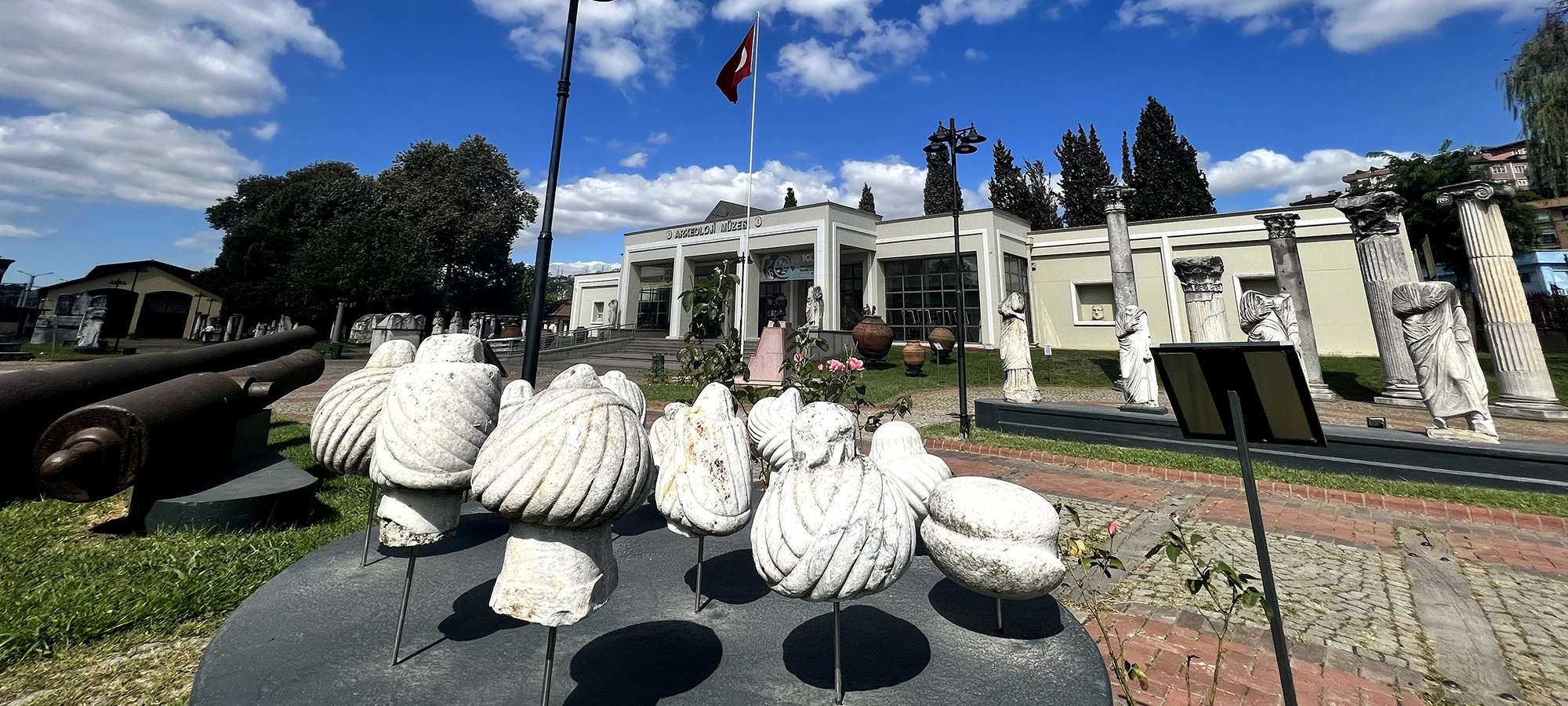
Ask us about combining Kocaeli Archaeology Museum, historic İzmit, Ottoman monuments and other Kocaeli highlights inside a privately designed Türkiye journey.
Request a Custom RouteWe can combine Kocaeli with Istanbul, Cappadocia and destinations throughout Türkiye.
Build a private day around Roman Nicomedia, Kocaeli Archaeology Museum, Ottoman İzmit and the Gulf waterfront.
Plan Your Journey
Discover the Gulf of İzmit, Kandıra coast, Kartepe, historic sites, nature parks and regional food traditions.
Explore Kocaeli
Continue throughout Türkiye with archaeological sites, historic cities, mountains, coastal landscapes, food traditions and cultural heritage.
Explore Türkiye