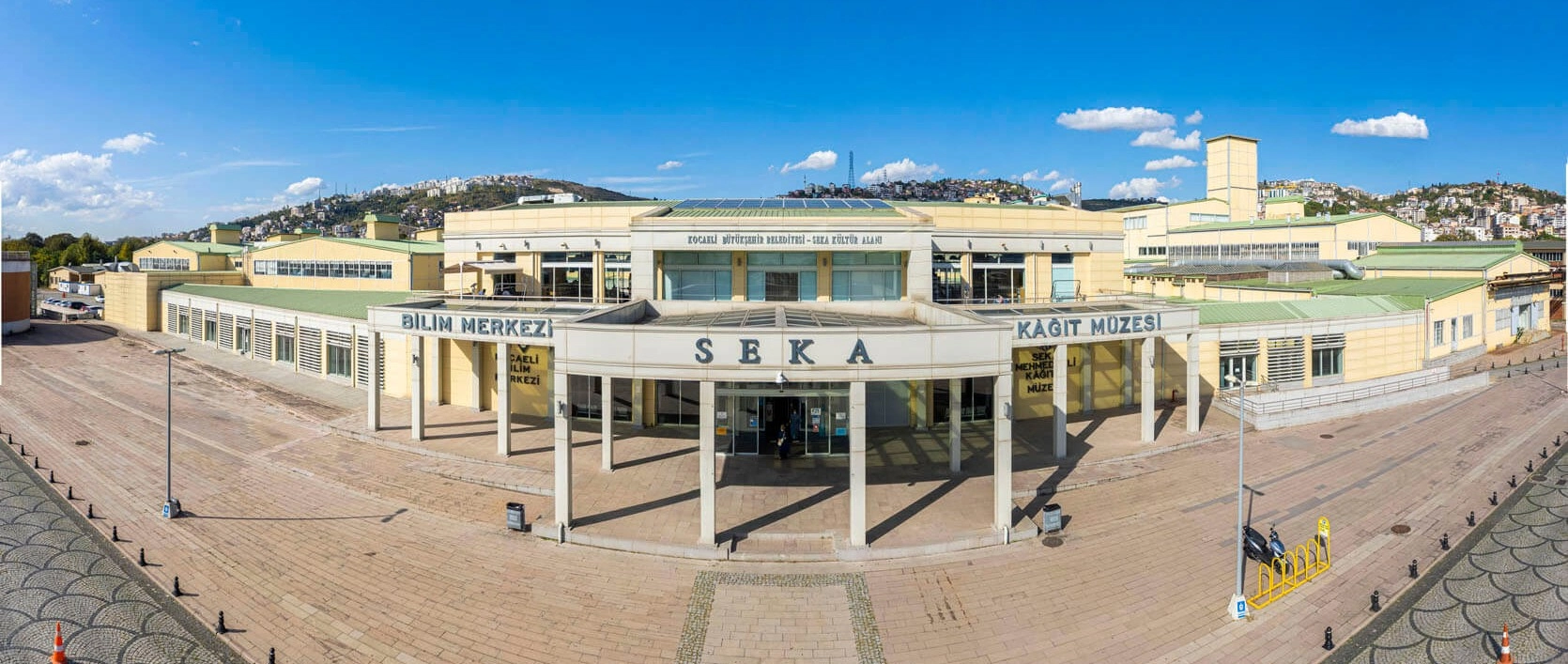
SEKA Paper Museum
Step inside the former factory to discover the paper industry that gave SEKAPARK its name.
Explore the Paper Museum




On the western edge of central İzmit, SEKAPARK stretches along the shore of the Gulf of İzmit with lawns, walking and cycling paths, sports areas, family spaces, piers and broad views across the water.
The setting is especially meaningful because this was once part of the SEKA paper factory complex, one of the most important industrial landmarks of the early Turkish Republic. The factory helped shape modern İzmit from the 1930s onward, and after paper production ended, a major transformation gradually opened the waterfront to public life.
Today, SEKAPARK is much more than a conventional city park. It is a large recreation, culture, sports and industrial-heritage district where visitors can move between open green space and places such as the SEKA Paper Museum, Kocaeli Science Center, cultural buildings, event spaces and the restored remains of the former industrial complex.
For travellers, the park offers a useful change of pace after the monuments and steep streets of historic İzmit. Come for a morning walk, a family afternoon, a bicycle ride, a sunset by the Gulf or a longer visit combining the waterfront with the story of Türkiye's modern industrialization.
Enjoy long sea views, promenades, piers and open lawns beside one of the Marmara region's most important natural harbours.
The park grew from the transformation of land once belonging to İzmit's historic paper-production complex.
Flat waterfront routes make SEKAPARK one of the easiest places in İzmit for a relaxed walk, run or bicycle ride.
Combine the park with the SEKA Paper Museum, Kocaeli Science Center and the wider cultural district around the old factory.
Essential information for enjoying İzmit's largest and best-known waterfront recreation area.
İzmit waterfront,
Kocaeli.
Gulf of İzmit
Waterfront urban park.
Former SEKA industrial area
Republican-era paper heritage.
Approx. 580 dönüm
in the wider SEKA park area.
Walking, cycling & sunset
plus family recreation.
Public outdoor space.
Individual venues have separate schedules.
SEKAPARK matters not only because it is green and scenic, but because it represents one of İzmit's most visible transformations from industrial city to public waterfront.
The first reason is urban transformation. For much of the twentieth century, this stretch of the İzmit shoreline was closely tied to the operations of the SEKA paper complex. The waterfront served industrial needs rather than everyday recreation.
After the SEKA facilities were transferred to Kocaeli Metropolitan Municipality in 2005, the area began a new chapter. The park became the first major step in converting former industrial land into a public district of green space, culture, education, sport and leisure.
The second reason is Republican industrial heritage. SEKA was not an anonymous factory. Its history reaches back to the early industrialization programmes of the Turkish Republic, when domestic paper production was considered strategically important for the country's economic and cultural development.
The third reason is public access to the Gulf. SEKAPARK gives residents and visitors a long, open connection with the water, with lawns, walking routes, piers and viewpoints replacing areas once dominated by industrial storage and production.
Finally, the park demonstrates how a city can preserve part of its industrial memory while creating a completely new everyday use. The nearby factory buildings, SEKA Paper Museum and surviving industrial structures prevent the transformation from erasing the site's past.
The history behind SEKAPARK begins with the national effort to establish modern paper production in Türkiye. The foundation of the İzmit paper factory was laid on 14 August 1934, during the early decades of the Republic.
The project was closely associated with Mehmed Ali Kâğıtçı, a pioneering figure in Turkish papermaking. In 1936, the İzmit factory began producing the country's first modern domestically manufactured paper and entered service as one of the symbolic industrial projects of the period.
Over the following decades, the factory complex expanded. SEKA became closely intertwined with the social, economic and cultural life of İzmit, employing generations of workers and contributing to the city's rapid industrial growth.
By the beginning of the twenty-first century, the İzmit operation had reached the end of its manufacturing era. Paper production ceased, and in 2005 the site, its equipment and associated property were transferred to Kocaeli Metropolitan Municipality.
Instead of clearing the entire complex, the city gradually pursued a large-scale industrial transformation project. The waterfront became SEKAPARK, while important factory structures were adapted for museum, science, arts and cultural uses.
The first major park phase was completed and opened to public use in 2007. Later projects deepened the cultural identity of the former industrial zone, including the opening of the SEKA Paper Museum in 2016.
The foundation of the İzmit paper factory was laid during the early Republican industrialization period.
Modern paper production began and the first factory entered operation.
The former SEKA İzmit facilities were transferred to Kocaeli Metropolitan Municipality.
The first major SEKAPARK transformation phase opened the former industrial waterfront to public recreation.
The SEKA Paper Museum opened inside the preserved factory complex.
The district combines waterfront recreation with museums, culture, education, events and industrial memory.
Large industrial sites are difficult to reuse. They contain enormous buildings, specialized infrastructure, service roads, storage areas and landscapes designed around production rather than public life.
SEKAPARK is important because the transformation did not treat the old SEKA land as a blank space. Instead, different parts of the former complex were given new functions.
The shoreline became a recreation zone. Factory buildings became museums, education spaces and cultural venues. Open land was redesigned with lawns, trees, walking routes, sports areas, children's spaces and gathering places.
This creates a distinctive atmosphere. In one direction you see the Gulf of İzmit, ships and distant hills. In another, you encounter industrial structures that recall the manufacturing history that made modern İzmit possible.
For architecture, urban-planning and industrial-history enthusiasts, SEKAPARK is therefore an excellent case study in adaptive reuse: preserving enough of the old identity to maintain memory, while changing the function of the area completely.
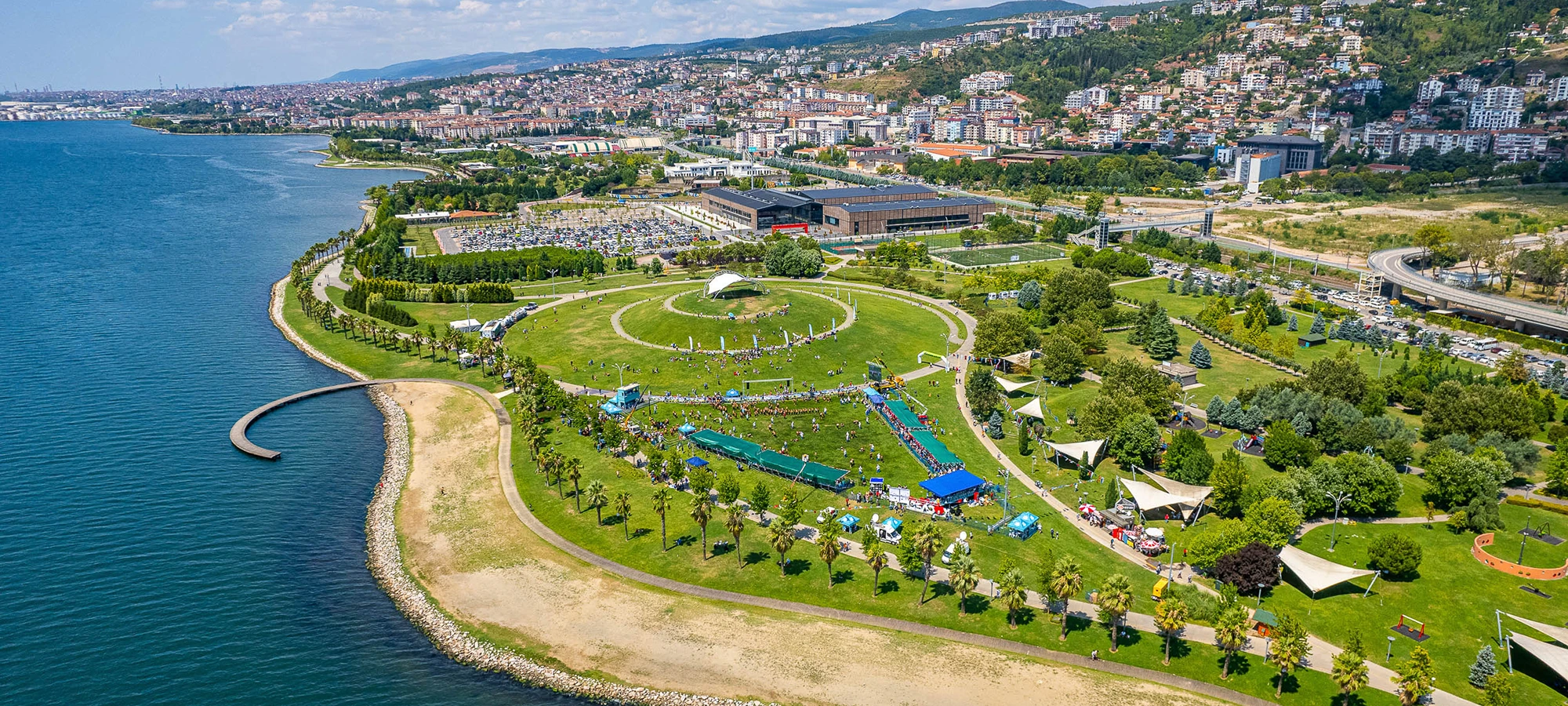
The most immediate attraction of SEKAPARK is the waterfront itself. The park opens directly toward the Gulf of İzmit, creating a long horizon that feels very different from the dense streets of the city centre.
Walking paths follow the coast, while piers and shoreline structures draw visitors closer to the water. Cargo ships, ferries, small boats and industrial port activity in the distance create a landscape that is both scenic and unmistakably connected to Kocaeli's maritime economy.
The Gulf is at its most atmospheric in the late afternoon and around sunset. As the light softens, the hills across the water begin to silhouette, and the sea reflects the changing sky.
This is also one of the easiest places in İzmit simply to stop. You do not need a museum ticket, a historic monument or a fixed itinerary. Choose a bench, sit on the grass or walk to one of the waterfront viewpoints and enjoy the open space.
A broad waterfront route makes SEKAPARK ideal for slow walking, jogging and relaxed evening strolls.
Waterfront structures create excellent viewpoints for photography and watching activity across the Gulf.
Look south across the Gulf toward the opposite hills and changing maritime traffic.
Late afternoon is one of the most rewarding times for atmosphere, photography and cooler temperatures in summer.
SEKAPARK's flat coastal setting makes it especially attractive for walking, running and cycling. Unlike the steep historic neighbourhoods above central İzmit, the waterfront allows visitors to cover a long distance without demanding climbs.
Official tourism information describes approximately 2 kilometres of walking and cycling routes within the park area, together with additional recreation paths and open spaces.
For a simple visit, start near the former factory and museum district, follow the waterfront westward, pause at the piers and open lawns, then return along the same promenade.
Runners can use the long, relatively level route for an easy training session, while families can combine a short walk with playgrounds, cafés and time on the grass.
Cyclists should remain considerate around crowded pedestrian areas, especially during summer evenings, weekends and festivals. Some paths can become busy with children, strollers and groups stopping for photographs.
The waterfront is considerably flatter than many historic streets in central and upper İzmit.
Use the shoreline route for a relaxed out-and-back walk without needing a complicated itinerary.
The open seafront and long paths make the park popular for jogging and fitness.
Ride at a considerate pace and slow down around children, crowded promenades and event areas.
SEKAPARK was designed as a major urban recreation area, so the landscape contains far more than lawns and benches.
Official visitor information lists a range of sports facilities, including areas associated with basketball, tennis, football, skateboarding, fitness, running and cycling. Facilities and access arrangements can change, so visitors planning a specific sport should check current local conditions.
One of the park's best-known visual features is its system of artificial landscaped hills. These raised grassy forms give the otherwise flat waterfront more variety and create elevated places for views, resting and informal recreation.
The park has also been associated with a large skate area and climbing-related recreational infrastructure, helping give the space a stronger youth and sports identity than a traditional ornamental park.
SEKAPARK is one of the easiest major attractions in İzmit for families because the experience does not depend on children remaining quiet inside a historic monument.
Large lawns, play areas, waterfront walks and sports facilities give children room to move, while cafés, benches and shaded spaces allow adults to slow the pace of the visit.
The park also pairs naturally with two educational attractions: the SEKA Paper Museum and Kocaeli Science Center. Together, they can turn a simple park day into a full family programme mixing science, industrial history and outdoor recreation.
Young children should be supervised closely near the shoreline, piers, cycling routes and busy event areas. The park is large, and weekends can become crowded.
Useful for breaks, informal play and giving children space between museum visits.
Dedicated recreation zones make the park particularly suitable for families with younger children.
Add hands-on science exhibits for an educational indoor stop within the wider SEKA cultural district.
Discover how paper was produced inside the historic factory that gave the park its name.
If you want to understand why SEKAPARK exists, the most important nearby attraction is the SEKA Paper Museum.
The museum occupies preserved sections of the former factory complex and interprets the history of paper production, workers, machinery, industrial technology and the social world that developed around SEKA.
The museum's own timeline begins with the establishment of Sümerbank, the 1934 foundation of the İzmit factory and the production of the first modern domestic paper in 1936, then follows SEKA through expansion, closure and eventual transformation.
The building itself is part of the experience. Large machinery, industrial halls, pipes, production equipment and architectural scale show how different this site was before it became a cultural and recreation district.
For most visitors, the best order is to visit the museum first and walk through the park afterwards. Once you understand the factory, the surrounding landscape becomes easier to read.
The transformation of the SEKA area extends beyond the park and paper museum. The wider district now contains a growing collection of educational, cultural and event spaces.
Kocaeli Science Center occupies part of the former industrial complex and adds an interactive science dimension, making the area particularly attractive for families, school groups and visitors interested in technology.
Restored buildings around the SEKA cultural zone have also been adapted for arts, exhibitions, traditional decorative arts and cultural associations. The former industrial identity remains visible, but the functions have changed from manufacturing to learning and creativity.
Nearby, Kocaeli Congress Center hosts conferences, performances, meetings and cultural programmes. SEKAPARK itself is also regularly used as a large outdoor gathering and festival space.
Because programmes change throughout the year, check current municipal event listings if your visit coincides with a weekend, festival or public holiday.
Interactive exhibits add science and technology to a day otherwise focused on industry and outdoor recreation.
Restored industrial buildings increasingly support exhibitions, workshops and cultural education.
A major nearby venue hosts conferences, meetings, performances and cultural programmes.
Large lawns and open event areas allow SEKAPARK to host seasonal gatherings and public programmes.
If your schedule allows only one short visit, come in the late afternoon. The park gradually changes character as the heat decreases, local families arrive, walkers fill the promenade and the light begins to soften over the Gulf.
The waterfront looks roughly southward across the bay, and changing seasonal light can produce warm reflections on the sea, especially when clouds catch the evening colours.
The curved piers, shoreline, palm trees, lawns and distant hills provide natural layers for photography. Ships anchored farther out in the Gulf can add a distinctly İzmit character to the scene.
After sunset, the park remains an important social space for local residents, particularly in warmer months. If you prefer a quieter atmosphere, visit earlier on a weekday or in the morning.
Arrive before sunset to photograph both the green landscape and changing light over the Gulf.
Use the piers and curved shoreline as strong foreground elements in landscape photography.
Summer evenings are lively, social and often much cooler than the middle of the day.
For fewer crowds, choose a weekday morning or earlier afternoon outside major events.
SEKAPARK offers a very different photographic experience from İzmit's mosques, mansions and museums. The strongest images usually come from scale, open space and contrast.
Use the waterfront to frame the Gulf, ships and distant hills. The curved shoreline and piers create useful leading lines, especially around sunrise or sunset.
Turn inland to photograph the relationship between green parkland and industrial architecture. Factory buildings, brick, steel, chimneys and restored structures provide a powerful counterpoint to the lawns and recreation areas.
Elevated grassy hills can offer a broader perspective across the park, while long walking paths, rows of trees and waterfront lighting create symmetrical or repeating compositions.
During festivals and busy evenings, SEKAPARK is also a good place for documentary-style images of everyday urban life. Respect people's privacy, especially when photographing children or close portraits.
Use the curved waterfront and piers to lead the eye into the Gulf of İzmit.
Include surviving factory structures to tell the deeper story behind the modern park.
The landscaped hills can provide a wider view across lawns, pathways and the coast.
Late-afternoon warmth can make the shoreline, trees and industrial structures especially photogenic.
SEKAPARK can be visited throughout the year, but the experience changes significantly with the season and weather.
Mild temperatures and fresh greenery make spring one of the best periods for long walks and family visits.
Visit early or late in the day. Evenings can be lively, crowded and especially enjoyable beside the water.
Cooler weather, softer light and fewer peak-season crowds can make walking and photography particularly pleasant.
Clear winter days can bring dramatic Gulf views, but wind and damp weather make warm clothing important.
Late afternoon is ideal for combining comfortable walking with sunset and evening atmosphere.
Weekday mornings are generally better than warm weekend evenings if you prefer a calmer park experience.
SEKAPARK contains and is surrounded by cafés, kiosks and casual food options, making it easy to extend a short walk into a longer afternoon.
The best choice depends on what you want from the visit. For a quick stop, a drink or snack near the waterfront keeps the focus on the park. For a longer meal, look for restaurants in the wider İzmit centre or along the coastal corridor.
If you want to connect the park with local food culture, try İzmit pişmaniye afterwards. This delicate pulled sweet is one of the city's most recognizable culinary symbols.
Visitors bringing their own food should use the park responsibly, dispose of waste correctly and follow any current rules applying to picnics, barbecues or organized gatherings. Do not assume open-fire cooking is permitted.
For many visitors, SEKAPARK is among the more accessible major public spaces in İzmit because much of the waterfront landscape is flat and paved.
Broad promenades can generally work well for wheelchairs, mobility aids, strollers and visitors who prefer to avoid steep climbs. This is a significant contrast with old neighbourhoods such as Kapanca Street and the hillside around some historic monuments.
However, SEKAPARK is large. Distances between the waterfront, museum buildings, event spaces and parking areas can be substantial. Visitors with limited walking capacity should plan which section they want to see first.
Accessibility inside individual museums, sports facilities and cultural buildings can differ from the outdoor park. Contact the relevant venue in advance if step-free access, accessible toilets, lifts or reserved parking are essential.
Much of the park avoids the steep slopes found in upper historic İzmit.
Major promenades are generally easier for wheelchairs, walking aids and strollers than narrow historic streets.
The park is extensive, so choose a limited route if walking endurance is a concern.
Check the current arrangements of museums and indoor cultural buildings separately.
The park makes far more historical sense after visiting the SEKA Paper Museum.
Late afternoon offers softer light, cooler temperatures and one of the park's best atmospheres.
The terrain is easy, but the area is large and a full visit can involve significant walking.
Festivals, concerts and public programmes can make some parts of the park much busier than usual.
Supervise younger visitors around piers, shoreline edges and cycling routes.
Open waterfront sections can receive strong sun, particularly during summer afternoons.
The Gulf can feel breezy even when the city centre is warm, especially outside summer.
SEKAPARK works best as a pause in your itinerary rather than a checklist attraction.
SEKAPARK is a large public waterfront landscape rather than a single gated museum, so there is no one universal timetable covering every facility in the district.
The outdoor park, promenades and lawns should be understood separately from indoor museums, sports venues, event halls, cafés and cultural buildings, which may follow their own opening hours and weekly closing days.
The wider SEKA area is approximately 580 dönüm, and official tourism information describes a mix of walking, cycling, sports, children's recreation, waterfront and parking infrastructure.
If a museum or special event is the main reason for your visit, confirm its current schedule before arriving. For a general walk, sunset or outdoor visit, weather and crowd levels are more important than museum hours.
İzmit waterfront, Kocaeli
Urban waterfront park & cultural district
Public recreation area
Individual venues operate separately.
1–2 hours
Longer with museums or family activities.
Late afternoon & sunset
SEKA Paper Museum + waterfront walk
SEKAPARK lies on the İzmit waterfront, west of the traditional city centre, and is easy to combine with a wider day in Kocaeli's provincial capital.
One of the most practical public-transport options is the Akçaray tram. The official SEKA Paper Museum visitor information specifically directs visitors to use the tram and get off at the Sekapark stop.
From central İzmit, you can also reach the park by taxi, local public transport or a longer waterfront walk depending on your starting point.
If you are visiting by private vehicle, follow signs for Sekapark / SEKA Kâğıt Müzesi and use designated parking areas. The district can become busy during festivals, weekends and major events.
Use Akçaray and get off at Sekapark for easy access to the former factory and museum zone.
A simple option from hotels, the railway-station area or central İzmit.
Follow signs for Sekapark and use designated parking rather than stopping along access roads.
Possible from central İzmit if you enjoy urban walking and want to continue along the waterfront.
SEKAPARK was developed as a major citywide recreation area, and official tourism information describes substantial parking provision within the wider complex.
Even so, parking demand can become heavy during weekends, summer evenings, festivals, concerts and major events. Arriving earlier can save time when a large programme is taking place.
Use marked parking areas and follow current signs, temporary barriers and traffic instructions. Event management can occasionally change normal vehicle circulation around the park.
If you are staying near the Akçaray tram line, public transport can be simpler than driving, particularly on busy days.
Begin at the SEKA Paper Museum to understand why this waterfront became so important to İzmit. Learn about the factory, its workers, machinery and the rise of domestic paper production.
Continue into SEKAPARK for an easy waterfront walk. Follow the promenade, explore the lawns, pause at the piers and enjoy the Gulf views.
If you are travelling with children, add Kocaeli Science Center before leaving the SEKA district.
Then head toward central İzmit and continue to the Kocaeli Archaeology Museum to move from modern industrial history back to Roman and Byzantine Nicomedia.
Finish in the historic centre with İzmit Clock Tower and Kapanca Street, where the atmosphere shifts again from the modern waterfront to late-Ottoman and traditional urban İzmit.
SEKA Paper Museum – understand the industrial history behind the transformation.
SEKAPARK – walk, photograph the Gulf and enjoy the open waterfront.
Kocaeli Science Center – an excellent addition for families and science enthusiasts.
Kocaeli Archaeology Museum – explore the ancient city of Nicomedia.
İzmit Clock Tower – one of the city's best-known late-Ottoman monuments.
Kapanca Street – finish among historic houses, fountains and the old hillside neighbourhood.
Enough for a quick waterfront stop, a few photographs and a short walk near the sea.
A good minimum for the promenade, lawns, piers and a relaxed pause beside the Gulf.
Recommended for most visitors who want to walk properly, stop for coffee and enjoy the park without rushing.
Combine SEKAPARK with the SEKA Paper Museum and Kocaeli Science Center.
Add Kocaeli Archaeology Museum, İzmit Clock Tower, Kapanca Street and another historic monument in central İzmit.
Do not treat the park as a checklist. Leave time simply to walk, sit and watch the Gulf.
SEKAPARK sits close to several of İzmit's most interesting museums and historic areas, making it easy to combine modern recreation, industrial heritage, archaeology and Ottoman architecture in one day.
Use our complete Kocaeli travel guide to continue exploring the wider province.
Discover the factory, machinery and workers behind one of early Republican Türkiye's most important industrial stories.
Interactive exhibits make this one of the best family-friendly additions to a SEKAPARK visit.
Explore the Roman, Byzantine and earlier history of Nicomedia and the surrounding region.
One of the city's most recognizable late-Ottoman landmarks, standing above the historic centre.
Traditional houses, fountains and steep lanes reveal a completely different side of old İzmit.
Visit one of İzmit's finest classical Ottoman monuments, designed by Mimar Sinan.
Combine military history, Atatürk memory and regional culture inside a late-Ottoman public building.
Continue into the early Ottoman history of İzmit on the city's historic upper slopes.
SEKAPARK is on the Gulf of İzmit waterfront in İzmit, Kocaeli, on land associated with the former SEKA paper factory complex.
It is a large urban waterfront park and cultural district created as part of the transformation of the former SEKA industrial area.
The name comes from SEKA, the state paper industry whose major İzmit factory once occupied the area.
The foundation of the İzmit paper factory was laid in 1934, and modern domestic paper production began in 1936.
The İzmit operation ended its manufacturing era in the early 2000s, and the site was transferred to Kocaeli Metropolitan Municipality in 2005.
The first major phase of the industrial transformation project was completed and opened to public use in 2007.
Official tourism information describes the wider SEKA park area as approximately 580 dönüm.
The outdoor park is a public recreation area. Museums, special events or individual facilities within the wider district may operate under their own admission and scheduling rules.
Popular activities include walking, cycling, running, relaxing on the lawns, watching the Gulf, photography, children's recreation and visiting nearby museums.
Yes. The park's open lawns, play areas and easy walking routes combine especially well with the SEKA Paper Museum and Kocaeli Science Center.
Yes. Cycling infrastructure is part of the park, but ride carefully in crowded pedestrian areas, particularly on warm evenings and weekends.
Yes. Its relatively flat waterfront and long paths make it one of central İzmit's most convenient outdoor running areas.
Yes. Late afternoon and sunset are among the most attractive times to visit for Gulf views, photography and a lively local atmosphere.
Do not assume the shoreline is a designated swimming beach. Water-use rules and local conditions can change, so follow current municipal signs and official bathing guidance.
It is an industrial heritage museum inside the former factory complex, explaining paper production, machinery, workers and the history of SEKA.
Yes. It forms part of the wider former SEKA industrial and cultural district and is easy to combine with the park.
The Akçaray tram is one of the easiest options. The official SEKA Paper Museum directions recommend getting off at the Sekapark stop.
Yes. The wider complex includes significant parking capacity, although spaces can be busy during weekends, festivals and major events.
Much of the waterfront is relatively flat with broad paved paths, making it easier than many hillside attractions in İzmit. Check individual indoor venues separately for specific accessibility needs.
Allow around 1–2 hours for a relaxed walk, or a half day if you are combining the park with the SEKA Paper Museum and Kocaeli Science Center.
Good nearby additions include the SEKA Paper Museum, Kocaeli Science Center, Kocaeli Archaeology Museum, İzmit Clock Tower, Kapanca Street and Pertev Pasha Mosque.
Yes. It is one of İzmit's best places for combining waterfront scenery, everyday local life, recreation and the industrial heritage of modern Türkiye.
SEKAPARK can look simple at first: a large green park beside the sea. But its real value lies in the layers beneath that first impression.
This shoreline once belonged to a factory that helped define modern İzmit. Paper production, workers, rail connections, industrial buildings and storage areas shaped the waterfront for generations.
Today, people walk where industry once dominated. Children play on lawns, cyclists move along the Gulf, families gather at sunset and visitors step between the park, museum and science centre.
The transformation does not erase the industrial past. The old factory still stands nearby, and the SEKA Paper Museum keeps the story visible. That contrast is what makes SEKAPARK more meaningful than a newly built waterfront alone.
For travellers exploring İzmit, the park also provides an important pause. After Roman archaeology, Ottoman mosques, late-Ottoman monuments and hillside streets, SEKAPARK opens the city toward the water and brings the story into the twentieth and twenty-first centuries.
SEKAPARK introduces the modern waterfront and industrial heritage of İzmit. Continue through the city to discover Roman Nicomedia, Ottoman monuments, traditional neighbourhoods and museums.
Move from open waterfront recreation into the industrial and archaeological stories that shaped modern İzmit.
Step inside the former factory to discover the paper industry that gave SEKAPARK its name.
Explore the Paper Museum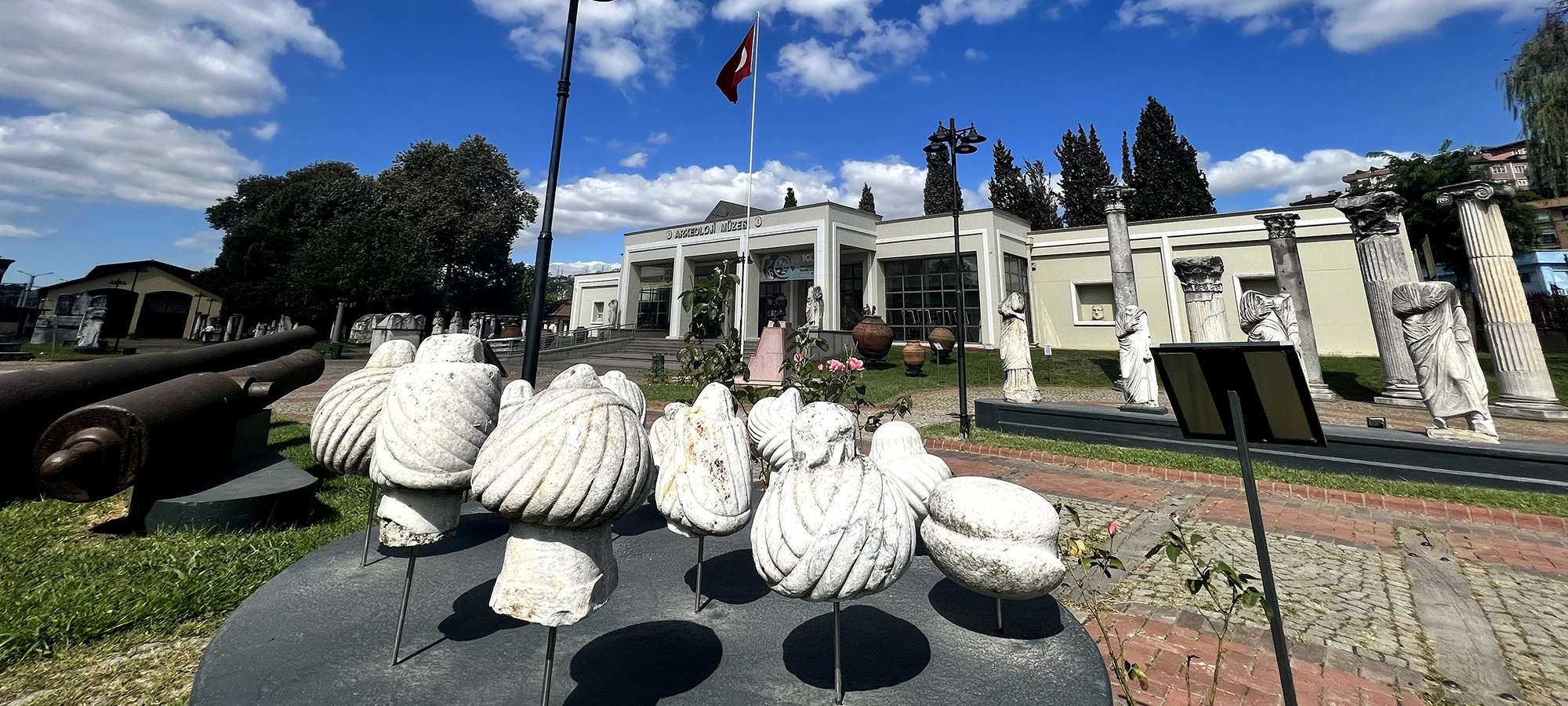
Travel from twentieth-century industry back to Roman and Byzantine Nicomedia.
Explore Nicomedia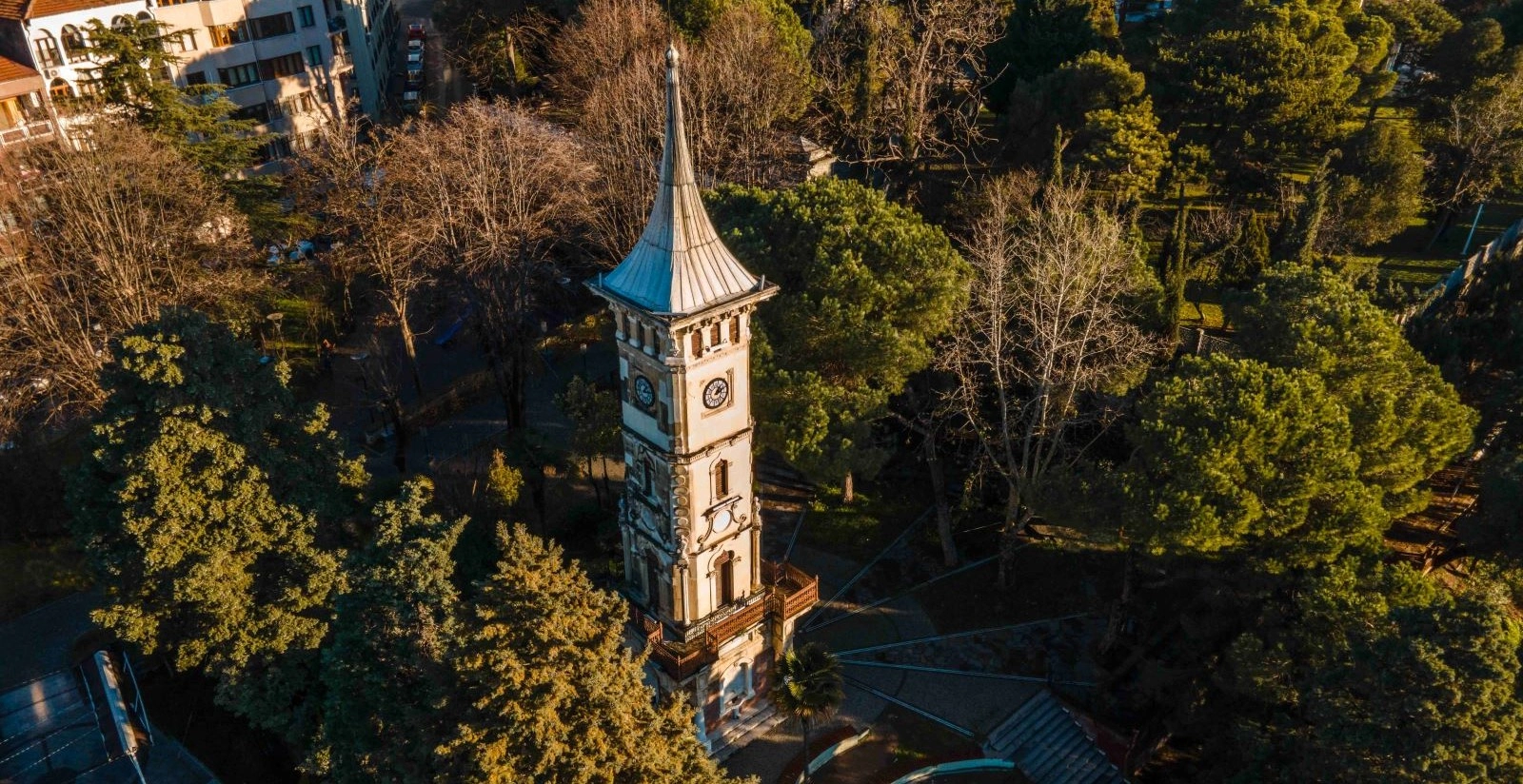
Continue from the modern waterfront to one of İzmit's most recognizable late-Ottoman monuments.
Explore the Clock TowerContinue uphill into classical Ottoman architecture, traditional streets and the city's layered history.
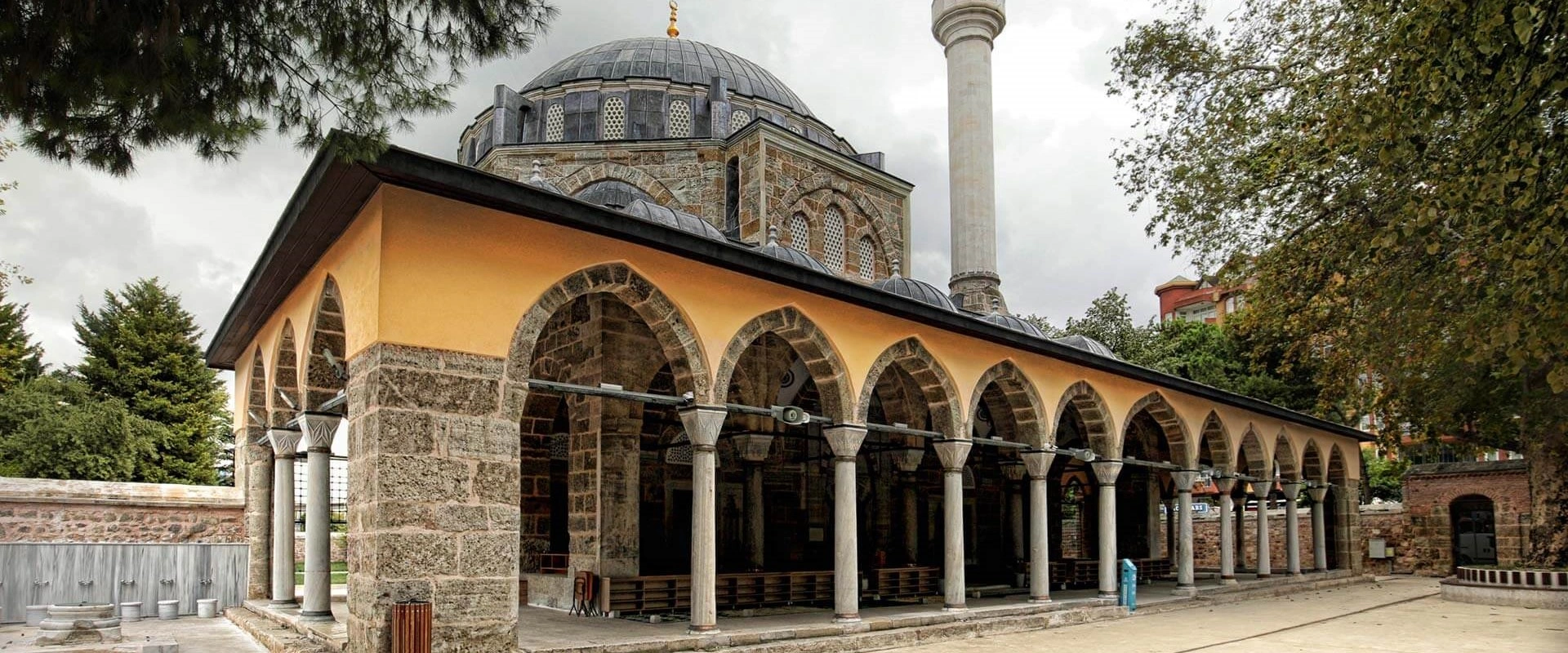
Discover Mimar Sinan's classical Ottoman architecture in the historic heart of İzmit.
Explore Pertev Pasha Mosque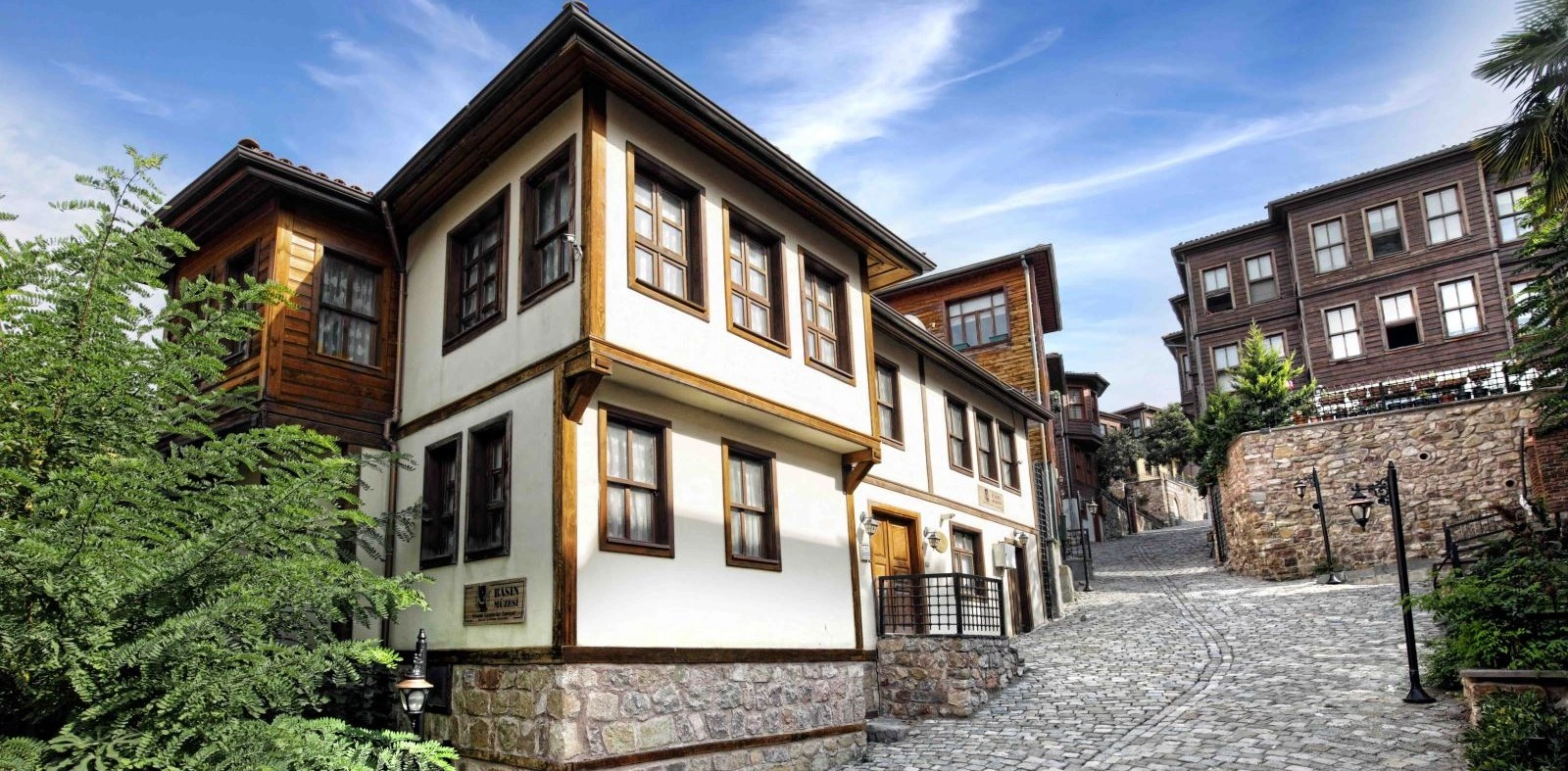
Leave the flat waterfront behind and enter old İzmit among timber houses, fountains and steep historic lanes.
Explore Kapanca Street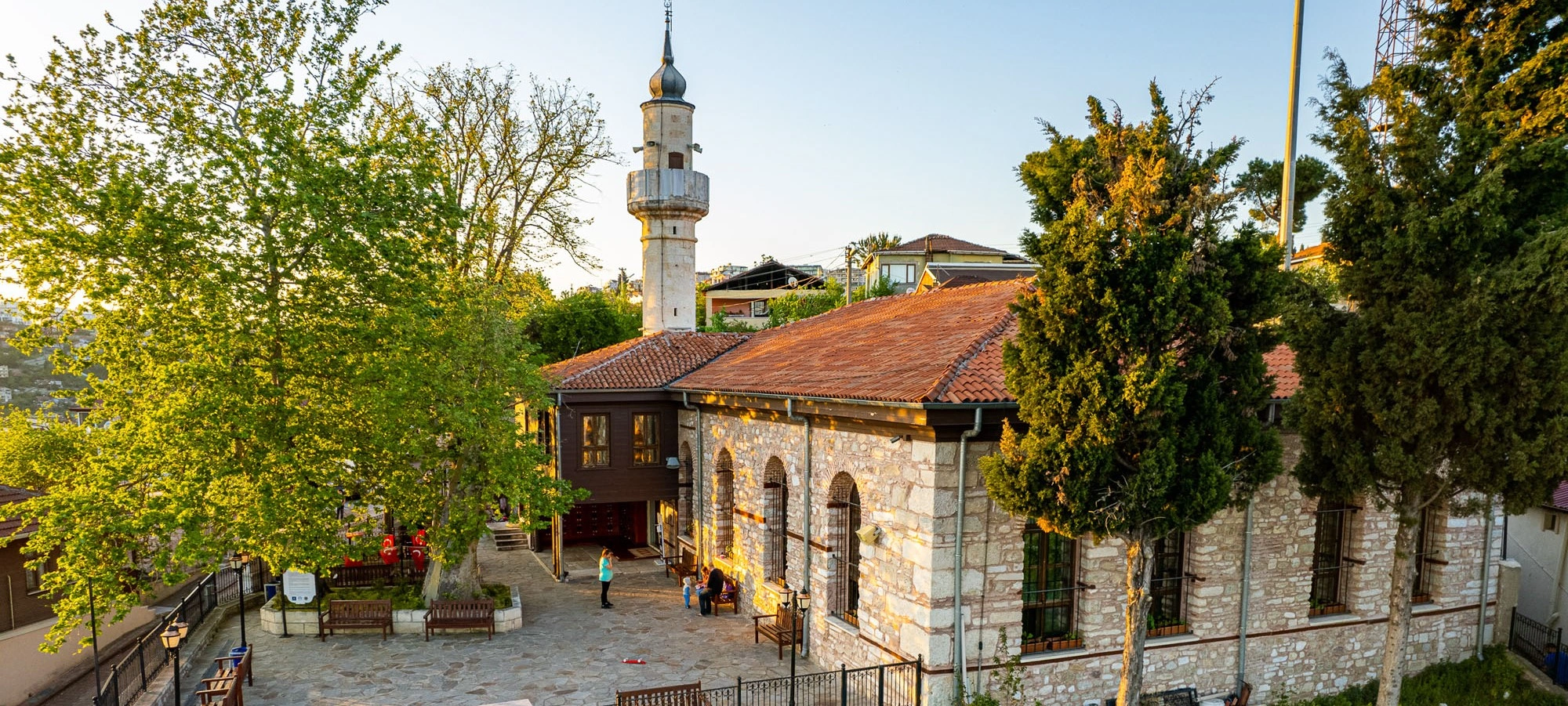
Travel back to the early Ottoman centuries on the historic slopes above the modern city.
Explore Orhan MosqueWe can connect Istanbul, Kocaeli, Cappadocia and destinations throughout Türkiye in a private cultural itinerary.
Build a private day around industrial heritage, Roman Nicomedia, Ottoman architecture and the Gulf of İzmit waterfront.
Plan Your Journey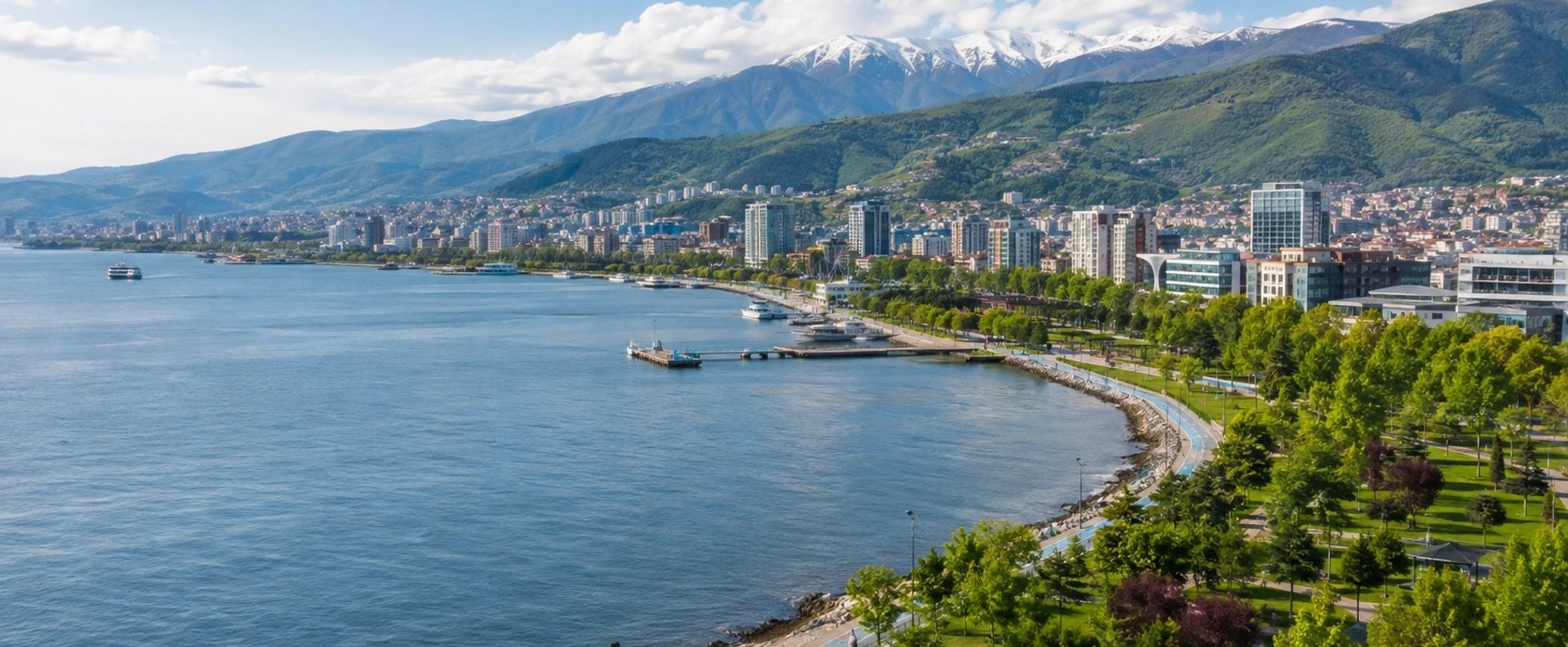
Continue around the Gulf with archaeology, Ottoman heritage, industrial history, forests, coastlines and regional culture.
Discover Kocaeli
Continue throughout Türkiye with historic cities, museums, landscapes, archaeological sites and regional culture.
Explore Türkiye