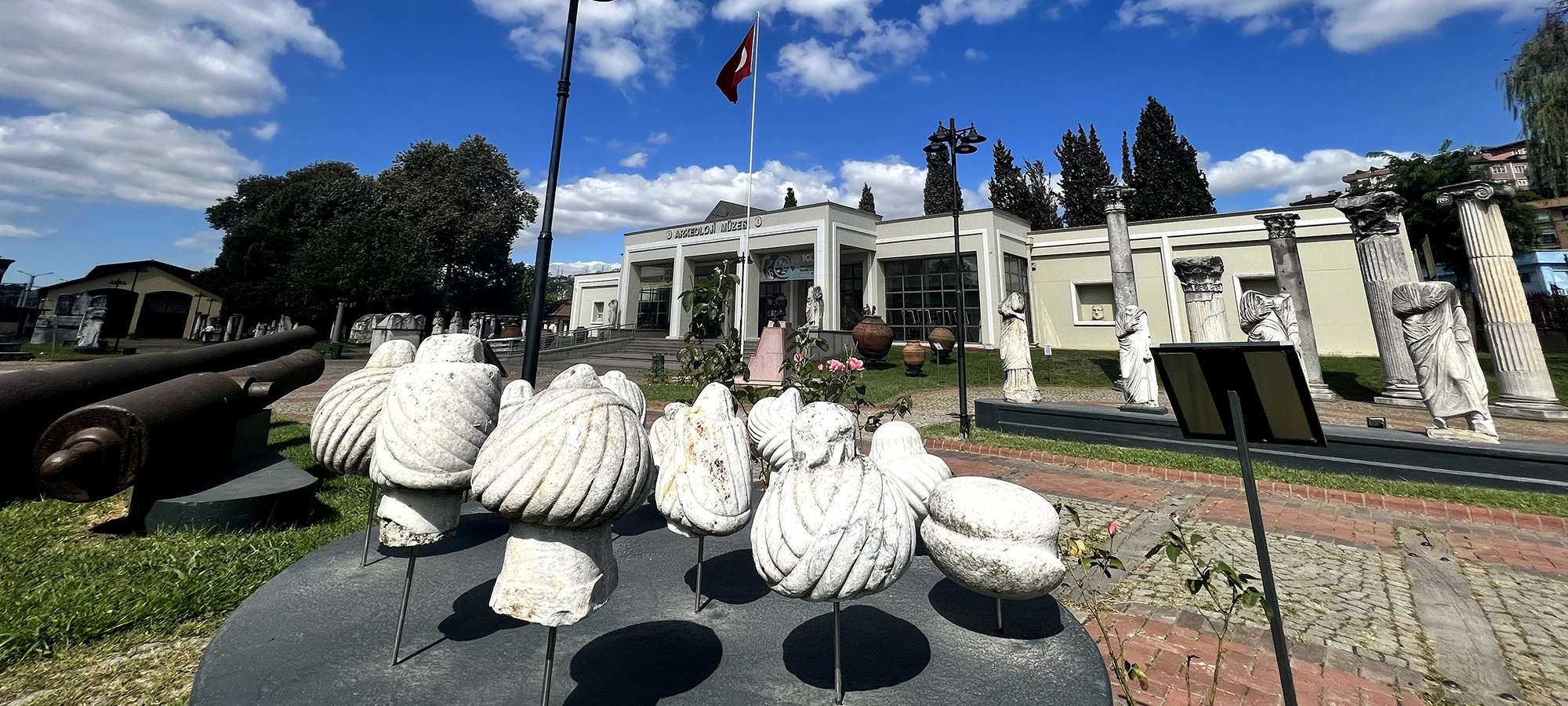
Kocaeli Archaeology Museum
Travel from twentieth-century SEKA back to ancient Nicomedia through Roman sculpture, coins, inscriptions and regional archaeology.
Explore the Museum





SEKA Paper Museum, or SEKA Kâğıt Müzesi, occupies part of the former paper-factory complex that helped transform İzmit into one of modern Türkiye's major industrial cities. Instead of displaying industrial history in a conventional gallery, the museum allows visitors to enter the production environment itself: enormous machines, turbines, pulp-preparation equipment, printing presses, control systems and factory spaces remain central to the experience.
The story begins in the early years of the Turkish Republic. The foundation of the İzmit paper factory was laid in 1934, and in 1936 the factory produced Türkiye's first locally manufactured paper of the new industrial era. The project is inseparable from Mehmed Ali Kâğıtçı, the engineer and paper specialist whose determination helped turn the idea of domestic paper production into a working national industry.
SEKA eventually became much more than a factory. It shaped employment, technical education, sport, social life and the physical growth of İzmit for generations. Production ended in the 2000s, the complex was transferred to Kocaeli Metropolitan Municipality in 2005, and an ambitious industrial-heritage conversion later transformed part of the historic factory into today's museum. SEKA Paper Museum opened on 6 November 2016.
Today the museum combines factory archaeology with social history, science, engineering and the everyday story of paper. Its large halls explain how raw material became pulp, how pulp became a continuous sheet, how paper was finished and printed, and how thousands of workers built a community around the factory. For travellers exploring central İzmit, it is one of the most distinctive museums in Kocaeli.
Follow the industrial process from raw material and pulp preparation to paper machines, finishing and printing.
Historic production machines remain inside the former factory, allowing visitors to understand the scale and engineering of paper manufacture.
Discover the engineer whose vision and technical expertise were fundamental to the establishment of modern paper production in Türkiye.
SEKA's story is also the story of workers, families, sports clubs, education and the emergence of modern industrial İzmit.
Essential information for visiting one of Türkiye's most important industrial-heritage museums.
Kozluk Mahallesi, Mehmet Ali Kâğıtçı Sokak No:77, İzmit / Kocaeli.
Open on Google MapsFoundation laid in 1934; industrial paper production began in 1936.
SEKA Paper Museum opened to visitors on 6 November 2016.
Approximately 12,345 m², 4 floors and 18 exhibition halls.
General museum visits are currently free of charge.
Akçaray tram; use the Sekapark stop.
SEKA is not simply a museum of machines; it explains how industrial production transformed a city and became part of national memory.
The first reason SEKA Paper Museum matters is historical. The İzmit paper factory belonged to the ambitious industrialization projects of the early Turkish Republic. Producing paper domestically reduced dependence on imported supplies while supporting education, publishing, administration, newspapers and countless other parts of modern life.
The second reason is the survival of the factory itself. Visitors are not looking at small models of vanished machinery. They move through a genuine industrial environment where large production equipment, power systems and factory architecture remain physically connected to the story being told. That authenticity gives the museum an atmosphere very different from an ordinary history museum.
The third reason is social history. SEKA created not only jobs but also a community. Training, housing, sports, cultural activities, worker organizations and shared routines helped shape twentieth-century İzmit. The museum therefore records the lives of the people who worked here, not only the machines they operated.
Finally, SEKA is an excellent example of adaptive reuse. After industrial production ended, the site was not simply erased from the waterfront. The former factory landscape was reimagined through the museum, Kocaeli Science Center, Sekapark and other public uses. Visitors following our guide to places to visit in Kocaeli can use SEKA as the modern-industrial chapter of a city whose history also includes ancient Nicomedia and Ottoman İzmit.
Paper is so ordinary that it is easy to forget how strategically important it once was. Schools needed notebooks and textbooks, newspapers needed newsprint, government offices needed forms and records, publishers needed printing paper and businesses needed packaging. A modern state required a dependable paper supply.
In the early Republican period, developing domestic industry became a central economic goal. A national paper factory would reduce reliance on imported products while creating technical knowledge, trained workers and new industrial capacity inside the country. İzmit was selected as the location for the project, and the factory became one of the landmarks of the city's twentieth-century transformation.
The choice of İzmit was practical as well as strategic. The city had transport connections, a sheltered Gulf, proximity to Istanbul and access to the wider Marmara economy. As the factory expanded, its relationship with the city became increasingly deep: SEKA influenced employment, migration, neighbourhood growth and local identity.
Domestic paper production supported schools, textbooks, notebooks and the spread of literacy.
Newspapers, books, magazines and official publications depended on a reliable supply of paper.
The factory developed technical knowledge, machinery skills and a large industrial workforce.
SEKA belonged to the wider effort to produce essential goods inside Türkiye rather than depend entirely on imports.
The factory became one of the major forces shaping modern urban and social life around the Gulf.
The museum preserves this economic history inside the place where production actually happened.
No visit to SEKA Paper Museum is complete without understanding the role of Mehmed Ali Kâğıtçı. A specialist in paper-making technology, he became one of the central figures in the effort to establish modern paper production in Türkiye. His name is now inseparable from the İzmit factory and from the industrial history preserved by the museum.
Kâğıtçı combined technical training with an unusually persistent belief that Türkiye could produce its own modern paper. At a time when establishing a complex factory required imported machinery, specialist knowledge, financial commitment and administrative support, the project demanded far more than a simple construction plan.
He joined Sümerbank in 1934, the same year the İzmit factory project moved decisively forward. The museum presents his story through documents, photographs, personal material and the wider narrative of the factory's establishment. Rather than treating him as a distant name, the displays place his work within the challenges of building a new industrial sector almost from the ground up.
The surrounding district continues to carry his memory. The museum stands on Mehmet Ali Kağıtçı Sokak, and in 2026 a new documentation centre bearing his name opened within the museum complex to make important SEKA and Kâğıtçı archival collections more accessible to researchers.
Kâğıtçı brought professional paper-making expertise to the national factory project.
He joined Sümerbank in 1934 during the crucial foundation period of the İzmit paper works.
His story represents the determination to create a domestic technical industry rather than remain dependent on imported paper.
A dedicated Mehmed Ali Kâğıtçı Hall introduces his life, work and relationship with SEKA.
The museum's address itself preserves his name in the modern city.
The Mehmet Ali Kâğıtçı Documentation Center adds a research dimension to the museum's public exhibitions.
The foundation of the İzmit paper factory was laid on 14 August 1934. The project developed quickly, and by 1936 the new industrial complex had reached the moment that would define its place in Turkish industrial history.
In 1936, the first local paper sample of the factory era was produced and the first paper factory entered operation. What began as one national industrial project expanded over time into a much larger paper and cellulose organization associated across Türkiye with the name SEKA.
For decades, the İzmit complex functioned as one of the city's largest and most influential employers. Successive generations worked in production halls, power facilities, maintenance departments, laboratories, offices and social services. The factory became woven into family histories across Kocaeli.
By the end of the twentieth century, the economic environment had changed dramatically. SEKA entered the privatization process in the late 1990s, activity at the İzmit facility was halted in the 2000s, and the complex was transferred to Kocaeli Metropolitan Municipality in 2005. That transfer made possible the later transformation of the site into a public cultural and recreation landscape.
The foundation of the İzmit paper factory was laid.
The first locally produced paper sample emerged and the first factory entered operation.
İzmit Kağıtspor was founded, showing how factory life quickly extended into sport and community activity.
The enterprise entered a new administrative phase under the Sümerbank cellulose organization.
SEKA was included in the privatization process.
The İzmit complex was transferred to Kocaeli Metropolitan Municipality.
Industrial buildings are difficult to preserve. They are often enormous, expensive to maintain and filled with machinery designed for production rather than visitors. At SEKA, the challenge was even greater because the value of the place depended on retaining the relationship between architecture, equipment and memory.
After the transfer of the former İzmit factory to Kocaeli Metropolitan Municipality, the wider site began a new life. The waterfront storage and industrial landscape was gradually transformed through Sekapark, cultural uses and the development of the museum and science centre complex.
Preparations for SEKA Paper Museum began in 2011. Restoration and exhibition design converted the historic First Paper Factory spaces while preserving original structural and industrial elements. Rather than stripping the building into a neutral shell, the project used the factory itself as the museum's largest exhibit.
The museum opened on 6 November 2016. Today, the official Kocaeli museum network describes the complex as approximately 12,345 square metres arranged across four floors and 18 exhibition halls, with machinery, documents, objects, screens, projections, workshops, archives and social facilities forming one large interpretive route.
The former İzmit SEKA complex passed to Kocaeli Metropolitan Municipality.
Work began on transforming the industrial heritage into a museum experience.
Steel structure, factory volumes and original production equipment were treated as heritage rather than obstacles.
SEKA Paper Museum opened to the public on 6 November.
The large exhibition route allows technology, labour, paper history and social life to be explained separately but connected.
Workshops, temporary exhibitions and educational events keep the building active beyond its permanent displays.
One of the museum's greatest strengths is that the paper-making process can be understood spatially. Instead of reading only a technical description, visitors move through halls connected with pulp preparation, cleaning, storage, machinery, power and printing.
At its simplest, industrial paper-making begins with fibres suspended in water. Raw material is broken down and processed into pulp, contaminants are removed, and the fibre mixture is prepared to the consistency required for production. The pulp is then delivered to the paper machine, where water is gradually removed and the fibres form a continuous web.
The wet sheet passes through pressing and drying stages before finishing processes improve its surface and prepare it for cutting, winding, packaging or later printing. The exact machinery and sequence vary according to the type of paper being produced, but the museum's preserved equipment helps make this otherwise invisible industrial process much easier to understand.
Power was essential at every stage. Motors, pumps, rollers, dryers, control systems and auxiliary machinery required a reliable energy supply, which is why the turbine and power-station areas are such important parts of the museum route.
Raw fibrous material provides the cellulose structure from which paper is formed.
Fibres are processed and mixed with water to create a pumpable paper-making suspension.
Unwanted particles are removed and the pulp is prepared for consistent production.
The diluted pulp spreads onto the moving forming section of the paper machine.
Water is mechanically and thermally removed as the sheet gains strength.
The finished paper can be smoothed, wound, cut, counted, packaged or sent for printing and converting.
The Paper Machine Hall is one of the most impressive spaces in SEKA Paper Museum. Here the scale of industrial paper production becomes immediately visible. Long mechanical lines, rollers, frames and supporting systems show why paper manufacturing required far more than a simple press or workshop.
A particularly important survivor is the historic No. 2 paper machine associated with the First Paper Factory. The machine belongs to the pioneering generation of equipment that helped establish industrial paper production in İzmit.
For non-specialists, the easiest way to read the machine is to imagine a wet, fragile web entering one end and becoming progressively more stable as it moves through the line. Each section has a purpose: forming, removing water, pressing, drying, smoothing or guiding the sheet toward the next production stage.
The hall is also one of the museum's best places for photography. Wide views communicate the length of the machinery, while close details reveal gauges, rollers, metal plates, bolts and traces of decades of industrial use.
One of the most significant preserved production machines from the First Paper Factory.
Industrial paper was formed as a moving web rather than as individual handmade sheets.
Much of the machine's length exists to remove water gradually without destroying the forming sheet.
The hall makes the complexity of large-scale paper production instantly understandable.
The preserved machinery remains meaningful because it is still read inside a genuine factory environment.
Use wide compositions to show machinery, steel structure and elevated visitor routes together.
Visitors naturally focus on the large paper machines, but good paper begins much earlier in the process. The Pulp Preparation Hall, cleaning areas and storage sections explain how fibrous material was turned into a controlled mixture suitable for production.
Pulp had to be prepared consistently. Its fibres, water content and cleanliness affected the strength, surface and behaviour of the final sheet. Industrial equipment mixed, refined, cleaned and transferred the material through a network of tanks, pipes and machines before it reached the paper line.
These halls are especially useful for visitors interested in engineering because they reveal the less glamorous but essential systems behind manufacturing. A factory is not one spectacular machine; it is an interconnected chain in which preparation, pumping, storage and quality control are as important as the final production line.
The pulp-preparation area explains how fibre and water were conditioned before paper formation.
Removing unwanted material improved quality and reduced damage to later machinery.
Prepared pulp had to be held and supplied to production in a controlled way.
The factory depended on continuous movement of large volumes of water and pulp.
These rooms make it easier to understand SEKA as one system rather than a collection of machines.
Tanks, valves, floors and structural details preserve the visual language of the working factory.
Large paper factories consume enormous amounts of energy. Motors move rollers and pumps, steam supports drying and heating processes, and electrical systems keep production running across an interconnected site. SEKA therefore required a substantial internal power infrastructure.
The museum's Power Station Hall and Turbine Hall reveal this hidden side of manufacturing. Generators, turbines, controls and associated equipment show that paper production was also a story of electrical and mechanical engineering.
The Power Station Hall is particularly effective because it reminds visitors that industrial heritage is about systems. The visible paper machine could not operate without energy generation, water, maintenance, storage and the skilled workers who supervised all of them.
Part of the interpretation also connects the SEKA site with the much older history of the İzmit landscape. This is appropriate in a city where modern factories stand above or beside layers connected with ancient Nicomedia, Byzantine settlement and Ottoman İzmit.
Steam and turbines formed part of the energy system supporting industrial production.
Electrical generation and distribution kept machinery operating throughout the factory.
Panels, instruments and gauges reveal how operators monitored the industrial process.
Power generation required technicians and engineers as much as production required paper workers.
The hall helps visitors understand how separate departments functioned as one coordinated industrial organism.
The museum also situates modern SEKA within the longer historical geography of İzmit.
Paper production is only the beginning of paper's life. Once manufactured, a sheet can become a newspaper, book, form, label, envelope, package, poster or countless other products. The museum's Printing Hall extends the story from industrial production into communication.
Historic printing equipment shows the mechanical relationship between paper, ink, type and pressure. For younger visitors especially, these machines make the physical nature of printing much clearer than modern digital screens do.
Some printing machines within the museum are maintained in working condition for demonstration and educational purposes. When demonstrations or workshops are operating, the sound and movement add another layer to the experience of a museum built around formerly working machinery.
The printing displays show how an industrial sheet becomes a carrier of language, images and records.
Visitors can examine the physical relationship between paper, ink, pressure and printing machinery.
Selected historic machines are maintained for demonstrations and educational use.
The hall is easy to understand even for visitors without a technical background.
The most human part of SEKA Paper Museum is the story of everyday factory life. A major industrial enterprise is never only machinery: it is shifts beginning before sunrise, training new workers, friendships formed on production lines, families depending on salaries and generations growing up around the same institution.
SEKA developed social and cultural structures that extended far beyond the production halls. Sports, education, recreation, clubs and cultural events created a strong institutional identity. The founding of İzmit Kağıtspor in 1937, only a year after the first factory opened, shows how quickly the enterprise began shaping community life.
Photographs, documents, objects and recorded memories help preserve this social world. For former SEKA workers and their families, the museum can function almost like a collective family archive; for outside visitors, it explains why the name SEKA continues to carry such emotional weight in İzmit.
The museum records the people whose labour kept production operating across generations.
Sport became an important part of factory and city identity beginning in the 1930s.
Industrial education and apprenticeships helped create a technically skilled workforce.
Factory culture included recreation, events and shared institutions beyond the production line.
Former workers' experiences transform industrial history into personal history.
SEKA became one of the names most strongly associated with twentieth-century İzmit.
SEKA Paper Museum combines large industrial equipment with a much more detailed documentary collection. Official museum information describes 115 display cases, 443 documents and 337 objects, together with digital screens and projection systems used to interpret the factory and its people.
This mixed approach is important because machinery alone cannot explain why SEKA mattered. Documents reveal planning and administration, photographs show working conditions and social life, personal objects reconnect the factory with individuals, and audiovisual material helps reconstruct processes that can no longer run at full industrial scale.
Do not rush through the smaller display cases after seeing the spectacular machines. Letters, factory publications, photographs, technical material, packaging and everyday objects often provide the details that make the larger historical story feel personal.
Archival material helps explain the organization, people and development of SEKA.
Industrial, personal and institutional objects preserve multiple sides of factory life.
Smaller exhibits balance the monumental scale of the surviving machinery.
Screens and projections help visitors understand processes, memories and spaces that are difficult to communicate through objects alone.
Printed material reflects SEKA's own institutional culture and communication.
Personal stories prevent the museum from becoming only a history of equipment and management.
In February 2026, SEKA Paper Museum added a significant new research resource with the opening of the Mehmet Ali Kâğıtçı Documentation Center. The centre is designed to make archival material connected with Turkish paper-making, SEKA and Kocaeli's industrial history more accessible to researchers.
Its core resources include extensive SEKA factory records together with the Mehmet Ali Kâğıtçı Collection and material associated with SEKA's general administration. For historians, students, writers and researchers, this gives the museum an importance beyond the normal visitor route.
The new centre also underlines how industrial heritage can continue producing knowledge long after factory production ends. Preserving machinery is essential, but preserving technical reports, photographs, correspondence, publications and institutional records is equally important if future generations are to understand how the factory actually functioned.
The documentation centre became a new part of SEKA's research infrastructure in February 2026.
Factory records preserve the administrative and technical memory of the institution.
Material connected with Mehmed Ali Kâğıtçı supports research into the origins of Turkish industrial paper production.
The archive is valuable not only for paper history but also for understanding twentieth-century İzmit.
One of the quieter features of the museum complex is the Paper Plants Garden. It reminds visitors that before paper becomes a white industrial sheet, it begins with biological fibre. Plants have supplied paper-making traditions with different forms of cellulose for centuries.
The garden creates a useful connection between industrial history and natural materials. After seeing steel machines, pipes and turbines, it is easy to forget that paper ultimately depends on organic fibres whose structure allows them to bond into a sheet.
For families and school groups, this is a particularly useful teaching point. It connects the industrial process with forestry, agriculture, material science, recycling and sustainability in a way that younger visitors can understand easily.
Paper depends on plant fibres rich in cellulose.
The garden connects finished paper with the natural raw materials behind it.
The garden offers a calmer contrast to the huge industrial halls.
It is a simple place to explain where paper comes from before discussing machines and recycling.
SEKA Paper Museum works especially well for children because the story is physical. The machines are enormous, the factory spaces feel different from a conventional museum, and almost every child already understands the basic object at the centre of the story: paper.
A simple family route is to ask children to follow the transformation from plant fibre to pulp, from pulp to wet sheet, and from paper to printed material. This turns a large museum into a clear sequence rather than a collection of unfamiliar machines.
The museum also runs workshops and educational activities throughout the year. Programmes vary, but paper-making, paper arts, printing, craft and creative activities frequently appear in the official event calendar. Advance registration may be required for individual workshops or group visits.
The neighbouring Kocaeli Science Center makes the SEKA complex even more useful for families. A paper museum plus an interactive science visit can comfortably fill several hours without requiring another journey across the city.
Turn the visit into a mission: find where pulp is prepared, where paper forms and where it is printed.
Encourage children to compare the size and function of different industrial machines.
Gauges, switches and panels are an easy way to discuss how factories were operated before digital automation.
Check the official programme for paper, art, printing and seasonal children's activities.
The neighbouring science centre creates one of Kocaeli's best combined educational outings.
Outdoor waterfront space provides a natural break after a long indoor museum visit.
SEKA Paper Museum is one of the most visually distinctive indoor locations in Kocaeli. Long machinery lines, steel columns, control panels, elevated walkways and the scale of the preserved factory create photographs that feel very different from traditional archaeological or palace interiors.
Wide-angle compositions work particularly well in the Paper Machine Hall and larger industrial spaces. For details, look for worn metal surfaces, gauges, labels, rollers, pipes and the contrast between restored architecture and preserved machinery.
The current official museum information allows ordinary photography with phones and cameras, but visitors should always follow posted rules and staff instructions. Temporary exhibitions, workshops, professional equipment, flash or commercial photography may have different conditions.
Use a wide frame to show the full length and complexity of the production line.
Old instruments and switches create strong geometric detail photographs.
Frame machinery through railings, stairs and steel structure to create depth.
Including a person at a respectful distance helps communicate the enormous size of the equipment.
The restored factory façade and broad entrance work well in morning or late-afternoon light.
Do not cross barriers or touch machinery to create a photograph.
SEKA Paper Museum occupies a large multi-level former factory, but the museum conversion was designed for public use and official educational listings identify the site as offering accessible access. The broad industrial halls also provide more movement space than many older historic-house museums.
Visitors who use wheelchairs, mobility aids or strollers should still allow extra time. The museum covers approximately 12,345 square metres and includes multiple floors, galleries, machine zones and changes of level.
If you need a specific step-free route, elevator access to a particular exhibition, accessible toilet information or assistance for a group, contact the museum before travelling. Temporary exhibition layouts or maintenance can affect the easiest route through a large industrial building.
Many principal exhibition areas occupy broad industrial spaces with generous circulation.
Allow extra time if you want to explore the full four-level museum route.
Contact the museum if you need confirmation of lifts or the easiest step-free sequence.
Families should use the wider visitor route rather than trying to move close to machinery barriers.
Understand 1934, 1936, 2005 and 2016 before entering the machinery-heavy sections.
Move mentally from pulp preparation to paper machine, finishing and printing.
The social-history displays are essential to understanding why SEKA matters to İzmit.
The museum is far larger than the word “paper” might suggest.
Hands-on activities can make the visit considerably more rewarding, especially with children.
Kocaeli Science Center is beside the museum and is the easiest additional indoor stop.
Use the waterfront for a break before or after the museum.
Museum schedules and final admission arrangements can change on holidays or special-event days.
Begin at SEKA Paper Museum in the morning, when you have enough energy for its large industrial route. Spend around 1.5–2 hours exploring the paper process, preserved machinery, worker history and Mehmed Ali Kâğıtçı displays.
If you are travelling with children or enjoy interactive exhibitions, continue directly to the neighbouring Kocaeli Science Center. The two institutions occupy the same wider cultural complex and create an easy educational pairing.
Afterwards, walk through Sekapark and the Gulf waterfront. The open landscape provides a useful contrast to the factory interiors and helps explain why this coastal industrial site was so important to twentieth-century İzmit.
Continue toward the Kocaeli Archaeology Museum to move dramatically backward in time from Republican industry to ancient Nicomedia. Then climb toward İzmit Clock Tower and the Kasr-ı Hümayun area for the Ottoman chapter of the city.
SEKA Paper Museum – Republican industry, machinery, labour and paper production.
Kocaeli Science Center – interactive science and family-friendly exhibits in the SEKA complex.
Sekapark – waterfront landscape, walking paths and a break beside the Gulf of İzmit.
Kocaeli Archaeology Museum – ancient Nicomedia and the archaeology beneath modern İzmit.
İzmit Clock Tower – late Ottoman civic architecture and one of Kocaeli's best-known landmarks.
Kasr-ı Hümayun area – complete the route with nineteenth-century imperial İzmit.
Enough only for a very quick route through the principal machinery halls.
A reasonable overview if you focus on the factory story and largest exhibits.
A good minimum for most first-time visitors who want to read interpretation as well as see machinery.
Ideal for a relaxed visit including worker history, smaller displays and photography.
Combine the museum with Kocaeli Science Center without rushing either institution.
Add Sekapark and the waterfront for a complete SEKA cultural-area visit.
SEKA Paper Museum is operated within Kocaeli Metropolitan Municipality's museum network. General museum visits are currently free of charge, making it one of the best-value cultural attractions in İzmit.
The newest official Kocaeli Museum listing currently gives visiting hours as Tuesday to Sunday, 09:00–17:00. Monday is the museum's normal closed day. Older municipal pages have sometimes shown a slightly later closing time, so travellers visiting near the end of the day should check the current official listing before departure.
The museum also hosts workshops, exhibitions, talks, school activities and special programmes. Some activities require advance registration even though ordinary museum admission is free. Current event applications are handled through the Kocaeli Museum platform.
Ordinary phone and camera photography is permitted according to current museum visitor notes, while food, drinks and pets are not allowed inside the exhibition areas. Always follow on-site signs for temporary exhibitions and special events.
SEKA Kâğıt Müzesi / SEKA Paper Museum.
Kozluk Mah., Mehmet Ali Kağıtçı Sk. No:77, İzmit / Kocaeli.
Tuesday through Sunday.
09:00–17:00 on the current Kocaeli Museum platform; verify before a late-afternoon visit.
Monday under the normal weekly schedule.
Free for ordinary museum visits.
+90 262 332 53 47.
Industrial history, engineering, families, social history, design and photography.
SEKA Paper Museum stands in Kozluk Mahallesi on the western side of central İzmit, inside the former SEKA industrial and cultural area beside Sekapark. Its location close to the waterfront makes it easy to combine with other central attractions.
The simplest public-transport option for most visitors is the Akçaray tram. Get off at Sekapark and continue on foot toward the museum and science-centre complex.
Municipal information also lists bus access via nearby stops, while taxis from central İzmit are straightforward. Travellers arriving by rail can continue from İzmit station by tram, taxi or walking depending on luggage and mobility.
If you are driving, search directly for SEKA Kâğıt Müzesi rather than simply “Sekapark,” because the park covers a large waterfront area and a generic destination can leave you farther from the museum entrance than expected.
Use Akçaray and get off at the Sekapark stop.
Local bus services use stops around the SEKA and Orduevi area; check live routes for your starting point.
From İzmit railway station, continue west by local transport, taxi or on foot.
Navigate directly to SEKA Kağıt Müzesi, Kozluk Mahallesi, Mehmet Ali Kağıtçı Sokak No:77.
The waterfront route is practical if you are already exploring central İzmit and Sekapark.
İzmit can be visited as a day trip by road or rail, with SEKA forming part of a full central-city itinerary.
The former factory complex occupies a broad area beside Sekapark, so driving is generally easier here than around the steeper historic streets near İzmit Clock Tower. Even so, parking availability can vary during school visits, festivals, exhibitions and busy weekends.
Use live navigation for the final approach and follow current municipal signs rather than stopping directly in front of the museum entrance. The complex serves several public attractions, so traffic patterns may change during large events.
If you plan to visit the Paper Museum, Science Center and Sekapark together, it makes sense to park once and explore the entire area on foot.
Family visits and events can make the cultural complex noticeably busier.
Use designated parking areas rather than industrial service roads or museum access points.
The Paper Museum, Science Center and Sekapark can all be combined without moving the car.
Large municipal programmes can temporarily alter traffic and parking around the complex.
SEKA Paper Museum lies in one of the easiest parts of İzmit for building a multi-stop itinerary. Science, industrial heritage, archaeology, Ottoman architecture and the waterfront can all be connected without leaving the central city.
Use our complete Kocaeli travel guide to continue beyond İzmit into the wider province.
Immediately beside the museum and the most natural companion visit for families and curious adults.
A large waterfront recreation area created from the former SEKA industrial landscape.
Explore ancient Nicomedia and regional archaeology after seeing modern industrial İzmit.
A landmark of late Ottoman İzmit on the historic slope above the Gulf.
The imperial lodge area introduces the nineteenth-century Ottoman city.
Walk beside the water to understand the strategic geography that shaped both industry and ancient settlement.
Continue uphill for traditional houses, older neighbourhoods and a different scale of city life.
Restaurants, cafés and shopping streets make it easy to add lunch between museum visits.
It is in Kozluk Mahallesi, Mehmet Ali Kağıtçı Sokak No:77, İzmit / Kocaeli, beside Sekapark and Kocaeli Science Center.
It is an industrial-heritage museum created inside the former SEKA paper-factory complex, preserving original machinery while explaining paper production, factory history and the social life of SEKA workers.
The foundation was laid on 14 August 1934.
The first locally produced paper sample and the opening of the first factory belong to 1936.
He was a pioneering Turkish paper specialist and engineer whose work was central to establishing modern domestic paper production and the İzmit factory.
The museum opened to visitors on 6 November 2016.
Official museum information describes approximately 12,345 square metres across four floors and 18 exhibition halls.
Yes. A major part of the museum experience comes from preserved machinery and factory equipment associated with the historic SEKA production complex.
The historic No. 2 paper machine from the First Paper Factory is among the museum's most significant industrial exhibits.
Yes. The museum explains pulp preparation, cleaning, storage, sheet formation, pressing, drying, finishing and printing through the original factory environment and interpretation.
The hall explains the turbines, generators and energy systems that supplied the factory and kept its large production machinery operating.
Yes. The Printing Hall extends the story from paper manufacture into printing, and selected historic equipment is maintained for demonstrations or educational use.
No. It also explains workers' lives, social activities, Kağıtspor, factory culture, photographs, documents, personal memories and the transformation of İzmit.
Current official museum information lists 443 documents, 337 objects and 115 display cases, together with digital interpretation.
Opened in 2026, it is a research facility within the SEKA museum environment that brings together archival collections related to Mehmed Ali Kâğıtçı, SEKA and Kocaeli's industrial history.
Yes. Ordinary museum visits are currently free of charge.
The newest official Kocaeli Museum listing gives Tuesday–Sunday, 09:00–17:00, with Monday normally closed. Because older official pages have sometimes shown 17:30, check the current listing before a late visit.
Around 1.5–2 hours is ideal for most visitors. Enthusiasts can easily spend longer.
Yes. Large machines, a clear production story and frequent educational workshops make it one of Kocaeli's strongest family museum choices.
Yes. The museum regularly hosts paper, printing, craft, art and educational workshops. Dates and registration requirements vary, so check the official programme.
Current museum visitor notes allow ordinary phone and camera photography. Follow staff instructions for flash, professional equipment, temporary exhibitions and special events.
Current visitor rules state that food and drinks are not permitted inside the museum exhibition areas.
Current official visitor notes state that pets are not permitted inside the museum.
Official educational listings identify accessible access. Because the museum is large and multi-level, visitors who need a specific step-free route or lift information should confirm current arrangements in advance.
Use the Akçaray tram and get off at Sekapark, then walk to the museum complex.
Kocaeli Science Center and Sekapark are the easiest nearby additions. For a longer history route, continue to Kocaeli Archaeology Museum, İzmit Clock Tower and Kasr-ı Hümayun.
Yes. It is particularly rewarding for travellers interested in unusual museums, engineering, industrial heritage, social history, photography or modern Turkish history.
Historic industrial surfaces can be damaged by repeated contact, oil and abrasion.
Machine zones may contain sharp edges, moving demonstration parts or fragile original equipment.
Stand where staff direct when printing or machinery demonstrations are operating.
Keep exhibition spaces clean and protect archival material from spills.
The museum is family-friendly, but large industrial objects are not playground equipment.
Remember that these halls preserve real labour, memories and family histories, not only aesthetic machinery.
Do not enter service areas or climb industrial stairs that are outside the visitor path.
Workshops, archives and educational programmes help keep the former factory meaningful for new generations.
SEKA Paper Museum is one chapter in a city where Roman archaeology, Ottoman landmarks and Republican industry stand remarkably close together.
Build a deeper city route by combining industrial heritage with archaeology and Ottoman İzmit.
Travel from twentieth-century SEKA back to ancient Nicomedia through Roman sculpture, coins, inscriptions and regional archaeology.
Explore the Museum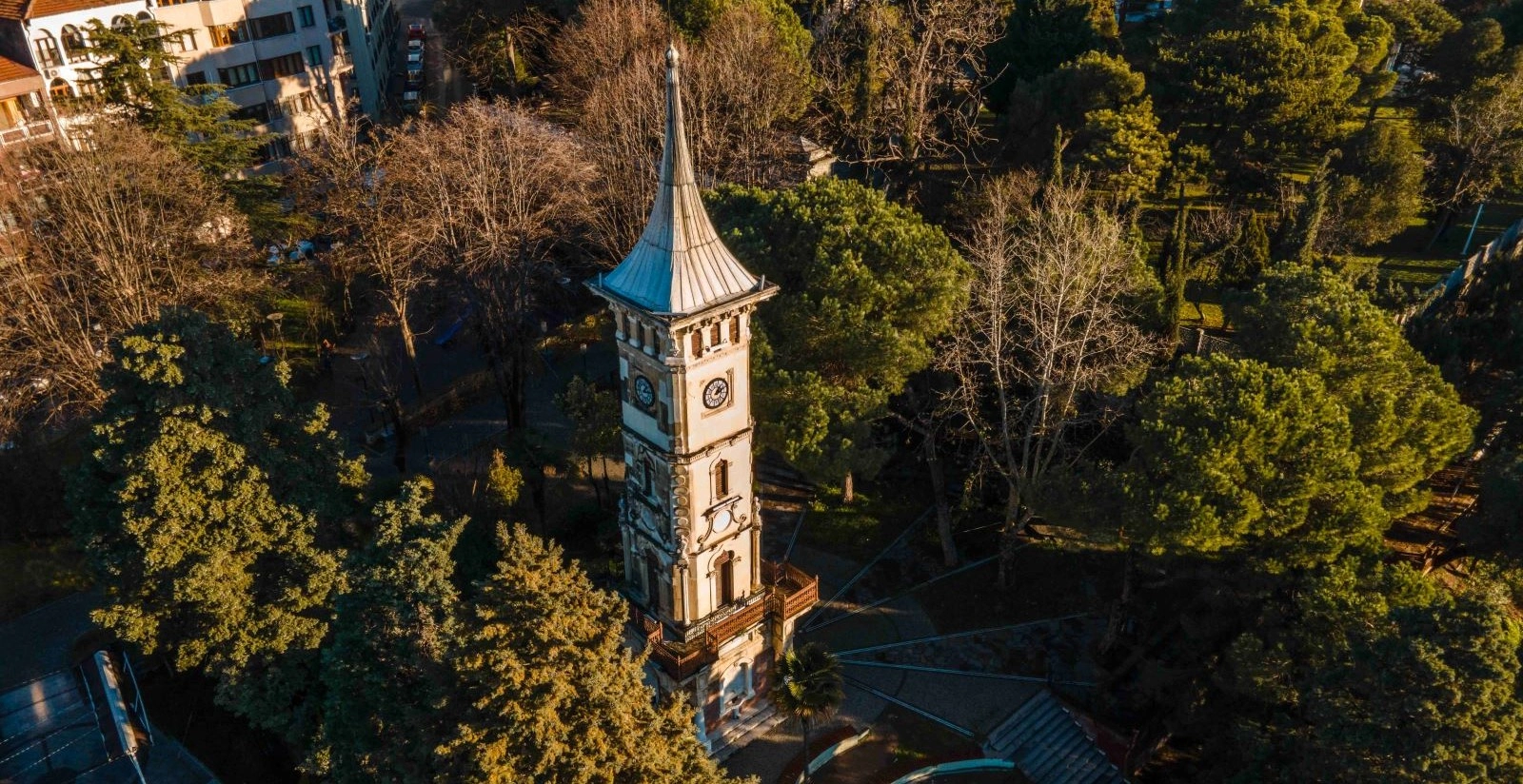
Continue into late Ottoman İzmit with the restored clock tower, its fountain façades, Vedat Tek connection and hillside views above the Gulf.
Explore the Clock Tower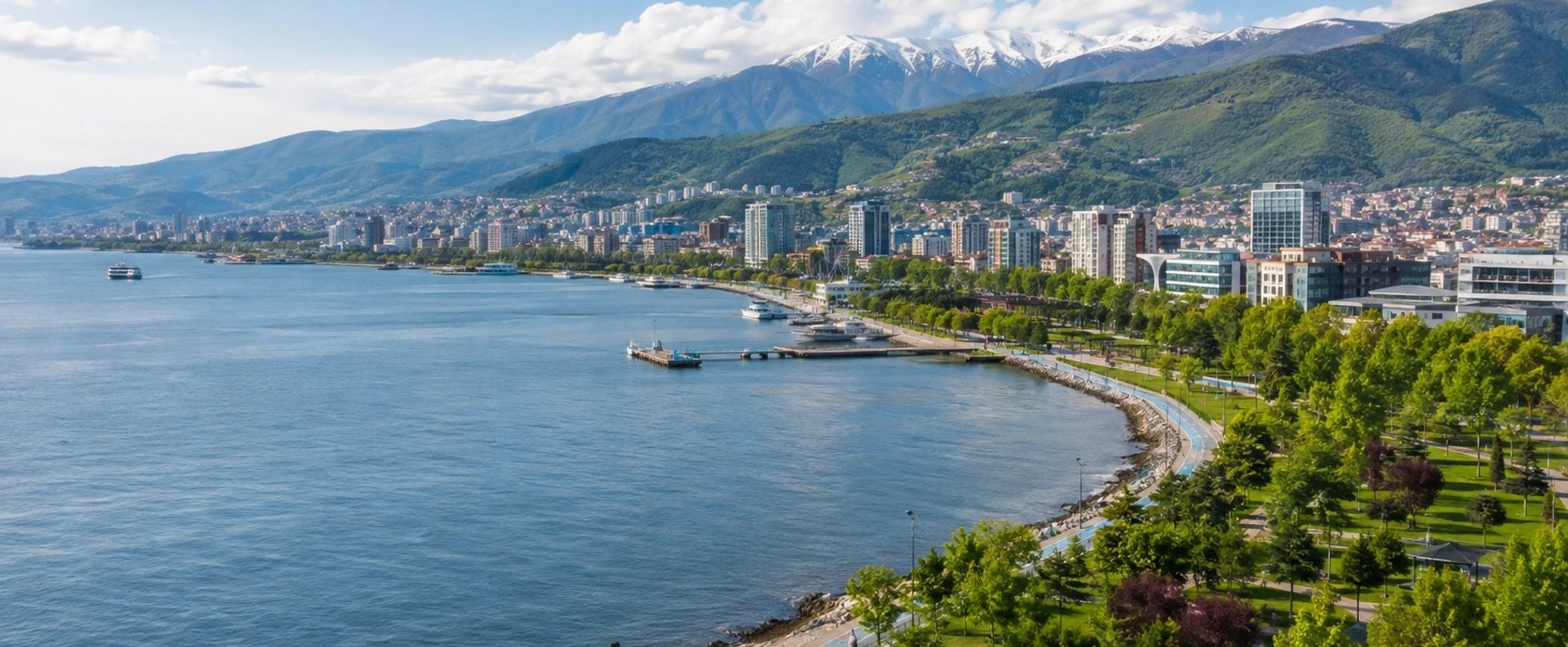
Discover the Gulf of İzmit, Kandıra coast, Kartepe, industrial heritage, nature parks, historic sites and regional food traditions.
Explore KocaeliWe can combine Kocaeli with Istanbul, Cappadocia and destinations throughout Türkiye.
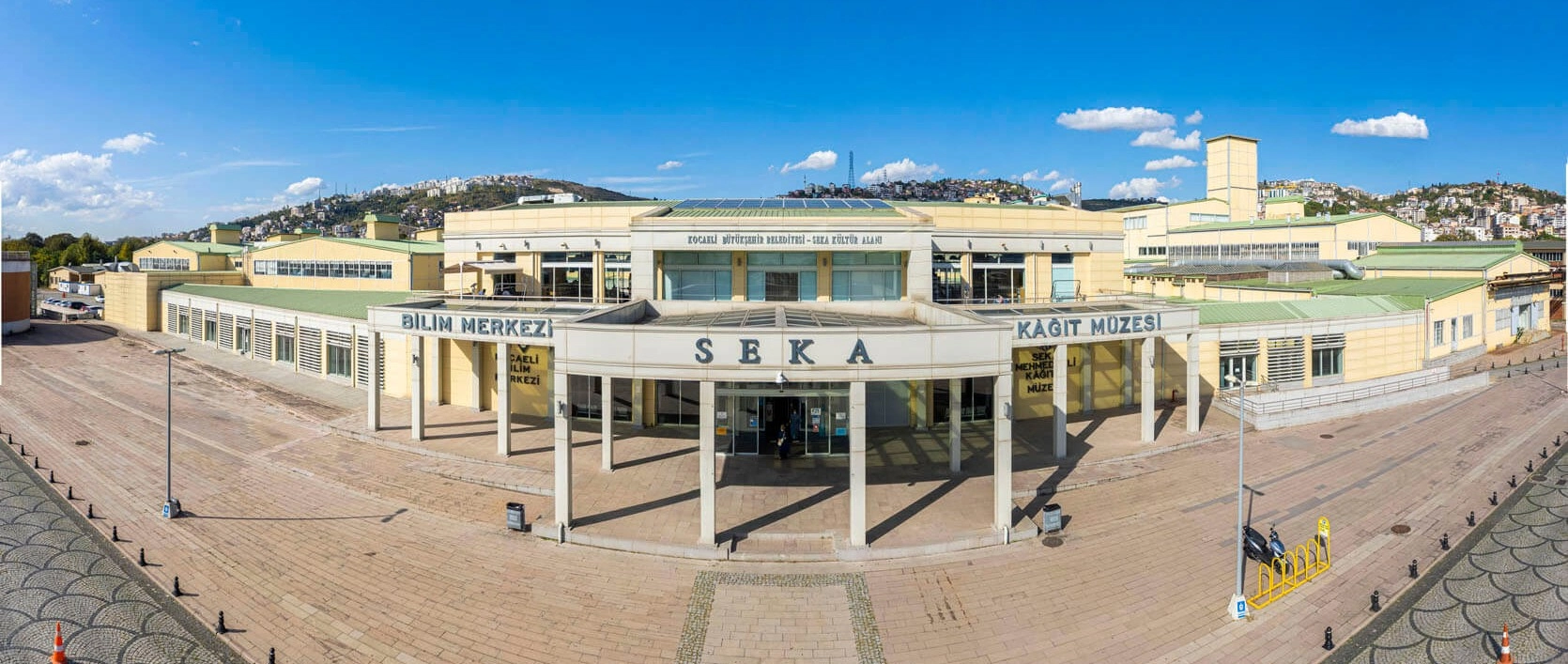
Build a private day around SEKA Paper Museum, Roman Nicomedia, Kocaeli Archaeology Museum, İzmit Clock Tower and the Gulf waterfront.
Plan Your Journey
Continue beyond İzmit to Kartepe, Ormanya, Kandıra, coastal landscapes, waterfalls, historic towns and local flavours.
Explore Kocaeli
Continue throughout Türkiye with archaeological sites, historic cities, industrial heritage, mountains, coastal landscapes, food traditions and cultural heritage.
Explore Türkiye