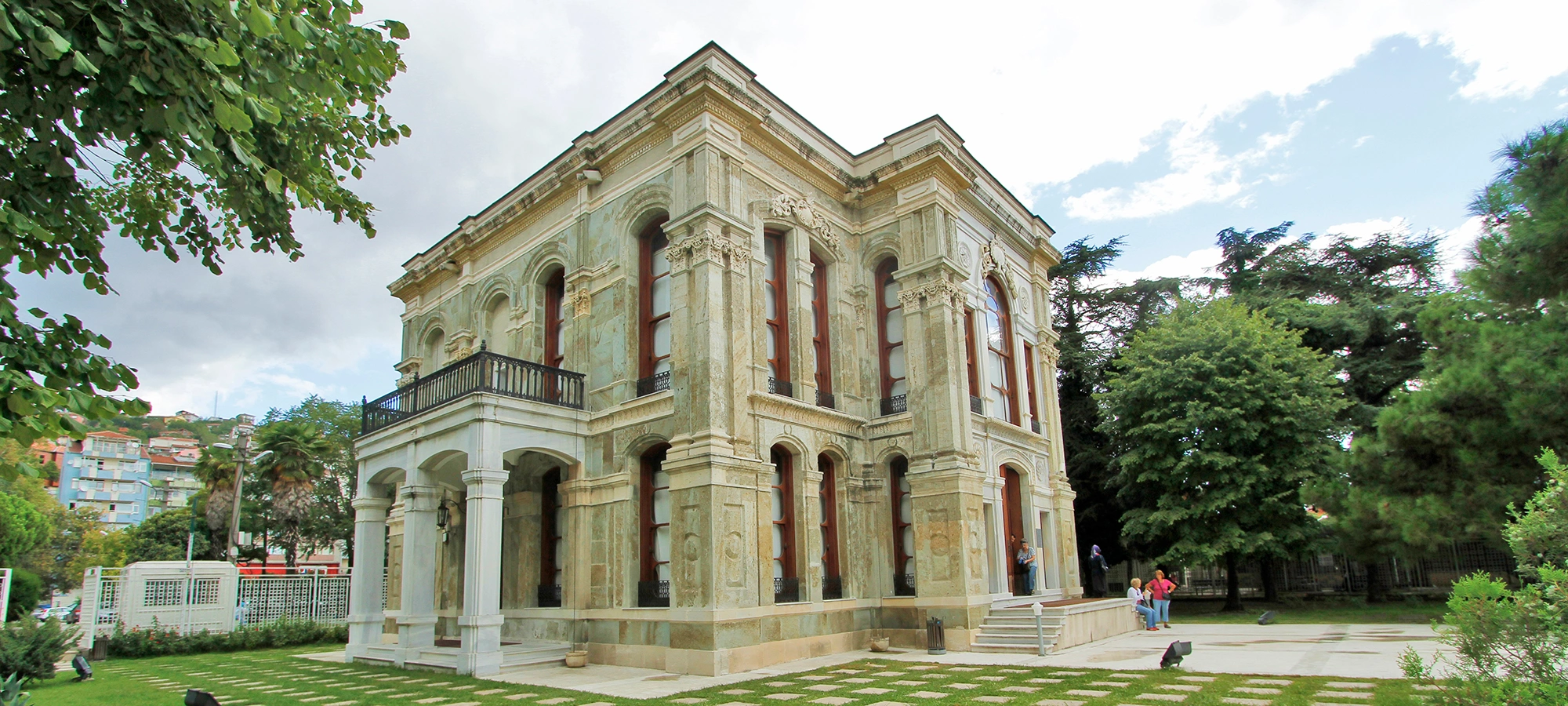
Kasr-ı Hümayun Palace Museum
Continue downhill to İzmit's elegant nineteenth-century Ottoman palace, where imperial architecture meets the political memory of the 1923 İzmit Press Conference.
Explore Kasr-ı Hümayun





High above the modern commercial centre of İzmit, the streets begin to narrow, the slopes become steeper and the city changes character. Here, in Akçakoca Mahallesi, stands Kapanca Street — one of the most important surviving areas of traditional residential architecture in Kocaeli.
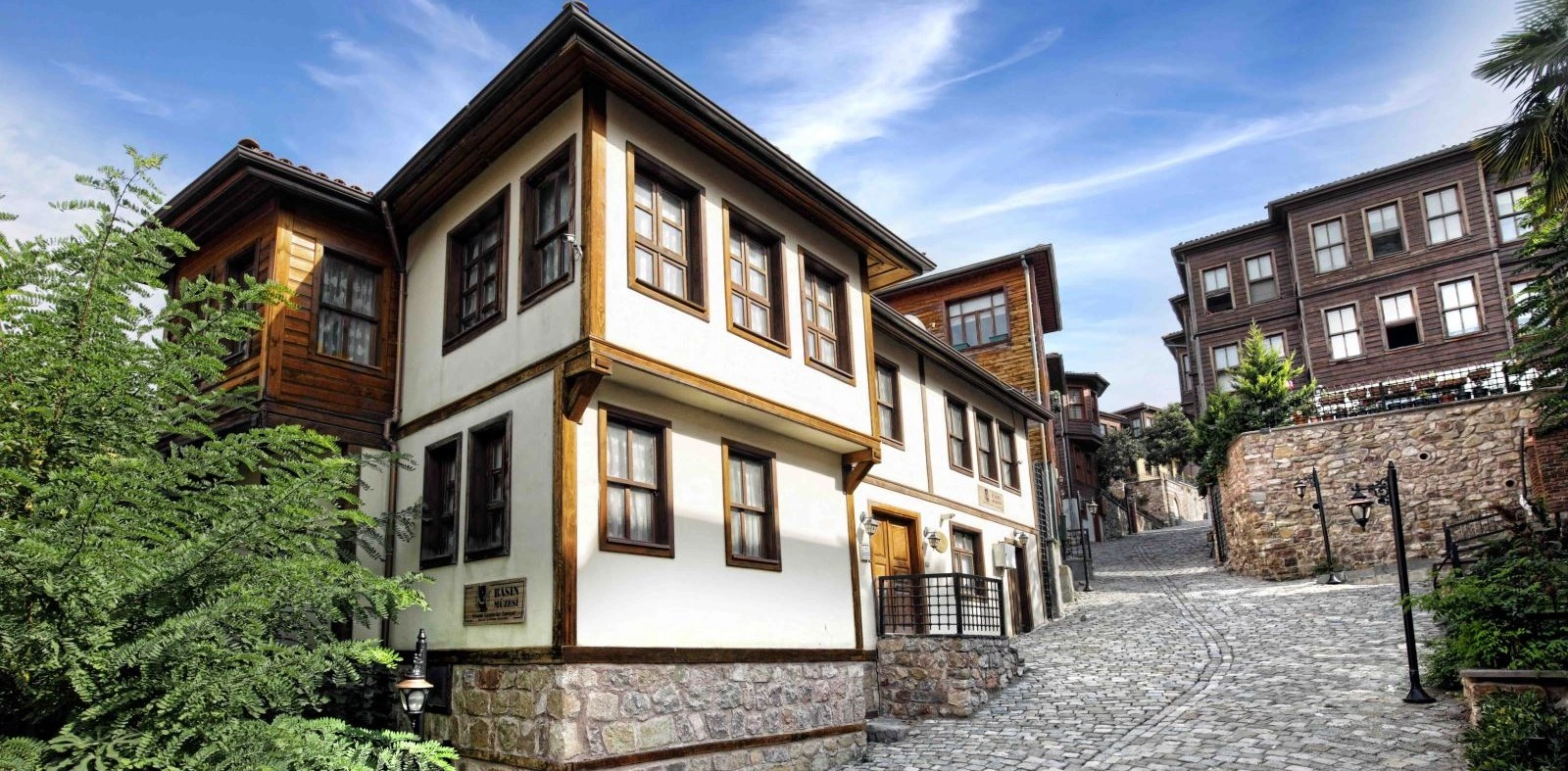
The historic street is lined with restored and preserved houses that largely reflect nineteenth-century İzmit. Timber façades, projecting upper floors, bay windows, stone lower walls, garden boundaries, red-tiled roofs and steep cobblestone paving create an urban scene that feels very different from the modern city below.
Kapanca is also one of the key sections of the wider İzmit History Corridor, a heritage route created to connect historic houses, mansions, mosques, fountains, baths, museums and the old hillside neighbourhoods above the Gulf of İzmit. The street therefore works best not as an isolated photo stop, but as part of a longer walk through the historic layers of the city.
Among its most interesting details are the Zeliha Hanım Fountain, the former church later used as a school and educational building, restored traditional houses, the Kocaeli Press Museum and views toward the Gulf from the upper neighbourhood.
Kapanca preserves one of İzmit's strongest concentrations of traditional timber residential architecture.
The narrow, steep route follows the organic hillside form of old İzmit rather than a modern planned grid.
Kapanca forms part of a wider heritage route connecting Ottoman monuments, museums and historic neighbourhoods.
Restoration has returned many houses to the city while preserving the scale and atmosphere of the old street.
Essential information for exploring one of the best-preserved sections of historic İzmit and the city's wider History Corridor.
Akçakoca Mahallesi,
İzmit / Kocaeli.
Traditional houses largely associated with the 19th century.
Approximately 150.7 metres in detailed conservation records.
Timber-framed houses,
masonry lower levels and projecting upper floors.
Steep slope,
historic paving, garden walls and narrow urban scale.
Free.
Kapanca is a public historic street.
Kapanca Street is valuable because it preserves something increasingly rare in İzmit: not merely an old building, but the scale and rhythm of an entire traditional neighbourhood street.
The first reason is urban history. Modern İzmit is a busy industrial and commercial city, but the oldest settlement developed on the slopes above the Gulf. Kapanca preserves the relationship between steep terrain, narrow streets, garden walls and closely spaced houses that once defined much more of the historic city.
The second reason is traditional residential architecture. The houses demonstrate how timber, masonry, plaster, projecting rooms, windows, balconies and tiled roofs were combined to create comfortable homes on difficult terrain.
The third reason is social history. The old neighbourhoods of İzmit were shared over time by different religious and cultural communities. Historical research records Kapanca as an area in which non-Muslim residents were prominent during the late Ottoman period, while other nearby streets contained mosques, baths, markets, fountains and administrative residences.
The fourth reason is heritage conservation. Kapanca became one of İzmit's most important experiments in protecting and reviving historic houses, with conservation work extending from early documentation campaigns to restoration, reconstruction and adaptive reuse.
Historical studies of İzmit's street names connect Kapanca with the kapancı community associated with the city's commercial life. In Ottoman towns, a kapan was a regulated wholesale and weighing centre where important foodstuffs and commodities were received, measured, priced and distributed.
Research on the old Akçakoca district records that people involved in this commercial activity lived in the area, while their work was connected with the commercial zone known as Kapanönü in the lower city. The street name therefore preserves a memory of occupation and urban economy, not simply a picturesque label.
Old route descriptions from the early twentieth century also refer to Kapancı Sokağı, showing that the name had become embedded in the geography of historic İzmit.
An Ottoman urban institution associated with wholesale trade, weighing, pricing and distribution of goods.
A person connected with the kapan and its commercial activity.
A historic commercial reference associated with the lower part of İzmit.
The name preserves the relationship between where people lived and the economic life of the city below.
To understand Kapanca, first look at the geography of İzmit. The historic city rises steeply north of the Gulf, with neighbourhoods arranged across slopes that can be surprisingly severe.
This topography shaped the street plan. Rather than broad modern avenues, older districts developed with narrow routes, sharp gradients, stone retaining walls, steps, small junctions and houses adjusted carefully to changes in elevation.
Kapanca Street links the lower historic city with Sırrı Paşa Caddesi and sits within the wider old settlement of Akçakoca Mahallesi. Detailed conservation documentation records the street at approximately 150.70 metres long and about 3,610 square metres in area.
Its relatively short length is deceptive. Because of the steep gradient, irregular property boundaries and constantly changing views, the street feels much richer than its dimensions suggest. Every few metres, the relationship between façade, garden, stone wall and Gulf view changes.
Traditional İzmit developed above the coastal plain on terrain that strongly shaped architecture and circulation.
The historic lane follows the slope rather than imposing a modern geometric plan.
Stone walls help negotiate changes in level between houses, gardens and the street.
The elevation allows unexpected views toward the Gulf of İzmit between buildings and down side streets.
The historic houses of Kapanca are important examples of late Ottoman residential architecture adapted to the conditions of İzmit. Many are two-storey houses, although the slope can make buildings appear taller when viewed from the lower side.
The lower portions commonly use masonry construction, providing a durable base against the street and terrain. Upper floors rely more heavily on timber framing, with plastered or timber-clad surfaces.
One of the most characteristic features is the use of projecting upper rooms and bay windows. These projections increase interior space, open views along the street and create the irregular façade rhythm that gives Kapanca its distinctive appearance.
Windows are arranged to bring light into relatively narrow houses, while broad eaves and tiled roofs protect timber walls from rain. Gardens, small courtyards, boundary walls and entrance steps add another layer to the domestic character.
Wood allows lighter construction and flexible planning above the masonry base.
Stone and masonry create a strong lower structure suited to the steep hillside.
Projecting rooms create extra space while animating the narrow street façade.
Generous openings bring daylight into houses closely arranged along the lane.
Pitched roofs and wide eaves are important parts of the traditional silhouette.
Residential privacy is balanced with balconies, windows and views toward the street and Gulf.
Kapanca becomes much more rewarding when you stop looking at the houses only as attractive wooden buildings and begin reading them as carefully designed homes.
Look first at the ground level. On many houses, the lower floor is visually heavier and more closed than the upper storey. This helped create privacy at street level and gave the structure a stable base.
Then look upward. The upper floors open toward the outside world through rows of windows, projecting bays, wooden cladding and broad roof eaves. On a steep street, these upper rooms could also take advantage of light, air and distant views.
Finally, notice how no house is completely independent from the street. Doors, steps, garden walls, corners and projecting rooms react to neighbouring buildings. The result is a continuous urban composition rather than a row of isolated monuments.
Small changes in level reveal how each house adapts to the hillside.
Timber surfaces give many restored façades their warm colour and strong horizontal rhythm.
Look for windows that take advantage of bends and open views along the street.
Deep eaves protect façades while creating strong shadow lines above the upper floor.
Masonry garden and retaining walls are as important to the historic character as the houses themselves.
A building may present one apparent scale uphill and a different scale when viewed from below.
Historic İzmit was a multi-layered port and administrative city where Muslim, Greek Orthodox, Armenian and other communities lived within neighbouring districts and participated in the city's commercial life.
Research on Kapanca and Akçakoca Mahallesi records a strong non-Muslim residential presence in parts of the district during the late Ottoman period. Other historical documentation identifies Kapanca within an Armenian neighbourhood context in 1914, illustrating how administrative boundaries and community patterns changed over time.
The former church at the southern side of the street is one of the clearest surviving reminders of this layered social history. Nearby mosques, fountains, baths and mansions reveal how different institutions existed within a relatively small urban area.
One of the oldest surviving details associated directly with Kapanca is the Zeliha Hanım Fountain, also known simply as the Kapanca Street Fountain.
The wall fountain stands against the garden boundary of a historic property. Its marble inscription records a renewal associated with Zeliha Hanım, the wife of İnce El-Hac Muhammed Ağa, and gives the date H. 1198 / A.D. 1783.
The fountain is built with stone, brick and marble. Its pointed arch frames a marble panel decorated with cypress motifs, a familiar image in Ottoman decorative art. The original spout has not survived, while the basin visible today includes later intervention.
The fountain was formally registered for protection in 1979. For visitors, it is easy to pass without noticing, but it is especially valuable because it predates most of the surviving nineteenth-century houses around it.
The date recorded by the fountain's inscription.
The structure is integrated into the boundary wall of a historic property.
Decorative cypress forms are carved into the marble composition.
The fountain was registered as a cultural property in 1979.
At the southern side of the Kapanca area stands a historic building commonly identified in cultural inventories as İstiklal İlkokulu / Eski Kilise — İstiklal Primary School / Old Church.
The official cultural inventory dates the building to 1906 and records its original function as a church. It was later adapted for educational use, suffered a fire in 1960 and was subsequently rebuilt or repaired.
Architectural documentation notes a formal façade with a rounded central entrance, arched ground-floor windows, rectangular upper windows and evidence of an original apse that was later altered. The building has itself been registered as a protected monument.
Its exact institutional use has changed over time, so travellers should treat it primarily as an exterior heritage stop unless the building is clearly open for a public function on the day of the visit.
Kapanca's appearance today is the result of several decades of conservation work. The street did not survive untouched; many buildings required documentation, repair, reconstruction or new uses to prevent further loss.
Early protection efforts developed through the İzmit Evlerini Koruma ve Yaşatma Projesi — İZEYAP, a project created to document and revive İzmit's traditional houses. In the 1990s, architectural surveys, restoration proposals and urban-design work were prepared for Kapanca and its surroundings.
The Sırrı Paşa Agreement of 1994, supported by public institutions and civil organisations, became an important milestone in local heritage awareness. Repairs during the mid-1990s concentrated on roofs, timber cladding and façades of registered houses.
From 2009, municipal acquisition and more extensive restoration projects accelerated. Later campaigns included survey, restitution, restoration and, where necessary, reconstruction of historic structures. By the late 2010s, much of the street had been physically renewed and returned to the urban landscape.
Measured drawings and research were used to understand the historic buildings before intervention.
The İzmit Houses Conservation and Revitalisation Project helped make Kapanca a focus of heritage protection.
Roofs, timber façades and vulnerable building elements were repaired in early campaigns.
Later work combined acquisition, restoration, reconstruction and adaptive reuse.
Conservation addressed the street as a whole, not only individual buildings.
Some restored houses have served cultural, museum, hospitality or institutional functions.
The term İzmit History Corridor refers to a wider heritage route through the old hillside city, linking a concentration of civil, religious and administrative monuments rather than a single enclosed attraction.
The route can include places such as Kapanca Street, Sırrı Paşa Mansion, the old baths and fountains around Akçakoca, historic mosques, the former Redif building, Kasr-ı Hümayun, the İzmit Clock Tower and the old railway and museum zone below.
This is the best way to understand Kapanca. The houses represent the domestic side of the city, while nearby monuments reveal government, religion, trade, water supply, public bathing, education and later museum culture.
One of the best-known cultural uses created inside a restored Kapanca building is the Kocaeli Press Museum. Official tourism information describes the museum as presenting historic newspaper clippings, printing and press equipment and material connected with the development of journalism in Kocaeli.
The museum adds an important layer to the street: instead of restoring a house only as an architectural shell, the building is used to tell part of the city's modern social and professional history.
Because local museum schedules, institutional use and access arrangements can change, check current opening information before planning your visit specifically around the interior. Even when closed, the surrounding historic streetscape remains worth exploring.
Historic press material helps document the public life of İzmit and Kocaeli.
Technical objects explain how newspapers were produced before digital publishing.
The museum demonstrates how a traditional building can receive a new cultural function.
Verify current museum opening arrangements separately from the public street.
Municipal tourism material has also promoted an İzmit Historic Bazaar beside the Press Museum, using restored buildings for small-scale craft, food, coffee and souvenir activities.
The exact mix of businesses can change, but the idea behind the project is important: historic streets survive best when buildings continue to have useful functions rather than becoming empty façades.
For travellers, Kapanca should therefore be approached as a living heritage district. Some houses are cultural venues, some have had hospitality or commercial uses, and others remain quieter pieces of the preserved streetscape.
Projecting upper rooms create the strongest rhythm along the narrow street.
Look at the horizontal wood cladding and repaired traditional structural elements.
The heavier lower levels show how the houses adapt to slope and street contact.
The historic paving strengthens the sense of continuity between buildings and public space.
Find the eighteenth-century wall fountain and its inscribed marble panel.
The former church and school building preserves another layer of the neighbourhood's social history.
Stone walls, entrances and changes in level are essential components of the traditional streetscape.
Turn around frequently; downhill views between houses can reveal the Gulf of İzmit.
Kapanca is particularly photogenic because the steep slope creates natural depth. Instead of photographing only one façade, try to include two or three houses, the cobbled street, stone walls and the changing elevation in the same composition.
Looking downhill can frame distant views of the Gulf, while looking uphill emphasizes wooden façades, projecting bays and the narrowness of the historic lane. Early morning and late afternoon normally create softer light and stronger texture on timber surfaces.
The street is residential and institutional as well as historic, so photograph respectfully. Avoid blocking doorways, climbing private steps or aiming cameras directly into occupied interiors.
Use the slope to combine historic houses with glimpses of the Gulf and modern city below.
The rising lane creates strong perspective lines between timber façades.
A slightly wider lens is useful because the street is narrow and façades are close.
Doors, shutters, eaves and window frames reward closer architectural photography.
Wet stone can be atmospheric, but the steep paving also becomes more slippery.
Remember that a beautiful historic façade may still belong to an occupied or working building.
Kapanca can work well for families because the historic street itself is relatively short and there are many visible details to turn into a simple discovery walk: wooden houses, bay windows, old stones, a fountain, a former church and views toward the sea.
The main challenge is the steep gradient. Young children may tire quickly on the climb, and wet or uneven paving requires attention. A stroller can be inconvenient on the steepest historic sections.
A useful family approach is to walk only the central Kapanca section, then continue downhill toward İzmit Clock Tower and Kasr-ı Hümayun, where the itinerary becomes more varied.
The core heritage lane can be explored without committing to a long museum visit.
Plan breaks if visiting with small children or in hot weather.
Architecture is easy to explain through windows, timber, roofs and old street surfaces.
Add the palace and Clock Tower to create a more varied family route.
Kapanca Street is an authentic historic hillside environment and therefore presents more accessibility challenges than a modern pedestrian route. The principal issue is the steep slope, combined with sections of uneven or historic-style paving.
Wheelchair users, travellers with limited mobility and visitors using walking aids may find a full uphill route difficult. Where possible, arriving by vehicle or taxi at a higher access point and exploring a shorter section can reduce the climb, although narrow streets may limit exactly where vehicles can stop.
Access inside individual historic buildings is separate from street access and can vary according to the building, its restoration and current use. If a particular museum or cultural venue is essential, contact the institution in advance.
The hill is the main physical challenge for visitors with reduced mobility.
Historic-style stone surfaces can be uncomfortable for wheelchairs and walking aids.
Consider exploring only the most photogenic central section rather than completing the full climb.
Historic interiors may have steps or other limitations even when the street itself is reachable.
The combination of slope and stone paving makes supportive footwear worthwhile.
The climb can feel much harder in summer than the short distance suggests.
Daylight is best for reading architectural details and navigating uneven historic paving.
The street is short, but photography and side streets can easily extend the visit.
The public street has no gate, but individual museums and cultural buildings keep their own schedules.
Do not enter gardens, stairs or houses unless the building is clearly open to visitors.
In summer, morning or late afternoon is far more comfortable on the steep hill.
Kapanca is much more meaningful when linked with nearby monuments of the History Corridor.
Kapanca Street is a public historic street rather than a gated archaeological site or museum. There is therefore no general entrance fee and no single ticket office for the street.
The outdoor streetscape can be seen throughout the day, but visiting in daylight is strongly recommended for photography, architectural details and safer walking on the steep paving.
Museums, cultural buildings, shops and other restored interiors along or near the street can operate on independent schedules. Opening days and functions may change, so verify access separately if one particular interior is important to your visit.
Free.
No entrance gate; best visited during daylight.
Kapanca Sokak,
Akçakoca Mahallesi, İzmit / Kocaeli.
Steep hill with sections of stone or historic-style paving.
Morning or late afternoon for cooler temperatures and softer photography light.
Check each museum or cultural building separately.
Official tourism information places Kapanca approximately 500 metres from central İzmit. The distance is short, but the climb is significant because the historic neighbourhood rises quickly above the lower city.
One attractive approach is to begin around İzmit Clock Tower and Kasr-ı Hümayun, then continue upward through the historic streets toward Kapanca. This creates a natural transition from monumental Ottoman architecture to residential neighbourhood history.
Travellers arriving by train can begin from the central station and museum area, while taxis can reduce the uphill walking distance. Drivers should avoid attempting to force a large vehicle deep into narrow historic streets.
Walk from central İzmit toward Culture Hill and continue uphill into Akçakoca Mahallesi.
Continue uphill beyond the palace area toward the historic residential quarter.
Ask for “Kapanca Sokak, Akçakoca Mahallesi.”
İzmit station provides a convenient starting point for a longer central-city heritage walk.
Parking immediately beside the most atmospheric section of Kapanca can be difficult. The surrounding streets are narrow, steep and residential, with limited space for stopping or turning.
For most visitors, it is easier to use legal public parking in the wider central İzmit area and approach Kapanca on foot, or take a taxi closer to the upper neighbourhood and walk the final section.
Large vehicles should remain on more suitable main roads. Do not block historic lanes, private entrances or emergency access in the old neighbourhood.
Do not expect a large dedicated Kapanca Street car park.
Central parking can be easier than navigating the narrow upper streets.
A taxi can reduce the climb without requiring you to park in the historic core.
Keep entrances, bends and narrow passages clear for residents and local traffic.
Begin near the lower historic centre at Kocaeli Archaeology Museum to understand ancient Nicomedia before climbing into the Ottoman city.
Continue toward İzmit Clock Tower and Kasr-ı Hümayun. The Clock Tower introduces late Ottoman urban architecture, while the palace adds imperial history and the memory of the 1923 İzmit Press Conference.
From Culture Hill, continue upward into Akçakoca Mahallesi and walk through Kapanca Street. Move slowly enough to notice timber façades, the Zeliha Hanım Fountain, the former church, restored houses and changing views toward the Gulf.
If your energy allows, continue farther into the History Corridor toward the Sırrı Paşa Mansion area, old neighbourhood mosques, historic baths and the upper streets of old İzmit.
Finish by returning downhill toward the waterfront and SEKA Paper Museum, where the story shifts dramatically from Ottoman neighbourhood life to the industrial history of modern Kocaeli.
Kocaeli Archaeology Museum – ancient Nicomedia and the Roman city.
İzmit Clock Tower – one of the city's best-known late Ottoman monuments.
Kasr-ı Hümayun – Ottoman palace architecture and the 1923 press conference.
Kapanca Street – traditional houses, cobbled lanes and neighbourhood heritage.
Upper History Corridor – mansions, mosques, baths and old hillside streets.
SEKA Paper Museum – modern industrial heritage on the waterfront.
Enough for a simple walk through the main street with a few photographs.
Best for visitors who want to study the houses, fountain and architectural details properly.
Ideal if you explore side streets, photograph carefully and visit an open cultural interior.
Combine Kapanca with the Clock Tower, Kasr-ı Hümayun and the upper History Corridor.
Add the Archaeology Museum, SEKA Paper Museum, waterfront and a relaxed city-centre meal.
Do not rush the slope; frequent stops make both the history and the climb more enjoyable.
Kapanca sits inside one of the richest historic areas of İzmit, making it easy to connect traditional houses with museums, Ottoman monuments and the waterfront.
Use our complete Kocaeli travel guide to continue across the wider province.
A nineteenth-century Ottoman palace linked with Sultan Abdülaziz and Mustafa Kemal's 1923 İzmit Press Conference.
One of the city's most recognizable late Ottoman landmarks, close to Culture Hill.
Discover sculpture, inscriptions and archaeological material from ancient Nicomedia and the wider region.
A major historic mansion in the upper old-city landscape and an important stop within the History Corridor.
Continue through Akçakoca to understand the religious and public architecture of the historic neighbourhood.
Explore Kocaeli's modern industrial heritage inside the preserved paper-factory complex.
Finish the climb with a relaxed walk at sea level along the waterfront.
Continue west along the Gulf to explore Ottoman imperial carpet-making heritage.
Kapanca Street is in Akçakoca Mahallesi, central İzmit, Kocaeli, on the historic hillside above the modern city centre.
It is famous for its traditional nineteenth-century houses, timber façades, bay windows, steep cobbled lane and role within the İzmit History Corridor.
Most of the surviving traditional houses are associated with the nineteenth century, particularly its later decades, although the street contains older elements such as the 1783 Zeliha Hanım Fountain.
Official tourism material commonly cites 18 protected houses in the Kapanca area. Detailed conservation inventories can give different totals depending on survey date, parcel boundaries and whether registered or unregistered buildings are being counted.
Detailed conservation documentation records the historic street at approximately 150.70 metres.
Yes. Kapanca is a public street and there is no general admission fee. Individual museums or cultural interiors may have separate access arrangements.
The outdoor street does not have a single entrance gate or general opening schedule. For the best experience and safer walking, visit during daylight. Check individual buildings separately.
Historical research links the name with kapancılar, people connected with İzmit's old commercial and wholesale weighing activity known as the kapan.
The houses reflect traditional late Ottoman residential architecture, with masonry lower levels, timber-framed upper floors, bay windows, projecting rooms, tiled roofs and garden walls.
It is a wider heritage route through old İzmit connecting historic houses, mansions, mosques, baths, fountains, museums, Kasr-ı Hümayun, the Clock Tower and other monuments.
It is a protected historic wall fountain on Kapanca Street. Its inscription records a renewal in 1783, making it older than most of the surviving houses.
Yes. Cultural inventories record a building known as İstiklal İlkokulu / Eski Kilise, originally constructed as a church in 1906 and later adapted for educational use.
The Kocaeli Press Museum has operated in a restored building on the street, presenting newspaper history and press equipment. Check current opening arrangements before visiting specifically for the interior.
The distance is not long, but the street is steep and includes uneven or historic-style stone paving. Comfortable shoes are strongly recommended.
The steep gradient and uneven historic paving can make a full route difficult for wheelchair users and visitors with limited mobility. A shorter approach from a higher access point may be more practical.
Allow around 45–60 minutes for a relaxed architectural walk. A wider History Corridor route can easily fill half a day.
Morning or late afternoon is ideal, especially in warmer months. The softer light is also better for photographing timber façades and downhill views.
It is better not to rely on driving into the narrow historic core. Park in a suitable central area or use a taxi and complete the final section on foot.
The best nearby combination is Kasr-ı Hümayun, İzmit Clock Tower, Kocaeli Archaeology Museum and, with more time, the upper History Corridor and SEKA Paper Museum.
Yes. It is one of the best places in central İzmit for understanding traditional residential architecture and the atmosphere of the historic hillside city.
Kapanca Street is not a monumental site in the conventional sense. There is no giant gate, vast ruin or single masterpiece waiting at the end of the road. Its value comes from the opposite: human scale.
The pleasure is in walking slowly between timber houses, watching the street rise and fall, noticing the weight of stone walls below delicate upper floors, finding an eighteenth-century fountain and seeing the Gulf appear unexpectedly between roofs.
Kapanca also changes the way visitors understand İzmit. The city is famous today for industry, transport and its position on the Gulf, but this street reveals an older city of neighbourhoods, crafts, domestic architecture and communities living on steep hills above the waterfront.
Kapanca Street reveals the domestic architecture of old İzmit, while nearby palaces, museums and monuments open the door to the city's Ottoman, Roman and industrial history.
Combine Kapanca with the historic monuments and museums of central İzmit.
Continue downhill to İzmit's elegant nineteenth-century Ottoman palace, where imperial architecture meets the political memory of the 1923 İzmit Press Conference.
Explore Kasr-ı Hümayun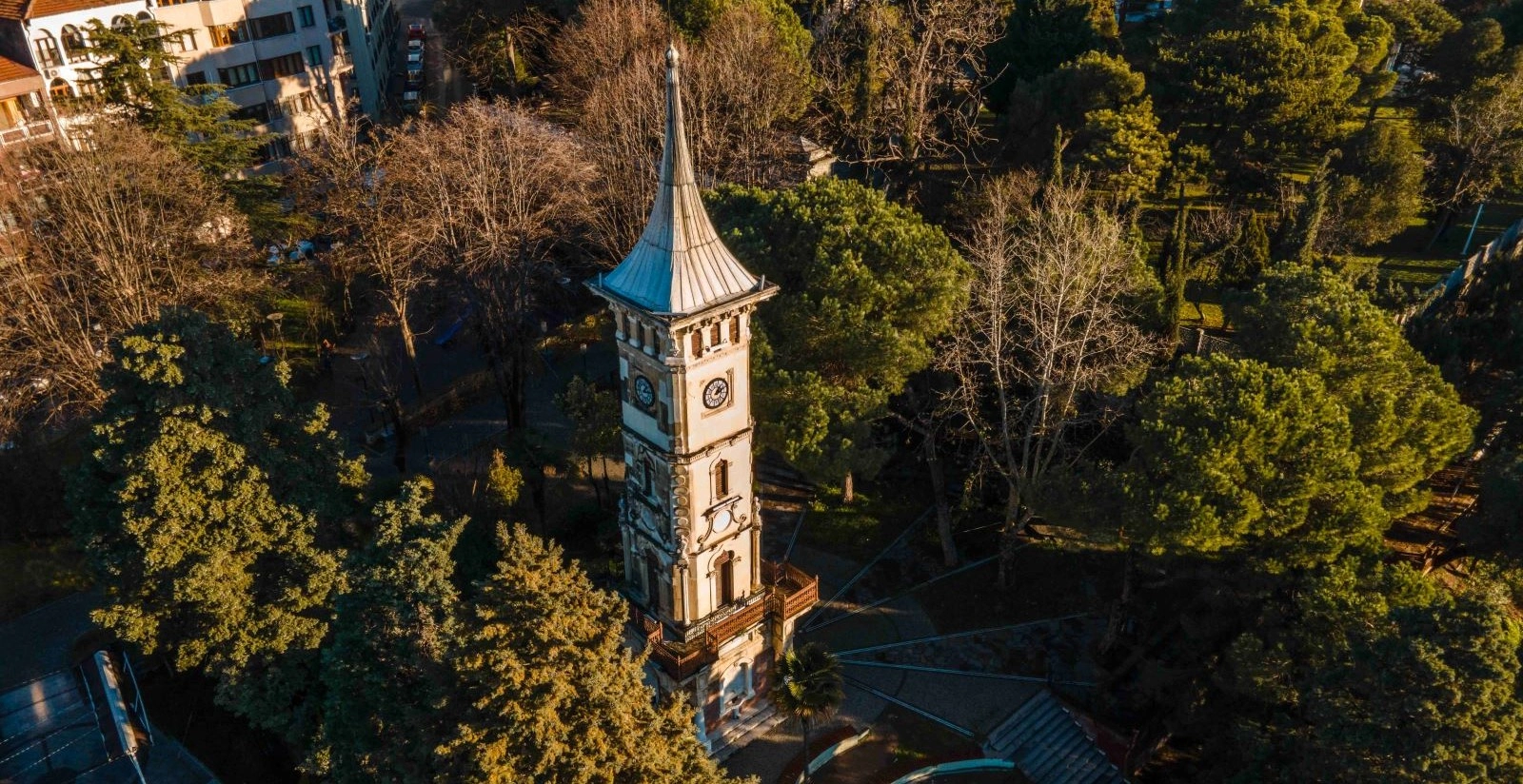
Visit one of İzmit's most recognizable late Ottoman landmarks and enjoy the Culture Hill setting overlooking the lower city and Gulf.
Explore the Clock Tower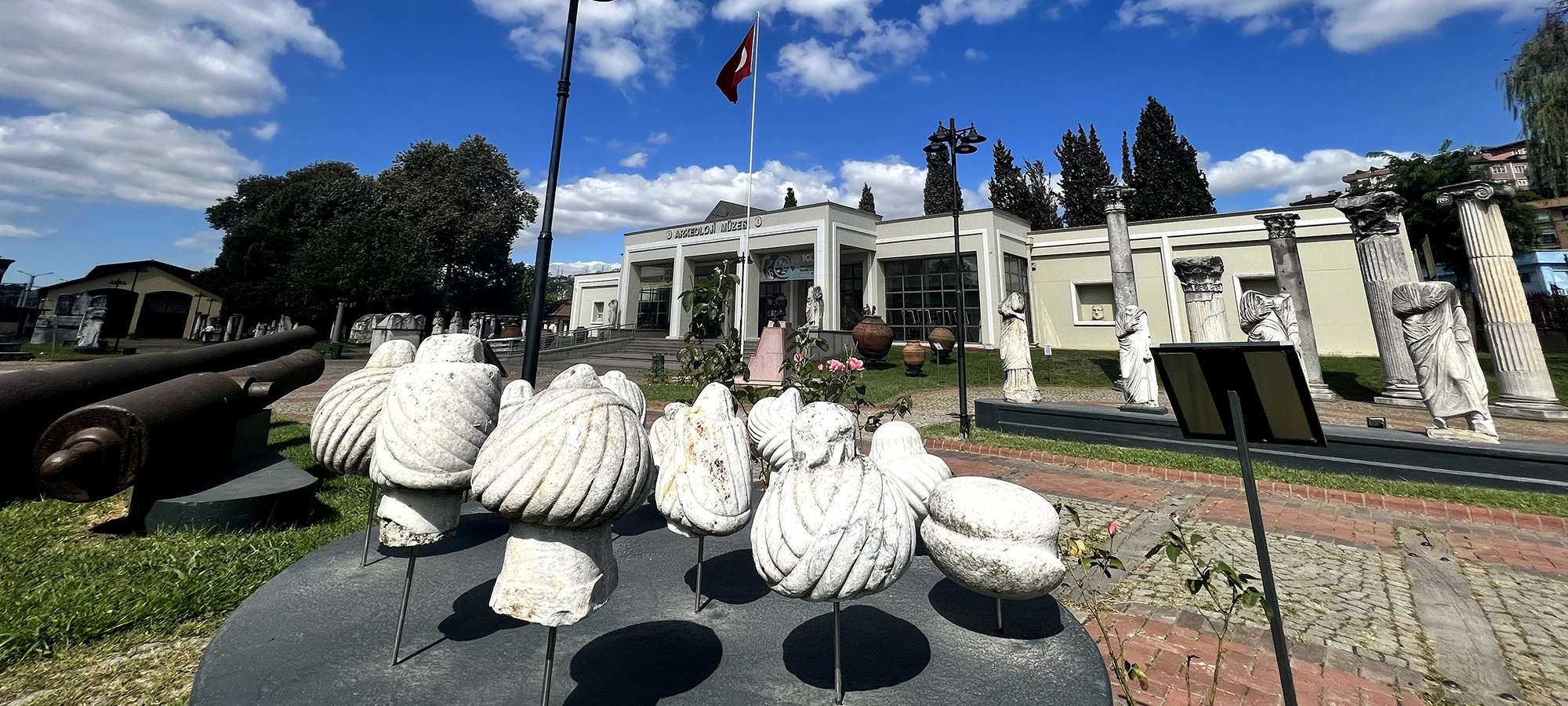
Travel much farther back in time and discover ancient Nicomedia through sculpture, inscriptions, coins and regional archaeology.
Explore NicomediaContinue from old İzmit to industrial heritage, imperial craftsmanship and the wider province.
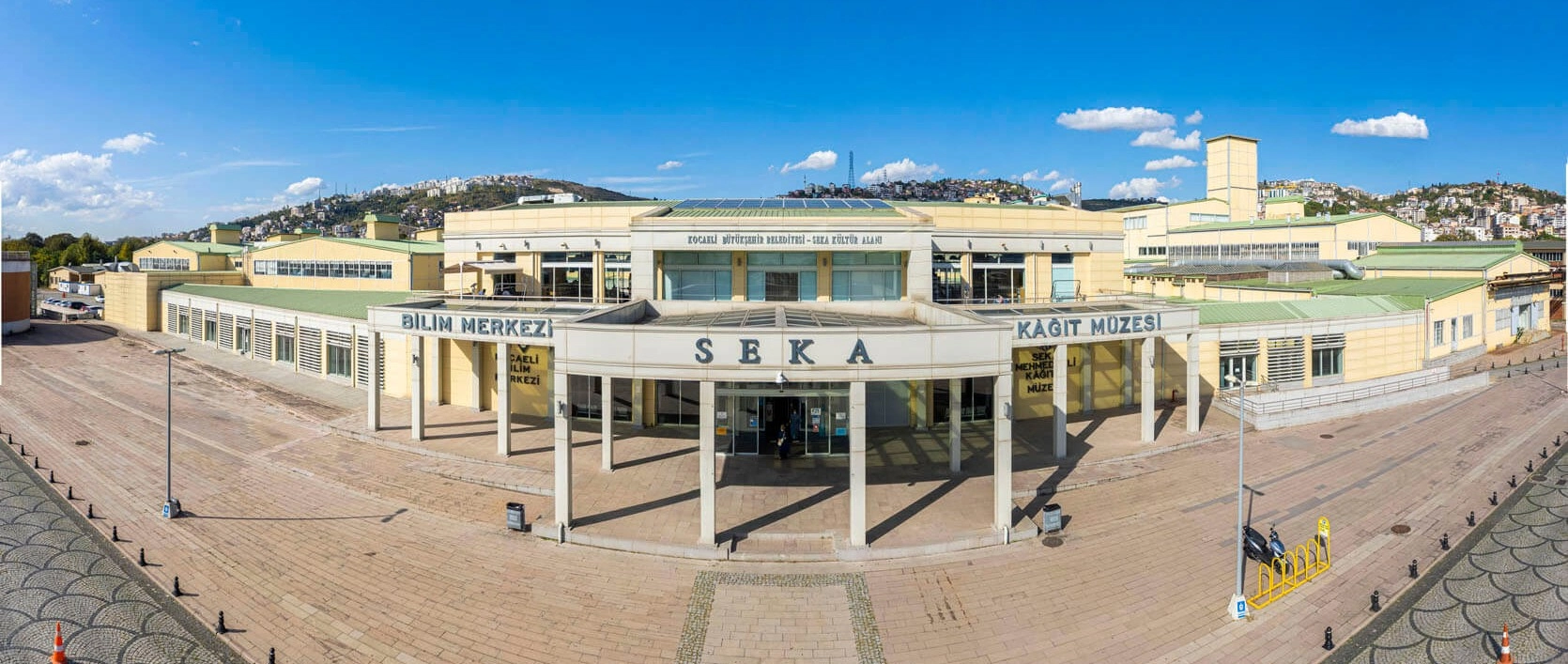
Move from traditional neighbourhood history to modern industry inside Türkiye's remarkable preserved paper-factory complex on the İzmit waterfront.
Explore SEKA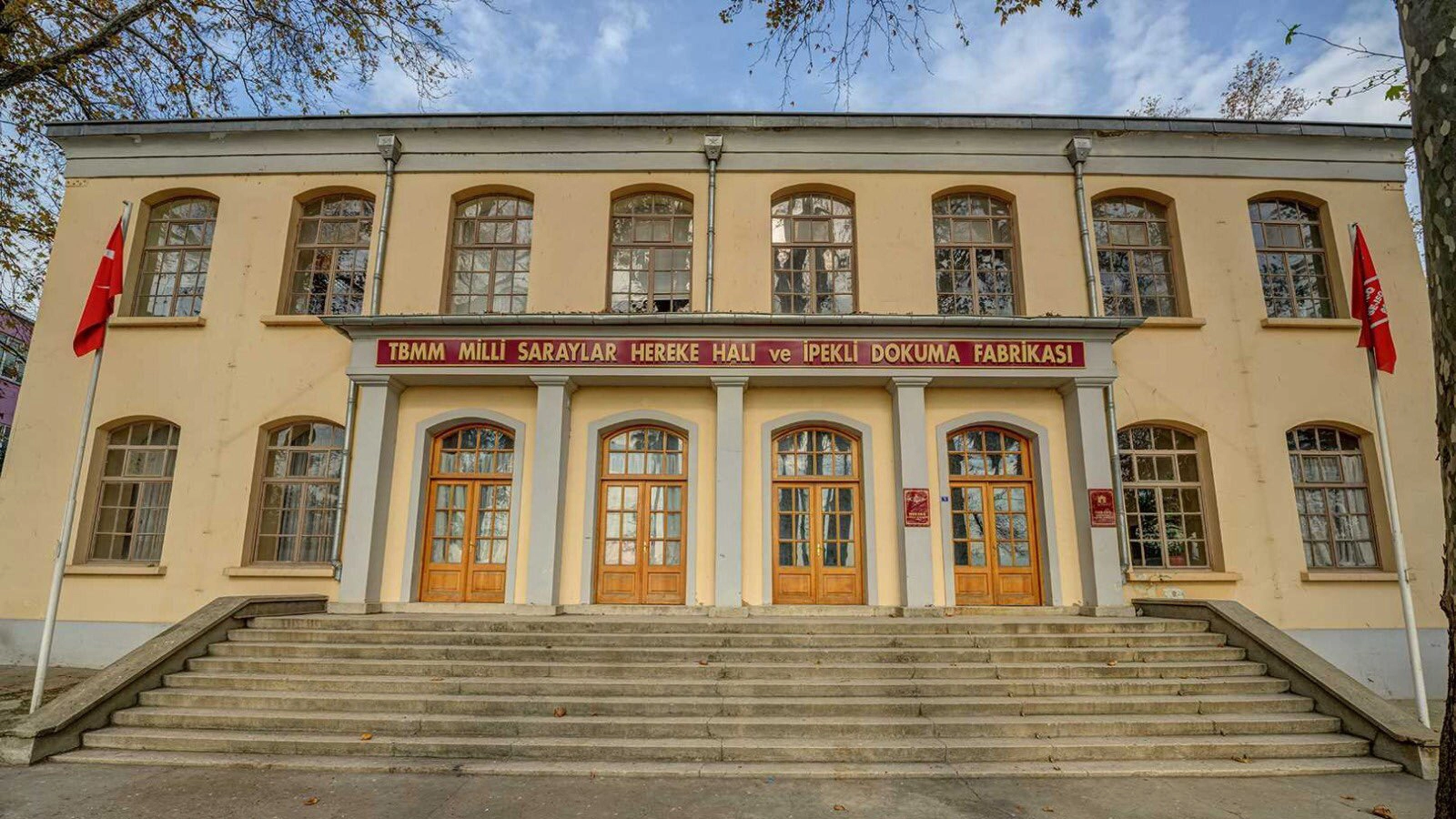
Continue the Ottoman story with the imperial carpets of Hereke, where court craftsmanship became famous throughout the world.
Explore Hereke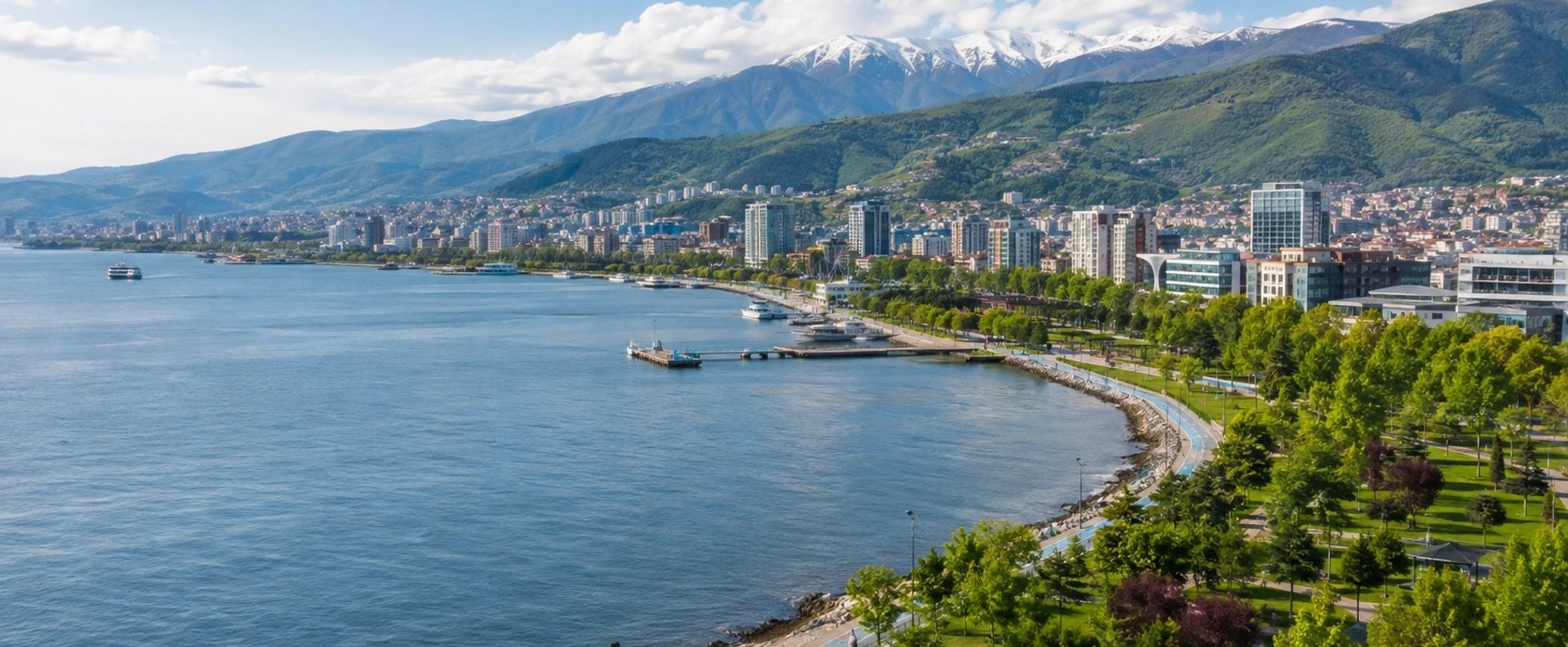
Discover İzmit, Hereke, Gebze, Kartepe, Kandıra, Ottoman monuments, ancient heritage, forests, coasts and regional cuisine.
Explore KocaeliWe can connect Istanbul, Kocaeli, Cappadocia and destinations throughout Türkiye in a private cultural itinerary.
Build a private day around Kapanca Street, Kasr-ı Hümayun, the Clock Tower, ancient Nicomedia, SEKA and the historic hillside city.
Plan Your Journey
Connect historic streets, Ottoman palaces, Roman archaeology, industrial museums, imperial craftsmanship and the landscapes around the Gulf of İzmit.
Discover Kocaeli
Continue throughout Türkiye with historic towns, Ottoman architecture, ancient cities, museums, coasts, mountains and regional culture.
Explore Türkiye