Wooden Spoon Making
Handmade spoons are among the best-known traditional craft products associated with Taraklı.
- Local tradition: Centuries old
- Classic material: Boxwood
- Also used: Beech






Taraklı Wooden Crafts represent one of the most distinctive cultural traditions of this historic district in southern Sakarya Province. For centuries, local craftspeople have transformed wood into practical objects such as spoons, ladles and combs, while the same sensitivity to timber can also be seen in Taraklı’s traditional houses, doors, ceilings, cupboards and decorative architectural details.
The connection between Taraklı and woodworking is so deep that the district’s name is traditionally associated with wooden comb making. Historical accounts describe Taraklı as a place where large numbers of craftspeople produced spoons and combs, taking advantage of the wooded landscape and the availability of durable timber.
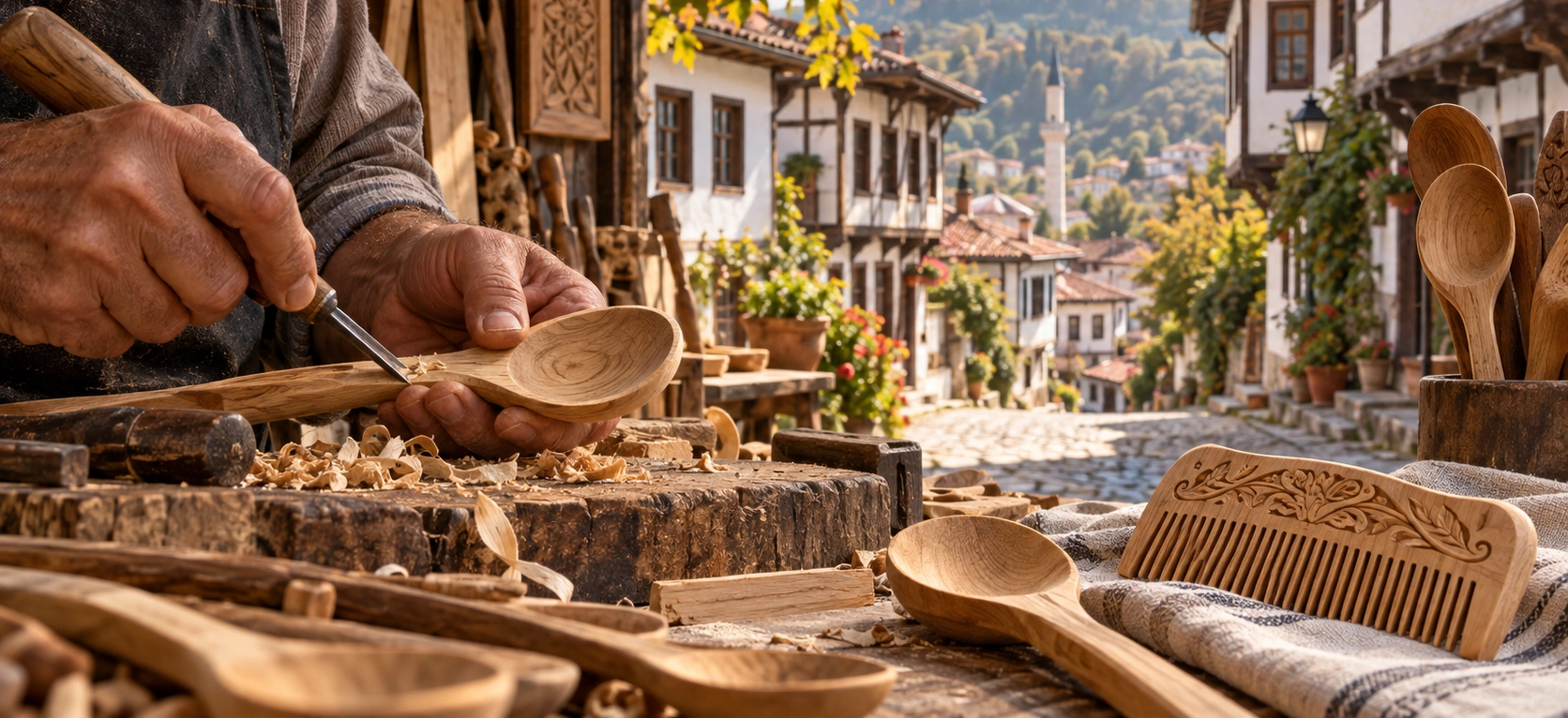
Among the best-known living traditions is wooden spoon making. Craftsmen historically worked in small workshops sometimes known locally as “Kaşık Evi” — Spoon Houses. Boxwood was especially valued, while beech and other suitable woods have also been used. The work requires cutting, shaping, hollowing, smoothing and finishing each piece through a sequence of practiced hand movements.
This complete guide explores the history of Taraklı woodworking, comb making, spoon carving, traditional materials, hand tools, production stages, architectural woodwork, model Taraklı houses, master-apprentice knowledge, buying tips, visitor etiquette, photography opportunities, nearby attractions and the best ways to experience this living craft heritage.
Wooden spoon and comb making have deep roots in Taraklı and are closely connected with the district’s historical identity.
Boxwood has long been prized for combs and spoons, while beech is also widely used for practical wooden kitchenware.
Traditional production relies on cutting, carving, hollowing, refining and sanding rather than simply pressing objects from industrial moulds.
Although the number of traditional craftspeople has declined, skilled artisans continue to keep Taraklı’s woodworking heritage alive.
Essential information about one of Sakarya’s most characteristic traditional craft traditions.
Taraklı district in southern Sakarya Province, Türkiye.
Open Taraklı on Google MapsTraditional wooden spoon making, together with ladles and other practical kitchen utensils.
Taraklı’s name is traditionally linked with the production of wooden combs, especially from boxwood.
Boxwood, beech, walnut, pear and hornbeam have all been associated with local woodworking traditions.
Taraklı’s woodworking story is not a modern souvenir industry. It is woven into the town’s historical economy, architecture and name.
Taraklı lies among forested landscapes in the southern part of Sakarya Province, on an old route connecting western and central Anatolia. For generations, timber from the surrounding region provided material for buildings, household objects and everyday tools.
One of the most important historical references to Taraklı comes from the Ottoman traveller Evliya Çelebi. His account describes a busy town of shops where people were engaged in producing spoons and combs. The association between the settlement and comb making became so strong that local tradition connects the name Taraklı with the Turkish word tarak, meaning comb.
Wooden objects were not simply decorative. Spoons, ladles, combs, storage pieces and other household items were part of daily life. A craftsperson’s skill therefore had practical importance: an object had to be comfortable in the hand, durable, smoothly finished and suitable for repeated use.
Over time, mass-produced metal, plastic and machine-made goods reduced demand for many traditional wooden objects. Yet Taraklı remained strongly associated with woodcraft, particularly spoon carving and comb making.
Today, this craft heritage survives through a smaller number of experienced artisans, cultural demonstrations, local workshops, exhibitions and the continued sale of handmade or locally produced wooden objects.
For visitors, Taraklı’s wooden crafts provide a direct connection between the district’s forests, historic houses, everyday domestic culture and living craftsmanship.
Taraklı woodworking includes both practical household crafts and the architectural skills visible throughout the historic town.
Handmade spoons are among the best-known traditional craft products associated with Taraklı.
Comb carving is central to Taraklı’s cultural identity and is traditionally linked to the district’s name.
Craftspeople have produced ladles, stirring spoons and other wooden utensils for everyday cooking and serving.
Woodworking traditions in and around Taraklı also include handcrafted walking sticks and canes.
Traditional workshops have also produced useful and decorative household objects beyond spoons and combs.
Miniature models of Taraklı’s Ottoman-era houses turn the town’s architecture into a distinctive local souvenir.
Wooden ceilings, cupboards, doors, projections and structural elements demonstrate Taraklı’s broader mastery of timber.
Some wooden objects are enhanced through carved details, patterns or carefully shaped handles and surfaces.
One of the most memorable parts of Taraklı’s cultural story is the traditional explanation of the district’s name. The Turkish word tarak means comb, and local historical sources connect Taraklı with the long-standing production of wooden combs.
Historical descriptions portray Taraklı as a settlement where comb and spoon production formed an important part of local working life.
Boxwood was particularly suitable for durable small objects because it is dense, hard and capable of taking a smooth finish.
A wooden comb was once an everyday personal object, not merely a decorative souvenir.
Traditional accounts indicate that locally produced wooden goods were traded beyond the district, extending the reputation of Taraklı craftsmen.
The relationship between the town’s name and its craft is an unusual example of a local industry becoming part of place identity.
Comb making remains one of the craft traditions highlighted when Taraklı’s cultural heritage is presented to visitors.
Among Taraklı’s traditional crafts, wooden spoon making is especially important. The craft has been practiced for generations and historically developed in villages and neighbourhoods around the district as well as in the town itself.
Traditional spoons are shaped by hand through repeated cutting, hollowing, trimming and smoothing.
Boxwood has long been considered especially valuable because of its hardness, fine grain and durability.
Beech is also widely associated with spoon making and is more readily available for practical everyday products.
Craftspeople can make eating spoons, stirring spoons, ladles and smaller utensils for different kitchen uses.
Traditional production took place in modest workshops where skill was built through repetition and close observation.
A skilled spoon maker learns to judge the grain, thickness, curve and balance of each piece while working.
Traditional accounts of Taraklı describe small working spaces known as Kaşık Evi, literally “Spoon House”. These workshops were places where wood was transformed into spoons, ladles and related household objects using practiced manual techniques.
The character of a wooden object begins with the material itself. Different species vary in hardness, grain, colour, availability and resistance to repeated use.
Dense, hard and fine-grained, boxwood has traditionally been highly prized for spoons and especially wooden combs.
Beech is commonly associated with spoon making and works well for durable kitchen utensils.
Walnut offers a darker colour and attractive grain and may be used for decorative or functional carved pieces.
Pear wood has historically been mentioned among the materials used for wooden combs and small carved objects.
Hornbeam is a hard wood traditionally associated with comb making and other objects requiring strength.
Some contemporary makers also work with olive wood, appreciated for its distinctive grain and decorative appearance.
Exact methods vary from craftsperson to craftsperson, but traditional spoon making follows a logical sequence that turns a simple piece of wood into a balanced utensil.
Wooden comb making, or tarakçılık, is one of the defining craft traditions of Taraklı. The work demands a different kind of precision from spoon carving because a comb must contain many narrow, evenly spaced teeth without splitting.
Hard, fine-grained timber is preferred because thin comb teeth need strength and stability.
Boxwood has traditionally been especially valued for its pale colour, hardness and durability.
The craftsperson first establishes the overall rectangular or curved form of the comb.
Fine parallel cuts create the comb teeth, requiring control and careful spacing.
Teeth and outer edges must be smoothed so they are comfortable to use and do not catch unnecessarily.
Today the comb is valuable not only as a useful object but as a symbol of Taraklı’s historical craft identity.
The importance of wood in Taraklı goes far beyond small handicrafts. The historic townscape is filled with timber details that demonstrate how woodworking was integrated into domestic and civic architecture.
Taraklı’s historic homes combine timber structural systems with masonry and infill techniques characteristic of traditional Ottoman-period architecture.
Wooden supports and framing help create the projecting upper-storey forms that give Taraklı streets their distinctive appearance.
Historic entrance doors reveal the importance of carpentry in everyday architecture as well as in decorative presentation.
Wooden ceilings and ceiling details can display geometric rhythm, careful joinery and the aesthetic preferences of traditional interiors.
Built-in wooden storage elements demonstrate how carpentry was integrated directly into domestic rooms.
Timber-framed windows and traditional wooden screening elements contribute both privacy and character to the historic streetscape.
One of the most distinctive craft souvenirs associated with the district is the model Taraklı house. These miniature interpretations transform the town’s historic architecture into an object that visitors can take home.
The models draw on the appearance of Taraklı’s two- and three-storey Ottoman-era homes.
Miniatures help preserve awareness of bay windows, timber façades, tiled roofs and the overall historic town silhouette.
Small variations in shape and finish can give locally made models more personality than mass-produced souvenirs.
A small model offers a visual reminder of Taraklı without requiring the size or care needed for larger craft pieces.
For visitors interested in architecture, a model house can be a more place-specific gift than a generic regional souvenir.
When buying, ask whether the piece was made locally and whether it represents a particular Taraklı building or general house type.
Traditional woodworking depends on knowledge that is difficult to learn from written instructions alone. Grain direction, tool pressure, drying, thickness and balance are understood through repeated practice.
Young craftspeople traditionally learned by observing experienced makers at close range before performing difficult cuts themselves.
A master develops the ability to remove exactly enough wood without splitting, gouging or weakening the object.
The direction of wood fibres determines how safely and cleanly a piece can be carved.
Experienced artisans can work quickly because thousands of repeated movements become instinctive.
Industrial products and changing household habits have reduced the economic space available to many traditional makers.
Demonstrations, workshops, documentation and meaningful purchases can all support awareness of the craft among younger generations.
Taraklı’s craft tradition has changed considerably from the period when large numbers of households depended on spoon and comb production. Even so, traditional woodworking remains visible through individual masters, cultural initiatives, local shops and craft-focused tourism.
The number of craftspeople working entirely by hand has declined, making experienced makers increasingly important cultural bearers.
Visitors may encounter both completely handmade pieces and objects partly shaped with modern workshop equipment.
Spoons, ladles and combs remain useful objects, which helps the craft stay connected with everyday life rather than becoming purely decorative.
Tourism gives craftspeople an additional audience interested in taking home an object linked specifically with Taraklı.
When demonstrations are available, watching the cutting and shaping process makes the value of handwork much easier to understand.
The greatest value of Taraklı woodworking lies in the continuity between landscape, skill, domestic history and local identity.
Wooden crafts can make excellent souvenirs because they are practical, durable and closely connected with Taraklı’s history. A few simple questions can help you choose a meaningful piece.
Care requirements vary according to the wood and finish, so the craftsperson’s advice should always come first. For ordinary untreated or traditionally finished wooden kitchen utensils, gentle care is usually best.
Wash wooden utensils gently by hand rather than leaving them submerged in water for long periods.
After washing, dry the object well and allow air to circulate around it.
Prolonged exposure to water can encourage swelling, warping or cracking in some wooden objects.
Do not leave handmade wood directly against intense heat sources unless the maker confirms it is suitable.
A kitchen utensil that develops deep cracks may trap moisture and should be examined before continued food use.
Some pieces may be oiled, waxed, decorative only or finished in a particular way, so individual care instructions matter.
If possible, find a workshop or demonstration where you can see how raw wood becomes a finished object.
A workshop is a working environment. Always ask permission before taking close photographs of craftspeople or their tools.
Boxwood, beech, walnut and other species feel and look different, so material is part of the story.
When a seller allows you to examine a handmade piece, hold it gently and avoid forcing delicate comb teeth or carved sections.
After seeing small wooden objects, walk through Taraklı to notice how timber craftsmanship also shapes the town’s architecture.
A spoon, ladle or comb can be a memorable purchase because it continues the original practical purpose of the craft.
Traditional workshops may have irregular working patterns, so craft encounters cannot always be guaranteed.
A handmade object may appear simple, but its price reflects material selection, skill, labour and years of accumulated experience.
Mild temperatures make it pleasant to combine craft discovery with walks through historic streets and nearby countryside.
Longer daylight hours are useful for photography and combining Taraklı with plateau or canyon excursions.
Cooler weather and seasonal colours create an atmospheric setting for timber houses, workshops and old-town details.
Quieter streets can make Taraklı feel especially intimate, although some small workshops and businesses may operate reduced hours.
A weekday can offer a calmer town atmosphere, but individual artisans may not maintain formal visitor hours.
Local events may occasionally include handicraft demonstrations or stalls, creating additional opportunities to encounter traditional work.
The best way to understand Taraklı woodworking is to connect the small objects in workshops and shops with the larger historic environment around them.
Walk slowly through the old streets and notice timber façades, bay windows, doors and roof lines before focusing on souvenirs.
Look for locally produced spoons, combs and other wooden objects and ask about makers and materials.
If a craftsperson is working and welcomes visitors, observing even a few minutes of carving can transform your understanding of the object.
When historic interiors are accessible, pay attention to ceilings, cupboards, doors and structural timber details.
Modern workshop tools may now stand beside traditional hand tools, showing how craft practice adapts while retaining older knowledge.
A carefully chosen handmade object can become a lasting reminder of the district’s cultural landscape rather than a generic souvenir.
Taraklı’s craft heritage sits within a wider cultural environment shaped by traditional architecture, rural food production, small-town commerce and long-established community practices.
Traditional houses show how timber craftsmanship was used not just for objects but for entire domestic environments.
The historic commercial centre provides context for Taraklı’s older identity as a place of shopkeepers, artisans and passing travellers.
The district’s famous wheat-sprout dessert adds a distinctive food tradition to a craft-focused visit.
Local agricultural heritage is represented by Taraklı’s geographically indicated artichoke varieties.
Taraklı has also been associated with weaving and other handicraft traditions beyond woodworking.
Taraklı’s compact historic centre encourages visitors to walk, observe details and experience heritage at a slower pace.
A craft-focused visit fits naturally into a wider day exploring historic streets, traditional food, mountain scenery and the rural landscapes of southern Sakarya.
Walk among preserved Ottoman-era houses, narrow streets, traditional shops and the atmospheric old town.
Add rugged scenery and a countryside stop to a day combining heritage and traditional crafts.
Travel into the highlands for forest landscapes, cooler air and a strong connection with the natural setting behind Taraklı’s timber culture.
Discover Taraklı’s traditional wheat-sprout dessert and add a distinctive local tasting to your craft visit.
Explore another part of the district’s local heritage through its geographically indicated agricultural produce.
Continue toward neighbouring Geyve to discover one of southern Sakarya’s best-known regional food products.
Taraklı is especially associated with traditional wooden spoon making and wooden comb making. Craftspeople have also produced ladles, walking sticks and a variety of household objects.
Local historical tradition connects the district’s name with tarak, the Turkish word for comb, reflecting the importance of wooden comb production in the town’s past.
Wooden spoon making has been practiced in Taraklı for centuries and is recorded as one of the district’s long-established traditional handicrafts.
Boxwood and beech are the best-known traditional materials. Individual craftspeople may also work with other suitable hardwoods.
Boxwood is hard, dense, fine-grained and durable, making it well suited to small objects such as spoons and combs.
Traditional comb making has used boxwood as well as woods such as hornbeam, pear and good-quality walnut.
Kaşık Evi means “Spoon House” and refers to the small traditional working spaces associated with wooden spoon production.
Traditional examples are hand-shaped, although today visitors may encounter completely handmade pieces as well as products made partly with modern workshop machinery.
A piece of suitable wood is cut into a blank, shaped, hollowed, refined, smoothed and finished until the bowl and handle are balanced and comfortable to use.
Yes. Cutting numerous thin, evenly spaced teeth without splitting the wood requires careful material selection, precise cutting and experienced tool control.
Sometimes. Individual workshops, cultural spaces or local events may offer opportunities to see woodworking, but demonstrations should not be assumed to be available every day.
Yes. Wooden spoons and related craft products may be available from local makers, souvenir shops and regional-product sellers depending on current stock.
A handmade spoon or wooden comb is especially meaningful because both are directly connected with the district’s historical craft identity.
Yes. Miniature versions of Taraklı’s historic houses are produced as local souvenirs and help carry the town’s architectural tradition into a small decorative object.
Very much so. Timber framing, doors, ceilings, cupboards, windows and projecting upper floors are important features of the historic townscape.
Yes. Wooden tools, carving hands, workshop details, finished spoons and combs, and the timber architecture of the old town provide strong photographic subjects.
Yes. Workshops are active working spaces, so always ask before taking portraits, close-up work photographs or images inside private areas.
Follow the maker’s instructions. In general, gentle hand washing, prompt drying and avoiding prolonged soaking help protect many wooden kitchen utensils.
Yes. Taraklı’s historic houses, old bazaar, traditional foods, Karagöl Plateau and Tuzla Canyon can all be combined with a craft-focused visit.
Taraklı is known for its Ottoman-era houses, quiet historic streets, Cittaslow identity, Taraklı Uğut Dessert, Taraklı Artichoke and surrounding rural landscapes.
Yes, although fewer artisans now practice the old crafts entirely by hand. Surviving masters, local initiatives and visitor interest continue to keep the tradition visible.
Woodworking is an ideal subject for close documentary photography because the story is visible in hands, tools, wood grain, shavings, workshop light and finished objects.
Photographing the craftsperson’s hands during carving can communicate skill and concentration without requiring a formal portrait.
Fresh curls and chips of wood create texture and immediately suggest active hand production.
A sequence from rough blank to finished spoon can tell the entire production story in one frame.
Close-up photographs of finely cut wooden comb teeth reveal the precision required by the craft.
Knives, carving tools, saws, sanding materials and workbenches add context to photographs of finished objects.
Pair spoons, combs or a craftsperson portrait with timber-framed historic houses to connect the object with its place of origin.
Always request permission before photographing craftspeople closely, entering private workshop areas or rearranging tools and products for a picture. Respect for the working environment is more important than obtaining a particular shot.
Combine Taraklı’s traditional craftsmanship, historic architecture, regional foods and surrounding countryside on a private journey through southern Sakarya.
Custom-designed private journeys with flexible timing, private transportation and opportunities to explore lesser-known crafts, historic streets, local flavours and natural landscapes.
Explore historic Taraklı, discover its woodworking heritage, visit local craft and cultural points when available, and combine the experience with the district’s traditional architecture and food culture.
Request This Tour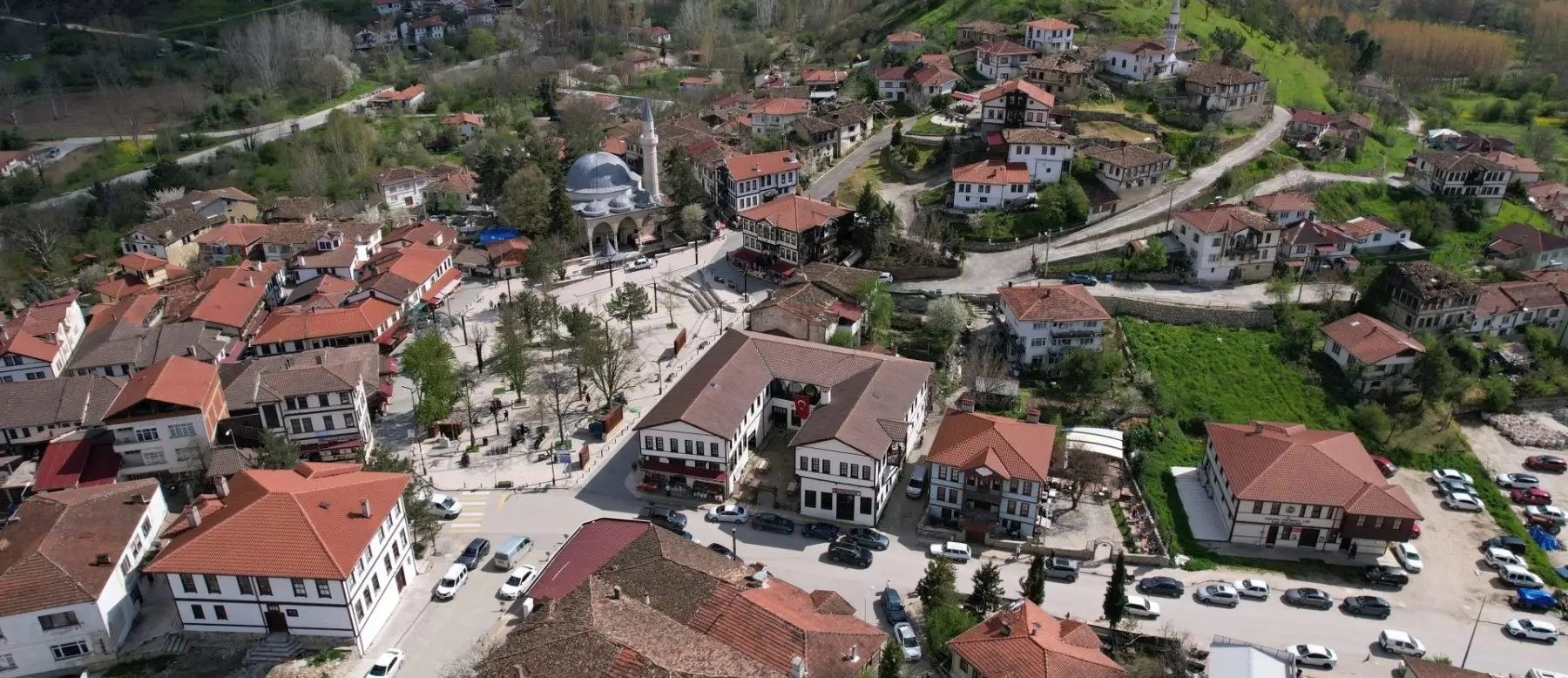
Combine Taraklı’s historic streets and craft heritage with Karagöl Plateau, Tuzla Canyon, neighbouring Geyve and selected cultural, agricultural and natural highlights across southern Sakarya.
Request This Tour