Tall, Vigorous Plant
The mature plant can reach approximately 1.7 metres under suitable growing conditions.
- Maximum height: About 1.7 m
- Root system: Deep and strong
- Growth: Perennial below ground






Taraklı Artichoke, known in Turkish as Taraklı Enginarı, is one of the distinctive agricultural products of Taraklı district in southern Sakarya Province. Grown in the countryside surrounding the historic town, it reflects a local farming tradition adapted to Taraklı’s cool and temperate growing conditions.
The registered product includes both early-season and late-season types. Early Taraklı artichokes are generally medium-sized, relatively elongated and looser in structure, while late types are typically larger, rounder, firmer and heavier. The vegetable is suitable for fresh consumption, and the late type is also valued for processing and preserving.
Taraklı Enginarı is a registered geographical indication of Türkiye. Registration recognises its long-standing reputation in Taraklı, its defined production method and the relationship between the product and the district where it is cultivated.
This complete guide explores Taraklı Artichoke’s distinctive characteristics, protected status, early and late types, planting methods, growing conditions, irrigation, harvest, buying and storage tips, local food culture, photography opportunities, nearby attractions and the best times to experience Taraklı’s agricultural landscape.
Taraklı Artichoke is produced in both early and late forms, each with its own head shape, structure and culinary use.
The perennial-rooted plants can reach about 1.7 metres in height and usually produce several artichoke heads.
Fresh consumption is important, while the larger and tighter late type is also suitable for canning and processing.
Taraklı Enginarı is registered in Türkiye as a geographical indication with registration number 1253.
Essential information about one of Taraklı’s best-known traditional agricultural products.
Taraklı district in southern Sakarya Province, Türkiye.
Open Taraklı on Google MapsA perennial-rooted artichoke, Cynara scolymus L., grown in both early and late local forms.
The registered production description places harvest mainly in winter and spring, depending on type, climate and cultivation.
Registered as Taraklı Enginarı with Turkish geographical-indication registration number 1253.
Taraklı is famous for Ottoman-era streets and houses, but its surrounding countryside also supports a living agricultural tradition.
Taraklı lies in the southern part of Sakarya Province, where cultivated valleys, rolling terrain and village landscapes surround one of the region’s best-preserved historic towns. Agriculture remains an important part of the district’s identity, and artichoke production has become one of its recognised local specialities.
Taraklı Artichoke is grown as a cool and temperate climate crop. Its deep and powerful perennial root system survives from year to year, while the plant’s above-ground growth renews seasonally.
Local growers commonly propagate the crop vegetatively from shoots emerging around established mother plants. With suitable care, a productive root can continue giving desirable yields for several years before the plantation is renewed.
The plant can become surprisingly large, reaching roughly 1.7 metres in height. Under normal conditions it commonly carries around five to eight heads, and the principal head can reach approximately 400 grams under favourable yield conditions.
Successful production depends on careful soil preparation, correct spacing, adequate irrigation, balanced fertilisation, weed control and harvesting before the edible head becomes overgrown, tough or begins opening into flower.
Taraklı’s long association with the crop, together with its defined production practices and reputation, led to Taraklı Enginarı receiving geographical-indication registration in Türkiye.
Taraklı Artichoke combines distinctive plant structure, edible immature flower heads and two locally recognised production types.
The mature plant can reach approximately 1.7 metres under suitable growing conditions.
A productive Taraklı Artichoke plant normally develops several edible heads during the season.
The edible vegetable is the immature flower head, especially the broad fleshy receptacle and the tender bases of the bracts.
If allowed to mature beyond the vegetable stage, the artichoke develops striking flowers in bluish-purple tones.
The early type is generally medium-sized, looser and relatively long or cylindrical, making it well suited to fresh consumption.
The late type is comparatively larger, rounder, denser and heavier, and is suitable for both fresh use and processing.
In the early type, the outer bracts are dark green while the inner bracts become lighter green toward the centre.
Depending on climate and cultivation conditions, the principal production stages and harvest can extend across roughly six months.
Taraklı Enginarı is officially registered by the Turkish Patent and Trademark Office as a geographical indication associated with Taraklı district in Sakarya Province.
The official geographical-indication name is Taraklı Enginarı.
Taraklı Enginarı carries geographical-indication registration number 1253.
The geographical indication was registered on 10 November 2022.
It is registered as a Mahreç İşareti, a Turkish geographical-indication designation linked to product reputation and defined production characteristics.
The registration holder is the Sakarya Chamber of Commerce and Industry.
The defined production area is the Taraklı district of Sakarya Province.
The registered specification states that Taraklı Artichoke has a long-standing reputation within its geographical boundary and that the defined production stages are carried out within Taraklı district.
One of the most interesting features of Taraklı Artichoke is that the registered product description recognises both early and late forms. Their head shape, structure and preferred culinary use are not identical.
The early type usually develops a medium-sized head rather than the heavier round form associated with the late type.
Its head is relatively long and cylindrical, with a looser overall structure.
The early type is particularly suitable for fresh consumption, including the fleshy bract bases and receptacle.
Early Taraklı Artichokes can be negatively affected by winter cold, making weather conditions important for early production.
The late type is comparatively larger, rounder, denser and heavier.
In addition to fresh consumption, the late type is suitable for canning and other processing applications.
For visitors, the difference is useful to know because Taraklı Artichoke is not a single identical-looking head throughout the entire season. Shape and density can vary according to the production type and stage of harvest.
Taraklı Artichoke belongs to the species Cynara scolymus L.. It combines a perennial underground structure with seasonal above-ground growth.
The plant develops a broad, deep and strong root system capable of supporting repeated seasonal growth.
The underground stem remains alive for multiple years even though the visible above-ground parts are renewed.
Dormant buds around the root crown can begin growing after autumn rainfall or irrigation and form the next productive shoots.
With suitable care, one established root can provide desirable yields for roughly three to four years before renewal becomes useful.
The plant produces substantial leaves that form a broad green canopy around developing heads.
The harvested vegetable is an immature flower head collected before the bracts open and the flower develops fully.
Successful Taraklı Artichoke cultivation begins before planting. The registered production method calls for deep soil preparation, fertilisation and good aeration of the planting area.
New plantations are prepared with deep soil cultivation before planting.
After deep cultivation, tools such as discs and harrows are used to break and aerate the soil.
Adequate fertiliser is incorporated according to field needs, with soil analysis recommended for balanced decisions.
South-facing or south-sloping agricultural land can provide an advantage for early production.
Planting points can be prepared as basin-like holes approximately 40 cm wide and 25 cm deep.
A spacing of roughly 1 m by 1 m gives each developing plant enough room for vigorous growth.
The crop performs best where root growth, drainage, soil moisture and moderate temperatures remain in balance.
Productive soil with good organic matter supports the vigorous root system and seasonal head development.
Deep soils provide room for the plant’s powerful roots and help established plantations remain productive.
Well-drained conditions are important because excessive water around the root zone can create cultivation problems.
The registered specification identifies deep, well-drained loamy-sandy soils with adequate water-holding capacity as desirable.
Taraklı Artichoke is adapted to cool and mild climatic conditions rather than extreme heat.
The registered production description identifies approximately 15–18°C as an optimum development range.
Early frost can damage the plants, while unusually dry and hot spring conditions may reduce head size and tenderness, particularly in late artichokes. High temperatures can also push heads toward flowering more quickly.
Although artichokes can be raised from seed, Taraklı production is commonly based on vegetative propagation using shoots or root material from established plants.
For a newly established plantation, the registered production method identifies April and May as the first planting period. Established perennial roots then continue through recurring seasonal growth cycles.
Taraklı Artichoke requires substantial water during active growth and development, particularly while new shoots establish and heads are forming.
Freshly planted shoots receive water immediately after planting to encourage successful rooting.
Adequate irrigation is especially important while basal shoots develop their own root systems.
Water can be supplied through furrows in traditional field systems.
Drip systems are also suitable because they can deliver water efficiently to the active root zone.
The registered description notes irrigation commonly up to twice weekly until harvest, adjusted for climate and field conditions.
Over-irrigation should be avoided; frequency and duration should be adapted to weather, soil and crop condition.
Because artichoke is a multi-year crop with strong seasonal growth, soil fertility and field hygiene are important throughout the productive life of the plantation.
The first fertilisation is applied before a new plantation is established.
A second fertilisation stage supports the actively developing plant during the growing cycle.
Fertiliser choices should ideally follow soil-analysis results rather than a one-size-fits-all formula.
Well-managed farmyard manure can be used according to soil needs and agricultural practice.
Hoeing and field cultivation help reduce competition from weeds around vigorous artichoke plants.
When yield begins to fall after several productive seasons, old planting areas can be renewed.
The registered specification describes harvest as occurring approximately during the winter and spring months, depending on the early or late character of the crop, local weather and cultivation conditions.
The head should become sufficiently developed, but it must not be allowed to become oversized and tough.
For fresh use, the bracts should remain closed rather than opening toward flowering.
The supporting stem should not yet be hard and woody; a slightly flexible structure is preferred.
Early production can reach the market sooner but is more vulnerable to cold weather.
Late artichokes may have a longer cycle and develop larger, rounder and denser heads.
For artichokes intended for canning, growers may allow the edible receptacle to reach fuller size before cutting.
Harvest timing is critical. Once a head begins to open and move toward flowering, tenderness declines and the vegetable becomes less suitable for the fresh culinary qualities associated with a properly harvested artichoke.
Each head is cut carefully at the appropriate maturity so the edible vegetable reaches the market before it becomes fibrous or overdeveloped.
A properly harvested artichoke offers a mild, fresh vegetable flavour with a tender heart and fleshy bract bases. Texture is as important as flavour, which is why correct harvest timing matters.
The broad edible receptacle forms the prized central heart of the artichoke.
The tender lower portions of the bracts provide edible flesh around the outside of the head.
The flavour is mild and vegetal rather than strongly sweet or spicy.
The looser, elongated early artichoke is especially associated with fresh use.
The dense late type provides a substantial heart and is suitable for fresh meals or processing.
Heads harvested before opening provide a more desirable tender texture than overmature flowering heads.
Taraklı Artichoke can be prepared in many familiar Turkish and Mediterranean-style ways. The important first step is cleaning the head while preserving the tender heart.
Cook cleaned artichoke hearts slowly with olive oil, vegetables and herbs for a classic light preparation.
Larger heads can be prepared as stuffed artichokes using rice, herbs or other regional fillings.
Simple cooking allows the tender heart and fleshy bract bases to remain the main focus.
Lemon is commonly used during cleaning and cooking because cut artichoke surfaces darken quickly when exposed to air.
Recently harvested heads require less storage and can provide the best texture for local seasonal dishes.
The late type is also suitable for processing and canning when prepared under appropriate food-production conditions.
Artichokes are best used relatively soon after harvest. If they cannot be marketed or cooked immediately, cool and carefully controlled storage helps protect quality.
Keep freshly harvested artichokes in a cool environment rather than prolonged heat.
The registered storage description recommends relatively humid conditions so the heads do not dry excessively.
Storage areas should be clean and free from strong external odours.
Stacks should allow adequate air circulation around the harvested vegetables.
Longer storage requires temperature- and humidity-controlled cold-chain conditions.
Avoid crushing or bruising the heads, which can reduce market quality and shorten useful storage life.
During the production season, locally grown artichokes may appear through producers, markets, greengrocers and regional food sellers in and around Taraklı.
Harvest timing varies according to early or late production, weather and cultivation, so local sellers are the best source for what is freshly available.
Markets and local produce sellers provide the easiest opportunity to connect Taraklı’s agricultural identity with the historic town visit.
Early heads are generally more elongated and loose, while late heads are rounder, firmer and heavier.
Roads beyond the historic centre reveal working agricultural landscapes, villages and seasonal fields around Taraklı.
Combine food discovery with the district’s traditional houses, old streets and Ottoman-era atmosphere.
Taraklı is also known for Taraklı Uğut Tatlısı, another geographically indicated local speciality.
Extend the trip into Taraklı’s highland scenery for a natural contrast to the agricultural valley and historic town.
Artichoke fields are private agricultural property; ask permission before entering fields or photographing workers at close range.
April and May are important months for establishing new artichoke plantations from selected shoots.
As plants establish, leaves and stems develop strongly across the cultivated rows.
Established root crowns can send out new growth after autumn rainfall or irrigation.
Early artichokes may enter productive stages during the cooler part of the season, depending on weather.
Spring is an important harvest period in the registered production cycle and a good time to ask for fresh local heads.
Historic Taraklı can be visited in every season even when fresh artichokes are not being harvested.
Taraklı’s food identity reflects the same rural landscape that surrounds its historic centre. Artichoke is one part of a wider collection of local produce, traditional sweets and village-style cooking.
The most direct experience is a recently harvested head prepared while still tender and compact.
Artichoke naturally suits olive-oil-based vegetable cooking with lemon, herbs and seasonal accompaniments.
This traditional wheat-based sweet is another registered geographical indication associated with the district.
Taraklı is also locally associated with strawberry cultivation and seasonal rural produce.
Small-scale food production and seasonal ingredients remain visible across the district’s surrounding settlements.
A food-focused visit can be combined with a walk through traditional Taraklı streets and restored Ottoman-era houses.
A visit centred on Taraklı’s local food can easily become a wider journey through historic streets, mountain scenery, nearby Geyve and the agricultural landscapes of southern Sakarya.
Walk among traditional Ottoman houses, narrow streets, local shops and the preserved atmosphere of one of Sakarya’s most distinctive historic districts.
Explore a rugged natural landscape near Taraklı and add a countryside stop to your historic-town visit.
Discover highland scenery, forest surroundings and cooler mountain landscapes above the Taraklı countryside.
Continue toward neighbouring Geyve for broad views across the productive valley and surrounding hills.
Discover another geographically indicated agricultural product of southern Sakarya and compare two distinctive local food traditions.
Travel west toward Pamukova for a relaxing green-space stop within another of Sakarya’s productive agricultural districts.
Taraklı Artichoke is a traditional artichoke produced in Taraklı district of Sakarya Province. It includes both early and late local production types and is registered as a Turkish geographical indication.
It is called Taraklı Enginarı.
Its registered geographical production area is Taraklı district in Sakarya Province, Türkiye.
Yes. Taraklı Enginarı is officially registered as a geographical indication in Türkiye.
Taraklı Enginarı carries registration number 1253.
The geographical indication was registered on 10 November 2022.
The registration holder is the Sakarya Chamber of Commerce and Industry.
Taraklı Enginarı is registered as a Mahreç İşareti.
The registered product belongs to Cynara scolymus L..
Under suitable conditions, the plant can reach approximately 1.7 metres.
The registered description states that the number of heads generally ranges from around five to eight.
Under suitable yield conditions, the main head can reach approximately 400 grams.
The edible parts include the fleshy flower receptacle and the tender bases of the bracts surrounding the immature flower head.
The early type is generally medium-sized, looser and more elongated. The late type is comparatively larger, rounder, denser and heavier.
The early type is specifically well suited to fresh use, although both types can be eaten fresh.
Yes. The late type is suitable for fresh consumption and is also preferred for canning and processing.
The registered method identifies April and May as the initial planting period.
Production is commonly vegetative, using basal shoots or root pieces from established plants. Seed propagation is possible but is less characteristic of the described method.
The registered method recommends approximately 1 m × 1 m spacing.
Deep, humus-rich, well-drained loamy-sandy soil with adequate water-holding capacity is preferred.
The registered production description identifies approximately 15–18°C as an optimum development range.
Yes. It has substantial water requirements during active growth, so irrigation is important, particularly for establishment and head development.
The registered specification describes harvest approximately during the winter and spring months, depending on crop type, weather and cultivation conditions.
The head should be sufficiently developed but not oversized or tough, the bracts should remain closed for fresh use and the supporting stem should not yet be fully hardened.
Harvest is carried out with a sharp knife, cutting the head together with roughly 15 cm of stem below it.
With suitable conditions, an established plant can provide desirable yields for roughly three to four years before renewal becomes useful.
If they cannot be used immediately, they should be kept in cool, relatively humid, clean conditions with good air circulation. Longer storage requires controlled cold-chain conditions.
Taraklı is known for its historic Ottoman houses, traditional streets, Uğut Tatlısı, local crafts and the surrounding rural landscapes of southern Sakarya.
Yes. Historic Taraklı, Karagöl Plateau, Tuzla Canyon and nearby Geyve can all be combined into a wider southern Sakarya route.
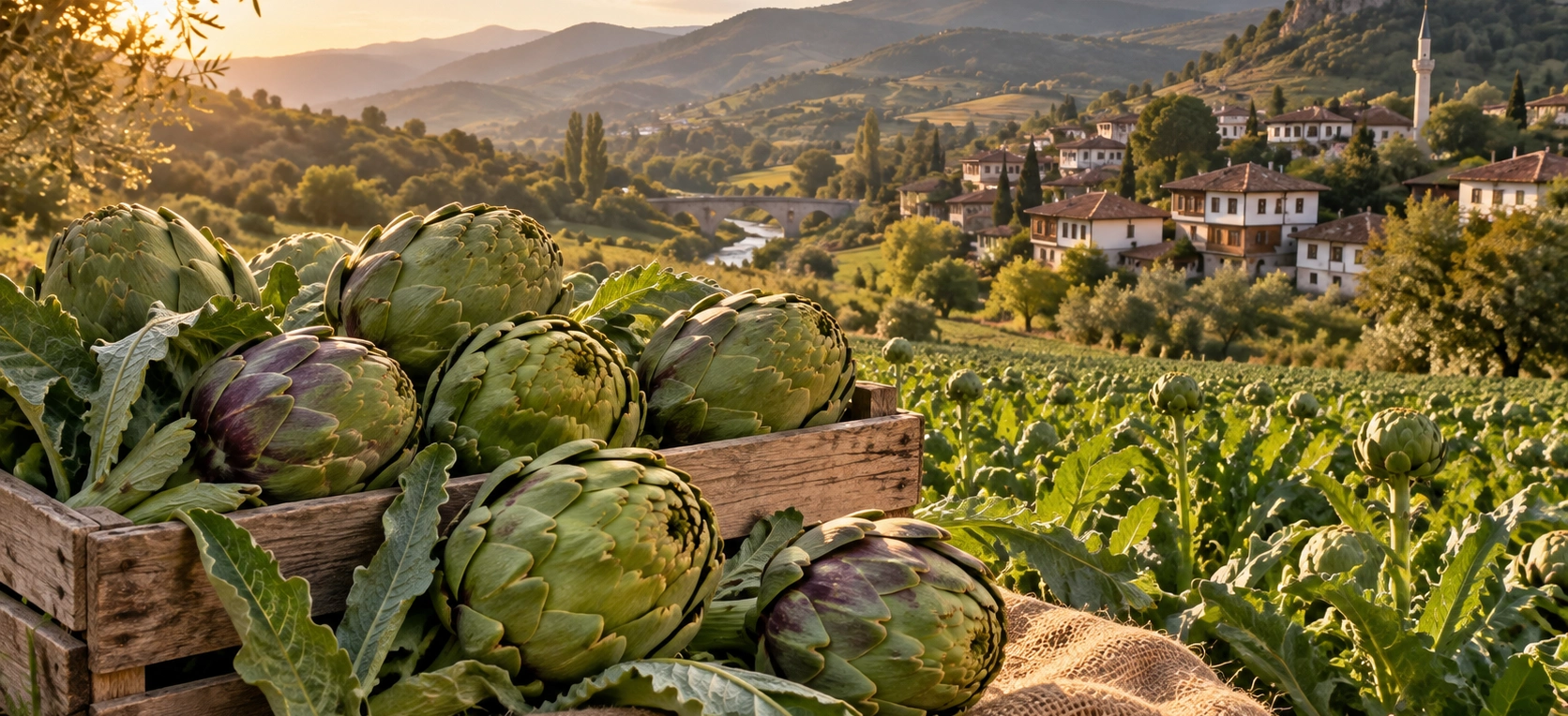
Artichoke fields add a very different visual layer to Taraklı beyond its famous historic houses. Broad silver-green leaves, upright heads, farm workers and surrounding hills can create strong agricultural compositions.
Photograph mature green heads rising above the plant’s large textured leaves.
Soft morning light can reveal leaf texture, dew and the layered structure of the heads.
Hands, knives, baskets and freshly cut heads can tell the story of seasonal agricultural work.
A cleaned or sliced head can show the fleshy receptacle, inner bracts and structure of the vegetable.
Combine close-up crop photographs with wider views of Taraklı’s surrounding fields and villages.
Pair agricultural images with traditional houses and old streets to show both sides of the district’s identity.
Always ask permission before entering private fields or photographing farmers at close range. Taraklı’s artichoke plantations are working agricultural properties, not open visitor attractions unless specifically arranged.
Combine Taraklı’s historic streets, agricultural traditions and seasonal local food with the natural landscapes of southern Sakarya.
Custom-designed private journeys with flexible timing, private transportation and opportunities to explore the lesser-known heritage and countryside of Sakarya Province.
Explore historic Taraklı, local food traditions, seasonal agricultural landscapes and selected nearby attractions on a private journey through southern Sakarya.
Request This Tour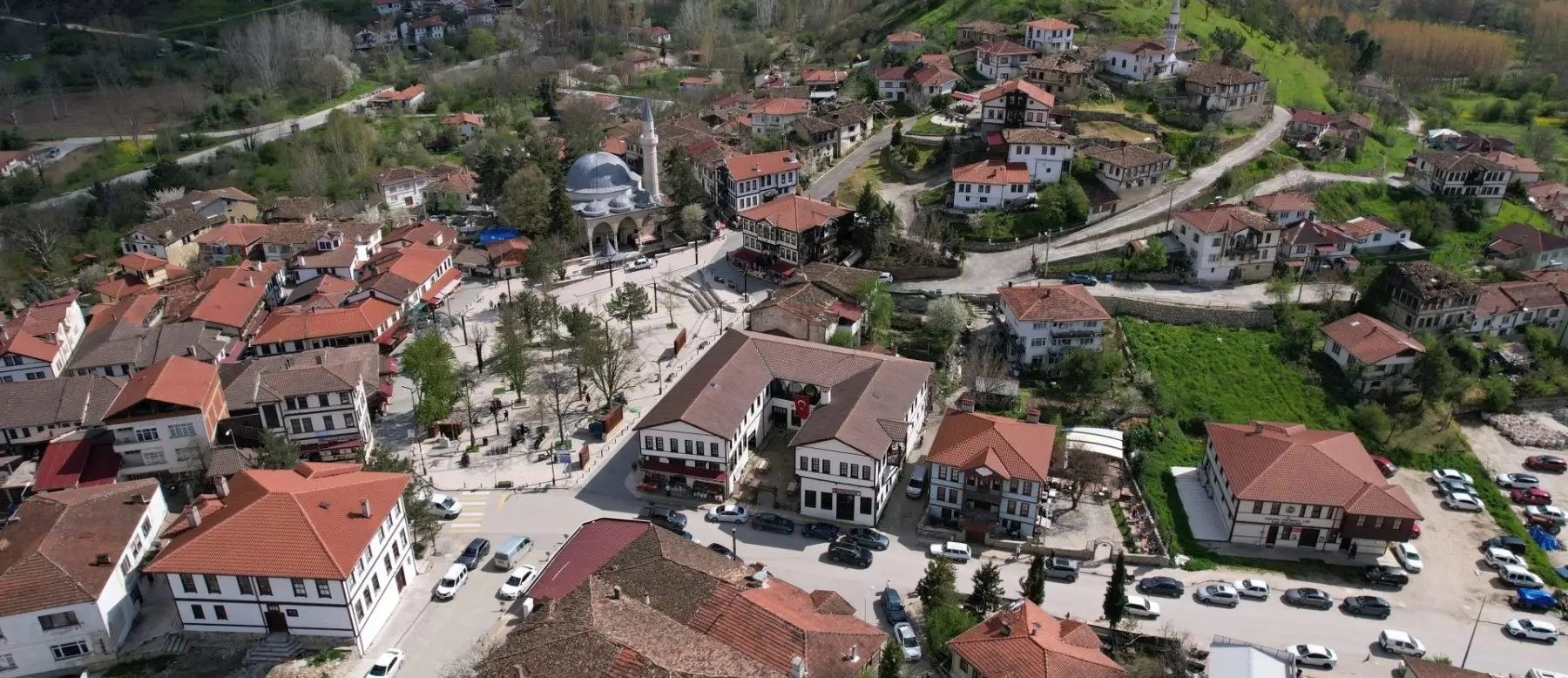
Combine Taraklı with Karagöl Plateau, Tuzla Canyon, neighbouring Geyve and selected cultural and natural highlights across southern Sakarya.
Request This Tour