Bulgarian Orthodox Heritage, 19th-Century Edirne & Balkan Cultural Memory

Sveti Georgi Church Edirne – Historic Bulgarian Orthodox Church, Icons & Balkan Heritage

Discover an 1880 Bulgarian Orthodox church in Edirne's historic Kıyık district,
filled with icons, Slavonic inscriptions and memories of the city's once-thriving Bulgarian community.

Explore Sveti Georgi Church

Sveti Georgi Church – Discover the Bulgarian Orthodox Heritage of Edirne

The Sveti Georgi Church, also known as St. George Bulgarian Orthodox Church or simply the Bulgarian Church of Edirne, is one of the most important surviving monuments of the city's historic Christian communities.

Standing in the Kıyık district northeast of Edirne's historic center, the church was constructed in 1880 for the Bulgarian Orthodox population that once lived in large numbers in this part of the city.

Its story belongs to the final decades of the Ottoman Empire, when Edirne was one of the great multicultural cities of the Balkans. Muslims, Orthodox Christians, Jews, Armenians and other communities lived within the same urban landscape, each contributing places of worship, schools, houses, workshops and traditions.

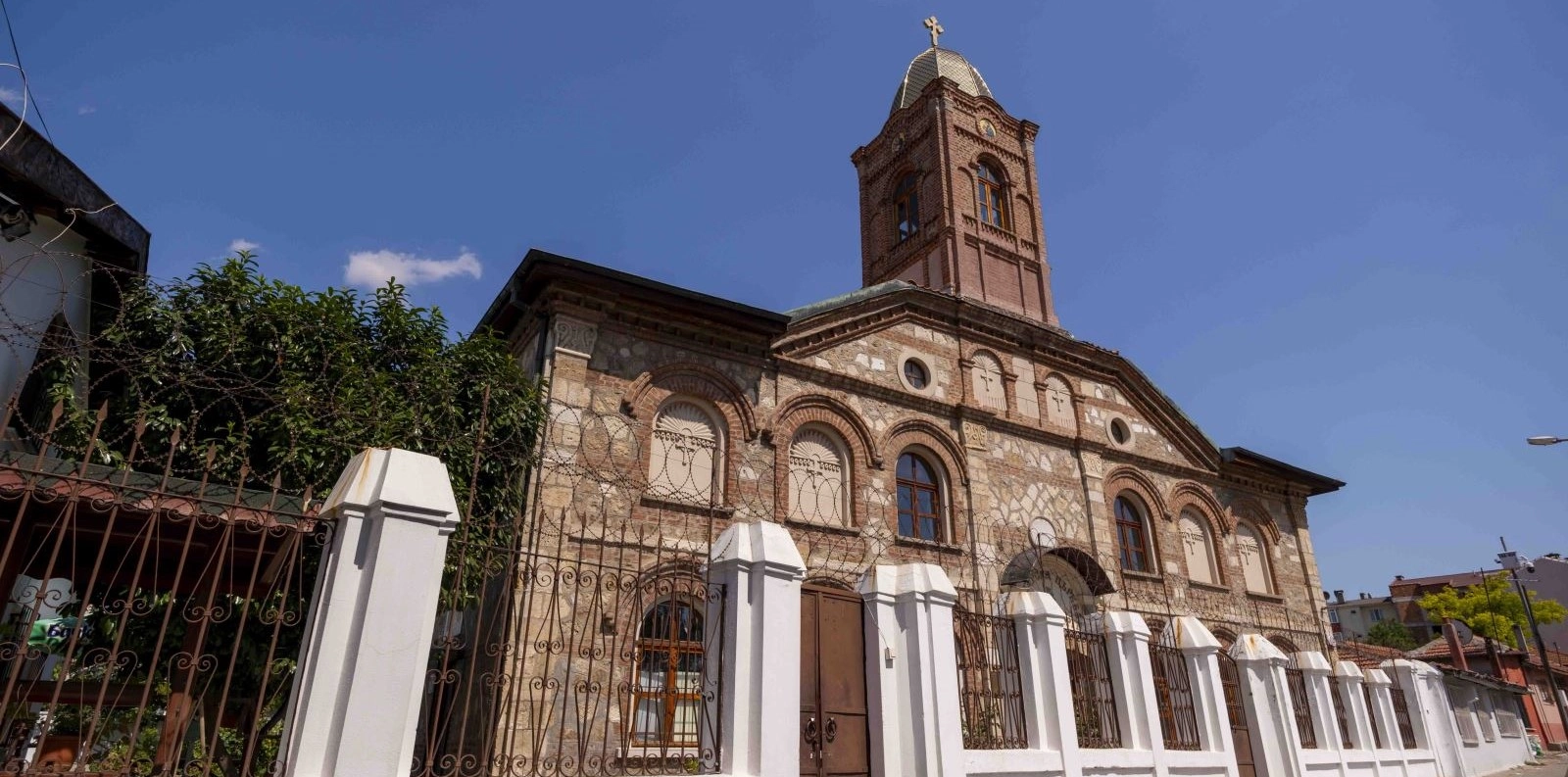
Built with the permission of Sultan Abdülhamid II, Sveti Georgi follows the form of a three-nave basilica associated with the late Bulgarian National Revival tradition. Its bell tower rises over the western entrance, while the interior preserves an iconostasis, numerous icons and inscriptions written in Slavonic Bulgarian.

After decades of decline and changing demographics, the church underwent a major restoration and was formally reopened in 2004. Today it remains both a historic monument and a powerful symbol of the cultural connections linking Edirne, Thrace and Bulgaria.

Built in 1880

The church was constructed for Edirne's Bulgarian Orthodox community during the reign of Sultan Abdülhamid II.

Three-Nave Basilica

Its architecture reflects the late Bulgarian Revival tradition with a central nave, side aisles, narthex and apse.

Icons & Iconostasis

The richly furnished interior preserves Orthodox icons, an iconostasis and other important liturgical elements.

Bulgarian Heritage

Sveti Georgi preserves the memory of the Bulgarian community that once formed an important part of Edirne's urban life.

Know Before You Go

Sveti Georgi Bulgarian Church – Quick Facts

Essential information for visiting one of Edirne's most important surviving Bulgarian Orthodox monuments.

📍

Location

Barutluk, Sv. Georgi Kilisesi Sk. No:5, Kıyık, Edirne.

Open on Google Maps
⛪

Built

1880, during the reign of Ottoman Sultan Abdülhamid II.

🏛️

Architecture

Three-nave basilica characteristic of the late Bulgarian National Revival tradition.

🖼️

Highlights

Iconostasis, Orthodox icons, Slavonic Bulgarian inscriptions, bell tower and historic interior.

🙏

Function

A historic church and living place of Orthodox religious and cultural heritage.

🕘

Visiting

Current public listings commonly show Wednesday–Sunday, 09:00–17:00. Verify before travelling.


A Different Side of Ottoman Edirne

Why Is Sveti Georgi Church Important?

The church preserves the memory of Edirne as a multicultural Balkan city in which different religions, languages and communities shaped the same urban landscape.

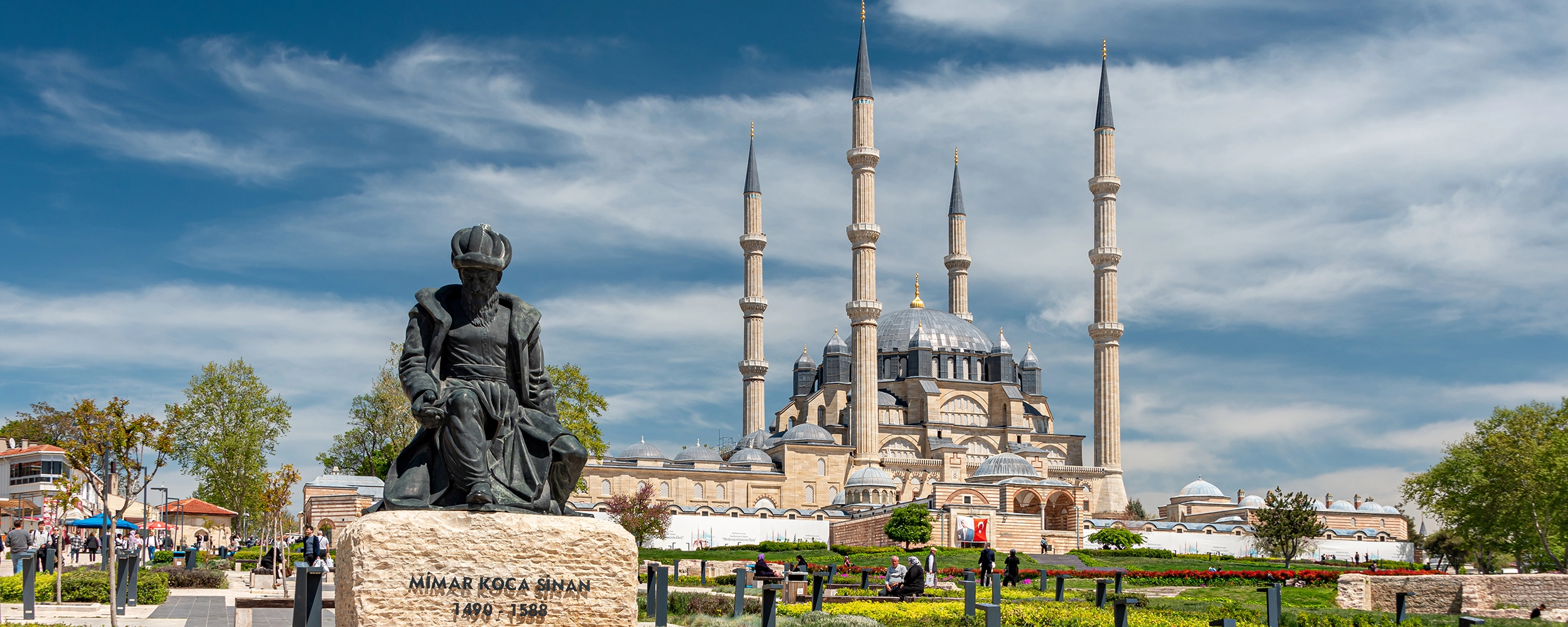
Edirne is famous above all for monumental Ottoman architecture such as Selimiye Mosque, the Old Mosque, Üç Şerefeli Mosque, imperial complexes, bridges and bazaars. Yet focusing only on these monuments can hide another essential part of the city's history.

For centuries Edirne was also home to substantial Christian and Jewish communities. The surviving churches and synagogue therefore provide an indispensable counterpoint to the imperial Islamic monuments for which the city is best known.

Sveti Georgi Church is particularly important because it preserves the story of Edirne's Bulgarian Orthodox population during the final Ottoman centuries and the close historical connections between Thrace, Edirne and the wider Balkan world.

Its architecture, icons, inscriptions and continuing religious associations make it more than a preserved building. The church is a physical record of a community whose demographic presence in Edirne later declined dramatically as borders, wars and migrations transformed the Balkans.

For visitors who want to understand Edirne beyond individual monuments, Sveti Georgi should be seen together with the city's mosques, historic neighborhoods, museums and other surviving places of worship.

Use our complete guide to places to visit in Edirne to place the church within the much broader story of Türkiye's former Ottoman capital.

The Bulgarian Community in Ottoman Edirne

During the Ottoman centuries, Edirne—historically Adrianople—was one of the most important cities between Istanbul and the central Balkans.

Its position on major roads connecting Constantinople with Plovdiv, Sofia, the Danube region, Macedonia and Central Europe made the city a place where languages, religions and commercial networks constantly intersected.

By the 19th century, substantial Bulgarian Orthodox communities lived in Edirne and the surrounding region. The Kıyık district, where Sveti Georgi stands, was one of the neighborhoods particularly associated with Orthodox Christian inhabitants.

Churches were not simply places for Sunday worship. They could function as important anchors around which community identity, education, charitable activity, festivals and family life developed.

The construction of Sveti Georgi therefore represents far more than the creation of another religious building. It marks the confidence and organization of a Bulgarian Orthodox community that considered Edirne an important part of its religious and cultural world.

Understanding the setting: Modern national borders can make 19th-century Balkan history seem more separated than it actually was. Edirne belonged to a connected Ottoman world in which people, clergy, merchants and families regularly moved between territories that are now divided among different countries.

Construction of Sveti Georgi Church in 1880

The foundation of Sveti Georgi Church was laid in 1880 during the reign of Sultan Abdülhamid II.

Historical accounts connect the project with both the permission of the Ottoman government and the support of the governor of Edirne, Rauf Pasha.

The foundation is traditionally dated to 23 April 1880, while the completed church was opened for use on 24 July 1880. The speed of construction demonstrates the determination and resources of the Bulgarian Orthodox community involved in the project.

The church was later further embellished, and municipal information records that its interior decoration bearing Slavonic Bulgarian inscriptions dates to 1889.

23 April 1880 Traditional date for the laying of the church foundations
1880 Construction proceeds with the permission of Sultan Abdülhamid II
24 July 1880 The completed church opens for use
1889 The church interior receives decoration including Slavonic Bulgarian inscriptions
20th Century Migration and demographic change greatly reduce the local congregation
1951 Regular services cease for an extended period
2003–2004 Major restoration work rescues the historic building
9 May 2004 The restored Sveti Georgi Church is formally reopened

Why Is the Church Dedicated to Saint George?

The Bulgarian name Sveti Georgi means Saint George, one of the most widely venerated saints in the Christian world.

Saint George is traditionally remembered as an early Christian martyr and is represented in Orthodox art most famously as a mounted warrior defeating a dragon.

His cult became especially important throughout the Balkans, where churches, monasteries and local festivals dedicated to Saint George can be found among numerous Orthodox Christian communities.

In Bulgarian tradition, Saint George is among the country's most beloved saints. His feast is associated with Gergyovden, traditionally celebrated in spring and carrying both religious and wider cultural significance.

Look for Saint George: When studying the icons inside the church, see whether you can identify the saint through his traditional warrior imagery, particularly representations involving a horse and dragon.

Architecture of Sveti Georgi Church

Sveti Georgi is described in official cultural inventories as a basilica characteristic of the late Bulgarian National Revival architectural tradition.

The church has approximately 320 square metres of enclosed space and is organized around three principal architectural zones: the narthex, the three-nave worship space and the apse.

The central nave is wider and higher than the side aisles, creating a clear hierarchy that directs attention eastward toward the iconostasis and sanctuary.

Above the entrance zone are gallery levels associated historically with worshippers and the church choir, while the bell tower rises over the western part of the structure.

Three-Nave Basilica

A broad central nave is accompanied by narrower aisles on its northern and southern sides.

Narthex

The entrance zone creates the transition from the exterior courtyard into the sacred interior.

Central Nave

The principal worship space is both wider and higher than the flanking side aisles.

Apse

The eastern end contains the sanctuary area behind the iconostasis.

Bell Tower

The tower rises over the western entrance and provides the church with its most recognizable exterior landmark.

Upper Galleries

Gallery levels above the narthex historically accommodated worshippers and the church choir.

Marble Floor

The interior flooring adds another refined element to the otherwise restrained basilican architecture.

Approx. 320 m²

The church is compact enough to understand easily while still creating a substantial ceremonial interior.

The Exterior and Construction of Sveti Georgi

One of the church's most attractive features is its masonry. Rather than presenting a completely plastered exterior, much of the construction visibly expresses the relationship between stone and brick.

Official architectural documentation describes an alternating masonry system. Carefully cut stone was used at important corners, while rubble stone and horizontal brick courses form much of the wall surfaces.

This combination creates texture and subtle bands of color across the façades. A pronounced cornice provides a strong visual termination beneath the roof.

The church can be surprisingly easy to miss from the larger surrounding streets because later buildings partially conceal it. The experience changes once you enter its immediate neighborhood and the bell tower and historic masonry come into view.

Stone & Brick

Alternating masonry produces the characteristic texture visible across the exterior walls.

Cut-Stone Corners

More carefully finished blocks strengthen and visually emphasize important corners of the building.

Brick Courses

Rows of brick create horizontal rhythm through the otherwise stone-dominated masonry.

Rich Cornice

The upper wall is finished by a pronounced cornice before meeting the roofline.

Bell Tower

The tower above the entrance gives the church vertical emphasis within the surrounding neighborhood.

Neighborhood Setting

The church is now surrounded closely by later buildings, making its courtyard setting feel unexpectedly intimate.

Inside Sveti Georgi Church

The interior becomes much easier to understand when viewed as a sequence moving from west to east.

Visitors first enter the narthex. From here the principal doorway aligns with the central nave, while additional openings lead toward the side aisles.

The main worship space is divided by two rows of columns. The central nave rises higher than the side aisles, creating a stronger ceremonial axis toward the sanctuary.

At the eastern end, the iconostasis separates the principal congregation space from the sanctuary. Beyond it lies the apse and altar area.

The ceiling treatment also reinforces the distinction between the spaces. The main nave uses a more pronounced ceiling form while the side aisles are treated more simply.

Entrance Axis

The principal doorway, central nave and sanctuary align to establish the church's dominant east–west ceremonial direction.

Column Rows

Two lines of columns divide the broad interior into the central nave and side aisles.

Higher Central Nave

The greater height emphasizes the principal space used by the congregation.

Solea

The raised liturgical zone in front of the iconostasis marks the transition toward the sanctuary.

Sanctuary

The altar lies beyond the iconostasis in the most sacred eastern part of the church.

Choir Galleries

Upper gallery spaces reveal that the interior was designed for both congregation and liturgical music.

The Iconostasis of Sveti Georgi Church

For many visitors, the most impressive feature inside Sveti Georgi is the iconostasis.

In Orthodox churches, the iconostasis forms a liturgical screen separating the nave from the sanctuary. It is not simply decoration: its arrangement of icons and doors forms part of the theological and ceremonial organization of Orthodox worship.

At Sveti Georgi, the iconostasis carries multiple painted sacred images and establishes the principal visual focus at the eastern end of the church.

The central doors—often known as the Royal Doors or Holy Doors—occupy the most important position, while additional icons and entrances create a carefully structured sacred façade.

During the early 21st-century restoration, the church's icons, icon platform, pulpit and ecclesiastical furnishings received conservation attention along with the architecture itself.

Take your time here: Rather than looking at the iconostasis as one large decorative object, examine individual icons, doors, carved elements and the way the whole structure controls the view toward the sanctuary.

Icons at Sveti Georgi Bulgarian Church

Orthodox icons are among the most important visual elements of Sveti Georgi.

They represent Christ, the Virgin Mary, saints and episodes from Christian sacred history, but within Orthodox tradition they carry a liturgical and devotional significance extending far beyond their role as artworks.

Official information also records that some paintings preserved in the church originated from an earlier church that once stood in the area.

This means that parts of the interior heritage may predate the present 1880 building, linking Sveti Georgi to an even older Christian history in the neighborhood.

Christ

Images of Christ occupy particularly important positions within Orthodox iconographic programs.

Virgin Mary

Icons of the Theotokos form another central element of Orthodox devotion.

Saint George

The church's patron saint is central to the identity of the sanctuary and its community.

Iconostasis Icons

The most formal arrangement of sacred images appears across the screen separating nave and sanctuary.

Older Paintings

Some surviving works are associated with the earlier church that preceded the present building.

Living Religious Art

Remember that these images remain devotional objects rather than merely museum exhibits.

The Slavonic Bulgarian Inscriptions of Sveti Georgi

One of the most historically meaningful details inside Sveti Georgi is its use of Slavonic Bulgarian inscriptions.

Municipal historical information records that the church interior was decorated in 1889 and that its inscriptions were written in Slavonic Bulgarian.

For the community that built and worshipped here, language was deeply connected with religious practice, education and cultural identity.

The inscriptions therefore provide visitors with something that architecture alone cannot: a direct reminder of the language once heard during services and community life in this part of Edirne.

Together with the icons and liturgical furnishings, they transform Sveti Georgi into an important document of Bulgarian Orthodox culture within the Ottoman city.

What Does “Bulgarian National Revival Architecture” Mean?

Descriptions of Sveti Georgi frequently connect the church with the Bulgarian National Revival, sometimes called the Bulgarian Renaissance.

The term refers broadly to the cultural, educational, religious and artistic revival that developed among Bulgarian communities during the later Ottoman period, particularly in the 18th and 19th centuries.

Church construction played an important role in this process. Communities commissioned increasingly substantial religious buildings, supported schools, developed publishing and education, and expressed cultural identity through architecture, icon painting and liturgy.

Sveti Georgi belongs to the later stage of this architectural tradition. Its basilican arrangement, prominent bell tower and richly organized Orthodox interior connect Edirne with comparable religious monuments elsewhere in the Bulgarian and Balkan world.

Useful perspective: The church should not be viewed as culturally isolated from Edirne. It is simultaneously Bulgarian Orthodox heritage, Ottoman-period architecture and part of the shared cultural landscape of Thrace.

What Happened to Edirne's Bulgarian Community?

The world in which Sveti Georgi was constructed changed dramatically during the decades following its completion.

The collapse of Ottoman authority across much of the Balkans, new national borders, the Balkan Wars, population movements and political upheavals transformed Edirne's demographic structure.

As Bulgarian families left the city, the congregation supporting Sveti Georgi became progressively smaller.

For a long period the church reportedly served visiting worshippers only on limited occasions, including groups arriving from Istanbul for important feast celebrations.

Regular services eventually ceased in the mid-20th century and the building deteriorated as decades passed.

Its later restoration therefore represents not simply architectural conservation but the recovery of a nearly lost chapter of Edirne's social history.

The Restoration of Sveti Georgi Church

By the late 20th century, Sveti Georgi had suffered seriously from long periods of limited use, age and exposure to the elements.

A restoration project was prepared in the early 2000s. Conservation took place within the framework of cultural cooperation concerning historic heritage in Türkiye and Bulgaria.

The work extended beyond structural repairs. Important elements of the church interior—including icons, the iconostasis area, pulpit and ecclesiastical furnishings—also received attention.

Major restoration work was carried out during 2003 and 2004, and the rescued church was formally reopened on 9 May 2004.

The reopening brought Sveti Georgi back into the cultural and religious life of Edirne and strengthened cross-border interest in the city's surviving Bulgarian heritage.

1951 Regular worship enters a prolonged period of interruption
2001 Restoration planning develops for the endangered historic church
2003 Major conservation work begins
30 April 2004 The principal restoration campaign reaches completion
9 May 2004 Sveti Georgi is formally reopened following restoration
Today The building survives as an important monument of Bulgarian Orthodox and Edirne heritage

Father Filip and Father Alexander Çıkırık

Historic buildings survive not only because of architecture and government protection but also because individuals choose to care for them.

The modern story of Sveti Georgi is closely connected with the Çıkırık family, whose efforts helped preserve Bulgarian Orthodox heritage in Edirne.

Father Filip Çıkırık, a descendant of Edirne Bulgarians, worked to protect the deteriorating church and passed that commitment to his son, Father Alexander Çıkırık.

Father Alexander became one of the most recognizable figures associated with the revived church, supporting restoration, religious activity, education and cultural links between communities in Türkiye and Bulgaria.

His work demonstrates an important principle of heritage conservation: a restored monument survives best when it once again becomes meaningful to people.

Sveti Georgi as Living Bulgarian Heritage

Sveti Georgi should not be approached like an abandoned archaeological monument.

Although its congregation is far smaller than in the 19th century, the church continues to carry religious, cultural and emotional significance for Bulgarian Orthodox visitors and families connected with Edirne and Thrace.

Feast days and commemorative events can bring visitors across the Bulgarian–Turkish border, temporarily restoring the atmosphere of a much larger community.

This continuing relationship gives Sveti Georgi a special character. Its heritage exists simultaneously in architecture, icons, language, religious memory and modern cross-border relationships.

Remember: Even when visiting primarily for history or architecture, you are entering a functioning sacred space. Religious visitors may be praying, lighting candles or attending a ceremony.

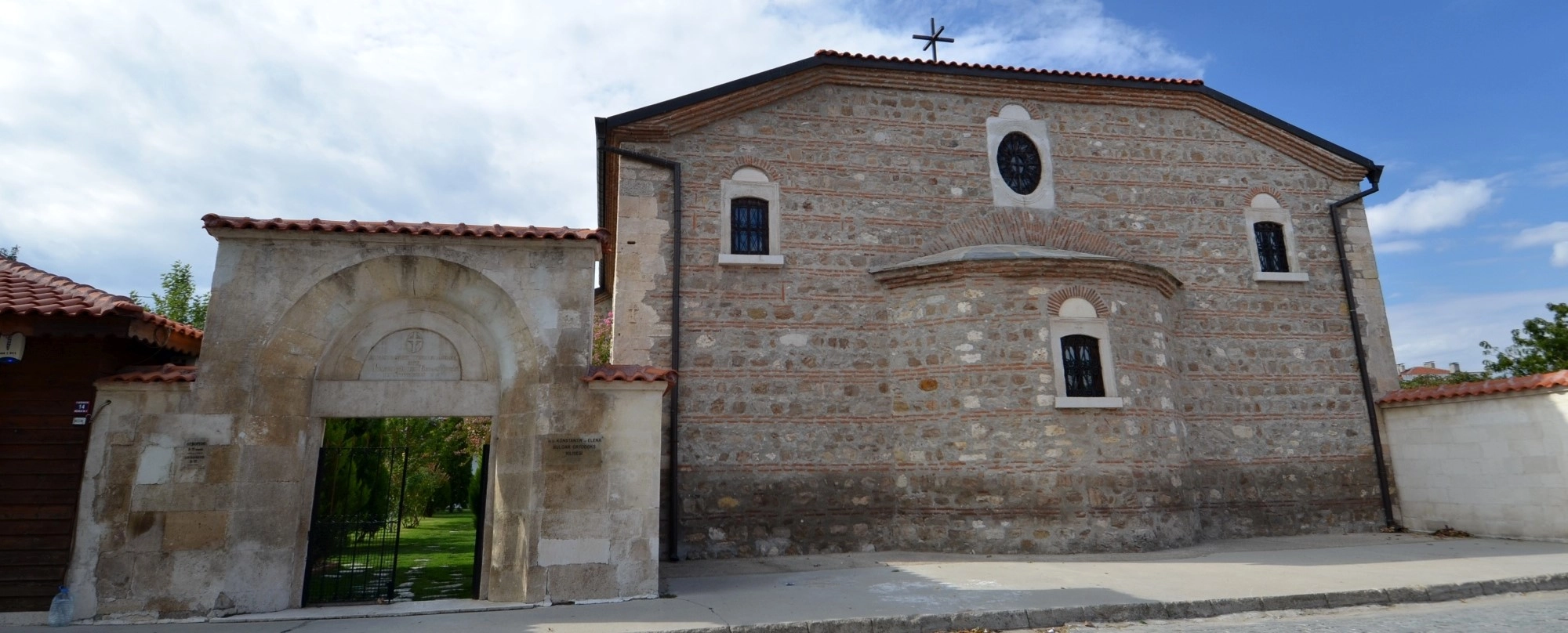
Sveti Georgi and Sveti Konstantin & Elena Churches

Sveti Georgi is not the only surviving Bulgarian Orthodox church in Edirne.

The city also preserves the Sveti Konstantin and Elena Church, another important monument connected with the historic Bulgarian community.

Visiting the two together transforms them from isolated buildings into parts of a larger historical story.

Sveti Georgi

Built in 1880 in the Kıyık area and especially notable for its Bulgarian Revival basilican architecture, iconostasis and Slavonic inscriptions.

Sveti Konstantin & Elena

Another surviving Bulgarian Orthodox church that helps reconstruct the religious geography of historic Edirne.

Together

The two churches demonstrate that Edirne once supported a considerably larger Bulgarian Orthodox community than survives today.

Best for Heritage Travelers

Visit both if you are interested in Balkan history, Orthodoxy, minority heritage or 19th-century Edirne.

What to Look For at Sveti Georgi Church

The Bell Tower

Look upward as you approach—the tower rising above the entrance provides the church with its strongest vertical accent.

Stone-and-Brick Masonry

Notice the alternating material and carefully finished corners rather than viewing the exterior as a single surface.

The Narthex

Observe how the entrance zone creates a gradual transition from courtyard to sacred interior.

Three-Nave Plan

Once inside, identify the wider central nave and narrower side aisles divided by the column rows.

The Iconostasis

This richly organized screen is the principal visual and liturgical focus of the church.

Royal Doors

The central doors of the iconostasis mark the symbolic entrance toward the sanctuary.

Orthodox Icons

Study individual saints, biblical figures and sacred scenes rather than treating the icons simply as decoration.

Saint George

Look for imagery connected with the church's patron saint, one of the most recognizable figures in Orthodox art.

Bulgarian Inscriptions

The Slavonic writing preserves an important linguistic link with the community that worshipped here.

Ceiling Details

Compare the treatment of the higher central nave with the simpler ceilings of the side aisles.

Upper Galleries

The gallery levels above the entrance help reveal how worship and church music were organized.

The Courtyard

Spend a moment outside after your visit—the intimate setting helps separate the historic church from the surrounding modern neighborhood.

The Cellar Beneath Sveti Georgi Church

One of the less obvious architectural details documented during restoration is a cellar beneath one of the side entrance areas.

Official architectural inventory records describe access through a wooden floor covering and a narrow, steep stairway.

The feature is interesting because it reminds visitors that historic churches often contained practical service spaces in addition to the visible areas of worship.

The cellar should be understood as part of the documented architecture rather than necessarily as an area open to ordinary visitors.

Visitor note: Do not expect access to every historic architectural space. Restricted areas, galleries, sanctuary zones and service spaces should be entered only when specifically permitted.

Suggested Sveti Georgi Church Visiting Route

Begin in the street and courtyard. Because the church is now closely surrounded by later buildings, its architecture reveals itself gradually rather than dominating a large public square.

Study the bell tower, stone-and-brick masonry, window openings and roofline before entering.

Inside, pause first in the narthex and look eastward along the principal axis. Identify the central nave, side aisles and column rows before concentrating on individual works of art.

Continue slowly toward the iconostasis, examining icons and inscriptions along the way.

Finish by looking back toward the western galleries and entrance. This reverse view often makes the basilican organization much easier to understand.

Start Courtyard and overall exterior
Stop 2 Bell tower and western façade
Stop 3 Stone-and-brick masonry
Stop 4 Narthex and entrance axis
Stop 5 Central nave, side aisles and columns
Stop 6 Icons and Bulgarian inscriptions
Stop 7 Iconostasis and sanctuary view
Finish Western galleries and final look at the church interior
Suggested Time Approximately 30–45 minutes
Best strategy: Sveti Georgi is not enormous. A slower 30-minute visit will reveal far more than walking through quickly and photographing only the iconostasis.

Practical Tips for Visiting Sveti Georgi Church

Check Opening Before You Go

The church does not operate like a major state museum, so confirm current access if your itinerary depends on a particular time.

Dress Respectfully

Choose clothing appropriate for an active Orthodox place of worship.

Keep Voices Low

The peaceful interior may be used for personal prayer even when no formal service is taking place.

Do Not Enter the Sanctuary

Areas beyond the iconostasis are liturgical spaces and should not be entered unless specifically invited.

Allow 30–45 Minutes

That is comfortable for appreciating both the architecture and the principal religious artworks.

Photography Can Vary

Follow current signs or instructions regarding photographs, flash and video.

Bring Small Cash

Visitors who wish to light candles or make a voluntary donation may find small denominations useful.

Combine the Kıyık Area

The church can be paired with other sites in the eastern and northeastern parts of historic Edirne.

Sveti Georgi Church Visitor Information

Sveti Georgi Church is located in Barutluk Mahallesi in the Kıyık district of Edirne, northeast of the principal Selimiye-centered historic zone.

The address most commonly used by current map services is Sv. Georgi Kilisesi Sokak No:5, 22020 Edirne. Older heritage inventories may use Tavukçu Sokak or a different street number because local addressing has changed over time.

Recent public visitor listings commonly show the church open Wednesday through Sunday from approximately 09:00 to 17:00, with Monday and Tuesday closed.

Because Sveti Georgi remains a religious institution rather than a conventional ticketed museum, access can change for services, feast days, ceremonies, maintenance or community events. Confirm current information if visiting the church is essential to your schedule.

Address Barutluk, Sv. Georgi Kilisesi Sk. No:5, 22020 Edirne
District Kıyık / Barutluk
Commonly Listed Hours Wednesday–Sunday, approximately 09:00–17:00
Common Weekly Closure Monday and Tuesday
Admission No regular museum-style entrance ticket is normally listed
Telephone +90 284 214 06 48
Suggested Visit Approximately 30–45 minutes
Type Historic Bulgarian Orthodox church and cultural heritage monument
Important: Church opening times and service arrangements can change independently of ordinary tourist schedules. If you are travelling specifically to see the interior, confirm current access shortly before your visit.

Religious Services at Sveti Georgi Church

Sveti Georgi retains an active religious identity, although it does not necessarily operate with the same regular service timetable as a large parish church.

Important Orthodox feast days, commemorations and visits by Bulgarian Orthodox communities can bring worshippers from both Türkiye and Bulgaria.

The feast associated with Saint George is naturally one of the most significant occasions connected with the church.

Visitors wishing to attend a service should confirm the current liturgical program directly rather than relying on normal sightseeing hours.

During worship: If you arrive while a service is taking place, enter quietly, avoid walking continuously through the congregation and postpone detailed photography until the ceremony has finished.

Best Time to Visit Sveti Georgi Church

Morning

A peaceful time to appreciate the interior before combining the church with the rest of Edirne.

Late Morning

Good for visitors exploring the Kıyık district before returning toward the historic center for lunch.

Weekdays

Often quieter than weekends and important feast days.

Spring

Pleasant weather makes exploring the surrounding neighborhood and other Edirne monuments comfortable.

Autumn

Cooler temperatures work well for combining the church with a full walking and sightseeing day.

Feast Days

Culturally fascinating but potentially much busier and primarily focused on worship rather than sightseeing.

How Much Time Do You Need at Sveti Georgi Church?

15 Minutes

Enough for a quick look at the nave, iconostasis and principal exterior features.

30–45 Minutes

Best for most visitors who want to study the architecture, icons and inscriptions properly.

60 Minutes

Suitable for visitors with a serious interest in Orthodox art, Bulgarian heritage or historic architecture.

Half Day

Combine Sveti Georgi with other monuments connected with Edirne's multicultural and Balkan history.

Photography at Sveti Georgi Church

Sveti Georgi offers very different photographic possibilities from Edirne's enormous imperial mosques.

Its character comes from a combination of small-scale architectural details, historic masonry, religious artwork and the contrast between the church and its surrounding neighborhood.

Bell Tower

Use a slightly lower angle to emphasize the tower rising above the western entrance.

Exterior Masonry

Closer photographs reveal the alternating stone and brick construction far better than distant views.

Nave Perspective

A central position can show the column rows leading toward the iconostasis.

Iconostasis

Photograph the entire structure before concentrating on individual sacred images and details.

Icons

Where photography is permitted, avoid flash and respect visitors who are praying before particular images.

Courtyard Views

The surrounding buildings can create interesting compositions showing how the church survives inside the modern city.

Photography etiquette: Permission and restrictions can vary, especially during services. Always follow current instructions and never interrupt worship simply to obtain a photograph.

Church Etiquette for Visitors

Dress Modestly

Clothing suitable for a place of worship is appreciated even when entering purely as a sightseeing visitor.

Speak Quietly

Keep conversations subdued, particularly when other visitors are praying.

Respect the Iconostasis

Do not pass through liturgical doors or enter the sanctuary unless specifically permitted.

Do Not Touch Icons

Observe sacred and historic objects without handling them unless local practice explicitly permits devotional contact.

Give Worshippers Space

A person standing before an icon may be praying rather than simply viewing the artwork.

Silence Your Phone

Switch notifications and ringtones off before entering the church.

Accessibility at Sveti Georgi Church

Sveti Georgi was constructed in 1880 as a place of worship rather than as a modern visitor attraction, so accessibility should be considered within the limitations of a historic building.

Entrance Changes

Expect historic thresholds or small level changes around entrances and interior spaces.

Main Church Interior

Much of the principal visitor experience is concentrated on the main worship level.

Upper Galleries

Gallery areas involve stairs and may not be accessible or normally open to visitors.

Historic Surfaces

Flooring and transitions may not offer the completely level conditions of a modern museum.

Mobility Planning

Visitors needing guaranteed step-free access should contact the church before travelling.

Ask for Assistance

Local caretakers or church representatives can advise which areas are currently available.

How to Get to Sveti Georgi Church

The church stands in Barutluk Mahallesi in the Kıyık district, northeast of the historic center.

Unlike Selimiye Mosque, Sveti Georgi does not dominate the skyline from a great distance. Modern buildings closely surround the church, so navigation is easier when using its exact name or street location.

From Central Edirne

The church is a short journey from the Selimiye-centered historic district and can be reached by local transport, taxi or a longer walk.

By Taxi

Ask for “Sveti Georgi Bulgar Kilisesi, Kıyık, Barutluk Mahallesi.”

By Private Vehicle

Use navigation to reach the surrounding streets and park legally where local conditions permit.

On Foot

Walking is possible for visitors who enjoy exploring residential Edirne beyond the principal monument zone.

With a Guide

A guide can place the church within the much broader history of Edirne's Bulgarians, Orthodox Christianity and the late Ottoman Balkans.

Use the Exact Name

Searching “Sveti Georgi Bulgar Kilisesi” is generally more reliable than navigating only to the wider Kıyık district.

Sveti Georgi and the Multicultural Heritage of Edirne

One of the most rewarding ways to explore Edirne is to avoid treating its monuments as separate categories.

A mosque, Bulgarian Orthodox church, synagogue, historic house and covered bazaar may appear to represent different stories, yet together they reconstruct the social structure of the same city.

Sveti Georgi is therefore particularly valuable when placed beside Edirne's Ottoman monuments. The contrast reveals how multiple communities shared streets, markets and economic life while maintaining distinctive places of worship and cultural institutions.

This approach also helps visitors understand Edirne's geographical position. The city was not merely an Ottoman capital inside Anatolian history; it was one of the principal urban centers of Ottoman Europe and the Balkans.

A richer Edirne itinerary: Visit at least one mosque, one Christian church, one museum, one historic house and the bazaars. Together they reveal a much fuller city than any single monument can provide.

Suggested Edirne Faith & Multicultural Heritage Route

For visitors particularly interested in religious history, Sveti Georgi can form part of a broader route through Edirne's different sacred traditions.

Stop 1 Sveti Georgi Bulgarian Orthodox Church – Bulgarian heritage and 19th-century Orthodoxy
Stop 2 Sveti Konstantin & Elena Church – another surviving center of Edirne's Bulgarian Orthodox history
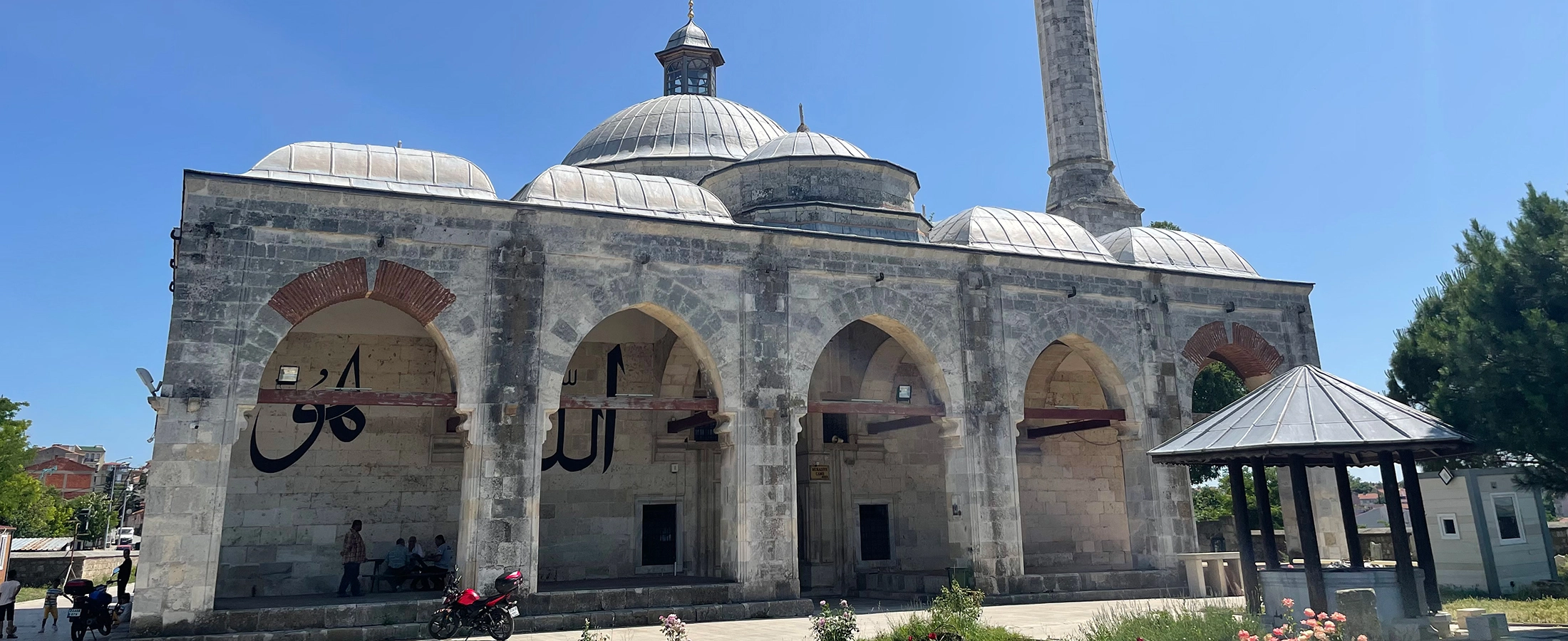
Stop 3 Muradiye Mosque – early Ottoman architecture and exceptional tile decoration
Stop 4 Selimiye Mosque – Mimar Sinan's monumental 16th-century masterpiece
Stop 5 Old Mosque and Üç Şerefeli Mosque – earlier stages of Ottoman religious architecture
Finish Continue toward Edirne's historic commercial center and other multicultural heritage sites

The route is valuable because it does not present faith communities in isolation. Instead, it shows how successive periods and different communities contributed to the same urban landscape.

Frequently Asked Questions About Sveti Georgi Church Edirne

What is Sveti Georgi Church?

Sveti Georgi is a historic Bulgarian Orthodox church built in Edirne in 1880. It is commonly known locally as the Bulgarian Church.

Where is Sveti Georgi Church?

The church is in Barutluk Mahallesi in Edirne's Kıyık district, northeast of the principal historic center.

When was Sveti Georgi Church built?

The present church was constructed in 1880.

Who permitted the construction of Sveti Georgi Church?

Construction took place with the permission of Ottoman Sultan Abdülhamid II.

When was the foundation of the church laid?

Historical accounts traditionally date the laying of the foundation to 23 April 1880.

When did Sveti Georgi Church open?

The completed church is recorded as having opened for use on 24 July 1880.

Why is it called the Bulgarian Church?

It was constructed for the large Bulgarian Orthodox community that once lived in Edirne, particularly in the Kıyık area.

What does “Sveti Georgi” mean?

Sveti Georgi means Saint George in Bulgarian.

What architectural style is Sveti Georgi Church?

The church is a three-nave basilica associated with the late Bulgarian National Revival architectural tradition.

How large is Sveti Georgi Church?

Official architectural information describes approximately 320 square metres of enclosed space.

Does Sveti Georgi have a bell tower?

Yes. A bell tower rises above the western entrance and is one of the most recognizable features of the exterior.

What is inside Sveti Georgi Church?

The interior includes a three-nave worship space, iconostasis, Orthodox icons, sanctuary, galleries, Slavonic Bulgarian inscriptions and historic liturgical furnishings.

What is an iconostasis?

An iconostasis is the screen covered with sacred icons that separates the main worship area of an Orthodox church from the sanctuary.

Are the inscriptions inside the church Bulgarian?

Yes. Municipal historical information records Slavonic Bulgarian inscriptions associated with interior decoration completed in 1889.

Are any objects older than the present church?

Historical information records that some paintings originated from an earlier church that previously existed in the area.

Why did Sveti Georgi lose its congregation?

Political change, warfare, new national borders and large-scale migration dramatically reduced Edirne's Bulgarian population during the 20th century.

When did regular services stop?

Historical accounts record a major interruption beginning around 1951, after which the church experienced a long period of limited use.

When was Sveti Georgi restored?

A major restoration campaign took place during the early 2000s, with principal work completed in 2004.

When did the restored church reopen?

Sveti Georgi was formally reopened following restoration on 9 May 2004.

Is Sveti Georgi still a functioning church?

Yes. It retains an active Orthodox religious identity, although service schedules can depend on feast days, clergy arrangements and community events.

What are Sveti Georgi Church opening hours?

Current public visitor listings commonly show approximately 09:00–17:00 from Wednesday through Sunday. Because access can change, confirm current hours before travelling specifically to see the interior.

Is Sveti Georgi Church open on Mondays?

Recent public listings commonly show the church as closed on Monday and Tuesday.

Is there an entrance fee?

The church does not normally operate as a conventional ticketed museum. Visitors may choose to make a voluntary donation or purchase candles where available.

How long should I spend at Sveti Georgi Church?

Around 30–45 minutes is comfortable for most visitors. Allow longer if you are especially interested in Orthodox art or Bulgarian heritage.

Can I take photographs inside?

Photography rules can vary, particularly during worship. Follow current signs and staff instructions and avoid flash where religious artworks or services could be disturbed.

What should I wear?

Wear clothing appropriate for an active Christian place of worship and behave respectfully inside the church.

Can non-Christians visit Sveti Georgi?

Yes. Respectful visitors interested in architecture, history and cultural heritage can visit regardless of religious background when the church is open.

Is Sveti Georgi worth visiting?

Yes, especially for visitors interested in Balkan history, Bulgarian culture, Orthodox Christianity, minority heritage and the multicultural history of Ottoman Edirne.

What should I visit after Sveti Georgi?

The strongest continuation is the Sveti Konstantin and Elena Church, followed by Muradiye Mosque and the monuments of central Edirne.

Responsible Visiting at Sveti Georgi Church

Remember It Is a Church

Approach the building first as a sacred place and only secondly as a tourist attraction.

Protect Historic Surfaces

Avoid touching wall paintings, icons, woodwork and historic architectural details.

Respect Worship

Do not walk continuously around the congregation or photograph people closely during services.

Keep the Interior Quiet

Allow worshippers and other visitors to experience the church without unnecessary noise.

Follow Local Instructions

Access to galleries, sanctuary spaces or other restricted areas may change according to church activities.

Support Preservation

Where appropriate, small voluntary donations or candle purchases can help support the continuing life of a historic religious site.

Private Edirne Faith, Balkan History & Cultural Heritage Experiences

Connect Sveti Georgi Church, Edirne's Bulgarian heritage, Ottoman monuments, historic neighborhoods, museums and the city's remarkable multicultural past through a private route designed around your interests.

Custom Edirne Multicultural & Balkan Heritage Route

Go beyond the city's famous imperial monuments and explore the communities, religions, languages and cultural connections that made Edirne one of the most fascinating historic cities of the Balkans.

Edirne Turkey Selimiye Bulgarian churches Ottoman monuments Balkan history heritage

Explore Edirne

Discover Türkiye's former Ottoman capital through imperial mosques, Bulgarian Orthodox churches, museums, historic houses, covered bazaars, bridges, palace remains and centuries of connections between Thrace and the Balkans.

View Edirne Guide

Continue Exploring Edirne's Cultural Heritage

Follow Sveti Georgi into the broader historical landscape of eastern Edirne, traditional residential culture and the monumental architecture of the former Ottoman capital.

Muradiye Mosque Edirne Ottoman tiles architecture Turkey

Muradiye Mosque

Continue through eastern Edirne to an outstanding early Ottoman mosque, celebrated for its elegant architecture and remarkable surviving tile decoration.

Explore Muradiye
Necmi Ige House Ethnography Museum Edirne traditional house Rumelian culture

Necmi İğe House

Move from religious heritage into the everyday world of old Edirne through historic domestic architecture, Rumelian costumes, family traditions and wedding culture.

Explore the Museum