Private Mimar Sinan & Sokollu Tour
Ask us about a tailor-made route focused on Sokollu Mehmed Pasha Mosque, İznik tiles, Ottoman architecture, Byzantine monuments and the quieter streets beyond the standard Sultanahmet circuit.
Request a Custom Tour





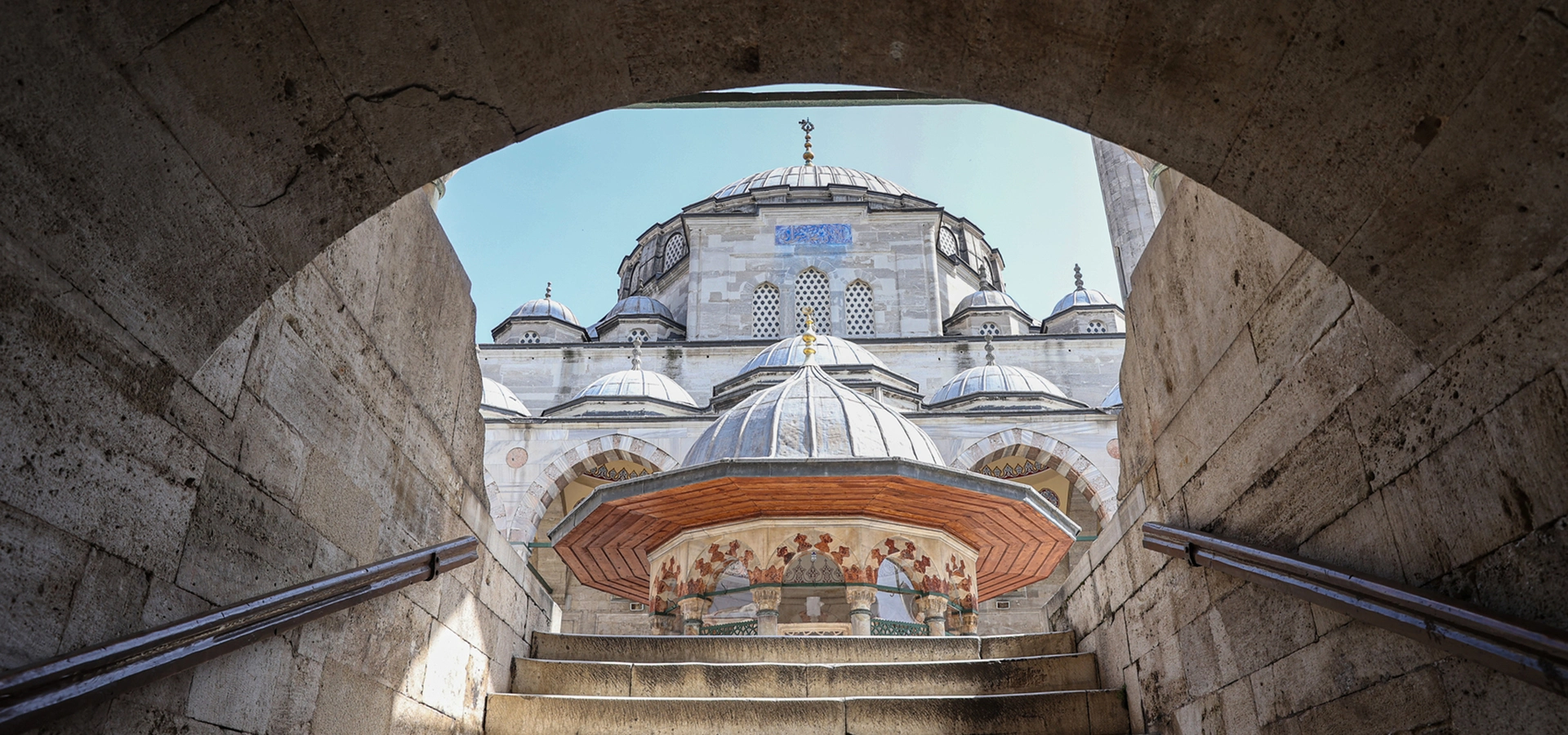
The Sokollu Mehmed Pasha Mosque, known in Turkish as Sokullu Mehmet Paşa Camii, stands on a steep hillside in the historic Kadırga quarter of Istanbul's Fatih district, only a short walk from Sultanahmet and Little Hagia Sophia. Although far less famous than the city's great imperial mosques, it is widely regarded as one of the most refined works of Mimar Sinan.
The mosque was completed in 1571–1572 for Sokollu Mehmed Pasha, the powerful grand vizier who served three Ottoman sultans, and his wife Esmahan / İsmihan Sultan, daughter of Sultan Selim II. Sinan transformed a difficult sloping site into a remarkably coherent complex containing a mosque, madrasa and dervish lodge.
Inside, the relatively compact prayer hall becomes extraordinary. The qibla wall, pendentives, window surrounds and architectural panels are covered with some of the finest 16th-century İznik tiles in Istanbul, combining cobalt blue, turquoise, green and raised red with tulips, carnations, saz leaves, arabesques and monumental calligraphy.
The mosque is also famous for small dark-stone fragments traditionally identified as pieces of the Hacerü'l-Esved, or Black Stone associated with the Kaaba in Mecca. Together with the tilework, stained glass, marble carving and perfectly controlled proportions, these details make Sokollu Mehmed Pasha Mosque one of the most rewarding historic interiors near Sultanahmet.
Visit a mature-period Mimar Sinan mosque completed during the height of classical Ottoman architecture.
See an exceptional ensemble of 16th-century İznik tiles surrounding the mihrab, windows and dome transitions.
Experience a compact but monumental central space organized around a dome supported by a six-part structural system.
Discover a quieter historic neighborhood only a short walk from Sultanahmet, Little Hagia Sophia and the Hippodrome.
Essential information for visiting one of the finest small mosques designed by Mimar Sinan in historic Istanbul.
Küçük Ayasofya / Kadırga, Fatih, on Şehit Mehmet Paşa Yokuşu near Sultanahmet.
Open on Google MapsMimar Sinan, chief imperial architect of the Ottoman Empire.
Sokollu Mehmed Pasha and Esmahan / İsmihan Sultan, daughter of Sultan Selim II.
1571–1572, during the mature classical period of Ottoman architecture.
Free to enter; the building remains an active mosque and worshippers always take priority.
Allow around 45–60 minutes for the courtyard, prayer hall, tilework and surrounding complex.
The mosque brings together Mimar Sinan's mature structural thinking, one of Istanbul's finest İznik tile programs and an ingenious response to a difficult urban site.
Sokollu Mehmed Pasha Mosque is important precisely because it proves that Ottoman monumental architecture did not depend on enormous scale. The prayer hall is comparatively intimate, yet every element — structure, light, marble, tile, calligraphy and proportion — has been coordinated to create a remarkably unified interior.
For Mimar Sinan, the commission came during the mature phase of his career. The mosque was created after the Süleymaniye Mosque and while Sinan was working toward the architectural achievements associated with Selimiye in Edirne. Its compact plan demonstrates how confidently he could adapt sophisticated structural ideas to a much smaller neighborhood setting.
The interior is equally significant for the history of Ottoman decorative arts. The great tiled qibla wall belongs to the celebrated high period of the İznik workshops, when brilliant cobalt blue, turquoise, emerald green and raised red were combined with sophisticated floral and calligraphic compositions.
The complex is also a masterclass in urban design. Rather than flattening or avoiding the steep Kadırga slope, Sinan used terraces, stairs, shops, madrasa cells and different courtyard levels to make the difficult topography part of the architecture itself.
For travelers using our guide to places to visit in Istanbul, Sokollu Mehmed Pasha Mosque is especially valuable because it offers a quieter and more intimate experience only minutes from the heavily visited monuments of Sultanahmet.
The mosque was built in the early 1570s in the historic Kadırga district, an area lying south-west of the ancient Hippodrome and close to the route descending from Sultanahmet toward the Marmara shore. Historical sources associate the site with an earlier Byzantine church traditionally identified as Hagia Anastasia.
The Ottoman complex was commissioned for Sokollu Mehmed Pasha and his wife Esmahan Sultan, also written İsmihan Sultan. She was a daughter of Sultan Selim II and a granddaughter of Süleyman the Magnificent, placing the foundation within the highest circle of Ottoman dynastic patronage.
An inscription dates the completion of the mosque to AH 979 / 1571–1572. By this time, Sokollu Mehmed Pasha had become one of the most powerful statesmen of the empire, while Mimar Sinan was already the leading architect of the Ottoman court.
The original foundation combined the mosque with a madrasa and a tekke or dervish lodge. The ensemble was carefully stepped across the sloping terrain, allowing religious, educational and devotional functions to occupy separate but visually connected levels.
The mosque survived earthquakes, repairs and changing urban conditions, and restoration campaigns have helped preserve its architecture and celebrated tilework. It remains an active place of worship rather than a museum.
The site is traditionally associated with the Byzantine church of Hagia Anastasia.
The mosque is completed for Sokollu Mehmed Pasha and Esmahan Sultan.
The great imperial architect adapts a sophisticated six-support domed plan to a steep neighborhood site.
Education and Sufi devotional life formed part of the wider endowed complex.
Successive restorations preserved the mosque as Kadırga changed around it.
The mosque remains open for Islamic worship while welcoming respectful visitors.
Sokollu Mehmed Pasha was one of the most influential grand viziers in Ottoman history. Born in the Balkans in the early 16th century, he rose through the Ottoman administrative system and eventually reached the highest office beneath the sultan.
He became grand vizier in 1565 and remained in office through the final years of Süleyman the Magnificent, the reign of Selim II and the early years of Murad III. His long tenure gave him exceptional influence over diplomacy, military affairs, imperial finance and major building projects.
Sokollu sponsored mosques, bridges, caravanserais, markets and charitable foundations across the Ottoman world. Several monuments bearing his name survive in Istanbul and the Balkans, making it important to distinguish the Kadırga Sokollu Mehmed Pasha Mosque from the later mosque at Azapkapı beside the Golden Horn.
He was assassinated in 1579. His architectural legacy, however, survived through major foundations designed by Sinan and the imperial architectural establishment.
The mosque is closely associated with Esmahan Sultan, also called İsmihan Sultan, daughter of Sultan Selim II and wife of Sokollu Mehmed Pasha. Her dynastic status helps explain the extraordinary quality of the foundation despite its relatively modest scale.
Ottoman architectural patronage was often more complex than a building's modern name suggests. Although the mosque is known today by Sokollu Mehmed Pasha's name, historical records and official local heritage sources emphasize Esmahan Sultan's role in commissioning or endowing the complex for her husband.
The partnership between an imperial princess, one of the empire's most powerful grand viziers and Mimar Sinan produced a building in which courtly architectural standards were brought into a dense neighborhood setting rather than an enormous ceremonial square.
Esmahan Sultan was the daughter of Sultan Selim II and granddaughter of Süleyman the Magnificent.
Her marriage to Sokollu Mehmed Pasha united dynastic and administrative power at the highest level.
The foundation demonstrates the important role Ottoman princesses played as patrons of religious and charitable architecture.
The mosque, madrasa and tekke created a lasting religious and educational center in the neighborhood.
The mosque belongs to the mature phase of Mimar Sinan's career, when he had already spent decades experimenting with domes, buttresses, supporting piers, galleries and centralized interiors. Sokollu Mehmed Pasha Mosque shows how these ideas could be compressed into a smaller building without losing monumentality.
Sinan organized the prayer hall around a central dome carried by a six-support system. The structural supports, arches and subsidiary semi-domes create a hexagonal spatial logic inside a rectangular envelope, allowing the eye to perceive the interior as one coherent volume rather than a collection of separate bays.
The building is equally impressive outside. The Kadırga site falls sharply across the hillside, yet Sinan used terraces and different levels to turn the slope into an architectural advantage. The mosque appears elevated above the lower street while the madrasa courtyard becomes a calm internal platform.
Unlike the overwhelming scale of Süleymaniye, Sokollu demonstrates Sinan's ability to create intensity through precision. The dome, windows, galleries, marble surfaces and tile panels are all positioned so carefully that the building feels larger and more ceremonial than its dimensions suggest.
The mosque belongs to the period when Sinan's structural vocabulary had reached exceptional confidence.
A six-part structural system organizes the central dome and gives the interior its distinctive geometric clarity.
Different levels absorb the steep Kadırga slope without breaking the unity of the complex.
Compact dimensions are transformed into a space that feels elegant, balanced and monumental.
The main prayer hall is covered by a central dome approximately 13 meters in diameter. Rather than resting on four massive piers in a simple square arrangement, the dome is integrated into a more complex six-support system that produces a hexagonal organization of the interior.
Large arches connect the principal supports, while smaller semi-domed and vaulted spaces soften the transition toward the outer walls. The result is a prayer hall that feels strongly centralized while remaining open along the sides.
Galleries occupy parts of the interior perimeter and help reinforce the sense of vertical layering. Above them, rows of windows bring daylight into the upper levels, allowing the İznik tiles around the qibla wall and pendentives to remain visually dominant.
The mosque has a single slender minaret. Its relatively restrained exterior contrasts with the richness of the interior, a characteristic that makes the first view of the tiled prayer hall especially dramatic.
A dome around 13 meters across creates the dominant central volume.
Six principal structural points organize the interior into a sophisticated hexagonal system.
Subsidiary domed forms help distribute structural forces while expanding the interior visually.
Elevated galleries add depth and create intimate secondary spaces beneath the central dome.
The elegant stone minaret rises from the north-eastern side of the mosque.
Colored window glass around the qibla area intensifies the luminous quality of the tiled interior.
For many visitors, the mosque's greatest treasure is its extraordinary İznik tilework. The richest concentration covers the qibla wall around the mihrab, rising between and above the windows in a continuous arrangement of floral ornament and calligraphy.
The tiles belong to the great artistic period of the late 16th-century İznik workshops. Designs combine cobalt blue, turquoise, green and raised red with scrolling stems, tulips, carnations, rosettes, saz leaves and arabesques. White-ground floral panels alternate with powerful blue-ground inscriptions in white calligraphy.
Tile decoration also appears on the pendentives, beneath galleries, around windows and on the conical hood of the minbar. Because the tiled zones are strategically concentrated rather than spread evenly over every surface, they pull the eye toward the qibla and reinforce the spiritual center of the prayer hall.
The result can be compared with the celebrated tile interiors of the Rüstem Pasha Mosque, but the experience here is different: Sokollu's tiles are integrated into a quieter and more architecturally concentrated space.
The wall around the mihrab is transformed into a brilliant field of floral and calligraphic ceramics.
Characteristic relief-like red pigment helps identify the tiles with the technical peak of 16th-century İznik production.
Tulips, carnations, rosettes and saz leaves create rhythmic natural patterns across the panels.
White script on deep blue backgrounds forms some of the most striking inscription panels in the interior.
Tilework in the dome transitions visually links the decorated qibla wall with the architecture above.
Even the conical crown of the marble minbar carries tile decoration, an unusually elegant detail.
One of the mosque's most unusual features is the presence of small dark-stone fragments traditionally identified as pieces connected with the Hacerü'l-Esved, the Black Stone set into the Kaaba in Mecca.
Historical and modern descriptions of the mosque identify several such fragments set into protected positions around the prayer hall, including near the main entrance, mihrab and minbar. They are typically marked by small decorative or gilded surrounds that distinguish them from the surrounding stone and tile surfaces.
The fragments give the building an additional devotional importance beyond its architectural and artistic value. For Muslim visitors, their association with the Kaaba can carry deep religious meaning, while for other visitors they offer insight into how sacred memory, pilgrimage and architecture could intersect in the Ottoman world.
The mihrab, indicating the direction of Mecca, forms the visual center of the spectacular tiled qibla wall. Its pale carved stone stands in deliberate contrast with the dense blue, turquoise, green and red İznik decoration surrounding it.
Immediately beside it, the minbar is executed in finely carved white marble. Its geometric balustrades and carefully proportioned stairway are restrained enough to remain harmonious with the tiled wall, while its conical hood is itself decorated with İznik tiles.
Above and around these elements are calligraphic panels, stained-glass windows and floral tile compositions. Together they transform the qibla wall into the most visually intense part of the mosque while keeping the prayer direction unmistakably clear.
Approaching Sokollu Mehmed Pasha Mosque is part of the experience. Because the complex occupies a steep hillside, visitors enter through stairs and gateways before emerging into a surprisingly calm elevated courtyard.
The courtyard is bordered on three sides by porticoes. Behind them are 16 domed madrasa rooms, once used by students connected with the religious school. The arrangement integrates education directly into the architectural frame of the mosque.
At the center stands the şadırvan, or ablution fountain, covered by a distinctive domed canopy supported on slender columns. Its geometry becomes a visual counterpoint to the mosque façade and the surrounding arcades.
The courtyard is one of the best places to understand Sinan's handling of the site. From here, the complex feels balanced and serene even though the surrounding streets fall sharply away on different sides.
Domed student rooms line three sides of the courtyard behind the arcaded porticoes.
The ablution fountain creates a graceful focal point at the center of the courtyard.
Columns and domed bays create a shaded transition between the student rooms and open court.
The courtyard sits above lower street levels, demonstrating Sinan's clever use of terracing.
One of the most impressive aspects of the complex is easy to miss if you look only at the prayer hall. The ground falls sharply across Kadırga, creating a difficult site with streets arriving at significantly different elevations.
Instead of imposing a single artificial platform, Sinan organized the mosque, madrasa and tekke across terraced levels. Lower spaces and service areas help support the elevated courtyard, while stairways transform changes in height into a deliberate architectural sequence.
This approach allowed the main mosque to maintain a clear and monumental presence without destroying the relationship between the building and the surrounding neighborhood. It is a superb example of Sinan's ability to think simultaneously as architect, engineer and urban designer.
The Kadırga foundation included more than a mosque and madrasa. A tekke, or Sufi lodge, formed another important part of the complex, reflecting the religious and social diversity of Ottoman endowed institutions.
The lodge occupied its own courtyard level and contained spaces associated with communal devotion and the daily life of a religious order. Over time, the institution was connected with Sufi traditions including the Halvetiye and Celvetiye orders.
Like many Ottoman tekkes, its institutional function changed after the closure of dervish lodges in the early Republican period. Nevertheless, the surviving complex still helps visitors understand how prayer, education and Sufi devotional life could coexist within one architectural foundation.
The congregational prayer hall forms the spiritual and architectural center of the foundation.
Student cells around the upper courtyard supported formal religious education.
The dervish lodge added another form of devotional and communal religious life.
Different functions were organized across different levels of the steep Kadırga site.
Istanbul has more than one historic mosque connected with Sokollu Mehmed Pasha, so travelers can easily confuse them when searching maps or travel guides. This page covers the celebrated Kadırga Sokollu Mehmed Pasha Mosque in Fatih, near Sultanahmet and Little Hagia Sophia.
The mosque described on this page: famous for İznik tiles, its madrasa courtyard and the steep terraced site.
A later Sinan mosque near the Golden Horn, architecturally distinct and located in today's Beyoğlu district.
Another Sokollu foundation survives near the historic bridge far west of central Istanbul.
Sokollu sponsored important complexes and infrastructure across Thrace, the Balkans and the wider Ottoman world.
A good visit should include much more than a quick photograph of the tiled mihrab wall. Spend time in the courtyard, study the architecture from several angles and then explore the prayer hall slowly and respectfully.
See one of Istanbul's finest surviving ensembles of 16th-century floral and calligraphic İznik tiles.
Stand near the middle of the prayer hall and trace the six-support structural system upward toward the dome.
Examine the refined marble carving and the tiled conical hood of the minbar.
Look carefully for the protected dark-stone fragments traditionally associated with the Black Stone of the Kaaba.
Walk around the arcades and 16 student cells surrounding the elevated courtyard.
Study the elegant domed ablution fountain at the center of the courtyard.
Look beyond the tiles for restored and surviving painted ornament around galleries, ceilings and architectural transitions.
Walk outside the complex to understand how Sinan integrated the mosque into the steep Kadırga hillside.
Shoulders and knees should be covered. Women should cover their hair when entering the main prayer hall.
Shoes must be removed before stepping onto the carpeted prayer floor. Follow the arrangements at the entrance.
Sightseeing is easiest between congregational prayer periods and outside the busy Friday midday service.
The mosque is usually much calmer than Sultanahmet's major monuments; help preserve that atmosphere.
Allow time to study the qibla wall, inscription panels and smaller tile zones rather than photographing only the mihrab.
The surrounding streets reveal the terraced architecture and steep topography that shaped Sinan's design.
Begin at Sokollu Mehmed Pasha Mosque in the morning, ideally between congregational prayer periods. Spend time in the madrasa courtyard before entering the prayer hall to see the İznik tiles, marble mihrab, minbar and dome structure.
From the mosque, walk downhill toward Little Hagia Sophia, the former Church of Saints Sergius and Bacchus. The short transition creates a fascinating comparison between Byzantine Constantinople and classical Ottoman Istanbul.
Continue uphill toward the historic Blue Mosque and the Hippodrome. From here, the monuments of Sultanahmet are close together and can be explored on foot.
If you have more time, continue to Hagia Sophia, the Basilica Cistern or walk west toward the Column of Constantine and Grand Bazaar.
Sokollu Mehmed Pasha Mosque is a working mosque rather than a ticketed museum. It is used for the five daily prayers, Friday congregational prayer and religious gatherings, so worship always takes priority over sightseeing.
There is no general admission fee. Visitors of all backgrounds can normally enter respectfully outside active congregational prayer periods, subject to temporary arrangements, ceremonies, maintenance or restoration work.
Because the building follows a living religious schedule, it is better to plan your visit around prayer times rather than rely on museum-style fixed opening hours. A weekday morning or mid-afternoon is usually the easiest period for an architectural visit.
The mosque stands at Küçük Ayasofya Mahallesi, Şehit Mehmet Paşa Yokuşu in Fatih. Its hillside position means the final approach includes sloping streets and steps.
Usually the calmest period for studying the İznik tiles and courtyard architecture without large visitor groups.
A good time to combine the mosque with Little Hagia Sophia, Sultanahmet and the Hippodrome.
The mosque becomes much busier around the main congregational prayer; choose another period for sightseeing.
The neighborhood can feel especially atmospheric, though religious activity increases around prayer and evening worship.
Mild weather makes the steep streets of Kadırga more comfortable for a longer historic walk.
Natural light entering through the windows makes the blue, turquoise and red İznik tiles particularly vivid.
Enough for a quick look at the courtyard and tiled prayer hall if you are already exploring Sultanahmet.
The best range for the courtyard, architecture, İznik tiles, mihrab, minbar and sacred details.
Add a slower study of the exterior terraces, madrasa cells and surrounding Kadırga streets.
Combine Sokollu with Little Hagia Sophia, the Hippodrome, Blue Mosque and other Sultanahmet monuments.
The mosque is one of Istanbul's most rewarding interiors for architectural photography, but it remains a place of worship. Photograph quietly, avoid flash and never interrupt people who are praying.
Use a wider view to capture the mihrab, minbar, windows, calligraphy and İznik tile panels as one composition.
A moderate telephoto view helps isolate tulips, carnations, saz leaves and calligraphic panels without approaching too closely.
Photograph upward from slightly off-center to show the relationship between arches, pendentives and dome.
Use the şadırvan and surrounding arcades to create symmetrical courtyard compositions.
Natural side light can produce beautiful color around the upper qibla windows.
Walk around the sloping streets to show how the mosque rises above the neighborhood on different levels.
The mosque's greatest accessibility challenge is its steep historic setting. Kadırga is crossed by sloping streets, and the main approach to the elevated courtyard includes steps and changes of level.
Expect inclines when approaching from Sultanahmet, Küçük Ayasofya or the lower Kadırga streets.
Historic entrances and the elevated madrasa courtyard can involve stairs and thresholds.
Shoe removal and the transition onto carpeted flooring may require extra care for visitors with limited mobility.
Uneven stone surfaces and older street paving can be challenging in wet weather.
A taxi may reduce walking distance, but narrow local streets can limit the exact drop-off point.
If step-free access is essential, ask mosque staff for the most suitable current entrance before attempting the main stair route.
The mosque stands in Kadırga, immediately south-west of Sultanahmet, at Küçük Ayasofya Mahallesi, Şehit Mehmet Paşa Yokuşu. It is close enough to the main historic peninsula sights to reach on foot, but the final streets are steep.
Walk downhill through the streets behind the Hippodrome toward Küçük Ayasofya and Kadırga, then follow signs or maps to Şehit Mehmet Paşa Yokuşu.
Sultanahmet and Çemberlitaş are the most practical tram stops for approaching the mosque on foot.
Take the T1 tram toward Sultanahmet and continue on foot through the historic peninsula.
Connect to the T1 tram via Kabataş or use the M2 metro toward the historic peninsula, then continue by foot or taxi.
Ask for “Kadırga Sokullu Mehmet Paşa Camii.” The narrow surrounding streets can make door-to-door access difficult.
The mosque is best experienced as part of a walk linking Little Hagia Sophia, Sultanahmet, the Hippodrome and Çemberlitaş.
The Kadırga location makes Sokollu Mehmed Pasha Mosque one of the easiest hidden masterpieces to add to a Sultanahmet itinerary. Use our complete Istanbul visitor guide to connect it with Byzantine churches, Ottoman mosques, Roman monuments, cisterns and historic markets.
Visit the former Church of Saints Sergius and Bacchus only a short walk downhill from the Sokollu complex.
Continue uphill toward Sultanahmet and compare two very different masterpieces of Ottoman mosque architecture.
Explore the ceremonial heart of Byzantine Constantinople and its surviving ancient monuments.
Continue into the monumental architectural history of Constantinople and Ottoman Istanbul.
Descend beneath Sultanahmet to one of the city's most atmospheric surviving Byzantine water reservoirs.
Walk toward Çemberlitaş to see one of the most important surviving monuments of Constantine's capital.
Continue west into the historic commercial heart of Istanbul through Çemberlitaş and Beyazıt.
Build a wider route through mosques, churches, palaces, cisterns, markets and archaeological sites across the peninsula.
It is in the Kadırga / Küçük Ayasofya area of Fatih, on the historic peninsula just south-west of Sultanahmet.
The Kadırga Sokollu Mehmed Pasha Mosque is the one near Sultanahmet and Little Hagia Sophia. It should not be confused with the later Sokollu mosque at Azapkapı near the Golden Horn.
The mosque was designed by Mimar Sinan for Sokollu Mehmed Pasha and Esmahan / İsmihan Sultan.
The Kadırga mosque was completed in 1571–1572 during the mature classical period of Ottoman architecture.
He was one of the Ottoman Empire's most powerful grand viziers, serving from 1565 until his death in 1579 under Süleyman the Magnificent, Selim II and Murad III.
Esmahan, also written İsmihan Sultan, was the daughter of Sultan Selim II, granddaughter of Süleyman the Magnificent and wife of Sokollu Mehmed Pasha.
It is renowned for Mimar Sinan's sophisticated architecture, extraordinary İznik tilework, its terraced madrasa complex and sacred traditions connected with the Hacerü'l-Esved.
The mosque preserves an important historic ensemble of 16th-century İznik tiles, especially around the qibla wall, windows, pendentives and minbar.
The decoration includes cobalt blue, turquoise, green, white and characteristic raised red, combined with floral motifs and calligraphy.
Small dark-stone fragments in the prayer hall are traditionally identified with the Hacerü'l-Esved, the Black Stone associated with the Kaaba in Mecca. They are treated as sacred objects within the mosque's devotional tradition.
The main dome is approximately 13 meters in diameter and dominates the compact central prayer space.
The Kadırga Sokollu Mehmed Pasha Mosque has one slender stone minaret.
Yes. Sixteen domed madrasa rooms are arranged behind the arcades surrounding three sides of the elevated courtyard.
Yes. A tekke formed part of the wider complex and added Sufi devotional life to the mosque and madrasa foundation.
Yes. It is an active mosque rather than a ticketed museum, so there is no general admission fee.
Visitors of all backgrounds can normally enter respectfully outside congregational prayer periods, subject to current mosque arrangements.
Women should cover their hair inside the prayer hall, and all visitors should wear clothing that covers shoulders and knees.
Yes. Shoes must be removed before entering the carpeted prayer area.
Sightseeing may be restricted during congregational prayer. Visiting between prayer periods is more comfortable and respectful.
As an active mosque, visitor access follows prayer and worship rather than a fixed museum schedule. Plan your sightseeing between prayer periods and allow for temporary changes.
A weekday morning or mid-afternoon is usually best for a quiet architectural visit. Friday around midday is considerably busier.
Allow around 45–60 minutes to appreciate the courtyard, prayer hall, architecture, tilework and important details without rushing.
Discreet architectural photography is generally possible, but visitors should avoid flash, noise and photographing worshippers intrusively.
Little Hagia Sophia, the Hippodrome, Blue Mosque, Hagia Sophia, Basilica Cistern, Column of Constantine and Grand Bazaar can all be combined with Sokollu Mosque.
Absolutely. It is one of the best places in Istanbul to experience mature Mimar Sinan architecture and exceptional İznik tilework without the scale and crowds of the city's most famous monuments.
Never stand in front of someone praying or block prayer rows, doors and circulation routes.
Modest clothing is expected inside the mosque and respects its continuing religious function.
Avoid loud conversation, speakerphone use and disruptive group behavior in the prayer hall and courtyard.
Do not turn prayer, devotion or sacred objects into intrusive photography.
Do not touch İznik tile panels, carved marble, stained glass or fragile decorative surfaces.
Prayer services, funerals, religious events, restoration and maintenance can temporarily change normal visitor access.
Connect Sokollu Mehmed Pasha Mosque with Mimar Sinan, Byzantine Constantinople, Sultanahmet and the quieter historic neighborhoods of the peninsula through a private route shaped around your interests and without compulsory shopping stops.
Choose a focused half-day route around Sokollu Mehmed Pasha Mosque, Little Hagia Sophia and Sultanahmet, or a deeper private experience tracing Mimar Sinan's architecture and Ottoman decorative arts across historic Istanbul.
Ask us about a tailor-made route focused on Sokollu Mehmed Pasha Mosque, İznik tiles, Ottoman architecture, Byzantine monuments and the quieter streets beyond the standard Sultanahmet circuit.
Request a Custom Tour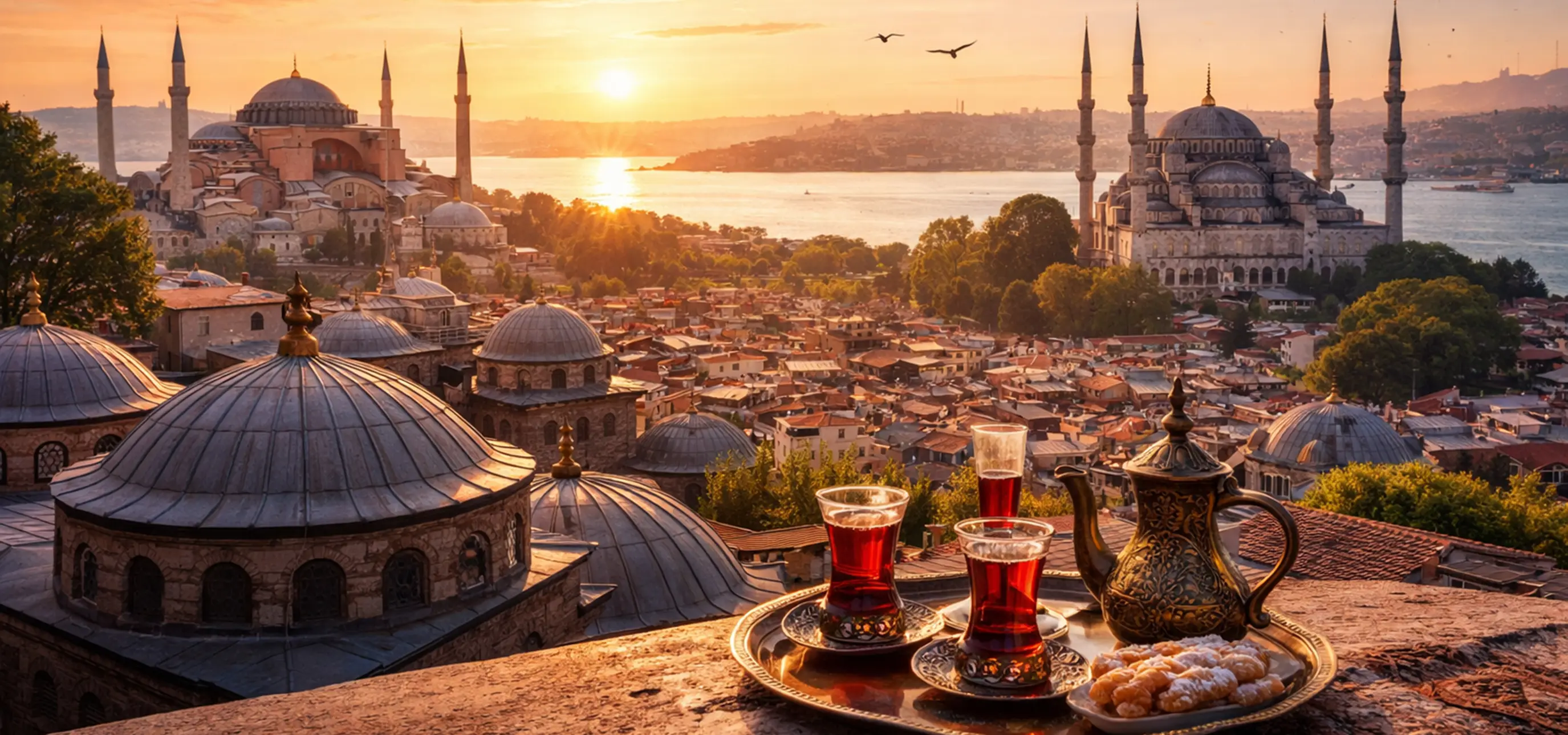
Discover imperial mosques, Byzantine churches, archaeological sites, historic neighborhoods, markets, palaces and waterfront districts across Istanbul.
View Istanbul GuideConnect the hidden monuments of Kadırga with Byzantine churches, Ottoman mosques and the great ceremonial center of Sultanahmet.
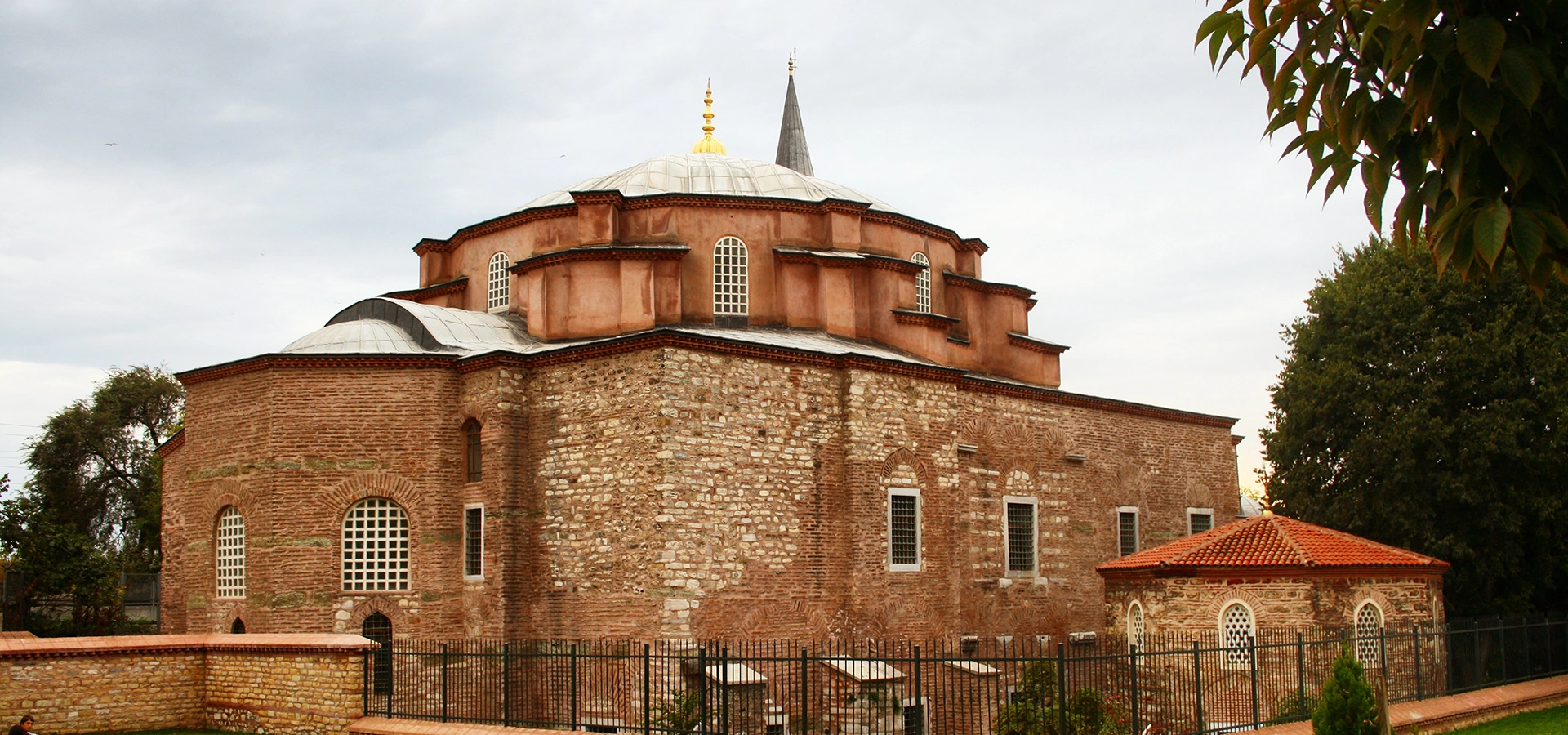
Walk downhill to one of Istanbul's most important early Byzantine churches, later converted into a mosque.
Explore Little Hagia Sophia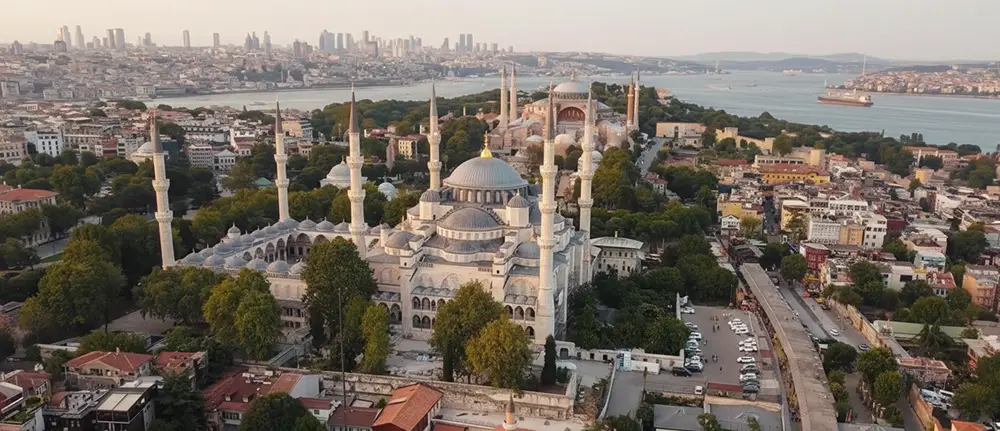
Compare Sokollu's intimate Sinan-era tilework with the monumental 17th-century imperial mosque of Sultan Ahmed I.
Explore the Blue Mosque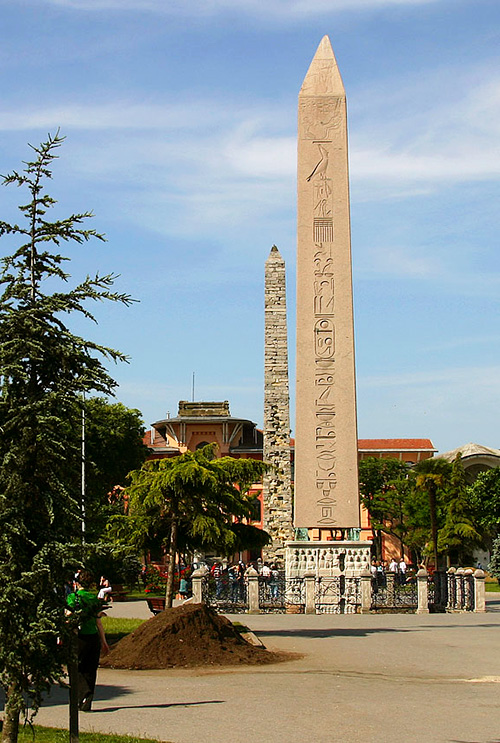
Continue uphill to the ancient ceremonial center of Constantinople and its surviving Egyptian, Greek and Roman monuments.
Explore the Hippodrome