Private Little Hagia Sophia Tour
Ask us about a tailor-made visit focused on Justinian and Theodora, the central octagonal design, Greek inscription, Ottoman conversion and living mosque traditions.
Request a Custom Tour





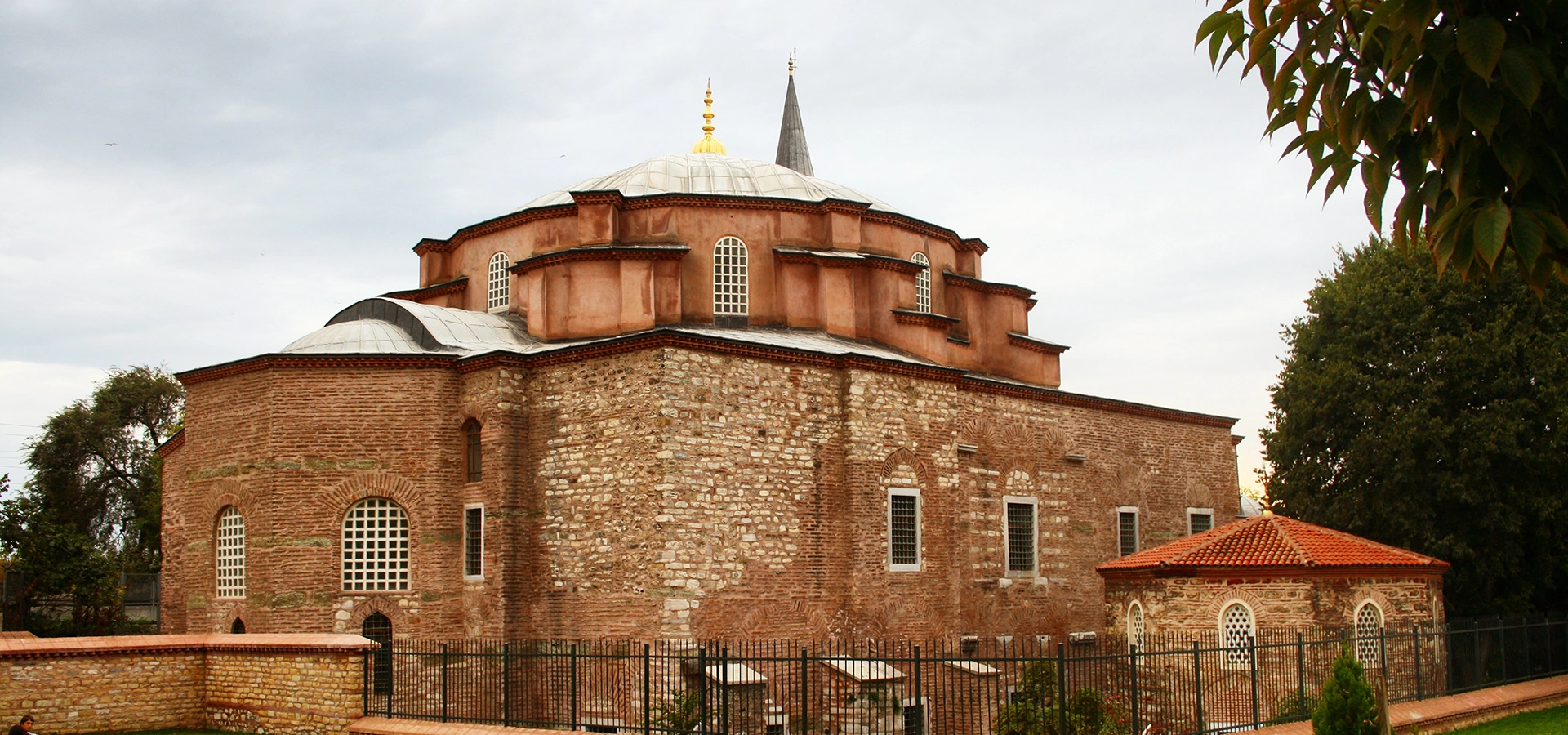
Little Hagia Sophia, known in Turkish as Küçük Ayasofya Camii, is a remarkable 6th-century building in Istanbul's Historic Peninsula. It was originally the Byzantine Church of Saints Sergius and Bacchus, commissioned during the reign of Emperor Justinian I and Empress Theodora.
Built approximately between AD 527 and 536, the monument belongs to the extraordinary period of architectural experimentation that preceded the completion of the great Hagia Sophia. Its octagonal central space, curving exedrae, two-storey gallery and ribbed dome create an interior that feels much larger and more sophisticated than its modest exterior suggests.
During the reign of Sultan Bayezid II, the church was converted into a mosque by the palace official Hüseyin Ağa, probably between 1506 and 1513. The building remains an active mosque today, preserving both its Byzantine structure and centuries of Ottoman additions.
Less crowded than Sultanahmet's most famous monuments, Little Hagia Sophia rewards slow observation. Look for the marble columns, finely carved capitals, the long Greek dedicatory inscription, the elegant central plan and the peaceful courtyard of the former madrasa.
Enter a sanctuary created during the formative years of Justinian's reign.
Experience a central space shaped by eight piers, exedrae, galleries and a ribbed dome.
See a surviving marble text honoring Justinian, Theodora and Saint Sergius.
Visit respectfully outside prayer times and encounter a monument still used for worship.
Essential information for visiting the former Church of Saints Sergius and Bacchus.
Küçük Ayasofya neighborhood in Fatih, southwest of the Blue Mosque and Hippodrome.
Open on Google MapsChurch of Saints Sergius and Bacchus, dedicated to two celebrated Christian military martyrs.
Built during the reign of Justinian I and Theodora, approximately AD 527–536.
An active mosque since its early 16th-century Ottoman conversion.
General mosque entry is normally free; respectful donations may be welcomed.
Allow 30–45 minutes, excluding prayer times or a longer architectural study.
The building links Justinian's architectural ambitions with more than five centuries of Ottoman religious history.
Little Hagia Sophia is among the most important surviving monuments from the early reign of Justinian I. Its design shows Byzantine architects exploring how a domed central space could be surrounded by aisles and galleries without losing visual unity. These experiments belong to the same creative environment that produced Hagia Sophia, although the two buildings have different plans and scales.
The monument is especially valuable because much of its 6th-century spatial organization remains legible. Visitors can still read the octagon within the surrounding enclosure, see paired columns supporting the gallery, study richly carved marble elements and follow the Greek dedicatory inscription around the interior.
Its Ottoman history is equally significant. Rather than abandoning the Byzantine building, Hüseyin Ağa adapted it for Islamic worship and established a religious complex around it. The mihrab, minbar, minaret, entrance arrangements, painted decoration and former madrasa record the building's long life as a mosque.
Little Hagia Sophia stands within the Sultanahmet Urban Archaeological Component Area of the Historic Areas of Istanbul UNESCO World Heritage Site. For travelers following our guide to places to visit in Istanbul, it offers a quieter and more intimate encounter with the city's layered religious heritage.
The church was constructed beside the Palace of Hormisdas, the residence used by Justinian before he became emperor. It stood next to an earlier church dedicated to Saints Peter and Paul; the two sanctuaries shared elements of their entrance complex. Only the Church of Saints Sergius and Bacchus survives substantially today.
Its precise foundation date remains debated, but modern scholarship generally places construction between 527 and 536. This was the opening decade of Justinian's reign, when imperial patronage reshaped Constantinople through churches, infrastructure and ceremonial architecture.
The church continued to function through the Byzantine centuries and survived the Ottoman conquest of 1453. During the reign of Sultan Bayezid II, Hüseyin Ağa—an important official connected with the imperial palace— converted it into a mosque. The conversion is usually dated between 1506 and 1513.
An Ottoman complex developed around the mosque with a madrasa, Sufi lodge and charitable facilities. Earthquakes, humidity, changing ground conditions and nearby railway construction affected the building over time. It underwent repeated repairs in the Ottoman and Republican periods, including a major modern conservation campaign completed in 2006.
Justinian resides in the nearby Palace of Hormisdas before becoming emperor.
The Church of Saints Sergius and Bacchus is built under Justinian and Theodora.
Constantinople becomes the Ottoman capital; the church initially remains in Christian use.
Hüseyin Ağa converts the building into a mosque and establishes an Ottoman complex.
Repairs address earthquake damage, deterioration and changes to the minaret.
A major restoration is completed and the monument reopens for worship and visitors.
Sergius and Bacchus were honored in late antique Christian tradition as Roman soldiers and martyrs. Their cult became especially influential in the eastern provinces of the Roman Empire, and Saint Sergius was closely associated with military protection and imperial devotion.
A famous later tradition links the church's foundation to Justinian's youth. According to the story, Justinian was accused of plotting against his uncle, Emperor Justin I. Sergius and Bacchus then appeared to the emperor in a dream, declared Justinian innocent and saved his life. After becoming emperor, Justinian supposedly built the church in gratitude.
The story is memorable, but it should be treated as foundation legend rather than securely documented biography. What is certain is that the saints had strong prestige in Justinian's world and that the surviving dedicatory inscription places imperial patronage and Saint Sergius at the center of the monument's identity.
From the street, Little Hagia Sophia appears relatively restrained. Inside, however, its complex geometry becomes immediately clear. An eight-sided central space is placed within a broader, irregularly rectangular enclosure, creating an ambulatory at ground level and a gallery above.
Eight major piers define the octagon. Between them, straight bays alternate with semicircular exedrae, producing a rhythm of expansion and contraction around the center. Columns of colored marble support richly carved capitals and the gallery entablature, while the dome rises above in alternating curved and flatter sections.
Eight piers organize the sanctuary and carry the transition to the dome.
Semicircular recesses open the diagonal sides and soften the geometry of the interior.
A surrounding passage allows movement around the central worship space.
A second level looks into the central space through columns and carved marble screens.
The approximately 17-meter-wide dome is divided into alternating concave and flatter sections.
The exterior uses characteristic Byzantine brickwork set within thick mortar beds.
The name “Little Hagia Sophia” encourages comparison with the larger Hagia Sophia, but this building is not a reduced copy of Justinian's great cathedral. It is a distinct centrally planned sanctuary whose design belongs to the broader architectural experimentation of 6th-century Constantinople.
The interior rewards visitors who pause and look upward as well as around the prayer hall. Byzantine structure and marble carving remain visible alongside the mosque's Ottoman furnishings and decoration.
Stand beneath the dome to understand how the octagon, exedrae and surrounding aisles work together.
Examine the deeply drilled marble patterns, monograms and lace-like surfaces above the columns.
Follow the long dedicatory text running along the entablature above the ground-floor colonnade.
Notice the contrast between green and red-toned marbles used within the lower and upper levels.
See the principal Ottoman elements that orient and serve the building's continuing Islamic worship.
Observe how Islamic inscriptions and painted decoration were integrated into the Byzantine interior.
Look toward the gallery openings even when the upper level itself is not accessible.
Watch daylight move across the dome, piers, columns and curved interior surfaces.
A continuous Greek dedicatory inscription runs around the interior on the marble entablature. It praises Emperor Justinian, honors Empress Theodora and celebrates Saint Sergius as a martyr and protector.
The inscription is more than decoration. It publicly connects the sanctuary with imperial patronage and presents Justinian and Theodora as devout rulers. Theodora's presence is especially important because it confirms her role within the church's commemorative program.
The lettering was designed to be read as part of the architecture. Its words travel around the central space above the columns, visually binding the carved marble elements together. Even visitors unable to read ancient Greek can appreciate the inscription's rhythm and monumental placement.
The text names and praises the rulers associated with the foundation.
Saint Sergius is honored as a faithful martyr with heavenly protection.
The inscription forms a visual band between the lower colonnade and upper gallery.
Its preservation allows the original 6th-century identity to remain visible within the mosque.
The Turkish name suggests a direct architectural relationship, yet the monuments should not be understood as a simple small-and-large pair. Little Hagia Sophia was the Church of Saints Sergius and Bacchus; the great Hagia Sophia was dedicated to Holy Wisdom and served as Constantinople's principal cathedral.
Both reflect the ambition of Justinian's reign, both use domes to shape luminous interiors, and both were later adapted as Ottoman mosques. Visiting them on the same day reveals shared concerns with geometry, light and imperial patronage—but also their fundamental differences.
The building did not become a mosque immediately after the conquest of Constantinople. It remained a church for several decades before Hüseyin Ağa, a senior palace official during the reign of Bayezid II, sponsored its conversion in the early 16th century.
The adaptation introduced the elements required for Islamic worship, including a mihrab indicating the direction of Mecca, a minbar for the Friday sermon and a minaret for the call to prayer. Because the original church was not aligned toward Mecca, the Ottoman prayer orientation interacts subtly with the older geometry.
Hüseyin Ağa also endowed a wider religious and charitable complex. Sources associate it with a madrasa, Sufi lodge, school, soup kitchen and bath. Not every component survives in its original form, but the courtyard and former madrasa rooms still help visitors understand that this was more than a single prayer building.
The Ottoman palace official sponsored the conversion and created its charitable foundation.
The prayer niche establishes the qibla direction within the earlier Byzantine plan.
The pulpit serves the sermon delivered during congregational Friday prayer.
The present minaret reflects rebuilding after earlier alterations and deterioration.
Rooms around the peaceful courtyard recall the educational life of the complex.
Daily worship continues the site's early 16th-century identity as a mosque.
Little Hagia Sophia is not a conventional museum. It is an active mosque where local residents come to pray, so worship always takes priority over sightseeing. Simple preparation makes the visit comfortable for everyone.
Non-worship visits may pause during the five daily prayers, especially Friday noon prayer.
Take off footwear before stepping onto the carpet and use the storage area provided.
Shoulders and knees should be covered; women should bring or borrow a headscarf.
Speak softly, silence phones and never interrupt people who are praying.
Check current rules and do not photograph worshippers without clear permission.
Use visitor areas and respect any signs, screens or temporary access restrictions.
Begin in the courtyard, where the low arcades and former madrasa rooms create a calm transition from the surrounding streets. Look back at the exterior to identify the Byzantine core, Ottoman entrance additions and minaret before entering the mosque.
After removing your shoes, move quietly into the central prayer hall. Stand beneath the dome and identify the eight piers of the central octagon. Then look diagonally toward the semicircular exedrae and upward to the gallery to see how multiple layers create depth.
Walk only through areas open to visitors and study the marble columns, carved capitals and entablature inscription. Finish by observing how the mihrab, minbar, carpets and calligraphic panels adapt the older sanctuary for Islamic worship. Return to the courtyard for a final exterior view.
Little Hagia Sophia is located in the Küçük Ayasofya neighborhood of Fatih, within walking distance of Sultanahmet's principal monuments. As an active mosque, it is generally available outside worship periods rather than operating like a ticketed museum with a guaranteed all-day tourist schedule.
Entry is normally free. Prayer times change every day according to sunrise and season, and access may also be affected by Friday worship, religious holidays, maintenance or community events. Check conditions locally and be prepared to wait or return later if a service is underway.
The best time is determined less by weather than by prayer and community use. A calm period between services allows visitors to appreciate the architecture without disturbing worship.
Often a practical window after the morning prayer and before the noon service.
Can be peaceful between prayers, but check the day's exact timetable.
Generally quieter than weekends and easier for slow architectural observation.
Avoid the busy congregational period around midday unless attending as a worshipper.
Comfortable seasons for combining the mosque with a longer Sultanahmet walk.
Soft light can reveal carved marble and the layered geometry of the interior.
Enough for a respectful first look at the courtyard and central interior.
Ideal for architecture, inscription, Ottoman features and quiet observation.
Suitable for detailed study, sketching or careful photography when permitted.
Combine the mosque with nearby Sokollu Mehmed Pasha Mosque and the Hippodrome.
Add the Blue Mosque, Hagia Sophia and Basilica Cistern in Sultanahmet.
Continue through Topkapı Palace and the Istanbul Archaeological Museums.
The mosque's intimate scale makes architectural details easier to study than in Istanbul's largest monuments. Photography must remain secondary to worship and current mosque rules.
Stand within an approved visitor area and use the octagon to organize a balanced composition.
A wide-angle view can show how curved recesses lead the eye toward the dome.
Use natural side light to reveal the depth of capitals, monograms and entablature carving.
A moderate zoom helps isolate sections of the Greek text above the colonnade.
Frame the mosque through the former madrasa arcade for a sense of place and scale.
Never photograph worshippers closely or use flash during prayer.
The ground-floor visit is considerably less demanding than many fortress or tower attractions, but historic paving, thresholds, entrance steps and the requirement to remove shoes can still present difficulties. The upper gallery is not necessarily part of the public visitor route.
Approach routes may include stone paving and slightly uneven surfaces.
Historic doorways or steps may require assistance for some visitors.
Ask mosque staff about the current accessible entrance or any portable ramp.
Visitors who cannot bend easily may wish to bring a companion or slip-on footwear.
The principal architecture can be appreciated without climbing to the gallery.
Ask permission before using seating intended for elderly worshippers or community members.
The mosque lies downhill and southwest of the Hippodrome in the Fatih district. The final approach passes through quieter residential streets, making it feel slightly removed from Sultanahmet even though it is close to the main sights.
Take the T1 tram to Sultanahmet, then walk downhill for approximately 10–15 minutes.
Walk southwest past the Hippodrome area and descend through Küçük Ayasofya streets.
Approach through the southern Historic Peninsula using local streets and pedestrian routes.
Ask for “Küçük Ayasofya Camii”; narrow streets may determine the exact drop-off point.
Traffic restrictions and scarce parking make public transport or walking more practical.
It fits naturally into a walking route through Sultanahmet, Kadırga and Kumkapı.
The mosque is perfectly placed for a walking day through Byzantine and Ottoman Istanbul. Several major monuments are within roughly 10–20 minutes on foot, depending on route and pace.
Visit the great 17th-century imperial mosque that defines Sultanahmet's skyline.
Explore the ceremonial arena of Constantinople and its surviving ancient monuments.
See an intimate Mimar Sinan mosque celebrated for its İznik tile decoration.
Compare Little Hagia Sophia with Justinian's vast domed masterpiece completed in 537.
Descend into Constantinople's atmospheric underground water reservoir.
Explore the Ottoman imperial residence connected with the court career of Hüseyin Ağa.
Continue the historical story through ancient sculpture, archaeology and imperial collections.
Walk toward a historic neighborhood known for Armenian heritage and long-established restaurants.
Little Hagia Sophia is an active Istanbul mosque that was originally the 6th-century Byzantine Church of Saints Sergius and Bacchus.
Its Turkish name is Küçük Ayasofya Camii. The surrounding neighborhood is also called Küçük Ayasofya.
It is in Fatih's Historic Peninsula, southwest and downhill from the Blue Mosque and Hippodrome.
Its exact starting date is debated, but construction is generally placed between AD 527 and 536.
It was commissioned under Byzantine Emperor Justinian I and Empress Theodora. The identities of its architects are not securely documented.
It was begun before or around the start of the present Hagia Sophia and completed within the same decade. The precise construction sequence remains debated.
No. The buildings belong to the same Justinianic period but have different dedications, plans, functions and scales.
The attribution is popular but not securely established. It is safer to describe the architects of Little Hagia Sophia as unknown.
They were Christian military martyrs whose cult became highly influential in the eastern Roman world.
The dedicatory poem praises Justinian and Theodora and honors Saint Sergius as a faithful martyr and heavenly protector.
Hüseyin Ağa converted it during the reign of Sultan Bayezid II, probably between 1506 and 1513.
Yes. It is an active neighborhood mosque used for the five daily prayers and Friday worship.
Visitors are normally welcome outside prayer times when they follow mosque dress and behavior rules.
General entry is normally free. Donations may be welcomed, but visitors should check current local guidance.
As an active mosque, access is organized around daily worship rather than guaranteed museum hours. Avoid prayer times and Friday midday worship.
Wear clothing that covers shoulders and knees. Women should cover their hair, and everyone removes shoes before entering the carpeted prayer space.
Discreet personal photography is often possible outside prayer, but follow posted rules and never photograph worshippers intrusively.
Allow 30–45 minutes for the courtyard, architecture, inscription and Ottoman interior features.
Ground-floor access may be possible, but historic paving, steps and thresholds can present difficulties. Ask mosque staff about the current accessible entrance.
Take the T1 tram to Sultanahmet and walk downhill for about 10–15 minutes, or use a taxi to Küçük Ayasofya Camii.
Yes. It lies within the Sultanahmet component of the Historic Areas of Istanbul, inscribed by UNESCO in 1985.
Yes. Its quiet atmosphere, 6th-century architecture and visible Byzantine-Ottoman layers make it one of Sultanahmet's most rewarding lesser-known monuments.
Pause sightseeing whenever prayers or religious activities begin.
Oils and repeated contact can damage ancient marble surfaces.
Remain within areas currently open to non-worship visitors.
Do not treat worshippers or neighborhood residents as photographic subjects.
Keep the mosque, courtyard and surrounding streets clean.
If donating, use only the official donation arrangements provided at the mosque.
Connect Little Hagia Sophia with the Hippodrome, Blue Mosque, Hagia Sophia, Basilica Cistern and the quieter streets of the Historic Peninsula through a private route shaped around your interests and without compulsory shopping stops.
Choose a focused architectural visit or build a deeper route through Justinian's Constantinople and Ottoman Sultanahmet.
Ask us about a tailor-made visit focused on Justinian and Theodora, the central octagonal design, Greek inscription, Ottoman conversion and living mosque traditions.
Request a Custom Tour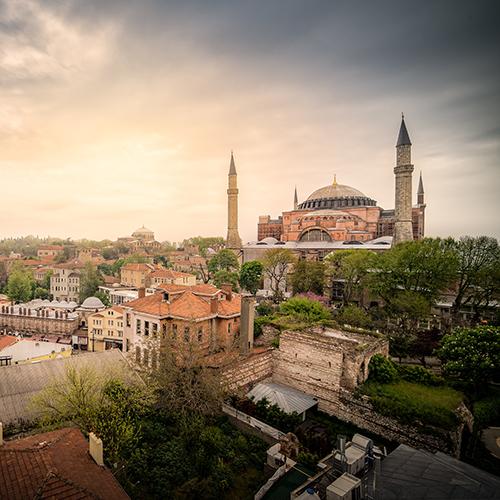
Compare two extraordinary monuments from Justinian's reign and discover how their different plans shaped sacred space.
Explore Hagia SophiaBuild a day around Istanbul's greatest Byzantine and Ottoman monuments.
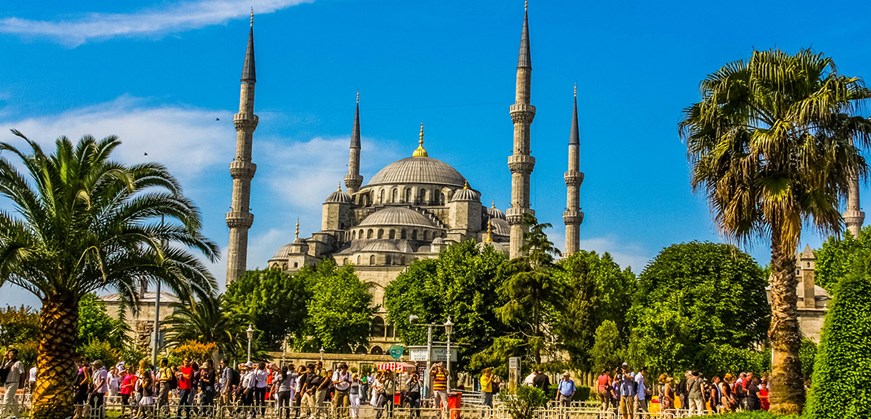
Continue to Sultan Ahmed I's great imperial mosque and its celebrated İznik tile interior.
Explore the Blue Mosque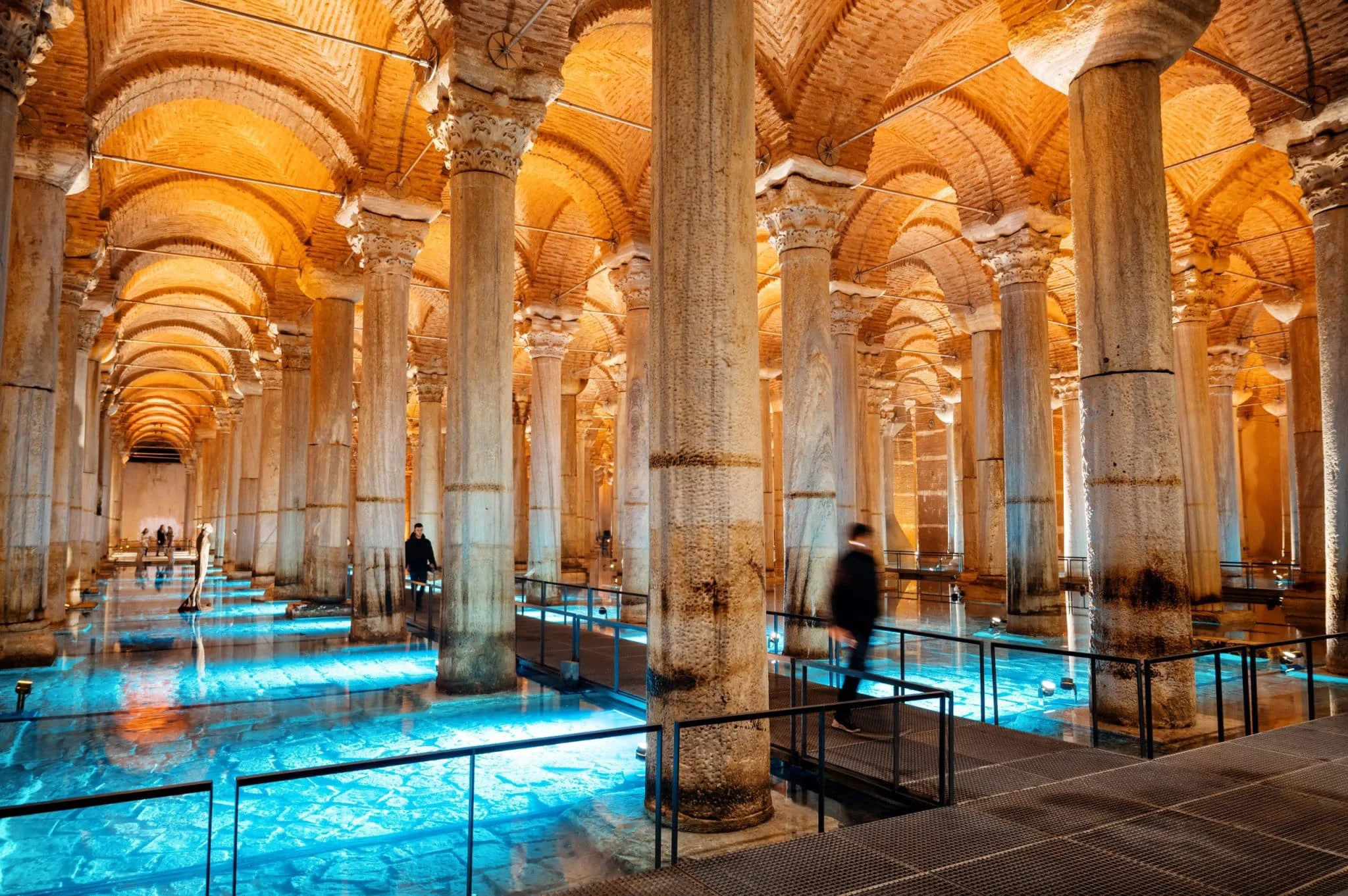
Explore another extraordinary 6th-century project associated with Justinian's Constantinople.
Explore the Basilica Cistern
Continue to Topkapı Palace, the Archaeological Museums, Grand Bazaar, Fener and Balat.
Continue Exploring Istanbul