Private Rüstem Paşa Caravanserai & Ottoman Trade Tour
Ask us about a tailor-made walking route combining the caravanserai, historic bazaars, Old Mosque, Selimiye and the architectural world of Mimar Sinan in central Edirne.
Request a Custom Tour





In the historic center of Edirne, only a short walk from the Old Mosque and the city's great covered bazaars, stands one of the most important surviving Ottoman urban inns: the Rüstem Paşa Kervansarayı.
The complex was commissioned by Grand Vizier Rüstem Paşa and is generally dated to 1560–1561. Its principal section is attributed to Mimar Sinan, the chief architect of the Ottoman Empire and the designer of many of the monuments that define Edirne's architectural identity.
Unlike a mosque or palace, a caravanserai was designed around movement. Merchants arrived with goods, animals needed secure shelter, travelers required food and accommodation, shops generated income, and courtyards organized the practical rhythm of arrival and departure. Rüstem Paşa Caravanserai brings all of these functions together within a monumental two-storey complex.
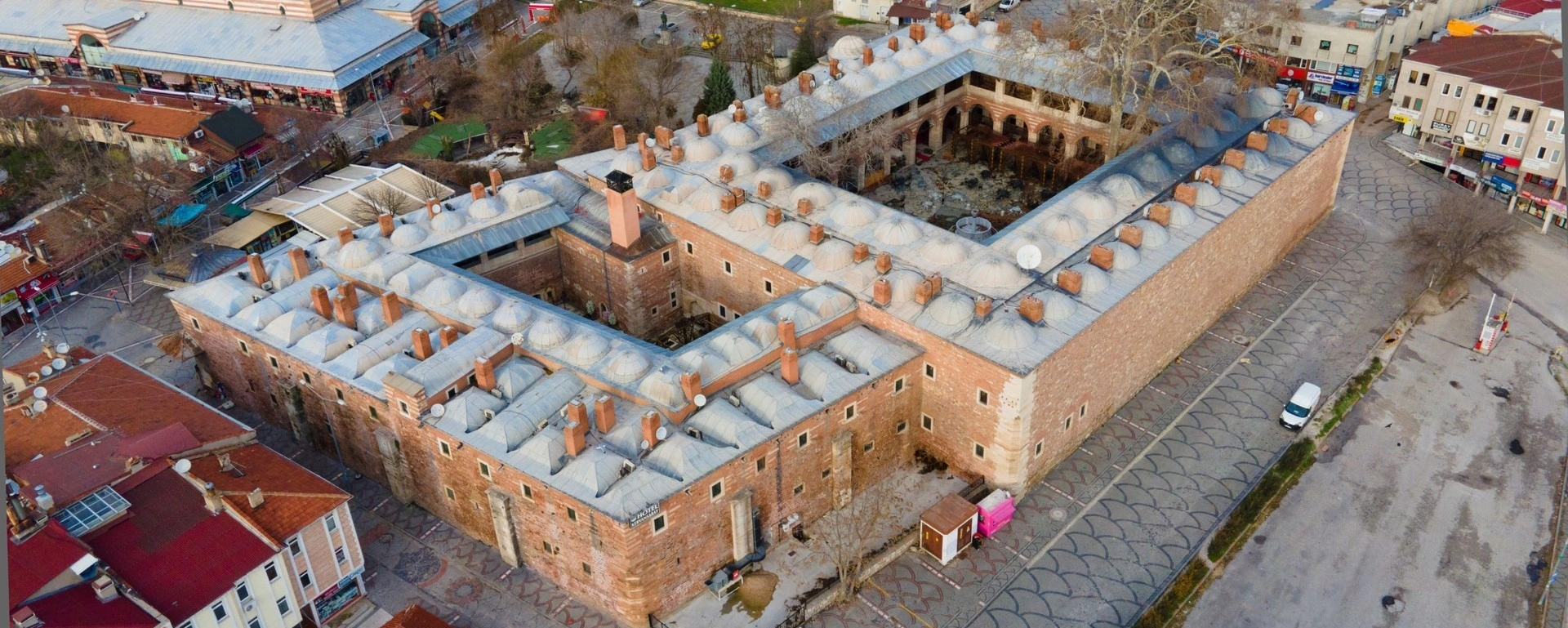
Its architecture is especially remarkable because the building combines two interconnected sections: a larger courtyard associated with the functions of a city han, and a smaller section that served the needs of travelers, animals and supporting services. The complex also included street-facing shops and once possessed a raised courtyard mosque.
The building later entered a very different chapter. After major restoration work in the 20th century, it was converted into a hotel and opened in 1972. The restoration became internationally famous when the project received an Aga Khan Award for Architecture in the 1978–1980 award cycle. Today the caravanserai again operates as a hospitality property, giving the monument an unusual continuity with its original role as a place of lodging.
Discover a major 16th-century commercial and hospitality complex connected with the Ottoman Empire's greatest architect.
Explore the logic of a complex that combined a large urban han with a smaller section for travel and service functions.
Official local records describe a substantial complex built to accommodate people, commerce and long-distance movement.
Learn how the 20th-century restoration became one of Türkiye's internationally recognized conservation projects.
Essential information for understanding one of Edirne's most important Ottoman caravanserais.
Historic center of Edirne, close to the Old Mosque, Bedesten and Ali Paşa Bazaar.
Open on Google MapsGenerally dated to 1560–1561, during the reign of Sultan Süleyman the Magnificent.
Grand Vizier Rüstem Paşa, one of the most powerful Ottoman statesmen of the 16th century.
The principal large-han section is attributed to Mimar Sinan.
Municipal records describe 102 rooms and 21 street-facing shops.
Restored and converted into a hotel in 1972; the project later received an Aga Khan Award for Architecture.
The caravanserai reveals the infrastructure behind Edirne's role as an imperial capital and commercial crossroads.
Edirne is usually remembered through its mosques, palaces and bridges, but a great Ottoman city also depended on places where people could arrive, trade, sleep, store goods and care for animals. Rüstem Paşa Caravanserai is one of the clearest surviving examples of that practical urban world.
Its importance begins with scale. The building was not a small roadside shelter. It was a major city han with accommodation, service spaces, shops, courtyards and controlled circulation, positioned directly inside Edirne's commercial center.
The complex also demonstrates the architectural range of Mimar Sinan. His career is dominated in popular memory by monumental mosques, yet the Ottoman imperial building program also included bridges, baths, schools, hospitals, shops, warehouses and caravanserais. Rüstem Paşa Caravanserai shows Sinan solving a highly practical problem: how to organize people, animals, goods and commercial income within a dense existing city.
The monument is equally important for the history of preservation in Türkiye. Its 20th-century restoration and conversion into a hotel attracted international attention, and the project became an Aga Khan Award for Architecture recipient. That history makes the building a fascinating case study not only in Ottoman architecture, but also in the modern debate over how historic monuments should be reused.
For travelers following our complete guide to places to visit in Edirne, the caravanserai is especially rewarding when combined with the nearby historic bazaars, Old Mosque and Selimiye district. Together these sites reveal how trade, religion and travel were woven into the fabric of the Ottoman city.
Long before modern highways and railways, Edirne occupied a strategic position between Istanbul, the Balkans and the interior of the Ottoman Empire. Travelers, officials, soldiers, merchants and diplomatic missions passed through the city on routes that connected the imperial capital with southeastern Europe.
This movement created a constant need for organized accommodation. A merchant arriving with valuable goods required more than a bed. He needed a secure place for merchandise, space for animals, food, water, storage, access to local markets and the possibility of doing business without leaving the protected environment of the han.
Caravanserais therefore belonged to the infrastructure of commerce. They helped transform long-distance movement into a workable economic system. Their courtyards functioned as controlled spaces where arrivals could be organized, loads could be handled and strangers could enter the urban economy.
Rüstem Paşa Caravanserai is particularly significant because it stands not on an isolated road, but inside the historic commercial core. It connected long-distance travel directly with Edirne's bazaars, shops and monumental center.
Caravanserais offered a protected stopping point for people moving between cities and regions.
Horses, pack animals and caravan traffic required dedicated service and stable areas separate from guest rooms.
Merchants needed secure storage and easy access to the commercial life of the city.
Street-facing commercial units generated income and connected the han with daily urban trade.
Accommodation transformed the building into a place where journeys paused and new commercial connections formed.
The caravanserai worked together with bazaars, mosques, baths, streets and other institutions around central Edirne.
Rüstem Paşa was one of the most powerful statesmen of the reign of Sultan Süleyman the Magnificent. He served as grand vizier and was also connected to the imperial family through his marriage to Mihrimah Sultan, the daughter of Süleyman and Hürrem Sultan.
Like many leading Ottoman statesmen, Rüstem Paşa sponsored architecture in several parts of the empire. Religious, commercial and public buildings could serve practical needs while also establishing a lasting charitable and political legacy.
The Edirne caravanserai belongs to this wider pattern of patronage. Its location in one of the empire's most important cities made it both useful and prestigious. By commissioning a large commercial inn, Rüstem Paşa contributed directly to the movement of merchants and travelers through Edirne.
His name is also associated with other major Ottoman monuments, most famously the Rüstem Paşa Mosque in Istanbul, celebrated for its extraordinary İznik tile decoration. The Edirne caravanserai reveals a very different side of his architectural patronage: not ceremonial worship, but the practical mechanics of trade and travel.
The large principal section of Rüstem Paşa Caravanserai is attributed to Mimar Sinan, the chief imperial architect whose long career transformed Ottoman architecture during the 16th century.
Sinan's achievement here is not based on a vast central dome or a dramatic skyline. Instead, the brilliance lies in planning, circulation and adaptation. The building had to fit a difficult urban site, follow an irregular street line, provide shops toward the commercial frontage and still maintain an orderly internal system of courtyards and rooms.
Scholarly descriptions emphasize how the exterior responds to the uneven line of the street while the interior remains geometrically disciplined. This is one of the reasons the building is such a valuable example of Ottoman urban design: the architecture accepts the city around it rather than forcing an idealized symmetrical plan onto the site.
The complex also separates functions carefully. Guest accommodation, animal areas, service rooms, administrative spaces, bathing and sanitary needs and worship were all given distinct places within the whole. This organization allowed the caravanserai to operate efficiently even when crowded with people and goods.
One of the most unusual aspects of Rüstem Paşa Caravanserai is that it is not simply a single courtyard surrounded by rooms. The complex developed as two interconnected sections, traditionally known as the Büyük Han and Küçük Han.
The larger courtyard section had the character of a city han. It provided the organized urban accommodation expected by merchants and travelers staying within Edirne. The smaller section functioned more like a menzil han, with stronger emphasis on animals, service areas and the practical needs of a journey.
The two parts were joined by internal passageways, allowing the complex to function as one institution while keeping different activities from interfering with one another. This separation was especially useful in a working caravanserai, where sleeping rooms needed to coexist with animals, storage, cooking, loading and busy commercial movement.
The larger two-storey courtyard section, associated with the principal urban lodging function.
The smaller connected section containing service spaces and areas linked to animals and travel logistics.
The two parts communicate through the building, allowing movement without abandoning the protected complex.
The plan distinguishes accommodation from stables, kitchens, sanitation and other support areas.
The architecture combines cut stone and brick, materials used together to create a strong but visually varied exterior. From a distance the building appears solid and defensive, yet the courtyard elevations become much lighter through repeated arches, galleries and decorative brickwork.
The complex rises through two storeys. Rooms are arranged around the courtyards, while the sides facing inward are articulated by arcaded galleries. This creates a protected circulation zone between the open courtyard and the enclosed rooms.
The upper levels are particularly rewarding for architectural observation. Door and window arches contain varied brick patterns, and the courtyard façades include combinations of geometric and vegetal decoration. Stone rosettes, brick arches and changing parapet details prevent the long elevations from becoming monotonous.
The roofline is equally distinctive. A succession of small domes and vaults reveals the modular organization of the rooms beneath. Seen from an elevated viewpoint, the caravanserai becomes a landscape of masonry cells gathered around open courtyards.
Alternating masonry gives the walls strength, texture and a distinctly Ottoman visual character.
Covered galleries organize circulation around the courtyard on both levels.
Ground-floor rooms include barrel-vaulted spaces suited to the practical needs of an urban han.
Domed galleries and rooms contribute to the characteristic roofscape of the complex.
Upper-floor arches and window fields preserve some of the building's most interesting decorative masonry.
Small birdhouse openings in the façades are a charming detail worth looking for while examining the masonry.
The larger section, often called Büyük Rüstem Paşa Hanı, is organized around a broad rectangular courtyard. It is the part most strongly associated with Mimar Sinan and forms the architectural heart of the complex.
The courtyard is surrounded by arcades on both levels. Behind the lower porticoes were vaulted rooms, while the upper galleries led to additional guest rooms. Many of these rooms originally included fireplaces and wall niches, small details that remind visitors that the caravanserai was designed for real long-term use rather than ceremonial display.
The entrance is also historically interesting. A later inscription dated 1753–1754 survives above the entrance area, evidence that the monument continued to be maintained and modified long after its 16th-century construction.
Standing in the courtyard today, the strongest impression comes from repetition: arch after arch, room after room and the rhythm of the upper gallery. This repetition is exactly what allowed a large number of travelers to be accommodated efficiently while preserving a clear and dignified architectural order.
The smaller connected section, known as Küçük Rüstem Paşa Hanı, had a different practical character from the main courtyard. Its lower level incorporated spaces associated with stables, kitchens and sanitation, while the upper floor contained additional guest accommodation.
This division helps explain how an Ottoman caravanserai functioned. Travelers and merchants could not be separated from the animals and goods that made their journeys possible, but those activities did not need to occupy the same rooms. The architecture created an organized relationship between them.
The stable area was structured with supports and long vaults, providing a durable interior suited to animals and heavy use. Service areas such as kitchens could operate nearby without disturbing the more formal accommodation around the main courtyard.
The exact appearance of the smaller section has been affected by centuries of alteration and later hotel adaptation, but its underlying role remains important for understanding the monument: Rüstem Paşa Caravanserai was a working machine for travel, not simply an elegant courtyard building.
Official local descriptions record 21 shops along the street-facing parts of the caravanserai. These commercial units are essential to understanding the relationship between the monument and the surrounding city.
Rather than presenting a blank monumental wall toward the street, the building actively participated in Edirne's commercial life. The shopfronts followed the curve and irregular line of the existing road, while the more orderly courtyard plan developed behind them.
The shops also had an economic purpose. Rental income helped support the complex, a familiar feature of Ottoman foundations in which commercial property could provide continuing revenue for the maintenance of larger institutions.
This makes the façade unusually interesting. The street elevation is not merely a decorative skin. It is a record of the negotiation between monumental architecture and everyday business.
The large courtyard originally contained a small raised prayer structure, often described as a köşk mescid, together with a water feature or fountain arrangement. The mosque was an integral part of the caravanserai's original organization.
Its elevated form was especially significant. Scholars have noted parallels with earlier Anatolian Seljuk caravanserai mosques, where a small prayer space could rise above the courtyard rather than being absorbed into the surrounding rooms.
The courtyard mosque did not survive. It was destroyed during the 1877–1878 Ottoman-Russian War, when Edirne was occupied. Later archaeological investigation identified traces of its flooring, providing physical evidence for the lost structure.
Today, the absence of the mosque changes how the courtyard is perceived. The center appears more open than it would have in the Ottoman period. When standing there, it is worth imagining the courtyard not as an empty square, but as a carefully organized space in which accommodation, water, movement and prayer all met.
A caravanserai was a place of constant transition. New groups arrived, animals were unloaded, merchants secured their goods, servants moved between stables and kitchens, and travelers climbed to rooms overlooking the courtyard.
The courtyard acted as the center of this activity. It provided orientation: from here a visitor could find accommodation, service areas, the street exits and the routes leading toward the commercial districts of Edirne.
Rooms with fireplaces offered a degree of privacy and comfort, while the galleries allowed circulation in rain, summer sun and winter weather. At night, the protected nature of the complex improved security for people and merchandise.
The surrounding city completed the experience. A merchant leaving the gates of Rüstem Paşa Caravanserai could quickly reach covered bazaars, shops, mosques and the broader commercial streets of Edirne. The han therefore connected long-distance trade directly with local urban life.
Caravans entered a controlled complex where people, animals and goods could be organized.
Rooms around the galleries provided protected lodging within the city center.
Merchants could keep goods close while using nearby bazaars and shops.
Stable areas in the smaller han separated animal care from the principal guest accommodation.
Kitchens and other practical spaces supported travelers during their stay.
The lost courtyard mosque once provided a dedicated place for worship within the complex.
The commercial life of the caravanserai did not end when the great age of camel caravans declined. In more recent history, the building became associated with the marketing of silkworm cocoons produced in Edirne and the surrounding region.
This later use is important because it shows how historic commercial buildings could adapt rather than simply become obsolete. The same courtyards and sheltered spaces that had once served traveling merchants could support new forms of regional trade.
Silk production was a specialized seasonal economy. Cocoons needed to be gathered, graded, sold and transferred into wider commercial networks. Using an established han in the center of Edirne provided a familiar marketplace for this activity.
For visitors today, this history adds another layer to the monument. Rüstem Paşa Caravanserai was not frozen in the 16th century; its economic role changed repeatedly as transport, production and the city itself evolved.
By the 20th century, Rüstem Paşa Caravanserai required major conservation. Restoration campaigns were undertaken by the General Directorate of Foundations, with substantial work beginning during the 1960s.
A decision was made to adapt the monument for tourism by converting it into a hotel. This was an ambitious idea: instead of restoring the building as an empty historical display, the project attempted to return it to a function closely related to its original purpose— accommodation for travelers.
The restored hotel opened in July 1972. Rooms, circulation and service infrastructure were adapted to modern hospitality requirements while the historic courtyards, masonry and principal architectural character were preserved.
The project became influential because it raised a question that remains important in heritage conservation today: how much should a historic building change in order to remain useful? Rüstem Paşa Caravanserai became an early and internationally discussed example of adaptive reuse.
The restoration of Rüstem Paşa Caravanserai received an Aga Khan Award for Architecture in the 1978–1980 award cycle, giving the Edirne monument international architectural recognition.
The award is especially interesting because the jury's judgment was nuanced. The restoration itself was praised for the high standard of its conception and execution, while the conversion into a modern hotel was viewed as less successful from a practical point of view.
That distinction makes the project unusually valuable for students of conservation. The award did not simply declare that every decision was perfect. Instead, it recognized the achievement of rescuing and restoring an important historic monument while acknowledging the difficulties created by the new function.
Today the building's continued use for hospitality gives the discussion another chapter. The caravanserai has undergone later work and once again operates as a hotel, meaning that the relationship between historic architecture and modern accommodation continues to evolve.
The major restoration and hotel conversion was completed and the adapted building opened.
The project became an Aga Khan Award for Architecture recipient.
The conservation work was commended for its architectural conception and performance.
The jury also noted that the original hotel conversion had practical limitations.
Rüstem Paşa Caravanserai is unusual because it is not operated simply as a conventional museum. After further restoration and renewed use in recent years, the historic complex again functions as a hotel and hospitality venue.
That continuing use creates a direct connection with the building's original purpose. Sixteenth-century merchants arrived here looking for secure lodging; modern travelers can once again sleep within the historic complex, although the experience and facilities are naturally very different.
For sightseeing visitors, this also means access should be approached respectfully. Courtyards, reception areas or restaurant spaces may be accessible depending on current operations, but guest-room corridors and private hotel areas should not be treated as unrestricted museum galleries.
If seeing the interior is important to your visit, ask the hotel staff politely before exploring or photographing beyond clearly public areas. Events, private functions or hotel occupancy can affect access without notice.
Stand in the center and study the repeating two-storey arcades surrounding the open space.
Look closely at the varied decorative brick patterns above doors and windows, especially on the upper level.
Small geometric and floral details add refinement to the otherwise practical courtyard architecture.
The many small domes reveal the modular organization of rooms and galleries beneath them.
Notice how the commercial frontage follows the irregular street rather than a perfectly straight monumental line.
A later 18th-century inscription records another chapter in the long history of repair and continued use.
Search the exterior masonry for small openings created as shelters for birds.
Imagine the köşk mescid that once stood in the courtyard before its destruction in the 19th century.
The caravanserai makes the most sense when viewed together with Edirne's surviving covered markets. The nearby Bedesten, Ali Paşa Çarşısı and Selimiye Arastası show the retail side of Ottoman commercial life, while Rüstem Paşa Caravanserai reveals the infrastructure that supported merchants arriving from elsewhere.
A traveler might bring merchandise into the city, secure accommodation and storage at a han, and then participate in trade through surrounding shops and bazaars. These buildings therefore performed different functions within one connected economic system.
Our Historic Bazaars of Edirne guide explores the Bedesten, Ali Paşa Bazaar and Selimiye Arasta in detail. Combining that route with Rüstem Paşa Caravanserai creates one of the best walks in Edirne for understanding Ottoman commerce.
Begin at Rüstem Paşa Caravanserai and first study the exterior street frontage. Notice the shops, stone-and-brick masonry and the way the building follows the shape of the historic street. If public access is available, enter the main courtyard and spend time beneath the arcades.
Continue to the nearby Old Mosque and Edirne Bedesten. The contrast is useful: the caravanserai accommodated travelers and goods, while the Bedesten provided a secure commercial environment for valuable merchandise.
From the Bedesten, walk through Ali Paşa Çarşısı, another major Mimar Sinan commercial work. Its long covered passage gives a very different architectural experience from the inward-looking courtyard of the caravanserai.
Finish at Selimiye Mosque and Selimiye Arasta. The route connects accommodation, retail, religious foundations and monumental architecture within one compact section of the former Ottoman capital.
The complex is not an unrestricted museum. Follow staff guidance and respect private guest areas.
If you want to see more than the clearly public courtyard or reception areas, ask hotel staff first.
The upper arches, brick decoration, domes and gallery details are easy to miss at ground level.
Even without entering every interior space, the street façades reveal the shops, masonry and irregular urban plan.
The nearby Bedesten and Ali Paşa Bazaar make the commercial purpose of the caravanserai much easier to understand.
Private functions may reduce access to the courtyards or hospitality areas.
Do not photograph hotel guests, staff or private events without permission.
This is a building where plan and architectural rhythm matter more than a long list of exhibits.
Rüstem Paşa Caravanserai stands in central Edirne, within easy walking distance of the Old Mosque, Bedesten and other major monuments. Its central position makes it simple to add to a historic-city walking itinerary.
The key difference from a museum is that the complex has a modern hospitality function. There is therefore no museum-style visitor system that should be assumed to apply to every part of the monument.
Current hotel, restaurant and event operations can affect which areas are open to non-guests. For the best experience, treat the building as a living historic property: enter only clearly public spaces, ask before going farther and avoid disturbing accommodation areas.
A quieter period for appreciating the courtyard architecture before the historic center becomes busier.
Good daylight helps reveal brick decoration, stonework and the depth of the arcades.
Mild weather is ideal for combining the caravanserai with a long walking route through central Edirne.
Comfortable temperatures make it easy to continue on foot to bazaars, mosques and the river district.
The shaded galleries and courtyard spaces provide a welcome contrast to hot streets at midday.
The stone-and-brick architecture remains atmospheric, but plan for cold weather while walking between nearby sites.
Enough for the exterior, entrance area and a quick look at the main courtyard if public access is available.
The best choice for studying the architecture, arcades, decorative masonry and relationship with the street.
Suitable if you also stop for coffee, a meal or another hospitality experience within the complex.
Combine the caravanserai with the Old Mosque, Bedesten, Ali Paşa Bazaar, Selimiye and the Arasta.
The caravanserai is an excellent place for architectural photography because its visual character is built around repetition, depth and texture. The best images often use the arcades to frame the courtyard rather than photographing isolated details.
Use the repeated lower and upper arcades to create balanced compositions across the main courtyard.
Shoot along the arcaded walkways to emphasize depth, rhythm and the sequence of arches.
Use a longer focal length or close composition to capture decorative brick patterns above doors and windows.
If you find a lawful public viewpoint, the many domes create one of the most distinctive images of the caravanserai.
Include the historic shopfronts and curved street line to show how the building fits into the urban fabric.
Because the building functions as a hotel, avoid photographing guests, rooms or private events without permission.
The caravanserai is located in the center of Edirne, which makes it easier to reach than remote archaeological sites. However, it remains a centuries-old building whose original circulation was not designed to modern accessibility standards.
Taxis and vehicles can approach the historic center, reducing the amount of walking required.
Paving and thresholds may be uneven or include level changes typical of a historic structure.
Historic stair access can make upper levels difficult for travelers with limited mobility.
Some accessibility improvements may exist as part of the hospitality use, but access varies by area.
Travelers with specific mobility needs should contact the property directly for current access information.
The surrounding commercial center has cafés and other services, making it easy to plan breaks.
The caravanserai is located in central Edirne, very close to the Old Mosque and the city's historic commercial district. Once you are in the monumental center, walking is usually the easiest way to reach it.
The best option from Selimiye, Old Mosque, Bedesten, Ali Paşa Bazaar and Saraçlar Street.
Ask for Rüstem Paşa Kervansarayı in the city center; the monument is a well-known historic landmark.
Useful for reaching central Edirne, but parking and historic-center traffic can make walking more convenient afterward.
Walk downhill through the historic center toward the Old Mosque and bazaar district.
The caravanserai is only a short walk away, making the two monuments easy to visit together.
Include it as part of one continuous walking section with the historic bazaars rather than a separate vehicle stop.
The caravanserai stands in one of the richest historic districts of Edirne. Use our complete Edirne visitor guide to connect it with bazaars, mosques, fortifications, palace landscapes and river monuments.
Continue directly into the Bedesten, Ali Paşa Bazaar and Selimiye Arasta to explore the commercial city around the han.
Visit one of Edirne's great early Ottoman mosques only a short walk from the caravanserai.
Walk through the historic center to Mimar Sinan's masterpiece and the surrounding social complex.
Explore the Roman and Byzantine fortification layers hidden beneath later Ottoman Edirne.
See an elegant early Ottoman mosque famous for its remarkable historic tiles.
Continue to the former imperial residence of Saray-ı Cedid-i Amire beside the Tunca River.
Finish the day beside one of Edirne's most beautiful Ottoman river crossings.
Cross the river landscape to Edirne's historic railway district and Lausanne Monument.
It is located in the historic center of Edirne, close to the Old Mosque, Bedesten and Ali Paşa Bazaar.
The monument is generally dated to 1560–1561 during the reign of Sultan Süleyman the Magnificent.
It was commissioned by Rüstem Paşa, the powerful Ottoman grand vizier and son-in-law of Sultan Süleyman the Magnificent.
Yes. The principal large-han section is attributed to Mimar Sinan. Scholarly descriptions note that the architect of the smaller connected section is not known with the same certainty.
Official municipal descriptions traditionally record 102 rooms within the historic complex. The layout also includes service areas and other spaces serving the functions of the han.
The street-facing frontage included 21 shops, which connected the caravanserai directly with the commercial life of central Edirne.
They are the two connected sections of the complex. The larger section functioned as the principal urban han, while the smaller section included stronger service and travel-related functions such as stables and kitchens.
Yes. A raised köşk mescid once stood in the large courtyard. It was destroyed during the 1877–1878 Ottoman-Russian War.
The prayer structure was lost during the 19th-century conflict and occupation. Later research identified traces of its floor, helping confirm its former position in the courtyard.
The building served many forms of commerce over time. In more recent history, it became particularly associated with the marketing of silkworm cocoons produced in Edirne and its surroundings.
Major restoration work took place during the 1960s, and the adapted complex opened as a hotel in 1972.
Yes. The restoration became an Aga Khan Award for Architecture recipient in the 1978–1980 award cycle.
The jury praised the quality of the restoration while also noting practical problems with the original hotel conversion. The project therefore became an important international case study in restoration and adaptive reuse.
No. The building currently functions primarily as a historic hotel and hospitality venue, so access differs from a conventional museum.
Access to public hospitality areas may be possible, but it can vary according to hotel operations, private events and staff instructions. Always respect private guest areas.
There is no standard museum-style admission system for simply viewing the building as a historic hotel, but access to particular hospitality services or private areas depends on the property's current operation.
Around 30–45 minutes is enough for a thoughtful architectural visit, while a longer stay makes sense if you use the restaurant, café or hotel facilities.
Focus on the main courtyard, two-storey arcades, brick decoration, stone rosettes, domed roofline, street-facing shops and the traces of the building's adaptation to its irregular urban site.
Absolutely. The Bedesten, Ali Paşa Bazaar and Selimiye Arasta are nearby, making the caravanserai an excellent starting point for a walking route through Ottoman commercial Edirne.
Yes. It is one of the best places in Edirne to understand Ottoman travel, urban trade, Mimar Sinan's non-religious architecture and the modern challenge of giving historic buildings a continuing function.
Remember that some people inside the monument are staying there rather than sightseeing.
Do not enter guest-room corridors, service zones or private event areas without permission.
Architectural photographs are different from photographing identifiable guests, staff or private functions.
Avoid climbing on masonry, sitting on fragile features or touching decorative brickwork unnecessarily.
Arcades and entrances are working circulation spaces, so do not block them while taking photographs.
Using cafés, restaurants or other public services respectfully can help historic buildings remain economically active.
Connect the caravanserai, historic bazaars, Mimar Sinan's architecture, imperial mosques and Edirne's river landscape through a private route designed around your interests.
Follow the path of merchants through Rüstem Paşa Caravanserai, the Bedesten, Ali Paşa Bazaar and Selimiye Arasta while discovering how travel, commerce, charitable foundations and monumental architecture shaped the former Ottoman capital.
Ask us about a tailor-made walking route combining the caravanserai, historic bazaars, Old Mosque, Selimiye and the architectural world of Mimar Sinan in central Edirne.
Request a Custom Tour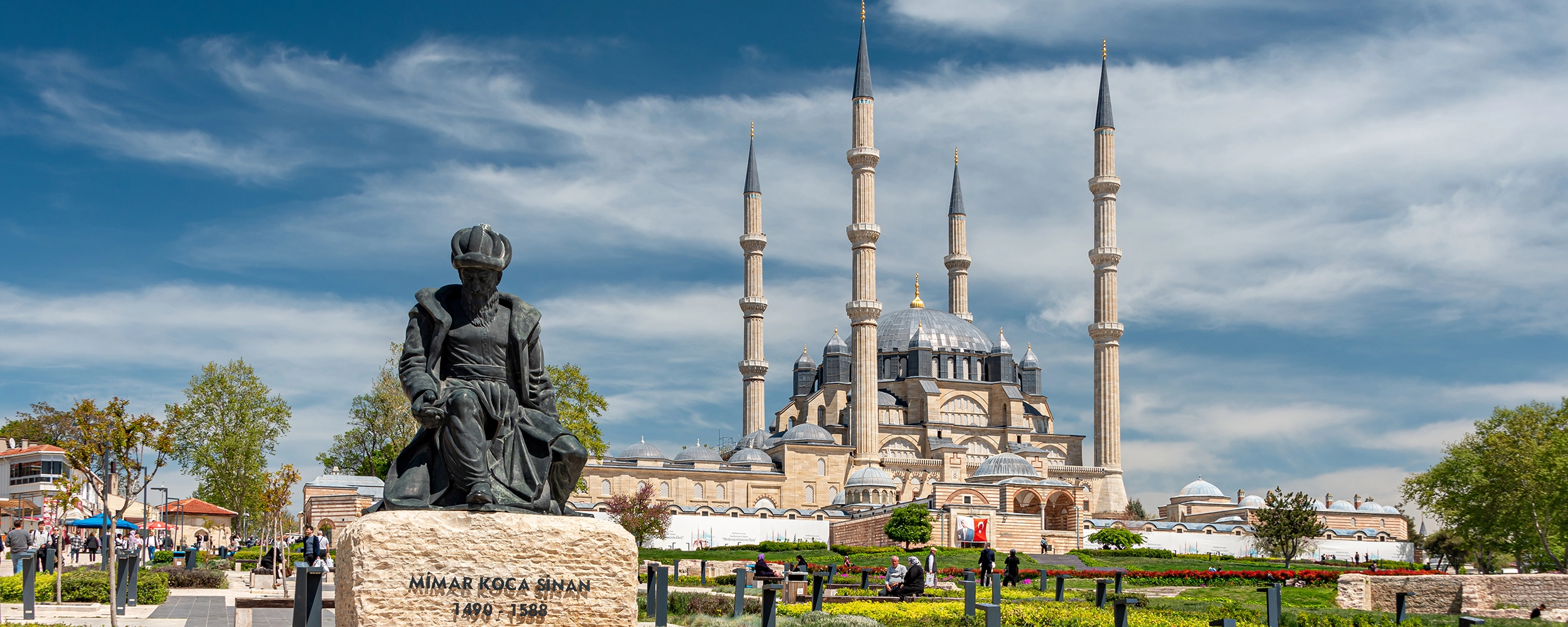
Discover Selimiye Mosque, historic caravanserais, covered bazaars, Ottoman bridges, palace remains, museums and one of Türkiye's richest imperial cities.
View Edirne GuideCombine the caravanserai with markets, palaces, mosques, bridges and neighborhoods that reveal the extraordinary diversity of the former Ottoman capital.
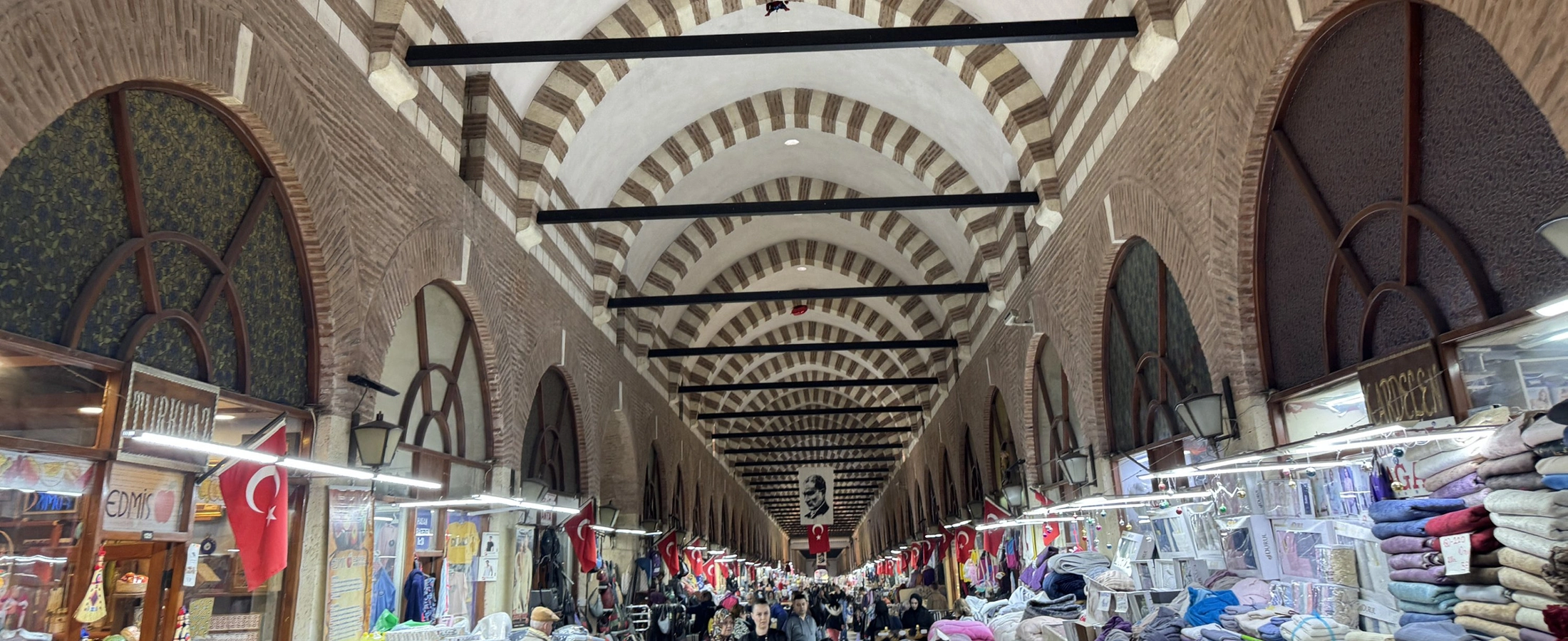
Continue from the caravanserai into the Bedesten, Ali Paşa Bazaar and Selimiye Arasta to experience Edirne's living Ottoman commercial heritage.
Explore Edirne's Historic Bazaars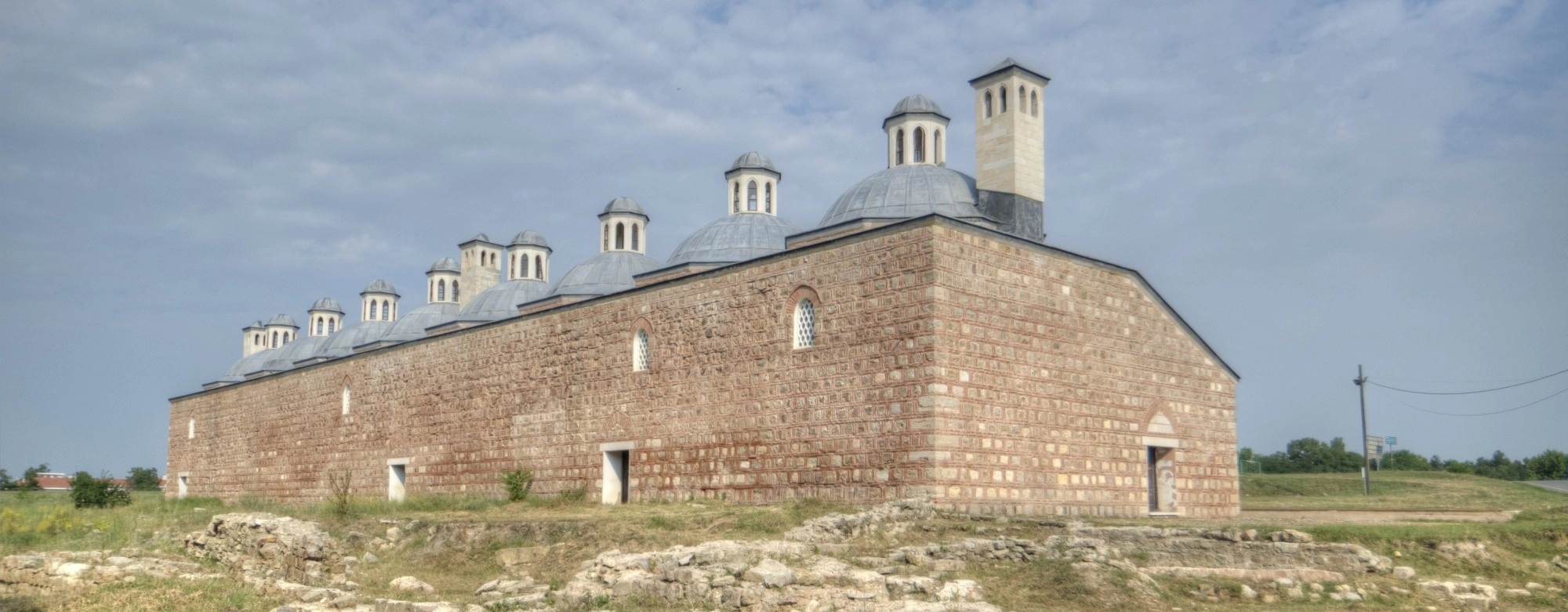
Explore Saray-ı Cedid-i Amire, the enormous imperial residence that made Edirne one of the Ottoman dynasty's great royal centers.
Explore Edirne Palace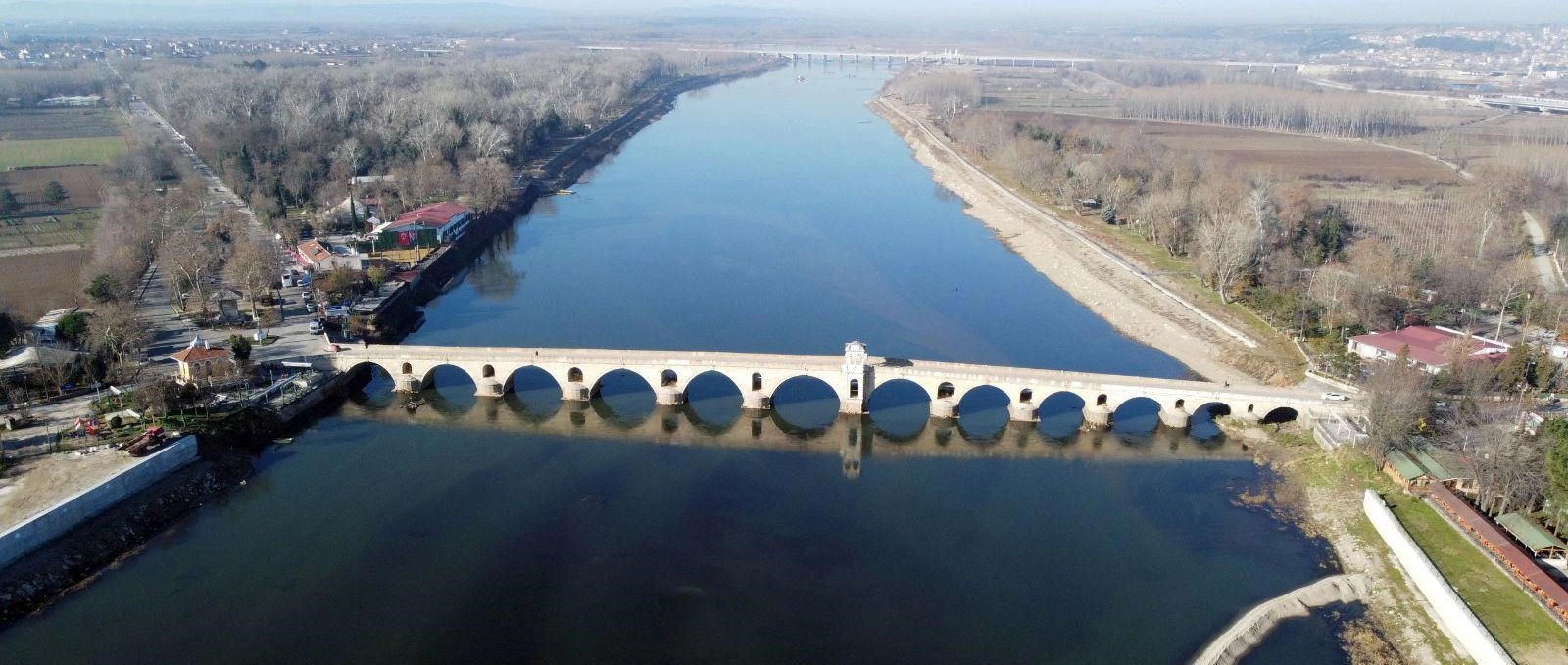
Continue from the commercial center toward Edirne's river landscape and one of the city's most elegant Ottoman bridges.
Explore Meriç Bridge