Floral Decoration
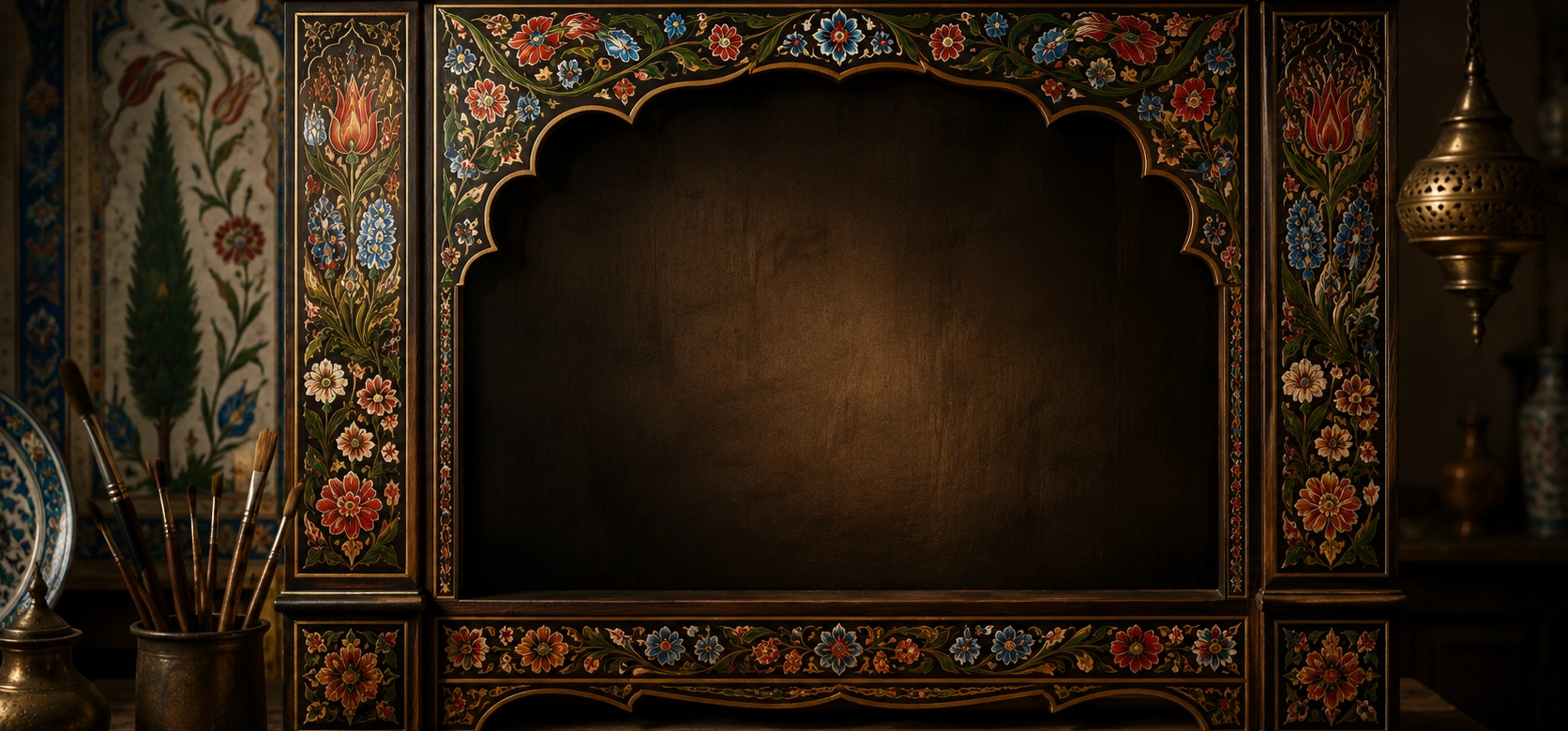
Flowers are among the strongest visual signatures of Edirnekâri, especially tulips, carnations, roses and hyacinths.
- Common subjects: Flowers
- Style: Naturalistic and stylised
- Arrangement: Individual or bouquets






Edirnekâri, literally meaning “Edirne work”, is one of the most distinctive decorative traditions associated with the historic Ottoman city of Edirne. Colourful flowers, leaves, fruit, scrolling forms and elegant ornamental compositions were painted, carved or inlaid onto wood and other surfaces, transforming ordinary objects into richly decorated works of art.
The tradition developed in Edirne during the Ottoman period and was already flourishing by the second half of the 15th century. Over the following centuries, Edirnekâri became so admired that its techniques and style spread beyond the city to artistic centres including Istanbul, Bursa, Diyarbakır and Erzurum.
Edirnekâri was never restricted to a single kind of object. Craftspeople decorated ceilings, doors, cupboards, shutters, chests, writing boxes, trays, book bindings, Qur'an cases, wooden architectural elements and household furniture. Some works were carved, others painted, while particularly elaborate pieces combined several techniques.
Flowers became one of the great signatures of the tradition. Tulips, carnations, roses, hyacinths and bouquets appear against colourful backgrounds, sometimes accompanied by classical Ottoman motifs and, in later centuries, by increasingly elaborate Baroque and Rococo influences.
Edirnekâri developed in Edirne centuries ago before spreading to other important Ottoman artistic centres.
Floral and ornamental designs are carefully composed and painted onto wood and other prepared surfaces.
Historic Edirnekâri can incorporate painted decoration, carving, inlay, gilding and lacquer finishing.
The craft continues today through artisans, workshops and cultural programmes preserving traditional skills.
Essential information about one of Edirne's most beautiful traditional decorative arts.
Edirne in Turkish Thrace, where the distinctive decorative tradition developed during the Ottoman period.
Open Edirne on Google Maps“Edirnekâri” or “Edirne işi” literally means work made in the characteristic Edirne manner.
The tradition became established during the Ottoman period and has a history extending roughly six centuries.
Tulips, carnations, roses, hyacinths, bouquets, leaves and fruit are among its characteristic decorative subjects.
An artistic tradition shaped by one of the Ottoman Empire's most important cultural centres.
To understand Edirnekâri, it helps to remember the extraordinary position Edirne held in early Ottoman history. Before Constantinople became Istanbul and the imperial capital in 1453, Edirne had already developed into an important royal, administrative and artistic centre.
Palaces, mosques, religious complexes, mansions and workshops attracted generations of architects, painters, woodworkers, calligraphers and decorative artists. Within this creative environment, a recognisable decorative style emerged that became associated so strongly with the city that it was eventually known simply as Edirnekâri – “Edirne work.”
Official cultural sources trace the established tradition particularly to the second half of the 15th century, when Edirne craftsmen transformed decorative work on wood and related materials into a highly characteristic regional art.
Its reputation did not remain within Edirne. The style travelled across the Ottoman world, and Edirnekâri-inspired workshops and craftsmen became active in places such as Istanbul, Bursa, Diyarbakır and Erzurum.
During the 17th and 18th centuries the tradition continued to develop. Classical Ottoman floral forms were gradually joined by new artistic influences, especially during the later Ottoman period when Baroque and Rococo curves entered palace and domestic decoration.
Edirnekâri therefore should not be imagined as one frozen decorative formula. It evolved continually while maintaining a recognisable affection for colourful surfaces, elegant flowers, carefully arranged compositions and the transformation of useful objects into decorative art.
Edirnekâri is immediately recognisable for the way it brings together painted colour, ornament, craftsmanship and the natural world.
Flowers are among the strongest visual signatures of Edirnekâri, especially tulips, carnations, roses and hyacinths.
Colourful painted surfaces distinguish many surviving Edirnekâri objects from unpainted Ottoman woodwork.
Historic examples may combine painting with carving, relief, inlay, gilding and protective lacquer.
Chests, cupboards, writing boxes, trays and book covers could all become elaborate decorative objects.
Painted ceilings, cupboards, shutters and architectural woodwork carried the style into palaces, mansions and houses.
Although the tradition spread widely, its name permanently preserves the city in which it first developed its distinctive character.
The Turkish expression Edirnekâri essentially means “made in the Edirne manner” or “Edirne work.” The expression is also encountered as Edirne işi.
The name identifies the Ottoman city where the distinctive style first developed and became famous.
The traditional expression indicates work, craftsmanship or something executed in a particular manner.
This simpler Turkish expression also means “Edirne work” and refers to the same artistic tradition.
The name eventually described a recognisable method and decorative vocabulary even when examples were produced outside Edirne.
Few Turkish decorative traditions preserve their geographical origin so clearly in their everyday name. Every time the word Edirnekâri is used, the artistic reputation of historic Edirne is carried with it.
Although Edirnekâri is particularly famous as a form of decorated woodwork, historical examples demonstrate that the tradition was much broader.
Wood was the most important surface and was used for furniture, ceilings, doors, shutters, trays, boxes and architectural elements.
Prepared cardboard surfaces were used especially for lightweight decorative objects and cases.
Leather surfaces, particularly book covers and bindings, could receive painted and lacquered Edirnekâri decoration.
Interior architectural elements provided large surfaces where floral compositions could become part of an entire room.
Historic descriptions of Edirnekâri demonstrate that the tradition cannot be reduced simply to painted flowers. Different objects could employ different decorative methods or combine several techniques.
Colourful motifs are painted onto prepared surfaces, creating the floral compositions most strongly associated with Edirnekâri today.
Wooden surfaces can be carved in low or higher relief before colour and additional decoration are introduced.
Some historic wooden objects incorporate inlaid decoration together with other ornamental techniques.
Gold or gold-coloured details can highlight flowers, carved forms and ornamental borders.
Painted book bindings and objects could receive a polished protective finish traditionally described as lake or lacquer.
Particularly sophisticated pieces may bring carving, painting, gilding and other techniques together in one composition.
The visual language of Edirnekâri is dominated by the natural world. Flowers appear individually, gathered into bouquets, tied with ribbons or rising from decorative vases.
One of the great symbols of Ottoman decorative culture, the tulip appears frequently in Edirnekâri floral compositions.
Stylised carnations create strong silhouettes and appear in both individual flowers and larger bouquets.
Roses contribute softer rounded forms and became especially suited to later naturalistic floral arrangements.
The elongated form of the hyacinth adds vertical rhythm to bouquets and floral borders.
Curving stems and leaves connect individual blossoms and allow compositions to flow across wooden surfaces.
Fruit motifs became another characteristic part of the decorative repertoire, especially in later compositions.
The Ottoman floral tradition known as şükûfe encouraged increasingly naturalistic arrangements of individual garden flowers.
Classical Ottoman ornamental forms could accompany floral decoration in more complex compositions.
The stylised motif traditionally called Çin bulutu, or Chinese cloud, is also recorded within the Edirnekâri vocabulary.
Geometric motifs occur, although they generally play a smaller role than flowers and other plant forms.
Colour is one of the pleasures of Edirnekâri. Traditional objects could be painted against backgrounds ranging from pale greens and blues to warm reds, yellows and browns.
Green and pale green backgrounds are particularly characteristic and provide a natural setting for floral decoration.
Blue backgrounds and details provide cool contrast against warm red, yellow and pink flowers.
Red creates both dramatic backgrounds and colourful details within blossoms and ornamental borders.
Yellow and warm ochre tones brighten backgrounds, petals and decorative highlights.
Brown tones connect painted decoration visually with the natural character of the wooden surface.
Gold leaf or gilded details could transform important objects and architectural decoration into particularly prestigious works.
Historic artists also used shading and tonal variation to give flowers greater depth. As Ottoman painting increasingly encountered European artistic ideas, flowers could appear more three-dimensional and naturalistic.
Look closely at an Edirnekâri piece and you will notice that the beauty comes not only from individual flowers but from the way the entire surface has been organised.
Individual blossoms can be placed rhythmically around borders or small architectural surfaces.
Groups of tulips, carnations, roses and other flowers can be gathered into elaborate bouquets.
Vases provide a formal base from which symmetrical or freely arranged flowers rise across the composition.
Some compositions gather flowers together with a painted ribbon, creating the impression of a freshly arranged bouquet.
Central compositions are frequently framed by painted or carved floral borders that visually organise the object.
Some objects use a strong central decorative field surrounded by secondary borders and repeating ornament.
There is no single universal recipe because historic Edirnekâri includes different objects, periods and techniques. A modern painted or lacquered piece may nevertheless pass through several traditional stages.
Historic methods varied considerably according to whether the artisan was producing a painted cupboard, carved architectural element, writing box or lacquered book binding. The skill lies in adapting the ornament to the form of the object rather than applying an identical design repeatedly.
One reason Edirnekâri is so fascinating is the extraordinary variety of objects that received its decoration.
Decorative wooden ceilings transformed important rooms in Ottoman houses, mansions and palatial interiors.
Door leaves could combine painted decoration with carved and inlaid ornament.
Wooden shutters provided another architectural surface for colourful Edirnekâri decoration.
Built-in cupboards and storage units became striking focal points within traditional Edirne rooms.
Decorated wooden chests combined practical storage with colourful craftsmanship and presentation.
Edirne-made writing cases and drawers became particularly admired for their elegant painted decoration.
Household serving objects and low stands provided surfaces for both carved and painted decoration.
Traditional kavukluk wall pieces could be carved, painted and highlighted with gilded details.
Sacred books could be protected inside beautifully decorated wooden or leather cases.
Painted and lacquered bindings carried Edirnekâri decoration into the refined world of Ottoman manuscripts.
Decorative cases surrounding household clocks could receive the same carefully painted floral treatment.
Contemporary artisans have adapted the tradition to screens, cabinets, bedside furniture, panels and decorative objects.
Edirnekâri was not limited to portable objects. Some of its most impressive expressions formed part of architectural interiors.
Traditional Edirne houses became famous for elaborate wooden ceilings where carved and painted ornament could dominate an entire room.
Yüklüks and corner cupboards were integrated into room architecture and decorated as part of a coordinated interior.
Painted and carved elements around windows helped connect furnishings, walls and ceilings into a single decorative programme.
Historic descriptions record Edirnekâri decoration within the former Edirne Palace, although many original palace interiors have not survived.
The result was much more than decorated furniture. In its grandest form, Edirnekâri helped transform an Ottoman room into a complete decorative environment.
Visitors understandably come to Selimiye Mosque to admire the extraordinary architecture of Mimar Sinan, but the building also preserves important decorative craftsmanship.
The monumental muezzin's platform occupies an exceptional position beneath the enormous central dome.
Decorative painted work beneath the platform provides an opportunity to examine the refinement of Ottoman surface decoration at close range.
Gold-leaf Edirnekâri kalem work contributes to the richness of the platform's decorative programme.
Selimiye demonstrates how Ottoman decorative arts worked together with architecture rather than existing as isolated objects.
The lost interiors of Saray-ı Cedid-i Âmire, the Ottoman New Palace of Edirne, are an important part of the story of Edirnekâri.
Historical descriptions record decorated ceilings associated with structures including Cihannüma Kasrı and Kum Kasrı. These interiors belonged to the sophisticated artistic environment of an imperial residence used by generations of Ottoman sultans.
Unfortunately, the palace suffered repeated destruction, abandonment and loss over the centuries. Much of the original decorative woodwork disappeared along with the buildings that contained it.
The palace demonstrates that Edirnekâri belonged not only to domestic craft but also to the refined world of Ottoman court decoration.
Many celebrated painted ceilings and wooden elements disappeared as the palace complex deteriorated.
Modern study of the palace helps reconstruct the artistic environment in which Edirne's decorative traditions flourished.
The palace attracted craftsmen and helped reinforce the city's importance as an Ottoman artistic centre.
Some of the most refined expressions of Edirnekâri appear not on buildings but on the much smaller surface of Ottoman book bindings and manuscript covers.
Decorative flowers and bouquets were painted onto prepared surfaces and could be enriched with gold leaf before being protected by a glossy lacquer finish.
The outer surface becomes a miniature decorative panel filled with flowers, leaves and ornamental borders.
Gilding adds brilliance and prestige to important religious, literary and presentation manuscripts.
A polished coating protects the painted design while creating the glossy appearance characteristic of Ottoman lacquer work.
Important surviving Edirnekâri-style bindings are known from the late 16th century and later Ottoman periods.
The combination of painting, gilding and lacquer turned a functional book cover into an object worthy of appreciation independently from the manuscript it protected.
Edirnekâri evolved together with Ottoman decorative taste. Earlier compositions were influenced by established Turkish-Islamic ornamental traditions, while later examples increasingly reflected new artistic fashions.
Stylised flowers, rûmî forms and carefully balanced ornament connected Edirnekâri with the wider Ottoman decorative vocabulary.
Over time individual flowers became increasingly recognisable as tulips, roses, carnations and other garden species.
From the 18th century onward, energetic curves and increasingly elaborate forms entered Ottoman decoration.
Later Edirne interiors often included Rococo-inspired curves integrated with established local floral decoration.
Rather than erasing the earlier tradition, these influences created new combinations. A single later Edirnekâri object can therefore display Ottoman flowers, European-inspired curves and recognisably Edirne colour choices together.
Visitors accustomed to European paintings may naturally look for an artist's signature. Historic Edirnekâri works often provide no such clue.
Large decorative projects could require several specialised craftsmen working together. A woodworker might prepare or carve the object, while another artisan painted the motifs and others contributed gilding or finishing.
Complex decorative objects could involve more than one specialised craftsman.
Knowledge passed through workshops and practical apprenticeship rather than depending entirely upon individual artistic fame.
Many historic pieces therefore survive without a clearly identified maker.
Some manuscript and lacquer artists are known by name, providing rare connections between individual craftsmen and surviving works.
For travellers who want to understand the tradition rather than simply buy a modern souvenir, Edirne's museums and monuments preserve important examples.
One of the best places to see original Edirnekâri furniture, including decorated yüklüks and other examples within traditional Edirne room displays.
Explore Ottoman woodwork, decorative arts and objects demonstrating the wider artistic environment surrounding Edirnekâri.
Look carefully at the decoration of the famous muezzin's platform, where important gold-leaf Edirnekâri kalem work survives.
Explore the archaeological remains of the imperial complex whose lost pavilions once contained celebrated Edirnekâri interiors.
The Edirne Archaeology & Ethnography Museum is particularly useful because its ethnographic displays place decorated cupboards and wooden elements into the context of traditional Edirne domestic life.
Once you recognise a few visual clues, Edirnekâri becomes much easier to identify while exploring museums and historic interiors.
Look first for bouquets, tulips, carnations, roses and elongated stems painted directly onto wooden panels.
Green, blue, yellow, red and earthy backgrounds often help distinguish painted Edirne work from undecorated wood.
Some furniture combines flat painted surfaces with carved frames, projecting ornament or relief decoration.
Important objects may use gilding to emphasise carved or painted details.
Later works often contain curling Rococo and Baroque forms mixed with traditional flowers.
Do not look only for small objects: entire cupboards, ceilings and architectural fittings can belong to the tradition.
Traditional houses provide some of the most fascinating context for understanding Edirnekâri because the art could form part of an entire domestic interior.
Important rooms often incorporated wooden ceilings, wall cupboards, yüklüks, window surrounds, shelves and decorative furniture. Ornament was therefore experienced not as an isolated museum object but as part of everyday architectural space.
By the 18th and especially the 19th century, Baroque and Rococo decorative influences became increasingly visible in Edirne interiors. Curving motifs and exuberant floral ornament were adapted to local tastes rather than simply copied from Europe.
Decorative ceiling centres created dramatic compositions overhead and became one of the visual signatures of important rooms.
Built-in cupboards combined storage with carefully decorated wooden surfaces.
Small fitted cupboards could help connect adjacent walls into a coordinated decorative interior.
Decorated woodwork surrounding windows extended ornament around the entire room.
Edirnekâri is not merely an archaeological or museum tradition. Contemporary artisans and cultural programmes in Edirne continue working to preserve and reinterpret the craft.
Workshops and cultural programmes help new generations learn the drawing, painting and decorative vocabulary associated with the craft.
The style can now appear on cabinets, screens, bedside furniture, decorative panels and other contemporary wooden objects.
Wall panels allow traditional floral compositions to become portable artworks suited to modern interiors.
Traditional craft events in Edirne provide opportunities for visitors to encounter artisans and observe regional skills.
Smaller objects allow visitors to take home an accessible example inspired by Edirnekâri without purchasing large furniture.
Continuing practice is important because Edirnekâri depends on hands-on knowledge that cannot be preserved through photographs alone.
Modern Edirnekâri-inspired decorative objects can make especially meaningful souvenirs because their designs carry a direct connection with Edirne's Ottoman artistic heritage.
Small painted boxes offer enough surface for floral decoration while remaining easy to transport.
Framed or freestanding panels can reproduce traditional floral compositions as contemporary wall art.
Painted wooden trays connect modern craft production with objects historically associated with Ottoman domestic life.
More ambitious collectors may encounter stools, cabinets, screens or tables decorated by contemporary artisans.
Remember that the word Edirnekâri describes an artistic tradition rather than simply any painted wooden souvenir. If craftsmanship matters to you, ask who produced the item and whether it was genuinely hand-painted.
Visitors exploring central Edirne may encounter regional handicrafts around the city's historic shopping streets, cultural centres, exhibitions and traditional craft events.
Explore Selimiye Arasta, Bedesten and Ali Paşa Bazaar while looking for regional handicrafts and souvenirs.
When available, workshops provide the best opportunity to understand how a piece was produced and meet the person who made it.
Edirne continues to support traditional handicraft training, demonstrations and cultural programmes.
Regional craft events can bring together Edirnekâri with calligraphy, miniature painting, soap making and other Turkish decorative traditions.
For an authentic experience, prioritise hand craftsmanship and the story of the maker over mass-produced objects carrying only a vaguely Ottoman floral design.
See historic examples before souvenir shopping so you understand the traditional proportions, colours and craftsmanship.
Examine the borders, carved frames, background colours and relationship between decoration and the shape of the object.
Hand-painted work usually reveals tiny variations that give each object its individual character.
Some pieces combine paint, carving and gilding rather than relying on a single decorative technique.
Look for the difference between restrained classical decoration and the more energetic curves of later Baroque and Rococo examples.
If purchasing contemporary work, ask whether the object was hand-painted and where the maker learned the tradition.
Museum photography rules vary, and flash can be restricted around fragile historic painted surfaces.
Compare Edirnekâri with Edirne's fruit soap, mirrored broom tradition, calligraphy and other regional handicrafts.
Edirnekâri belongs to a much larger world of traditional craftsmanship that makes Edirne especially rewarding for visitors interested in cultural heritage.
Discover Edirne's monuments, museums, traditional crafts, regional foods and historic neighbourhoods.
Discover Edirne's remarkable Ottoman tradition of shaping and painting scented soap to resemble real fruit.
The colourful mirrored broom is one of Edirne's best-known traditional handicrafts and carries fascinating local symbolism.
Edirne's Ottoman artistic heritage also includes calligraphy, manuscript arts and decorative illumination.
Explore the commercial spaces where traditional products and crafts have been bought and sold for centuries.
See woodwork, manuscripts, calligraphy, weapons, tiles and other objects illustrating Edirne's broader artistic history.
Several of the best places for understanding Edirnekâri sit close to Edirne's greatest monuments, making the craft easy to include in a central sightseeing route.
See Mimar Sinan's masterpiece and look for the remarkable decorative work surrounding the muezzin's platform.
Examine original Edirnekâri furniture and traditional Edirne domestic displays only a short distance from Selimiye.
Continue exploring Ottoman decorative arts inside the historic Darülhadis of the Selimiye complex.
Browse regional products and traditional crafts while exploring Edirne's historic commercial centre.
Explore Edirne's traditional residential architecture and imagine the richly decorated domestic interiors of earlier centuries.
Discover the imperial environment where celebrated Edirnekâri ceilings and decorative interiors once existed.
A rewarding cultural route is Selimiye Mosque → Turkish & Islamic Arts Museum → Archaeology & Ethnography Museum → Selimiye Arasta → Bedesten → Kaleiçi.
Edirnekâri is a traditional Ottoman decorative art associated with Edirne in which wooden and other surfaces are decorated using painted motifs and, depending on the object, carving, inlay, gilding and lacquer techniques.
The name essentially means “Edirne work” or craftsmanship executed in the characteristic Edirne style.
Yes. Edirne işi, meaning “Edirne work,” is another expression used for the decorative tradition.
The tradition originated in Edirne, one of the most important early Ottoman political and artistic centres.
Official cultural sources describe an established tradition dating particularly from the second half of the 15th century, giving the craft a history of roughly six centuries.
No. The style spread from Edirne to other Ottoman artistic centres, including Istanbul, Bursa, Diyarbakır and Erzurum.
Painted wood is strongly associated with Edirnekâri, but historical examples can also incorporate carving, inlay, gilding and lacquer work.
Wood is the most famous material, while historic examples are also known on cardboard, leather and book-binding surfaces.
Flowers and plant forms dominate, especially tulips, carnations, roses, hyacinths, bouquets, leaves and fruit.
Yes, although they are generally less dominant than floral and vegetal decoration.
Şükûfe is an Ottoman floral style featuring recognisable garden flowers such as tulips, carnations, roses and hyacinths, often arranged naturally or in bouquets.
Historic descriptions mention green, pale green, blue, brown, red and pale yellow backgrounds together with colourful flowers and occasional gilding.
Some are stylised, while later compositions often use shading and tonal variation to create increasingly naturalistic flowers.
Yes. Baroque and Rococo influences became increasingly visible in later Ottoman decoration, particularly during the 18th and 19th centuries.
Cupboards, yüklüks, writing boxes, chests, trays, clock cases, screens and many other wooden furnishings could receive Edirnekâri decoration.
Yes. Ceilings, doors, window shutters, railings and built-in architectural woodwork were all important surfaces.
Yes. Historical sources record important Edirnekâri decoration associated with Edirne Palace, while examples of the broader tradition also appeared in the Ottoman imperial environment in Istanbul.
Yes. The decoration associated with the muezzin's platform includes important gold-leaf Edirnekâri kalem work.
Much of the palace was destroyed or lost over the centuries, and famous decorated interiors including historic ceilings have not survived intact.
Yes. Painted and lacquered book bindings represent an important and particularly refined branch of the tradition.
Historic examples could be decorated with pigments and gold before receiving a polished lacquer finish that protected the surface.
Important surviving examples are known from the late 16th century, including bindings associated with the reign of Sultan Murad III, as well as many later Ottoman works.
Many works are unsigned because elaborate objects and architectural decoration could involve several artisans working together in a workshop tradition.
The Edirne Archaeology & Ethnography Museum is particularly valuable because it displays original Edirnekâri yüklüks, furniture and examples within the context of traditional Edirne interiors.
The museum provides excellent context through its Ottoman woodwork and decorative-art collections, including objects associated with Edirne craftsmanship.
Yes. Artisans and cultural programmes continue teaching and practising the tradition, while its motifs are increasingly adapted to contemporary decorative objects and furniture.
Visitors may encounter hand-painted decorative objects through artisans, cultural events, speciality craft sellers and souvenir shops in central Edirne.
Look for individually painted details, small variations in brushwork, balanced traditional floral compositions and information about the artisan who produced the object.
No. Edirnekâri refers to a specific historical decorative tradition connected with Edirne. Generic floral painting on wood should not automatically be described as authentic Edirnekâri.
The traditions overlap because Edirnekâri can include painted ornament, but the terms are not completely interchangeable. Edirnekâri describes the broader Edirne-derived decorative tradition across furniture, objects and architectural woodwork.
Flowers occupied an important place throughout Ottoman decorative culture, and Edirne artists developed especially colourful compositions using tulips, carnations, roses, hyacinths and bouquets.
The craft preserves the memory of Edirne as one of the Ottoman Empire's great artistic centres and represents a local tradition influential enough for the city's name to become the name of the art itself.
Absolutely. Understanding Edirnekâri adds another dimension to Selimiye Mosque, Edirne's museums, historic houses and Ottoman heritage by revealing the colourful decorative world that once filled these interiors.
Edirnekâri is exceptionally photogenic because small details reveal far more craftsmanship than a distant photograph of the entire object.
Photograph a small group of tulips, carnations or roses so the hand-painted brushwork is clearly visible.
A complete cupboard or yüklük shows how decoration responds to the proportions of furniture rather than functioning as an isolated painting.
Choose an angle where carved relief catches natural light and reveals the relationship between structural and painted decoration.
Historic ceiling centres can create spectacular symmetrical compositions when photographed directly from below.
If permission is granted, photographing the hand and fine brush of an artisan conveys the precision required to continue the tradition.
Include the surrounding museum room or architectural interior to demonstrate how Edirnekâri functioned within Ottoman daily life.
Always follow museum photography regulations and ask permission before photographing artisans or active workshops.
Discover the artistic side of Edirne through privately designed journeys combining monumental Ottoman architecture, museums, historic houses, bazaars and traditional crafts.
Explore how Ottoman architecture, decorative arts and traditional craftsmanship come together across Edirne's museums and monuments.
Explore Selimiye, Edirne's museums and historic commercial districts while discovering Edirnekâri, traditional woodwork, Ottoman decorative arts and regional handicrafts.
Request This Experience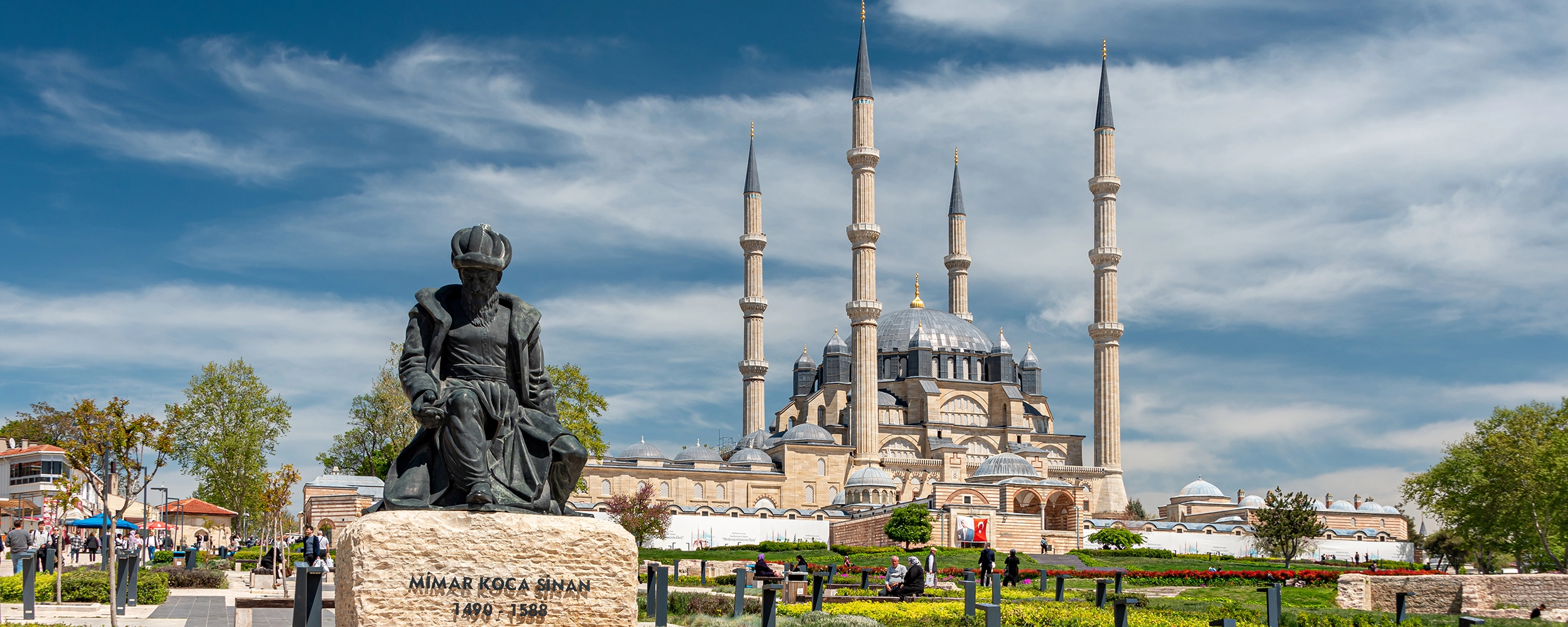
Combine Selimiye Mosque, Ottoman museums, historic architecture, traditional decorative arts and Edirne's colourful bazaar culture on a privately designed city journey.
Plan This RouteExtend your exploration from Ottoman Edirne into the historic towns, landscapes, crafts and regional traditions of Turkish Thrace.
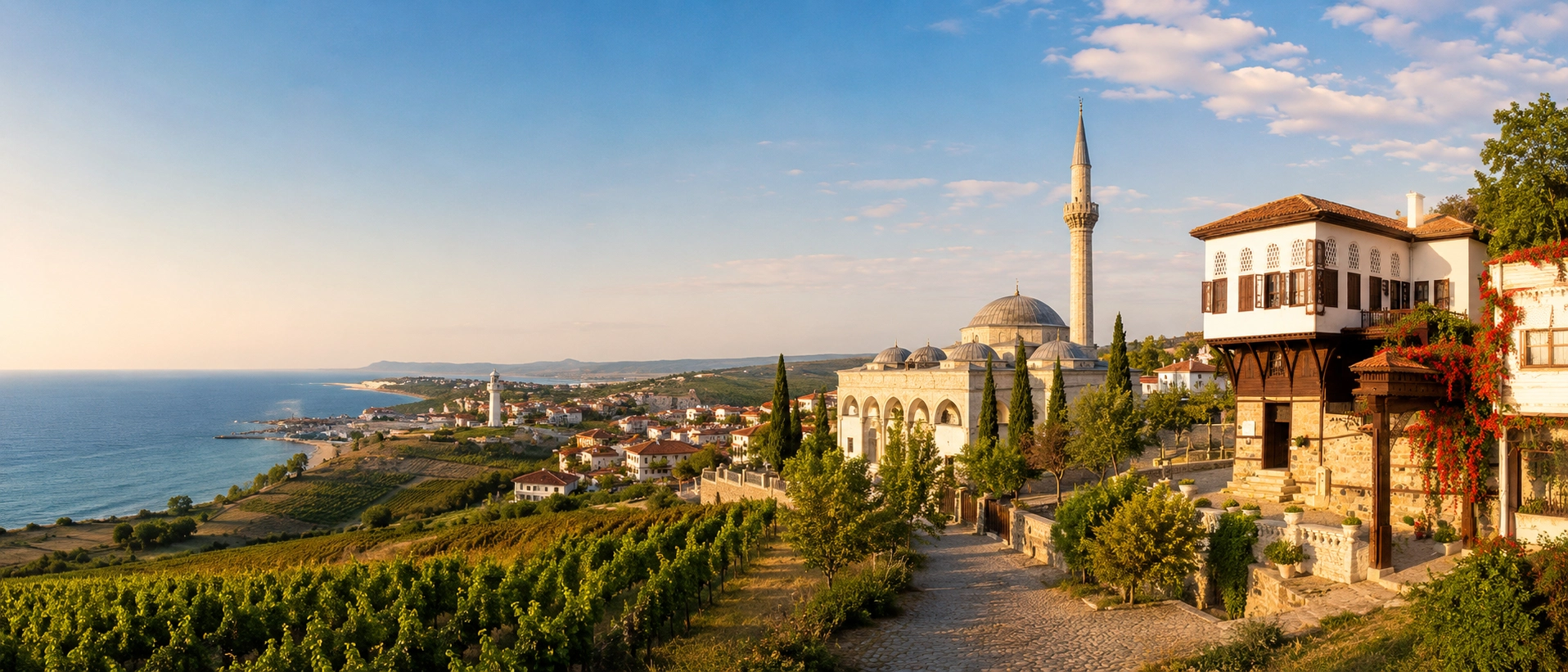
Travel through Edirne and Turkish Thrace while combining Ottoman monuments, museums, traditional crafts, historic towns and regional food culture.
Design Your Journey
Explore Selimiye, Edirne Palace, traditional museums, historic bazaars and the city's living craft traditions on a privately designed cultural experience.
Plan This Journey