Atatürk Heritage, Monumental Plane Trees & the Road to Termal

Çınarlı Hıyaban Yalova – Complete Green Tunnel Visitor Guide

Travel beneath historic plane trees planted on Atatürk's instructions in 1930
along one of Yalova's most distinctive roads between the city and Termal.

Explore the Green Tunnel

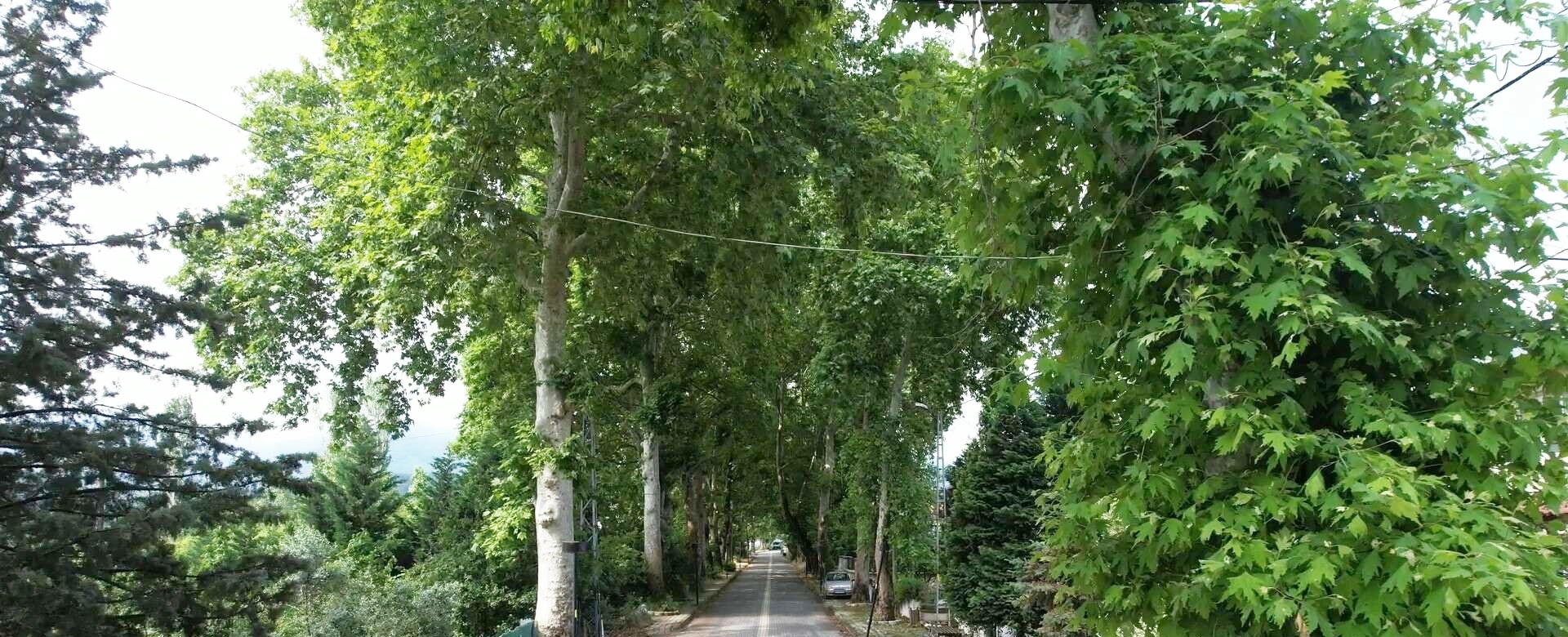
Çınarlı Hıyaban – Yalova's Historic Green Tunnel

The Çınarlı Hıyaban, also known as Çınarlı Yol or Yalova's Green Tunnel, is the historic plane-tree-lined road connecting Yalova with the thermal district of Termal. It is one of the most recognisable landscapes associated with Yalova's early Republican history.

The avenue was created in 1930 on the instructions of Mustafa Kemal Atatürk. Thousands of plane trees were planted along the route so that their branches would gradually meet above the road, forming the shaded tunnel effect that gives the road its popular modern nickname.

Official heritage information records an original route of approximately 12,350 metres and a width of around 10 metres. A total of 2,250 plane-tree saplings were planted from the Baltacı Farm area toward Termal, with the trees arranged in a staggered pattern that encouraged balanced branching and a denser visual rhythm.

Today Çınarlı Hıyaban is more than a scenic road. Its surviving historic plane trees are protected as monumental trees, making the journey between Yalova and Termal a living combination of landscape design, cultural heritage, road history and Atatürk's transformation of Yalova.

1930

The historic plane trees were planted during the Atatürk period.

2,250 Trees

Official sources record 2,250 plane-tree saplings planted along the historic route.

12.35 km

The original avenue was designed as a long green approach from Yalova toward the thermal springs.

Protected Heritage

The surviving roadside plane trees are registered as trees requiring protection.

Know Before You Go

Çınarlı Hıyaban – Quick Facts

Essential information for understanding and experiencing Yalova's historic plane-tree avenue.

📍

Location

Between Yalova city and Termal, along the historic road to the thermal springs.

Search on Google Maps
🌳

Historic Trees

Plane trees planted on Atatürk's instructions during the early Republican period.

📅

Planting Date

February and March 1930.

🔢

Original Planting

2,250 plane-tree saplings from Baltacı Farm toward Termal.

📏

Historic Length

Approximately 12,350 metres; the original road was about 10 metres wide.

🛡️

Protection

The roadside plane trees were registered as protected monumental trees in 1997.

🚗

Best Experience

A slow scenic drive toward Termal, combined with stops at nearby heritage attractions.

🎟️

Admission

No ticket is required to experience the avenue; it is part of the public road landscape.

🍃

Best Seasons

Spring and summer for the green canopy; autumn for warm foliage colours.

🏛️

Combine With

Termal Hot Springs, Termal Atatürk Mansion and other Atatürk heritage sites in Yalova.


A Road That Became a Heritage Landscape

Why Visit Çınarlı Hıyaban?

Few roads in Türkiye combine everyday travel, historic landscape design and living trees from the early Republican period so naturally.

Most attractions have a clear entrance, gate or museum building. Çınarlı Hıyaban is different. The attraction is the journey itself: a road framed by mature plane trees whose trunks, branches and changing seasonal colours create a distinctive approach to Termal.

The avenue also provides a direct connection with Yalova's transformation during Atatürk's years in the city. His interest in the thermal springs, agriculture, urban planning and landscape improvement helped reshape Yalova in the late 1920s and 1930s, and Çınarlı Hıyaban became one of the most visible results of that period.

For travellers heading toward Yalova Termal Hot Springs or Termal Atatürk Mansion, the avenue turns an ordinary transfer into part of the historical experience.

It is also one of Yalova's most photogenic seasonal landscapes. Dense green foliage dominates in late spring and summer, while autumn reveals the structure of the trees through yellow, bronze and brown tones.

What Does “Çınarlı Hıyaban” Mean?

The Turkish word çınar means plane tree, while hıyaban is an older term used for a road, avenue or promenade lined with trees on both sides.

The name Çınarlı Hıyaban can therefore be understood as “the plane-tree-lined avenue.” It describes the landscape rather than a single monument or building.

The route is also commonly called Çınarlı Yol, meaning “Plane Tree Road,” and is increasingly described as the Yeşil Tünel or “Green Tunnel” because the branches of the trees extend over the road and create a natural canopy.

Visitors may encounter all three names in local information, road references and travel descriptions. They refer to the same historic landscape connecting Yalova with the Termal area.

How Çınarlı Hıyaban Was Created

Mustafa Kemal Atatürk began visiting Yalova in 1929, and the following years became a major period of development for the city and its thermal district. Roads were improved, the spa area received renewed attention, agricultural projects expanded and new public landscapes were created.

As part of this wider transformation, plane-tree saplings were planted along the Yalova–Termal road in February and March 1930. Official heritage information attributes the project to Atatürk's instructions and supervision during this period.

The road was intended not only to connect two destinations, but to create a memorable landscape between the coast and the thermal springs. Over decades, the plane trees matured and their crowns developed across the road, turning a planned avenue into the living green tunnel seen today.

The avenue therefore belongs to the same wider Yalova story as Yürüyen Köşk, Atatürk and Children Museum and Termal Atatürk Mansion.

The Dolmabahçe–Yalova Connection

One of the most interesting details in official accounts of Çınarlı Hıyaban is the symbolic relationship between Yalova and Istanbul.

The concept was described as a continuation of the tree-lined road in front of Dolmabahçe Palace: a traveller could leave the plane-tree avenue in Istanbul, cross the Marmara Sea by ferry, arrive at Yalova's pier and continue inland through another avenue toward the thermal springs.

The historic Yalova route began around the pier, continued through the Gazipaşa corridor and extended toward the entrance of the Termal spa area. This made the journey itself part of the planned experience of reaching Yalova's new thermal destination.

That wider concept helps explain why Çınarlı Hıyaban should be understood as more than roadside planting. It was part of an ambitious early Republican vision linking transport, tourism, health, urban design and landscape.

12,350 Metres of Plane-Tree Road

Official Yalova heritage information gives the historic avenue a length of approximately 12,350 metres and a width of around 10 metres.

This scale is important. Çınarlı Hıyaban was not a short ornamental street around a single building; it was a long landscape corridor designed to accompany travellers from the urban area toward Termal.

A total of 2,250 plane-tree saplings were planted from the Baltacı Farm entrance toward the thermal district. The saplings were sourced from Teşvikiye and Kocadere, settlements in the wider Yalova region known for their wooded surroundings.

Historic Length Approximately 12,350 metres
Historic Width Approximately 10 metres
Plane Trees Planted 2,250 saplings
Planting Period February–March 1930
Sapling Sources Teşvikiye and Kocadere

The Staggered Planting Design

The famous “green tunnel” effect is not simply the result of age. The original planting layout played an important role in shaping the avenue.

Plane trees were planted at approximately 10-metre intervals along each side of the road. However, the two rows were arranged in a staggered or diagonal sequence rather than placing opposing trees directly across from one another.

This creates the visual impression of a tree roughly every five metres when looking along the road. The staggered spacing also allowed the trees to branch more evenly into the available space.

As the crowns matured, branches from both sides gradually extended over the roadway. The resulting canopy is the feature that transformed Çınarlı Hıyaban from a formal avenue into Yalova's celebrated natural green tunnel.

The Historic Plane Trees

Plane trees are well suited to monumental avenues because they can develop large trunks, wide crowns and long spreading branches. Along Çınarlı Hıyaban, those qualities are what create the sense of entering a green architectural space rather than simply driving beside trees.

Many of the surviving trees are now close to a century old. Their irregular trunks, hollows, old pruning scars and broad branches record decades of weather, road use and conservation work.

Visitors should not expect every tree to look identical. A living historic avenue changes over time: some original trees survive, some require major pruning, and others must eventually be replaced when they reach the end of their safe life.

This combination of old and replacement trees is part of responsible long-term conservation. The goal is not to freeze the avenue at one moment, but to protect its historic character while keeping the roadside environment safe.

Why the Trees Are Officially Protected

The plane trees along the Yalova–Termal road were officially registered as “trees requiring protection” by the relevant conservation authority on 14 May 1997, under decision number 4491.

This recognition treats the trees as more than ordinary roadside vegetation. Their age, historical association, collective visual identity and relationship with the Atatürk-period road make them a cultural landscape worthy of protection.

Conservation therefore includes regular inspection, pruning where necessary, treatment of tree-health problems and replacement of trees that can no longer be safely retained.

Yalova Municipality reported renewed expert-led maintenance work on the monumental trees in 2025, including scientific assessment, pruning of ageing or hazardous branches and replacement planning for trees that had completed their natural life cycle.

How Gökçe Dam Changed the Original Route

The Çınarlı Hıyaban experienced an important physical change during the development of Gökçe Dam. Official cultural-tourism information notes that part of the historic tree line remained within the dam area or outside the later road alignment.

As a result, the original continuous avenue should not be imagined as completely preserved in exactly the form planned in 1930. The historic Çınarlı Yol is now described as ending around the Yenimahalle road junction on the approach toward Termal.

This change is useful for visitors to understand because modern navigation may show several road options between Yalova and Termal. The heritage experience is connected particularly with the old tree-lined corridor rather than every modern road segment between the two places.

When exploring by car, use current navigation and local signage rather than relying only on historical descriptions of the full 12.35-kilometre alignment.

What the Green Tunnel Experience Is Like

Çınarlı Hıyaban is best experienced slowly. The character of the road changes from section to section as the trees vary in age, height, branch structure and distance from the roadway.

In the densest sections, the crowns reach toward one another and filter sunlight into patches of shade, creating the feeling of travelling beneath a long natural ceiling.

Elsewhere, the canopy opens and gives views toward houses, gardens, forest edges and the gradually changing landscape on the approach to Termal.

The experience is especially effective when treated as part of the journey rather than as a destination that must be “completed.” Look at the trunks, the changing light, the alternating rhythm of the trees and the way the avenue frames the road ahead.

Best Time to See Çınarlı Hıyaban

Spring

Fresh leaves rebuild the canopy and the road becomes increasingly green after winter.

Summer

The avenue reaches its strongest “green tunnel” appearance, with deep shade beneath mature foliage.

Autumn

Yellow, bronze and brown leaves reveal a warmer and more dramatic version of the historic road.

Winter

Bare branches expose the monumental structure of the old trees and make the avenue's planting geometry easier to see.

For the classic postcard image, late spring through summer is generally the most rewarding period. For photographers who prefer colour variation and visible tree structure, autumn can be equally appealing.

Rain and low light can make the road atmospheric, but drivers should prioritise road safety and visibility rather than attempting to stop for photographs in unsuitable places.

Driving Through Çınarlı Hıyaban

For most visitors, the easiest way to experience Çınarlı Hıyaban is by car, taxi or private vehicle while travelling between central Yalova and Termal.

The road remains a functioning transport corridor, so the experience should always be approached as a scenic drive rather than a closed heritage promenade. Vehicles, local traffic and residents continue to use the route.

Drive at an appropriate speed, watch for pedestrians, side roads, parked vehicles and changes in the road surface. Avoid stopping in the traffic lane simply to take photographs.

If you want to pause, use a clearly legal and safe parking area or a designated roadside space. A short stop is much more enjoyable when you are not obstructing traffic or standing close to moving vehicles.

Can You Walk or Cycle Along Çınarlı Hıyaban?

Parts of the historic corridor can be appreciated on foot, and sections of the route have received pedestrian improvements over the years. However, visitors should not assume that the entire historic avenue has a continuous separated walking path.

Conditions can vary between urban sections, residential stretches and the approaches toward Termal. Where there is no safe pavement or separated path, walking immediately beside active traffic is not recommended.

Cyclists should treat the route as an active public road, use appropriate visibility equipment and follow current Turkish traffic rules. The shade and scenery can make the road attractive for cycling, but heritage value does not remove normal traffic risks.

For a relaxed walking experience, it is often better to explore a suitable developed section of the avenue and then continue to Termal by vehicle rather than attempting to walk the entire historic alignment.

Photography at the Green Tunnel

Çınarlı Hıyaban is one of Yalova's strongest landscape-photography locations because the road naturally creates leading lines, repetition, shade and a tunnel-like perspective.

A photograph taken along the direction of the road emphasises the repeating trunks, while a lower viewpoint can make the canopy appear larger and more enclosed. Autumn provides colour, while summer produces the richest green effect.

Never Stop in Traffic

Do not stand in the carriageway or stop a vehicle where it creates danger or blocks other road users.

Use Safe Pull-Offs

Photograph from a pavement, legal parking area or another clearly protected space.

Try the Long View

Look for sections where the tree rows create a strong vanishing point down the road.

Visit in Soft Light

Morning and late-afternoon light can reduce harsh contrast between the shaded road and bright sky.

Where Is Çınarlı Hıyaban?

Çınarlı Hıyaban lies on the historic route between Yalova city centre and Termal, the mountain-backed thermal district southwest of the city.

Historically, the avenue was conceived as a long approach beginning around Yalova's waterfront and pier, continuing through the Gazipaşa corridor and leading toward the thermal spa area.

Because later road development and the construction of Gökçe Dam altered parts of the alignment, visitors should use a current map application and search for “Çınarlı Hıyaban”, “Çınarlı Yol” or “Termal Çınarlı Hıyaban Yolu”.

Province Yalova
Route Yalova city → Termal
Historic Function Scenic approach from the city and ferry arrival route toward the thermal springs
Alternative Names Çınarlı Yol / Yeşil Tünel / Green Tunnel

How to Get to Çınarlı Hıyaban

From Yalova Centre

Follow the route toward Termal and use current navigation to remain on the historic Çınarlı Hıyaban / old Termal road where appropriate.

From Termal

Travel back toward Yalova through the old tree-lined corridor, turning the return journey into part of your sightseeing.

By Taxi

Ask for “Çınarlı Hıyaban” or “Eski Termal Yolu” and explain that you would like to pass through the historic plane-tree avenue.

With a Private Tour

The avenue fits naturally into a private Yalova–Termal route with Atatürk heritage sites, hot springs and gardens.

Road alignments and local traffic arrangements can change, so follow current navigation and road signs rather than relying only on historic descriptions of the route.

How Much Time Do You Need?

There is no fixed visit duration for Çınarlı Hıyaban because it is a road landscape rather than a museum or archaeological site.

If you simply drive through the tree-lined sections while travelling to Termal, the avenue becomes part of your transfer and may add only a modest amount of sightseeing time.

If you want to stop safely for photographs, look at the monumental trunks or combine the road with nearby attractions, allow considerably longer.

20–30 Minutes

A scenic pass through the historic corridor without extended stops.

45–60 Minutes

A slower experience with one or two safe photo stops where parking conditions allow.

Half Day

Combine the avenue with Termal Hot Springs and Termal Atatürk Mansion.

Full Day

Add Yalova's Atatürk museums, Yürüyen Köşk, Karaca Arboretum or another nearby nature stop.

Admission, Opening Hours and Road Access

Çınarlı Hıyaban is part of the public road environment, so there is no separate admission ticket simply to travel through the avenue.

There are also no museum-style opening hours. However, that does not mean every roadside area is suitable for sightseeing at every time of day. Daylight provides the safest and most rewarding conditions for appreciating the trees.

Temporary roadworks, maintenance, pruning, weather conditions or local traffic arrangements can affect access to individual sections. If a particular section is closed or controlled, follow official signs and do not enter work areas.

Nearby attractions such as Termal Atatürk Mansion and the Termal Hot Springs have their own visiting rules, fees and opening times.

Accessibility at Çınarlı Hıyaban

One advantage of Çınarlı Hıyaban is that much of its visual impact can be experienced directly from a vehicle. Visitors with limited mobility can therefore appreciate the historic tree canopy without needing to complete a long walking route.

Pedestrian accessibility varies by section. Pavement width, road crossings, surface conditions and the continuity of walking routes are not identical along the entire historic corridor.

Visitors using wheelchairs or mobility aids who want to leave the vehicle should choose a developed, level section with a clearly separated pedestrian area rather than assuming every part of the road will be suitable.

If Çınarlı Hıyaban is part of a wider accessible itinerary, a private vehicle or taxi can make it easier to combine the avenue with Termal and Yalova's museums without unnecessary walking.

Çınarlı Hıyaban and Yalova's Termal Hot Springs

The avenue makes the most sense when understood together with Yalova Termal Hot Springs. The tree-lined road was developed as the scenic approach toward a spa district that Atatürk hoped to modernise and promote.

Termal has a much older history than the avenue itself. Its hot waters were used in antiquity, through the Byzantine and Ottoman periods and into the modern Republic. What changed in the Atatürk era was the scale of planning, infrastructure and national attention directed toward the spa.

Driving through Çınarlı Hıyaban before entering Termal therefore creates a natural historical sequence: first the planned Republican landscape, then the old spa environment, then the buildings and gardens associated with Atatürk's stays.

For first-time visitors, this combination is one of the clearest ways to understand why Yalova became so closely connected with Atatürk in the late 1920s and 1930s.

Combine the Green Tunnel with Termal Atatürk Mansion

After travelling through the historic avenue, continue to Termal Atatürk Mansion for a more direct connection with Atatürk's time in the thermal district.

The mansion preserves a very different kind of heritage from Çınarlı Hıyaban. The road is a living landscape, while the mansion provides an architectural and domestic setting connected with Atatürk's stays and working life in Yalova.

Together, the two sites demonstrate how the early Republican transformation of Termal involved both buildings and landscape. The road shaped the arrival experience, while the mansion became one of the places from which Atatürk followed developments in the region.

Allow enough time to check the mansion's current opening arrangements separately, as museum access does not follow the same unrestricted road access as Çınarlı Hıyaban.

Combine Çınarlı Hıyaban with Karaca Arboretum

Travellers interested in trees, gardens and plant collections can pair the historic avenue with Karaca Arboretum.

The contrast is interesting. Çınarlı Hıyaban is a single-species historic avenue dominated by monumental plane trees, while the arboretum is a curated botanical collection containing a much wider variety of trees and ornamental plants.

Visiting both in the same day shows two different ways in which trees can shape a destination: through large-scale historic landscape design on a public road and through botanical collection and conservation in a garden setting.

Because opening arrangements at botanical attractions can vary, check current access before making the arboretum a fixed part of your itinerary.

Suggested Çınarlı Hıyaban & Termal Route

A practical cultural route can follow the same direction that made Çınarlı Hıyaban historically meaningful: from Yalova toward the thermal district.

1. Atatürk and Children Museum Begin with Atatürk's early Yalova years and the Baltacı Farm story
2. Çınarlı Hıyaban Travel through the historic plane-tree avenue toward Termal
3. Karaca Arboretum Add a botanical stop if current opening arrangements fit your schedule
4. Termal Atatürk Mansion Continue with one of Yalova's major Atatürk heritage residences
5. Yalova Termal Hot Springs Finish in the historic spa district that shaped the purpose of the route

For a longer nature-focused day, continue from Termal toward Sudüşen Waterfall, subject to road and weather conditions.

What Foreign Visitors Should Know

International visitors may initially see Çınarlı Hıyaban simply as a beautiful tree-lined road. Its importance becomes clearer once it is placed within the history of Atatürk's transformation of Yalova and Termal.

The key facts to remember are simple: the avenue dates from 1930, it was created on Atatürk's instructions, and its plane trees became part of the planned approach to the thermal springs.

There is no visitor centre required to understand the road, so a little historical context before travelling makes a major difference. Knowing why the avenue was planted allows the journey to become a heritage experience rather than just a pleasant drive.

The Turkish word hıyaban may be unfamiliar even to many foreign-language guidebooks. Think of it as a formal tree-lined avenue or boulevard, and the name “Çınarlı Hıyaban” becomes immediately understandable.

Practical Tips for Visiting Çınarlı Hıyaban

Travel in Daylight

The canopy, trunks and historic road character are easiest to appreciate in natural light.

Use Current Navigation

The historic alignment has changed over time, so combine heritage descriptions with modern road directions.

Do Not Stop in Traffic

Use only safe and legal places if you want to leave the vehicle for photographs.

Look Up

The most distinctive feature is the way mature branches extend above the road to create the green tunnel effect.

Combine with Termal

The road becomes much more meaningful when followed by the hot springs and Termal Atatürk Mansion.

Respect Tree Maintenance

Do not enter cordoned areas during pruning, tree-health work or roadside maintenance.

Responsible Visiting

Protect the Trees

Do not carve bark, attach objects to trunks or damage exposed roots.

Keep the Road Clear

Never park in a way that blocks traffic, driveways, emergency access or pedestrian movement.

Use Bins

Take litter with you if no suitable waste bin is available nearby.

Follow Work-Site Controls

Old trees sometimes require specialist pruning or replacement; respect temporary barriers and closures.

Drive Calmly

A heritage road is still a public road shared with residents, pedestrians and other vehicles.

Leave Natural Material

Do not remove bark, branches or other material from protected trees.

Frequently Asked Questions About Çınarlı Hıyaban

What is Çınarlı Hıyaban in Yalova?

It is the historic plane-tree-lined road between Yalova and Termal, created during the Atatürk period and known for its green tunnel appearance.

What does Çınarlı Hıyaban mean?

“Çınarlı” means “with plane trees,” while “hıyaban” is an older word for a formal tree-lined avenue or boulevard.

Is Çınarlı Hıyaban the same as the Green Tunnel?

Yes. The avenue is also commonly described as the Yeşil Tünel or “Green Tunnel” because mature branches form a canopy above the road.

When were the plane trees planted?

Official heritage information states that planting took place in February and March 1930.

Who ordered the planting of Çınarlı Hıyaban?

The avenue was created on the instructions of Mustafa Kemal Atatürk during the period when Yalova and Termal were being extensively developed.

How many plane trees were planted?

Official sources record 2,250 plane-tree saplings planted from the Baltacı Farm area toward Termal.

How long is Çınarlı Hıyaban?

The historic route is recorded as approximately 12,350 metres long and about 10 metres wide.

Why do the trees look so densely planted?

They were spaced approximately 10 metres apart in each row but arranged in a staggered pattern, creating the visual effect of a tree about every five metres along the route.

Where did the original saplings come from?

Official local heritage information states that saplings were obtained from Teşvikiye and Kocadere.

Are the trees protected?

Yes. The plane trees on the Yalova–Termal road were registered in 1997 as trees requiring protection.

Are all of the original 1930 trees still alive?

No historic avenue of living trees remains completely unchanged. Some trees have required pruning, removal or replacement as they aged, while surviving monumental trees continue to receive conservation attention.

Why is the avenue associated with Dolmabahçe Palace?

Official accounts describe the Yalova route as a continuation in concept of the tree-lined approach at Dolmabahçe: travellers could leave Istanbul by ferry, arrive in Yalova and continue along another plane-tree avenue toward Termal.

Did the construction of Gökçe Dam affect the route?

Yes. Official cultural-tourism information states that a section of the historic tree line remained within the dam area or outside the later road alignment, changing the original continuous route.

Do I need a ticket?

No separate admission ticket is required to travel through Çınarlı Hıyaban because it forms part of the public road landscape.

What are the opening hours?

There are no museum-style opening hours, but daylight is the safest and most rewarding time to experience the avenue. Temporary road or maintenance controls can still affect individual sections.

What is the best season to visit?

Spring and summer provide the strongest green-tunnel effect, while autumn adds yellow and bronze foliage. Winter reveals the structure of the old branches more clearly.

Can I walk the entire avenue?

Do not assume the entire historic alignment has a continuous separated pedestrian path. Walking conditions vary by section, so use developed pavements and avoid unsafe roadside stretches.

Can I cycle along Çınarlı Hıyaban?

Cycling is possible where normal road rules allow, but the route remains an active public road. Cyclists should use appropriate visibility equipment and exercise normal traffic caution.

Where is the best place to take photographs?

Look for a safe pedestrian area or legal parking location where the rows of trees create a clear tunnel perspective. Never stop or stand in the active carriageway for photographs.

What should I visit after Çınarlı Hıyaban?

Continue to Termal Atatürk Mansion and Yalova Termal Hot Springs. You can also add Karaca Arboretum if current opening arrangements suit your itinerary.

Is Çınarlı Hıyaban worth visiting if I am not going to the hot springs?

Yes. The avenue is a significant heritage landscape in its own right, especially for visitors interested in Atatürk, early Republican urban planning, monumental trees and scenic road photography.

Private Yalova Heritage & Nature Experiences

A private Yalova itinerary can include Çınarlı Hıyaban as part of a route connecting Atatürk heritage, Termal Hot Springs, botanical gardens and the forested landscapes inland from the Marmara coast.

Custom Yalova & Termal Experience

Travel through the historic Green Tunnel and build a day around Yalova's Atatürk heritage, thermal culture, gardens and nature according to your interests.

Yalova Turkey thermal springs forests museums Ataturk heritage travel guide

Explore Yalova

Discover Yalova's complete story through Atatürk heritage, museums, Ottoman monuments, thermal springs, forests, waterfalls, wetlands and the Marmara coast.

View Yalova Guide