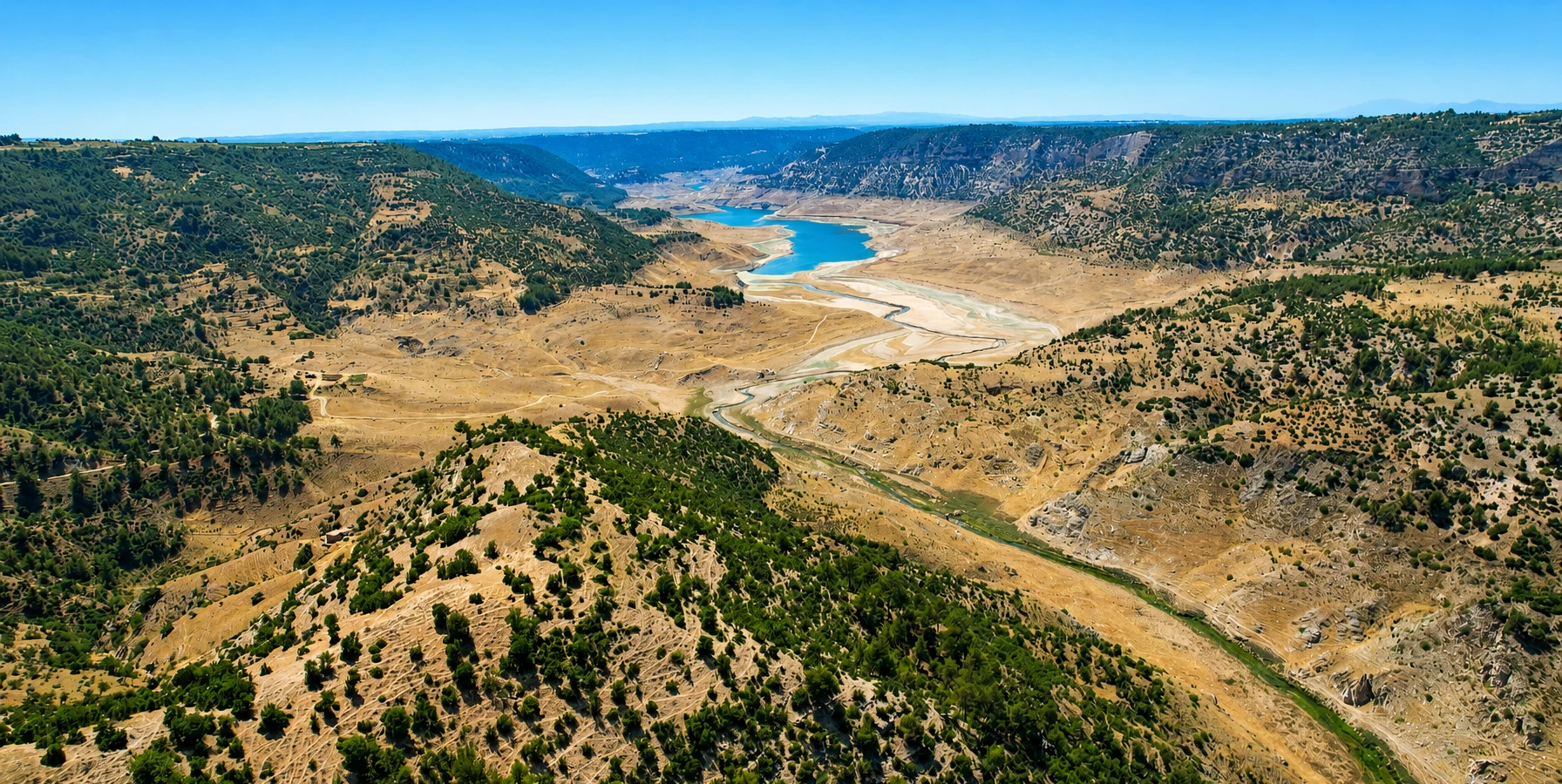
Çal, Denizli
Explore the full district guide, from traditional villages to canyons and vineyards.
Discover Çal





In the upland countryside of Çal, Denizli, vines are more than a picturesque backdrop. They are part of a working agricultural landscape shaped by families, seasons and the distinctive Çal Karası (Çalkarası) grape. This purple-black local variety carries a registered geographical-origin name and provides an inviting introduction to western Anatolia’s vineyard heritage.
The district is also home to Çal Bağ Yolu, a vineyard-tourism initiative connecting producers, gastronomy and the wider countryside. A visit can mean learning how grapes are grown, photographing vine-covered hills, exploring local history or arranging an optional producer experience. Wine tasting is never necessary to appreciate Çal.
This practical guide explains what distinguishes Çalkarası, what its official geographical indication covers, when harvest happens, how to plan a vineyard visit, and which nearby heritage and nature stops work well with a relaxed private itinerary.
Locally distinctive dark grape.
Official registration no. 616.
An organised vineyard-tourism route.
Working vineyards and autumn traditions.
The grape, its protected origin and practical details for a countryside visit.
Çal district, Denizli Province, Türkiye.
Çal Karası / Çalkarası.
Denizli Çalkarası Üzümü / Denizli Çalkarası.
Turkish geographical indication no. 616.
7 December 2020.
Çal district in Denizli.
Plump purple-black fruit.
Late August; exact timing varies.
Approximately 850 m at Çal centre.
Çal Bağ Yolu.
Çal Bağ Bozumu harvest festival.
Arrange access; vineyards are working private land.
Çal is one of Denizli’s important grape-growing districts, where agriculture is woven into the daily life of villages and farms. The experience feels different from a conventional monument visit: rows of vines, seasonal work and the stories of growers are the main attractions.
The region’s characteristic Çalkarası grape offers a concrete link between local geography and food heritage. Its official registered origin makes it especially interesting to travellers who want to learn about Turkish agricultural products as well as ancient history.
Vineyard scenery pairs naturally with a wider Çal district visit. Depending on access and interests, you may combine countryside photography with Kısık Canyon, traditional settlements or the story of Dionysopolis.
Understand local grapes and seasonal produce.
Discover harvest customs and rural identity.
Vine rows, hill panoramas and harvest textures.
See the upland landscape of the upper Menderes.
Choose agricultural interpretation without alcohol.
Set your own pace with no compulsory shopping stops.
Çal lies northeast of Denizli city in the upper Büyük Menderes basin. Vineyard plots spread across the district’s agricultural countryside, not in one fenced tourist attraction or a single vineyard park.
The district centre is commonly described as about 63 km from Denizli city, although a specific grower, village or producer may be farther away. The surrounding landscape includes elevated fields, rural settlements and valley roads.
For navigation, obtain the exact producer address and confirmed appointment before setting out. Searching only for “Çal vineyards” may bring you to private agricultural plots without a visitor entrance.
Denizli.
Çal.
Inland Aegean plateau and river basin.
Private vehicle works best.
Use the precise venue address.
Do not enter vineyards without permission.
Çal Karası, often written Çalkarası, is the regional grape most closely associated with Çal. The protected product is formally named Denizli Çalkarası Üzümü / Denizli Çalkarası. It is a local agricultural identity, not simply a tourism slogan.
The Turkish Culture Portal’s registered-product description identifies purplish-black, medium-sized, plump and generally ellipsoidal berries, with fleshy, juicy pulp and typically one or two seeds. The bunches are described as compact and winged.
The same official description places usual ripening around late August. This is a variety characteristic, not a promise that every vineyard opens to visitors or that harvest happens on exactly the same date each year.
Çal Karası / Çalkarası.
Purplish-black.
Rounded-plump to ellipsoidal berries.
Typically 1–2 per berry.
Compact, often winged.
Toward the end of August.
The Turkish Patent and Trademark Office (TÜRKPATENT) registered Denizli Çalkarası Üzümü / Denizli Çalkarası as a geographical indication on 7 December 2020, under registration no. 616. The registrant is Çal Chamber of Agriculture (Çal Ziraat Odası).
The registration category is menşe adı, or appellation of origin, linking the named product’s documented qualities to a precisely defined production area: Çal district. This is stronger and more specific than the casual use of a regional nickname.
Important distinction: the registered product is the grape. The registration should not automatically be described as a blanket geographical indication for every wine, winery or other product made using Çalkarası.
Denizli Çalkarası Üzümü / Denizli Çalkarası.
616.
7 December 2020.
Menşe adı (appellation of origin).
Çal Ziraat Odası.
Çal district, Denizli.
The official product description focuses on recognisable berry colour, shape, bunch structure and composition. Plump, juicy purple-black berries and the characteristics of their clusters are central to the registered identity.
Another important part of the story is the place itself. Çal’s inland position and elevated terrain lead to noticeable seasonal and day–night temperature differences. The registration ties the grape’s distinguishing properties to these regional growing conditions.
No single photo or flavour claim can authenticate geographical origin. If protected provenance matters to you, consult the official registry and the grower rather than relying solely on a market label or a similar-looking bunch.
Dark purple to black skin.
Fleshy, juicy fruit.
Relatively compact cluster.
Cultivated in the Çal district.
Inland plateau with marked temperature variation.
Use producer and registered-product information.
Çal sits in inland western Türkiye at a district-centre elevation of approximately 850 metres. The wider grape-growing area includes different vineyard positions and microconditions, so not every plot should be assumed to have the same altitude or soils.
The registration describes an inland climate with larger day–night and seasonal temperature contrasts than in coastal areas. These conditions are relevant to how the area’s signature grape is documented and understood.
For visitors, the result is a changing rural landscape: green vines in the warmer growing season, busy harvest activity as fruit ripens, and a more open, quiet agricultural setting in the dormant months.
Upland inland Denizli.
Around 850 m above sea level.
Marked seasonal temperature differences.
Differ from plot to plot.
Active vegetative growth and fruit development.
Harvest activity and leaf colour.
The geographical-indication record explicitly describes wine production and dried-grape use for Denizli Çalkarası. Growers and producers may work with fruit for different purposes depending on quality, agricultural decisions and local markets.
The important visitor story is broader than an individual drink: how a bunch develops on the vine, when it is picked, how it is sorted and what different products can be made from grapes.
If you prefer a non-alcoholic experience, ask for a vineyard walk, a grower conversation, a demonstration of grape handling or local food instead of a beverage tasting. All such experiences depend on what a host actually offers.
Wine-grape production and drying.
May be encountered as part of local produce.
Growing, harvesting and sorting grapes.
Agricultural and seasonal cooking context.
Possible by individual arrangement.
Ask the host what is actually included.
Vine growing is deeply rooted in the regional story of the upper Maeander. Agriculture has shaped settlement patterns, household livelihoods and seasonal gatherings across the district for generations.
Ancient Dionysopolis, in the Ortaköy–Develler area, is particularly evocative because regional coin imagery includes Dionysus and grapes. This suggests how important such symbols were in ancient civic identity.
Yet the ancient evidence should be interpreted carefully: it does not prove an uninterrupted history of today’s named grape cultivar, nor does it make every present vineyard an excavated archaeological site. Ancient symbols and modern protected agriculture represent connected themes, not identical evidence.
Dionysopolis.
Dionysus and grapes on civic coinage.
Cultivated Çalkarası grape.
A living agricultural tradition.
Do not equate ancient imagery with cultivar proof.
Regional archaeology and village heritage.
Çal Bağ Yolu is an organised regional vineyard and wine-tourism initiative centred on the Çal countryside. Its own website names Erdel, Küp, Kuzubağ and Lermonos as the four founding producers behind the route.
The project brings attention to viticulture alongside food, nature and history. It is best understood as a network of distinct participating venues, not one continuously open public footpath with guaranteed entry to every stop.
For the most current arrangements, consult the official Çal Bağ Yolu website, select the experience that interests you and book directly or arrange an agreed visit. Hours, activities, ages and prices can differ.
Çal Bağ Yolu.
Erdel, Küp, Kuzubağ, Lermonos.
Multi-venue vineyard tourism network.
Food, countryside and heritage.
Venue-specific, often by arrangement.
calbagyolu.com.
The project presents four distinct producer stories. Erdel is associated with Hançalar and the development of local grape value; Küp describes a multi-generational winery history; Kuzubağ foregrounds a return-to-roots narrative; and Lermonos connects vineyard traditions with contemporary approaches.
These names are useful starting points for researching an arranged producer visit. They should not be taken as promises of public daily tours, restaurant availability, production access or a particular wine service.
Travellers can also choose an entirely scenic rural day focused on the landscape and grape heritage, without entering any winery or participating in a commercial demonstration.
Hançalar-area producer and grower connections.
Long-running, multi-generational production story.
Local roots and modern vineyard ambitions.
Vineyard, nature and regional food themes.
Confirm directly with each venue.
Vineyard scenery without commercial stops.
A well-planned vineyard day can include scenic drives, an introduction to grape cultivation, rural photography, a prearranged producer conversation or a seasonal food stop. Whether a specific element is available depends on the season, the host and advance agreement.
Working vineyards are not public parks. Harvest, pruning, spraying, equipment movements and crop protection all take priority over tourism, even during a busy visitor season.
If a tour includes a private agricultural property, ask in advance about walking distance, seating, shade, toilets, accessible routes, children and photography rules. Make no assumptions about free samples, guided cellar visits or on-site meals.
Roadside views from legal public places.
Vines, pruning, ripening and harvesting.
Book and confirm the available programme.
Obtain permission on private land.
Ask about shade, toilets and walking surfaces.
Optional and never compulsory.
The official description of Denizli Çalkarası places its normal ripening toward the end of August. In practice, harvesting across Çal continues at different times depending on grape variety, vineyard location, weather and production goals.
For visitors hoping to see harvest activity, late summer and early autumn are the most relevant periods, but no fixed date can guarantee that fruit will be harvested at a chosen producer.
Contact your host shortly before travel. A vineyard may be busy with labour, closed to guests, already harvested or waiting for a different picking window. A relaxed visit should never interfere with agricultural work.
Generally late August in official product description.
Variable across late summer and autumn.
Weather, variety and producer decisions.
Active fields and local harvest life.
Ask the grower before booking.
Respect workers and equipment.
Harvest, or bağ bozumu, is the moment when a season of vineyard work turns into the gathering and sorting of fruit. Picking, carrying, selection and transport require organisation and careful attention.
Where an authorised visitor programme is offered, it may be possible to hear about grape maturity, bunch selection and the rhythms of harvest. However, hands-on picking should only happen with the producer’s explicit invitation and instructions.
Wear sensible shoes and stay clear of vehicles, tractors and harvesting equipment. Good vineyard etiquette means treating the work as a livelihood first and a travel experience second.
Bağ bozumu (grape harvest).
Picking and moving bunches.
Different producers follow different practices.
Only when the host authorises it.
Keep clear of farm operations.
Respect people, produce and property.
Çal Bağ Bozumu Kültür ve Sanat Festivali celebrates more than grapes. It brings the district’s identity into public view through cultural, artistic and community activities associated with harvest time.
The 29th festival took place on 4–6 September 2026. Those dates describe that year’s event only. Festival schedules, participating venues, performances and local access arrangements should always be checked for any future edition.
A festival visit and a private vineyard appointment are different experiences. Attending a public celebration does not grant permission to enter working vineyards or any participating business without an arrangement.
Çal Bağ Bozumu Kültür ve Sanat Festivali.
4–6 September 2026.
Grape harvest and local culture.
Community and cultural programmes.
Await each year’s official schedule.
Requires separate permission.
On 20 June 2026, the region hosted the first Çal Karası Symposium, organised through Çal Bağ Yolu with support from local and metropolitan authorities. The event gave the district’s grape a dedicated public forum.
Researchers, growers, producers and tourism participants discussed the history, cultivation, production, economy and tourism potential of the local variety. Denizli Metropolitan Municipality reported on the event on 24 June 2026.
For travellers, the symposium is a sign of the attention being given to the area’s living agricultural heritage. It should be described as a 2026 event, not an annually guaranteed symposium or an open museum.
First Çal Karası Symposium.
20 June 2026.
Denizli Metropolitan Municipality, 24 June 2026.
Growers, researchers and tourism stakeholders.
Viticulture, culture and local development.
Recognition of the region’s grape heritage.
Absolutely. The vineyards and their history are worthwhile subjects even when travellers prefer not to drink alcohol or visit tasting rooms. Grape cultivation is an agricultural and cultural story in its own right.
A non-tasting programme can emphasise landscape photography, grape characteristics, harvesting methods, village life and locally produced food. If an indoor or estate visit is desired, ask which non-alcoholic options are actually available.
For Wow Cappadocia private tours, we can plan around your interests, subject to local arrangements. There are no compulsory tasting sessions, shopping stops or sales demonstrations.
Enjoy cultivated plateaus and rural vistas.
Learn about the grape and its protected name.
Regional produce and local meals.
Choose appropriate, confirmed activities.
Commercial tasting is never obligatory.
No compulsory shopping stops.
The grape harvest sits within a broader inland Aegean food landscape. Seasonal fruit, home-style cooking and local agricultural products are natural companions to a countryside journey.
Visitors can discuss traditional uses of grapes and dried fruit with growers or local hosts. Because businesses and household customs differ, avoid assuming that a specific grape dessert, homemade product or lunch menu is always available.
For a prearranged food experience, tell the host about vegetarian preferences, allergies, alcohol preferences and dietary restrictions. On rural routes, carry water and a snack in case meal options are limited.
Local grapes, including Çalkarası.
Dried fruit and grape-based traditions.
Inland Aegean and local home cooking.
Arrange a confirmed venue.
Discuss before travel.
Bring water and light snacks.
Çal’s most compelling vineyard photographs show real working landscapes: patterned vine rows, plump dark grapes, hills rising beyond cultivated fields and subtle shifts in autumn colour.
Morning and late-afternoon light usually flatter vineyards more than exposed midday sun. For mobile-friendly website imagery, keep the main bunch, field or ridge near the centre of the frame so a narrow crop preserves the subject.
Ask before entering private fields, touching fruit, using drones or photographing workers. The hero image for this page is planned as assets/images/cal-vineyards-calkarasi-grapes.webp, ideally showing an authentic Çal vineyard scene.
cal-vineyards-calkarasi-grapes.webp.
Authentic vines and Çalkarası grapes.
Keep the focal point centred.
Early morning or late afternoon.
Photograph only with consent.
Follow permissions and applicable regulations.
Late summer and early autumn are especially evocative because fruit matures and harvest activity may be underway. This is also a period when advance arrangements matter most, as growers have work to complete.
Spring reveals the vines returning to growth, while summer offers green fields but can bring strong sun. Winter is the dormant season and is better for a broader countryside or cultural journey than for expecting ripe grapes.
There is no universally “best” date for every visitor. Choose your season according to whether you want greenery, harvest activity, photography or a quiet rural drive, then verify venue availability.
New growth and rural greenery.
Green vines, hot exposed afternoons.
Typical Çalkarası maturation.
Harvest atmosphere and seasonal changes.
Dormant vines and quieter landscapes.
Check weather and host access.
Morning: leave Denizli for Çal and enjoy viewpoints over the agricultural plateau. Begin with a prearranged vineyard or grower introduction if one is available, or focus on a scenic drive and the cultural story of Çalkarası.
Midday: enjoy lunch at a confirmed local venue or make an arranged stop for seasonal food. Keep time for photographs and the slower pace of rural travel.
Afternoon: continue with Çal town and surrounding villages or select one nature/history companion, such as Kısık Canyon if its walkway is officially confirmed open and safe. Avoid forcing multiple remote archaeological sites into the same short day.
Denizli or an agreed hotel.
Vineyard landscape and optional confirmed visit.
Reserved local food stop.
Rural heritage or an accessible nature stop.
Private car / van recommended.
No compulsory shopping or tasting.
With two days, separate the grape and food story from the area’s nature and archaeology. That allows more time to learn without turning a countryside visit into a rushed series of stops.
Day 1: explore vineyard scenery, Çalkarası heritage, a confirmed Çal Bağ Yolu visit if desired, and local gastronomy. Day 2: discover broader Çal landmarks such as the Kısık valley, historic villages and, where legal access permits, the regional stories of Dionysopolis and Apollon Lairbenos.
Choose accommodation and meals based on confirmed availability. Published vineyard-route membership does not automatically mean overnight rooms, restaurants or a staffed reception at every venue.
Vineyards, local food and producer stories.
Countryside, history and nature.
Arrange every producer visit individually.
Leave generous driving time.
Confirm nearby lodging separately.
Adjust for photography, history or families.
Dionysopolis is especially meaningful to visitors interested in vine symbolism. Its ancient identity evokes Dionysus, while coin types from the city show grape-related imagery alongside other civic symbols.
The nearby regional sacred landscape also includes the Sanctuary of Apollon Lairbenos near Bahadınlar. This separate ancient site adds historical depth to a tour of northern Denizli.
Neither site should be promised as a fully equipped visitor attraction. Visible remains and legal access can be limited. A guide may interpret the sites’ history without entering protected, closed or private areas.
Ancient city near Ortaköy–Develler.
Grape-related civic iconography.
Historic sanctuary near Bahadınlar.
Verify each site separately.
Historical interpretation with a local guide.
Restored ruins or unrestricted entry.
A vineyard day can be combined with the upper Büyük Menderes landscape and, where conditions permit, Çal Kısık Canyon near Kumral. The region’s gorge scenery contrasts strongly with its broad cultivated fields.
Published accounts describe a constructed canyon walkway, but its current condition and permitted access require confirmation. For safety, do not assume a historic walkway description proves it is open on the day of your visit.
For another regional theme, consider nearby districts and links such as Güney Waterfall. Check real travel distances rather than treating every Denizli attraction as an easy quick detour.
Dramatic river gorge near Çal.
Valley and countryside scenery.
A wider Denizli-region excursion.
Verify walkway opening before visiting.
Check heat, rain and river conditions.
Choose two or three compatible stops.
Çal district is commonly reached from Denizli via the Kaklık direction, with the district centre roughly 60–65 kilometres from the city depending on the route.
The most useful form of transport for multiple vineyard and countryside stops is a private vehicle. Producers and fields are spread across rural roads and may have separate entry arrangements. A town-to-town minibus is not a reliable substitute for a last-mile producer appointment.
Before departure, confirm the full address, parking instructions, arrival time and contact details for your chosen host. Leave extra time for stops and rural road conditions.
Denizli city or agreed location.
Towards Kaklık, then Çal.
Around 60–65 km to Çal centre.
Private vehicle for a multi-stop day.
Request precise directions.
Confirm before going into rural areas.
There is no single “Çal vineyard ticket”, unified admission gate or district-wide timetable. Fields are private working agricultural sites, while organised producers may offer different visitor programmes.
A commercial venue may charge for guided experiences, meals or optional tastings, but current prices and opening hours must be confirmed directly. This guide does not claim a verified 2026 fee for all producers.
If arranging a private tour, specify whether the quote covers transport, guiding, meals and any prebooked producer visit. Optional activities should be listed separately so no guest encounters an unexpected compulsory stop.
Not a universal public admission product.
Check availability and fees directly.
Usually separate unless quoted.
Arrange in advance.
Confirm quotation and inclusions.
None in our private tour approach.
Vineyards are farms, and good visitor practice begins with respect. Stay on authorised paths, follow staff instructions, never pick or eat grapes without permission and keep clear of tractors, tools and spraying operations.
Paths may be dusty, loose or uneven, with limited shade and toilets. Bring closed shoes, drinking water and sun protection. Ask hosts directly about mobility requirements or child-friendly facilities.
Do not fly a drone without the necessary permissions or photograph workers, private homes and commercial operations without consent. During harvest, remember that growers’ working schedules come first.
Closed shoes with good grip.
Carry water and sun protection.
Obtain host permission.
Stay away from tractors and tools.
Ask about paths and accessible facilities.
Respect people, operations and property.
Wow Cappadocia can help plan a private Çal countryside experience around your own interests. Possible themes include Çalkarası grape heritage, vineyard photography, rural food culture and nearby ancient history.
A programme can be discussed with a private vehicle and licensed guide on request, while any vineyard entry, grower discussion or producer-hosted activity remains subject to a confirmed appointment and local availability.
Our promise is simple: no compulsory shopping stops. You may explore the agricultural landscape without any tasting, sales presentation or commercial visit unless you specifically request one.
Tailored private experience.
Grapes, landscapes, food or archaeology.
Licensed guide subject to availability.
Private transport on request.
Optional and prearranged.
No compulsory shopping or tasting.
They are spread across Çal district in Denizli Province, in the inland upper Büyük Menderes region of western Türkiye.
Çal Karası, or Çalkarası, is a purple-black grape variety associated with Çal and recognised through the protected product name Denizli Çalkarası Üzümü.
Yes. Both spellings are commonly used for the grape; the official registration names Denizli Çalkarası Üzümü / Denizli Çalkarası.
Yes. It holds TÜRKPATENT geographical-indication registration no. 616, dated 7 December 2020, as a menşe adı (appellation of origin).
The specified protected geographic area in the registration is Çal district, Denizli.
No. The registration referenced here is for the specified grape product; it should not be treated as an automatic certification for every wine or grape-derived product.
The official description characterises them as purplish-black, with plump, fleshy and juicy berries.
The registered product description gives late August as typical ripening time, while actual picking dates vary by year and vineyard.
Late summer and early autumn are the general harvest period. Contact your chosen grower for the current season’s schedule.
It is a vineyard-tourism initiative connecting producers and the area’s wider food, landscape and heritage experiences.
Its official website lists Erdel, Küp, Kuzubağ and Lermonos as the founding members.
No. Many vineyards are private working farms. Arrange your visit with the relevant owner or producer.
Yes. Landscape, grape-growing and cultural experiences can be planned without tasting or drinking alcohol.
Some arrangements may be, but suitability depends on the host, paths, equipment and the activity being offered. Ask in advance.
Do not assume so. It is a network of participating venues; consult organisers for exact arrangements.
The district centre is commonly listed at about 63 km from Denizli. Individual vineyards and venues have their own distances.
No. There is no universal district-wide vineyard admission ticket. Private operators establish their own arrangements.
The 29th festival was held on 4–6 September 2026. Future editions require their own announcements.
The first symposium took place on 20 June 2026 and discussed the grape’s history, viticulture, production and local development.
Options include Çal town, countryside viewpoints, Kısık Canyon if safely open, and historical interpretation of Dionysopolis and Apollon Lairbenos.
Do not count on it. Public transport may reach the district centre, but specific producer visits often require an additional transfer or private vehicle.
No. Our private tours do not require shopping stops, tastings or sales demonstrations.
We can discuss a customised private programme with transport and guiding on request, with any producer visit subject to prior confirmation.
Pair vineyard heritage with ancient Phrygia, canyon scenery and Denizli’s iconic landscapes.
Continue exploring the history and culture of the upper Maeander region.
Explore the full district guide, from traditional villages to canyons and vineyards.
Discover Çal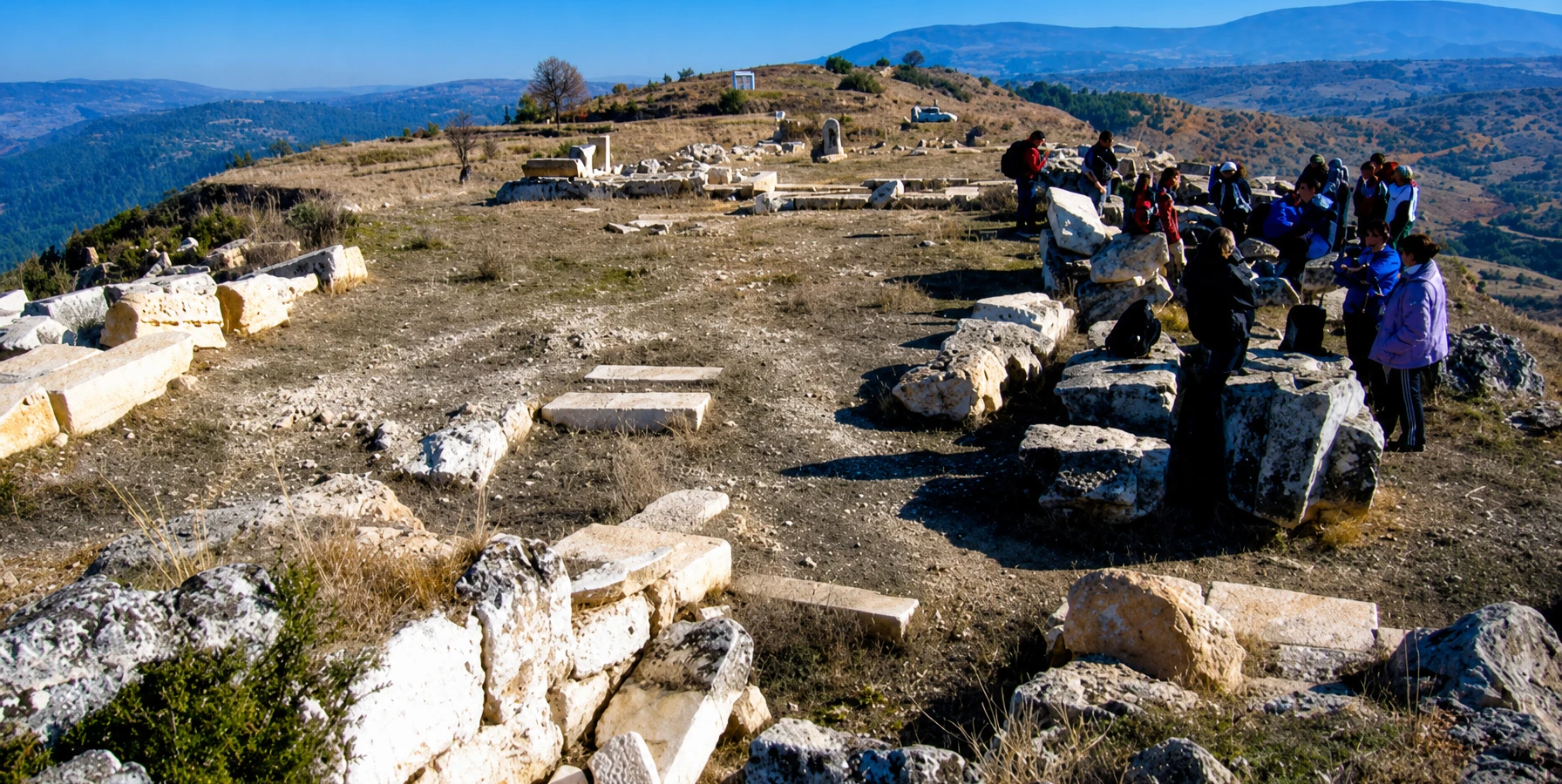
Explore the history and Dionysus symbolism of the ancient city near Çal.
Explore Dionysopolis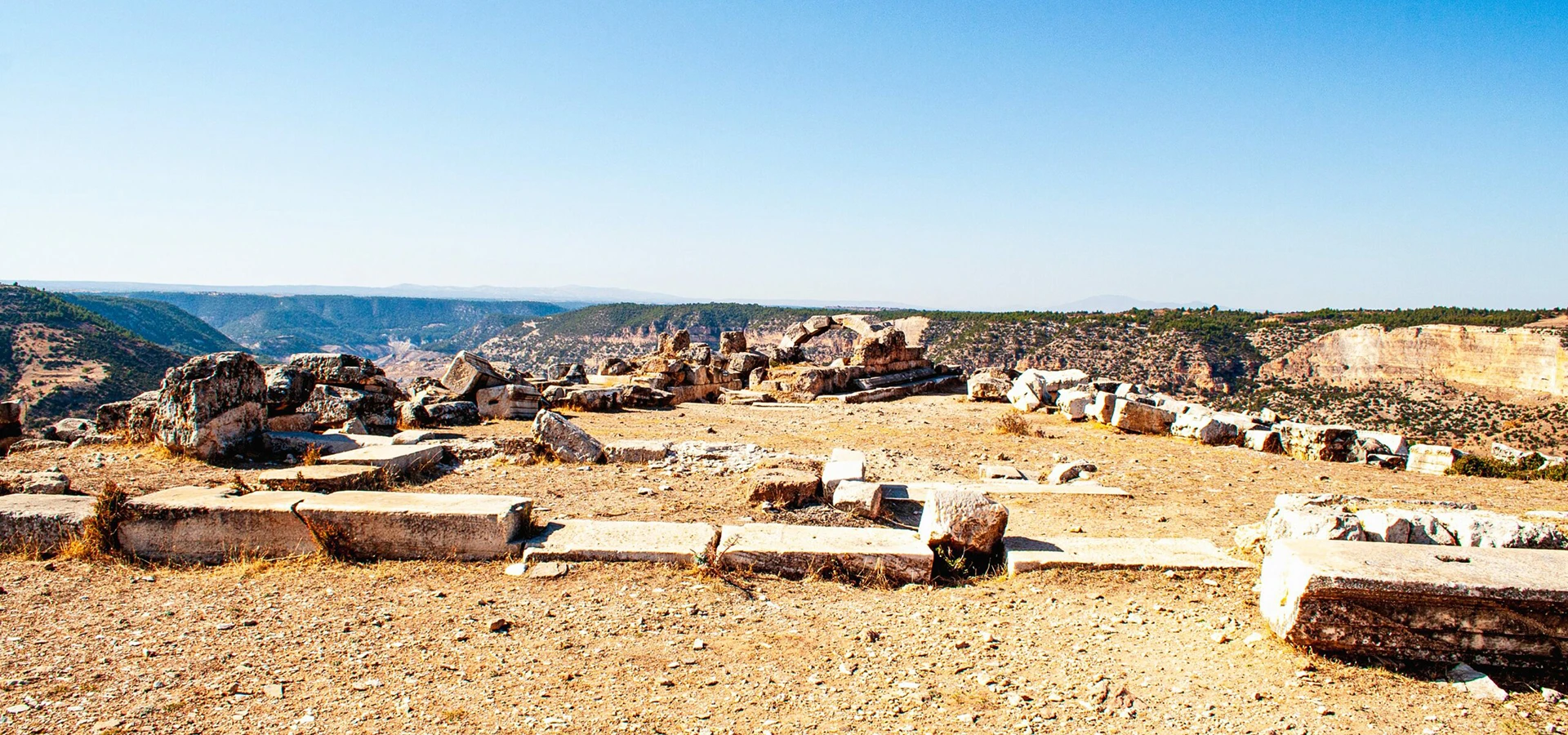
Learn about ancient sacred networks in the upper Maeander region.
Discover the SanctuaryWiden your journey with striking landscapes and a classic private cultural tour.


Discover the inland Aegean landscape of lakes, wetlands and rural scenery.
Explore Işıklı Lake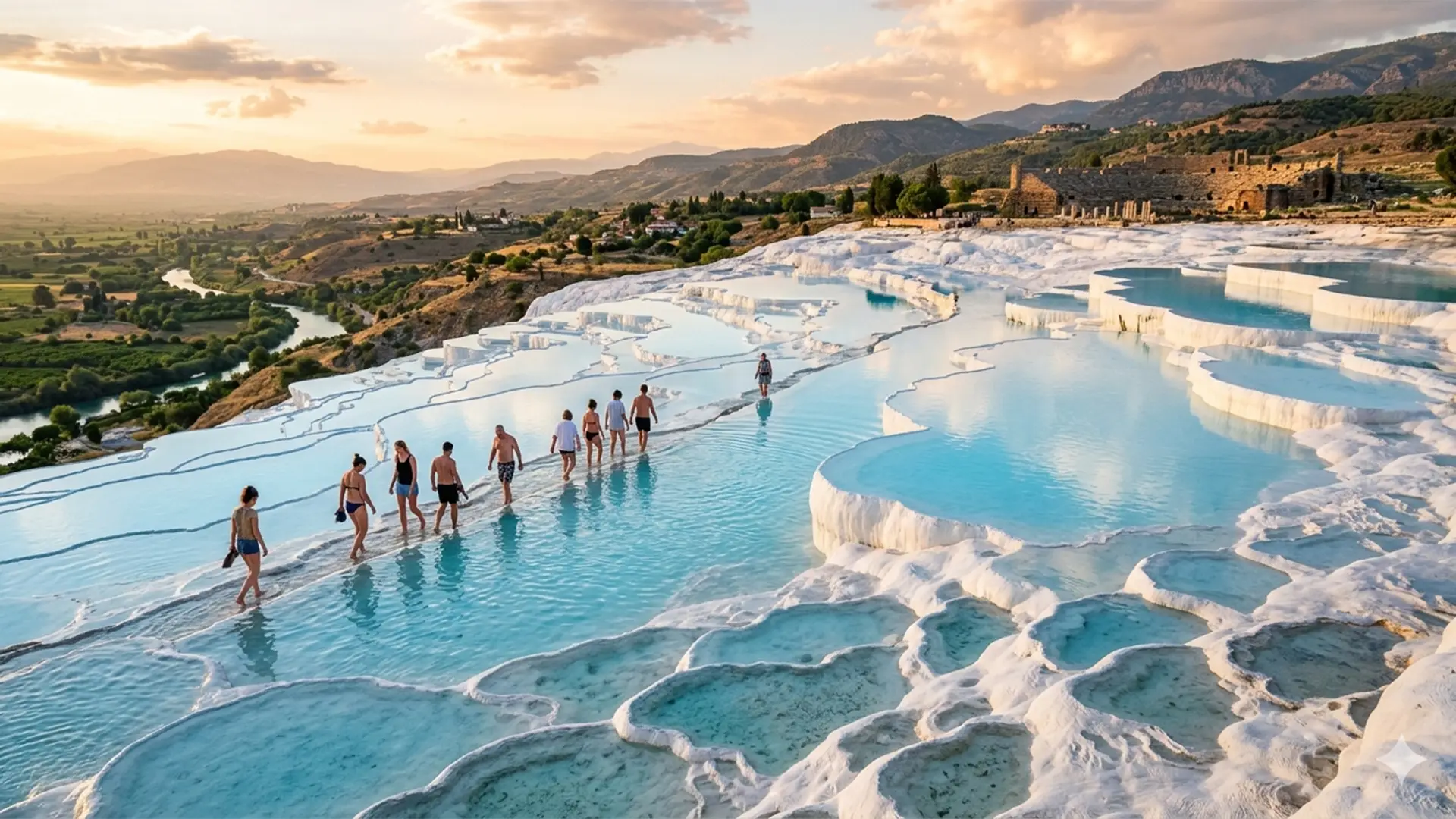
Experience Denizli’s iconic natural wonder and extraordinary ancient city.
View Private Tour