
Laodicea Ancient City
Explore the monumental Lycus valley city whose regional world helps contextualise the sanctuary.
Explore Laodicea





On the hill known as Asartepe, near Bahadınlar in Çal, Denizli, lie the ruins of the Sanctuary of Apollon Lairbenos (also written Apollon Lermenos). The site rises above the Büyük Menderes (Maeander) valley and preserves the story of a regional Anatolian god whose cult flourished especially in the Roman Imperial period.
Although its architectural remains are modest today, this sanctuary is exceptionally important for inscriptions called katagraphai, which recorded the dedication of people or resources to the deity, and confession or expiation inscriptions, in which worshippers publicly acknowledged offences and their consequences. These records open an intimate window onto ancient beliefs, social status and obligations.
The sanctuary is a remote archaeological site, not the Temple of Apollo inside Hierapolis. This guide covers its history, local religion, architecture and inscriptions, along with directions, access considerations and realistic expectations for anyone planning a visit.
A sacred hill above the Büyük Menderes valley.
Especially significant in the 2nd–3rd centuries AD.
Katagraphe and confession texts preserve personal stories.
Approximately 4 km northwest of the village.
Quick facts about the temple, ancient history, inscriptions, location and access planning.
Bahadınlar neighbourhood, Çal district, Denizli Province, Türkiye.
Asartepe, overlooking the Büyük Menderes valley.
A regional sanctuary centred on the cult of Apollon Lairbenos.
Especially the 2nd–3rd centuries AD under the Roman Empire.
Raised podium, Corinthian order and four-column front.
Apollo with a double axe (labrys), alongside other attributes.
Katagraphe and confession or expiation inscriptions.
About 4 km northwest of Bahadınlar, according to official guides.
Around 35 km from ancient Hierapolis in regional archaeological accounts.
Documented by W. M. Ramsay, D. G. Hogarth and H. A. Brown.
A remote hillside archaeological area, not a conventional museum.
Verify 2026 entry conditions, opening arrangements and final-road access.
The ruins on Asartepe are not as monumental as the theatre at Hierapolis or the colonnaded streets of Laodicea. Their importance lies in something less obvious: inscriptions that record how real inhabitants of Roman Anatolia understood divine authority, guilt, family relationships, property and personal freedom.
The sanctuary occupied a dramatic hilltop above the Büyük Menderes (Maeander) valley. Ancient worshippers came here from surrounding communities, making the remote site an unusually revealing window into the religious life of the countryside around the upper Maeander and Lycus valleys.
Today it is best approached as an archaeological landscape rather than a fully serviced attraction. Visitors with an interest in ancient religions, inscriptions or Phrygian history may find it particularly rewarding when access has been confirmed in advance.
A lesser-known archaeological destination.
Local devotion beneath Roman rule.
Textual evidence of individual lives.
A prominent hill above the Maeander.
Important for religion and epigraphy.
Fragile ruins and uncertain facilities.
Apollon Lairbenos Sanctuary is situated at Asartepe, a hill in the Bahadınlar area of Çal district, Denizli Province, in western Türkiye. The archaeological remains overlook the Büyük Menderes valley from a naturally defensible and visually prominent position.
Türkiye’s Culture Portal places the sanctuary approximately 4 km northwest of Bahadınlar; its route description gives around 18 km from Çal centre to Bahadınlar. The final approach is not equivalent to an ordinary city-centre attraction: check the precise access road and current conditions before leaving the village.
Archaeological descriptions refer to the sanctuary as part of ancient Phrygia, within the cultural landscape north-east of Hierapolis. It should not be confused with the better-known Temple of Apollo at Hierapolis; these are separate sanctuaries.
Denizli.
Çal.
Bahadınlar.
Asartepe.
Büyük Menderes / Maeander.
Not the Apollo temple in Hierapolis.
You may encounter Apollon Lairbenos, Apollon Lermenos, Apollon Leirbenos or similar forms in archaeological writing, place descriptions and maps. These are variants associated with the same local cult, not evidence for several separate nearby temples.
The Denizli Provincial Directorate of Culture and Tourism notes numerous ancient spelling variants, while coins minted at Hierapolis use the form Lairbenos. The range of spellings suggests a local divine name whose sounds were not always represented consistently in Greek.
This page uses Apollon Lairbenos Sanctuary throughout, but travellers looking for directions may also see the site called Apollon Lermenos Tapınağı or Asartepe Tapınağı in Turkish.
Apollon Lairbenos.
Apollon Lermenos.
Apollon Leirbenos.
Tapınağı means temple.
Asartepe.
Search alternative spellings.
The most prominent surviving phase belongs to the Roman Imperial period. Official descriptions suggest that the temple was constructed in or shortly after the reign of Hadrian (AD 117–138), with extensive epigraphic activity in the 2nd and 3rd centuries AD.
An earlier cult associated with the Anatolian Mother Goddess Kybele (Cybele) has been proposed on the basis of pottery and the wider religious geography. This remains a scholarly interpretation, not proof that the surviving Roman temple itself dates to the Phrygian period.
The sanctuary illustrates how regional Anatolian gods and sacred places continued to matter when Greek language, Roman administration and imperial-period architecture shaped public life. The site should be understood as having a long religious landscape, even though its phases are not all equally well documented.
Possible older Mother Goddess tradition.
Hadrianic period or later.
2nd–3rd-century AD inscriptions.
Ancient Phrygia.
Local beliefs under Roman administration.
Different finds belong to different phases.
The sanctuary was recorded by researchers W. M. Ramsay, D. G. Hogarth and H. A. Brown in May 1887, according to the Ministry of Culture and Tourism. This is the date of its documentation in modern scholarly accounts, not the date the hill or ruins first became known to local residents.
Subsequent archaeological and epigraphic work has shifted attention from only the standing architecture to the inscriptions recovered at Asartepe and in nearby settlements. Many of those texts illuminate practices that are otherwise poorly described by surviving ancient literary authors.
Interpretations continue to develop as additional inscriptions are documented and old readings are reconsidered. A visit therefore offers a glimpse of an active field of scholarship rather than a story settled by one early exploration.
May 1887.
W. M. Ramsay.
D. G. Hogarth.
H. A. Brown.
Epigraphy and archaeology.
New inscriptions refine interpretation.
Apollon Lairbenos was a regional manifestation of Apollo rooted in the religious traditions of western Anatolia. Although the name connects him with the Greek Apollo, his representations and local cult practices differ from the simplified image of Apollo found in many general mythology books.
Official descriptions depict the god with attributes including a double axe (labrys), ear of grain, oak branch or libation bowl. Some images show him as a mounted deity, emphasising the local character of worship.
Rather than treating the sanctuary as an ordinary Greek Apollo temple transplanted into Anatolia, it is more accurate to see it as a place where indigenous beliefs and Greek divine language met in the Roman-period countryside.
Regional Apollon Lairbenos.
Double axe or labrys.
Grain, oak and offering bowl.
Sometimes a mounted god.
Anatolian and Greek traditions.
Local identity remained important.
In some local dedicatory texts the deity is associated with Helios, the sun god, producing names such as Helios Apollon Lairbenos. This combination is an example of religious syncretism: different divine identities being brought together rather than kept in strictly separate categories.
The relationship helps explain why Apollo’s local attributes can differ from the classical literary standard. Such epithets were meaningful to worshippers making vows, petitioning for help or dedicating family members and property to a sanctuary.
The name should not be turned into a claim that every ancient worshipper understood the god in exactly the same way. The surviving inscriptions show varied religious language within a shared sacred centre.
Helios, the sun god.
Helios Apollon Lairbenos.
Religious syncretism.
Local Greek inscriptions.
Shows regional religious interpretation.
Belief was not necessarily uniform.
Official archaeological descriptions state that Leto and Artemis were also honoured within the religious setting of Apollon Lairbenos. In Greek mythology Leto is Apollo’s mother and Artemis his twin sister, but local worship could assign these gods distinctive roles.
A dedication from the area highlights devotion to Leto independently of Apollo. This is valuable evidence that the sanctuary’s sacred world was not limited to worship of one god in isolation.
These inscriptions help visitors imagine the site as a meeting place for requests, thanksgivings and personal acts of devotion, rather than just a decorated building occupied by a single cult statue.
Apollo’s mother in Greek mythology.
Apollo’s twin sister.
Evidence for wider local devotion.
Multiple divinities could be honoured.
Regional cult practices varied.
Look beyond the temple footprint.
The main temple stood toward the western part of the sacred hill, overlooking the Maeander valley. The provincial culture authority describes a high podium incorporating living rock, a tetrastyle front (four columns across the façade) and details in the Corinthian order.
These architectural terms describe the ancient design, not a claim that four complete columns or an intact roof are standing today. The remains include fragmented masonry and architectural elements, and the ruins do not resemble a fully reconstructed classical temple.
The sanctuary’s prominent location, elevated platform and worked stone point to an important cult place for local communities. Walk only on safe, permitted ground and do not climb delicate architectural fragments to recreate historic viewpoints.
Tetrastyle: four columns.
Corinthian.
High podium using natural rock.
Western sector of Asartepe.
Fragmentary architectural remains.
Do not climb or move stones.
The site includes evidence associated with altars, dedicatory stelae, architectural blocks and additional built spaces. A district-government description records sculptural and decorated fragments, including pieces linked to Dionysiac imagery, although the exact interpretation of individual fragments can be debated.
Archaeologists distinguish the principal temple from other remains on the hill. Their functions are not always securely identified; descriptions such as meeting hall or ritual building should be understood as possible interpretations, not definite labels.
The most meaningful way to read the site is as a sanctuary complex, where ritual, votive commemoration and forms of administration may have taken place in different spaces.
Temple of Apollon Lairbenos.
Altars and offering areas.
Inscriptions on stelae and stones.
Friezes and other worked blocks.
Functions partly debated.
A sacred complex, not only one building.
The archaeological importance of Apollon Lairbenos rests heavily on Greek-language inscriptions on stelae, altars and building elements. These texts preserve the words and actions of people who rarely appear in conventional accounts of Roman emperors or military history.
Two particularly significant groups are katagraphai—formal records of dedication of individuals or property to the god—and confession or expiation inscriptions, which record wrongdoing, punishment, restitution or public acknowledgment.
The texts reveal a world in which religious duties, legal status, moral expectations and economic relationships could intersect. Not all original inscribed stones are necessarily visible at the open-air site; never assume that a particular inscription is on display without checking with museum authorities.
Predominantly Greek.
Stelae, altars and architectural stones.
Katagraphe dedications.
Confession / expiation inscriptions.
People, status, property and belief.
Displays depend on conservation decisions.
A katagraphe was a written act recording the dedication or assignment of a person, and in some cases resources, to the deity. At Apollon Lairbenos such texts refer to enslaved people, children and other dependants as well as property associated with the cult.
Some dedications functioned as a form of conditional manumission for enslaved individuals. The person could obtain a protected status or freedom from ordinary private ownership while remaining subject to specified service to the deity or sanctuary. The details vary by text and should not be oversimplified as universal or unconditional emancipation.
These inscriptions matter because they join religious expression with social history and legal practice. They make the sanctuary an important source for understanding how communities publicly documented obligations and changes of status.
Katagraphe (plural katagraphai).
Formal dedication to a deity.
Enslaved individuals and family dependants.
Some property or workshop dedications.
Conditional freedom in some cases.
Terms differed among inscriptions.
Some katagraphai are interpreted as providing freedom or protection against sale for an enslaved person, while still requiring particular service to the god. They record restrictions, witnesses, fines or other means of making the dedication public and enforceable.
That does not mean the sanctuary was a modern emancipation institution, or that every dedication had the same outcome. The surviving records belong to a historical world in which slavery remained an established social institution. The precise legal and religious relationship must be read from each document.
For history enthusiasts, this is one of the most thought-provoking subjects connected with Asartepe: inscriptions can illuminate the personal and family consequences of religious dedication in a way monument descriptions alone cannot.
Possible in particular dedication records.
Temple-related duties could remain.
The inscribed text declared the act.
Some texts restrict subsequent claims.
Roman-period slavery.
Avoid one-size-fits-all explanations.
Another exceptional feature of the sanctuary is the group of confession inscriptions, sometimes called expiation or penitential inscriptions. Worshippers described acts that had offended the deity, the trouble or punishment they believed followed, and their decision to acknowledge the offence publicly.
The reported transgressions could include false oaths or breaches of ritual purity. Such accounts are particularly informative about what local communities considered serious wrongdoing, and how divine power was believed to affect everyday life.
These ancient texts should not be equated directly with a modern Christian sacrament: they belong to a different religious and historical system. Scholars can compare traditions of public confession across eras without assuming they were identical or that a simple line of descent is proven.
Confession / expiation inscription.
Broken oaths and ritual offences.
A text displayed the acknowledgment.
Punishment or divine intervention.
Phrygia and north-eastern Lydia.
Not identical to Christian confession.
The site’s inscriptions suggest acts of dedication, prayer, vow fulfilment, thanksgiving, confession and requests for healing or divine assistance. As at other ancient sanctuaries, worshippers may have offered sacrifices and commemorated obligations on inscribed stones.
Some texts imply that people acted in response to an oracle, dream or perceived command of the deity. We cannot reconstruct every ritual step or the precise daily schedule of the sanctuary from the existing evidence.
Rather than picturing an anonymous crowd attending identical ceremonies, imagine an assortment of individuals and families travelling from towns and villages to carry out personal religious commitments.
Formal offerings and vows.
Acknowledging perceived help.
Petitions for well-being.
Divine commands in some texts.
Acts associated with wrongdoing.
Ritual details are incomplete.
The Ministry of Culture and Tourism lists dedications from people associated with Hierapolis, Laodicea, Dionysopolis, Tripolis, Motella and other places of the wider Maeander and Lycus regions.
That geographical spread shows that the sanctuary was more than a tiny shrine serving only one village. It drew devotees with connections across several communities whose political and cultural identities were not necessarily the same.
This makes Asartepe an instructive counterpart to grand urban archaeological sites: visitors can explore the relationship between monumental cities, rural sanctuaries and the everyday religious practices of surrounding populations.
Regional urban connection.
Lycus valley community.
Ancient centre near Çal / Ortaköy.
Another Maeander-side city.
Named in inscribed records.
Beyond a single rural settlement.
Inscriptions mentioning property and the dedication of textile or pottery workshops have led archaeologists to consider how the sanctuary obtained resources and how economic activities may have operated in its vicinity.
The many inscribed stones also suggest demand for stonemasons and producers of commemorative stelae. These observations do not prove the exact arrangement of every workshop or the existence of a surviving market area that visitors can identify today.
Even with such limitations, the evidence suggests that religion was connected with production, labour, property and circulation of goods rather than being isolated from the practical concerns of the local community.
Stone carving for votive texts.
Textile and ceramic workshops.
Temple-linked property and labour.
Inscriptions, not a modern business ledger.
Exact locations and organisation debated.
Cult and economy were interwoven.
The sanctuary survives as a fragmentary archaeological site, with structural remains and worked stone associated with the ancient cult. The amount visible on the ground is not a measure of the site’s scholarly importance: some of its most valuable evidence comes from inscriptions studied and conserved separately.
Earlier official reports describe archaeological interventions, architectural fragments and aspirations to improve visitor access. They do not establish that a continuously staffed visitor centre, marked trail network or full reconstruction now exists.
This makes preparation essential. Confirm whether the monument is open to independent visitors, whether any conservation work or local restrictions are in force, and which approach may legally and safely be used.
Partial foundations and architectural blocks.
No intact classical temple to enter.
Archaeological recording and interventions.
Much relies on inscriptions.
Do not remove fragments or rub inscriptions.
Confirm current arrangements locally.
A visit is likely to feel more like exploring a remote ancient hillside than entering a formal archaeological park with ticket windows, cafes and regular guided interpretation. The scenery is part of the experience, but the main archaeological story becomes clear through prior reading or a knowledgeable guide.
Allow time for the approach, orientation and careful viewing instead of treating the temple as an effortless roadside photo stop. Even a short amount of walking may be uncomfortable in heat or on loose, uneven terrain.
Visitors who prefer accessible pathways, shade, toilets or guaranteed on-site explanations should consider whether a major managed site such as Laodicea or Hierapolis Archaeology Museum better suits their needs.
Remote and archaeologically focused.
Ancient religion and inscriptions.
Uneven ground may be present.
Do not assume any are operating.
Research or guide useful.
Prepared heritage enthusiasts.
The Türkiye Culture Portal describes travelling from Denizli in the direction of Kaklık, turning north towards Çal, and continuing towards Bahadınlar. Its reference distances are approximately 30 km to the Kaklık turning point, another 30 km to Çal, 18 km to Bahadınlar, and then roughly 4 km northwest to the sanctuary. These are historical route indications, not a promise of a particular driving time.
The final stretch has been described in district-government material as a stabilised / unpaved approach requiring maintenance. Road conditions, access and suitability for an ordinary car may change with weather or works. Ask locally for the actual road condition before departing from Çal or Bahadınlar.
If you are arranging a private trip from Pamukkale or Denizli, specify “Apollon Lairbenos at Asartepe near Bahadınlar, Çal”. The sanctuary is not the Temple of Apollo at Hierapolis in Pamukkale.
Via Kaklık and Çal.
Continue towards Bahadınlar.
Around 4 km, per official descriptions.
Verify surface and passability.
Use the Asartepe/Bahadınlar destination.
Distinguish from Hierapolis Apollo.
Türkiye’s Culture Portal notes minibus services between Denizli and Çal, and between Çal and Bahadınlar in its published visitor description. That is useful background, but the page does not provide a verified 2026 timetable or a transport service that continues to the sanctuary itself.
The final several kilometres may be unsuitable for an unplanned walk, particularly in hot weather, rain or darkness. Verify the return service from Bahadınlar and arrange onward transport before travelling.
For a more predictable visit, a pre-arranged private vehicle with a driver familiar with the exact last-mile route is preferable to relying on a map pin or the availability of a village taxi.
Minibus mentioned in official tourism guide.
Minibus mentioned; check current service.
No verified scheduled public shuttle.
Arrange in advance.
Good option when site access is confirmed.
Operating day, weather and road.
No verified official 2026 entrance-ticket amount or fixed on-site opening schedule for Apollon Lairbenos Sanctuary appears in the government visitor information consulted for this guide. It would be misleading to state a guaranteed free entrance or to invent regular ticket-office hours.
Some visitor accounts describe the area as a remote, non-ticketed site, but that alone does not confirm current legal access, temporary closures or restrictions during archaeological work. Contact the Çal district authorities or Denizli Provincial Directorate of Culture and Tourism for up-to-date guidance.
If permitted to visit, plan for daylight hours and allow adequate time to leave before dusk. Conditions at the sanctuary may be less predictable than at a staffed museum or the established ruins of Hierapolis and Laodicea.
Not independently confirmed.
No verified public schedule.
Ask the local authority.
Daylight only if access is permitted.
Possible for preservation or works.
Confirm arrangements and road access.
Wear sturdy closed shoes suitable for loose stones, sloping ground and potentially dusty tracks. Bring water, sun protection and a charged phone. Do not count on shade, toilets, food outlets or mobile signal at the site.
The location is unlikely to be suitable for a casual wheelchair or stroller visit without site-specific confirmation. Families should supervise children carefully near excavated masonry, slopes and drop-offs; visitors with limited mobility should request detailed access information.
Never disturb, move, climb or collect archaeological material. Do not make rubbings of inscriptions or fly a drone without checking the relevant heritage, property and aviation permissions. Leave the hillside exactly as you found it.
Sturdy closed walking footwear.
Carry your own supply.
Sun, wind and wet rock.
Close supervision on uneven ground.
Needs individual confirmation.
Never remove ancient material.
Spring and autumn often offer more comfortable conditions for a quiet archaeological outing in inland Denizli. Summer can be hot and exposed, while winter weather or recent rain may make the final approach more difficult.
The hilltop setting can be attractive for photography when the sun is lower, but safety and authorised access take priority over golden-hour photographs. Plan to return before fading light, especially if walking is required beyond the vehicle.
Check the forecast for Çal and Bahadınlar rather than assuming that conditions match the more heavily visited Pamukkale area. Avoid the trip when road conditions, thunderstorms or poor visibility make it unsafe.
Comfortable light and seasonal greenery.
Potentially strong sun and heat.
Often pleasant for rural sightseeing.
Mud, cold or difficult roads possible.
Natural light over the valley.
Finish safely in daylight.
The strongest photographic subject is the relationship between broken ancient masonry and the far-reaching Büyük Menderes landscape. A panorama can convey why the hill was a fitting setting for a regional sanctuary.
Close detail photographs of ancient stones should avoid physical contact, rearranging blocks or placing objects on fragile remains. If a photo was made somewhere else, do not present it as an authentic image of Asartepe.
For this webpage, the expected hero asset is assets/images/apollon-lairbenos-sanctuary.webp. Use an appropriately licensed photograph genuinely showing the sanctuary, with the most important ruins near the middle for mobile cropping.
apollon-lairbenos-sanctuary.webp
Hilltop ruins above the river valley.
Natural archaeology and landscape.
Centre the principal ancient remains.
Use licensed or owned material.
Do not touch or stage the stones.
A regional archaeological itinerary can connect the story of this rural sanctuary with major urban centres such as Laodicea and Hierapolis. These are important for understanding the network of communities mentioned in the sanctuary’s inscriptions, although not necessarily convenient to combine in a short outing.
For natural scenery, the broader Denizli region also includes Güney Waterfall and the landscapes of the Maeander basin. The archaeological sites of Attuda and Karura provide further opportunities to explore lesser-known ancient places on separate or extended routes.
Distances and suitable access routes vary considerably. Select stops based on confirmed road conditions, daylight and the interests of your group, rather than trying to fit every destination into a single tour day.
Confirm locations and travel conditions.
Option 1 – Asartepe archaeology excursion: travel privately towards Çal and Bahadınlar, with a visit to the Apollon Lairbenos sanctuary only if current access and the final road have been verified. Focus on the inscriptions, sanctuary history and valley setting.
Option 2 – Phrygia and the Maeander: a longer regional archaeology day or multi-stop program that explores the relationship between the ancient rural sanctuary and suitable additional heritage locations. The exact routing must be planned around road access and site conditions.
Option 3 – Denizli’s better-managed ancient highlights: visitors who prefer straightforward access can choose Laodicea and Pamukkale–Hierapolis, with the Lairbenos story introduced as part of the region’s religious history. Wow Cappadocia can discuss tailored private transport and licensed cultural guiding without compulsory shopping stops.
Conditional Asartepe visit.
Ancient religion across multiple sites.
Managed archaeology attractions.
Licensed cultural guide by arrangement.
Private vehicle with confirmed route.
Flexible visits; no shopping stops.
At Asartepe near Bahadınlar neighbourhood in Çal district, Denizli Province, Türkiye.
No. They are different archaeological sites. Apollon Lairbenos is near Bahadınlar in Çal; the famous Apollo temple at Hierapolis is in the Pamukkale archaeological area.
Official visitor information locates it around 4 km northwest of the village. Final-road condition should be checked locally.
Asartepe is the hilltop locality overlooking the Büyük Menderes valley where the ancient sanctuary remains stand.
Its best-documented phases are Roman, especially the 2nd–3rd centuries AD; an earlier sacred history has been proposed.
Official accounts suggest construction in or soon after the reign of Hadrian (AD 117–138); this is an archaeological interpretation, not a firmly documented foundation date.
It is a local epithet or name associated with the regional form of Apollo. The exact original linguistic derivation is not established.
Ancient inscriptions and modern publications preserve multiple spellings of the local divine name.
Yes. Some inscriptions connect the local god with Helios, resulting in titles such as Helios Apollon Lairbenos.
A double-bladed axe, one of the characteristic attributes appearing in representations of the local deity.
Regional inscriptional evidence points to devotion associated with Leto and Artemis as part of the wider sacred setting.
A formal inscription recording the dedication of a person or resources to the deity; some cases relate to conditional manumission.
Some dedication documents are understood to confer forms of freedom or protected status while retaining particular duties. It is not accurate to describe every dedication as unconditional emancipation.
Texts in which individuals publicly acknowledged an offence and its perceived divine consequences, often alongside an expiatory dedication.
No. The sanctuary was an ancient pagan cult centre. Comparisons with later confession traditions do not make its rituals Christian.
The principal documented inscriptions are in Greek, the widely used written language of the region in the Roman Imperial period.
W. M. Ramsay, D. G. Hogarth and H. A. Brown are named in official descriptions of its scholarly documentation.
No. The site preserves fragmentary remains, not a complete reconstructed ancient temple.
There is no verified current official entrance tariff for this particular sanctuary in the sources consulted; confirm local access and fee rules rather than assuming free entry.
A fixed official 2026 public visiting schedule could not be verified. Confirm permission and plan any authorised visit in daylight.
Do not count on visitor facilities at this remote archaeological location. Bring water and necessities.
Official tourism information describes minibuses to Çal and Bahadınlar, but does not establish a verified 2026 timetable or onward service to the hill.
The final approach has been described as an unpaved road. Check its current condition and whether your vehicle is suitable before attempting it.
It can be an interesting educational visit for families if access is authorised, but there may be rough terrain, slopes and little shade. Closely supervise children.
Step-free, wheelchair-suitable access has not been verified. Request current site-specific information before planning.
Spring and autumn may be more comfortable for an outdoor archaeological stop, but weather and the final road determine whether a visit is sensible.
Do not assume permission. Check Turkish aviation, heritage-site and any local restrictions before flying.
Not necessarily. Archaeological finds may be documented, moved or conserved separately. Confirm current displays with museum authorities.
Laodicea, Hierapolis, Güney Waterfall and several lesser-known ancient places are possible options, subject to route and access.
We can discuss a tailored private cultural itinerary and transport, without compulsory shopping stops, subject to verified archaeological-site access.
The historical background, site identification, ancient divine names, main temple architecture, katagraphai and confession inscriptions are informed by Denizli’s Provincial Directorate of Culture and Tourism, the Türkiye Culture Portal, the Çal District Governorate and published epigraphic research. Dating of earlier cult phases is presented as interpretation, not established certainty.
Official archaeological descriptions are useful for history and broad directions, but older visitor pages do not confirm the final road surface, admission status or operating schedule for a trip in 2026. Please check practical details with the responsible authorities before travel.
Official history, architecture, inscriptions, local deity and regional connections.
Government destination listing with directions via Çal and Bahadınlar.
Local Asartepe location, architectural fragments and historical access information.
Regional museum/open archaeological site schedules; not a Lairbenos-specific schedule.
Published research on the sanctuary’s dedicatory inscriptions.
Explore ancient cities and regional sacred landscapes on flexible private journeys with licensed cultural guiding and no compulsory shopping stops. Remote site visits depend on confirmed access and safe road conditions.
Complement the Lairbenos story with the great cities of the Lycus and Maeander valleys.
Explore the monumental Lycus valley city whose regional world helps contextualise the sanctuary.
Explore Laodicea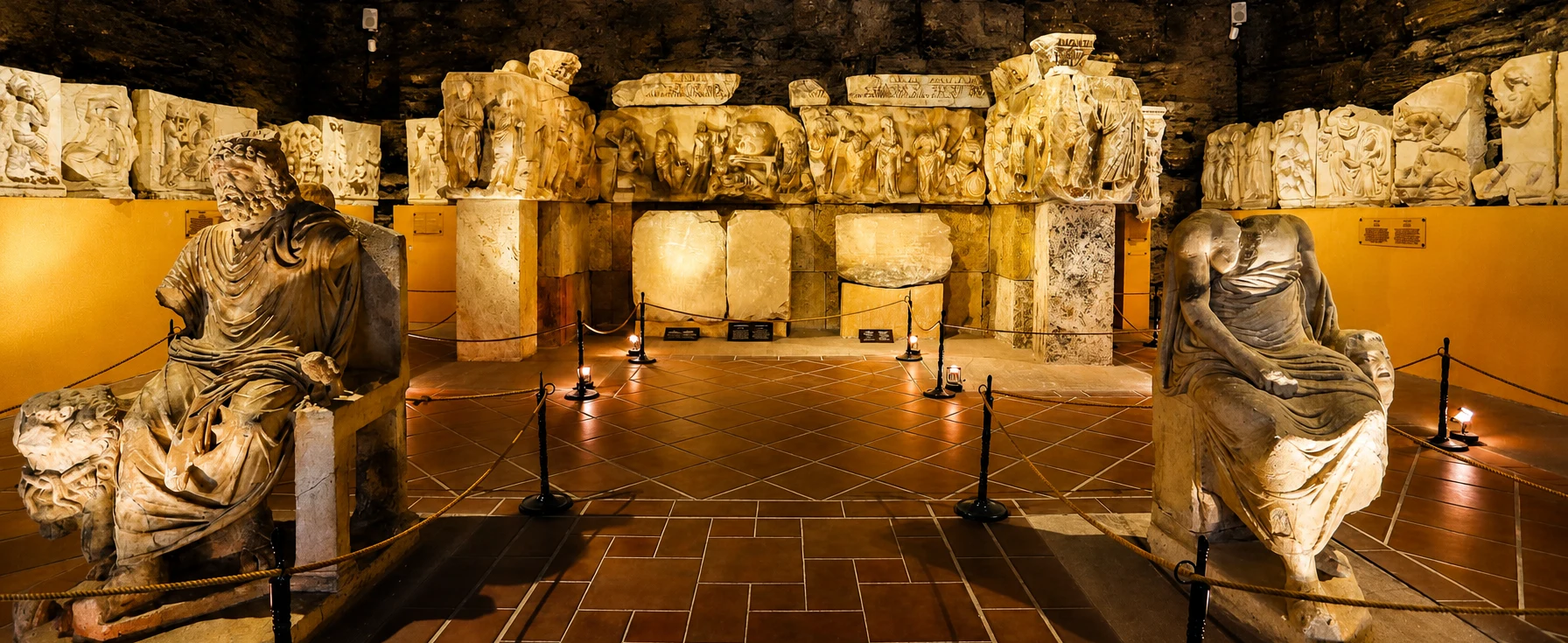
Discover artefacts and monuments from one of Phrygia’s major ancient cities.
Explore Hierapolis
Discover natural beauty in the wider Büyük Menderes region of Denizli.
Explore Güney WaterfallOther destinations for carefully planned private sightseeing.
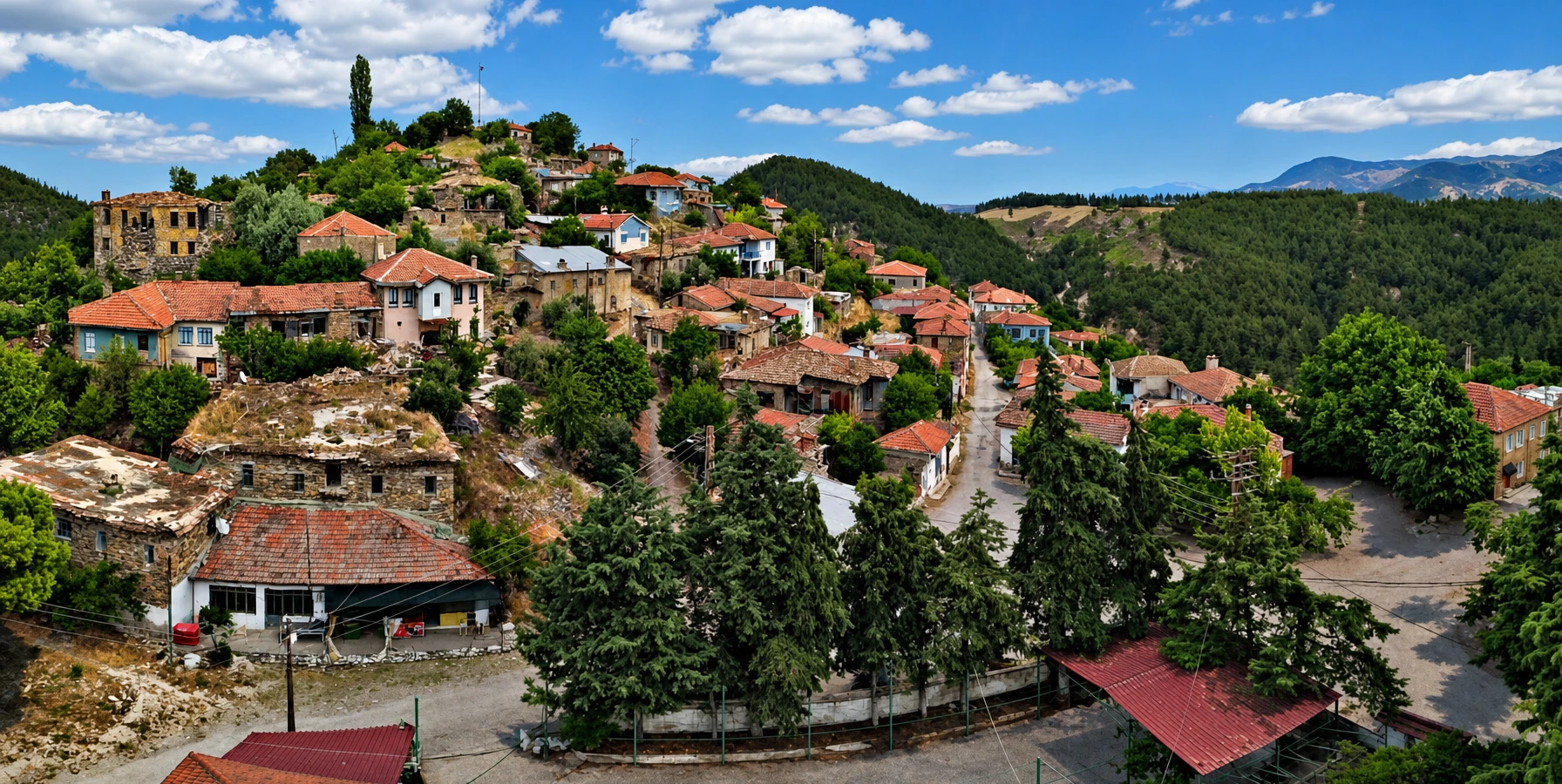
Get to know another lesser-visited archaeological site in Denizli’s rich landscape.
Discover Attuda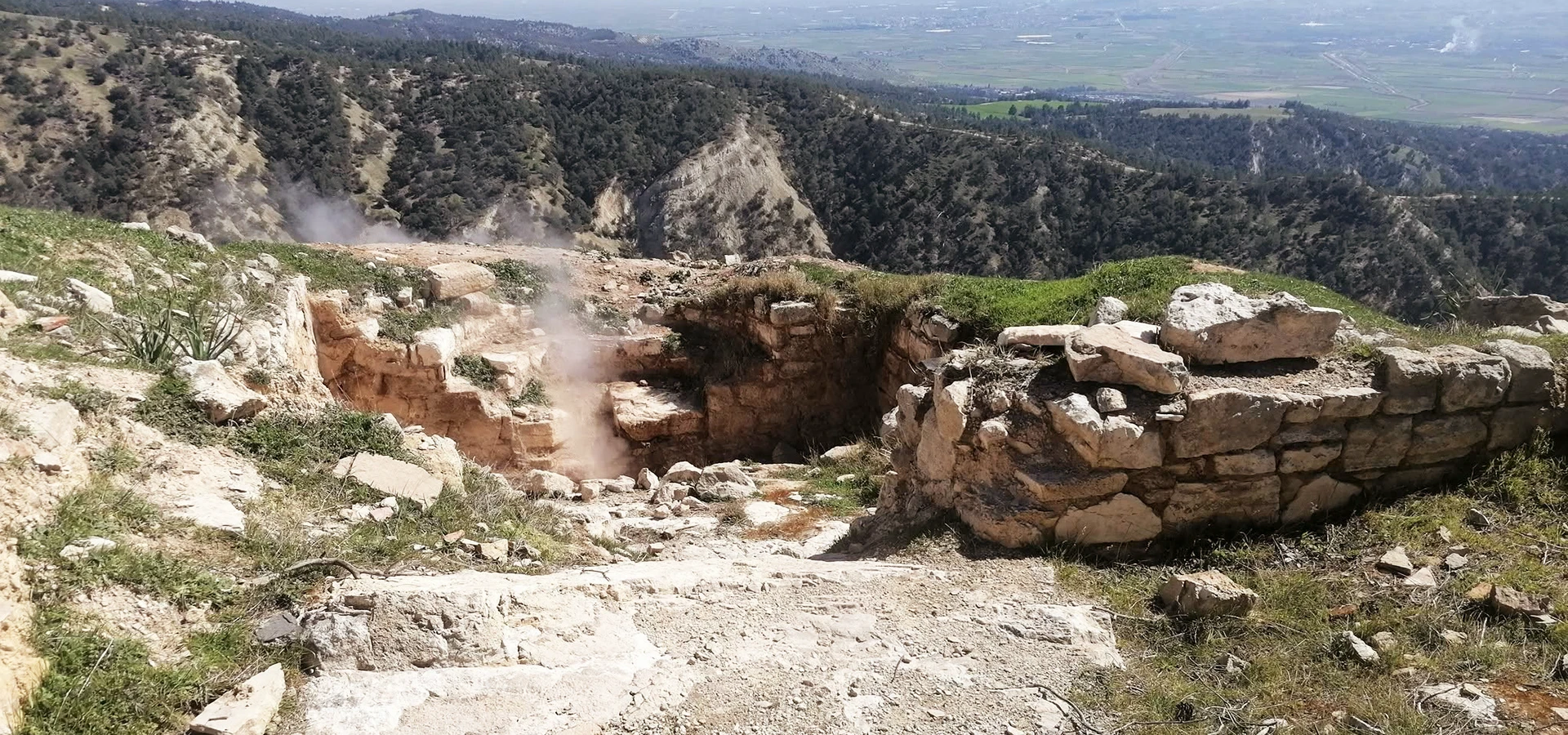
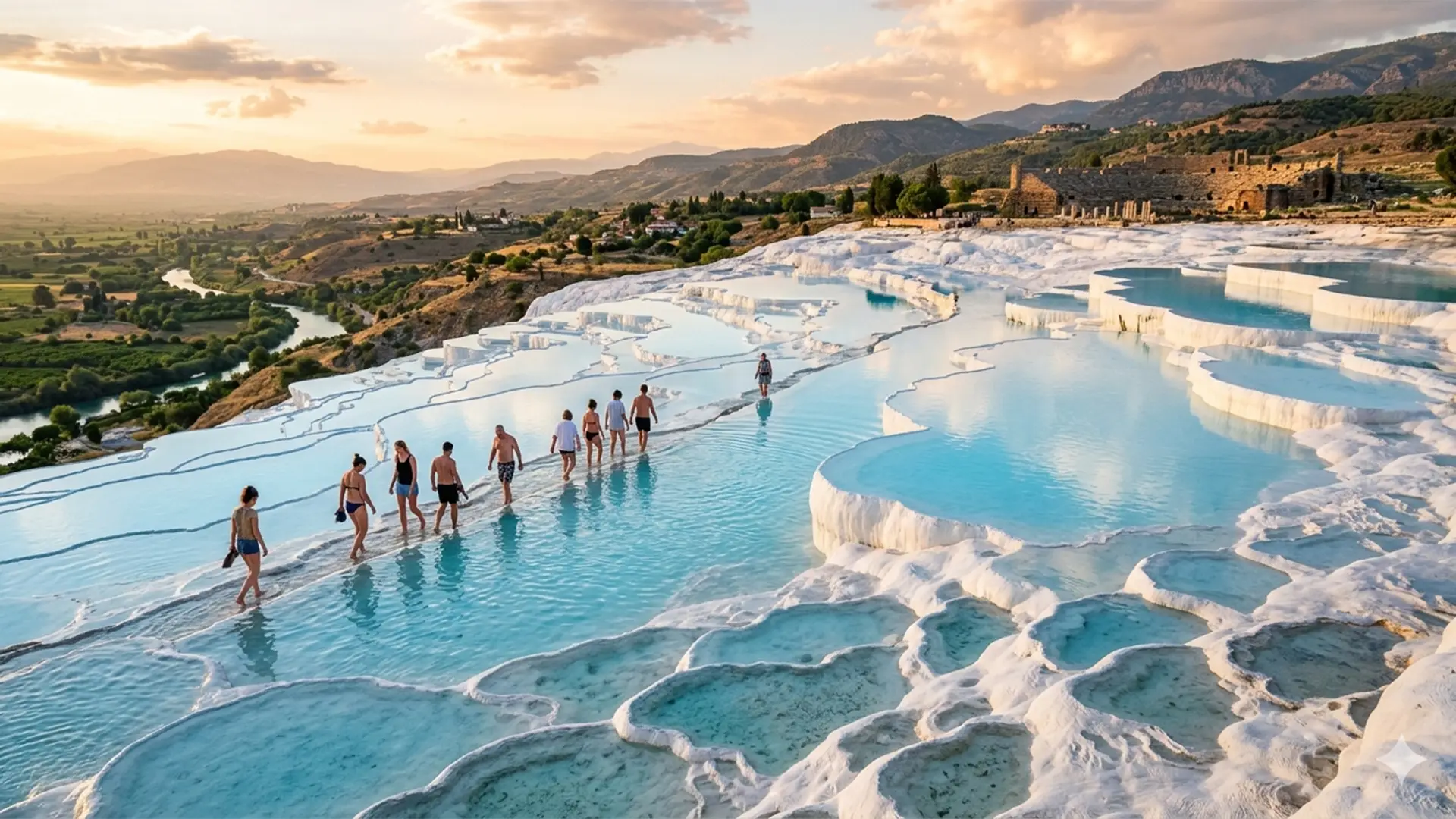
Plan a comfortable private journey through Denizli’s celebrated archaeological landmarks.
Explore the Private Tour