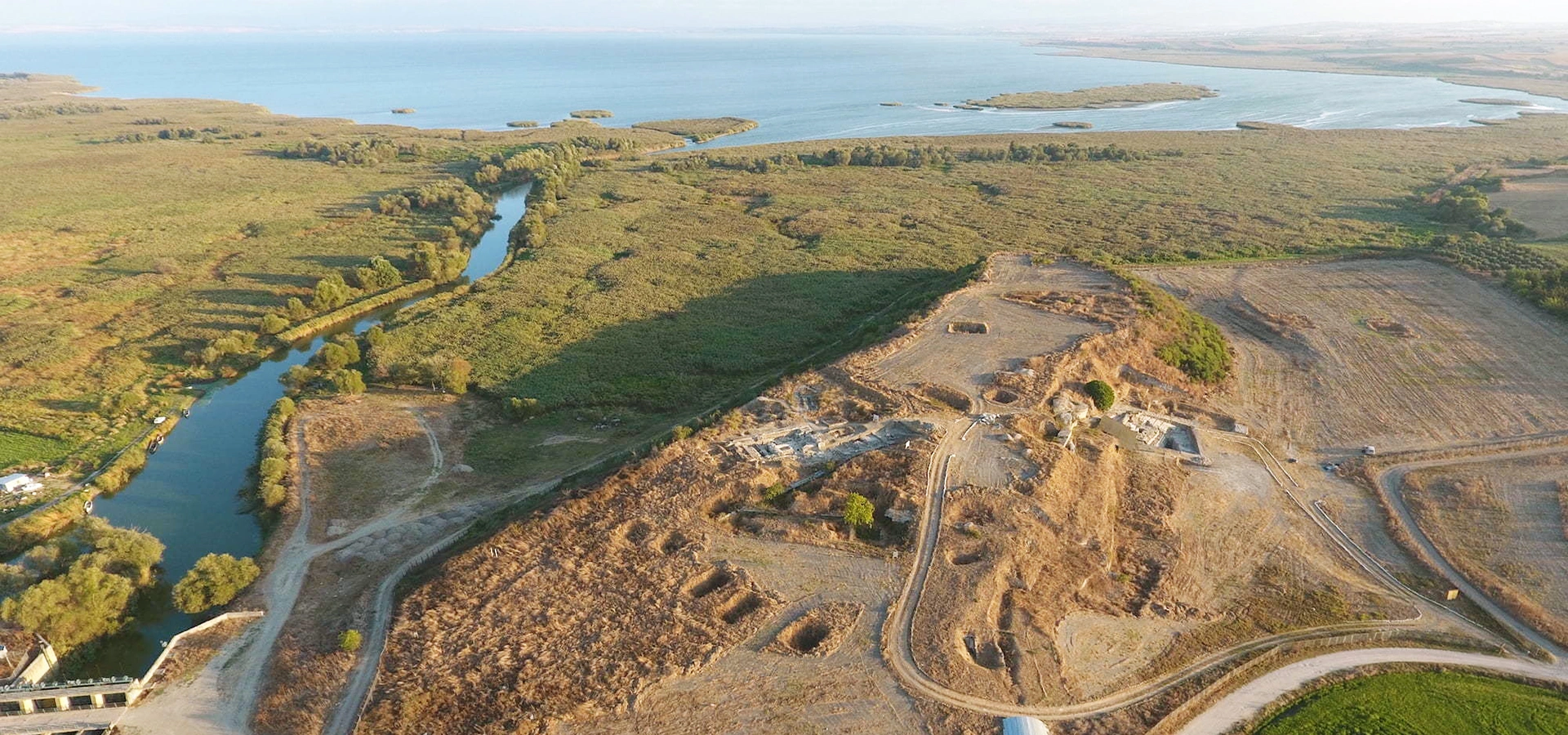
Daskyleion Ancient City
Walk through the archaeological landscape behind Bandırma Museum's remarkable Persian-period steles, seal impressions and inscriptions.
View Daskyleion Guide




At first glance, Bandırma Archaeology Museum may appear to be a relatively small regional museum. Step inside, however, and it becomes clear that its collections tell one of the most complex archaeological stories in northwestern Türkiye. The museum brings together material from Daskyleion, Kyzikos, the Kapıdağ Peninsula, Manyas, Gönen, Marmara Island and the wider South Marmara region, creating a bridge between inland Anatolia and the maritime world of the Sea of Marmara.
Its greatest strength is the archaeological geography surrounding Bandırma itself. South of the city lies Daskyleion, one of the most important Achaemenid Persian administrative centres in western Anatolia. West of Bandırma stands Kyzikos – Cyzicus, a major ancient city whose wealth grew from its commanding position beside the Propontis, today's Sea of Marmara. Both sites have supplied important material to the museum.
Visitors therefore encounter far more than conventional displays of pottery and stone fragments. Among the museum's most significant objects are Persian-period seal impressions, funerary steles, Phrygian inscriptions, Roman sculpture, Kyzikos coins and architectural pieces. Other displays extend the story into Byzantine, medieval and Islamic periods.
One of the museum's most unexpected sections introduces the Çamaltı Burnu I shipwreck, a thirteenth-century vessel excavated off Marmara Island in pioneering Turkish underwater archaeological work. Another dedicated exhibition presents discoveries from rescue excavations carried out during construction of the Trans-Anatolian Natural Gas Pipeline – TANAP in Manyas and Gönen.
For travellers planning to visit Daskyleion Ancient City, Kyzikos or the Kapıdağ Peninsula, the museum is especially valuable. Seeing the original objects before or after visiting the archaeological landscapes transforms scattered ruins into a much clearer historical story.
Rare funerary steles, bullae, pottery and other discoveries illuminate one of the Achaemenid Empire's most important centres in northwestern Anatolia.
Sculpture, inscriptions, coins and archaeological material reveal the wealth of one of the great cities of the ancient Sea of Marmara.
The museum preserves the story and finds of the Çamaltı Burnu I shipwreck, an important milestone in Turkish underwater archaeology.
A dedicated collection presents objects recovered from ancient necropolises investigated in Manyas and Gönen during major infrastructure works.
Essential information for visiting one of the most important archaeological collections in the South Marmara region.
Bandırma, Balıkesir Province, close to the western approaches to the city and the road toward Erdek and the Kapıdağ Peninsula.
A regional archaeology museum administered by Türkiye's Ministry of Culture and Tourism.
The present museum was officially opened to visitors on 21 June 2003.
Material from Daskyleion, Kyzikos and archaeological sites throughout South Marmara.
Achaemenid Persian-period archaeology from Daskyleion, including seal impressions and funerary monuments.
Sculpture, reliefs, funerary monuments and other material associated particularly with Kyzikos.
A reconstruction and finds connected with the Çamaltı Burnu I shipwreck off Marmara Island.
A dedicated gallery presents discoveries from TANAP archaeological excavations in Manyas and Gönen.
The wider collection extends from the Early Bronze Age to the beginning of the twentieth century.
Current official museum information lists admission as free.
Allow around 1–2 hours; archaeology enthusiasts can easily spend longer studying inscriptions and smaller objects.
Daskyleion, Kyzikos, Kapıdağ Peninsula, Erdek and Lake Manyas.
Bandırma Archaeology Museum is especially rewarding because it explains archaeological sites that can otherwise be difficult to understand in the landscape. Daskyleion and Kyzikos are historically important, yet many of their most informative portable discoveries are no longer encountered at the excavations themselves. They are preserved here.
The museum also occupies a fascinating geographical position. Bandırma lies where Anatolia, the Sea of Marmara, the Kapıdağ Peninsula and the routes toward the Dardanelles meet. Across thousands of years, this region connected inland kingdoms, Persian administrators, Greek cities, Roman maritime networks, Byzantine settlements and later Turkish communities.
That complexity is visible inside the galleries. A visitor can move from Persian seal impressions and Phrygian writing to Roman marble sculpture, Byzantine coins, medieval maritime archaeology and Ottoman-period objects without leaving the building.
Perhaps most importantly, Bandırma Museum is still closely connected with active archaeological work. Its collections have grown through scientific excavation, rescue archaeology, regional discoveries and heritage protection. It is therefore not simply a static collection of antiquities but an important institution in the continuing archaeological life of South Marmara.
The development of a museum in Bandırma was closely connected with the archaeological importance of the surrounding region. Major excavations at Daskyleion and Kyzikos were producing material that required conservation, storage, research and public display close to the places where it had been discovered.
Local involvement played an important role in creating the institution. Construction of the museum building began through the efforts of the Bandırma Museum Construction and Preservation Association and the people of Bandırma.
After the building reached an initial stage of construction, responsibility was transferred to the Ministry of Culture. Work continued under the ministry from the mid-1990s, including the completion of the building and preparation of the exhibitions.
The museum finally opened to visitors on 21 June 2003. Since then, its role has expanded through continuing archaeological excavations, rescue projects, heritage protection and research throughout the South Marmara area.
To understand the museum properly, first imagine the geography around Bandırma. North lies the Sea of Marmara; west are Erdek and the Kapıdağ Peninsula; south lies the fertile lake landscape around Manyas; and ancient routes continue toward the interior of Anatolia.
This position created several different historical worlds within a relatively small area. Kyzikos looked toward maritime trade and the Propontis. Daskyleion controlled inland territories and became especially important under Persian rule. Marmara Island supplied stone and stood on important sea routes, while the fertile plains around Manyas and Gönen supported settlement over many periods.
Bandırma Archaeology Museum brings these landscapes together. Instead of presenting the region as a sequence of isolated ancient cities, its collections reveal how people, goods, languages, beliefs and political systems repeatedly crossed the same territory.
An ancient settlement beside Lake Manyas and one of the most important Persian administrative centres in western Anatolia.
A powerful Greek and Roman city positioned at the southern entrance to the Kapıdağ Peninsula and connected with maritime trade.
Ancient Prokonnesos, renowned for marble and surrounded by archaeological evidence from centuries of navigation through the Marmara Sea.
Settled landscapes where rescue excavations continue to reveal cemeteries, communities and long-term occupation.
For many archaeology enthusiasts, the Daskyleion collection is the single most important reason to visit Bandırma Museum. The ancient settlement lies near modern Ergili beside Lake Manyas and occupied a strategic position linking the Marmara region with western and central Anatolia.
Daskyleion's history extends across several periods, but it became particularly significant under the Achaemenid Persian Empire. It served as an important satrapal centre in northwestern Anatolia, where Persian political authority interacted with Phrygian, Lydian, Greek and other regional traditions.
Excavations have uncovered architecture, ceramics, weapons, seals, seal impressions, inscriptions and funerary monuments that make Daskyleion one of the most informative sites for studying cultural interaction during the Persian period in Anatolia.
A selection of these discoveries is displayed in Bandırma Museum. Rather than showing a purely "Persian" culture imported unchanged from Iran, the objects reveal a much more complex environment in which Anatolian, Persian and Greek artistic languages overlapped.
Seal impressions connected with administration provide rare evidence for bureaucracy, identity and authority at the Persian-period centre.
Carved grave monuments combine local traditions with Persian and broader Anatolian artistic influences.
Inscribed monuments preserve valuable evidence for the continued use of the Phrygian language within this multicultural environment.
Ceramic finds reveal changing patterns of dining, trade, local production and interaction with the wider Achaemenid world.
Among the remarkable discoveries associated with Daskyleion is a funerary stele usually known as the Manes Stele. Found during archaeological work at the site, it belongs to the Persian-period cultural environment of Daskyleion.
The upper part carries a relief associated with funerary imagery, while below it survives an inscription written in Old Phrygian. The text includes the name Manes and represents rare direct evidence for the linguistic world of northwestern Anatolia during the first millennium BC.
This is important because Daskyleion was politically connected with the Persian Empire while remaining culturally diverse. The continued appearance of Phrygian language and local funerary traditions shows that imperial rule did not erase regional identities.
Take time with inscribed pieces such as this. Even when visitors cannot read the ancient script, the direction of writing, letter forms, layout and relationship between inscription and carved imagery reveal how monuments communicated identity and memory.
Museums in Türkiye contain extraordinary Greek, Roman and Byzantine collections, but substantial displays devoted to Achaemenid Persian Anatolia are far less common. This makes Bandırma Museum particularly valuable.
The Persian administration of western Anatolia depended upon local centres, aristocratic networks, roads and systems of communication. Daskyleion was one of these strategic places, and its archaeological record preserves evidence of political administration together with elite lifestyle and artistic exchange.
Seal impressions are especially important because seals were used to authenticate documents and transactions. Their imagery can preserve human figures, animals, divine symbols and visual conventions belonging to several different artistic traditions.
Funerary monuments reveal a similarly mixed cultural environment. Persian clothing, Anatolian motifs, Greek artistic techniques and local traditions could coexist within the same visual language.
The second major archaeological story inside Bandırma Museum belongs to Kyzikos – ancient Cyzicus. The ruins lie southwest of Bandırma near the point where the Kapıdağ Peninsula joins the mainland.
Kyzikos developed into one of the most important cities of the ancient Propontis. Its position provided access to maritime routes connecting the Aegean, Dardanelles, Sea of Marmara and Black Sea, while fertile lands and regional resources strengthened its economy.
The city's archaeological remains include monumental architecture, residential areas, cemeteries, roads and harbour-related landscapes. Ancient literary sources also describe impressive temples and civic monuments that reflected the city's wealth.
Bandırma Museum preserves a valuable selection of material recovered from Kyzikos and its surroundings, including sculpture, reliefs, funerary stones, architectural elements and coins. These smaller objects often communicate more about daily religious, economic and social life than the monumental ruins alone.
One of the museum's visually memorable Roman-period pieces represents Attis, the youthful figure closely associated with the Anatolian mother goddess Cybele.
The figure was created in the form of a caryatid – a sculpted human figure serving an architectural function normally performed by a column or support. The combination of sculpture and architecture immediately distinguishes it from smaller freestanding statues.
Attis is typically represented in clothing associated with his Anatolian and Phrygian identity, including trousers, tunic and distinctive headgear. Such imagery became widespread through the Roman world as the cult of Cybele and Attis travelled far beyond Anatolia.
Look carefully at the treatment of the clothing, posture and carved surfaces. The piece demonstrates how regional religious traditions continued to be expressed through sophisticated Roman-period sculpture.
Another notable sculptural work in the museum is associated with the Kharites – the Graces of Greek and Roman mythology. These divine figures were connected with beauty, charm, celebration, fertility and social harmony.
Representations of the Kharites appeared in sculpture, reliefs, mosaics and other visual media throughout the classical Mediterranean. Their presence among the museum's material demonstrates the religious and artistic connections linking the South Marmara region with the broader Greco-Roman world.
Objects such as this are particularly useful when visiting Kyzikos afterward. They help transform the ancient city from a landscape of broken walls into a society populated by temples, household cults, public monuments, mythology and visual symbolism.
Coins are among the smallest objects in Bandırma Museum, yet they contain some of its most concentrated historical information. The collection includes material associated with Kyzikos, the Persian period, Roman and Byzantine history and later Islamic states.
Kyzikos was particularly famous in antiquity for its coinage. Coins can identify civic symbols, political authorities, economic connections and changing monetary systems, while finds from controlled excavations can also help archaeologists date archaeological layers.
Research on the Bandırma Museum inventory has documented a substantial numismatic collection. A study conducted on the museum's registered holdings identified more than a thousand coins, including examples recovered through excavations as well as objects acquired through other legal museum procedures.
The Early Byzantine material alone includes coins produced at several imperial mints, demonstrating the monetary networks that connected the Marmara region with Constantinople and other parts of the empire.
Look for civic imagery and coin types connected with one of the most economically important cities of the Propontis.
These help place Daskyleion within the political and economic world of Achaemenid Anatolia.
Imperial portraits, denominations and mint marks reveal changing political and monetary systems after antiquity.
Later coins extend the museum's historical narrative into Seljuk, beylik, Ottoman and other Islamic-period contexts.
One of the museum's most unusual stories comes not from an ancient city on land but from beneath the Sea of Marmara. The Çamaltı Burnu I shipwreck was discovered near Marmara Island during underwater archaeological research.
The wreck dates to the thirteenth century and was excavated between 1998 and 2004 under the direction of archaeologist Nergis Günsenin. The project is regarded as a milestone in Turkish underwater archaeology and has been described as the first Turkish shipwreck excavation directed and carried out as a Turkish archaeological project.
The vessel transported large quantities of amphorae and offers valuable evidence for medieval maritime commerce in the Sea of Marmara. This inland sea was not an isolated body of water: it formed the essential maritime corridor between the Mediterranean and Black Sea.
Bandırma Museum includes finds and a reconstruction connected with the wreck, helping visitors understand what an archaeological cargo looked like before centuries underwater transformed the ship into an archaeological site.
Modern maps can make islands and coastlines appear separated by water. In antiquity and the medieval period, the opposite was often true. The sea connected settlements more efficiently than difficult overland routes.
Bandırma, Kyzikos, Erdek, Marmara Island and the wider Propontis belonged to a maritime landscape through which ships carried grain, wine, oil, ceramics, stone, people and ideas.
Shipwreck archaeology therefore provides information unavailable from land excavations alone. Cargo arrangements reveal commercial systems, amphora forms identify production networks and surviving ship timbers help researchers reconstruct ancient and medieval maritime technology.
The Çamaltı Burnu section gives Bandırma Museum a distinctive character: it connects the archaeology of cities and cemeteries on land with the equally important archaeological record preserved beneath the Marmara Sea.
A dedicated part of the museum presents discoveries made during archaeological work connected with the Trans-Anatolian Natural Gas Pipeline – TANAP.
Between 2015 and 2017, archaeological excavations under the responsibility of Bandırma Museum investigated three necropolis areas in the Manyas and Gönen districts. These projects demonstrate an important aspect of modern archaeology: major infrastructure can reveal previously unknown cultural remains, which must then be scientifically excavated and documented.
The finds cover an exceptionally long chronological range, beginning in the third century BC and extending into the medieval period. They help archaeologists reconstruct burial customs, local communities and changing material culture across more than a thousand years.
Objects displayed from these excavations include terracotta figurines, oil lamps, glass and ceramic vessels, metal objects, bone objects, shells and coins.
Small moulded figures provide evidence for beliefs, identity and funerary practices.
Lamps are useful chronological objects and also reveal changing decorative styles and everyday technology.
Delicate glass containers demonstrate the presence of specialized craftsmanship and long-distance exchange.
Coins recovered from controlled archaeological contexts help establish dates for graves and periods of cemetery use.
Personal belongings and grave goods provide information about the individuals buried in these cemeteries.
Less monumental materials can preserve intimate details of daily life, adornment and burial ritual.
The TANAP gallery also provides an excellent opportunity to understand rescue archaeology. Not every archaeological site is discovered through a university excavation planned years in advance.
Roads, pipelines, building foundations, agricultural work and other modern development can expose archaeological remains unexpectedly. When protected cultural material is identified, archaeologists document, excavate and conserve the remains before construction continues according to the relevant legal and scientific procedures.
Although rescue excavations often operate under tighter schedules than long-term research projects, they can make major discoveries. The necropolises represented in Bandırma Museum demonstrate how modern infrastructure revealed evidence for ancient communities that had otherwise disappeared from the visible landscape.
For visitors, this section is a reminder that archaeology is not limited to famous monumental ruins. Much of what we know about ordinary people comes from cemeteries, small settlements and chance discoveries preserved through modern heritage management.
Do not leave Bandırma Museum without exploring the outdoor archaeological displays. Large stone objects that would overwhelm indoor showcases are arranged around the museum grounds.
The garden contains architectural blocks, column elements, capitals, sarcophagi, funerary monuments, inscribed stones and other carved pieces dating from several periods.
These objects are particularly useful for understanding scale. A fragment that appears abstract in a photograph becomes much more meaningful when you stand beside it and imagine the building or monument from which it originally came.
The open-air collection also includes later historical material, including Islamic and non-Muslim funerary stones. Together they extend the story of regional settlement well beyond classical antiquity.
Columns, capitals and carved blocks reveal the materials and decorative vocabulary of vanished buildings.
Stone grave markers preserve names, images, religious symbols and information about ancient communities.
Large stone burial containers demonstrate both funerary beliefs and the considerable resources invested in elite commemoration.
Islamic and non-Muslim funerary monuments help trace the multicultural history of the region into more recent centuries.
One of the best ways to appreciate Bandırma Museum is to follow its collections chronologically rather than thinking only in terms of individual archaeological sites.
Study the tiny seal impressions for evidence of administration and elite culture in Achaemenid-period Anatolia.
Rare written evidence connects funerary monuments with the languages and identities of ancient northwestern Anatolia.
Observe how Persian, local Anatolian and Greek artistic traditions could combine within the same monument.
A memorable Roman sculptural figure linking classical art with the ancient Anatolian cult of Cybele and Attis.
Mythological imagery provides a glimpse into the religious and visual culture of the Greco-Roman world.
Small objects with enormous historical value for understanding the economy and identity of the ancient city.
Discover the archaeology of a medieval shipwreck and the importance of Marmara Sea trade routes.
See how modern rescue archaeology has added entirely new chapters to the regional historical record.
Walk among larger architectural and funerary pieces that communicate the monumental scale of vanished ancient buildings.
Archaeology museums become much more interesting when objects are treated as evidence rather than simply beautiful things. Instead of asking only, "How old is this?", try asking what an object can reveal about the people who made, used and eventually discarded or buried it.
Stone, terracotta, bronze, glass and bone required different raw materials, skills and technologies.
An object recovered from a tomb tells a different story from the same object discovered inside a house or administrative building.
Broken edges, repairs and worn surfaces can reveal how long an object remained in use before entering the archaeological record.
Names, languages and scripts can reveal ethnicity, administration, religion and cultural interaction.
Daskyleion is especially fascinating because Persian, Anatolian and Greek visual conventions can appear side by side.
Always ask where an object came from and what routes connected that place with the wider ancient world.
If your itinerary includes Daskyleion Ancient City, visiting the museum first has a major advantage. The objects introduce the rulers, writing systems, artistic traditions and everyday material culture that once occupied the archaeological landscape.
When you later stand on Hisartepe beside Lake Manyas, walls and excavation trenches become easier to interpret because you have already seen the portable evidence removed from those contexts.
The reverse order also works extremely well. Visiting Daskyleion first gives the museum objects a physical setting: you understand the lake, terrain, distance from Bandırma and strategic position before seeing the finds indoors.
Ideally, consider the archaeological site and museum as two halves of the same visit.
The same principle applies to Kyzikos Ancient City. The archaeological site preserves the scale of the ancient city, while Bandırma Museum preserves many of the smaller objects necessary for understanding the people who lived there.
At Kyzikos, enormous architectural remains encourage visitors to think about temples, engineering and urban space. At the museum, sculpture, coins, reliefs and funerary pieces shift attention toward religion, economy, personal identity and commemoration.
Combining both produces a much richer picture than visiting either alone. It is also geographically easy, since Kyzikos lies on the route between Bandırma and Erdek.
Bandırma Museum is housed in a purpose-built structure in the Paşakent area. The building uses a distinctive plan and contains both public galleries and working museum facilities.
There are two principal exhibition halls, while other parts of the institution include collection storage areas, conservation and laboratory facilities, a library and administrative spaces.
This distinction is important. Visitors see only a portion of the museum's responsibilities. Behind the exhibition galleries are thousands of objects requiring inventory, storage, conservation, academic access and legal protection.
Bandırma Museum therefore functions simultaneously as a visitor attraction, archaeological archive, conservation institution and regional heritage authority.
According to the official Ministry of Culture and Tourism museum listing available in September 2026, Bandırma Museum is currently listed as open every day.
Museum schedules can change because of public holidays, maintenance, administrative decisions or seasonal arrangements. If visiting specifically for the museum, check the official listing again shortly before travelling.
The museum is located in the Paşakent area of Bandırma, close to routes leading west toward Erdek, Kyzikos and the Kapıdağ Peninsula.
Its position makes it particularly convenient for travellers arriving in Bandırma and then continuing toward the archaeological and coastal attractions west of the city.
Enough for a quick overview of the principal displays, but you will miss much of the archaeological detail.
A comfortable minimum for the major Daskyleion and Kyzikos pieces plus the museum garden.
Ideal for most history-focused visitors who want to read interpretation and examine smaller objects carefully.
Recommended for archaeologists, ancient-history enthusiasts, numismatists and visitors especially interested in Persian Anatolia.
Bandırma Museum can work surprisingly well for families because the galleries are manageable in scale and the collections include objects with immediately understandable stories.
Instead of expecting children to read every label, turn the visit into a search. Ask them to find a shipwreck, an ancient coin, an inscription in an unfamiliar alphabet, a carved mythological figure and the largest stone object in the garden.
Look for inscribed stones and compare their letters with modern writing.
The Çamaltı Burnu display introduces underwater archaeology through a memorable real-world story.
Coins and seal impressions demonstrate that historically important evidence does not need to be monumental.
Large stone objects outdoors give younger visitors a change of environment after the indoor galleries.
Official Turkish Museums information lists Bandırma Museum among facilities described as accessible for visitors with disabilities.
Because individual access requirements differ, visitors who require a particular entrance arrangement, wheelchair route or assistance should contact the museum before travelling.
The archaeological sites associated with the collections are a different matter. Daskyleion and Kyzikos contain uneven archaeological terrain, so the museum can provide an especially valuable alternative for visitors who may find excavation sites physically difficult.
Seal impressions, inscriptions, clothing folds and carving marks reward close observation more than wide gallery photographs.
When photographing objects behind glass, move slightly to one side rather than shooting directly into reflected gallery lights.
Photograph sculpture at approximately the height from which it was intended to be viewed whenever display conditions allow.
A quick reference photograph of the object label can prevent confusion when reviewing images later.
Outdoor stone carvings often photograph particularly well when lower-angle light emphasizes inscriptions and relief.
Always follow museum instructions concerning flash, tripods, video equipment and temporary exhibitions.
Unlike an archaeological site, the museum can be visited comfortably in almost any season. It is especially useful when summer heat, winter rain or strong Marmara winds make outdoor sightseeing less appealing.
An excellent season to combine the museum with green landscapes at Daskyleion, Lake Manyas and the Kapıdağ Peninsula.
Visit the museum during the warmer middle part of the day and reserve morning or late afternoon for archaeological sites.
Comfortable weather makes it easy to combine indoor collections with Kyzikos, Daskyleion and other regional heritage stops.
One of Bandırma's most dependable cultural attractions when outdoor sightseeing conditions are unpredictable.
Bandırma is one of the principal transportation hubs of the southern Marmara coast. It is connected with surrounding towns by road and has long served as an important maritime gateway between the Marmara region and northwestern Anatolia.
The museum lies within the city and can be reached by local transport, taxi or private vehicle.
Drive east toward Bandırma. The museum can easily be combined with Kyzikos on the same route.
Return north toward Bandırma after visiting the archaeological site beside Lake Manyas.
Approach Bandırma from the southwest; combining the museum with Gönen creates a useful archaeological and cultural day.
A car is the easiest option if you plan to continue to Daskyleion, Kyzikos, Kapıdağ or Lake Manyas.
Bandırma itself has extensive regional transport connections, while local urban transport can be used to reach the museum.
Visit the archaeological landscape behind the museum's extraordinary Persian-period collection beside Lake Manyas.
Explore monumental remains of the city responsible for many of the museum's most important Greek and Roman objects.
Combine archaeology with one of Türkiye's best-known wetland landscapes and an internationally important bird habitat.
Continue southwest for thermal heritage, Roman mosaics and another perspective on Balıkesir's archaeological landscape.
Explore the island famous in antiquity for marble and closely connected with the maritime archaeology represented in the museum.
Add a completely different Marmara experience with island villages, vineyards, beaches and maritime landscapes.
Daskyleion, Kyzikos, rescue archaeology and underwater finds make this one of the essential regional collections in South Marmara.
The Daskyleion material offers a rare opportunity to explore Achaemenid rule and cultural interaction in western Anatolia.
Kyzikos sculpture, reliefs, inscriptions and coins illuminate the Greek and Roman history of the Propontis.
The Çamaltı Burnu I display connects Bandırma with the archaeology of medieval shipping in the Sea of Marmara.
The museum's coin holdings span ancient, Byzantine and Islamic periods and reward careful specialist attention.
The museum fits naturally into routes between Bandırma, Erdek, Manyas, Gönen and the Kapıdağ Peninsula.
If possible, see the museum before Daskyleion and Kyzikos so the archaeological sites become easier to interpret.
Bullae, coins and inscriptions may be less dramatic than sculpture but often carry more historical information.
Notice whether an object came from Daskyleion, Kyzikos, Manyas, Gönen or Marmara Island; geography is central to the museum's story.
The outdoor stone collection is part of the museum rather than an area to rush through on the way out.
Official schedules can change around holidays, maintenance or administrative arrangements.
Plan your following stops according to the collections that interest you most: Daskyleion for Persia, Kyzikos for Rome or Marmara Island for maritime history.
Some archaeology museums are famous because they possess a handful of internationally recognizable masterpieces. Bandırma Museum is important for a different reason: it preserves the archaeological memory of an entire region.
The ancient landscape around Bandırma has been fragmented by modern towns, agriculture, roads, changing coastlines and centuries of stone reuse. Portable objects recovered through excavation allow archaeologists to reconstruct relationships that are no longer obvious on the ground.
A seal impression from Daskyleion links the area with the administration of the Achaemenid Empire. A coin from Kyzikos reveals civic identity and trade. An amphora from a shipwreck records maritime commerce. A funerary object recovered during a pipeline project brings an otherwise forgotten individual back into the historical record.
Together, these objects demonstrate why regional museums matter. They allow landscapes that appear ordinary today to recover their historical depth.
The museum is in Bandırma, Balıkesir Province, in the Paşakent area on the western side of the city.
Yes, especially for travellers interested in Daskyleion, Kyzikos, Persian Anatolia, Roman archaeology, ancient coins or the history of the Sea of Marmara.
The present museum opened to visitors on 21 June 2003.
The museum displays archaeological material from Daskyleion, Kyzikos and the wider South Marmara region together with underwater archaeology, TANAP rescue-excavation finds, coins and later historical material.
The museum's collections extend from the Early Bronze Age to the beginning of the twentieth century.
Daskyleion's Persian-period material and archaeological objects from Kyzikos form the core of the museum's most significant displays.
Daskyleion is an ancient settlement near Lake Manyas that became an important Achaemenid Persian administrative centre in northwestern Anatolia.
Yes. Persian-period material from Daskyleion is one of the museum's principal strengths and includes seal impressions, funerary monuments, pottery and related archaeological objects.
Bullae are clay seal impressions used in administrative systems to authenticate or secure documents and containers.
Yes. Daskyleion produced important inscribed funerary material preserving evidence of the Phrygian language.
It is an important funerary monument from Daskyleion carrying relief decoration and an Old Phrygian inscription associated with the name Manes.
Kyzikos – Cyzicus was one of the major cities of the ancient Propontis, located near the southern entrance of the Kapıdağ Peninsula.
Yes. Sculpture, funerary material, coins and other archaeological finds from Kyzikos and its surroundings form an important part of the collection.
It is a Roman-period sculptural representation of Attis designed in the form of an architectural supporting figure.
Attis was a mythological figure closely associated with the Anatolian mother goddess Cybele and became an important figure in Greek and Roman religious culture.
Yes. The museum contains an important numismatic collection including Kyzikos, Persian, Roman, Byzantine and Islamic-period coins.
It is a thirteenth-century shipwreck discovered near Marmara Island and excavated during pioneering underwater archaeological work between 1998 and 2004.
It played a pioneering role in the development of Turkish-led underwater shipwreck archaeology.
Yes. Displays connected with Çamaltı Burnu I introduce the maritime archaeology of the Sea of Marmara.
It presents finds recovered during archaeological investigations associated with construction of the Trans-Anatolian Natural Gas Pipeline.
The museum's TANAP collection includes material excavated from three necropolis areas in the Manyas and Gönen districts.
The principal excavations represented in the museum were conducted between 2015 and 2017.
Finds include terracotta figurines, oil lamps, glass and pottery vessels, metal objects, bone artifacts, shells and coins.
Yes. The museum garden contains architectural fragments, funerary monuments, sarcophagi, inscriptions and other large stone objects.
Allow around 1–2 hours. Visitors with a specialist interest in archaeology or coins may want longer.
The current official national museum listing gives opening hours of 08:30–17:30, with the ticket office closing at 17:00.
The current official museum portal lists the museum as open every day. Older online sources may show previous schedules, so use the latest official information.
The current official museum listing states that admission is free.
Official Turkish Museums information lists accessibility facilities. Visitors requiring specific arrangements should contact the museum beforehand.
Photography policies can change, particularly for flash, video or special exhibitions, so follow the instructions displayed inside the museum.
Yes. Coins, sculpture, inscriptions, shipwreck archaeology and the outdoor displays provide varied subjects within a manageable museum size.
Yes if possible. Seeing the excavated objects first makes the archaeological remains at Daskyleion much easier to interpret.
Very easily. Kyzikos lies on the route between Bandırma and Erdek and combines naturally with the museum.
Yes. The museum, Daskyleion and Lake Manyas Bird Paradise National Park create an excellent archaeology-and-nature itinerary.
Yes. Gönen adds Roman mosaic heritage and thermal history to a broader South Marmara itinerary.
Yes, particularly if you are interested in the Çamaltı Burnu shipwreck and the maritime history of ancient Prokonnesos.
Prioritize the Daskyleion Persian material, inscribed funerary steles, Attis Caryatid, Kyzikos collection, Çamaltı Burnu display, TANAP gallery and museum garden.
Its strength is geographical context. The museum allows visitors to understand the intertwined history of Daskyleion, Kyzikos, South Marmara and the Sea of Marmara through objects excavated close to Bandırma itself.
Follow the museum's collections back into the landscape: Persian Daskyleion, monumental Kyzikos, Lake Manyas, thermal Gönen and the marble islands of the Sea of Marmara.
Build a deeper archaeological, cultural and natural route around Bandırma and the Kapıdağ region.
Walk through the archaeological landscape behind Bandırma Museum's remarkable Persian-period steles, seal impressions and inscriptions.
View Daskyleion Guide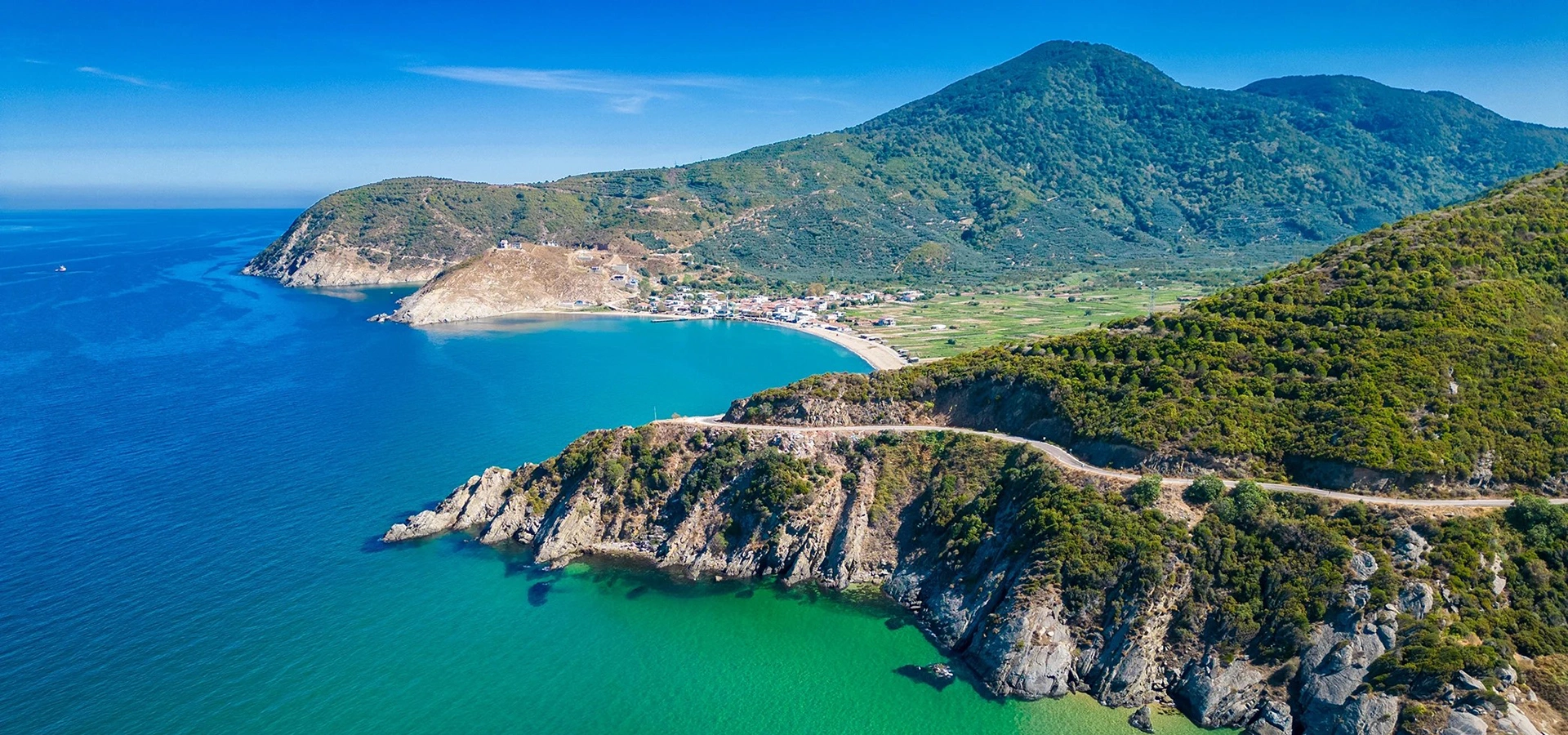
Explore the great ancient city represented throughout the museum, then continue into the coastal and mountain landscapes of Kapıdağ.
View Kyzikos & Kapıdağ Guide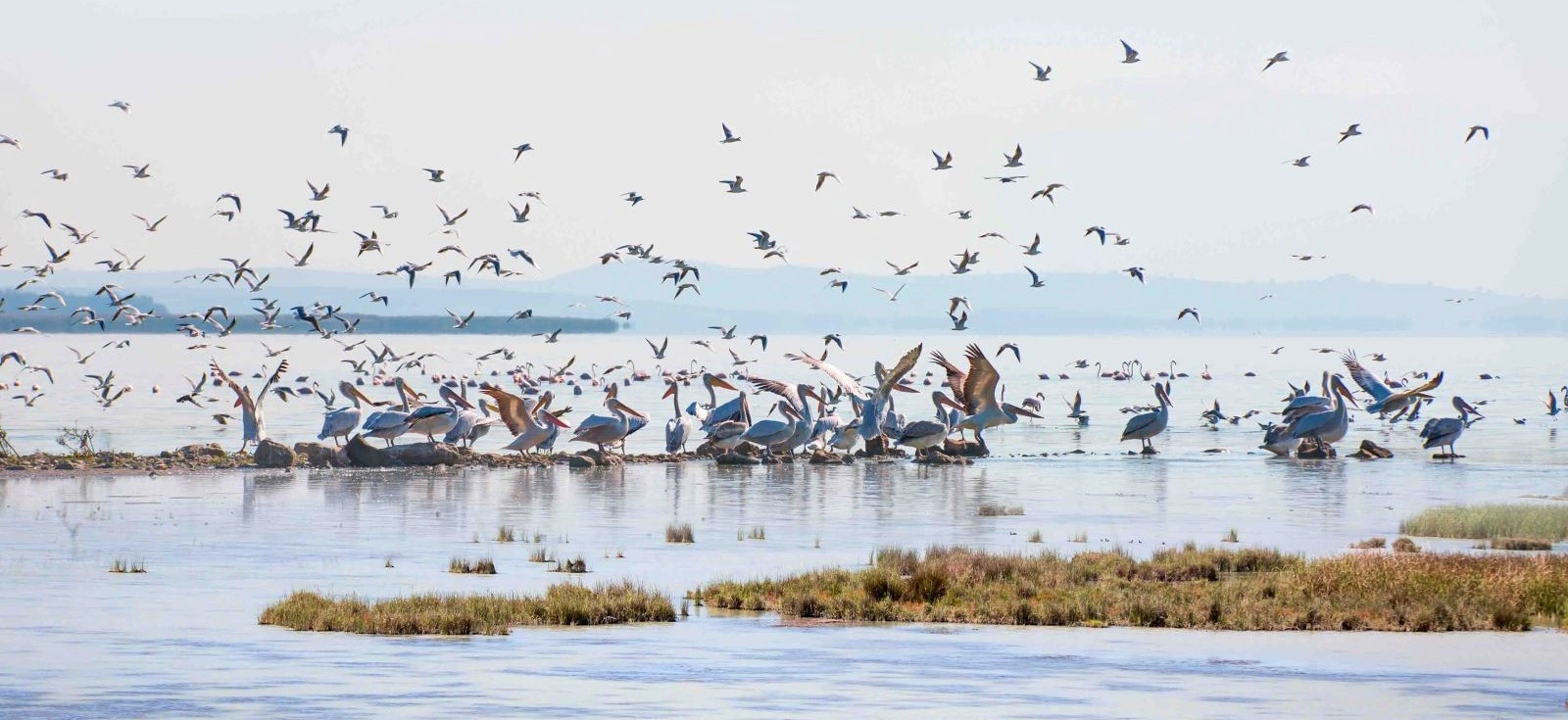
Combine archaeology with internationally important wetlands, birdlife and the natural landscape surrounding ancient Daskyleion.
View Lake Manyas Guide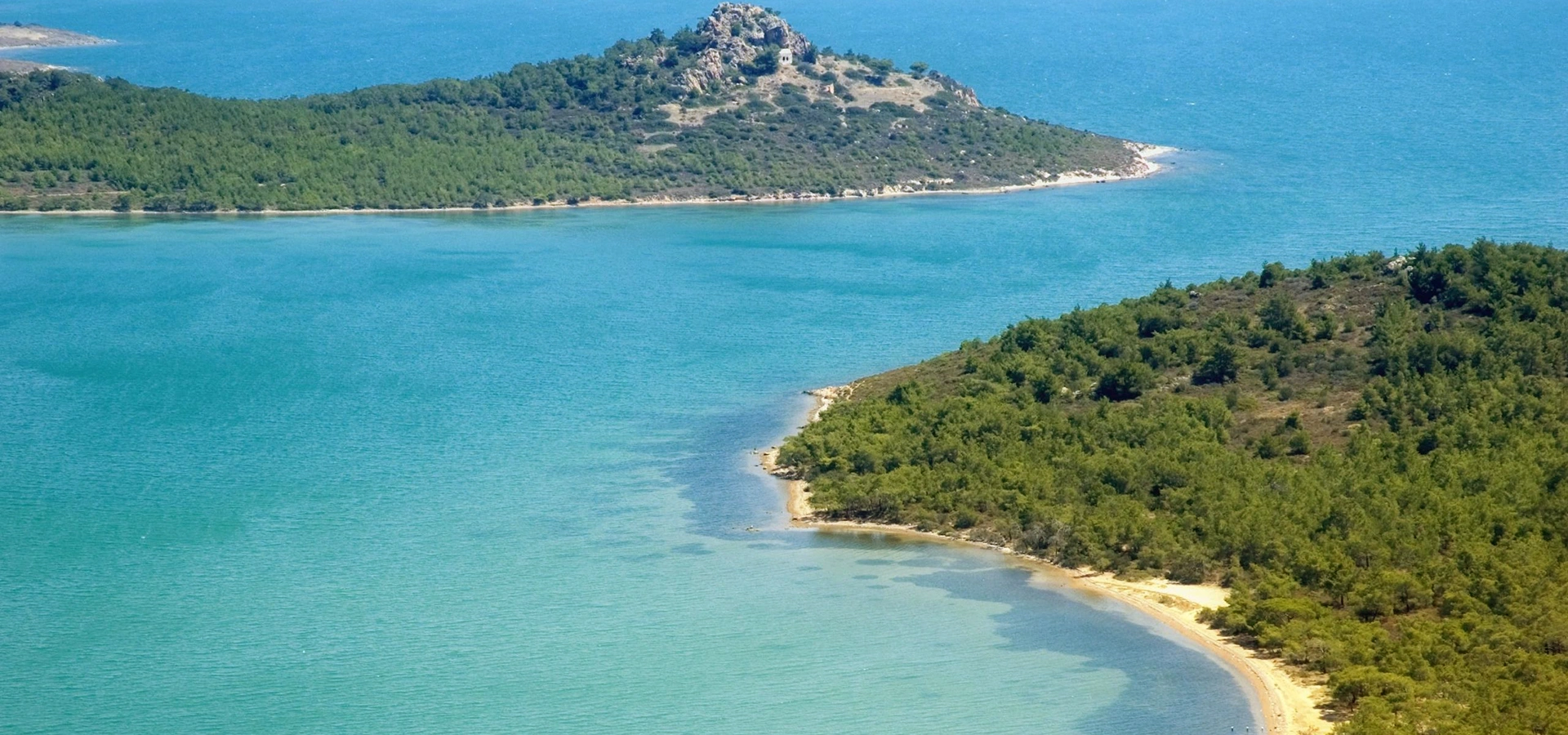
Continue southwest for Roman mosaics, thermal traditions and another fascinating layer of Balıkesir's regional archaeology.
View Gönen Guide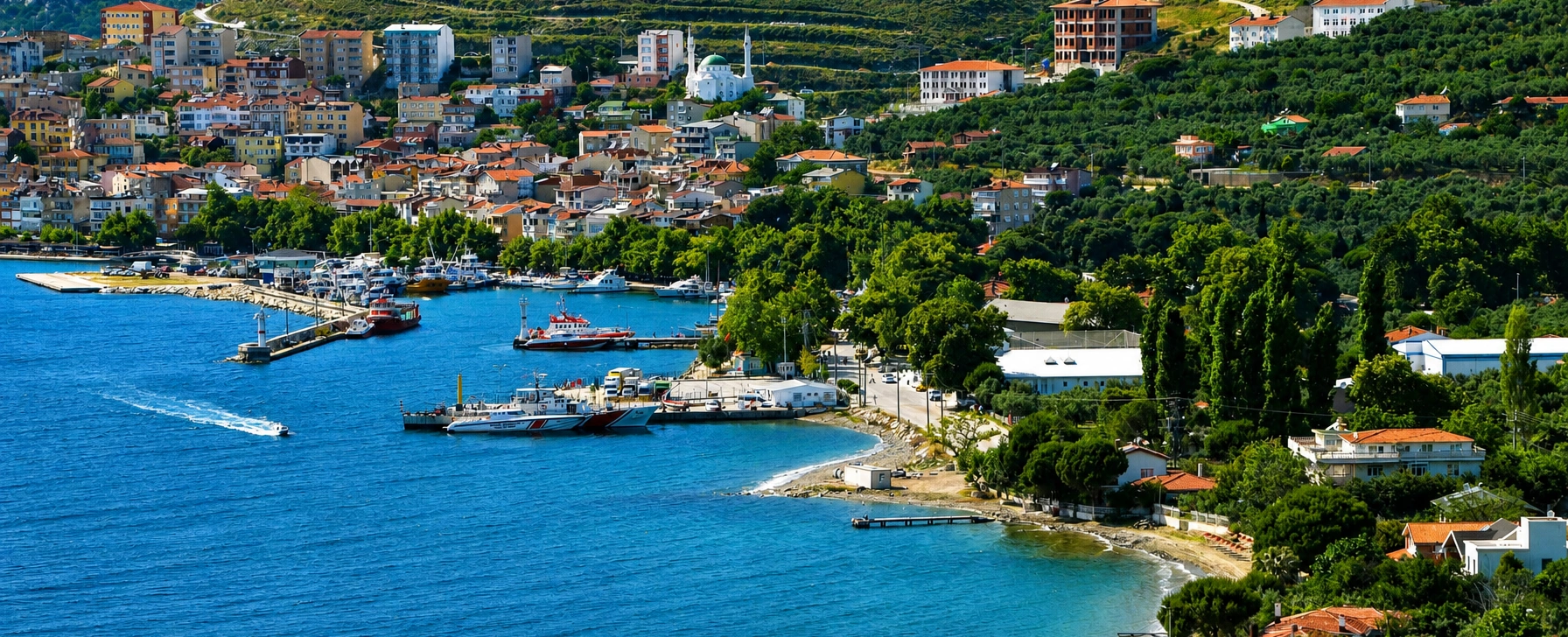
Follow the museum's maritime story to an island famous for ancient marble, quarrying and archaeological sites surrounded by the Marmara Sea.
View Marmara Island Guide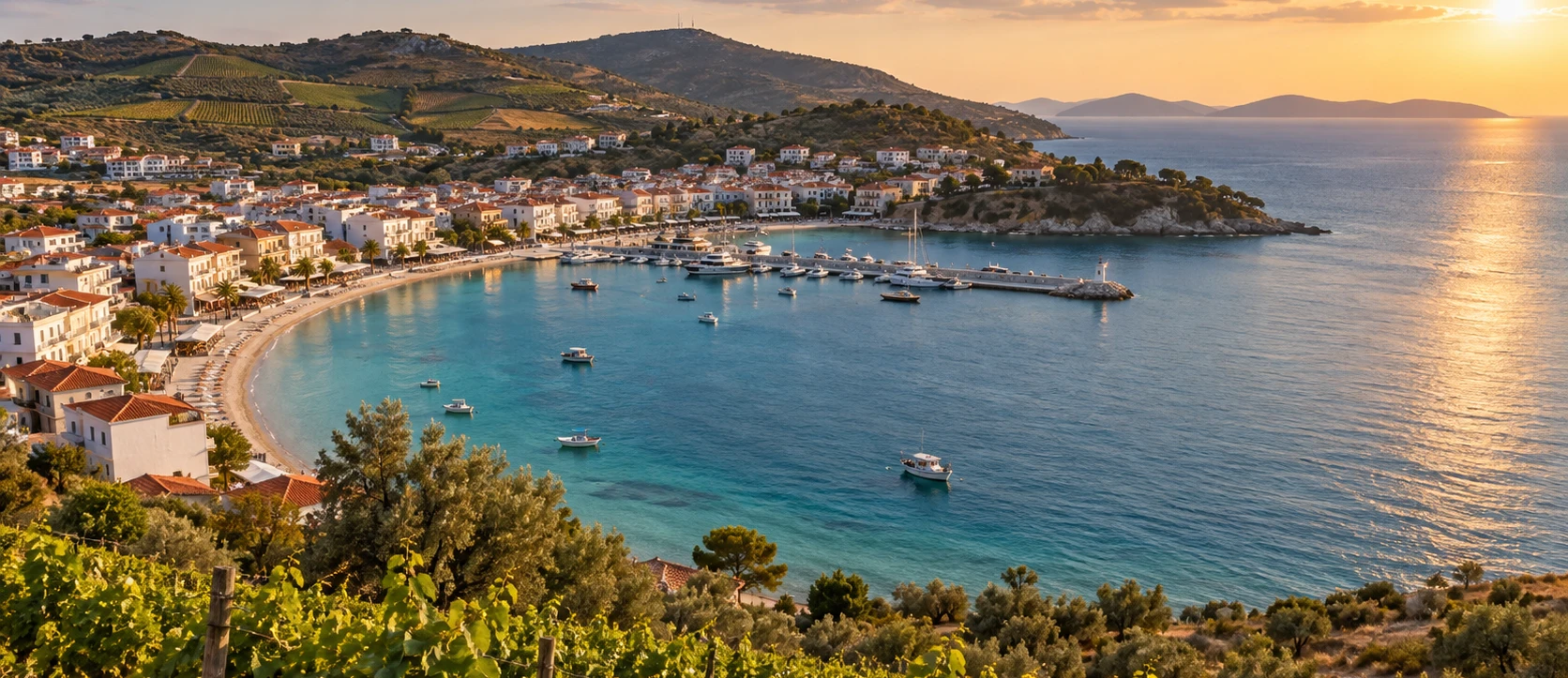
Continue into the Marmara islands for vineyards, beaches, village landscapes and a more relaxed perspective on the same historic sea routes.
View Avşa Island Guide