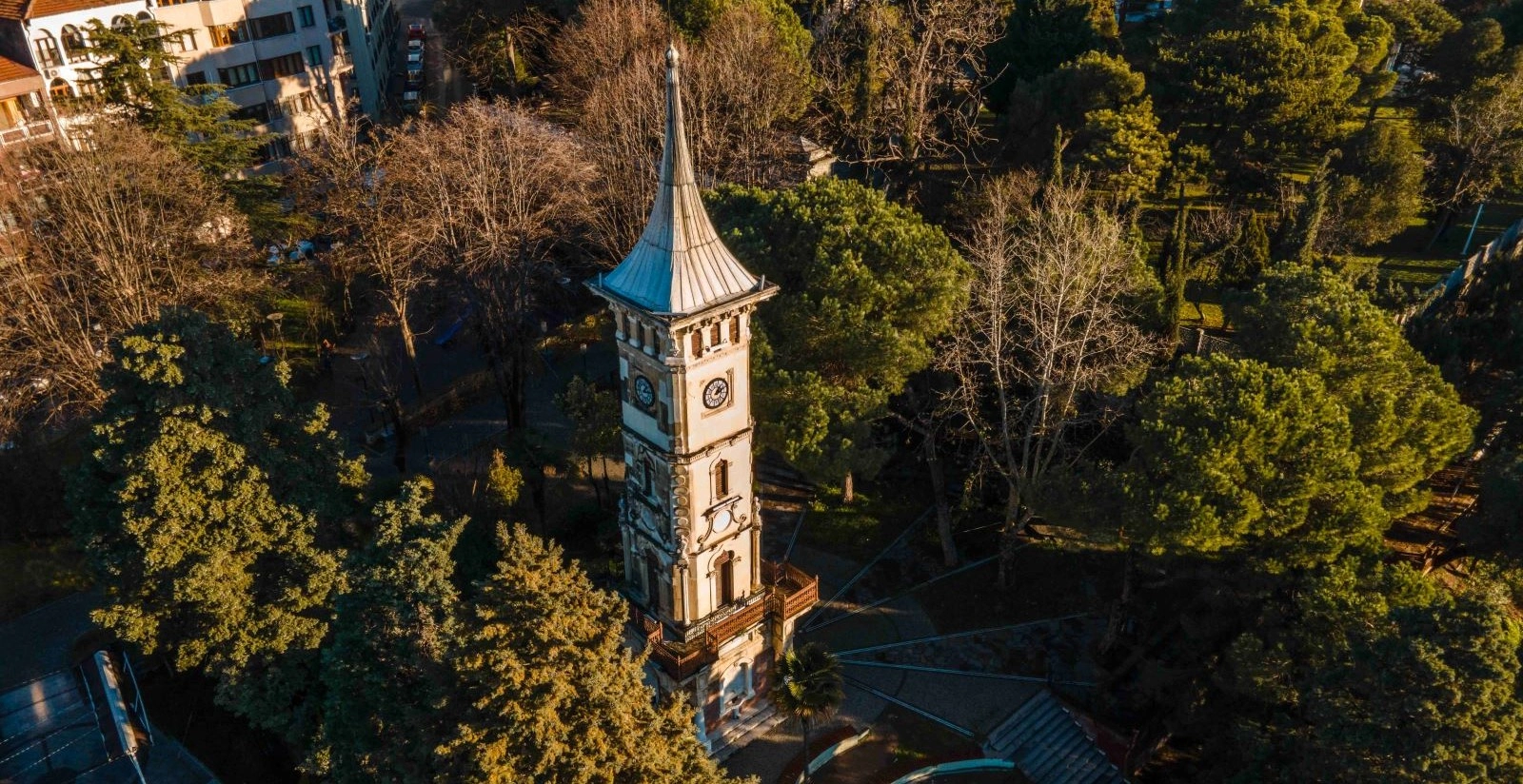
İzmit Clock Tower
Continue the late-Ottoman story at İzmit's famous Clock Tower overlooking the Gulf.
Explore the Clock Tower




In central İzmit stands one of Kocaeli's most distinctive historic public buildings: the Atatürk, Redif and Ethnography Museum, known in Turkish as Atatürk, Redif ve Etnografya Müzesi.
The museum occupies the historic İzmit Redif Dairesi, a late-Ottoman military-administrative building whose present form is associated with 1889–1890. The institution preserves several different layers of İzmit's past: Ottoman military organization, the National Struggle, Atatürk-related memory, and the ethnographic traditions of Kocaeli.
The story begins with the Redif organization, a reserve military system created during the nineteenth-century modernization of the Ottoman army. İzmit became an important Redif centre, and the building that survives today reflects the administrative and military architecture of that era.
Inside, visitors encounter displays connected with Redif soldiers, Ottoman weapons, National Struggle heroes, Mustafa Kemal Atatürk, Hereke carpets, traditional clothing, Kandıra cloth, Karamürsel basketry, local handicrafts and Kocaeli's cultural memory.
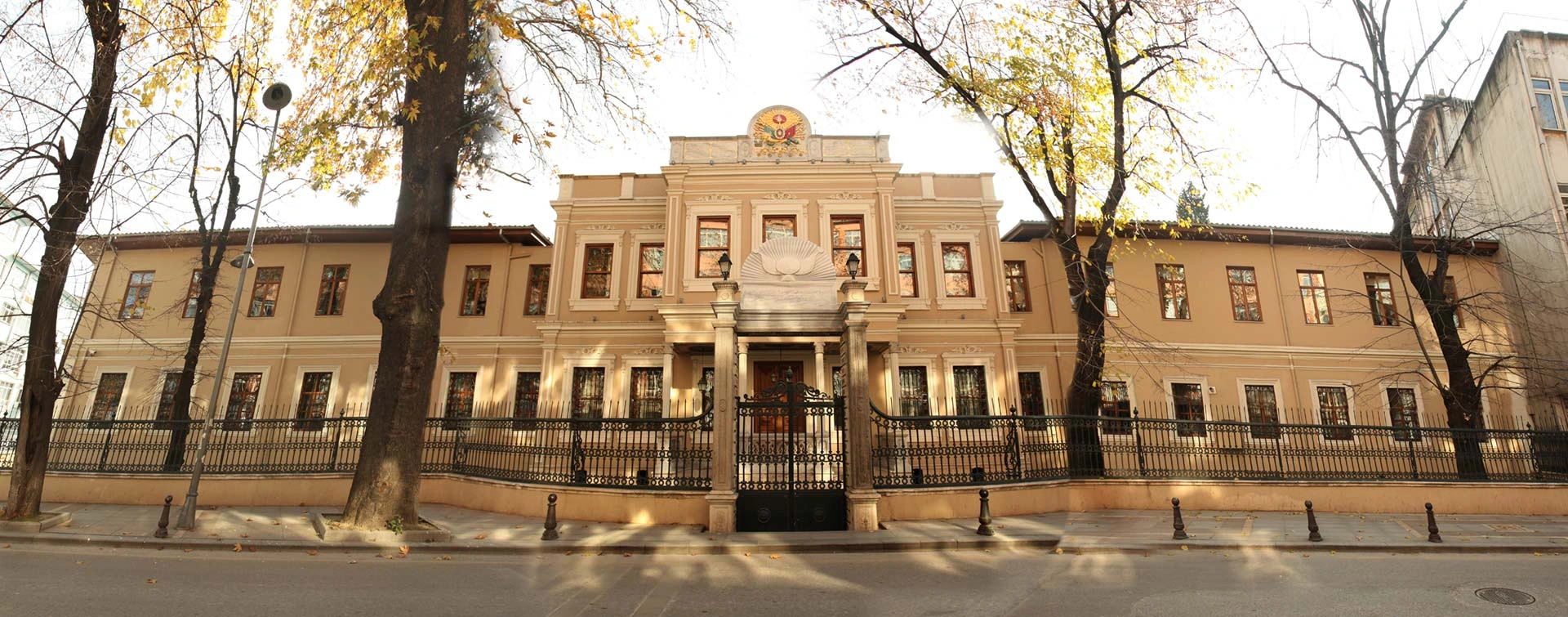
The building itself is part of the museum experience. Its symmetrical façade, classical columns, Ottoman emblem, stone construction and richly painted interior ceilings make it one of İzmit's most rewarding examples of late-nineteenth-century public architecture.
The surviving Redif Dairesi carries a late-Ottoman inscription dating the present structure to the final decades of the nineteenth century.
Discover how reserve forces formed part of the Ottoman Empire's nineteenth-century military reorganization.
Photographs, displays and reconstructed scenes connect İzmit with the War of Independence and the foundation era of modern Türkiye.
Hereke weaving, Kandıra cloth, Karamürsel basketry, traditional dress and everyday objects reveal the region's cultural life.
Essential information for visiting one of central İzmit's most important history and culture museums.
Kemalpaşa Mahallesi,
İnönü Caddesi, İzmit.
İzmit Redif Dairesi
Late Ottoman period.
1889–1890
According to the historic inscription.
Redif, Atatürk, National Struggle
and regional ethnography.
Hereke carpets & Kocaeli crafts
plus Ottoman objects.
Free.
Current official visitor information.
The museum is unusual because the building, the military history and the ethnographic collections all tell different parts of the same regional story.
The first reason is military history. The historic Redif Dairesi represents the nineteenth-century Ottoman effort to reorganize military manpower and create reserve forces that could support the standing army. İzmit was one of the important centres in this system.
The second reason is architecture. Rather than being a neutral container for museum objects, the building is itself a protected historic monument. Its masonry construction, formal symmetry, classical columns, Empire-style architectural language, Ottoman emblem and painted ceilings preserve the visual language of late-Ottoman government architecture.
The third reason is National Struggle memory. Kocaeli occupied a strategically important position between Istanbul and inner Anatolia, and the museum commemorates local figures including Yahya Kaptan, Kara Fatma and İpsiz Recep.
The fourth reason is Atatürk and the early Republic. The museum's Atatürk displays connect İzmit to the political and military transformation that followed the War of Independence.
Finally, the ethnography galleries preserve the cultural identity of Kocaeli through textiles, clothing, weaving, basketry, household objects, coffee culture, traditional crafts and regional products.
The word Redif refers to reserve military forces developed as part of the Ottoman Empire's nineteenth-century attempts to modernize and reorganize its army.
After the Tanzimat reforms, the empire sought a more systematic method of recruiting, training and mobilizing soldiers. In 1843, the Ottoman lands were reorganized into major army regions, and Redif units formed an important reserve component behind the regular forces.
Redif centres required their own administrative infrastructure. These could include headquarters, assembly areas, storage facilities, armouries and military offices.
İzmit became particularly important because it was identified as a major Redif centre. Its position between Istanbul, Anatolia, important roads and the Gulf made the city strategically valuable for both administration and military movement.
The museum therefore provides more than a local story. It offers a physical introduction to the way the late Ottoman state attempted to organize manpower, logistics and military administration across a vast territory.
Redif units supported the regular Ottoman army by providing trained or organized reserve manpower.
The organization developed within the wider Tanzimat-period restructuring of the Ottoman military system.
Redif administration required headquarters, gathering places, depots and related military facilities.
The city's strategic position made it an important centre within the Redif network.
The history of the Redif complex is slightly more complicated than a single construction date. Official cultural records state that an earlier İzmit Redif Dairesi was first built during the reign of Sultan Abdülaziz (1861–1876) under İzmit Mutasarrıfı Hasan Pasha, roughly in the same era as the nearby Kasr-ı Hümayun.
An Ottoman archival document dated 13 December 1886 records a fire affecting the military depot and an adjoining building in İzmit.
A later document dated 8 October 1889 refers to the official opening of a newly constructed depot, armoury and military office. The inscription on the surviving Redif building carries the date H. 1307 / 1889–1890.
This means the best way to understand the site is to distinguish between the earlier Redif institution and the late-nineteenth-century building that survives today.
The depot and armoury once located behind the building no longer survive, but the principal administrative structure remains one of central İzmit's most important Ottoman public monuments.
An earlier Redif building is associated with the reign of Sultan Abdülaziz and İzmit Mutasarrıfı Hasan Pasha.
Ottoman records describe a fire affecting the military depot and an adjacent building.
Official documents refer to the opening of newly constructed military facilities.
The inscription on the present historic building dates to H. 1307.
The Redif building was constructed in masonry and enclosed by courtyard walls. Its long rectangular plan extends on an east-west axis, with a central two-storey block and wings to either side.
The original side wings were single-storey, while upper floors were added during the Republican period. This means the façade seen today combines the late-Ottoman core with later architectural changes.
The northern entrance façade is strongly symmetrical. The central section projects forward, creating a formal entrance axis emphasized by stairs, columns, windows and the Ottoman emblem above.
At the entrance, four columns with composite capitals support the projecting upper section. Classical architectural vocabulary is combined with Ottoman state symbolism, creating the ceremonial appearance typical of important government and military buildings of the period.
The façade also contains Empire-style details, including formal window treatments, parapets and an ordered composition designed to communicate authority and institutional identity.
The Redif Dairesi differs from the timber mansions of old İzmit and belongs to the monumental public-building tradition.
The projecting two-storey centre gives the façade a strong ceremonial axis.
Composite capitals and the elevated entrance emphasize the formal character of the building.
State symbolism crowns the central façade and reinforces the building's original military-administrative function.
One of the most surprising features of the museum is found above eye level. Several interior spaces preserve or reconstruct the rich painted ceiling decoration associated with the nineteenth-century building.
Official descriptions record floral compositions, sailing ships and Ottoman emblems among the decorative subjects. Even the undersides of staircases were treated with painted vegetal ornament.
These paintings remind visitors that Ottoman military and administrative architecture was not always visually austere. Important state buildings could combine formal planning with elaborate decorative programmes.
The painted ceilings are especially valuable because they help preserve the atmosphere of the building itself rather than reducing the museum to a sequence of modern display cases.
The museum's name gives Atatürk a central place, but it is important to understand the connection correctly. The Redif building is not primarily presented as a house where Atatürk lived. Instead, its galleries use photographs, objects, documents and reconstructed displays to explain Atatürk's place in İzmit's transition from the National Struggle to the Republic.
İzmit held an important strategic and political position during this period. The city stood close to occupied Istanbul, on major transport routes between the capital region and Anatolia, and near communities deeply affected by the conflict.
Mustafa Kemal Pasha visited İzmit during the early 1920s. One of the city's most famous Atatürk-related events occurred nearby at Kasr-ı Hümayun, where he met leading journalists in January 1923 during the crucial months before the proclamation of the Republic.
The museum's current exhibition includes a representation of Atatürk arriving in İzmit in military uniform in 1923, helping visitors place the city within the national political transformation of the period.
Older official museum documentation also records displays of Atatürk-related furniture, photographs and objects connected with the final years of his life and his journey through İzmit after his death. Specific objects and arrangements can change as the museum's exhibition is renewed.
Atatürk's visit came during the transition from military victory toward the political foundation of the Republic.
The nearby imperial pavilion hosted Atatürk's famous January 1923 meeting with leading journalists.
The museum uses photographs, documents and reconstructed scenes to interpret his connection with İzmit.
The galleries place local events within the wider story of the War of Independence and the birth of modern Türkiye.
The museum gives important space to the local and regional experience of the Turkish War of Independence.
Among the names highlighted are Yahya Kaptan, Kara Fatma and İpsiz Recep, figures remembered for resistance activities and armed struggle in northwestern Anatolia.
The museum also commemorates National Struggle fighters who lost their lives in the region. Official museum descriptions record panels containing photographs and names of 86 people killed in June 1921.
For visitors who know the War of Independence mainly through Ankara, Sakarya or the western fronts, this part of the museum is especially useful. It shows how the conflict was also experienced around the Marmara region, close to Istanbul and the transport corridors connecting the capital with Anatolia.
A well-known National Struggle figure closely associated with resistance organization in the İzmit region.
One of the most famous female militia leaders remembered from the Turkish War of Independence.
A Black Sea and Marmara resistance figure whose story forms part of the region's National Struggle memory.
Photographs and names help transform the conflict from a national narrative into a story of individual lives.
The military galleries help visitors understand the original function of the building. Displays include information, documents and objects associated with the Redif organization.
A reconstructed or representational Redif soldier figure helps make the system more tangible, particularly for visitors unfamiliar with Ottoman military organization.
The museum also exhibits Ottoman-period weapons, including objects such as swords and other military equipment associated with ceremony, service and the culture of the armed forces.
Rather than viewing these only as weapons, look at the workmanship, materials, decorative details and forms of display. Military objects were also symbols of rank, state authority and institutional identity.
The museum's ethnography galleries widen the story from state institutions and war to the daily cultural life of Kocaeli.
Displays include examples of traditional women's and men's clothing, textiles, clocks, candlesticks, bath objects, kitchen utensils, coffee equipment, pouches and decorative household objects.
Together, these objects show how people dressed, prepared food, served coffee, stored personal belongings, decorated interiors and expressed status in the late Ottoman and early modern periods.
The value of ethnography lies precisely in these ordinary objects. A weapon or official document may record political history, but a textile, coffee cup, basket or embroidered garment can reveal the rhythms of everyday life.
Women's and men's garments help illustrate regional dress, textiles and decorative taste.
Serving and preparation objects connect the museum with one of the most enduring traditions of Ottoman social life.
Lighting, kitchen and bath items reveal domestic life beyond palaces and official buildings.
Woven and embroidered objects link İzmit with important craft traditions across Kocaeli.
Among the most important regional traditions represented in the museum is Hereke carpet weaving.
Hereke, located east of İzmit along the Gulf, became internationally famous for highly refined carpets and textiles associated with the Ottoman court and elite interiors.
Official museum information highlights an important nineteenth-century Hereke carpet as one of the collection's notable pieces.
When viewing the carpet, pay attention to the density of the design, precision of the weaving, colour relationships and the way repeating floral or geometric structures create visual balance.
The carpet is more than a decorative object. It represents Kocaeli's role within the manufacturing, craft and artistic networks of the late Ottoman Empire.
The renewed museum display gives particular attention to the cultural traditions that distinguish Kocaeli from other regions of Türkiye.
Among the examples are Kandıra cloth, a local weaving tradition associated with the Kandıra district, and Karamürsel baskets, which represent the practical craft culture of communities around the Gulf.
The collection also includes references to Kandıra chests and the Nüzhetiye cloth doll, helping preserve traditions that might otherwise survive only through oral memory or small-scale local production.
These displays are especially useful for travellers who want to move beyond monumental history. They show Kocaeli not simply as an industrial province, but as a region of villages, textile knowledge, woodwork, basketry, household traditions and local creativity.
A regional textile tradition associated with hand weaving and the rural culture of northern Kocaeli.
A practical local craft that reflects the material culture of communities around the Gulf.
Traditional wooden storage furniture adds another dimension to the region's domestic heritage.
A cloth-doll tradition representing local handcraft and community memory.
The museum also interprets the story of pişmaniye, the fine pulled sweet that has become one of İzmit's best-known culinary symbols.
Made by working flour, butter and sugar into delicate thread-like strands, pişmaniye is strongly associated with Kocaeli in modern Turkish food culture.
Its inclusion in the museum is significant because ethnography is not limited to objects behind glass. Food traditions, craft knowledge, recipes and local production methods are also part of intangible cultural heritage.
After your visit, trying fresh İzmit pişmaniye in the city centre is an easy way to connect the museum's cultural interpretation with everyday life outside.
One of the museum's particularly interesting objects is a historic Ottoman tombstone dated 1493, described in official museum information as the earliest Ottoman grave marker so far identified in Kocaeli.
Its importance lies in the way a single carved stone can extend the museum's timeline far beyond the nineteenth-century Redif building.
The grave marker connects visitors with the early Ottoman centuries of İzmit, when the city was developing from a conquered Byzantine settlement into an established Ottoman urban centre.
Look closely at the inscription, stone carving and form rather than passing it as a minor object. For historians, grave markers can preserve names, titles, dates, religious language and social information unavailable from monumental architecture alone.
The Redif building remained in institutional use well into the modern period. Until the 1999 Marmara earthquake, it was used by the 15th Corps Command as a military court building.
The earthquake caused serious damage to the historic structure, placing an important example of late-Ottoman public architecture at risk.
A major restoration campaign was completed in 2011, and the building opened in 2012 as the Atatürk and Redif Museum. Later exhibition and structural interventions further developed its museum function.
The site underwent additional maintenance and repair work following a ministry decision dated 3 November 2025. It officially reopened on 2 January 2026 with its renewed exhibition.
This latest reopening matters for visitors because it means the museum should be approached as a currently active institution rather than a permanently closed restoration site described in older travel information.
The Marmara earthquake caused major damage to the historic Redif building.
A major restoration campaign was completed.
The restored building opened as the Atatürk and Redif Museum.
New maintenance and repair works were authorized late in the year.
The museum reopened to visitors with its renewed exhibition.
The building functions as an active museum of military history, Atatürk memory and Kocaeli ethnography.
Study the symmetrical entrance, classical columns, projecting central section and Ottoman emblem.
Look for floral decoration, Ottoman symbols and maritime imagery in the historic interior.
The representational figure helps explain the appearance and role of the Ottoman reserve forces.
Weapons, swords and ceremonial pieces connect the collection with the building's original function.
Learn about Yahya Kaptan, Kara Fatma, İpsiz Recep and local resistance history.
Photographs and reconstructed scenes interpret Atatürk's relationship with İzmit and the early Republic.
See one of Kocaeli's most famous textile traditions represented through fine nineteenth-century weaving.
Regional textiles reveal the craft identity of northern Kocaeli.
A humble everyday object becomes an important symbol of local material culture.
Look for the early Ottoman grave marker that extends the museum's story back several centuries.
Women's and men's dress displays provide a vivid introduction to regional ethnography.
Discover how İzmit's famous pulled sweet became part of the city's cultural identity.
The museum offers strong photographic opportunities both outside and inside.
For the exterior, stand far enough back on İnönü Caddesi to capture the full symmetrical façade, central entrance and Ottoman emblem. The courtyard fence and mature trees can also help frame the composition.
Inside, look upward for painted ceilings, ornamental details, chandeliers and restored architectural features.
The displays of traditional dress, weaving, Redif figures and Atatürk-related scenes can also produce strong documentary images.
Flash, tripods or professional equipment may be subject to museum rules, so follow current staff instructions. Avoid touching display cases, textiles or historic surfaces while photographing.
Photograph the full façade from across the street when traffic and pedestrian conditions allow safely.
Use available light and remember that some of the most beautiful details are directly above you.
Textiles, baskets, garments and domestic objects provide colourful close-up subjects.
Use wider compositions to show objects together with the building's original historic interiors.
The museum can work well for families because it contains more visual variety than a purely documentary history museum.
Children may be especially interested in the Redif soldier figure, Atatürk display, weapons, traditional clothing, baskets, carpets and the story of pişmaniye.
One simple way to make the visit more engaging is to ask children to identify how many different kinds of history they can find in one building: military history, political history, architecture, clothing, food, craft and everyday life.
Explain before entering that many objects are historic or fragile. Children should not touch display cases, textiles, furniture or decorated surfaces unless museum staff clearly permit it.
For a broader family day, combine the museum with İzmit Clock Tower and SEKA Paper Museum.
The museum is easier to reach than many historic sites in upper İzmit because it stands in the central urban area on İnönü Caddesi.
However, the building is a protected historic structure with multiple levels, steps and original architectural features. Access to every gallery may therefore depend on the current arrangement of ramps, lifts or staff assistance.
Visitors who require step-free access should contact the museum in advance to confirm which floors and exhibition spaces are currently accessible.
The street outside can be busy, so visitors using wheelchairs, walking aids or travelling with small children should allow extra time when approaching the entrance.
The museum is located within central İzmit rather than on the steeper upper hillside.
Some parts of the museum are arranged across more than one floor.
Confirm current lift, ramp or step-free arrangements if accessibility is essential.
Take care around traffic and pedestrian crossings on the approach from central İzmit.
Spend a few minutes outside before entering so you understand the Redif Dairesi as an exhibit in its own right.
The painted ceilings and ornamental details are easy to miss if you focus only on display cases.
An hour gives most visitors enough time to understand the military, Atatürk and ethnography sections.
Current official visitor information lists Monday as the weekly closing day.
The museum is currently one of the easiest high-value cultural stops to add to an İzmit itinerary.
The nearby palace museum adds crucial context for Atatürk's January 1923 İzmit press meeting.
The military objects are much easier to understand once you know what the Redif organization actually was.
Continue the ethnography story outside the museum with one of İzmit's best-known local foods.
The museum is currently open following its 2 January 2026 reopening after maintenance and repair work.
Official museum information currently lists regular opening hours as 09:00–17:30.
The ticket desk closes at 17:00, and the museum is closed on Mondays.
Admission is currently free for both domestic and international visitors.
09:00–17:30
Closes 17:00
Closed.
Free.
Kemalpaşa Mah., İnönü Cd., İzmit, Kocaeli.
+90 262 325 59 14
The museum is located in Kemalpaşa Mahallesi on İnönü Caddesi, close to the historic centre of İzmit.
Visitors exploring the city on foot can combine it naturally with İzmit Clock Tower, Kasr-ı Hümayun, Kapanca Street and the traditional upper-city neighbourhoods.
From the waterfront and railway-station area, the museum can be reached by walking into the central historic district. The route is urban and generally easier than the steep climb required for some of İzmit's hillside monuments.
Taxis are widely available in central İzmit. Simply ask for “Atatürk, Redif ve Etnografya Müzesi.”
A good option if you are already exploring central İzmit, the Clock Tower and Kasr-ı Hümayun.
An easy choice from the railway station, bus connections or hotels elsewhere in İzmit.
Use the museum as a bridge between the waterfront museums and the upper Ottoman neighbourhoods.
Search for “Atatürk, Redif ve Etnografya Müzesi, İzmit.”
The museum stands in a central part of İzmit where traffic can be busy and curbside parking limited.
Do not assume that a parking space will be available immediately in front of the museum. Use legal municipal, commercial or street parking where permitted.
If you are combining several historic sites, it can be more convenient to park once in central İzmit and continue on foot rather than moving the vehicle between each monument.
A taxi can also be a practical choice for travellers who prefer to avoid city-centre parking altogether.
Begin at the Atatürk, Redif & Ethnography Museum to understand the late-Ottoman military system, National Struggle and local cultural traditions.
Continue to Kasr-ı Hümayun, the nineteenth-century imperial pavilion closely connected with Atatürk's famous January 1923 İzmit press meeting.
Walk to İzmit Clock Tower for one of the city's best-known late-Ottoman landmarks and views toward the Gulf.
Continue uphill through Kapanca Street, where traditional houses, fountains and narrow lanes preserve another side of historic İzmit.
If time allows, add Kocaeli Archaeology Museum to move much farther back in time to Roman and Byzantine Nicomedia.
Finish near the waterfront at SEKA Paper Museum to carry the story into the industrial twentieth century.
Atatürk, Redif & Ethnography Museum – Ottoman military reform, National Struggle and Kocaeli culture.
Kasr-ı Hümayun – imperial architecture and Atatürk's 1923 İzmit press meeting.
İzmit Clock Tower – late-Ottoman urban identity and Gulf views.
Kapanca Street – traditional houses and the atmosphere of upper İzmit.
Kocaeli Archaeology Museum – Roman and Byzantine Nicomedia.
SEKA Paper Museum – modern industrial heritage on the İzmit waterfront.
Enough for a quick walk through the principal galleries and architectural highlights.
Recommended for most visitors who want to understand the Redif, Atatürk and ethnography sections properly.
Ideal for military-history, Atatürk, architecture or ethnography enthusiasts.
Combine the museum with Kasr-ı Hümayun, İzmit Clock Tower and Kapanca Street.
Add Kocaeli Archaeology Museum, Pertev Pasha Mosque and SEKA Paper Museum.
Slow down enough to read the military context and study the building's painted decoration.
The museum sits close to several of İzmit's most important historic monuments, so it works especially well as part of a walking or short taxi itinerary through the city centre.
Use our complete Kocaeli travel guide to continue exploring the wider province.
A nineteenth-century Ottoman imperial pavilion and one of İzmit's most important Atatürk-related sites.
The city's iconic late-Ottoman landmark stands only a short distance from the museum.
Historic houses, fountains and steep lanes preserve the atmosphere of traditional upper İzmit.
Discover Roman and Byzantine Nicomedia in the historic railway complex.
See one of İzmit's finest classical Ottoman monuments, designed by Mimar Sinan.
Travel back to the early Ottoman centuries in the historic upper city.
Explore the industrial transformation of modern İzmit in one of Türkiye's finest industrial museums.
Compare official military architecture with the refined domestic world of a late-Ottoman provincial administrator.
The museum is in Kemalpaşa Mahallesi on İnönü Caddesi in central İzmit, Kocaeli.
It occupies the historic İzmit Redif Dairesi, a late-Ottoman military and administrative building.
The present building carries an inscription dated H. 1307 / 1889–1890. An earlier Redif building in İzmit is associated with the reign of Sultan Abdülaziz.
Redif refers to reserve military forces developed during nineteenth-century Ottoman army reforms.
İzmit became an important regional centre because of its strategic location between Istanbul, Anatolia, major roads and the Gulf.
No. It was built for military-administrative use and later served as a military court building before becoming a museum.
Yes. The 1999 Marmara earthquake caused major damage and led to an extensive restoration.
The major restoration was completed in 2011, and the building opened as the Atatürk and Redif Museum in 2012.
Yes. Following further maintenance and repair work, the museum reopened on 2 January 2026.
Current official information lists 09:00–17:30 from Tuesday to Sunday, with the ticket desk closing at 17:00. The museum is closed on Mondays.
Yes. Current official visitor information lists free admission.
Highlights include Redif displays, Ottoman weapons, National Struggle history, Atatürk-related exhibits, Hereke carpets, traditional clothing, Kandıra cloth, Karamürsel basketry and regional ethnographic objects.
The museum includes Atatürk-related galleries and displays interpreting his connection with İzmit and the transition from the National Struggle to the Republic.
The museum is not primarily presented as a residence used by Atatürk. Its Atatürk connection is mainly commemorative and documentary, while the nearby Kasr-ı Hümayun has a direct connection with his famous January 1923 İzmit press meeting.
The galleries include information about figures such as Yahya Kaptan, Kara Fatma and İpsiz Recep.
Yes. Official museum information highlights an important nineteenth-century Hereke carpet among the collection.
The renewed exhibition includes examples connected with Kandıra cloth, Karamürsel basketry, Kandıra chests and the Nüzhetiye cloth-doll tradition.
Yes. The museum includes interpretation of pişmaniye as part of İzmit's intangible cultural heritage.
The Redif Dairesi combines masonry construction, a symmetrical monumental façade, classical columns, Empire-style details, Ottoman symbolism and painted ceilings.
Photography is generally possible subject to current museum rules. Follow staff instructions regarding flash, tripods and professional equipment.
Allow approximately 45–60 minutes for a relaxed visit, or longer if you are especially interested in Ottoman military history, Atatürk or ethnography.
Combine the museum with Kasr-ı Hümayun, İzmit Clock Tower, Kapanca Street, Kocaeli Archaeology Museum, Pertev Pasha Mosque and SEKA Paper Museum.
Yes. It is one of the best places in İzmit for understanding late-Ottoman military administration, National Struggle memory, Atatürk's historical context and Kocaeli's traditional culture in a single visit.
The museum is easy to underestimate from its name. At first glance, it sounds like several separate institutions combined together: an Atatürk museum, a military museum and an ethnography collection.
Yet that mixture is exactly what makes the visit worthwhile. The building begins with the late Ottoman state: reserve soldiers, military offices, formal architecture and symbols of authority.
The story then moves into the twentieth century, through earthquake, war, resistance, Atatürk and the foundation era of modern Türkiye.
Finally, the ethnography galleries return history to everyday life. Carpets, clothing, baskets, textiles, kitchen objects, coffee culture and local crafts remind visitors that history is not made only by governments and armies. It is also carried through homes, workshops, markets, food and family traditions.
Step outside again and the façade makes more sense. The Redif Dairesi is not simply the building that houses the collection. It is the first and perhaps most important museum object.
The Atatürk, Redif & Ethnography Museum connects military history, the National Struggle and Kocaeli's local culture. Continue through İzmit to discover Ottoman monuments, Roman Nicomedia, historic neighbourhoods and modern industrial heritage.
Walk from military and political history into the monuments and neighbourhoods that shaped İzmit across the Ottoman centuries.
Continue the late-Ottoman story at İzmit's famous Clock Tower overlooking the Gulf.
Explore the Clock Tower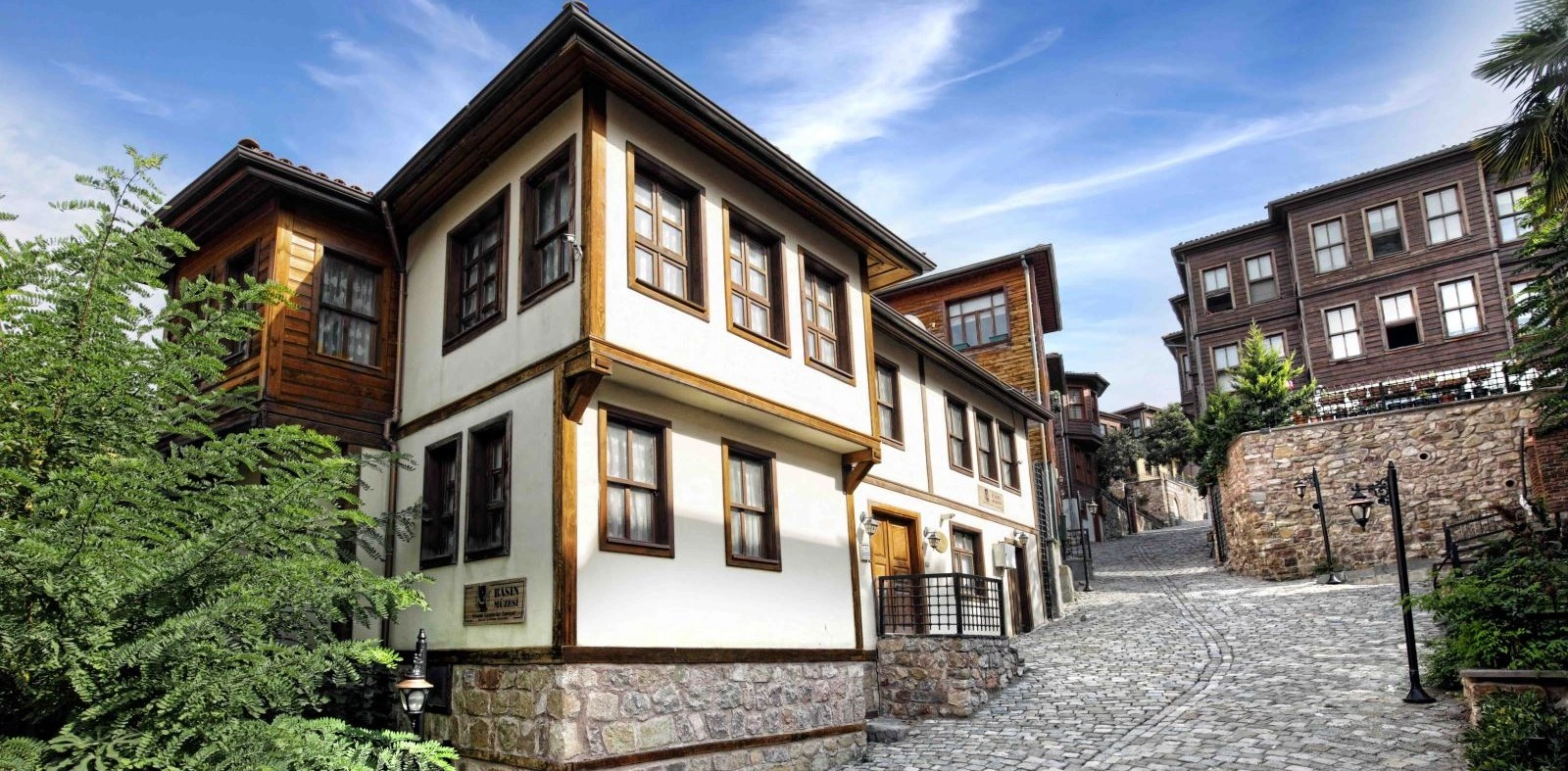
Continue into old upper İzmit among timber houses, historic fountains and steep traditional lanes.
Explore Kapanca Street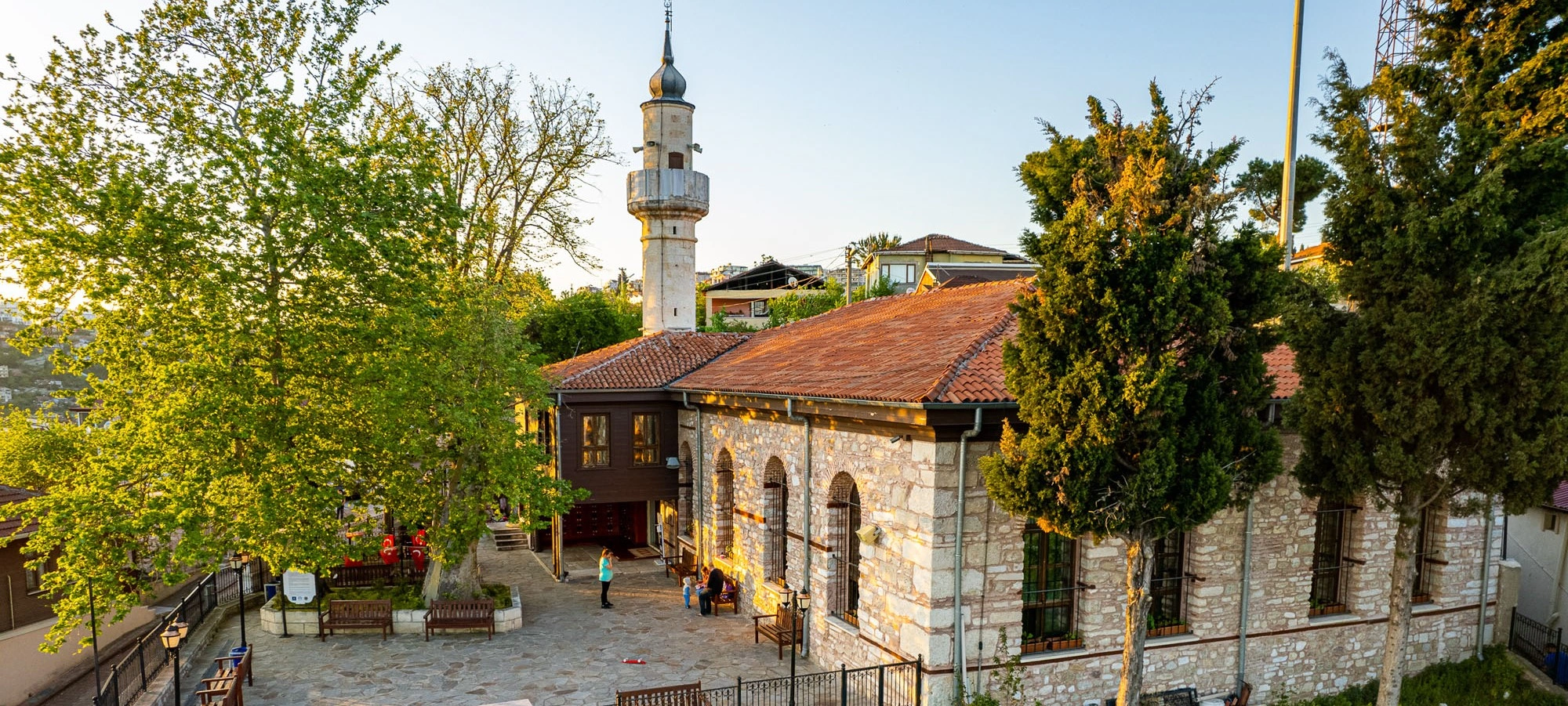
Travel back from the late Ottoman military world to the earliest centuries of Ottoman İzmit.
Explore Orhan MosqueMove beyond the Redif story into ancient archaeology, classical Ottoman architecture and industrial heritage.
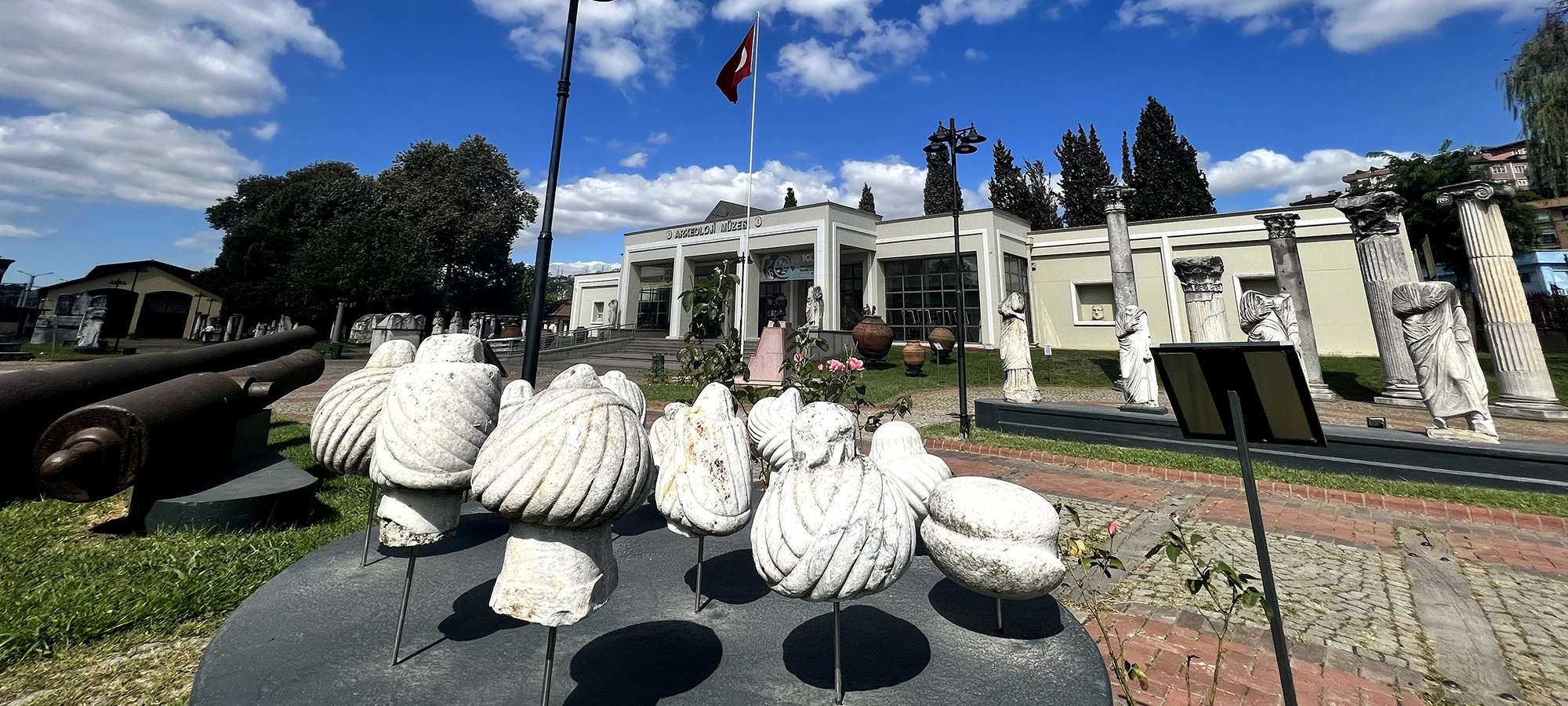
Discover Roman Nicomedia and the ancient layers beneath modern İzmit.
Explore Nicomedia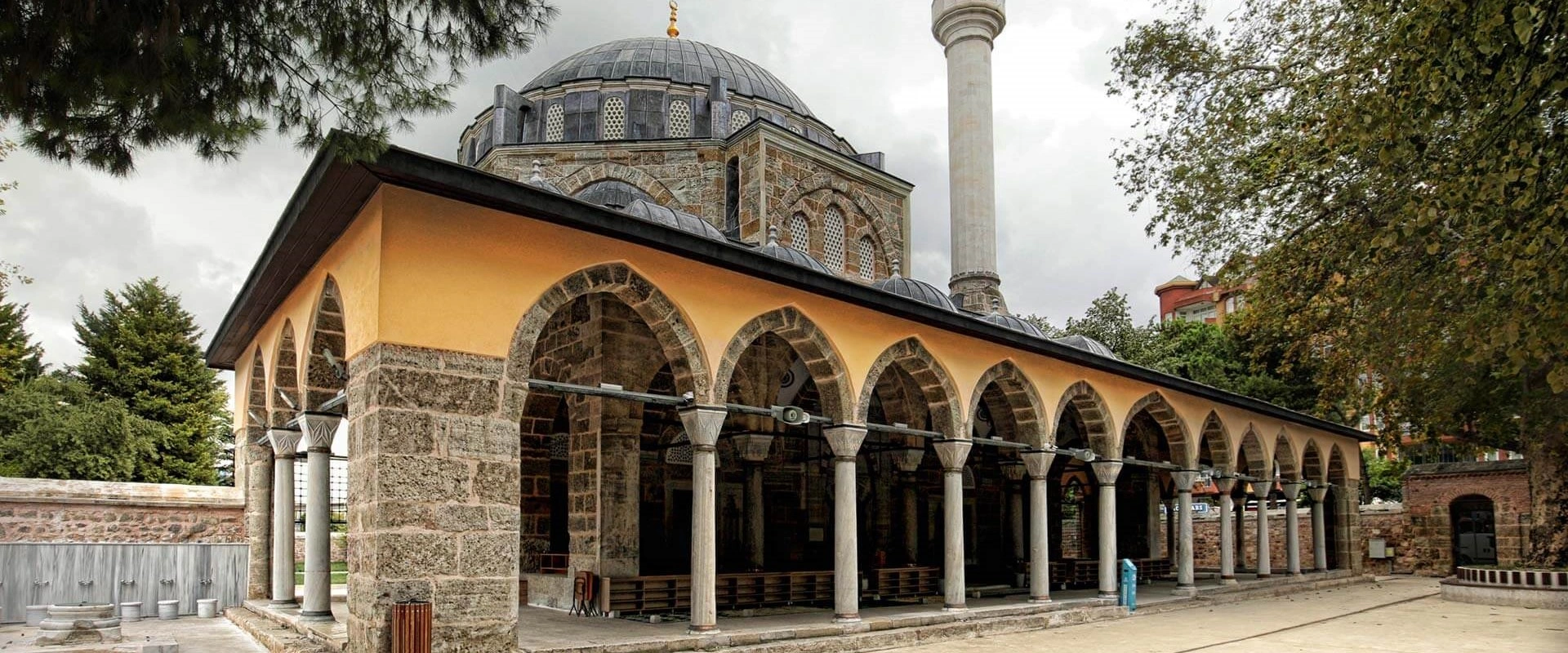
Discover Mimar Sinan's classical Ottoman architecture in the heart of historic İzmit.
Explore Pertev Pasha Mosque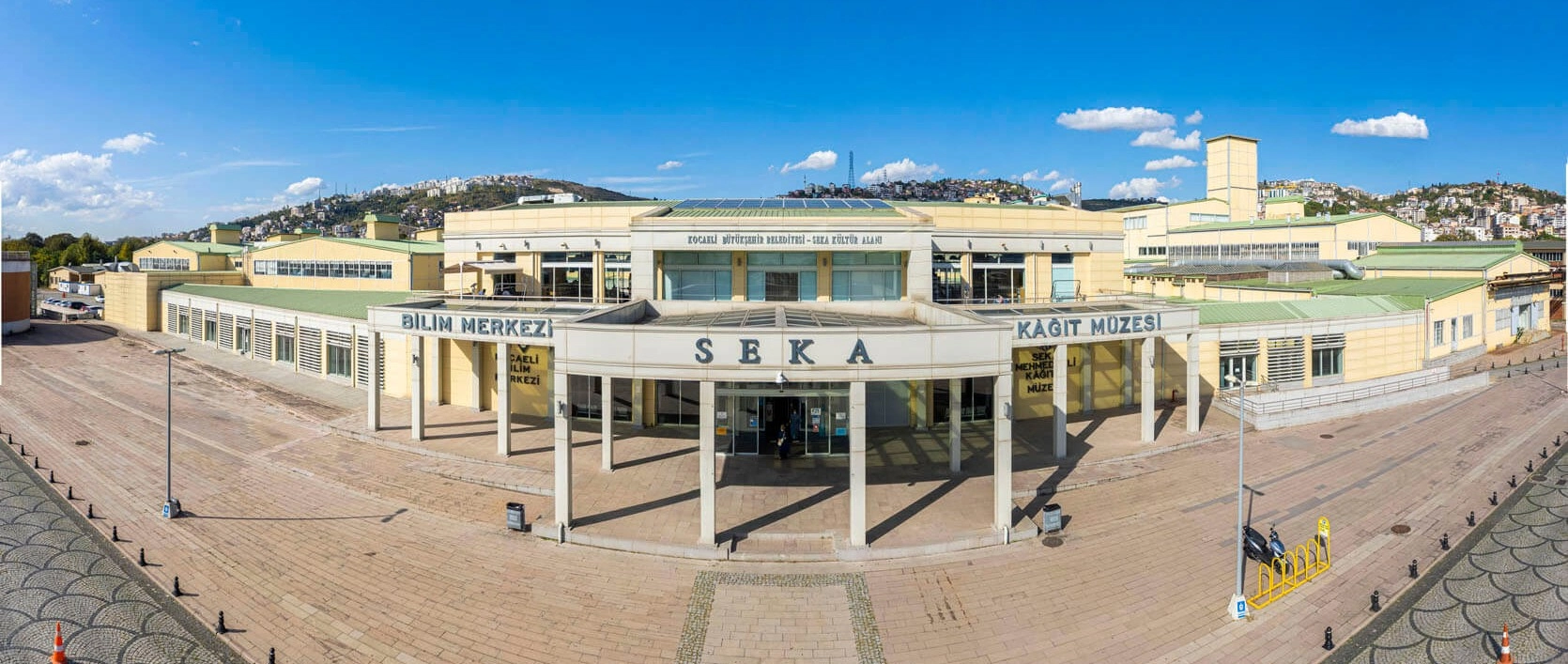
Move forward into modern Türkiye inside İzmit's historic paper factory on the waterfront.
Explore SEKAWe can connect Istanbul, Kocaeli, Cappadocia and destinations throughout Türkiye in a private cultural itinerary.
Build a private day around Ottoman architecture, Atatürk history, ancient Nicomedia, traditional streets and waterfront museums.
Plan Your Journey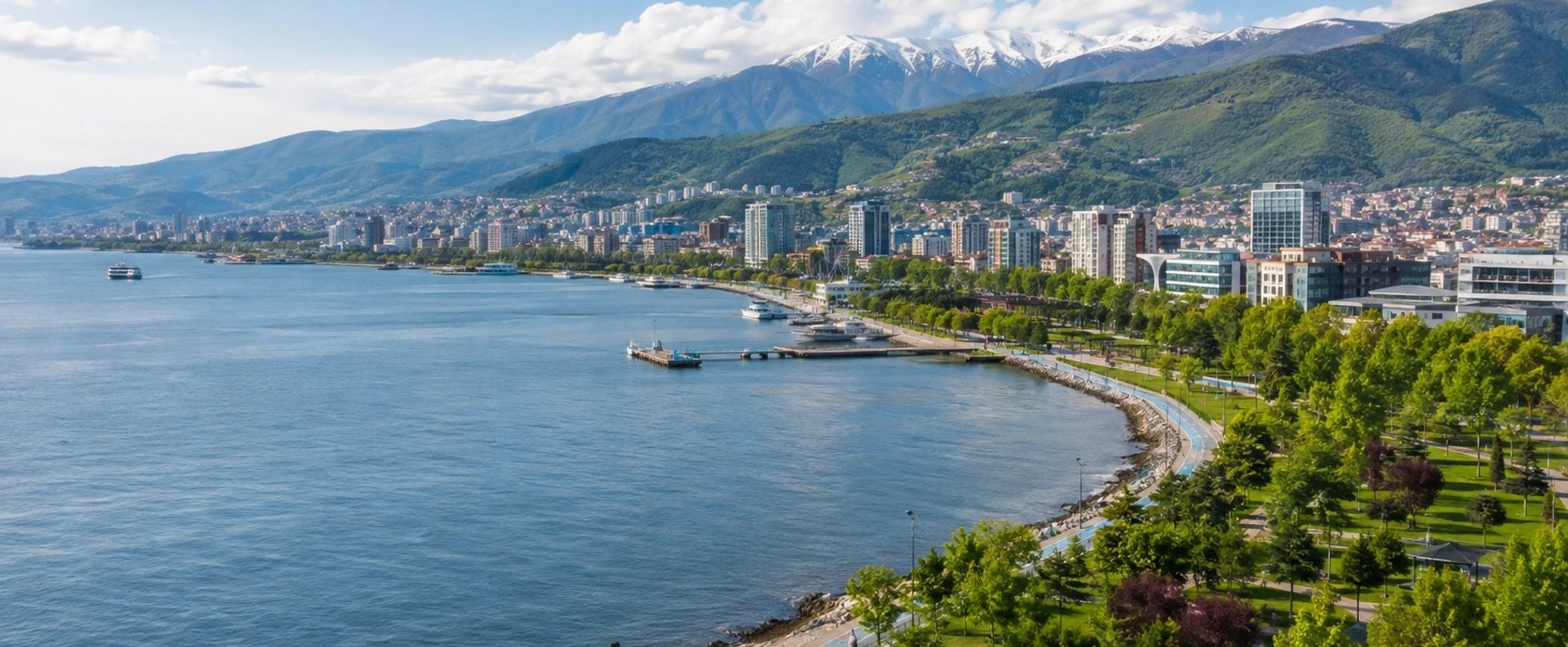
Connect Roman archaeology, Ottoman architecture, museums, historic towns, industrial heritage and landscapes around the Gulf.
Discover Kocaeli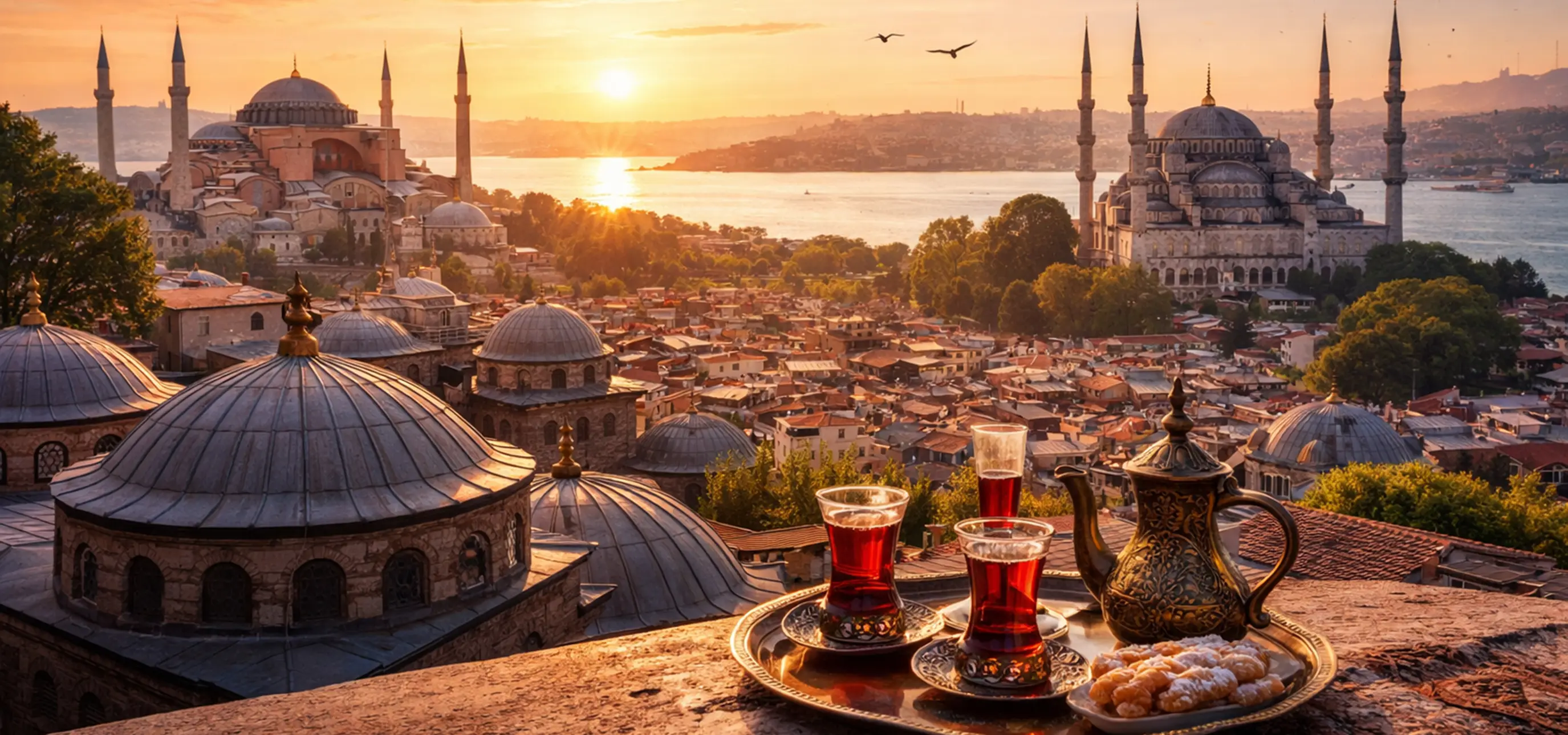
Continue throughout Türkiye with museums, imperial monuments, ancient cities, historic towns and regional culture.
Explore Türkiye