Private Yıldız Park & Palace Route
Ask us about a tailor-made route combining Yıldız Park, Malta Köşkü, Çadır Köşkü, Yıldız Palace, Beşiktaş and nearby Bosphorus landmarks.
Request a Custom Tour





Between Beşiktaş and Ortaköy, a steep green landscape rises behind the Bosphorus shoreline and the monumental walls of the late Ottoman palace district.
This is Yıldız Park — Yıldız Parkı, one of the most historically important surviving green spaces in central Istanbul.
The park covers approximately 46 hectares and forms part of the former outer garden of the wider Yıldız Palace complex.
Its landscape preserves layers of Ottoman history reaching back centuries, but the area became especially important during the 19th century under Sultan Abdülaziz and later Sultan Abdülhamid II.
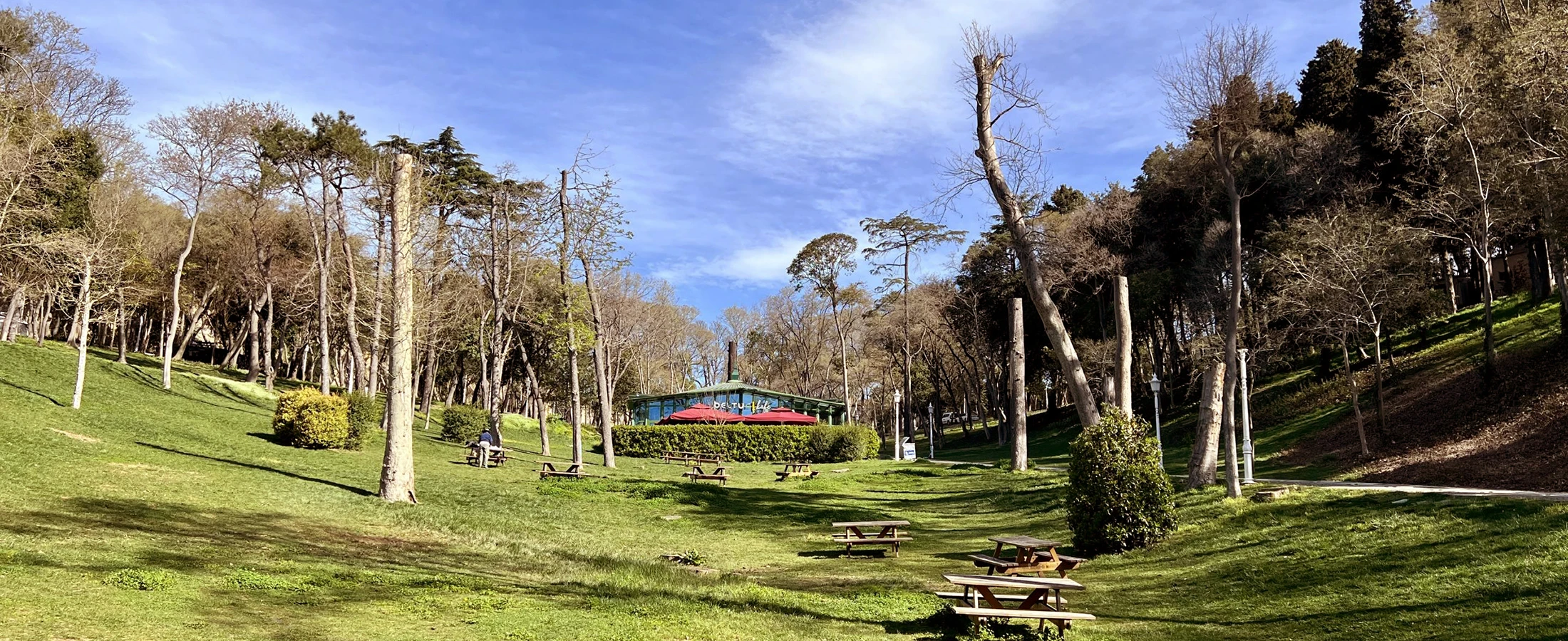
Today visitors come for mature woodland, quiet uphill roads, ornamental ponds, bridges, lawns and two of the park's best-known surviving Ottoman pavilions: Malta Köşkü and Çadır Köşkü.
Unlike many formal European palace gardens, Yıldız often feels intentionally irregular and naturalistic. Paths climb through dense vegetation, pavilions appear between trees and the Bosphorus is revealed only in occasional openings through the foliage.
Walk through the former outer garden of the Yıldız Palace complex, one of the most important centers of late Ottoman power.
See Malta Köşkü and Çadır Köşkü, two elegant 19th-century structures associated with the reign of Sultan Abdülaziz.
Escape into mature woodland, ponds, lawns, winding paths and steep green hills only minutes from Beşiktaş.
Understand how Yıldız Park, Yıldız Palace and Çırağan Palace once formed part of a connected imperial landscape above the Bosphorus.
Essential information about Yıldız Park's location, imperial history, historic pavilions, landscape, walking routes, nearby attractions and the best way to plan your visit.
Yıldız, Beşiktaş, on the European side of Istanbul between Beşiktaş and Ortaköy.
A historic imperial grove and landscaped urban park occupying steep hills above the Bosphorus.
About 46 hectares, making it one of the largest historic green spaces close to central Istanbul.
The park formed the outer garden of Yıldız Palace, especially important during the reign of Sultan Abdülhamid II.
Malta Köşkü and Çadır Köşkü are the best-known historic buildings inside the public park.
Wooded hills, lawns, ornamental ponds, bridges, winding roads, old trees and occasional Bosphorus views.
Early morning and late afternoon are best for soft light, reflections, architecture and quieter woodland paths.
Allow around two to three hours, or half a day when combining the park with Yıldız Palace or nearby Beşiktaş.
Yıldız Park is important because it preserves one of the clearest surviving examples of an Ottoman imperial garden landscape in modern Istanbul.
The park was not created as an ordinary municipal recreation area. It formed part of the wider Yıldız Palace environment and belonged to a protected imperial zone that included palace buildings, private gardens, ceremonial spaces and wooded slopes overlooking the Bosphorus.
During the late 19th century, Yıldız became one of the political centers of the Ottoman Empire.
Sultan Abdülhamid II used Yıldız Palace as his residence and seat of government for much of his 33-year reign from 1876 to 1909.
The park therefore allows visitors to experience the natural setting of a palace complex that functioned not simply as a residence, but as an entire administrative and residential world.
Its importance is also environmental.
Dense tree cover, steep terrain and long internal roads create an unusual sense of separation from the surrounding city despite the park's central location.
Few places in Istanbul combine late Ottoman political history, pavilion architecture, woodland, garden design and everyday urban recreation so closely.
The wooded hills around Yıldız have a history far older than the palace buildings visible today.
Historical accounts describe the area as a grove from the Byzantine period, and the landscape continued to be valued after the Ottoman conquest of Constantinople.
By the Ottoman period the hills became associated with imperial gardens, hunting and recreation.
During the reign of Sultan Selim III, new construction in the area helped establish Yıldız as an increasingly important imperial retreat.
The landscape continued to develop under later sultans, including Sultan Mahmud II and Sultan Abdülmecid.
The most important 19th-century transformation before the reign of Abdülhamid II occurred under Sultan Abdülaziz.
During his reign, major new structures were built in and around the Yıldız landscape, including the Malta Köşkü and Çadır Köşkü in the outer garden.
After Sultan Abdülhamid II came to the throne in 1876, Yıldız grew into a vast palace complex of administrative buildings, residences, gardens, workshops, cultural spaces and service structures.
The surrounding gardens were carefully developed as part of this protected imperial environment.
After the end of the Ottoman monarchy, the palace complex and its gardens passed through several different institutional uses.
The former outer garden eventually became a public green space and came to be known as Yıldız Park.
The wooded hillside became associated with imperial gardens, hunting and recreation.
Sultan Selim III and later rulers developed pavilions and gardens on the Yıldız hills.
Sultan Abdülaziz expanded the imperial landscape and commissioned major structures including Malta and Çadır pavilions.
Sultan Abdülhamid II made Yıldız Palace the center of imperial residence and government.
The former imperial grounds were divided among different public institutions and gradually opened to wider use.
Yıldız Park is a major public park while the adjoining palace complex is managed separately as a historic museum site.
The key to understanding Yıldız Park is to remember that it was once part of a much larger imperial palace landscape.
Yıldız Palace was not designed as a single monumental block like many European palaces.
Instead, it developed as a dispersed complex of pavilions, administrative buildings, residences, workshops, gardens and protected courtyards spread across a large hillside estate.
The area now used as Yıldız Park formed part of the palace's outer garden.
This explains why the park feels more like a wooded estate than a conventional city garden.
Roads curve around slopes rather than following a rigid grid. Ponds and pavilions appear gradually. Large trees create visual screens, and the terrain produces a succession of enclosed and open spaces.
The relationship between garden and palace is still visible today even though the public park and the museum complex have separate entrances and visitor arrangements.
No ruler is more closely associated with Yıldız than Sultan Abdülhamid II.
After ascending the throne in 1876, Abdülhamid increasingly preferred Yıldız over the waterfront setting of Dolmabahçe Palace.
The elevated location was more defensible, more private and better suited to the sultan's preference for a dispersed palace environment.
Over the following decades, Yıldız expanded into a huge administrative and residential complex containing government offices, private apartments, gardens, workshops, a theater, library, porcelain factory and numerous support buildings.
The gardens were part of this carefully controlled palace world.
For visitors today, walking through Yıldız Park provides useful physical context for understanding why the palace developed here: steep hills, natural screening, commanding positions above the Bosphorus and enough space to create a largely self-contained imperial compound.
The Malta Köşkü is the most architecturally prominent historic building inside Yıldız Park.
The two-storey pavilion was commissioned during the reign of Sultan Abdülaziz and completed around 1870.
It is generally attributed to the celebrated Ottoman-Armenian architect Sarkis Balyan, a member of the Balyan family whose work shaped many of Istanbul's 19th-century imperial buildings.
The pavilion combines elegant façades, arched windows, terraces and richly decorated interiors with a dramatic hillside setting.
Its elevated position allows the building to dominate its immediate landscape while still remaining surrounded by mature trees.
Malta Köşkü also entered late Ottoman political history through events connected with the trial of Midhat Pasha during the reign of Abdülhamid II.
In the Republican period the building underwent restoration and was adapted for public use.
The second major historic pavilion inside the public park is Çadır Köşkü.
Like Malta Köşkü, it belongs to the period of Sultan Abdülaziz and formed part of the 19th-century development of the outer imperial garden.
The building is especially memorable because of its relationship with the nearby pond and landscaped terraces.
Reflections of the pavilion, trees and sky can create some of the park's strongest photographic compositions when the water is calm.
The pavilion has undergone restoration and has been used as a public social facility over time.
Architecturally, Çadır Köşkü is best appreciated together with its surroundings rather than as an isolated building.
The water, slopes, mature trees and approach roads are all part of the experience of the pavilion.
Yıldız Park is one of the best places in central Istanbul to experience the city as a wooded landscape rather than an architectural destination.
Large areas are covered by mature trees, creating deep shade and a surprisingly enclosed atmosphere despite the dense urban neighborhoods surrounding the park.
The topography is crucial.
Yıldız rises sharply from the Bosphorus side toward the palace district and Barbaros Boulevard.
As a result, walking routes constantly change elevation, perspective and vegetation.
Some areas feel like formal garden terraces, while others resemble woodland roads with only occasional views of buildings or open lawns.
Spring brings fresh foliage and flowering plants, summer offers valuable shade, autumn provides warmer color and winter reveals the structure of the historic landscape more clearly.
Water is an important part of Yıldız Park's atmosphere.
Ornamental ponds soften the steep landscape and create quieter spaces away from the main roads and entrances.
Small bridges, stone edges, reflections and overhanging branches help create the romantic garden character associated with the park.
The pond near Çadır Köşkü is particularly photogenic because the architecture and vegetation are reflected together in the water.
Visitors should treat these water areas as landscaped habitats rather than amusement spaces and avoid disturbing birds or throwing unsuitable food into the ponds.
Yıldız Park and Yıldız Palace are inseparable historically but different operationally today.
The palace complex developed across roughly 500,000 square meters and included multiple courts, residences, administrative buildings, workshops, gardens and pavilions.
The area now known as Yıldız Park corresponds to the palace's former outer garden.
The adjoining palace contains some of the most important surviving buildings of the late Ottoman period, including structures associated with Sultan Abdülhamid II and the imperial administration.
Visitors interested in architecture and Ottoman political history should strongly consider combining the park with the palace.
The contrast is valuable: the park reveals the landscape setting, while the palace reveals the administrative and ceremonial world that once operated within it.
Yıldız Park stands only a short distance above the Bosphorus, yet much of the water remains hidden behind dense vegetation and the steep terrain.
This makes the park's relationship with the strait very different from waterfront destinations such as Ortaköy or Bebek.
Instead of constant open panoramas, visitors encounter partial Bosphorus views framed by trees, slopes and historic garden structures.
The park also helps explain the geography of the neighboring imperial palaces.
Çırağan Palace occupies the shoreline below, while Yıldız Palace rises on the safer and more secluded heights above.
Walking between Beşiktaş, Çırağan, Yıldız and Ortaköy gives one of the clearest introductions to the relationship between palace architecture and Bosphorus topography.
The best overall time for quiet paths, soft light, birdlife and photography around the pavilions and ponds.
A pleasant time for a longer walk, although weekends become progressively busier.
Excellent for softer light, long shadows and atmospheric views through the trees.
Fresh foliage, flowering trees and comfortable temperatures make this one of the strongest seasons.
Dense tree cover provides shade, though steep climbs can still be tiring in humid weather.
One of the most atmospheric periods for woodland photography and quieter walks.
Quieter and more architectural, with open views through leafless branches and fewer recreational crowds.
Generally preferable if your priority is photography, peaceful walking or a slower historical visit.
Enough for a short walk through the lower park and one pavilion area without exploring the full hillside.
A good minimum for Malta Köşkü, Çadır Köşkü, ponds, woodland roads and several viewpoints.
Recommended for a relaxed circuit with photography, rest stops and time to explore quieter paths.
Ideal when combining Yıldız Park with Yıldız Palace or a longer Beşiktaş–Ortaköy route.
Allow at least half a day and check current palace opening and ticket arrangements before fixing your schedule.
Combine the park with Dolmabahçe Palace, Çırağan, Yıldız Palace, Ortaköy and the Bosphorus waterfront.
Yıldız Park rewards photographers who look for depth, framing and atmosphere rather than only wide panoramic views.
The best compositions often combine architecture with vegetation, water or changes in elevation.
Photograph Malta Köşkü from a slight distance so the surrounding trees and terrace remain part of the composition.
Use the pond near Çadır Köşkü when the water is calm enough to reflect the pavilion and trees.
Long curving roads, tall trunks and steep slopes create strong depth and perspective.
Spring brings bright foliage while autumn provides warmer tones and textured ground cover.
Look for openings between trees rather than expecting continuous panoramic viewpoints.
Morning and late afternoon usually produce softer light than the middle of the day.
Yıldız Park can be an excellent family stop because it offers a complete change of atmosphere from Istanbul's museums, traffic and dense historic streets.
Children can enjoy ponds, birds, open lawns, bridges and the sense of exploring a large wooded landscape.
The main challenge is the terrain.
Yıldız is noticeably hilly, and a route that looks short on a map can involve a significant climb.
Families with younger children should avoid trying to cover every path and instead choose a simple circuit around one or two pavilion areas.
Strollers are easiest on the broader paved roads, while narrow or steep side paths may be less convenient.
Yıldız Park's steep terrain makes accessibility more complicated than in a flat urban park.
Many of the principal internal roads are paved, but gradients can be significant and distances can feel much longer when moving uphill.
Visitors using wheelchairs, mobility aids or strollers should plan around the specific part of the park they most want to see rather than attempting a full circuit.
Benches and resting areas are available in different sections, but the spacing between them may vary.
A vehicle drop-off near the most convenient entrance can make a substantial difference for visitors with limited mobility.
Yıldız Park is in the Beşiktaş district on Istanbul's European side, between the busy Beşiktaş center and Ortaköy.
Its location makes it much easier to reach than many of Istanbul's northern groves.
Visitors arriving from Sultanahmet, Taksim or the Asian side can first travel to Beşiktaş and continue toward the park by bus, taxi or on foot.
The lower approach from the Bosphorus side is especially convenient when combining the park with Çırağan Palace or Ortaköy.
The upper side connects toward Yıldız Palace and the Barbaros Boulevard corridor.
Travel toward Kabataş or Beşiktaş, then continue by local bus, taxi or a longer uphill walk.
Travel toward Beşiktaş by bus or taxi and continue to the park entrance from the Yıldız or Çırağan side.
The park is relatively close, but remember that the route climbs away from the waterfront.
Continue south toward Yıldız and Çırağan; taxi or bus is easier if you want to avoid uphill walking before entering the park.
Use Beşiktaş ferry pier as a convenient cross-Bosphorus connection, then continue by road or on foot.
Useful for reaching a specific entrance, especially if mobility or steep uphill walking is a concern.
The park is steep and large enough that a relaxed visit can involve significant walking.
Morning provides quieter paths and better conditions for photography around the pavilions and ponds.
Plan whether you want to begin near Çırağan, the central park, or the Yıldız Palace side.
Restaurant, café and interior-access arrangements can change independently of the park itself.
Long uphill sections can be tiring, especially during humid summer weather.
Heavily wooded parks may face temporary restrictions during storms or severe wind.
If visiting Yıldız Palace, check its current museum hours and ticket conditions separately.
Beşiktaş, Çırağan Palace, Ortaköy and the Bosphorus waterfront fit naturally into the same day.
There is no single compulsory route through Yıldız, but the following sequence gives a balanced introduction to architecture, water, woodland and the park's palace setting.
Two hours is enough for a satisfying first visit if you focus on the main pavilion and landscape areas rather than trying to explore every road.
Yıldız Park and Yıldız Palace form one of the strongest garden-and-palace combinations in Istanbul because they allow visitors to understand both the natural setting and the political world of the late Ottoman court.
Yıldız works especially well as part of a full day exploring the imperial and neighborhood landscape of the lower European Bosphorus.
Explore the late Ottoman palace complex most closely associated with Sultan Abdülhamid II and the final decades of the empire.
See the grand 19th-century Ottoman palace on the Bosphorus immediately below the Yıldız hills.
Explore a lively waterfront district filled with markets, cafés, monuments, museums and ferry connections.
Continue north for the famous waterfront square, Bosphorus Bridge views and Ortaköy Mosque.
Visit one of Istanbul's most photographed imperial mosques in a dramatic waterfront setting.
Compare Yıldız's dispersed hilltop palace environment with the monumental 19th-century palace directly on the Bosphorus.
Discover Ottoman and Turkish naval history close to Beşiktaş ferry pier and the Barbaros Hayreddin Pasha monument.
Continue planning with Istanbul's palaces, mosques, churches, museums, bazaars, parks and historic neighborhoods.
Yıldız Park is in the Beşiktaş district on Istanbul's European side, between Beşiktaş and Ortaköy and above the Bosphorus shoreline.
Yes. It combines Ottoman imperial history, two important historic pavilions, mature woodland, ponds, walking roads and one of the most peaceful large green spaces close to central Istanbul.
The park covers approximately 46 hectares.
Yes. The modern public park corresponds to the former outer garden of the wider Yıldız Palace complex.
The palace is most strongly associated with Sultan Abdülhamid II, who used it as his residence and seat of government for much of his reign from 1876 to 1909.
The two best-known pavilions inside the public park are Malta Köşkü and Çadır Köşkü.
Malta Köşkü was commissioned during the reign of Sultan Abdülaziz and completed around 1870. It is generally attributed to architect Sarkis Balyan.
Çadır Köşkü belongs to the 19th-century development of the Yıldız outer garden during the reign of Sultan Abdülaziz.
The palace and park are adjoining parts of the same historic imperial landscape, but they function as separate visitor sites today.
Yıldız Palace is a museum site with separate visitor arrangements. Check current official information for ticket prices, opening days and included sections.
Allow around two to three hours for a comfortable visit. A half day is better when combining the park with Yıldız Palace.
Yes. The park rises steeply from the Bosphorus side, so most longer routes involve noticeable uphill and downhill walking.
Yes. The ponds, trees, lawns and open spaces are family-friendly, although the hills can be tiring for younger children.
Yes, especially on the wider paved roads, but steep gradients can make a full circuit tiring.
Some paved routes are usable, but the park's slopes can be challenging. Visitors with mobility requirements should plan a limited route around the easiest entrance.
Yes. Malta Köşkü, Çadır Köşkü, ponds, bridges, wooded roads, historic trees and occasional Bosphorus views provide varied subjects.
Early morning is usually best for softer light, fewer people and calmer reflections around the ponds.
Yes. Ortaköy lies nearby on the Bosphorus and is one of the easiest places to combine with the park.
Yes. Dolmabahçe, Beşiktaş, Yıldız Park and Ortaköy form a strong full-day route focused on 19th-century Ottoman history and the Bosphorus.
It can become busy, especially in good weather. Weekday mornings are better for quiet walking and photography.
The historic pavilions have been used as public social and dining facilities, but operating arrangements can change. Check current information before relying on a specific service.
No. The park is easy to explore independently, but a knowledgeable guide can add valuable context about Ottoman garden design, Sultan Abdülaziz, Sultan Abdülhamid II, Yıldız Palace and the surviving pavilions.
Avoid damaging bark, breaking branches or attaching objects to mature trees.
Do not climb on pavilion walls, balustrades, terraces or decorative architectural features.
Do not throw rubbish or unsuitable food into the water.
Observe birds, squirrels and other animals without chasing or disturbing them.
Do not block narrow paths or roads with large photography setups.
Leave lawns, picnic areas, ponds and woodland edges clean.
Stay on paths and avoid entering flower beds or landscaped sections for photographs.
Temporary restrictions during severe wind or storms are important safety measures in heavily wooded areas.
Discover Yıldız as part of a private Istanbul route connecting late Ottoman history, imperial gardens, palaces, pavilions, Bosphorus neighborhoods and local city life — without compulsory shopping stops.
Create a private route focusing on Ottoman history, architecture, gardens, photography and Bosphorus neighborhoods according to your interests and available time.
Ask us about a tailor-made route combining Yıldız Park, Malta Köşkü, Çadır Köşkü, Yıldız Palace, Beşiktaş and nearby Bosphorus landmarks.
Request a Custom Tour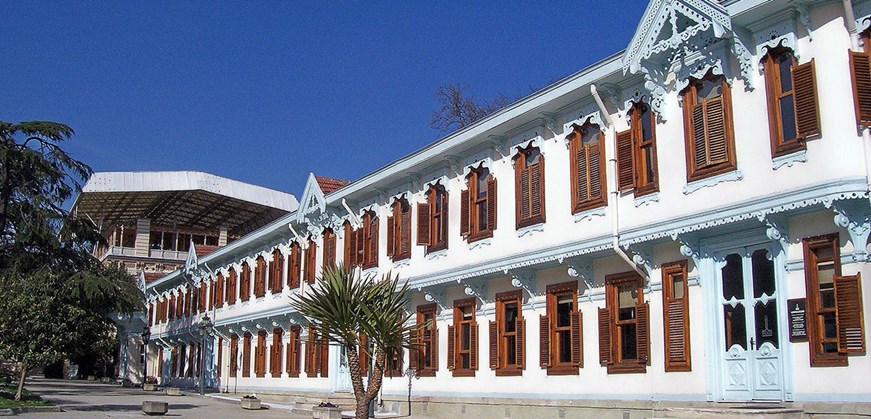
Pair the former outer imperial garden with the palace complex that became the residence and administrative center of Sultan Abdülhamid II.
Explore Yıldız PalaceCombine Yıldız with Dolmabahçe Palace, Beşiktaş, Çırağan, Ortaköy, Bosphorus viewpoints, museums or other neighborhoods according to your interests.
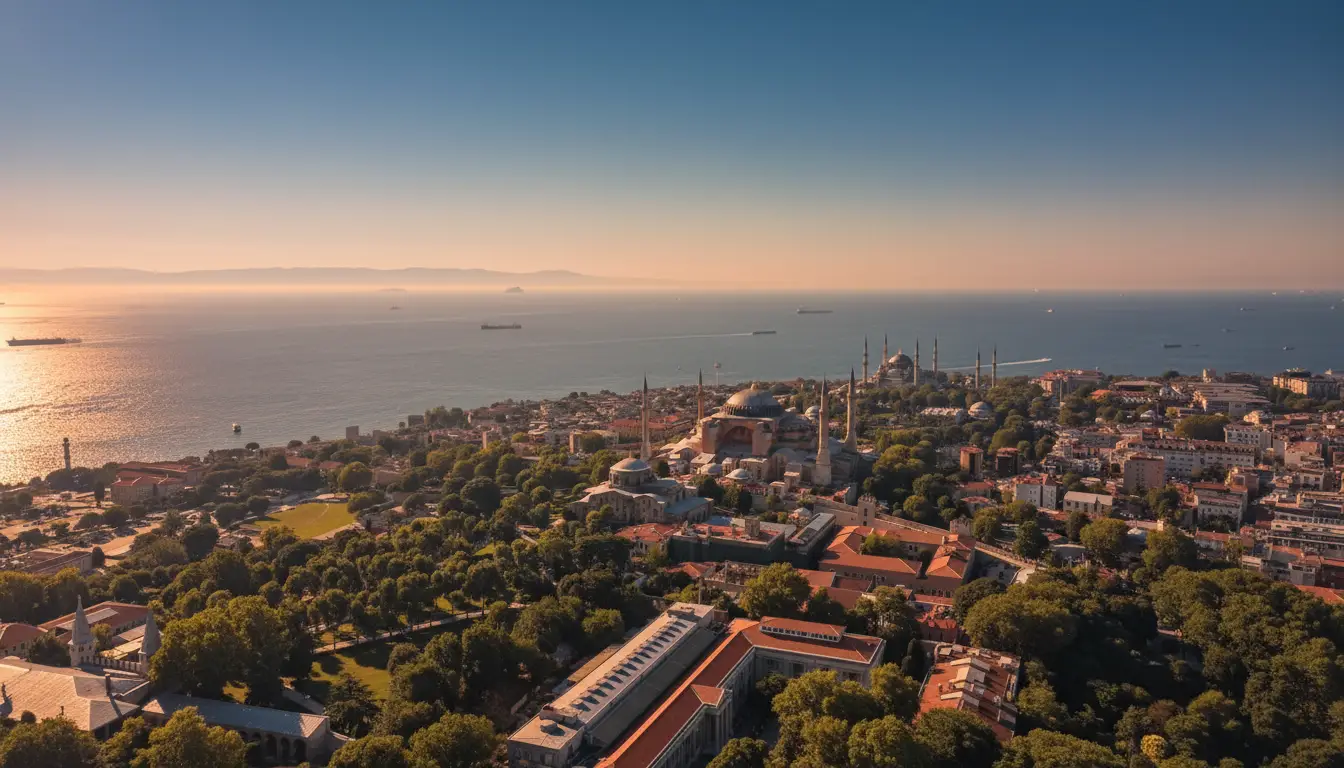
Create a private Istanbul itinerary around Byzantine and Ottoman history, architecture, museums, gardens, neighborhoods, food and Bosphorus scenery.
View Private Istanbul Tours
Continue planning with Istanbul's mosques, churches, palaces, museums, bazaars, parks, Bosphorus districts and historic neighborhoods.
Explore Istanbul