Büyük Mecidiye Camii, Sultan Abdülmecid, Balyan Architecture, Ottoman Baroque & Bosphorus Views

Ortaköy Mosque Istanbul – Complete Visitor Guide

Visit one of Istanbul's most iconic waterfront mosques, commissioned by Sultan Abdülmecid in the 19th century and standing directly on the Bosphorus beside Ortaköy Square and the July 15 Martyrs Bridge.

Explore Ortaköy Mosque

Ortaköy Mosque – Istanbul's Famous Mosque on the Bosphorus

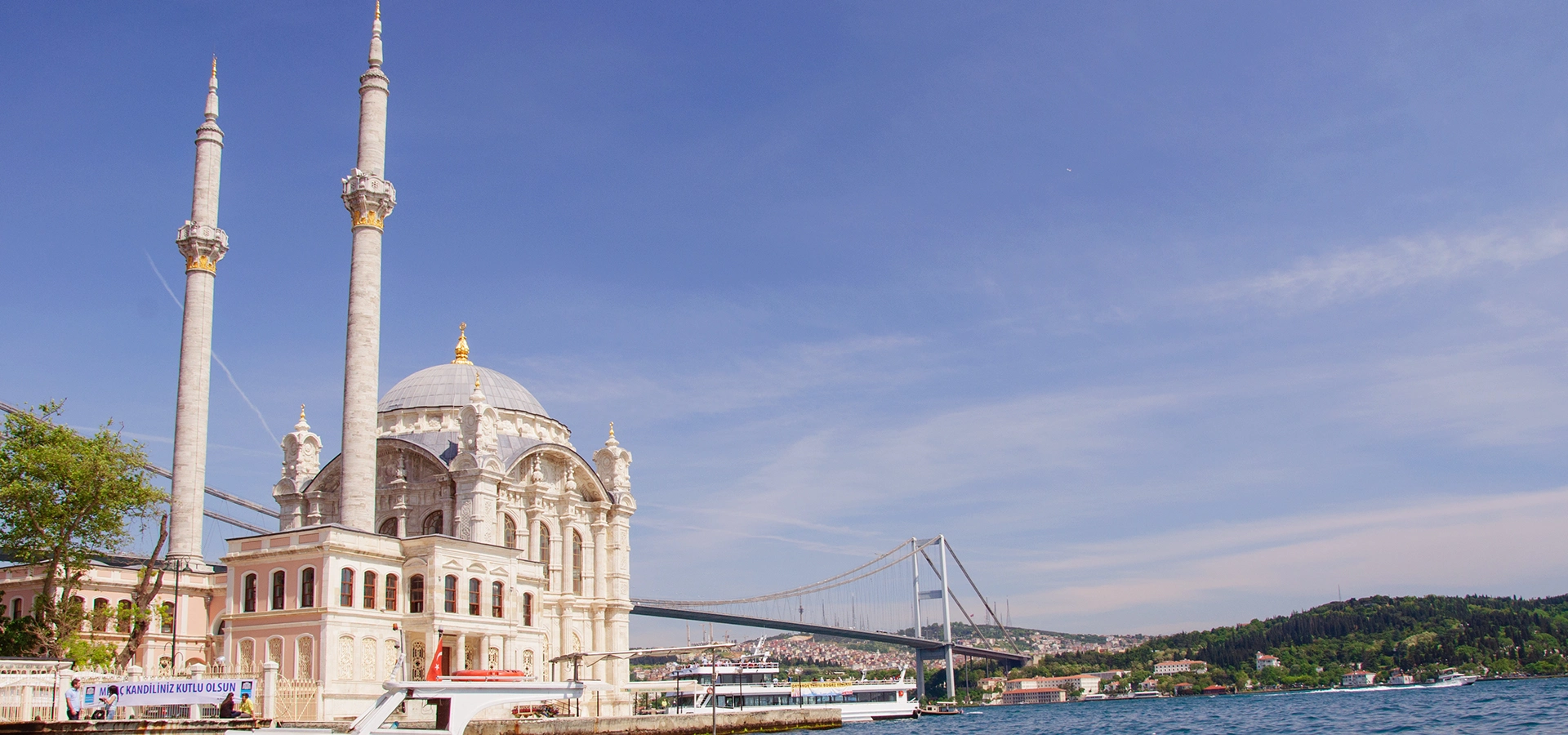
On the European shore of the Bosphorus, where Ortaköy Square opens directly onto the water, stands one of Istanbul's most recognizable religious landmarks: Ortaköy Mosque, officially known as Büyük Mecidiye Camii.

Its position is extraordinary. The mosque rises almost at the water's edge, with boats crossing behind it, the Asian shoreline visible across the strait and the great span of the July 15 Martyrs Bridge forming one of Istanbul's most famous modern backdrops.

The present mosque was commissioned by Sultan Abdülmecid I and completed in the mid-19th century. The design is associated with Nikoğos Balyan, a member of the influential Armenian-Ottoman Balyan family whose architects helped shape imperial Istanbul during the westernizing era of the Ottoman Empire.

Ortaköy Mosque belongs to a very different architectural world from the great classical mosques of Sinan. Its dramatic façades, large arched windows, curving ornament, slender minarets and richly decorated interior reflect the Baroque, Rococo, Empire and eclectic influences that transformed Ottoman palace and mosque architecture in the 19th century.

Yet the building is not simply a monument for sightseeing. It remains an active mosque, where worship continues every day. Visitors are welcome when access is available, but prayer times, Friday worship and religious etiquette should always shape the visit.

For travelers exploring Istanbul beyond Sultanahmet, Ortaköy offers one of the city's most rewarding combinations of architecture, faith, neighborhood life and Bosphorus scenery. A visit can take less than an hour, but the waterfront setting makes it easy to stay much longer.

1854 Landmark

The inscription of the present mosque dates its construction under Sultan Abdülmecid to 1854.

Balyan Architecture

The mosque is associated with Nikoğos Balyan and belongs to the western-influenced architectural world of 19th-century imperial Istanbul.

Bosphorus Waterfront

Its position beside Ortaköy Square creates one of the most famous mosque-and-water views in Istanbul.

Active Mosque

Büyük Mecidiye Camii remains a functioning place of worship, so visitors should plan around prayer times and observe mosque etiquette.


Know Before You Go

Ortaköy Mosque Istanbul – Quick Facts

Essential information about Büyük Mecidiye Camii, its Bosphorus location, Sultan Abdülmecid, Balyan architecture, religious access and the easiest ways to combine the mosque with Ortaköy and Beşiktaş.

📍

Location

Mecidiye, İskele Street, Ortaköy, Beşiktaş, directly beside the Bosphorus waterfront.

Open on Google Maps
🕌

Official Name

Büyük Mecidiye Camii, commonly known in Turkish and English as Ortaköy Mosque.

👑

Commissioned By

Ottoman Sultan Abdülmecid I during the major architectural transformation of 19th-century Istanbul.

📅

Completed

The entrance inscription dates the present mosque to 1854.

🏛️

Architect

The present mosque is principally associated with Nikoğos Balyan of the celebrated Balyan family.

🎟️

Admission

Free. It is an active mosque, and tourist entry may pause before and during prayers.

👗

Dress Code

Modest clothing is required. Shoes are removed before entering the prayer hall; women should cover their hair.

⏱️

Recommended Visit

Allow about 30–45 minutes for the mosque, or 1–2 hours when combined with Ortaköy Square and the waterfront.


Imperial Patronage, Westernizing Architecture, Bosphorus Urbanism and a Living Place of Worship

Why Is Ortaköy Mosque Important?

Ortaköy Mosque is important because it captures a decisive moment in Ottoman architectural history: a period when the imperial capital was embracing new European forms while continuing the traditions of the sultanic mosque and the Bosphorus waterfront.

The first reason is its connection with Sultan Abdülmecid I. His reign coincided with the Tanzimat era, a period of administrative, social and visual transformation in the Ottoman Empire. Architecture became one of the clearest ways in which this changing imperial identity appeared in Istanbul.

The second reason is the mosque's Balyan architecture. Rather than repeating the classical formula of the 16th century, the building uses dramatic curves, sculptural stonework, large windows, rich interior decoration and a highly theatrical waterfront façade.

The third reason is urban. Ortaköy Mosque stands directly beside the Bosphorus, not within a vast classical külliye complex. Its relationship with the imperial waterfront, Ortaköy pier, public square and passing maritime traffic is fundamental to its character.

The fourth reason is the survival of the building itself. Its delicate structure suffered from earthquakes, structural movement, fire and repeated repairs. The mosque has therefore reached the present through several major conservation campaigns rather than through uninterrupted physical survival.

Finally, Ortaköy Mosque matters because it is still used for worship. For visitors following our guide to places to visit in Istanbul, it is one of the clearest places to understand that Istanbul's monuments are not simply museum objects: many remain active parts of daily religious and neighborhood life.

History of Ortaköy Mosque Istanbul

The history of worship on this waterfront site begins before the present 19th-century building. Historical sources record an earlier mosque or mescit in Ortaköy, constructed in the early 18th century and later renewed.

By the reign of Sultan Abdülmecid I, the Ottoman capital was undergoing an extraordinary architectural transformation. New palaces, mosques, public buildings and waterfront residences were reshaping the Bosphorus corridor.

The earlier religious building at Ortaköy was replaced by the present Büyük Mecidiye Camii. The inscription above the entrance dates its construction to 1854, and the mosque is associated with architect Nikoğos Balyan.

The new building belonged to the same broad imperial world as other great 19th-century projects around the Bosphorus. Its architecture used forms that were far more openly influenced by European Baroque, Rococo, Empire and eclectic design than the classical Ottoman mosque tradition.

The mosque's beauty was matched by structural vulnerability. Repairs were already required in the 1860s, and the major Istanbul earthquake of 1894 caused serious damage. Further repair work followed in the early 20th century.

During restoration in the 1960s, the foundation and structural system were strengthened and the dome was renewed. The mosque reopened to worship in 1969.

A serious fire in 1984 caused further damage and led to another restoration campaign. These episodes mean that parts of the building visible today have been repaired, renewed or reconstructed over time.

A major modern conservation project was undertaken between 2011 and 2014. Following that work, the mosque was formally reopened in June 2014.

Today, Ortaköy Mosque remains one of the most recognizable surviving monuments of 19th-century Ottoman Istanbul, with its religious function, architectural drama and Bosphorus setting still inseparable from one another.

Early 18th Century

An earlier mosque stood on the site before the present Büyük Mecidiye Camii was constructed.

1854

The inscription of the present mosque dates the building to the reign of Sultan Abdülmecid.

1894

The great Istanbul earthquake caused serious damage and contributed to later repair campaigns.

1960s

Structural restoration strengthened the building and renewed the dome before reopening in 1969.

1984

A major fire damaged the mosque and was followed by further restoration.

2011–2014

A comprehensive modern restoration was completed before the mosque reopened in June 2014.

Why Is Ortaköy Mosque Called Büyük Mecidiye Camii?

Visitors almost always hear the name Ortaköy Mosque, because the building has become the visual symbol of the Ortaköy neighborhood. Its official historical name, however, is Büyük Mecidiye Camii.

The word Mecidiye refers to Sultan Abdülmecid I, the Ottoman ruler who commissioned the mosque. The name therefore preserves the connection between the building and its imperial patron.

The adjective Büyük, meaning “Great” or “Large,” helps distinguish it from another 19th-century mosque associated with Sultan Abdülmecid nearby, the Küçük Mecidiye Camii near the Çırağan and Yıldız area.

For travelers, both names are useful. Searching for Ortaköy Mosque or Büyük Mecidiye Camii will normally lead to the same famous waterfront monument in Beşiktaş.

Ortaköy Mosque

The familiar modern name connects the monument directly with the neighborhood where it stands.

Büyük Mecidiye Camii

The official historical name reflects Sultan Abdülmecid's patronage.

Mecidiye

The name derives from Abdülmecid, one of the principal Ottoman rulers associated with Istanbul's 19th-century transformation.

Not Küçük Mecidiye

Do not confuse Ortaköy Mosque with Küçük Mecidiye Camii, another Abdülmecid-era mosque nearby.

Sultan Abdülmecid & the Balyan Architecture of Ortaköy Mosque

Ortaköy Mosque belongs to the reign of Sultan Abdülmecid I, whose Istanbul was increasingly shaped by monumental buildings that combined Ottoman ceremonial needs with European-influenced architectural forms.

The architect most closely associated with Büyük Mecidiye Camii is Nikoğos Balyan, a member of the prominent Balyan family of Armenian-Ottoman architects. Across several generations, the family worked on palaces, mosques, public buildings and imperial residences throughout Istanbul.

Their work helped define the visual identity of the 19th-century Bosphorus. Instead of the restrained monumental geometry of classical Ottoman architecture, Balyan-era buildings often use sculptural façades, large windows, rich surface ornament, dramatic stairways and a close relationship with waterfront settings.

At Ortaköy, this creates a mosque that feels almost like a small imperial pavilion placed beside the sea. The prayer hall, the hünkâr kasrı or imperial pavilion, and the two minarets form a compact composition whose scale is relatively modest but whose visual impact is enormous.

This is one reason the mosque is so important for understanding Ottoman architecture. It demonstrates that the empire's architectural tradition did not simply stop after the classical age; it continued to transform, absorb new influences and create a distinctly late Ottoman urban language.

Sultan Abdülmecid I

The mosque was an imperial foundation of the sultan whose reign became closely associated with Tanzimat-era modernization.

Nikoğos Balyan

The architect most closely associated with the present building and one of the key names in 19th-century Ottoman architecture.

Balyan Family

A celebrated Armenian-Ottoman architectural family responsible for many important imperial buildings in Istanbul.

Western Influence

Baroque, Rococo, Empire and eclectic forms appear within an Ottoman imperial mosque program.

Architecture of Ortaköy Mosque

The architecture of Ortaköy Mosque is instantly recognizable because it combines a relatively compact plan with an exceptionally elaborate exterior. The building rises on a waterfront platform above the Bosphorus, creating the impression that the mosque is almost floating beside the strait.

The main prayer hall is approximately square and covered by a single central dome. Rather than surrounding the dome with the layered cascade of semi-domes familiar from classical imperial mosques, the design concentrates attention on one bright, highly decorated interior volume.

Large round-arched windows open the walls to daylight. These openings are one of the defining features of the mosque, allowing the constantly changing light of the Bosphorus to become part of the interior experience.

Outside, the façades are articulated with curved projections, engaged columns, ornamental capitals, carved stonework and strong vertical accents. The result is closer to the theatrical movement of European Baroque architecture than to the calm massing of the classical Ottoman period.

Two single-balcony minarets rise beside the imperial pavilion area. Their narrow proportions reinforce the vertical character of the composition and frame the mosque dramatically when seen from the square or from the water.

The hünkâr kasrı, or imperial pavilion, is an essential part of the building. It provided a ceremonial approach and private spaces connected with the sultan's attendance at worship, continuing the imperial traditions of later Ottoman selatin mosques.

Visitors should view the mosque from more than one angle. The square, the waterfront, the pier area and the approaches from Beşiktaş each reveal a different balance between the dome, minarets, imperial pavilion and Bosphorus backdrop.

Single Dome

A single principal dome crowns the approximately square prayer hall.

Large Windows

Tall arched windows flood the interior with daylight and connect the prayer hall visually with the Bosphorus setting.

Two Minarets

Two slender single-balcony minarets frame the northern side of the composition.

Hünkâr Kasrı

The imperial pavilion reflects the ceremonial needs of a 19th-century sultanic mosque.

Baroque Movement

Curving façades and sculptural stone ornament create a dynamic late Ottoman appearance.

Waterfront Platform

The mosque's dramatic position directly beside the Bosphorus is fundamental to its architectural effect.

Inside Ortaköy Mosque

The interior of Ortaköy Mosque is smaller than many first-time visitors expect. Its impact comes not from enormous scale, but from light, ornament and vertical drama.

The tall windows allow daylight to enter from several directions, changing the atmosphere throughout the day. On bright mornings and afternoons, the prayer hall can feel unusually luminous for a historic mosque.

The mihrab is made of marble and belongs to the richly ornamental 19th-century decorative language of the building. The minbar is also marble, with colored stone details and sculptural ornament.

Painted decoration in the dome and pendentives includes floral, architectural and landscape-inspired motifs that reflect the changing artistic vocabulary of the late Ottoman period.

Calligraphic panels form another important part of the interior. Some inscriptions are traditionally associated with Sultan Abdülmecid himself, who was known for his interest in calligraphy.

Because the mosque remains active, visitors should experience these details quietly. Do not cross in front of worshippers, avoid occupying the central prayer area unnecessarily and follow any barriers or visitor routes in place on the day.

Mihrab

The marble prayer niche is richly modeled and decorated in the western-influenced imperial style of the period.

Minbar

The marble pulpit uses colored stone and ornamental carving rather than the more restrained language of earlier centuries.

Calligraphy

Large calligraphic panels reinforce the mosque's religious identity within its highly decorative architecture.

Dome Decoration

Painted ornament in the dome and pendentives contributes strongly to the interior's late Ottoman character.

Bosphorus Light

The large windows make changing natural light one of the most memorable features of the prayer hall.

Compact Scale

The mosque feels intimate compared with the monumental imperial mosques of the Historic Peninsula.

Ortaköy Mosque & the Bosphorus

Few monuments in Istanbul are as closely tied to their setting as Ortaköy Mosque. If the same building stood inland, it would still be architecturally important; but its position at the water's edge transforms it into an icon of the city.

The Bosphorus passes immediately beside the mosque. Ferries, private boats, fishing vessels and international maritime traffic move through the background, so the view is never completely static.

Behind and above the mosque, the July 15 Martyrs Bridge connects the European and Asian sides of Istanbul. The juxtaposition of the 19th-century mosque and the 20th-century suspension bridge has become one of the defining visual compositions of modern Istanbul.

The surrounding Ortaköy Square is equally important. Cafés, street-food sellers, small shops, restaurants and the waterfront promenade turn the mosque into part of an active neighborhood rather than an isolated religious monument.

For photographers, the relationship between architecture and water is often more important than the mosque alone. Try looking from the square, the pier area and the shoreline immediately south of the building to understand how dramatically the monument changes with distance and light.

WaterfrontDirectly on the European shore of the Bosphorus
Famous BackdropJuly 15 Martyrs Bridge
NeighborhoodOrtaköy, Beşiktaş
Best Visual CombinationMosque + Bosphorus + bridge
Best AtmosphereEarly morning, late afternoon and evening

What to See at Ortaköy Mosque

Waterfront Façade

Step back toward Ortaköy Square to see how the mosque rises directly above the Bosphorus edge.

Main Dome

Observe the single dome and the way its compact mass is balanced by tall windows and the slender minarets.

Two Minarets

The narrow minarets are among the strongest vertical elements in the building's famous silhouette.

Hünkâr Kasrı

Notice the imperial pavilion and ceremonial entrance zone rather than viewing the mosque only as a single prayer hall.

Mihrab & Minbar

Inside, look for the marble prayer niche and pulpit with their characteristic 19th-century ornament.

Calligraphy

Large inscriptions and calligraphic panels form a powerful religious counterpoint to the European-influenced decorative architecture.

Bosphorus Windows

The large windows fill the prayer hall with changing light and help create the mosque's unusually bright interior.

Ortaköy Square

Spend time outside the mosque to experience the neighborhood, pier, cafés and waterfront life that make the setting so memorable.

Mosque Etiquette at Ortaköy Mosque

Büyük Mecidiye Camii is not operated simply as a historical attraction. It is an active mosque, so respectful behavior is essential even when the building is busy with tourists.

Shoes must be removed before entering the carpeted prayer hall. Use the designated shoe area or bags if they are provided, and avoid blocking the entrance while changing footwear.

Clothing should be modest. Shoulders and knees should be covered, and women should cover their hair inside the prayer space. Visitor coverings may sometimes be available, but bringing your own scarf is more comfortable.

Non-worship visitors should avoid entering during congregational prayers. Access may be paused before and during the five daily prayers, and Friday midday prayer is especially busy.

Photography should remain discreet. Do not photograph individual worshippers at close range without permission, and never step in front of someone who is praying simply to improve a photograph.

Remove Shoes

Shoes are removed before stepping onto the carpeted prayer hall.

Dress Modestly

Cover shoulders and knees; women should also cover their hair inside the mosque.

Avoid Prayer Times

Sightseeing access can pause before and during prayers, especially for the Friday congregation.

Keep Voices Low

Conversation and phone use should remain quiet inside the prayer space.

Respect Worshippers

Do not cross immediately in front of someone who is praying or occupy prayer rows unnecessarily.

Follow Local Guidance

Staff or mosque attendants may adjust visitor routes according to worship, ceremonies or maintenance.

Practical Tips for Visiting Ortaköy Mosque

Check Prayer Times

Daily prayer times change through the year, so check the current Istanbul schedule before making a tightly timed visit.

Avoid Friday Midday

Friday congregational prayer is the busiest weekly worship period and is not the best time for sightseeing.

Visit Early for Photos

Morning usually gives you more space around the square and fewer people directly in front of the mosque.

Bring a Scarf

Women should carry a lightweight headscarf so they do not need to depend on visitor coverings.

Wear Easy Shoes

Choose footwear that is easy to remove and put back on at the entrance.

Stay for the Waterfront

Do not leave immediately after the interior visit. The square and Bosphorus setting are part of the experience.

Expect Weekend Crowds

Ortaköy becomes especially busy on pleasant weekends and evenings when the waterfront fills with local visitors.

Combine Beşiktaş

The mosque works very well within a longer walk or private route along the European Bosphorus shore.

Suggested Ortaköy Mosque & Bosphorus Walking Route

Begin in the Beşiktaş waterfront area, where the European shore of the Bosphorus becomes one of Istanbul's most rewarding historical corridors.

If your day includes Dolmabahçe Palace, visit the palace first and then continue north toward Beşiktaş. The route brings together the imperial architecture of the 19th century with the everyday energy of the modern district.

Continue past the Çırağan Palace waterfront and walk toward Ortaköy. This stretch allows you to see how Ottoman palaces, mosques, parks and later urban development line the Bosphorus almost continuously.

Enter Ortaköy Square and spend time looking at the mosque from outside before going in. The best-known view places the mosque in front of the Bosphorus and the July 15 Martyrs Bridge.

Visit Büyük Mecidiye Camii when sightseeing access is available. Allow enough time to remove your shoes, observe the interior decoration and avoid rushing through the prayer space.

Afterward, continue along the waterfront, explore the small streets around the square or stop for coffee, tea or a casual meal. If you are continuing farther north, the Bosphorus route can be extended toward Arnavutköy and Bebek by public transport or taxi.

Stop 1Dolmabahçe / Beşiktaş waterfront
Stop 2Beşiktaş district
Stop 3Çırağan Palace waterfront
Stop 4Ortaköy Square
Stop 5Büyük Mecidiye Camii
Stop 6Ortaköy waterfront
Optional ExtensionArnavutköy & Bebek
Total TimeApproximately 3–5 hours depending on palace visits, walking pace, prayer times and food stops

Ortaköy Mosque Visitor Information

Ortaköy Mosque stands in Mecidiye Mahallesi, Beşiktaş, directly beside Ortaköy Square and the Bosphorus. Its central neighborhood location makes it easy to combine with cafés, waterfront walks and other monuments along the European shore.

There is no sightseeing entrance fee. The mosque remains an active place of worship, so visitor access is organized around religious use rather than museum-style ticket sessions.

Non-worship visitors should plan to enter between prayers. The prayer schedule changes every day according to sunrise and sunset, and access can be suspended shortly before congregational worship begins.

Friday midday is the most important weekly congregational period and can be extremely busy. If your goal is architecture, photography and a calm interior visit, choose another time.

Official Name Büyük Mecidiye Camii
District Ortaköy, Beşiktaş, Istanbul
Address Mecidiye Mah., İskele Sk., 34347 Beşiktaş / Istanbul
Admission Free
Visitor Access Generally between prayers; temporary closures may occur for worship, ceremonies or maintenance
Friday Avoid the midday prayer period for sightseeing
Dress Code Modest clothing; shoes removed; women cover hair inside
Recommended Visit 30–45 minutes for the mosque; 1–2 hours with Ortaköy Square and the waterfront
Important: prayer times change daily and mosque access can be adjusted without notice for worship, religious ceremonies, maintenance or security. If your itinerary depends on a specific time, check the current Istanbul prayer schedule before visiting.

Dress Code & Prayer-Time Advice for Ortaköy Mosque

The easiest way to visit Ortaköy Mosque is to arrive already dressed appropriately. This prevents delays at the entrance and allows you to enter quietly when sightseeing access is open.

For all visitors, shoulders and knees should be covered. Very short shorts, miniskirts and sleeveless tops are not suitable for the prayer hall.

Women should cover their hair inside the mosque. A lightweight scarf is ideal because it can be carried easily during the rest of your Istanbul day.

Shoes are removed before entering the carpeted area. Socks are recommended, and footwear that can be removed quickly is more practical than complicated boots or tightly laced shoes.

If the call to prayer begins while you are nearby, do not hurry through the entrance. Allow worshippers to enter first and follow the instructions of mosque attendants. Sightseeing generally resumes after the prayer period has finished and the congregation has begun to disperse.

Shoulders Covered

Choose tops that cover the shoulders and upper body appropriately for a place of worship.

Knees Covered

Long trousers, longer skirts or dresses are the easiest choices for mosque visits.

Headscarf for Women

Carry your own lightweight scarf for comfort and convenience.

Shoes Off

Remove footwear before entering the carpeted prayer hall and keep the entrance clear.

Friday Midday

Plan sightseeing at another time because the principal weekly congregation takes priority.

Follow Attendants

Visitor routes may change depending on worship, crowd levels and special religious occasions.

Best Time to Visit Ortaköy Mosque

Early Morning

Best for a calmer Ortaköy Square, cleaner architectural photographs and less competition for waterfront viewpoints.

Late Morning

A practical period for combining the mosque with Beşiktaş, Çırağan and other Bosphorus sights between prayers.

Afternoon

Good for neighborhood atmosphere and changing light across the Bosphorus, but crowds may increase.

Golden Hour

Late-day light can create beautiful exterior views, especially when the mosque, water and bridge are framed together.

Evening

The illuminated mosque and bridge create one of Ortaköy's most atmospheric urban scenes after dark.

Weekends

Expect much heavier neighborhood crowds in good weather, especially around cafés, food stalls and the waterfront.

How Much Time Do You Need at Ortaköy Mosque?

15–20 Minutes

Enough for a quick exterior look and a short interior visit when access is immediately available.

30–45 Minutes

Ideal for seeing the interior carefully, studying the façade and taking photographs from the square.

1–2 Hours

Better for combining the mosque with Ortaköy Square, the waterfront, coffee or a casual meal.

3–5 Hours

Allow this for a broader Bosphorus route through Beşiktaş, Çırağan, Ortaköy and nearby waterfront neighborhoods.

Photography at Ortaköy Mosque

Ortaköy Mosque is one of the most photographed religious buildings in Istanbul. Its popularity comes from the unusual combination of historic architecture, open water and the enormous suspension bridge behind it.

The classic photograph is taken from Ortaköy Square or the nearby waterfront, framing the mosque against the Bosphorus and July 15 Martyrs Bridge. Move around rather than relying on one exact position; small changes in angle can dramatically improve the separation between the dome, minarets and bridge cables.

Early morning usually provides the most space and the least visual clutter. Late afternoon and evening can be more dramatic, but the square is often much busier.

Inside, wide vertical compositions work well for the dome, large windows, calligraphy, mihrab and minbar. However, religious use always takes priority over photography.

Do not photograph worshippers closely without consent, avoid flashes during prayer and never step across prayer rows or restricted areas for a better angle.

Classic Waterfront View

Frame the mosque with the Bosphorus and bridge for the iconic Ortaköy composition.

Early Morning

The square is usually calmer and easier for clean architectural photographs.

Golden Hour

Changing late-day light can produce dramatic reflections and warmer stone tones.

Night View

Exterior lighting and the illuminated bridge create a very different atmosphere after dark.

Interior Details

Use the dome, calligraphy and tall windows to show how light and decoration shape the prayer hall.

Respect Prayer

Do not let photography interrupt worship or turn individual worshippers into subjects without permission.

Accessibility at Ortaköy Mosque

Ortaköy Mosque is located in a relatively compact waterfront district, but the historic building and busy public square can present challenges for visitors with reduced mobility.

The mosque stands on a raised platform, and the historical entrance arrangement includes steps and level changes. Accessibility provisions can be affected by temporary visitor routing, religious use and restoration or maintenance work.

Ortaköy Square itself is mostly pedestrian-oriented, but busy weekends can make movement difficult because of dense crowds, outdoor seating, street-food queues and people stopping for photographs.

Travelers using wheelchairs, walking aids or strollers should consider visiting at a quieter time and allowing extra time to identify the most practical entrance route.

Because access arrangements at active mosques can change, visitors with specific mobility requirements should confirm current conditions locally rather than relying on a fixed historical description.

Raised Structure

The mosque sits above the waterfront level and historic approaches include steps and changes of level.

Busy Square

Weekend and evening crowds can make the Ortaköy waterfront harder to navigate.

Prayer-Hall Rules

Visitor circulation may be adjusted according to worship and the needs of the congregation.

Choose Quieter Hours

Morning or a calm weekday usually provides more space and less congestion.

Ask Locally

Mosque attendants can identify the most practical current route when temporary access arrangements are in place.

Allow Extra Time

Do not plan a very tight transfer immediately after the mosque if mobility or crowd conditions may slow the visit.

How to Get to Ortaköy Mosque Istanbul

Ortaköy Mosque is located on the European side of Istanbul in Beşiktaş. There is no metro station directly beside the mosque, so most visitors arrive by bus, taxi, ferry connection plus walking or a longer waterfront walk from Beşiktaş.

From Beşiktaş

Use a Bosphorus-side bus, taxi or walk north along the waterfront corridor toward Çırağan and Ortaköy.

From Kabataş

Continue north by bus or taxi along the European Bosphorus shore; traffic conditions can strongly affect journey time.

From Taksim

Take the F1 funicular to Kabataş and continue by bus or taxi, or travel directly toward Beşiktaş and Ortaköy by road.

From Sultanahmet

Take the T1 tram to Kabataş, then continue along the Bosphorus by bus or taxi toward Ortaköy.

From the Asian Side

Use a ferry to Beşiktaş or another convenient European-side pier, then continue toward Ortaköy by bus, taxi or walking route.

By Taxi

Ask for “Ortaköy Camii” or “Büyük Mecidiye Camii.” Road traffic along the Bosphorus can become very heavy at peak times.

Transport tip: Ortaköy is especially vulnerable to road congestion on weekends and during evening rush periods. When possible, combine ferry transport with walking or local public transport rather than depending entirely on a car journey across central Istanbul.

Places to Visit Near Ortaköy Mosque

Ortaköy Mosque is one of the best starting points for exploring the European Bosphorus. The surrounding district combines imperial architecture, waterfront neighborhoods, parks, markets, food and some of Istanbul's most atmospheric urban scenery.

Use our complete Istanbul visitor guide to continue planning your route across the city.

Ortaköy Square

The lively public space immediately beside the mosque is filled with cafés, food stalls, small shops and Bosphorus viewpoints.

Çırağan Palace

Walk south along the Bosphorus to see the historic imperial palace complex that now forms one of the city's best-known waterfront landmarks.

Yıldız Park

Climb away from the waterfront for one of central Istanbul's most extensive green spaces and a quieter contrast to Ortaköy Square.

Beşiktaş

Continue south for markets, ferry connections, restaurants, monuments and one of Istanbul's busiest local districts.

Arnavutköy

Travel north along the Bosphorus for historic waterfront houses, seafood restaurants and another classic neighborhood atmosphere.

Bebek

Continue farther north for a scenic promenade, cafés and sweeping views across one of the most beautiful stretches of the Bosphorus.

Galata & Karaköy

Return toward the Golden Horn for medieval Genoese history, churches, Jewish heritage, waterfront streets and one of Istanbul's best urban walks.

Explore More of Istanbul

Discover more palaces, mosques, churches, bazaars, cisterns, museums and historic neighborhoods across Istanbul.

Frequently Asked Questions About Ortaköy Mosque Istanbul

What is Ortaköy Mosque?

Ortaköy Mosque is a 19th-century Ottoman imperial mosque on the European shore of the Bosphorus in Beşiktaş. Its official name is Büyük Mecidiye Camii.

What is the official name of Ortaköy Mosque?

The official historical name is Büyük Mecidiye Camii. “Ortaköy Mosque” is the commonly used name because the mosque stands in the Ortaköy neighborhood.

Where is Ortaköy Mosque in Istanbul?

It stands directly beside Ortaköy Square and the Bosphorus in the Beşiktaş district on Istanbul's European side.

When was Ortaköy Mosque built?

The inscription of the present mosque dates it to 1854 during the reign of Sultan Abdülmecid I.

Who commissioned Ortaköy Mosque?

The present Büyük Mecidiye Camii was commissioned by Ottoman Sultan Abdülmecid I.

Who designed Ortaköy Mosque?

The mosque is principally associated with Nikoğos Balyan, a member of the influential Armenian-Ottoman Balyan family of architects.

What architectural style is Ortaköy Mosque?

It is a late Ottoman imperial mosque with strong Baroque, Rococo, Empire and eclectic westernizing influences.

Is Ortaköy Mosque the same as Büyük Mecidiye Camii?

Yes. Ortaköy Mosque and Büyük Mecidiye Camii are two names for the same famous waterfront mosque.

Is Ortaköy Mosque still active?

Yes. It remains an active mosque with daily prayers and Friday congregational worship.

Is there an entrance fee for Ortaköy Mosque?

No. Entry is free, although visitors must follow religious etiquette and may need to wait until a prayer period has finished.

What are Ortaköy Mosque opening hours?

Because it is an active mosque, sightseeing access is organized around the daily prayer schedule rather than fixed museum-style hours. Tourist entry may pause before and during prayers.

Can non-Muslims visit Ortaköy Mosque?

Yes, non-Muslim visitors are normally welcome outside prayer periods as long as they dress modestly and respect mosque rules.

Do women need to cover their hair at Ortaköy Mosque?

Yes. Women should cover their hair inside the prayer hall and all visitors should dress modestly.

Do I need to remove my shoes?

Yes. Shoes are removed before entering the carpeted prayer hall.

Can I visit Ortaköy Mosque on Friday?

Yes, but Friday midday is the principal weekly congregational prayer and is not recommended for sightseeing. Visit before or later after the congregation has dispersed.

What is the best time to visit Ortaköy Mosque?

Early morning is best for a quieter square and exterior photography. For the interior, choose a period between prayers. Evening is excellent for illuminated waterfront views.

How long should I spend at Ortaköy Mosque?

Allow about 30–45 minutes for the mosque itself and one to two hours if you also want to explore Ortaköy Square and the waterfront.

Can I take photographs inside Ortaköy Mosque?

Photography is generally possible when it does not disturb worship, but avoid photographing individual worshippers closely without permission and follow any local restrictions.

Why is Ortaköy Mosque so famous?

Its fame comes from the combination of ornate 19th-century architecture and an exceptional Bosphorus location with the July 15 Martyrs Bridge in the background.

Was Ortaköy Mosque damaged by earthquakes?

Yes. The mosque required repairs in the 19th century and suffered serious damage in the 1894 Istanbul earthquake. Later restoration campaigns strengthened the structure.

Was Ortaköy Mosque restored recently?

Yes. A major restoration campaign was carried out from 2011 to 2014, after which the mosque formally reopened in June 2014.

Is Ortaköy Mosque near Dolmabahçe Palace?

Yes. Both are on the European Bosphorus shore in Beşiktaş and can be combined within the same half-day or full-day route.

Can I walk from Beşiktaş to Ortaköy Mosque?

Yes. It is possible to follow the Bosphorus corridor through the Çırağan area, although pavements, crowds and road conditions vary along the route.

Is there a metro station at Ortaköy Mosque?

No. Most visitors reach Ortaköy by bus, taxi, ferry connection plus walking, or by continuing from Beşiktaş or Kabataş.

Can I reach Ortaköy Mosque from Sultanahmet by public transport?

Yes. A practical route is the T1 tram to Kabataş followed by a Bosphorus-side bus or taxi to Ortaköy.

What bridge is behind Ortaköy Mosque?

The bridge seen behind the mosque is the July 15 Martyrs Bridge, formerly known internationally as the Bosphorus Bridge.

Is Ortaköy Mosque worth visiting?

Yes, especially for travelers interested in Ottoman architecture, the Balyan family, Bosphorus scenery, religious heritage and neighborhood life beyond Sultanahmet.

What should I combine with Ortaköy Mosque?

Ortaköy Square, Çırağan Palace, Yıldız Park, Beşiktaş and the wider European Bosphorus route combine naturally with the mosque.

Is Ortaköy Mosque accessible for wheelchairs?

The historic building includes raised levels and steps, while the surrounding square can become crowded. Current access arrangements should be checked locally if step-free access is essential.

Is Ortaköy Mosque safe to visit?

Ortaköy is a very busy visitor and local leisure area. Use normal big-city precautions and keep personal belongings secure in dense crowds.

Responsible Visiting at Ortaköy Mosque

Worship Comes First

If prayer begins or attendants close the visitor area, step back and allow the congregation to use the mosque without interruption.

Dress Respectfully

Follow the modest dress code even during hot summer weather and prepare before reaching the entrance.

Protect Privacy

Avoid close photographs of worshippers, families or religious ceremonies without clear permission.

Keep the Entrance Clear

Move away from doors and shoe-removal areas after entering so that worshippers and other visitors can pass easily.

Protect Historic Fabric

Do not touch decorative surfaces unnecessarily, lean equipment against walls or cross barriers for photographs.

Respect the Neighborhood

Ortaköy is a living district as well as a visitor destination. Dispose of waste properly and avoid blocking local businesses or waterfront circulation.

Private Ortaköy Mosque & Bosphorus Experiences

Connect Ortaköy Mosque with Beşiktaş, Çırağan, Dolmabahçe, Yıldız, Bosphorus neighborhoods, Ottoman imperial architecture and Istanbul's diverse religious heritage through a private route shaped around your interests and without compulsory shopping stops.

Custom Ortaköy & Imperial Bosphorus Experience

Choose a private route focused on 19th-century Ottoman architecture, Sultan Abdülmecid, the Balyan family, Bosphorus urban history, active religious monuments, waterfront neighborhoods and the extraordinary transformation of imperial Istanbul.

Continue Exploring Historic Istanbul

Use Ortaköy as the center of a wider journey through Bosphorus architecture, historic neighborhoods, religious monuments, late Ottoman city life, Galata, Karaköy and the multicultural heritage of Istanbul.

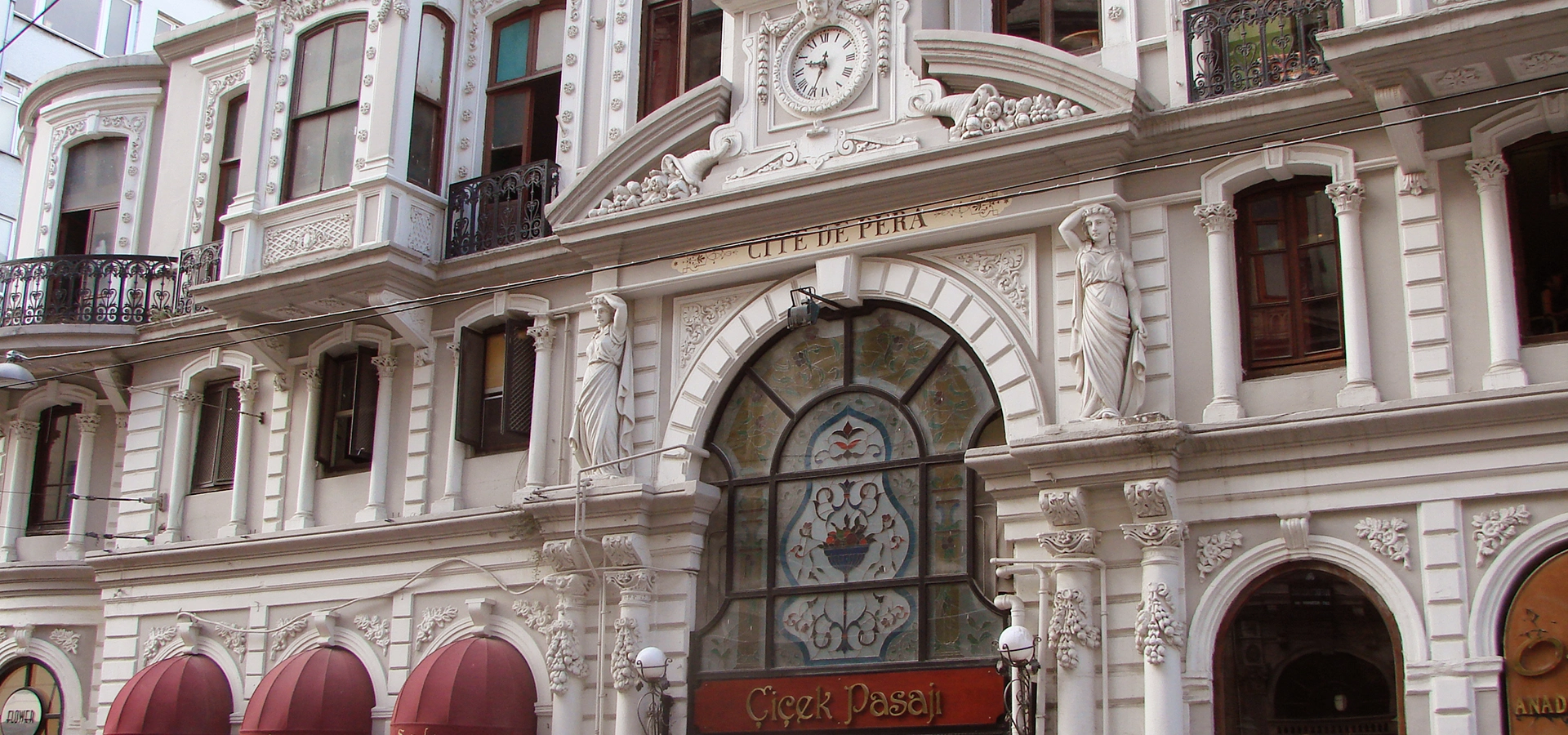
Cicek Pasaji Istanbul historic passage Beyoglu

Çiçek Pasajı

Continue into historic Beyoğlu to explore Cité de Péra, Naum Theatre memory, 19th-century passage architecture, flower-seller history and classic İstiklal Avenue culture.

Explore Çiçek Pasajı

Private Istanbul Tours

Build a private day around the parts of Istanbul that interest you most, from Byzantine churches and Ottoman mosques to imperial palaces, historic neighborhoods, food culture, Bosphorus viewpoints and lesser-visited heritage sites.