Private Tunca, Meriç & Karaağaç Heritage Tour
Ask us about a tailor-made route through Tunca Bridge, Meriç Bridge, Karaağaç, the old railway station, Lausanne Monument and Edirne's wider Ottoman and multicultural heritage.
Request a Custom Tour





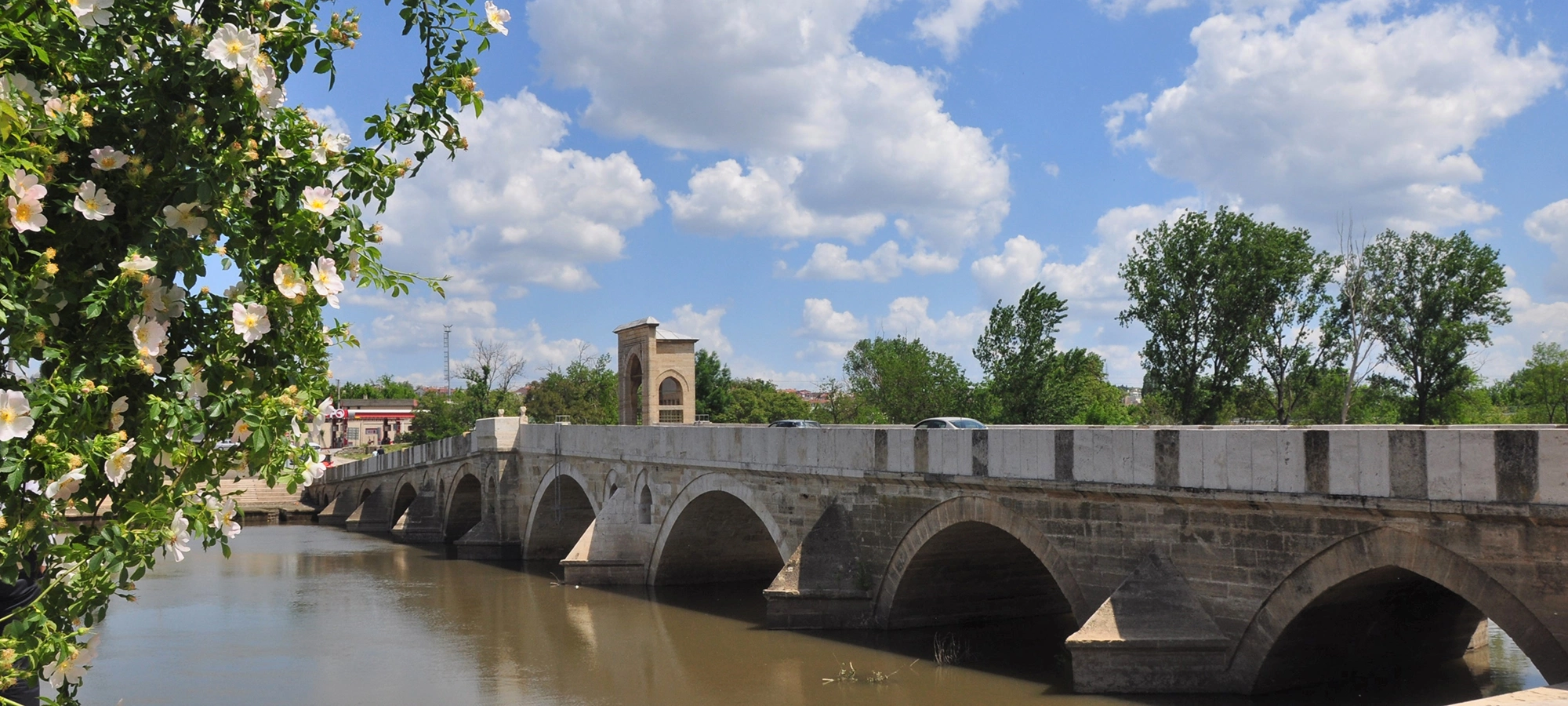
The Tunca Bridge in Edirne, officially known as the Ekmekçizade Ahmet Paşa Bridge, is one of the city's most attractive historic river crossings. Built across the Tunca River in the early 17th century, the bridge forms part of the traditional road leading from central Edirne toward Karaağaç and the later Meriç Bridge.
Construction is generally dated to 1608–1615. The patron was the powerful Ottoman statesman and finance official Ekmekçizade Ahmet Paşa, while the architect is identified by official cultural sources as Sedefkâr Mehmed Ağa—the imperial architect best known for the Sultan Ahmed Mosque, or Blue Mosque, in Istanbul.
The bridge belongs to the mature Ottoman tradition of stone bridge engineering. Its low, graceful profile, carefully shaped cut-stone masonry, rounded arches, upstream cutwaters and gently rising roadway were designed not only to carry travelers across the Tunca but also to survive a river whose floods repeatedly challenged Edirne's bridges.
Today, Tunca Bridge is especially rewarding because it can be experienced as part of a larger historic landscape. Continue across the river toward the Meriç Bridge, the old railway district of Karaağaç, or return toward Edirne's mosques, bazaars and museums for one of the city's best walking and photography routes.
The bridge was commissioned by Ekmekçizade Ahmet Paşa during the reign of Sultan Ahmed I.
Official cultural records attribute the bridge to the celebrated Ottoman imperial architect.
Rounded arches, flood-resistant piers and carefully shaped cutwaters reveal sophisticated Ottoman bridge design.
The bridge forms the first historic river crossing on the traditional route from central Edirne toward Karaağaç.
Essential information about the Ekmekçizade Ahmet Paşa Bridge, its Ottoman architecture and its place in Edirne's historic river route.
On the Tunca River along the historic Edirne–Karaağaç road, immediately west of the city center.
Open on Google MapsBuilt between 1608 and 1615 by order of Ekmekçizade Ahmet Paşa.
Official inventory records describe the bridge as approximately 136.3 metres long and 6.9 metres wide.
Sedefkâr Mehmed Ağa, the Ottoman chief architect associated with the Sultan Ahmed Mosque in Istanbul.
Cut-stone masonry with multiple rounded arches, stone parapets and flood-deflecting cutwaters.
Free. The bridge is part of the public road and riverside landscape.
Tunca Bridge is more than a river crossing—it is part of the historic infrastructure that connected Ottoman Edirne with its western suburbs, roads and ceremonial landscape.
Edirne grew around rivers. The Tunca, Meriç and Arda shaped the city's geography, agricultural life, roads, gardens and royal landscapes. Bridges were therefore essential pieces of urban infrastructure, allowing people, carts, animals, officials and military traffic to move between the monumental center and districts beyond the waterways.
Tunca Bridge is especially important because it belongs to the great building activity of the early 17th century. Its patron, Ekmekçizade Ahmet Paşa, also sponsored the monumental Ekmekçizade Kervansaray in Edirne, linking his name with both travel infrastructure and commercial architecture.
The bridge's attributed architect, Sedefkâr Mehmed Ağa, places it within the architectural world of the Ottoman court. Here, however, the challenge was very different from that of a mosque: the architect had to work with moving water, flood pressure, uneven riverbanks, foundations and the demands of constant traffic.
For modern visitors, Tunca Bridge also provides a natural introduction to the western side of Edirne. It can be combined with the Meriç Bridge and Karaağaç to follow one of the most atmospheric historic routes in the city.
Use our complete guide to places to visit in Edirne to connect Tunca Bridge with the city's mosques, palace remains, bazaars, museums and other historic bridges.
The bridge was commissioned by Ekmekçizade Ahmet Paşa, an important Ottoman statesman who served in high financial offices during the late 16th and early 17th centuries. Edirne was still one of the empire's most important cities, frequently used by the court and strategically positioned on the main routes between Istanbul and the Balkans.
Official cultural sources date construction to 1608–1615. The project is attributed to Sedefkâr Mehmed Ağa, one of the leading architects of the classical Ottoman tradition and the architect most famously associated with Istanbul's Sultan Ahmed Mosque.
The bridge carried the route westward from Edirne across the Tunca floodplain. Centuries later, the same general corridor became associated with the 19th-century Meriç Bridge and the railway-era district of Karaağaç.
Like many bridges over the rivers of Edirne, Tunca Bridge suffered repeated damage from floods. Sections of the historic structure and its inscription pavilion were damaged or lost, and modern interventions were introduced during earlier repairs.
A major restoration completed in 2008 sought to restore the bridge in accordance with its historical character. The bridge seen today therefore combines surviving Ottoman fabric with repaired and reconstructed elements created after centuries of flood damage and intervention.
The bridge takes its formal name from Ekmekçizade Ahmet Paşa, an Ottoman statesman whose career placed him close to the financial and administrative heart of the empire. He is particularly associated with major construction activity in Edirne during the reign of Sultan Ahmed I.
His patronage was not limited to the bridge. The Ekmekçizade Ahmet Paşa Kervansaray, built in Edirne in 1609, is another major monument connected with his name and the same architectural circle.
Together, a kervansaray and a bridge made practical sense. Both belonged to the infrastructure of movement: the bridge carried travelers across a difficult river environment, while the kervansaray served merchants, animals and long-distance traffic inside the city.
Ahmet Paşa held important financial and administrative responsibilities within the Ottoman government.
His name is associated with both the Tunca Bridge and the monumental Ekmekçizade Kervansaray.
The bridge belongs to the reign of Sultan Ahmed I, one of the defining periods of early 17th-century Ottoman architecture.
His projects strengthened Edirne's commercial, transport and architectural landscape.
Official cultural records identify Sedefkâr Mehmed Ağa as the architect of Tunca Bridge. He rose within the Ottoman architectural establishment and became one of the most important architects of the reign of Sultan Ahmed I.
His best-known work is the Sultan Ahmed Mosque in Istanbul, internationally famous as the Blue Mosque. The attribution of Tunca Bridge to the same architect demonstrates the wide range of responsibilities carried by the Ottoman chief architect's organization.
Designing a stone bridge required a different form of expertise from monumental religious architecture. The location of the piers, shape of the arches, treatment of the roadway and geometry of the cutwaters all had to respond to the river's current and flood behavior.
Tunca Bridge is therefore an excellent place to appreciate Ottoman architecture as engineering. Its beauty comes from proportion and construction logic rather than elaborate surface decoration.
Tunca Bridge is constructed primarily from carefully cut stone. Its roadway rises gently toward the central section before descending again, creating the elegant profile familiar from many Ottoman stone bridges.
The bridge is carried on a sequence of masonry piers and rounded arches. The central spans are larger and higher, allowing the main river flow to pass beneath the strongest part of the crossing, while smaller openings toward the ends respond to the changing floodplain.
The upstream faces of the piers use pointed or triangular cutwaters that divide the current and reduce direct water pressure. On the downstream side, the forms are more rounded and carefully shaped to help the water leave the structure smoothly.
Small relief or discharge openings in parts of the bridge help reduce pressure during high water. These details reveal an architecture designed through long experience with river behavior rather than through appearance alone.
Regularly dressed stone gives the bridge structural strength and its refined monumental appearance.
Multiple masonry arches distribute weight while allowing the Tunca and floodwater to pass beneath the roadway.
The larger middle spans create a gentle rise toward the center of the bridge.
Pointed projections on the piers divide the current and protect the structure from direct hydraulic force.
More rounded downstream pier projections help guide water away after it passes through the arches.
Low protective side walls frame the roadway and reinforce the bridge's strong horizontal silhouette.
The detailed Turkish cultural inventory records the bridge at approximately 136.30 metres long and 6.90 metres wide. These dimensions make it substantial enough for historic road traffic while still retaining a relatively intimate scale compared with the longer Meriç Bridge nearby.
Visitors may encounter different published numbers for the bridge's arches and piers. The official tourism description commonly identifies 11 piers and 10 arches, while the more detailed cultural inventory describes 12 openings or “göz”, including smaller end openings that no longer carry the main river flow.
The difference is best understood in the context of repeated flood damage, rebuilding, restoration and the way different records count main arches versus secondary or end openings. For a visitor, the important point is that Tunca Bridge is a multi-span Ottoman stone bridge whose individual openings vary in size.
The Tunca can appear calm, but Edirne's river system is capable of severe seasonal flooding. Snowmelt and heavy rainfall across the wider drainage basin can raise water levels dramatically, placing enormous pressure on bridge foundations and piers.
Ottoman bridge builders responded with several practical techniques. The piers were kept relatively narrow in the direction of the current, while upstream cutwaters divided incoming water. Openings above or around selected piers helped release additional pressure when the river rose.
The varied size of the arches also mattered. Larger central openings allowed the main flow to pass, while additional side openings became useful during high-water events when the river spread beyond its ordinary channel.
Despite these precautions, floods repeatedly damaged Tunca Bridge. That history is not evidence of poor engineering; rather, it demonstrates the extraordinary challenge of keeping a major stone crossing functioning for more than four centuries in a dynamic floodplain.
Pointed upstream pier faces split the force of incoming water.
Numerous spans distribute water across a broad part of the floodplain.
Smaller discharge openings help reduce hydraulic pressure during high water.
The main channel receives the largest openings where the greatest volume of water normally passes.
Substantial stone construction gives the bridge the mass needed to resist current and impact.
Survival depended not only on original design but also on centuries of maintenance and restoration.
Historic descriptions of Tunca Bridge refer to a central inscription pavilion or kitabe köşkü associated with the bridge. Such structures transformed an engineering work into a commemorative monument by recording patronage, construction and imperial memory.
The pavilion did not survive unchanged. Floods damaged both sections of the bridge and the central inscription structure, and later repairs introduced modern materials.
The 2008 restoration addressed these interventions and aimed to recover the bridge's historic visual character. The present appearance should therefore be understood as the result of both Ottoman construction and modern conservation.
Part of Tunca Bridge's appeal comes from its setting. Unlike a bridge enclosed by dense modern construction, it still reads as part of a broad river landscape where water, trees, floodplain vegetation and long views shape the experience.
The crossing also marks a transition. Behind you lies the historic center of Edirne; ahead lies the greener western corridor leading toward the Meriç, Karaağaç and the former railway zone.
This relationship makes the bridge especially attractive at sunrise, late afternoon and around sunset, when low light emphasizes the arches and reflects from the river surface.
During periods of high water, the setting can change dramatically. River levels may cover parts of the floodplain and access conditions can be affected, so visitors should respect temporary barriers and local warnings.
Visitors often encounter Tunca Bridge and Meriç Bridge on the same route and may initially confuse them. They cross different rivers and belong to different periods of Ottoman architecture.
Tunca Bridge is the older crossing. It was built in 1608–1615 under Ekmekçizade Ahmet Paşa and belongs to the age of Sultan Ahmed I and classical Ottoman stone engineering.
The Meriç Bridge, also called the Mecidiye Bridge, lies farther west and was built in the 19th century during the reign of Sultan Abdülmecid. It is longer, crosses the broader Meriç River and belongs to a very different phase of Ottoman history.
Early 17th century; commissioned by Ekmekçizade Ahmet Paşa; associated with Sedefkâr Mehmed Ağa.
19th century; built under Sultan Abdülmecid; the major monumental crossing immediately west of Tunca Bridge.
The first historic river crossed when leaving central Edirne toward Karaağaç.
The larger second river crossing before reaching the Karaağaç district.
Walk or drive the complete sequence and compare four centuries of bridge architecture in one short route.
Tunca feels more intimate; Meriç offers broader river panoramas and dramatic sunset views.
The most rewarding way to experience Tunca Bridge is not as an isolated monument but as the beginning of a historic westward route.
Start on the Edirne side and cross the Tunca Bridge slowly, looking back toward the city and down toward the individual arches and cutwaters.
Continue west across the river landscape toward the Meriç Bridge. The contrast between the smaller 17th-century crossing and the broad 19th-century bridge is immediately visible.
After crossing the Meriç, continue toward Karaağaç, where the historic railway station, Lausanne Monument and tree-lined avenues introduce another completely different chapter of Edirne's story.
Tunca Bridge is one of Edirne's most attractive locations for landscape and architectural photography. Its low stone profile works especially well when seen together with the river, trees and open sky.
Calmer light and fewer vehicles make it easier to photograph the roadway and architectural details.
Warm angled light strengthens the texture of the cut stone and creates attractive reflections.
Move to a safe riverside viewpoint to capture the rhythm of multiple arches rather than photographing only from the roadway.
Use closer compositions for the masonry joints, cutwaters, parapets and variations between the spans.
Flood conditions can create dramatic photographs, but never cross barriers or approach unstable riverbanks.
Photograph both Tunca and Meriç Bridges to build a visual story of Edirne's historic western route.
A peaceful time for walking and photographing the bridge with minimal traffic.
Excellent for warm stone colors and continuing toward Meriç Bridge before sunset.
Green riverbanks and mild temperatures make the full Tunca–Meriç–Karaağaç walk particularly pleasant.
Soft light, cooler weather and changing foliage create an atmospheric riverside setting.
Visit early or late in the day; exposed parts of the route can become hot around midday.
Check local conditions after prolonged rain or snowmelt because high water can affect riverside access.
Enough for a quick crossing, basic photographs and a look at the arches and river.
Better for architectural details, riverside views and photography from several angles.
Combine Tunca Bridge with the nearby Meriç Bridge and enjoy the river landscape between them.
Continue all the way to Karaağaç, the old railway station and Lausanne Monument.
The bridge is not an isolated archaeological monument; vehicles and local traffic may use the route.
Stay aware of the narrow roadway and use pedestrian space carefully when stopping for photographs.
The bridge walls are historic fabric and the river below can be dangerous.
After heavy rain, avoid low riverbanks and respect temporary closures or safety barriers.
The neighboring Meriç Bridge provides the strongest architectural comparison and is only a short continuation west.
The old railway district turns a short bridge stop into one of Edirne's most varied half-day routes.
The engineering story is easiest to understand from the side, where arches, cutwaters and changing span sizes are visible.
Avoid touching, scratching or placing objects on historic stonework and inscription elements.
The bridge and the road toward Karaağaç are generally on relatively level terrain, but accessibility conditions depend on traffic, pavement width and the condition of pedestrian surfaces.
The bridge rises toward the center but does not involve steep climbing.
Pedestrian width can feel limited, especially when vehicles are passing.
The roadway-level crossing is physically possible in many conditions, but users should assess traffic and curb transitions carefully.
Some informal riverbank positions may involve uneven ground and are less accessible than the bridge itself.
The bridge can be included easily in a driving route between central Edirne and Karaağaç.
A slower pace makes it easier to negotiate the historic road environment safely.
Tunca Bridge lies west of central Edirne on the traditional road leading toward the Meriç River and Karaağaç. It is easy to include in a walking, taxi or private-vehicle route from the historic center.
Walk west from central Edirne toward the river corridor and continue onto the Karaağaç road.
The bridge is close enough to combine with central sights before continuing toward Meriç and Karaağaç.
Ask for “Tunca Köprüsü” or “Ekmekçizade Ahmet Paşa Köprüsü” on the Karaağaç road.
Use the Edirne–Karaağaç road; Tunca Bridge is the first historic bridge before Meriç Bridge.
The route toward Karaağaç can be enjoyable by bicycle, but riders should remain cautious around motor traffic and bridge approaches.
A guided route can connect the bridge's engineering with Edirne's Ottoman urban development and river history.
Tunca Bridge sits on one of Edirne's most rewarding heritage routes. Use our complete Edirne visitor guide to connect the bridge with the wider city.
Continue west to the monumental 19th-century Mecidiye Bridge and compare two very different periods of Ottoman bridge design.
Explore Edirne's railway-era district, historic station architecture and Lausanne Monument beyond the two river crossings.
Return toward Edirne's old urban core for timber mansions, late Ottoman façades and multicultural street history.
Combine riverside engineering with the Bedesten, Ali Paşa Bazaar and the commercial world of the Ottoman city.
Explore the remains of the Ottoman imperial palace in the wider Tunca river landscape at Sarayiçi.
Continue to Selimiye, Üç Şerefeli, museums, mosques and other monuments of the former Ottoman capital.
For visitors interested in architecture, photography and urban history, the strongest combination is Tunca Bridge + Meriç Bridge + Karaağaç.
Tunca Bridge introduces the engineering world of the early 17th-century Ottoman Empire. Meriç Bridge continues the story into the reform-era 19th century, while Karaağaç adds railway architecture, border history and the memory of the Treaty of Lausanne.
Best for classical Ottoman bridge engineering, cut-stone masonry and the architectural world of Sedefkâr Mehmed Ağa.
Best for broad river panoramas, 19th-century Ottoman architecture and sunset photography.
Best for the old railway station, Lausanne Monument, tree-lined avenues and border-city history.
Allow around 2–3 hours, or half a day if you stop for cafés, museums and extensive photography.
Tunca Bridge is on the Tunca River in Edirne, along the historic road from the city center toward the Meriç River and Karaağaç.
Its formal historical name is the Ekmekçizade Ahmet Paşa Bridge, after the Ottoman statesman who commissioned it.
Official cultural sources date its construction to 1608–1615, during the reign of Sultan Ahmed I.
The bridge was commissioned by Ekmekçizade Ahmet Paşa.
Official cultural records identify Sedefkâr Mehmed Ağa, the celebrated Ottoman imperial architect, as its architect.
Yes. He is best known as the architect of the Sultan Ahmed Mosque in Istanbul, commonly called the Blue Mosque.
The detailed cultural inventory records a length of approximately 136.30 metres.
The cultural inventory gives a width of approximately 6.90 metres.
Published official records use slightly different counting methods. The tourism description refers to 10 arches on 11 piers, while the detailed cultural inventory describes 12 openings, including smaller end spans.
The bridge has experienced centuries of flood damage, repair and reconstruction, and records may count principal river arches differently from smaller terminal or flood-relief openings.
It is a cut-stone masonry bridge with stone arches, piers, cutwaters and parapets.
Yes. Flooding damaged parts of the bridge and its central inscription pavilion over time, leading to repairs and reconstruction.
A major restoration was completed in 2008 with the aim of returning the bridge closer to its historical appearance.
Yes. It is an outdoor public bridge and there is no entrance fee.
Yes, but it remains part of an active road environment, so pedestrians should watch carefully for traffic and use available walking space.
No. Tunca Bridge crosses the Tunca River and dates from the early 17th century. Meriç Bridge crosses the larger Meriç River farther west and was built in the 19th century.
Continue across the Meriç Bridge to Karaağaç for the old railway station, Lausanne Monument and one of Edirne's best historic walking routes.
Early morning and late afternoon usually provide the most attractive light, while the bridge can also be combined with sunset at Meriç Bridge.
Allow 30–45 minutes for the bridge itself or around 2–3 hours for Tunca Bridge, Meriç Bridge and Karaağaç together.
Do not scratch, carve, paint or attach anything to the bridge's historic masonry.
Climbing historic side walls damages the monument and creates a serious fall risk.
Temporary closures and river warnings are there for safety; never bypass them for photographs.
Carry litter away and never throw food packaging, bottles or other waste into the Tunca.
Do not stand in traffic lanes or step backward into the roadway while composing photographs.
Restored sections are part of the bridge's long survival story; conservation keeps the monument usable for future generations.
Discover Edirne through its Ottoman bridges, riverside landscapes, imperial monuments, historic neighborhoods, bazaars and museums with a private route designed around your interests.
Follow the historic road from central Edirne across Tunca Bridge and Meriç Bridge to Karaağaç, combining Ottoman engineering, river landscapes, railway heritage, photography and the city's remarkable border history.
Ask us about a tailor-made route through Tunca Bridge, Meriç Bridge, Karaağaç, the old railway station, Lausanne Monument and Edirne's wider Ottoman and multicultural heritage.
Request a Custom Tour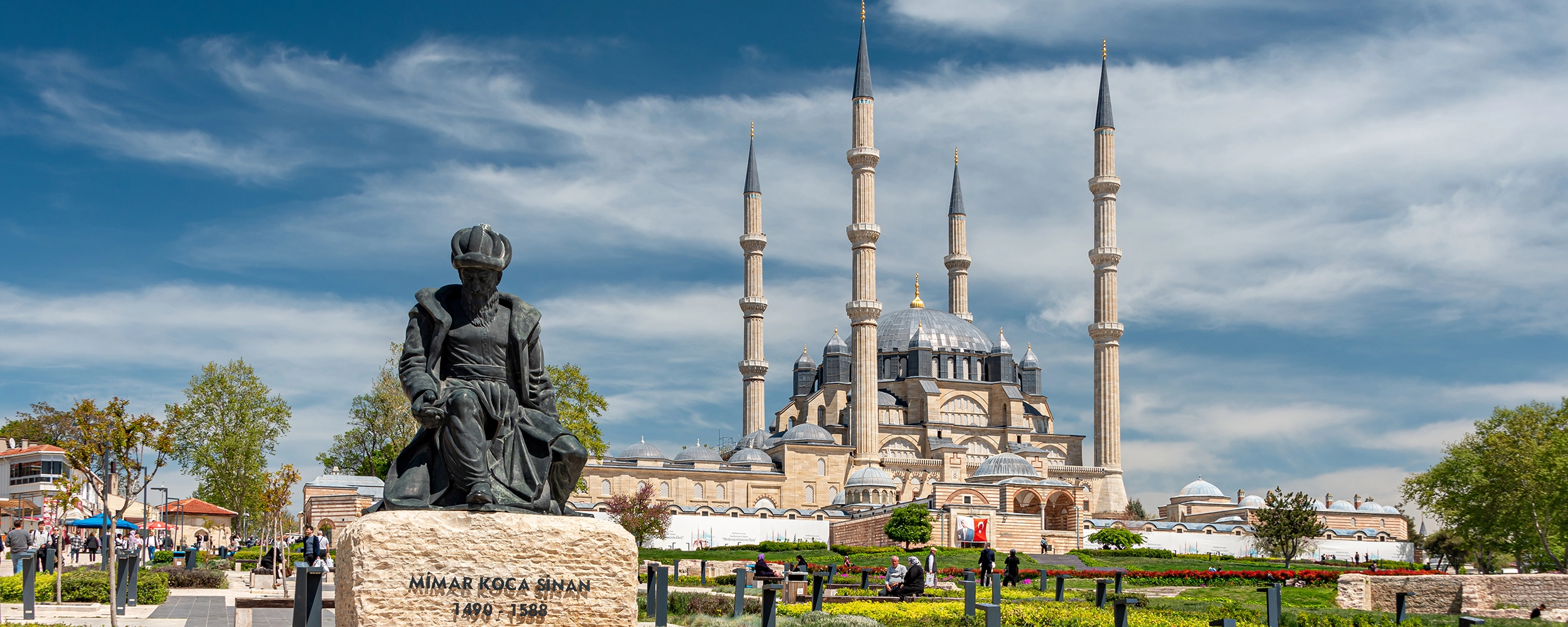
Discover the former Ottoman capital through imperial mosques, historic bridges, traditional neighborhoods, covered bazaars, museums, palace remains and the multicultural history of Thrace.
View Edirne GuideConnect Tunca Bridge with the neighboring Meriç crossing, Karaağaç railway heritage, the Ottoman palace landscape and the historic center of Edirne.
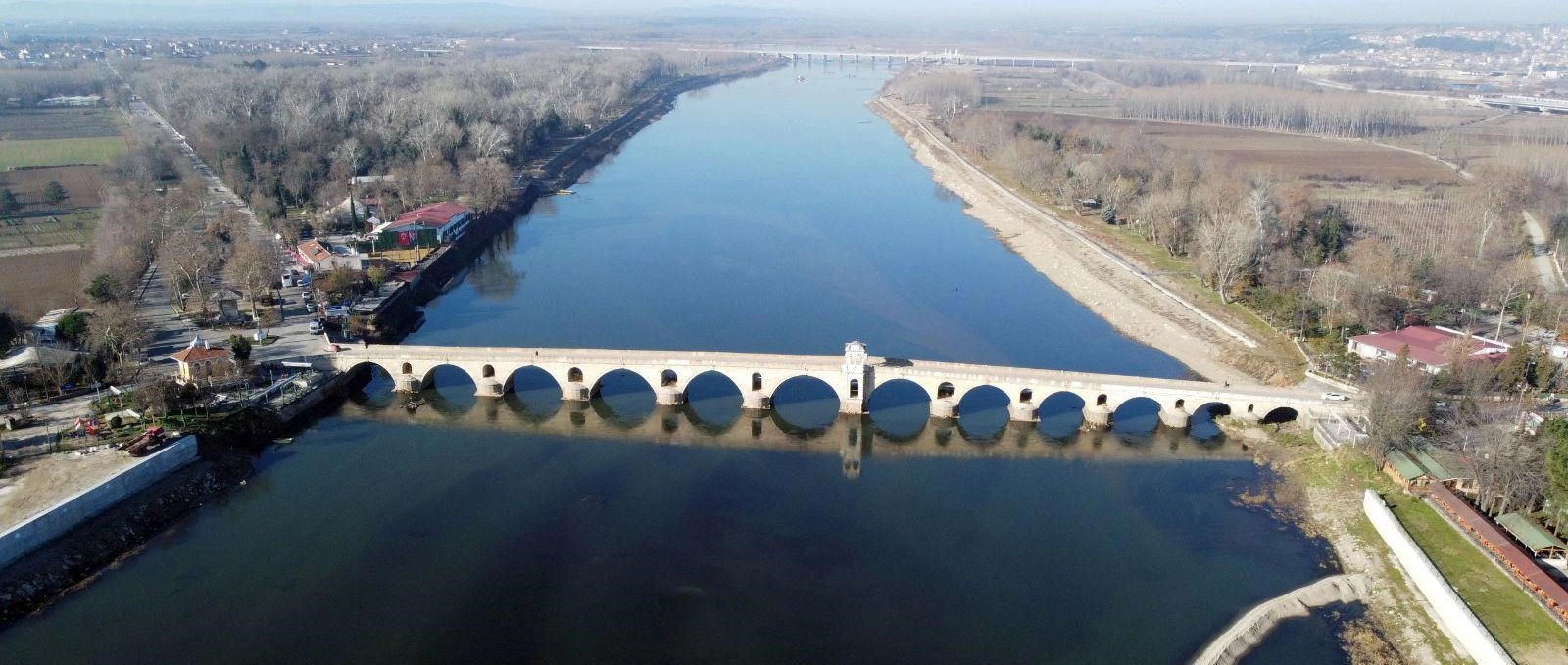
Continue west to the longer 19th-century Ottoman bridge and compare its broad river crossing with the earlier Tunca Bridge.
Explore Meriç Bridge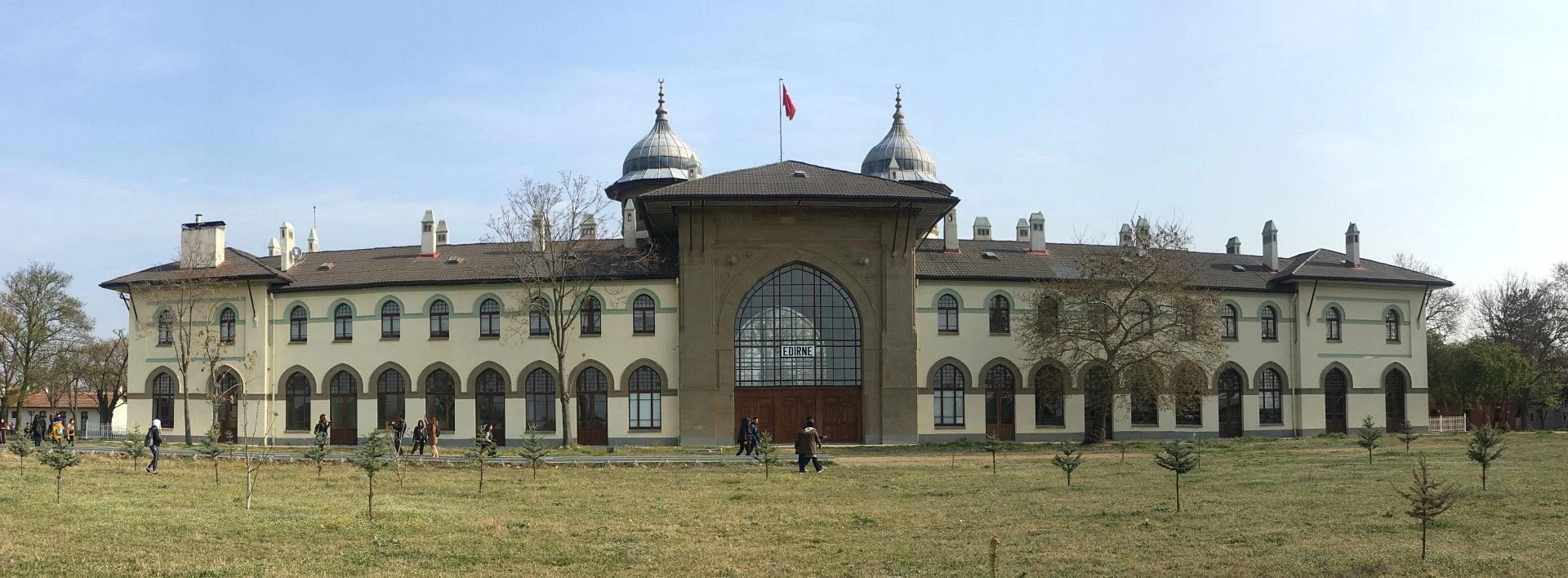
Follow the road beyond both bridges into Edirne's atmospheric railway district with its historic station and Lausanne Monument.
Explore Karaağaç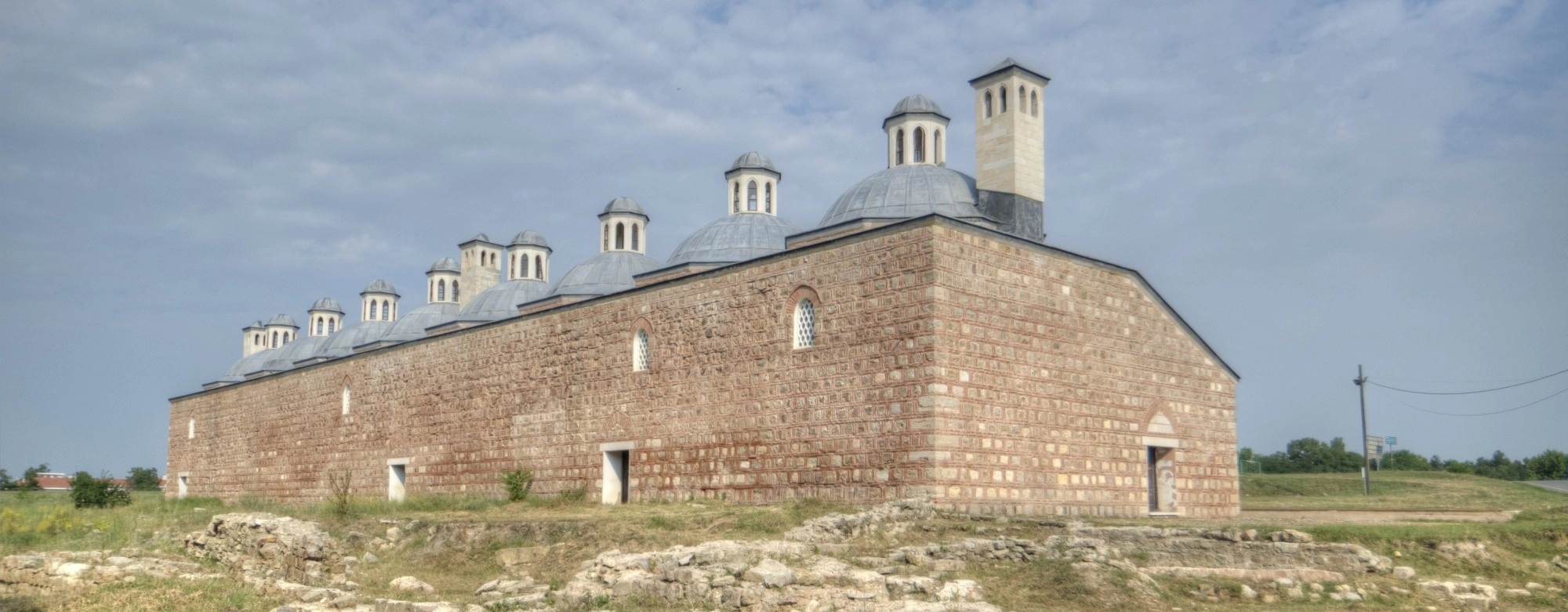
Explore the Ottoman imperial palace landscape at Sarayiçi and discover another major chapter in Edirne's relationship with the Tunca River.
Explore Edirne Palace