Private Byzantine Istanbul Tour
Ask us about a tailor-made route focused on St. Polyeuktos, Valens Aqueduct, Zeyrek, Byzantine archaeology, architecture and the hidden layers of Constantinople.
Request a Custom Tour





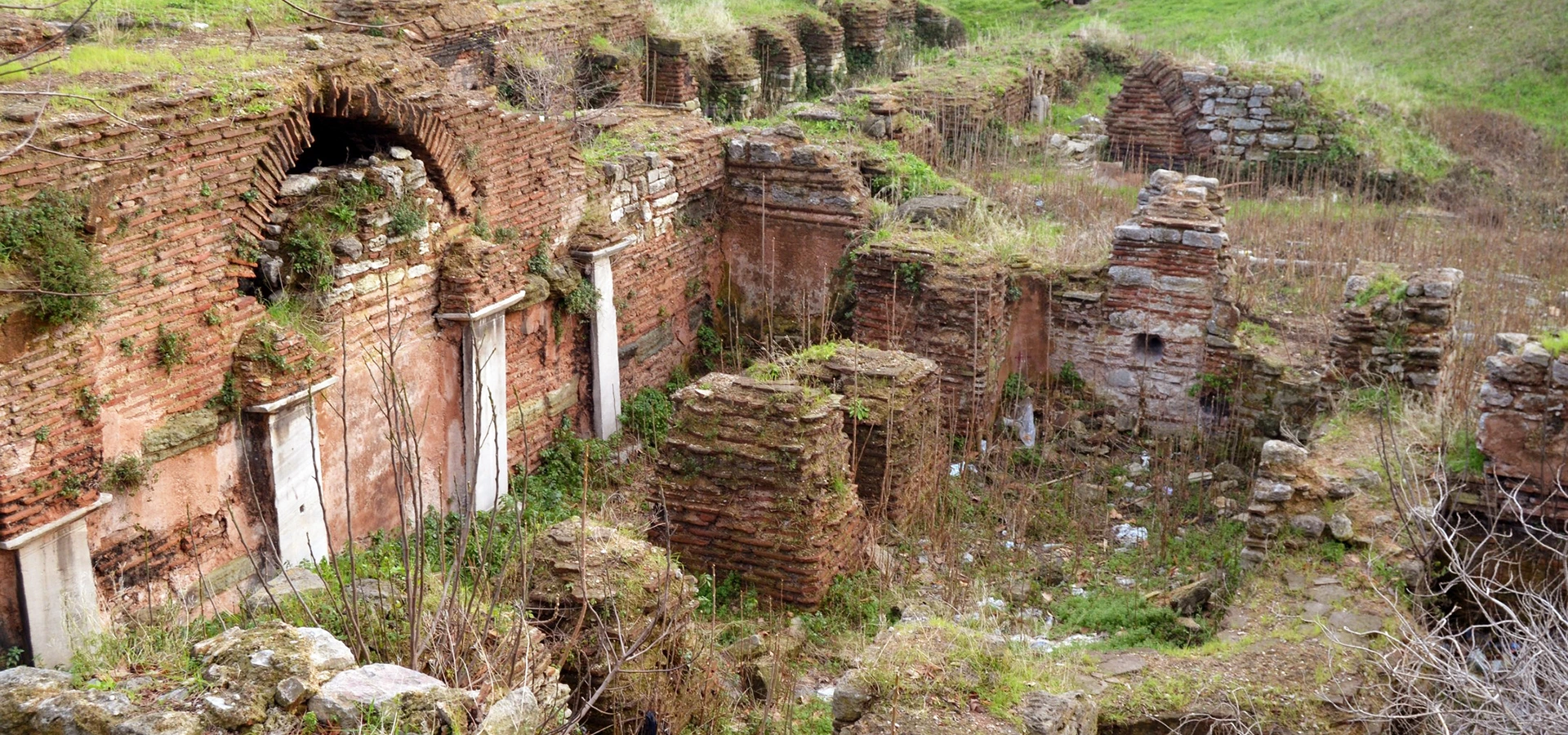
The ruins of the Church of St. Polyeuktos, also written as Hagios Polyeuktos, Ayios Polieuktos or Saint Polyeuctus, survive in Istanbul's Saraçhane district. Although only the foundations, vaults and scattered architectural fragments remain, the church was one of the most ambitious monuments built in Constantinople before Hagia Sophia.
The sanctuary was commissioned by the aristocratic princess Anicia Juliana and constructed in the early 6th century, usually dated to AD 524–527. Juliana belonged to one of the most distinguished families of the late Roman world and used the church to proclaim her ancestry, wealth, religious devotion and cultural authority.
St. Polyeuktos was celebrated for rich marble carving, colored stone, mosaics, glass, elaborate vegetal ornament and a monumental Greek inscription praising its founder. Its design is still debated, but the surviving remains reveal a building of exceptional scale and architectural experimentation.
Rediscovered during road works in the 20th century, the site is now part of the Saraçhane Archaeological Park. Modern excavations and conservation work have transformed the ruins into one of Istanbul's most interesting places for understanding how archaeology can recover a building that had almost disappeared from the city.
Explore a major church created in the generation immediately before Justinian's Hagia Sophia.
Meet one of the wealthiest and most powerful aristocratic women of Late Antiquity.
Discover extraordinary marble carving, mosaics, inscriptions and architectural decoration.
See an urban excavation site where Constantinople continues to emerge beneath modern Istanbul.
Essential information for visiting the ruins of one of early Byzantine Constantinople's most remarkable churches.
Saraçhane Archaeological Park, İskender Paşa, Fatih, Istanbul.
Open on Google MapsEarly 6th century AD, conventionally dated to 524–527.
Anicia Juliana, a powerful aristocrat descended from late Roman imperial families.
Saint Polyeuktos, a Roman-era Christian martyr associated with Melitene.
Identified during 20th-century construction and excavated systematically in the 1960s.
Allow around 45–75 minutes for the archaeological park and interpretation.
The ruins preserve evidence of a moment when Constantinople's elite competed through architecture, religious patronage and artistic innovation.
When St. Polyeuktos was completed, Constantinople was already the political center of the Eastern Roman Empire, but the enormous churches associated with Emperor Justinian had not yet transformed the city. Juliana's foundation therefore belongs to a crucial transitional moment in Byzantine architecture.
The church appears to have been exceptionally large for a private aristocratic foundation. Reconstructions based on the excavated remains suggest a nearly square monumental complex approximately fifty meters across, preceded by an atrium and raised over substantial vaulted substructures.
Its decoration was equally ambitious. Archaeologists recovered richly carved marble architectural members, pieces of mosaic, colored stone, glass and fragments of a long dedicatory inscription. The visual language combines classical Mediterranean traditions with forms that scholars have compared with eastern Mediterranean and Sasanian-inspired ornament.
St. Polyeuktos is also important because its patron was a woman operating at the highest level of late Roman aristocratic society. The building functioned not only as a church but as a statement of lineage, piety and prestige in a city dominated by imperial competition.
For travelers using our guide to places to visit in Istanbul, the site offers something very different from a standing monument: the opportunity to read Constantinople through foundations, excavated spaces, reused stone and archaeological evidence.
The origins of the sanctuary reach back before Juliana's monumental reconstruction. Written sources associate an earlier church dedicated to Saint Polyeuktos with members of her imperial family, showing that the cult and the family's patronage had deeper roots in Constantinople.
Between roughly AD 524 and 527, Anicia Juliana replaced or monumentalized the earlier sanctuary with a far more ambitious church. The project was completed at the end of the reign of Emperor Justin I and immediately before the accession of Justinian I.
The church stood close to one of Constantinople's major ceremonial routes, between the area of the Forum of Theodosius and the Church of the Holy Apostles. Its position placed it within an important religious, residential and processional landscape of the capital.
Byzantine use continued for centuries, but the building gradually declined. Municipal research notes that the vaulted substructures were partly filled by the 7th century, figurative decoration suffered during the Iconoclastic period, and the church is thought to have remained in use until approximately the second half of the 10th century.
By the early 11th century, St. Polyeuktos was largely ruinous. Architectural material was later removed and reused, especially during and after the Latin occupation of Constantinople following the Fourth Crusade of 1204. Some carved elements associated with the church eventually reached Venice and other Mediterranean collections.
The location was eventually forgotten beneath later urban occupation. Its rediscovery in the 20th century created one of the most important episodes in the archaeology of Byzantine Istanbul.
An earlier sanctuary connected with Juliana's family establishes the cult of St. Polyeuktos in Constantinople.
Anicia Juliana creates the monumental church whose remains survive today.
Parts of the vaulted substructure were filled, indicating significant changes to the complex.
The church declines and eventually becomes a ruin.
Architectural pieces are removed and dispersed during the centuries following the Fourth Crusade.
Modern construction leads to identification and major archaeological excavation of the church.
Saint Polyeuktos was an early Christian martyr associated with Melitene, the ancient city near modern Malatya in eastern Türkiye. Christian tradition remembers him as a Roman soldier who accepted Christianity and was executed during the persecutions of the 3rd century.
The precise historical details of his martyrdom are difficult to reconstruct because later hagiographic accounts contain legendary elements and differing chronological references. Nevertheless, his cult became established in the eastern Christian world, and churches dedicated to him existed long before Juliana's great Constantinopolitan foundation.
For Juliana, dedicating such an extraordinary monument to the saint linked aristocratic patronage with an established tradition of Christian martyrdom. The result was a sanctuary whose spiritual dedication and political symbolism were inseparable.
Anicia Juliana belonged to the celebrated Anicii, one of the most powerful aristocratic families of Late Antiquity. Through her parents and ancestors she could claim descent from emperors of both the eastern and western Roman worlds. Her family background gave the church an unmistakably political dimension.
The monumental inscription discovered in fragments at the site praises Juliana's ancestry and generosity. The text was preserved independently in the Greek Anthology, allowing archaeologists to connect the excavated ruins with the famous lost church.
One of the inscription's most striking themes compares Juliana's achievement with the biblical Temple of Solomon. Rather than presenting herself merely as a donor, the text places her among the great builders of sacred history.
The church therefore reveals how architecture could communicate status in Constantinople. In a capital where emperors displayed power through palaces, columns, forums and churches, a private aristocrat created a religious monument grand enough to compete visually and ideologically with imperial patronage.
Juliana's ancestry connected her to late Roman imperial dynasties and gave her unusual social prestige.
The church advertised devotion through one of the most lavish religious foundations of its generation.
A long inscription celebrated Juliana, her family and the magnificence of the sanctuary.
The scale of the church placed an aristocratic foundation within the visual language of imperial Constantinople.
Because the upper structure disappeared centuries ago, the original appearance of St. Polyeuktos remains debated. Archaeologists reconstruct the building from surviving foundations, vaulted substructures, architectural fragments, brick evidence and the dedicatory inscription.
The church occupied a large, nearly square footprint and stood on an elevated platform supported by substantial vaults. A broad atrium preceded the main church, while the interior was organized around a central nave and adjoining spaces. The surviving substructures show that the vanished superstructure must have been carefully engineered and extremely ambitious.
Scholars have proposed different reconstructions for the roof and central space. Some interpretations imagine a monumental domed arrangement that anticipated later 6th-century Byzantine architecture, while others caution that the archaeological evidence does not permit a completely secure reconstruction.
This uncertainty makes the site especially interesting. Visitors are not looking at a perfectly preserved building but at archaeological evidence that continues to shape scholarly debate about the development of Byzantine church architecture immediately before Hagia Sophia.
Large vaulted substructures supported the monumental church above the surrounding ground level.
An entrance courtyard created a ceremonial approach before worshippers reached the church itself.
The nave and adjoining spaces were designed on a scale unusual for a private aristocratic foundation.
Columns, capitals, screens, cornices and carved panels created a richly articulated interior.
Gold, silver and colored glass tesserae indicate brilliant wall and vault decoration.
The exact superstructure is not known, and reconstructions should be treated as scholarly interpretations.
The excavated decoration is among the most memorable aspects of the church. Fragments display deeply carved vines, leaves, palmettes, geometric patterns, animals and other motifs, often treated with a dramatic undercutting that created strong contrasts of light and shadow.
Some carved surfaces were enhanced with colored glass, stone or other inlays. The effect would have been far richer than the pale marble fragments suggest today. Mosaic tesserae also indicate extensive use of shimmering surfaces in the interior.
The decorative vocabulary is especially important to art historians because it does not simply repeat older Roman forms. It transforms classical ornament and introduces motifs that reflect the wider artistic connections of the 6th-century Mediterranean and Near East.
One of the most remarkable discoveries at Saraçhane was a series of marble fragments carrying Greek text. The words matched a long poem already known through the Greek Anthology, confirming that the excavated building was the lost Church of St. Polyeuktos.
The inscription praised Anicia Juliana's ancestry, generosity and religious devotion. It also described the church using language of architectural magnificence, turning the building itself into a public statement about its patron.
For archaeologists, the inscription was invaluable because it connected literary evidence with physical remains. For visitors, it provides a rare glimpse into the voice of 6th-century Constantinople: the monument did not merely impress through size and decoration—it explicitly told viewers how they were expected to understand it.
The inscribed fragments helped identify the ruins as the famous Church of St. Polyeuktos.
The poem celebrates Anicia Juliana as a monumental Christian builder.
Imperial ancestry is emphasized as part of the church's ideological message.
The language invokes the Temple of Solomon as a benchmark for sacred architectural greatness.
The church did not vanish in a single catastrophe. Instead, centuries of structural change, damage, abandonment and reuse gradually reduced the monument. By the medieval period, valuable marble components became building material for later projects.
The Fourth Crusade and the Latin occupation of Constantinople after 1204 accelerated the dispersal of many Byzantine treasures. Architectural elements associated with St. Polyeuktos were carried west, and pieces connected with the church can still be studied in Venice and other European collections.
The most famous examples are sculptural elements reused around St. Mark's Basilica in Venice. Their journey demonstrates how the material history of Constantinople spread far beyond the city after the crusader conquest.
Back in Istanbul, later buildings and streets covered the abandoned site. By the modern period, the exact location of one of Constantinople's greatest churches had effectively been forgotten.
The modern rediscovery of St. Polyeuktos began during major road construction in Saraçhane around 1960. Workers encountered vaulted masonry and carved marble fragments, including inscribed pieces that could be connected with the famous Byzantine foundation.
Systematic excavation followed under archaeologists Nezih Fıratlı of the Istanbul Archaeological Museums and R. Martin Harrison, with research associated with Dumbarton Oaks. Major campaigns during the 1960s exposed the foundations, substructures and large quantities of architectural sculpture.
The excavation transformed understanding of early Byzantine architecture. A church known mainly from texts could now be studied archaeologically, while its sculptural fragments revealed an unexpectedly rich decorative program.
Road construction reveals important Byzantine remains and inscribed architectural pieces.
Major excavation campaigns investigate the church and its surrounding archaeological levels.
The monumental inscription links the excavated structure securely with St. Polyeuktos.
Excavation studies established the site as a major reference point for Byzantine archaeology.
After decades in which the exposed ruins received limited public attention, Istanbul Metropolitan Municipality heritage teams began a new phase of work at the site in the early 2020s. Excavation, cleaning, conservation and landscape improvements were combined with the creation of the Saraçhane Archaeopark.
The modern project is especially interesting because visitors can understand archaeology as an ongoing process rather than a finished display. The site has yielded additional architectural evidence and finds, while the associated İBB Kazı Evi supports research and public engagement with urban archaeology.
Recent work has also drawn attention to the church's underground and vaulted spaces, including passages and masonry that survived later earthquakes even after much of the superstructure disappeared.
St. Polyeuktos is not a standing Byzantine church like Hagia Sophia or Little Hagia Sophia. Its appeal lies in learning to interpret the remains: foundations, vaults, walls, excavated spaces, architectural fragments and the relationship between the ancient monument and the modern city.
Study the massive lower-level construction that once supported the monumental church above.
Trace the scale and approximate organization of a building that has otherwise disappeared.
Look for surviving architectural fragments and imagine the much richer decoration recovered in excavation.
Notice how Byzantine remains interact with later occupation, modern roads and the surrounding urban landscape.
The excavation house and library reflect the site's role in public archaeology and research.
Use the park to understand the ancient route between major monuments of Byzantine Constantinople.
Natural light makes foundations, masonry and carved details much easier to understand and photograph.
This is a site where interpretation matters more than rushing from one viewpoint to another.
The park and surrounding streets are easy to combine with a longer walking route through Fatih.
Excavation trenches, vaults and unstable masonry may be restricted for conservation and safety.
Valens Aqueduct, Zeyrek and Süleymaniye turn a short archaeological visit into an excellent half-day route.
As an active archaeological park, arrangements can change with excavation, events or conservation work.
Begin at St. Polyeuktos Church in Saraçhane, where the excavated foundations introduce the world of 6th-century Constantinople and the remarkable patronage of Anicia Juliana. After exploring the archaeological park, walk toward the monumental Valens Aqueduct, one of the most impressive surviving examples of Roman infrastructure in central Istanbul.
Continue uphill toward Zeyrek Mosque, the former Monastery of Christ Pantokrator. This important Middle Byzantine complex provides a fascinating contrast with St. Polyeuktos, showing how the architecture and religious landscape of Constantinople developed across the centuries.
If time and energy remain, continue toward Süleymaniye Mosque and its surrounding historic district. The route moves naturally from Roman engineering and Byzantine churches to Ottoman imperial architecture, ending with panoramic views across the Golden Horn and one of Istanbul's richest layered historic neighborhoods.
The ruins stand within Saraçhane Archaeological Park in Fatih, opposite the Istanbul Metropolitan Municipality complex and close to Atatürk Boulevard. The archaeological park is presented as a public heritage and research space rather than a conventional enclosed museum.
As checked in August 2026, Istanbul Metropolitan Municipality's current İBB Kazı Evi page confirms that visitors can experience the archaeological work at Saraçhane and gives the address as İskender Paşa, Kavalalı Sokak, Fatih. However, the current official page does not publish a specific fixed timetable for the Kazı Evi or archaeological park.
Because excavation, conservation, public programs and site management can affect access, check current municipal information shortly before your visit rather than relying on an old timetable from a travel blog.
Mild temperatures make it easy to combine the archaeological park with a longer Fatih walking route.
Comfortable weather and softer light are excellent for architecture and urban photography.
Visit earlier in the day before strong heat makes exposed archaeological areas uncomfortable.
The site is often quiet, although rain can make outdoor archaeology less comfortable.
A calmer atmosphere can make it easier to study the remains and surrounding historic district.
Morning and late-afternoon light help reveal the depth of masonry, vaults and carved stone.
Enough for a quick look at the main remains if you already know the site's history.
The best range for a first visit, allowing time for interpretation and photography.
Add the nearby Valens Aqueduct and a short walk through Saraçhane.
Combine St. Polyeuktos with Valens Aqueduct, Zeyrek and Süleymaniye.
The site rewards a documentary style of photography. Wide views show how the archaeological remains sit within modern Saraçhane, while close details reveal brickwork, stone construction, vaults and carved architectural pieces.
Include modern Istanbul around the ruins to emphasize the survival of ancient Constantinople beneath the city.
Use angled light to reveal the depth and construction of the surviving substructures.
Look for floral ornament, moldings and fragments that hint at the church's vanished decoration.
Frame archaeology together with roads, parks and later buildings for a strong sense of historical continuity.
Never cross barriers or enter trenches to obtain a closer photograph.
Temporary research areas may have specific photography or access rules.
The archaeological park is located in a central urban area, but access within archaeological sites can change as trenches, conservation zones and visitor routes are adjusted. Street-level views are generally easier than close access to every surviving feature.
The site is surrounded by paved streets and is easier to reach than many remote archaeological ruins.
Expect archaeological ground, changes in level and areas that are not suitable for all mobility needs.
Check current site arrangements directly because active works can alter accessible routes.
Saraçhane and surrounding districts have cafés, public spaces and transport connections.
St. Polyeuktos stands in Saraçhane, Fatih, close to Atatürk Boulevard and the Valens Aqueduct. Its central position makes it straightforward to combine with other monuments of the Historic Peninsula.
Use the T1 tram toward Laleli–Üniversite or Aksaray and continue by walking, bus or a short taxi ride.
Municipal buses and taxis travel toward Saraçhane; walking is possible for visitors exploring the Historic Peninsula.
Take the M2 metro toward Vezneciler and continue on foot through the historic university and Saraçhane area.
The M2 metro station is within a practical walking distance of the archaeological park.
The site combines naturally with Valens Aqueduct, Şehzadebaşı, Zeyrek and Süleymaniye.
Ask for Saraçhane Arkeoloji Parkı or Polyeuktos Kilisesi in Fatih.
Saraçhane lies within one of the richest historical zones of Istanbul. Use our complete Istanbul visitor guide to connect the archaeological park with Roman infrastructure, Byzantine churches and Ottoman monuments.
See the monumental Roman water bridge that still crosses the heart of modern Istanbul.
Explore one of the most important surviving Middle Byzantine monastic complexes in Constantinople.
Admire one of Mimar Sinan's major early imperial mosque complexes immediately beside Saraçhane.
Continue toward Sinan's monumental Ottoman masterpiece overlooking the Golden Horn.
Walk south toward one of the world's most famous historic commercial districts.
Follow the ancient ceremonial axis toward the surviving column of Constantinople's founder.
Compare St. Polyeuktos with another important 6th-century church from the age of Justinian.
Continue your study of Byzantine sculpture and the archaeology of imperial Constantinople.
The ruins are in Saraçhane Archaeological Park in the Fatih district, close to Atatürk Boulevard and the Valens Aqueduct.
The monumental church commissioned by Anicia Juliana is generally dated to approximately AD 524–527.
It was commissioned by Anicia Juliana, a wealthy aristocratic woman descended from late Roman imperial families.
He was an early Christian martyr traditionally remembered as a Roman soldier associated with Melitene, near modern Malatya.
No. It was one of Constantinople's greatest churches before Justinian's Hagia Sophia was built, but Hagia Sophia later surpassed it in scale and architectural ambition.
Municipal and scholarly descriptions commonly identify it as the city's largest church before the construction of Justinian's Hagia Sophia.
The original superstructure is lost. Some scholarly reconstructions propose a major dome or domed arrangement, while other interpretations remain more cautious. The exact roof form is not certain.
It was a monumental, richly decorated church with an atrium, large interior spaces, carved marble, mosaics, colored inlays and a long Greek inscription.
She was one of the most prominent aristocratic women of Late Antiquity and used monumental Christian patronage to express wealth, ancestry and political prestige.
It was a long Greek dedicatory poem praising Anicia Juliana, her family and the magnificence of the church. Fragments recovered in excavation matched a text preserved in the Greek Anthology.
The church declined over centuries, became ruinous by the medieval period and was extensively quarried for reusable building material.
Architectural elements associated with the church were dispersed after the medieval destruction of Constantinople, and important carved pieces connected with St. Polyeuktos survive at St. Mark's in Venice.
The site was identified after remains appeared during road construction around 1960, followed by major archaeological excavations during the 1960s.
The major 1960s excavations were led by Nezih Fıratlı and R. Martin Harrison, with the Istanbul Archaeological Museums and Dumbarton Oaks closely associated with the research.
A new municipal excavation and conservation phase began in the early 2020s, and the site is presented as an active urban archaeological project.
Yes. The remains are presented within Saraçhane Archaeological Park, although active excavation or conservation can affect which areas are accessible.
The current official İBB Kazı Evi page does not publish a fixed timetable for the archaeological park. Check municipal information shortly before visiting.
About 45–75 minutes is usually enough for the ruins and interpretation. Allow several hours if combining the site with Valens Aqueduct and Zeyrek.
The site has an urban setting with street-level access, but archaeological surfaces and active works can create barriers. Confirm current arrangements if step-free access is essential.
Yes, especially for travelers interested in Byzantine history, archaeology and architecture. It reveals a major chapter of Constantinople that cannot be understood from the city's standing monuments alone.
Excavation boundaries protect both visitors and fragile archaeological deposits.
Loose stone, brick and fragments may be archaeologically important even when they appear ordinary.
Historic vaults and masonry can be fragile and should never be used as platforms or seats.
Active research and conservation may create temporary routes or restricted areas.
Carry away all waste and help keep the archaeological park clean.
Give the site time and attention; lesser-known monuments survive when visitors recognize their value.
Connect St. Polyeuktos with Roman infrastructure, Byzantine churches, Ottoman monuments and the historic neighborhoods of Fatih through a private route shaped around your interests and without compulsory shopping stops.
Choose a focused half-day route around Saraçhane or a deeper exploration connecting the archaeological site with major monuments across the Historic Peninsula.
Ask us about a tailor-made route focused on St. Polyeuktos, Valens Aqueduct, Zeyrek, Byzantine archaeology, architecture and the hidden layers of Constantinople.
Request a Custom Tour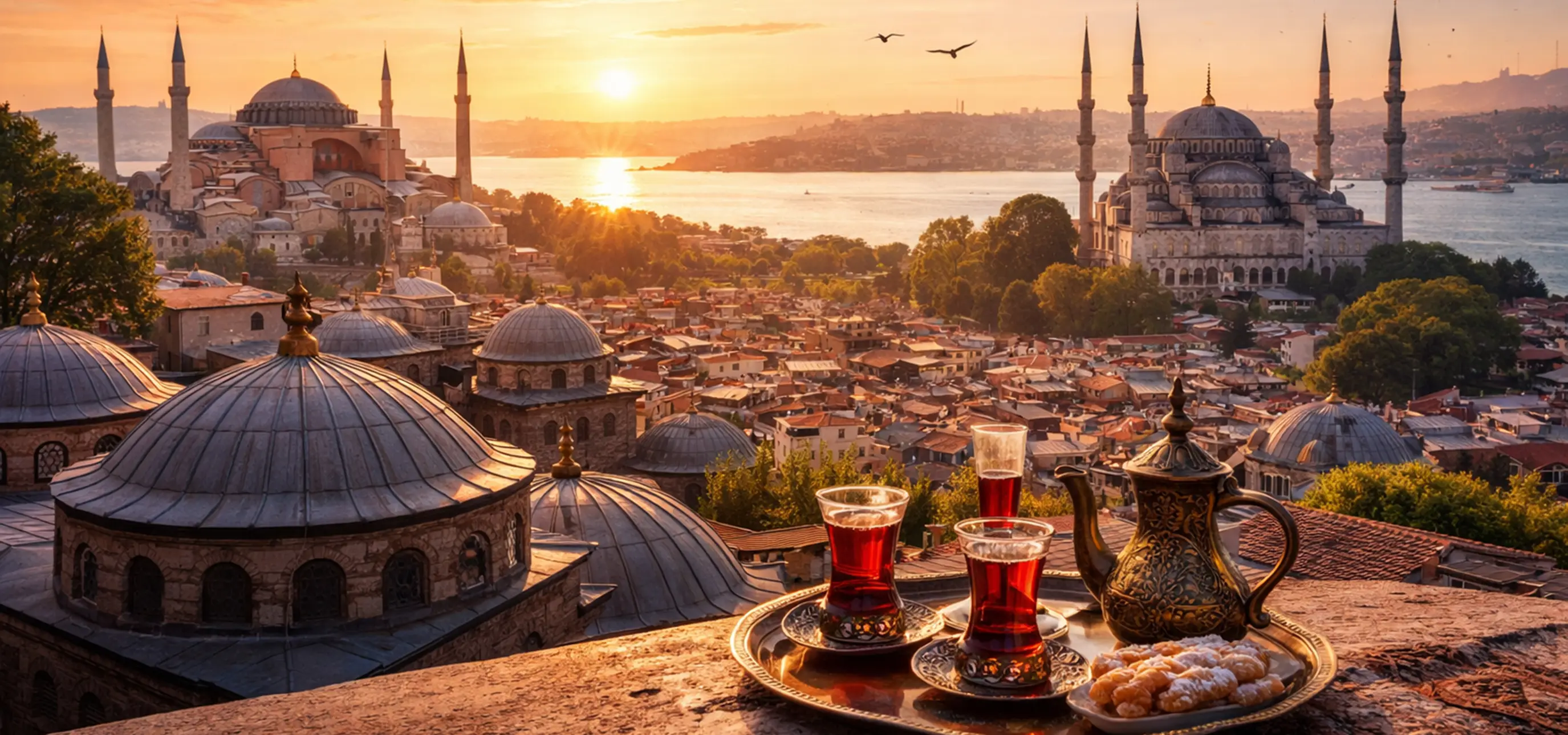
Discover Byzantine churches, archaeological sites, Ottoman palaces, historic mosques, markets and waterfront neighborhoods across Istanbul.
View Istanbul GuideFollow the story from the infrastructure of Roman Constantinople to the churches and monasteries of the Byzantine capital.
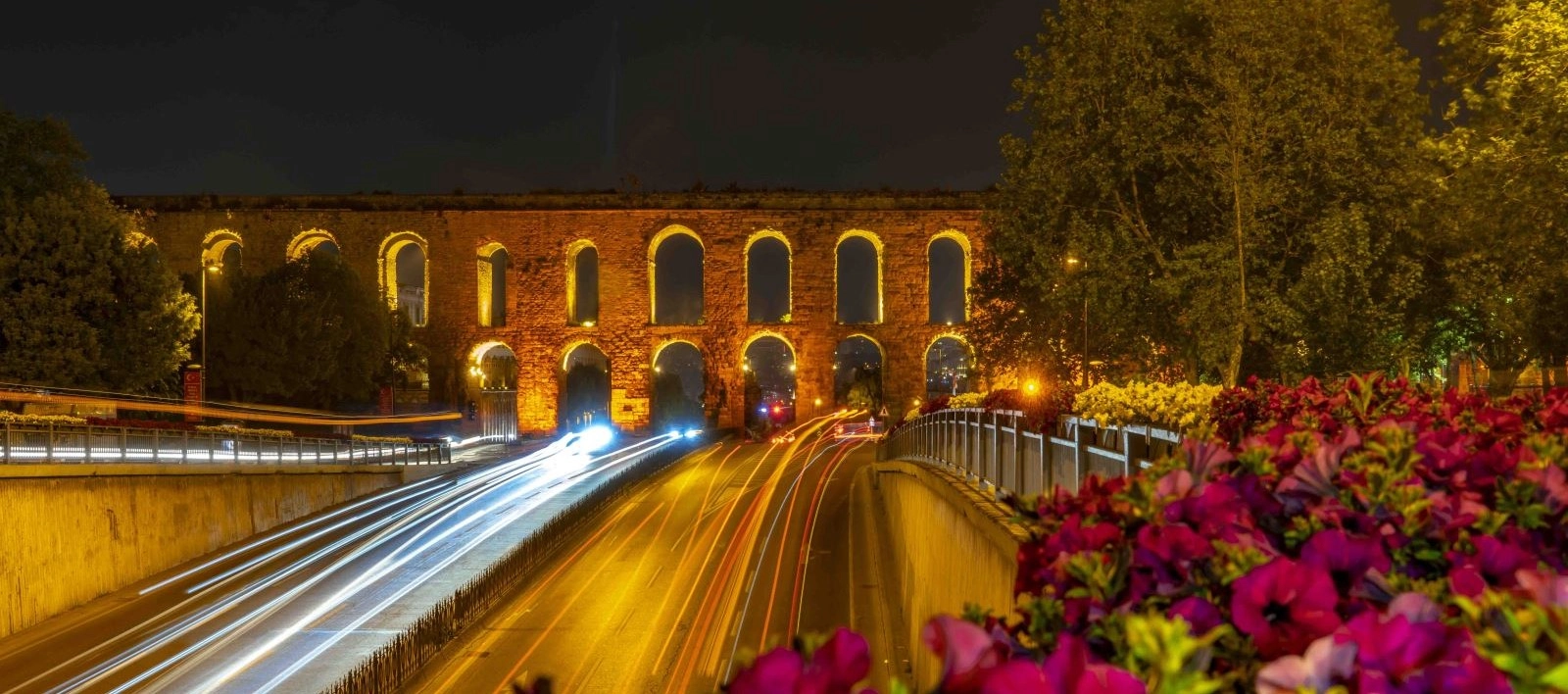
Explore one of Constantinople's most impressive surviving Roman engineering monuments.
Explore Valens Aqueduct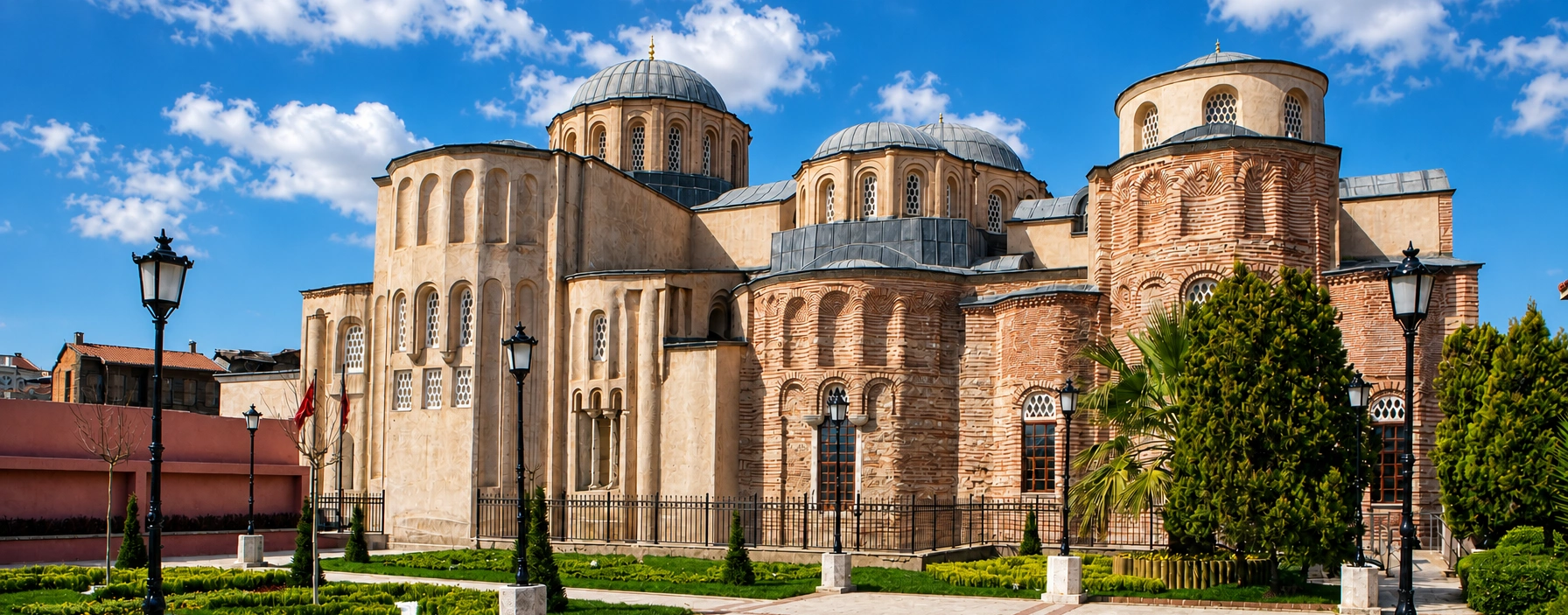
Continue into the Middle Byzantine period at one of Constantinople's greatest surviving monastic complexes.
Explore Zeyrek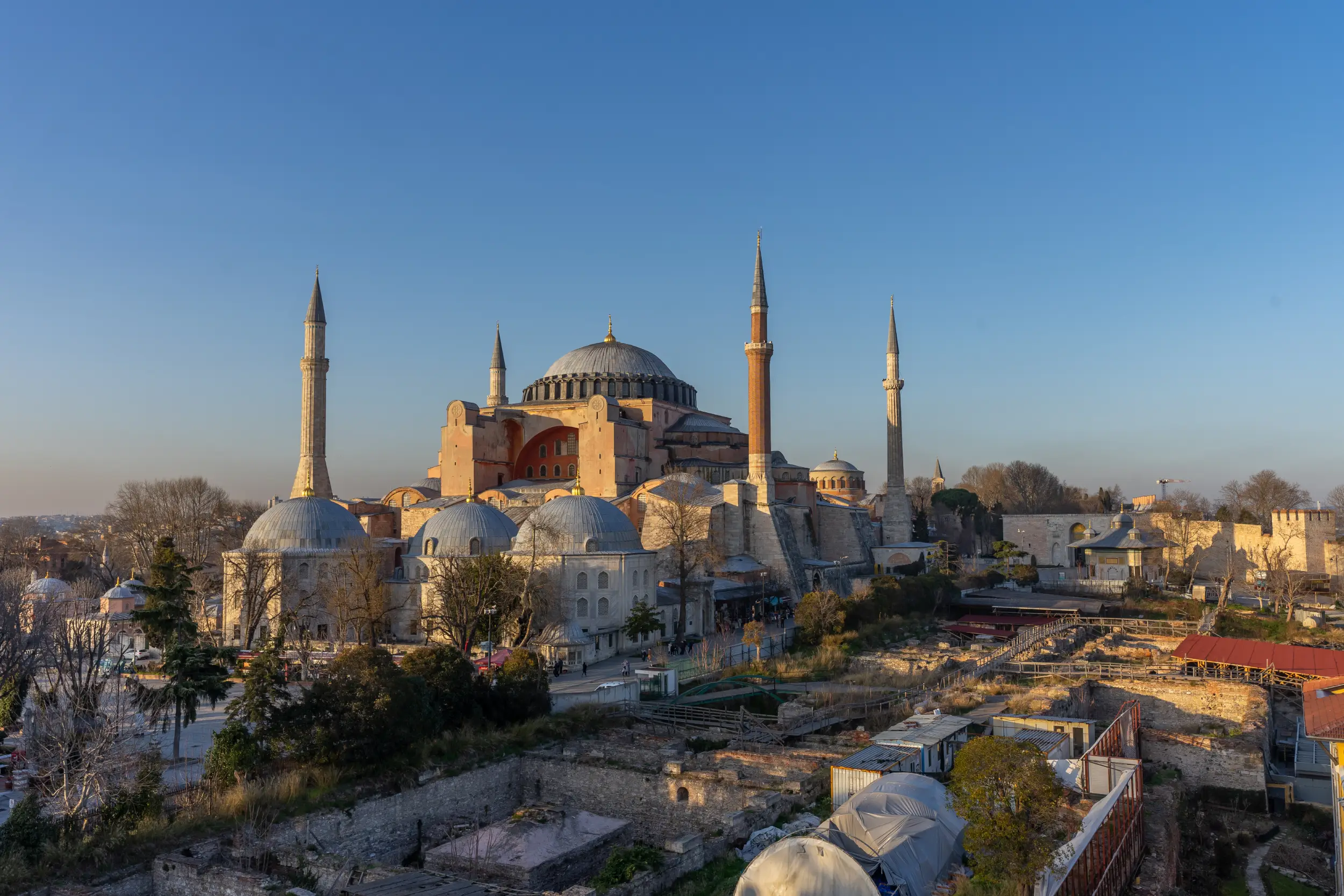
See the architectural revolution that followed only a few years after the completion of St. Polyeuktos.
Explore Hagia Sophia