Private Zeyrek Mosque Tour
Ask us about a tailor-made visit focused on the Komnenian founders, three connected churches, imperial mausoleum, hospital typikon and Ottoman transformation.
Request a Custom Tour





Zeyrek Mosque, also known as Molla Zeyrek Mosque, is one of the most important surviving Byzantine monuments in Istanbul. It began as the 12th-century Monastery of Christ Pantokrator, an ambitious imperial foundation created by Emperor John II Komnenos and Empress Eirene, or Irene of Hungary.
The building visible today is not one church but a remarkable group of three connected sanctuaries. The southern church was dedicated to Christ Pantokrator, the northern church to the Theotokos Eleousa, or Merciful Mother of God, and the chapel between them to the Archangel Michael. That central chapel became a mausoleum for members of the Komnenian and later Palaiologan imperial families.
The monastery was far more than a place of worship. Its surviving typikon, or foundation charter, describes monks, clergy, a sophisticated hospital, an old-age home and a charitable system supported by extensive endowments. It offers an exceptional written picture of medicine, worship and social welfare in medieval Constantinople.
After the Ottoman conquest, the complex became a mosque and took the name of the scholar Molla Zeyrek Mehmed Efendi. Today it remains an active place of worship within the Zeyrek component of Istanbul's UNESCO World Heritage property, overlooking the historic neighborhoods and waterways of the Golden Horn.
Read the joined forms of two domed churches and an imperial funerary chapel.
Enter a complex created to commemorate the Komnenian dynasty and its rulers.
Discover a monastery whose charter recorded organized medical and charitable care.
Visit respectfully outside prayer times and encounter centuries of continuing sacred use.
Essential information for visiting the former Monastery of Christ Pantokrator.
Zeyrek neighborhood in Fatih, on Istanbul's Fourth Hill above the Golden Horn.
Open on Google MapsMonastery of Christ Pantokrator, with churches dedicated to Christ, the Virgin and Archangel Michael.
Created under John II Komnenos and Empress Eirene between approximately 1118 and 1136.
An active mosque preserving the core of a major Middle Byzantine imperial complex.
General mosque entry is normally free; respectful donations may be welcomed.
Allow 45–60 minutes, excluding prayer times or a longer architectural walk through Zeyrek.
Its architecture, imperial burials and surviving charter reveal how worship, power, medicine and charity met in medieval Byzantium.
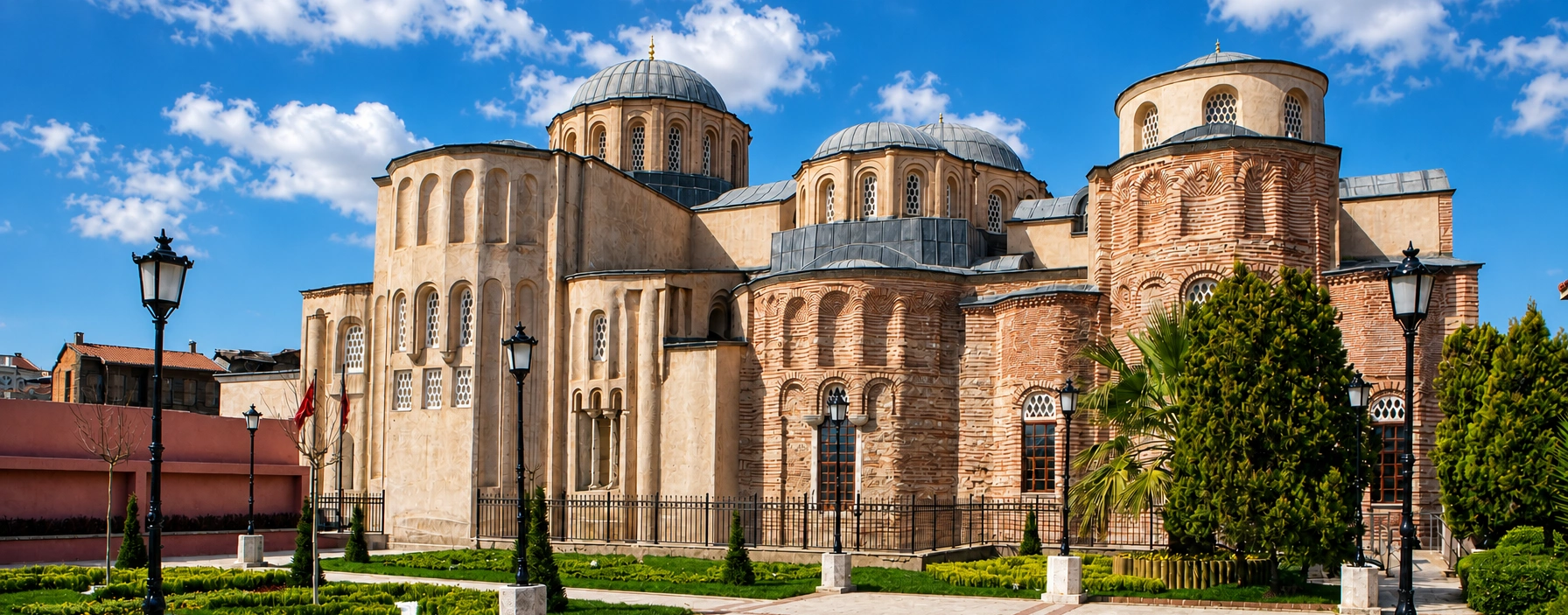
Zeyrek Mosque preserves the principal church group of one of Constantinople's greatest medieval monasteries. After Hagia Sophia, it is commonly described as the largest surviving Byzantine religious building in Istanbul. Its long brick silhouette remains one of the defining historic landmarks on the slopes above the Golden Horn.
The monument is architecturally exceptional because its present form records several closely spaced building campaigns. Two cross-in-square churches stand beside one another, while a double-domed funerary chapel fills the irregular space between them. The result is a connected ensemble whose asymmetries reveal how the complex grew over time.
Its documentary importance is just as great. The detailed monastic typikon issued in 1136 explains the foundation's liturgy, administration, hospital, care for elderly men and extensive charitable responsibilities. Few medieval institutions can be reconstructed through such a rich combination of standing architecture and written evidence.
The mosque and surrounding neighborhood form the Zeyrek component area of the Historic Areas of Istanbul UNESCO World Heritage Site. For travelers using our guide to places to visit in Istanbul, Zeyrek offers one of the city's most rewarding encounters with Middle Byzantine and early Ottoman history.
The complex was founded during the reign of Emperor John II Komnenos. Its first and largest surviving sanctuary, the southern church dedicated to Christ Pantokrator, was begun through the patronage of his wife, Empress Eirene, around 1118 and was completed around 1124, roughly a decade before her death.
John II expanded the foundation after Eirene's death. A second church dedicated to the Theotokos Eleousa was built to the north, and the space between the two churches was transformed into a chapel dedicated to the Archangel Michael. Designed as a heroon, or dynastic mausoleum, this central chapel joined the churches into a single monumental group.
By 1136, when the monastery's typikon was issued, Pantokrator had become a major religious, medical and charitable institution. During the Latin occupation of Constantinople from 1204 to 1261, the complex stood within the Venetian sector and many of its treasures and relics were dispersed. It returned to Orthodox use after the Byzantine recovery of the city.
Following the Ottoman conquest of 1453, the complex served for a time as a center of learning associated with Molla Zeyrek Mehmed Efendi and was converted into a mosque. Earthquakes, fire, alterations and long periods of deterioration affected the structure, which has undergone repeated conservation campaigns in the modern era and remains open for worship.
Empress Eirene establishes the southern church of Christ Pantokrator.
John II completes the Eleousa church, imperial chapel and wider monastic institutions.
The monastery lies in the Venetian sector during the Latin occupation of Constantinople.
Orthodox monastic life resumes and the complex again serves Byzantine imperial commemoration.
The complex becomes a mosque and is associated with Molla Zeyrek Mehmed Efendi.
Multiple research and restoration programs stabilize and conserve the monument.
The Pantokrator foundation expressed the religious devotion and dynastic ambition of the Komnenian court. John II ruled from 1118 to 1143 and was the son of Emperor Alexios I Komnenos. His wife Eirene was born Piroska, daughter of King Ladislaus I of Hungary, and adopted the Greek name Eirene after her marriage into the Byzantine imperial family.
Eirene played the decisive role in establishing the first church and monastery. After her death, John II enlarged the institution and shaped it into an imperial memorial, a center of monastic worship and an organized charitable foundation. Their portraits survive in the famous 12th-century mosaic panel inside Hagia Sophia, where the couple presents gifts to the Virgin and Child.
The monastery's dedication to Christ Pantokrator—Christ as “Ruler of All”— connected imperial authority with divine order. Its architecture, ceremonies, endowments and tombs made the complex one of the clearest expressions of Komnenian rulership in Constantinople.
The long exterior can initially look like a single irregular building. In reality, the surviving monument contains three distinct but interconnected sacred spaces. Understanding them from south to north makes the complex much easier to read.
The earliest and largest church, dedicated to Christ Pantokrator, served as the monastery's principal sanctuary.
The double-domed chapel of Archangel Michael linked the churches and functioned as the imperial mausoleum.
Dedicated to the Theotokos Eleousa, the Merciful Mother of God, it also served a wider lay congregation.
Connected entrance spaces unified the three-part group while preserving evidence of different construction phases.
The complete ensemble is crowned by multiple domes above the churches, galleries and funerary chapel.
Polygonal apses and layered brick façades reveal the liturgical orientation of the original churches.
The connections are not perfectly regular because the central chapel was inserted between two separately planned structures. Those adjustments are not flaws: they are valuable evidence of how the imperial project developed from one church into a coordinated monastic and commemorative ensemble.
The two principal churches use variations of the cross-in-square plan, a defining form of Middle Byzantine religious architecture. A central dome rises above four supports, while vaulted arms extend in the cardinal directions and smaller corner bays complete the compact interior.
Outside, the masonry is one of the monument's greatest attractions. Brick patterns, bands of stone, arched windows, niches and polygonal apses animate the long eastern façade. Sections employ recessed-brick construction, in which alternate brick courses are set back within thick mortar beds, creating a layered surface characteristic of the period.
Domed central bays and vaulted arms organize the principal churches.
Set-back brick courses within broad mortar joints produce a distinctive Middle Byzantine texture.
Angular eastern terminations contain tall windows, blind arches and decorative niches.
The roofline reveals the separate volumes of churches, galleries and imperial chapel.
Surviving opus sectile work preserves traces of the sanctuary's once lavish interior decoration.
Minarets, prayer furnishings and later entrance elements record centuries of mosque use.
Much of the original gold mosaic, colored marble revetment and liturgical furniture has disappeared. Yet the powerful sequence of domes, vaults, piers and apses still communicates the sophistication of the Komnenian design. The building's irregular junctions and repaired surfaces also make its long history unusually visible.
The Pantokrator Typikon of 1136 is among the most informative documents to survive from medieval Byzantium. It did not merely state that the monastery should help the sick and poor. It set out staffing, worship, finances, food, care and institutional responsibilities in extraordinary detail.
The associated hospital, or xenon, was planned with fifty regular beds divided among specialized wards. The charter mentions medical personnel and differentiated care, including treatment for wounds, eye and intestinal conditions, and illnesses affecting women. It also provided extra accommodation for urgent cases and established facilities for elderly men.
These lost charitable buildings have not survived like the church group, and their precise archaeological locations remain subjects of research. Nevertheless, the written regulations demonstrate that Pantokrator was one of Constantinople's most organized centers of medicine and social welfare—not simply a secluded monastery.
The charter organized regular beds into wards for different categories of patient.
Physicians, assistants and attendants formed part of a structured system of care.
A gerokomeion provided support for twenty-four elderly men.
The typikon regulated the daily life, worship and responsibilities of the monks.
Properties and dependent monasteries helped finance the institution's religious and charitable work.
The 1136 text allows historians to reconstruct a complex whose service buildings are largely lost.
The narrow central church was dedicated to Archangel Michael and designed as a funerary chapel. Its two domes cover the space inserted between the principal churches, turning the entire monastery into a stage for dynastic commemoration.
Emperor John II and Empress Eirene were associated with burial at Pantokrator, as was their son Emperor Manuel I Komnenos. Later members of the Palaiologan dynasty also chose the monastery for burial, demonstrating that its imperial prestige endured long after the Komnenian period.
The medieval tombs and their rich settings were damaged, disturbed or lost over centuries, especially during warfare, occupation and later rebuilding. The architectural form of the chapel nevertheless preserves the idea of an imperial heroon placed at the symbolic heart of the complex.
Zeyrek rewards slow observation inside and outside. The current mosque interior is more restrained than the glittering medieval sanctuary described by historical evidence, but the surviving structure reveals the scale and complexity of the original foundation.
Step back to identify the three joined structures, their domes and projecting eastern apses.
Study the varied masonry, recessed courses, arches and decorative niches.
Look upward to understand the cross-in-square plans and their connecting spaces.
Notice any visible or protected traces of the intricate colored-marble pavement.
Observe the principal furnishings that adapt the Byzantine sanctuary for Islamic worship.
Later screens, galleries and fittings document the building's continuing mosque history.
Read the narrow central zone as the former dynastic mausoleum between the larger churches.
Enjoy the elevated setting that once made the monastery prominent in Constantinople's skyline.
In the 12th century, the interior would have looked dramatically richer than it does today. Gold-ground mosaics, marble wall revetment, carved screens, precious liturgical objects and colored pavements turned the churches into an imperial setting of light and polished surfaces.
The most celebrated surviving evidence is the opus sectile pavement associated with the southern church. Precisely cut pieces of colored marble formed complex geometric and figurative designs. Surviving sections and archaeological records provide a glimpse of a floor once filled with scrolling forms, animals, hunting imagery and carefully ordered ornamental panels.
Fragments of colored glass indicate that some windows may also have carried figural glazing. The original mosaics and much of the marble ensemble disappeared through looting, earthquakes, changing religious use and repeated repairs, but scholarship and conservation have recovered important clues to the medieval interior.
When Crusader armies captured Constantinople in 1204, the Pantokrator complex fell within the Venetian sector. It became a repository for important relics and suffered the removal or dispersal of treasures. The monastery returned to Byzantine Orthodox use after Michael VIII Palaiologos recovered the city in 1261.
In the following centuries Pantokrator again became a center of religious and intellectual life, and its imperial mausoleum received later dynastic burials. Yet the city and its institutions faced growing political and economic pressure before the Ottoman conquest of 1453.
The complex was adapted after the conquest and is traditionally associated with Molla Zeyrek Mehmed Efendi, a distinguished scholar connected with the educational institutions of Sultan Mehmed II. His name became attached first to the mosque and then to the surrounding neighborhood.
The Fourth Crusade captures Constantinople and the monastery passes into the Venetian sector.
Byzantine rule and Orthodox religious use return after the recovery of the capital.
Constantinople becomes the Ottoman capital under Sultan Mehmed II.
The scholar's name becomes permanently linked with the mosque and district.
Mihrabs, minbar, minarets and other elements reshape the churches for Islamic worship.
The former imperial monastery survives today because generations repeatedly repaired and reused it.
Zeyrek Mosque is an active place of worship rather than a conventional museum. Local religious use always takes priority over sightseeing, and access may change according to prayer, community activities or conservation requirements.
Non-worship visits may pause during the five daily prayers, especially Friday noon prayer.
Take off footwear before stepping onto the carpet and use the storage area provided.
Shoulders and knees should be covered; women should bring or borrow a headscarf.
Speak softly, silence phones and never interrupt anyone who is praying.
Check current rules and do not photograph worshippers without clear permission.
Historic floors and restoration areas may be protected by carpets, screens or temporary boundaries.
Begin with a distant exterior view from the surrounding streets or terrace. The elevated position helps you understand why the monastery dominated this part of Constantinople. Count the domes and follow the long profile before moving closer to the eastern apses.
Study the exterior masonry slowly. Look for alternating materials, recessed-brick courses, arched windows and the slight changes in alignment that distinguish the southern church, central chapel and northern church. Then approach the mosque entrance and check whether visitor access is currently permitted.
After removing your shoes, pause inside rather than walking immediately. Identify the domed bays, compare the proportions of the joined spaces and notice how Ottoman prayer furnishings work within the Byzantine fabric. Finish outside with the Golden Horn panorama and a walk through Zeyrek's historic streets.
Zeyrek Mosque stands on a hillside in the Fatih district, above Atatürk Boulevard and the Golden Horn. It is less visited than Sultanahmet's headline monuments, but its active religious function means that visitors should not assume continuous tourist access throughout the day.
Entry is normally free outside worship periods. Prayer times vary daily, while Friday services, religious holidays, maintenance and community events may affect access. Because conditions can change, check signs at the entrance and follow the instructions of mosque staff.
The best visit combines a quiet interval between prayers with good daylight on the brick exterior. The hillside streets can be warm in summer and slippery in wet weather, so season and footwear also matter.
Often a useful interval after the morning prayer and before the noon service.
Can provide a quieter visit and warm light across the neighborhood.
Usually calmer for architecture, photography and a longer Zeyrek walk.
Avoid the congregational period around midday unless attending as a worshipper.
Comfortable seasons for climbing the historic hills and exploring nearby districts.
Improves views toward the Golden Horn and the layered city skyline.
Enough for a respectful first look at the exterior and principal interior space.
Ideal for reading the three-part plan, architecture and Ottoman adaptations.
Suitable for detailed observation, photography and the surrounding streets.
Add the Valens Aqueduct and nearby historic food-market streets.
Continue through Fatih or walk toward Süleymaniye and the Grand Bazaar.
Build a broader Golden Horn route including Fener, Balat and Chora.
The complex offers excellent architectural compositions from its surrounding streets and elevated approaches. Inside, photography must always remain secondary to worship and current mosque rules.
Use a wider viewpoint to show the connected churches and sequence of domes.
Side light emphasizes polygonal forms, arches, niches and masonry changes.
A moderate zoom helps isolate recessed courses and decorative façade patterns.
Photograph only from permitted areas and use domes and vaults to structure the frame.
Include the surrounding cityscape to explain the monument's commanding location.
Never photograph worshippers closely or use flash during religious activity.
Zeyrek's hillside setting is one of the monument's great visual advantages, but it can make the approach difficult for visitors with reduced mobility. Steep streets, uneven paving, mosque thresholds and shoe removal should all be considered in advance.
Routes from the Golden Horn and Atatürk Boulevard include noticeable uphill sections.
Historic lanes and pavements may be irregular, especially in wet weather.
Steps or raised doorways may require assistance for some visitors.
Ask mosque staff about the current accessible entrance and any available assistance.
Visitors who cannot bend easily may wish to use slip-on footwear or bring a companion.
The principal spatial experience does not require climbing towers or high galleries.
The mosque stands in the Zeyrek neighborhood of Fatih, northwest of the Valens Aqueduct and above Atatürk Boulevard. It is not directly beside Istanbul's main tram line, so most routes include a walk through hilly historic streets.
Use the M2 metro and continue on foot through the historic district for roughly 15–20 minutes.
Cross from the Golden Horn station area and climb toward Zeyrek; expect steep sections.
Walk northwest through local streets for approximately 10 minutes, depending on route.
A rewarding walk of roughly 15–25 minutes connects two major UNESCO component areas.
Ask for “Molla Zeyrek Camii”; narrow or one-way streets may affect the drop-off point.
Limited parking and dense local traffic make public transport, taxi or walking more practical.
Zeyrek sits between the monumental routes of Fatih, Süleymaniye and the Golden Horn. Its location is ideal for travelers who enjoy exploring Istanbul on foot beyond the busiest sightseeing streets.
See the monumental Roman water bridge that still crosses the modern city below Fatih's hills.
Discover a restored Ottoman bath associated with Mimar Sinan and celebrated for its rediscovered tiles.
Explore a lively food-market area known for regional products and southeastern Turkish cuisine.
Continue to Mimar Sinan's 16th-century imperial masterpiece overlooking the Golden Horn.
Walk onward to Istanbul's vast covered commercial district and its historic hans.
Descend toward Eminönü for spices, sweets and the busy waterfront.
Extend the Byzantine theme westward to the city's monumental land defenses.
Continue toward historic churches, colorful streets and multicultural Golden Horn neighborhoods.
Zeyrek Mosque is an active Istanbul mosque formed from the principal churches of the 12th-century Byzantine Pantokrator Monastery.
It was the church group of the Monastery of Christ Pantokrator, an imperial Komnenian foundation with religious, medical and charitable institutions.
It is in Istanbul's Fatih district, on the Fourth Hill above the Golden Horn and near the Valens Aqueduct.
The surviving complex was created in stages between approximately 1118 and 1136.
Emperor John II Komnenos and his wife Empress Eirene founded and expanded the monastery.
Pantokrator is a Greek title meaning “Ruler of All” or “Almighty,” commonly used for Christ.
Its surviving body combines two larger churches with a funerary chapel between them, creating a connected group of three sanctuaries.
The south church honored Christ Pantokrator, the north church the Theotokos Eleousa, and the central chapel Archangel Michael.
The founders designed the Archangel Michael chapel as a dynastic burial and memorial space for Byzantine rulers and their family.
The complex was associated with burials of Komnenian and Palaiologan rulers, including John II Komnenos, Manuel I Komnenos and Manuel II Palaiologos.
Yes. Its 1136 charter described a hospital with fifty regular beds, specialized wards and organized medical staffing.
It is the monastery's detailed foundation charter regulating worship, administration, charity, the hospital, an old-age home and endowed properties.
After Constantinople was captured in 1204, the complex lay in the Venetian sector and many of its treasures and relics were dispersed.
The name is linked with Molla Zeyrek Mehmed Efendi, an early Ottoman scholar associated with the complex after the conquest.
Yes. It remains a functioning mosque used for daily and Friday prayers.
Visitors are normally welcome outside prayer times when they follow mosque dress and behavior rules.
General mosque entry is normally free. Visitors should check current local guidance.
Access follows the rhythm of an active mosque rather than guaranteed museum hours. Avoid prayer periods, particularly Friday midday worship.
Wear clothing covering shoulders and knees. Women should cover their hair, and everyone removes shoes before entering the carpeted area.
Discreet personal photography may be possible outside prayer, but follow posted rules and never photograph worshippers intrusively.
Allow 45–60 minutes for the exterior, three-part architecture, mosque interior and surrounding views.
Access may be possible with assistance, but steep streets, uneven surfaces and historic thresholds can be challenging. Confirm current arrangements locally.
Vezneciler on the M2 metro is a practical starting point, followed by a hilly walk. Taxis can usually approach more closely.
Yes. The mosque and its surrounding conservation area form a component of the Historic Areas of Istanbul, inscribed in 1985.
Yes. Its three connected Byzantine churches, imperial history and hilltop setting make it one of Istanbul's most important under-visited monuments.
Pause sightseeing whenever prayers or religious activities begin.
Avoid contact with historic brick, marble, woodwork and fragile surfaces.
Remain within areas currently open to visitors and never move protective coverings.
Do not treat worshippers or neighborhood residents as photographic subjects.
Use local cafés and businesses respectfully without blocking narrow residential streets.
If contributing, use only donation arrangements clearly authorized by the mosque.
Connect Zeyrek Mosque with the Valens Aqueduct, Süleymaniye, Fener and Balat, or create a deeper Byzantine route shaped around your interests and without compulsory shopping stops.
Choose a focused architectural visit or build a private route through Komnenian Constantinople and the historic Golden Horn.
Ask us about a tailor-made visit focused on the Komnenian founders, three connected churches, imperial mausoleum, hospital typikon and Ottoman transformation.
Request a Custom Tour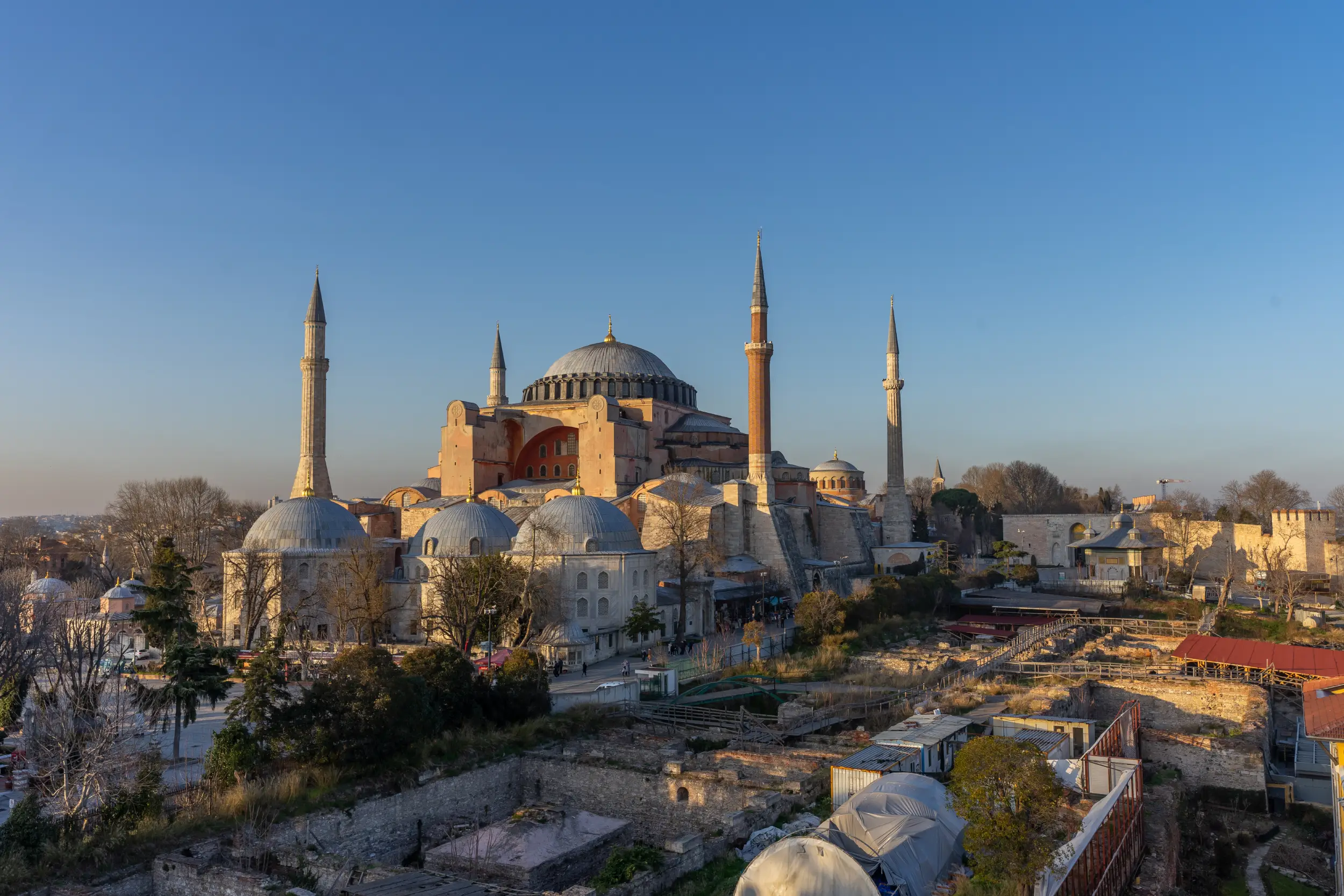
Compare the Pantokrator complex with Hagia Sophia and trace the development of Byzantine domed architecture across the city.
Explore Hagia SophiaBuild a day around the monuments, markets and neighborhoods of the Historic Peninsula.
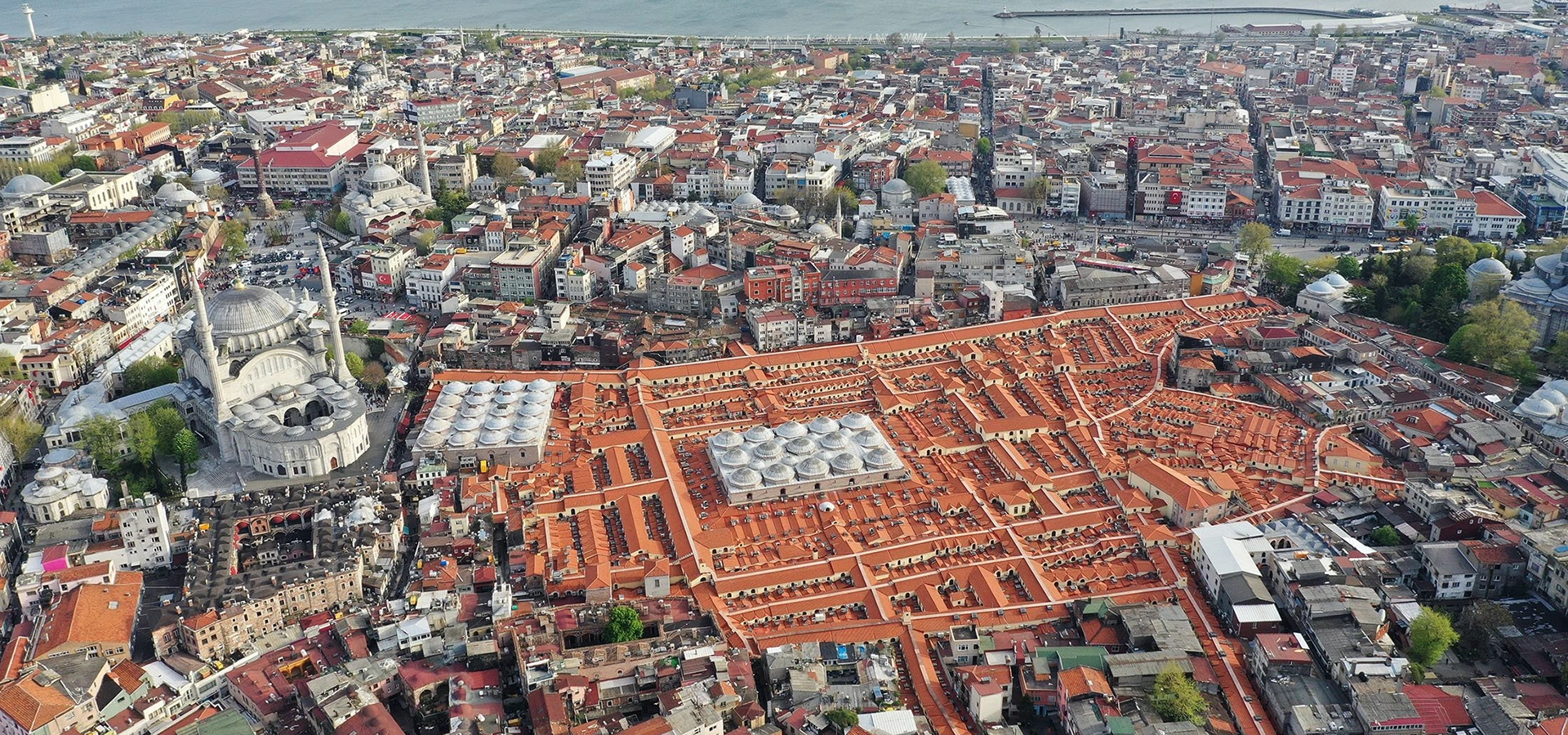
Continue through the historic commercial heart of Istanbul and its centuries-old covered streets.
Explore the Grand Bazaar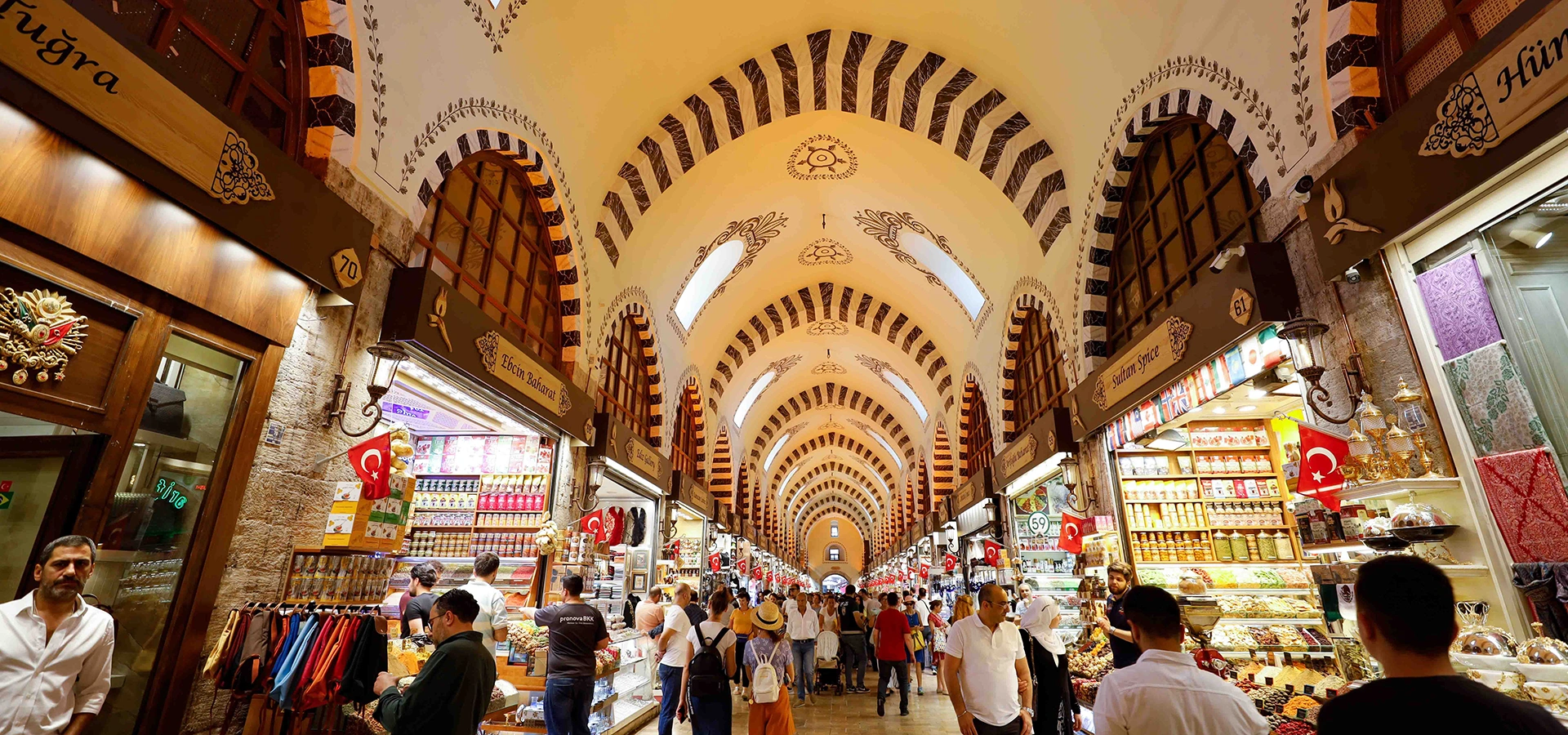
Descend toward Eminönü for fragrant stalls, local flavors and the Golden Horn waterfront.
Explore the Spice Bazaar
Continue to Sultanahmet, Topkapı Palace, Fener, Balat and Istanbul's city walls.
Continue Exploring Istanbul