Creamy & Spreadable
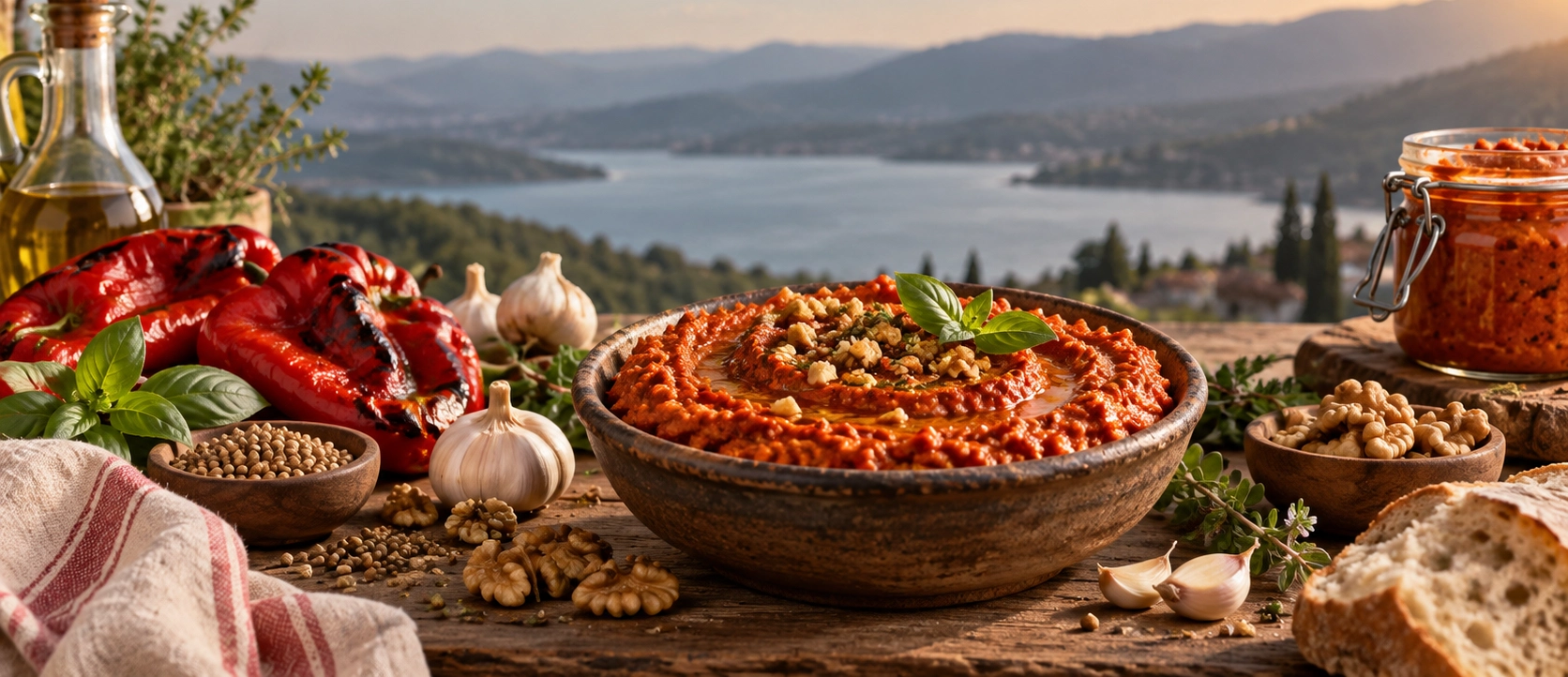
The finished acıka has a thick, low-flowing consistency suitable for spreading on bread.
- Texture: Creamy and homogeneous
- Body: Thick rather than watery
- Use: Easy to spread or spoon






Sakarya Abaza Acıkası is one of Sakarya Province’s most distinctive protected foods: a smooth, spreadable pepper preparation made with cooked red peppers, garlic, rock salt, coriander seed, thyme and basil. In the breakfast version, finely ground walnuts add richness and body, while the cooking version is prepared without walnuts.
Its character comes from more than a list of ingredients. The peppers are boiled until their skins loosen, peeled, drained, chilled overnight and then reduced to a low-flowing purée. Traditionally, the pepper can be crushed between food-safe stones known locally as ahaka and apıhnıga, preserving a preparation method associated with Abaza food culture in Sakarya.
Sakarya Abaza Acıkası is officially protected in Türkiye as a Mahreç İşareti geographical indication. It carries registration number 1544, dated 20 February 2024, and its protected geographical boundary is the whole of Sakarya Province.
The sauce is closely connected with winter preparation traditions. Its creamy consistency makes the breakfast version easy to spread on bread, while the walnut-free cooking version can be used as an aromatic pepper base in meals. Depending on the colour of the peppers, the finished acıka may range from vivid red to warm orange-red.
This complete guide explores the product’s Abaza cultural background, geographical indication, ingredients, breakfast and cooking versions, traditional stone tools, preparation method, texture, flavour, storage, serving ideas, buying tips, photography suggestions and places to combine with a food-focused journey through Sakarya.
Sakarya Abaza Acıkası was registered as a geographical indication in 2024.
The breakfast version contains finely ground walnuts; the cooking version does not.
Peppers may traditionally be crushed with the stones known as ahaka and apıhnıga.
The protected sauce is part of Sakarya’s living Caucasian food culture and winter-preparation tradition.
Essential information about Sakarya’s protected Abaza pepper spread.
Sakarya Province, Türkiye.
Open Sakarya on Google MapsA creamy pepper-based sauce, spread and flavouring preparation.
Produced in both breakfast-style and cooking-style versions.
Mahreç İşareti registration number 1544.
A jar of acıka carries the memory of migration, family kitchens and winter preparation.
Sakarya has long been one of Türkiye’s important centres of Caucasian cultural life. Abaza and Abkhaz communities established villages and family networks across the province, bringing with them culinary traditions based on hospitality, shared tables, preserved foods, dairy products, grains, herbs, peppers and walnuts.
Sakarya Abaza Acıkası belongs to this cultural landscape. The official geographical-indication specification describes it as a product with a deep-rooted history in Sakarya and an important place in the province’s food traditions. It is particularly associated with the seasonal custom of preparing foods for winter.
Acıka is practical as well as flavourful. Cooked peppers are transformed into a dense purée and combined with garlic, coriander seed, thyme, basil and rock salt. For the breakfast version, finely ground walnuts make the mixture richer, smoother and more substantial.
The preparation method also preserves evidence of an older kitchen technology. Before modern mincing machines became common, cooked peppers could be crushed between special food-safe stones. In Sakarya’s traditional terminology, the lower stone is called ahaka, while the hand-held stone is known as apıhnıga.
Geographical-indication protection formalised this local reputation. Today the registered name identifies a Sakarya product whose specified production stages take place within the province and whose recipe, processing sequence and cultural connection are defined by the protected specification.
The protected acıka is defined by its pepper-rich colour, creamy consistency, aromatic spices and traditional preparation.
The finished acıka has a thick, low-flowing consistency suitable for spreading on bread.
The exact colour depends on the peppers used in the preparation.
Garlic, coriander seed, thyme and basil create the sauce’s characteristic savoury fragrance.
Finely ground walnut kernels are mixed into the breakfast-style preparation.
The protected cooking-style version is prepared without walnut kernels.
Acıka belongs to the long-established practice of preparing flavourful foods for colder months.
Sakarya Abaza Acıkası is officially registered by the Turkish Patent and Trademark Office as a geographical indication protecting its name, production method, local reputation and connection with Sakarya Province.
The official protected name is Sakarya Abaza Acıkası.
The product carries geographical-indication registration number 1544.
The registration date is 20 February 2024.
The application was filed on 24 January 2022.
The official application file number is C2022/000029.
It is registered as a Mahreç İşareti.
The registration holder is the Sakarya Chamber of Commerce and Industry.
The protected geographical boundary is Sakarya Province.
The Mahreç İşareti status reflects the sauce’s established reputation and traditional relationship with Sakarya. According to the protected specification, the production stages required for the registered Sakarya Abaza Acıkası take place within the defined geographical boundary.
Sakarya Abaza Acıkası is a cooked-pepper, garlic and herb sauce made by boiling salçalık peppers, peeling and draining them, resting them cold overnight, turning them into a dense purée and mixing them with rock salt, garlic, ground coriander seed, basil and thyme. The breakfast version additionally contains finely ground walnut kernels.
Cooked salçalık peppers form the main body and determine much of the colour and sweetness.
The peppers are thoroughly cooked, peeled and drained before they are crushed into a purée.
Garlic, coriander, basil, thyme and optional walnut give acıka a more complex flavour than plain pepper paste.
It can be produced for direct breakfast service or as a walnut-free cooking ingredient.
Peppers may be minced mechanically or crushed using the traditional paired stones.
The protected name refers to the product produced according to the registered Sakarya method.
Sakarya’s cuisine reflects many cultural layers, and Caucasian communities are among the most important. Abaza food traditions developed within family kitchens and village communities where shared meals, hospitality and the preparation of foods for winter remained central parts of social life.
Recipes survive through practical knowledge passed between generations rather than through written recipes alone.
Acıka fits naturally into the seasonal practice of filling jars and preparing flavour-rich foods for colder months.
Breakfast spreads, breads, cheeses and savoury accompaniments create a communal style of eating.
Walnuts, herbs, garlic, grains and dairy products appear across many traditional Caucasian preparations.
The recipe continues to be produced rather than surviving only as a historical reference.
Geographical-indication registration recognises the product’s strong connection with Sakarya’s culinary heritage.
The registered formula uses a relatively short list of ingredients. The difference between the two protected versions is especially important: breakfast acıka includes finely ground walnuts, while cooking acıka does not.
The official formula uses 1 kg of salçalık pepper as the principal ingredient.
The breakfast formula uses about 100 g; the cooking version uses about 80 g.
Approximately 80–85 g of garlic provides the sauce’s strong savoury character.
About 30 g is included in both protected versions.
Approximately 30 g basil and 30 g thyme are used in each version.
The breakfast version includes about 150 g walnut kernels; the cooking version contains none.
One of the most useful details for visitors is that the registered product is not limited to a single serving style. The official specification defines a breakfast version and a cooking version.
Includes finely ground walnut kernels, giving the mixture extra richness and a fuller, nutty texture.
Prepared without walnut, allowing the pepper, garlic and herbs to function more directly as a meal-seasoning base.
The protected formula lists approximately 100 g of finely crushed rock salt.
The protected formula lists approximately 80 g of finely crushed rock salt.
Both versions use garlic, ground coriander seed, basil and thyme.
If you want a spread for breakfast, confirm that you are buying the walnut-containing breakfast version.
One of the most fascinating details in the protected specification is the survival of names for the traditional tools used to crush the cooked peppers. Instead of a modern mincing machine, prepared peppers may be worked manually between two food-safe stones.
The ahaka is the lower stone on which the peppers are crushed.
The apıhnıga is the oval stone held in the hand and moved over the peppers.
The official description places the apıhnıga at approximately 400–600 g.
The ahaka is described as a hard stone around 50–60 cm long and 45–50 cm wide.
Traditional stone crushing may take approximately 100–120 minutes.
The goal is a smooth, homogeneous pepper purée with low fluidity rather than a watery sauce.
The registered production method begins with careful preparation of salçalık peppers. Cooking, peeling, draining and an overnight cold rest create the base texture before any spices are added.
The second stage creates the sauce’s recognisable texture and flavour. The chilled peppers are turned into purée, while garlic is separately softened, peeled and pounded before the aromatics are mixed together.
Once the mixture reaches a uniform texture, it is portioned into glass jars. The registered specification also gives clear guidance for refrigerated storage and consumption after opening.
The prepared acıka is portioned into clean glass jars after mixing.
For breakfast acıka, finely ground walnut is mixed in before the jars are filled.
Filled jars are closed and traditionally turned upside down until they cool.
The protected specification calls for refrigerated storage in this temperature range.
The registered specification states that unopened Sakarya Abaza Acıkası can be kept for up to one year under the stated conditions.
Once a jar has been opened, the protected specification advises consumption within one week.
The exact balance varies with the peppers and whether walnuts are included, but the protected recipe creates a layered savoury profile rather than a one-dimensional chilli paste. Pepper provides the main body, garlic adds depth, coriander contributes warm spice, and thyme and basil lift the aroma.
Long-cooked peppers provide a rounded vegetable sweetness beneath the seasoning.
The garlic is pounded before mixing, allowing its flavour to spread throughout the sauce.
Ground coriander seed adds a fragrant, gently earthy spice character.
Thyme and basil give the mixture a recognisable aromatic lift.
Breakfast acıka has a fuller, nuttier body because of the finely ground walnut kernels.
Careful draining and grinding create a thick consistency that clings easily to bread.
Acıka is highly versatile. The walnut breakfast version is especially well suited to breads and shared breakfast tables, while the walnut-free version can be used in cooking when a concentrated pepper, garlic and herb flavour is desired.
A thin layer on village bread, sourdough or toasted bread is one of the simplest ways to appreciate the breakfast version.
Serve beside cheeses, olives, tomatoes, cucumbers, eggs and tea as part of a generous regional breakfast.
Pairing acıka with Sakarya Abkhaz (Abaza) Cheese creates a particularly meaningful Caucasian-themed tasting.
A small spoonful works well among other savoury spreads, vegetables and breads.
The walnut-free version may be used as a concentrated flavouring in suitable savoury dishes.
A properly sealed and refrigerated jar can make an unusual regional food purchase for travellers able to maintain the cold chain.
For visitors interested in Sakarya’s Caucasian culinary heritage, one of the most interesting tastings is to compare Sakarya Abaza Acıkası with Sakarya Abkhaz (Abaza) Cheese. Both are protected products connected with the same broad cultural landscape, yet their flavours and textures are completely different.
Acıka is smooth and spreadable, while mature Abkhaz cheese is dense, fibrous and elastic.
The savoury pepper and garlic notes contrast naturally with the cheese’s mild milk flavour.
Breakfast acıka adds a nutty layer that works especially well on bread alongside sliced cheese.
Both foods provide a practical way to introduce visitors to Sakarya’s Abaza and Abkhaz culinary traditions.
Serve both with bread, fresh vegetables and tea for an accessible regional tasting.
Read our separate guide to Sakarya Abkhaz (Abaza) Cheese for its protected method and cultural history.
Visitors looking for the protected product should ask specifically for Sakarya Abaza Acıkası. The term “acıka” can be used more broadly for related pepper-and-walnut preparations, so the full registered name is the clearest way to distinguish the Sakarya geographical indication.
Enjoy acıka at breakfast before exploring Sakarya’s countryside, lakes and flowering rural landscapes.
The spread remains enjoyable, but refrigeration becomes especially important during hot-weather travel.
Autumn is particularly meaningful because the product belongs to Sakarya’s traditional winter-preparation culture.
Rich breads, cheese and acıka make a satisfying cold-weather breakfast or shared indoor meal.
Jarring and cold storage mean visitors may encounter the product outside the fresh-pepper season.
Advance arrangements can help travellers experience acıka in a broader Abaza culinary context rather than only as a retail purchase.
“Sakarya Abaza Acıkası” is the clearest phrase when you want the protected local product.
For bread and breakfast, ask for the walnut version; for cooking, the protected formula is walnut-free.
Visitors with nut allergies should never assume all acıka is walnut-free.
The registered recipe already includes a substantial amount of rock salt.
Sakarya Abkhaz Cheese creates a natural companion tasting.
For longer road journeys, insulated transport with suitable cooling helps maintain safe storage conditions.
Keep the jar cold and follow the producer’s label instructions once opened.
Village homes and community events are not tourist attractions by default; choose invited, public or arranged experiences.
Sakarya’s cuisine reflects the meeting of agricultural abundance, Black Sea traditions, Balkan and Caucasian migrations, Manav cooking, village preservation techniques and modern city life. Abaza Acıkası adds a strongly aromatic Caucasian element to this wider regional table.
A protected fibrous cheese that provides one of the most natural cultural pairings with Abaza Acıkası.
Grilled meatballs with broth-moistened bread are among central Sakarya’s best-known protected foods.
A hearty wheat-and-chicken dish finished with dartı represents another important local culinary tradition.
The protected pumpkin dessert offers a sweet finish after savoury regional tastings.
A protected confection that highlights another important use of walnuts in Sakarya food culture.
Forest landscapes and beekeeping traditions shape this aromatic northern Sakarya speciality.
A tasting of Abaza Acıkası can form part of a broader Sakarya journey combining protected foods, Caucasian culinary heritage, local landscapes and neighbouring regional specialities.
Pair the pepper spread with another protected product rooted in Sakarya’s Caucasian food heritage.
Continue with one of central Sakarya’s best-known protected savoury dishes.
Discover a hearty geographically indicated dish with deep local roots.
Finish a regional food route with Sakarya’s protected pumpkin sweet.
Add a viewpoint stop while exploring a district with strong Caucasian cultural connections.
Combine regional gastronomy with Sakarya’s best-known lake landscape.
It is a protected Sakarya pepper-based sauce made with cooked salçalık peppers, rock salt, garlic, ground coriander seed, thyme and basil; the breakfast version also contains finely ground walnut.
Yes. It is officially registered as a geographical indication in Türkiye.
The registration number is 1544.
The registration date is 20 February 2024.
The application date is 24 January 2022.
The file number is C2022/000029.
It is registered as a Mahreç İşareti.
The registration holder is the Sakarya Chamber of Commerce and Industry.
The protected geographical boundary is Sakarya Province.
It is a thick, creamy sauce whose colour may vary from red to orange depending on the salçalık peppers used.
The protected product has a creamy, homogeneous and relatively low-flowing texture that can be spread on bread.
No. Pepper forms the base, but the protected recipe also includes garlic, coriander seed, basil, thyme and, in the breakfast version, walnut.
The breakfast version contains finely ground walnut kernels. The cooking version is produced without walnut.
The registered formula lists approximately 150 g of finely ground walnut kernels.
The protected specification uses salçalık pepper, botanically identified as Capsicum annuum.
Yes. The registered formula uses approximately 80–85 g of garlic.
Ground coriander seed, basil and thyme are used alongside garlic and rock salt.
Cooking softens the peppers and allows their skins to be removed before draining and puréeing.
After boiling begins, the protected method continues cooking for approximately 80–90 minutes, until the skins can be separated easily.
The registered method keeps the prepared peppers at approximately 4–6°C for one night before they are turned into purée.
They can be worked between food-safe stones locally called ahaka and apıhnıga.
The ahaka is the larger lower stone used as the crushing surface.
The apıhnıga is the smaller oval hand-held stone used to crush the peppers against the ahaka.
The protected specification describes a traditional grinding period of approximately 100–120 minutes.
Yes. The breakfast version contains walnut and uses a slightly higher quantity of rock salt; the cooking version contains no walnut.
The prepared mixture is portioned into glass jars, which are closed and traditionally inverted while cooling.
The protected specification calls for refrigerated storage at approximately 4–6°C.
The registered specification states that it may be stored for up to one year at 4–6°C under the stated conditions.
The protected specification advises consuming the product within one week after opening the jar.
The walnut version can be spread on bread and served alongside cheese, olives, vegetables, eggs and tea.
Yes. The protected product includes a specific walnut-free cooking version intended for use as a savoury flavouring.
Its dominant character is peppery, garlicky, salty and aromatic. Exact heat can vary with the peppers and producer, so visitors sensitive to chilli heat should ask before tasting.
The breakfast version contains walnut and is not suitable for people with walnut allergy. Always check the product label and production environment because recipes and cross-contact conditions matter.
Yes, but it is a refrigerated food. Maintain the cold chain during transport and check any food-import rules at your destination.
Fresh bread and Sakarya Abkhaz (Abaza) Cheese make an excellent regional pairing, especially at breakfast.
Sakarya Abkhaz Cheese, Adapazarı Islama Köftesi, Adapazarı Dartılı Keşkek, Adapazarı Kabak Tatlısı, Geyve Quince and Pamukova Walnut Paste are excellent additions to a regional food route.
The strongest photographs communicate both the rich colour of the pepper mixture and the cultural story behind it: walnuts, herbs, traditional stone grinding, glass jars and a shared Caucasian-style breakfast table.
Spread a small amount across rustic bread to make the creamy consistency and deep pepper colour immediately visible.
Use soft natural side light to reveal the thick texture and red-to-orange tones.
Place walnut kernels, garlic, thyme, basil and coriander near the jar to communicate the protected recipe visually.
If available in an authentic setting, photograph the ahaka and apıhnıga during pepper preparation.
Show the spread beside braided or sliced Sakarya Abkhaz Cheese to tell a wider Caucasian food story.
Include bread, tea, vegetables, cheese and small serving dishes to place acıka in a natural Sakarya breakfast context.
Combine Sakarya’s protected foods, Caucasian culinary heritage, countryside landscapes and regional communities on a private journey designed around your interests.
Custom-designed private journeys with flexible timing, private transportation and opportunities to discover protected sauces, regional cheese, local dishes, village traditions, lakes and food culture across Sakarya Province.
Explore Sakarya’s Caucasian culinary heritage through protected Abaza Acıkası, Abkhaz Cheese and selected regional food and cultural stops arranged around your interests.
Request This Tour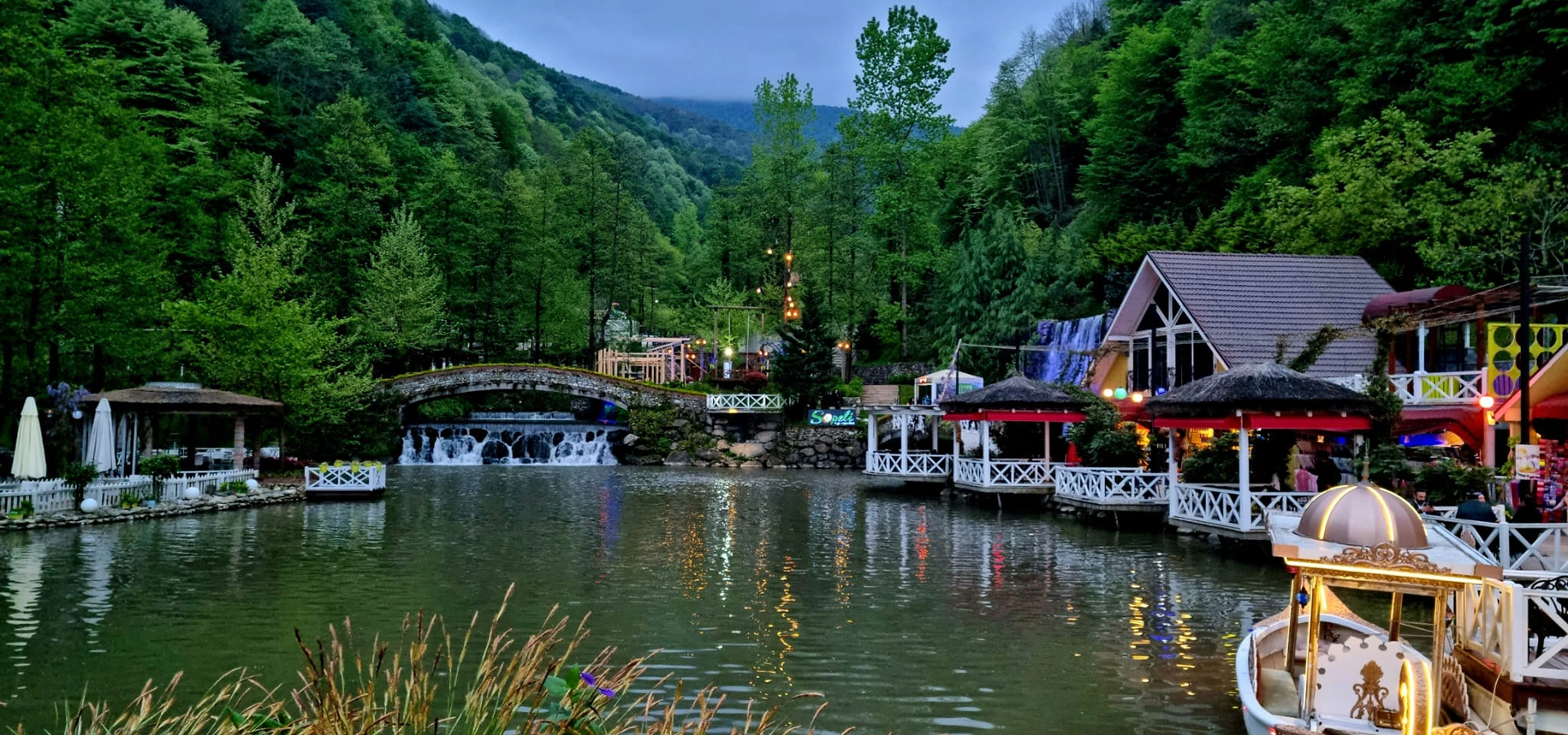
Build a flexible route around Sakarya Abaza Acıkası, Sakarya Abkhaz Cheese, Adapazarı specialities and regional flavours from Sapanca, Hendek, Geyve, Pamukova, Kocaali and beyond.
Request This Tour