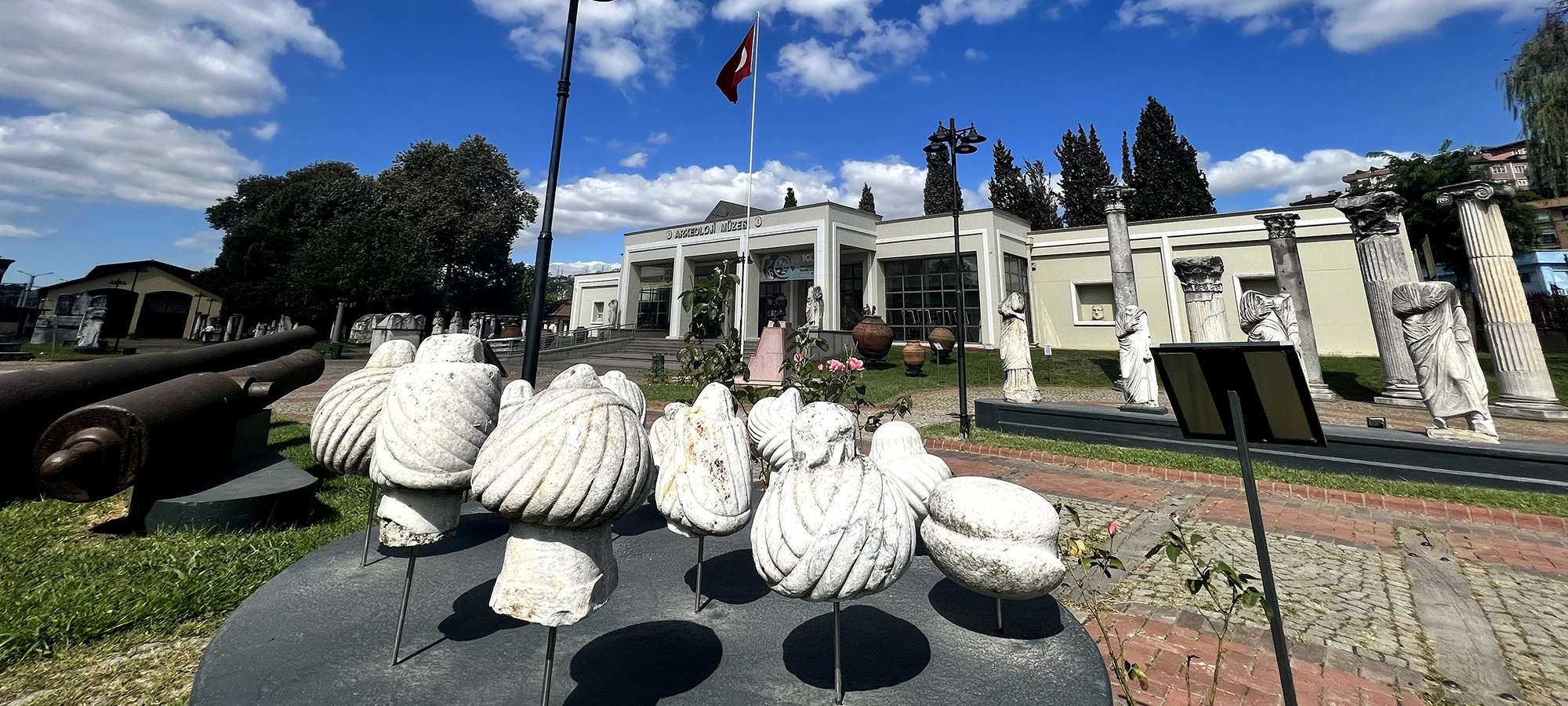
Kocaeli Archaeology Museum
Continue from Osman Hamdi Bey's archaeological legacy into the material history of ancient Nicomedia and the wider Kocaeli region.
Explore Kocaeli Archaeology Museum





On the shore of the Gulf of İzmit in the historic village of Eskihisar, Gebze, stands one of Kocaeli's most meaningful cultural landmarks: the Osman Hamdi Bey House and Museum.
The two-storey summer residence was built in 1884 to plans drawn by Osman Hamdi Bey himself. The estate developed as more than a house: it included the main mansion, a resimhane — painting studio, a kayıkhane — boathouse, service buildings and a wooded garden overlooking the sea.
Osman Hamdi Bey spent the summers of the last 26 years of his life in Eskihisar. The quiet shoreline gave him a retreat from Istanbul and a place to paint, think and work while he was simultaneously shaping the development of modern Ottoman museology, archaeology and fine-arts education.
The house later passed through war, fire, neglect, restoration and museum use. It opened as the Osman Hamdi Bey Museum in 1987. Today, the complex is again the subject of a major conservation and museum-display project under the Turkish Ministry of Culture and Tourism.
Osman Hamdi Bey designed the two-storey summer house and its Eskihisar estate for his own use.
The artist spent the summers of the final 26 years of his life here and produced important paintings in Eskihisar.
The house preserves the memory of one of the most influential figures in the history of painting, archaeology and museums in Türkiye.
As of 2026, the museum remains temporarily closed while restoration, display and landscape works continue.
Essential information about Osman Hamdi Bey's historic home, studio and museum complex in Eskihisar.
Eskihisar Mahallesi,
Gebze, Kocaeli.
1884
Summer house & artist's estate.
Osman Hamdi Bey
Painter, archaeologist & museum director.
1987
Following restoration.
Wooded grounds overlooking
the Gulf of İzmit.
Temporarily closed
Restoration & museum works continue.
Few historic houses in Türkiye connect painting, archaeology, museum reform, architectural taste and personal biography as closely as this one.
The Eskihisar house matters first because of who lived and worked here. Osman Hamdi Bey was not simply a painter. He was also a museum administrator, archaeologist, cultural reformer and educator whose career helped define the institutional world of art and archaeology in the late Ottoman Empire.
As director of the Müze-i Hümayun — Imperial Museum, he played a major role in transforming the Ottoman archaeological collection into a modern museum institution. He also helped establish the Sanayi-i Nefise Mektebi, the school that became a foundation of formal fine-arts education in Türkiye.
His archaeological work connected him with important excavations and discoveries, including work at Nemrut, Lagina and Sidon. At the same time, his paintings created carefully staged images filled with architecture, tiles, carpets, books, costumes and human figures.
The Eskihisar residence brings these different identities together. It is both a private home and a national cultural memory site: a place where the public figure becomes personal, where institutional history meets the daily world of an artist.
Osman Hamdi Bey (1842–1910) was one of the most important cultural figures of the late Ottoman period. Born in Istanbul, he was the son of İbrahim Edhem Pasha and grew up in a family closely connected with government, education and intellectual life.
He was sent to Paris for legal studies, but his interests increasingly turned toward painting. There he studied art and worked in the circles of prominent academic painters, including Jean-Léon Gérôme and Gustave Boulanger.
After returning to the Ottoman Empire, Osman Hamdi Bey built an unusually broad career. He became a painter of complex figurative scenes, served as director of the Imperial Museum, participated in archaeological investigations and promoted institutional approaches to protecting antiquities.
He was also central to the creation of the Sanayi-i Nefise Mektebi, the Ottoman school of fine arts whose institutional legacy continues through today's Mimar Sinan Fine Arts University.
Osman Hamdi Bey is born in Istanbul into the family of İbrahim Edhem Pasha.
He studies in Paris and develops the artistic training that will shape his later painting career.
He becomes one of the defining figures in the modernization of the Ottoman Imperial Museum.
He helps establish the Sanayi-i Nefise Mektebi, an institutional landmark in art education.
His archaeological work links his name with sites including Nemrut, Lagina and Sidon.
Osman Hamdi Bey dies in Istanbul after a career that transformed several fields of Ottoman cultural life.
Osman Hamdi Bey's connection with the Gebze region was linked to his family. His father, İbrahim Edhem Pasha, had property in the wider Gebze area, and Osman Hamdi Bey became familiar with the landscape around Eskihisar.
The village offered something very different from the intensity of Istanbul: sea air, wooded slopes, a small coastal settlement and broad views across the Gulf of İzmit. For an artist, it provided both physical space and visual atmosphere.
In 1884, he established his own summer estate on the western side of Eskihisar. The house was positioned on sloping ground overlooking the shore, with the residence, painting studio, boathouse and garden forming a closely connected environment.
He continued to spend his summers here for 26 years. Eskihisar therefore became not simply a holiday address, but one of the most important landscapes in his personal and artistic life.
The story of the estate stretches from the late Ottoman period to the present day, and its buildings have repeatedly changed function.
Osman Hamdi Bey builds the two-storey summer house in Eskihisar together with the painting studio, boathouse and supporting structures.
He spends the summer seasons here for 26 years, using Eskihisar as both a family retreat and a working environment.
The mansion is allocated for military command use during the First World War.
İsmet İnönü stays at the property for several days while travelling during the struggle for independence.
İsmet İnönü later visits the house again, adding another layer to its twentieth-century history.
The wooden upper floor of the painting studio is destroyed by fire.
The grove and buildings are officially registered for protection.
Major restoration prepares the estate for a new life as a museum.
The house opens to visitors as the Osman Hamdi Bey Museum.
The mansion, studio, boathouse and related areas are assigned to the Ministry of Culture and Tourism for a major new museum project.
A major structural phase of restoration to the house is reported complete, while exhibition, outbuilding and landscape works continue.
The museum remains officially listed as temporarily closed pending completion of the wider project.
The mansion is a two-storey residence whose design is traditionally attributed directly to Osman Hamdi Bey. Official and local heritage descriptions emphasize that he drew the plans himself.
The house reflects French architectural influence rather than simply repeating the form of a conventional Ottoman urban timber house. Its proportions, balconies, decorative timber work and relationship with the garden give it the character of a cosmopolitan late-nineteenth-century summer residence.
Historic descriptions also note that a significant part of the building material was brought from abroad. The result is an architecture that fits naturally into the wooded Eskihisar shoreline while still expressing the European artistic environment Osman Hamdi Bey had encountered in Paris.
The broad upper-floor balconies, projecting eaves, timber façade details, doors, windows and painted decorative elements are especially important to the visual identity of the house.
The mansion was conceived as a compact but elegant summer residence facing the Gulf.
The design reflects the European architectural taste that formed part of Osman Hamdi Bey's wider artistic world.
The upper level opens visually toward the garden and sea, reinforcing the building's character as a summer house.
Wooden construction and ornamental elements give the façades a light, carefully crafted appearance.
The mansion was never isolated from its grounds; house, grove, studio and waterfront formed one ensemble.
Painted floral decorations on interior door panels make the architecture itself part of Osman Hamdi Bey's artistic legacy.
One of the most important things to understand about the site is that it is not only a single historic house. Osman Hamdi Bey created an estate composed of several buildings with different purposes.
The ensemble included the main mansion, resimhane or painting studio, kayıkhane or boathouse and additional service structures, all set within a wooded property above the shore.
The arrangement reflects the rhythms of summer life in Eskihisar. The mansion provided domestic space, the studio supported painting, the boathouse connected the property with the Gulf and the garden created a quiet landscape around them.
This combination is one reason the museum has such potential as a biographical site. A visitor can understand Osman Hamdi Bey not only through objects in a display case, but through the physical environment in which he lived and worked.
The domestic heart of the estate and the principal surviving building associated with Osman Hamdi Bey.
The painting studio connects the site directly with the artist's working life in Eskihisar.
The boathouse reflects the property's intimate connection with the Gulf of İzmit and coastal life.
Supporting structures helped the estate function as a seasonal residence rather than a decorative villa alone.
Trees and garden space provide the landscape setting that made Eskihisar such an attractive summer retreat.
The nearby shore explains the presence of the boathouse and the estate's orientation toward the sea.
The resimhane is one of the most evocative parts of the estate. It reminds visitors that Eskihisar was not simply where Osman Hamdi Bey rested; it was also a place where he worked as a painter.
For decades, the artist returned to this shoreline during the summer. The studio gave him a dedicated space away from Istanbul and helped transform the property into a genuine creative retreat.
The building did not survive unchanged. In 1945, its wooden upper floor was destroyed by fire, one of the most serious losses in the history of the complex.
Later conservation projects sought to protect and interpret the studio together with the mansion and boathouse. The current museum redevelopment again treats the resimhane as a major component of the future visitor experience.
Among the most remarkable details of the house are the painted flower motifs on the wooden door panels of the ground floor. These are not later decorative additions. They are attributed directly to Osman Hamdi Bey.
The floral compositions transform ordinary architectural elements into personal works of art. They reveal an intimate, small-scale side of an artist better known for large, carefully staged figurative paintings.
Because the doors form part of the historic building itself, they are also important conservation objects. During the recent restoration process, the museum authorities took measures to protect these painted panels while work continued around them.
When the museum eventually reopens, these door paintings should be among the details visitors look for most carefully. They make the house itself function almost like a canvas.
Osman Hamdi Bey is best known today for paintings that combine human figures, historic architecture, Ottoman decorative arts and carefully constructed interior settings. His works often resemble windows into an imagined cultural world, yet they are highly deliberate compositions rather than simple documentary scenes.
Among his most famous paintings are The Tortoise Trainer, The Petition Writer, Girl Reciting the Qur'an, The Arms Dealer, Women in the Courtyard of the Şehzadebaşı Mosque, Mihrap, The Fountain of Youth and Girl Gathering Lilacs.
Many of these works are preserved today in major public and private collections rather than in the Eskihisar house itself. The museum's significance therefore lies less in functioning as a conventional picture gallery and more in connecting the artist's biography with the place where he spent so much of his working life.
Historic museum displays included personal belongings, family photographs and paintings or works associated with Osman Hamdi Bey. Because the museum is being redesigned, the exact future exhibition arrangement should be confirmed after reopening.
His most famous painting and one of the most widely recognized works in the history of Turkish art.
Osman Hamdi Bey helped establish large-scale figural composition as a major part of late Ottoman painting.
Historic interiors, tiled walls, carpets, books and monuments often become essential parts of his visual storytelling.
Several works depict women reading, making music, gathering flowers or occupying architectural space.
His paintings frequently foreground textiles, tiles, inscriptions, furniture, weapons and decorative objects.
The summer house provides the personal landscape behind the public career of this internationally known painter.
Osman Hamdi Bey's legacy reaches far beyond painting. His career was deeply connected with the development of archaeology and the protection of antiquities in the Ottoman Empire.
He participated in or directed archaeological work at several important sites, including Nemrut, Lagina and Sidon. His work at Sidon in the late 1880s is particularly famous because the royal necropolis produced a remarkable group of sarcophagi.
Among them was the monument now known as the Alexander Sarcophagus, one of the masterpieces of the Istanbul Archaeological Museums. The discoveries helped demonstrate why the Ottoman capital needed a purpose-built archaeological museum capable of displaying major finds.
Osman Hamdi Bey therefore belongs to an unusual category: he was both an artist who represented the past and a museum professional who physically excavated, protected and interpreted antiquity.
Osman Hamdi Bey became director of the Müze-i Hümayun — Imperial Museum in 1881. His period in office transformed the institution's scale, professional ambition and international importance.
He supported archaeological research, collection management, museum architecture and stronger legal protection for antiquities. The 1884 antiquities regulation became an important landmark in efforts to prevent archaeological objects from leaving Ottoman territory without state control.
He also advocated for a purpose-built archaeological museum in Istanbul. The great neoclassical museum building designed by Alexander Vallaury opened in 1891 and remains one of the defining monuments of the Istanbul Archaeological Museums complex.
Seen from this perspective, the quiet summer house in Eskihisar belonged to a man whose professional life was involved in questions that remain central today: Who protects cultural heritage? Where should ancient objects be preserved? How should museums educate the public?
Osman Hamdi Bey was also a central figure in the creation of the Sanayi-i Nefise Mektebi, the Ottoman school of fine arts established in Istanbul in the early 1880s.
The institution brought formal training in painting, sculpture, architecture and related arts into a modern academic framework. Its history would eventually lead to the institution known today as Mimar Sinan Fine Arts University.
The school reveals another side of Osman Hamdi Bey's career. He was not satisfied simply to produce his own paintings. He worked to create institutions capable of training future artists and professionals.
This is why his Eskihisar house belongs to more than art history. It is also connected to the history of education, museum formation and professional cultural institutions in Türkiye.
After Osman Hamdi Bey's death in 1910, the property entered a very different period. During World War I, the mansion was allocated for use by a military command.
The house was therefore temporarily transformed from an artist's summer retreat into a building serving the needs of wartime administration.
During the period of the Turkish War of Independence, İsmet İnönü also stayed here for several days while travelling. He later returned to visit the property in 1933.
These episodes add another layer to the site's history. The mansion is not only associated with the cultural modernization of the late Ottoman Empire, but also with the turbulent transition into the twentieth-century Turkish Republic.
The estate did not survive the twentieth century without damage. In 1945, the wooden upper floor of the painting studio was destroyed by fire.
By the middle of the century, the long-term survival of the property had become an increasingly serious heritage concern. The buildings and surrounding grove were formally registered for protection in 1966.
That designation was an important step, but physical conservation was still required. Major restoration work began in the 1980s, seeking to return the complex to a condition appropriate for museum use.
After approximately two years of work, the restored house opened in 1987 as the Osman Hamdi Bey Museum, allowing the public to enter a place that had once been a private seasonal residence.
Following restoration, the house opened to visitors in 1987 as a museum dedicated to the life and work of Osman Hamdi Bey.
Historic descriptions of the museum refer to displays containing personal belongings, family photographs, paintings and objects associated with the artist. The house itself remained the most important object in the collection: rooms, doors, balconies and the relationship between residence and studio gave the displays their meaning.
Museum-house interpretation is very different from a conventional gallery. Rather than presenting hundreds of unrelated objects, the experience depends on place, biography and atmosphere.
That is especially appropriate for Osman Hamdi Bey. His public career was institutional and international, but Eskihisar reveals the quieter private world behind it.
In 2021, the mansion, painting studio, boathouse and related areas were assigned to the Ministry of Culture and Tourism for a major conservation and museum-development project.
The Ministry announced plans to develop the site as a prestige museum that would tell the story of Osman Hamdi Bey, Turkish museology and cultural heritage through a more extensive visitor experience.
A government response concerning the project reported that an important structural restoration phase of the house was completed on 7 January 2024. This work included intervention to deteriorated timber structural elements, correction of settlement, roof and façade work and infrastructure improvements. The resimhane also received structural strengthening.
However, the wider project continued beyond that phase. Planned work included exhibition installation, finishing works, restoration of the boathouse, studio exhibition areas, walking routes, lighting and landscaping of the grove.
As of September 2026, the official Turkish museum listing still marks Osman Hamdi Bey Museum as temporarily closed and gives no normal visitor schedule. The museum should therefore be treated as closed for interior visits until an official reopening announcement is issued.
Deteriorated timber elements and areas affected by settlement were treated as part of the restoration program.
Necessary roof and exterior elements were renewed or repaired as part of the main house conservation phase.
The painting studio has required strengthening as well as preparation for future exhibition use.
The boathouse forms part of the wider restoration and interpretation project.
The project includes new museum display and interpretation rather than restoration of the architecture alone.
Paths, lighting and the grove are intended to become part of the renewed visitor experience.
When the Ministry announced the redevelopment, the goal was not simply to reopen the same museum exactly as before. The project was described as a broader cultural center focused on Osman Hamdi Bey, the history of Turkish museology and art education.
Plans have included spaces for exhibitions, panels, conferences, meetings, workshops and cultural events, along with educational areas intended to help children engage with museums and art.
The resimhane and surrounding grove were also envisioned as active parts of the experience rather than passive background scenery.
Because the project is still incomplete, visitors should treat these elements as planned functions rather than assume that every announced feature is already operating. The final museum layout will only be clear after the official reopening.
Study the scale, timber architecture and elegant proportions of the two-storey 1884 summer residence.
The broad balconies are among the most distinctive architectural features of the house and emphasize its summer-house character.
Look for the painted flower motifs attributed directly to Osman Hamdi Bey on ground-floor wooden doors.
The painting studio is one of the most important structures for understanding Eskihisar as a working artistic retreat.
The boathouse connects the property physically and historically with the Gulf of İzmit.
The trees and landscaped surroundings are an essential part of the estate rather than simply a decorative garden.
Notice how the sloping property is positioned to look toward the shore and maritime route below.
After reopening, pay attention to how the new exhibition explains the connections between painting, archaeology and museology.
The koru — grove surrounding the house is central to the character of the site. Osman Hamdi Bey chose Eskihisar precisely because it offered a landscape of trees, water and relative quiet close enough to Istanbul to remain connected with the capital.
The house stands on sloping ground above the shore, and its architecture is oriented toward the Gulf. The relationship between balcony, garden, studio and sea helps explain why the estate feels so different from an urban museum.
Even before entering the house, the visitor can understand the logic of the property: this was a place designed for seasonal living and creative work.
The current museum project includes further landscaping and walking-route improvements, which should strengthen the role of the grounds once the complex fully reopens.
The site is exceptionally photogenic because the house combines ornamental timber architecture, wide balconies, mature trees and a coastal setting.
Wide compositions can show the relationship between the mansion and garden, while closer photographs can focus on balcony brackets, eaves, windows, painted details and timber craftsmanship.
When access allows, the strongest visual story is not simply a front-façade photograph. Try to include the resimhane, garden or Gulf setting to show the estate as a whole.
Because restoration remains active, obey all barriers and temporary access restrictions. Do not enter work areas for photographs.
The property occupies sloping ground above the Eskihisar shoreline and includes multiple historic buildings rather than one modern museum structure.
This means accessibility can vary between the garden, main mansion, painting studio and boathouse. Historic thresholds, stairs and changes in level may affect step-free movement.
The current redevelopment includes landscape and visitor-route work, so the final accessibility arrangements may differ from those of the former museum.
Visitors who require wheelchair access, step-free entry or specific assistance should confirm current arrangements directly with the museum after the reopening date is announced.
The museum is officially listed as temporarily closed in 2026. Confirm reopening before travelling specifically for the interior.
Pre-restoration schedules circulating online are not valid evidence of current interior access.
Even while the museum is closed, the historic village and waterfront make the area worth combining with other nearby sights.
The medieval castle and the Osman Hamdi Bey estate form the strongest cultural pairing in Eskihisar.
When access resumes, do not focus only on the mansion; the studio, boathouse and grove are essential to the story.
The floral paintings on the wooden door panels are among the property's most personal artistic details.
Eskihisar's waterfront setting is part of the atmosphere that attracted Osman Hamdi Bey to the area.
Ticket policy, opening days and photography rules may change when the renewed museum begins operating.
The museum is located in Eskihisar Mahallesi, Gebze, Kocaeli, on the historic shoreline of the Gulf of İzmit.
As of September 2026, the official Ministry museum listing identifies Osman Hamdi Bey Museum as closed. Its listed opening, closing and ticket-office times are therefore not functioning visitor hours.
The closure is connected with the continuing restoration, exhibition-installation and landscape project for the mansion, resimhane, kayıkhane and surrounding grove.
There is currently no official reopening date that should be treated as confirmed. Visitors should check Turkish Museums or the Ministry of Culture and Tourism before making a dedicated museum trip.
Eskihisar Mahallesi, Gebze, Kocaeli
Temporarily closed as of September 2026.
Not currently available while the museum project continues.
No normal museum schedule should be relied upon until reopening.
Current post-restoration ticket policy has not yet been confirmed.
Planned after restoration, exhibition-installation and landscape works are completed.
The house is in Eskihisar, a coastal neighborhood of Gebze on the northern shore of the Gulf of İzmit.
From central Gebze, the area can be reached by municipal transport, taxi or private vehicle. The museum lies close to the Eskihisar waterfront and ferry zone, making it easy to identify once you reach the coastal part of the neighborhood.
When using navigation, search for “Osman Hamdi Bey Evi ve Müzesi” or “Osman Hamdi Bey Müzesi Eskihisar”.
Visitors coming from Istanbul can reach Gebze by road or rail and continue locally toward Eskihisar. If driving, the area is also convenient for combining with Eskihisar Castle and other sights around Gebze.
Continue south toward Eskihisar and the Gulf shoreline by local transport, taxi or car.
Reach Gebze by train, then continue to Eskihisar with local road transport.
Ask for Osman Hamdi Bey Müzesi, Eskihisar Sahili.
Navigate toward Eskihisar waterfront and follow local signs for the museum and historic village area.
Begin at the Osman Hamdi Bey House Museum to understand why this quiet shoreline became one of the most important personal places in the life of the artist, archaeologist and museum director. If the interior is still closed, view only the areas that are officially accessible and do not enter restoration zones.
Next, continue to Eskihisar Castle, the medieval fortress rising above the coast. The castle provides a completely different historical layer and excellent views over the Gulf.
After the castle, walk down through Eskihisar village and the waterfront. The shore is essential to understanding the summer atmosphere that attracted Osman Hamdi Bey to this location.
If you have additional time, continue toward Gebze for further historic monuments or expand the day into a wider Kocaeli itinerary.
Osman Hamdi Bey House Museum – art, biography, museum history and the 1884 summer estate.
Eskihisar Castle – medieval fortifications and panoramic views above the Gulf shoreline.
Eskihisar Waterfront – experience the maritime setting that shaped the character of Osman Hamdi Bey's retreat.
Gebze or wider Kocaeli – continue through additional historic, archaeological and natural attractions.
A quick exterior look if the museum remains closed and access is limited.
Enough for the house exterior, accessible garden surroundings and a short walk toward the shore.
A sensible future museum-house visit once interior galleries and the estate fully reopen.
Allow more time after reopening if the resimhane, exhibitions and grounds are fully accessible.
Combine the museum with Eskihisar Castle, village streets and the waterfront.
Add Gebze and other attractions in western Kocaeli for a broader regional itinerary.
The Eskihisar setting is attractive throughout the year, but the character of the visit changes noticeably with the seasons. Because the museum is currently closed, seasonal advice mainly concerns the historic village, waterfront and exterior environment until reopening.
Fresh greenery suits the wooded estate especially well and makes Eskihisar pleasant for a longer heritage walk.
The season most closely reflects the original use of the property as Osman Hamdi Bey's summer retreat.
Changing foliage and softer light create an atmospheric setting for the house and shoreline.
Quieter streets and the Gulf can be beautiful, although coastal weather may feel cold and windy.
A calm time for combining the museum area with Eskihisar Castle before the waterfront becomes busier.
Often attractive for photography around the sea-facing architecture and Gulf shoreline.
The museum is particularly well positioned for an Eskihisar heritage itinerary. The village combines the house, castle, waterfront and traditional coastal atmosphere within a compact area.
For a wider journey through the province, use our complete Kocaeli travel guide to continue toward İzmit, Gölcük, museums, industrial heritage, forests and the Gulf coastline.
Explore the medieval fortress above the village and enjoy wide views over the Gulf of İzmit.
Walk the shore that formed the maritime landscape of Osman Hamdi Bey's summer retreat.
Continue into the district center for further Ottoman and urban heritage.
Combine cultural history with one of the most distinctive canyon landscapes in the Gebze region.
Continue along the Marmara coast for parks, seaside areas and additional attractions.
Travel farther east for ancient Nicomedia, Ottoman monuments, railway heritage and major Kocaeli museums.
The museum is in Eskihisar Mahallesi, Gebze, Kocaeli, overlooking the Gulf of İzmit.
It is generally known as Osman Hamdi Bey Evi ve Müzesi or Osman Hamdi Bey Müzesi.
The two-storey summer residence was built in 1884.
The plans are attributed to Osman Hamdi Bey himself.
He used Eskihisar as a summer retreat and working environment, drawn by the Gulf landscape and his family's earlier connection with the Gebze area.
Official heritage sources state that he spent the summers of 26 years at the Eskihisar property.
No. The estate included the main mansion, painting studio, boathouse, service structures and a wooded grove.
Resimhane means the painting studio — the building associated with Osman Hamdi Bey's artistic work at Eskihisar.
The wooden upper floor of the resimhane was destroyed by fire in 1945.
Wooden door panels on the ground floor carry floral paintings attributed directly to Osman Hamdi Bey.
He was a painter, museum director, archaeologist and educator who became one of the most influential cultural figures of the late Ottoman Empire.
His best-known work is The Tortoise Trainer — Kaplumbağa Terbiyecisi.
Yes. His archaeological career is associated with important work at sites including Nemrut, Lagina and Sidon.
He directed the Ottoman Imperial Museum and became a central figure in the development of modern museum practice and antiquities protection.
Yes. He played a central role in the creation of the Sanayi-i Nefise Mektebi, a predecessor of today's Mimar Sinan Fine Arts University.
Yes. The mansion was allocated for military command use during World War I.
Yes. Official heritage sources record that İsmet İnönü stayed here for several days during the War of Independence period and visited again in 1933.
The grove and buildings were officially registered in 1966.
Following restoration, the property opened as the Osman Hamdi Bey Museum in 1987.
No. As of September 2026, the official Turkish museum listing marks the museum as temporarily closed.
The site is undergoing a wider program of restoration, exhibition installation and landscape improvement involving the mansion, studio, boathouse and grove.
An official final reopening date is not currently confirmed. The Ministry states that the museum is planned to reopen after the remaining works are completed.
No. Older schedules should not be relied upon while the museum's official status remains closed.
Allow roughly 45–90 minutes for the mansion, exhibitions, studio and grounds, depending on the final visitor route.
The easiest additions are Eskihisar Castle, Eskihisar waterfront, Gebze and the wider western Kocaeli region.
Yes. Once reopened, it should be one of Kocaeli's most important destinations for visitors interested in art, archaeology, museums, Ottoman cultural history and historic houses.
The great public institutions associated with Osman Hamdi Bey can feel monumental: archaeological museums, art academies, excavations, laws and paintings that now belong to national collections.
Eskihisar offers something different. Here, the story becomes human in scale. There is a summer house, a balcony, a studio, a boathouse and a garden looking toward the Gulf.
These spaces help us imagine Osman Hamdi Bey not only as an official figure, but as a man returning each summer to the same shoreline, working on paintings and building a private environment shaped by his own architectural and artistic taste.
The house also reflects the fragility of cultural heritage. It survived war, a serious studio fire, periods of neglect and repeated restoration. Its current conservation project is therefore another chapter in the same long history of protection.
When the museum reopens, its greatest strength will not be one single object. It will be the combination of place, architecture, art, biography, museum history and the landscape of Eskihisar.
Osman Hamdi Bey House connects Kocaeli with the history of Turkish painting, archaeology and museums. Continue through the province for ancient Nicomedia, Ottoman architecture, railway heritage, science and the Gulf.
From Eskihisar, follow Kocaeli's story eastward through archaeology, Ottoman monuments and modern cultural institutions.
Continue from Osman Hamdi Bey's archaeological legacy into the material history of ancient Nicomedia and the wider Kocaeli region.
Explore Kocaeli Archaeology Museum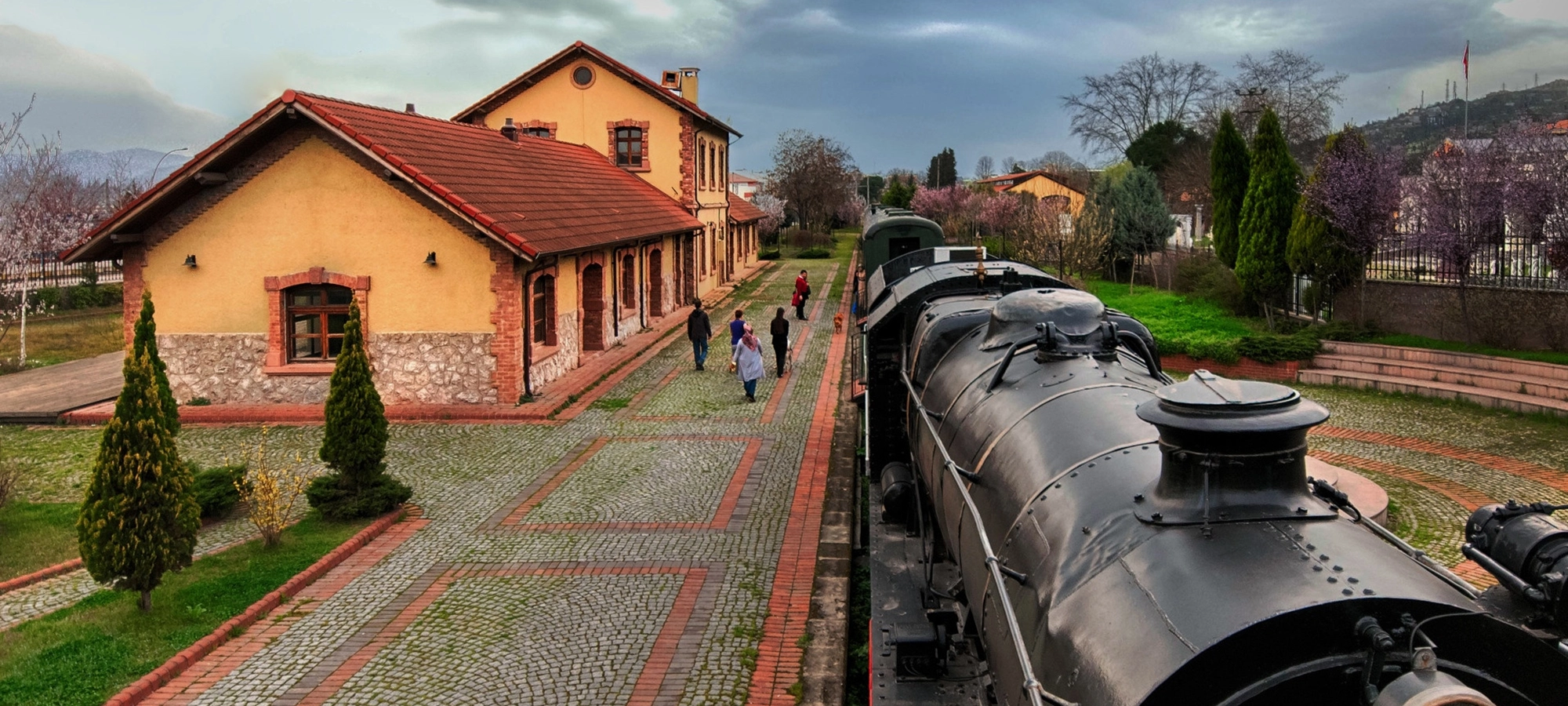
Explore another late Ottoman story through the railway complex that transformed İzmit's connection with Istanbul and Anatolia.
Explore Historical İzmit Train Station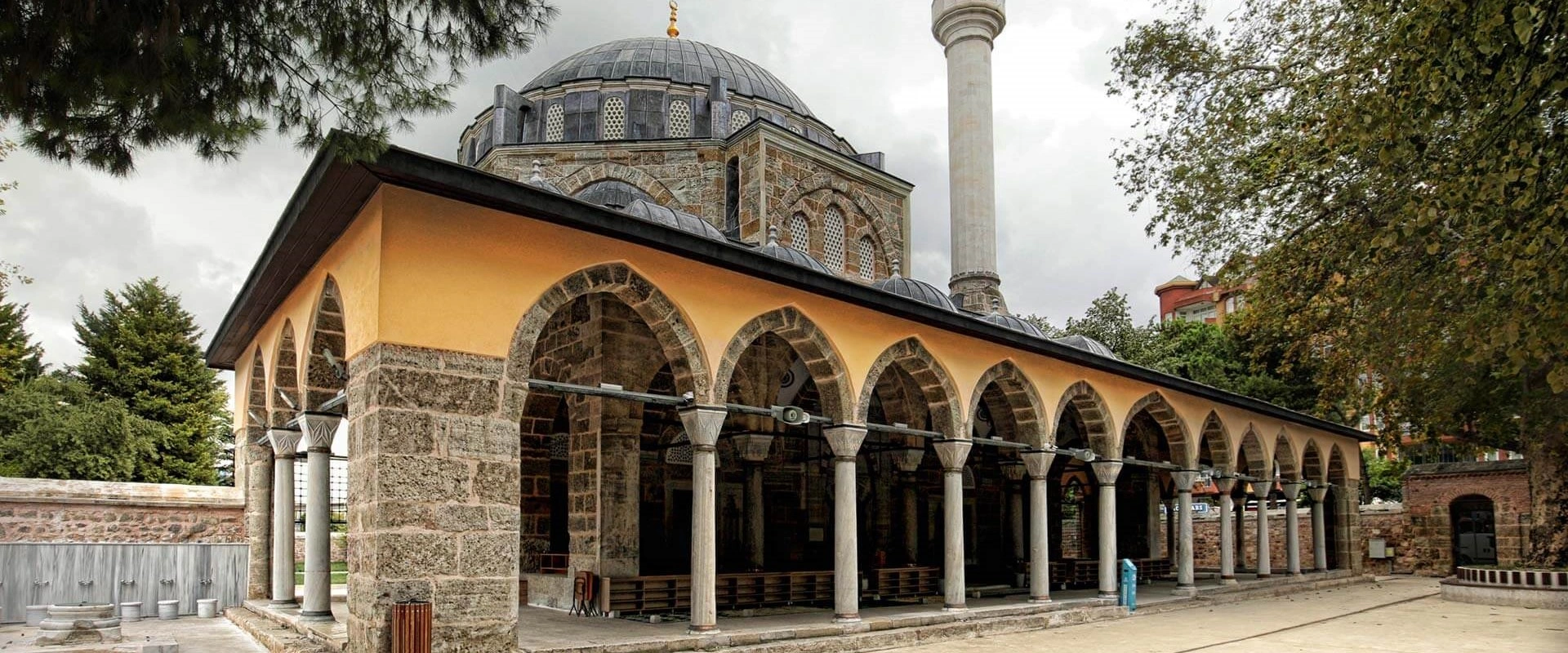
Step farther back into Ottoman architecture at one of İzmit's finest monuments associated with Mimar Sinan.
Explore Pertev Mehmet Pasha MosqueMuseums, technology and the Gulf reveal other chapters in the province's remarkably varied story.
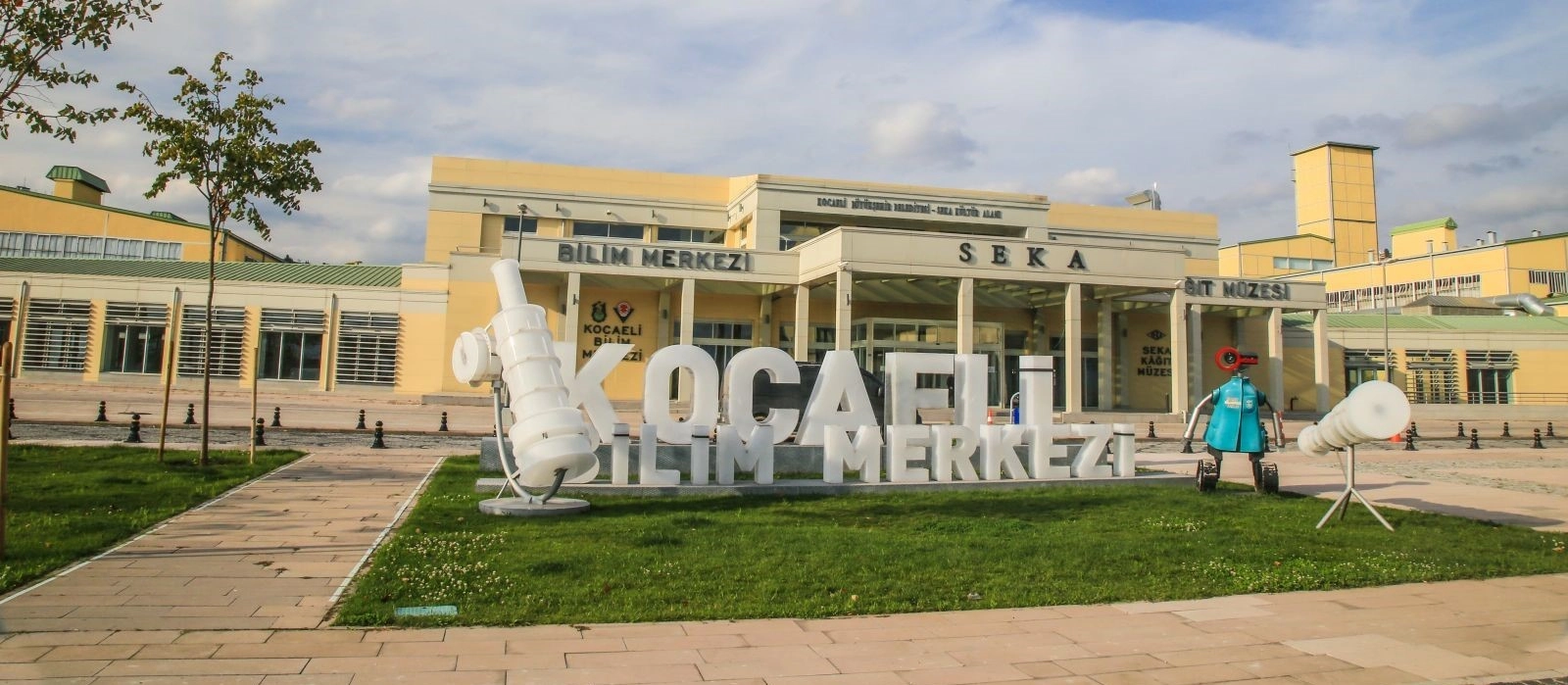
Continue from nineteenth-century cultural modernization into an interactive museum dedicated to science, experimentation and technology.
Explore Kocaeli Science Center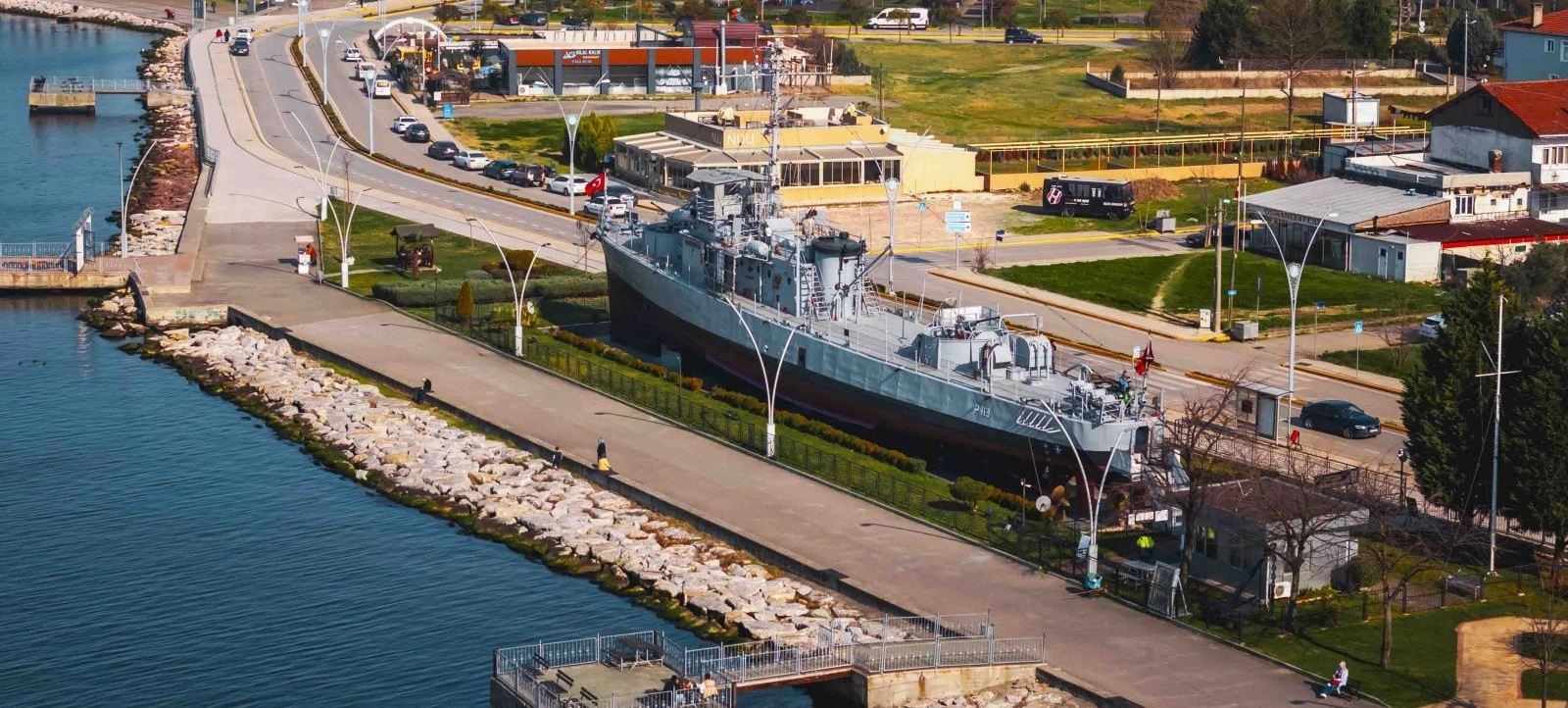
Follow the Gulf eastward to Gölcük and explore the maritime and naval heritage that shaped modern Kocaeli.
Explore Yarhisar Museum Ship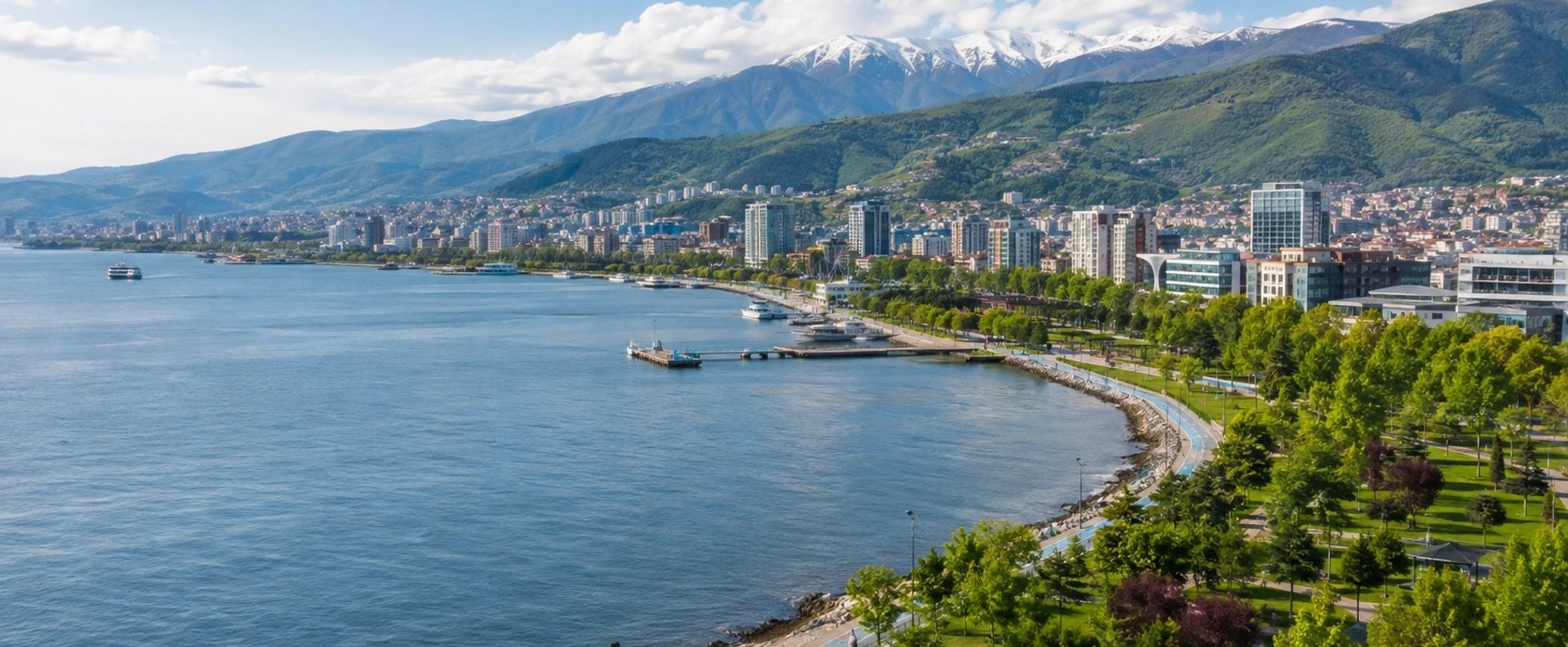
Continue through ancient sites, Ottoman monuments, museums, industrial heritage, forests, coastlines and the communities surrounding the Gulf.
Discover Kocaeli