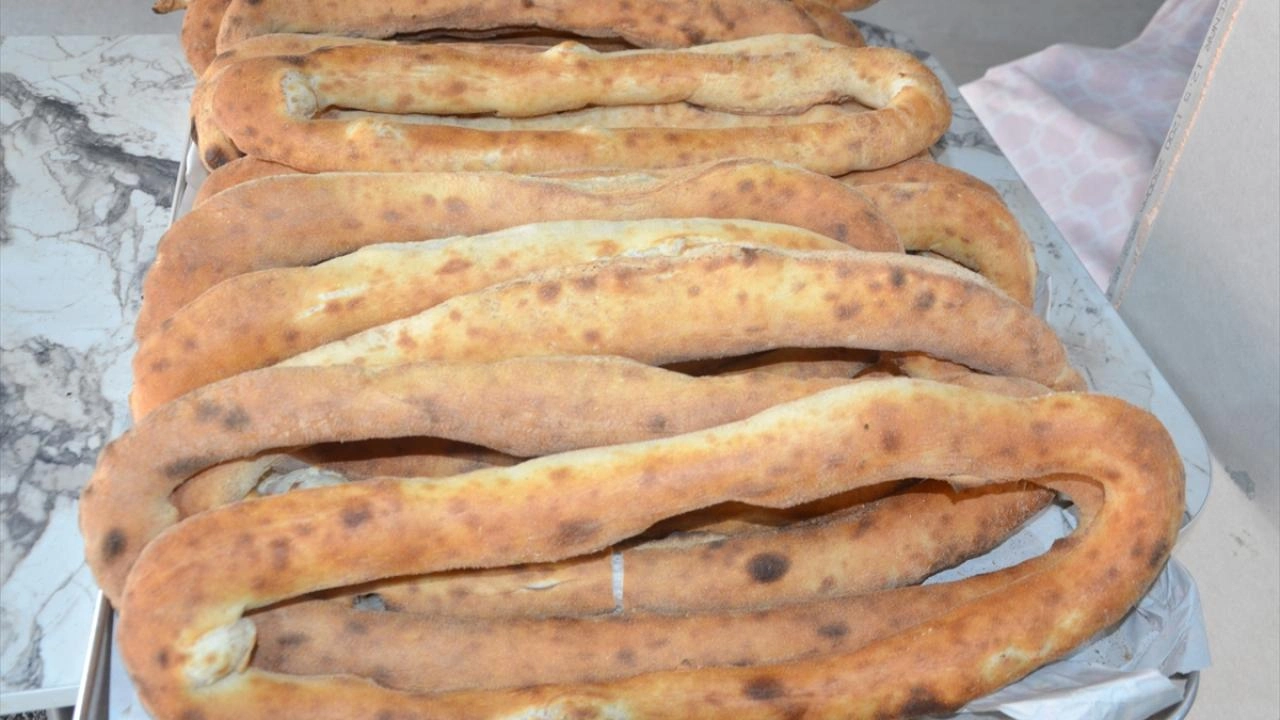
Karamürsel Stuffed Simit
Stay in Karamürsel and discover a distinctive local bakery tradition from the southern shore of the Gulf of İzmit.
Discover Karamürsel Stuffed Simit





On the southern shore of the Gulf of İzmit, Karamürsel is known not only for its maritime history and fertile countryside, but also for one of Kocaeli's most distinctive traditional handicrafts: the Karamürsel Basket.
Handwoven from carefully prepared chestnut shoots and strips, the basket developed as a practical tool for collecting and carrying fresh agricultural produce. Its unusual form allows it to appear relatively compact from the outside while providing a surprisingly generous interior volume.
For generations, local farmers used these baskets while gathering cherries, plums, olives and other fruit, valuing their lightness, ventilation and ability to carry delicate produce without crushing it as easily as rigid containers might.
Yet the Karamürsel Basket became much more than a farm implement. A popular Ottoman-era story links it with Sultan Abdülaziz, a basket full of cherries and the famous Turkish expression associated with judging something too quickly by its outward appearance.
Today, the basket is recognised as an important element of Kocaeli's traditional craft heritage and holds an official Turkish geographical indication as a Mahreç İşareti. Its survival depends on the continuation of specialist weaving knowledge that has become increasingly rare.
The Karamürsel Basket received official geographical indication registration.
The traditional basket is protected under Turkish geographical indication registration number 143.
Traditional production relies on carefully selected chestnut shoots prepared into flexible weaving strips.
A traditional basket can carry a surprisingly large quantity of fresh fruit despite its compact appearance.
Essential information about one of Kocaeli's most recognisable traditional handicrafts.
Karamürsel,
Kocaeli, Türkiye.
Traditional
handwoven basketry.
Prepared strips from
chestnut shoots.
Kuşak
decorative-strengthening band.
Mahreç İşareti
Registration No. 143.
7 March 2011.
The basket preserves the memory of traditional agriculture, local craftsmanship and the everyday rural life of southern Kocaeli.
The cultural importance of the Karamürsel Basket comes from the way it connects landscape, agriculture, craftsmanship and local identity.
Before plastic crates and modern harvesting containers became widespread, rural communities depended on objects made from materials available in their immediate environment. Basketry was therefore not decorative work alone. It was an essential part of agricultural life.
In Karamürsel, woodland resources and fruit-growing traditions encouraged the development of a distinctive basket form adapted to the needs of local farmers. The basket had to be light enough to carry, strong enough to reuse and open enough to protect fresh produce.
Its continued recognition today is important because traditional basket weaving survives through human skill rather than industrial machinery. The knowledge lies in choosing suitable shoots, splitting them correctly, softening the strips, controlling tension and shaping the basket by hand.
Basket weaving belongs to one of humanity's oldest craft traditions. Flexible branches, reeds, stems and split wood have been used for thousands of years to create containers for gathering, storing and transporting food.
The precise date when the characteristic Karamürsel form first appeared is not known with certainty. What is clear is that basket weaving became deeply rooted in the agricultural life of the district.
Karamürsel lies between the Gulf of İzmit and the lower slopes of the Samanlı Mountains, an environment historically associated with orchards, gardens, woodland resources and rural production.
Baskets were used during harvest to collect fresh produce and carry it from orchards and fields without unnecessary damage. Over time, local craftspeople developed specialised forms and weaving methods suited to these tasks.
The best-known result became the kuşaklı Karamürsel sepeti — the belted or banded Karamürsel Basket whose shape, capacity and construction distinguish it from many ordinary woven containers.
One of the most famous stories associated with the basket takes place during the reign of Ottoman Sultan Abdülaziz.
According to local tradition, the sultan came to the area around Hereke and representatives from Karamürsel decided to present him with a gift from their fertile district.
They chose cherries, carefully filling a traditional Karamürsel Basket before taking the fruit across the Gulf.
The basket apparently looked modest when it was presented. A large tray was therefore brought so that the cherries could be emptied from it. But when the contents were poured out, the quantity of fruit was greater than the basket's small exterior appearance had suggested.
The story eventually became associated with the well-known expression: “Ufacık tefecik gördün de Karamürsel sepeti mi sandın?”
The exact wording and details vary between retellings, so the episode is best approached as a cherished local tradition rather than a fully documented court record. Its cultural importance, however, is undeniable. The story transformed an everyday agricultural object into one of Karamürsel's most memorable symbols.
Traditional crafts rarely become part of a language, but the Karamürsel Basket achieved precisely that.
The expression connected with the basket is used humorously when something or someone should not be underestimated because of size or outward appearance.
Its meaning comes directly from the physical form of the traditional basket. The woven body expands outward in a way that gives it a larger useful capacity than the first glance suggests.
The phrase therefore preserves a piece of Karamürsel's material culture inside everyday Turkish speech. Even people who have never seen an original basket may recognise the name because of the saying.
For travellers, seeing the real object adds another layer to the expression. A familiar phrase suddenly becomes connected with orchards, chestnut wood, hand craftsmanship and a specific town on the Marmara coast.
The Karamürsel Basket is not simply marketed as a local product. It is officially recognised within Türkiye's geographical indication system.
The application was made by Karamürsel Municipality and the product was registered under registration number 143.
The registration date is 7 March 2011, and the geographical indication type is Mahreç İşareti.
The registration describes the basket as a handwoven product made from shoots growing from chestnut roots, locally known as “şah”.
It also emphasises the basket's distinctive workmanship, its relatively large internal capacity, its agricultural function and the traditional weaving methods that give the finished object its strength and character.
Karamürsel Sepeti.
Mahreç İşareti.
No. 143.
7 March 2011.
Karamürsel Municipality.
Kocaeli.
The registered traditional form of the Karamürsel Basket is closely associated with chestnut wood.
Young shoots emerging from the root area of the chestnut tree are locally known as şah. Straight, healthy and relatively knot-free shoots are preferred because they can be split into long, flexible strips suitable for weaving.
After cutting, the shoots are allowed to lose some moisture and are then split lengthwise into thin strips. The craftsman must judge the thickness carefully. A strip that is too thick will resist bending, while one that is too thin may lack strength.
The prepared pieces are soaked in water before weaving. This softens the wood, increases flexibility and reduces the risk of cracking while the basket is being shaped.
Some parts retain the darker outer bark, creating natural colour contrast in the finished basket and helping define the characteristic kuşak bands.
The basket is created through a sequence of operations that require patience, hand strength, wood knowledge and precise control of tension.
Although every master's movements may differ slightly, the process can be understood through four broad stages: preparing the material, forming the base, raising and weaving the body, and finishing the rim.
Chestnut shoots are selected, dried, split into strips and softened with water.
Strong strips are crossed and woven to establish the basket's central foundation.
The structural strips are bent upward and the characteristic expanding body is woven by hand.
The upper edge is strengthened and the remaining strip ends are carefully trimmed.
Traditional production begins at the bottom. Several strong strips are arranged in a crossing pattern to create the framework of the base. The weaver then works around this centre, passing flexible strips alternately above and below the structural pieces.
Once the base is established, the upright elements are bent to form the basket's walls. The weaver gradually controls the widening profile that gives the Karamürsel Basket its distinctive shape.
The result cannot be reproduced simply by following measurements. Much of the final form depends on the eye and experience of the craftsperson.
Several different weaving movements are used to build strength, shape and visual rhythm into the basket.
One of the most basic is tekleme, a simple over-under technique in which the weaving strip alternates around the vertical structural elements.
Another method is ikileme, where paired strips work around the uprights and cross between them. This creates a firmer structural relationship between the vertical elements.
The characteristic darker band is produced using a more complex multi-strip treatment often described through üçleme. This is particularly important in creating the section known as the kuşak.
Rather than relying on a single repetitive weave, the traditional basket therefore combines techniques according to the structural needs of each part.
A classic one-over, one-under weaving method used through important sections of the basket.
Two weaving strips work together to stabilise and strengthen the structure.
A three-strip technique associated with stronger decorative and structural bands.
The distinctive band that gives the “Kuşaklı Karamürsel Sepeti” its recognisable identity.
The word kuşak means a belt or band, and it describes one of the most visually recognisable elements of the traditional basket.
The band is commonly produced using unpeeled chestnut material, whose darker natural surface contrasts with the lighter split wood around it.
It is not merely decorative. The kuşak also helps organise and reinforce the woven structure as the basket expands upward from its narrower base.
A similar treatment can be used around the upper portion of the basket, helping create a strong finished rim.
This feature is important enough that the traditional object is frequently described as the Kuşaklı Karamürsel Sepeti — the Banded Karamürsel Basket.
The most famous physical characteristic of the basket is its deceptive capacity.
Its lower portion is relatively narrow, while the woven body expands outward. This produces an oval or gently widening form that can appear modest when viewed from certain angles.
Inside, however, the basket offers substantially more space than its first impression suggests. This unusual geometry is one reason the Karamürsel Basket became so useful during harvest.
Traditional examples are handmade rather than industrially moulded, so dimensions naturally vary. The official geographical indication specification describes a basket intended to carry approximately 6–8 kilograms of fruit or vegetables.
The shape therefore expresses a practical design intelligence developed through generations of use: maximum useful volume without unnecessary bulk.
The traditional basket was created first and foremost as a working agricultural object.
Karamürsel and the surrounding countryside have long produced fruit and other agricultural products. During harvest, workers needed containers that could be carried easily among trees and plants while keeping freshly picked produce in good condition.
The open weave allows air to circulate, while the flexible wooden structure avoids some of the hard pressure points associated with rigid metal or plastic containers.
The basket's shape also distributes the contents through a wider body instead of concentrating everything in a narrow vertical space.
Traditional accounts particularly associate the basket with cherries, plums, olives and other fresh produce.
Because the object was durable and repairable, a well-made basket could remain part of a family's agricultural equipment for years.
Basket weaving is closely connected with the behaviour of natural materials. Wood that is too dry becomes brittle, while properly softened strips can be bent and tightened without breaking.
Traditional accounts from Karamürsel explain that cooler months are especially suitable for weaving because soaked wooden strips retain moisture longer than they do during hot summer weather.
The preparation of chestnut shoots also follows seasonal patterns. Young shoots are collected at suitable times, dried, split and later rehydrated before weaving.
This means the craft follows a rhythm very different from factory production. The maker must respond to temperature, humidity, wood quality and the flexibility of each individual strip.
Understanding this seasonal relationship helps explain why basketry is a form of environmental knowledge as well as manual skill.
One of the remarkable aspects of the craft is the simplicity of its equipment. Traditional basket makers do not require an industrial workshop filled with machines.
The essential tools are mainly used to cut, split, shape and trim the wooden material.
Used for splitting, thinning and trimming the prepared chestnut strips.
Useful for cutting selected plant material and controlling strip length.
Traditionally used during preparation and shaping of thicker wooden elements.
Not a tool in the conventional sense, but essential for softening the wood and keeping it flexible.
The limited equipment makes one point especially clear: the real technology of the Karamürsel Basket is the craftsperson's knowledge.
The difficulty is not owning the tools. It is learning how to use them with enough sensitivity to turn an irregular natural material into a balanced, strong and functional form.
A finished Karamürsel Basket may look simple, but producing one consistently requires years of accumulated judgement.
The maker must recognise which chestnut shoots are usable, how long to dry them, how thinly to split them and how much water they need before weaving.
During construction, the craftsperson constantly adjusts spacing, tension, curvature and symmetry.
Too much tension can snap a strip. Too little can produce a weak and irregular wall. Poorly controlled expansion can destroy the characteristic Karamürsel profile.
This is why traditional basketry is difficult to preserve through written instructions alone. Much of the technique is learned by watching experienced hands and repeating the movements directly.
The survival of the craft therefore depends on something more fragile than the basket itself: the continued transmission of knowledge between generations.
Like many labour-intensive handicrafts, traditional basket making has struggled to compete with inexpensive industrial alternatives.
Plastic buckets, crates and mass-produced containers are cheap, standardised and immediately available. For farmers focused purely on cost, they can appear more practical than commissioning a handmade basket.
At the same time, traditional production requires suitable natural material and specialised manual skill. Both have become harder to sustain as fewer people choose basket making as a profession.
Local craftspeople and institutions have therefore worked to keep the tradition visible through demonstrations, courses, exhibitions and cultural promotion.
The geographical indication also provides an important framework for protecting the identity of the authentic Karamürsel Basket.
Although its original purpose was agricultural, the basket has gradually taken on new roles.
Traditional examples are still valued for fruit gathering and storage, but they are also increasingly appreciated as decorative and cultural objects.
Depending on size and form, woven baskets may be used as home storage, plant holders, umbrella stands, decorative containers or rustic display pieces.
The Karamürsel Basket is also presented as a symbolic local gift, especially during cultural events and official visits.
This new role is important for preservation. As the basket becomes less essential in everyday agriculture, heritage tourism and cultural appreciation can create new reasons for craftspeople to continue making it.
Because the number of traditional basket makers has declined, authentic handmade examples may not be available in every ordinary souvenir shop.
The best place to begin is naturally Karamürsel itself, where the basket remains one of the district's most recognisable cultural symbols. Local cultural events, municipal exhibitions and craft activities may provide opportunities to see handmade examples or meet people connected with the tradition.
For visitors travelling elsewhere in Kocaeli, the Kocaeli Hatıra Mağazası has also included the geographically indicated Karamürsel Basket among its locally themed products in 2026. Stock can change, so availability should be checked at the time of your visit.
When purchasing, look beyond perfect uniformity. An authentic handmade object may show small natural variations in colour, strip width and shape. These are part of the character of working with real wood by hand.
Few handmade objects are as closely identified with their hometown as the Karamürsel Basket.
Its fame comes from several layers at once: agricultural usefulness, a distinctive design, a memorable Ottoman story, a popular saying and official geographical indication protection.
That combination has allowed the basket to survive in public memory even as its everyday practical use has declined.
Today, municipal and cultural events continue to use the basket as a visual representation of Karamürsel identity. It may be presented to guests, shown at exhibitions or used to represent the district alongside other local symbols.
For travellers, this makes the basket a particularly meaningful souvenir. It is not simply something made in Karamürsel. It carries a story about how the district sees itself.
The basket becomes more meaningful when experienced in the district that created it.
Karamürsel stretches along the southern coast of the Gulf of İzmit, with the Samanlı Mountains rising behind the shoreline. The relationship between coast, orchards, woodland and rural villages helped shape the local economy for generations.
Spend time along the waterfront, then look inland toward the agricultural landscape. The basket belongs to that transition between town and countryside.
A good cultural visit can combine the story of basket weaving with Karamürsel's maritime history, local food traditions and the legacy of Karamürsel Alp.
Do not think of the basket as an isolated museum object. It is one chapter in a much broader local history of people adapting natural materials to everyday life around the Gulf of İzmit.
Begin in central Karamürsel and spend some time along the Gulf waterfront. The shoreline provides an immediate sense of the geography that has shaped the district for centuries.
Next, explore the story of the Karamürsel Basket. If a local craft event, exhibition or demonstration is available, take the opportunity to see the woven structure closely rather than viewing it only as a souvenir.
Continue with the maritime history of Karamürsel Alp, whose name is inseparable from the early Ottoman naval story of the district.
Then add a local food stop. One unusual speciality worth seeking is Karamürsel Stuffed Simit, a completely different expression of the district's regional identity.
Finish with a relaxed walk beside the Gulf, linking the craft tradition back to the landscape from which its chestnut material and agricultural purpose emerged.
Karamürsel Waterfront – understand the district's geography on the Gulf of İzmit.
Karamürsel Basket – discover the district's best-known traditional handicraft.
Karamürsel Alp Heritage – connect the town with the early Ottoman maritime world.
Local Food – taste regional specialities and complete the cultural experience.
Traditional basketry is extremely rewarding to photograph because its beauty lies in texture and repetition.
Move close enough to show the individual chestnut strips, the crossing weave and the darker kuşak bands. These details reveal the human labour hidden inside the finished object.
Side lighting works particularly well because it creates small shadows between the woven strips and gives the basket more depth.
If photographing a craftsperson at work, focus on hands, knife work, wet wooden strips and the gradual transition from flat base to curved body.
For a stronger sense of place, photograph the basket with fresh fruit, orchard scenery or the Karamürsel landscape rather than against a completely neutral background.
Excellent for combining local culture with green countryside, orchards and comfortable waterfront walks.
A lively season in Karamürsel, especially around local festivals and the fruit-growing period.
Ideal for exploring agricultural landscapes and enjoying softer weather along the Gulf.
Traditionally a suitable period for basket weaving because soaked wooden strips remain workable for longer in cooler conditions.
Enough to inspect a finished basket closely and learn the basic story behind its shape.
Ideal if you can speak with a seller, cultural guide or craftsperson about the traditional technique.
A good amount of time for a demonstration, detailed photography or an exhibition visit.
Combine basket heritage with Karamürsel's waterfront and central cultural landmarks.
Explore the town, local food, maritime history and traditional craft heritage at a relaxed pace.
Use Karamürsel as part of a broader cultural journey along the southern shore of the Gulf of İzmit.
The Karamürsel Basket belongs to a much wider mosaic of regional food traditions, handicrafts, historic towns and cultural landscapes across Kocaeli.
Discover one of the district's unusual local bakery traditions and pair food heritage with the basket story.
Explore another geographically rooted local speciality associated with Kocaeli's urban food culture.
Compare rustic agricultural basketry with the refined imperial textile tradition of northern Kocaeli.
Continue north to discover the distinctive culinary and textile traditions of the Kandıra region.
Combine regional crafts with the Roman, Byzantine and Ottoman heritage of ancient Nicomedia.
Follow the coastline and explore how sea routes, agriculture and industry shaped communities around the Gulf.
For travellers interested in traditional crafts, local culture, rural history, slow travel or authentic regional products, absolutely.
The Karamürsel Basket does not impress through monumentality. It is an ordinary-looking handmade object whose importance becomes visible only when you understand what lies behind it.
Its story brings together chestnut woodland, fruit orchards, manual skill, Ottoman memory, local humour, agricultural design and geographical indication protection.
It also offers a valuable reminder that cultural heritage is not limited to palaces, mosques, castles and archaeological sites. Some of the most revealing objects in a region are the tools people used every day.
The Karamürsel Basket is exactly that kind of heritage: practical, beautiful, local and deeply connected to the people who made and used it.
The Karamürsel Basket is a traditional handwoven agricultural basket from Karamürsel in Kocaeli, historically used to collect and carry fresh fruit and vegetables.
It comes from Karamürsel, a district on the southern shore of the Gulf of İzmit in Kocaeli, Türkiye.
The registered traditional form is made from prepared chestnut shoots and split chestnut strips.
Şah is the local term used for young shoots growing from the root area of the chestnut tree and used as material for the basket.
Its narrow base and widening body create a shape whose interior capacity is larger than its exterior appearance initially suggests.
The geographical indication specification describes a normal basket as capable of carrying approximately 6–8 kilograms of fruit or vegetables.
It was used mainly for harvesting and carrying fresh agricultural produce, including fruit grown around Karamürsel.
Its open weave, flexible structure and broad internal form help carry fresh produce while allowing air circulation and reducing pressure on delicate fruit.
The kuşak is a distinctive woven band, commonly made with darker bark-covered chestnut material, that contributes both strength and visual character.
It means the Banded Karamürsel Basket, referring to the characteristic kuşak woven into the basket's body.
Traditional production uses techniques known as tekleme, ikileme and üçleme in different structural sections of the basket.
Yes. It is officially registered in Türkiye as a Mahreç İşareti.
The Karamürsel Basket is registered under No. 143.
Its official geographical indication registration date is 7 March 2011.
The geographical indication application and registration are associated with Karamürsel Municipality.
Local tradition says representatives from Karamürsel presented Sultan Abdülaziz with cherries inside a Karamürsel Basket. When the fruit was emptied, its unexpectedly large quantity helped inspire the famous saying connected with the basket.
The saying humorously warns against underestimating something because it appears small, reflecting the basket's surprisingly large capacity.
It is best described as a long-standing local tradition or popular account. The story is culturally important even though its details vary in different retellings.
Yes, but traditional production has become much rarer than in the past, making preservation and transmission of the craft increasingly important.
Authentic examples can still be found through local craft channels and selected outlets in Kocaeli. Availability varies because production is handmade and limited.
Demonstrations may be available during local exhibitions, courses or cultural events, but they are not necessarily offered every day. Check locally before visiting specifically for a demonstration.
No. Its original purpose was practical agricultural work. Its role as a souvenir and cultural symbol developed later.
Combine the basket heritage with the Gulf waterfront, Karamürsel Alp's maritime legacy and local food traditions.
At first glance, the Karamürsel Basket is simply an object made from strips of wood.
Look more carefully and an entire landscape begins to appear.
The chestnut material belongs to the wooded countryside behind the Gulf. The basket's shape belongs to generations of agricultural work. The wide interior recalls fruit harvests in Karamürsel's orchards. The dark kuşak reveals the craftsperson's control of natural material.
Then comes the human story: the hands that split the wood, the families who carried the baskets, the masters who taught the weave and the local tale that connected the object with Sultan Abdülaziz.
Finally, there is the language itself. A basket made for gathering fruit became famous enough to enter a Turkish saying about the danger of underestimating what appears small.
That combination of function, craft, humour, place and memory is what makes the Karamürsel Basket one of Kocaeli's most engaging pieces of living heritage.
From Karamürsel's handmade basketry, continue across Kocaeli to discover regional foods, Ottoman craftsmanship, historic towns and the cultural traditions of the Gulf of İzmit.
Discover local flavours, traditional crafts and cultural landmarks across the province.
Stay in Karamürsel and discover a distinctive local bakery tradition from the southern shore of the Gulf of İzmit.
Discover Karamürsel Stuffed Simit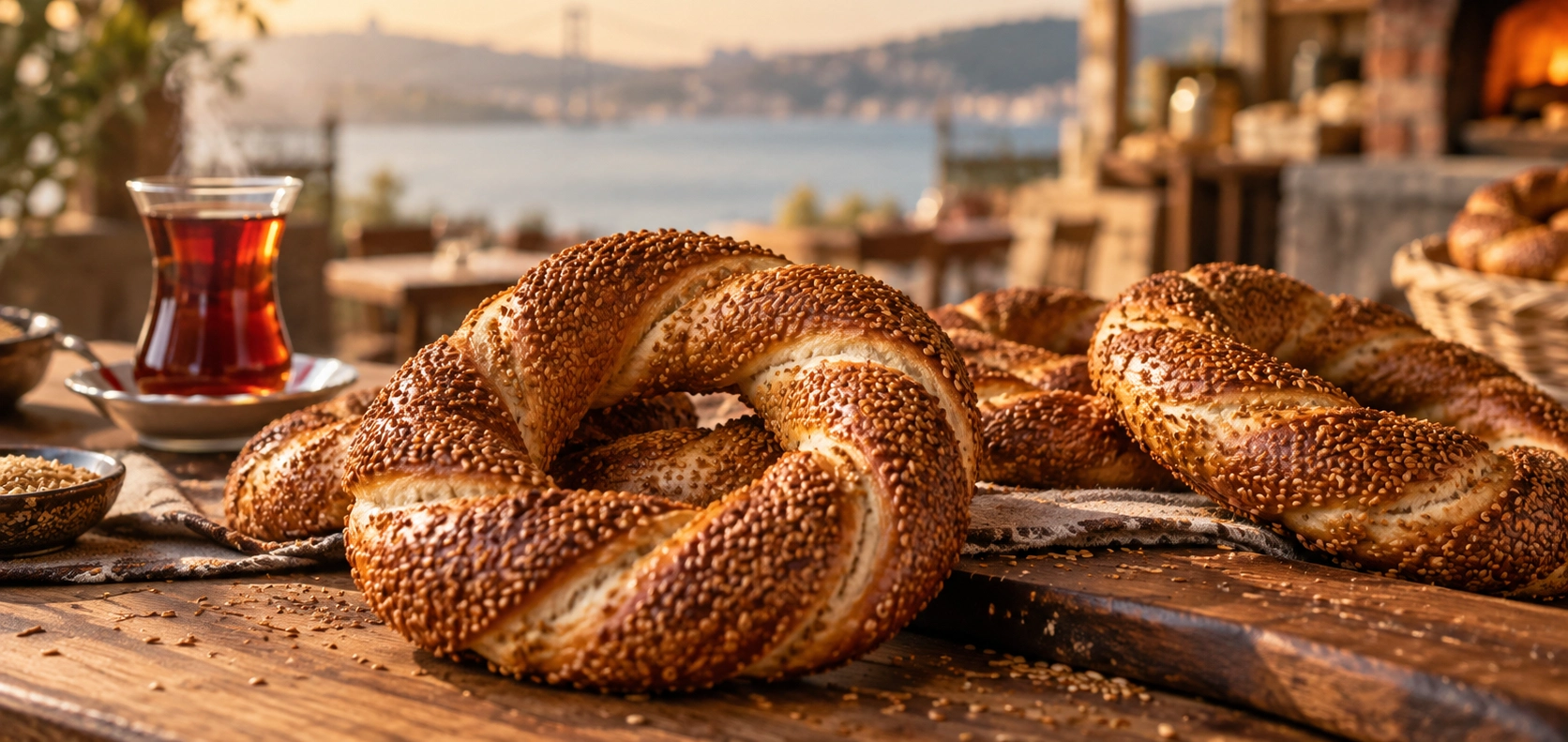
Explore one of Kocaeli's best-known street-food traditions and the local baking culture of İzmit.
Discover İzmit Simit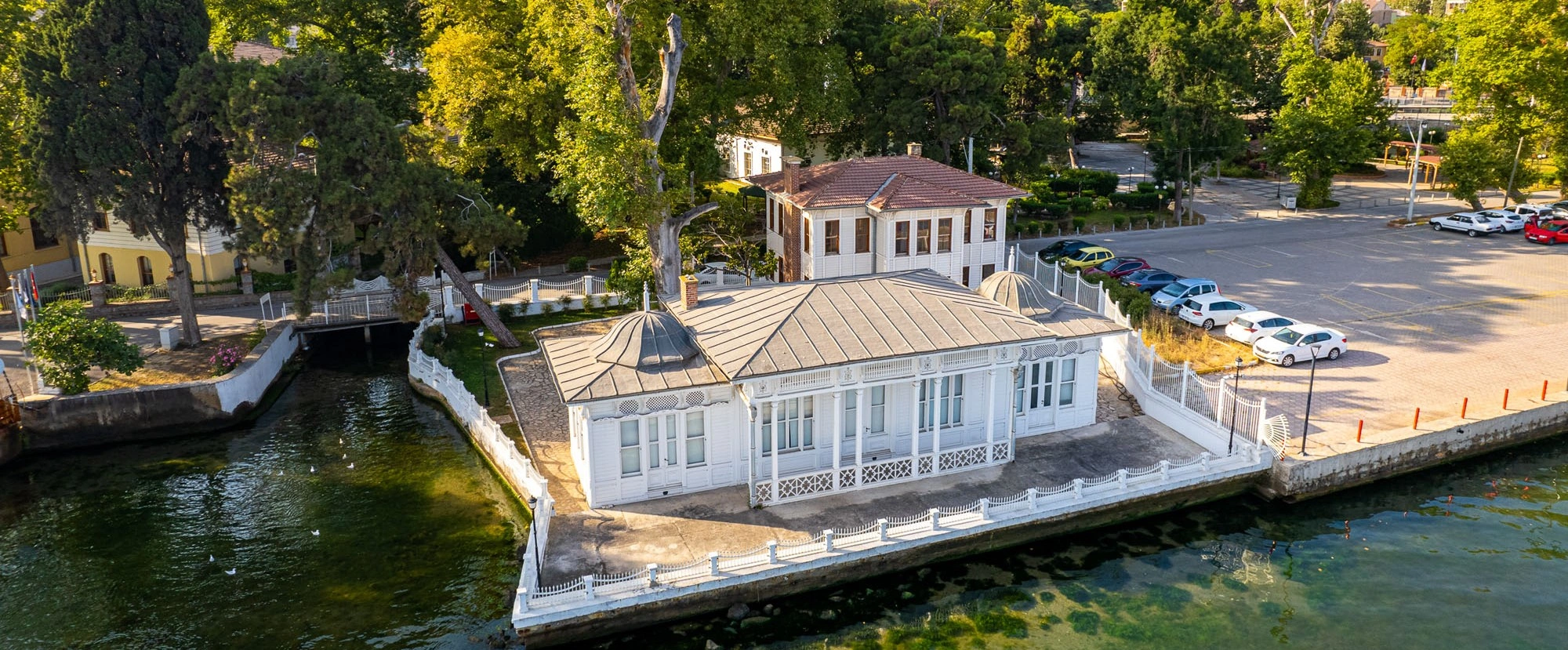
Cross into another world of Kocaeli craftsmanship through Hereke carpets, Ottoman industry and imperial diplomacy.
Explore Kaiser Wilhelm Mansion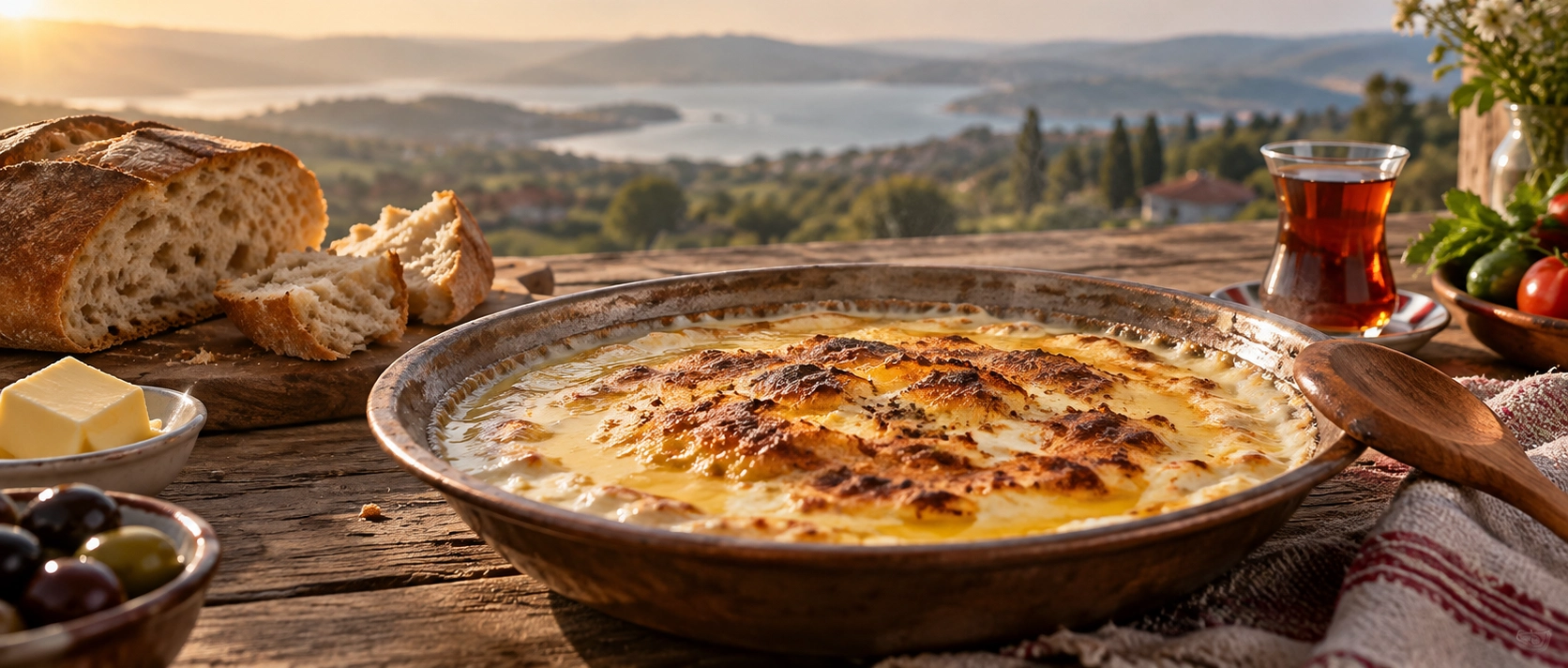
Travel north to Kandıra and taste one of the region's distinctive traditional dairy specialities.
Discover Kandıra Dartı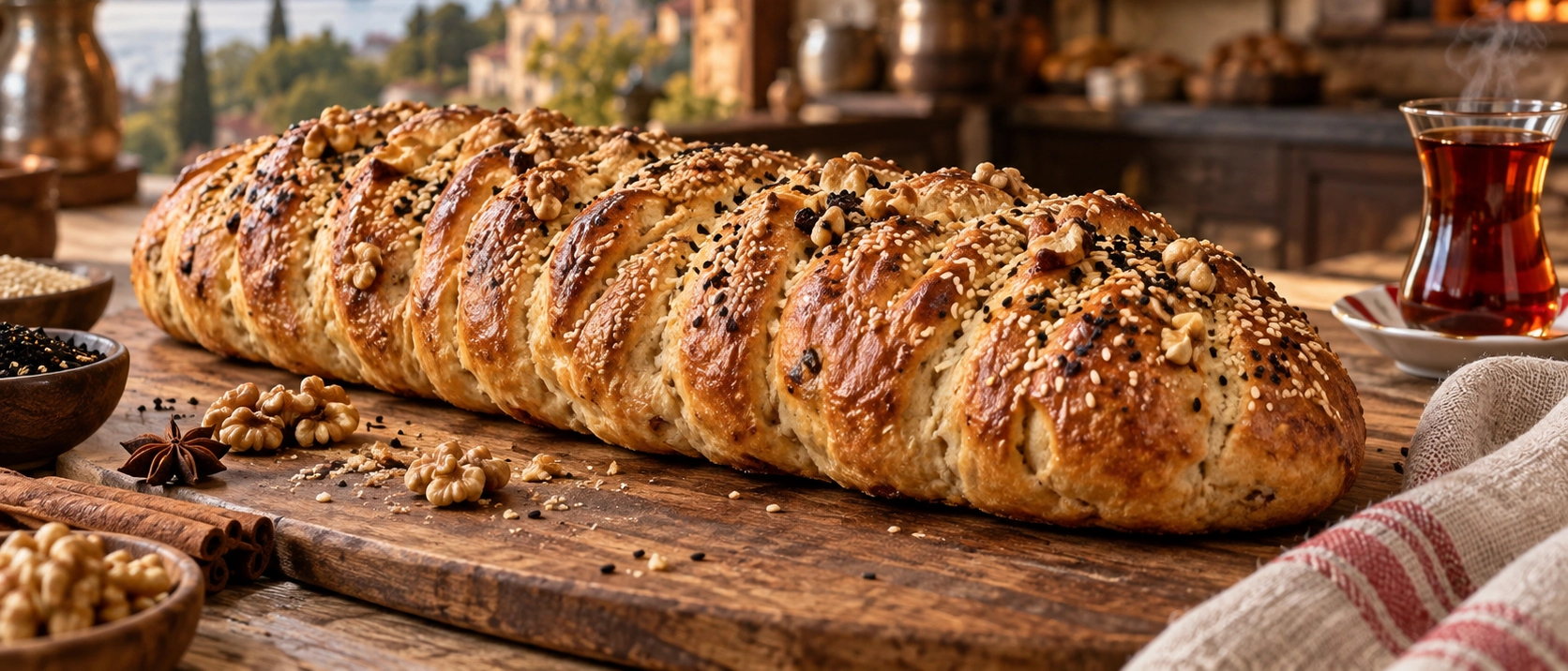
Discover another local culinary tradition from Kocaeli, shaped by family celebrations and festive baking.
Discover Gebze Holiday Bun
Discover ancient Nicomedia, Ottoman monuments, traditional foods, handmade crafts, forests, beaches and mountain landscapes across Kocaeli.
Discover Kocaeli