Private Hersek Ottoman Heritage Experience
Ask us about a tailor-made route combining Hersekzade Ahmet Pasha Mosque, the founder's tomb, Hersek Lagoon and nearby Altınova heritage according to your interests.
Request a Custom Tour





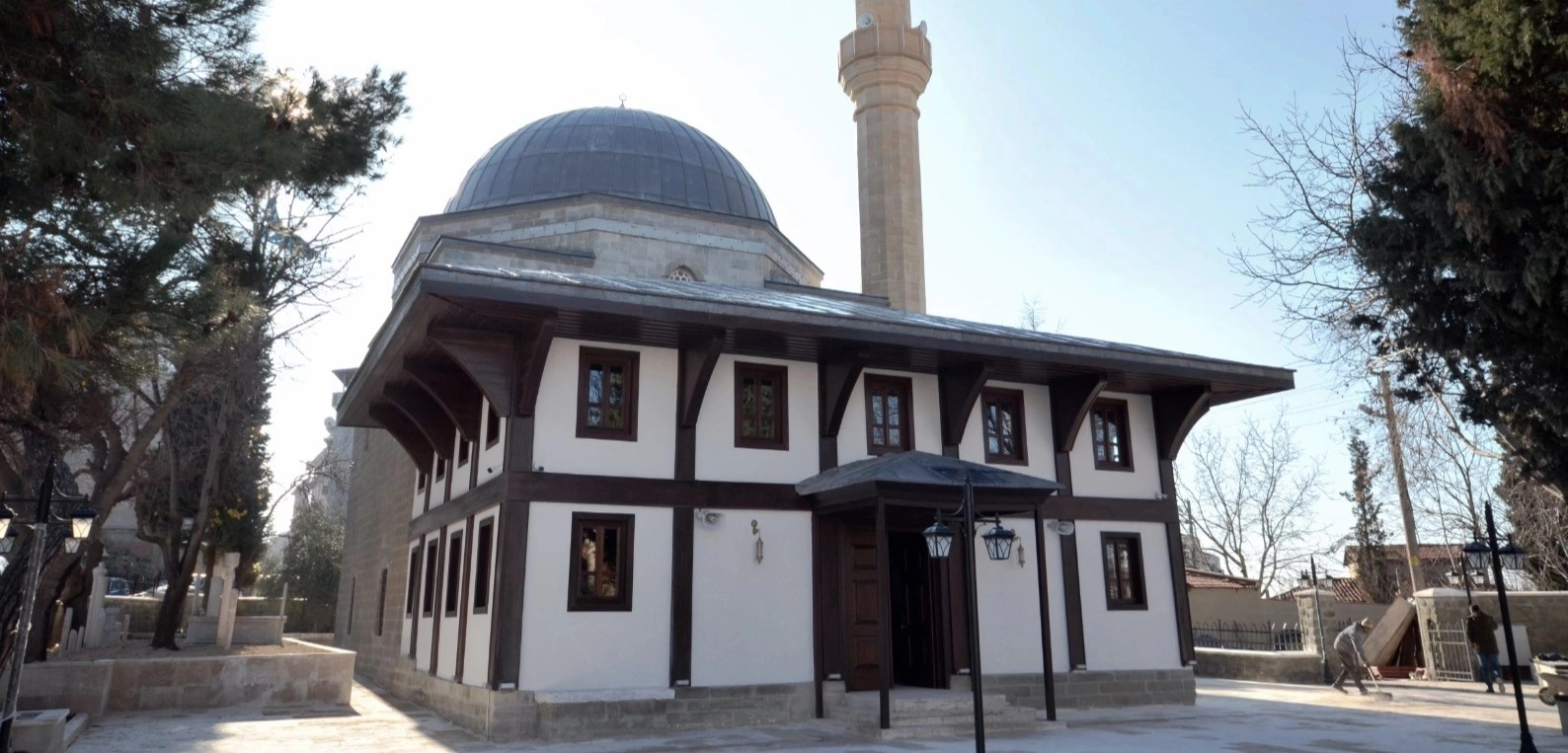
Standing in Hersek, near the narrow eastern end of the Gulf of İzmit, Hersekzade Ahmet Pasha Mosque is one of the most significant surviving Ottoman monuments in Yalova Province. The mosque belongs to a historic complex associated with Hersekzade Ahmed Pasha, a leading statesman of the reigns of Bayezid II and Selim I.
The exact construction year is not securely established. Academic research places the mosque and tomb in the late 15th or early 16th century, while Ahmed Pasha's surviving waqf deed was confirmed in December 1511. For travellers, this makes the site an unusually tangible link with the period when the Ottoman state was moving from the age of Mehmed II into the early 16th century.
The building visitors see today is also a record of survival. A major earthquake in 1766 destroyed the original dome, minaret and portico. The mosque was repaired in the 18th century, rescued again in the 20th century, and underwent a major restoration beginning in 2007 before reopening in November 2008.
Its location makes the visit especially rewarding. The mosque can be combined easily with Hersek Lagoon Bird Sanctuary and other sights around Altınova, turning a short monument visit into a half-day of Ottoman history, wetlands and Gulf of İzmit scenery.
The mosque is associated with Ahmed Pasha's foundation and a waqf deed confirmed in 1511.
Hersekzade Ahmed Pasha served Bayezid II and Selim I and held the grand-vizierate five times.
The monument carries visible layers from the 1766 earthquake, 18th-century rebuilding and modern conservation.
The mosque survives beside Ahmed Pasha's burial place and remnants of a once larger charitable complex.
Essential information for visiting this historic Ottoman mosque in Hersek, Altınova.
Hersek, Altınova district, Yalova Province, near the eastern shore of the Gulf of İzmit.
Open in Google MapsLate 15th to early 16th century; Ahmed Pasha's waqf deed was confirmed in 1511.
Hersekzade Ahmed Pasha, Ottoman statesman, admiral and five-time grand vizier.
Square-plan ashlar-stone mosque with a central dome, portico and single-balcony minaret.
Ahmed Pasha's unusual open burial structure stands beside the mosque.
The earthquake destroyed the original dome, minaret and entrance portico.
Important interventions include 18th-century rebuilding, 20th-century rescue work and the 2007–2008 restoration.
It is an active mosque; there is normally no admission ticket for respectful visitors.
Allow around 30–60 minutes for the mosque, tomb, exterior and historical details.
Dress modestly, remove shoes before entering and avoid sightseeing during congregational prayer.
The appeal lies not only in architecture, but in the connection between one Ottoman statesman, the settlement of Hersek and centuries of earthquake history.
Yalova is often associated with thermal springs, Atatürk heritage, waterfalls and the Marmara coast, but Hersekzade Ahmet Pasha Mosque reveals a much earlier layer of the province's history. It belongs to the world of the late 15th and early 16th-century Ottoman Empire, when the dynasty was expanding across the Balkans, Anatolia and the eastern Mediterranean.
The mosque is also closely tied to the story of Hersek itself. Ahmed Pasha invested in this strategic point beside the Gulf of İzmit and created a charitable foundation around the settlement. The surviving mosque, tomb and traces of the associated complex are therefore not isolated monuments: they are remnants of an Ottoman attempt to organise and support life along an important route.
Architecturally, the building rewards close observation rather than grand scale. Look at the ashlar masonry, the compact square plan, the restored dome, the entrance details, the portico and the relationship between the mosque and Ahmed Pasha's burial place. The structure has changed repeatedly, so it should be read as a monument with historical layers rather than as a perfectly untouched 16th-century building.
Finally, the mosque is still a place of worship. That living function gives the visit a different character from entering a museum: visitors encounter a monument that continues to serve the purpose for which it was created centuries ago.
Online descriptions sometimes give different dates for Hersekzade Ahmet Pasha Mosque. The safest historical interpretation is to place the monument in the late 15th or early 16th century. The TDV Encyclopaedia of Islam describes the mosque and tomb as works from this transition period and notes that the exact construction date cannot be established securely from contemporary sources.
A particularly important document is Ahmed Pasha's waqf deed, confirmed in Ramadan 917 AH / December 1511. A waqf was a charitable endowment through which income-producing property could support religious and public institutions. This document provides a strong chronological anchor for the foundation even when a precise building inscription is unavailable.
For this reason, it is better to describe the mosque as an early Ottoman monument of around the turn of the 16th century than to attach an over-precise year unless a specific source is being discussed.
Hersekzade Ahmed Pasha was born in 1459 in Herceg Novi under the name Stjepan. He was the youngest son of Stjepan Vukčić-Kosača, a powerful Balkan ruler associated with the title “hersek” or duke. After entering Ottoman court service, he became known as Ahmed and acquired the name Hersekzade — literally “son of the Herzeg / duke.”
Ahmed Pasha rose through the Ottoman military and administrative hierarchy during the reigns of Mehmed II, Bayezid II and Selim I. He became Anadolu beylerbeyi, served as an Ottoman admiral and governor of Gallipoli, and was repeatedly entrusted with the empire's highest executive office.
He was appointed grand vizier five times, beginning in 1497 and serving again during periods of intense dynastic and military change. He also married Hundi Hatun, a daughter of Bayezid II, placing him within the Ottoman dynasty's extended family network.
Ahmed Pasha died in 1517. His burial beside the mosque in Hersek makes the site more than a foundation bearing his name: it is also directly connected to his own final resting place.
1459, Herceg Novi, in the Balkan lands associated with the Kosača family.
Palace service, provincial command, governorship, admiralty and the grand-vizierate.
He held the office five times across the reigns of Bayezid II and Selim I.
1517; his burial place is beside the mosque in Hersek.
Hersek lies near the narrow eastern section of the Gulf of İzmit, between the Yalova and Karamürsel sides of the Marmara region. Long before modern highways and bridges, this geography made the area valuable for movement, communication and settlement.
Historical accounts associate Ahmed Pasha with the development of Hersek as an organised settlement supported by charitable institutions. The mosque formed part of a wider complex, or külliye, that helped provide religious and public services. Not every component has survived, but the surviving structures allow visitors to understand that the mosque once belonged to a larger social landscape.
The relationship between monument and geography is still easy to appreciate today. The nearby coast, wetlands and open horizon of Hersek Lagoon create a setting very different from the dense urban fabric surrounding many Ottoman mosques elsewhere in Türkiye.
The mosque originally belonged to a small Ottoman charitable complex. Historical and architectural studies identify associated elements including Ahmed Pasha's tomb, an imaret or charitable kitchen, and a bath. Other descriptions of Hersek record additional public buildings connected with the development of the settlement, although not all can be traced clearly in the modern landscape.
The imaret has largely disappeared, with scholarly descriptions noting remains at or near foundation level. The historic bath survives separately but has also suffered significant deterioration and alteration over time.
For visitors, the important idea is that the mosque was never conceived simply as a freestanding prayer hall. It was part of an endowed system intended to sustain religious life, public welfare and the settlement around it.
The principal surviving monument and still an active place of worship.
Ahmed Pasha's burial place stands beside the mosque in an unusual elevated form.
The charitable kitchen associated with the foundation has not survived as a complete building.
A related bath survives in Hersek and is separately recorded in Yalova's cultural inventory.
The mosque is a compact, square-plan building constructed in ashlar stone. Scholarly measurements give the exterior as approximately 16.17 × 16.17 metres, while local inventory descriptions use very similar figures for the main space.
Today the prayer hall is covered by a lead-clad central dome. The entrance is preceded by a three-part portico carried on four columns, with small domes to the sides and a vaulted central bay in the restored arrangement. A single-balcony minaret rises along the western side.
The present appearance should not be read as entirely original. Earthquakes repeatedly changed the building, and different restoration campaigns reconstructed lost elements. That history is essential to understanding what you see: the mosque combines early Ottoman form, 18th-century repair details and modern conservation work.
Begin the visit by walking slowly around the exterior. The relatively plain mass of the building makes its proportions easy to read, and the cut-stone masonry gives the mosque a strong, monumental character despite its modest scale.
The entrance façade is particularly important because it records several phases of the monument's history. The original portico was lost in the 1766 earthquake. Later repairs changed the appearance of the entrance, and modern restoration reconstructed the portico arrangement using surviving evidence and historic documentation.
At the main doorway, look for details that do not belong stylistically to the earliest Ottoman phase. The marble door framing and curved lintel are associated with the 18th-century restoration after the earthquake and show the influence of the period's architectural taste.
The minaret should also be understood as a repaired and reconstructed element. Like the dome and portico, it was affected by earthquakes and has required major intervention during the building's long history.
The interior is organised around the single square prayer hall beneath the dome. The qibla wall contains a marble mihrab, with the minbar positioned nearby. A two-level window arrangement brings light into the relatively compact space.
Cultural inventory descriptions also record original or historically important floor and timber details, including brick flooring and wooden window shutters in the restored building. Because the mosque has been repaired many times, visitors should avoid assuming that every visible surface dates from Ahmed Pasha's lifetime.
This is an active mosque. Enter quietly, remove shoes, keep voices low and avoid walking immediately in front of someone who is praying. Photography should always be discreet, especially when worshippers are present.
The marble prayer niche marks the direction of Mecca on the qibla wall.
The pulpit stands beside the mihrab and forms one of the principal liturgical elements.
Lower rectangular openings and upper arched windows help illuminate the domed prayer hall.
The interior is best appreciated quietly between prayer times.
One of the most unusual features of the site is Ahmed Pasha's burial place beside the mosque. Scholarly descriptions emphasise that the tomb does not resemble a conventional enclosed Ottoman mausoleum in its present state. Instead, it appears as an elevated open platform reached by steps and bordered by stone or marble elements.
The form has clearly changed over time. The surviving doorway and other architectural evidence suggest that the burial structure may once have had a more complete enclosure or covering. Earthquake damage and later interventions altered its appearance.
Ahmed Pasha's grave marker itself has also suffered damage and repair. The tomb therefore deserves attention not only as the burial place of a major Ottoman statesman, but as another piece of evidence for the site's long cycle of destruction and reconstruction.
A small hazire, or historic burial area, is also associated with the mosque. Treat all graves and inscriptions respectfully and avoid stepping across burial plots for photographs.
On 22 May 1766, a major earthquake struck the Marmara region and caused widespread destruction around Istanbul and the Gulf of İzmit. Hersekzade Ahmed Pasha Mosque was severely damaged. Its dome, minaret and entrance portico collapsed.
An inscription records a later rebuilding associated with Kemankeş İsmail Ağa. The repair is dated to 1187 AH / 1773–1774, roughly eight years after the earthquake. Some replacement elements reflected the architectural taste of the 18th century rather than attempting a literal reconstruction of the original building.
This episode explains why the mosque contains details that appear later than its foundation period. It is also an important reminder that historic monuments around the Sea of Marmara often preserve the physical memory of repeated earthquakes.
By the mid-20th century, the mosque had again deteriorated badly. Academic descriptions note that by 1965 it had reached a ruinous condition. The Foundations administration assigned architect Cahide Tamer to conservation work that made the building usable again, although not every missing original feature could be fully reconstructed at that stage.
The Marmara earthquake of 1999 created further conservation needs in the region. A later restoration project received heritage approval and work began in October 2007. According to Türkiye's official cultural inventory, the restoration reinstated the central dome and reconstructed the roof forms above the portico.
The mosque was reopened for use on 15 November 2008. The present appearance therefore reflects a substantial modern conservation campaign based on the surviving fabric, archival evidence and the known historic form of the structure.
For architecture-minded visitors, this restoration history is part of the attraction. The mosque demonstrates the difficult balance between preserving authentic fabric, replacing structurally necessary elements and restoring a historic silhouette lost through earthquake damage.
The square plan and original foundation belong to the late 15th / early 16th-century phase.
Entrance details and rebuilding after the 1766 earthquake introduced later stylistic elements.
Conservation work prevented the already damaged monument from disappearing completely.
The dome and portico roof forms were reconstructed and the building returned to active use.
Seeing these phases together makes the mosque more interesting, not less authentic. Historic architecture is often the result of continuous maintenance, repair, disaster and adaptation. Hersekzade Ahmet Pasha Mosque is an especially clear example of that process.
Leave footwear at the entrance or use the storage area provided before entering the carpeted prayer space.
Shoulders and knees should be covered; women should carry a scarf for the prayer hall.
Plan sightseeing between prayers and give worshippers priority at all times.
Do not photograph people at prayer without permission and avoid flash if it disturbs the interior.
Conversations and phone calls should be kept outside or very quiet inside.
Do not climb onto the burial platform or step across historic graves for a photograph.
Mild weather works especially well if you combine the mosque with Hersek Lagoon and birdwatching.
Visit earlier or later in the day for softer light and more comfortable temperatures.
Comfortable for a wider Altınova heritage route and usually pleasant for outdoor photography.
The site remains atmospheric, but short daylight and wet weather can affect a combined outdoor itinerary.
For the mosque itself, there is no single “best season.” The more important factor is timing your arrival between congregational prayers. If you are combining the visit with Hersek Lagoon, season and bird migration become much more relevant.
Enough for a quick exterior look, a respectful interior visit and the tomb.
Better if you want to study architectural details and understand the restoration history.
Combine the mosque with Hersek Lagoon and a relaxed walk through the surrounding area.
Add other Altınova heritage sites and continue inland toward Çobankale.
The mosque photographs best when you show its relationship to the surrounding open space rather than isolating only the dome. Wide views can include the stone walls, portico, minaret and the tomb area in a single composition.
Use the portico columns to frame the entrance and emphasise the building's symmetry.
A three-quarter angle works well for showing the dome, stone mass and minaret together.
Photograph from respectful distance to show the relationship between founder and mosque.
Work quietly with available light and avoid disrupting worshippers for photographs.
Early morning and late afternoon usually give softer exterior light. If people are praying, put the camera away or frame only architectural details that do not intrude on worship.
The mosque sits in a relatively open setting, but visitors should not assume that every historic element is fully step-free. Thresholds, entrance levels, the portico and the tomb area can create obstacles for travellers with limited mobility.
The tomb is reached by steps and is therefore not a practical accessible viewing area for everyone. A good exterior impression can still be gained from ground level.
If wheelchair access to the prayer hall is essential, confirm the current arrangement locally before travelling because temporary ramps, entrance procedures or maintenance conditions can change.
One of the strongest reasons to visit the mosque is its proximity to Hersek Lagoon Bird Sanctuary. The two sites create a distinctive combination: one focuses on early Ottoman history, the other on wetlands, birdlife and the coastal ecology of the Gulf of İzmit.
A relaxed itinerary can begin at the mosque, where you spend time with the architecture and tomb, then continue to the lagoon for birdwatching and open views. The reverse order works equally well if morning bird activity is your priority.
Spring and autumn are particularly attractive for visitors interested in migratory birds, while the mosque itself can be visited throughout the year. Take binoculars if you plan to combine the two.
Travellers interested in deeper regional history can continue from Hersek toward Çobankale. The castle landscape reveals an older strategic layer of the routes connecting the Marmara region with north-western Anatolia.
Combining the two sites creates a stronger historical narrative than visiting either in isolation: Çobankale represents the long military and communication importance of the corridor, while Hersekzade Ahmet Pasha Mosque shows how the Ottoman period reshaped settlement and public life in the same wider district.
Allow extra time for road conditions, walking and any current access arrangements around the castle area.
The mosque is in the Hersek area only a short drive from Altınova town centre.
Follow the main eastern route toward Altınova and continue into Hersek using local signs or navigation.
Approach via the Gulf of İzmit road network and the Osmangazi Bridge / Altınova area according to your route.
The easiest option if you want to combine the mosque with Hersek Lagoon and Çobankale.
Use the current map position for Hersekzade Ahmet Paşa Camii, Altınova, Yalova rather than relying only on a general “Hersek” destination. Local road layouts and access points can change.
Birdwatchers may want to reverse the order depending on light, season and bird activity. Architecture-focused visitors can spend longer at the mosque and shorten the lagoon stop.
Arrive between congregational prayers for the easiest sightseeing visit.
Women should have a head covering available for entering the prayer hall.
You will remove footwear before entering, so comfortable shoes that are easy to take off are useful.
The mosque is compact; the value comes from noticing different historical layers rather than covering a large site.
Understanding the 1766 earthquake makes the portico, dome and entrance details much more meaningful.
Prayer always takes priority over sightseeing, photography or architectural study.
They are worthwhile if your route includes Hersek Lagoon after the mosque.
Access can be affected by religious services, conservation work or local events.
Combine Ottoman heritage with one of Yalova's most important wetland and birdwatching landscapes.
Explore a strategic historic castle landscape inland from Altınova and connect the region's older transport history.
Understand the modern earthquake history that continues to shape Yalova's relationship with the Marmara fault system.
Add another historical stop to a wider Yalova cultural itinerary.
Continue with the broader story of Yalova's settlements, people and changing urban history.
See the complete guide to Yalova's Ottoman heritage, wetlands, museums, thermal springs, forests and coast.
The mosque is in the Hersek area of Altınova district in Yalova Province, near the eastern side of the Gulf of İzmit.
The exact construction year is not securely known. Scholarly research places the mosque and tomb in the late 15th or early 16th century, and Ahmed Pasha's waqf deed was confirmed in December 1511.
It was commissioned by Hersekzade Ahmed Pasha, a major Ottoman statesman who served as grand vizier five times.
He was born Stjepan in 1459 in Herceg Novi, entered Ottoman service, rose through the military and administrative system, married Bayezid II's daughter Hundi Hatun and became one of the important statesmen of the late 15th and early 16th centuries.
The name refers to his family background. His father was associated with the title “hersek” or duke, and Ahmed became known in Ottoman sources as Hersekzade — the son of the hersek.
Yes. His burial place stands beside the mosque in an unusual elevated tomb structure that has changed over time.
Yes. The mosque belonged to an Ottoman charitable complex associated with a tomb, imaret and bath, with historical accounts also describing wider public development in Hersek.
The major Marmara earthquake of 22 May 1766 destroyed the mosque's dome, minaret and entrance portico.
A repair inscription is associated with Kemankeş İsmail Ağa and dates the major rebuilding to 1187 AH, corresponding to 1773–1774.
No. The original dome was lost in earthquake damage. The monument passed through several repair campaigns, and the present domed form was re-established during modern restoration.
Restoration work began in October 2007, and the mosque reopened for service on 15 November 2008.
Yes. It functions as a mosque, so religious services and worshippers take priority over sightseeing.
There is normally no museum-style admission ticket for visiting the active mosque. Any current local arrangements should be respected.
Around 30–60 minutes is enough for the mosque, tomb, exterior and main historical details. Allow longer if you are studying Ottoman architecture or photography.
Dress modestly with shoulders and knees covered. Women should carry a scarf for the prayer hall, and all visitors remove shoes before entering the carpeted interior.
Usually yes if done discreetly, but never interrupt worshippers or photograph people at prayer without permission.
Do not assume full step-free access. Historic thresholds and the stepped tomb area can create obstacles. If accessibility is essential, check the current entrance arrangement locally before travelling.
Yes. Hersek Lagoon Bird Sanctuary is one of the most natural companion visits and creates an excellent half-day of history and nature.
Consider Çobankale, Hersek Lagoon and a wider drive through eastern Yalova before continuing toward Yalova city or the Marmara coast.
It combines early Ottoman political history, a direct connection with one of the empire's leading statesmen, important earthquake and restoration history, and the surviving core of a charitable foundation that helped shape Hersek.
A private Yalova itinerary can combine Hersekzade Ahmet Pasha Mosque, Hersek Lagoon, Çobankale and other cultural or nature sites according to your interests and available time.
Tell us whether your priority is Ottoman history, architecture, birdwatching, photography or a balanced overview of eastern Yalova, and we can shape the route around the season and your schedule.
Ask us about a tailor-made route combining Hersekzade Ahmet Pasha Mosque, the founder's tomb, Hersek Lagoon and nearby Altınova heritage according to your interests.
Request a Custom Tour
Continue discovering Yalova through Ottoman monuments, Atatürk heritage, wetlands, archaeology, thermal springs, waterfalls, forests and Marmara coastal towns.
View Yalova Guide