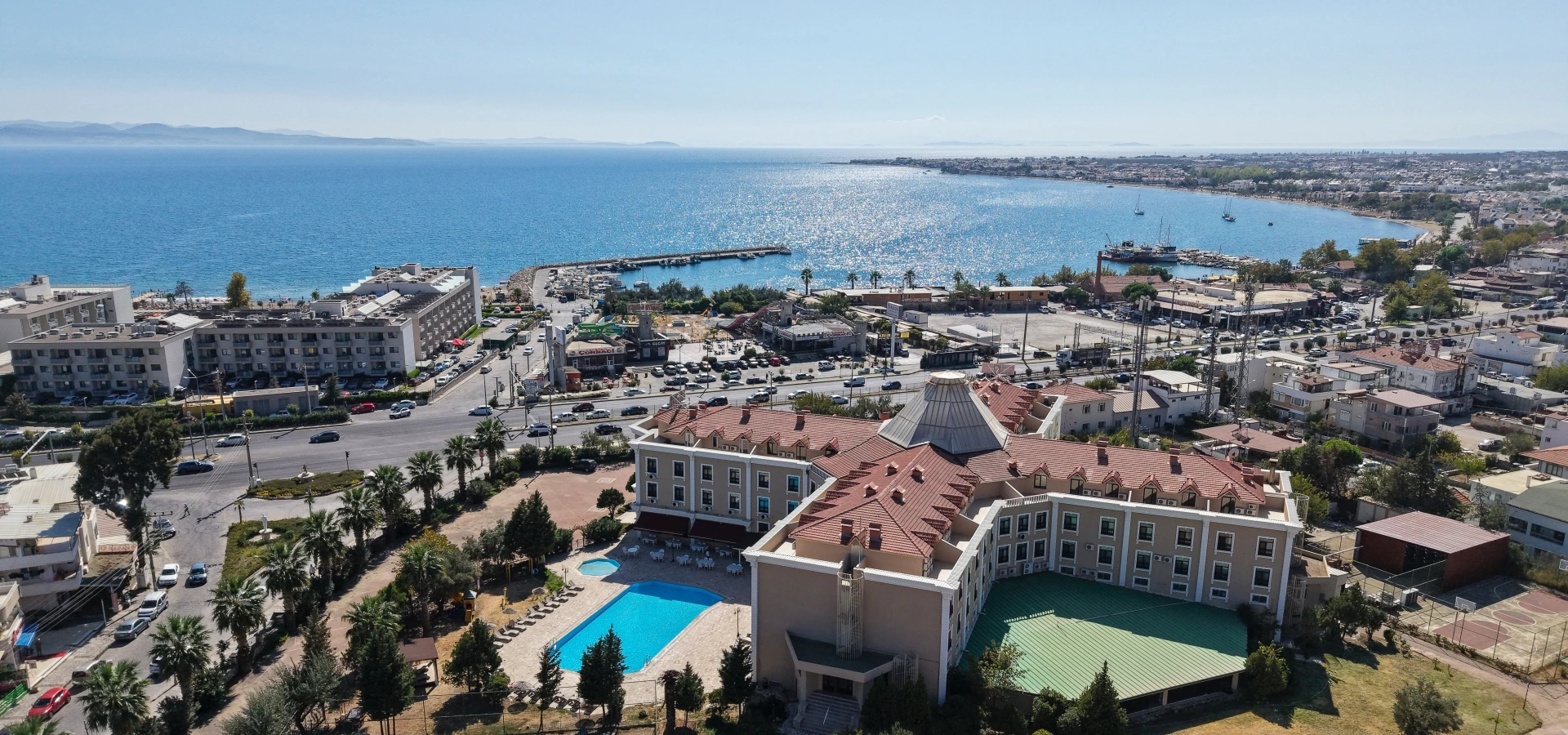
Güre, Edremit
Continue toward Mount Ida for thermal traditions, ethnographic collections, village culture and easy access to Kazdağları.
View Güre Guide





Only a short distance inland from the Aegean coast, Havran feels very different from the better-known seaside resorts of the Edremit Gulf. This is a compact agricultural town surrounded by olive groves, orchards and the lower mountain landscapes east of Edremit, yet its streets preserve an unexpectedly rich concentration of late-Ottoman houses, historic mansions, old commercial buildings and local museums.
Havran is especially important in modern Turkish memory as the home district of Seyit Onbaşı – Koca Seyit, the artilleryman remembered for his actions at the Rumeli Mecidiye Battery during the naval battle of 18 March 1915 at Çanakkale. His village, grave, monument and museum lie within the district, while the restored Terzizade Saadettin Bey Mansion in Havran centre preserves the memory of Mustafa Kemal's 1923 visit and his meeting with Koca Seyit.
The town's story, however, extends far beyond twentieth-century history. The fertile Havran Plain, the Havran Çayı valley, nearby prehistoric cave sites and the old routes between the coast and the interior reveal a landscape occupied and used for thousands of years. Later Ottoman prosperity can still be read in the timber-and-masonry houses, olive-oil buildings, gardens, cemetery monuments and the traditional street pattern.
Havran is therefore best understood not as a single attraction but as a small heritage landscape. Spend time in the town centre, visit its museums, walk among historic houses, continue to Kocaseyit village and then explore the district's orchards, reservoir, caves or mountain country. For travellers who enjoy places that still feel local rather than curated primarily for tourism, Havran can be one of the most rewarding stops in the northern Aegean.
Havran district preserves the birthplace, grave and memorial landscape of Seyit Onbaşı, one of the best-known figures associated with the 1915 Çanakkale naval battle.
Terzizade and Hocazade mansions anchor a wider townscape of cumbalı houses, carved doors, old workshops and late-Ottoman civic architecture.
The Atatürk & Seyit Onbaşı Museum and Havran City Museum turn individual buildings into gateways for understanding the town's social and political history.
Beyond the centre are black-fig orchards, olive groves, Havran Reservoir, İnönü caves and the forested slopes of Eybek Mountain.
Essential information for planning a cultural and nature-focused visit to this inland district of the Edremit Gulf.
Balıkesir Province, immediately east of Edremit and inland from the northern Aegean coast.
Havran town centre is only about 7 km from Edremit, making it an easy cultural detour from the Gulf coast.
Known for late-Ottoman and early-Republican houses, mansions, former commercial structures and traditional neighbourhood streets.
Seyit Onbaşı – Koca Seyit, born in the district in 1889 and remembered for the Çanakkale campaign.
Atatürk & Seyit Onbaşı Museum, housed in the restored Terzizade Saadettin Bey Mansion.
Havran City Museum occupies the restored Hocazade Mansion and presents the district's social, economic and cultural story.
The İnönü – İnboğazı cave group is one of the district's principal archaeological landscapes.
Eybek Mountain, pine forests, picnic areas, waterfalls, reservoir scenery and fertile orchard country surround the town.
Olives, figs, mandarins, pomegranates and other fruit crops shape the Havran Plain and local food culture.
Havran Black Fig and Havran Mandarin both have protected geographical-indication status in Türkiye.
Allow half a day for central Havran or a full day when adding Kocaseyit village and countryside stops.
Spring and autumn are ideal for walking and rural sightseeing; late summer brings fig and other orchard harvests.
Havran is worth visiting precisely because it is not a conventional resort town. While the nearby coast is associated with beaches, summer houses and holiday traffic, Havran offers a quieter combination of local history, vernacular architecture, agricultural landscapes and living small-town culture.
The centre is compact enough to explore on foot. Within a relatively small area you can move from a restored mansion museum to streets lined with older houses, pass traditional shops and local produce sellers, and encounter architectural details that preserve the rhythm of an earlier provincial town.
The district also has unusual historical depth. The story of Koca Seyit connects Havran directly with Çanakkale, the Terzizade Mansion links the town to Mustafa Kemal's 1923 journey through western Anatolia, and the İnönü caves push the human story of the landscape back into prehistory and antiquity.
Most importantly, these elements still belong to a functioning community. Havran is not frozen as an open-air museum. Markets operate, orchards are cultivated, local residents use the same streets and neighbourhoods, and agricultural seasons continue to influence everyday life. That combination gives the town a sense of authenticity that is increasingly difficult to find in heavily visited destinations.
Havran lies east of Edremit on the inland side of the Edremit Gulf. The town sits at the edge of the fertile Havran Plain, an alluvial agricultural area formed around Havran Çayı and surrounded by uplands and forested mountains.
This geography explains much of Havran's identity. The plain supports olive groves, vegetables and extensive fruit cultivation, while the higher country toward Eybek Mountain and the interior becomes progressively greener, steeper and more forested.
Havran Çayı is the district's principal watercourse. East of town, the river is impounded by Havran Dam, constructed primarily for irrigation and flood-control purposes. The reservoir and surrounding hills now form another recognizable element of the local landscape.
Fertile alluvial land around the town supports figs, olives, citrus, pomegranates, vegetables and other crops.
The district's main stream crosses the agricultural plain before continuing toward the Edremit Gulf.
A forested mountain zone associated with trekking, viewpoints, water sources and the rural interior north and east of Havran.
Havran is inland, but Edremit, Akçay, Burhaniye and the Aegean shoreline are all easily combined with a visit.
The Havran district occupies a natural corridor between the Edremit Gulf, the inland Balıkesir region and the mountain routes toward northwestern Anatolia. Archaeological evidence from the surrounding landscape demonstrates that human activity here extends far beyond the Ottoman town visible today.
Local historical accounts place the district within the wider ancient geography of Mysia. The region passed through the political worlds of western Anatolia that included Persian rule, Macedonian conquest and the Hellenistic kingdom of Pergamon before becoming part of the Roman and later Byzantine spheres.
For visitors, the most tangible reminder of this deeper past is not a monumental classical city centre but the İnönü caves and archaeological landscape southeast of modern Havran. Research conducted in the twentieth century identified material from multiple periods, demonstrating long-term use of the area.
Turkish settlement intensified in northwestern Anatolia during the medieval period. The Havran area later became associated with the Karesi Beylik and was incorporated into the expanding Ottoman state during the fourteenth century.
One of the most interesting chapters in Havran's local historical tradition concerns the names by which the settlement was recorded. Ottoman-era references include forms such as Viraneli, Franeli and Haran Eli, while local accounts connect the name Viraneli with destruction suffered in the wider region after the Battle of Ankara in 1402.
The exact linguistic origin of the modern name Havran is less certain than many popular explanations suggest. Several etymologies have been proposed over time, and visitors will encounter different versions in local publications and older travel literature.
Rather than choosing one uncertain explanation as definitive, the changing names are best understood as evidence of a town repeatedly reshaped by political upheaval, reconstruction, local pronunciation and administrative usage.
Under Ottoman administration, Havran remained closely tied to the productive agricultural landscape of the Edremit Gulf. Olives, olive oil, fruit, dairy products and other goods moved through the regional economy, while local wealth gradually left its mark on the built environment.
The most visible legacy of this period is the town's traditional residential architecture. Timber-framed and masonry houses, projecting upper floors, bay windows, decorative ironwork, garden walls and carefully crafted doors survive in several streets around the historic centre.
Former olive-oil facilities and commercial structures add another layer to this urban fabric. Together with mansions such as Terzizade and Hocazade, they show that Havran was not simply a farming village but a local service and production centre linked to the prosperity of the surrounding plain.
For architectural travellers, the interest lies less in one grand monument than in the cumulative effect of the streetscape: houses of different sizes, changing construction techniques and fragments of an older town surviving between later buildings.
Havran's older neighbourhoods contain one of the district's greatest but least advertised attractions: a substantial collection of historic houses and mansions. Many belong to the late Ottoman and early twentieth-century architectural environment of western Anatolia.
Look for projecting bay windows, vertically proportioned sash windows, decorative wooden eaves, wrought-iron window guards, stone ground floors and upper storeys that combine timber framing with infill construction. Some houses remain private residences, while others have been restored for public use.
The best-known examples are Terzizade Saadettin Bey Mansion, now the Atatürk & Seyit Onbaşı Museum, and Hocazade Mansion, home of Havran City Museum. Yet the character of Havran comes equally from the less famous houses encountered while walking between them.
Projecting upper-storey windows create shade, improve views along narrow streets and give many façades their distinctive rhythm.
Old entrance doors, knockers and timber detailing are among the most rewarding small features to photograph.
Window grilles and wrought-iron details demonstrate the work of local craftspeople and changing decorative tastes.
Many historic buildings are still residential, so enjoy façades from public streets without entering courtyards or photographing residents intrusively.
Havran's heritage is not limited to Ottoman domestic architecture. The historic municipal building is an important example of the architectural language that emerged during the final Ottoman years and continued into the early Republic, often called the First National Architectural Movement.
Archival and academic research places the building's construction in the 1920s, with a 1933 municipal publication recording 1927 as its construction year. Its design combines newer construction methods with forms inspired by classical Ottoman architecture, creating the formal civic appearance associated with early Republican public buildings.
The structure has undergone alteration, fire damage and later repairs during its long use. After municipal functions moved to a newer building, restoration work helped preserve the old town hall as one of Havran's recognizable civic monuments.
For visitors interested in architecture, it provides an excellent counterpoint to Terzizade and Hocazade mansions: one represents public administration and the emerging Republican civic image, while the others illustrate elite residential architecture.
The restored Terzizade Saadettin Bey Mansion is one of Havran's essential cultural stops. Built as a substantial private residence and recognized as one of the town's important examples of civil architecture, the mansion is closely associated with Mustafa Kemal's journey through the region in February 1923.
Local historical accounts record that Mustafa Kemal was received in Havran and hosted at the Terzizade Mansion during this journey. The visit is also remembered for his meeting with Seyit Onbaşı, whose wartime actions at Çanakkale had already become part of national memory.
After restoration, the building opened as the Atatürk and Seyit Onbaşı Museum. Its exhibits interpret the visit, the meeting with Koca Seyit and the atmosphere of mansion life through photographs, reconstructed spaces, period objects and staged displays.
Even apart from the historical story, the building is worth seeing for its architecture. Large windows, timber construction, interior woodwork and the scale of the central circulation spaces reveal the ambitions of prosperous provincial domestic architecture around the turn of the twentieth century.
For a broader understanding of the district, continue to Havran City Museum – Havran Kent Müzesi. The museum occupies the restored Hocazade Mansion, a large early-twentieth-century residence built for Hocazade Abdurrahim Efendi.
Rather than focusing on a single national event, the museum presents Havran's long local story: settlement history, agriculture, domestic life, traditional occupations, trade, crafts and the transformation of the town through the Ottoman and Republican periods.
One of its strengths is the use of everyday objects and reconstructed environments. Displays connected with old trades, olive culture, household life and the historic bazaar help visitors understand how a small agricultural town functioned before modern roads, supermarkets and industrialized production changed local life.
The building itself is part of the experience. Its rooms, circulation spaces, service areas and garden help explain the scale and organization of an affluent Havran household in the early twentieth century.
Exhibits follow Havran from its older historical landscape through Ottoman and Republican periods.
Displays recall crafts and occupations that once shaped the town's commercial streets.
Period objects help visitors imagine kitchens, storage, clothing and daily routines in earlier Havran households.
Hocazade Mansion is itself one of the reasons to visit, not simply a neutral container for the collections.
Seyit Çabuk, better known as Seyit Onbaşı or Koca Seyit, was born in 1889 in the village then known as Manastır or Çamlık, today named Kocaseyit, within Havran district.
He served as an artilleryman at the Rumeli Mecidiye Battery during the Çanakkale campaign. His name became famous after the naval battle of 18 March 1915, when he carried an exceptionally heavy artillery shell after the battery's mechanical shell-handling equipment had been damaged.
The exact weight and some details of the event are represented differently in later retellings, but the episode has become one of the most enduring individual stories associated with the Ottoman defence of the Dardanelles. Havran's local memory of Koca Seyit is therefore closely connected with wider national remembrance of Çanakkale.
After military service he returned to the district and lived a modest working life. He died in 1939. His grave, memorial and museum in Kocaseyit village now form one of Havran's most visited heritage sites.
Approximately 10 km from Havran, Kocaseyit village is the most important excursion for visitors interested in the life of Seyit Onbaşı. The village preserves his grave and a memorial complex created to interpret both his personal story and the wider memory of the Çanakkale campaign.
The memorial area includes sculptural monuments, museum displays and military-themed interpretation. It is a place of remembrance rather than simply a tourist attraction, and many visitors come specifically to pay respects at Koca Seyit's grave.
Because the village lies outside the town centre, it is easiest to visit by private car, taxi or organized transport. Combining the village with central Havran creates a much more complete understanding of how Koca Seyit's story is preserved locally.
The burial place is the most personal and solemn part of the visit.
Monuments and sculptural compositions connect his individual story with remembrance of the Çanakkale campaign.
Interpretive material introduces visitors to Koca Seyit's life, military service and historical memory.
Do not treat the village as a five-minute photo stop; allow enough time to visit the grave and read the interpretation.
Havran's old cemetery is another important but easily overlooked element of the town's cultural landscape. Beneath mature trees stand numerous historic Muslim grave markers carrying inscriptions, carved headgear, floral motifs and other details characteristic of Ottoman funerary art.
Old gravestones are valuable historical documents. Names, titles, professions, family relationships, dates and poetic inscriptions can reveal details about local society that rarely survive in ordinary buildings.
The cemetery should be approached as both a heritage site and an active place of remembrance. Walk quietly, avoid stepping directly across graves and do not move or clean stones for photographs.
Visitors interested in Ottoman calligraphy and social history may find this one of Havran's most meaningful stops, particularly when combined with the City Museum and historic-house streets.
Southeast of Havran, near İnönü, a group of caves occupies the steep limestone slopes above the Havran Çayı valley. Known collectively as the İnönü or İnboğazı Caves, they are among the district's most significant archaeological locations.
The cave group includes sites traditionally known as Devadamı, Karanlık, Aydınlık and Andık. Archaeological investigation, including work by İ. Kılıç Kökten in 1949, identified deposits and finds from more than one historical period.
The caves are important because they demonstrate that Havran's landscape was used long before the modern town developed. They should not, however, be approached like a fully developed show cave with illuminated paths and visitor railings.
Access conditions can vary, terrain may be steep and archaeological surfaces are vulnerable. Travellers specifically planning to reach the caves should obtain current local information, use appropriate footwear and avoid disturbing deposits, rock surfaces or wildlife.
The caves contribute important evidence for understanding prehistoric and later occupation around Havran.
The group lies on steep rocky slopes near the western entrance of the İnboğazı landscape.
Do not expect paved underground routes, ticket booths or extensive tourism infrastructure.
Check local access conditions and protect archaeological deposits, wildlife and fragile cave environments.
East of town, Havran Dam crosses Havran Çayı between the surrounding hills. The project was developed primarily to support irrigation, water management and agricultural productivity in the Havran Plain.
Although the reservoir is a modern piece of infrastructure rather than a historic monument, the surrounding landscape has become a recognizable rural stop. Water, exposed hillsides, orchards and mountain backdrops create attractive views, particularly in softer morning and late-afternoon light.
Visitors should remember that reservoir levels change seasonally and that access to dam infrastructure itself may be restricted. Treat viewpoints and waterside areas as working infrastructure and natural terrain rather than a formal recreational park unless signs on site indicate otherwise.
Havran's northern and eastern hinterland rises toward Eybek Mountain, a forested extension of the wider mountain system behind the Edremit Gulf. The area adds an entirely different dimension to a visit that begins among town houses and orchards.
Local nature routes pass through pine, oak and mixed woodland toward springs, picnic places, waterfall areas and high viewpoints. The mountain is also included in regional trekking initiatives associated with the historic and natural landscapes of Mysia.
Road and trail conditions vary considerably with season, weather and forestry activity. Independent walkers should obtain local route information rather than assuming every track shown on a digital map is a maintained hiking path.
Pine, oak and other woodland communities replace the agricultural plain as elevation increases.
Higher ground opens wide perspectives across Havran Plain and toward the Edremit Gulf.
Seasonal water features and cool spring areas are among the attractions of the mountain hinterland.
Best for experienced walkers who can confirm route conditions locally and carry suitable footwear, water and navigation.
Several traditional recreation areas around Havran are used by local residents for picnics, forest walks and relief from summer heat. Two names that frequently appear in local visitor information are Çınarlıhan and Serhat.
Çınarlıhan lies on the route toward Yenice and is associated with pine forest, old plane trees and cold water sources. Serhat, closer to Havran, is another wooded recreation area traditionally popular during spring.
These are local countryside spaces rather than highly designed attractions. Facilities, road surfaces and seasonal access may change, so current local advice is useful before travelling specifically for a picnic or forest excursion.
You cannot understand Havran without its agriculture. The town sits beside a fertile plain where olive groves and fruit orchards form a patchwork extending toward Edremit and Burhaniye.
The region's long olive tradition connects Havran with the wider culture of the Edremit Gulf. Historic olive-oil production buildings in town are physical reminders of an industry that supported local households, merchants and landowners for generations.
Fruit cultivation is equally important. Figs, mandarins, pomegranates, plums, grapes, cherries, strawberries, mulberries, pears, almonds and walnuts are among products associated with the district. Their availability is strongly seasonal, and the most enjoyable way to encounter them is often at local markets and produce shops.
This agricultural identity also explains why Havran feels different from coastal tourism centres. The town's calendar is still influenced by pruning, flowering, irrigation and harvest rather than only by the summer holiday season.
Among Havran's most distinctive products is Havran Siyah İnciri, the local black fig. It received Turkish geographical-indication registration as a menşe adı – designation of origin in 2023.
The fruit is associated with dark purple-to-black skin, a reddish interior and a sweet flavour. Local growing conditions – including the alluvial soils of the Havran Plain, humidity associated with Havran Çayı, maritime influence from the Aegean and warm growing-season conditions – contribute to the character of the fruit.
Most Havran black figs are marketed fresh, so timing matters. Late summer is particularly interesting for travellers who want to encounter the product close to harvest.
Havran's agricultural identity is represented not only by black figs. Havran Mandalinası, a local satsuma mandarin, also received Turkish geographical-indication protection in 2023, registered as a mahreç işareti – protected geographical indication.
The fruit is known for its dark orange colour, thin peel and easy-peeling character. The same combination of fertile alluvial soils, mild coastal influence and humidity around the Havran Plain that supports other fruit cultivation also contributes to the district's citrus production.
Mandarins are seasonal, so autumn and early winter offer the best chance to encounter locally grown fruit at markets and roadside sellers. Together with the black fig, the mandarin gives Havran two officially registered agricultural products closely tied to local identity.
Havran's food identity comes from the surrounding farms rather than from one famous restaurant dish. Seasonal fruit, olives, olive oil, dairy products and preserved foods are the most authentic things to look for.
The district's geographically indicated fruit is the obvious seasonal specialty during harvest.
Table olives, olive paste, olive oil and olive-oil soap connect Havran with the wider Edremit Gulf olive culture.
Fresh fruit, pomegranate juice and pomegranate molasses appear among local agricultural products.
Citrus and other seasonal fruit reflect the mild climate and irrigated plain.
Local dairy products remain part of everyday market culture in the district.
Forested uplands and varied vegetation support beekeeping around Havran.
Roasted chickpeas are among the traditional products associated with local shops and museum displays.
Look for Balıkesir's well-known cheese-based dessert when travelling through the wider province.
Explore Cumhuriyet Caddesi and surrounding streets slowly, looking for historic façades, bay windows, doors and old commercial buildings.
See the Atatürk & Seyit Onbaşı Museum and understand the building's place in Havran's national-history narrative.
Compare Havran's residential heritage with an important early-Republican civic building associated with the First National Architectural Movement.
Use the museum as your introduction to local crafts, agriculture, domestic life and the district's chronology.
Observe Ottoman grave-marker art respectfully beneath the old trees.
Continue beyond town to the grave, monument and museum dedicated to Seyit Onbaşı.
Seasonal figs, olives, pomegranates and other fruit connect your visit directly with the Havran Plain.
See the transition from orchards to reservoir and hill country east of the town.
With suitable planning, add forest roads, picnic areas or trekking around Eybek Mountain.
Lower-angle light gives depth to timber façades, projecting windows and textured plaster.
Old doors, iron grilles, eaves, window frames and stonework often tell more about Havran than a single wide street view.
Many photogenic historic buildings remain residences; stay on public streets and ask before photographing people closely.
Check photography rules inside exhibition rooms before using flash, tripods or filming equipment.
Late-summer fruit markets can add colour and a strong sense of local identity to travel photography.
Reservoir edges, orchards and mountain silhouettes are especially attractive toward sunrise and sunset.
Excellent for town walks, green countryside, wildflowers and combining heritage sightseeing with forest excursions.
Long daylight hours make it easy to combine Havran with Edremit, Burhaniye or Mount Ida in the same day.
Hotter for walking, but especially interesting for fruit harvests including Havran's black figs.
One of the strongest seasons for food, agriculture, photography and cooler exploration of historic streets.
Quiet and local in atmosphere, although rain, shorter daylight and variable conditions in mountain areas require more flexible planning.
Morning is ideal for museums and street photography; late afternoon works well for rural landscapes and a relaxed return toward the Gulf.
Enough for a quick walk in the historic centre and one museum, but too short for a complete picture of the town.
Ideal for both central museums, historic houses, the old cemetery and time for coffee or local produce.
Add Kocaseyit village, reservoir scenery and a countryside lunch or seasonal orchard stop.
Worth considering for slow travellers who want mountain walks, cave archaeology or a deeper exploration of the Edremit Gulf hinterland.
Havran is conveniently positioned on the inland road network east of the Edremit Gulf. Official district information places the town approximately 7 km from Edremit and around 80 km from Balıkesir.
The easiest approach is a short drive east from Edremit. Havran works extremely well as a half-day excursion from the Gulf.
Drive north and inland toward Havran; combining the two districts creates a strong heritage day away from beach-only itineraries.
Travel north through the Edremit Gulf corridor before turning inland. Allow enough time if combining Havran with Ayvalık's much larger historic centre.
Approach from the provincial capital by road through the interior; the official district distance is approximately 80 km.
Balıkesir Koca Seyit Airport near Edremit is the closest airport serving the Gulf region.
Minibus connections operate in the wider Edremit–Havran area, but a private vehicle is much easier for Kocaseyit village, reservoir and rural sites.
Central Havran is relatively compact, but pavements, street surfaces and entrances to historic buildings may not meet modern step-free standards. Restored museums can also include level changes created by the original architecture.
Visitors with limited mobility should contact museums directly for current entrance arrangements if step-free access is essential. Rural attractions such as caves, mountain routes and informal reservoir viewpoints can involve uneven ground and are significantly more demanding.
A vehicle allows visitors with mobility concerns to reduce walking between central attractions and to see more of the district's surrounding landscape.
The nearest major town and the natural gateway to the Edremit Gulf, airport connections and routes toward Mount Ida.
Continue west toward thermal traditions, cultural museums and the foothills of Kazdağları.
Explore ancient burials, Roman residential remains and mosaics beneath the slopes of Mount Ida.
Combine Havran's agricultural heritage with one of northwestern Türkiye's most celebrated mountain landscapes.
Travel toward Burhaniye for a remarkable late-Ottoman rural mosque filled with landscape and floral wall paintings.
Pair inland Havran with the archaeology, old trees and broad beach landscape of Burhaniye's Ören district.
Continue south to historic stone neighbourhoods, former churches, olive-oil heritage and the island landscape around Cunda.
Travel west beneath Mount Ida for Aegean waterfront scenery, mountain air and access to the ancient and natural attractions of the upper Gulf.
Havran connects Ottoman town life, Republican history, Çanakkale memory and much older archaeological landscapes.
Historic houses and restored mansions reward anyone interested in vernacular building traditions and conservation.
The Koca Seyit sites provide a deeply local counterpart to visiting the Gallipoli battlefields themselves.
Olives, figs, pomegranates, mandarins, honey and local dairy products make the district especially interesting around harvest seasons.
Old façades, museum interiors, produce markets, orchards and mountain scenery provide very different visual subjects within a small area.
Havran is ideal for visitors who enjoy overlooked towns where everyday life remains more visible than the tourism industry.
The City Museum and Terzizade Mansion give you historical context that makes the surrounding streets much more meaningful.
Opening days and hours can change seasonally or around public holidays; verify locally before making a special journey.
Much of Havran's charm is in architectural detail rather than headline monuments.
Old houses are not automatically visitor attractions simply because they are beautiful.
Kocaseyit village, reservoir areas, caves and mountain locations are much easier with private transport.
Archaeological caves are not conventional show caves; access can involve steep, rough and potentially hazardous terrain.
The plain can become very hot in July and August, especially around midday.
Fresh figs and orchard fruit are best experienced in season rather than treated as year-round souvenirs.
Havran is close enough to Edremit and Burhaniye to create a day mixing museums, agriculture, archaeology and the Aegean.
The best Havran moments may be an old doorway, a produce stall or an unexpected landscape viewpoint rather than a scheduled attraction.
Havran is a district of Balıkesir Province in northwestern Türkiye, immediately inland from the Edremit Gulf and about 7 km from Edremit.
No. Havran town is inland, but the Aegean coast around Edremit and Burhaniye is only a short drive away.
Yes for travellers interested in local history, Ottoman houses, Koca Seyit, small museums, agriculture and rural landscapes rather than resort-style sightseeing.
It is especially associated with Seyit Onbaşı – Koca Seyit, historic houses and mansions, olive and fruit agriculture, and the geographically indicated Havran Black Fig.
Seyit Çabuk, known as Koca Seyit, was a Havran-born artilleryman remembered for carrying a very heavy shell during the 18 March 1915 naval battle at Çanakkale.
He was born in 1889 in a village in Havran district then known as Manastır or Çamlık, today called Kocaseyit.
Yes. His grave is in Kocaseyit village, where a monument and museum complex also preserves his memory.
Local visitor information places the village at approximately 10 km from Havran.
It is a museum inside the restored Terzizade Saadettin Bey Mansion, interpreting Mustafa Kemal's 1923 Havran visit and his meeting with Koca Seyit.
Yes. Local historical documentation records his visit to Havran in February 1923 during a wider journey through western Anatolia.
A local-history museum inside the restored Hocazade Mansion, with exhibits on the district's archaeology, domestic life, trades, agriculture and social history.
Yes. The centre preserves numerous older houses and mansions with bay windows, timber construction, decorative doors and ironwork.
Only buildings operating as museums or other public institutions should be entered. Many historic houses remain private residences.
It is an old Muslim cemetery containing numerous historic gravestones with inscriptions, carved motifs and examples of Ottoman funerary stonework.
They are a group of archaeological caves southeast of Havran, also known in local sources as the İnboğazı caves.
Do not assume unrestricted or easy access. The area is archaeological and the terrain can be steep, so current local information and suitable equipment are important.
It is primarily working water infrastructure, but the reservoir and surrounding rural landscape can be attractive for scenic drives and photography where public access is permitted.
Yes. Eybek Mountain and the surrounding forest country offer trekking possibilities, but route conditions should be checked locally.
It is a 1920s civic building associated with the First National Architectural Movement and one of the town's important early-Republican architectural landmarks.
Yes. Havran Mandalinası received Turkish geographical-indication registration in 2023.
Havran Siyah İnciri is a dark-skinned local fig with Turkish geographical-indication protection.
It received designation-of-origin registration in Türkiye in 2023.
Late summer is the most interesting period for encountering fresh Havran black figs close to harvest, although exact timing varies with the season.
Look for olives, olive oil, pomegranates, mandarins, honey, cheese, yogurt, roasted chickpeas and other seasonal fruit.
Allow at least half a day for the town centre. A full day is better if you also want to visit Kocaseyit village and the surrounding countryside.
You can explore central Havran on foot, but a car is strongly recommended for Kocaseyit village, reservoir areas, caves and mountain routes.
Spring and autumn are excellent for comfortable walking. Late summer is especially appealing for harvest-related food experiences.
Yes. Historic façades, museum interiors, produce markets, orchards, reservoirs and mountain scenery provide varied subjects.
Very easily. The towns are only about 7 km apart, making Havran one of the simplest inland cultural excursions from Edremit.
Yes. Havran pairs naturally with Kazdağı – Mount Ida for a day combining town heritage, agriculture and mountain landscapes.
Yes. Antandros Ancient City lies west of Havran beneath Mount Ida and adds a major classical archaeological site to the day.
Yes. Şahinler Village Mosque near Burhaniye offers a completely different late-Ottoman heritage experience with extraordinary painted interiors.
Yes, although Ayvalık deserves substantial time of its own. A private car makes the combination much easier.
It generally feels much more local and less resort-oriented than the nearby coast, although roads and the wider Edremit Gulf become busier during summer holidays.
Hours can change with season, public holidays and local administration. Confirm current opening arrangements before travelling specifically for a museum.
Prioritize Terzizade Mansion, Havran City Museum, the historic-house streets and Kocaseyit village; add the cemetery, local produce and countryside if time permits.
Continue from Havran's historic mansions and orchard landscape toward Mount Ida, ancient cities, painted village mosques and the stone towns of the northern Aegean.
Build a route through the inland heritage and coastal landscapes surrounding the Edremit Gulf.
Continue toward Mount Ida for thermal traditions, ethnographic collections, village culture and easy access to Kazdağları.
View Güre Guide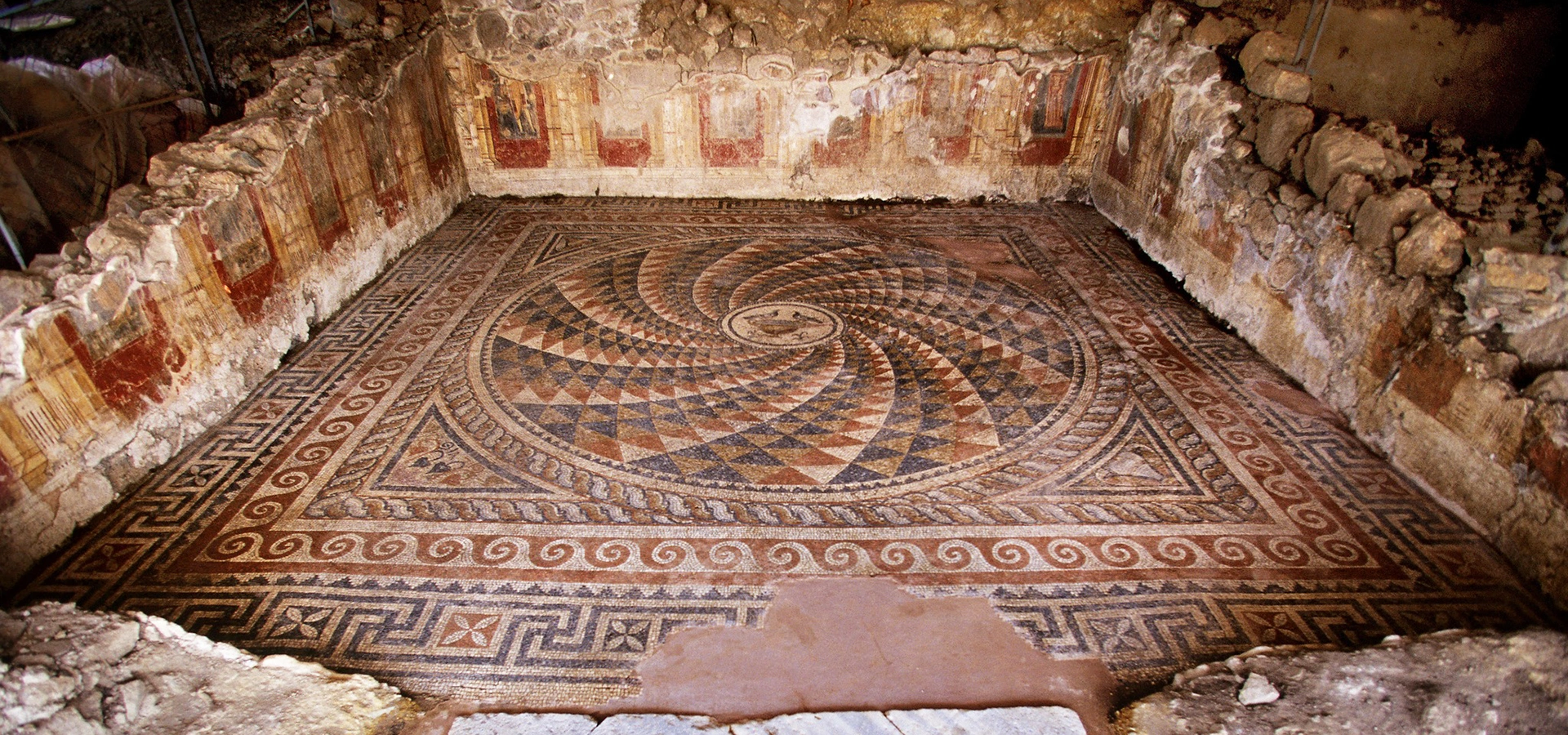
Explore an important ancient settlement beneath Mount Ida with necropolis discoveries, Roman domestic architecture and mosaics.
View Antandros Guide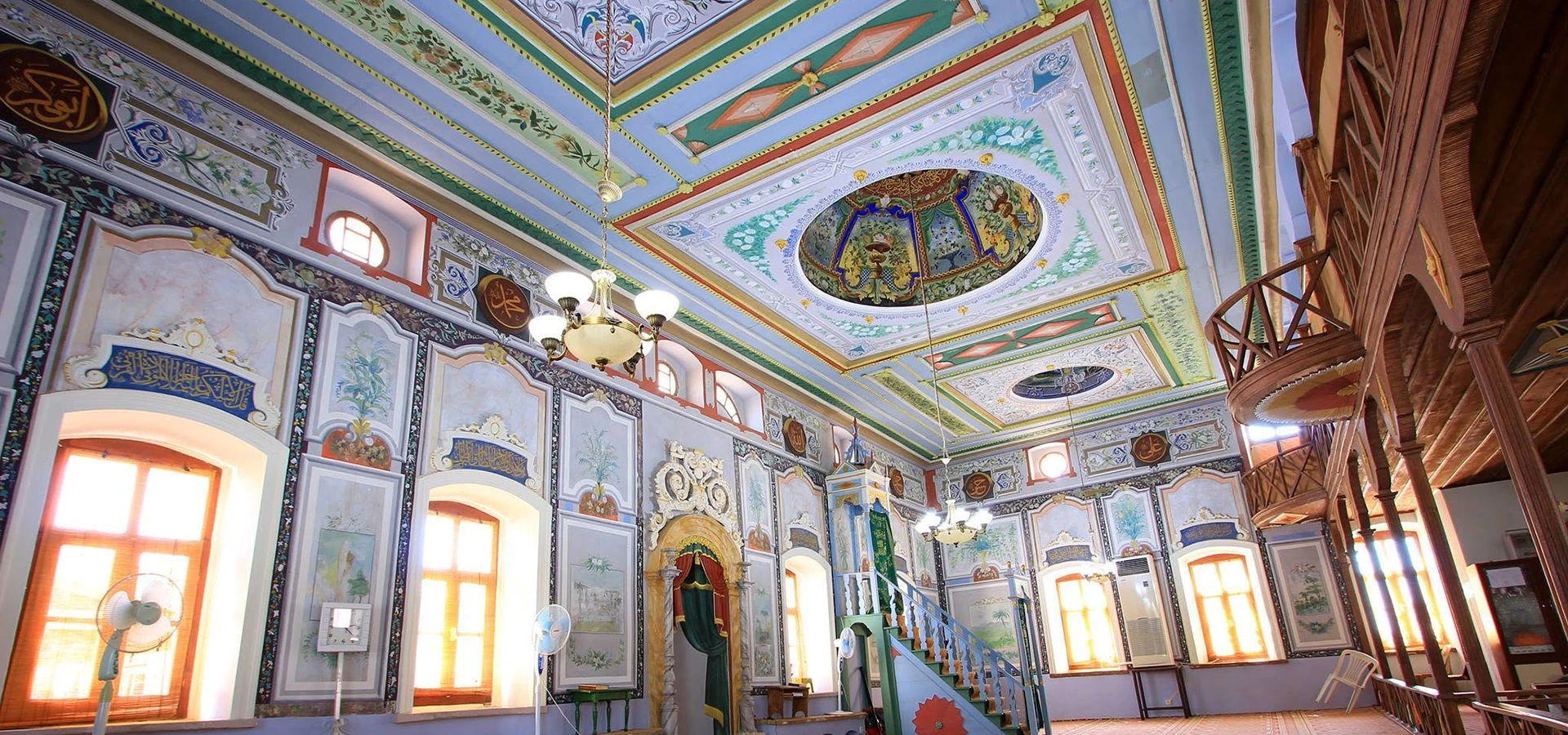
Step inside one of the region's most surprising late-Ottoman interiors, filled with painted landscapes, flowers, Medina and an imagined Istanbul.
View Şahinler Mosque Guide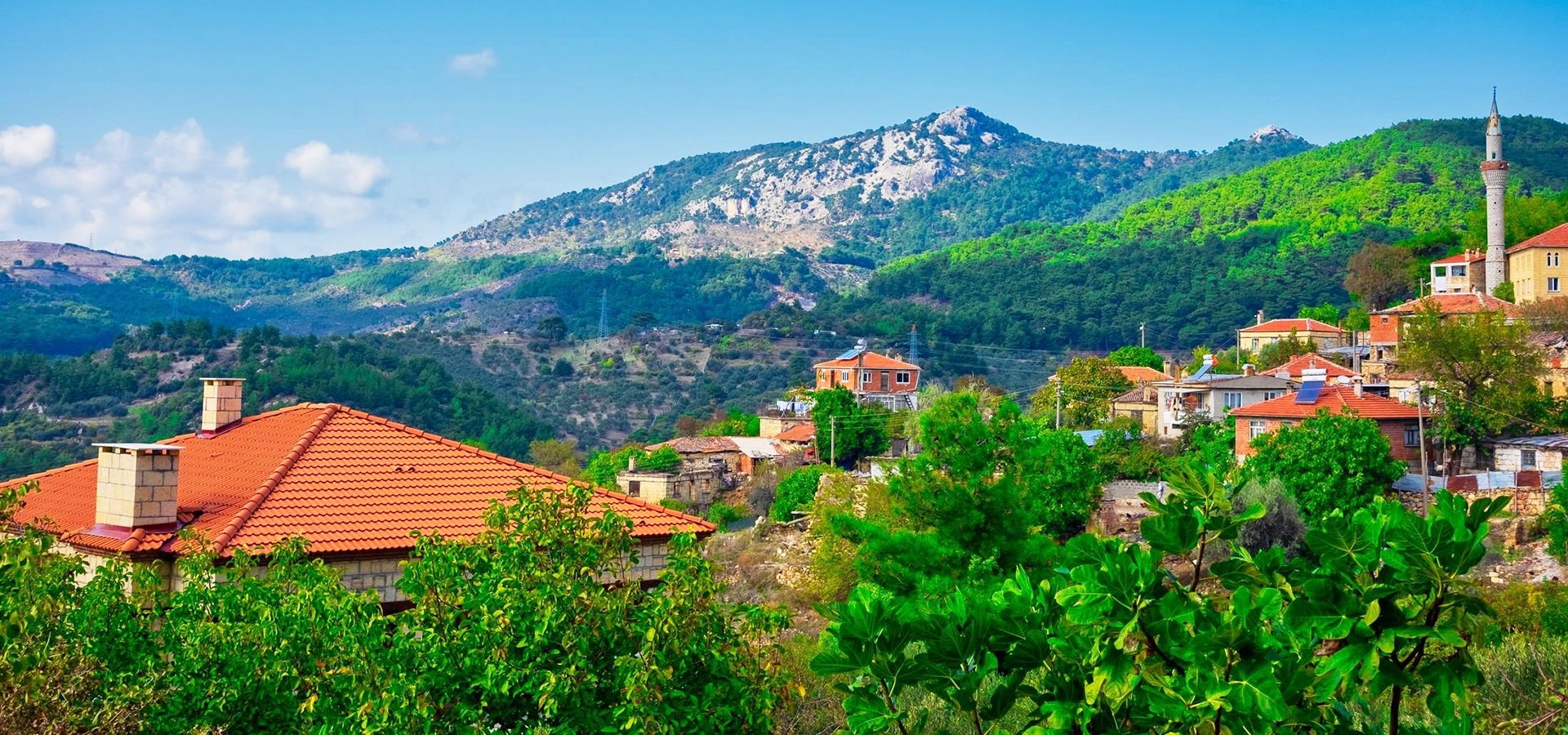
Continue into one of western Türkiye's great mountain landscapes for forests, valleys, waterfalls, mythology and panoramic views.
View Mount Ida Guide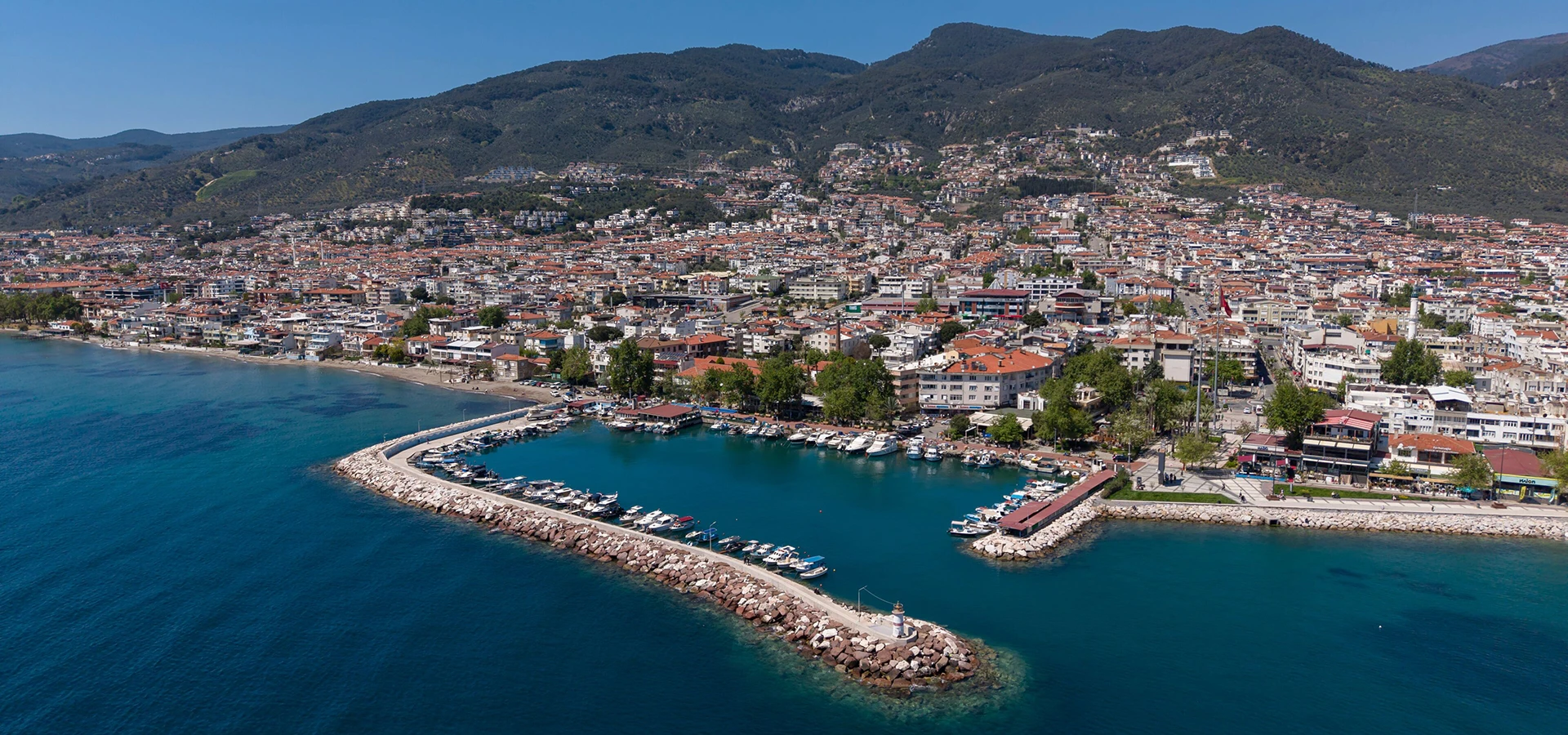
Return to the coast beneath Mount Ida for seaside scenery, mountain air and a relaxed base for exploring the upper Edremit Gulf.
View Altınoluk Guide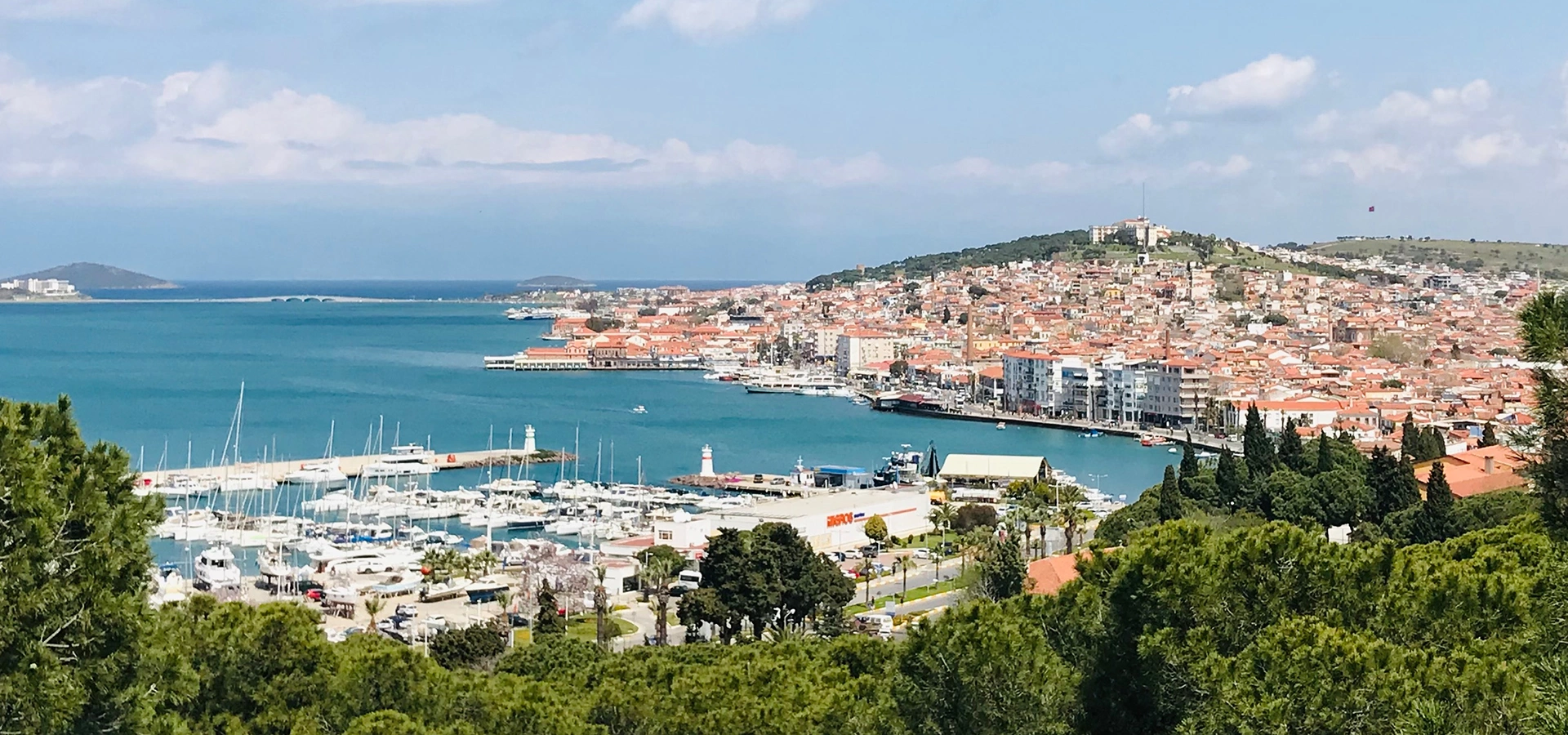
Continue south to one of the northern Aegean's richest historic towns, known for stone houses, former churches, olive oil and waterfront atmosphere.
View Ayvalık Guide