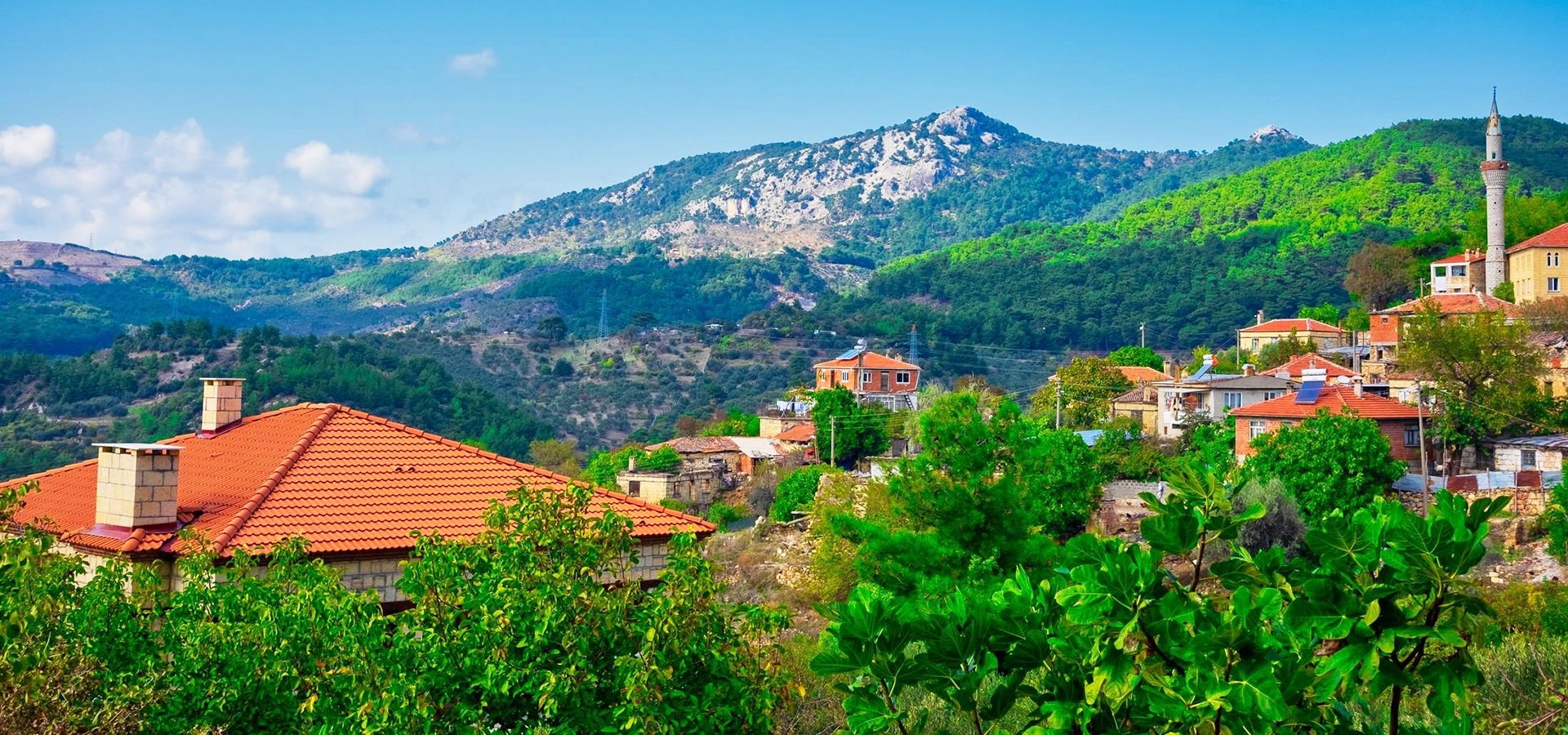
Mount Ida – Kazdağı National Park
Explore the protected mountain behind Güre in greater depth, from spring-fed recreation areas and forest routes to mythology and mountain ecology.
View Kazdağı Guide





Güre is one of the most distinctive settlements on the Edremit Gulf, positioned between the northern Aegean shoreline and the green southern slopes of Kazdağları – ancient Mount Ida. It is best known for thermal springs, but reducing Güre to a spa destination misses what makes it unusually rewarding. Within a short distance you can move between hot mineral water, olive groves, a beach, an archaeological landscape, museums devoted to Mount Ida culture and cool spring-fed recreation areas inside the national-park environment.
The thermal identity is genuine and long established. Official provincial tourism information lists Güre Hot Springs as a thermal tourism centre and gives source temperatures in the broad range of approximately 40–58°C. Today the water is used by modern thermal hotels, spa facilities and bathing complexes, while the surrounding district continues to use geothermal energy in everyday life. For travellers, the sensible way to approach the springs is as a combination of wellness, local history and regional culture rather than as a promise of medical treatment.
Güre also has an archaeological layer. The ancient settlement known as Astyra is associated with the thermal zone, and archaeological work has taken place in the area. The surviving remains are modest compared with major nearby sites such as Antandros, but Astyra matters because it suggests that the relationship between settlement, sacred landscape and hot water around Güre reaches far back into antiquity.
The cultural landscape is equally strong. Kazdağı Museum stands in Güre itself, Tahtakuşlar Ethnography Gallery lies only a short drive inland, and the long-running Güre Sarıkız Hayrı keeps one of Mount Ida's most important local traditions alive. Add Pınarbaşı, the nearby forest springs, beaches and olive-oil cuisine, and Güre becomes one of the best bases for understanding the Edremit side of Mount Ida.
Güre is one of the Edremit Gulf's best-known thermal centres, with hot mineral water feeding modern spa and hotel facilities throughout the year.
Pınarbaşı, forest recreation areas, olive-covered foothills and Kazdağı National Park begin only a few kilometres inland.
The Sarıkız tradition, Kazdağı Museum and Tahtakuşlar give Güre a cultural depth that goes far beyond a conventional beach resort.
Few places on the Gulf make it so easy to combine an Aegean swim, a thermal bath and a cool mountain excursion without changing hotels.
Essential information for visiting the Edremit Gulf's classic combination of thermal springs, Mount Ida scenery, beaches and local culture.
Edremit district, Balıkesir Province, on the northern Aegean coast between Akçay and Altınoluk, beneath the southern slopes of Kazdağları.
Thermal springs, spa hotels, Kazdağı Museum, Sarıkız heritage, Pınarbaşı, Tahtakuşlar, olive groves and Aegean beaches.
Official provincial tourism information lists Güre thermal sources in a broad range of approximately 40–58°C, depending on the source and facility.
Astyra, an ancient settlement associated with the Güre thermal area, has been the subject of archaeological work and helps explain the region's long relationship with hot springs.
Güre sits directly below Kazdağları – Mount Ida, where forest, springs and olive terraces rise rapidly behind the coastal strip.
Pınarbaşı, about 2.5 km from Güre, is a spring-fed recreation area where water emerging from Kazdağı forms a cool stream beneath dense shade.
The Güre coast includes mixed sand, fine gravel and pebbly sections, with clear northern Aegean water and both public and hotel-managed beach areas.
İğdeli Beach in Güre has held Blue Flag status in recent seasons; awards are renewed annually, so check the current official list before travel.
The surrounding foothills belong to one of Türkiye's great olive and olive-oil landscapes, with groves stretching between the sea and Mount Ida.
Edremit Municipality currently lists the Güre market on Tuesdays, useful for fresh produce, olives, cheese and everyday local shopping.
Balıkesir Koca Seyit Airport (EDO) is the nearest airport and is particularly convenient for short thermal or Mount Ida stays.
Allow one full day for Güre's essentials, or 2–4 nights if combining thermal facilities with Kazdağları, Tahtakuşlar, Akçay and Altınoluk.
Güre is particularly rewarding for travellers who want wellness, local culture and nature in the same base. It can be a thermal retreat in winter, a beach stop in summer, a Mount Ida gateway in spring and a food-and-olive destination in autumn.
The thermal springs are the obvious first reason to come. Unlike places where a spa is simply an added hotel amenity, geothermal water is part of Güre's identity. The hot springs shaped the modern tourism economy, inspired archaeological interest around Astyra and remain visible in both large thermal complexes and local infrastructure.
The second reason is the Mount Ida cultural landscape. Güre is not isolated from Kazdağları; it sits directly below it. Sarıkız traditions, the Kazdağı Museum, Tahtakuşlar, spring-water recreation areas and olive cultivation all connect the coast with the mountain above. Staying here allows those elements to make sense as parts of one landscape rather than separate tourist stops.
Finally, Güre is exceptionally practical. It lies between Akçay and Altınoluk, close to Koca Seyit Airport and on the main road toward Assos and Çanakkale. That makes it easy to use as a quiet base while exploring a much wider section of the northern Aegean.
Güre stretches across a narrow transition zone between the Edremit Gulf and the lower southern slopes of Kazdağları. The main coastal road and hotel zone occupy the flatter strip near the sea, while older settlement areas, olive groves and mountain roads rise inland almost immediately.
This short distance between shoreline and mountain creates Güre's defining contrast. On the coast you find beaches, thermal hotels, restaurants and summer activity. A few kilometres inland, the atmosphere changes into olive terraces, shaded roads, springs and forest. The geography is therefore not background scenery; it directly shapes how visitors experience the destination.
To the east, Güre connects quickly with Akçay and Edremit. To the west, the road continues toward Altınoluk, Antandros, Mıhlı and Küçükkuyu. Inland roads lead to Pınarbaşı, Tahtakuşlar, Çamlıbel and the wider Kazdağları landscape.
The broad northern Aegean gulf linking Güre with Akçay, Edremit, Altınoluk, Burhaniye and the region's major olive-growing districts.
The forested mountain mass directly behind Güre, central to local ecology, mythology, spring water, recreation and cultural identity.
Geothermal resources beneath the Güre–Edremit area support hotels, spa facilities and long-established bathing traditions.
The lower slopes between coast and forest are shaped by extensive olive groves, one of the defining agricultural landscapes of the Gulf.
Güre has been recognised for decades as one of the Edremit Gulf's important thermal tourism centres. Balıkesir's official provincial information describes the springs as sodium-sulfate thermal waters containing fluoride and gives a broad source-temperature range of approximately 40–58°C. Individual wells and facilities can differ, so the water reaching a bathing pool may be cooler after controlled mixing or cooling.
For visitors, the main experience is through thermal hotels, spa complexes, Turkish baths and bathing pools. Some properties combine thermal water with indoor pools, hammams, saunas and treatment rooms; others focus more strongly on accommodation and wellness. Day-use access is possible at some facilities, but policies change, so confirm before travelling if you are not staying overnight.
The cultural value is just as interesting as the wellness side. The presence of Astyra and archaeological work near the thermal zone suggests that hot-water use around Güre belongs to a much longer historical story. Modern hotels may look contemporary, but the attraction of naturally heated water is not new.
A good thermal visit is usually about shorter, comfortable sessions rather than spending hours continuously in very warm water. Pool temperature, humidity and facility design vary, so follow posted rules and staff instructions. Hydration matters, particularly if you are combining a thermal bath with sauna or hammam facilities.
If you plan to combine the spa with sightseeing, the most comfortable pattern is often mountain or museum time first, then thermal bathing later in the afternoon. In summer, an early swim followed by a shaded Pınarbaşı visit and an evening spa can work equally well.
Some thermal hotels accept non-resident spa guests, while others prioritise overnight visitors or require advance booking.
Facility rules differ between thermal pools, hammams and private bathing areas, so check requirements in advance.
Warm pools and sauna environments can feel more tiring than ordinary swimming, particularly after a day outdoors.
Age limits and permitted water temperatures vary between spa facilities, especially for very young children.
A slow meal or quiet evening after bathing suits Güre better than packing the day with constant driving.
Enjoy the thermal tradition, but do not treat general tourism claims as individual medical advice.
The name Astyra appears in discussions of the ancient landscape east of Antandros and west of Adramyttion. Modern archaeological work has taken place in Güre near the thermal zone, and Edremit Municipality has specifically referred to Astyra excavations in Güre in its cultural projects.
Ancient literary and archaeological interpretation around Astyra is more complicated than the neat stories sometimes repeated online. The settlement has been associated with the broader cult landscape of Artemis Astyrene and with hot-water traditions, but the exact identification of individual remains and the relationship between textual references and the modern Güre site require specialist interpretation.
For travellers, Astyra should therefore be approached differently from a major excavated site such as Ephesus or even nearby Antandros. Do not expect monumental streets, theatres or a large visitor circuit. Its importance lies in helping explain that Güre's thermal identity may have ancient roots and that the modern resort occupies a landscape with a much deeper archaeological history.
Kazdağı Museum is one of Güre's most useful cultural stops because it helps visitors connect themes that otherwise seem scattered across the region. Displays interpret the story of Kazdağları from mythology and archaeology to olive culture, local life and notable figures associated with the northern Aegean.
The museum occupies a restored former olive-oil production setting in Güre and is particularly effective as an introduction before heading deeper into the mountain. If names such as Ida, Sarıkız, Antandros, Astyra and Adramyttion feel disconnected when you arrive, the museum provides the context needed to see them as parts of one regional story.
Current visitor information published by the museum lists regular daytime opening hours, but seasonal schedules and ticket prices can change. Check the museum's own current notice before travelling, especially in winter when a weekly closing day may apply.
First-time visitors who want an overview of Mount Ida's mythology, archaeology, olive culture and local history.
Allow roughly 45–75 minutes if you want to read displays rather than simply walk through.
A thermal bath, Eski Güre, Tahtakuşlar or Pınarbaşı all fit naturally into the same day.
Opening arrangements and admission prices can change seasonally; verify on the museum's current website before arrival.
The Sarıkız legend is one of the most powerful stories associated with Kazdağları. Versions vary from village to village, but the central figure is a young woman named Sarıkız whose story becomes connected with innocence, exile, the mountain and sacred memory. The legend is so deeply embedded in the region that Sarıkız Tepesi, local festivals and community rituals continue to carry her name.
Güre preserves that tradition through the long-running Güre Sarıkız Hayrı. In 2026 Edremit Municipality organised the 36th edition at the Kavurmacılar area above Güre, with communal food, prayers and large local participation. The event is important because it is not simply a staged tourism show; it remains a living community gathering tied to local memory and belonging.
Visitors interested in folklore should approach Sarıkız as living cultural heritage rather than a single fixed historical biography. Oral traditions naturally exist in multiple versions, and the value lies partly in how the story has continued to shape the identity of the mountain communities.
A major annual community gathering held in the Güre–Kavurmacılar area, traditionally involving prayers and shared food.
A high summit area of Kazdağları associated with the legend; access is a separate mountain excursion and not a casual extension of a beach walk.
Different versions coexist, so the story is best understood as folklore and regional cultural memory.
Kazdağı Museum and Tahtakuşlar help explain how mythology, local belief and mountain culture overlap in the Edremit region.
The modern Güre most visitors see first is concentrated around the coastal road, thermal hotels and newer residential areas. Higher on the slopes, however, Eski Güre preserves the atmosphere of an older settlement landscape with stone walls, ruined or abandoned houses, narrow lanes and olive trees.
This is not a polished open-air museum or a fully restored heritage village. That is precisely why it can be interesting. The appeal lies in the texture of the place: weathered stone, fragments of traditional architecture, mountain light and the sense of an older settlement pattern sitting above the rapidly developed coast.
Visitors should be respectful around ruined structures and private property. Do not enter unstable buildings, climb walls or assume that every lane is a formal visitor route. Eski Güre is best treated as a short atmospheric walk rather than a checklist of monuments.
Old walls, village houses and narrow lanes provide a strong visual contrast with the modern hotel zone below.
Morning and late afternoon bring softer light across the stonework and olive-covered slopes.
Expect uneven surfaces and rough edges; sturdy footwear is more useful than beach sandals.
Some structures are unstable or privately owned, so admire them from safe public routes.
Only a short drive inland from Güre, Pınarbaşı is one of the most accessible ways to experience the water-and-forest character of Kazdağı National Park. Official nature-tourism information places the recreation area roughly 2.5 kilometres from Güre and identifies it as one of the park's heavily used day-visit areas.
Its defining feature is water. Part of the snowmelt and groundwater of Kazdağı emerges here as a spring and forms a stream beneath mature trees. In the heat of summer, the temperature change from the coastal road to the shaded spring area can feel dramatic.
Pınarbaşı is most enjoyable as a slow stop: walk, sit beneath the trees, listen to the water and use it as an introduction to the mountain environment rather than expecting a major waterfall. Facilities can include basic visitor services, but exact opening arrangements and access rules should always be checked in the current season.
A short drive inland from Güre brings you to Tahtakuşlar Ethnography Gallery, one of the Edremit Gulf's most distinctive cultural collections. Founded by teacher Alibey Kudar, the gallery preserves clothing, tools, textiles, tents, objects, documents and artistic material connected with the traditions of Tahtacı Turkmen communities and the cultural world of Kazdağları.
The museum is important because it gives human context to the mountain. Kazdağları is often marketed through forests, waterfalls and mythology, but communities have worked, travelled, celebrated and maintained traditions here for generations. Tahtakuşlar makes that cultural layer visible.
Allow enough time to read and look closely. It is not a giant state museum, and that intimacy is part of its character. Current opening hours and admission arrangements can change, so check before making a special journey.
For Tahtacı Turkmen material culture, local traditions, textiles, everyday objects and the cultural landscape of Kazdağları.
The gallery was founded by teacher Alibey Kudar and opened in 1991.
It is close enough to combine easily with thermal facilities, Pınarbaşı or the Kazdağı Museum.
Use the collection to understand how local culture, forest life and Mount Ida traditions fit together.
Güre is one of the most natural bases for exploring the southern side of Kazdağı National Park. The protected mountain environment rises immediately behind the settlement, and Pınarbaşı provides one of the easiest first encounters with its spring-fed landscape.
Deeper access is more regulated. Depending on the route, season and conservation rules, national-park excursions can require designated access points, authorised guiding or current permission. During periods of high forest-fire risk, temporary closures may be introduced with little notice.
For this reason, do not plan the mountain as if every road visible on a map is automatically open. Decide what type of experience you actually want: a cool spring stop, a short nature walk, a panoramic 4x4 excursion, a cultural village day or a more serious hiking route. Then confirm current conditions locally.
The easiest Güre-side introduction to Kazdağı spring water, dense shade and forest recreation.
Popular nature sites reached from the Zeytinli side and useful for a wider Edremit Gulf nature day.
Recommended for deeper mountain access where route permissions, conditions and conservation rules matter.
Summer access can change rapidly during high-risk periods; check official announcements on the day of travel.
Güre is not only a thermal destination. The settlement also has a long Aegean shoreline with public beach sections, hotel beaches and summer facilities. Water can be impressively clear, especially during calm morning conditions, and the mountain backdrop gives the coastline a strong sense of place.
Beach surfaces vary from sand and fine gravel to pebbly sections. Even when the upper beach looks sandy, the waterline or seabed can contain stones. Sea shoes are useful for children and sensitive feet, particularly if you plan to swim at several points along the Gulf.
One useful reference point is İğdeli Beach, which has appeared in Türkiye's official Blue Flag programme in recent seasons. Blue Flag status is awarded annually to specific beaches rather than entire towns, so always check the current year's listing before describing any individual beach as certified.
A public beach in Güre with recent Blue Flag recognition and a useful option for travellers who prefer municipal beach facilities.
Several coastal thermal and resort properties offer their own beach areas, often combining sea access with pool and spa facilities.
Usually the best time for calmer water, softer light and a quieter shoreline before summer activity builds.
Worth carrying because the exact shoreline surface can change considerably over a short distance.
Güre's coastal experience is more spread out than the concentrated kordon atmosphere of Akçay. Hotels, restaurants, beach facilities and residential areas extend along the shore and the main road, creating several pockets of activity rather than one single centre.
In summer, parts of Güre become lively after sunset, particularly around resort complexes, restaurants and seasonal entertainment venues. At the same time, quieter stretches remain available for an evening sea walk or dinner away from the busiest nightlife.
This mixed character is useful when choosing accommodation. Travellers who want peace should look inland, toward the foothills or away from major beach-entertainment venues. Those who prefer restaurants and evening activity within walking distance should stay closer to the coastal strip.
Start with sunset near the sea, then move to a fish restaurant or thermal spa for a slower end to the day.
Choose accommodation carefully in July and August, when beach venues and road traffic can remain active late into the evening.
Beachfront restaurants and hotel complexes offer easy evening options without needing a long drive.
A thermal session followed by sunset dinner is one of Güre's most natural evening combinations.
The slopes behind Güre are covered with olive groves, part of the wider Edremit Gulf landscape that has supported olive cultivation for generations. The contrast is striking: modern thermal hotels stand close to roads that quickly climb into agricultural terraces and traditional grove country.
Olive oil is therefore one of the most meaningful local products to experience. Rather than buying the most decorative bottle, look for a reputable producer, harvest information, extraction details and proper storage. Taste the oil with bread, salads and seasonal vegetables to understand it as part of the regional food culture rather than simply a souvenir.
Autumn brings a different Güre. Beach crowds thin, the air cools and olive harvest activity becomes more visible across the foothills. For travellers interested in food, photography and rural life, this can be one of the most rewarding seasons.
Compare oils and ask about harvest timing, pressing and storage rather than choosing only by label design.
Often more intense, greener and more peppery; taste first because stronger flavour is a preference rather than an automatic measure of quality.
Olive terraces make the connection between Güre's coastline and rural Mount Ida landscape immediately visible.
Late autumn offers a more agricultural, local atmosphere than peak summer.
Edremit Municipality currently lists Güre's weekly market on Tuesday. The market is a useful stop if you want to see the settlement functioning as a local neighbourhood rather than only through hotels and spa facilities.
Expect a practical mixture of fruit, vegetables, olives, cheeses, household goods, clothing and seasonal products. The most interesting food purchases are often simple: tomatoes in summer, local olives, cheese, herbs, fruit and regional pantry products.
Morning is usually the easiest time to visit before heat and crowds build. Market locations and arrangements can occasionally change, so confirm locally if your itinerary depends on a specific visit.
Güre's strongest food identity comes from its position between the sea and olive country. Look for fresh fish, seafood, zeytinyağlı vegetable dishes, seasonal herbs, olives, white cheeses, salads and local olive oil. The best meal is often simple rather than elaborate.
At fish restaurants, ask what is actually fresh that day. Availability changes with season and weather, and a short list based on the day's catch is often more meaningful than a long menu. Pair fish with cold meze, salad and olive oil rather than ordering by reputation alone.
For dessert, höşmerim remains one of Balıkesir's signature sweets. Breakfast is another good way to taste the region through olives, cheese, tomatoes, preserves, eggs, pastries and tea.
Choose according to daily availability and season; waterfront restaurants are strongest when they keep preparation simple.
Cold and warm vegetable dishes prepared with olive oil are central to the northern Aegean table.
Look for seasonal greens, herb salads and meze, particularly in spring.
Taste with bread and vegetables before buying from a producer or specialist shop.
A classic Balıkesir dessert associated with fresh cheese and semolina.
Convenient for spa stays, but step outside the hotel at least once to experience the wider Edremit Gulf food culture.
The closest and easiest nature escape, with cold spring water, dense shade and a direct connection to Kazdağı National Park.
The essential wider landscape for forest routes, mountain viewpoints, ecology and guided excursions.
A popular spring-fed recreation area on the Zeytinli side, best combined with Sütüven and nearby mountain scenery.
A well-known waterfall excursion in the Edremit side of Kazdağları, especially attractive outside the driest late-summer period.
A larger canyon system closer to Altınoluk, suitable for a dedicated half- or full-day nature excursion.
A shaded stream-and-bridge landscape farther west, useful when combining Güre with Altınoluk, Adatepe or Küçükkuyu.
The essential first stop for understanding Mount Ida mythology, archaeology, local history and olive culture.
A distinctive collection introducing Tahtacı Turkmen traditions and the cultural life of Kazdağları communities.
Güre's archaeological layer, connected with the thermal landscape and best understood as part of a wider ancient route.
A much larger archaeological experience near Altınoluk, with necropolis evidence, Roman residential remains and Mount Ida connections.
A beautifully preserved stone village farther west, easily combined with the Zeus Altar viewpoint and Küçükkuyu.
A neighbouring resort with a longer kordon and a livelier central waterfront, only a short drive east of Güre.
Güre works well for families because it offers different types of activities without long transfers. Beach time, hotel pools, short museum visits, Pınarbaşı and easy coastal drives can be mixed according to weather and energy levels.
The main considerations are the shoreline surface and thermal-facility rules. Pebbly entry can make sea shoes useful, while some hot pools may have age restrictions or recommended time limits for children. Check the exact policy of your hotel or spa rather than assuming every pool is family-oriented.
For mountain excursions, choose developed recreation areas before attempting remote tracks. Pınarbaşı is far easier for most families than a long, unmarked mountain route, especially in hot weather.
Güre is particularly popular with travellers who value thermal facilities, quieter pacing and short transfers. Staying in a hotel with an indoor thermal pool can make the destination attractive outside the summer season, when beach resorts elsewhere on the coast feel much quieter.
Accessibility differs significantly between properties. Modern thermal hotels may have lifts, ramps and indoor facilities, while Eski Güre, archaeological surfaces and mountain recreation areas can be uneven. If mobility matters, choose the hotel first and then build excursions around realistic walking conditions.
Thermal water is not appropriate in the same way for every person. Travellers managing cardiovascular conditions, pregnancy, blood-pressure issues or other medical concerns should follow professional medical guidance about hot bathing rather than relying on general spa claims.
The mountain backdrop is Güre's strongest visual identifier; use it behind coastal and olive-grove scenes whenever possible.
Stone walls and old lanes photograph best early or late, when texture is visible without harsh overhead contrast.
Shade and spring water create a completely different visual mood from the coast; keep equipment safe around wet surfaces.
Harvest activity adds people, nets, baskets and agricultural context to landscape photographs.
Use piers, beach structures or distant Kazdağı slopes as foreground and background rather than photographing only open sea.
Check photography rules before shooting inside museums or private collections; flash may be restricted.
Excellent for thermal stays, green mountain scenery and museum visits; beach weather is not the priority.
One of the best months for combining foothill walks, Pınarbaşı, cultural stops and comfortable daytime temperatures.
A strong all-round month for swimming, mountain excursions and outdoor dining before peak summer congestion.
Hot, lively and busy; excellent for beach-oriented holidays but plan mountain activities early and check fire restrictions.
Peak coastal season and often the busiest period; Sarıkız cultural events may also take place around this time.
One of the strongest months overall, with warm sea temperatures, easier sightseeing and good mountain conditions.
Excellent for thermal hotels, olive harvest atmosphere, food and quieter road trips; swimming becomes less predictable.
A particularly good season for spa-focused stays, museums and regional food, though some coastal businesses reduce hours.
Enough for Kazdağı Museum or a thermal day-use session if you are passing along the Edremit coast.
Combine the museum with Pınarbaşı, Eski Güre or a spa experience.
Visit Kazdağı Museum, Pınarbaşı and Tahtakuşlar, then finish with thermal bathing or dinner by the sea.
Ideal for a relaxed wellness stay with added excursions to Akçay, Altınoluk, Antandros, Hasanboğuldu and wider Kazdağları.
For a northern Aegean road trip, Güre is especially useful as a rest-and-explore base. Spend active mornings in the mountain or at archaeological sites, then return to the spa, sea and restaurants without another long transfer.
Accessibility in Güre depends heavily on where you stay. Larger modern thermal hotels may offer lifts, level indoor circulation, accessible rooms and pool-support facilities, but these features should be confirmed directly before booking.
The coastal strip is generally easier than the foothills. Beaches can involve gravel, pebbles, steps or soft surfaces, while Eski Güre and archaeological areas may include steep or uneven terrain.
Pınarbaşı and other mountain recreation areas also require individual checking. Developed facilities may be relatively straightforward, but natural ground, wet surfaces and gradients can still create barriers. Ask about the exact route rather than relying on a general description such as “accessible.”
Güre lies directly on the main coastal road linking Edremit, Akçay, Altınoluk, Küçükkuyu and Çanakkale. This makes arrival straightforward by road and keeps the settlement well connected with the rest of the Edremit Gulf.
The airport near Edremit is the closest air gateway. Transfer time is usually short by regional standards, though summer traffic can add delays.
Güre lies roughly 12 km west of Edremit centre according to official local sources.
Güre is only a few kilometres farther west along the main coastal road, making taxis, minibuses and short drives practical.
Drive east along the Edremit Gulf road; Güre is easy to combine with Antandros and Altınoluk on the same day.
Long-distance services generally use Edremit/Akçay-area stops, with local minibuses or transfers continuing to Güre.
The most flexible choice for Pınarbaşı, Tahtakuşlar, Kazdağları and westbound day trips toward Altınoluk and Assos.
In July and August, allow extra time on the coastal road. Weekend traffic, holiday changeovers and beach congestion can turn very short distances into slow journeys.
Best for travellers who want indoor thermal pools, spa facilities and wellness services as the centre of the stay.
Best for easy beach access, restaurants and summer atmosphere, often with sea views and hotel beach facilities.
Choose inland accommodation for quieter nights, olive-grove scenery and faster access to Pınarbaşı and mountain roads.
A livelier alternative a short drive east, useful if you want a long promenade and more concentrated evening activity.
A good western alternative for travellers prioritising Antandros, Şahindere and the route toward Küçükkuyu and Assos.
Several properties combine spa facilities with sea access, useful if you want one hotel for both summer and wellness experiences.
There is no general entrance fee for Güre as a destination or for ordinary public streets and coastal areas. Costs depend on the individual thermal facility, beach service, museum or nature site you choose.
Thermal hotels and spa complexes set their own day-use policies, pool rules and prices. Some facilities allow non-resident guests; others may require reservation or restrict access during busy periods.
Kazdağı Museum publishes its own current hours and admission fees, while Tahtakuşlar is privately managed. National-park recreation areas and routes can also change access arrangements according to season, maintenance and fire risk.
If archaeology is your main interest, replace part of the afternoon with Astyra and Antandros. If wellness is the priority, keep the morning light and spend several hours at your thermal hotel before a sunset drive along the coast.
Güre's most important cultural attraction for understanding Mount Ida mythology, archaeology, local history and olive culture.
A spring-fed recreation area only a few kilometres inland, ideal for escaping summer heat.
A distinctive private museum focused on Tahtacı Turkmen culture and the human history of the Kazdağları region.
The ancient archaeological layer of Güre, linked with the area's long thermal and sacred landscape.
Weathered stone architecture, old lanes and olive-slope atmosphere above the modern resort strip.
The wider mountain environment of forest, springs, ecology, mythology and regulated nature routes.
A lively neighbouring resort with a long promenade, cold coastal water and easy access to Edremit's central Gulf.
A western coastal base for Antandros, Şahindere Canyon, beaches and the road toward Küçükkuyu.
One of the Edremit Gulf's major archaeological sites, combining necropolis evidence, Roman remains and Mount Ida history.
Popular mountain-water attractions reached from the Zeytinli side and best visited with current access information.
Not every coastal hotel is a serious thermal property, and not every thermal hotel is ideal for beach access.
Policies differ widely, so confirm before arriving if you are not staying at the property.
The shaded spring environment is especially refreshing during the hottest part of a summer day.
Güre's shoreline can shift between sand, fine gravel and pebbles over short distances.
Visit in the morning for fresh produce and a more local view of the neighbourhood.
Enjoy the wellness tradition without turning general tourism descriptions into personal medical advice.
Summer fire restrictions and conservation rules can change mountain routes quickly.
Kazdağı Museum and Tahtakuşlar are most rewarding when you read the displays rather than treating them as photo stops.
Roads can narrow and become winding once you leave the main coastal corridor.
The three settlements are close enough to compare in one trip, but each has a different identity and strongest attractions.
Güre is a neighbourhood of Edremit in Balıkesir Province, on the northern Aegean coast between Akçay and Altınoluk, directly below Kazdağları – ancient Mount Ida.
It is best known for thermal springs, spa hotels, Mount Ida scenery, Kazdağı Museum, Sarıkız traditions, Pınarbaşı, Tahtakuşlar and Aegean beaches.
Yes. Güre lies in a geothermal area and official provincial tourism information identifies it as a thermal tourism centre with naturally hot mineral-water sources.
Official provincial information gives a broad source range of approximately 40–58°C. Individual wells and bathing pools can differ because facilities may cool or mix water before use.
Some properties offer day-use spa access, while others restrict facilities to hotel guests or require advance booking. Confirm directly with the property before travelling.
Thermal bathing is part of the region's wellness tradition, but individual medical claims should not replace professional healthcare advice. People with health conditions should ask their doctor whether hot bathing is appropriate for them.
Astyra is the ancient settlement associated with the Güre area. Archaeological work has taken place near the thermal zone, although the visible remains are modest and interpretation continues to develop.
No. Do not expect a monumental site with a long visitor circuit. Its importance is historical and archaeological, especially for understanding the ancient landscape around Güre's thermal springs.
Kazdağı Museum in Güre is a cultural museum interpreting the wider Mount Ida region through mythology, archaeology, olive culture, local history and important regional figures.
Allow roughly 45–75 minutes if you want to read the displays and use the museum as an introduction to the wider region.
Sarıkız is a major folk figure of Kazdağları. Different versions of the legend connect her with exile, innocence, the mountain and sacred memory, and the story remains important in local cultural identity.
It is a long-running annual community gathering in the Güre–Kavurmacılar area involving prayers, shared food and remembrance of Sarıkız. The event remains a living local tradition rather than only a tourism performance.
Pınarbaşı is a spring-fed recreation area in the Kazdağı landscape about 2.5 km from Güre, where cold mountain water emerges and forms a shaded stream.
Yes. Its shade and cold spring water make it one of the most refreshing short excursions from Güre during hot weather.
It is a private ethnography gallery founded by teacher Alibey Kudar, displaying material connected with Tahtacı Turkmen culture and the wider cultural landscape of Kazdağları.
Yes. The village and gallery lie only a short drive inland from the Güre coast and combine very easily with Pınarbaşı or Kazdağı Museum.
Yes. Güre is one of the most convenient coastal bases for the southern side of Kazdağları, although deeper routes can be subject to guide requirements, seasonal access rules or fire restrictions.
Some easy local walks are straightforward, but deeper national-park routes should only be planned after checking current access rules. Remote routes are better with local knowledge or an authorised guide.
Yes. Güre has a long northern Aegean shoreline with public and hotel beach sections. The water is often clear, especially in calm weather.
Conditions vary. Expect a mixture of sand, fine gravel and pebbly sections; sea shoes can be useful.
İğdeli Beach has held Blue Flag status in recent seasons. Because certification is renewed annually and applies to specific beaches, check the current official Blue Flag list before travel.
Eski Güre is the older hillside settlement area, known for weathered stone houses, ruins, narrow lanes and olive-slope atmosphere above the modern coastal and thermal zone.
Only partially. It should not be expected to look like a fully restored heritage village; much of its interest comes from surviving stone texture and ruined architecture.
Edremit Municipality currently lists the Güre market on Tuesdays. If the market is central to your plans, confirm locally because municipal arrangements can change.
Focus on fish, seafood, meze, olive-oil vegetable dishes, seasonal herbs, olives, local cheese and Edremit Gulf olive oil. Höşmerim is a classic Balıkesir dessert.
Yes. Güre sits inside the Edremit Gulf olive-growing region. Buy from reputable producers and look for harvest date, extraction and storage information.
Yes, especially for families who want a mix of beach time, hotel pools, museums and easy nature outings. Check thermal-pool age rules for children.
Often yes, particularly when staying in a modern thermal hotel with lifts and indoor facilities. Eski Güre and mountain sites can involve uneven ground.
Balıkesir Koca Seyit Airport (EDO) near Edremit is the closest airport.
Not for a hotel-focused spa stay, but a car is extremely useful for Pınarbaşı, Tahtakuşlar, Kazdağları, Altınoluk, Antandros and wider day trips.
Yes. Regional minibuses connect the main Edremit Gulf settlements, and intercity bus services reach Edremit/Akçay with local onward transport.
May, June and September are excellent for combining nature, culture and the coast. Winter is particularly good for a thermal-focused stay.
Yes. Thermal hotels, museums, regional food and quieter roads give Güre a genuine off-season appeal that many beach-only resorts do not have.
One full day gives a good first impression, but 2–4 nights is much better for a relaxed thermal stay with Mount Ida and coastal excursions.
Yes. Akçay is only a short drive east and is easy to combine for its long promenade, restaurants and central resort atmosphere.
Yes. Altınoluk lies west along the same coastal road and adds Antandros, Şahindere Canyon and a different resort atmosphere.
Yes. Antandros Ancient City is an easy westbound excursion and provides a much larger archaeological experience than the modest remains associated with Astyra.
Yes. Continue west through Altınoluk and Küçükkuyu toward Assos. It works best as a full-day cultural excursion rather than a very quick detour.
Güre has a much stronger thermal-spa and immediate Mount Ida foothill identity, while Akçay is more strongly defined by its central promenade, coastal social life and resort atmosphere.
Güre is more strongly associated with thermal springs, Kazdağı Museum, Pınarbaşı and Tahtakuşlar. Altınoluk is more closely tied to Antandros, Şahindere Canyon and the western side of the Gulf.
Do not miss a thermal experience, Kazdağı Museum, Pınarbaşı and at least one cultural stop such as Tahtakuşlar or Eski Güre. In summer, add a swim in the Aegean.
Use Güre as your thermal-and-mountain base, then follow the Gulf toward archaeology, beaches, canyon scenery and the cultural landscape of Kazdağları.
Go deeper into Mount Ida, discover Tahtacı Turkmen heritage or continue along the coast to Akçay and Altınoluk.
Explore the protected mountain behind Güre in greater depth, from spring-fed recreation areas and forest routes to mythology and mountain ecology.
View Kazdağı Guide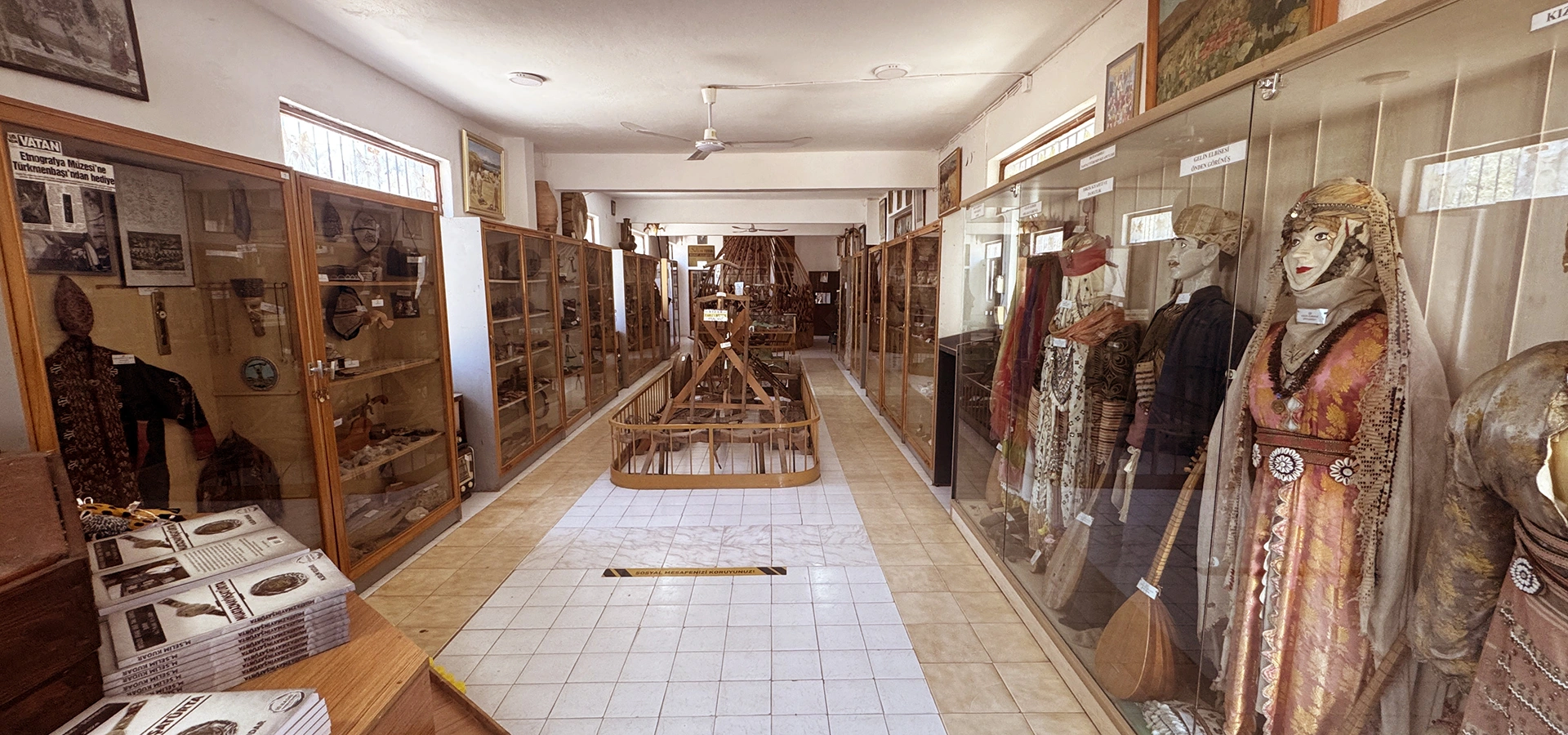
Discover Tahtacı Turkmen material culture and the community traditions that add a human dimension to the Kazdağları landscape.
View Tahtakuşlar Guide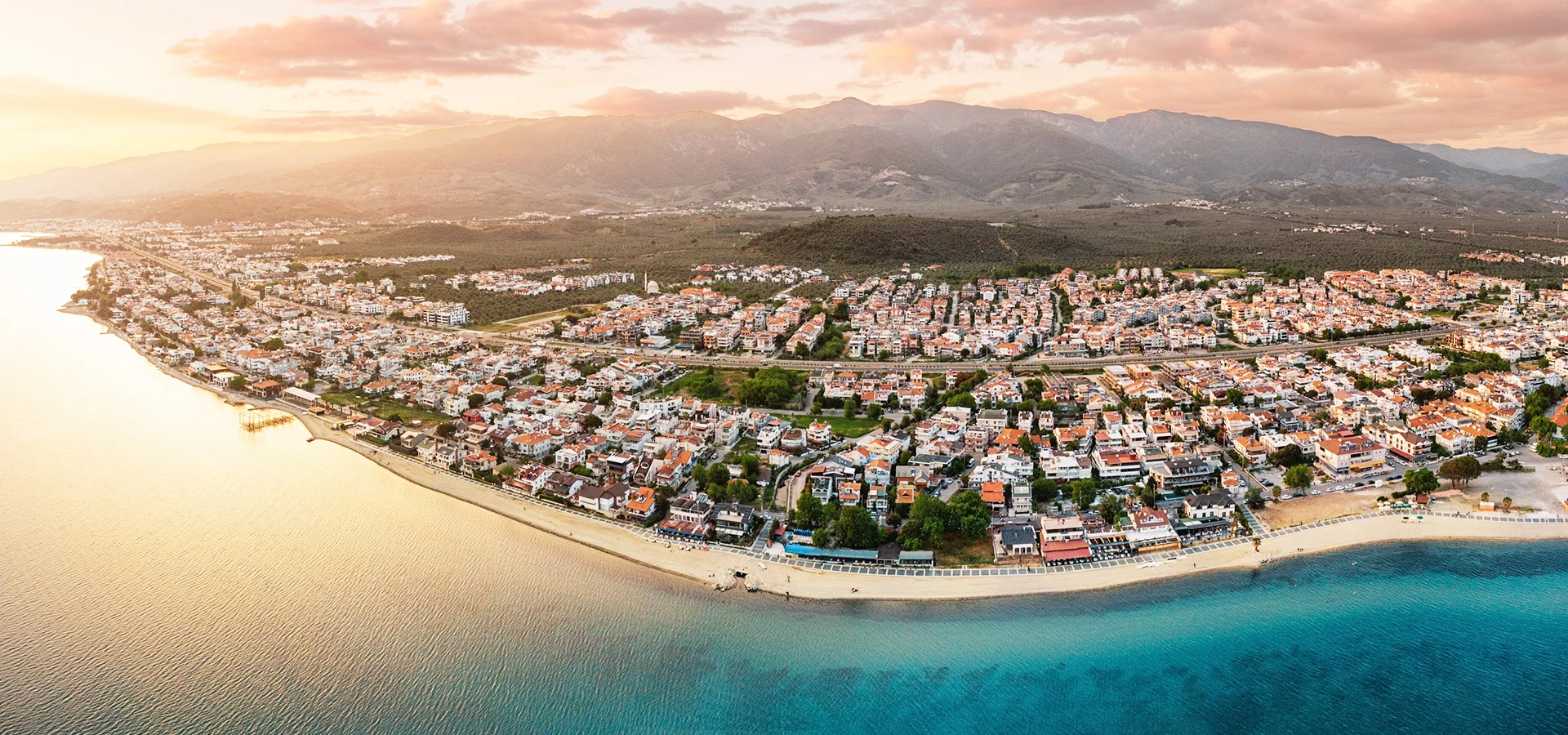
Continue east for a livelier promenade, cool coastal water, restaurants and one of the Edremit Gulf's classic resort atmospheres.
View Akçay Guide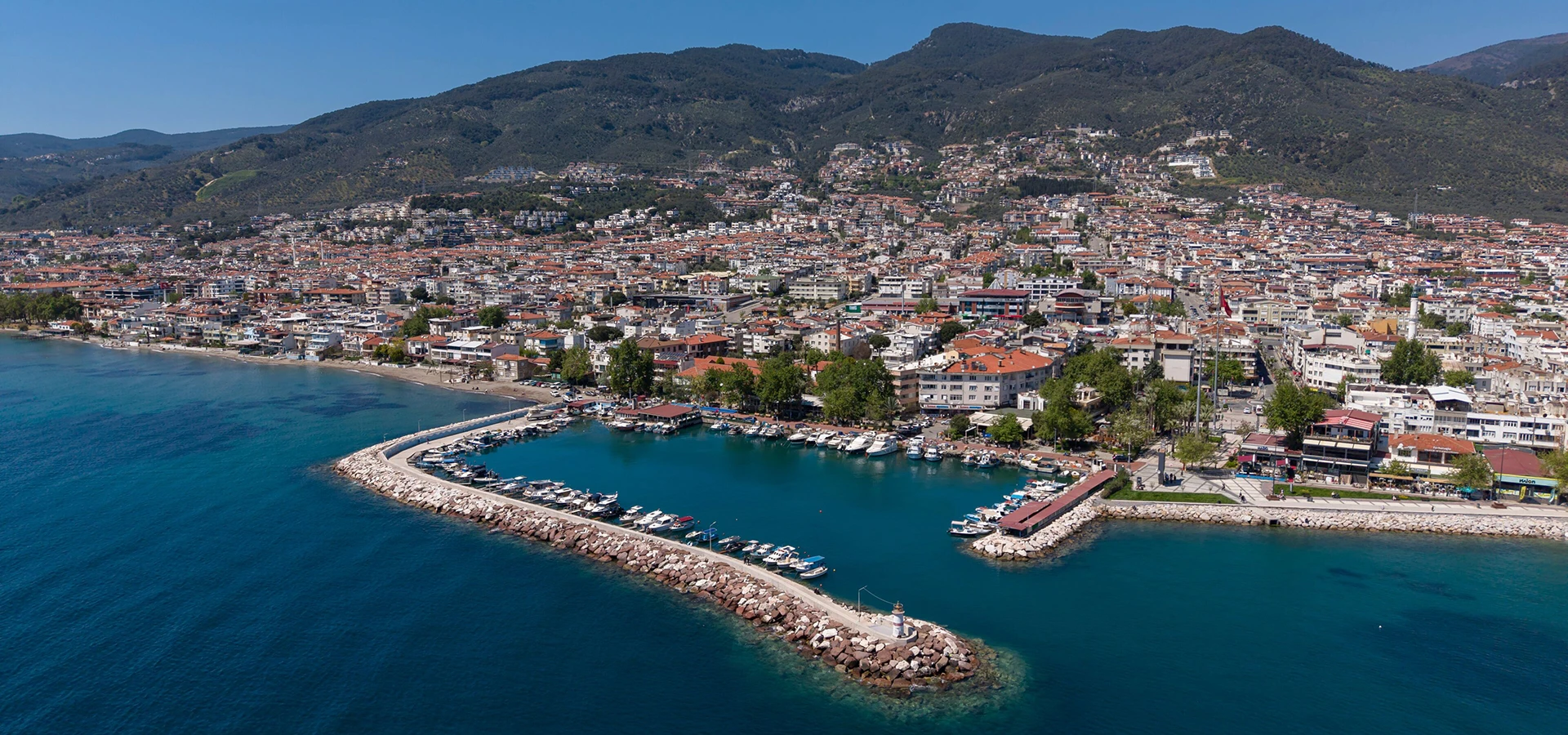
Head west toward Antandros, Şahindere Canyon, beaches and the gateway to Mıhlı, Adatepe, Küçükkuyu and Assos.
View Altınoluk Guide