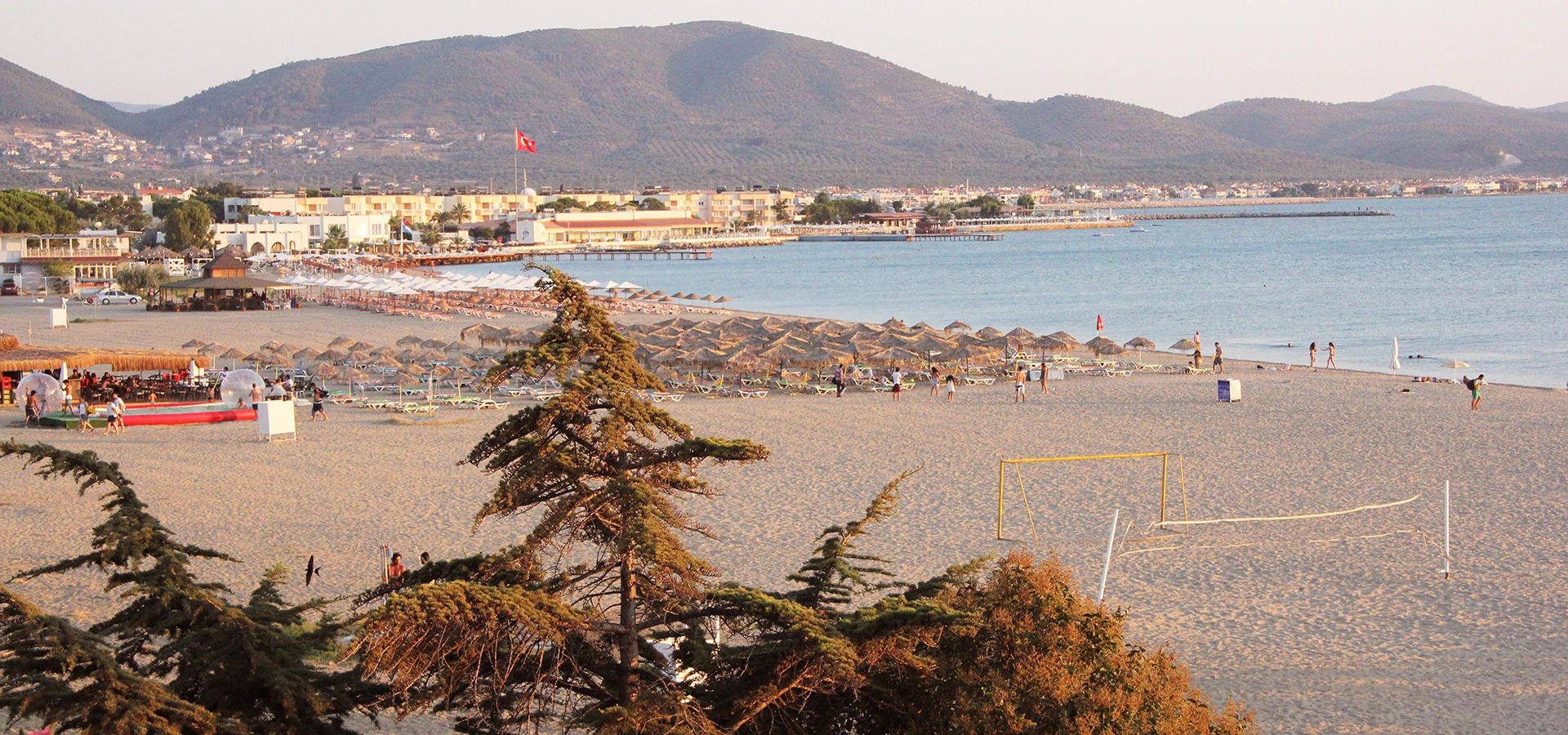
Ören, Burhaniye
Continue to the coast for ancient Adramytteion, a broad sandy beach, protected old oaks and one of Burhaniye's most distinctive seaside landscapes.
View Ören Guide





A few kilometres inland from the Aegean coast, in the quiet rural settlement of Şahinler near Burhaniye, stands a mosque whose plain exterior gives almost no warning of what is waiting inside. Şahinler Village Mosque – Şahinler Köyü Camii was completed in 1895, during the late Ottoman period, through the initiative of Burhaniye district governor Hasan Tahsin Bey.
Its importance lies not in monumental scale but in its remarkable interior decoration. The prayer hall is covered with kalem işi wall paintings depicting landscapes, flowers, trees, rivers, architectural scenes and carefully framed compositions that sometimes resemble individual paintings hung on the walls.
Among the most fascinating subjects are an imaginative Istanbul panorama, a representation of Medina, a smoking flour mill, stormy sea, rural landscapes and what local tradition identifies as the old village cemetery. Together they transform a small rural mosque into a valuable surviving example of the pictorial culture that spread through Ottoman Anatolia during the eighteenth and nineteenth centuries.
The mosque is therefore much more than a quick roadside stop. It provides an unusually intimate opportunity to see how traditional Ottoman decorative art, local landscape imagery and selected ideas from Western painting could meet inside a village religious building at the end of the nineteenth century.
The dated inscription records that the mosque was constructed in 1895 through the initiative of Burhaniye District Governor Hasan Tahsin Bey.
Landscapes, flowers, architectural scenes, a mill, cemetery imagery and sacred-city representations cover much of the prayer hall.
One of the mosque's most memorable compositions represents Istanbul as an idealised maritime city rather than a literal topographical panorama.
The mosque offers an important example of late-Ottoman painted decoration surviving far from the great imperial monuments of Istanbul.
Essential historical, artistic and practical information for visiting this unusual late-Ottoman mosque near Burhaniye.
Şahinler, Burhaniye district, Balıkesir Province, approximately 6 km south of Burhaniye town centre.
The entrance inscription dates the mosque to H.1313 / 1895.
The mosque was constructed through the initiative of Hasan Tahsin Bey, then district governor of Burhaniye.
Its unusually rich kalem işi wall paintings, including landscapes, floral still lifes and architectural scenes.
An imaginative maritime panorama symbolises Istanbul through monumental architecture rather than reproducing the city literally.
A panel beside the mihrab represents Medina and the Prophet's Mosque through an idealised architectural composition.
Paintings include rivers, trees, meadows, a flour mill, stormy sea, rural scenery and the village cemetery.
The paintings were executed on dry plaster using kalem işi technique and earth pigments.
The identity of the painter is unknown; no surviving inscription securely records the artist's name.
A rectangular prayer hall, five-part entrance area, hipped tiled roof, wooden ceiling and detached minaret.
Provincial cultural information records restoration work undertaken in 1993–1994.
Allow approximately 30–45 minutes, or longer if you want to examine the paintings individually.
Şahinler Village Mosque is worth seeking out because it turns a seemingly ordinary rural building into a small gallery of late-Ottoman pictorial culture. The contrast between the restrained exterior and painted prayer hall is one of the most memorable aspects of the visit.
Unlike monumental imperial mosques whose architecture dominates the experience, Şahinler rewards close observation. Its paintings occupy individual panels, wall surfaces and three decorative false domes in the wooden ceiling. Trees, water, buildings, flowers and distant horizons create a visual environment that feels surprisingly narrative.
The mosque is also important because the paintings reveal a period of Ottoman art in which traditional decorative practices existed alongside increasing awareness of perspective, depth, light and shadow. These Western-derived pictorial ideas were not copied mechanically. Instead, they were absorbed into a local decorative language that still retained much of the spirit of miniature and ornamental painting.
For travellers exploring Burhaniye, Ören and the Edremit Gulf, Şahinler therefore provides something entirely different from beaches and archaeological ruins: an opportunity to encounter the artistic imagination of a late-nineteenth-century Anatolian village community.
The most reliable evidence for the mosque's construction comes from its inscription. According to the inscription over the courtyard entrance, Şahinler Village Mosque was built in H.1313 – 1895, through the initiative of Hasan Tahsin Bey, who served as Burhaniye district governor during this period.
The date places the building within the final decades of the Ottoman Empire, when painted architectural decoration had already spread far beyond Istanbul. From provincial mansions and fountains to mosques in western and central Anatolia, artists were introducing landscapes, city views, flowers and architectural representations into traditional interiors.
Şahinler is especially valuable because such an extensive painted programme survives in a comparatively small rural mosque. The decoration shows that artistic currents associated with the wider Ottoman world were not restricted to palaces or major urban centres.
Architecturally, Şahinler Mosque is relatively modest. Its importance comes primarily from the decoration of the prayer hall rather than monumental construction or elaborate exterior stonework.
The main worship space has a transverse rectangular plan. To its north is a five-part entrance or last-congregation area, while the minaret stands independently toward the northwestern side of the complex.
The building is covered externally by a hipped roof with traditional tiles. Inside, however, the roof structure is concealed by a flat wooden ceiling into which three decorative forms resembling domes have been created. These are not structural masonry domes but ornamental false domes – yalancı kubbeler.
Those false domes became ideal surfaces for the mosque's most elaborate paintings, allowing the artist to organise landscapes, flowers, borders and decorative elements into carefully controlled compositions.
A broad rectangular worship space whose walls carry most of the mosque's extraordinary painted decoration.
The northern side incorporates a five-part last-congregation or entrance arrangement.
The interior roof is concealed by a flat wooden ceiling rather than a conventional structural masonry dome.
Decorative dome-shaped ceiling features provide the setting for some of the richest compositions.
The exterior is covered by a four-sided pitched roof traditionally finished with terracotta tiles.
The minaret is positioned separately from the main prayer hall toward the northwest of the mosque.
The interior decoration is the reason Şahinler Mosque deserves national rather than merely local interest. Paintings cover the false domes and large parts of the walls, especially the spaces between and around the windows.
The compositions can broadly be divided into imaginary landscapes, representations of identifiable places and floral still lifes. This mixture allows the prayer hall to move visually between local nature, distant sacred geography and an idealised world of flowers and peaceful scenery.
The walls are organised almost like a gallery. Many scenes are enclosed within painted borders so that they appear to be individual framed pictures. Lower panels tend to contain landscapes, while floral compositions occur more frequently above them.
Look carefully rather than trying to absorb the room immediately. Details such as changing shades of foliage, distant hills, architectural silhouettes and attempts at perspective become much more apparent when each panel is examined separately.
Rivers, meadows, distant hills, paths, coastlines and trees create tranquil scenes that cannot always be identified with a specific real location.
Istanbul and Medina form the most clearly recognisable geographical subjects within the decorative programme.
Vases filled with flowers, especially conspicuous white roses, appear repeatedly around the false domes and upper wall areas.
The flour mill and village cemetery connect the painted programme with landscapes remembered by the surrounding community.
One of the most fascinating scenes occupies the eastern false dome. A body of water separates two areas of land, while monumental buildings appear across the opposite shore. The composition is understood as a representation of Istanbul.
It is important not to interpret the scene as an accurate nineteenth-century map of the city. Familiar landmarks normally associated with Istanbul panoramas cannot be securely identified. Instead, the artist appears to have created an idealised silhouette of the imperial capital, using monumental architecture to communicate the idea of Istanbul.
This makes the painting particularly interesting. It tells us not simply what Istanbul looked like, but how the distant Ottoman capital could be imagined and represented inside a rural mosque hundreds of kilometres away.
Another exceptionally important composition appears on the southern wall immediately east of the mihrab. It represents Medina and the Prophet's Mosque, placing sacred Islamic geography directly within the visual programme of the prayer hall.
The composition concentrates primarily on the mosque itself rather than attempting to reproduce the entire surrounding city. A broad courtyard and minarets establish the identity of the sacred complex.
Its position beside the mihrab is meaningful. While many of the surrounding pictures invite contemplation of nature and distant landscapes, the Medina panel brings the visitor's attention back toward a specifically sacred destination within the Islamic world.
One of the western false-dome panels depicts a flour mill. The building is shown with rough masonry, doors and windows, while smoke appears to rise from its chimney. Trees and vegetation surround the structure.
The mill is particularly interesting because it shifts attention away from distant cities and ideal landscapes toward everyday rural life. Local descriptions have traditionally associated the scene with a mill remembered from the Şahinler area.
Whether every architectural detail should be read literally is difficult to establish, but the painting nevertheless preserves the importance of milling and agricultural life within the cultural memory of the village.
Another remarkable scene has long been identified by local residents as a representation of the Şahinler village cemetery. The composition shows a walled burial ground framed by tall cypress trees.
Cypress trees carry deep associations with Ottoman cemeteries and funerary landscapes. Their narrow vertical form became one of the most recognisable visual symbols of burial grounds throughout the Ottoman world.
The decision to include the local cemetery inside the mosque's decorative programme gives this small painting exceptional emotional value. It brings the surrounding village landscape – and the memory of earlier generations – directly into the sacred interior.
Most of the painted landscapes cannot be connected securely with one specific geographical location. Instead, they create an ideal world composed from familiar elements: trees, flowers, green meadows, rivers, paths, coastlines, bridges, islands and distant mountains.
Some scenes feel distinctly Aegean. Oaks, plane trees, willows and other vegetation resemble species encountered throughout western Anatolia, while coastal imagery naturally resonates with nearby Burhaniye and the Edremit Gulf.
Yet these should not be treated as documentary photographs of nineteenth-century Balıkesir. The painter selected and rearranged natural elements to build peaceful, aesthetically pleasing environments.
Flowing water gives several compositions depth and helps lead the eye toward distant areas of the painting.
Calm sea, islands and distant horizons reflect the visual vocabulary of a community living close to the Aegean coast.
Paths receding into the distance and a small bridge allow the painter to experiment with perspective.
Not every landscape is peaceful: one false-dome panel shows waves striking rocks beneath threatening dark clouds.
Flowers form another major component of the mosque's decorative programme. Painted vases hold carefully arranged bouquets, while roses, leaves and curved branches frame architectural and landscape panels.
Particularly striking are the large white roses and scrolling acanthus leaves. These motifs connect the interior with the broader decorative vocabulary of late-Ottoman art, where floral ornament increasingly combined traditional forms with Baroque-inspired curves and volume.
The central false dome contains a repeated sequence of floral still lifes. Curtains, painted borders and subtle light-and-shadow modelling create the impression that these compositions occupy their own framed pictorial spaces.
The decoration is frequently described casually as “fresco,” but the detailed art-historical study of Şahinler Mosque identifies the paintings more precisely as kalem işi executed on dry plaster using earth pigments.
That distinction matters. True fresco painting traditionally involves applying pigment while plaster is still wet. At Şahinler, the decorative work belongs instead to the long Ottoman tradition of painted architectural ornament applied to prepared surfaces.
The artist combined this traditional technique with visual devices increasingly associated with Western painting: perspective, recession into depth, changes in scale and light-and-shadow modelling.
The paintings were applied over dry plaster rather than created as structural mosaics or carved reliefs.
Kalem işi – painted architectural decoration deeply rooted in Ottoman artistic practice.
Academic analysis describes the use of traditional earth-based colours.
Perspective, shadow and attempts at depth distinguish many scenes from purely two-dimensional ornamental painting.
To understand the paintings fully, it helps to place them inside the wider transformation of Ottoman art during the eighteenth and nineteenth centuries. Architectural painting became increasingly common as artists experimented with city views, landscapes and illusionistic depth.
Şahinler Mosque retains many characteristics of older Ottoman and miniature traditions. Space is not always rendered according to strict European perspective, and individual scenes often feel decorative rather than completely naturalistic.
At the same time, certain compositions display clear interest in perspective, volume, distance, light and shadow. Buildings recede into the background, paths lead the viewer toward distant hills and flower arrangements gain volume through tonal modelling.
This coexistence is precisely what makes Şahinler so valuable. The paintings should not be judged by whether they perfectly imitate European academic art. Their significance lies in the creation of a distinctive provincial Ottoman visual language using elements from several artistic traditions.
The painter's identity remains unknown. Neither the building inscription nor the surviving painted compositions provide a secure artist's signature.
The level of experimentation with perspective, depth, architecture and light has led art historians to suggest that the painter was familiar with the visual language of Western-influenced late-Ottoman painting.
Beyond that, caution is necessary. Stories assigning the work to particular ethnic groups or travelling craftsmen are sometimes repeated in popular accounts, but without firm documentary evidence they should not be treated as established fact.
For the visitor, the mystery actually adds another layer of fascination. An anonymous artist transformed a village mosque into one of the Edremit Gulf region's most unusual painted interiors, yet left almost nothing certain about his identity.
From outside, Şahinler Mosque has a conventional pitched roof. Inside, however, the wooden ceiling contains three dome-like decorative areas aligned broadly from east to west.
These yalancı kubbeler – false domes are not structural masonry domes. They are interior ceiling forms designed to create the visual impression of domed spaces beneath the actual roof.
The eastern and western examples contain some of the most memorable landscape compositions, while the central false dome places greater emphasis on floral still lifes, decorative borders and ornamental motifs.
When visiting, remember to look upward. Many travellers naturally concentrate on the walls around the mihrab and overlook the ceiling, even though the false domes contain some of the mosque's finest surviving decoration.
The mihrab occupies the centre of the southern wall and marks the direction of prayer toward Mecca. Compared with the surrounding pictorial decoration, its basic architectural form is restrained.
Its surface treatment is more theatrical. Painted red and green drapery, folds and tassel-like details create the visual impression of fabric surrounding the niche.
The nearby Medina representation strengthens the religious focus of this wall, while landscape panels continue on either side. Sacred architecture and imaginative nature therefore coexist within the same carefully organised surface.
Look for water, monumental buildings and an imagined silhouette rather than trying to identify every structure literally.
Find the sacred-city representation immediately beside the mihrab on the southern wall.
A small rural building with smoke rising from its chimney creates one of the interior's most narrative scenes.
Cypress trees and grave markers preserve what local tradition identifies as the nearby village burial ground.
Look for waves, rocks and dark clouds – a dramatic contrast with the otherwise peaceful landscape imagery.
Large pale roses repeatedly appear within bouquets and ornamental framing.
Curving acanthus decoration reveals the Baroque vocabulary absorbed into late-Ottoman design.
Notice roads, hills, buildings and shorelines diminishing into the distance as the artist experiments with spatial depth.
Many older tourism descriptions of Şahinler Mosque mention images of fruits such as grapes, figs, melon or even pineapple. These descriptions have been repeated widely in travel articles.
The detailed academic study of the mosque's surviving decorative programme, however, places much greater emphasis on landscape paintings, flowers in vases, white roses, acanthus leaves, Istanbul, Medina, the mill and cemetery.
For that reason, it is safest to understand Şahinler primarily as a mosque of landscape and floral wall painting rather than define it principally through fruit motifs. Individual details may also have changed in visibility through ageing, repainting and restoration.
Balıkesir provincial cultural information records restoration work at Şahinler Mosque in 1993–1994 under the supervision of the relevant heritage authorities.
Preservation of the paintings remains more complicated than simply maintaining the building. Academic examination has identified areas where paint layers have worn away and where earlier inappropriate interventions affected parts of individual panels.
The wall paintings are therefore not just decoration; they are fragile historic surfaces. Visitors should never touch painted walls, lean against them, use flash unnecessarily at close range or treat the prayer hall like an ordinary photographic studio.
Şahinler is not simply an art gallery or archaeological monument. It is first and foremost a mosque and place of worship. Visiting respectfully is therefore essential.
Non-Muslim visitors can generally appreciate historic mosques in Türkiye, but prayer always takes priority over sightseeing. Avoid entering during congregational prayer unless specifically invited, speak quietly and follow any instructions given by the imam or local caretaker.
Shoes should be removed before stepping onto the carpeted prayer area.
Shoulders and knees should be covered. Women should be prepared to cover their hair inside the prayer hall.
If your purpose is architectural sightseeing, visit between prayers whenever possible.
Photograph the architecture discreetly and obtain permission before including worshippers or local residents prominently.
The small scale of the mosque makes ordinary conversation sound much louder than it would outdoors.
The wall decoration is historic and vulnerable to abrasion, moisture and repeated contact.
Şahinler Mosque functions differently from a conventional ticketed historic monument. There is no widely published museum-style timetable or standard admission ticket associated with the building.
Access can depend on prayer times, whether the mosque is open at that moment and the presence of local mosque personnel. If the interior is locked when you arrive, do not attempt to force access; politely ask locally whether someone can open the building.
Because conditions can change, travellers making a special journey specifically to see the paintings should ideally confirm local access before setting out.
The mosque is highly photogenic, but its value lies in detail rather than scale. Wide-angle photographs are useful for showing how the paintings cover the prayer hall, while tighter compositions reveal individual landscapes and floral panels.
Daylight through the windows brings out the softer greens, blues and floral colours much more naturally than direct flash.
Remember to include the three false domes; many of the most important paintings are above normal eye level.
When photographing tall wall panels, stand back rather than tilting excessively upward whenever space allows.
The mill chimney, cemetery trees, flower vases and architectural silhouettes work well as individual photographic subjects.
Use available light and higher camera sensitivity where possible rather than repeatedly firing strong flash at historic surfaces.
Never turn religious practice into a photo opportunity without permission.
One of the best seasons for combining the mosque with green countryside, olive landscapes and archaeological visits around Burhaniye.
Easy to combine with Ören Beach, but visit the mosque during cooler morning or late-afternoon hours.
Excellent for photography and for combining cultural sightseeing with the wider olive-harvest atmosphere of the Edremit Gulf.
Quiet and atmospheric, although you should be more prepared for limited local activity and variable access.
Daylight between prayer periods gives the best opportunity to study the wall paintings respectfully.
Avoid planning a sightseeing visit around the main Friday congregational prayer when the mosque's religious function takes priority.
Enough for a brief look at the prayer hall and its main painted surfaces if you are passing through the village.
The best amount of time for most visitors, allowing you to examine the Istanbul, Medina, mill and landscape scenes individually.
Worthwhile for art-history enthusiasts, photographers and travellers who want to inspect details of technique and composition.
Pair the mosque with Burhaniye centre and Ören for a strong mixture of Ottoman art, archaeology and Aegean coastal scenery.
Visitors should remember that Şahinler Mosque was built in the nineteenth century and has not been designed as a modern visitor centre. Entrances, thresholds and circulation spaces may therefore present difficulties for some mobility needs.
The interior itself is comparatively compact, so little walking is required once inside. However, exact step-free access arrangements can change and should be checked locally if wheelchair access is essential.
Travellers who cannot enter comfortably can still appreciate the exterior setting and village atmosphere, but most of the mosque's artistic importance is inside the prayer hall.
Şahinler lies approximately 6 kilometres south of Burhaniye town centre, slightly inland from the main Aegean coast. The mosque stands within the village settlement and is reached easily as a short cultural detour from Burhaniye.
Drive south from the district centre toward Şahinler. Official tourism information places the village about 6 km from Burhaniye.
The mosque combines naturally with an Ören visit, allowing archaeology, beach scenery and late-Ottoman art to be experienced on the same day.
A private car is the simplest option, particularly when combining Şahinler with other sites around the Edremit Gulf.
Official visitor information notes that local transportation from the Burhaniye area can reach Şahinler, although frequency should be checked locally.
Approach Burhaniye through Gömeç and continue inland toward Şahinler as part of a northern Aegean cultural drive.
Travel south toward Burhaniye before turning inland for the short final journey to Şahinler.
Combine Şahinler with the ancient city beneath modern Ören, its archaeological displays and broad sandy beach.
Continue into the district centre for local markets, everyday Aegean town life, restaurants and historic religious architecture.
A marina-and-harbour district useful for an evening meal after a cultural day inland.
Travel north toward Mount Ida for another major archaeological site of the Edremit Gulf.
Continue beneath Kazdağları for thermal traditions, museums and access to the Mount Ida landscape.
Head south for historic stone streets, former churches, olive-oil heritage and one of the northern Aegean's richest architectural environments.
An outstanding stop for anyone interested in late-Ottoman wall painting, provincial art and architectural decoration.
The contrast between plain exterior architecture and visually rich interior space makes the building particularly instructive.
Painted landscapes, floral details and the colourful ceiling offer unusually intimate architectural subjects.
The mosque requires only a short detour from Burhaniye yet adds a completely different layer to an Edremit Gulf itinerary.
The interior demonstrates how artistic fashions associated with the empire's larger centres circulated through provincial Anatolia.
Şahinler rewards travellers who enjoy overlooked places rather than limiting a trip to famous monuments and major attractions.
The wall paintings are considerably easier to appreciate when natural light enters through the windows.
Plan sightseeing between prayers and remember that worship always takes priority.
The false domes contain essential parts of the decorative programme, so do not concentrate only on eye-level paintings.
Historic pigment and plaster can be damaged gradually by repeated contact even when the surface appears robust.
You will remove your shoes before entering the carpeted prayer area.
Carry suitable clothing or a scarf rather than arriving unprepared for a functioning religious building.
The building is small, but the number of individual painted compositions makes a rushed visit surprisingly unsatisfying.
The mosque and Adramytteion provide two completely different forms of heritage within a compact Burhaniye itinerary.
There is no large visitor centre, formal exhibition route or guaranteed museum-style opening schedule.
Şahinler remains a residential community, so avoid photographing private homes or residents intrusively.
The mosque is in Şahinler near Burhaniye, Balıkesir Province, approximately 6 km south of Burhaniye town centre.
The dated inscription records its construction in 1895 – H.1313.
The inscription states that construction took place through the initiative of Hasan Tahsin Bey, then district governor of Burhaniye.
It is famous primarily for its richly painted interior containing landscapes, floral compositions, architectural scenes and representations of Istanbul and Medina.
Yes. They belong to the late-Ottoman decorative tradition and reflect artistic developments occurring across Anatolia during the nineteenth century.
The painter is unknown. No reliable inscription or surviving documentary evidence identifies the artist.
Yes. One of the false-dome panels depicts an imaginative maritime view interpreted as an Istanbul panorama.
The city is represented symbolically rather than topographically. The individual monumental buildings cannot be identified securely with famous surviving Istanbul landmarks.
Yes. A panel immediately east of the mihrab contains a representation of Medina and the Prophet's Mosque.
Yes. One scene has traditionally been identified by local residents as the Şahinler village cemetery and includes grave markers and cypress trees.
Yes. A panel in the western false dome depicts a flour mill surrounded by vegetation, with smoke emerging from its chimney.
Yes. Coastal scenes appear several times, including one dramatic composition showing rough waves and dark storm clouds.
They are often casually described as frescoes, but art-historical research identifies them more precisely as kalem işi paintings executed on dry plaster with earth pigments.
Older tourism descriptions mention several fruit motifs, although the detailed scholarly catalogue places much greater emphasis on landscapes, flowers, vases and architectural scenes. Individual surviving details may also vary in visibility.
Floral still lifes include elaborate bouquets, with white roses and acanthus leaves among the most noticeable recurring motifs.
They are decorative dome-shaped forms created within the flat wooden ceiling. They are not structural masonry domes supporting the roof.
The ceiling incorporates three principal decorative false-dome areas arranged across the prayer hall.
Yes. A detached minaret stands toward the northwestern part of the mosque complex.
Balıkesir provincial cultural information records restoration work undertaken in 1993–1994.
No. Academic documentation has recorded areas of pigment loss, abrasion and earlier unsuitable interventions, although many important compositions remain clearly visible.
Yes. Visitors should treat it as an active religious space rather than solely as a historic attraction.
Visitors interested in the building and its art can generally enter respectfully when access is available, but prayer times and religious use always take priority.
Yes. Shoes should be removed before entering the carpeted prayer hall.
Dress modestly with shoulders and knees covered. Women should be prepared to cover their hair inside the prayer hall.
Discreet architectural photography is generally the most appropriate approach. Avoid disturbing prayer, ask before photographing people and respect any instructions given locally.
Natural light is preferable both visually and out of respect for the historic painted surfaces and the religious atmosphere.
There is no conventional museum-style admission system associated with the mosque. Access should be understood in the context of an active place of worship.
Do not rely on fixed museum-style opening hours. Access can depend on prayer times and whether the mosque is open or local personnel are available.
Ask politely in the village whether someone responsible for the mosque is available rather than attempting to enter a closed building.
Daylight between prayer periods is best because the natural light makes the paintings easier to examine.
30–45 minutes is ideal for most visitors. Art-history enthusiasts may easily spend an hour examining individual panels.
Official cultural information places Şahinler approximately 6 km south of Burhaniye town centre.
Yes. Ören and ancient Adramytteion make an excellent companion visit combining archaeology, coastal scenery and Ottoman art.
Yes. Antandros Ancient City can be included on a longer Edremit Gulf cultural day.
Yes. Ayvalık lies south of Burhaniye and provides a much larger historic urban environment with churches, stone houses and olive-oil heritage.
Yes. Continue north through Edremit and Güre toward Kazdağı – Mount Ida for a full day combining culture and nature.
For travellers interested in Ottoman painting, unusual religious architecture or overlooked cultural heritage, the short detour from Burhaniye is particularly rewarding.
Look carefully at the Istanbul panorama, Medina representation, flour mill, village cemetery, stormy sea, floral still lifes and the three painted false domes.
Continue from this remarkable painted village mosque toward ancient cities, Aegean historic towns and the mountain landscapes surrounding the Edremit Gulf.
Pair Şahinler with Ören and Adramytteion, continue to Antandros and Mount Ida or travel south toward historic Ayvalık.
Continue to the coast for ancient Adramytteion, a broad sandy beach, protected old oaks and one of Burhaniye's most distinctive seaside landscapes.
View Ören Guide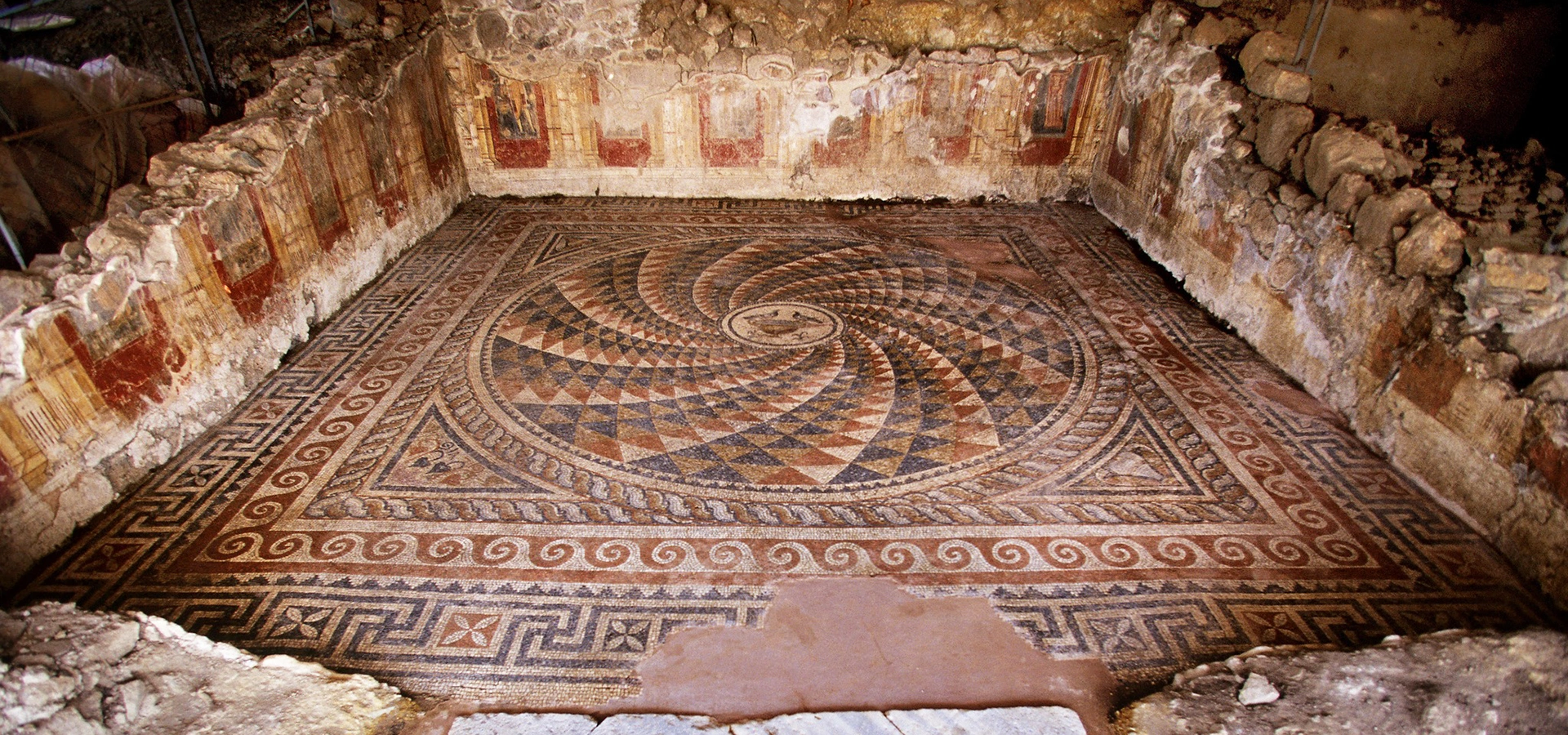
Explore another major Edremit Gulf heritage site with ancient burials, Roman residential architecture, mosaics and strong connections with Mount Ida.
View Antandros Guide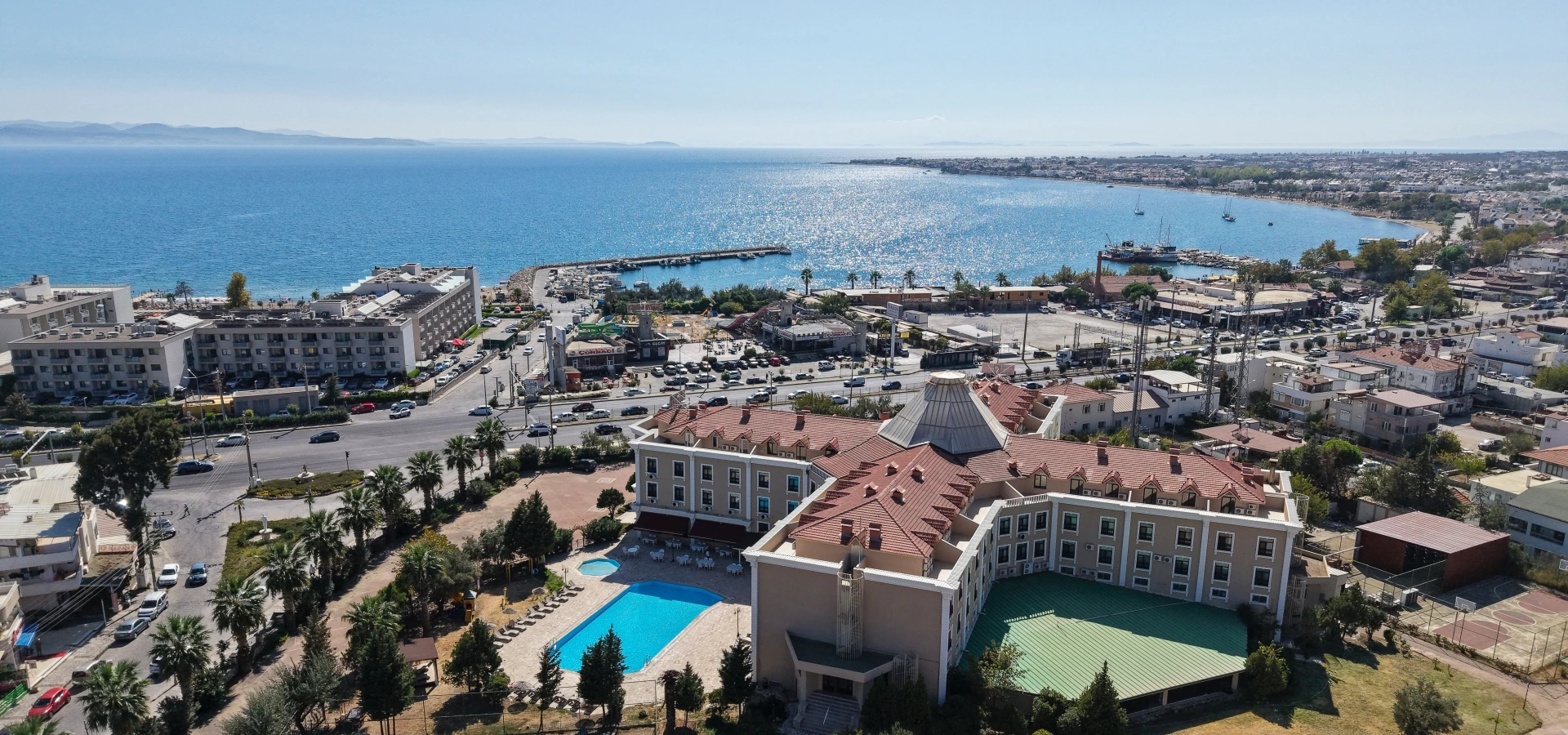
Travel north beneath Mount Ida for thermal traditions, cultural museums, spring-water landscapes and easy access to Kazdağları.
View Güre Guide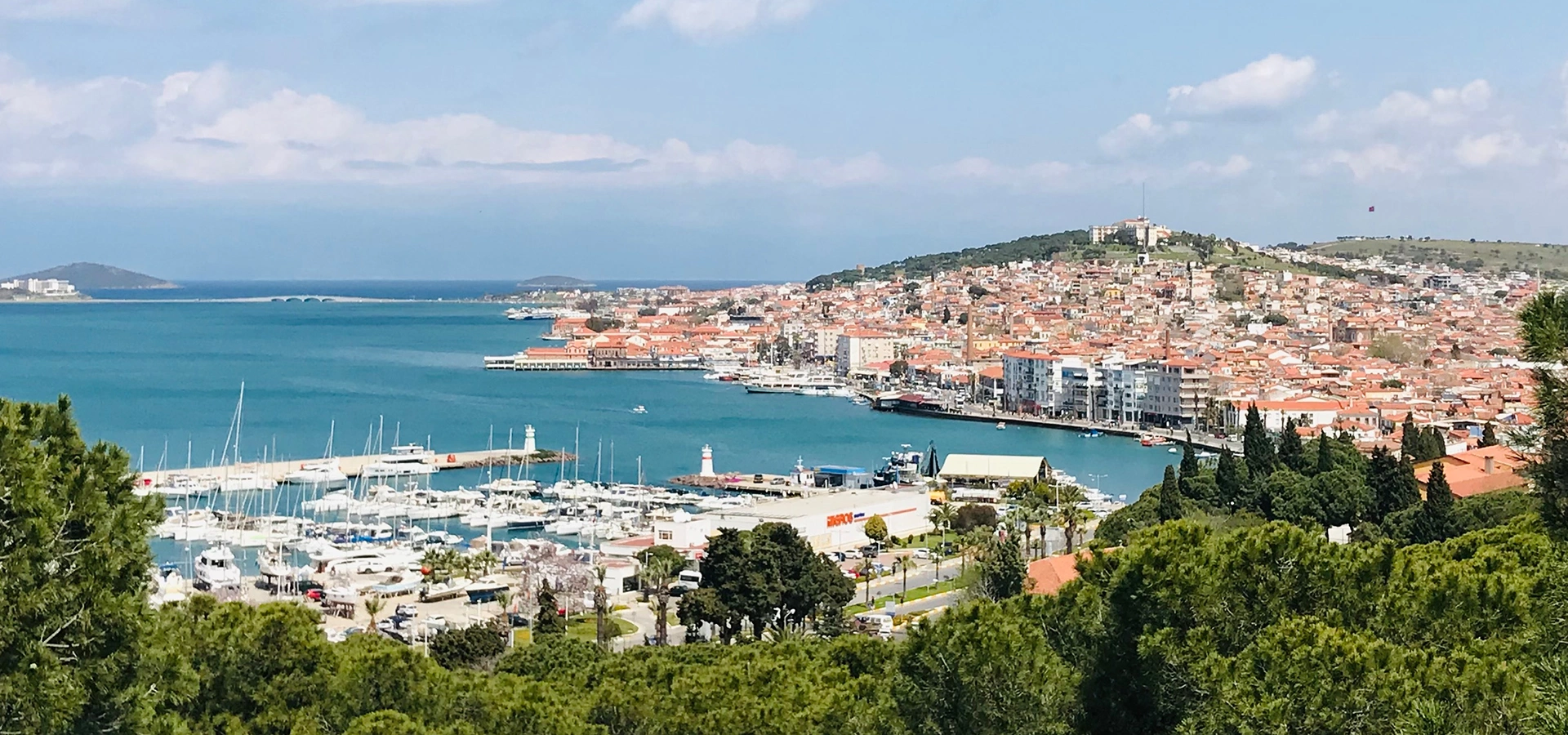
Continue south into one of the northern Aegean's richest historic towns, filled with stone houses, former churches, olive-oil heritage and waterfront scenery.
View Ayvalık Guide