Private Güneyköy & Yalova Heritage Experience
Ask us about a tailor-made route combining Güneyköy, traditional culture, Yalova city, Termal and other historic or natural attractions in the province.
Request a Custom Tour



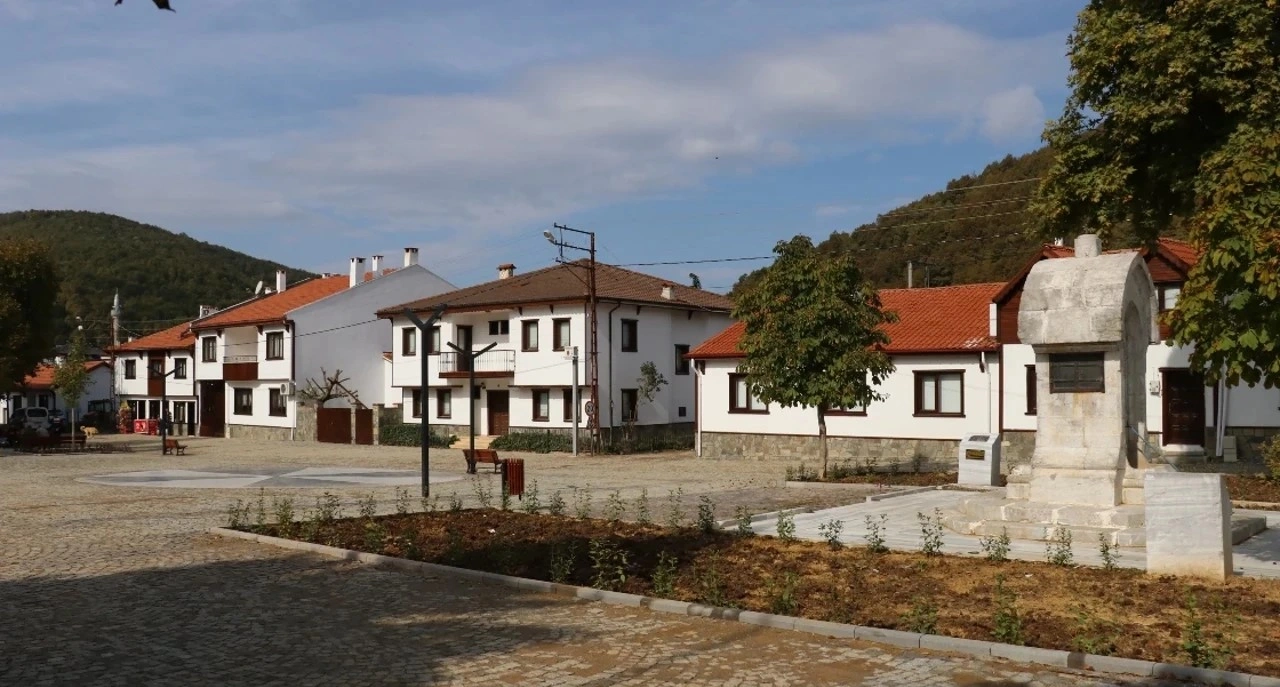
About 14 kilometres from Yalova city centre, Güneyköy is a historic village where the story of migration from the Caucasus remains visible in local memory, food, craftsmanship, religious heritage and the layout of the village itself. Yalova Municipality describes the settlement as a historic Caucasian village founded by migrants from Dagestan in 1896.
The village was first known as Almalı or Elmaalanı. After Sultan Mehmed V Reşad became closely associated with the settlement, it was known as Reşadiye, and in 1934 it took its present name, Güneyköy. The most visible reminder of this Ottoman connection stands in the village square: the monumental Sultan Reşat Fountain, which Yalova Municipality dates to 1909.
Güneyköy is especially rewarding because it is not a single-monument destination. The fountain, restored square, mosques, Şeyh Şerafeddin Dağıstani Tomb, Dağıstani culinary traditions and unusual silver-and-horn jewellery craftsmanship combine to create one of the province's strongest living-cultural-heritage experiences.
The village also sits among the wooded landscapes south of Yalova and lies on the province's Green-Blue Tourism Route. It therefore works equally well as a cultural half-day trip, a food-focused excursion, a photography stop or part of a longer Yalova road route linking the city, Termal, Karaca Arboretum and the surrounding mountain villages.
A monumental Ottoman fountain associated with Sultan Mehmed V Reşad and the historic identity of the village.
Güneyköy preserves cultural traditions brought to Yalova by families who migrated from Dagestan.
Hinkal and pakuk are among the best-known local foods connected with the village's Caucasian culinary heritage.
Güneyköy is known for jewellery combining horn, silver, copper oxide, turquoise, coral and traditional motifs.
Essential information for visiting one of Yalova's most distinctive historic villages.
Güneyköy, Yalova Merkez district, approximately 14 km from Yalova city centre.
Open in Google MapsA historic Caucasian village with strong Dagestani cultural traditions and a restored central square.
Yalova Municipality dates the village's foundation by migrants from Dagestan to 1896.
The Sultan Reşat Fountain, a monumental double-sided Ottoman fountain in the village square.
Yalova Municipality and modern restoration documentation date the fountain to 1909.
Historic mosques and the tomb of Şeyh Şerafeddin Dağıstani form an important part of the village story.
Look for Dağıstani dishes and specialities associated with Güneyköy, especially hinkal and pakuk.
Horn, silver and copper-oxide jewellery is one of Güneyköy's most unusual craft traditions.
A wooded inland landscape on Yalova's Green-Blue Tourism Route, away from the Marmara shoreline.
Allow around 2–3 hours for the village, or longer for a meal, craft visit, religious heritage and nearby nature.
Güneyköy offers something unusual in Yalova: a compact village where Ottoman heritage and living Caucasian traditions can be experienced together.
The strongest reason to visit Güneyköy is its layered cultural identity. This is not simply a photogenic rural settlement. Its streets and monuments tell a story of migration from Dagestan, new settlement in the late Ottoman period, religious leadership, war and displacement, rebuilding, and the survival of family traditions into the present day.
At the centre of that story stands the Sultan Reşat Fountain. The fountain links the village with the last decades of the Ottoman Empire, while the name Reşadiye—formerly used for Güneyköy—shows how strongly that connection entered local identity.
Yet the village's heritage is not frozen in the past. Traditional dishes, community customs, religious visitation and craft production continue to give Güneyköy the feeling of a living cultural landscape rather than an open-air museum.
For travellers who enjoy places beyond the standard sightseeing circuit, Güneyköy is one of the best places in Yalova to slow down, walk through a real village, look closely at local architecture, try regional food and understand how migration shaped north-western Anatolia.
Güneyköy is a village in Yalova Merkez district, roughly 14 kilometres from Yalova city centre. Yalova Municipality describes the drive as approximately 20 minutes, although actual journey time depends on traffic, road conditions and your starting point.
Unlike Yalova's coastal attractions, Güneyköy sits inland among wooded hills and village roads. This change in landscape is part of the appeal: in a relatively short drive from the Marmara shoreline, you move into a greener, quieter environment associated with the foothills of the Samanlı Mountains.
The village is also included on the official Green-Blue Tourism Route, a provincial itinerary connecting historical monuments, rural settlements, forests, walking landscapes and nature attractions across Yalova.
Yalova Municipality states that Güneyköy was founded in 1896 by migrants who had come from Dagestan after the Russo-Ottoman conflicts and the wider upheavals that drove many Muslim communities from the Caucasus into Ottoman lands.
Local and academic accounts preserve additional memories of families arriving at different moments during the late 19th century. For that reason, individual sources do not always give exactly the same migration year. For a visitor guide, 1896 is the clearest official municipal foundation date, while the wider story belongs to a longer period of Caucasian migration into the region.
The descendants of those migrants maintained elements of language, food, religious practice, family memory and craft tradition. That continuity explains why modern sources still describe Güneyköy not simply as a Yalova village, but specifically as a historic Caucasian or Dagestani village.
Official Yalova municipal material uses 1896 as the village foundation date.
The founding community is identified with migration from Dagestan in the Caucasus.
Food, craft, religious heritage and community traditions keep the migration story visible today.
Güneyköy forms part of the wider history of Caucasian settlement around the Marmara region.
The changing names of the village provide a simple way to follow its history. Yalova Municipality records the early name as Almalı or Elmaalanı.
After the village became associated with Sultan Mehmed V Reşad, the settlement came to be known as Reşadiye. The Sultan Reşat Fountain in the centre of the village remains the most visible monument connected with this period.
In 1934, the settlement received its present name, Güneyköy. Today all three names are useful to know because older documents, oral histories and historical references may use Almalı, Elmaalanı or Reşadiye rather than Güneyköy.
The best-known monument in Güneyköy is the Mehmet Reşat Han Fountain, usually called the Sultan Reşat Fountain. It stands in the village square and is closely tied to the identity of old Reşadiye.
Yalova Municipality and modern restoration sources date the fountain to 1909, the year Mehmed V Reşad ascended the Ottoman throne. Municipal tourism material describes it as a rare example of a village fountain commissioned by an Ottoman sultan.
The Ministry of Culture and Tourism inventory identifies Mehmet Reşat Han as the patron and classifies the monument as an Ottoman fountain. Its form is particularly distinctive: it is a double-sided, reservoir fountain with troughs back to back, a saddle-style roof and a raised geometric platform.
The official inventory gives the monument a height of approximately 3.65 metres and a width of approximately 2.20 metres. These proportions make it much more substantial than a simple roadside village fountain and explain why it dominates the centre of Güneyköy's historic square.
Ottoman Sultan Mehmed V Reşad.
1909, following Yalova Municipality and modern restoration documentation.
Approximately 3.65 metres.
Approximately 2.20 metres.
Double-sided, reservoir fountain with two troughs and a saddle-style roof.
The focal point of Güneyköy's restored village square.
The square surrounding Sultan Reşat Fountain was substantially renewed through a cultural-tourism restoration project completed in 2021. The project was prepared by Yalova institutions with support from the Doğu Marmara Development Agency, known as MARKA.
According to Yalova Governorate, the project introduced natural cube-stone paving, green areas, wooden seating, lighting and other street furniture while also carrying out façade rehabilitation on buildings facing the square.
Nine buildings, the muhtar's office and the village mansion were included in façade works. Doors and windows were renewed in timber, roof surfaces were adapted with traditional-style tiles, wooden eave details were added and lower façades were finished with stone. The project also included conservation-oriented work around the mosque frontage and inscriptions.
The result is not a reconstruction of an untouched Ottoman village. It is better understood as a modern heritage project designed to make the village centre more coherent, walkable and visually connected with the historic fountain and traditional architectural character.
Yalova Municipality lists several religious sites among Güneyköy's places of interest. These include the Gazi Minareli Mosque, which municipal tourism material associates with traces of the Greek occupation period, and another historic mosque dated 1884.
The 1884 date is notable because it predates the municipality's stated 1896 foundation date for the modern Dagestani village. Without stronger documentation explaining that chronology, it is best to present both pieces of official information as recorded rather than inventing a connection between them.
When visiting, remember that these are active religious buildings rather than museum monuments. Dress respectfully, avoid entering during prayer when this would disturb worshippers, and ask before photographing people inside.
Listed by Yalova Municipality among Güneyköy's historic religious sites.
Municipal tourism material lists a mosque dated 1884.
Visit with the same respect you would show in any functioning mosque.
Exterior photography is usually straightforward; be discreet and ask before photographing worshippers.
One of Güneyköy's most important religious heritage sites is the tomb of Şeyh Şerafeddin Zeynel Abidin Dağıstani, a Sufi religious figure strongly associated with the village and its Dagestani community.
Academic and biographical sources place his death in Güneyköy in 1936. His burial place continues to attract visitors, which makes the village an important destination not only for cultural tourism but also for people travelling for religious remembrance and visitation.
For general travellers, the tomb is best approached as a place of living religious significance. Speak quietly, dress modestly, follow any local signs and avoid treating devotional activity as a spectacle.
The tomb also helps explain why the village's identity cannot be separated into neat categories of “history,” “migration” and “religion.” In Güneyköy, these strands developed together and continue to overlap in local memory.
The wider Yalova region experienced severe violence, displacement and destruction during the Turkish War of Independence. Local and academic studies of Güneyköy describe a period remembered as a second migration, when villagers and people from surrounding communities moved toward the Adapazarı–Geyve area for safety.
Academic oral-history work records memories that some residents later returned to find houses and buildings damaged or burned, forcing the community to rebuild much of village life.
These events remain part of the community's historical memory and help explain why some village sites are discussed not only as architectural monuments, but as witnesses to a difficult period of occupation, flight and return.
Because many details come from oral history and local historical research, visitors should distinguish between documented regional history and specific family or village memories that may vary in wording and chronology.
Güneyköy's greatest heritage asset is not a single building. It is the continued presence of Dagestani cultural memory in village life. Families have maintained connections with the traditions of their ancestors through cuisine, community events, religious life, craftsmanship and family histories.
Academic oral-history research has recorded different Dagestani identities within the village, including references to Avar and Dargin communities and a smaller number of Lezgi families. That diversity is a reminder that “Dagestani” is a broad regional identity rather than a single uniform culture.
For visitors, the most respectful way to experience this heritage is through conversation, food, local craft and historical sites rather than expecting staged folkloric performances. Güneyköy is first of all a living community.
Food is one of the most accessible ways to understand Güneyköy's Caucasian heritage. Anadolu Agency has documented the continuation of Dagestani culinary traditions among village families, including dishes prepared for celebrations, family gatherings and community occasions.
One of the village's best-known Caucasian specialities, associated with Dagestani food traditions.
A traditional sweet or helva-style preparation strongly associated with Güneyköy's local food identity.
The value lies in traditional preparation and community memory rather than restaurant-style presentation.
Not every traditional dish is necessarily prepared every day, so check locally rather than assuming a fixed menu.
Recent reports also note that visitors are drawn to the village square for venues serving local food. If cuisine is a major reason for your trip, it is sensible to confirm opening days and meal availability before travelling, especially outside weekends and busy periods.
Güneyköy is one of the most interesting craft villages in Yalova because of its tradition of producing jewellery from horn combined with silver and decorative stone. Both the Ministry of Culture and Tourism and Yalova Governorate document this craft in the village.
The process is surprisingly complex. Cattle horn is cleaned, softened, pressed, shaped and cut before decorative work is applied. Silver details, copper-oxide treatments, coral, turquoise and other materials may then be incorporated into the finished piece.
Official cultural sources describe motifs inspired by the broader visual heritage of Anatolia. The resulting jewellery is therefore interesting not only as a souvenir, but as an example of how local makers combine traditional materials with individual design.
Availability of workshops and individual craftspeople can change. If seeing the production process is important to you, arrange the visit in advance rather than assuming that a workshop will be open when you arrive.
Processed cattle horn.
Silver and copper-oxide techniques are documented in Güneyköy jewellery.
Coral and turquoise are among the materials used in some pieces.
Contact a workshop or local host ahead of time if craft demonstration is central to your visit.
The visual character of Güneyköy comes from the relationship between whitewashed façades, wooden details, tiled roofs, stone paving and the central mosque-and-fountain ensemble.
The 2021 square project deliberately reinforced this appearance by renewing façades and street surfaces in a traditional idiom. That means visitors should understand the village centre as a mix of historic structures, later houses and recent heritage-sensitive improvements.
The best way to appreciate the architecture is not to search for a single “perfect historic house,” but to walk slowly through the square and nearby streets, looking at the rhythm of façades, rooflines, woodwork, stone bases and the way the settlement sits against the wooded hills.
Güneyköy's inland location gives it a noticeably greener character than the urban Yalova coast. The village is surrounded by wooded terrain and forms part of the landscape promoted through the Green-Blue Tourism Route.
Anadolu Agency reports that the nearby Beşpınar area is used by visitors for day trips and camping. This should be treated as a general landscape opportunity rather than a guaranteed serviced campsite: access, fire restrictions, facilities and seasonal rules can change.
If you plan to extend your visit into forest areas, check current local conditions, avoid lighting fires except where explicitly permitted, and do not leave waste behind. Summer fire restrictions are especially important in wooded parts of north-western Türkiye.
Begin with the village's signature Ottoman monument in the centre of the restored square.
Walk around the paved square and look closely at the renewed façades, rooflines and public-space design.
See the religious buildings listed in Yalova's municipal heritage guide, including Gazi Minareli Mosque.
Visit one of the most important religious heritage places associated with Güneyköy's Dagestani community.
If arranged in advance, discover Güneyköy's unusual tradition of horn-and-silver jewellery.
Leave time for traditional Dagestani dishes such as hinkal and pakuk when available.
Walk beyond the central monument to understand Güneyköy as a living settlement rather than a single attraction.
Use the village as a gateway to the quieter inland landscapes south of Yalova city.
Güneyköy is best explored on foot once you reach the centre. The main heritage sites are connected by a compact village environment, and walking gives you time to notice architectural details, public spaces and everyday village life.
Use Sultan Reşat Fountain as your orientation point and spend time reading its form from several angles.
Explore the religious heritage respectfully and avoid disrupting prayer or community events.
Approach Şeyh Şerafeddin Dağıstani's burial place quietly and follow local etiquette.
Ask locally about current workshops or makers rather than assuming permanent retail opening hours.
Allow enough time for a meal if traditional Dağıstani cuisine is available during your visit.
A short wander beyond the square reveals the transition between restored heritage frontage and everyday village houses.
Fresh green hills, mild temperatures and comfortable village walking make spring an excellent season.
Long daylight works well for combining Güneyköy with forest and Yalova attractions; midday can still be warm.
One of the most atmospheric periods for wooded scenery, photography and village food stops.
A quieter season with a more local feel, although rain, cold and road conditions can affect outdoor plans.
For photography, morning and late afternoon usually give softer light across the square and village façades. If your priority is food or craft rather than scenery, confirm opening or availability before choosing the exact day.
Enough for Sultan Reşat Fountain, the square and a brief walk through the village centre.
A comfortable visit including the fountain, mosques, tomb, streets and time for photography.
Recommended if you want a traditional meal, craft stop and a slower exploration of village culture.
Combine Güneyköy with Karaca Arboretum, Termal, Yalova city or a scenic inland drive.
Güneyköy is one of Yalova's most rewarding rural photography stops because the village offers several visual layers within a small area. The strongest compositions usually combine architecture with the surrounding landscape rather than isolating a single monument.
Photograph the monument both straight-on and from an angle that shows its platform and relationship with the square.
Use the paving and surrounding façades to create leading lines toward the fountain or mosque.
Look for tiled roofs, white façades, timber details and the contrast between restored and everyday buildings.
If a maker agrees, close-ups of horn, silver and stone jewellery can tell a stronger cultural story than a general street image.
Always ask before making close portraits of residents, craftspeople or worshippers.
Wider views reveal how the settlement sits within the green interior of Yalova.
The central square has received modern paving and public-space improvements, which can make the main heritage area easier to navigate than many unadapted rural sites. However, Güneyköy remains a functioning village with changing gradients, side streets, steps, curbs and variable surfaces.
Travellers who require fully step-free routes should not assume that every mosque, tomb, workshop or viewpoint is accessible. The easiest experience is likely to be around the main square, but current conditions should be confirmed for specific mobility needs.
A private vehicle or taxi also makes the visit significantly easier for travellers who do not want to depend on local public transport connections.
Güneyköy is approximately 14 km from the centre and is commonly described as around a 20-minute drive.
The easiest choice if you want to continue to Termal, Karaca Arboretum or other inland Yalova attractions.
A practical option for a direct village visit when you do not have a car; arrange the return journey in advance if needed.
Village transport patterns can change, so confirm current minibus or bus connections locally before relying on them.
For navigation, search for “Güneyköy, Yalova” rather than only “Güneyköy,” because the same name is used by other settlements in Türkiye.
This is the best format for travellers who want to understand Güneyköy as a living cultural village rather than stopping only for a photograph of the fountain.
This route creates a balanced day of Caucasian village heritage, botanical landscape, thermal history and modern Yalova without forcing too many distant stops into one itinerary.
The fountain is only one part of the village story; two or three hours gives a much richer experience.
Traditional dishes may not be served every day in every venue, especially outside busy periods.
If you specifically want to meet a jewellery maker or see production, contact locally in advance.
Useful for mosque and tomb visits and appreciated in a conservative village environment.
Do not treat residents, craftspeople or religious visitors as background scenery.
Small village businesses or individual craftspeople may not always offer every electronic payment option.
If continuing toward picnic or camping areas, confirm access and seasonal fire restrictions.
Search “Güneyköy, Yalova” to avoid being directed to another settlement with the same name.
Explore Yalova's renowned botanical collection and combine cultural heritage with a peaceful garden visit.
Continue into the historic spa district for thermal heritage, forest scenery and one of Yalova's defining attractions.
Add an important early Republican heritage site connected with Atatürk's long relationship with Yalova.
Visit Yalova's celebrated Atatürk mansion, moved on rails to protect the plane tree beside it.
Place Güneyköy's local migration story within the wider historical development of Yalova Province.
Plan a wider journey through the province's thermal landscapes, museums, forests, waterfalls, wetlands and historic villages.
Güneyköy is a village in Yalova Merkez district, approximately 14 km from Yalova city centre.
Modern sources place the village about 14 km from central Yalova. Yalova Municipality describes the journey as roughly 20 minutes by road.
It preserves a distinctive combination of Dagestani migrant heritage, Ottoman-era monuments, religious history, traditional cuisine and handicrafts.
Yalova Municipality gives 1896 as the foundation date of the village by migrants from Dagestan.
The settlement was first known as Almalı or Elmaalanı, then as Reşadiye, before receiving the name Güneyköy in 1934.
The name reflects the village's association with Ottoman Sultan Mehmed V Reşad, whose monumental fountain remains in the central square.
It is a monumental Ottoman village fountain commissioned by Mehmed V Reşad and now the best-known historic landmark in Güneyköy.
Yalova Municipality and modern restoration sources date it to 1909.
The Ministry of Culture and Tourism inventory gives a height of about 3.65 m and a width of about 2.20 m.
It is a substantial double-sided reservoir fountain with two troughs, a raised platform and a strong association with an Ottoman sultan.
Yes. A major heritage-led square and façade project was completed in 2021, including paving, landscaping, lighting and rehabilitation of buildings facing the square.
He was a prominent Sufi religious figure closely associated with Güneyköy's Dagestani community. He died in Güneyköy in 1936 and his tomb is an important place of visitation.
The tomb is listed among Güneyköy's important heritage places. Visitors should treat it as an active place of religious significance and behave respectfully.
Yes. Yalova Municipality lists the Gazi Minareli Mosque and another historic mosque dated 1884 among village attractions.
The best-known local specialities include hinkal and pakuk, both associated with the village's Dagestani culinary heritage.
Yes. The village is particularly associated with horn-and-silver jewellery, sometimes decorated with coral, turquoise and metal inlay.
Possibly, but individual workshop hours can vary. If meeting a craftsperson is important, arrange the visit in advance.
Yes. The Ministry of Culture and Tourism includes Güneyköy on Yalova's Green-Blue Tourism Route.
Yes. The village lies in a wooded inland landscape, and the nearby Beşpınar area is reported as being used for day visits and camping. Check current access and fire restrictions before outdoor plans.
Around 2–3 hours is a good general visit. Allow longer for a meal, craft workshop or extended exploration of religious and natural sites.
It is especially rewarding for travellers interested in migration history, Ottoman heritage, Caucasian culture, traditional food, craftsmanship and authentic village environments.
The village can be visited throughout the year. Spring and autumn are particularly pleasant for walking, photography and combining the village with Yalova's inland landscapes.
A private vehicle is the easiest option, especially if you want to combine Güneyköy with Karaca Arboretum, Termal or other places in Yalova.
Good combinations include Karaca Arboretum, Yalova Termal Hot Springs, Termal Atatürk Mansion, Yürüyen Köşk and Yalova City Museum.
A private Yalova itinerary can include Güneyköy's Dagestani heritage, Sultan Reşat Fountain, traditional food and craft alongside thermal history, Atatürk sites, botanical gardens and other cultural attractions.
Tell us whether your priority is village culture, Ottoman heritage, traditional food, craftsmanship, religious history, photography or nature, and we can shape the day around your interests and available time.
Ask us about a tailor-made route combining Güneyköy, traditional culture, Yalova city, Termal and other historic or natural attractions in the province.
Request a Custom Tour
Continue discovering Yalova through Atatürk heritage, Ottoman monuments, Caucasian village culture, thermal springs, wetlands, waterfalls, forests and the Marmara coast.
View Yalova Guide