Private Gülhane & Historic Peninsula Tour
Ask us about a tailor-made route combining Gülhane Park, Topkapı Palace, the Archaeological Museums, Roman monuments, Sirkeci and the great historic sites of Istanbul.
Request a Custom Tour





A few steps from Topkapı Palace, Hagia Sophia and the museums of Sultanahmet, the city suddenly becomes quieter.
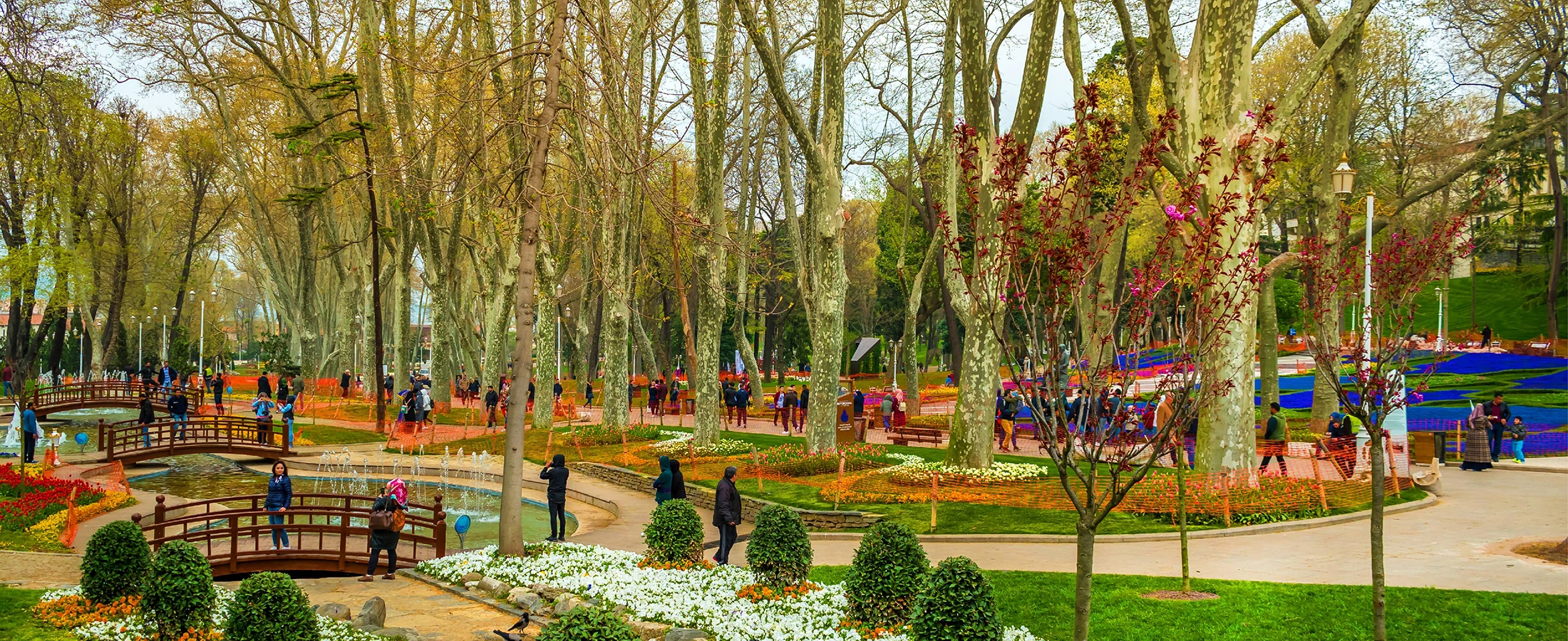
Behind the monumental gate of Gülhane Park, broad paths descend beneath towering plane trees, flower beds spread between lawns and the noise of the Historic Peninsula begins to disappear.
Yet Gülhane is much more than a place to rest between sightseeing stops.
For centuries this landscape formed part of the outer gardens of Topkapı Palace. Important ceremonies and royal activities took place around the wider palace grounds, while the area remained closely connected with the imperial center above.
In 1839, the reform document remembered as the Gülhane Edict or Tanzimat Edict was publicly proclaimed here, giving the park an important place in the history of Ottoman modernization.
After the end of the palace-garden era, Gülhane was reorganized and opened to the public in 1912, becoming one of Istanbul's earliest major public parks.
Today, a walk through Gülhane can include ancient trees, seasonal tulips, the late Roman Column of the Goths, the Museum of the History of Science and Technology in Islam, the restored historic cistern known as Gülhane Sanat, and easy connections to Sirkeci, Sarayburnu and Istanbul's greatest monuments.
Walk through a landscape that once formed part of Topkapı Palace's extensive outer gardens.
Discover the setting where the Gülhane Edict was proclaimed on 3 November 1839.
See the Column of the Goths, one of the oldest surviving freestanding monuments in Istanbul.
Enjoy monumental trees, lawns, flower beds and one of the easiest nature breaks in the Historic Peninsula.
Essential information about Gülhane Park's location, history, monuments, gardens, museums, seasonal atmosphere and the best way to include it in a Historic Peninsula itinerary.
In Fatih on the Historic Peninsula, between Topkapı Palace, Sirkeci and Sarayburnu.
Historic palace gardens, monumental trees, tulips, shaded walking paths and Ottoman reform history.
Once part of the outer gardens and wider ceremonial landscape of Topkapı Palace.
The Gülhane Edict, associated with the Tanzimat reforms, was proclaimed here on 3 November 1839.
The late Roman Column of the Goths stands near the Sarayburnu side of the park.
Spring is especially colorful, with tulips and other seasonal plantings throughout the park.
The park itself is a public green space; museums and special cultural venues inside or nearby may have separate arrangements.
Allow about one to two hours, or longer when combining the park with its museum and nearby attractions.
Gülhane Park is important because several layers of Istanbul's history meet within one remarkably walkable green space.
At its most visible level, it is a city park — a place of trees, lawns, benches, flowers and shaded paths.
Historically, however, the landscape belonged to the wider world of Topkapı Palace, the center of Ottoman government and dynastic life for centuries.
The park also became the setting for one of the defining political moments of the 19th-century Ottoman Empire when the Gülhane Hatt-ı Hümayunu, usually known in English as the Gülhane or Tanzimat Edict, was proclaimed in 1839.
Its later transformation into a public park reflects another major change: the movement from an imperial landscape reserved for the palace toward an urban green space used by ordinary residents.
The park preserves even older history through the Column of the Goths, a late Roman victory monument whose exact date and original imperial association remain debated.
Modern Turkish history is also represented. Mustafa Kemal Atatürk used Gülhane Park as one of the public settings in which the new Turkish alphabet was introduced in 1928.
Few places in central Istanbul allow visitors to move so naturally from Roman Constantinople to Ottoman imperial culture, Tanzimat reform, Republican history and contemporary public life.
The area occupied by Gülhane Park lies close to the ancient acropolis of Byzantion and Constantinople, where the land rises above the meeting point of the Golden Horn, Bosphorus and Sea of Marmara.
The surviving Column of the Goths shows that this landscape already held monumental importance during the Roman period.
After the Ottoman conquest of Constantinople in 1453, Sultan Mehmed II established the new imperial palace on the ancient acropolis above the area.
The grounds below and around the palace became part of the extensive outer gardens, orchards, service areas and ceremonial landscape associated with Topkapı.
For centuries these gardens were connected with the court rather than ordinary urban recreation.
The 19th century brought major political and physical change.
On 3 November 1839, during the reign of Sultan Abdülmecid I, Foreign Minister Mustafa Reşid Pasha publicly read the imperial reform proclamation that became known as the Gülhane Edict.
Later in the century, modern transportation projects — including the railway approaching Sirkeci — altered parts of the old palace garden landscape.
In the early 20th century, the former imperial grounds were reorganized as a public park and opened to Istanbul residents in 1912.
Gülhane subsequently became one of the city's best-known recreational spaces and has undergone several periods of redesign and restoration.
The area stood close to the ancient acropolis, and the Column of the Goths survives from late antiquity.
Topkapı Palace was established above the area after the Ottoman conquest of Constantinople.
The landscape formed part of the palace's outer gardens and wider service and ceremonial grounds.
The Gülhane Edict was proclaimed here, marking the symbolic beginning of the Tanzimat period.
The reorganized grounds opened as a public park during the late Ottoman period.
Gülhane remains one of the Historic Peninsula's most important green spaces and walking corridors.
To understand Gülhane Park, it helps to imagine Topkapı Palace not simply as the enclosed complex visited today but as the center of a much larger imperial landscape.
Beyond the main palace courtyards were gardens, pavilions, service buildings, orchards, stables and recreational spaces descending toward the water.
The area now occupied by Gülhane formed part of this broader hasbahçe — the imperial garden environment associated with the sultan and court.
These gardens were carefully maintained and could support ceremonial events, recreation and the practical life of the palace.
The present park no longer preserves the complete physical appearance of those Ottoman gardens.
Railway construction, road development, demolition, new landscaping and later public-park design all transformed the area.
Even so, the surviving relationship between the park and the high walls of Topkapı Palace makes it possible to understand how closely nature, architecture and political power were once connected.
Gülhane Park gave its name to one of the most famous political documents in Ottoman history.
On 3 November 1839, a major imperial proclamation was publicly read in the Gülhane gardens during the reign of Sultan Abdülmecid I.
The text was presented by Mustafa Reşid Pasha, one of the leading Ottoman statesmen associated with the reform movement.
Known as the Gülhane Hatt-ı Hümayunu, the proclamation is commonly treated as the symbolic beginning of the Tanzimat period.
The reforms aimed to reorganize and strengthen the Ottoman state and addressed principles including security of life and property, taxation and military service within a new administrative framework.
For modern visitors, there is no enormous monument dominating the park to dramatize this event.
That makes the historical context especially important: the peaceful garden landscape was once the stage for a proclamation heard by officials, diplomats and members of Ottoman society at a moment of major political transformation.
The transformation of Gülhane from palace garden to public park was part of the wider modernization of Istanbul during the late Ottoman period.
By the beginning of the 20th century, parts of the former palace landscape had already been altered by transportation infrastructure and changing patterns of urban life.
Under Istanbul administrator Cemil Topuzlu, the area was reorganized and opened to the public in 1912.
This created one of the city's earliest large-scale public parks in a location that had previously been closely associated with imperial privilege.
Gülhane later included recreation areas, cafés, flower gardens and, for a period, even a zoo.
Over time, different landscaping approaches changed the appearance of the park.
A major restoration completed in the early 2000s sought to recover a greener, more historically appropriate character by reducing some later amusement-park elements and emphasizing lawns, trees, paths and monuments.
Today the park functions simultaneously as a heritage landscape, tourist route and everyday urban green space.
Gülhane Park also has an important place in the early history of the Turkish Republic.
During the alphabet reform of 1928, Mustafa Kemal Atatürk used public appearances to introduce and explain the new Latin-based Turkish alphabet.
On 1 September 1928, Gülhane Park became one of the most memorable settings in which the new letters were presented to the public.
The event connected a landscape already famous for Ottoman reform with another major transformation in modern Turkish history.
At the Sarayburnu side of the wider area stands the well-known Atatürk Monument by Austrian sculptor Heinrich Krippel, unveiled in 1926 and regarded as one of the earliest public monuments of the Republic.
Together, these associations make the Gülhane–Sarayburnu landscape particularly significant for visitors interested in the transition from the Ottoman Empire to modern Turkey.
Hidden among the trees toward the Sarayburnu side of Gülhane stands one of the oldest surviving monumental columns in Istanbul.
Known as the Column of the Goths, it belongs to the late Roman period and rises approximately 18.5 meters including its base and capital.
The monument is made from Proconnesian marble and is crowned by a Corinthian capital.
Its modern name comes from the surviving Latin inscription on the pedestal, which refers to victory over the Goths.
The exact date, emperor and original dedication have long been debated by historians.
Rather than presenting one uncertain attribution as fact, it is safest to understand the monument as a late Roman victory column from the 3rd or 4th century connected with imperial Constantinople's early monumental landscape.
Its position is especially important.
The column stands close to the ancient acropolis and the strategic promontory where Byzantion and Constantinople overlooked the entrance to the Golden Horn.
Usually placed in the late Roman period, although the precise dating remains debated.
Approximately 18.5 meters including the monument's architectural elements.
Proconnesian marble, widely used in the monumental architecture of Constantinople.
The Latin text commemorates a victory over the Goths and gives the column its modern name.
One of Gülhane Park's most important cultural attractions is the Museum of the History of Science and Technology in Islam.
The museum occupies the historic Has Ahırlar buildings associated with the palace's imperial stables.
Opened in 2008 with a concept prepared by historian of science Prof. Dr. Fuat Sezgin, it presents models and reconstructions based on scientific works developed across the Islamic world between roughly the 9th and 16th centuries.
The displays cover fields such as astronomy, clocks, navigation, medicine, physics, mathematics, geometry, optics, geography, architecture and engineering.
For travelers spending more than a quick hour in Gülhane, the museum can transform the park visit from a simple nature break into a substantial half-day cultural experience.
2008.
Historian of science Prof. Dr. Fuat Sezgin.
The museum occupies the Has Ahırlar complex connected with the former palace stables.
Astronomy, clocks, navigation, medicine, engineering, physics, mathematics, optics and geography.
Gülhane also contains a historic underground structure that has been returned to public cultural use.
The Gülhane Park Cistern was revealed during early 20th-century landscaping works and for many years remained a little-known element of the park's archaeological fabric.
After conservation and restoration work, the cistern reopened as Gülhane Sanat, an exhibition and cultural space.
The adaptive reuse is especially appropriate for Gülhane because it connects the park's archaeological layers with contemporary city life rather than treating heritage as something separate from the present.
Exhibitions and events can change, so travelers interested in entering should check the current cultural program before visiting.
The most immediate impression inside Gülhane Park comes from its trees.
Tall plane trees and other mature species create long shaded corridors that feel dramatically cooler and quieter than the exposed stone squares of Sultanahmet.
Some trees have substantial age and scale, reinforcing the sense that Gülhane is more than a newly landscaped municipal garden.
Their canopies frame the park's central avenues, soften the palace walls and create seasonal changes from fresh spring growth to deep summer shade and autumn color.
The park is also valuable as an ecological pocket within one of Istanbul's most intensely visited urban districts.
Birds, insects and small urban wildlife use the trees and planted areas, while residents use the same landscape for walking, reading, conversation and rest.
Spring is the most colorful season in Gülhane.
Tulips, roses and other seasonal flowers are planted throughout the park, creating strong contrasts between formal flower beds, deep green lawns and the vertical lines of mature trees.
Tulips have a particularly powerful association with Ottoman visual culture.
Their stylized form appears repeatedly in textiles, ceramics, manuscripts and decorative arts, while the famous 18th-century Tulip Era made the flower an enduring symbol of Ottoman elite culture.
Modern Istanbul continues that connection through large-scale spring planting programs in parks and public spaces.
Gülhane is one of the most accessible places in the Historic Peninsula to experience this seasonal display.
Fresh foliage and seasonal flower beds begin changing the park after winter.
April is usually the strongest period for tulip displays, although exact flowering dates vary with weather.
Roses and other flowers gradually take over as tulip displays fade.
The trees and shaded lawns become more important than flower displays during hotter weather.
The classic Gülhane experience begins at the historic entrance close to the tram line and the slope between Sultanahmet and Sirkeci.
From here, the park opens into a long tree-lined avenue descending gradually toward the lower grounds.
The route is simple enough to walk without a map.
Side paths lead toward lawns, flower beds, museum buildings and historic features, while the palace walls remain a constant visual reference along part of the park.
This makes Gülhane especially useful for travelers who want a sightseeing route that does not feel like a sequence of ticketed monuments.
You can walk slowly, stop on a bench, photograph flowers, explore one museum and then continue toward Sirkeci or Sarayburnu without retracing the entire route.
Gülhane's location is one of the keys to its historical importance.
The park occupies the northeastern edge of the Historic Peninsula near Sarayburnu, the promontory where the Bosphorus, Golden Horn and Sea of Marmara meet.
This strategic geography helped make the area important long before Topkapı Palace existed.
Ancient Byzantion developed around the nearby acropolis, and Roman Constantinople continued to use the high ground overlooking the waterways.
The Ottoman palace later occupied the same commanding landscape.
Modern roads and railway lines have changed the direct relationship between parts of the park and the shoreline, but walking toward Sarayburnu still helps visitors understand why this corner of Istanbul was so valuable to successive empires.
Best for quiet walking, empty paths, tree photography and combining the park with early Historic Peninsula sightseeing.
Convenient after visiting Topkapı Palace or Hagia Sophia, but tour-group traffic begins increasing.
Excellent for a shaded break between museums, particularly during warm weather.
The strongest season for tulips, flower beds, fresh foliage and colorful park photography.
Mature tree cover makes Gülhane a valuable escape from heat and exposed historic squares.
Changing leaves give the long avenues a warmer and quieter atmosphere.
Usually better for photography and slower walking than peak weekend periods.
Expect more local visitors, families and heavier pedestrian traffic in pleasant weather.
Enough for a direct walk through the main avenue while moving between Sultanahmet and Sirkeci.
A comfortable visit for the main paths, gardens and a quick look at historic features.
Recommended for a slower walk including the Column of the Goths, flowers, photos and rest stops.
Ideal when adding the Museum of the History of Science and Technology in Islam and Gülhane Sanat.
Allow at least four to five hours if you want both Topkapı Palace and a relaxed park visit.
Gülhane works perfectly as the green break between major monuments, museums and Sirkeci.
Gülhane offers a completely different photographic environment from the domes, minarets and monumental squares nearby.
The strongest compositions often come from repetition and depth: rows of trees, paths disappearing into the distance, flowers in the foreground and palace walls rising behind them.
Use the long central paths to create strong symmetry and perspective beneath the canopy.
Tulip beds provide foreground color with historic walls and mature trees behind.
The Column of the Goths works well framed by branches and photographed from a lower angle.
Look for the contrast between garden paths and the massive walls of Topkapı Palace.
Morning and late afternoon usually produce softer light through the trees than midday.
Rain, mist and autumn foliage can make the park especially cinematic outside peak spring season.
Gülhane is easier to navigate than many steep historic neighborhoods in Istanbul, but the park is not completely level.
The principal routes are broad and generally well suited to slow walking, while the overall landscape descends from the upper entrance toward the lower sections.
Visitors using wheelchairs or strollers should expect gradual slopes and should plan their exit point carefully if they want to avoid unnecessary uphill walking.
Benches and resting areas are available throughout the park, making it a useful stop for travelers who need frequent breaks.
Conditions can change during maintenance, events or severe weather, so travelers with specific mobility requirements should allow extra flexibility.
Gülhane Park is exceptionally easy to reach because it sits directly between Sultanahmet and Sirkeci.
The most convenient public-transport option for many visitors is the T1 tram, using the Gülhane stop close to the main historic entrance.
Travelers arriving by Marmaray can walk uphill from Sirkeci, while visitors coming from Eminönü can reach the park on foot after crossing the Sirkeci area.
If you are already visiting Topkapı Palace, Hagia Sophia or the Istanbul Archaeological Museums, no separate transport is necessary.
Walk downhill along the tram route past the palace walls or take the T1 tram one stop toward Gülhane.
Walk through Sirkeci toward the Gülhane entrance or take the T1 tram.
Take the T1 tram across Galata Bridge toward Gülhane or walk through Eminönü and Sirkeci.
Use Sirkeci station and continue on foot toward the lower side of Gülhane.
Arrive at Eminönü from the Asian side and continue through Sirkeci on foot or by tram.
Gülhane is one of the easiest connections between Sultanahmet, Sirkeci, Eminönü and Sarayburnu.
The park is easy to walk, but most visitors combine it with several hours of Historic Peninsula sightseeing.
Spring flower displays are easier to photograph before the busiest part of the day.
In summer, the tree-lined avenues provide one of the best cooling breaks in central historic Istanbul.
Opening times and admission arrangements for museums and cultural spaces can change independently of the park.
Strong wind can occasionally lead to temporary closures of wooded parks for safety reasons.
Gülhane is most enjoyable when used as a real park rather than only a shortcut between attractions.
Topkapı Palace, the Archaeological Museums, Sirkeci and Gülhane naturally fit the same walking route.
Use bins and avoid damaging flower beds, lawns or historic remains.
This route begins at the upper historic entrance near the tram stop and gradually moves downhill through the park's main historical and natural layers.
This itinerary gives enough time to appreciate the park itself without turning the visit into a rushed checklist.
This is one of the most historically coherent walking combinations in Istanbul because all three attractions occupy different parts of the former imperial acropolis and palace landscape.
Gülhane works especially well as the green transition between monumental Sultanahmet and the commercial waterfront around Sirkeci and Eminönü.
Explore the imperial courtyards, treasury, sacred relics, palace architecture and views directly above Gülhane.
Discover one of Turkey's greatest collections of ancient art and archaeology beside the palace grounds.
Continue uphill to one of the world's most important monuments of Byzantine and Ottoman history.
Experience the extraordinary underground reservoir, columns and atmospheric lighting beneath Sultanahmet.
Explore astronomy, medicine, engineering, navigation and scientific instruments inside the park itself.
Walk downhill for railway history, restaurants, transport links and the commercial streets near the Golden Horn.
Continue toward ferries, the Spice Bazaar, New Mosque and Galata Bridge.
Continue planning with Istanbul's palaces, mosques, churches, museums, bazaars, parks and historic neighborhoods.
Gülhane Park is in the Fatih district on Istanbul's Historic Peninsula, between Topkapı Palace, Sultanahmet, Sirkeci and Sarayburnu.
Yes. It combines historic gardens, monumental trees, seasonal flowers, Roman remains, Ottoman reform history and easy access to several of Istanbul's most important monuments.
The park itself is a public green space. Museums, exhibitions or special cultural venues inside or nearby can have separate admission arrangements.
The name is commonly understood as “house of roses” or “rose house,” reflecting the garden and floral associations of the area.
Yes. The landscape formed part of the wider outer gardens and imperial grounds associated with Topkapı Palace.
The grounds were reorganized and opened as a public park in 1912.
The Gülhane Hatt-ı Hümayunu, commonly known as the Gülhane or Tanzimat Edict, was proclaimed here on 3 November 1839.
The proclamation was publicly presented by Ottoman statesman Mustafa Reşid Pasha during the reign of Sultan Abdülmecid I.
It is a late Roman victory column standing near the Sarayburnu side of the park. Its inscription refers to victory over the Goths.
It is generally dated to the 3rd or 4th century, although the precise date and imperial dedication remain debated.
The monument rises approximately 18.5 meters.
Yes. The Museum of the History of Science and Technology in Islam occupies historic buildings inside the park.
Gülhane Sanat is a cultural and exhibition space created inside the restored historic Gülhane Park cistern.
Spring is best, with April usually providing the strongest tulip displays. Exact flowering dates vary depending on weather.
Yes. The mature tree canopy makes the park especially valuable for shade during hot Historic Peninsula sightseeing days.
Allow about one to two hours for a relaxed park visit. Add more time if you want to enter the museum or cultural spaces.
The Gülhane stop on the T1 tram line is immediately beside the upper historic entrance.
Yes. Gülhane is an easy downhill walk from Hagia Sophia and the Sultanahmet area.
Yes. The park lies directly above and beside Sirkeci, making the two areas an excellent walking combination.
Absolutely. This is one of the best combinations because the park once formed part of the wider palace landscape.
Yes. The Istanbul Archaeological Museums sit immediately beside the palace and park area.
Yes. Broad paths, green space, benches and easy access make it a pleasant break for families during a Historic Peninsula day.
Many principal paths are broad and relatively easy to navigate, although the park includes gradual slopes and conditions can vary around side paths.
As a heavily wooded park, access can occasionally be restricted during strong winds or severe weather because of falling-branch and tree risks.
Visitors often sit on lawns and use the park recreationally, but always follow current park rules, avoid damaging planted areas and leave no rubbish behind.
No. The park is easy to explore independently, but a knowledgeable guide can add valuable context about Topkapı Palace, Tanzimat history, Roman monuments and the transition from imperial garden to public park.
Do not step into tulip or rose displays for photographs, even when other visitors are doing so.
Do not climb on the Column of the Goths, old walls, fountains or other archaeological features.
Avoid damaging bark, attaching objects to trunks or entering closed planted areas.
Do not block busy walking routes with tripods, large groups or staged photography sessions.
Use available bins and leave lawns and picnic areas clean.
Temporary closure during strong winds is a safety measure in heavily wooded areas.
Observe birds and urban animals without chasing or disturbing them.
Gülhane is most meaningful when experienced as both a historic landscape and a living public park.
Discover Gülhane as part of a private Istanbul route connecting palace history, Byzantine and Roman remains, Ottoman reform, museums, gardens and neighborhood life — without compulsory shopping stops.
Create a private route focusing on imperial history, archaeology, gardens, museums, architecture and the transition from Sultanahmet to Sirkeci according to your interests and available time.
Ask us about a tailor-made route combining Gülhane Park, Topkapı Palace, the Archaeological Museums, Roman monuments, Sirkeci and the great historic sites of Istanbul.
Request a Custom Tour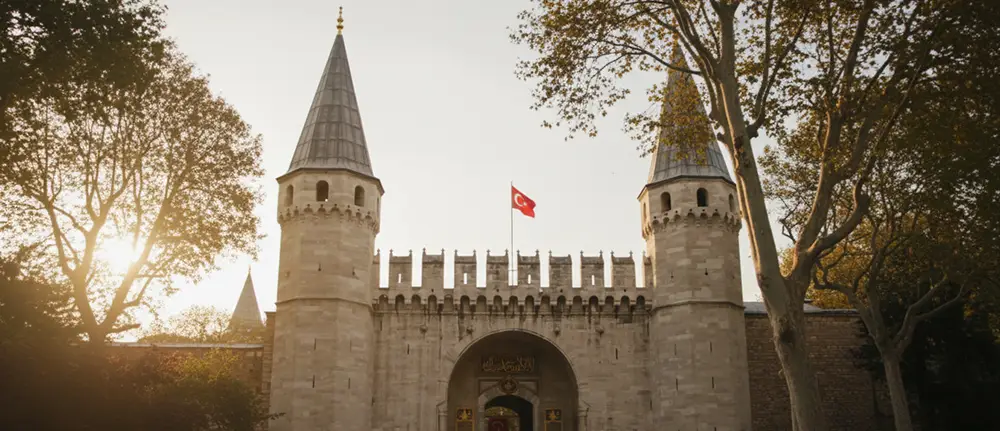
Explore the Ottoman imperial palace first, then descend into its former outer garden for trees, flowers, reform history and Roman remains.
Explore Topkapı PalaceCombine Gülhane with Hagia Sophia, Topkapı Palace, Basilica Cistern, the Archaeological Museums, Sirkeci, Eminönü or other Historic Peninsula highlights.
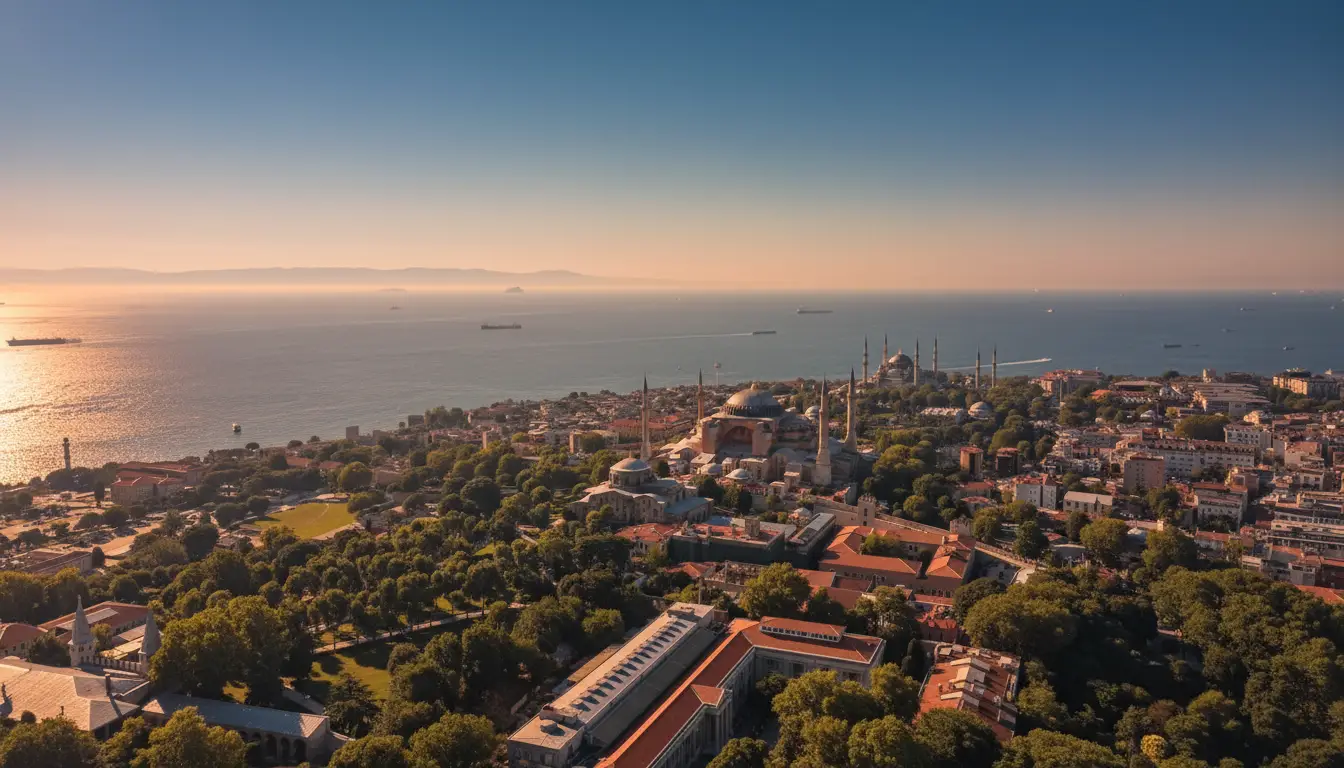
Create a private Istanbul itinerary around Byzantine and Ottoman history, archaeology, museums, gardens, neighborhoods, food and Bosphorus scenery.
View Private Istanbul Tours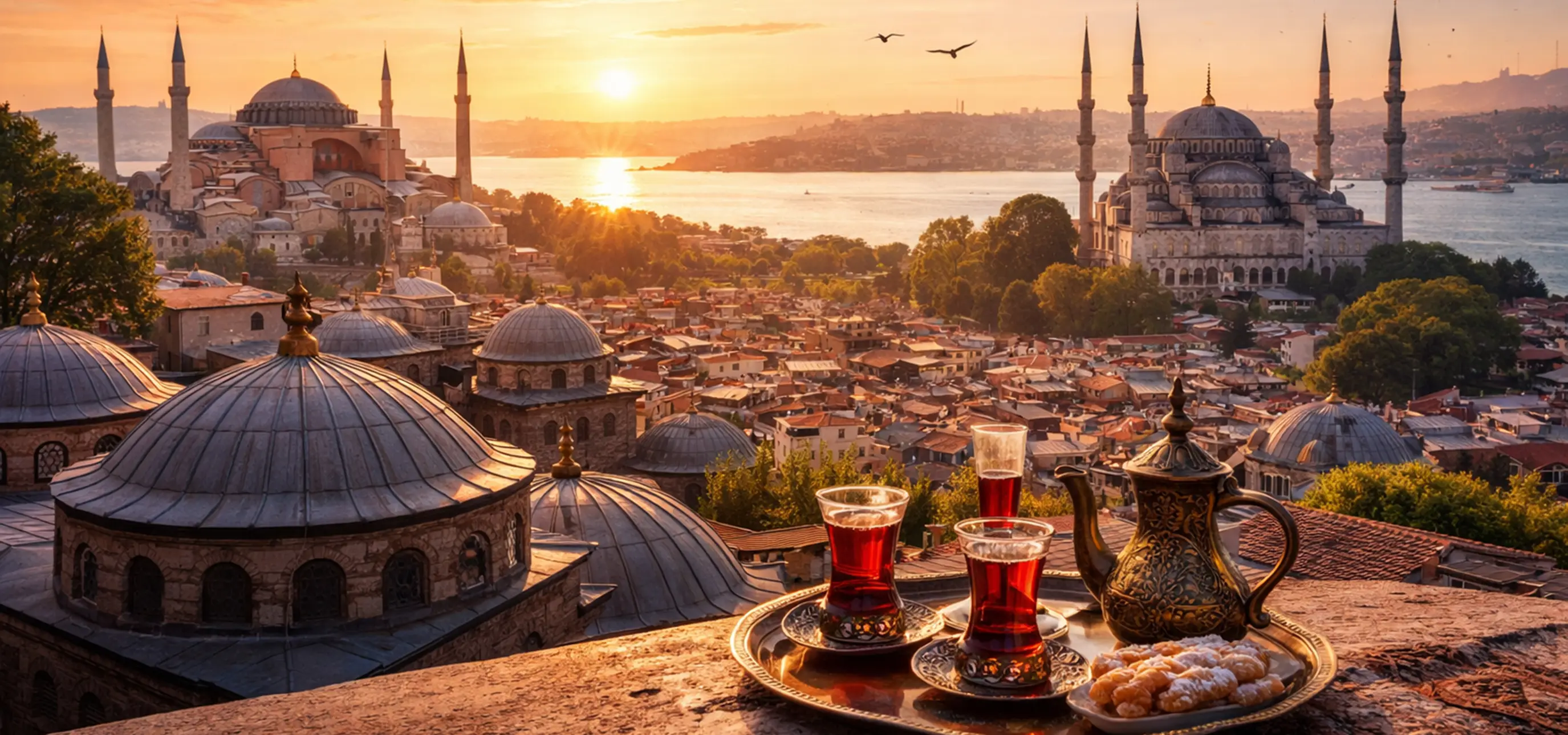
Continue planning with Istanbul's mosques, churches, palaces, museums, bazaars, parks, Bosphorus districts and historic neighborhoods.
Explore Istanbul