Fatih's Edirne, the Saatli Medrese & the Road to 1453

Fatih Sultan Mehmet Museum Edirne – Childhood, Conquest of Constantinople & Ottoman Renaissance

Follow Mehmed II from his Edirne childhood and princely education to the conquest of Constantinople,
inside the restored 15th-century Saatli Medrese of the Üç Şerefeli Mosque complex.

Explore the Museum

Fatih Sultan Mehmet Museum – The Story of Mehmed the Conqueror in the City That Shaped Him

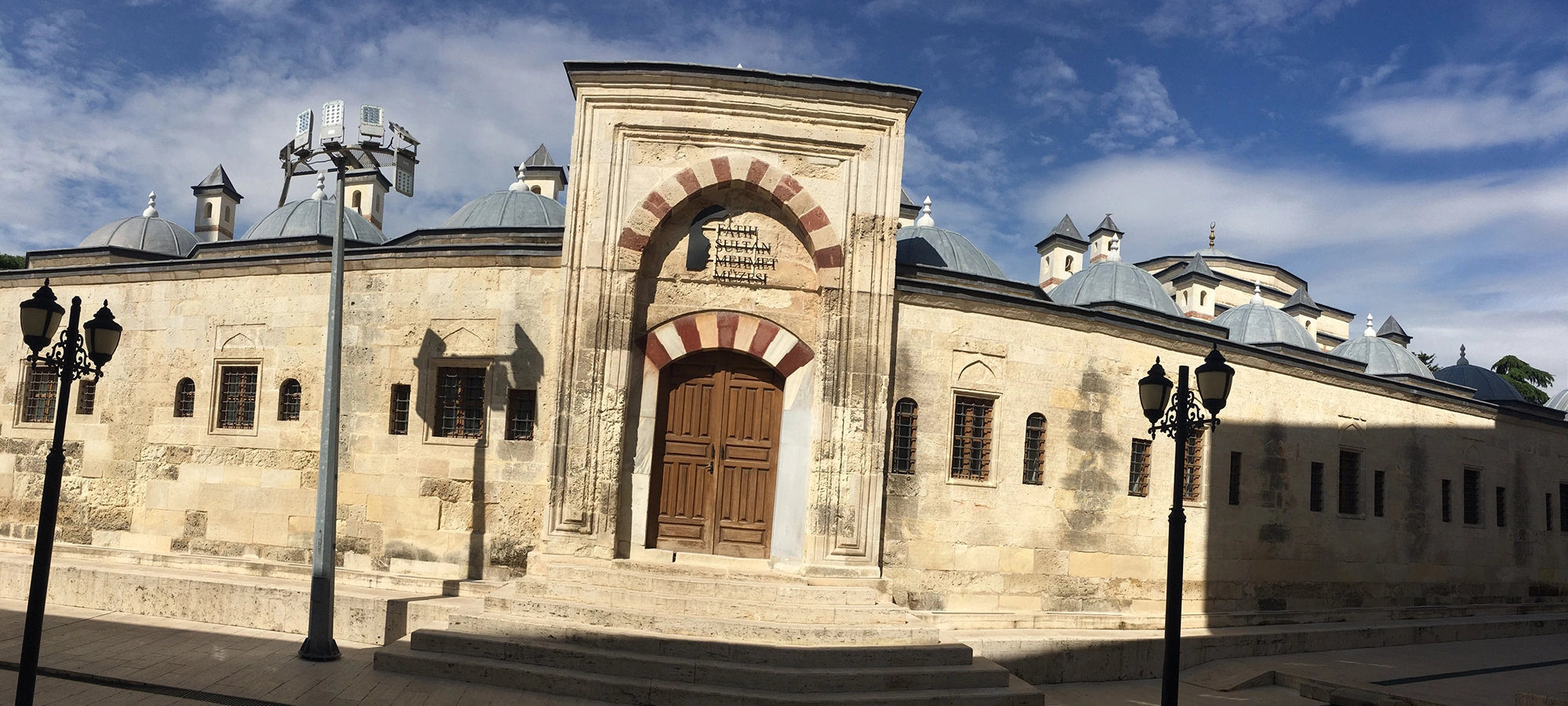
The Fatih Sultan Mehmet Museum in Edirne is one of the city's most engaging modern museum experiences. It is devoted to Sultan Mehmed II, known as Fatih Sultan Mehmed or Mehmed the Conqueror, and tells his story inside the historic Saatli Medrese, a 15th-century educational building belonging to the Üç Şerefeli Mosque complex.

The setting is especially meaningful because Edirne was not simply another city in Mehmed's empire. He was born in Edirne in 1432, spent important parts of his childhood and youth here, first ascended the Ottoman throne while still a boy, returned to the throne in 1451, and prepared for the campaign that culminated in the conquest of Constantinople on 29 May 1453.

Rather than functioning as a conventional collection of historical objects, the museum is designed as a thematic visual narrative. Medrese rooms present episodes from Mehmed's life through wall graphics, maps, miniatures, dioramas, scale models, life-size figures, digital interpretation and specially designed installations.

The result is a museum that works particularly well for travelers who want to understand why Edirne matters in the story of Fatih Sultan Mehmed. The city becomes part of the exhibition itself: the medrese, nearby Üç Şerefeli Mosque, the historic center and the remains of Edirne Palace all belong to the same larger story.

Born in Edirne

Mehmed II was born in Edirne in 1432 and spent formative years in the Ottoman court and educational world of the city.

Historic Saatli Medrese

The museum occupies a 15th-century medrese commissioned by Sultan Murad II as part of the Üç Şerefeli Mosque complex.

The Road to 1453

Interactive displays follow Mehmed from prince and young sultan to the preparations and campaign that led to the conquest of Constantinople.

Science, Art & Empire

The story continues beyond warfare into engineering, scholarship, poetry, administration, culture and the building of an imperial capital.

Know Before You Go

Fatih Sultan Mehmet Museum Edirne – Quick Facts

Essential information for visiting Türkiye's first thematic museum devoted to Fatih Sultan Mehmed, inside Edirne's historic Saatli Medrese.

📍

Location

Babademirtaş Mahallesi, beside Üç Şerefeli Mosque in central Edirne.

Open on Google Maps
🏛️

Historic Building

The museum occupies the restored 15th-century Saatli Medrese, commissioned during the reign of Sultan Murad II.

👑

Main Subject

Fatih Sultan Mehmed's childhood, princely years, two accessions, conquest of Constantinople, imperial vision, scholarship and cultural legacy.

🎭

Museum Style

Dioramas, miniatures, models, wall graphics, life-size figures, animated presentations and interactive interpretation.

🎫

Admission

Official provincial museum information lists admission as free.

🕘

Opening

Tuesday–Sunday, 09:00–17:00; closed on Mondays according to current official information.


A Museum That Explains Why Edirne Matters to 1453

Why Is Fatih Sultan Mehmet Museum in Edirne Important?

The museum places Mehmed the Conqueror back into the city where he was born, educated, enthroned and prepared for one of the defining campaigns of Ottoman history.

Many travelers associate Fatih Sultan Mehmed almost entirely with Istanbul. Edirne reveals the earlier chapter. This was the Ottoman imperial center in which Şehzade Mehmed grew up, encountered scholars and statesmen, learned the realities of government and first sat on the throne.

The museum is therefore valuable not simply because it tells the biography of a famous ruler, but because it does so in a place physically connected with his formative world. The Saatli Medrese was built by his father, Sultan Murad II, during Mehmed's childhood and youth. Tradition records that the prince studied here or that his bed-i besmele, the ceremonial beginning of education, may have taken place here.

The museum also gives visitors a broader portrait of Mehmed II. He appears not only as the conqueror of Constantinople, but as a ruler interested in science, engineering, geography, literature, art, scholarship, administration and the political language of universal empire.

For travelers exploring Edirne, this creates an important bridge between monuments. Nearby Üç Şerefeli Mosque represents the architectural world of Murad II; Edirne Palace recalls the imperial court; the museum explains the young ruler who emerged from that environment and transformed the Ottoman state.

Use our complete guide to places to visit in Edirne to combine the museum with mosques, bazaars, museums, palace remains, bridges and the Roman-Byzantine layers of the city.


History of Fatih Sultan Mehmet Museum and the Saatli Medrese

The building now used as the Fatih Sultan Mehmet Museum is the Saatli Medrese, one of the educational structures associated with the great Üç Şerefeli Mosque complex. It was commissioned by Sultan Murad II in the 15th century, when Edirne was one of the principal political and cultural centers of the Ottoman state.

Its construction coincided with the childhood and early youth of Mehmed II. Later tradition connected the prince directly with the medrese, stating that he either studied here or began his formal education here in a ceremony known as bed-i besmele. Because the surviving references are traditional rather than a simple modern attendance record, it is best understood as an important historical association rather than an uncontested classroom register.

The medrese suffered major damage in the 1752 Edirne earthquake and later spent long periods in a neglected condition. A substantial restoration campaign carried out by the General Directorate of Foundations between 2014 and 2019 returned the historic structure to use.

A protocol between the Edirne Governorship and Fatih Sultan Mehmet Vakıf University in 2020 established the project to transform the restored medrese into a museum devoted to Mehmed II. Exhibition scenarios and designs were then developed with an academic advisory framework.

The Fatih Sultan Mehmet Museum officially opened on 25 May 2021. Today it operates as a private museum affiliated with the Edirne Provincial Special Administration.

15th Century Sultan Murad II commissions the Saatli Medrese within the Üç Şerefeli complex
1752 The great Edirne earthquake seriously damages the medrese
2014–2019 Comprehensive restoration restores the historic structure
2020 The museum project is formalized through cooperation between Edirne Governorship and Fatih Sultan Mehmet Vakıf University
25 May 2021 Fatih Sultan Mehmet Museum officially opens to visitors

Fatih Sultan Mehmed and Edirne

Fatih Sultan Mehmed was born in Edirne on 30 March 1432, the son of Sultan Murad II. His earliest years unfolded in a city already filled with palaces, mosques, medreses, administrators, soldiers, diplomats, craftsmen and scholars from across the expanding Ottoman world.

That environment matters. Edirne stood at the meeting point of Anatolia and the Balkans, close to the political and military frontiers of the state. A prince growing up here could encounter not only Islamic scholarship and Ottoman court culture, but the languages, diplomatic pressures and strategic geography of southeastern Europe.

Mehmed was later sent to Manisa as a prince-governor, but Edirne remained central to his political life. In 1444, while still very young, he first ascended the Ottoman throne after Murad II temporarily withdrew from rule. His first reign ended when his father resumed authority during a difficult period of war and political pressure.

After Murad II's death in 1451, Mehmed came to the throne for a second time. This second accession began the reign that would transform him into Fatih. Within a little more than two years, preparations made across the Ottoman state—many connected with Edirne's court, army and logistical networks—culminated in the campaign against Constantinople.

1432 – Birth

Mehmed is born in Edirne during the reign of his father, Sultan Murad II.

Childhood

The courtly and intellectual environment of Edirne forms part of the prince's earliest education and political awareness.

1444 – First Accession

The young Mehmed first ascends the Ottoman throne in Edirne during his father's temporary withdrawal from rule.

1451 – Second Accession

Following Murad II's death, Mehmed becomes sultan again and begins the decisive phase of his reign.

1453 – Conquest

The conquest of Constantinople transforms the 21-year-old ruler into Fatih, “the Conqueror.”

Edirne's Legacy

The museum allows visitors to trace this story in the city where Mehmed's biography and imperial ambitions first took shape.

Who Was Fatih Sultan Mehmed?

Mehmed II was the seventh Ottoman sultan. He ruled first as a young monarch in 1444–1446 and then again from 1451 until his death in 1481. His conquest of Constantinople in 1453 ended the Byzantine Empire and turned the city into the new center of Ottoman imperial power.

Yet the museum deliberately presents a wider personality than the military title “Conqueror” suggests. Mehmed cultivated scholars, debated intellectual questions, encouraged technical knowledge, supported artistic production and showed sustained interest in geography, mathematics, astronomy and the political traditions of earlier empires.

He also wrote poetry under the pen name Avnî. His court drew Muslim scholars, artists and administrators while also engaging with Christian intellectuals, diplomats, merchants and artists from the Mediterranean and Europe.

This mixture of military ambition and intellectual curiosity is one of the museum's strongest themes. Visitors encounter a ruler whose ambitions included not only territorial conquest, but the transformation of institutions, cities, education and imperial identity.

Ottoman Sultan

Mehmed II ruled twice and became one of the most consequential rulers of the early Ottoman state.

Conqueror of Constantinople

His 1453 campaign ended Byzantine rule in the city and established a new Ottoman imperial capital.

Patron of Learning

He surrounded himself with scholars and showed strong interest in religious learning, philosophy, geography, mathematics and astronomy.

Poet Avnî

Mehmed wrote Ottoman Turkish poetry under the literary name Avnî.

Imperial Builder

His reign reshaped Constantinople through institutions, religious foundations, markets, palaces and educational complexes.

Mediterranean Ruler

Campaigns and diplomacy carried Ottoman power deeper into the Balkans, Anatolia, the Black Sea and the eastern Mediterranean.

The Saatli Medrese and Its Architecture

The Saatli Medrese belongs to the architectural ensemble of Üç Şerefeli Mosque, one of the most important monuments of pre-classical Ottoman architecture. The medrese was built as an educational institution during the reign of Sultan Murad II.

Its rooms are organized around a central courtyard, allowing visitors to move from one former student cell to another. This historic plan works naturally with the museum's narrative design: each room becomes another “page” in the story of Mehmed II.

Restored stonework, domes, red-and-white arches, windows and the quiet courtyard constantly remind visitors that they are not inside a modern purpose-built exhibition hall. The building itself is part of the interpretation.

The medrese also creates an unusually strong connection between theme and place. A museum about education, scholarship and the formation of a ruler is presented inside a real Ottoman educational building commissioned by that ruler's father.

Part of Üç Şerefeli

The medrese belongs to the larger 15th-century mosque and educational complex in central Edirne.

Sultan Murad II

Fatih's father commissioned the building during the period in which Edirne was a major Ottoman political and intellectual center.

Courtyard Plan

Rooms open around a central courtyard, creating a natural sequence for the museum's biographical story.

Domed Cells

Former medrese rooms now function as individual thematic galleries.

Historic Fabric

Stone, arches, domes and traditional architectural proportions form part of the visitor experience.

Restored 2014–2019

The present museum became possible after a major restoration campaign by the General Directorate of Foundations.

Historical caution: The association between young Mehmed and the Saatli Medrese is an important local tradition repeated by official cultural sources. It is commonly stated that he studied here or that his first formal lesson ceremony took place here, but the exact form of his attendance should not be treated like a modern school enrollment record.

How the Fatih Sultan Mehmet Museum Tells Its Story

The museum was conceived as a multi-layered illustrated book spread across the historic medrese. Rather than filling the rooms only with objects in cases, the designers use the architecture itself as a narrative surface.

Walls are covered with historical scenes, maps, text, infographics and visual reconstructions. A wall-printing technique was used to apply imagery directly to historic interior surfaces without constructing conventional exhibition panels in front of every wall.

The displays also use life-size silicone figures, scaled dioramas, contemporary interpretations of Ottoman miniatures, animated visual sequences, models and installations. This makes the museum particularly accessible for families and visitors who may not already know the chronology of Mehmed II's life.

The exhibition is not meant to replace a collection-based historical museum. Its strength is different: it creates a continuous story that helps visitors visualize people, places, campaigns and ideas before seeing the surviving monuments of Edirne and Istanbul.

Wall Narratives

Rooms combine texts, visual scenes, maps and historical information directly with the architecture.

Dioramas

Three-dimensional scenes help reconstruct court life, military events and episodes from Fatih's biography.

Miniatures

Ottoman miniature traditions are reinterpreted through contemporary exhibition techniques and animated presentations.

Life-Size Figures

Human-scale reconstructions give important personalities and episodes a stronger physical presence.

Models

Scale models help visitors understand armies, buildings, routes and the spatial logic of the conquest.

Interactive Interpretation

Digital and visual storytelling keeps the chronological journey easy to follow for different ages.

What Is Inside Fatih Sultan Mehmet Museum?

The official museum plan organizes the exhibition into a sequence of named thematic rooms. The subjects begin with the political world surrounding the Ottoman state and continue through Mehmed's birth, princely years, first reign, Edirne, the conquest of Constantinople and the construction of his imperial order.

Later rooms broaden the story to include Fatih's commanders and statesmen, his contemporaries, science and engineering, poetry, rule over land and sea, medrese culture and the conquest army's march.

1451: The Ottoman State & Its World

A wider geopolitical introduction places the young sultan among the powers, frontiers and rival states of the mid-15th century.

Birth & Childhood

The early Edirne years introduce Mehmed's family, court environment and the world into which he was born.

Şehzade Mehmed

The princely years focus on education, training, Manisa and preparation for political responsibility.

Child Sultan

The first reign explains the difficulties and pressures faced by a ruler who came to the throne while still very young.

Fatih's Edirne

The city is presented as a court, military base, intellectual center and staging ground for the ruler's ambitions.

Conquest of Constantinople

The museum's central narrative explores preparations, strategy, siege technology and the events of 1453.

Fatih's Istanbul

After the conquest, the story turns toward reconstruction, population, institutions and the making of an imperial capital.

Fatih's Men

Commanders, scholars, administrators and other figures show that the ruler's achievements depended on a much wider human network.

Fatih's Contemporaries

European, Mediterranean and regional rulers place Mehmed within the political world of the 15th century.

Science & Engineering

Military technology, mathematics, technical knowledge and intellectual patronage reveal another side of the reign.

Avnî – The Poet Sultan

Mehmed's literary identity demonstrates that the conqueror was also a participant in Ottoman court poetry.

Ruler of Lands & Seas

The later reign is interpreted through campaigns, maritime strategy and the growth of Ottoman power.

1451 – The Ottoman State and the World Around It

To understand Mehmed's decisions, the museum first places him within the political geography of the mid-15th century. The Ottoman state was powerful but not unchallenged. Its frontiers touched or confronted Byzantine territories, Balkan kingdoms and principalities, Anatolian powers, maritime republics and wider Mediterranean interests.

When Mehmed returned to the throne in 1451, he inherited both opportunity and danger. Constantinople remained a strategically significant city between the Ottoman lands of Anatolia and Rumelia, while European powers watched the new young sultan carefully.

Maps and visual interpretation are especially useful here because they prevent the conquest from appearing as an isolated event. The siege of 1453 emerged from decades of Ottoman expansion, Byzantine survival strategies, diplomacy, warfare, trade and competition over the Bosphorus.

Look at the maps first: Understanding the location of Edirne, Constantinople, the Bosphorus, the Balkans and western Anatolia makes almost every later museum room easier to follow.

Fatih's Childhood, Education and Years as Şehzade Mehmed

Mehmed's education has become an important part of his historical image. Sources connect him with major scholars including Molla Gürânî, Molla Hüsrev and Akşemseddin, while his court later attracted experts in law, theology, philosophy, astronomy and other fields.

His early formation took place between Edirne and Manisa. Like other Ottoman princes, he was expected to learn not only religious and literary subjects but the practical responsibilities of rulership, administration and command.

The museum uses the historic medrese setting to make this educational story tangible. Small rooms encourage visitors to think of the young Mehmed not as the fully formed conqueror of later legend, but as a child and prince passing through stages of discipline, study, political uncertainty and growing ambition.

This is also where the traditional association with the Saatli Medrese becomes most meaningful. Whether every detail of that tradition can be documented or not, the building preserves the architectural environment of the kind of scholarly world that shaped an Ottoman prince.

Religious Learning

Qur'anic studies, law and theology belonged to the intellectual foundations expected of an Ottoman prince.

Languages

Mehmed developed strong interest in languages and the cultures surrounding the Ottoman world.

History & Geography

Knowledge of earlier empires and strategic geography supported the political imagination of a ruler with universal ambitions.

Mathematics & Astronomy

Scientific disciplines formed part of the wider scholarly environment that continued to interest Mehmed as sultan.

Manisa

Service as a prince-governor gave Mehmed experience beyond the Edirne palace before his first accession.

Edirne

The capital remained the place where princely education became real political responsibility.

The Child Sultan – Mehmed's First Reign

In 1444, Sultan Murad II withdrew from the throne and the young Mehmed became sultan. He was only about twelve years old, and the decision placed an inexperienced ruler at the center of a state facing serious military and political pressure.

The episode is important because it shows that Mehmed's path to power was not straightforward. His first reign unfolded amid court tensions, external threats and the major crisis that culminated in the Battle of Varna. Murad II returned to lead the army and later resumed the throne.

For the young Mehmed, the experience must have been a remarkable political education. He had already experienced sovereignty, the limits of personal authority and the importance of experienced ministers and commanders long before his decisive second accession in 1451.

Why this matters: The museum's “Child Sultan” theme helps explain the difference between the inexperienced ruler of 1444 and the determined 19-year-old who returned to the throne in 1451.

Fatih's Edirne – The City Behind the Conquest

The museum's “Fatih's Edirne” section is one of the most important for travelers because it transforms the city outside the museum into part of the exhibition.

In the 15th century, Edirne was a major Ottoman court city filled with palace buildings, mosques, medreses, markets, military institutions, craftsmen and administrative networks. Mehmed inherited a functioning imperial center capable of gathering troops, supplies, technical specialists and political intelligence.

The nearby Üç Şerefeli Mosque, the Saatli and Peykler medreses, the older monumental mosques of the center and the developing palace landscape all belonged to this world. The surviving remains of Saray-ı Cedid-i Amire – Edirne Palace provide the strongest physical continuation of the museum story.

Seeing the museum before walking through Edirne helps visitors recognize that the conquest of Constantinople was not planned in an abstract space. It emerged from a real imperial city with people, institutions, workshops, roads, rivers and royal infrastructure.

Imperial Court

Edirne provided the political environment in which Mehmed interacted with senior statesmen, commanders and scholars.

Military Base

The city's Balkan position made it a natural gathering point for armies and campaign logistics.

Educational Center

Medreses established by Ottoman rulers strengthened Edirne's role as a center of scholarship and elite formation.

Royal Landscape

The palace and surrounding hunting grounds reflected the ceremonial and residential world of the Ottoman dynasty.

Road to Constantinople

Edirne's location connected the Ottoman court directly with Thrace and the approaches to the Byzantine capital.

City of Memory

Modern Edirne preserves enough of this landscape to let museum visitors continue the story outside.

The Conquest of Constantinople in the Museum

The conquest of Constantinople is the central event in Mehmed II's historical reputation and naturally forms one of the museum's largest narrative themes.

The displays place the siege within a chain of preparation: control of the Bosphorus, military organization, artillery, engineering, logistics, troop movements and the difficult problem of attacking one of the most heavily fortified cities of the medieval world.

On 29 May 1453, after a siege lasting nearly two months, Ottoman forces entered Constantinople. Mehmed was only 21. The victory ended the Byzantine Empire and gave the Ottoman ruler a new imperial capital with extraordinary strategic, economic and symbolic importance.

The museum's use of miniatures, models and dioramas is particularly effective here. Instead of reducing the conquest to a single heroic image, the exhibition can show visitors the relationship between walls, armies, artillery, ships, commanders and geography.

Preparation

The campaign required political planning, manpower, supplies, transport and the concentration of military resources.

Artillery

Large cannon became one of the most famous technological features of the siege and the popular memory of 1453.

Land Walls

The Theodosian Walls represented the greatest physical challenge facing the Ottoman army.

Golden Horn

Naval strategy and the movement of Ottoman ships became crucial parts of the siege narrative.

29 May 1453

The final assault brought Constantinople under Ottoman control and permanently changed Mehmed's historical identity.

From Mehmed to Fatih

The conquest gave the young ruler the title by which he is most widely remembered: Fatih, “the Conqueror.”

The Conquest March Model

One of the museum's signature displays is a detailed 1:200-scale brass model of the conquest army. It represents the Ottoman force moving from Edirne toward Constantinople and turns the abstract idea of “the army” into a visible landscape of men, animals, equipment and formation.

The model is especially useful for understanding scale. Historical campaigns involved far more than soldiers: artillery, transport animals, carts, supplies, engineers and support networks all had to move together across long distances.

Because the museum stands in Edirne, the model has another emotional layer. Visitors are looking at a representation of an army beginning its march from the same city in which they are standing.

Do not rush this display: Walk around the model from more than one angle. Small details become easier to understand when you compare the marching formation with the maps in the surrounding rooms.

Fatih's Istanbul – Building an Imperial Capital

The conquest did not end Mehmed's project. It began another. Constantinople had suffered from centuries of demographic decline, war and political contraction. Mehmed sought to rebuild it as the principal center of a growing empire.

The museum's “Fatih's Istanbul” theme helps visitors move beyond the moment of military victory toward the much longer work of urban transformation. Religious foundations, markets, administrative structures, neighborhoods, palaces and educational institutions all contributed to the remaking of the city.

Mehmed's policies brought together Muslims, Orthodox Christians, Armenians, Jews and other communities within the imperial capital. His reign also established institutions that connected the city with Ottoman territories across Anatolia, the Balkans and the Mediterranean.

For travelers continuing to Istanbul, this room provides an excellent historical bridge to sites such as Topkapı Palace, the Fatih district, Hagia Sophia, the land walls and the Bosphorus fortifications.

Fatih's Men and His 15th-Century Contemporaries

The museum dedicates separate themes to “Fatih's Men” and “Fatih's Contemporaries.” These rooms help correct one of the easiest mistakes in popular history: imagining that every major achievement of a reign belongs to the ruler alone.

Mehmed worked through commanders, viziers, judges, scholars, engineers, diplomats, sailors, administrators and financial officials. Their expertise made campaigns possible and converted conquest into institutions that could actually govern territory.

The contemporary-rulers section broadens the lens further. Mehmed's reign unfolded within a connected political world that included Byzantine leaders, Balkan rulers, Italian maritime powers, Anatolian dynasties and other European and Mediterranean courts.

This comparative approach is particularly valuable because it presents the 15th century as a network of competing ambitions rather than as an isolated Ottoman story.

Viziers

Senior administrators translated the sultan's decisions into diplomacy, taxation, appointments and government.

Commanders

Experienced military leaders were essential to campaigns on land and sea.

Scholars

Learned men shaped legal, religious and intellectual life at court and in the institutions of the empire.

Engineers

Fortifications, artillery, siege works, ships and infrastructure depended on specialized technical knowledge.

Diplomats

Ottoman expansion existed alongside negotiation, treaties, tribute arrangements and intelligence gathering.

Rival Rulers

Mehmed's decisions make more sense when viewed beside the goals and fears of his contemporaries.

Science, Technology and Engineering in Fatih's Reign

The museum includes a dedicated section on science, technology and engineering during the age of Fatih. This is essential to understanding the ruler because his interests extended well beyond warfare.

Mehmed showed strong curiosity about mathematics, astronomy, geography and philosophy, while his court sought scholars and specialists from different intellectual traditions. Later in his reign, figures such as Ali Kuşçu contributed to the scholarly life of the Ottoman capital.

Engineering also had immediate practical value. Artillery, fortification, naval construction, surveying and logistics all required technical knowledge. The conquest of Constantinople is therefore as much a story of organization and applied technology as it is one of battlefield courage.

Artillery

Large guns became symbols of the 1453 siege and demonstrate the increasing importance of gunpowder technology.

Fortifications

Mehmed understood both the offensive and defensive uses of fortified landscapes, especially around the Bosphorus.

Mathematics

Mathematical knowledge supported astronomy, surveying, engineering and the broader intellectual culture of the court.

Astronomy

Interest in astronomy connected the Ottoman scholarly world with long traditions of Islamic scientific study.

Geography

Maps, routes, seas and strategic distances were essential to a ruler operating across several regions.

Knowledge Networks

Scholars and specialists moved across cities and courts, carrying ideas as actively as armies carried weapons.

Avnî – Fatih Sultan Mehmed as a Poet

Fatih Sultan Mehmed wrote poetry under the pen name Avnî. This literary identity is one of the clearest reminders that Ottoman rulership existed within a cultured court environment in which poetry, calligraphy, music, history and scholarship carried political as well as personal value.

His surviving poems place him within the tradition of divan poetry. They explore conventional literary themes such as love, longing, beauty and the emotional language of the courtly poetic world.

The museum's Avnî section adds balance to a biography often dominated by cannons and campaigns. It allows visitors to see the same ruler as both military strategist and literary participant.

Look for the contrast: One of the museum's most interesting ideas is the coexistence of the conqueror, student, patron, engineer-minded ruler and poet within a single historical personality.

Ruler of Lands and Seas

The capture of Constantinople did not conclude Mehmed's military career. During the following decades, Ottoman authority expanded through campaigns and political pressure across the Balkans, Anatolia, Black Sea region and eastern Mediterranean.

The museum's “Ruler of Lands and Seas” theme places the conquest of 1453 within this larger program. Mehmed sought to consolidate territories, remove competing centers of power, secure strategic coasts and strengthen Ottoman control of important routes.

Naval affairs became increasingly important as the empire confronted maritime powers and sought influence around the Aegean and Black Sea. This broader perspective prevents visitors from seeing 1453 as Mehmed's only defining achievement.

“Medresede Bir Sultan” – Fatih and Scholarship

One of the museum's named rooms, “Medresede Bir Sultan”—“A Sultan in the Medrese”—brings together the setting of the Saatli Medrese and Mehmed's lifelong relationship with scholars and learning.

After the conquest, Mehmed supported major educational institutions in Istanbul, culminating in the famous Sahn-ı Semân medreses around his Fatih complex. These institutions helped turn the new capital into a major center of Ottoman scholarship.

The room also makes visitors reconsider the purpose of the building around them. A medrese was not merely a schoolroom. It belonged to a larger system connecting scholarship, law, religious life, state service and urban foundations.

Teachers

Scholars associated with Mehmed's education became part of the intellectual image of the future conqueror.

Debate

The court valued scholarly discussion and competition between learned figures.

Libraries & Books

Manuscripts and reading belonged to the cultural environment of an educated Ottoman ruler.

Medrese Networks

Educational institutions trained scholars, judges and administrators who served the wider state.

The Suspended Fatih Installation

In one of the larger spaces, the museum presents a distinctive contemporary installation made from suspended metal spheres that form the image of Fatih Sultan Mehmed when viewed from the intended position.

The work deliberately contrasts with the 15th-century architecture. Instead of trying to imitate an Ottoman object, it uses modern visual language to create a recognizable portrait from individual elements suspended in space.

It is also one of the museum's most photogenic features and one of the clearest examples of the designers' decision to combine historic architecture with contemporary exhibition techniques.

Children's Activity Area

The museum includes a dedicated children's activity room. Museum information describes activities connected with the Saatli Medrese and themed puzzles designed to help younger visitors engage with the building and story.

Families may find the museum easier for children than a traditional object-heavy collection because much of the interpretation is visual. Models, figures, maps and animated presentations help explain events without requiring long periods of reading.

Visual Storytelling

Dioramas and large wall scenes make major events easier to understand at a glance.

Models

Three-dimensional reconstructions are especially useful for explaining armies, architecture and routes.

Activity Room

Children can interact with thematic material in a space designed specifically for younger visitors.

Historic Building

The medrese itself introduces children to the idea that museums can preserve architecture as well as objects.

What to Look For at Fatih Sultan Mehmet Museum

Fatih's Edirne Room

One of the most useful sections for understanding the relationship between the museum and the city outside.

Conquest Dioramas

Use the three-dimensional scenes to understand the people, walls, artillery and geography of the 1453 campaign.

Conquest March Model

The 1:200 brass army model visualizes the force leaving Edirne for Constantinople.

Fatih Installation

Suspended metal spheres form a modern portrait of the sultan from a carefully chosen viewpoint.

1451 Political Map

Spend time with the geopolitical introduction before moving into the conquest story.

Şehzade Mehmed

The princely years help explain the education and experiences behind the later ruler.

Child Sultan

Mehmed's first reign is essential for understanding his difficult early encounter with sovereignty.

Science & Engineering

Look beyond warfare to the technologies, intellectual interests and specialists that supported Ottoman power.

Avnî

The poetry section reveals an unexpected literary side of the conqueror.

Life-Size Figures

Human-scale reconstructions make important personalities and episodes easier to visualize.

Wall-Printed Scenes

Notice how historical imagery is integrated directly into the medrese rooms rather than treated as separate decoration.

The Saatli Medrese

Do not focus only on the exhibition—the 15th-century building is one of the museum's most important historical elements.

Suggested Fatih Sultan Mehmet Museum Visiting Route

Begin with the courtyard and medrese architecture. Understanding that this was an Ottoman educational institution commissioned by Murad II immediately changes the atmosphere of the exhibition.

Next, follow the chronological story through 1451 and the surrounding world, Mehmed's birth, childhood and princely education. Do not hurry these rooms: they explain the young ruler before the conquest dominates his biography.

Continue through the Child Sultan and Fatih's Edirne sections. These are especially important because they connect the life of Mehmed II with the city in which the museum stands.

Then spend the greatest amount of time in the conquest rooms and the conquest march model. Compare maps with models and dioramas rather than viewing each display separately.

Finish with Fatih's Istanbul, his men and contemporaries, science and engineering, Avnî, the lands-and-seas theme and the medrese scholarship section. This allows the visit to end with a much broader portrait than “the man who conquered Constantinople.”

Start Saatli Medrese courtyard and architecture
Stop 2 1451 geopolitical world, birth and childhood
Stop 3 Şehzade Mehmed and the Child Sultan
Stop 4 Fatih's Edirne
Stop 5 Conquest of Constantinople displays
Stop 6 Conquest march model and Fatih installation
Stop 7 Fatih's Istanbul, men and contemporaries
Finish Science, engineering, Avnî, empire and scholarship
Suggested Time Approximately 60–90 minutes
Best strategy: Treat the museum as one continuous story. The rooms work best when you follow the chronology from Edirne childhood to imperial ruler rather than entering them randomly.

Practical Tips for Visiting Fatih Sultan Mehmet Museum

Visit Üç Şerefeli First or After

The mosque and medrese belong to the same historic complex, making them the most natural combination.

Follow the Chronology

The museum is designed like an illustrated biography, so the sequence matters more than in a conventional gallery.

Read the Maps

The geopolitical and campaign maps make the conquest rooms much easier to understand.

Allow 60–90 Minutes

This gives enough time to enjoy the visual displays without turning the experience into a rushed photo stop.

Look at the Building

Domes, arches, stonework and room proportions are part of the historical experience.

Expect High Thresholds

Historic medrese doorways and changes in level require more attention than a modern museum floor.

Good for Families

Models, dioramas, figures and visual interpretation make the story accessible for younger visitors.

Closed Mondays

Current official information lists the museum as open Tuesday through Sunday, so plan around the weekly closing day.

Fatih Sultan Mehmet Museum Visitor Information

The museum is located in Babademirtaş Mahallesi in central Edirne, beside the Üç Şerefeli Mosque complex. It occupies the historic Saatli Medrese and is within easy walking distance of several of Edirne's most important monuments.

Current official information from the Edirne Provincial Directorate of Culture and Tourism lists the museum as open Tuesday through Sunday and closed on Mondays. Visiting hours are listed as 09:00–17:00 in both summer and winter.

Admission is currently listed as free of charge. Because the museum is not operating under the standard national Müzekart admission system, Müzekart is not required for entry.

Location Babademirtaş Mahallesi, central Edirne
Historic Building Saatli Medrese, Üç Şerefeli Mosque Complex
Open Tuesday–Sunday
Closed Monday
Hours 09:00–17:00
Admission Free according to current official information
Müzekart Not required / not listed as part of the admission system
Suggested Visit 60–90 minutes
Important: Museum schedules and operational arrangements can change for restoration, events or public holidays. If the museum is a critical part of a tightly timed itinerary, verify the active schedule shortly before your visit.

Best Time to Visit Fatih Sultan Mehmet Museum

Opening Hour

A good choice for quiet rooms, unobstructed views of the models and easier photography.

Late Morning

Ideal for combining the museum with Üç Şerefeli Mosque, Macedonia Tower and the historic bazaars.

Early Afternoon

A useful indoor cultural stop between outdoor monuments in the city center.

Hot Summer Days

The shaded courtyard and interior rooms offer a comfortable break from Edirne's summer sun.

Rainy Weather

Most of the experience is indoors, though the courtyard is easier to appreciate during a dry interval.

Winter

The museum works very well in a cold-weather itinerary because several nearby monuments can be reached on foot.

How Much Time Do You Need at Fatih Sultan Mehmet Museum?

30–45 Minutes

Enough for a fast chronological walk through the principal rooms and signature models.

60–90 Minutes

Best for most visitors who want to understand the Edirne connection, conquest story and wider cultural themes.

2 Hours

Suitable for history enthusiasts who want to read maps, compare scenes and study the medrese architecture carefully.

Half Day

Combine the museum with Üç Şerefeli Mosque, Macedonia Tower, the historic bazaars and Edirne Palace.

Photography at Fatih Sultan Mehmet Museum

The museum offers an unusually varied mixture of historic architecture and modern exhibition design. The strongest photographs often come from showing the contrast between the 15th-century medrese and the contemporary installations.

Courtyard Arches

Use the repeating red-and-white arches and stone colonnades to frame the courtyard and medrese rooms.

Fatih Installation

Find the intended viewpoint where the suspended metal spheres resolve into the portrait of the sultan.

Conquest Model

Lower angles can reveal the depth and scale of the marching army more effectively than a straight overhead photograph.

Dioramas

Photograph details as well as whole scenes; small figures often contain useful historical storytelling.

Wall Graphics

Wide compositions work well when they include both the illustrated wall and the architectural shape of the room.

Respect Museum Rules

Flash, tripods or photography in particular spaces may be restricted; follow current signs and staff instructions.

Accessibility at Fatih Sultan Mehmet Museum

The museum is located in a 15th-century historic building, so visitors should expect more architectural constraints than in a modern purpose-built museum. Door thresholds, changes in floor level and relatively compact rooms can affect movement.

Central Location

The museum is in the historic city center and does not require a long approach from Edirne's main monuments.

High Thresholds

Educational guidance for the museum specifically notes raised thresholds between some spaces.

Narrow Transitions

Historic medrese doorways can be tighter than modern museum circulation routes.

Small Rooms

Former student cells can become crowded when organized groups enter at the same time.

Wheelchair Planning

Visitors requiring a fully step-free route should confirm the current accessible entrance and room access with museum staff before arrival.

Allow Extra Time

A slower pace makes threshold changes and room-to-room movement more comfortable.

How to Get to Fatih Sultan Mehmet Museum in Edirne

The museum is located in Babademirtaş Mahallesi, immediately beside the Üç Şerefeli Mosque complex. This is one of the most monument-rich parts of central Edirne and is easily incorporated into a walking route.

On Foot

The museum is within comfortable walking distance of the Old Mosque, historic bazaars, Macedonia Tower and the Selimiye area.

From Üç Şerefeli Mosque

The Saatli Medrese is directly associated with the mosque complex, so the two visits should be planned together.

From Selimiye

Walk through the central historic zone toward the Old Mosque and Üç Şerefeli Mosque; the route passes several major monuments.

By Taxi

Ask for “Fatih Sultan Mehmet Müzesi, Saatli Medrese, Üç Şerefeli Camii yanı.”

Private Vehicle

Central parking can be limited or regulated, so use permitted parking and continue through the historic center on foot.

With a Guide

A guide can connect the museum directly with Edirne Palace, Üç Şerefeli Mosque and the 15th-century Ottoman city around Fatih.

Combine Fatih Sultan Mehmet Museum with Üç Şerefeli Mosque and Edirne Palace

For visitors particularly interested in Fatih Sultan Mehmed, the strongest Edirne combination is Fatih Sultan Mehmet Museum + Üç Şerefeli Mosque + Edirne Palace.

The museum provides the biography and historical interpretation. Üç Şerefeli Mosque and its medreses represent the monumental building program of Sultan Murad II, Fatih's father. Edirne Palace then adds the royal environment in which the Ottoman dynasty lived and governed.

Fatih Sultan Mehmet Museum

Best for biography, childhood, education, conquest, science, poetry and the wider political world of Mehmed II.

Üç Şerefeli Mosque

Best for understanding the 15th-century architectural world surrounding the Saatli Medrese.

Edirne Palace

Best for imagining the dynastic and administrative environment of the Ottoman court before Istanbul became the capital.

Combined Time

Allow around half a day, longer if you want to explore the palace area and central monuments slowly.

Best sequence: Start at Üç Şerefeli Mosque and the Fatih Museum in the city center, then continue to Edirne Palace. The museum's historical narrative will make the surviving palace structures much easier to interpret.

Frequently Asked Questions About Fatih Sultan Mehmet Museum Edirne

Where is Fatih Sultan Mehmet Museum?

The museum is in Babademirtaş Mahallesi in central Edirne, inside the historic Saatli Medrese beside Üç Şerefeli Mosque.

What building is the Fatih Sultan Mehmet Museum in?

It occupies the Saatli Medrese, a 15th-century Ottoman educational building commissioned by Sultan Murad II as part of the Üç Şerefeli Mosque complex.

Did Fatih Sultan Mehmed study at the Saatli Medrese?

Official cultural sources repeat a historical tradition that the young Mehmed studied here or that his bed-i besmele, the ceremonial beginning of formal education, took place here. The association should be understood as a strong historical tradition rather than a modern-style enrollment record.

Was Fatih Sultan Mehmed born in Edirne?

Yes. Mehmed II was born in Edirne on 30 March 1432 during the reign of his father, Sultan Murad II.

Did Fatih Sultan Mehmed become sultan in Edirne?

Edirne was central to both accessions. Mehmed first became sultan as a very young ruler in 1444 and returned to the throne after his father's death in 1451.

When did Fatih Sultan Mehmet Museum open?

The museum officially opened on 25 May 2021 after the restoration of the Saatli Medrese and development of the thematic exhibition.

When was Saatli Medrese restored?

The major restoration that prepared the historic building for renewed use was carried out between 2014 and 2019.

What happened to Saatli Medrese in the 1752 earthquake?

The major Edirne earthquake of 1752 seriously damaged the medrese, contributing to the building's long later period of decline and repair.

What can I see inside Fatih Sultan Mehmet Museum?

The museum uses miniatures, dioramas, models, life-size figures, wall graphics, maps, animated presentations and installations to tell the story of Mehmed II from childhood to conquest and imperial rule.

Does the museum explain the conquest of Constantinople?

Yes. The 1453 conquest is one of the museum's central themes, presented through visual storytelling, maps, military interpretation, dioramas and models.

What is the conquest march model?

It is a detailed 1:200-scale brass model representing the Ottoman conquest army moving from Edirne toward Constantinople.

Does the museum only focus on war?

No. Separate themes explore education, scholarship, science, technology, engineering, poetry, Fatih's statesmen, his contemporaries, urban development and imperial administration.

What does Avnî mean in the museum?

Avnî was the literary pen name used by Fatih Sultan Mehmed for his poetry. The museum includes a theme devoted to this cultural side of the ruler.

Is there a children's section?

Yes. Museum information describes a children's activity area with themed educational material connected with Fatih and the Saatli Medrese.

Is Fatih Sultan Mehmet Museum free?

Yes. Current official provincial museum information lists admission as free of charge.

Is the museum open on Mondays?

No. Current official information lists the museum as closed on Mondays and open on the other days of the week.

What are Fatih Sultan Mehmet Museum opening hours?

Current official information lists visiting hours as 09:00–17:00 in both summer and winter.

How long should I spend at the museum?

Around 60–90 minutes is ideal for most visitors. History enthusiasts may want closer to two hours.

Is the museum suitable for children?

Yes. The museum's models, visual scenes, life-size figures and activity area make the chronology easier for younger visitors to follow.

Can I visit the museum and Üç Şerefeli Mosque together?

Yes. They are part of the same historic architectural setting and should ideally be visited together.

What should I visit after the museum?

For the strongest historical continuation, visit Edirne Palace. For a central walking route, continue to Macedonia Tower, the historic bazaars, Old Mosque and Selimiye.

Is Fatih Sultan Mehmet Museum worth visiting?

Yes, especially if you are interested in Ottoman history, the conquest of Constantinople or Edirne's role before 1453. Its greatest strength is the combination of a historically meaningful medrese with a clear visual biography of Mehmed II.

Responsible Visiting at Fatih Sultan Mehmet Museum

Respect the Historic Walls

The exhibition is integrated directly into a restored Ottoman medrese, so avoid touching historic stone and architectural surfaces.

Watch the Thresholds

Historic doorways can be raised or narrow; move carefully rather than rushing between rooms.

Follow Photography Rules

Observe any restrictions on flash, tripods, video or photography around sensitive displays.

Keep Rooms Clear

Former medrese cells are compact, so allow other visitors to enter and leave without blocking doorways.

Supervise Children

Models, installations and wall displays should be viewed rather than touched unless clearly marked as interactive.

Respect the Mosque Complex

The museum stands beside an important active religious monument, so behave respectfully throughout the surrounding historic area.

Private Fatih Sultan Mehmet, Edirne Palace & Ottoman Heritage Experiences

Connect the Fatih Sultan Mehmet Museum, Üç Şerefeli Mosque, Edirne Palace, historic bazaars, Selimiye and the city's early Ottoman monuments through a private route designed around your interests.

Custom Fatih Sultan Mehmet & Imperial Edirne Route

Use the museum as the starting point for a deeper journey through Mehmed II's childhood, education, two accessions, the conquest of Constantinople, Edirne's royal landscape and the monuments of the Ottoman capital before 1453.

Edirne Turkey Ottoman capital Selimiye mosques museums bazaars bridges palace and historic monuments

Explore Edirne

Discover the former Ottoman capital through imperial mosques, historic medreses, museums, covered bazaars, river bridges, palace remains and the layered story of one of Türkiye's richest historic cities.

View Edirne Guide

Continue Exploring Fatih's Edirne

Follow the museum's biography into the monuments, palace landscape and historic streets where the political, religious, commercial and intellectual world of 15th-century Edirne can still be experienced.

Edirne Palace Sarayi Cedid i Amire Fatih Sultan Mehmet Ottoman royal court Sarayici Turkey

Edirne Palace

Continue Fatih's story at Saray-ı Cedid-i Amire, the great Ottoman royal complex associated with the court world in which Mehmed grew from prince to sultan.

Explore Edirne Palace