
Private Çardak Han (Hanabad) Heritage Visit
Discover the 1230 inscription, lion sculptures, vaulted interior and caravan-route history, subject to confirmed access.
Request a Custom Visit





Çardak Han (also known as Çardak Kervansarayı, Hanabad, Hanâbâd or Hanbat) stands in Saray Mahallesi, Çardak district, Denizli Province. It lies near the historic Denizli–Dinar–Eğirdir trade route and is among the most significant surviving Seljuk buildings in western Anatolia.
According to its seven-line Arabic inscription, the caravanserai was built in Ramadan 627 AH (1230 CE) under Sultan Alâeddin Keykubad I, by a prominent official named Ayaz bin Abdullah al-Şihâbî, widely identified in heritage sources as Esedüddin Ayaz. The stone portal is distinguished by two lions; inside the five-aisle vaulted hall are reliefs showing a bull's head, a pair of fish and a human head.
The monument contains a roofed hall and an adjoining courtyard, giving it a simplified version of the great Seljuk sultan-han plan. Archaeological investigations in 2006 clarified its courtyard arrangement, and a major restoration was reported complete in 2020. The surrounding heritage landscape includes Acıgöl (Çardak Lake), while Kaklık Cave is a worthwhile stop when travelling toward Denizli.
Our guide covers the inscription, the founder Ayaz, Seljuk architecture, lions and mysterious animal reliefs, excavated bath and prayer spaces, grain-store history, UNESCO route context, restoration, current visitor information, directions, photography, nearby sights and private heritage itineraries. As access and operating arrangements can change, please confirm them before travelling.
Inscribed Seljuk construction date.
Extraordinary decoration beside the inscription.
Four lines of piers beneath stone vaults.
Another historic name for the caravanserai.
Essential information for discovering Denizli's 1230 Seljuk caravanserai.
Saray Mahallesi, Çardak, Denizli.
Open on Google Maps13th-century Anatolian Seljuk.
Ramadan 627 AH / 1230 CE.
Ayaz bin Abdullah al-Şihâbî, known as Esedüddin Ayaz.
Two portal lions and unusual interior reliefs.
Open courtyard and five-aisle vaulted hall.
Major restoration announced complete in 2020.
About 30–60 minutes when entry is available.
Few historical stops around Denizli communicate the organisation of medieval travel as clearly as Çardak Han. Thick dressed-stone walls, tower-like buttresses and a guarded portal make the building resemble a small fortress.
The distinctive paired lions beside its seven-line inscription connect monumental architecture with the political and artistic world of the Seljuks. Inside, the combination of bull, fish and human-head reliefs encourages a closer look at stone craftsmanship and historic symbolism.
Its location near Çardak and the Acıgöl landscape makes it a rewarding heritage stop for travellers travelling between Denizli/Pamukkale, Dinar and the Anatolian interior. Its medieval history is strong; modern opening arrangements should be checked separately.
A 1230 construction record above the entrance.
Recognisable Seljuk sculptural guardians.
Five bays and rhythmic pointed arches.
Bull, fish and human-head carvings.
Excavation clarified service spaces.
One of Denizli's oldest surviving Turkish-Islamic monuments.
The monument stands in Saray Mahallesi in the town of Çardak, eastern Denizli Province, a short distance off the Denizli–Afyonkarahisar road. Traditional descriptions place it around 500 metres from the highway near the town.
A Turkish heritage inventory identifies the site in Saray Mahallesi; the Education Ministry directory publishes an address on Payamlı Caddesi. Other publications use Kervansaray Caddesi. Use the monument name in navigation rather than relying on only one road address.
The modern town is near the western end of Acıgöl (Çardak Lake) and within the wider Denizli airport region. Do not confuse Çardak Han with Akhan Caravanserai, which is farther west near Denizli city.
Denizli, Türkiye.
Çardak.
Saray Mahallesi.
Denizli–Afyon highway / historic Eğirdir route.
Approximately 500 m from the old main road.
Search Çardak Hanı / Çardak Kervansarayı.
Çardak Han was built when the Anatolian Seljuk Sultanate (Sultanate of Rum) was investing in overland trade, administrative centres and secure communications through western Anatolia. The building offered a protected roadside stopping point on the route between Denizli and the interior.
A seven-line Arabic inscription dates the building to Ramadan 627 AH, corresponding to 1230 CE, during the reign of Sultan Alâeddin Keykubad I. It credits an official called Ayaz bin Abdullah al-Şihâbî, often named Esedüddin Ayaz in modern guides.
The building remained relevant in later centuries. Scholarly sources describe its later use as a grain store during the late Ottoman/War of Independence era, before archaeological examination and major modern restoration helped preserve it as a historic monument.
Anatolian Seljuks.
Alâeddin Keykubad I.
Ramadan 627 AH / 1230 CE.
The Seljuk emir Ayaz.
Shelter and security for caravans.
Recorded periods of grain storage.
The caravanserai is referred to by several names: Çardak Han, Çardak Hanı, Çardak Kervansarayı, Hanâbâd, Hanabad, Hanabat and Hanbat. These historical and local spellings refer to the same Seljuk building in Çardak.
The TDV Encyclopaedia of Islam explicitly records the name Hanâbâd. District sources state that Hanabat was used when the settlement was administratively linked to Dinar. Differences in transcription do not imply that there are several separate caravanserais.
For modern maps and signs, Çardak Hanı or Çardak Kervansarayı is usually the most straightforward search. The page uses “Hanabad” in its title so travellers searching historic names can find it.
Common modern Turkish name.
Official heritage name.
Traditional name in specialist scholarship.
Alternative local or historic forms.
All names refer to the same Çardak landmark.
Akhan is a different Seljuk caravanserai.
The original purpose of Çardak Han was to give travellers, merchants and pack animals a protected place to stop on journeys across inland Anatolia. Its defensive-looking masonry and single controlled entry offered a different environment from sleeping in open country.
The courtyard made space for movement and services, while the vaulted hall offered sheltered space away from sun, rain and cold. Archaeological interpretation of courtyard rooms points toward a broader service infrastructure, including a prayer area and bathing or food-preparation facilities.
The inscription calls the building a ribat, a historical term used for fortified or charitable roadside establishments. Do not infer an exact nightly guest capacity, formal fee list or menu for this particular site: those details are not preserved in the inscription.
Protected lodging on a long journey.
Resting places along trading roads.
Shelter for pack animals and transport.
Working and circulation space.
Substantial indoor shelter.
A term used in the building's inscription.
1230: The caravanserai was completed according to its inscription. It served a network of roads carrying people, animals and goods between Denizli and interior Anatolian settlements.
Later centuries: The building survived changes in regional administration and road use. Historical studies mention use as a store for agricultural produce and, at points, livestock shelter. Such uses should be distinguished from the 13th-century original purpose.
2006–2020: Denizli Museum Directorate field investigations helped reconstruct the courtyard plan, and a later restoration overseen through the General Directorate of Foundations was publicly reported complete in May 2020. A completed restoration does not, by itself, confirm unrestricted daily access.
Inscription records construction.
The monument continued in local use.
Grain-store use reported in histories.
Archaeological excavation / cleaning.
Major restoration announced complete.
Historic site; confirm current visiting arrangements.
The entrance to the covered hall is crowned by a seven-line Arabic foundation inscription. It connects the building with the reign of Sultan Alâeddin Keykubad I, calls the monument a ribat and specifies Ramadan 627 AH (1230 CE) as the construction date.
The inscription identifies the patron as Ayaz bin Abdullah al-Şihâbî. Scholarly transcriptions and the names used in other inscriptions have encouraged discussion over his titles: a 2008 art-history study pays close attention to the form Reşidüddin Ayaz, while shorter heritage summaries often use Esedüddin Ayaz.
Its importance is archaeological as well as historical: the text establishes a date and names the ruling sultan and commissioner. Visitors should never rub, trace, wet or touch inscriptions for photographs.
Arabic.
Seven inscribed lines.
Hijri 627, Ramadan.
1230 CE.
Ribat in the inscription.
A pair of carved lions.
Heritage publications attribute Çardak Han to Esedüddin Ayaz bin Abdullah eş-Şihâbî, an important Seljuk official associated with the Honaz region and the royal household. District material describes him as both mîrâhur (a high-ranking stable-master) and provincial governor.
A detailed academic study points out that the Çardak inscription gives the form Reşidüddin Ayaz. It discusses whether Ayaz named on monuments at Sinop and Konya may represent the same patron, but such identifications are a scholarly argument rather than a proven biography.
What is clear is that the building dates to Alâeddin Keykubad I’s reign. The sultan was the ruler under whom it was built; the individual credited with commissioning the caravanserai was Ayaz.
Esedüddin Ayaz.
Reşidüddin Ayaz in a detailed study.
Ayaz bin Abdullah al-Şihâbî.
Connected with Honaz.
Alâeddin Keykubad I.
Founding inscription and later scholarship.
Çardak Han is built broadly on an east–west axis, with an enclosed rectangular hall and an adjoining open courtyard. It shares the general logic of the larger Anatolian Seljuk sultan hans, but on a simpler scale.
The preserved hall measures approximately 22.5 × 27 metres in widely cited heritage accounts. Four lines of piers create five long aisles, with the central aisle noticeably wider and taller than the side aisles. An overall parcel measurement appearing in one study should not be mistaken for the roofed hall area.
The courtyard originally included ancillary rooms, porticoes and circulation space. Archaeological work changed what could be known about that largely altered exterior portion, so distinguish surviving original fabric, excavated foundations and reconstructed/restored surfaces.
Approximately east to west.
Open courtyard and roofed hall.
About 22.5 × 27 m in heritage descriptions.
Five longitudinal divisions.
Four rows of five supports.
Monumental portal with inscription and lions.
The surviving covered hall is the architectural heart of Çardak Han. Four parallel rows of large dressed-stone piers, each generally counted as five piers, divide the chamber into five longitudinal aisles. The broad central aisle provides the principal passage.
Overhead, slightly pointed stone arches and barrel vaults carry the roof. Small openings in the vaults admit limited daylight and air. Raised stone platforms or sekis link the structural supports, helping articulate the historic interior.
Look carefully at the central supports for the bull, paired fish and human-head reliefs. Any historic interior may have conservation-sensitive surfaces, so follow the marked route and published no-touch guidance.
Long rectangular enclosure.
Twenty supports arranged four by five.
Five long bays.
Wider and higher than the others.
Pointed barrel vaults.
Small openings for air and daylight.
The courtyard is as important for understanding the caravanserai’s function as the covered hall. The earlier state of the building left much of the courtyard in ruins, while the enclosed hall remained recognisable. The open area’s plan was clarified during archaeological work in 2006.
Modern research describes spaces associated with porticoes, prayer, bathing and food preparation around the courtyard. These interpretations rest on excavated architectural remains and should not be represented as an untouched complete 13th-century complex.
The original courtyard gateway and flanking spaces suffered substantial loss, making it important to interpret surviving stonework and any restoration in their correct historical phases.
Space for circulation and services.
Multiple functional areas identified.
Covered passage around part of the court.
Important excavations in 2006.
Much of the courtyard was ruinous.
Restored and conserved areas require care.
One of Çardak Han’s most photogenic features is the entrance portal, or taçkapı. An inscription marks the gateway and two carved lions sit beside the seven-line panel. Their placement makes them among the site’s most distinctive Seljuk artworks.
The portal is framed by worked stone and patterns described as geometric and vegetal ornament. Historic studies emphasise that the stone lions flank the inscription at the doorway to the roofed section; they should not be confused with the original courtyard entry whose fabric was badly damaged.
The decorated threshold brings together royal legitimacy, patronage and the security of the trade route. Any reading of the lions as specific astrological or apotropaic symbols should be framed as interpretation.
Monumental Seljuk portal.
Seven-line foundation inscription.
Two carved lions.
Geometric and floral bands.
Entrance to the surviving hall.
Observe without touching stone.
Çardak Han is particularly famous for carvings on its interior pier capitals. Official descriptions identify a bull’s head, two fish facing one another and an unusual human head with prominent ears and a pointed beard or chin.
These motifs are unusually memorable in a building otherwise characterised by restrained stone surfaces and practical vaulting. The details are easiest to appreciate when interior lighting and visitor access allow.
An academic interpretation has explored links with astrological signs, including Taurus and Pisces, and planetary symbolism. Such meanings are scholarly proposals, not a complete and certain explanation for every relief.
Recognisable head with horns.
Two facing or leaping fish.
Distinctive ears and chin / beard.
Capitals of interior piers.
Astral or symbolic interpretations exist.
No touching or rubbing the stone.
The combination of paired lions at the portal with animals and human imagery on the interior supports reflects a broad Seljuk visual world. Lions can signify strength and authority, although a single fixed meaning cannot be proven for every instance.
Researchers have considered the bull and paired fish in relation to astral imagery. The link is worth mentioning to visitors interested in iconography, but the architecture should be presented as evidence first and symbolism as an informed interpretation.
Notice how the sculpture is integrated into functional architectural places—a portal and load-bearing capitals—rather than organised as a separate exhibition. This is a key feature of studying medieval buildings in context.
Important entrance sculpture.
Figural capital relief.
Two opposing figures.
Unusual human-form depiction.
A published interpretive possibility.
Separate observed details from hypotheses.
Çardak Han’s exterior combines substantial dressed-stone walls with buttress-like projections that give it the appearance of a fortified roadside building. The unusual outlines were not simply ornamental: they helped support the mass of stone masonry.
Descriptions record semi-circular, triangular and polygonal supports on different elevations. Their varied profiles make the façades interesting even when visitors cannot enter the hall.
Its stone surfaces also reveal later interventions and conservation work. Look closely at the differences between original masonry, reworked surfaces and reconstructed stretches without assuming every light-coloured stone belongs to the first building phase.
Dressed stone.
Massive and defensive-looking.
Rounded and angular buttresses.
Pointed arches and vaults.
Portal and capital ornament.
Original and restored stone coexist.
Researchers have observed reused stone (spolia) within Çardak Han and masons’ marks associated with the construction. Such traces show how medieval builders combined available materials with carefully organised stoneworking.
A reused element may originate in an earlier building, but the presence of ancient settlement around Denizli does not establish the exact source of each individual block. Avoid claiming a specific ancient city supplied the stone without evidence.
Look for unusual cuts, surface differences or small marks in the masonry. These are archaeological details, not souvenirs: never scratch, chalk, pry or handle historic material.
Previously used architectural stone.
Historic stoneworker markings.
Wall faces and dressed blocks.
Material history requires evidence.
No chalk, rubbings or interference.
Links ancient and medieval building methods.
Archaeological interpretation of the courtyard describes rooms with different practical roles. A scholarly inventory identifies a bath-related group of spaces in the north-east part of the courtyard and areas interpreted as a bakery and kitchen along an adjoining side.
These interpretations show that the caravanserai was more than a single sleeping hall. It was part of a service network intended to support the people and animals who travelled the trade route.
Not every excavated foundation can be visited as a complete room today. Interpret these areas through site plans and authorised viewing routes, and distinguish the excavated functions from modern amenities.
Archaeologically identified courtyard rooms.
Interpreted food-preparation area.
Oven-related spaces in published plans.
Sheltered circulation zones.
Excavation and architectural study.
Not all original functions survive intact.
Published architectural accounts identify a small prayer space (mescit) among the courtyard rooms, inferred in part from the presence of a simple mihrab indicating the direction of prayer.
A prayer area would be consistent with the needs of travellers, but the physical evidence at Çardak Han is especially valuable because it places this interpretation within an actual excavated layout rather than a generic description of Seljuk inns.
The site should not be promoted as a continuously operating mosque. If the relevant remains are not on the accessible route, a private guide can explain the evidence using plans and photographs.
Small space for prayer.
Feature used to infer its function.
One area of the historic courtyard.
Architectural interpretation after excavation.
Not established as an active mosque.
Follow current visitor route.
Imagine a caravan arriving near today’s Çardak after a long section of road from the Anatolian interior. Travellers had to organise pack animals, loads, sleeping space, water and the next day’s departure before darkness.
The powerful entrance wall and enclosed hall offered protection. Courtyard service rooms allowed other activities to happen away from the central vaulted shelter. The scale of the building makes the logistical challenge of pre-modern travel unusually tangible.
This scene is a historically informed reconstruction of typical caravan travel, not a transcript of a particular day at Çardak Han. Published sources do not provide a definitive daily menu, guest register or total number of camels housed.
Caravans approach from the old road.
The hall provides enclosed space.
Goods must be organised and protected.
Essential to overland transport.
Courtyard rooms support travellers.
Broad historic context, not a documented diary.
The term Silk Road describes multiple connected commercial routes rather than a single road across Eurasia. The Denizli–Dinar–Eğirdir corridor formed an important western connection within this wider landscape.
The Denizli Provincial Directorate of Culture and Tourism discusses both Akhan and Çardak Han as inns serving the historic caravan network. Çardak Han was one of the stopping points that helped movement between western markets and inland Anatolia.
For visitors, a journey comparing the two caravanserais reveals differences in chronology and artistic style: Çardak Han was built in 1230, while Akhan dates to the 1250s. They are distinct buildings, not interchangeable names.
Denizli–Dinar–Eğirdir.
Western branch of Anatolian caravan travel.
Akhan near Denizli city.
Safe staging point on the road.
Early to mid-13th-century Seljuk expansion.
Two separate Denizli caravanserais.
No. Çardak Han is not individually inscribed on the UNESCO World Heritage List. Türkiye submitted a UNESCO Tentative List entry in 2000 for “Seljuk Caravanserais on the route from Denizli to Dogubeyazit” (reference 1403).
The route begins in the Denizli region, where Çardak Han is a historically important caravanserai, but UNESCO’s descriptive list of example buildings does not specifically name Çardak Han. It names Akhan and several other inns. Accordingly, the page does not claim that Çardak Han itself has an individual UNESCO Tentative List inscription.
The correct connection is shared route context: Çardak Han belongs to the regional caravan network discussed by UNESCO, while its individual World Heritage status is not inscribed.
Not individually inscribed.
Denizli to Doğubeyazıt.
25 February 2000.
1403.
Akhan appears in the official description.
Regional route context, not individually named in the text.
Before restoration, the covered hall survived much more clearly than the courtyard, which had lost important architectural elements. Denizli Museum Directorate excavations in 2006 improved understanding of the vanished or buried courtyard plan and associated service rooms.
A substantial conservation project carried out through the General Directorate of Foundations was reported completed in May 2020. Reports of the project document renewed masonry and interpretation of the courtyard layout.
A restored appearance should not be mistaken for an untouched medieval condition. It also does not establish that every room is open to visitors without restrictions. Check current visiting information separately from the conservation history.
Museum excavation / documentation.
Open courtyard substantially damaged.
General Directorate of Foundations.
Restoration completion reported.
Preserved alongside conservation work.
Verify independently before arrival.
Acıgöl, also known as Çardak Lake, lies in the broader Çardak–Dazkırı area. The official Denizli Culture Portal describes it as a tectonic lake containing salts and minerals, with a distinctive pale shoreline when water levels retreat.
Acıgöl is also a habitat for birds, and the provincial nature-conservation authorities document birdwatching opportunities in the area. Sightings vary with season, water conditions and disturbance; no particular species should be guaranteed for a specific excursion.
A combination of Seljuk stone architecture and a salt-lake landscape can make an engaging half-day outing. Use approved roadside viewpoints, avoid sensitive shorelines and respect any conservation or industrial-access signs.
Acıgöl / Çardak Gölü.
Çardak–Dazkırı region.
Mineral-rich saline wetland.
Seasonal birdwatching opportunities.
Remain on lawful public routes.
Heritage plus landscape photography.
A sensible planning allowance is 30–60 minutes if the hall and permitted courtyard areas can be entered. This gives time to understand the structure, inspect the lions and compare the bull, fish and human-head reliefs.
An exterior-only stop might take around 15–25 minutes, depending on which parts can legally be viewed. Architecture specialists and keen photographers may wish to allow longer.
These are editorial visit estimates, not timed tickets or official opening slots. If you are connecting to a flight or another heritage attraction, build in road and access flexibility.
About 15–25 minutes.
About 30–60 minutes if accessible.
Allow longer for archaeology and carving.
Check the permitted interior route.
Travel time is additional.
Confirm if required before arriving.
The Turkish Ministry of National Education’s outdoor-learning directory lists Çardak Han as open every day from 09:00 to 17:00, including Saturday and Sunday. These are published directory hours rather than a real-time confirmation of daily admission in October 2026.
Heritage sites may close temporarily for maintenance, private events, administrative decisions or conservation. The dated 2020 restoration news also describes a plan to open the site to visitors, not guaranteed present access.
Before building your day around the interior, check the directory and contact the responsible local authorities. If current access cannot be confirmed, treat the stop as tentative.
Directory lists 09:00–17:00.
Directory lists 09:00–17:00.
Directory lists 09:00–17:00.
Not independently established.
Maintenance and site management.
Verify before your journey.
A confirmed current official admission price for Çardak Han could not be established from the historic architectural sources or the publicly visible education directory. Do not assume that the building is either a ticketed museum or permanently free to enter.
The monument’s status as a protected historic building does not automatically mean that MuseumPass Türkiye is required or accepted. Special events and professionally arranged visits may be subject to other rules.
Ask the responsible authority or visitor contact about interior access, opening days, pricing and photography permissions before travelling. We prefer to give guests a reliable schedule rather than invent a ticket price.
Not independently verified for 2026.
Check before travelling.
Not verified as accepted or required.
Confirm admission in advance.
Special access may vary.
Allow a flexible itinerary.
The historic function of Çardak Han was to support trade-route travellers. Later local histories describe the building being used as a grain store, including during the War of Independence, and at other times for practical local purposes.
A 2020 report documented the completion of a major restoration and the intention to introduce the monument to visitors. An older Culture Portal inventory describes it as not in active use; that record was last updated before the recent restoration.
Together these sources establish conservation and heritage interest, but not a verified present-day restaurant, event programme, staffed museum operation or unrestricted daily entry. Confirm current arrangements directly before advertising such services.
Medieval caravanserai / ribat.
Grain storage recorded.
Historically listed as unused.
Completed in published 2020 report.
Not independently verified.
Cultural visit with responsible access.
The exterior approach and the restored courtyard may offer easier orientation than an archaeological hillside, but a continuous step-free route through the complete complex has not been verified. Historic thresholds, irregular paving and the nature of old stone rooms can create obstacles.
The Education Ministry directory contains accessibility fields without the detailed measurements needed to guarantee wheelchair passage. Ask about kerb-free drop-off, entrance width, ramps, hall paving and accessible toilets.
Private programmes can be adjusted for visitors with mobility requirements, but any promise of access should follow current on-site confirmation, not an assumption based on restoration photographs.
Check suitable vehicle drop-off.
May be uneven or raised.
Confirm surface conditions.
Check accessible route and doors.
No independently verified accessible facilities.
Tell us mobility requirements early.
For families, Çardak Han turns medieval history into something visible. Children can search—with their eyes, not their hands—for two lions at the gateway and the bull, fish and human figure in the covered hall.
Explain that traders once moved across Anatolia with goods and pack animals, using large roadside inns for safety and shelter. The stone arches and courtyard offer a memorable way to discuss engineering and daily life before modern transport.
The official education visitor notes ask guests not to touch the reliefs, run, shout, leave the marked route or bring food and drink into the monument. Supervise younger visitors near steps, low openings and original masonry.
Look beside the doorway inscription.
A sculpted capital inside the hall.
Paired reliefs in the stone.
Caravans and old trade routes.
Stay together on permitted routes.
Keep historic carvings safe.
Start with a wide view of the portal and fortress-like façades, then make closer photographs of the paired lion sculptures and founding inscription where access rules permit. Angled natural light can emphasise the depth of carving.
If interior entry is authorised, photograph the repeated pointed arches and five aisles. The bull, fish and human-head reliefs are small architectural details that may need patient observation rather than excessive lighting.
The education directory advises avoiding flash and protecting stone surfaces. Do not touch or wet reliefs; confirm any professional filming, commercial photography or drone permissions with both the heritage authority and relevant aviation rules.
Portal flanked by stone lions.
Five vaulted aisles.
Bull, fish and human-head capitals.
Side light reveals carved texture.
Avoid where visitor guidance requests.
Requires appropriate permissions.
The site is in the Çardak town area, not a remote mountain ruin. However, historic records and restoration reports do not verify the exact present-day availability of parking, toilets, staffed ticket desks, cafés or interpretation services.
For a comfortable visit, identify a legal parking place and confirm whether an authorised route into the building is available. Nearby town amenities may be useful, but do not treat a protected historic courtyard as a picnic or shopping area.
Wow Cappadocia private sightseeing can be built around historical interests and comfort breaks, with no compulsory shopping stops.
Follow posted local restrictions.
Not independently confirmed on site.
Official guidance restricts food and drink inside.
Arrange a licensed guide for context.
Do not assume modern facilities.
No compulsory shopping on custom tours.
From Denizli, travel east toward Çardak on the Denizli–Afyonkarahisar corridor, then use a map search for Çardak Hanı or Çardak Kervansarayı, Saray Mahallesi. Older descriptions place the monument around 500 metres off the main road.
From Denizli Çardak Airport (DNZ), the town and historical monument lie in the surrounding district, but exact driving duration and local route depend on your arrival point and road conditions. Verify transport in advance; do not assume an airport shuttle stops at the caravanserai.
From Pamukkale or Denizli city, Çardak Han can be part of a private eastward outing, with Kaklık Cave on the broad return corridor. If using public transport, verify current service to Çardak and the final walk or taxi to Saray Mahallesi.
Head east toward Çardak.
Allow extra travel from the travertines.
Arrange a local transfer if needed.
Check current Çardak connections.
Use monument-specific GPS navigation.
Convenient for multiple heritage stops.
Because much of the building is stone and its open areas can be exposed, spring and autumn often provide comfortable conditions for a short stop. Summer can be hot in inland Denizli, especially around an uncovered courtyard.
For photography, try to arrange the visit when the portal reliefs receive useful oblique light, remembering that the roofed hall can remain dim. Weather may influence the appearance of Acıgöl, whose water level and bird activity vary throughout the year.
The best visit is one that coincides with confirmed lawful access, not simply with the theoretical best light. Make the monument a flexible stop when driving onward to other Denizli attractions.
Pleasant outdoor conditions.
Carry water for the surrounding journey.
Comfortable light and temperatures.
Allow for wet or cold surfaces.
Look for oblique light at the portal.
No guaranteed Acıgöl sightings.
Wear comfortable, non-slip walking shoes, especially if paving is damp or uneven. Bring drinking water for your drive and take rubbish away, but respect site instructions that prohibit food and drink inside the historic monument.
A phone or camera is useful for permitted photography; a small notebook or downloaded architectural plan can help identify the different aisles, capitals and excavated courtyard spaces.
Take sun protection in warmer months, and a light layer when the weather is variable. If travelling with mobility aids or a stroller, ask about the entrance surfaces ahead of time.
Comfortable with good grip.
No-flash respectful photographs.
For travel; check indoor rules.
Useful around exposed stonework.
Interior may feel cooler.
No touching or leaving the route.
Acıgöl (Çardak Lake) is a compelling local nature pairing, with a mineral-rich shoreline and seasonal birdwatching opportunities. Visit only approved viewpoints and respect wetland protection and operating areas.
Kaklık Cave offers a completely different experience: a thermal-water cave landscape on the wider Denizli route. Farther west, the monumental Seljuk Akhan Caravanserai is a natural architectural comparison.
Visitors with additional time can continue to Laodicea Ancient City, Colossae, or Pamukkale and Hierapolis. These are regional sightseeing combinations, not all walkable neighbours of Çardak Han.
Saline lake and wetland landscape.
Thermal cave and miniature travertine scenery.
Later Seljuk inn near Denizli city.
Roman city and early Christian heritage.
Ancient city with biblical associations.
Travertines and ancient Hierapolis.
Çardak Han (1230) is the earlier monument, built under Alâeddin Keykubad I and famous for its two portal lions and capital reliefs of a bull, fish and human head. It stands in Çardak district, east of Denizli city.
Akhan (1253–1254) belongs to a later Seljuk construction phase associated with Karasungur bin Abdullah under İzzeddin Keykavus II. Its decorated courtyard portal carries a larger variety of animal and geometric imagery.
If time allows, visiting both presents an especially informative view of the development of Seljuk roadside architecture. Plan according to actual interior access rather than promising that both complexes will be open.
1230.
1253–1254.
Ayaz.
Karasungur.
Portal lions and carved capitals.
Richly sculpted courtyard portal.
Short Çardak History Stop: Visit Çardak Han when confirmed accessible, learn the inscription and relief story, and continue your main journey. This is best for guests with limited time or an onward transfer.
Half-Day Seljuk & Nature: Combine Çardak Han with approved views of Acıgöl. Birdlife is seasonal, so treat the wetland as a landscape experience rather than a guaranteed wildlife spectacle.
Fuller Denizli Heritage Route: From east to west, explore Çardak Han → Kaklık Cave → Akhan → Laodicea, selecting fewer stops if you prefer more time at each attraction. Pamukkale and Hierapolis can form an extended second-day programme.
Çardak Han on an existing transfer route.
Caravanserai and Acıgöl landscape.
Çardak Han, Kaklık Cave and Akhan.
Laodicea on a longer excursion.
Adjust to permitted visits.
No compulsory shopping stops.
Primary heritage and local sources: Türkiye Culture Portal – Çardak Kervansarayı; Çardak District Governorate; Denizli Culture and Tourism Directorate – Historic Silk Road.
Scholarly research: TDV Encyclopaedia – Çardak Han; Parla and Altınsapan, Atabek Ayaz and Figurative Decoration; Türkiye Tourism Encyclopaedia – Çardak Han.
Modern visiting and conservation: Education Ministry – visiting directory; Anadolu Agency – 2020 restoration completion; UNESCO Tentative List 1403 (route context). Information on access and tariffs should be reconfirmed at the time of travel.
In Saray Mahallesi, Çardak district of Denizli Province, Türkiye.
Yes. Hanâbâd, Hanabat and Hanbat are recorded alternative names.
In Ramadan 627 AH, corresponding to 1230 CE.
An official named Ayaz bin Abdullah al-Şihâbî, generally called Esedüddin Ayaz in heritage summaries.
Anatolian Seljuk Sultan Alâeddin Keykubad I.
Its seven Arabic lines identify a ribat, name the sultan and patron, and date construction to Ramadan 627 AH.
The portal is documented for its two Seljuk lion sculptures flanking the inscription; view them only from permitted areas.
A bull’s head, two fish and a human head are described on the pier capitals.
Some scholars have proposed astrological symbolism, but the interpretation is not universally established.
The enclosed hall has five longitudinal aisles formed by four rows of piers.
Heritage descriptions give approximately 22.5 × 27 metres; survey figures may vary slightly.
Yes. Excavation clarified the plan of an open courtyard adjoining the roofed hall.
Published archaeological interpretation identifies bath-related spaces among the courtyard rooms.
An excavated room with a simple mihrab has been interpreted as a small prayer space.
Yes. Published studies mention reused stone elements and masons’ marks.
Yes. Histories record periods of grain-storage use, including the War of Independence era.
Major restoration work was reported complete in May 2020, following earlier excavations.
No. It is not individually inscribed; the broader Seljuk caravanserai route has a UNESCO Tentative List entry.
The Tentative List describes the Denizli–Doğubeyazıt caravanserai route but does not explicitly name Çardak Han in its list of examples.
A Ministry of Education directory lists 09:00–17:00 daily. Verify before visiting, as this is not a live guarantee.
No confirmed current ticket price was established; contact the relevant authority.
MuseumPass participation has not been confirmed for this monument.
Allow about 30–60 minutes if interior access is available; this is a planning estimate.
A continuous accessible route has not been verified. Check thresholds, paving and facilities first.
Follow visitor regulations. The education directory advises protecting the carvings and avoiding flash.
Yes, subject to current access; children must stay on the marked route and avoid touching stones.
It is in the surrounding Çardak district; arrange transport and verify the specific route.
Yes, approved viewpoints around Acıgöl can complement a historical stop.
Kaklık Cave, Akhan, Laodicea and Pamukkale/Hierapolis are suitable regional combinations.
Çardak Han dates to 1230 and is famous for portal lions; Akhan dates to the 1250s and has an ornate courtyard portal.
Yes. Contact us with your date, location and interests to request a custom itinerary, subject to visitor access.
No. We can arrange our custom heritage tours without compulsory shopping stops.
Dial 112 in an emergency.
Explore historic caravan routes, natural landscapes and ancient cities with a private licensed guide and comfortable transfers—without compulsory shopping stops.
History-focused private experiences built around your journey and confirmed site access.
Discover the 1230 inscription, lion sculptures, vaulted interior and caravan-route history, subject to confirmed access.
Request a Custom Visit
Compare the lions of Çardak Han with Akhan’s elaborate portal and discover two centuries-old stops on the Anatolian trade routes.
Explore AkhanAdd archaeology and natural wonders to a private itinerary designed around your interests.

Explore a remarkable thermal cave on the wider route between Çardak and Denizli.
Explore Kaklık Cave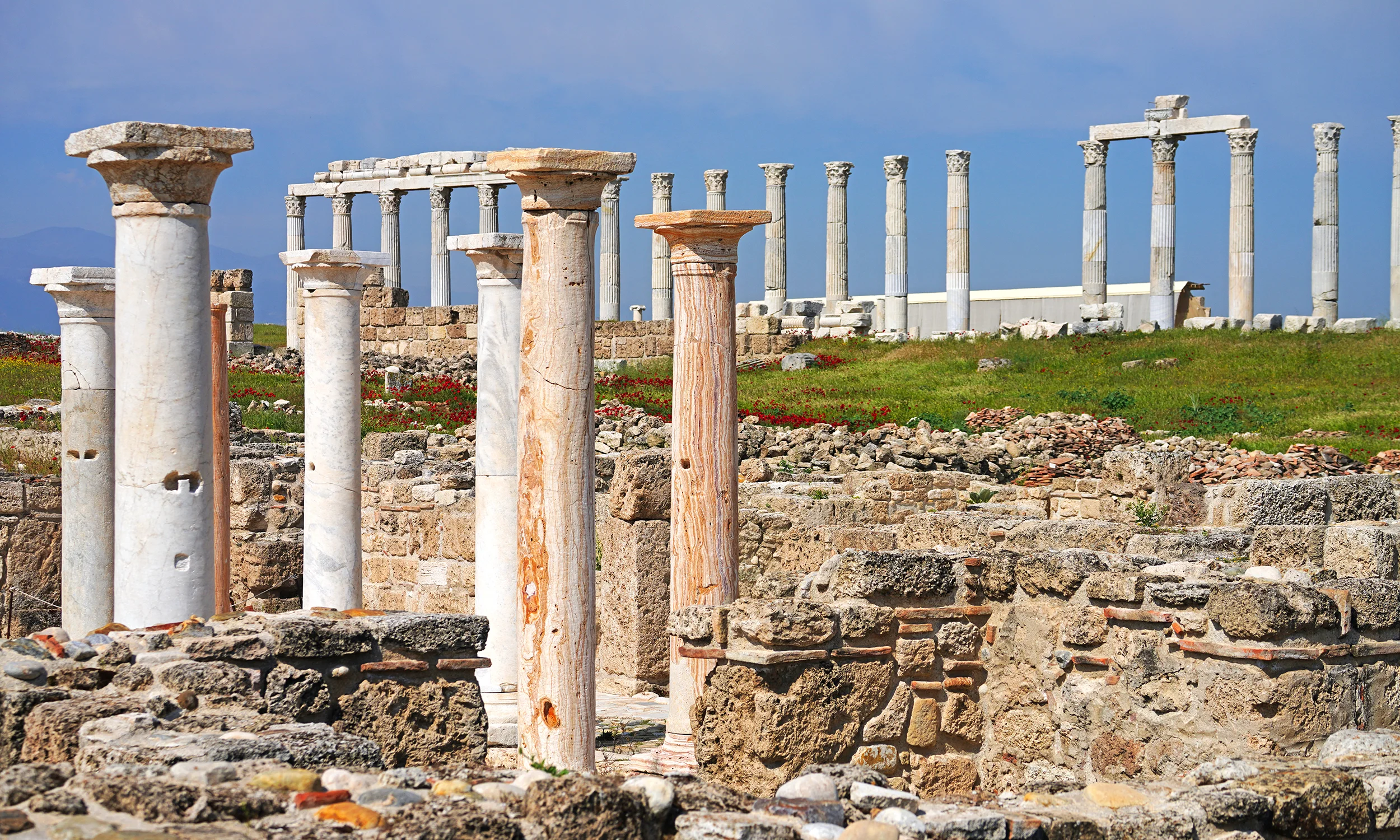
Continue the historical journey through Roman urban life and early Christianity.
Explore Laodicea
Discover the region’s celebrated white travertines and extraordinary ancient ruins.
View Private Tour