
Custom Kaklık Cave Visit
Ask us to arrange a private stop at Kaklık Cave, with pickup, transport and optional additions according to your dates and interests.
Request a Custom Itinerary





Kaklık Cave (Kaklık Mağarası) is one of the most distinctive natural attractions in the Denizli region of southwestern Türkiye. Situated near Kaklık in Honaz district, approximately 30 kilometres from central Denizli, this active cave contains remarkable white travertine terraces, mineral-rich flowing water, dripstone formations and unusual patches of greenery beneath an opening to the sky.
Visitors often call it "Underground Pamukkale," "Cave Pamukkale" or "Little Pamukkale" because its stepped calcium-carbonate formations resemble the celebrated white terraces of Pamukkale. Here, however, those formations develop inside a compact, humid cave rather than across an open hillside.
Warm mineral water feeds small cascades and pools, while the cave's natural roof opening allows daylight to reach dripping rock walls where mosses and small plants can grow. A noticeable sulfurous smell is part of the experience. Walkways let visitors observe the formations at close range, although moisture can make surfaces slippery.
Kaklık Cave is an excellent short stop for travelers interested in geology, natural landscapes, photography and the lesser-known sights of Denizli. It is particularly rewarding as a carefully planned addition to a private regional itinerary, rather than as a replacement for the extensive Pamukkale and Hierapolis archaeological landscape.
See miniature white terraces and flowing mineral-rich water.
Discover an active cave where water continues to deposit travertine.
Observe the striking contrast of moss, plants and pale limestone.
Explore an unusual Honaz attraction on a wider Denizli route.
Essential information for exploring Denizli's remarkable thermal cave.
Kaklık neighbourhood, Honaz district, approximately 30 km from central Denizli.
Open on Google MapsActive, water-fed cave associated with limestone dissolution and collapse.
Around 190–200 metres of cave development; the visitor route is shorter.
Travertine terraces, thermal springs, waterfalls, stalactites and stalagmites.
Opened to visitors in 2002; it is a protected natural site.
100 TL under Honaz Municipality's published 2026 tariff; confirm any changes.
09:00–17:00 daily on an official educational listing; verify locally.
Allow 30–60 minutes at the cave, longer if adding surroundings and transport.
The best reason to visit Kaklık Cave is the unusual meeting of active thermal water, pale travertine terraces and cave architecture. The shapes familiar from Pamukkale appear here on a much smaller scale beneath a rocky ceiling. The impression is unlike either a conventional limestone cave or the open-air terraces of Pamukkale.
Water enters the cave, spreads over shelves and rounded steps, then moves through pools and channels. Light enters through a roof opening, illuminating parts of the cave and supporting green vegetation on wet surfaces. This mixture of geological processes and living colour makes the site especially memorable for photography.
Kaklık is also a useful introduction to the wider Denizli thermal landscape, where groundwater, fault-related circulation and carbonate rocks have shaped well-known and lesser-known attractions. Its significance is geological and ecological: it should not be confused with an ancient cave settlement or Roman monument.
Travelers planning a regional visit can combine the cave with the Pamukkale area and nearby ancient cities, adapting the route to their interests and available time.
Kaklık Cave developed in a landscape where groundwater interacts with limestone. Slightly acidic water can slowly dissolve calcium-carbonate rock, enlarging fissures and underground cavities. Local structural weaknesses, water movement and the collapse of rock helped create the accessible cavern seen today.
Turkish geological and tourism descriptions characterize Kaklık as an active cave with a sinkhole-and-spring or collapse-doline setting. It is not simply a sealed chamber: water continues to move through the system, and its formations remain affected by ongoing deposition.
The principal cave area measures roughly 65 metres along one axis and 40 metres along another. Government cave descriptions put the broader system at approximately 200 metres in length. These measurements describe the cave's geological extent, not the distance covered by visitors on its maintained route.
The surrounding geological setting contains limestone as well as younger sedimentary formations and travertine deposits. The most dramatic visible feature is the combination of an exposed opening above and a mineral-encrusted interior below.
Groundwater gradually enlarges cracks and cavities in soluble carbonate rock.
Natural collapse helps shape the open, sinkhole-like character of the cavern.
Warm mineral-bearing springs continuously feed water into the cave system.
As water loses dissolved carbon dioxide, calcium carbonate can precipitate as travertine.
Travertine terraces are dynamic formations rather than static carved stone.
Sunlight entering the cave creates a distinctive contrast of light, shadow and plants.
The small white basins that give Kaklık Cave its nickname are travertine formations. They form when mineral-rich water deposits calcium carbonate on rocks and around flowing channels. Over time, rounded rims, shelves, curtains and little terraced pools can develop.
The effect is particularly attractive where water runs over a succession of ledges. Some surfaces appear chalk-white, while others show cream, yellowish or green tones depending on mineral coatings, moisture, natural light and plant growth.
These formations are related in principle to the famous Pamukkale terraces, but Kaklık Cave is not a second Pamukkale of comparable size. It is a compact underground environment with its own water pathways, shapes and visitor experience.
Rounded mineral rims hold shallow pools and mirror light from the opening and lamps.
Flowing spring water coats existing rock surfaces in new carbonate layers.
Ceiling-hanging dripstone forms where mineral-rich water has deposited material.
Upward-growing formations can develop beneath persistent drips.
Water, vegetation and lighting make the cave look different throughout the day.
A formation that appears solid can be easily damaged by touching or stepping on it.
The cave's remarkable appearance is inseparable from the warm springs of the Kaklık area. Local municipality descriptions associate the travertine with water from Kokarhamam Spring, also known as Haydar Baba Spring, which reaches the cave in small cascades. Water continues to shape both the pools and the cave's mineral coverings.
The water is generally described in official tourism sources as clear, colourless and sulfur-smelling. Its noticeable smell is often compared to rotten eggs. That scent can be surprising to first-time visitors and may be particularly unpleasant for people sensitive to strong odours.
Local descriptions have long associated the thermal water with traditional beliefs about benefits for skin conditions. Those claims should be treated as local traditions, not verified medical treatment advice. Kaklık Cave is a viewing attraction, not a place to bathe in the cave's protected basins.
Expect a strong mineral or rotten-egg smell in some sections of the cave.
Moist air, dripping water and damp surfaces are characteristic of this active environment.
Spring-fed cascades continue to carry dissolved minerals over rock shelves.
Visitors should keep out of the cave pools and protect the geological formations.
One of Kaklık Cave's most unexpected sights is the vegetation growing against the bright mineral deposits. Unlike a completely dark cave, some walls here receive direct daylight through the natural opening. With constant moisture from dripping and flowing water, mosses and small leafy, vine-like plants can develop on suitable surfaces.
These plants introduce green tones into a scene dominated by white limestone and amber rock. Their appearance changes as sunlight shifts across the entrance. This unusual combination is described by the Denizli Provincial Directorate of Culture and Tourism as one of the features that makes Kaklık distinctive.
For nature lovers, the best part of the visit is often simply pausing to observe the relationship between sunlight, water, rock and plant life, rather than trying to rush through the small cave.
Kaklık Cave's geological development is far older than its history as a visitor attraction. Local accounts describe a natural cave formed through long-term interaction between underground water and limestone, with structural collapse shaping its current appearance.
The site received a formal natural-site registration dated 3 May 2000, according to a 2026 inspection notice from the Denizli Provincial Directorate of Environment, Urbanisation and Climate Change. Visitor facilities around the cave were developed and the site opened for tourism in May 2002.
Over the following decades, Kaklık became a recognized regional stop for visitors seeking the geological landscape beyond Pamukkale. The cave remains a protected and changing natural environment, so walking surfaces, maintenance work and visitor access can be adjusted.
Mineral-rich groundwater shapes the cave and continues to create natural deposits.
A formal protection registration is recorded in official provincial documentation.
Visitor infrastructure opens the cave and its surroundings to tourism.
A short but distinctive Denizli attraction, valued for active geological processes.
The cave is compact, but its details repay a relaxed visit. Rather than rushing along the path, take time to notice the different scales of travertine, the water entering the cave and the changes in colour where light reaches the wet rock.
The most characteristic feature is the large concentration of pale, stepped mineral deposits.
Watch spring water flow over ledges and into shallow basins where new deposits develop.
Look upward to see how daylight reaches sections of the underground chamber.
Observe the bright green patches growing where constant moisture meets natural light.
Study traditional dripstone forms alongside the more unusual travertine terraces.
Enjoy the delicate relationship between still water, rock textures and light.
Use the maintained path to see the formations without entering sensitive areas.
If accessible, explore the landscaped surroundings and viewpoints after the cave.
A few simple preparations make a significant difference here. Kaklık is wet by nature, and visitors may encounter puddles, dripping water, changes in level and an unmistakable sulfurous smell.
Choose sturdy, non-slip footwear you do not mind getting damp; smooth soles are risky.
The entrance descent and walking surfaces can be slippery even in dry weather.
Natural light and reflections are beautiful, but give other visitors room to pass.
Skin oils, pressure and abrasion can damage delicate mineral surfaces.
Hold hands near steps, railings and water; never allow climbing on cave deposits.
A phone or compact camera is easier to manage than bulky luggage on a damp path.
Anyone who finds sulfur odours unpleasant may prefer a shorter visit.
Temporary maintenance or changes to water levels can affect the public walkway.
Visitor information can differ between third-party websites, especially opening hours and ticket prices. For 2026, Honaz Municipality's published annual fee schedule gives Kaklık Cave admission as 100 TL. This is a municipal entrance charge; it should not be confused with Pamukkale's separate museum and archaeological-site tickets.
An official Turkish Ministry of National Education visitor listing displays 09:00–17:00 every day of the week. Other web listings show different closing times, so the hours should be reconfirmed with local management before departure, especially in winter, on public holidays or during restoration work.
The broader grounds have historically included an outdoor pool, a cafeteria, seating and other day-use facilities. However, the presence of a facility in an official site description does not guarantee it will be operational on the date of your visit. The pool outside the cave is separate from the cave's protected natural basins.
Kaklık Cave is situated near Kaklık neighbourhood in Honaz district, along the corridor east of Denizli toward Afyon and Ankara. The provincial culture authority places it approximately 30 kilometres from Denizli city centre. After reaching Kaklık, follow the local signed road toward the cave.
The Turkish Ministry of Culture and Tourism describes a local approach of around 3 kilometres north from Kaklık. The last section is separate from the principal highway; check current road conditions and directions before setting out. Denizli Municipality reported road improvements on the approach road in 2026.
Drive east toward Kaklık and follow local cave signs; allow roughly 35–50 minutes depending on traffic and your starting point.
Travel across the Denizli area toward Honaz and Kaklık; a private vehicle offers the most practical flexibility.
The cave is on the broader airport–Denizli corridor; a planned transfer stop may be possible according to your route.
Services reach Kaklık from Denizli, but the cave still requires a separate local connection from the settlement.
Arrange both the outward journey and return pickup in advance if taxis are not waiting at the site.
Combine the cave with one or two carefully selected Denizli attractions without relying on infrequent local connections.
Because the cave itself is small, it is best visited at a relaxed pace as part of a regional day. You can choose a cave-only excursion or connect it with the varied natural and archaeological attractions of the Lycus Valley.
Travelers interested in early Christian and Roman history can add Laodicea or Colossae. Those who primarily want the classic Denizli experience should give Pamukkale and Hierapolis adequate time first, then add Kaklık when the route allows.
Kaklık Cave can be a year-round stop when open. Much of the attraction is sheltered, but the approach, stairs, humidity, visitor numbers and amount of daylight still influence the experience.
Comfortable outdoor travel temperatures and a pleasant time to explore the surrounding region.
A practical stop during a Denizli drive, though the cave can feel very humid and busy periods may occur.
Often attractive for photography and combining the cave with archaeological sightseeing.
Potentially quieter, but expect rain on the approach and take extra care on damp or slippery steps.
A good choice when you want time afterward for other regional sights and fewer scheduling surprises.
Sunlight entering through the opening is part of the cave's character; avoid arriving close to closing time.
A brief look at the principal mineral terraces if the path is quiet and you are comfortable on steps.
An appropriate visit for most travelers who want to see the cave's main features and take photographs.
Allow time to observe the water, greenery and geology without rushing.
Useful if you also want to explore the outside grounds, where facilities are available.
Plan a slower pace, help on wet stairs and leave if the sulfur smell becomes uncomfortable.
Add significant time for driving from your hotel and for any other Denizli attractions.
Kaklık Cave offers strong photographic contrasts despite its modest size. The best compositions often combine the pale terraces with green vegetation and the darker cave ceiling. Lighting can change quickly between areas receiving daylight and those relying on artificial illumination.
Use the curved rims and miniature basins as leading lines in your composition.
Photograph shallow pools where reflections show the cave ceiling and delicate rock textures.
Look for mosses and trailing plants around the natural opening.
Include enough of the ceiling and walkway to convey the unusual cave setting.
Hold your camera steady without obstructing people; avoid excessive flash.
Never cross barriers or enter pools to create a photograph; follow current photography rules.
The entrance and visitor route involve a descent into a natural cavern and movement through a humid, potentially slippery environment. Visitors with restricted mobility should not assume the underground circuit is step-free or wheelchair accessible.
The most recent official education listing includes accessibility-related information, but this does not specify that every section is independently accessible or suitable for all visitors. Confirm the condition of ramps, steps, handrails and assistance options directly with management before traveling.
Wet boards, stone and mineral deposits require particular care.
Plan for the descent and return climb, not just the relatively short cave circuit.
Ask management to confirm whether any part of the current route is accessible.
The underground route may be unsuitable; check before taking a pushchair inside.
Keep children close at the railings and prohibit climbing or entering water.
The sulfur smell may be unpleasant for people who are sensitive to strong smells.
The wider Denizli region offers an appealing combination of thermal landscapes, natural parks and archaeology. Kaklık is a particularly useful stop for travelers who want a quieter geological site alongside the region's world-famous destinations. Explore more possibilities in our Pamukkale and Denizli attractions guide.
Visit the celebrated white open-air terraces formed by mineral-rich thermal water.
Explore a Roman and Byzantine spa city, theatre, necropolis and monumental remains.
Discover a major Roman city of the Lycus Valley with important early Christian history.
Encounter the landscape of ancient Colossae near Honaz, associated with the New Testament.
Explore the wider mountain landscape around Honaz, according to current trail access and conditions.
See the red-toned mineral deposits and thermal-spa district near Pamukkale.
Consider a longer regional journey to this excavated ancient city near Yenicekent and Buldan.
Discover further historic sites, local food and private excursion possibilities.
It is in Kaklık neighbourhood of Honaz district, around 30 km from Denizli city centre in southwestern Türkiye.
Its white, stepped travertine terraces resemble Pamukkale's famous mineral deposits, but they occur inside a compact cave.
No. Kaklık is a separate natural cave near Honaz, while Pamukkale is the famous large open-air travertine landscape beside Hierapolis.
The cave developed through groundwater dissolving limestone, with rock collapse and continuing spring-water activity shaping its modern appearance.
Yes. Mineral-bearing water still flows through the cave and contributes to the travertine formations.
Official sources describe about 190–200 metres of cave development. This is not the same as the length of the public visitor walkway.
Yes. Dripstone formations occur alongside the cave's distinctive travertine terraces and pools.
Sulfur-bearing thermal water produces the characteristic mineral smell, often compared to rotten eggs.
Visitors commonly notice a strong smell, but individual sensitivities vary. Anyone who feels unwell should leave the cave and seek appropriate medical advice.
No. The delicate underground travertine pools are for observation, not swimming. A separate outdoor pool has historically been described at the visitor site; check whether it is operating.
Honaz Municipality's published 2026 tariff lists 100 TL. Verify whether any updated rates or exemptions apply on your visit date.
An official educational visitor listing shows 09:00–17:00 every day. Other published schedules differ, so verify with local management before departure.
Do not assume it does. Kaklık is municipally ticketed, and Museum Pass eligibility should be checked with the site.
Most visitors can enjoy the cave in 30–60 minutes, not including travel from Denizli or Pamukkale.
Families can enjoy the formations, but steps and wet surfaces require close supervision. Some children may dislike the sulfur smell.
Do not assume the underground route is step-free. Contact management about current accessible areas and assistance before visiting.
They might. Sections of the cave can be damp or have standing water, so wear footwear with secure grip that can tolerate moisture.
Generally yes when the site is open, though winter weather can affect the approach and makes caution on damp surfaces especially important.
The provincial Culture and Tourism Directorate places it about 30 km from Denizli city centre.
Minibuses serve Kaklık from Denizli, but they may not go directly to the cave. Plan a separate last-mile connection or private transfer.
Yes. A private itinerary can combine suitable sites, provided driving times and opening hours allow enough time for each visit.
Yes, especially if you enjoy geology and nature. Its compact underground travertines offer an experience distinct from Pamukkale and the region's ancient cities.
Follow the maintained circuit and never cross barriers.
Fragile mineral deposits can be damaged by oils, abrasion and footprints.
Do not throw food, coins or other objects into pools or watercourses.
Leave mosses and small plants undisturbed on the light-filled cave walls.
Avoid blocking narrow walkways for photographs or using disruptive lights.
Temporary restrictions protect visitors and the actively changing formations.
Explore thermal landscapes and ancient cities with private transport, flexible planning and licensed guiding where requested. Our personalized itineraries have no compulsory shopping stops.
Choose a cave-focused stop or combine Kaklık with selected highlights of Honaz and the Lycus Valley.
Ask us to arrange a private stop at Kaklık Cave, with pickup, transport and optional additions according to your dates and interests.
Request a Custom Itinerary
Browse flexible private touring options, historical excursions and transport services across Pamukkale and Denizli.
Explore Pamukkale ToursPair geological discoveries with famous UNESCO landscapes and ancient Roman cities.

Explore the iconic travertine terraces and the Roman spa city of Hierapolis with a private guide.
View Private Tour
Discover the monumental remains and biblical heritage of one of the Lycus Valley's great ancient cities.
Explore Laodicea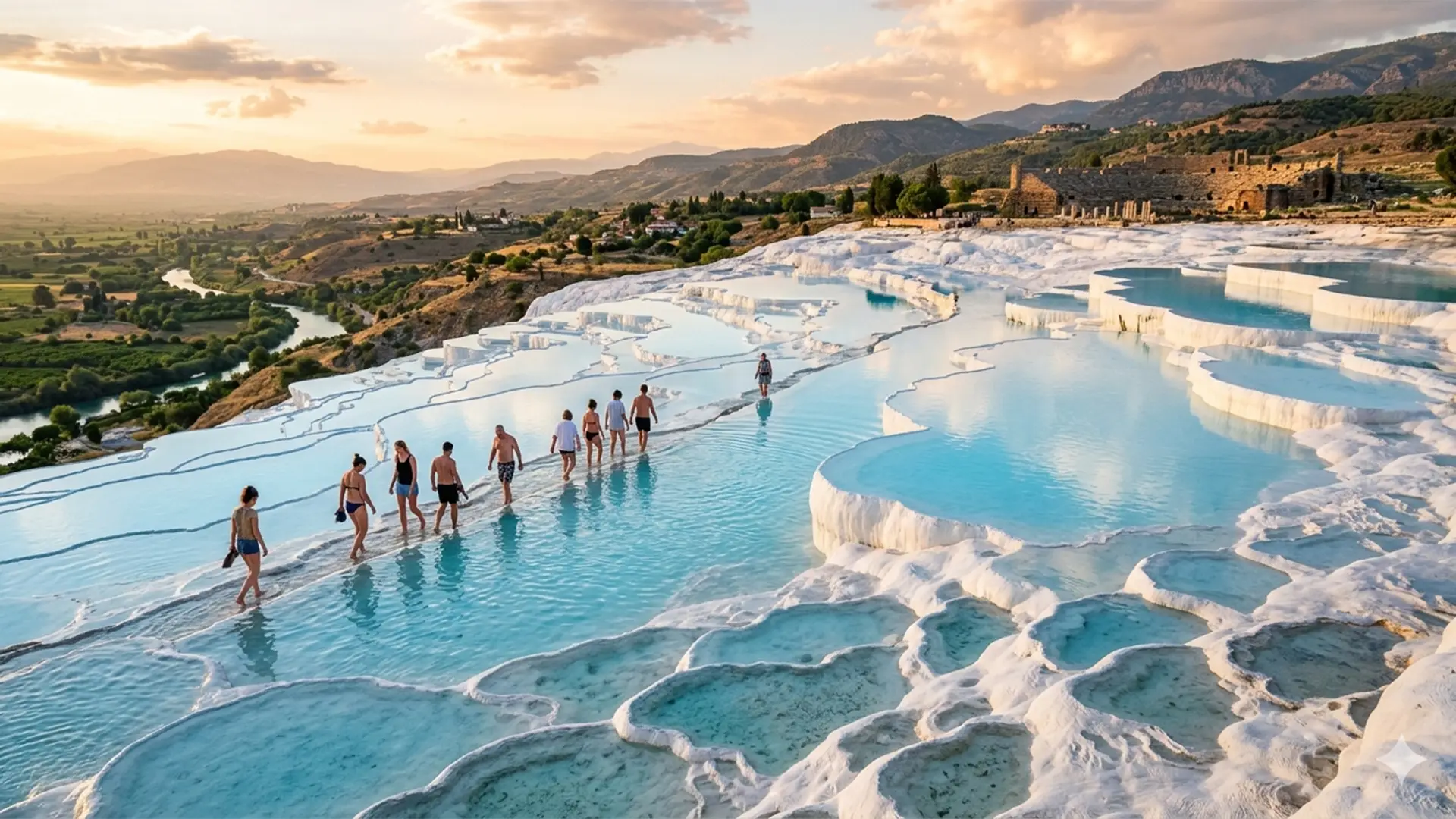
Plan a broader journey through thermal sites, ancient ruins, mountain scenery and charming regional towns.
View Regional Guide