Private Yalova Balkan Heritage Experience
Ask us about a tailor-made cultural route combining the Balkan House, Gaziosmanpaşa, Yalova City Museum and other heritage attractions in the city.
Request a Custom Tour




In Gaziosmanpaşa Mahallesi, a Yalova neighbourhood widely known locally as Göçmen Mahallesi — the “Immigrant Neighbourhood”, the Balkan House brings together museum displays, community memory and living cultural traditions connected with migration from the Balkans to north-western Türkiye.
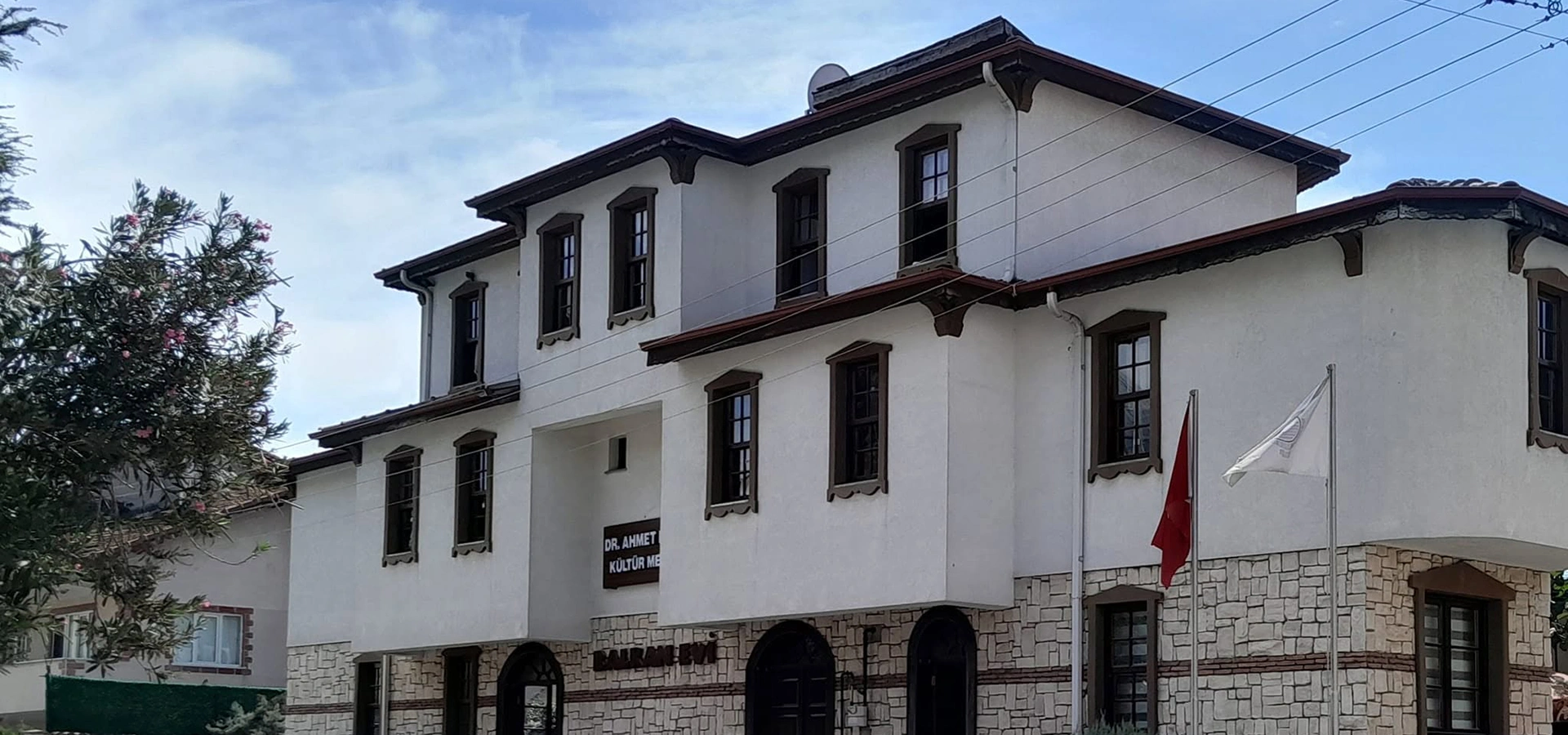
The site is officially presented by Yalova Municipality as the Dr. Ahmet Doğan Cultural Centre and Balkan House. Municipal information describes it as a three-storey building with a large garden, designed with an exterior inspired by Balkan architecture. The centre was created to preserve and transmit the history, culture and way of life of Balkan migrant communities in Yalova.
The visitor experience is broader than a conventional object-based museum. Official descriptions highlight migration photographs and visual material, areas introducing Balkan food culture and social spaces where members of the migrant community can meet. Recent exhibitions and cultural programmes have also featured traditional clothing, embroidered textiles, dowry objects and domestic items connected with Balkan family life.
This makes the Balkan House particularly interesting for travellers who want to understand how migration shaped modern Yalova. Rather than presenting the past as something distant, the centre connects family memories, neighbourhood identity, food, craft, music, clothing and community life.
Photographs and visual material trace journeys from the Balkans to Yalova and preserve memories of displacement and settlement.
Traditional clothing, textiles, food, music and community events keep cultural heritage connected with everyday life.
The museum stands in Gaziosmanpaşa, a neighbourhood strongly associated with Yalova's Balkan migrant communities.
The building functions not only as a museum, but also as a meeting and cultural activity space.
Essential information for visiting one of Yalova's most distinctive cultural-heritage centres.
Gaziosmanpaşa Mahallesi, Çimen Sokak No:4, Yalova Merkez.
Open in Google MapsDr. Ahmet Doğan Cultural Centre and Balkan House; also widely described as the Balkan House Migration Museum.
A three-storey cultural centre with a large garden and an exterior designed to evoke Balkan architectural character.
Balkan migration to Yalova, migrant family memory, community identity and the preservation of cultural traditions.
Migration photographs and visual displays, with cultural material that can include clothing, textiles and domestic heritage.
Balkan food, music, folk traditions and community activities form an important part of the centre's wider cultural role.
Gaziosmanpaşa is popularly known as Göçmen Mahallesi and has a strong association with Balkan migrant families.
Yalova municipal material records the Balkan House as having been opened for use in 2013.
Yalova Municipality currently lists the Balkan House as open to visitors.
Allow around 45–90 minutes for a general visit, longer if a temporary exhibition or cultural event is taking place.
The Balkan House helps explain an important part of Yalova's modern identity: the arrival, settlement and cultural continuity of families whose roots lie across the Balkans.
Many museums are centred on archaeology, art or a famous individual. The Balkan House is different because its subject is migration as lived experience: the movement of families, the memories they carried, the objects they preserved and the cultural traditions they rebuilt in a new home.
The museum is particularly meaningful because it stands inside Gaziosmanpaşa Mahallesi, a neighbourhood commonly called Göçmen Mahallesi. Yalova Municipality presents the district itself as a place where Balkan culture remains visible in community life, architecture and social spaces.
Inside the centre, migration photographs and visual displays provide the historical framework. Around that story, traditional textiles, clothing, food, music and community events show how cultural identity survives through ordinary family practices.
For travellers exploring Yalova in depth, the Balkan House adds an important human dimension to the city's better-known stories of Atatürk, thermal tourism, the Marmara coast and the 1999 earthquake. It explains another force that shaped the city: successive communities making Yalova their home.
The Balkan House is located at Çimen Sokak No:4 in Gaziosmanpaşa Mahallesi, within Yalova Merkez. It is an urban cultural site rather than a remote attraction, so it can be combined easily with other museums, the waterfront and central Yalova sightseeing.
The surrounding area is important to the experience. Yalova Municipality describes Gaziosmanpaşa as a neighbourhood commonly known as Göçmen Mahallesi and strongly associated with Balkan culture. The municipal visitor guide also points to a neighbourhood park, Balkan-style façades, a migrant community social space and other local public facilities around the area.
For visitors, this means the museum should not be viewed as an isolated building. A short walk around the neighbourhood helps place the exhibitions inside the living community whose history they represent.
The Balkan House was developed by Yalova Municipality as a cultural centre dedicated to the history and cultural life of Balkan migrant communities. Contemporary reporting records that the foundation of the project was laid in 2012 during a major Balkan gathering in Yalova.
Municipal material later recorded the building as having been opened for use in 2013. The project was conceived as more than a gallery: plans included a migration museum, community meeting areas and spaces where Balkan culture could be represented through social and cultural activity.
The building later became closely associated with Yalova BAL-GÖÇ, the local branch of the Balkan Migrants Culture and Solidarity Association. Municipal records and local reporting document the centre's continuing use for exhibitions, community meetings, cultural presentations and visits by groups with connections to the Balkans.
The result is a place that sits between museum, cultural centre and community house. Its historical displays matter, but so does the fact that people continue to use the building for cultural transmission in the present day.
The project foundation was laid during Yalova's Balkan-focused cultural programme.
Municipal material records the Balkan House as having been opened for use.
The centre combines migration interpretation with social and cultural functions.
Recent exhibitions and cultural programmes show that the Balkan House continues to function as a living community venue.
The Balkan House exists because migration is not a marginal subject in Yalova's modern history. Families with roots in the Balkans, especially communities connected with Bulgaria and the wider Balkan region, became an important part of the city's social fabric.
Gaziosmanpaşa Mahallesi is one of the clearest places to see that legacy. Municipal tourism material identifies the neighbourhood with Balkan migrant culture, while local community reporting describes a strong presence of families of Balkan origin and the continued use of the name Göçmen Mahallesi.
The museum's value lies in showing migration not only as movement across a border, but as a long process of departure, arrival, resettlement, adaptation and cultural continuity. Objects and photographs become meaningful because they are connected with family memory: what people carried, what they made again, what they cooked, what they wore and what they taught to the next generation.
Visitors should also remember that “Balkan migrant” is a broad description. The Balkans contain many countries, regions, languages and cultural traditions. The Balkan House reflects a community heritage with particularly strong connections to Bulgaria, but its wider mission is the preservation of Balkan migration memory in Yalova.
Yalova Municipality describes Gaziosmanpaşa as one of the city's most distinctive neighbourhoods and notes that it is popularly known as Göçmen Mahallesi. The district's identity is closely connected with families whose roots lie in the Balkans.
The Balkan House stands near a neighbourhood park and within an area where municipal improvement projects have used Balkan-inspired exterior design to strengthen the district's visual identity. The neighbourhood also contains social and community spaces associated with local migrant culture.
A migration-themed monument in Gaziosmanpaşa has also been referenced in municipal reporting as symbolising the community's journey to Türkiye. Together, these neighbourhood elements help turn the area into a broader cultural landscape rather than leaving the museum to carry the entire story by itself.
If you have time, spend ten or fifteen minutes walking around the immediate area after the museum. The contrast between museum interpretation and ordinary neighbourhood life is one of the most valuable parts of the visit.
The Balkan House is not a preserved Ottoman mansion or an original migrant-era dwelling. It is a purpose-built modern cultural centre designed to express Balkan identity through its architectural appearance.
Yalova Municipality describes the structure as a three-storey building with a large garden and highlights its distinctive exterior, which was designed with Balkan architectural character in mind.
This is an important distinction for visitors: the value of the building does not come from architectural age. Its significance comes from what it was created to represent and how it functions as a focal point for community memory, museum interpretation and cultural events.
The official municipal museum page describes a three-level building.
Outdoor space forms part of the cultural-centre setting.
The façade was designed to visually reference Balkan architectural traditions.
Visit it as a contemporary building created to preserve historical and cultural memory.
The core museum theme is the journey from the Balkans to Yalova. Yalova Municipality specifically identifies photographs and visual materials about migration as part of the visitor experience.
These images are important because migration history can otherwise become a sequence of dates and statistics. Photographs bring the story closer to the individual: families leaving familiar places, crossing borders, arriving in Türkiye and beginning new lives.
The Balkan House has also been used for programmes concerning the 1989 migration from Bulgaria. Related events in Yalova have used photographs, personal objects and the title Umuda Yolculuk – Göç 89 to remember the experiences of Bulgarian Turks who travelled to Türkiye during that period.
Displays can change, so visitors should distinguish between the centre's permanent migration theme and temporary exhibitions or special programmes. If a particular exhibition is important to you, check what is currently on display before travelling.
Some of the most evocative objects connected with Balkan migrant culture are not monumental. They are things made, worn or used at home: embroidered textiles, regional clothing, towels, bags, mirrors, quilts and domestic tools.
Recent cultural exhibitions held at the Balkan House have documented peşkir textiles, small embroidered pouches, bridal mirrors and dowry objects preserved in family chests. These displays emphasise both craftsmanship and the role of women in carrying cultural traditions between generations.
A later cultural-heritage exhibition in the same building presented items including regional clothing, traditional sewing machines, old irons and cradles. Such exhibitions show how the Balkan House can expand beyond migration photographs into the texture of everyday life.
Because temporary exhibitions change, not every object described in past reporting should be assumed to be permanently on display. The useful lesson is broader: the centre treats domestic material culture as historical evidence.
Regional clothing helps visitors see how identity was expressed through fabric, colour and ornament.
Embroidered household objects preserve skills, motifs and family memory.
Everyday objects such as sewing equipment, irons and cradles connect migration history with ordinary life.
Special displays vary, so current objects may differ from those documented in previous programmes.
Yalova Municipality includes Balkan cuisine among the cultural themes represented at the Balkan House. That is especially appropriate in a migration museum because food traditions often survive long after families have moved away from their place of origin.
Local cultural programmes at the centre have included examples of Balkan migrant food, including dızmana, a baked speciality strongly associated with communities from Bulgaria and the Balkans in north-western Türkiye. Food presentations, community gatherings and shared meals give the cultural centre a different atmosphere from a conventional display-only museum.
Visitors should not assume that a restaurant service or specific regional dishes are available every day. Food-related activity may depend on events, community programmes or the operation of social spaces. If cuisine is an important reason for your visit, confirm what is available in advance.
One of the most distinctive features of the Balkan House is that cultural heritage is not limited to museum cases. The building continues to host community gatherings, exhibitions, traditional food presentations, music, folk culture and cultural visits.
Recent reporting has documented visitors being welcomed by people in traditional Balkan dress, presentations of regional songs and dances and projects designed to preserve family textiles and handicrafts. This gives the centre an active, community-based character.
That activity also means that one visit may be different from another. On a quiet day, the emphasis may be on the migration displays. During an exhibition or cultural programme, the experience can expand into food, costume, music, conversation and performance.
For travellers, this variability is a strength. The Balkan House is best understood as a living heritage institution rather than a museum whose rooms remain exactly the same throughout the year.
The experiences of Bulgarian Turks who migrated to Türkiye in 1989 remain within living memory for many families. In Yalova, this history has been commemorated through photographs, personal testimony, objects and cultural programmes.
Yalova Municipality has previously organised an exhibition titled “Umuda Yolculuk – Göç 89”, using documentary photography to present the difficulties faced by people travelling to Türkiye. The Balkan House has also hosted screenings and community remembrance connected with the same migration story.
For visitors, this is an important reminder that the Balkan House does not deal only with distant Ottoman-era population movements. Part of the centre's emotional power comes from the fact that some migration experiences belong to the parents and grandparents of people still active in the community today.
Special exhibitions and films can change, so this page does not assume that a specific 1989 display is permanently installed. Instead, the subject should be understood as one of the important themes in Yalova's wider Balkan-memory work.
Look closely at visual material documenting movement from the Balkans to Yalova and Türkiye.
Notice how personal belongings and domestic traditions turn migration into an individual human story.
When displayed, regional dress reveals differences in textile, ornament and local identity across Balkan communities.
Textiles, peşkir, pouches and bridal objects show the importance of handwork and intergenerational inheritance.
Household objects help reconstruct the everyday life of migrant families rather than focusing only on political history.
Learn how recipes and shared meals became one of the strongest ways of preserving community identity.
Step outside to see the Balkan-inspired façade and understand the building as a purpose-built cultural centre.
Spend time in Gaziosmanpaşa to connect museum interpretation with the living “Göçmen Mahallesi” around it.
The Balkan House is not the kind of museum that requires half a day simply to move through its galleries. Its value comes from reading the stories carefully and paying attention to the relationship between photographs, objects and community memory.
Start with the historical photographs and visual material so that later cultural objects have a clear context.
Ask what a textile, cradle, sewing machine or domestic tool can tell you about rebuilding family life after migration.
Do not assume that all Balkan clothing, food or craft traditions are identical; regional differences matter.
The building hosts changing cultural programmes, so find out whether a temporary display is running.
See the Balkan-inspired exterior and garden before leaving the site.
Finish with a short walk through Gaziosmanpaşa to understand the museum in its community setting.
Enough for a focused look at the main migration displays and the building's exterior.
A comfortable general visit with time to read displays, examine cultural objects and walk around the site.
Useful when a temporary exhibition or cultural presentation is taking place and you want a slower experience.
Combine the Balkan House with Yalova City Museum, the city centre and other nearby heritage attractions.
These timings are practical editorial estimates rather than official museum guidance. The actual visit can vary depending on which rooms are open and whether an event or special exhibition is running.
Because the main experience is indoors, the Balkan House can work well throughout the year. It is especially useful on a rainy, cold or very hot day when outdoor sightseeing in Yalova is less comfortable.
A practical choice for a quieter cultural visit, but always confirm current public-access hours before travelling.
Cultural programmes can add food, music, clothing or special exhibitions, creating a richer but busier experience.
The museum is a useful indoor addition to a Yalova itinerary when conditions are poor outdoors.
If the Balkan House is your main reason for travelling, contact locally to confirm access and current displays.
Yalova Municipality currently lists the Balkan House as open to visitors, but its museum page does not publish a detailed weekly timetable or current admission fee.
Recent local reporting has described individual exhibitions in the building as open on weekdays, but temporary-exhibition hours should not automatically be treated as permanent museum opening hours.
For that reason, the safest approach is to confirm same-day or next-day access locally, especially if you are travelling specifically for the museum or hoping to see a particular exhibition.
The museum can offer strong visual material, especially when traditional clothing, embroidered textiles or temporary exhibitions are on display. The Balkan-inspired exterior also creates a recognisable architectural setting.
Photograph the stone-and-timber-inspired façade and the “Balkan Evi” identity of the building.
When costumes are displayed, photograph details as well as complete outfits to show embroidery and construction.
Close-ups can reveal patterns, stitching and signs of handmade production.
Check museum rules before photographing archival material, documents or copyrighted exhibition images.
Ask permission before making close portraits of participants, performers or visitors.
Include the surrounding Gaziosmanpaşa streets if you want to tell a broader story about migration and place.
The official municipal page describes the Balkan House as a three-storey building. However, it does not provide detailed public information about lifts, step-free routes, accessible toilets or access to every exhibition level.
Travellers who require step-free access should therefore confirm current accessibility arrangements in advance rather than assuming that all floors can be reached without stairs.
The urban location in Gaziosmanpaşa makes the centre easier to reach by road than many rural Yalova attractions, but parking conditions and pavement access can change.
The museum is in Gaziosmanpaşa Mahallesi within Yalova Merkez and can be reached by a short urban road journey.
Give the destination as “Balkan Evi, Çimen Sokak No:4, Gaziosmanpaşa.”
Use the full street address for navigation and allow extra time for local traffic or parking.
Urban bus and minibus routes can change, so confirm the current connection to Gaziosmanpaşa locally.
When searching online, use the full name “Balkan Evi Yalova” or the street address, because “Balkan House” can produce unrelated results in other cities.
This combination works especially well because the Balkan House tells a community-specific story, while Yalova City Museum provides the broader historical framework of the province.
Together, these sites create a day centred on migration, urban identity, craft and knowledge, and modern remembrance.
The current municipal page lists the museum as open, but does not publish detailed weekly hours.
Special displays can significantly change what you see inside the building.
The value comes from focused community history rather than the size of the collection.
Migration images often provide the strongest historical context, so do not rush through them.
Some objects and stories relate to experiences still remembered directly by local families.
Community members and event participants are not museum exhibits; request permission for close photographs.
A short walk through Gaziosmanpaşa helps connect the museum with the living migrant community around it.
The museum fits easily into a cultural day with Yalova City Museum and other urban attractions.
Continue with the wider history of Yalova and place migration within the story of the city's development.
Explore printing, handmade paper and the memory of one of Ottoman cultural history's most important figures.
Visit a deeply important site of remembrance connected with Yalova's experience of the 1999 Marmara earthquake.
Discover Yalova's best-known Atatürk site and the famous story of a mansion moved to protect a plane tree.
Add another accessible cultural stop focusing on Atatürk, children and public memory in Yalova.
Plan a wider journey through the province's museums, thermal springs, historic villages, wetlands and forest landscapes.
It is a cultural centre and migration museum dedicated to Balkan migrant history, community memory and living cultural traditions in Yalova.
Yalova Municipality currently presents it as the Dr. Ahmet Doğan Cultural Centre and Balkan House. It is also widely referred to as the Balkan House or Balkan House Migration Museum.
It is at Gaziosmanpaşa Mahallesi, Çimen Sokak No:4, Yalova Merkez.
The neighbourhood has a strong historical association with Balkan migrant families, and Yalova Municipality notes that it is popularly known as Göçmen Mahallesi.
The official museum description highlights migration photographs and visual materials, while cultural exhibitions can also include traditional clothing, textiles and domestic heritage.
No. It also functions as a cultural and community centre with social spaces, exhibitions and cultural activities.
The project foundation was laid in 2012, and Yalova municipal material records the centre as having opened for use in 2013.
No. It is a modern purpose-built cultural centre, although its exterior was designed to reflect Balkan architectural character.
Yalova Municipality describes the Balkan House as a three-storey building with a large garden.
The current Yalova Municipality museum page lists the Balkan House as open to visitors.
The current municipal museum page does not publish a detailed weekly timetable. Confirm current opening hours before making a special journey.
The current municipal museum page does not clearly publish a visitor admission fee. Check locally for the latest information.
Around 45–90 minutes is a comfortable general visit. Allow longer if a temporary exhibition or cultural programme is taking place.
The wider Balkan House programme has included remembrance, film and exhibition activity connected with the 1989 migration of Bulgarian Turks. Specific displays can change over time.
Traditional Balkan clothing has featured in cultural presentations and exhibitions at the centre. The exact material on display can vary.
Yes, textile-focused exhibitions have included embroidered dowry pieces, peşkir, pouches and bridal objects, although temporary displays are not necessarily permanent.
Yalova Municipality includes Balkan cuisine among the cultural themes of the centre, and food has featured in community programmes. Daily food service should not be assumed.
It can be a useful family visit, especially for children learning about migration, family history, traditional clothing and cultural diversity.
Detailed step-free access information is not published on the current municipal museum page. Because the centre has three storeys, visitors with specific mobility requirements should confirm access in advance.
Photography policies can depend on the exhibition. Ask before photographing archival material, special displays or people attending community events.
Good cultural combinations include Yalova City Museum, İbrahim Müteferrika Paper Museum, 17 August Earthquake Memorial and Yürüyen Köşk.
It is particularly rewarding for travellers interested in migration history, Balkan culture, oral and family memory, traditional textiles and the social history of modern Yalova.
A private Yalova itinerary can combine the Balkan House and Göçmen Mahallesi with the city's museums, Atatürk heritage, thermal history and other cultural attractions.
Tell us whether your priority is migration history, Balkan culture, museums, Atatürk heritage, local food, photography or a broader introduction to Yalova, and we can shape the route around your available time.
Ask us about a tailor-made cultural route combining the Balkan House, Gaziosmanpaşa, Yalova City Museum and other heritage attractions in the city.
Request a Custom Tour
Continue discovering Yalova through migration heritage, Atatürk sites, Ottoman monuments, thermal springs, museums, historic villages, forests and the Marmara coast.
View Yalova Guide