Blue-Black Colour
Ripe berries generally develop characteristic blue-black colours and tones.






Avşa Ada Karası Üzümü is a geographically protected grape produced on Avşa Island in Balıkesir's Marmara district from the Ada Karası variety of Vitis vinifera L. It is used primarily for must and wine production and is one of the island's defining agricultural products.
At maturity, the grapes generally develop blue-black colour tones. The berries are small, round to oval, thick-skinned and juicy, with a distinctive aroma and a flavour described in the official specification as both sweet and astringent.
Avşa Ada Karası Üzümü received Turkish geographical-indication registration in 2023. It is protected as a Menşe Adı under TÜRKPATENT registration No. 1323, with the geographical boundary defined specifically as Avşa Island.
Avşa Ada Karası Üzümü is registered by TÜRKPATENT as geographical indication No. 1323.
Ripe grapes develop characteristic blue-black colour tones and relatively small berries.
A soluble-solids level of at least 20% is one of the principal indicators of harvest maturity.
The protected designation is tied directly to Avşa Island's soils, climate, winds and vineyard practices.
Essential information about one of Balıkesir's most distinctive protected grape varieties.
Avşa Island, Marmara district, Balıkesir Province, Türkiye.
Open Avşa Island on Google MapsA blue-black Ada Karası grape with small berries, thick skin, juicy flesh and a sweet-astringent taste.
TÜRKPATENT Menşe Adı registration No. 1323.
Harvest generally begins in the second week of September.
Ada Karası is inseparable from Avşa's vineyard landscape and the island's long relationship with grape growing.
Viticulture has been part of life on Avşa Island for generations. Regional histories describe an established vineyard and wine culture by the nineteenth century, while local knowledge and vineyard work continued through the major demographic changes of the early twentieth century.
The variety that became most closely associated with the island is Ada Karası. Today, its protected form is defined not only by the grape variety itself but also by the fact that it is grown within the registered geographical boundary of Avşa Island under documented production conditions.
Avşa's sandy and sandy-loam soils, maritime winds, relatively low humidity and warm, dry growing season are all identified in the geographical-indication specification as important environmental factors behind the grape's character.
On 24 January 2023, the relationship between the grape and Avşa Island received formal national recognition when Avşa Ada Karası Üzümü was registered as a Turkish geographical indication.
Berry colour, cluster form, skin thickness, flavour and measurable must characteristics all help define the protected grape.
Ripe berries generally develop characteristic blue-black colours and tones.
Individual grape berries generally fall within a registered weight range of approximately 1–4 grams.
The protected specification gives an approximate cluster-weight range of 100–400 grams.
The berries are described as having relatively thick skins and juicy interiors.
The ripe fruit combines natural sweetness with a distinctive astringent character.
The official description notes a characteristic aroma associated with the variety.
Avşa's growing conditions support the grape's characteristic acidity, tannin and phenolic profile.
The protected crop is used mainly for must and wine production rather than as a conventional table grape.
Avşa Ada Karası Üzümü is the protected form of the Ada Karası grape grown on Avşa Island in Balıkesir Province. Botanically, it belongs to Vitis vinifera L.
The geographical indication protects much more than a grape name. It connects a particular variety with a defined island, measurable fruit and must characteristics, vineyard-management rules and an inspection system intended to preserve the identity of the product.
The protected product is produced specifically from the Ada Karası grape variety.
Protected production takes place within the geographical boundary of Avşa Island.
The grape is principally used for must and wine production.
Colour, cluster size, berry size, acidity, phenolics, tannins and Brix are all documented.
Avşa Ada Karası Üzümü is registered by the Turkish Patent and Trademark Office as a Menşe Adı. This designation places particular emphasis on the relationship between the product and the natural and human factors of its geographical area.
Avşa Ada Karası Üzümü
The TÜRKPATENT geographical-indication registration number is 1323.
The official application number is C2022/000132.
The application was filed on 22 April 2022.
The geographical indication was registered on 24 January 2023.
The registration holder is Erdek Chamber of Commerce.
The protected designation is a Menşe Adı.
The registered geographical area is Avşa Island in Marmara district, Balıkesir.
A Turkish Menşe Adı identifies a product whose essential characteristics are closely connected with a defined geographical environment and the natural and human factors found there.
For Avşa Ada Karası Üzümü, the designation therefore links the grape to Avşa Island's soils, climatic conditions, maritime winds, vineyard establishment, pruning, cultivation, harvest and handling requirements.
The protected geographical boundary is Avşa Island.
The protected grape must be the Ada Karası variety of Vitis vinifera L.
Vineyard establishment, soil work, fertilisation, pruning, irrigation and harvest are described in the registration.
Production methods, harvest, storage and protected-name use are subject to inspection.
The geographical-indication specification directly connects Avşa Ada Karası Üzümü with the island's physical environment. Avşa has a mild Mediterranean-type climate, relatively low humidity and a growing season shaped by maritime conditions.
The island is exposed to both poyraz and lodos winds. Together with winter chilling and the dry warmth of the vegetation period, these conditions contribute to the grape's ability to reach maturity while retaining the acidity and tannin associated with its protected profile.
Sunshine during the ripening period is particularly important because the grapes must reach at least 20% Brix to satisfy one of the key harvest-maturity criteria in the registration.
The Sea of Marmara influences temperatures, winds and seasonal vineyard conditions.
Different prevailing winds are part of the environmental conditions described for the island.
Warm and dry vegetation-period conditions support ripening and concentration.
Sun exposure helps the berries reach the required maturity and soluble-solids level.
The protected production description identifies sandy and sandy-loam soils as characteristic of Avşa Ada Karası vineyards. These soils are relatively low in organic matter and are generally well drained.
The registration also describes the suitable soils as slightly to moderately alkaline, low in lime, low in salinity and without serious drainage problems.
Sandy and sandy-loam structures are characteristic of the protected growing environment.
The island's vineyard soils are described as relatively low in organic-matter content.
Suitable soils are described as only slightly saline.
Serious drainage problems are undesirable for protected production.
Avşa Ada Karası Üzümü is visually distinctive. The clusters are generally medium-sized, winged-conical and compact, with a relatively short cluster stem.
Individual berries are usually round to oval. They are small, thick-skinned and juicy, and the berries show relatively strong resistance to detaching from the stem.
The geographical-indication registration includes measurable parameters for grape must. These values help define the chemical profile expected from authentic Avşa Ada Karası Üzümü at maturity.
The protected specification describes mature Avşa Ada Karası Üzümü as having a distinctive aroma and a taste that combines sweetness with astringency.
The grape's relatively thick skin, acidity, tannin and phenolic concentration are important to the way it behaves during processing. These characteristics help explain why the variety is especially associated with must and wine production rather than ordinary table-grape use.
Natural sugar concentration rises as the berries reach harvest maturity.
The official profile includes a noticeable drying or gripping quality in the taste.
The grape is described as having its own characteristic aroma.
Acidity, tannin and phenolic compounds contribute to a pronounced processing profile.
Avşa Ada Karası is described as a relatively late-ripening grape. Its annual cycle unfolds gradually from spring budbreak to September maturity.
The registration notes that budbreak generally occurs around the middle of April, flowering around the second week of June, veraison in the second half of August and ripening during the second half of September.
Budbreak generally begins relatively late in spring.
Flowering generally occurs around this period.
Veraison begins as the berries start changing colour and moving toward maturity.
The variety reaches its principal ripening period relatively late in the season.
New vineyards begin with careful soil preparation and suitable rootstock selection. The official production method notes that deep ripping is carried out when the soil is dry, helping support healthy root development.
Rootstocks are selected according to factors such as soil structure, water availability and nematode pressure. The specification notes that SO4 and 110 R American vine rootstocks are commonly used, with Ada Karası grafted onto the selected rootstock.
Vines may be trained in traditional goblet form or in wall-style systems. Row direction and spacing are adapted to the terrain, climate, soil and the chosen training system so that vines can make good use of available sunlight.
Deep soil preparation supports root development before vineyard establishment.
SO4 and 110 R are among the rootstocks named in the protected production description.
Goblet and wall-style training systems are used according to vineyard conditions.
New vineyards generally begin producing commercial fruit from around the third or fourth year.
Soil cultivation in Avşa vineyards serves several purposes: controlling weeds, aerating and warming the soil, improving access to plant nutrients, reducing losses and breaking surface crusts that can develop after rainfall or irrigation.
The protected production method generally describes soil working twice a year, in autumn and spring. Because Avşa's sandy or sandy-loam soils and dry growing season tend to limit excessive weed growth, light shallow cultivation can be sufficient during the first summer months when needed.
Soil can be worked after the growing season as part of regular vineyard management.
A second principal cultivation period occurs before or during early vine growth.
Mechanical soil work helps reduce unwanted vegetation around the vines.
Shallow cultivation can improve water movement and soil aeration after rain or irrigation.
The geographical-indication specification recommends fertilisation according to vineyard needs and, where possible, soil analysis rather than applying a fixed formula to every site.
Fertiliser may be applied no more than around twice a year: a basal application before bud swelling and a later top-dressing stage when berries are developing. Organic and/or mineral fertilisers can be used according to local conditions and analysis results.
Soil testing helps match nutrient applications to the actual needs of the vineyard.
Basal fertilisation can be applied before the buds begin active spring growth.
A later application may be made as berries develop, depending on vine requirements.
Controlled fertilisation supports balanced growth rather than excessive vegetative development.
Correct pruning has a major effect on vine growth, yield and fruit development. Ada Karası is productive from its basal buds, which makes short pruning particularly appropriate for the variety.
The registration emphasises regular annual pruning because productive basal buds allow the vine to be managed without leaving unnecessarily long fruiting canes.
The lower buds of the shoots are productive, an important characteristic for pruning decisions.
Short pruning is considered suitable for balancing yield and vegetative growth.
Pruning is carried out regularly each year rather than only when vines become overgrown.
Pruning is adjusted to the goblet or wall-style system used in the vineyard.
Established vines are managed according to rainfall, soil moisture and seasonal conditions. New vineyards require particular care during their early years while root systems are developing.
When rainfall is irregular, insufficient or drought conditions develop, irrigation becomes necessary. During summer, water is supplied according to the needs of the vines, and drip irrigation is recommended as a modern and controlled method.
Newly established vineyards are watered according to climate and growing conditions.
Irrigation is adjusted when natural rainfall is insufficient or irregular.
Vines can receive additional water during dry summer conditions according to plant needs.
Drip irrigation is recommended for efficient and controlled water delivery.
Like other vineyards, Avşa Ada Karası plots require attention to weeds, plant diseases and pests. The registered method requires agricultural-control practices to comply with relevant regulations.
Good soil cultivation, hoeing and weed control are also part of the wider vineyard-health strategy, reducing unnecessary competition around the vines and supporting orderly vineyard management.
Regular vineyard inspection helps identify disease, pest or nutrient problems early.
Mechanical cultivation and hoeing can form part of vineyard weed control.
Plant-protection products must be used in accordance with relevant agricultural legislation.
Healthy leaves and berries are essential for successful late-season ripening.
Avşa Ada Karası is a late-season grape. The protected production description states that harvesting generally begins in the second week of September, although the exact moment depends on berry maturity and the conditions of a particular year.
Growers look for the expected blue-black colour, suitable sweetness and the variety's characteristic sweet-astringent flavour. A Brix value of at least 20% is one of the principal measurable maturity criteria.
Veraison develops during the second half of August.
The official harvest period generally begins around this point.
Dark berry colour is one of the visible signs used to judge harvest maturity.
Soluble solids provide an important measurable indication that the crop has reached maturity.
Harvest begins when the berries have developed the required blue-black colour tones and their characteristic sweet and astringent flavour. The fruit must also have reached suitable technological maturity for its intended use.
Clusters are harvested with their stems attached, using appropriate cutting tools so that bunches can be removed without damaging the vine.
Harvested grapes are placed into suitable cases or containers that are safe for food contact and protect the bunches from unnecessary crushing before processing or sale.
Colour, flavour and soluble solids are considered before harvesting begins.
Bunches are removed using suitable cutting tools rather than being roughly pulled from the vine.
Clusters are collected with their stems attached.
Food-safe containers help protect harvested bunches during handling and transport.
The official registration recommends that harvested Avşa Ada Karası grapes be consumed or processed on the same day whenever possible. Rapid handling helps preserve the qualities expected from the freshly harvested crop.
If short-term storage is necessary, the grapes should be kept for only a few days in dry, cool, clean and odour-free conditions. Bunches should not be stacked in more than approximately two layers because excessive pressure can damage the fruit.
Grapes intended for processing should be moved to the relevant food facility as quickly as possible under suitable conditions, including cold-chain handling where appropriate.
Same-day use or processing is the preferred approach after harvest.
Short-term storage should take place in cool conditions.
Storage areas should be clean and free from strong external smells.
Keeping clusters in shallow layers helps reduce crushing and pressure damage.
The geographical-indication specification describes Avşa Ada Karası Üzümü as a grape used mainly for must and wine production. Its berry structure and chemical profile make processing central to the identity of the variety.
The fruit can also be tasted fresh during harvest, but visitors should understand that its sweet-astringent flavour, relatively thick skin and noticeable acidity differ from the characteristics usually sought in large, mild table grapes.
Freshly pressed juice or must is one of the principal traditional uses of the crop.
Ada Karası is strongly associated with Avşa Island's wine-production tradition.
Visitors may encounter ripe grapes during harvest, although the variety is not primarily grown as a table grape.
Seasonal vineyard and bağbozumu activities provide a direct connection with the island's grape culture.
For generations, Ada Karası has been associated with wine production on Avşa Island. The grape's acidity, tannins, colour compounds and phenolic structure all make it particularly significant as a processing variety.
The grape and the finished wine are legally distinct protected products. Avşa Ada Karası Üzümü received its Menşe Adı registration in 2023, while Avşa's Ada Karası wine later received its own separate geographical-indication protection.
For travellers interested in gastronomy, this distinction is useful: the grape registration protects the island-grown agricultural product, while the separate wine registration covers the finished beverage under its own specification.
The protected grape is the agricultural foundation of the island's Ada Karası identity.
The grape and the finished wine are registered as separate geographical-indication products.
Local processing keeps the relationship between vineyard, harvest and island culture visible.
Ada Karası provides a strong example of how agriculture and destination identity can develop together.
Not every dark-coloured Ada Karası grape sold elsewhere is protected Avşa Ada Karası Üzümü. The geographical indication identifies grapes grown within the official geographical boundary and produced in accordance with the registered specification.
The usage rules require the wording Avşa Ada Karası Üzümü together with the official Menşe Adı emblem to appear on the product or its packaging. If this is not possible, the name and emblem must be displayed clearly at the business.
Look for the protected wording Avşa Ada Karası Üzümü.
The Turkish Menşe Adı emblem identifies the protected designation of origin.
The protected geographical boundary is Avşa Island in Balıkesir's Marmara district.
Fresh island-grown grapes are principally associated with the September harvest.
Mature berries are generally blue-black rather than pale red or green.
Clear provenance matters when buying a geographically protected agricultural product.
For the strongest connection with the protected product, look for Avşa Ada Karası Üzümü during its natural harvest season and ask whether the grapes were grown on Avşa Island.
Fresh bunches should show well-developed blue-black berries without obvious mould, excessive crushing or severe dehydration. Because the crop is generally intended for rapid processing, freshly harvested grapes are best used or tasted without long storage.
The second half of September is closely associated with the variety's principal ripening period.
Authentic protected production is tied specifically to Avşa Island.
The protected name and Menşe Adı emblem provide the clearest formal identification.
Look for compact blue-black clusters without significant damage or spoilage.
Grapes should be protected from crushing, heat and excessive stacking.
The registration recommends same-day consumption or processing whenever practical.
September offers the strongest chance of seeing ripe Ada Karası grapes and harvest activity.
Vineyard landscapes reveal a different side of Avşa beyond its beaches and summer resorts.
Vineyards are working agricultural properties and should only be entered with permission.
Seasonal bağbozumu celebrations can bring together grape culture, local food and island traditions.
Sampling a ripe berry helps explain the variety's unusual balance of sweetness and astringency.
Local producers can help visitors understand why Ada Karası is so important to Avşa's wine identity.
Blue-black clusters, dry island soil and views toward the Sea of Marmara create strong vineyard images.
Pair vineyard exploration with local seafood, island villages and the wider Marmara Islands landscape.
Ada Karası is more than an agricultural crop. It is closely connected with Avşa's identity as an island where vineyards, family production, seasonal harvest work and tourism have long existed side by side.
The grape harvest traditionally arrives as the high summer season begins to fade. That timing gives September a distinctive character: warm seas and late-summer light remain, while vineyards shift attention toward ripeness, picking and processing.
Recent harvest festivals and local promotional events have also brought renewed attention to Ada Karası, using vineyard culture as a way to connect visitors with the island beyond its beaches.
Generations of grape growing have made Ada Karası part of Avşa's agricultural memory.
Bağbozumu marks one of the most important seasonal moments in the island's agricultural calendar.
Grape culture sits alongside seafood, local produce and other flavours associated with the Marmara Islands.
The Menşe Adı strengthens the formal connection between the grape and Avşa Island.
For travellers interested in regional Turkish produce, viticulture and food culture, Avşa Ada Karası Üzümü offers a particularly clear example of how a grape variety can become closely associated with a small geographical area.
Its blue-black berries, compact clusters, sweet-astringent flavour and distinctive chemical profile make it interesting in its own right, while the surrounding vineyards reveal an agricultural side of Avşa that many beach-focused visitors never see.
The most meaningful time to explore this relationship is during the September harvest, when vineyard work, ripe fruit, island landscapes and processing traditions are visible at the same moment.
The protected name belongs specifically to Avşa and its vineyard environment.
Sweetness and astringency create a profile unlike many conventional table grapes.
September bağbozumu brings the grape's agricultural story to life.
Ada Karası connects farming, local memory, winemaking and modern island tourism.
Avşa Ada Karası Üzümü belongs to a remarkably varied Balıkesir food landscape shaped by islands, vineyards, olive groves, dairy traditions, seafood and protected local products.
Explore the mainland gateway to the Marmara Islands and one of Balıkesir's classic seaside destinations.
Continue through the Marmara Islands with quiet villages, coastal scenery and traditional island life.
Discover the forests, villages and rural landscapes of the Kapıdağ Peninsula near Erdek.
Explore a historic Balıkesir settlement known for traditional architecture, local food and olive culture.
Move from island grapes to one of Balıkesir's best-known protected dessert traditions.
Continue exploring the province through another distinctive geographically protected local food.
A blue-black grape does not become Avşa Ada Karası Üzümü simply because it looks similar. The protected designation represents a defined combination of variety, island origin, vineyard practices and measurable characteristics.
Protected Avşa Ada Karası Üzümü is tied specifically to Avşa Island.
The official specification identifies the Ada Karası variety of Vitis vinifera L.
Brix, acidity, pH, anthocyanins, tannins and phenolic matter are documented.
Vineyard establishment, soil work, fertilisation, pruning, irrigation and harvest are specified.
The protected name and Menşe Adı emblem follow defined usage rules.
Production, harvest, storage and use of the protected name are subject to formal controls.
Geographical-indication inspections are coordinated by the Erdek Chamber of Commerce. The inspection body includes representatives from the Erdek Chamber of Commerce, the Marmara District Directorate of Agriculture and Forestry and the Tekirdağ Viticulture Research Institute Directorate.
Regular inspections take place at least once a year, with additional inspections possible following complaints or whenever considered necessary.
Controls cover correct use of the Avşa Ada Karası Üzümü name and Menşe Adı emblem, compliance with the production method, harvest practices and storage and preservation conditions.
Inspectors verify whether protected grapes are produced according to the registered vineyard requirements.
Harvest maturity and handling form part of the geographical-indication controls.
Post-harvest handling and preservation conditions can be checked during inspections.
Correct use of the protected wording and Menşe Adı emblem is inspected.
Avşa Ada Karası Üzümü is a geographically protected Ada Karası grape grown on Avşa Island in Balıkesir Province.
The registered geographical boundary is Avşa Island in Marmara district, Balıkesir Province, Türkiye.
Yes. It is a registered Turkish geographical indication.
It is registered as a Menşe Adı.
The TÜRKPATENT registration number is 1323.
It was registered on 24 January 2023.
The official application number is C2022/000132.
The application was filed on 22 April 2022.
The registration holder is the Erdek Chamber of Commerce.
The protected specification identifies the Ada Karası variety of Vitis vinifera L.
Ripe berries generally have blue-black colours and tones.
The official specification describes them as having a distinctive aroma and a sweet, astringent taste.
The registered berry-weight range is approximately 1–4 grams.
The registered cluster-weight range is approximately 100–400 grams.
The berries are generally round to oval.
Yes. The protected description identifies the berries as relatively thick-skinned and juicy.
Clusters are generally medium-sized, winged-conical, compact and carried on a relatively short cluster stem.
The main ripening period is generally in the second half of September.
Harvest generally begins in the second week of September.
A soluble-solids level of at least 20% Brix is one of the key maturity criteria.
The official must specification gives a pH range of approximately 3.4–3.8.
The registration highlights sandy and sandy-loam soils, low humidity, maritime winds, a mild Mediterranean-type climate and dry warm conditions during the growing season.
It can be tasted fresh, but the protected grape is used mainly for must and wine production.
Clusters are cut with suitable tools and collected with their stems attached, taking care not to damage the vines.
Same-day consumption or processing is recommended. If storage is necessary, grapes should be kept briefly in dry, cool, clean and odour-free conditions.
Look for the protected name, the Menşe Adı emblem and reliable information confirming that the grapes were grown on Avşa Island.
Its protected identity combines the Ada Karası variety, Avşa Island's distinctive growing environment, a defined blue-black grape profile and registered vineyard and harvest practices.
The strongest images should show both the character of the ripe grape and its relationship with Avşa's dry vineyard landscape, September light and surrounding sea.
Photograph ripe blue-black bunches naturally on the vine in warm side light.
A detailed image can show the small berry size, dark colour and natural bloom on the skins.
Hands cutting a ripe cluster create a strong visual connection with the September harvest.
Wide rows of vines reveal the agricultural landscape behind the protected name.
Compose vineyards with glimpses of the Sea of Marmara to reinforce the grape's island identity.
Freshly cut clusters in shallow crates create a strong bağbozumu image without over-staging the scene.
Discover Avşa Ada Karası Üzümü together with island vineyards, seasonal harvest traditions, local food and the landscapes of the Marmara Islands.
Custom-designed private programs can combine Avşa Island, vineyard visits, September harvest experiences, local producers, island food and nearby Marmara destinations according to your travel dates and interests.
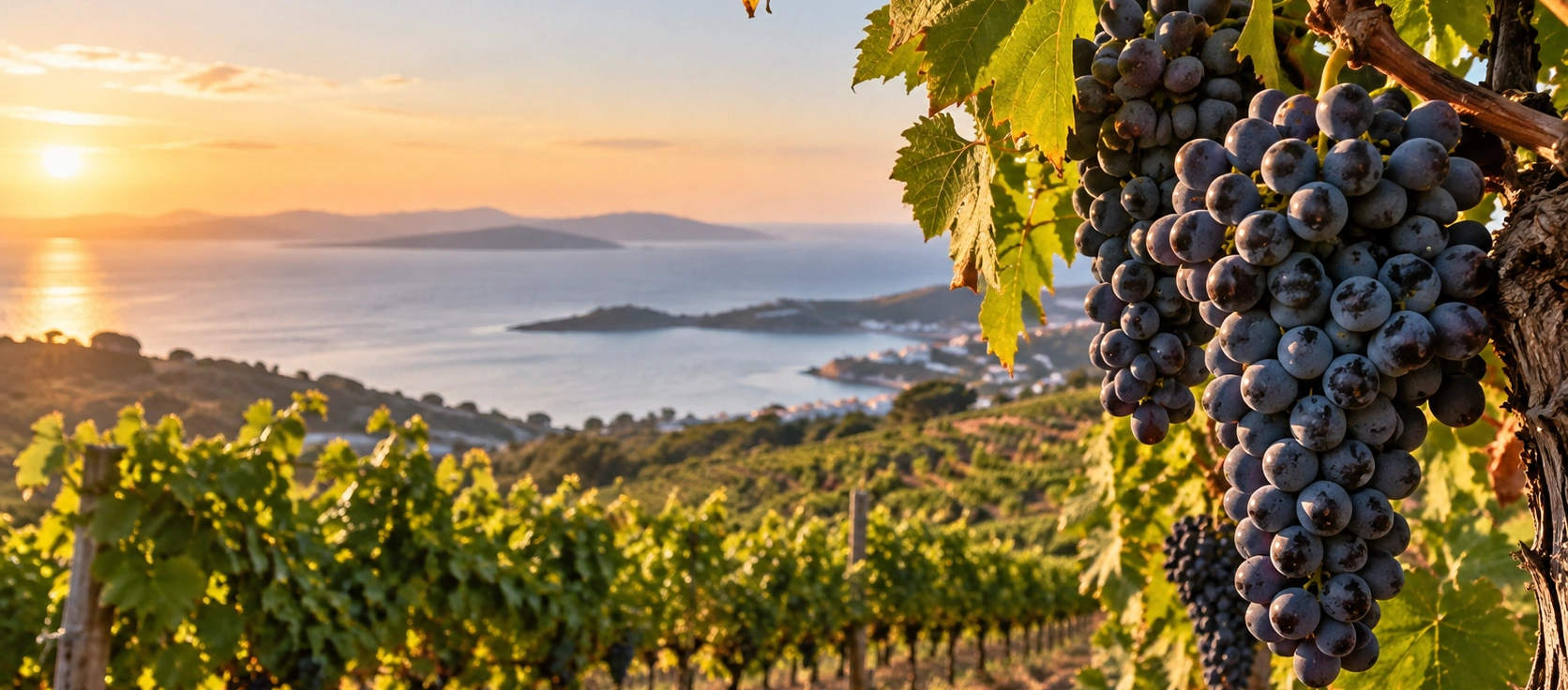
Explore Avşa through its protected Ada Karası grape, vineyard landscape, harvest culture and local island traditions.
Request This Experience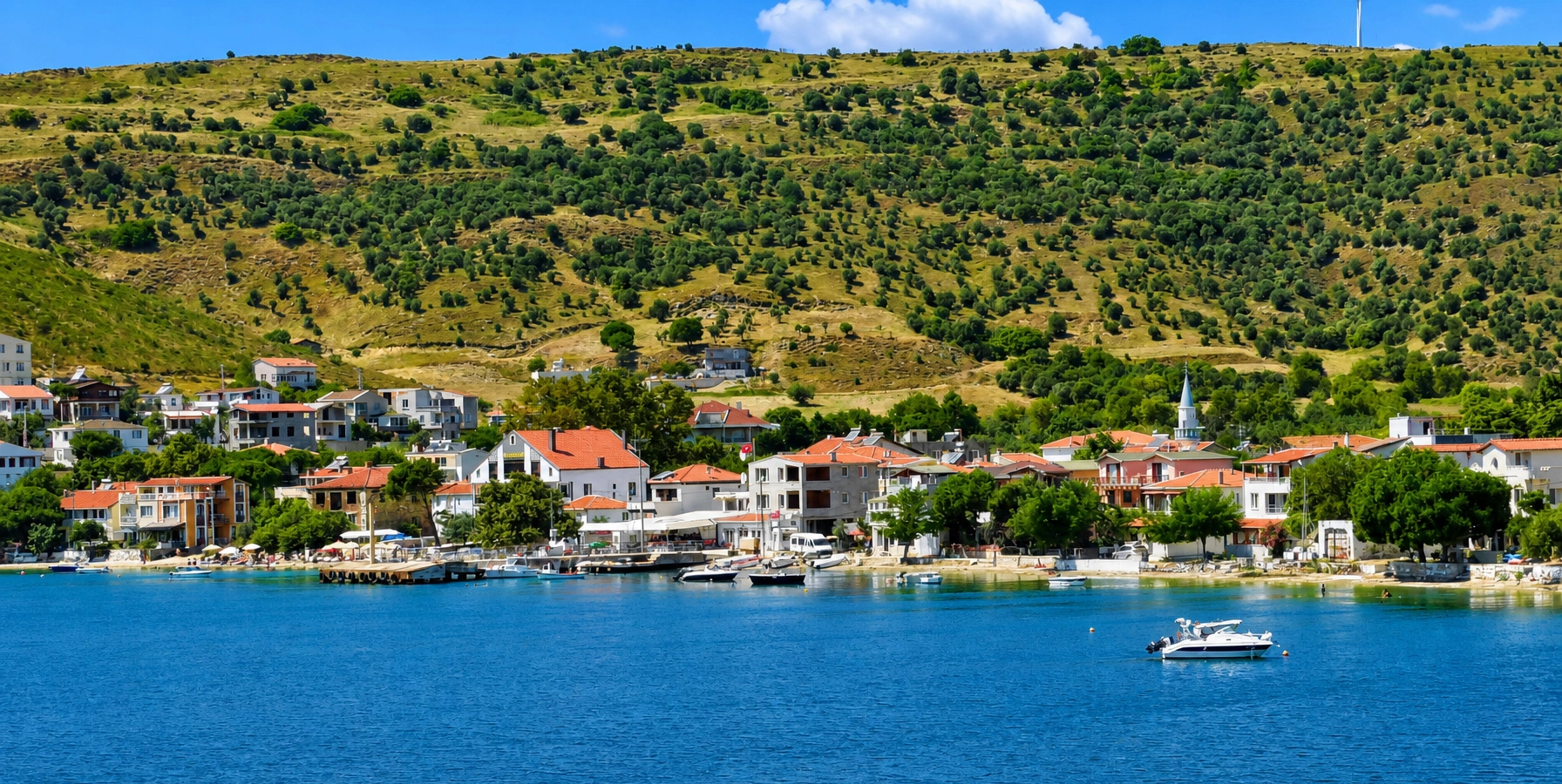
Combine Avşa's vineyards with island villages, local food, coastal scenery and the wider culture of the Marmara Islands.
Request This Tour