Private Vize Roman Heritage Experience
Ask us about a tailor-made journey through ancient Bizye, combining Roman, Byzantine and Ottoman heritage at your own pace.
Request a Custom Tour





On the southern slope of Çömlektepe in the center of Vize, archaeologists uncovered one of the most remarkable monuments of ancient Thrace.
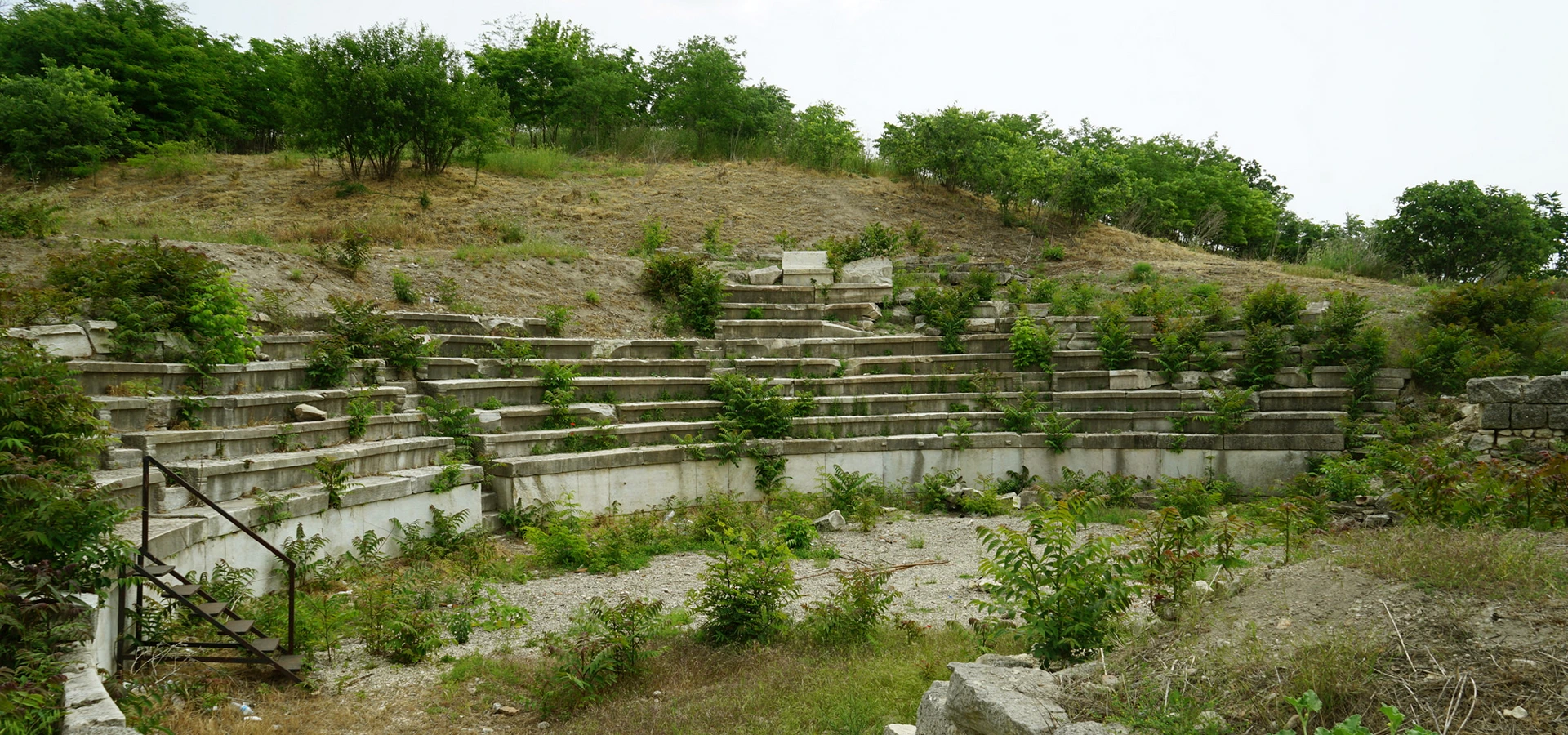
The Vize Ancient Theatre, sometimes described locally as the Vize Odeon, dates to the Roman period and is the only Roman theatre so far identified in Turkish Thrace.
Built in the 2nd century AD, the theatre could accommodate approximately 4,000 spectators. Its seating rows and access steps were made of marble, revealing the wealth, ambition and civic culture of ancient Bizye.
Excavations carried out between 1995 and 1997 brought the monument back to light. Archaeologists also recovered sculptures and carved stage reliefs, including a large female statue and four relief panels now associated with the collections of Kırklareli Museum.
Today the theatre is an essential stop for travelers interested in Roman archaeology, the history of Thrace and the layered past of Vize.
See the only Roman-period theatre yet discovered in the European part of Türkiye known as Turkish Thrace.
Examine surviving marble seating rows and stairways designed for an audience of roughly 4,000 people.
Discover evidence of the public life and prosperity of Vize during the Roman imperial period.
Learn about sculptures, stage reliefs and objects recovered during excavations of the theatre.
Essential information about the Roman theatre of ancient Bizye in Vize, Kırklareli.
Evren Mahallesi, central Vize, Kırklareli Province.
Open on Google MapsRoman imperial period, generally dated to the 2nd century AD.
Approximately 4,000 spectators.
Excavated over three seasons between 1995 and 1997, with later archaeological work at the site.
The surviving seating rows and audience stairways were constructed in marble.
Allow around 30–45 minutes, or several hours for the wider historic center of Vize.
The theatre is important not because it is the largest in Anatolia, but because it preserves rare evidence of Roman public life in Thrace.
Ancient theatres were among the most visible public monuments of Greek and Roman cities. They hosted performances, ceremonies and gatherings while displaying the wealth and status of the community that built them.
The theatre at Vize is currently regarded as the only known Roman-period theatre in Turkish Thrace. Its survival therefore provides an exceptional window into the urban culture of this part of the Roman Empire.
The use of marble for the seating and stairways is especially significant. For a regional city in the Thracian interior, creating a theatre for around 4,000 people represented a major investment in civic architecture.
The monument also changes the way visitors understand modern Vize. Behind the quiet streets of the present town lies Bizye, a settlement with Thracian royal traditions, Roman public buildings, Byzantine fortifications and important medieval religious architecture.
Modern Vize occupies the site of ancient Bizye, an important settlement of eastern Thrace. Long before Roman rule, the town was associated with Thracian rulers and the regional kingdom of the Astai.
Under the Roman Empire, Bizye developed the public architecture expected of a prosperous provincial community. The theatre is the clearest surviving expression of that urban transformation.
Its scale suggests that the building served not only the inhabitants of the town but potentially visitors from the surrounding countryside during performances, festivals and public events.
The theatre's location on the slope of Çömlektepe allowed Roman builders to use the natural terrain to support the rising rows of the auditorium while placing the stage complex below.
After antiquity, parts of the theatre were damaged, buried or reused. The city itself continued through the Byzantine and Ottoman periods, leaving later layers of settlement around and above the ancient monument.
Explore Our Complete Vize GuideThe Vize Ancient Theatre is generally dated to the 2nd century AD, when monumental public architecture flourished across the Roman provinces.
This period corresponds broadly with the prosperous imperial age associated with rulers such as Trajan, Hadrian and the Antonine emperors. Cities across Anatolia and Thrace invested in theatres, baths, streets, temples and other civic monuments.
The exact sequence of construction, alteration and repair at Vize is still an archaeological question. Like many ancient theatres, the building may have developed through more than one phase rather than being completed in a single campaign.
The theatre is generally assigned to the height of the Roman imperial period.
The building reflects the spread of Roman-style public entertainment and monumental urban design in Thrace.
The monument suffered during later centuries, including destruction and reuse in the Byzantine period.
Soil and later occupation concealed important sections until modern archaeological excavation.
The theatre was arranged around the three principal elements familiar from Roman theatre architecture: the cavea for spectators, the orchestra between audience and stage, and the stage building where performances were framed by monumental architecture.
The cavea rose in curved tiers against the natural slope of Çömlektepe. Radiating stairways divided the seating into wedge-shaped sections and helped spectators reach their places.
Marble seating and walking steps gave the interior a bright and impressive appearance. The material also signaled prestige and the willingness of the city or its benefactors to invest in public display.
Although the theatre does not survive to its original height, the excavated remains still allow visitors to understand the relationship between audience, orchestra and stage.
The curved seating area held an estimated audience of around 4,000 people.
Audience seating and access stairways were constructed in marble rather than ordinary local stone.
The open area between the cavea and stage formed the visual center of the theatre.
Excavation exposed remains connected with the stage and its decorated architectural façade.
Stairs organized circulation and divided the seating into distinct audience sections.
The builders used the hillside to support the rising auditorium and shape the performance space.
The theatre was revealed through archaeological excavations directed by Kırklareli Museum with academic participation from Trakya University.
Three principal excavation seasons were carried out in 1995, 1996 and 1997. These campaigns exposed sections of the marble seating, audience stairways, orchestra and architectural remains associated with the stage.
Later work, including investigations recorded in 2003, continued to clarify the theatre's seating and stage building. The excavations also produced pottery, glass and metal objects from Roman, Byzantine and Ottoman periods, reflecting the long occupation of the surrounding area.
Only part of the ancient complex is presently visible. The site remains archaeologically sensitive, and future research may reveal more of the theatre and its relationship with the ancient city.
The first of three consecutive major excavation seasons began at Çömlektepe.
Continued work uncovered more of the audience area and confirmed the importance of the monument.
Later investigations further exposed the seating rows and stage building remains.
Unexcavated areas may still preserve evidence for the theatre's plan, decoration and later history.
The excavations uncovered more than architecture. Among the most important discoveries were carved marble elements associated with the stage decoration.
Official tourism descriptions record a large female statue and four stage reliefs from the theatre area. These works provide evidence for the visual richness of the original Roman building.
Reliefs and sculptures once helped transform the stage façade into a monumental backdrop. They connected performances with mythology, civic identity and the broader artistic language of the Roman Empire.
Important finds from the theatre are associated with Kırklareli Museum. Display arrangements can change, so travelers hoping to see particular objects should confirm the museum's current exhibitions before visiting.
A large marble female figure was among the most notable sculptural discoveries.
Carved panels reveal that the theatre's stage complex once carried substantial decoration.
Pottery, glass and metal finds document activity around the site across several historical periods.
The provincial museum is the essential companion visit for understanding archaeological finds from the region.
Study the surviving curved rows to imagine how the audience gathered around the performance area.
Notice how marble steps divided the cavea and organized movement through the theatre.
Identify the open central area separating the audience from the stage complex.
Look across the lower part of the site for foundations and blocks connected with the ancient stage building.
Observe how Roman architects incorporated the natural hillside into the design of the auditorium.
Different stones, displaced blocks and cut surfaces reveal both construction and centuries of later disturbance.
The theatre survives inside modern Vize, making the continuity between ancient Bizye and the present town especially clear.
Connect the theatre visually with the elevated historic quarter and fortifications of ancient and Byzantine Vize.
The theatre is located in Evren Mahallesi in central Vize, on the southern slope of Çömlektepe. Its urban location makes it easy to combine with the historic center.
This is an archaeological site rather than a fully reconstructed theatre. Some areas may be fenced or inaccessible for protection, and conditions can change during excavation, conservation or municipal work.
Fixed opening hours and ticket arrangements are not consistently published. Check current local access conditions before making a special journey, especially if seeing the interior of the fenced archaeological area is essential to your visit.
The theatre can be appreciated throughout the year, but mild weather makes it easier to explore Vize's sloping streets and outdoor monuments on foot.
Comfortable temperatures and fresh landscapes make spring one of the best seasons for Vize.
Visit during the morning or late afternoon for softer light and cooler conditions.
The changing colors of the nearby Istranca landscape add atmosphere to a wider regional journey.
The site is quieter, but wet or icy surfaces can make uneven ground more difficult.
Early light can reveal the form and texture of the surviving marble rows clearly.
Lower light produces stronger shadows across the cavea and surrounding archaeological remains.
Enough for a brief exterior overview if your time in Vize is limited.
Ideal for studying the visible seating, stairways, orchestra and stage area without rushing.
Combine the theatre with the surrounding streets and nearby sections of old Vize.
Add Little Hagia Sophia, the fortifications and the historic upper town.
Continue toward Kıyıköy, Çamlıkoy or the Istranca Mountains after exploring Vize.
Include Kırklareli Museum to understand the sculpture and regional finds beyond the site itself.
The theatre rewards careful composition rather than only wide views. The curved cavea, radial stairways and texture of weathered marble create strong geometric details.
Use the arc of the marble rows to lead the eye through the image.
Photograph the stairways where they cut through the seating in strong diagonal lines.
Closer views reveal tool marks, weathering and subtle variations in the marble.
Softer light helps preserve detail in pale stone surfaces.
A person viewed from a permitted path can help communicate the theatre's dimensions.
Never cross barriers or climb on ancient stone to obtain a photograph.
The theatre stands in central Vize in Kırklareli Province, making it one of the region's most accessible archaeological sites once you have reached the town.
Vize lies on the road network connecting Istanbul and the towns of eastern Kırklareli. A private vehicle offers the easiest way to combine the theatre with Kıyıköy, the Black Sea coast or the Istranca Mountains.
The theatre is within the urban center and can be reached on foot from other historic points in town.
Travel southeast by road toward Vize; allow extra time if combining the trip with regional stops.
Vize can be visited as a long day trip by private car, especially when paired with one or two nearby attractions.
The inland drive connects the Black Sea coast with Vize's Roman and Byzantine heritage.
Use public parking in town and walk the final section where streets are narrow or sloping.
Walking is the best way to connect the theatre with the fortifications and historic center.
The theatre is best experienced as part of a wider exploration of Vize, where Thracian, Roman, Byzantine and Ottoman history survives within a compact townscape.
Explore the complete history, monuments and landscapes of one of Turkish Thrace's most important historic towns.
Visit Vize's remarkable Byzantine church, now known as Gazi Süleyman Paşa Mosque.
Explore surviving stretches of ancient and Byzantine defensive walls around the historic upper town.
Continue toward the Black Sea for Byzantine heritage, rivers, cliffs and forest landscapes.
Discover a striking meeting of forest, river and Black Sea coastline.
Combine Roman history with the forests and rural landscapes of northern Thrace.
Explore more archaeology, Ottoman heritage, caves, food traditions and natural landscapes across the province.
The theatre is located on the southern slope of Çömlektepe in Evren Mahallesi, central Vize, in Kırklareli Province in European Türkiye.
The monument is generally dated to the 2nd century AD during the Roman imperial period.
It is the only Roman-period theatre so far known in Turkish Thrace. Its marble seating and regional rarity make it one of the most important archaeological monuments in European Türkiye.
The estimated capacity was approximately 4,000 spectators.
No. It is a theatre with a curved audience area facing an orchestra and stage. A Roman amphitheatre normally enclosed an oval arena with seating around it.
Some local inventories and publications use the word odeon for the monument. For general visitor information, Vize Ancient Theatre is the clearest and most widely understandable name.
The principal excavation campaigns took place over three seasons between 1995 and 1997, followed by later archaeological work.
Archaeologists uncovered marble seating and stairways, the orchestra and parts of the stage complex, together with sculptures, carved reliefs and objects from several historical periods.
Official tourism information associates the large female statue and four stage reliefs with Kırklareli Museum. Confirm current display arrangements with the museum before visiting specifically to see them.
The monument can be viewed, but protected parts may be fenced or temporarily inaccessible. Always follow current local signs and conservation restrictions.
Current ticket information is not consistently published. Check locally for the latest access and fee arrangements before your visit.
Around 30–45 minutes is normally sufficient for the theatre itself. Allow half a day to explore the main monuments of Vize.
The archaeological ground and nearby streets can be uneven and sloping. Access may be limited, so visitors with mobility concerns should check current conditions locally.
Combine the theatre with Little Hagia Sophia, the historic fortifications, old neighborhoods and the wider heritage of ancient Bizye.
Yes. Kıyıköy is an excellent continuation toward the Black Sea, combining Byzantine heritage with rivers, cliffs, forest and coastal scenery.
Yes. Its unique position as the only known Roman theatre in Turkish Thrace makes it an essential stop for travelers interested in archaeology and lesser-known historical places in Türkiye.
Avoid climbing or sitting on fragile ancient masonry and any seating rows closed to visitors.
Fences protect both archaeological remains and visitors from unstable or excavated ground.
Never move, collect or rearrange loose stone, pottery or other material at the site.
Take all litter with you and help preserve the setting of the monument.
Access conditions may change during excavation, maintenance or conservation work.
Spend time in Vize and visit regional museums to help connect archaeology with the living town around it.
Discover Roman archaeology, Byzantine churches, historic towns, forests and Black Sea landscapes with a private route designed around your interests.
Combine Vize Ancient Theatre with ancient Bizye, Little Hagia Sophia, historic fortifications and selected cultural highlights of Kırklareli.
Ask us about a tailor-made journey through ancient Bizye, combining Roman, Byzantine and Ottoman heritage at your own pace.
Request a Custom Tour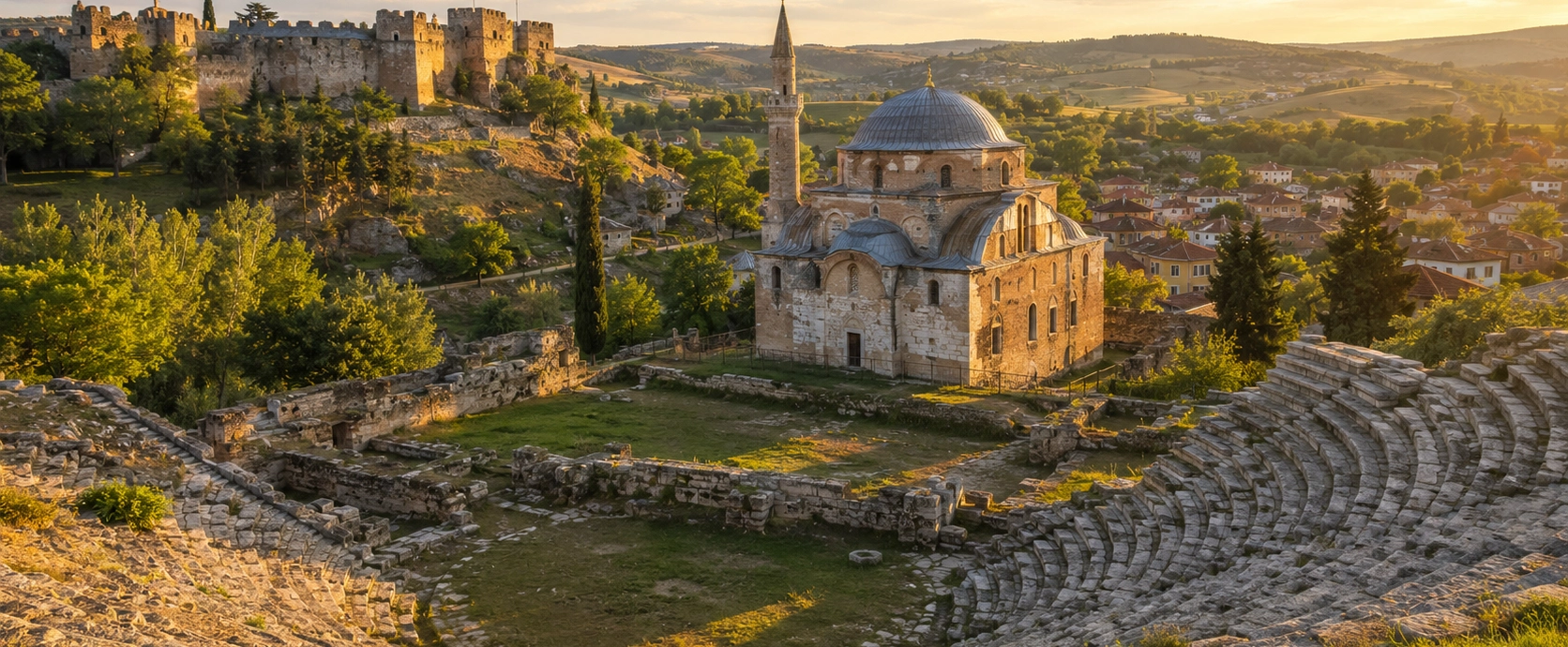
Discover the complete story of Vize, from Thracian and Roman remains to Byzantine churches, Ottoman monuments and the surrounding Istranca landscape.
View Vize GuideCombine the monuments of Vize with the forests, Black Sea towns and cultural landscapes of Turkish Thrace.
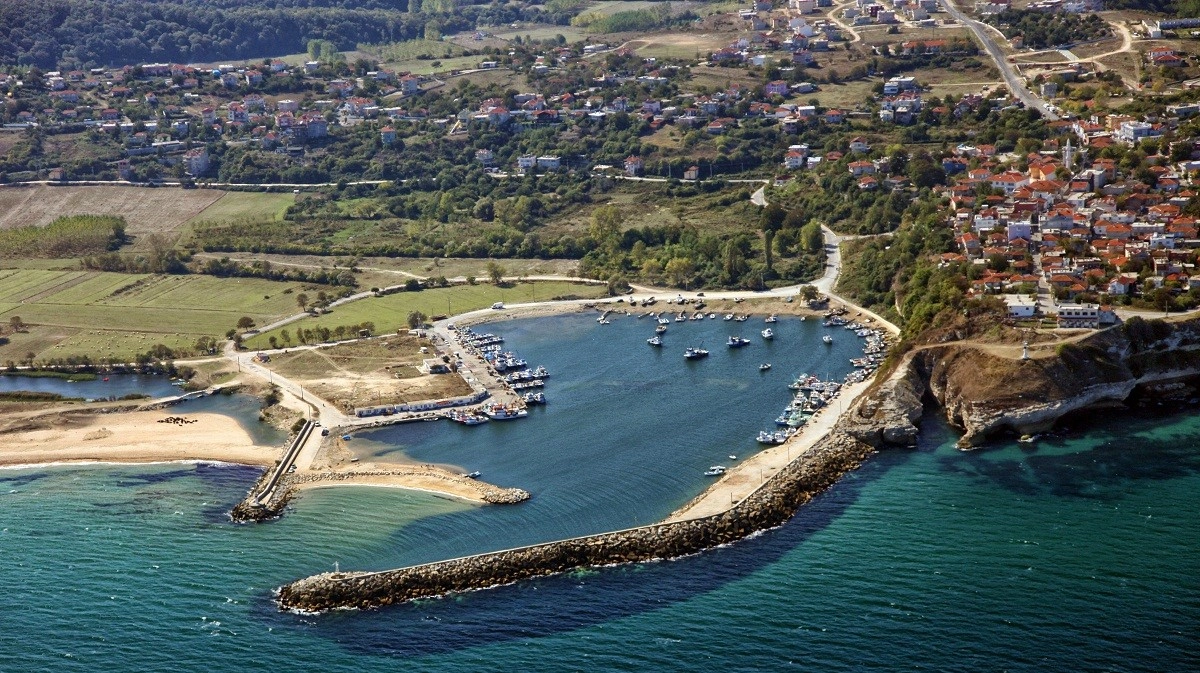
Continue from Vize toward the Black Sea for Byzantine heritage, rivers, forests, cliffs and coastal scenery.
Explore Kıyıköy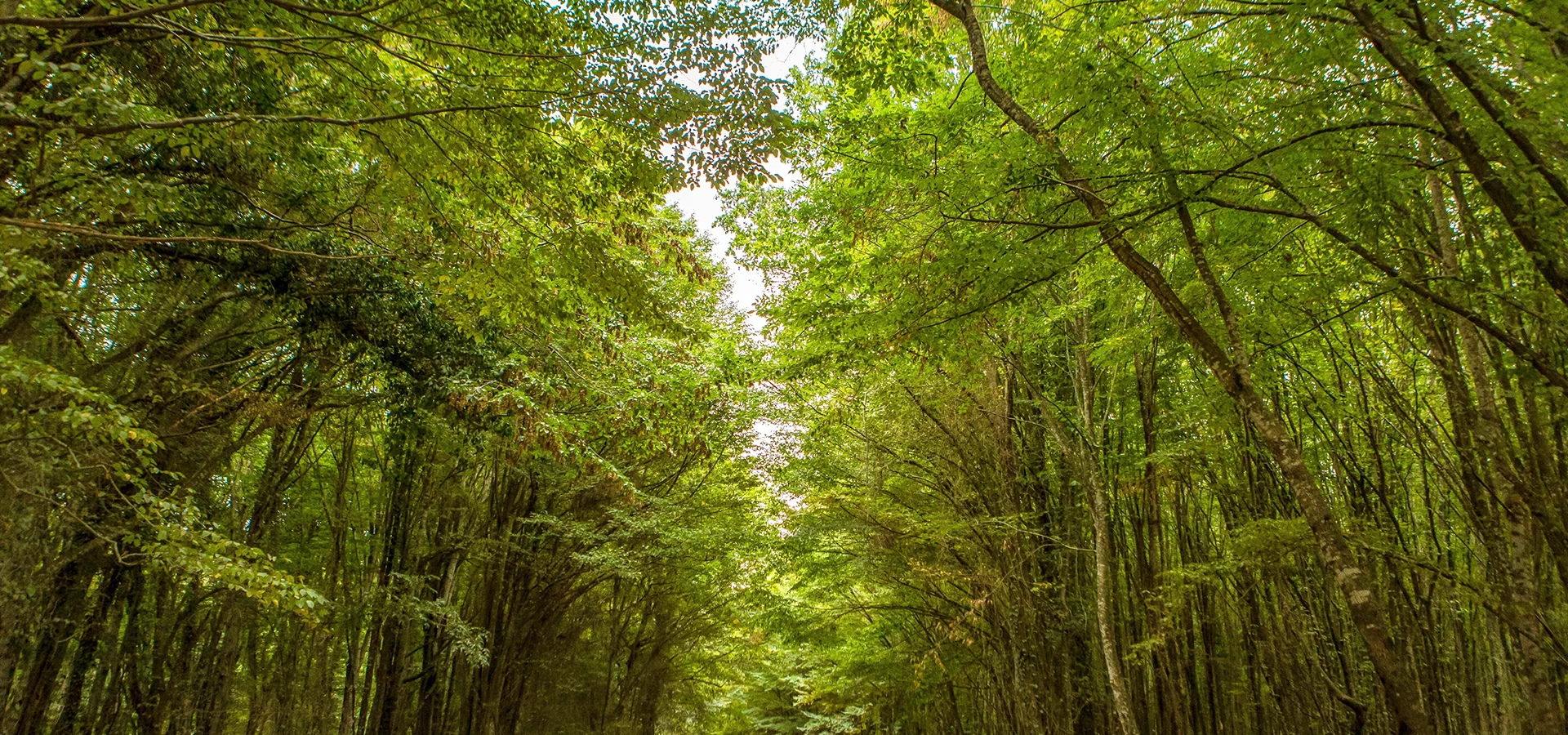
Leave the historic towns behind and explore the vast forest landscapes, valleys and rural roads of northern Thrace.
Discover Istranca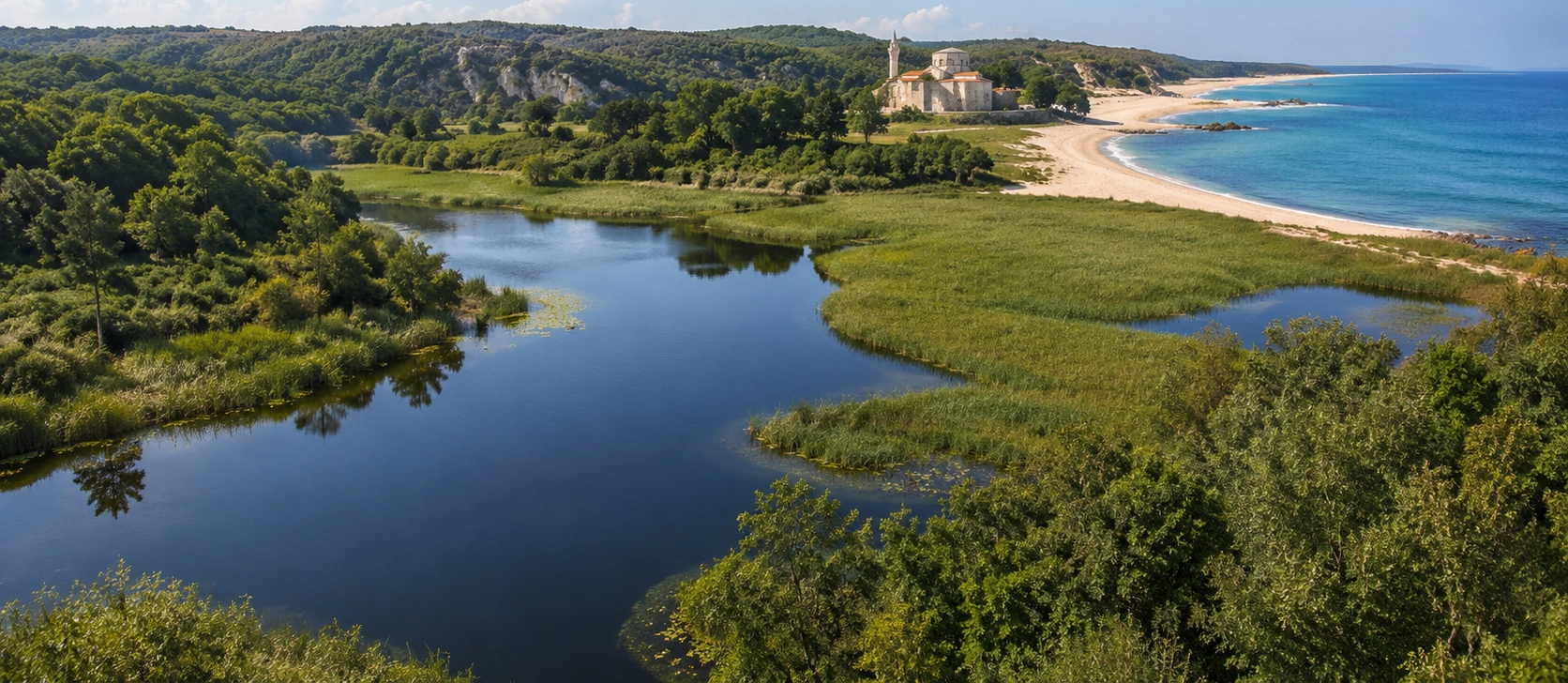
Discover prehistoric archaeology, Roman and Byzantine monuments, Ottoman heritage, caves, forests and the Black Sea coast.
View Kırklareli Guide