Private Theodosius Cistern & Byzantine Istanbul Tour
Ask us about a tailor-made route focused on Şerefiye Cistern, the Basilica Cistern, the Hippodrome, Hagia Sophia and the water infrastructure of Constantinople.
Request a Custom Tour





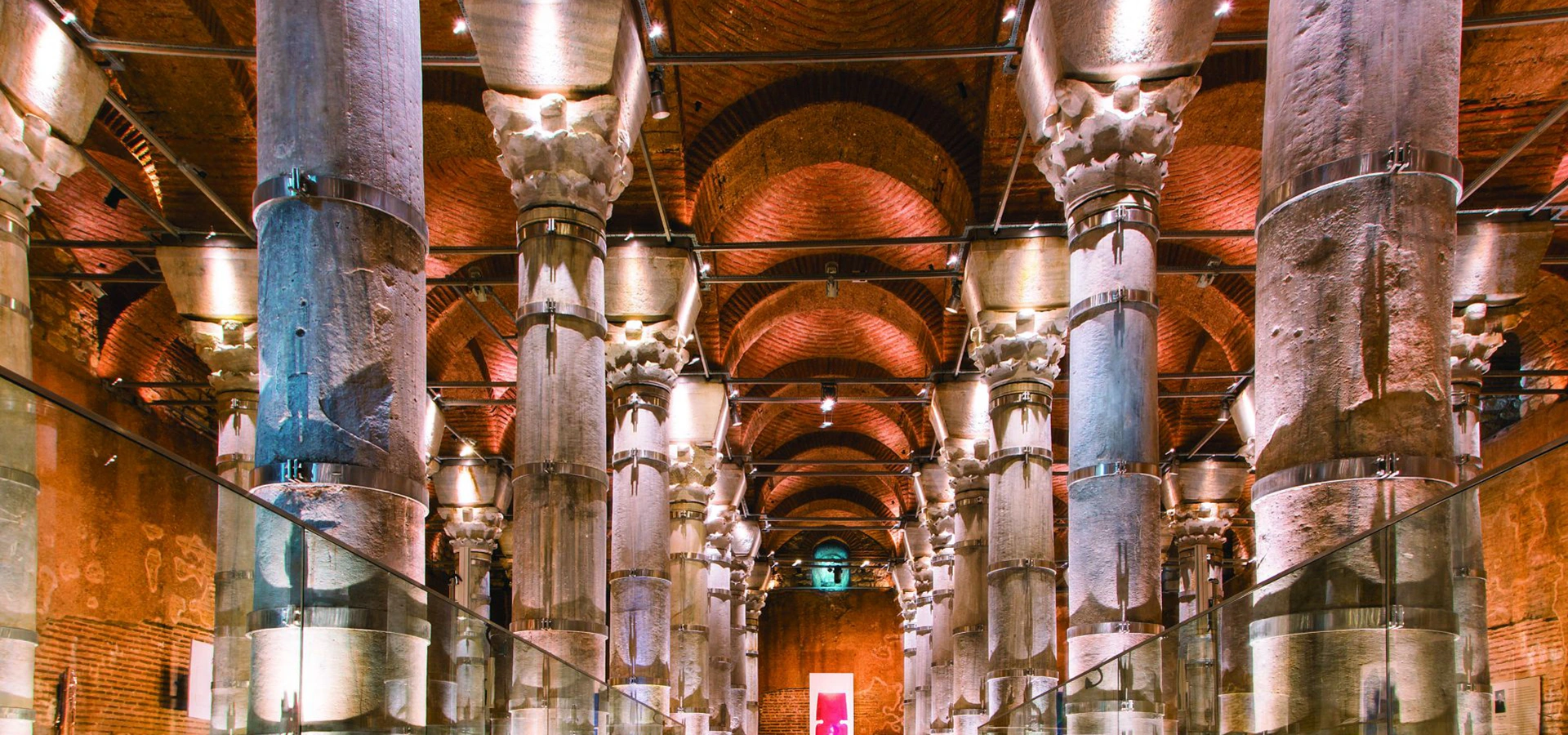
Theodosius Cistern, known in Turkish as Şerefiye Sarnıcı, is an atmospheric 5th-century underground reservoir in Istanbul's Historic Peninsula. Hidden beneath later buildings for generations, it now welcomes visitors only a short walk from Sultanahmet Square, the Basilica Cistern and the Grand Bazaar.
The structure is generally attributed to the reign of Emperor Theodosius II, who ruled the Eastern Roman Empire from 408 to 450. Its roof is carried by 32 marble columns and 45 sail vaults, creating an exceptionally balanced interior of repeated arches, Corinthian capitals and reflections on the shallow water below.
Unlike the much larger Basilica Cistern, Şerefiye offers a compact and highly focused experience. Its original pavement, well-preserved capitals and carefully restored masonry make the engineering of Byzantine Constantinople especially easy to appreciate.
The cistern also hosts a 360-degree projection-mapping experience that uses its walls, columns and vaults as architectural screens. The combination of ancient infrastructure, controlled lighting and digital storytelling gives Şerefiye a character entirely its own.
Enter one of the oldest surviving covered reservoirs of Byzantine Constantinople.
See orderly rows of Marmara marble columns crowned by Corinthian capitals.
Observe waterproof plaster, curved corners, brick vaults and sections of the historic floor.
Experience a digital presentation designed around the cistern's complete interior.
Essential information for visiting Şerefiye Sarnıcı in Istanbul.
Binbirdirek, Piyer Loti Caddesi No:2/1, Fatih, within Istanbul's Historic Peninsula.
Open on Google MapsEarly 5th century, generally attributed to the reign of Emperor Theodosius II.
A covered reservoir used to store and help distribute water in Byzantine Constantinople.
Approximately 24 by 40 metres, with 32 marble columns and 45 sail vaults.
Atmospheric lighting and 360-degree projection mapping within the restored cistern.
Allow 30–45 minutes, or about one hour if you enjoy architecture and photography.
Şerefiye Cistern preserves the engineering, architecture and water culture that sustained one of history's greatest capitals.
Constantinople did not possess abundant natural freshwater within its fortified center. Imperial engineers therefore created long aqueduct lines, distribution channels and hundreds of open and covered reservoirs. These systems supplied the population in ordinary life and helped the city withstand periods when enemy armies threatened or cut outside water routes.
Şerefiye Cistern is an especially valuable survivor because its compact interior remains remarkably coherent. Its rows of columns, capitals, impost blocks and brick vaults reveal how Roman engineering principles continued in the early Byzantine capital. Original floor surfaces and preserved waterproof treatment provide evidence that is not always visible in Istanbul's other underground monuments.
The cistern also demonstrates how modern Istanbul can recover a monument buried beneath later urban development. Its rediscovery, conservation and adaptation created an archaeological park and cultural venue while retaining the historic chamber below.
For travelers following our guide to places to visit in Istanbul, Şerefiye offers a quieter and more intimate counterpart to the Basilica Cistern. Visiting both reveals how varied Constantinople's water-storage buildings could be.
Şerefiye Cistern has no surviving foundation inscription that states its builder or exact construction date. Based on its masonry, architectural form and place within Constantinople's water network, it is generally assigned to the reign of Emperor Theodosius II and often dated between 428 and 443.
The reservoir formed part of the capital's sophisticated water infrastructure. Water brought toward the city through aqueduct systems could be stored in covered cisterns and distributed to important districts and institutions. The wider network served residences, fountains, baths, public buildings and the imperial zone around the Great Palace.
As Constantinople changed under Ottoman rule, many Byzantine cisterns gradually lost their original role. Some became workshops, storage spaces or foundations for later structures, while others disappeared from everyday memory. Şerefiye Cistern eventually lay beneath a large property associated with Arif Paşa Mansion.
The building above the cistern was used from 1912 by municipal authorities and later served as an Istanbul municipal service building and the Eminönü Municipality building. The underground monument remained largely concealed beneath this modern urban layer.
In 2010, demolition of later municipal additions exposed the cistern again. A long conservation and adaptive-reuse project followed, accompanied by the removal of surrounding concrete structures and the creation of a new visitor entrance and public space.
The restored cistern opened to visitors in 2018 as both a historic monument and cultural venue. Today it combines Byzantine architecture with exhibitions, concerts, carefully designed illumination and an immersive projection-mapping presentation.
Reign of Theodosius II, the emperor traditionally associated with the cistern.
The construction range commonly proposed for the 5th-century reservoir.
The cistern loses its original water-storage role and is eventually covered by later development.
The building above the cistern begins serving Istanbul's municipal administration.
Municipal demolition work brings the hidden Byzantine structure back into view.
Şerefiye Cistern opens to the public following conservation and restoration.
The English name Theodosius Cistern refers to Emperor Theodosius II, during whose reign the reservoir is believed to have been constructed. The emperor is also closely associated with the great land walls that still define the western edge of historic Istanbul.
The Turkish name Şerefiye Sarnıcı comes from the neighborhood in which the cistern was located during the Ottoman period. The two names therefore emphasize different layers of the monument's history: one Byzantine and imperial, the other Ottoman and local.
Travel websites, maps and ticket platforms may use “Şerefiye Sarnıcı,” “Şerefiye Cistern,” “Theodosius Cistern” or “Cistern of Theodosius.” All normally refer to the same visitor attraction on Piyer Loti Caddesi in Fatih.
Constantinople's growing population, hilly terrain and strategic vulnerability demanded an engineered water network on an extraordinary scale. Aqueduct channels brought water from sources beyond the city, while bridges such as the Valens Aqueduct carried those channels across valleys.
Once inside the capital, water moved through distribution points, conduits and reservoirs. Covered cisterns protected stored water from sunlight, evaporation and contamination while allowing valuable urban land to be used above them. Their strong roofs could support buildings, streets and public spaces.
Şerefiye Cistern is traditionally connected with water arriving through the Valens aqueduct system. The reservoir likely helped serve the densely occupied imperial center, where the Great Palace, public baths and monumental fountains required dependable supplies. The precise operation and distribution pattern changed across centuries and cannot be reconstructed in every detail.
Fresh water was collected beyond the fortified city and directed toward Constantinople.
Gravity carried water along carefully calculated routes across difficult terrain.
Open and covered cisterns stored water close to the communities and institutions that needed it.
Hydraulic plaster helped prevent leakage through the reservoir's brick and masonry walls.
Stored water strengthened the capital when external supply routes were threatened.
The network supported palaces, baths, fountains and the population of the historic center.
The cistern occupies a rectangular area of approximately 24 by 40 metres. Its ceiling reaches a height of about 11 metres, producing a spacious interior despite the monument's comparatively compact footprint.
Thirty-two marble columns stand in four rows of eight. They support impost blocks and brick arches that carry a roof formed by 45 sail vaults. This repeated grid distributes the considerable weight of the structure and anything historically built above it.
The columns and their Corinthian-style capitals were fashioned from Marmara Island marble. Stylized acanthus leaves decorate the capitals, adding refinement to a structure whose principal purpose was practical. Their survival in a remarkably consistent group is one of the cistern's greatest architectural strengths.
The reservoir walls are approximately 2.5 metres thick and were coated with waterproof hydraulic plaster. Curved internal corners helped resist the outward pressure of stored water. Brickwork, floor surfaces and changes in material can be seen clearly under modern lighting.
A compact rectangular chamber beneath the modern street level.
Four orderly rows of eight marble supports organize the interior.
Curved brick vaults transfer roof loads through arches to the columns.
Acanthus-leaf carving brings a classical architectural language underground.
Special interior coating helped the reservoir retain its stored water.
Rounded junctions reduced stress where water pressure met the walls.
Şerefiye Cistern is not a large museum filled with display cases. The monument itself is the principal exhibit, and the best visit comes from observing how its structural elements work together.
Look along the four rows to appreciate the symmetry and depth of the chamber.
Examine the acanthus decoration, impost blocks and transition into the brick arches.
Follow the repeated curves of the 45 vaults across the ceiling.
Observe surviving pavement and the shallow water that reveals the reservoir's former function.
Notice the heavy masonry, hydraulic plaster and rounded internal corners.
Watch light and imagery move across the complete architectural surface of the cistern.
Şerefiye Cistern is promoted as the oldest historic structure in the world fitted with an integrated 360-degree projection-mapping system. The presentation projects coordinated images across the walls, vaults, columns and water surface rather than onto a conventional flat screen.
Light, sound and moving imagery create an immersive interpretation of water, Istanbul and the long life of the monument. Because the projections follow the curves and divisions of the actual architecture, the cistern appears to change color, dissolve and rebuild around the visitor.
The presentation is a modern interpretive layer rather than part of the ancient monument. Some visitors come primarily for this experience, while architecture enthusiasts may prefer the quieter period between shows. Scheduling, sequence and content can change, so ask staff about the next presentation when you enter.
Images are aligned with the columns, vaults, walls and floor-level water.
Music and changing illumination create a strongly atmospheric experience.
The presentation interprets the cistern through themes of water and Istanbul's past.
Show times and programming may vary with events and museum operations.
For much of the modern period, the cistern was concealed beneath municipal buildings. Arif Paşa Mansion, thought to have been built around the turn of the 20th century, stood over the site and was used as the Istanbul Şehremaneti building from 1912.
The complex later served municipal administrative functions, including use by Eminönü Municipality. In 2010, the Istanbul Metropolitan Municipality removed later annexes and brought the Byzantine chamber fully back into view without dismantling the historic fabric below.
The conservation project stabilized and cleaned the cistern while introducing modern circulation, lighting and visitor facilities. Concrete structures around it were removed, the surrounding area was reorganized as an archaeological park, and a contemporary entrance building established a clear distinction between new construction and the ancient reservoir.
The result is an example of adaptive reuse: a former water-storage structure now functions as a museum and cultural venue. Modern interventions make access possible, but the columns, vaults, walls, plaster and floor remain the heart of the experience.
Both cisterns are worth visiting, but they offer different experiences. The Basilica Cistern is monumental, famous for its 336 columns and Medusa-head bases, while Şerefiye Cistern is smaller, more symmetrical and easier to understand as a complete architectural space.
Official pages currently show different closing times, so check the live ticket page before arrival.
Projection timing may affect whether you begin with architecture or the immersive presentation.
The official information states that credit cards, debit cards and Istanbulkart are accepted at museum entrances.
Underground interiors can feel cool and humid even during hot Istanbul summers.
Pause after descending before walking or photographing in the low light.
Basilica Cistern, the Hippodrome, Blue Mosque and Grand Bazaar are all close.
Begin at the modern entrance pavilion and notice how the contemporary structure separates the visitor facilities from the ancient chamber below. As you descend, pause at the first broad view rather than moving immediately toward the center. This is the best moment to understand the cistern's rectangular plan and four rows of columns.
Walk slowly along the visitor route and look upward. Follow the transition from marble shaft to Corinthian capital, impost block, brick arch and sail vault. Then look down toward the surviving pavement and shallow water to reconnect the architecture with its original purpose.
Examine the thick walls, waterproof coating and curved corners before the projection presentation begins. During the show, stand where several rows of columns remain visible so you can watch the imagery travel through the whole chamber. Afterward, allow a few minutes for normal lighting to return and revisit any details hidden by darkness or moving projections.
As checked in August 2026, official Istanbul cultural pages agree that Şerefiye Cistern opens at 10:00 every day, but they currently display conflicting closing times: the principal museum and Kültür İstanbul pages state 22:00, while another official museum page states 18:00 and notes that later hours may be used for private events.
Because the live ticketing platform does not provide a stable public price in its searchable page, check the current admission fee, available time slot and last-entry arrangements immediately before visiting. Şerefiye Cistern is operated by Istanbul Metropolitan Municipality's cultural company and is not a Ministry of Culture museum, so the national Museum Pass Türkiye is not valid.
The official visitor rules state that credit cards, debit cards and Istanbulkart are accepted at museum entrances. They also list free admission for domestic visitors aged over 65 and for eligible visitors with disabilities, subject to identification and current conditions. Rules, special campaigns and event access can change.
The underground chamber can be visited in any season, but your timing affects crowds, the atmosphere of the projection experience and the ease of combining nearby outdoor monuments.
Arrive near 10:00 for a calmer chamber and easier architectural photography.
Monday through Friday is often quieter than weekends and public holidays.
The cool interior provides a welcome break during a summer Historic Peninsula walk.
The cistern is an excellent indoor visit, though nearby pavements may be slippery.
Potentially atmospheric, but verify the current closing time and any evening event.
Concerts and private programs may alter normal access or create a different experience.
A quick architectural circuit when the projection presentation aligns with your arrival.
The ideal visit for the monument, photography and an immersive presentation.
A relaxed experience with time to observe the architecture before and after the show.
Combine Şerefiye with the nearby Basilica Cistern and a short Old City walk.
Add the Hippodrome, Blue Mosque and Hagia Sophia to the two-cistern route.
Allow about 30 minutes; the light presentation can make the structure more engaging.
The cistern offers strong symmetry, repeated arches and reflections, but the low light can challenge phones and cameras. Always follow current museum rules concerning flash, tripods, video and commercial equipment.
Center your composition along an aisle to emphasize depth and symmetry.
Use available light to isolate acanthus leaves, impost blocks and brick arches.
Lower viewpoints can double columns and colored light across the shallow water.
Reduce exposure slightly to preserve intense highlights during the mapping presentation.
Brace your camera carefully without touching historic surfaces or blocking the route.
Avoid bright screens, flash and prolonged posing during the immersive show.
The restored visitor complex includes modern access infrastructure, but lift operation, event arrangements and parts of the visitor route can change. Contact the museum before arrival if step-free access is essential.
The contemporary pavilion was designed to provide managed access to the underground monument.
Confirm current lift operation and the precise wheelchair route before visiting.
Allow time for visual adjustment and watch changes in floor level carefully.
The mapping show may be intense for visitors with sensory sensitivities.
Ask staff about seating or a quiet interval if standing for the presentation is difficult.
The surrounding Old City includes slopes, crowds and uneven pavements.
Şerefiye Cistern is centrally located between Sultanahmet, Çemberlitaş and Beyazıt. The final approach is on foot through the dense historic street network.
Use Sultanahmet or Çemberlitaş station, then walk several minutes to Piyer Loti Caddesi.
Walk west from the Hippodrome through Binbirdirek toward the modern entrance pavilion.
Walk downhill from the Çemberlitaş or Beyazıt side toward Piyer Loti Caddesi.
The two monuments are close enough to combine in a short Old City walk.
Ask for “Şerefiye Sarnıcı” and expect possible traffic restrictions near the entrance.
Driving is inconvenient because central Historic Peninsula parking is limited.
Şerefiye Cistern stands within one of Istanbul's densest heritage areas. Major Byzantine and Ottoman monuments can be reached on foot, making the cistern easy to add to almost any Old City itinerary.
Compare Şerefiye with Constantinople's vast 6th-century underground reservoir.
Visit Sultan Ahmed I's celebrated imperial mosque beside the Hippodrome.
Explore the layered history of one of the world's most influential monuments.
Continue into the ceremonial and residential world of the Ottoman court.
Walk through historic covered streets, hans, workshops and market lanes.
See the monuments of Constantinople's ancient chariot-racing and ceremonial center.
Discover another major Byzantine reservoir, subject to current public access.
Continue to the city's mosques, palaces, churches, museums and neighborhoods.
It is a restored 5th-century Byzantine underground water reservoir and museum in Istanbul's Historic Peninsula.
Yes. Theodosius Cistern, Şerefiye Cistern and Şerefiye Sarnıcı are names used for the same monument.
It is generally dated to the reign of Theodosius II in the early 5th century, often around 428–443.
The reservoir is traditionally attributed to Emperor Theodosius II, although no surviving inscription provides an exact foundation date.
It stored water within Constantinople's wider aqueduct, reservoir and distribution network.
The chamber measures approximately 24 by 40 metres, and its ceiling reaches about 11 metres.
Thirty-two marble columns stand in four rows of eight and support the vaulted roof.
The Corinthian-style capitals were made from Marmara Island marble and decorated with stylized acanthus leaves.
It is an immersive light-and-sound presentation projected across the walls, columns, vaults and water surface of the cistern.
It is normally part of the museum experience, but current programs and event arrangements should be confirmed before visiting.
As checked in August 2026, official pages list daily opening at 10:00 but conflict between 18:00 and 22:00 closing times. Verify the live ticket session before arrival.
Admission is separately ticketed and prices can change. Check the official museum website and linked ticket platform for the current live price.
No. The official information states that the national Museum Pass is not valid because the site is not operated by the Ministry of Culture.
Most visitors need around 30–45 minutes. Allow up to one hour for slow observation and photography.
Yes. The two cisterns are within easy walking distance and work well as a combined visit.
The Basilica Cistern is larger and contains the famous Medusa bases; Şerefiye is more intimate, symmetrical and known for its projection mapping. Both are rewarding.
The restored complex includes modern access infrastructure, but contact the museum to confirm current lift operation and step-free routes.
Personal photography is generally possible, but visitors must follow current restrictions concerning flash, tripods, video and professional equipment.
Yes. Its compact size and projection presentation can be engaging, though darkness, sound and changing lights may affect sensitive children.
The underground space is usually cooler and more humid than the street, so a light layer can be useful.
Yes, especially for travelers interested in Byzantine engineering, atmospheric architecture, photography and quieter alternatives to Istanbul's busiest monuments.
Keep hands, bags and camera equipment away from columns, capitals, walls and plaster.
Remain on approved visitor platforms and behind all protective barriers.
Respect museum rules and the experience of visitors watching the presentation.
Do not block ramps, lifts or narrow viewpoints while taking photographs.
Follow staff instructions during concerts, exhibitions and private programs.
Purchase through authorized channels and observe the conditions attached to your entry.
Connect Şerefiye Cistern with the Basilica Cistern, Hippodrome, Hagia Sophia, Blue Mosque and Grand Bazaar through a private route shaped around your interests and without compulsory shopping stops.
Choose a focused half-day route or a deeper full-day exploration of Constantinople's engineering, monuments and urban history.
Ask us about a tailor-made route focused on Şerefiye Cistern, the Basilica Cistern, the Hippodrome, Hagia Sophia and the water infrastructure of Constantinople.
Request a Custom Tour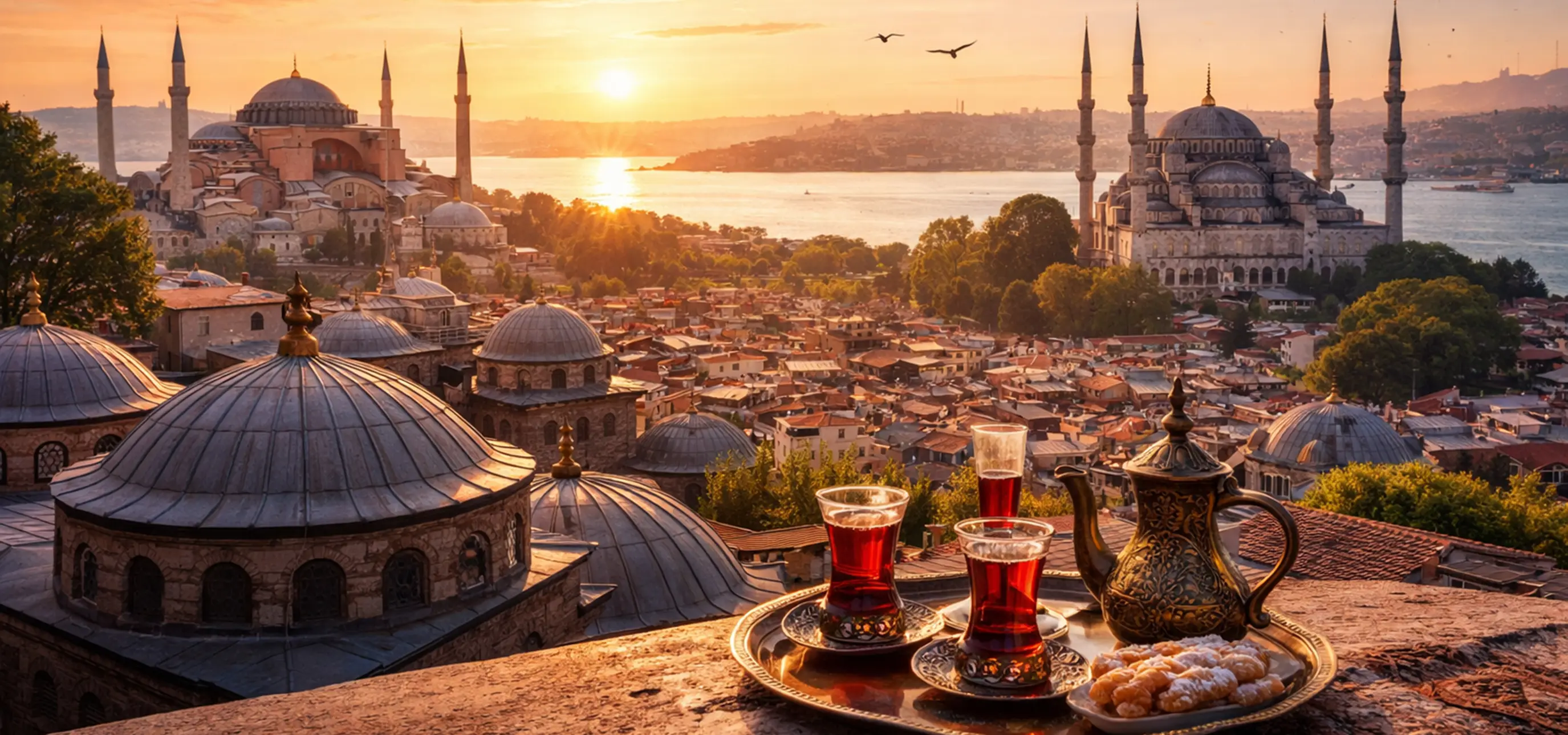
Explore the major monuments of Sultanahmet with a private licensed guide, carefully planned timing and an itinerary adapted to your pace.
View Private TourConnect the cistern with the defining monuments of Byzantine and Ottoman Constantinople.
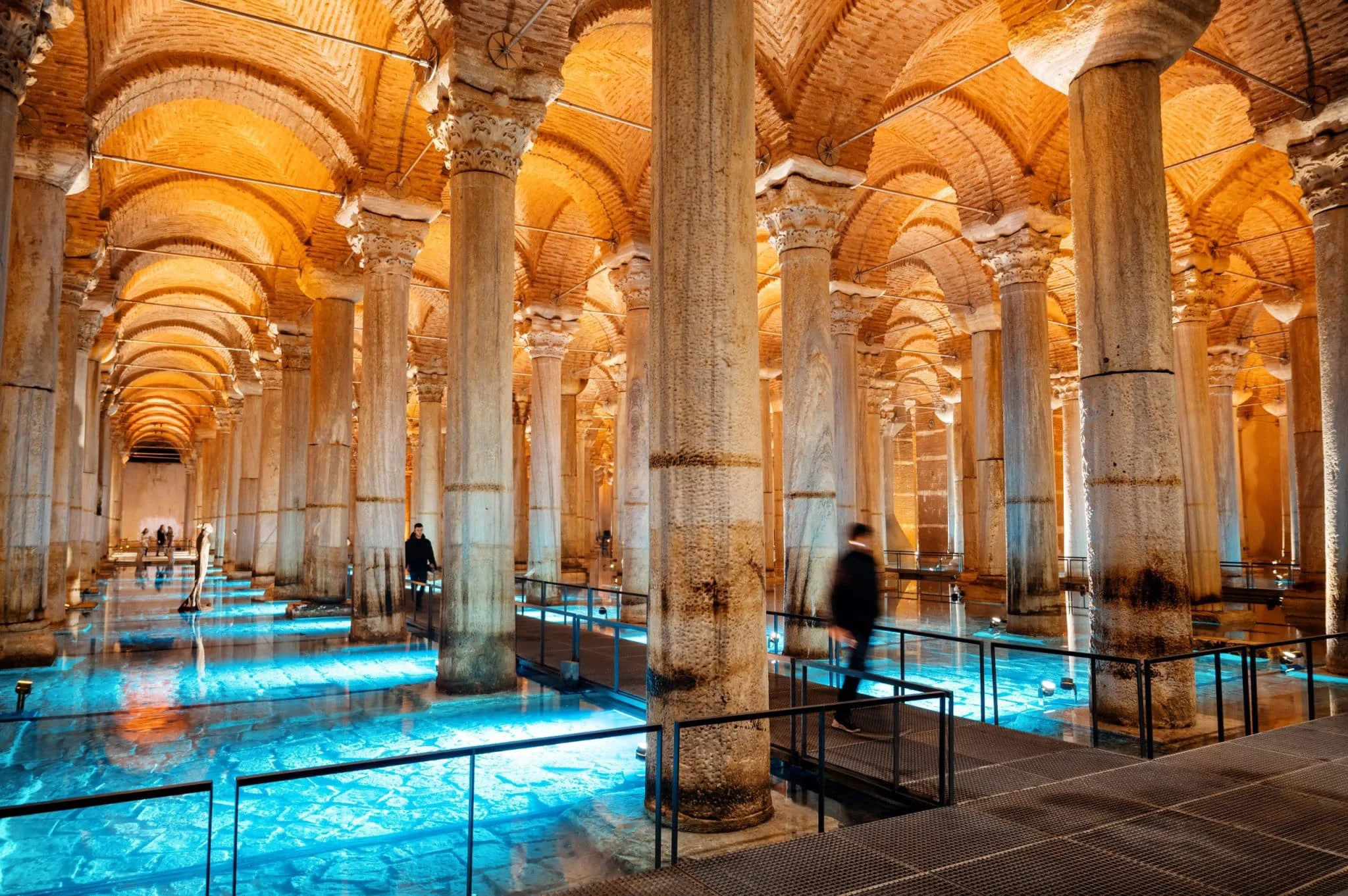
Enter Constantinople's vast underground reservoir and see its famous Medusa-head column bases.
Explore the Basilica Cistern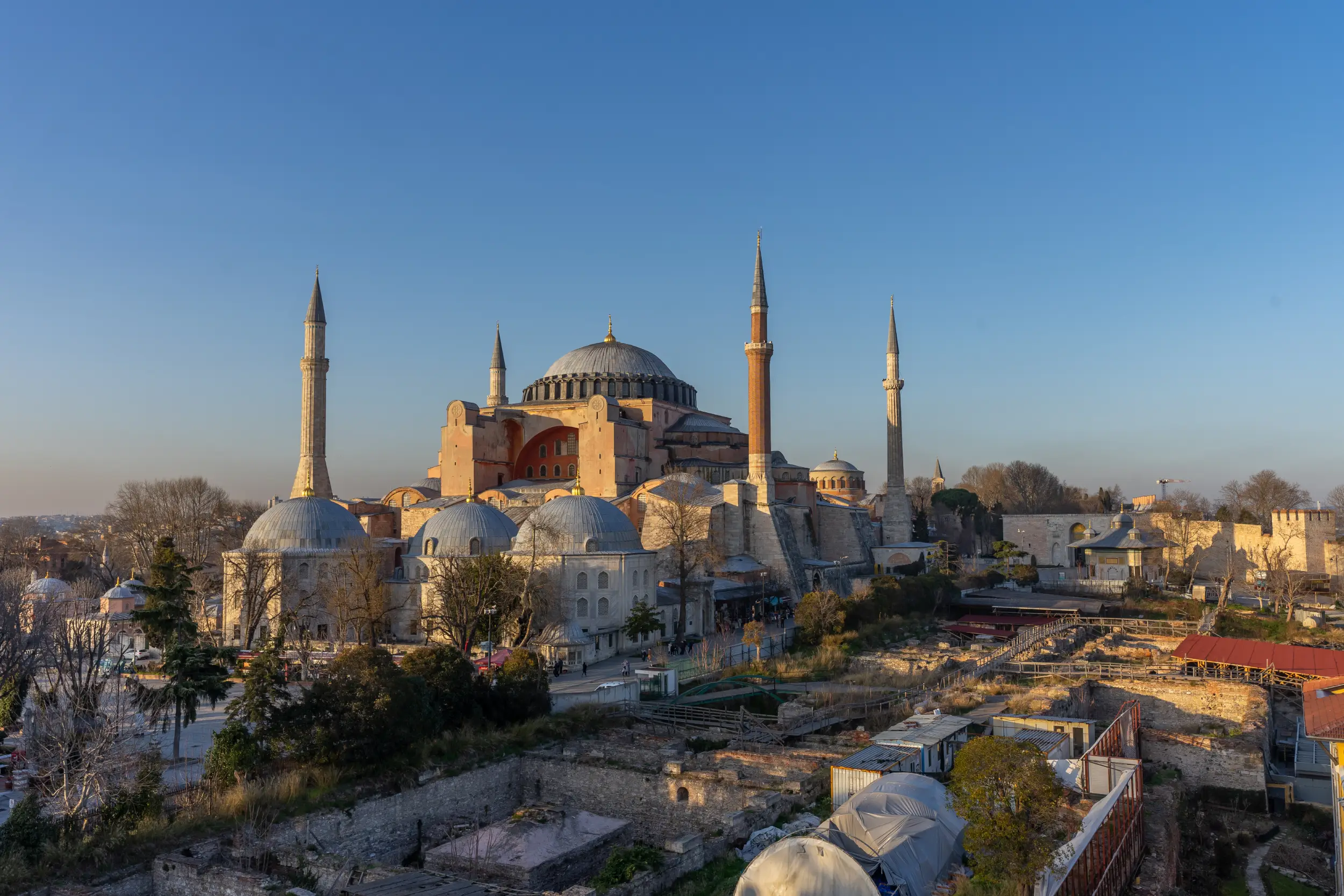
Discover the architecture and layered religious history of Justinian's extraordinary monument.
Explore Hagia Sophia
Continue to the city's palaces, churches, mosques, museums, bazaars and waterfront districts.
Continue Exploring Istanbul