





Aksaray Travel Guide / Aksaray Historic Centre
History and significance
Şeyh Hamid-i Veli, widely known as Somuncu Baba, occupies an important place in Anatolian Sufi memory. Local traditions connect him to Aksaray and to the wider religious networks of late medieval Anatolia. His name, often translated as “Father of Bread,” recalls stories of humility and bread-making; hagiographical episodes should be presented as traditions rather than independently verified events.
The tomb and associated complex are pilgrimage and devotional spaces, combining remembrance with contemporary religious life. Visitors encounter a landscape of shrines, courtyards and modern interpretive facilities rather than one unchanged medieval monument. The historical personality and the later architecture deserve separate attention.
In-depth research: archaeology, architecture and context
Hamid-i Veli and the language of Sufi memory
The complex commemorates Şeyh Hamid-i Veli, remembered affectionately as Somuncu Baba, “the bread man” or “father of loaves.” Accounts place his life across the late fourteenth and early fifteenth centuries, during the era of Bayezid I and the political turbulence around the early Ottoman state. Devotional biographies connect him with humble bread-making, religious teaching and the Sufi network associated with Hacı Bayram-ı Veli. Such stories tell us much about ideals of modesty, charity and concealed sanctity, but hagiographic episodes are not equivalent to dated archival records. The guide therefore treats the bread-making stories as revered traditions while keeping the historical framework and the surviving place of remembrance distinct.
Tomb, cemetery and contemporary complex
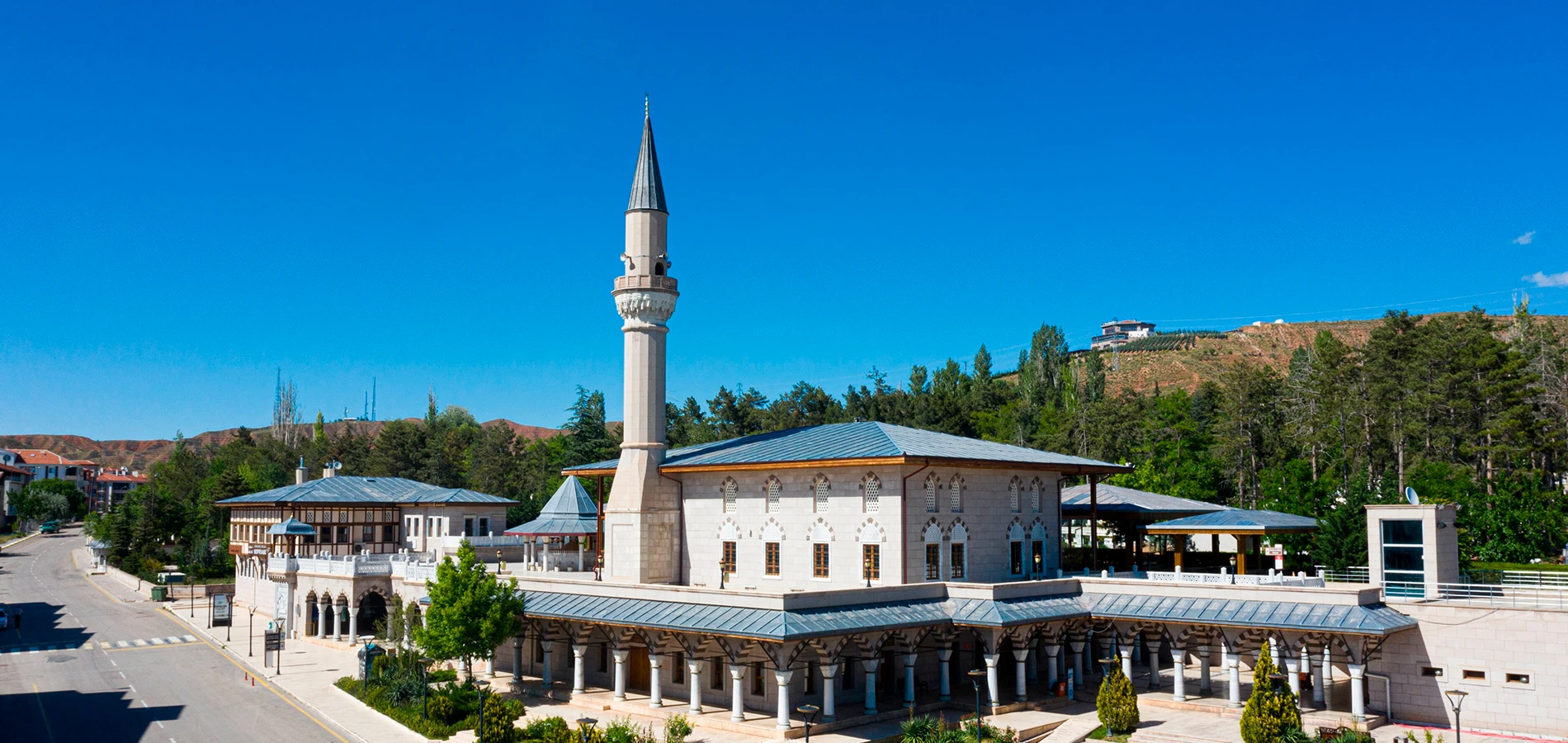
The provincial directorate locates the tomb and adjoining small prayer space within Evrah Cemetery in central Aksaray, a burial landscape also called Evliyalar Mezarlığı. Nearby modern additions include a cultural and devotional complex designed to evoke early Ottoman and Seljuk spaces, with a large roofed prayer area and visitor facilities. It is vital to distinguish these recent architectural references from buildings demonstrably surviving from Hamid-i Veli's own lifetime. The arrangement of graveyard, tomb, communal space and interpretive features reflects a continuing religious practice rather than an archaeological site frozen at the date of the saint's death.
Visiting as a cultural and religious guest
A tomb is not simply a tourist stop: families and pilgrims may be praying, reciting or visiting relatives' graves. Conservative dress and quiet behavior are appropriate, and pictures of worshippers should only be taken with permission. If a guide mentions miracles, lineages or anecdotes, asking whether the story is documentary history or menkıbe, a devotional narrative, provides useful context. A city heritage circuit can combine the complex with Aksaray Museum and Ulu Mosque, comparing the institutional history of religious learning with the more personal devotional culture of Anatolian Sufism. No fixed ritual timetable or opening schedule is assumed here.
Closer look: evidence and interpretation
Hamid-i Veli in history and remembered tradition
The teacher known as Somuncu Baba is associated with the late fourteenth and early fifteenth centuries. Aksaray's provincial authority records the dates 1349–1412 and places his grave in the Ervah cemetery. Religious biographies connect him with Bursa, baking bread, Qur'anic exposition at the Great Mosque, and the spiritual formation of Hacı Bayram-ı Veli. The bread-seller nickname expresses humility and the concealment of spiritual stature; it is best read within devotional biography, not as a fully documented commercial history. Chronological statements about travel, teachers and initiation networks can differ between hagiographic works. A responsible guide distinguishes what a tradition honors from what a contemporary document independently verifies.
Why the cemetery matters as much as the tomb
This is not simply a shrine isolated from an urban landscape. The Ervah burial ground, adjacent mosque and contemporary devotional spaces are part of Aksaray's identity as a city of scholars and saints. Observe the transitions between public streets, cemetery, prayer setting and tomb precinct. Such transitions explain why a ziyaret, or respectful devotional visit, differs from an archaeological tour. Epitaphs and later funerary arrangements may postdate the person commemorated. Their artistic value lies in Ottoman and later commemorative practice, even when the earliest grave marking is no longer identifiable.
A route through Sufi and civic memory
To understand why this pilgrimage site matters to Aksaray, include the old city and its institutions: Ulu Mosque for civic worship, Zinciriye for scholarship, and the museum for material evidence. Somuncu Baba's son Yusuf Hakiki Baba also figures in the area's Sufi literary heritage, offering a link to manuscript traditions and devotional poetry. At an active sacred site dress conservatively, avoid photographing mourners or worshippers without consent, and be prepared for short closures during prayer or events. A visit can be rewarding without treating every narrative in local memory as an inscription-confirmed historical fact.
On-site observation and suggested approach
Treat the visit as an encounter with a living shrine. Arrive in modest clothing, observe whether visitors are praying and allow space near the tomb for those engaging in devotions. The neighboring cemetery may be a place of mourning, so do not turn graves into posed photo settings. For a more balanced introduction to Aksaray, place the complex within a route including the Ulu Mosque and Zinciriye rather than representing the city only through saintly legends.
What to look for
Visit quietly and dress respectfully. Compare the devotional atmosphere here with the scholastic architecture of Zinciriye Medrese and the congregational function of Ulu Mosque.
A useful historical sequence is to ask who commissioned the building, which later rulers altered it and how its purpose changed. Medieval architecture can survive through substantial Ottoman and modern interventions, so the visible monument may be a composite of periods.
Reading Aksaray’s urban layers
The city’s monuments make the most sense as parts of an evolving urban system. Religious institutions, commercial streets, education, public bathing and industrial production served different communities at different times. A building’s current use may be quite different from its original purpose, and restoration can introduce new surfaces beside older fabric.
Planning your visit
Most central stops can be combined on foot, though accessibility varies by pavement, steps and worship schedules. Dress respectfully at mosques and confirm opening arrangements before entering restored monuments.
Access, opening hours, admission arrangements and conservation closures can change. Check the official tourism information or contact the relevant site authority shortly before visiting; this guide deliberately avoids unverified ticket prices or fixed opening hours.
How this stop fits into a wider itinerary
For an itinerary that follows the actual sites rather than generic attractions, start with the Aksaray province guide. Nearby and related destinations are linked in the Explore nearby panel. Confirm local access before setting out, especially for places with active worship, excavations, cliffs or seasonal wetlands.
Further reading and official references
The following sources provide regional context and, where available, monument-specific documentation. Some dates and attributions remain debated; consult conservation publications for specialist study.