Private Şehzadeler Museum Programme
Tell us your dates, group size and interests. We will check access and plan a sensible route.
Request Your Private Programme





Şehzadeler Museum focuses on the identity that gave Manisa its popular title, the City of Princes. Unlike the archaeological Manisa Museum, this venue interprets a particular period and political role.
Ottoman princes were sent to provincial centres to gain administrative experience. Manisa became one of the most important such governorships and was associated with rulers who later ascended the throne.
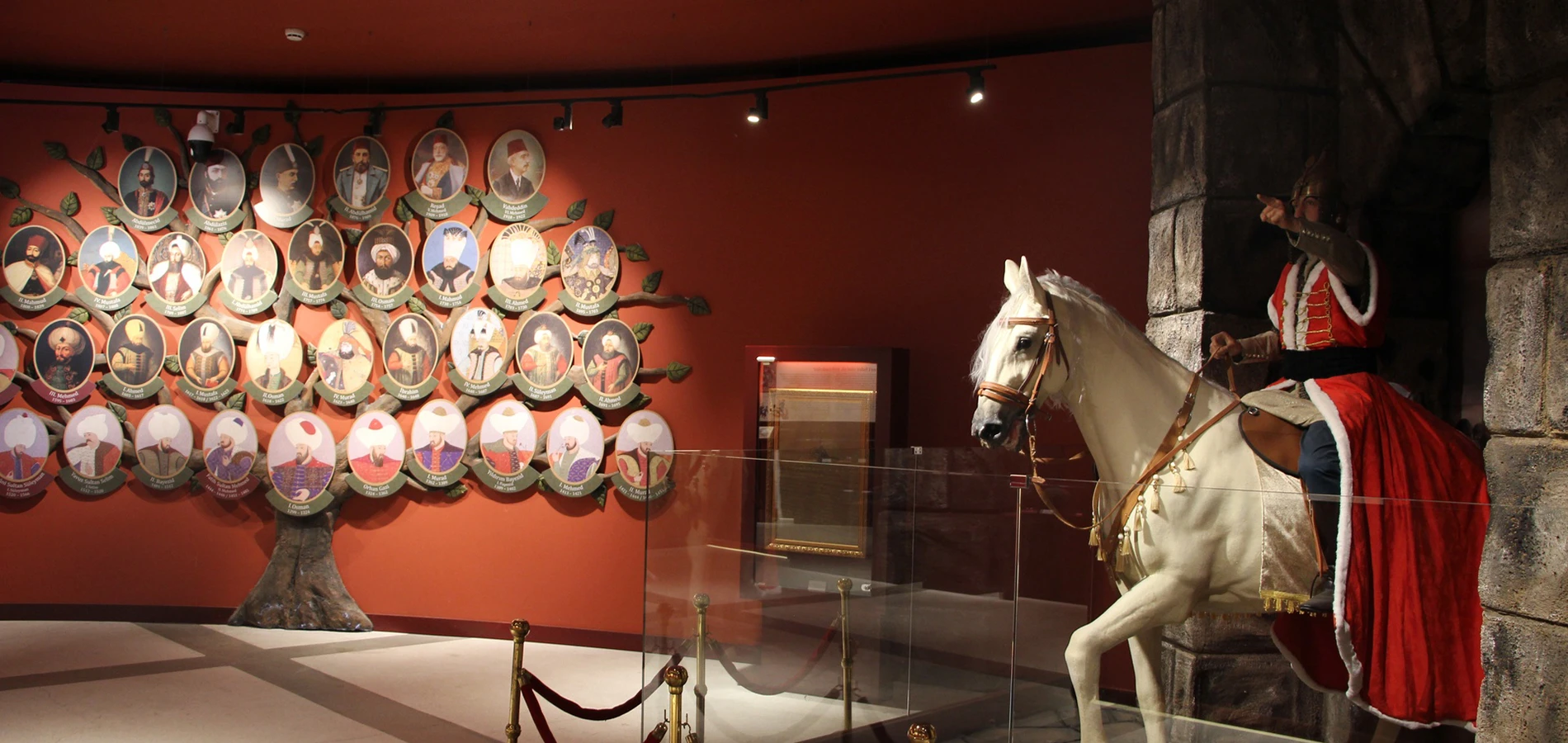
The museum uses models, sculptures and staged scenes to help visitors picture princely education, council meetings and palace routines. These are interpretive displays, not the surviving rooms of a complete Ottoman palace.
Exhibits illustrate how young princes were prepared for government, military responsibilities and court ceremony.
Displays about divan meetings and daily palace routines explain the practical work of governing a province.
Sculptures and visual narratives introduce Saruhan Bey and Ottoman figures linked to Manisa.
The museum also presents Manisa’s Mesir Macunu story, connecting political history with a continuing local festival.
Essential orientation for an informed visit.
Utku neighbourhood, Şehzadeler
History and interpretation museum
Ottoman princely era; modern museum
Manisa Province, western Türkiye
Allow 45–70 minutes
Check museum booking and admission conditions
Şehzadeler Museum makes a complex Ottoman administrative system understandable without requiring visitors to begin with specialist texts.
It is particularly useful when combined with the mosques funded by royal women and the city’s former princely governors.
From the fifteenth to the late sixteenth century, Manisa served as a training centre for Ottoman princes. Süleyman I and Murad III are among the future sultans associated with the city.
The museum was developed to make this history visible to a modern audience. Its two-floor displays place Saruhanid origins and the Ottoman princely system within the broader history of Manisa.
The city’s original palace complex did not survive intact. The museum therefore helps visitors reconstruct a world that cannot be experienced through one standing palace monument.
The setting of Şehzadeler Museum is Utku neighbourhood, Şehzadeler. The relationship between the local terrain, historic movement and the surrounding settlements is important when planning a visit.
This history and interpretation museum is one element of a larger Manisa itinerary. Think about how its surroundings influenced the way people used the place, rather than separating it from the roads, communities and landscape around it.
Exhibits illustrate how young princes were prepared for government, military responsibilities and court ceremony. Treat the scenes as reconstructions.
Displays about divan meetings and daily palace routines explain the practical work of governing a province.
Sculptures and visual narratives introduce Saruhan Bey and Ottoman figures linked to Manisa. Use them to orient the chronology.
The museum also presents Manisa’s Mesir Macunu story, connecting political history with a continuing local festival.
Manisa's story extends from the Gediz Plain and the slopes of Mount Spil to the Yunt Mountains and the northern districts. Şehzadeler Museum adds a particular perspective on this diversity, and its importance is clearer when the surrounding province is considered.
A thoughtful itinerary pairs sites by theme and geography rather than rushing between distant places. See the Manisa travel hub for a broader view of the province's archaeological, natural and Ottoman heritage.
Distinguish original objects from modern models and life-size figures. The museum is an interpretation of court life rather than an untouched historical palace.
Ask how a provincial governorship could prepare a prince for rule, and why Manisa mattered politically before Istanbul became his seat.
Exhibits illustrate how young princes were prepared for government, military responsibilities and court ceremony.
Displays about divan meetings and daily palace routines explain the practical work of governing a province.
Sculptures and visual narratives introduce Saruhan Bey and Ottoman figures linked to Manisa.
The museum also presents Manisa’s Mesir Macunu story, connecting political history with a continuing local festival.
The Turkish education ministry’s museum entry recommends arranging a visit in advance; check current appointment, ticket and opening conditions.
Do not confuse this museum in the Şehzadeler district with the relocated archaeological Manisa Museum in Yunusemre.
These resources provide historical background or current visitor information. Check directly before travelling, as conditions can change.
An indoor stop for any season and a good complement to open-air monuments in summer heat or winter rain.
For photographs of Şehzadeler Museum, start with a wide frame that includes the surroundings. Then choose details that reveal the character of the history and interpretation museum without obstructing other visitors.
Use only lawful viewpoints and respect people, religious activity, wildlife and protected surfaces. Ask permission for portraits, and do not move or touch historic material for a photograph.
The venue has two floors; verify lift or step-free routes and visitor assistance with the museum before arrival.
The destination is associated with Utku neighbourhood, Şehzadeler. Confirm the actual public entrance or meeting point with an up-to-date map; a generic place pin may not mark the best approach.
For a multi-stop Manisa day, plan transport according to the actual distance between sites. Historic streets, rural roads and mountain access can require more time than a straight-line map suggests.
Mosque, hospital and the Mesir tradition. Consider the travel time and access arrangements before combining the stops.
Hüsnüşah Sultan’s late-15th-century foundation. Consider the travel time and access arrangements before combining the stops.
Sinan’s design and İznik tilework. Consider the travel time and access arrangements before combining the stops.
Archaeology, art and life across Manisa. Consider the travel time and access arrangements before combining the stops.
It explains Manisa’s role as a training centre for Ottoman princes, with displays about education, administration and court life.
No. Şehzadeler Museum focuses on princely history; the Manisa Museum holds archaeological and wider historical collections.
No. It is a modern interpretive museum using models, figures and reconstructions to explain palace life.
Future sultans including Süleyman I and Murad III served in Manisa during their princely careers.
The education ministry’s listing advises contacting the museum in advance; verify current arrangements before travel.
Allow roughly 45 to 70 minutes to follow the displays and read the interpretation.
Follow official paths, barriers and directions; do not enter closed buildings or excavations.
Never touch carved surfaces, collect artefacts or climb fragile masonry.
Ask before photographing residents, worshippers or workers; keep private entrances clear.
Carry away rubbish and avoid disturbing wildlife, vegetation or historic material.
Ask Wow Cappadocia / Venere Travel to design a private, tailor-made route with a licensed guide and suitable vehicle, subject to confirmed access, with no compulsory shopping stops.
Combine heritage, village culture and landscapes at your own pace.
Tell us your dates, group size and interests. We will check access and plan a sensible route.
Request Your Private Programme
Mosque, hospital and the Mesir tradition. Continue your journey with a related destination.
Read the Nearby Guide