Conquest of Constantinople, Sultan Mehmed II, Theodosian Walls, 360° Panorama, Siege Artillery & Immersive History in Topkapı

Panorama 1453 History Museum Istanbul – Complete Visitor Guide

Step into a monumental 360-degree reconstruction of the final assault on Constantinople, where a seamless panoramic painting, three-dimensional siege objects and sound effects surround visitors with the drama of 29 May 1453 beside Istanbul's historic land walls.

Explore Panorama 1453

Stand Inside the Story of the Conquest of Constantinople

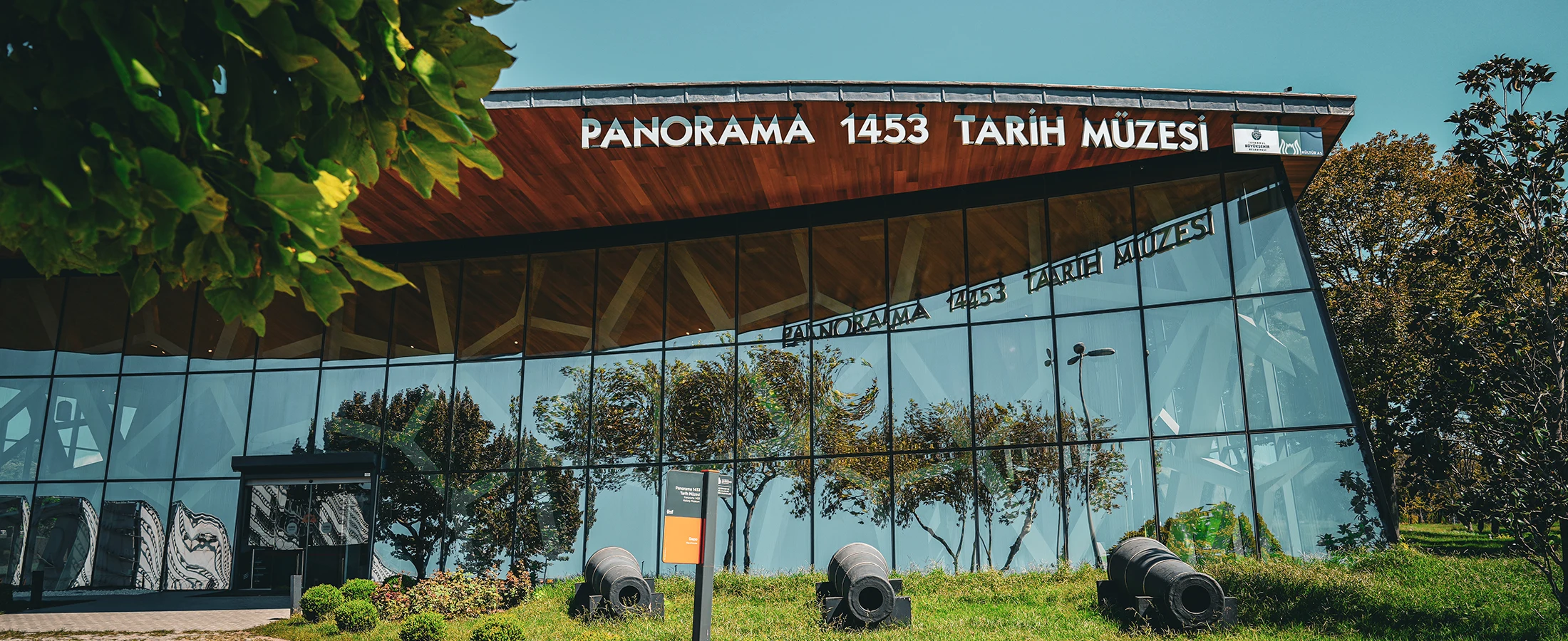
Located in Topkapı Cultural Park beside Istanbul's historic land walls, Panorama 1453 History Museum is one of the city's most immersive historical attractions. Rather than displaying the conquest only through objects and text, the museum leads visitors toward a vast panoramic environment representing the morning of 29 May 1453, when the Ottoman army of Sultan Mehmed II broke through the defenses of Constantinople.

The museum opened in 2009 after a multi-year project commissioned by Istanbul Metropolitan Municipality. Its centerpiece is a 38-meter-diameter hemispherical panorama designed so that the painted sky, battlefield and horizon continue without a visible frame.

The panoramic composition includes approximately 2,350 square meters of painted surface and a further 650 square meters of three-dimensional foreground containing replicas of siege guns, cannon carriages, barrels, earthworks and battlefield material. Around 10,000 figures appear across the scene.

The museum's operator presents Panorama 1453 as the world's first fully panoramic museum, meaning that the image surrounds the viewer in both the horizontal and vertical planes. The absence of a visible edge is essential to the illusion: visitors cannot easily tell where the painted world ends and the physical foreground begins.

Before reaching the panorama, a permanent exhibition introduces Constantinople, Sultan Mehmed II, the siege, Ottoman military organization, the city's cultural history and the rebuilding of Istanbul after 1453. The result is part history museum, part monumental artwork and part immersive theater.

Allow approximately 1.5–2 hours for a comfortable first visit. Visitors who also explore the nearby Walls of Constantinople can easily turn the museum into a half-day historical route.

360° Panorama

Stand inside a seamless hemispherical artwork depicting the decisive final stage of the 1453 conquest.

10,000 Figures

Look across an enormous battlefield scene filled with soldiers, artillery, banners, fortifications and carefully layered detail.

3D Siege Foreground

Replicas of cannons, cannon carriages, barrels and earthworks blur the boundary between the visitor platform and the painted world.

Beside the Land Walls

Continue outside to the real defensive system whose Topkapı sector became one of the central battlegrounds of the final siege.


Know Before You Go

Panorama 1453 History Museum – Quick Facts

Essential information about Panorama 1453, the conquest panorama, its location beside Istanbul's land walls and practical visitor planning.

📍

Location

Topkapı Cultural Park, Merkez Efendi, Zeytinburnu, Istanbul.

🏛️

Opened

31 January 2009.

🎨

Panorama

A fully immersive 360-degree representation of the conquest of Constantinople.

Diameter

The panoramic artwork is built around a hemisphere approximately 38 meters in diameter.

🖼️

Painted Surface

Approximately 2,350 m².

💥

3D Foreground

Approximately 650 m² of physical siege scenery and replicas.

👥

Figures

Approximately 10,000 figures appear in the panoramic composition.

⏱️

Recommended Visit

Approximately 1.5–2 hours; longer if combining the museum with the city walls.


The Conquest of Constantinople, Ottoman Military History, Byzantine Defenses, Immersive Art and the Transformation of Istanbul

Why Is Panorama 1453 History Museum Important?

Panorama 1453 is important because it combines historical interpretation, monumental painting, three-dimensional scenography, sound design and a geographically meaningful location beside the very land walls around which the final siege was fought.

The museum focuses on one of the most consequential moments in Istanbul's history: the Ottoman conquest of Constantinople on 29 May 1453. The event ended the Byzantine Empire, made Constantinople the capital of the Ottoman state and began a new chapter in the political, architectural and cultural history of the city.

Its second importance lies in the way history is presented. The main panorama is not simply a large painting. It is designed as a borderless visual environment that removes the normal frame separating viewer from artwork. Three-dimensional battlefield elements continue toward the painted surface, making distance and scale difficult to judge.

The third reason is location. The museum stands near the Topkapı section of the Theodosian land walls, one of the zones where the final Ottoman assault was concentrated. This allows visitors to compare the museum's interpretation with the surviving fortifications outside.

The fourth reason is educational. The galleries introduce the history of Constantinople, Sultan Mehmed II, the siege, military technology, urban culture and the reconstruction of the Ottoman capital. For visitors unfamiliar with 1453, the museum can provide useful context before exploring the city walls, Hagia Sophia and Topkapı Palace.

It is also important to understand the museum as an interpretive and commemorative institution. Its narrative is centered primarily on the Ottoman conquest. Visitors interested in the Byzantine experience should complement the museum with the surviving Walls of Constantinople, Byzantine monuments and broader scholarship on the final decades of Constantinople.

History of Panorama 1453 History Museum

The museum was developed by Istanbul Metropolitan Municipality as part of the transformation of the former Thrace bus terminal area at Topkapı into a large cultural and recreational park.

Construction began in 2005. The museum structure was completed in 2008, while a team of eight artists worked for approximately three years on the visual concept, research, models, digital preparation and final panoramic composition.

The project was coordinated by painter and animation director Haşim Vatandaş, who developed the concept for the panorama. The artistic team included Ramazan Erkut, Ahmet Kaya, Oksana Legka, Yaşar Zeynalov, Hasan H. Dinçer, Atilla Tunca and Murat Efe.

The museum opened to visitors on 31 January 2009. Since then, it has become one of Istanbul's best-known museums devoted to a single historical event.

The permanent exhibition leading toward the panoramic platform was developed to provide context before the visual climax. Its historical content addresses the foundation and development of Istanbul, the siege, the life of Mehmed II, law, art, civilization, culture and the rebuilding of the city after the conquest.

2005

Construction begins under Istanbul Metropolitan Municipality.

Three-Year Art Project

Eight artists develop the panorama through research, modeling, painting and digital preparation.

2008

The museum structure and panoramic project are completed.

31 January 2009

Panorama 1453 History Museum opens to the public.

Historical Background – Why Constantinople Mattered

By the 15th century, Constantinople was the capital of a Byzantine Empire greatly reduced from the power it had once commanded. Its territory had contracted dramatically, yet the city retained enormous strategic, religious, commercial and symbolic importance.

Constantinople controlled a crucial position between Europe and Asia and between the Black Sea and the Mediterranean. Its harbors, Bosphorus location and extraordinary defensive system made possession of the city central to the balance of power in the region.

The Ottoman state had already expanded around much of the Byzantine capital. By the time Mehmed II returned to the Ottoman throne in 1451, Constantinople was increasingly surrounded by Ottoman territory.

Mehmed prepared intensively for a new siege. Among his most important preparations was the construction of Rumeli Fortress on the European shore of the Bosphorus, opposite Anadolu Fortress, helping the Ottomans control strategic movement through the strait.

The city's greatest defensive asset remained the Theodosian Land Walls, a complex system of walls, towers, terraces and moat that had protected Constantinople for roughly a thousand years. The decisive question in 1453 was whether new artillery, large Ottoman forces and sustained assault could overcome defenses that had resisted many earlier armies.

The Siege of Constantinople – Key Timeline

Early April 1453

Ottoman forces arrive before Constantinople and establish siege positions around the land walls.

6 April

The siege is conventionally dated from 6 April 1453, with bombardment and military operations intensifying around the defenses.

Artillery Bombardment

Large Ottoman cannon repeatedly strike the land walls, especially sectors considered vulnerable to sustained assault.

Golden Horn

Ottoman naval operations challenge the city's maritime defenses while ships are famously transferred overland into the Golden Horn.

May 1453

Continuous pressure, bombardment, repairs, sorties and assaults exhaust both attackers and defenders.

Night of 28–29 May

Preparations are made for a final coordinated Ottoman attack along the land walls.

29 May 1453

The defenses are breached during the final assault and Ottoman forces enter the city.

After the Conquest

Mehmed II makes Constantinople his imperial capital and begins a long process of rebuilding, repopulation and institutional transformation.

Historical terminology: the event is commonly called the “Conquest of Istanbul” in Turkish historical tradition and the “Fall of Constantinople” in much Byzantine and European historiography. Both describe the same events of 1453 from different historical perspectives.

Sultan Mehmed II and the Conquest

Mehmed II, later known as Fatih Sultan Mehmed – Mehmed the Conqueror, was only twenty-one years old when Constantinople was conquered in 1453.

His campaign combined military preparation, siege artillery, naval operations, logistics, engineering and political determination. The construction of Rumeli Fortress in 1452, the gathering of artillery and the concentration of forces around the city all formed part of a coordinated strategy.

The conquest transformed Mehmed's reputation and political position. Constantinople became the center of an expanding empire and Mehmed increasingly presented himself as a universal ruler, drawing upon both Islamic imperial traditions and the legacy of the Roman-Byzantine capital.

After 1453, his task was not simply to occupy the city. He encouraged repopulation, construction, religious foundations, markets, administrative institutions and new residential quarters that would turn the damaged wartime city into an imperial Ottoman capital.

For visitors, Panorama 1453 is therefore best understood not only as a museum about a battle, but as the beginning of the story of Ottoman Istanbul.

The Defenders of Constantinople

The museum's central visual narrative is Ottoman, but understanding the siege also requires attention to the people defending the city.

The final Byzantine emperor, Constantine XI Palaiologos, remained in Constantinople during the siege and took part in organizing the defense. He died during the final fighting on 29 May 1453.

The defenders included Byzantine soldiers, local inhabitants and foreign allies. One of the most important commanders was the Genoese soldier Giovanni Giustiniani Longo, who played a leading role in the defense of the land walls.

The defenders faced severe disadvantages: limited manpower, long defensive lines and the difficulty of repairing walls repeatedly damaged by artillery. Yet the fortifications and their defenders resisted for weeks.

Remembering both the attackers and defenders makes a visit to the panorama more historically meaningful. The conquest was a foundational triumph for the Ottoman state, but it was simultaneously the end of the Byzantine Empire and a moment of enormous rupture for the inhabitants of Constantinople.

The Walls Beside Panorama 1453

One of the museum's greatest advantages is that the real historical landscape survives immediately nearby.

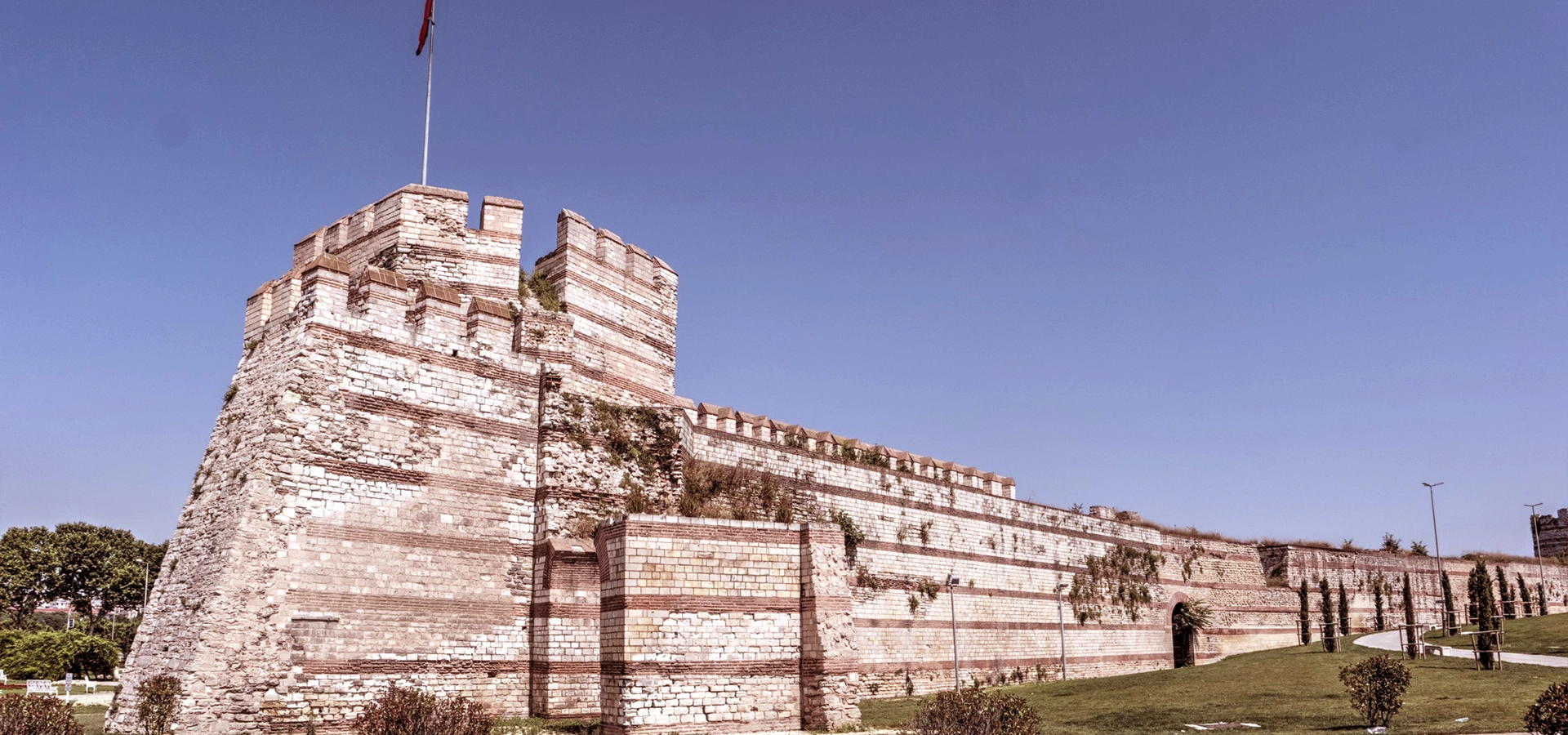
The Walls of Constantinople formed one of the most sophisticated defensive systems of the ancient and medieval worlds. The famous land walls were developed principally in the early 5th century under Emperor Theodosius II and were repeatedly restored over the centuries.

Their defensive system included a massive inner wall, outer wall, towers, terraces and a broad moat. An attacker could therefore be forced to overcome several successive obstacles under fire from defenders.

The museum stands near Topkapı, close to sectors associated with the decisive fighting of 1453. The modern Turkish place-name Topkapı should not be confused with Topkapı Palace in Sultanahmet; the museum is several kilometers west of the palace, beside the land walls.

After seeing the panorama, walk outside and look closely at the real towers, masonry, gate zones and topography. This comparison between representation and surviving architecture is one of the strongest reasons to visit the museum.

Best historical combination: visit Panorama 1453 first for visual context, then continue directly to the land walls while the geography of the siege is fresh in your mind.

The Great 360° Panorama

The main artwork is the defining experience of Panorama 1453. It covers the interior of a 38-meter-diameter hemisphere and surrounds the viewing platform in every direction.

Approximately 2,350 square meters form the painted component. The composition rises from the battlefield toward a continuous painted sky, so visitors cannot see a conventional upper frame or architectural edge.

The scene contains approximately 10,000 figures. Soldiers, banners, fortifications, artillery, horses, smoke and movement are arranged in layers that diminish toward the horizon.

The panorama represents the final phase of the siege on the morning of 29 May 1453. It should be viewed as a monumental historical reconstruction and artistic interpretation rather than a photographic record of one exact instant.

Its power comes from scale. Because the visitor is surrounded by visual information, it is impossible to absorb everything at once. The strongest approach is to make one slow complete turn, then repeat the circle while looking for smaller scenes, figures and details.

How the Panoramic Illusion Works

A conventional painting always tells the eye where it begins and ends. The frame, wall and distance between viewer and canvas reveal the true scale of the image.

Panorama 1453 deliberately removes those reference points. The painting continues horizontally around the visitor and vertically into the dome. There is no obvious rectangle to reveal the dimensions of the artwork.

The transition between physical objects and painted scenery strengthens the illusion. Real three-dimensional forms occupy the foreground, while painted forms continue beyond them. At a glance, the eye can struggle to identify exactly where the physical environment becomes image.

The lighting and dark approach corridor also play a role. Visitors move through a controlled interior sequence before suddenly entering the panorama platform, where the visual field opens dramatically.

The museum describes this first encounter as producing a brief moment of disorientation. Whether or not every visitor experiences it in the same way, the design is clearly intended to create a sudden loss of normal spatial reference.

The 650 m² Three-Dimensional Foreground

Between the visitor platform and the painted battlefield lies approximately 650 square meters of three-dimensional scenery.

This zone contains replicas and reconstructed battlefield elements such as cannons, cannon carriages, gunpowder barrels, ammunition, earth and siege material.

The foreground serves two purposes. Historically, it reminds visitors that the 1453 siege depended heavily on artillery, engineering and material logistics. Artistically, it creates the transition between the real visitor space and the painted horizon.

Look carefully at how physical forms are positioned against painted equivalents. The strongest illusion often appears where a three-dimensional object seems to continue naturally into the image behind it.

Sound & Atmosphere

The panorama is not experienced silently. Sound forms an important part of the museum's immersive design.

Visitors hear a layered soundscape associated with the siege, including military music, battlefield effects and crowd sounds. The audio does not function as a precise historical recording; it is part of the museum's dramatic interpretation of the conquest.

The combination of sound, dim approach, large-scale painting and physical foreground transforms the platform into something closer to a historical installation than a traditional gallery.

Sensory note: the panoramic hall can feel loud and intense, especially for young children or visitors sensitive to strong sound effects.

Who Created the Panorama?

The project was led by Haşim Vatandaş, a painter and animation director who conceived and coordinated the panoramic work.

The artistic team consisted of eight specialists whose responsibilities ranged from painting and figures to storyboard, models and computer applications.

Haşim Vatandaş

Concept originator, painter and project coordinator.

Ramazan Erkut

Worked on the panoramic background and visual construction.

Yaşar Zeynalov

Associated particularly with the enormous number of figures in the composition.

Oksana Legka

Painter within the core artistic team.

Ahmet Kaya

Worked on storyboard and compositional planning.

Hasan H. Dinçer

Contributed computer-based applications to the production process.

Atilla Tunca

Worked on model preparation and the transition from design to physical space.

Murat Efe

Contributed computer applications to the project.

The first phase of the work involved extensive research. A 1:10 scale model was used during development, allowing the artists to study relationships between the viewing platform, foreground objects, walls, battlefield and painted horizon before completing the final composition.

The Exhibition Before the Panorama

Do not rush directly toward the main painting. The museum intentionally places a permanent exhibition before the panorama so visitors enter the final scene with historical context.

The route introduces themes including the foundation of Istanbul, Byzantine Constantinople, the Ottoman siege, Mehmed II, military organization, law, art, culture, urban life and the rebuilding of the city after 1453.

Historical images, miniatures, engravings and modern visual interpretations help explain the chronology. The exhibition gradually shifts from information toward atmosphere, leading into a darker passage before the visitor emerges at the panoramic platform.

Best strategy: read the main timeline and siege sections carefully, but do not exhaust yourself on every label. Save concentration for the panorama, then return mentally to the information you have just seen.

The Dream of Sultan Mehmed Mapping Show

Panorama 1453 has also developed a projection-mapping presentation called The Dream of Sultan Mehmed.

The digital show uses the museum's immersive architecture to reinterpret major moments connected with the conquest through projection, movement, light and sound.

This adds a contemporary layer to the original panoramic installation, turning the museum from a static historical environment into a venue that can also support changing digital presentation.

Show times, availability and access arrangements may change, so visitors particularly interested in the mapping experience should check the museum's current program before arrival.

What to See at Panorama 1453 History Museum

Conquest Timeline

Understand the main stages of the siege before entering the panoramic hall.

Mehmed II Displays

Follow the life, ambitions and political world of the young Ottoman sultan.

Historical Miniatures

Look at visual sources and later interpretations of warfare, Constantinople and Ottoman history.

Dark Transition Corridor

Notice how the museum deliberately controls light and expectation before revealing the panorama.

360° Battlefield

Make a slow complete circle and take in the scale of the panoramic composition.

Land Walls

Study the painted fortifications, then compare them with the surviving walls outside.

Siege Artillery

Look for the physical cannon replicas and the role of artillery within the visual narrative.

10,000 Figures

Look beyond the central action for smaller groups, commanders, soldiers and background scenes.

Paint-to-Object Transition

Try to identify exactly where the three-dimensional foreground ends and the painted world begins.

Panoramic Sky

Look upward to understand why the work is described as fully panoramic rather than simply circular.

Soundscape

Notice how audio is used to intensify the perception of movement and scale.

Real Walls Outside

Finish by walking toward the Topkapı fortifications immediately beyond the museum grounds.

Best Way to Visit Panorama 1453

Begin with the historical exhibition. Build a clear mental timeline of the siege, especially the role of the land walls, artillery and the final assault.

Continue slowly through the sections on Mehmed II and Ottoman Istanbul. These displays help connect the military event with the larger transformation of the city after 1453.

Enter the dark transition corridor without rushing. The controlled approach is part of the design and makes the sudden opening of the panoramic space more effective.

On the panorama platform, do one full circuit looking at the overall composition. On a second circuit, focus on details: artillery, walls, figures, banners, smoke, horses and the physical foreground.

After leaving the museum, walk outside to the land walls. The physical fortifications provide the essential reality check after the immersive artistic reconstruction.

Stop 1 Historical introduction and siege timeline
Stop 2 Mehmed II, Ottoman military history and the city before 1453
Stop 3 Dark transition corridor
Stop 4 360° panoramic battlefield
Stop 5 Three-dimensional siege foreground and artillery details
Finish Walk outside to the real Topkapı section of the Walls of Constantinople

Panorama 1453 History Museum Visitor Information

The museum is located inside Topkapı Cultural Park at Merkez Efendi Mahallesi, Topkapı Kültür Park İçi Yolu, 34015 Zeytinburnu, Istanbul.

The museum's current official visiting hours are 08:30–16:30 and it is open Tuesday through Sunday.

The museum is currently closed on Mondays.

At the time of writing, the official ticket information lists ₺330 full admission, ₺90 discounted admission for eligible categories such as students, teachers, soldiers and police, and ₺900 for foreign visitors.

Prices, discount categories, special-event access and operating hours can change. Always verify the museum's official visitor information shortly before travel, especially during public holidays or around 29 May, when commemorative activity may affect visitor flow.

Address Topkapı Cultural Park, Merkez Efendi, Zeytinburnu, Istanbul
Tuesday–Sunday 08:30–16:30
Closed Monday
Full Ticket Currently ₺330
Discounted Ticket Currently ₺90 for eligible categories
Foreign Visitor Ticket Currently ₺900
Recommended Visit 1.5–2 hours; half day with the nearby city walls
Important current-access note: opening hours, ticket prices, discount categories, mapping-show schedules, group procedures and holiday arrangements can change. Check the official museum information before your visit.

Practical Tips for Visiting Panorama 1453

Avoid Monday

The museum is currently closed on Mondays.

Allow 1.5–2 Hours

The panorama itself can be seen quickly, but the historical exhibition deserves time.

Read Before the Panorama

The final image is far more meaningful when you understand the geography and timeline of the siege.

Do Two Circuits

First absorb the overall panorama, then circle again looking for smaller details.

Look Up

The seamless painted sky is essential to the full-panorama illusion.

Expect Strong Audio

The battlefield soundscape can be intense for very young children or sound-sensitive visitors.

Visit the Walls

Do not leave Topkapı without comparing the panoramic scene with the surviving fortifications outside.

Check 29 May Arrangements

The conquest anniversary can bring ceremonies, special programs and heavier visitor numbers.

Best Time to Visit Panorama 1453

Weekday Morning

Usually the best choice for reading displays comfortably and experiencing the panorama with fewer groups.

Tuesday–Thursday

A strong general choice outside holidays and school-group peaks.

Spring

Excellent for combining the indoor museum with a longer walk along the land walls.

Autumn

Cooler temperatures make the outdoor historical route more comfortable.

Winter

The museum is a strong indoor attraction, but wind and rain can reduce the appeal of the wall walk afterward.

29 May

Historically meaningful but potentially much busier because of conquest anniversary events.

How Much Time Do You Need at Panorama 1453?

45 Minutes

Enough for a fast walk through the exhibits and one circuit of the panorama, but too rushed for historical detail.

1 Hour

A reasonable highlights visit if your schedule is tight.

1.5 Hours

A good minimum for reading the main displays and exploring the panorama properly.

2 Hours

Ideal for most first-time visitors who enjoy military and Istanbul history.

Half Day

Combine the museum with the Topkapı, Edirnekapı or Yedikule sections of the land walls.

Full History Day

Continue from the walls toward Byzantine and Ottoman monuments across the historic peninsula.

Is Panorama 1453 Good for Children?

Yes. For many families, Panorama 1453 can be easier for children to engage with than a traditional museum filled only with display cases.

The enormous image, physical cannon replicas, walls, soldiers, horses and sound effects make the historical subject immediately visual.

Older children can use the museum to understand siege warfare, city defenses, maps, military technology and the transition from Byzantine Constantinople to Ottoman Istanbul.

Very young children, however, may find the dark corridor, battle sounds or crowded panoramic platform intense. Parents should be prepared to move through the main hall at the child's pace.

Family strategy: keep the text-heavy introduction selective, spend more time on maps and visual displays, then use the panorama and the real walls outside to turn the visit into a visual history lesson.

Photography at Panorama 1453

The main hall is visually spectacular, but it is also difficult to photograph well because the panorama surrounds you in every direction.

Wide-angle compositions are useful for showing the relationship between the viewing platform, three-dimensional foreground and painted battlefield.

Closer photographs can focus on cannons, walls, soldier groups, banners, horses and transitions between real and painted forms.

The most important photographic challenge is exposure. The panorama may contain bright painted sky, darker foreground material and controlled museum lighting within the same frame.

Photography rules, flash restrictions, tripods, commercial shoots and special-event policies can change. Always follow current signs and staff instructions.

Best Wide View

Frame the panorama together with part of the three-dimensional siege foreground.

Best Details

Artillery, wall breaches, banners and dense groups of figures.

Best Historical Contrast

Photograph the museum interior, then the surviving city walls outside.

Professional Shoots

Contact the museum in advance for commercial or organized professional photography.

Accessibility

Panorama 1453 is a modern museum rather than a historic building, which generally makes the indoor environment easier to navigate than many monuments in old Istanbul.

Visitors using a wheelchair, those with limited mobility or anyone requiring a step-free route should still check current museum accessibility information before arrival, especially if lift access or assistance is essential.

The outdoor route along the historic land walls is a different matter. Surfaces, slopes, road crossings and uneven ground can make the surrounding archaeological landscape more demanding.

Accessibility planning: if the panorama is your priority, focus on the museum itself. Treat the extended wall walk as a separate activity and confirm suitable access points in advance.

How to Get to Panorama 1453 History Museum

Panorama 1453 is located in Topkapı on the western edge of Istanbul's historic peninsula, beside the land walls and inside Topkapı Cultural Park.

One of the easiest public-transport options is the T1 tram. The Topkapı tram stop is very close to the museum, making the site straightforward to reach from Sultanahmet, Eminönü, Karaköy and other areas along the tram corridor.

The Topkapı–Ulubatlı station on the M1 metro corridor is also within the wider Topkapı transport area and can be useful from districts connected to the metro network.

From Sultanahmet, the T1 tram offers a particularly simple journey: travel west toward Topkapı, then walk into Topkapı Cultural Park.

From Taksim, travel toward the historic peninsula by metro and tram connection, or use a taxi depending on traffic and group size.

A taxi is straightforward from central Istanbul, but Topkapı's road network can become busy, especially during weekday traffic. Public transport is usually more predictable.

From Sultanahmet

Use the T1 tram toward Topkapı and walk from the Topkapı stop.

From Eminönü

The T1 tram provides a direct and convenient connection toward Topkapı.

By Metro

Use the M1 corridor toward Topkapı–Ulubatlı and continue on foot or by local connection.

By Taxi

Ask for Panorama 1453 Tarih Müzesi, Topkapı Kültür Parkı.

Suggested Panorama 1453 & Constantinople Walls Route

Begin at Panorama 1453 History Museum in the morning and allow approximately 1.5–2 hours.

After the museum, walk directly toward the Walls of Constantinople around Topkapı. Examine the towers, masonry, gate zone and the relationship between the fortifications and the open ground outside them.

If you want a deeper walls-focused day, continue south toward Yedikule Fortress, where the land walls meet one of the most historically important monumental entrances to the city.

Alternatively, continue north toward Edirnekapı and the Byzantine neighborhoods behind the walls. This direction works well for travelers interested in the city's late Byzantine religious heritage.

The route is especially rewarding because it moves from historical interpretation to surviving architecture. The museum explains how the siege is remembered; the walls show the physical system the armies actually confronted.

Stop 1 Panorama 1453 History Museum – allow 1.5–2 hours
Stop 2 Topkapı section of the Walls of Constantinople
Option A Continue south toward Yedikule Fortress
Option B Continue north toward Edirnekapı and late Byzantine neighborhoods

What to See Near Panorama 1453

Walls of Constantinople

Explore the surviving land defenses that protected the Byzantine capital for centuries and became the central battlefield of 1453.

Topkapı Gate Area

See the modern urban zone beside a historically crucial sector of the Theodosian defenses.

Edirnekapı

Continue north to one of the major historic gate areas and a commanding point along the land walls.

Yedikule Fortress

Continue south to the great Ottoman fortress integrated with the ancient land-wall system near the Golden Gate.

Golden Gate

Study one of the most prestigious ceremonial entrances of Byzantine Constantinople within the Yedikule complex.

Historic Peninsula

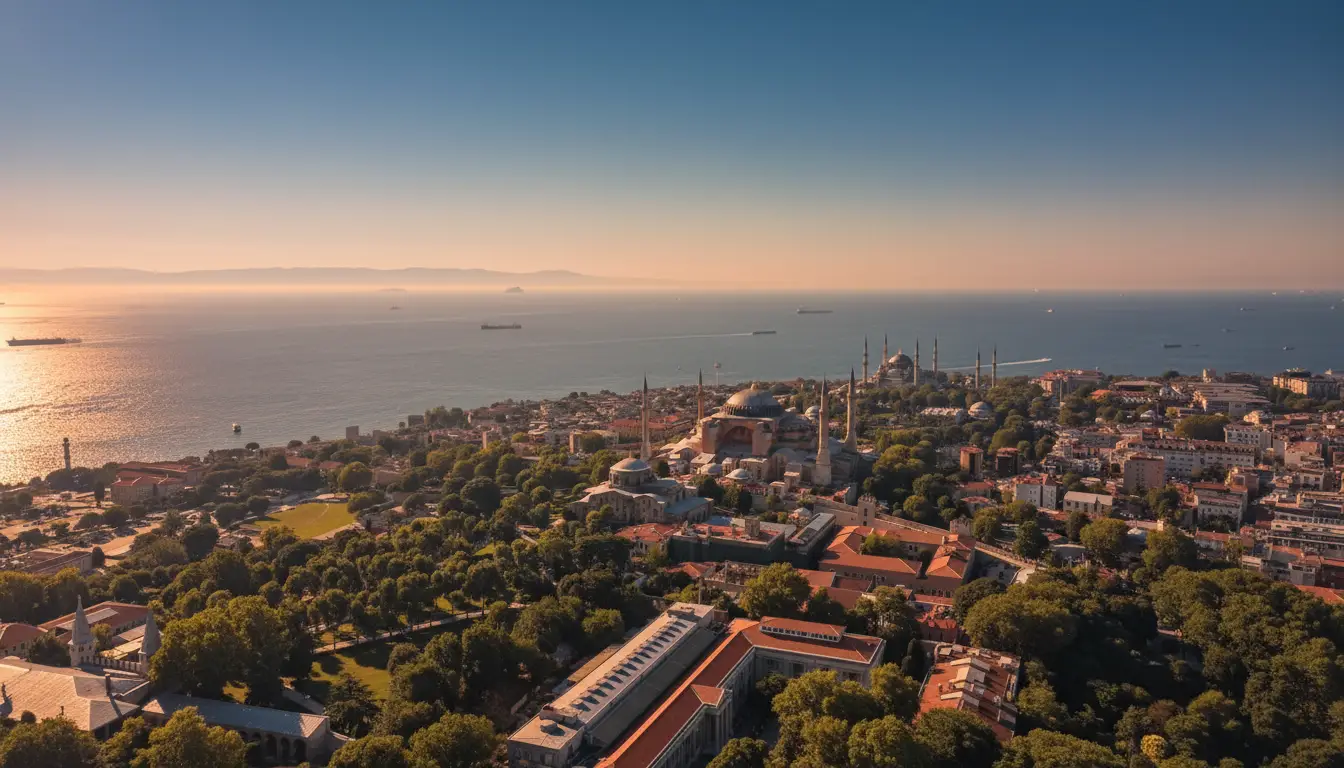
Continue by tram toward Sultanahmet for Hagia Sophia, the Hippodrome, Topkapı Palace and the classical center of old Constantinople.

Hagia Sophia

See the great imperial church that became a mosque after the conquest and remains essential to understanding both Byzantine and Ottoman Istanbul.

Topkapı Palace

Continue the story of Mehmed II with the palace complex that became the administrative and ceremonial heart of the Ottoman dynasty.

Planning Your Visit

Frequently Asked Questions About Panorama 1453

What is Panorama 1453 History Museum?

It is an immersive history museum in Istanbul centered on a 360-degree panoramic representation of the conquest of Constantinople on 29 May 1453.

Where is Panorama 1453?

The museum is inside Topkapı Cultural Park in Zeytinburnu, Istanbul, beside the historic land walls.

When did Panorama 1453 open?

It opened to the public on 31 January 2009.

What does the panorama show?

It represents the final stage of the Ottoman siege and conquest of Constantinople on the morning of 29 May 1453.

How large is the panorama?

The artwork is constructed around a 38-meter-diameter hemisphere with approximately 2,350 m² of painted surface.

Is any part of the panorama three-dimensional?

Yes. Approximately 650 m² between the visitor platform and painting contains physical battlefield elements such as cannon replicas, carriages and barrels.

How many figures are in the painting?

The museum states that the panorama contains approximately 10,000 figures.

Why is it called a fully panoramic museum?

The image surrounds visitors horizontally and vertically, including a continuous painted sky, so there is no obvious frame showing where the work begins or ends.

Who created the panorama?

The project was coordinated by Haşim Vatandaş and created by an eight-person artistic team over approximately three years.

Is the museum only one large painting?

No. Before entering the panorama, visitors pass through a permanent exhibition about Istanbul, the siege, Mehmed II, Ottoman culture and the transformation of the city after 1453.

What are the current opening hours?

The museum currently operates Tuesday–Sunday from 08:30 to 16:30.

Which day is Panorama 1453 closed?

The museum is currently closed on Mondays.

How much is admission?

At the time of writing, official prices are listed as ₺330 full, ₺90 discounted for eligible categories and ₺900 for foreign visitors. Check current prices before travel.

How long should I spend at Panorama 1453?

Allow approximately 1.5–2 hours for the museum. Add more time if you plan to walk along the nearby land walls.

Is Panorama 1453 good for children?

Yes. The large-scale visual environment, cannons, walls and sound effects can make the history highly engaging, although very young children may find the audio intense.

Is the museum near Topkapı Palace?

No. The word Topkapı also refers to a district and historic gate area on the land walls. Panorama 1453 is in that western Topkapı area, while Topkapı Palace is in Sultanahmet several kilometers to the east.

Can I see the real city walls nearby?

Yes. The Theodosian land walls are immediately nearby and should be part of the same visit if time allows.

What is the easiest way to reach the museum?

The T1 tram to Topkapı is one of the simplest options from Sultanahmet, Eminönü and the central historic peninsula.

What is the Dream of Sultan Mehmed?

It is a projection-mapping presentation that adds a contemporary digital interpretation of the conquest to the museum's immersive environment. Check current scheduling before visiting.

Is the panorama historically exact?

It is a carefully researched historical reconstruction and artistic interpretation, not a photographic record. Individual details should therefore be understood within the museum's commemorative narrative.

Does the museum present the Byzantine side of the siege?

The principal narrative is centered on the Ottoman conquest. Visitors seeking a fuller picture should also study Constantine XI, the Byzantine defenders, the Theodosian Walls and the late Byzantine city.

What should I combine with Panorama 1453?

The best combinations are the Walls of Constantinople, Yedikule Fortress, Edirnekapı and later a return by tram toward the monuments of Sultanahmet.

Is Panorama 1453 worth visiting?

Yes, especially for visitors interested in the conquest of Constantinople, Mehmed II, siege warfare, the Byzantine walls, military history and immersive museum design.

Responsible Visiting

Do Not Touch Displays

Three-dimensional objects and museum installations are part of the designed historical environment.

Follow Photography Rules

Respect current restrictions on flash, tripods, professional equipment and special presentations.

Keep the Platform Moving

During busy periods, avoid blocking the main panorama viewpoints for long periods.

Respect Different Memories

1453 is remembered as an Ottoman triumph and also as the end of the Byzantine Empire; thoughtful visitors can hold both historical realities in view.

Protect the City Walls

Outside the museum, avoid climbing fragile masonry or entering unsafe closed sections of the fortifications.

Use Marked Routes

The land-wall landscape includes traffic, uneven ground and unrestored areas; follow safe public routes.

Private 1453, Byzantine & Ottoman Istanbul Experiences

Connect Panorama 1453 with the Walls of Constantinople, Yedikule, Hagia Sophia, Topkapı Palace and the wider transformation from Byzantine Constantinople to Ottoman Istanbul through a private route shaped around your interests and without compulsory shopping stops.

Custom Panorama 1453 & Constantinople Walls Experience

Choose a private Istanbul route focused on the 1453 siege, Byzantine defenses, Ottoman military history, Mehmed II, urban transformation and the surviving monuments that allow the story to be read directly in the city.

Create a Private Byzantine & Ottoman Istanbul Day

Build a day around Constantinople before 1453, the conquest, Mehmed II, Byzantine churches, Ottoman palaces, city walls and the monuments that reveal how the imperial capital changed across centuries.