Private Moda & Kadıköy Tour
Ask us about a tailor-made route combining Kadıköy Market, Bahariye, Moda's historic streets, Barış Manço House, cafés, architecture and the waterfront.
Request a Custom Tour





Only a short walk from the crowds of central Kadıköy, the rhythm of Istanbul begins to change.
The streets become greener and more residential, cafés appear between apartment buildings, old houses survive beside modern city blocks and the neighborhood gradually opens toward the Sea of Marmara.
This is Moda — one of Istanbul's best-known waterfront neighborhoods and one of the most enjoyable places to experience everyday life on the Asian side.
Moda is not defined by a single monumental attraction. Its appeal comes from the combination of historic streets, coastal parks, sea views, cafés, cultural venues, old schools, religious heritage, neighborhood architecture and long evening walks beside the water.
The area became especially fashionable during the late Ottoman period, when the wider Kadıköy shore developed from excursion grounds and gardens into a permanent residential district connected with ferries, suburban life and Istanbul's growing cosmopolitan population.
Today, Moda remains closely connected with artists, musicians, students and creative culture. The former home of legendary Turkish musician Barış Manço is now a museum, while the restored Moda Pier has once again become one of the neighborhood's strongest waterfront landmarks.
For travelers who want to slow down after visiting Istanbul's palaces, mosques and bazaars, Moda offers something completely different: a neighborhood to walk, taste, photograph and simply enjoy.
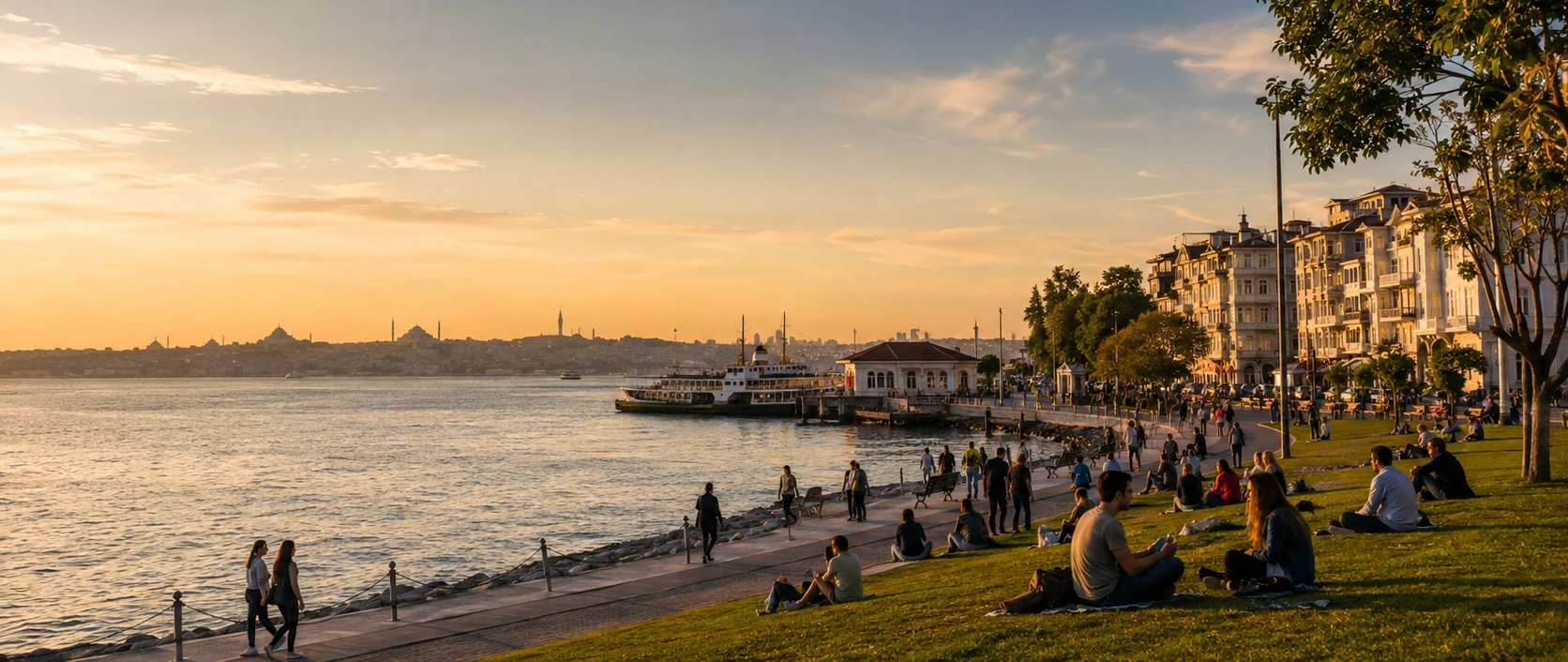
Walk beside the Sea of Marmara through parks, coastal paths and some of the Asian side's most popular sunset spaces.
See one of the neighborhood's great architectural symbols, restored as a public waterfront, cultural and reading space.
Discover the former Moda home of one of Turkey's most beloved musicians, now preserved as a museum.
Explore independent coffee shops, bakeries, restaurants, side streets and the relaxed social life that makes Moda famous.
Essential information about Moda's location, waterfront, history, atmosphere, major sights, cultural identity and the best way to explore this famous Kadıköy neighborhood.
On Istanbul's Asian side, immediately south of central Kadıköy beside the Sea of Marmara.
Moda is a historic neighborhood identity within the wider Caferağa area of Kadıköy.
Waterfront parks, cafés, historic streets, sea views, architecture, cultural life and sunset walks.
Moda Pier is one of the area's most recognizable waterfront buildings.
Barış Manço lived in Moda, and his former home is now a museum dedicated to his life and career.
Walk slowly, stop for coffee or dessert and finish beside the sea in the late afternoon.
Late afternoon through sunset is especially atmospheric along the waterfront.
Allow at least three hours; a half day works beautifully when combined with central Kadıköy.
Moda is important because it represents a form of Istanbul that is easy to miss when sightseeing is focused only on monumental history.
Rather than an imperial center, Moda developed primarily as a residential and recreational neighborhood.
Its story is connected with the transformation of Kadıköy during the 19th and early 20th centuries, when improved ferry transportation encouraged permanent settlement on the Asian shore and wealthy families increasingly built houses and mansions in districts overlooking the Sea of Marmara.
Muslim, Greek, Armenian, Levantine and other communities contributed to the broader social and architectural landscape of Kadıköy and Moda.
That layered past survives not through one enormous monument but through streets, schools, churches, houses, apartment buildings, gardens and neighborhood institutions.
Moda is equally important to modern Istanbul culture.
Musicians, writers, theatre audiences, students, artists and café culture have all helped create an identity that feels simultaneously residential, creative and intensely local.
For visitors, this makes Moda one of the best places to understand how Istanbul functions beyond its historic tourist core.
The wider landscape around Moda forms part of one of the oldest inhabited zones on Istanbul's Asian shore.
Ancient Chalcedon developed in the area between the modern Kadıköy waterfront, Moda Cape and the inlet around Kurbağalıdere, although centuries of continuous settlement mean that the ancient city is difficult to recognize in today's streets.
During the Ottoman period, the wider Kadıköy countryside contained gardens, vineyards, meadows and excursion grounds.
Moda, Haydarpaşa, Yoğurtçu and Kuşdili became associated with recreation and open space rather than the dense urban fabric of the Historic Peninsula.
The decisive transformation came during the 19th century.
Improved ferry connections made Kadıköy increasingly practical as a permanent place of residence, and settlement expanded from the historic market center toward Bahariye, Caferağa, Moda and farther east.
By the late 19th century, Moda was developing into a desirable residential area associated especially with affluent non-Muslim and Levantine families as well as the wider cosmopolitan society of late Ottoman Istanbul.
Garden houses, mansions, schools and religious buildings appeared throughout the neighborhood.
During the Republican period, apartment construction gradually replaced many older houses, while the neighborhood became increasingly integrated into metropolitan Istanbul.
Yet Moda preserved a strong sense of identity through its shoreline, established institutions, tree-lined streets and cultural life.
The wider Moda and Kadıköy area overlapped with the historical landscape of ancient Chalcedon.
Moda's meadows formed part of the wider excursion and recreation landscape around Kadıköy.
Ferries and suburban growth helped transform Moda into a permanent and fashionable residential district.
Affluent families, including non-Muslim and Levantine residents, contributed to Moda's cosmopolitan architectural character.
Apartment development changed the streetscape while cultural institutions and neighborhood life remained strong.
Moda is one of Istanbul's most popular areas for cafés, coastal recreation, culture and residential life.
Understanding Moda requires remembering that Istanbul once contained many seasonal waterfront landscapes beyond the densely built historic city.
For generations, the Asian shore offered gardens, meadows and places where residents of the city could escape the crowded peninsula.
Moda's location on a breezy promontory beside the Sea of Marmara made it especially attractive for recreation and summer residence.
As ferry services improved and Kadıköy became easier to reach, temporary excursion culture gradually developed into permanent suburban life.
Families built houses with gardens, schools and community institutions expanded, and the neighborhood became increasingly connected with the commercial center around Kadıköy Market.
The result was a distinctive urban environment: close enough to central Istanbul for daily life, yet separated enough to retain a quieter seaside character.
Moda is one of Istanbul's most rewarding neighborhoods for travelers who enjoy architecture at street level.
The district does not preserve one continuous historical style.
Instead, its streets reveal layers of urban change: older houses, late Ottoman and early Republican residences, masonry apartment buildings, modern blocks and occasional surviving garden walls appear side by side.
Look for projecting bay windows, decorative balconies, wooden details, patterned façades, entrance doors, stairways and small gardens hidden behind walls.
Some of the most beautiful streets are not famous enough to appear on conventional sightseeing lists.
This is exactly why walking without a rigid route works so well in Moda.
Scattered older residences preserve the scale of Moda before apartment development transformed the district.
Decorative masonry apartment buildings illustrate the modernization of residential Istanbul.
Walls, trees and remaining gardens offer glimpses of Moda's former suburban character.
Later apartment blocks are part of the neighborhood's continuing evolution rather than separate from its history.
The waterfront is the emotional center of Moda.
Streets descending through the neighborhood eventually open toward a broad coastal landscape facing the Sea of Marmara.
The atmosphere is completely different from the busy ferry terminals of central Kadıköy.
Here, residents come to walk, run, sit on the grass, meet friends, read, exercise, drink tea or simply watch boats cross the water.
The coastline curves around Moda Cape, creating changing views toward the Historic Peninsula, the Marmara Sea and the distant urban skyline.
Late afternoon is particularly beautiful as the light softens and the European side becomes silhouetted across the water.
The coastal paths allow an easy break from the dense commercial streets of central Kadıköy.
Arrive before golden hour and stay as the light changes over the Sea of Marmara.
Evenings reveal how strongly the waterfront functions as a social space for residents.
Use the shoreline, ferries, silhouettes and distant skyline to create layered Istanbul compositions.
The Moda Pier — Moda İskelesi is one of the neighborhood's most distinctive architectural landmarks.
The elegant waterfront structure was designed by Vedat Tek, one of the leading architects associated with the First National Architectural Movement in the late Ottoman and early Republican period.
The pier dates from the final years of the Ottoman Empire and reflects a time when maritime transport played a central role in the development of Istanbul's suburban waterfront neighborhoods.
For residents, the pier was more than transport infrastructure.
It connected Moda physically and socially with the rest of Istanbul and helped reinforce the identity of the neighborhood as a seaside residential district.
After decades of changing use and periods of neglect, the building underwent a major restoration and reopened to the public in 2022.
The restored building combines its historic pier identity with public cultural functions including reading, café and gathering spaces.
Vedat Tek, an important figure in the First National Architectural Movement.
The pier connected the developing Moda neighborhood with Istanbul's maritime transport network.
A major restoration returned the historic building to public use in 2022.
The building functions as both a historic waterfront landmark and a public cultural space.
Few personalities are associated with Moda as strongly as Barış Manço.
Singer, songwriter, television personality and one of the best-known figures in modern Turkish popular culture, Manço lived and worked in a historic house in the neighborhood.
The address became so closely associated with him that the phrase “Moda 81300” became part of his public identity for generations of fans.
After his death, the house was transformed into the Barış Manço House Museum with the involvement of his family and Kadıköy Municipality.
The museum opened to the public in 2010 and presents objects connected with his music, stage identity, clothing, collections, instruments and personal life.
For international visitors who do not already know his work, the museum provides a valuable introduction to a cultural figure whose influence in Turkey reaches far beyond music alone.
A pioneering Turkish musician and television personality remembered across several generations.
He lived and created much of his work in the neighborhood, making the house part of his public story.
The house opened as a museum in 2010.
Personal objects, costumes, instruments, displays and rooms connected with his life and career.
Moda's historical character was shaped by a variety of communities rather than a single cultural tradition.
During the late Ottoman period, the wider Kadıköy and Moda area attracted Muslim, Greek Orthodox, Armenian, Levantine and other residents who contributed to its residential, educational and religious landscape.
Historic schools, churches, houses and apartment buildings remain among the most visible traces of that multicultural urban history.
Unlike neighborhoods where heritage is concentrated around a monumental religious complex, Moda's story is dispersed through ordinary streets.
A school façade, old house, garden wall or church entrance may appear unexpectedly between modern apartment blocks and cafés.
Education has long played an important role in the identity of Moda and the wider Caferağa area.
Several long-established schools stand within or close to the neighborhood, contributing large historic campuses and institutional architecture to the streetscape.
The most famous is Saint-Joseph French High School, whose history reaches back to the 19th century and reflects the international character of late Ottoman Kadıköy.
Nearby educational institutions have continued to make the area particularly attractive to students, teachers and families.
This educational presence helps explain why bookstores, cafés, theatres and cultural venues fit so naturally into Moda's modern identity.
Modern Moda is inseparable from café culture.
Independent coffee shops, bakeries, dessert shops, tea gardens and casual restaurants occupy streets throughout the neighborhood.
Some visitors come specifically for specialty coffee, while others prefer traditional Turkish coffee, tea, pastries or ice cream before walking to the waterfront.
The important thing is not to chase one famous café.
Moda's strength comes from the density of choices and the way cafés function as extensions of neighborhood life.
Students work at tables, friends meet for long conversations, residents stop with dogs after a walk and visitors use cafés as pauses between the busier streets of Kadıköy and the waterfront.
Independent coffee shops are especially concentrated around the residential streets leading toward the coast.
Traditional coffee remains easy to find and provides a slower alternative to modern espresso culture.
Pastries, breads and savory snacks make excellent stops during a long neighborhood walk.
Moda is particularly popular for casual dessert stops before or after an evening walk.
Moda is an excellent eating neighborhood, but it offers a different experience from nearby Kadıköy Market.
Central Kadıköy is strongest for traditional market foods, delicatessens, fishmongers and meyhanes, while Moda adds a more residential mix of breakfast places, cafés, bakeries, casual restaurants and contemporary dining.
Slow breakfasts with eggs, cheese, olives, bread, tea and regional ingredients fit naturally into Moda's weekend rhythm.
Choose a bakery stop when you want something quick before continuing toward the coast.
Small restaurants offer everything from Turkish home-style cooking to contemporary international dishes.
For a more traditional dinner, continue toward the Kadıköy market and meyhane streets.
Pastry shops and ice-cream stops are especially popular during afternoon and evening walks.
Moda offers both traditional Turkish coffee and one of the Asian side's strongest specialty-coffee scenes.
One of Moda's greatest advantages is the amount of public outdoor space available within walking distance of dense urban streets.
The coastal green areas around Moda are used throughout the year for walking, sitting, exercise, picnics and informal social gatherings.
To the east, Yoğurtçu Park extends toward Kurbağalıdere and creates another important recreational corridor between central Kadıköy and the wider Kalamış area.
These spaces are not ornamental parks created primarily for sightseeing.
They are intensely used pieces of everyday Istanbul.
Best for sea views, sunset, sitting on the grass and long coastal walks.
A green corridor near Kurbağalıdere popular for walking, exercise and neighborhood recreation.
Quieter conditions make the parks especially pleasant for walking or running.
Expect much livelier social activity, particularly in warm weather and at weekends.
Moda's cultural identity extends far beyond the Barış Manço House.
The neighborhood forms part of the wider Kadıköy cultural landscape, one of contemporary Istanbul's strongest concentrations of theatres, independent performance spaces, cinemas, bookshops and music venues.
Moda itself often feels more intimate than central Kadıköy.
Creative life appears through small theatres, neighborhood stages, music schools, cafés, bookstores and cultural organizations rather than enormous institutions.
This gives the district a particularly strong connection with students, artists, writers and musicians.
Travelers staying several days in Istanbul should check current theatre, cinema and performance programs before visiting.
The historic-style tram that loops through central Kadıköy and Moda has become one of the district's most recognizable visual symbols.
It connects the commercial energy around Bahariye with the quieter streets closer to Moda and provides an atmospheric way to understand the relationship between the two neighborhoods.
For visitors, however, the tram should be treated as part of a walking day rather than a substitute for walking.
Moda's character is found in its side streets, building details and small cafés, many of which are best discovered on foot.
Sunset is one of the strongest reasons to include Moda in an Istanbul itinerary.
From the shoreline, the view opens across the Sea of Marmara toward the European side.
The exact position of the setting sun changes with the season, but late-afternoon light consistently transforms the waterfront into one of the district's most atmospheric environments.
Rather than standing at one formal viewpoint, residents spread along the coast, sit on the grass, occupy benches or pause beside the water.
That informal character is part of the experience.
Best for quiet streets, breakfast, architecture photography and a peaceful waterfront walk.
Combine the neighborhood with Kadıköy Market before continuing toward Moda.
Ideal for cafés, Barış Manço House, side streets and relaxed neighborhood exploration.
The best period for the shoreline, Moda Pier and warm architectural photography.
Stay for dinner, dessert, cafés and the social atmosphere around the coast.
Generally easier for quiet photography and slow walking through residential streets.
Very lively, especially during pleasant weather, but cafés and the waterfront can become crowded.
Mild weather makes these seasons especially comfortable for long neighborhood walks.
Enough for a quick walk through central Moda and a short stop at the waterfront.
A good introduction including historic streets, Moda Pier, café time and the coast.
Recommended if you want Barış Manço House, architecture, cafés, parks and sunset.
Allow at least five to six hours to enjoy the market, Bahariye and Moda without rushing.
Add Yeldeğirmeni, Haydarpaşa or farther Asian-side neighborhoods before finishing in Moda.
Excellent for sunset, dinner and cafés, but you will miss museums and much of the daytime architecture.
Moda is one of Istanbul's best neighborhoods for photographers who prefer atmosphere to monumental architecture.
Within a relatively small area you can photograph historic façades, tram tracks, leafy streets, café windows, street animals, ferries, shoreline activity and distant skyline views.
Explore residential side streets in the morning when façades are easier to see and traffic is lighter.
Moda Pier is the neighborhood's strongest standalone architectural subject.
Look for the nostalgic tram moving between cafés, pedestrians and older buildings.
Use the curving coastline to frame ferries, people and the distant skyline.
Golden hour gives the shoreline and historic façades warmer, softer tones.
Stay beside the coast as the European skyline darkens across the water.
Moda is highly walkable, but the neighborhood is not completely flat.
Several streets descend toward the coast and require an uphill return toward Bahariye or central Kadıköy.
Main streets and waterfront areas are generally easier to navigate than narrow older side streets, where pavements may contain curbs, uneven surfaces or obstacles.
The coastal paths provide some of the easiest open walking space in the district, although crowd levels rise significantly during evenings and weekends.
The easiest way for most visitors is to reach central Kadıköy first and continue into Moda on foot.
If you are staying on the European side, the ferry journey to Kadıköy is part of the experience.
From the ferry terminals, walk through the market or toward the Bull Statue, continue along Bahariye and then follow the streets into Caferağa and Moda.
The nostalgic tram can shorten part of the route and adds atmosphere, while buses and taxis are useful if you want to reach the waterfront directly.
Take the ferry to Kadıköy, then continue through the center toward Moda.
Cross by ferry to Kadıköy and walk inland through Bahariye or Caferağa.
Take a ferry to Kadıköy and continue on foot or by local transport.
Use the M4 line to central Kadıköy and walk or continue locally toward Moda.
The Kadıköy–Moda nostalgic tram provides a scenic local connection through the district.
Useful for direct access to the coast, Barış Manço House or Moda Pier when walking is difficult.
Moda is best explored on foot and includes slopes between the upper streets and waterfront.
Verify Barış Manço House opening information if it is a priority.
Late afternoon and golden hour are the most atmospheric times for the waterfront.
Popular cafés and parks can become very busy on pleasant Saturdays and Sundays.
Historic architecture and small independent businesses frequently sit away from the principal route.
Ferries, metro, tram and buses make it easy to combine Moda with other Istanbul districts.
The neighborhood is about atmosphere and local life as much as individual attractions.
Keep noise low in residential streets, particularly during late-evening walks.
This route begins at the edge of central Kadıköy and gradually moves from busy cultural streets into Moda's quieter residential and waterfront landscape.
This itinerary works best in the afternoon so that the visit naturally ends on the waterfront around sunset.
For first-time visitors, combining central Kadıköy and Moda creates one of the most complete neighborhood experiences on Istanbul's Asian side.
Travelers who want to experience several distinct Asian-side neighborhoods can combine the Bosphorus atmosphere of Üsküdar with the market culture of Kadıköy and the relaxed waterfront of Moda.
Explore the food market, Bull Statue, Bahariye, Süreyya Opera House, ferries, bookshops and nightlife.
Continue east for waterfront parks, historic recreation areas and views around the peninsula.
Walk or travel farther along the coast toward marinas, parks and residential Asian-side Istanbul.
Discover Ottoman waterfront mosques, ferries, markets and classic Bosphorus scenery.
Continue to Salacak for one of Istanbul's most famous Bosphorus landmarks and waterfront views.
Explore colorful houses, churches, synagogues, mosques and one of the Asian side's most atmospheric historic neighborhoods.
Travel uphill for monumental modern mosque architecture and extensive views over Istanbul.
Continue planning with Istanbul's palaces, mosques, churches, museums, markets and historic neighborhoods.
Moda is on the Asian side of Istanbul, immediately south of central Kadıköy beside the Sea of Marmara.
Yes. Moda is one of the best-known historic neighborhood identities within Kadıköy and lies largely within the Caferağa area.
Absolutely. Moda is one of Istanbul's best areas for waterfront walks, cafés, historic streets, local life, architecture and sunset views.
Moda is famous for its waterfront, cafés, historic pier, Barış Manço House, residential streets, parks and relaxed Asian-side atmosphere.
Moda Pier is a historic ferry pier designed by architect Vedat Tek and one of the neighborhood's most distinctive waterfront landmarks.
The historic building underwent a major restoration and reopened to public use in 2022.
The restored building has public cultural functions, but access and operational arrangements can change. Check current conditions before making the interior your main reason for visiting.
Barış Manço was one of Turkey's most beloved musicians and television personalities and became closely associated with the Moda neighborhood.
Yes. His former Moda home functions as the Barış Manço House Museum. Check current opening days, hours and ticket arrangements before visiting.
The museum opened to the public in 2010.
Late afternoon is excellent because you can explore the streets and cafés before reaching the waterfront for golden hour and sunset.
The coastal parks and walking areas around Moda Cape and Moda Pier provide some of the neighborhood's best sunset views.
Allow at least two to three hours. A half day is better if you want to include Barış Manço House, coffee, architecture and sunset.
Yes. Walking from central Kadıköy through Bahariye and Caferağa into Moda is one of the best ways to experience the district.
Central Moda is comfortably reachable on foot from the Kadıköy ferry area, although the exact walking time depends on your route and final destination within the neighborhood.
Yes. The Kadıköy–Moda nostalgic tram provides a scenic local connection through parts of the district.
Yes. Moda is one of Istanbul's strongest neighborhoods for independent cafés, specialty coffee, bakeries, desserts and casual dining.
Yes. Parks, waterfront space, cafés and pedestrian-friendly areas make Moda enjoyable for many families, particularly during the daytime.
Yes. The neighborhood remains lively with restaurants, cafés and evening walks, while nearby central Kadıköy offers a much larger concentration of bars, meyhanes and live music.
Prices vary widely. Fashionable cafés and restaurants can be relatively expensive, but bakeries, local food and simple café stops still provide many different budget options.
Weekdays are quieter and better for slow walking and photography, while weekends offer a livelier atmosphere but significantly larger crowds.
Yes. This is the best combination for most visitors: explore Kadıköy Market first and finish the day in Moda.
Yes. Üsküdar, Kadıköy and Moda can form an excellent full-day introduction to Istanbul's Asian side.
Yes. Kuzguncuk adds historic houses and multicultural Bosphorus heritage before a later visit to Kadıköy and Moda.
No. Moda is easy to explore independently, but a knowledgeable guide can add context about architecture, late Ottoman suburban history, multicultural heritage and modern cultural life.
Moda is popular with visitors, but it remains first and foremost a heavily used residential and social neighborhood for Istanbul residents.
Moda is a residential neighborhood, not an open-air attraction created for visitors.
Do not block apartment doors, pavements or driveways while photographing buildings.
Request permission before photographing residents or café customers at close range.
Keep noise low when leaving restaurants, cafés or bars late in the evening.
Dispose of rubbish properly and leave busy waterfront spaces clean for other visitors.
Private historic houses should be appreciated from public space unless visitor access is clearly offered.
Independent cafés, bakeries, shops and cultural venues are a major part of Moda's identity.
Moda is best experienced as a living neighborhood rather than a checklist of attractions.
Discover a more local side of Istanbul through a private route combining Moda's waterfront and residential heritage with Kadıköy's markets, food, ferries and cultural life — without compulsory shopping stops.
Create a private neighborhood route focusing on markets, food, architecture, music, historic streets, cafés, waterfront scenery and everyday Istanbul according to your interests.
Ask us about a tailor-made route combining Kadıköy Market, Bahariye, Moda's historic streets, Barış Manço House, cafés, architecture and the waterfront.
Request a Custom Tour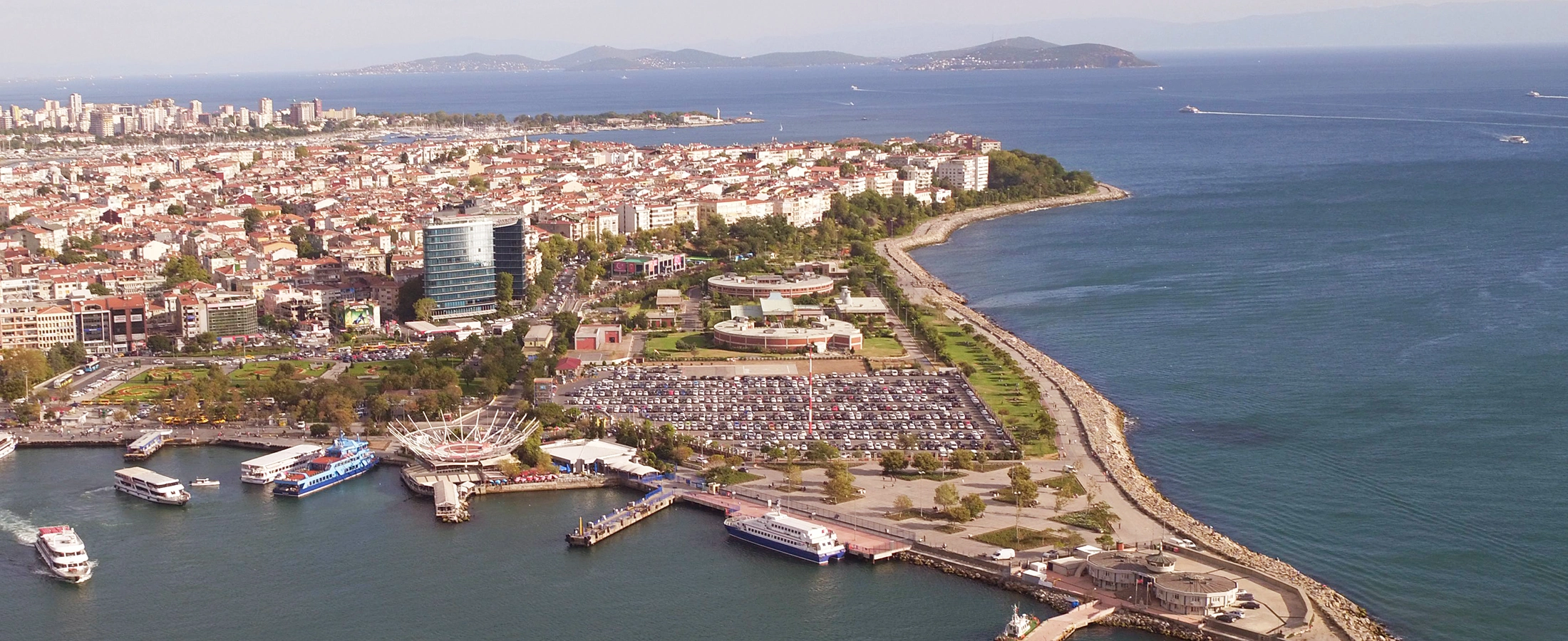
Begin with Kadıköy's food market, ferries and cultural streets before walking through Bahariye into Moda for coffee, architecture and sunset.
Explore KadıköyCombine Moda with Kadıköy, Üsküdar, Kuzguncuk, Çengelköy, Çamlıca Mosque, Maiden's Tower or other Asian-side neighborhoods according to your interests and available time.
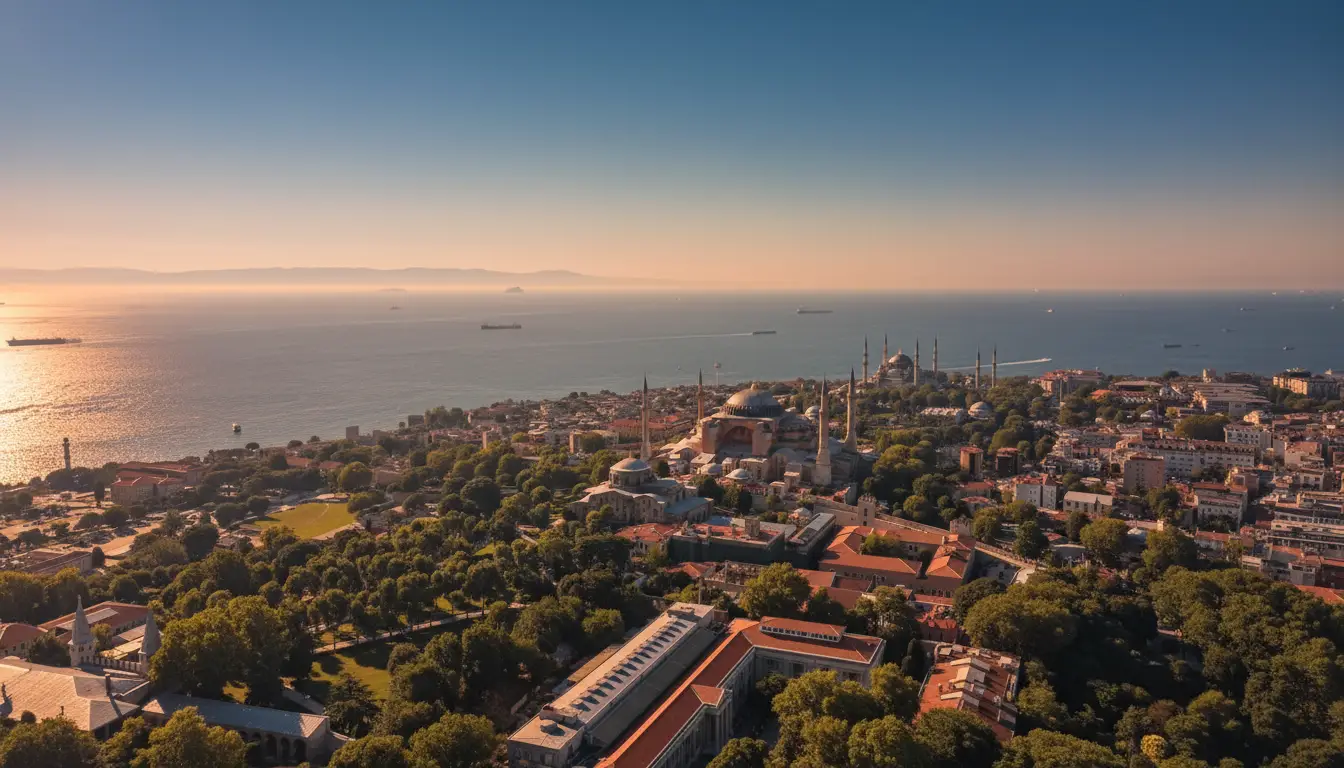
Create a private Istanbul itinerary around neighborhoods, food, Byzantine and Ottoman history, Bosphorus scenery, local culture and panoramic viewpoints.
View Private Istanbul Tours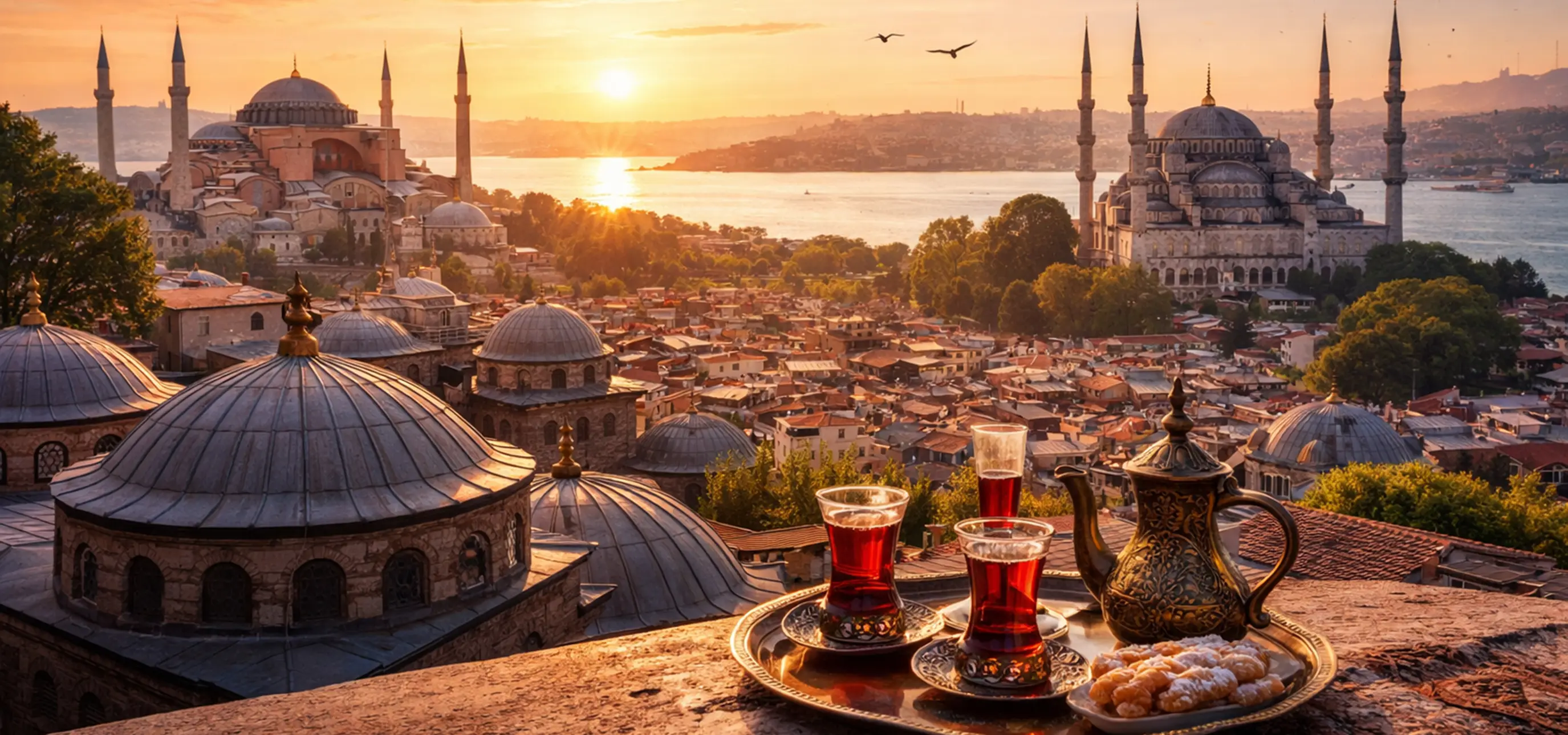
Continue planning with Istanbul's mosques, churches, palaces, museums, bazaars, Bosphorus districts, markets and historic neighborhoods.
Explore Istanbul