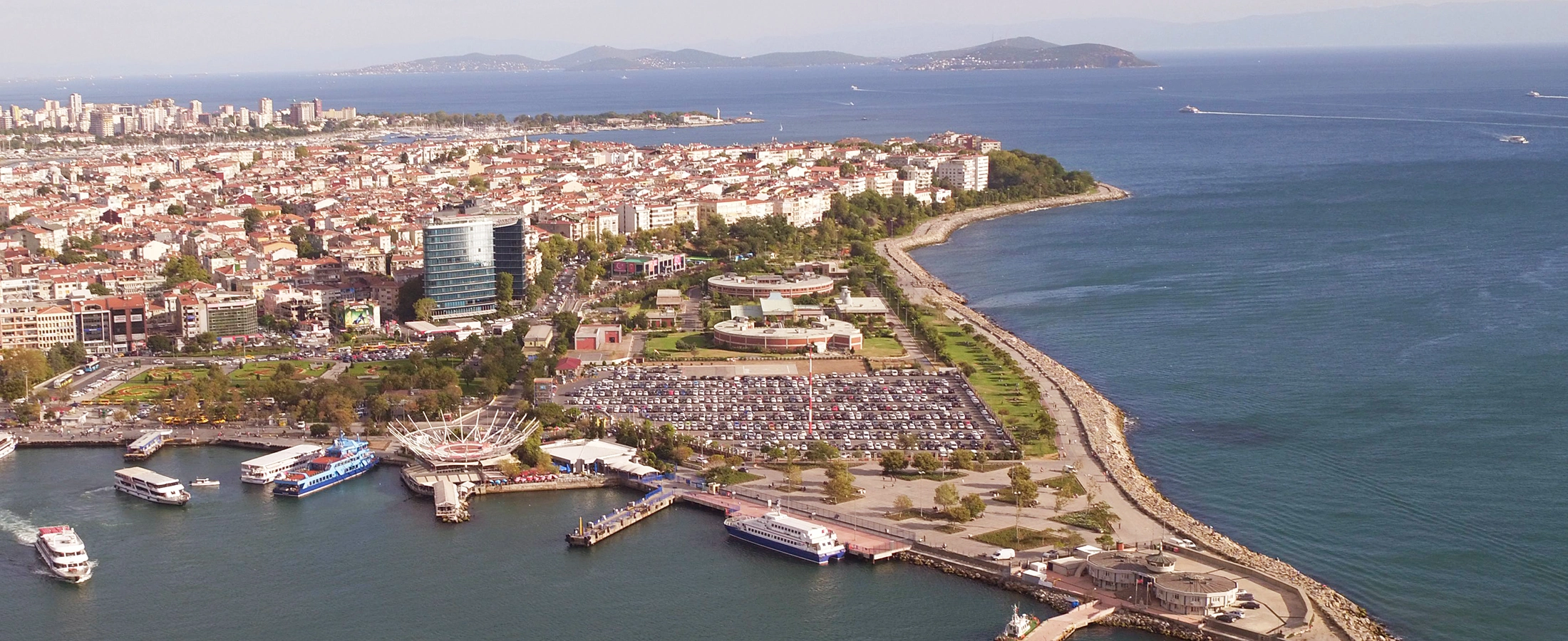
Private Kadıköy & Moda Tour
Ask us about a tailor-made Kadıköy experience focusing on market culture, food, ancient Chalcedon, Bahariye, Moda, neighborhood history and the Asian-side waterfront.
Request a Custom Tour



Across the water from Istanbul's Historic Peninsula lies a completely different urban world.
Kadıköy is one of the most energetic, walkable and culturally rich districts on Istanbul's Asian side — a place shaped as much by ferries, markets, cafés, theatres and neighborhood life as by monuments.
The historic center stretches inland from the ferry piers through the famous Kadıköy Market, the streets around Altıyol and the Bull Statue, lively Bahariye Avenue and eventually toward Moda.
To the north, Yeldeğirmeni preserves historic apartment buildings, multicultural religious heritage and one of Istanbul's strongest concentrations of street art and independent cafés.
Beyond it rises Haydarpaşa Train Station, one of the city's great architectural symbols and for generations the railway gateway between Istanbul and Anatolia.
Kadıköy's history reaches far deeper than its modern streets. The area formed part of ancient Chalcedon — Halkedon, an important settlement opposite Byzantium whose name appears repeatedly in the political and religious history of the ancient world.
Today, however, Kadıköy's greatest attraction is not a single monument.
It is the combination of market culture, food, ferries, historic buildings, theatres, churches, bookshops, record stores, street life, waterfront parks and local neighborhoods.
For travelers who want to experience Istanbul beyond the major monuments of Sultanahmet, Kadıköy is one of the best places in the entire city.
Explore fishmongers, cheese shops, bakeries, delicatessens, restaurants, meyhanes and some of Istanbul's liveliest food streets.
Walk from Bahariye toward Moda for cafés, parks, historic houses, sea views and one of Istanbul's favorite sunset neighborhoods.
Discover the district's ancient identity as Chalcedon and its connection with one of the most important councils in early Christian history.
Ride ferries, browse bookshops, drink coffee, visit markets and experience the rhythm of a district still shaped primarily by its residents.
Essential information about Kadıköy's location, ancient history, market district, Moda waterfront, cultural life, transport connections and the best way to experience Istanbul's Asian side.
On Istanbul's Asian side, facing the Bosphorus entrance and Sea of Marmara.
The historic settlement was known as Chalcedon, or Halkedon.
Arriving by ferry from the European side gives one of the most atmospheric introductions to Kadıköy.
Food markets, cafés, restaurants, meyhanes, ferries, arts, bookshops and neighborhood life.
Süreyya Opera House is one of the architectural and performing-arts landmarks of Bahariye.
The bronze Bull Statue at Altıyol is Kadıköy's best-known meeting point.
Moda offers parks, coastal walks, historic streets and excellent sunset views.
Allow at least half a day, although Kadıköy easily rewards a complete day.
Kadıköy is important because it reveals a side of Istanbul that many first-time visitors barely encounter.
While Sultanahmet is defined by monumental imperial architecture and Beyoğlu by the historic European commercial city, Kadıköy is shaped primarily by neighborhood life.
People come here to shop for fish and vegetables, meet friends beside the Bull Statue, attend a performance, browse books and records, drink coffee, eat in a meyhane, walk along the coast or catch a ferry across the city.
Its transportation role is equally important.
For generations, ferry piers and railway connections made Kadıköy one of Istanbul's principal gateways between the European city, the Asian suburbs and the wider regions of Anatolia.
At the same time, its historical foundations reach into antiquity through Chalcedon, while churches, mosques and synagogues preserve memories of the diverse communities that shaped the district during the Ottoman period.
Kadıköy therefore works on several levels simultaneously: ancient settlement, transport hub, food district, residential center, cultural quarter and one of modern Istanbul's most distinctive social landscapes.
Human settlement in the wider Kadıköy area reaches back thousands of years.
Archaeological discoveries associated with the Fikirtepe culture demonstrate that communities lived on Istanbul's Asian side long before the emergence of the classical cities that later dominated the region.
During antiquity, a Greek settlement developed here under the name Chalcedon, known in Turkish as Halkedon.
Its position opposite the later city of Byzantium connected it with trade, maritime activity and the wider political struggles of the Bosphorus region.
Chalcedon passed through Persian, Hellenistic, Roman and Byzantine periods and became especially famous in Christian history because of the Council of Chalcedon in 451.
During the medieval centuries, the settlement experienced repeated military pressure because of its exposed position close to Constantinople.
Ottoman control expanded into the area during the 14th century.
Following the Ottoman conquest of Constantinople in 1453, the district became associated with Hızır Bey, the first Ottoman judge — kadı — of Istanbul.
Tradition connects this association with the name Kadıköy, literally referring to the village or settlement of the judge.
For centuries afterward, the area remained partly agricultural and partly suburban, with gardens, meadows, waterfront estates and excursion grounds.
The 19th century transformed Kadıköy dramatically as regular maritime transport, population growth, new neighborhoods and railway development connected the district ever more closely with the expanding metropolis.
By the early 20th century, Kadıköy had become one of the principal residential and cultural centers of Istanbul's Asian side.
Fikirtepe preserves evidence of some of the earliest known settled communities around Istanbul.
Chalcedon developed as an important Greek settlement on the Asian shore opposite Byzantium.
The Council of Chalcedon became one of the major councils in early Christian history.
The district became associated with Hızır Bey and gradually acquired the name Kadıköy.
Ferries, suburban growth and railway development transformed Kadıköy's connection with central Istanbul.
Kadıköy is one of Istanbul's strongest centers of food, culture, transport, nightlife and residential life.
Long before the name Kadıköy appeared, the area was associated with the ancient city of Chalcedon.
The ancient settlement occupied the Asian shore close to today's Kadıköy and Moda area, although centuries of continuous occupation and urban construction mean that very little of the classical city can be understood at street level today.
Chalcedon's location gave it strategic importance.
It stood close to the entrance of the Bosphorus and directly opposite the future imperial city of Constantinople.
The settlement participated in the complicated political history of the region, passing through the influence or control of different powers including the Persians, Hellenistic kingdoms and Rome.
Under the Roman and Byzantine worlds, Chalcedon remained closely connected with Constantinople across the water.
Its greatest surviving historical association, however, is not an ancient temple or theatre but an event: the Council of Chalcedon in 451.
One of the most famous legends connected with Kadıköy concerns the supposed “blindness” of the people of Chalcedon.
Ancient and later traditions describe settlers arriving on the European shore and wondering why the Chalcedonians had chosen the Asian side when the peninsula opposite offered what they considered a superior natural harbor and strategic position.
The inhabitants across the water were therefore described metaphorically as blind for failing to recognize the better site.
The story became closely linked with legends surrounding the foundation of Byzantium.
It should not be interpreted literally as an ancient nickname used universally by the city's inhabitants.
Instead, it belongs to the rich body of foundation stories through which ancient writers explained the geography and destiny of the Bosphorus cities.
Kadıköy's ancient identity occupies an extraordinary place in Christian history because of the Council of Chalcedon.
The council assembled in 451 AD during the reign of the Eastern Roman Emperor Marcian.
Hundreds of bishops participated in discussions that addressed major theological disputes concerning the nature of Christ.
The resulting Chalcedonian definition became enormously influential in the development of Christianity and remains fundamental to the theological traditions of many Christian churches.
The meetings were associated with the great church dedicated to Saint Euphemia in Chalcedon.
That monumental sanctuary no longer survives as an identifiable ancient building in modern Kadıköy.
Visitors should therefore think of the council as part of the historical landscape beneath the modern city rather than expect a preserved council hall comparable with the later churches of Istanbul's Historic Peninsula.
The council met in 451 AD.
Ancient Chalcedon, corresponding broadly with today's Kadıköy area.
The sessions were traditionally associated with the important church dedicated to Saint Euphemia.
The council became one of the defining theological gatherings of early Christianity.
After the Ottoman conquest of Constantinople, the old Chalcedon landscape gradually acquired a new identity.
The area became associated with Hızır Bey, remembered as the first Ottoman kadı, or judge, of Istanbul.
The name Kadıköy is traditionally explained as meaning the “village of the judge”.
For much of the Ottoman period, the district remained less densely urbanized than the great neighborhoods of the Historic Peninsula.
Gardens, agricultural land, meadows, waterfront houses and seasonal residences gave the Asian shore a more open character.
Haydarpaşa, Fenerbahçe, Moda and the surrounding landscape became associated with recreation, gardens and excursion culture.
Mosques, churches, fountains and community institutions gradually appeared as Muslim, Greek Orthodox, Armenian and Jewish populations became increasingly established across the wider district.
By the 19th century, improved transport and Istanbul's expanding population began turning Kadıköy from a semi-rural suburban landscape into an increasingly permanent residential center.
Transportation transformed Kadıköy more than almost any other force.
Regular ferry connections made it practical for residents to live on the Asian shore while conducting business on the European side.
Kadıköy's waterfront therefore became a daily gateway used by workers, students, merchants and families.
Railway development added another dimension.
Haydarpaşa became the great rail entrance to Anatolia, eventually acquiring its monumental station building in the early 20th century.
Residential streets expanded through Moda, Yeldeğirmeni, Kızıltoprak, Göztepe, Erenköy and farther east.
Theatre, cinema, sporting clubs, schools and new apartment buildings reflected the growth of a modern metropolitan society.
Even today, Kadıköy's identity remains inseparable from movement.
Ferries arrive and depart constantly, buses and metro lines converge around the center, and pedestrians flow between the piers, market streets, Bahariye and Moda.
For many visitors, the best introduction to Kadıköy begins on the water.
Ferries crossing from the European side provide views of Istanbul that no road journey can reproduce.
Domes and minarets gradually recede behind the boat while the Asian shoreline grows larger ahead.
The Kadıköy waterfront is not simply a tourist arrival point.
It is one of Istanbul's busiest everyday transportation landscapes.
Commuters move between ferry terminals, buses, metro entrances and neighborhood streets from early morning until late at night.
The waterfront also provides wide views toward the Historic Peninsula, the entrance of the Bosphorus and the Sea of Marmara.
The streets behind the ferry piers contain one of Istanbul's most enjoyable food districts.
Usually described collectively as Kadıköy Market or Kadıköy Çarşısı, this is not a single monumental covered bazaar.
Instead, it is a dense network of pedestrian streets filled with fishmongers, fruit and vegetable sellers, cheese shops, olive counters, pickle stores, bakeries, confectioners, spice shops, delicatessens, restaurants and traditional meyhanes.
That distinction is important.
Kadıköy Market remains part of ordinary neighborhood life rather than functioning primarily as a souvenir market.
Residents still shop here for ingredients while visitors come to taste regional foods and explore one of Istanbul's richest concentrations of small food businesses.
The market is particularly atmospheric in the late morning, when deliveries have arrived, counters are full and restaurants are preparing for lunch.
Fishmongers and seafood restaurants remain an important part of the traditional market landscape.
Specialist shops display regional cheeses, olives and other products from across Turkey.
Traditional pickle shops offer colorful jars of vegetables and strongly flavored brines.
Breads, pastries, börek and regional baked goods make the market excellent for casual tasting.
Traditional tavern culture remains part of Kadıköy's evening identity.
Contemporary restaurants and cafés sit beside much older food businesses throughout the district.
Kadıköy is one of the best districts in Istanbul for travelers who organize their day around food.
The greatest advantage is variety.
You can begin with Turkish breakfast, continue with a bakery snack, stop at a traditional lokanta for lunch, drink specialty coffee in the afternoon and finish with meze and seafood in a meyhane.
Look for eggs, cheeses, olives, tomatoes, bread, honey, kaymak and tea rather than limiting yourself to hotel breakfast.
Flaky savory pastries make an easy breakfast or quick market snack.
Small cold and warm dishes are central to traditional meyhane dining.
The market's historic connection with fish remains visible in both shops and restaurants.
Choose from prepared vegetable dishes, soups, stews and traditional home-style Turkish cooking.
Pastry shops and confectioners provide plenty of opportunities for baklava, puddings and seasonal sweets.
Traditional coffee remains easy to find beside the district's rapidly growing specialty-coffee culture.
A long dinner built around shared meze is one of the classic ways to finish a Kadıköy day.
Few monuments in Istanbul function so successfully as both artwork and meeting point as the Kadıköy Bull Statue.
The bronze sculpture was created in the 19th century by French sculptor Isidore Jules Bonheur.
After moving through several locations in Istanbul during its long history, the statue eventually reached its now-famous position at Altıyol in the late 20th century.
Today, almost everyone in Kadıköy understands the phrase “meet at the Bull.”
Its importance is therefore less about monumental scale and more about social geography.
The statue marks the transition between the waterfront market area and Bahariye, making it one of the best orientation points for first-time visitors.
From the Bull Statue, the natural route continues along the busy pedestrian spine generally known as Bahariye.
Shops, cafés, theatres, passages, bookstores and side streets make this one of the principal commercial and cultural corridors of Kadıköy.
The historic-style tram running between the Kadıköy center and Moda adds one of the district's most recognizable pieces of transport nostalgia.
Unlike Istanbul's much busier İstiklal Avenue, Bahariye often feels more strongly connected with surrounding residential neighborhoods.
Look beyond the main street.
Some of Kadıköy's best discoveries lie in the passages and narrow side streets running toward the market, Caferağa and Moda.
The most elegant architectural landmark on Bahariye is the Süreyya Opera House.
Süreyya İlmen Pasha initiated the building during the 1920s as an ambitious cultural and social venue for Kadıköy.
It formally opened in 1927.
Although designed with opera in mind, technical limitations meant that the building spent much of its early history functioning primarily as a cinema and entertainment venue.
Its architecture drew inspiration from European theatre design, with a particularly decorative foyer, ornamental interiors and a strongly cosmopolitan early-20th-century character.
Following restoration, the building reopened as an opera house in 2007.
Today it hosts opera, ballet, concerts and other performances and remains one of the strongest symbols of Kadıköy's cultural identity.
The project developed during the 1920s under Süreyya İlmen Pasha.
The historic building formally opened in 1927.
For decades it became closely associated with cinema and public entertainment.
Restoration allowed the building to reopen as a functioning opera venue in 2007.
Continue south from Bahariye and Kadıköy's urban energy gradually changes.
The streets become more residential, cafés appear between apartment buildings and the landscape eventually opens toward the waterfront of Moda.
Moda has long been one of Istanbul's desirable residential neighborhoods.
Historic houses, old apartment buildings, schools, churches, gardens and waterfront spaces preserve traces of its cosmopolitan suburban past.
Modern Moda is equally famous for contemporary café culture.
Independent coffee shops, bakeries, ice-cream shops, restaurants and small boutiques fill the streets.
The coast is particularly popular in the late afternoon and evening.
Residents sit on the grass, walk beside the sea, exercise, meet friends and watch the sun fall behind Istanbul's European skyline.
Historic Moda Pier provides one of the neighborhood's most attractive points of contact with the Sea of Marmara.
The pier recalls the period when maritime transport played an even greater role in connecting Istanbul's suburban waterfront communities.
Today, the restored waterfront setting is valued as much for its atmosphere as for transportation history.
The surrounding coast provides wide views across the water and is particularly attractive in soft late-afternoon light.
Combine the pier with a walk along the Moda shoreline rather than visiting it as an isolated stop.
Music lovers should look for the former home of Barış Manço, one of the most beloved figures in modern Turkish popular culture.
The musician, songwriter and television personality became closely associated with the Moda neighborhood.
His historic house now functions as a museum celebrating his life, music, clothing, instruments, personal collections and extraordinary public career.
For international visitors unfamiliar with his work, the museum can provide an excellent introduction to a cultural figure whose importance in Turkey extends far beyond music alone.
North of the main Kadıköy ferry district lies Yeldeğirmeni, one of the most rewarding neighborhoods for travelers interested in urban history rather than famous monuments.
Its name means windmill.
Historical accounts connect the neighborhood with windmills established during the Ottoman period to support the city's flour supply.
During the 19th and early 20th centuries, Yeldeğirmeni developed into a dense residential quarter populated by Muslim, Greek Orthodox, Armenian and Jewish communities.
Its surviving apartment buildings make the neighborhood particularly important in the architectural history of Istanbul's Asian side.
Decorative façades, bay windows, masonry construction and early apartment blocks create a streetscape very different from both Ottoman wooden-house neighborhoods and later modern developments.
In recent decades, Yeldeğirmeni has also become associated with murals, street art, studios, cafés and creative spaces.
The result is one of Kadıköy's most interesting combinations of old residential architecture and contemporary urban culture.
Look for early masonry apartment blocks with decorative façades and projecting windows.
Muslim, Jewish, Armenian and Greek communities all contributed to the neighborhood's development.
Large murals and smaller works have made Yeldeğirmeni one of Istanbul's best-known street-art neighborhoods.
Independent cafés and creative spaces now occupy many ground floors among the historic residential streets.
Few buildings on Istanbul's Asian shoreline possess the emotional power of Haydarpaşa Train Station.
The monumental station building was constructed between 1906 and 1908 during the reign of Sultan Abdülhamid II.
For generations, Haydarpaşa represented the beginning or end of railway journeys connecting Istanbul with Anatolia and destinations farther east.
Its position directly beside the water made the experience especially dramatic.
Travelers arriving from Anatolia stepped from the railway into a building overlooking Istanbul's maritime gateway.
The architecture differs strongly from classical Ottoman design, combining European influences with an imposing waterfront silhouette.
A major fire in 2010 caused serious damage to the roof and upper portions of the building.
Extensive restoration and archaeological work around the station complex has continued in subsequent years.
The wider Haydarpaşa project is transforming parts of the railway landscape into a major cultural, archaeological and public heritage area while preserving the historic identity of the station.
Kadıköy's historic identity cannot be understood through a single community.
Ottoman-era population growth brought Muslim, Greek Orthodox, Armenian and Jewish communities into neighborhoods around the market, Moda and Yeldeğirmeni.
Churches, synagogues and mosques remain visible reminders of that complex social landscape.
A historic Armenian church located close to the market and ferry district.
One of central Kadıköy's prominent Greek Orthodox landmarks and an important reminder of the district's Rum heritage.
Located in the Yeldeğirmeni area and connected with the neighborhood's historic Jewish community.
An important Muslim landmark close to the historic Kadıköy center.
Some religious buildings may have limited visiting hours or security arrangements.
Visitors should never assume that every church or synagogue functions as a conventional tourist attraction.
Kadıköy rewards visitors who enjoy browsing.
Around the market and Bahariye area, small shops specialize in second-hand books, records, comics, antiques, vintage objects and collectibles.
Tellalzade Street is particularly associated with antique dealers.
Nearby passages and side streets continue Kadıköy's long connection with students, readers, musicians and collectors.
This culture is an important reason Kadıköy feels different from Istanbul districts dominated by international retail chains.
Give yourself time to enter small passages rather than remaining exclusively on the principal streets.
Kadıköy is one of contemporary Istanbul's most active cultural districts.
Süreyya Opera House represents the formal performing arts, while smaller theatres, concert spaces, cultural centers and independent venues fill the surrounding neighborhoods.
Music is especially important.
Rock, alternative music, jazz, electronic music and traditional Turkish sounds can all be found within the wider Kadıköy nightlife scene.
Yeldeğirmeni adds street art and independent cultural production, while Moda contributes bookshops, cafés and smaller creative spaces.
Travelers staying several nights in Istanbul should consider checking current performance programs rather than limiting Kadıköy to daytime sightseeing.
Kadıköy changes character dramatically after sunset.
The market streets shift from daytime shopping toward restaurants and meyhanes.
Bahariye remains busy with theatres, cafés and pedestrians.
Side streets fill with bars, live-music venues and younger crowds, while Moda offers a slower evening atmosphere around cafés and the waterfront.
The district therefore works equally well for travelers seeking a traditional meyhane dinner or a more contemporary night out.
Best for exploring the food market while shops are active and streets are comparatively easy to navigate.
Excellent for combining the market with brunch, bakeries or an early lunch.
Continue through Bahariye toward Moda and explore shops, bookstores and cultural sites.
One of the best times to reach the Moda waterfront.
Stay for meyhane dining, performances, cafés, live music or neighborhood nightlife.
Usually easier for market photography and slower neighborhood exploration.
Extremely lively but noticeably more crowded, especially around Moda and the central market.
Comfortable temperatures make long walks between the market, Bahariye and Moda especially pleasant.
Enough for a quick ferry arrival, market walk, Bull Statue and part of Bahariye.
A good introduction including the market, Bahariye, Süreyya Opera House and central Moda.
Recommended for the market, lunch, Bahariye, Moda waterfront and café time.
Add Yeldeğirmeni, Haydarpaşa, Barış Manço House, churches, bookshops and an evening meal.
Excellent for restaurants, meyhanes, performances and nightlife, but you will miss much of the market atmosphere.
Ideal if you want one food-and-market day and a separate Moda, culture and nightlife experience.
Kadıköy is one of Istanbul's best districts for street photography because everyday activity is constantly changing.
Markets, ferries, shop signs, food counters, historic façades, street art, tram tracks and waterfront views provide completely different visual environments within a relatively compact area.
Visit in the morning when displays are full and food shops are actively serving customers.
Photograph arriving and departing boats from the waterfront while preserving space for commuters.
The Bull Statue provides one of the most recognizable Kadıköy street compositions.
Explore Yeldeğirmeni, Süreyya Opera House and the historic streets of Moda.
Head to the Moda coast for warm evening light across the Sea of Marmara.
Walk through Yeldeğirmeni and look beyond the principal roads for murals and smaller interventions.
Central Kadıköy is highly walkable, but accessibility varies considerably between streets.
Major ferry and metro facilities have modern infrastructure, while older neighborhood streets may contain uneven pavements, curbs, slopes and crowded pedestrian areas.
The market can become difficult to navigate during peak periods because of narrow streets and heavy foot traffic.
The route toward Moda also includes gradual elevation changes.
Visitors with reduced mobility may find it easier to concentrate on the waterfront, market center and principal Bahariye corridor rather than attempting every side street.
Kadıköy is one of the best-connected districts on Istanbul's Asian side.
For travelers staying in the historic European center, the most memorable route is usually by ferry.
Regular maritime connections link Kadıköy with major points on the opposite shore.
The M4 metro line connects central Kadıköy with neighborhoods farther east on the Asian side.
Marmaray and major bus connections provide additional options through nearby transport hubs.
Because central Kadıköy is extremely dense, driving is rarely the easiest choice for sightseeing.
Take a ferry across the water for one of Istanbul's classic commuter journeys.
Ferry connections provide an easy and scenic route to the Asian side.
Cross by ferry directly toward Kadıköy and begin at the waterfront.
The M4 line terminates in central Kadıköy and connects with eastern Asian-side districts.
Use nearby Asian-side interchange stations and continue locally toward the Kadıköy center.
Useful for connections with Üsküdar, Çamlıca or distant Asian-side neighborhoods but less convenient within the pedestrian center.
The maritime approach is part of the experience rather than merely transportation.
Kadıköy rewards walking and detours into small side streets.
The market is one of Istanbul's strongest areas for informal food exploration.
Kadıköy is about atmosphere as much as individual attractions.
Bookstores, cafés, historic façades and small shops frequently lie away from the main pedestrian routes.
Late afternoon works beautifully for the neighborhood and waterfront.
Central Kadıköy and Moda become extremely busy on pleasant Saturdays and Sundays.
Opera, theatre, concerts and exhibitions can turn a sightseeing day into a complete evening experience.
This route connects Kadıköy's strongest central experiences without unnecessary backtracking.
This itinerary works well for travelers who want a strong introduction without spending an entire day on the Asian side.
A complete day allows you to understand Kadıköy as a group of connected neighborhoods rather than simply a market beside the ferry terminal.
Travelers with limited time can combine two very different faces of Asian Istanbul in a single day.
Explore Ottoman waterfront mosques, markets, ferries and historic Bosphorus scenery north of Kadıköy.
Visit one of Istanbul's most iconic Bosphorus landmarks from the Salacak waterfront.
Discover colorful houses, churches, synagogues, mosques and one of Istanbul's most atmospheric historic neighborhoods.
Continue uphill to one of modern Istanbul's largest mosque complexes and panoramic Asian-side landmarks.
Continue east for marinas, waterfront parks, historic recreation areas and residential Istanbul.
Explore one of the Asian side's principal shopping and residential boulevards.
Travel north along the Asian Bosphorus for tea, bakeries, historic waterfront architecture and neighborhood life.
Continue planning with Istanbul's palaces, mosques, churches, markets, museums and historic neighborhoods.
Kadıköy is on the Asian side of Istanbul, facing the entrance of the Bosphorus and the Sea of Marmara.
Absolutely. It is one of the best districts for experiencing Istanbul's food culture, ferries, markets, arts, cafés and local neighborhood life.
Kadıköy is especially famous for its food market, ferry terminals, Bull Statue, Bahariye Avenue, Süreyya Opera House, Moda, restaurants, cafés and cultural life.
The ancient settlement was known as Chalcedon, or Halkedon.
Yes. The famous Christian council of 451 AD was held in ancient Chalcedon.
The great Church of Saint Euphemia associated with the council does not survive as an identifiable monumental building in modern Kadıköy.
Ancient tradition claimed that settlers opposite Byzantium had been “blind” not to recognize the strategic advantages of the European-side site. It is a historical legend rather than a literal description.
The name is traditionally associated with the Ottoman kadı, or judge, and is commonly interpreted as the “village of the judge.”
For visitors staying on the European side, arriving by ferry is usually the most scenic and memorable option.
Yes. The M4 metro line serves central Kadıköy and connects it with many districts farther east on the Asian side.
It is a network of food and commercial streets rather than one enclosed bazaar, with fishmongers, cheese shops, bakeries, delicatessens, restaurants and meyhanes.
Try regional cheeses, olives, börek, meze, seafood, traditional lokanta dishes, Turkish desserts, coffee and other specialties found throughout the market.
The Bull Statue stands at Altıyol, between the market center and Bahariye, and is one of Kadıköy's most famous meeting points.
The 19th-century bronze sculpture is associated with French sculptor Isidore Jules Bonheur.
Bahariye is one of central Kadıköy's principal pedestrian commercial and cultural streets, connecting the Bull Statue area with the route toward Moda.
It is a historic 1920s cultural building on Bahariye that now hosts opera, ballet, concerts and other performances.
Yes. Moda is one of the best-known neighborhoods within Kadıköy and is famous for cafés, residential streets, parks and its waterfront.
The Moda waterfront is one of the most popular places for late-afternoon and sunset views.
Yeldeğirmeni is a historic neighborhood north of central Kadıköy known for old apartment buildings, multicultural heritage, cafés and street art.
Yes. Haydarpaşa stands on the waterfront immediately north of central Kadıköy and is one of Istanbul's most famous historic railway landmarks.
Access can change because of restoration, archaeology and redevelopment of the wider station complex. Check current arrangements before visiting specifically for the interior.
Allow at least three to four hours. A full day is better if you want to include Yeldeğirmeni, Haydarpaşa and Moda.
Begin in the late morning for the market, continue through Bahariye in the afternoon and reach Moda before sunset.
Yes. Restaurants, meyhanes, theatres, cafés, bars and live-music venues make Kadıköy one of Istanbul's liveliest evening districts.
Yes, especially during the daytime. Ferries, markets, pedestrian areas, parks and Moda waterfront make the district enjoyable for many ages.
Kadıköy contains everything from inexpensive bakeries and local eateries to fashionable restaurants and specialty cafés, so spending can vary enormously.
Yes. Üsküdar and Kadıköy make an excellent full-day introduction to Istanbul's Asian side.
Yes. Çamlıca Mosque can be reached by road transport from Kadıköy and provides a dramatic architectural contrast to the neighborhood streets below.
They offer different experiences. The European side contains many of Istanbul's most famous imperial monuments, while Kadıköy is particularly rewarding for markets, food, ferries, modern culture and residential neighborhood life.
Kadıköy is first and foremost a major residential district rather than an open-air tourist attraction.
Do not block counters or narrow streets while photographing food displays.
Request permission before photographing vendors or residents at close range.
Churches, mosques and synagogues remain active community institutions.
This is especially important when leaving nightlife areas late in the evening.
Ferry piers and metro entrances are working transport hubs, particularly during rush hour.
Independent bakeries, restaurants, bookshops and cafés are a major part of Kadıköy's identity.
Spending time in the neighborhood supports a more respectful and rewarding style of travel than treating every street as a checklist.
Discover a more local side of Istanbul through a private route combining markets, food, ferry culture, ancient Chalcedon, historic neighborhoods, architecture and the Moda waterfront — without compulsory shopping stops.
Create a private walking route through Kadıköy Market, historic religious sites, Bahariye, Süreyya Opera House, Moda, Yeldeğirmeni and other Asian-side highlights according to your interests.
Ask us about a tailor-made Kadıköy experience focusing on market culture, food, ancient Chalcedon, Bahariye, Moda, neighborhood history and the Asian-side waterfront.
Request a Custom Tour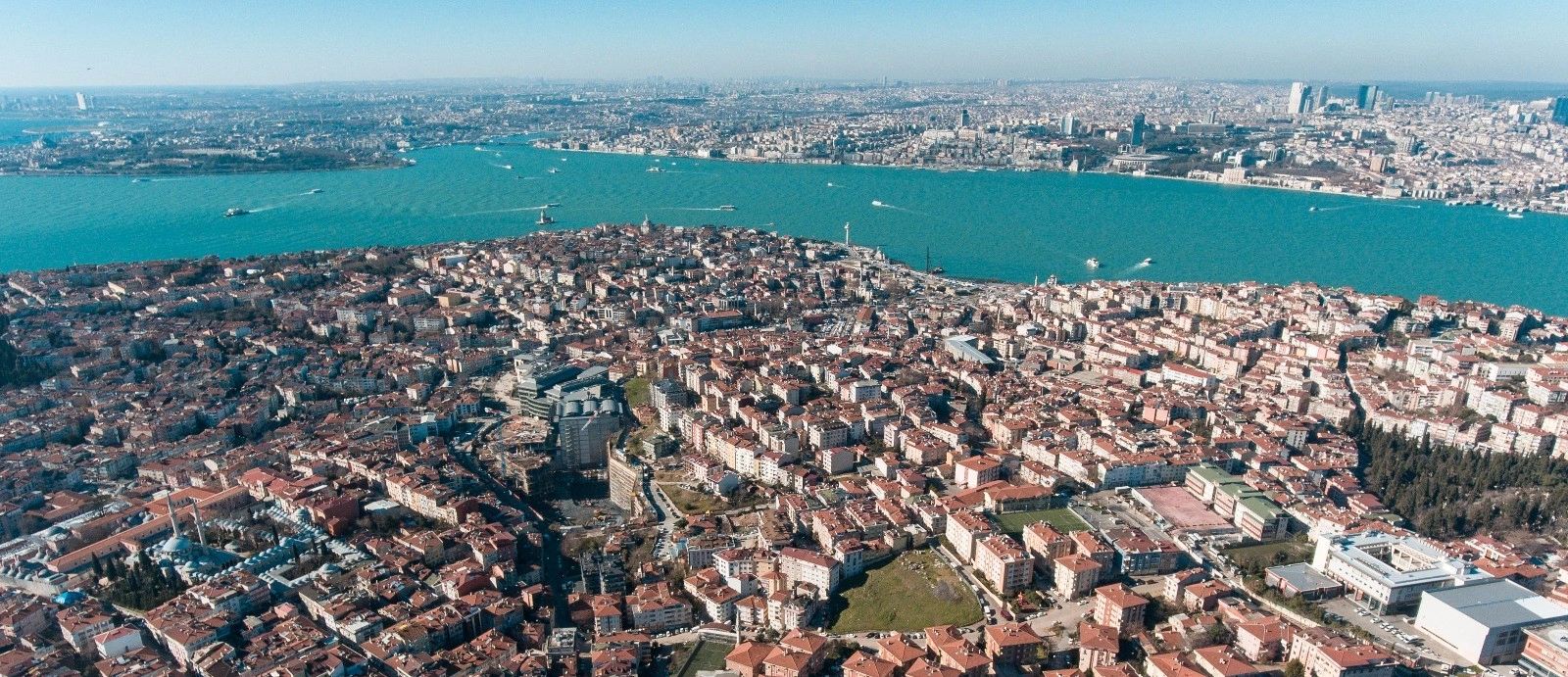
Create a complete Asian-side day combining Kadıköy's markets and Moda with Üsküdar's Ottoman mosques, Bosphorus waterfront and historic neighborhoods.
Explore ÜsküdarCombine Kadıköy with Üsküdar, Kuzguncuk, Çengelköy, Çamlıca Mosque, Maiden's Tower or other Asian-side districts according to your interests and available time.
Create a private Istanbul itinerary around markets, food, Byzantine and Ottoman history, Bosphorus neighborhoods, religious heritage, local culture and panoramic viewpoints.
View Private Istanbul Tours
Continue planning with Istanbul's mosques, churches, palaces, museums, bazaars, Bosphorus districts, markets and historic neighborhoods.
Explore Istanbul